Sunday, December 21, 2025
Home Blog Page 4669

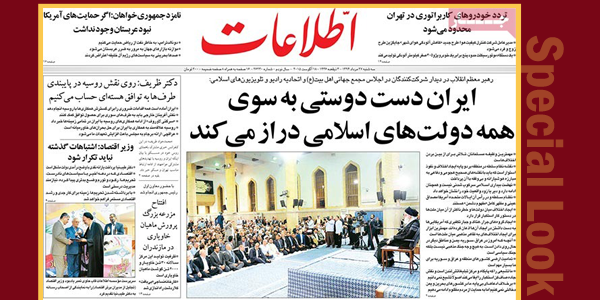
Highlights of Ettela’at newspaper on August 18

Ettelaat Highlights-post

 “Iran extends a hand of friendship to all Islamic states,” the Supreme Leader said at a meeting with those who participated in the general assembly of an Islamic Radio and Television Union and the AhlulBayt World Assembly in Tehran.

Ayatollah Khamenei further said the most important responsibility of Muslims is to make efforts to eliminate divisions among themselves.

 In Tehran, the movement of cars with carburation system will become restricted.

The air pollution caused by a motorcycle is five times that of a brand new Peugeot 405.

 US Republican presidential candidate Donald Trump has said, “If it weren’t for us, they [a reference to the Saudis] wouldn’t be here. They wouldn’t exist.”

 “We count on Russia’s role in keeping parties [to nuclear talks] committed to the nuclear deal,” Iranian Foreign Minister Mohammad Javad Zarif said.

The top diplomat, who was in Moscow, also signaled Iran’s readiness to take all the necessary measures to expand ties with Moscow.

 “The past mistakes should not be repeated,” said the minister of economy and financial affairs.

Ali Tayyebnia further said given the current revenues of government, sustaining cash subsidies is difficult.

 A sturgeon fish farm has opened in Mazandaran Province.

The farm, the biggest in the Middle East, is expected to produce more than 30 tons of caviar each year.

 The head of Ettela’at Institute has handed a framed stamp to the minister of economy and financial affairs in praise of his services as a top economy manager.
 

Nuclear agreement not equal to shared regional policies with US: Speaker

13931030000343_PhotoI (1)

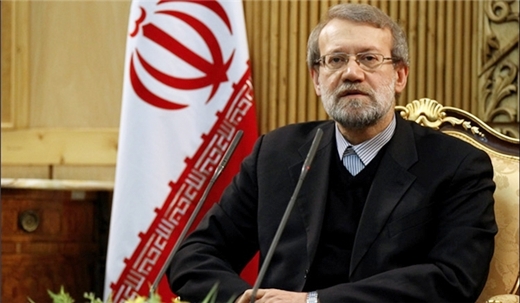
Iranian Parliament Speaker Ali Larijani recalled Washington’s hostile policies against Tehran, and underlined that the nuclear agreement signed between Iran and world powers in Vienna in mid-July would not mean that the Islamic Republic and the US have the same regional policies.

“The question is whether the recent developments and (Vienna) negotiations mean that Iran and Western countries are moving in the same direction; the response is surely negative because Iran has always followed its own path and it is them (Western countries) who need us,” Larijani said, addressing a ceremony in the city of Mashhad, northeastern Iran, on Monday.

The Iranian parliament speaker reiterated that Western countries have realized that their problems in the region will not be resolved without Iran playing a role.

“Recognition of Iran’s right to enrichment by the West showed that European countries and the US have come to terms with Iran’s progress in different fields; Iran’s resistance and endurance helped the country achieve its goals and foiled Western efforts to prevent Iran from continuing its peaceful nuclear program,” Larijani said.

[…]

Iran to resume carpet exports to US: Official

139303141521469002919194

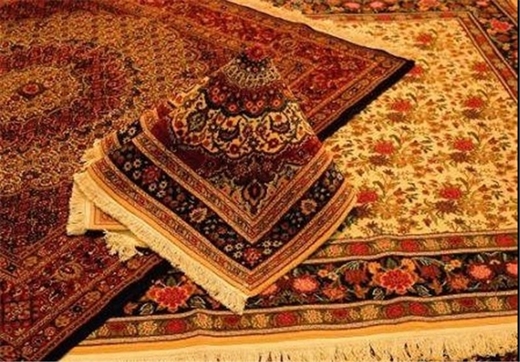
Head of Iran’s National Carpet Center Hamid Kargar said the country plans to resume the export of carpets to the US once the economic sanctions on Iran are lifted.

“Before the embargoes, Iran used to export more than $80 million worth of carpets to the US annually,” Kargar told Tasnim News Agency.

The exports were halted in 2010 due to direct US sanctions on Iran’s carpet industry, he added.

The termination of general and direct sanctions against Iran will have a major impact on the increase of carpet experts to the US, the official said.

The National Carpet Center is preparing and optimizing the conditions for Iran to reclaim its market share in the US, Kargar noted.

His remarks come against the backdrop of a wave of renewed interest in ties with Iran after the country and P5+1 (Russia, China, the US, Britain, France and Germany) on July 14 reached a conclusion over the text of a comprehensive 159-page deal on Tehran’s nuclear program.

The comprehensive nuclear deal between Tehran and six world powers will eventually terminate all nuclear-related sanctions imposed on Iran.

Experts believe that Iran’s economic growth will rise remarkably after the final nuclear deal takes effect.

Iran gets first ever associated gas offer

326d68b9-1bb9-47bc-ac02-cfa53a0de560

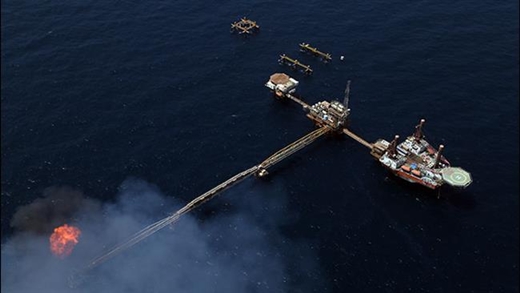
A French company has proposed to buy associated gas from an offshore Iranian oilfield in the Persian Gulf in order to convert it into liquefied natural gas (LNG), Oil Minister Bijan Namdar Zanganeh said.

The offer marks the first of its kind to Iran by a foreign company to use natural gas associated with oil production instead of burning it off as the country often does in a practice known as flaring.

With the finalization of the agreement, nearly 25% of flaring at the Forouzan platform will be halted, Zanganeh told Channel 1 of the national television without naming the French company.

The Fars News Agency said the French company has proposed to partner with Iranian firms for processing the associated gas from Forouzan oil wells at a separate platform which they plan to build nearby before converting it into liquefied natural gas (LNG).

Iran planned to pump the associated gas from the Forouzan field, which it shares with Kuwait, through pipeline to an LNG facility at Kharg Island before intensified sanctions prevented the scheme from taking off.

According to figures released by the Ministry of Petroleum, about 5.4 million cubic meters (189 million cubic feet) of associated gas is burnt off per day at the Forouzan platform.

The deal with the French company would cut Iran’s flaring of the associated gas in the offshore Persian Gulf fields by one-fourth.

A possible deal comes in the wake of intensive negotiations held in recent months for the sale of associated gas, with the talks reportedly stuck over the period of the contract.

The overall associated gas from the offshore Persian Gulf oil wells is estimated at 20 million cubic meters per day, which equals the flow from a single phase of the giant South Pars field.

Beside the energy loss, the flaring of associated gas significantly harms the environment.

Iran holds the largest natural gas reserves and fourth largest oil reserves in the world.

Iran supports friends against hostile acts of enemies: Velayati

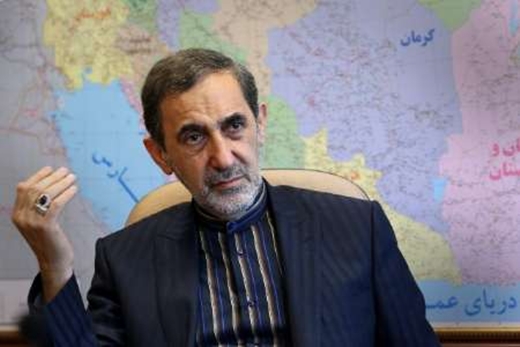
Ali Akbar Velayati

Head of the Strategic Research Center of Iran’s Expediency Council Ali Akbar Velayati stressed respect for the territorial integrity of Iraq, Syria, Lebanon and Yemen, and said that Iran supports friendly countries against hostile acts of enemies.

Ali Akbar Velayati made the remarks Monday at a meeting with Iraqi Vice-President Nouri al-Maliki.

Velayati said that Iraq has a legal government which is democratically elected, so any faction or individual who wants to express ideas should do that through legal means and there is necessary freedom in the country to express different opinions.

“There is no mediation for those who violate the law,” Velayati said, adding, “In Iraq unity has been formed among Kurds, Sunnis and Shiites and if cooperation among these three is challenged, Iran will help remove the misunderstanding.”

Velayati said that as the Supreme Leader has stated the US is after influence in the region and seeks to disintegrate Iraq and Syria, but that Iran stands against hostile acts of enemies and support friendly countries.

Velayati added that Iran will defend the territorial integrity of Syria, Iraq, Lebanon, Yemen and all friendly states.

Iran denounces any move designed to disintegrate countries as a plot against the Islamic Umma and our relations with Iraq are not periodical or tactical, but strategic, he said.

The head of the Strategic Research Center said that a bright future for Iraq is around the corner, and added that Iran is ready to share its experiences in the field of research with Iraq and have closer scientific cooperation with it.

Iraqi Vice President Nouri Al Maliki, for his part, said that calls for the disintegration of Iraq serve the interests of the Zionist regime of Israel, adding that Iran is at the forefront of the anti-oppression campaign which brings together Syria, Iraq, Lebanon and Yemen, nations well familiar with the culture of resistance and steadfastness in the fight against the global arrogance.

Maliki added, “The Islamic Republic of Iran serves as a camp of pious believers and enjoys an extremely high status in the fight against the arrogant world powers.”

He said that the Middle East grapples with uphill challenges today and the Shiite countries are today targeted by the enemies of Islam.

On the Strategic Research Center of the Expediency Council, Maliki said that the establishment of such centers contributes to the presentation of precise scientific reports in the campaign against the nasty plots hatched by the oppressors and enemies, adding that Iraq is interested in tapping into Iran’s experience in the establishment of such strategic research centers.

Europe, US may invest in Iran glass industry

b53f1db6-2806-4cbd-b3d9-0c11c740a781

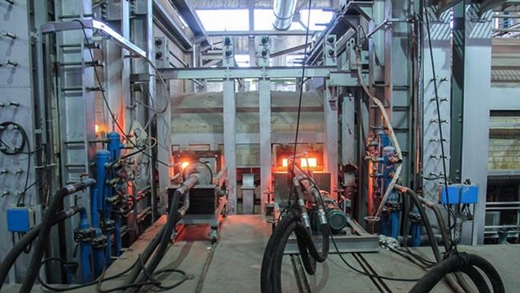
German, Italian and US companies have voiced readiness to invest in Iran’s glass manufacturing industry, the head of the Iranian Glass and Crystal Producers Association has said.

They made their intentions known to Iranian officials during visits by European delegations to Tehran recently in the wake of last month’s conclusion of nuclear negotiations, local media quoted Ahmad Amir Ahmadi as saying.

“Iran’s gas manufacturing industry, like other industries, has caught the eye of many foreigners for investment after the nuclear accord but we have to wait and see what happens to the outcome of the negotiations,” he said.

Amir Ahmadi said that any possible tie-up could involve the transfer of technology and machinery.

Iran’s reserves of silica – the main raw material used in commercial glass production – are among the world’s largest. With its huge quartz and lead resources, cheap electricity and low labor costs, the country has the potential to become a leading world producer of crystal and glass ware.

The glass manufacturing industry is energy intensive but Iran’s abundant energy sources put the country at an advantage over its rivals.

Iran’s glass and crystal manufacturing industries are mainly centered in Tehran and Tabriz, with production mainly aimed at the domestic market.

In May, Iran launched a glass fabrication plant which President Hassan Rouhani called the country’s largest production line.

Sahand Float Company in Tabriz in northwestern Iran is expected to produce 220,000 tons of flat glass per year for building, automotive, security and decoration use.

Glass making is believed to have a history of about 3,500 years in Iran. With its sufficient silica reserves and processing units, officials say, the country only needs investment to complete the production chain.

Why is Zarif’s Moscow visit important? Envoy answers

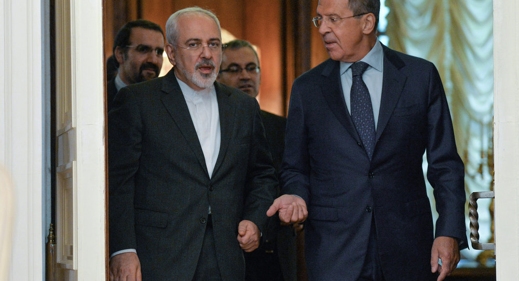
Zarif and Lavrov
Mehdi Sanai
Iranian Ambassador to Moscow Mehdi Sanaei

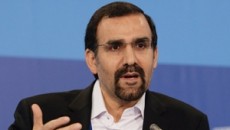
Iranian Ambassador to Moscow Mehdi Sanaei has described the Moscow visit of Foreign Minister Mohammad Javad Zarif as immensely important in Iran-Russia ties.

In a note posted on his Facebook page, the Iranian diplomat said that Tehran-Moscow relations, which have been high on the diplomatic agenda of the two countries throughout history, have in recent years turned into a global policy issue for a variety of reasons, drawing the attention of international observers and analysts.

The following is the translation of what else khabaronline.ir quoted the Iranian ambassador as writing in the post on August 17:

In Iran too experts and analysts closely monitor the Russian foreign policy as well as Tehran-Moscow relations. The common stance of the two countries on several regional and global issues, their constant consultations, and improvements in their bilateral relations are among important topics.

Up until a few years ago, cooperation on international issues would be viewed as the most important stage for cross-border relations. No doubt, the fast-paced developments of the Middle East and the problems some regional countries are wrestling with because of Western interference on the one hand and a fundamental transformation of every aspect of mutual relations on the other have elevated regional and bilateral exchanges to a more serious level.

Both countries are seriously concerned about the spread of terrorism in the region and favor a serious campaign against terrorism without double standards.

Under the present critical conditions crippling some parts of the Middle East, the Moscow visit by Foreign Minister Zarif and his meetings with Russian officials, which come after recent visits by some Arab officials to Moscow and FM Zarif’s regional tour, can prove effective in working out solutions to the existing problems.

During the visit, which shows that measures to bolster ties with Russia are a foreign policy priority of Iran, new ways of enhancing mutual ties in the wake of the Iran nuclear deal will be discussed.

Over the past two years, the Iranian and Russian presidents have met five times, positive developments have taken place on political, economic, security, scientific and cultural fronts and there has been an increase in the volume of trade between the two countries. The new conditions created following a decline in negative third-party factors, including sanctions, pave the way for positive steps to further boost the ties.

No doubt, plans worked out after this visit will usher in major change in relations on all fronts as of September.

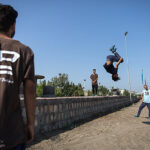
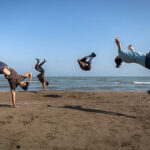
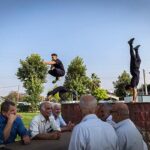
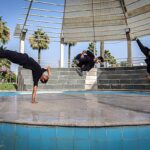
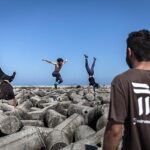
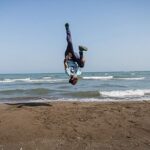
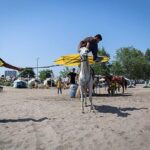
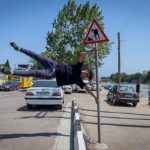
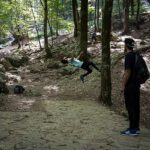
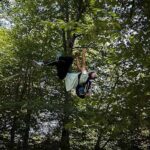
Parkour in northern Iran (PHOTOS)

00

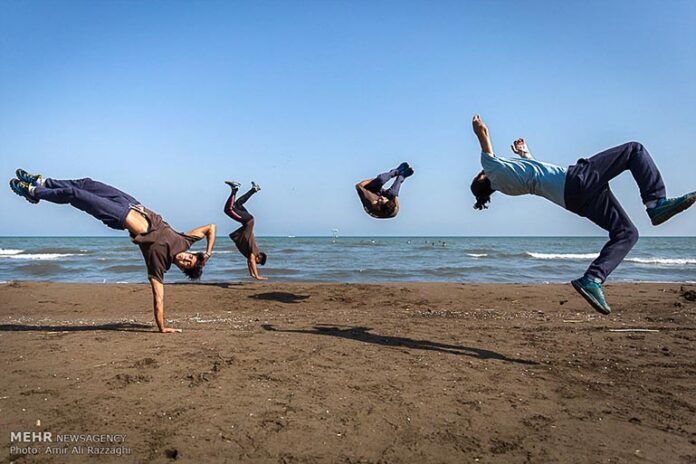
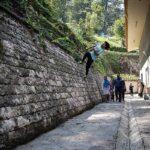
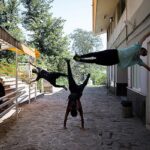
Parkour, also known as free-running, is a modern way to interact with the surrounding environment through human abilities.
Snapshots of Parkour practitioners in Mazandaran Province released by Mehr News Agency:

Foreign intervention in ME unacceptable: Iran FM

b7b38c31-4077-4a71-af20-3b8d327a8abf

Iran’s Foreign Minister Mohammad Javad Zarif says the Islamic Republic opposes any kind of foreign intervention in the internal affairs of regional countries.

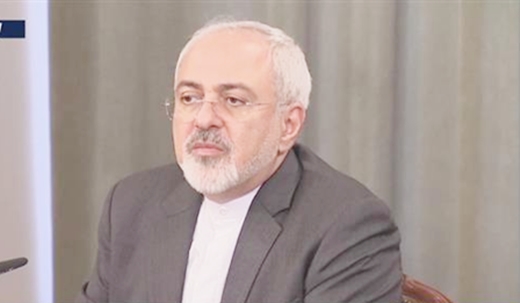
Addressing a joint press conference with Russian Foreign Minister Sergei Lavrov in Moscow on Monday, Zarif said Iran believes that all regional players should redouble their efforts to address regional issues, including extremism.

As far as regional issues are concerned, the Iranian minister added that Tehran and Moscow emphasized the settling of all issues in the region through political approaches.

The people of the countries that are facing problems should decide their future, Zarif pointed out.

Zarif added that Iran rejects any kind of foreign intervention as it violates the sovereignty of regional countries.

He emphasized that in his talks with Lavrov, the two sides agreed to hold a meeting of an intergovernmental commission this fall.

He noted that Tehran and Moscow would also expand consular cooperation which will benefit the two countries’ people.

The Iranian foreign minister also described Russia as Iran’s number one partner in the nuclear industry.

Heading a high-ranking delegation, the Iranian foreign minister arrived in Moscow earlier on Monday.

Also addressing reporters prior to the press conference, the Iranian and Russian foreign ministers urged the speedy implementation of plans to strengthen mutual relations in all fields.

Zarif said Iran and Russia share a common stance and similar viewpoints on developments in sensitive areas.

He added that the nuclear agreement signed between Iran and six world powers known as the Joint Comprehensive Plan of Action (JCPOA) would help Tehran and Moscow bolster their ties and noted that the two sides have what it takes to boost cooperation in economic, cultural and commercial areas.

He emphasized that Iran and Russia would proceed with the expansion of ties on regional and global developments.

The Russian foreign minister, for his part, said the two countries would follow up plans to boost relations.

Lavrov expressed his country’s willingness to cooperate with Iran to resolve the ongoing issues in the Middle East and North Africa.

A Tehran cobbler (PHOTOS)

Ali Vaksima00

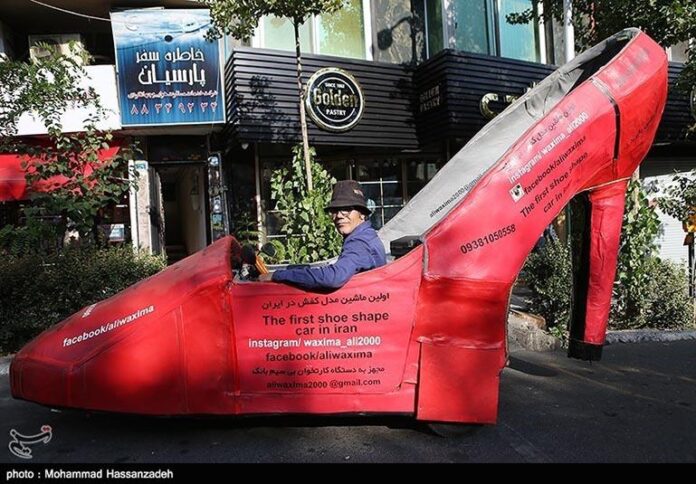
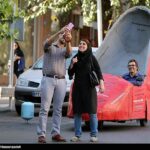
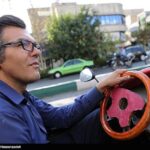
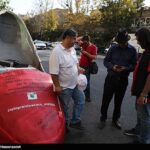
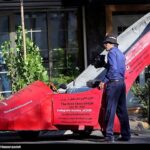
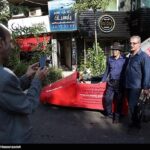
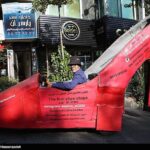
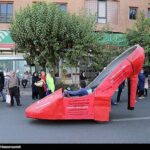
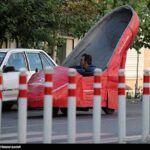
Mohammad Ali Hassankhani, known as Ali Waxima, is the first Tehran cobbler who is only one phone call away to offer services.

Over the years, his creativity to repair and polish shoes has encouraged many journalists to write pieces about him.

The 42-year-old man whose career spans more than two decades used to commute across the city by bicycle and later by a motorized tricycle to give services to his clients.

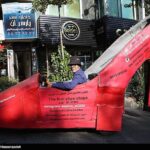
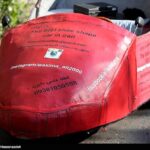
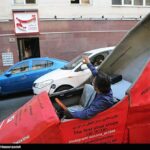
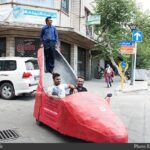
Later, he drove in Tehran in his self-designed vehicles which looked like a shoebox and a men’s shoe.

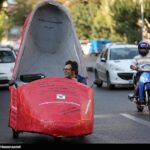
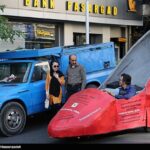
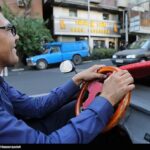
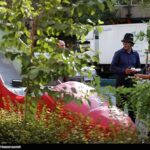
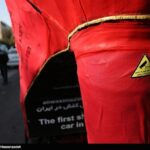
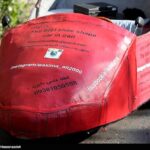
Waxima has now designed a new car which is similar to a high-heeled shoe. The vehicle has taken four months to be built. He plans to design a new vehicle resembling a child’s shoe.

Images of the Tehran cobbler released by Tasnim News Agency: