Tuesday, January 13, 2026
Home Blog Page 4655

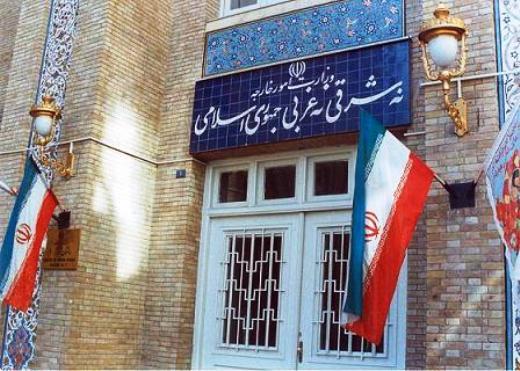
Spokesman: Improvement in Tehran-Riyadh ties needs change in Saudi policies

He made the remarks talking to reporters at his weekly press conference.

Jaberi Ansari said Iran welcomes all efforts being made by the friendly countries to solve the problem, but all those endeavors need change in the Saudi wrong policies.

By such policies, Saudi Arabia sees its interests in aggravating crises in the region, he added.

On January 2, Saudi Arabia executed Sheikh Nimr al-Nimr, a Shia Muslim cleric known for his sermons criticizing the kingdom’s government and for his support of political protests in the country’s oil-rich Eastern Province.

At that day, the Saudi Interior Ministry said 47 people have been executed on charges of what it referred to as terrorism.

Prominent Shia cleric Sheikh Nimr al-Nimr was among those executed.

The Saudi move triggered mass protests in Iran and other countries.

After execution of Sheikh al-Nimr, a group of youth gathered ‘illegally’ in front of Saudi Embassy in Tehran and damaged the embassy’s building.

The Police forces arrested a number of demonstrators.

On the pretext of the issue of its embassy, Riyadh has formed a so-called anti-Iran coalition and is trying to add members to that coalition by taking unwise measures.

A day after the event, Saudi foreign minister announced on January 3 that Riyadh severed its diplomatic relations with Tehran.

Iran’s First Vice-President Eshaq Jahangiri commented on the Saudi announcement saying cutting ties with Iran is detriment to Riyadh not to Tehran.

Foreign Ministry slams new US sanctions against Iran

Iran Summons Swiss Envoy over US Accusations
Iran foreign ministry

In a statement released on Monday, the foreign ministry noted that the US administration was forced to succumb to the will of the Iranian nation and admit Iran’s drive for economic progress and better political interaction with the world by agreeing to lifting of nuclear sanctions, removal of illegal bars on trade and economic cooperation with Iran and releasing Iran’s blocked assets which were worth tens of billions of dollars, all in the course of just one day.

More importantly, the fact that it agreed to settle part of a 37-year old problem about Iran’s military purchases by paying a sum of 1,700 million dollars – which was the original amount – as well as compensations, release or lift restrictions on 28 Iranians who were living in the US in return for freedom of 4 people in Iranian prisons and also instant removal of sanctions on Iran’s Sepah Bank indicate that the US has in practice admitted the failure of its policy of pressures and sanctions.

The statement went on to note that selecting the very day, in which the process of removal of unfair nuclear sanctions against Iran started, to announce the names of another group of individuals and companies for imposition of yet new sets of sanctions by the US Treasury because of their alleged involvement in Iran’s defense program is nothing but an attempt to please power circles and lobbies both in and out of the US.

This kind of behavior has taken the US foreign policy apparatus as hostage for decades now and war-mongers feel dismay with the failure of their Islamophobia policies, the statement said.

Now that Iran has succeeded in materializing its nuclear rights and is gaining access to parts of its financial and economic resources, these lobbies are losing temper and embarking on an all-out confrontation with the Joint Comprehensive Plan of Action (JCPOA).

Unfortunately, the statement stressed, the US government has decided to feed its long-standing addiction to imposing inefficient sanctions by adding the names of a number of Iranian individuals and companies to the list of its sanctions.

It went on to stress that Iran’s missile program is in no way designed to carry nuclear warheads and thus violates no international regulations.

As stated before, the statement underlined, the Islamic Republic of Iran will go on to monitor the precise implementation of the JCPOA by the US government and the same time try to response to its populist offensives by pursuing its lawful missile program, enhancing its military might and promoting national security by more zeal.

The global community and economic institutions, too, have already proven their indifference to such propaganda attempts by the US government which is taking place to silence the war-mongers in and outside America, the statement added.

It stressed that these companies are keen to take the opportunity of post-sanctions situation to cooperate with Iran.

The foreign ministry statement underlined that the structure of sanctions has fallen apart and is absolutely impossible to be mended.

It said the Islamic Republic of Iran is determined to use the post-sanctions opportunities to promote its policy of constructive interaction.

Lift of anti-Iran sanctions, special chance for Italian companies

The talks on implementation of Joint Comprehensive Plan of Action (JCPOA) concluded in Vienna on Saturday, and the US and the European Union lifted sanctions imposed on Iran for years.

Talking to IRNA, Eugenio Carugati said Italy and Iran enjoy many cultural commonalities that can help enhance bilateral relations.

About his travel to Iran, he said it is happening for the first time and is aimed to examine the Iranian market.

In line with widening Iran-Italy trade exchange, Italy’s second international exclusive fair held in Tehran on January 10-13.

Italy has been among those countries which kept its relations with Iran continued during the sanctions’ era.

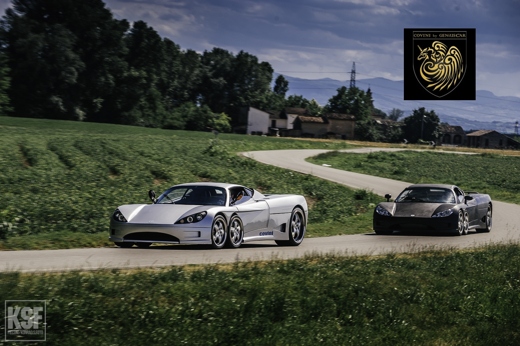
According to its website, Genius Car Ltd is a holding company based in London with ownership of various companies in the technological and innovation area, including Italian Covini Engineering.

Covini Engineering has been developing for many years innovative automotive projects including the COVINI C3A as a luxury road car and the COVINI Speedster built for the sports car circuits. Both utilize the 3 axis and 6 wheel design.

No obstacle for implementation of Iran Pakistan Pipeline when sanctions are lifted

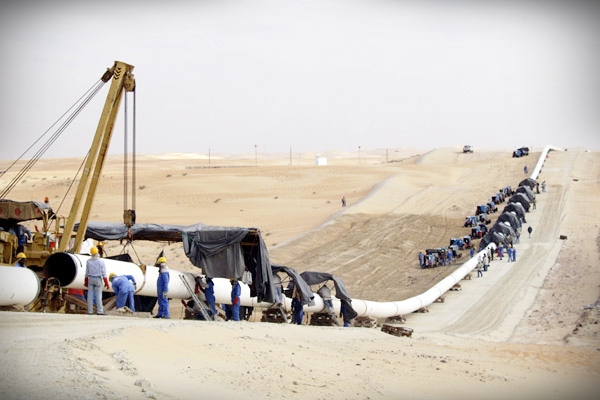
Shahid Khaqan Abbasi, Pakistani Minister of Petroleum and Natural Resources, on Saturday Jan. 16, after meeting new Iranian ambassador to Islamabad ‘Mahdi Honardoost’, in an interviewwith IRNA said Mr. Honadoost has assured him that the sanctions will be lifted very soon. ”After lifting of sanctions, there would be no more obstacles or pressure from any country to prevent completion the Iran-Pakistan gas pipeline project and it can be completed by end of 2017″ he said.

“However, foreign banks and companies are concerned about the possibility of restorations of some sanctions while we do not yet know what kind of sanctions might re-imposed on Iran. Are all sanctions to be lifted at once or they will be a gradual relief”, said the Pakistani Minister.

He said that I shared with Iranian Ambassador the issues and details of the project and told him that Pakistan is working on the plan. Maps have been prepared and the route is determined and we are in talks with foreign contractors for the project and we are very hopeful to complete the project by the end of 2017. “We are in talks with a Chinese company to finance the project but this has not been finalized yet. In any case, we have had talks with a Chinese company which has sufficient financial resources to finance 85 percent of required credit for the implementation of this project. The company has completed the feasibility studies and design works of the project and we are in talks with the company officials to finalize the construction contract from Gwadar Port to Pakistani city of Nawabshah “he Pakistani Minister of Petroleum said.

In response to the question whether Pakistan could give a specific timetable for completion of the project within its territory, he said construction of pipeline between Gwadar Port and Nawabshah needs 30 months but we are trying to reduce this period to 24 months. There is a great potentials for expansion of ties between Iran and Pakistan and Pakistani refineries run by the private sector can also import their required crude oil from Iran, meanwhile Pakistan is interested in importing  liquid gas from Iran”, Said Shahid Khaqan Abbasi.

Somalia Received Saudi Aid the Day It Cut Ties with Iran: Document

The government, which did not confirm or deny the pledge, has said there was no link between long-running Saudi financial support and its diplomatic decision to break ties with Iran. The Saudi Foreign Ministry did not respond to requests for comment.

But diplomats said it was the latest sign of patronage used by the kingdom to shore up regional support against Iran, a rivalry that deepened this month when Saudi Arabia executed prominent Shiite cleric Sheikh Nimr al-Nimr and Iranian protesters responded by torching the Saudi embassy in Tehran.

Sheikh Nimr was a vocal supporter of the mass pro-democracy protests against Riyadh, which erupted in Eastern Province in 2011, where a Shiite majority has long complained of marginalization.

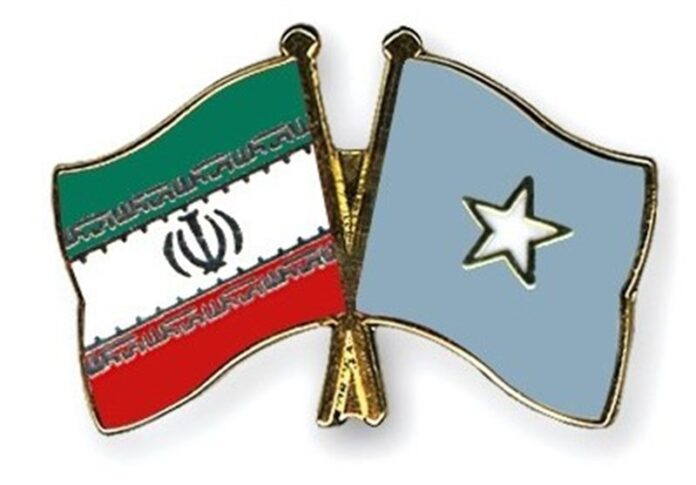
A document from the Saudi embassy in Nairobi to the Somali embassy in the Kenyan capital showed the kingdom pledging $20 million in budget support and another $30 million for investment in Somalia, a nation trying to rebuild after two decades of war.

The two grants would come from the Saudi Development Fund, according to the document that was dated Jan. 7, the same day Somalia cut ties with Tehran.

Somalia cut relations with Iran claiming Tehran had meddled in Somali affairs and threatened national security. Mogadishu gave Iranian diplomats, among the few stationed in the Somali capital where bomb attacks are frequent, 72 hours to leave.

Somalia’s Finance Minister Mohamed Aden Ibrahim declined to comment on the pledges, but claimed any financial assistance from Saudi Arabia was not related to Mogadishu’s stance against Iran.

“Our relationship with Saudi Arabia was long-standing and is not something that has just started,” the minister told Reuters.

Iranian companies to join Omani Markets

“Increasing domestic and foreign investments on non-oil sectors, Omani government provides opportunities to encourage investors to participate. Accordingly, extensive plans are proposed for development of Iranian private sectors in the Oman trade markets for the first time in this period,” said Seyed Ali Etedali and added that “Iranian companies can attend this national event in Muscat to stabilize and develop Islamic Republic of Iran’s markets.”

Pointing to Iran-Oman trade and economic relations as well as Omani government’s plan for replacing oil revenues by non-oil economy till 2020 he added that the exhibition would be an opportunity for developing industrial relations and export between two countries.

With reference to Iran’s exhibition in Oman, Etedali stated that “car industries, services, food industries, industrial and infrastructure industries, and large manufacturing plants have attended  this course, so many extensive meetings in this regards are going to be held.”

“Islamic Republic of Iran’s exhibition in Oman will be held in Muscat from 26th to 30th January, 2016. Also this exhibition is aimed at providing opportunities for investment, trade and manufacturing, consuming goods, banking and insurance services, engineering services, tourism, handicrafts and country’s export capabilities,” he added.

He expressed that this exhibition is intended to result in Iranian companies’ joint activities to gain market share in goods and services at Oman, the capital of the Arabic country, also international exhibitions stock company of Islamic Republic of Iran had held private exhibition on behalf of the government at Muscat, the capital of Oman last year in December.

Security Council removes Bank Sepah, Bank Sepah Int’l from 2231 list

According to the UN Information Center in Tehran (UNIC), the delisting of the Iranian banks took place one day after the beginning of the implementation of the Joint Comprehensive Plan of Action (JCPOA) and accordingly, the removal of economic sanctions against Iran.

The Implementation Day has officially started on January 16 (Saturday) after a joint statement was read in Vienna, Austria, by Iran’s Foreign Minister Mohammad Javad Zarif and the EU foreign policy chief Federica Mogherini.

Official: First Airbus deliveries in July

Minister of Roads and Urban Development Abbas Akhoundi made the announcement on Saturday to coincide with the official lifting of sanctions, putting an end to decades of economic embargoes, including sales of aircraft and their parts to Iran.
Another official, quoted by Bloomberg, said the deal includes a mix of new and used jets from the A320 family and the out-of-production A340s to feed domestic demand at 50 airports in the country of 80 million.
Iran Air is also interested in wide-body planes including A350s and A380 to add destinations in the US, Canada, Australia and Europe to its network, the official said on condition of anonymity because the details were private.
Airbus makes up about 50 percent of Iran’s current aviation fleet.
Furthermore, Iran is considering the purchase of narrow-body 737s for domestic flights and two-aisle 777s for long-haul routes from US aircraft maker Boeing, the official reportedly said.
The country is also looking to purchase smaller planes from Canada’s Bombardier and Brazil’s Embraer, the official added.
On Friday, US President Barack Obama lifted a ban on exports of civilian passenger aircraft to Iran and imports of Iranian carpets and pistachio.
Iran has a potential order list for 500 commercial planes to renovate its aging fleet. According to Akhoundi, Iran’s current civil aviation fleet consists of 248 aircraft with an average age of 20 years, of which 100 are in storage.
The country will need to buy 500 commercial jets of various models at a cost of $50 billion and has been talking to both Airbus and Boeing to acquire aircraft under lease or sale/leaseback deals, he has said before.
‘Since there is no such money in Iran, we have to go after the leaseback method,’ he said.
‘If we try to buy new aircraft, we will need 400 jets to develop our long- and medium-haul fleet and at least 100 planes for use in our local airports which will cost $50 billion with a rule of thumb,’ Akhoundi said.

JCPOA implementation, political victory for Iran: Rouhani

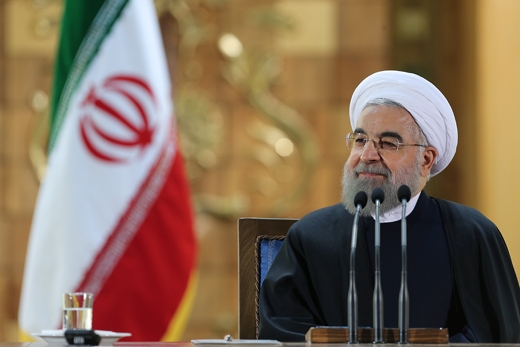
“Today is the day of the victory of the people of Iran on the political arena,” Rouhani said in a televised address on Sunday, adding, “As of today, it is clear that our country has a big power called the power of diplomacy.”

“Many did not believe in this power,” he added. “They did not believe that our politicians and diplomats are able to sit at negotiating table with the most adept negotiators from world powers and conduct negotiations and defend the rights of their nation and their country.”

Iran and the five permanent members of the UN Security Council – Britain, China, France, Russia and the United States – plus Germany finalized the JCPOA in Vienna on July 14, 2015.

Iranian Foreign Minister Mohammad Javad Zarif and European Union foreign policy chief, Federica Mogherini announced the implementation of JCPOA during a joint press conference in the Austrian capital on Saturday.

Yukiya Amano, the director general of the International Atomic Energy Agency (IAEA), also said on the same day that Iran had taken the “necessary preparatory steps to start the implementation of” JCPOA.

“Today is a historic day and an exceptional one in the political and economic history of the people of Iran,” said Rouhani.

“After 12 years of steadfastness and resistance as well as patience and sacrifice and also martyrdom of a number of nuclear [scientists] and on the back of indefatigable efforts of our nuclear scientists, diplomats, politicians, lawyers as well as the economic officials of the country, today, we are at a turning point,” he added.

The president noted that the JCPOA implementation proved that “we can interact with the world in the interest of our nation” without harming others’ interests.

“The people of Iran proved that constructive interaction is the true and right way,” he said.

“From today on, Iran’s nuclear program will not, under false pretexts, be considered as a threat to peace and security for the world and the region,” Rouhani said, adding, “Now the nuclear program is being regarded as a plan for scientific, technological, business, and economic interaction and cooperation.”

“Iran’s nuclear program will be a means of new technology on the path of progress of the nation and stability and regional security.”

Rouhani also said in the light of the new development, Iran expects its economy to grow by as much as five percent in the next year. The president said, however, that the countryneeds to see an eight-percent economic growth rate.

To that end, he added, Iran needs “cutting-edge technologies” and “foreign investment.”

“Today, it has turned out that the win-win policy is an accurate one. For those, who thought that either you need to cheat others or you will be cheated, it turned out that it is possible to speak to the world, to have dialog with the world and to reach an agreement that could be in the interests of the peoples of the region and the world,” said the Iranian chief executive, adding that the nuclear deal can be used as a model to resolve regional issues.

Rouhani stressed, “We would not taste the sweet taste of this great victory without the instructions and guidelines of the great Leader of the Islamic Revolution [Ayatollah Seyyed Ali Khamenei] and without the protection provided for this people by the religious jurisprudence.”


Saudi expected to change behavior

Rouhani also expressed hope that Saudi Arabia would reconsider its hostile policy vis-à-vis Iran.

“I hope that the new rulers in Saudi Arabia have already learnt the lesson and reconsider their behavior in the interest of the region and their own people,” he said, adding that the kingdom itself is the source of its problems with Iran.

The president, however, added, “Our administration, our people will not accept undiplomatic behavior and if necessary, we will give a firm response to certain behaviors.”

Rouhani said Saudi Arabia has “started a wrong path”, adding: “We hope that it would not continue.”

Saudi Arabia severed diplomatic relations with Iran on January 3 following demonstrations held in front of the Saudi embassy in Tehran and its consulate in the northeastern city of Mashhad by angry protesters censuring the Al Saud family for the killing of top cleric Sheikh Nimr al-Nimr.

“Saudi Arabia’s problem emanates from inside Saudi Arabia,” Rouhani said.

“Regarding the Mina incident, the reaction of Saudi Arabia and its approaches did not fall within moral and diplomatic norms,” saying Riyadh did not offer an apology to the nations, which had lost their people in the disaster.

Two large masses of pilgrims converged at a crossroads in Mina, near the holy Saudi city of Mecca, during Hajj rituals on September 24, causing a human crush. Saudi Arabia claims nearly 770 people were killed in the incident, but Iranian officials say about 4,700 people, over 460 of which were Iranians, lost their lives in the tragedy.

Riyadh’s behavior toward the people of the region “is not the right one,” Rouhani also noted, citing the kingdom’s continuing massacre of Yemenis in a military aggression it launched against the impoverished nation last March.

“Saudi Arabia started on the wrong path on its own. We hope it will not continue treading on that path…I hope that the new rulers in Saudi Arabia have already learnt the lesson and reconsider their behavior in the interest of the region and their own people.”

 

Zibakalam: zarif and Kerry should be awarded!

Sadegh Zibakalam, Iranian researcher and political analyst, commenting on implementation of Comprehensive Joint Plan of Action (CJPA) known in Iran as Barjam said that the role played by foreign ministers of Iran and the US was “outstanding” adding that there is no reason for failure of the deal and it will take effect definitely.

Zibakalam was quoted by Asriran website as saying implementation of (CJPA) would be a turning point in the history of Islamic Republic of Iran. ” After 37 years since Islamic Revolution, despite opposition of radicals and hardliners both in Iran ,US, Israel lobbies and Saudi Arabia, this is the first time that Iran has been successful in defusing  tension with the West and especially the United States.

“Success of the nuclear talks reflects patience, tolerance and goodwill of the American and Iranian officials and this led them to overcome all difficulties” he said. Referring to positive role played by Iranian nuclear negotiating team, Mr. Zibakalam added efforts by Araghchi, Majid Takht-Ravanchi and Ali Akbar Salehi is undeniable in this respect. In other words, the role of officialsparticularly Mohammad Javad zarif and John Kerry were outstanding. Zibakalam considered quite wrong to say that if instead of Kerry and Zarif other politicians were involved, negotiations would proceed. He said it is true that arrangements were made and largely in place to finalize the negotiation but it was not in any way that we can achieve the desired results, he said.

Zibakalam, professor of political science at Tehran University said that there was no halt despite stalemate during implementation stage of the nuclear agreement. “The negotiations had reached the verge of collapse at one point but John Kerry and zarif discussed mutually for a couple of hours and they both agreed that reaching agreement would be in interest of Islamic Republic of Iran, America, peace and stability in the region, “he said.

Zibakalam said prize should be awarded to zarif and John Kerry for their efforts. “Both Foreign Ministers did their utmost to take steps based on both countries’ conditions and problems and at the end they succeeded, said Mr. Zibakalam.