Friday, December 26, 2025
Home Blog Page 4650

Tightened security measures in Bahrain concerning: Iran

Jaber Ansari

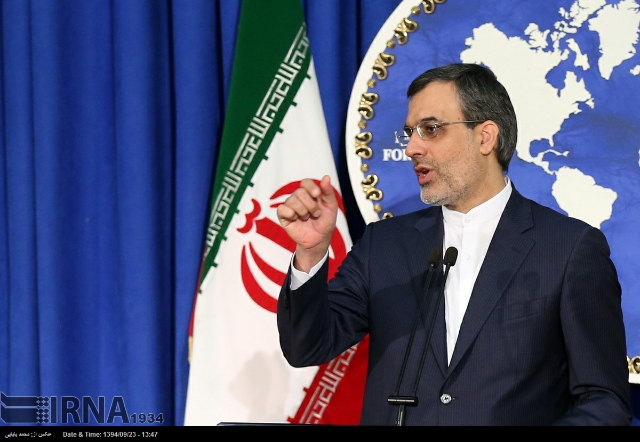
Iran has expressed concern over tightened security measures in the face of the “legitimate civil demands” of the Bahraini people, saying the adoption of punitive action in the tiny Persian Gulf state is of no avail.

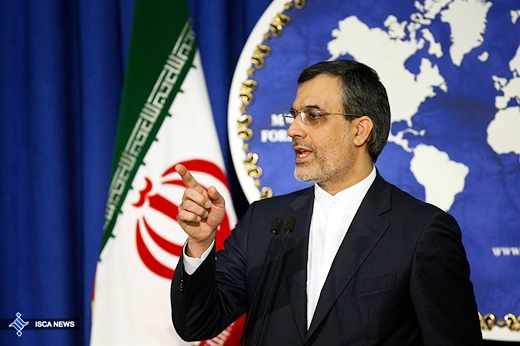
“The Islamic Republic of Iran believes that methods used by the Bahraini government will only intensify the crisis in the country and will provide an opportunity for enemies of the Muslim Ummah [to achieve their objectives],” Iran’s Foreign Ministry Spokesman Hossein Jaberi Ansari said on Friday.

He expressed hope that the Bahraini government would stop clinging to an “inefficient security approach” which has led to the complication of the situation in the country over the past four years.

He also advised the Arab country to resume serious dialog with recognized leaders of popular movements to find a peaceful and political solution to the country’s crisis.

In the latest instance of intensifying crackdown on dissent and members of civil society, a court in Bahrain on Thursday handed down a death sentence to one activist and life imprisonments to 22 others.

Bahrain’s Higher Criminal Court convicted the 23 Shias in connection with the death of a policeman last year. They were found guilty of terrorism-related charges, including setting off the explosives that killed the policeman.

The harsh verdicts are the latest in a string of court rulings in Bahrain involving people who have played a role in four years of popular protests and demonstrations in the kingdom.

Since March 2011, Bahrainis have taken to the streets to demand a change in the political system.

The regime in Manama has responded with a massive crackdown by killing dozens and arresting hundreds of people, including notable opposition leaders. The demonstrations have gradually turned into platforms for outright calls for the ouster of the Al Khalifa regime.

Amnesty International and other rights groups have repeatedly censured the Bahraini regime over the “rampant” human rights abuses against protesters.

Fresh protests

Several people were injured on Friday as Bahraini people took to the streets of the northwestern city of Sitra under strict security measures. Among those present in the rally were activists and family members of those killed in the crackdown by the Al Khalifa regime.

Regime forces responded by firing tear gas and birdshot at the defiant protesters, including children and women.

Fierce clashes also reportedly erupted between the Al Khalifa forces, backed by the armored vehicles, and protesters.

Sources also said the Al khalifa forces vandalized the property of some of the citizens in Sitra.
Let’s look for peace, not hostility in 2016: Rouhani

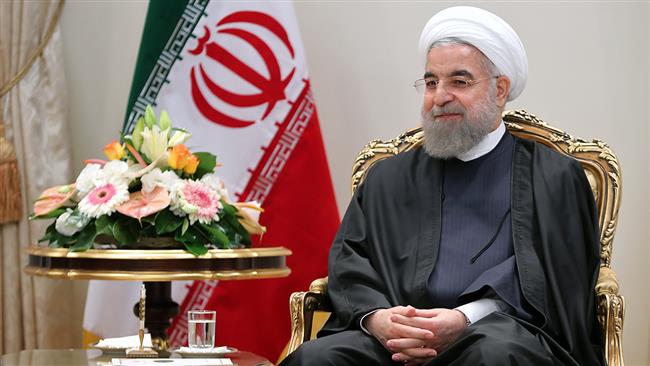
President Hassan Rouhani has offered New Year congratulations to people in the world, stressing the importance of promoting peace across the globe.

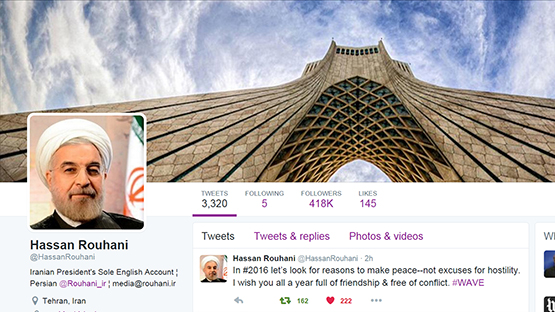
“In 2016, let’s look for reasons to make peace – not excuses for hostility,” Rouhani said in a congratulatory message on his Twitter page.

He wished all a year “full of friendship and free of conflict.”

Rouhani-tweet

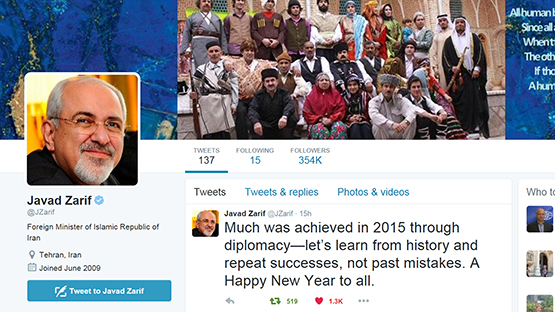
Foreign Minister Mohammad Javad Zarif too wished a happy New Year to all and reiterated the need for diplomacy to make achievements in dealing with ongoing developments.

“Much was achieved in 2015 through diplomacy – let’s learn from history and repeat successes, not past mistakes,” Zarif wrote on his Twitter page.


Zarif-Tweet


Iran draws red line on missile program

Defense Minister Brigadier General Hossein Dehqan said on Friday Iran will “forcefully continue boosting its missile capabilities within the framework of its defense policies.”

Dehqan’s remarks came in response to President Hassan Rouhani’s letter, ordering stepped-up production of missiles after reports that the US was preparing fresh sanctions on international companies and individuals in Iran.

“In view of America’s recent hostile steps and the esteemed President (Hassan Rouhani)’s emphasis, we will increase the speed and scope of our missile capabilities,” Dehqan said.

US officials claim the new sanctions are in line with the Joint Comprehensive Plan of Action (JCPOA), the nuclear agreement, and the Treasury Department can impose new sanctions on Iran over its missile development.

Leader of the Islamic Revolution Ayatollah Seyyed Ali Khamenei has made it clear that Iran would consider any new sanctions a breach of the JCPOA.

In an October letter to President Rouhani, outlining his conditional approval of the JCPOA, the Leader said that in case of a violation, “the government would be obliged to take necessary measures and halt JCPOA activities.”

On Friday, Dehqan said, “Iran’s missile capabilities have never been the subject of negotiations with the Americans and will never be.”

“Iran’s defense power is a guarantee for security and stability in the region,” he added.

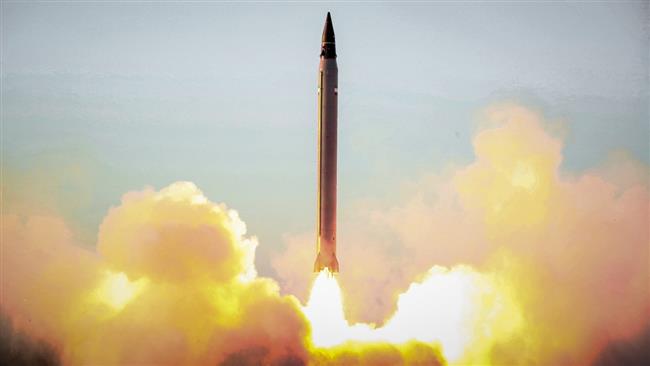
Iran tested a conventional missile in October, prompting several politicians in the US to call for fresh sanctions on the Islamic Republic.

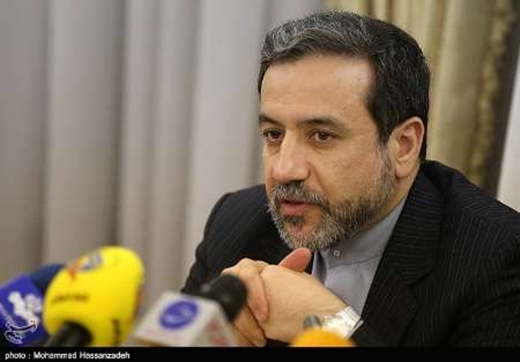
Senior nuclear negotiator Abbas Araqchi said the test did not violate the July nuclear accord.

“There is a clear difference between the JCPOA issue and the missile test and the missile test is not a breach of the JCPOA in any way,” he told the national television on Thursday night.

Araqchi said President Rouhani’s letter indicated that Iran’s missile program is not negotiable.

Deputy commander of the Islamic Revolution Guards Corps (IRGC) Gen. Hossein Salami said Iran will accelerate expanding its missile capabilities.

“The Iranian nation should know that our missile depots and long tunnels are filled with missiles ready for launch,” he told worshipers before Friday Prayers in Tehran.

Salami reiterated IRGC’s denial of a rocket test near US warships in the Strait of Hormuz.

“We tell the Americans we are so powerful, strong, brave and realistic that if we launched a missile, we would publicly announce it,” he said.

“The Americans must know that our tactics are a function of our strategies and we will not engage in any blind action. Whether they are scared or worried is not our business,” Salami added.

On Thursday, the Wall Street Journal said the White House had delayed plans to slap new sanctions on Iran but the measures remained on the table.

A senior Iranian politician, Ali Akbar Velayati, said Tehran would respond to new US sanctions.

“This measure by the American government and stepped-up sanctions will adversely affect the Islamic Republic of Iran’s good will but it will not go unanswered by the state officials,” he said.

Araqchi: Iran missile test never violates JCPOA

Araghchi

Noting that President Hassan Rouhani’s letter to Defense Minister Brigadier General Hossein Dehqan means Iran’s missile program will not be compromised, he said that the country’s missile program is quite distinct from JCPOA.

Araqchi, also head of the Headquarters for Pursuing Implementation of JCPOA, added in a televised interview on Thursday night that the nuclear deal does not imply an end to the US’ enmity against Iran and that the enmities will not terminate.

Until the time Iran is withstanding against the US policies in the region, Washington’s hostile policies against Tehran will continue, he said.

Asked whether the US hostile approach immediately after the exit of uranium from Iran has a special message, he replied that elements within the US administration are seeking to kill the nuclear deal.

They have also attempted in the past two years to block the progress of the talks and after the talks and also created obstacles in the way of its approval by the US Congress, Araqchi added.

The Zionist and regional lobbies which are playing a crucial role in the US policies are attempting to prevent implementation of the JCPOA, he said.

Stating that six UN anti-Iran resolutions are in force, he said all past resolutions will hopefully be rescinded within the next two weeks.

The Americans are seeking to sanction certain elements involved in the missile test under the pretext of violating resolutions, the official said.

The US is attempting to put 11 legal and real persons as well as eight individuals’ cooperation with Iran’s missile program in the list of sanctions, he said.

Araqchi reiterated that Iran’s missile program will continue unwaveringly as the president in his letter insisted that the program is non-negotiable.

Happy New Year

NewYear2016

The staff at IFP would like to offer your hearty congratulations on the turn of year and wish you the best in 2016.

May 2016 bring you peace, joy, success, and of course good health.


Rouhani orders Iran’s missile program accelerated

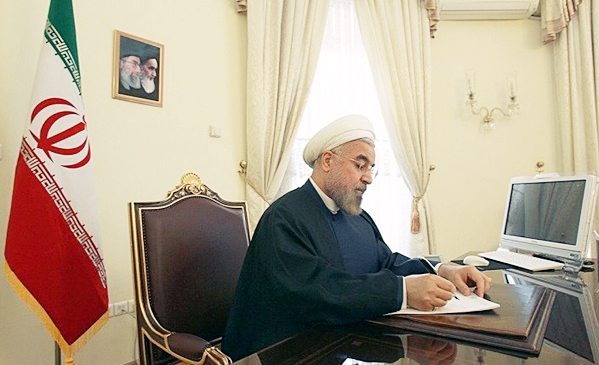
Rouhani

In a decree to Iran’s Defense Minister Brigadier General Hossein Dehqan on Thursday, Rouhani ordered an acceleration in Iran’s program for production of “various types of missile” needed to improve the country’s defense capabilities.

The decree came a day after a report by The Wall Street Journal that Washington is preparing sanctions against firms and individuals in Iran, Hong Kong and the United Arab Emirates over alleged links to Iran’s ballistic missile program.

The planned new sanctions come as the US is obligated under a recent nuclear deal between Iran and the P5+1 group of countries, known as the Joint Comprehensive Plan of Action (JCPOA), to lift the sanctions on Iran over its nuclear program.

The lifting of the bans is expected to come in January as Iran is swiftly moving to carry out its commitment under the deal, namely curbing its nuclear program.

Rouhani, in his decree to Dehqan, called the purported plan by the White House a measure in line with hostile US policies to “illegally interfere in the Islamic Republic of Iran’s programs for boosting the defense power.”

“In line with the [country’s] ratified defense policies, it is necessary that the program for the production of various types of missiles needed for (Iranian) Armed Forces continue with more speed and seriousness,” Rouhani said.

The Iranian president also warned that in case the US repeats such “wrong and interventionist” measures, the Iranian Defense Ministry must develop a new plan for expanding the country’s missile capabilities.

Rouhani said that Iran’s missile power, which he described as a means to protect the country’s sovereignty and a major deterrence against terrorism in the Middle East and the world, has never been up for negotiations, including in the nuclear talks with the P5+1 group – the five permanent members of the UN Security Council plus Germany – which resulted in the JCPOA in Austria on July 14.

He once again rejected claims that Iran is planning to produce missiles capable of carrying nuclear warheads, saying that Iran will continue to produce and test ballistic missiles as a “conventional and important” instrument for defending the country.

“It is clear that Iran’s missile program has never been part of the JCPOA, as [already] acknowledged by US officials,” said Rouhani, stressing that “nuclear weapons have no place in Iran’s defense doctrine; therefore, Iran’s ballistic missiles have not been designed to carry nuclear warheads.”

The Iranian chief executive further said the Islamic Republic would not accept any restrictions on its legitimate right to promote its defense might.


IRGC rejects rocket test near US warships

Technical Features of IRGC's Coronavirus Detection System to Be Announced Soon

Iran’s Islamic Revolution Guards Corps has dismissed US accusations of a rocket test near American warships in the Strait of Hormuz in the Persian Gulf.

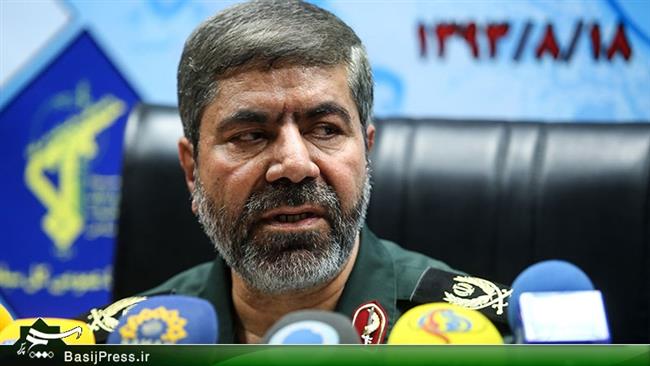
“The IRGC Navy has had no drill in the Strait of Hormuz over the past week during the time claimed by the Americans for launch of a rocket or missile,” head of the IRGC’s Public Relations Office Brig. Gen. Ramezan Sharif said on Thursday.

The rebuttal came a day after the US accused Iran of launching a “highly provocative” rocket test last week near its warships and commercial traffic passing through the Strait of Hormuz.

“Publication of such false reports under the current conditions is more of a psychological warfare and questionable,” Sharif said.

“Security and peace in the Persian Gulf is among serious strategies for Iran and the Guards carries out its drills according to the table of its programs at the prearranged time in order to upgrade required preparedness in this field,” he added.


FM spokesman: Iran will respond to US measures against its defense plans

Jaber Ansari-6

The Foreign Ministry spokesman has said that Iran will boost its defense capabilities to respond to any interventionist measures by the United States against its defense plans.

Hossein Jaber Ansari made the remark in reaction to reports that the US is preparing fresh sanctions to impose on the Islamic Republic over its ballistic missile program.

CNN has quoted US officials as saying on Wednesday that the Treasury Department is preparing sanctions against a number of Iranian and other international companies and individuals for their alleged role in developing Iran’s ballistic missile program. Officials said that the move was in response to Iran’s test launching of two ballistic missiles in October and November.

Reports suggest that the sanctions would be aimed at companies and individuals in Iran, the United Arab Emirates and Hong Kong for their alleged role in developing Iran’s ballistic missile program.

The sanctions would forbid US or foreign nationals from conducting business with the blacklisted firms, as well as freeze any assets the companies or individuals hold inside the American financial system.

The following is the translation of what else the spokesman said as reported by Fars News Agency on December 31:

The spokesman rejected such measures as unilateral, willful and illegal and said that the Islamic Republic of Iran has warned the US administration that Iran’s missile program – as the Americans have already admitted that – has nothing to do with the Joint Comprehensive Plan of Action (JCPOA) [the country struck with P5+1 back in July].

No measure can deny the Islamic Republic of Iran its legal and legitimate right to boosting its defense capabilities and national security, he added.

Jaber Ansari went on to say that by bolstering its defense capabilities, the Islamic Republic of Iran will respond to any measure by Washington which interferes with Iran’s defense plans.

Life of a man on death row for 28 years spared

Forgiveness

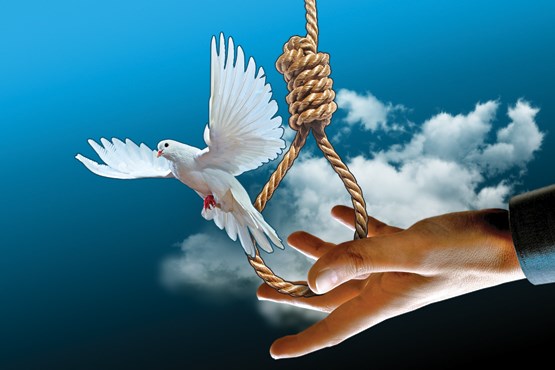
The life of a man who was convicted of murder in Sarab, East Azerbaijan Province, has been spared after he spent 28 years on death row.

The following is the translation of a report the Islamic Republic News Agency (IRNA) filed on the story on December 30:

The unnamed death-row inmate had killed Hassan Ahsani after a land dispute in a village resulted in a mass brawl.

He managed to win the approval of the family of the murder victim after rural patriarchs stepped in.

In explaining why his family decided to waive its right to Qisas [the Islamic an-eye-for-an-eye retribution], Ahmad Ahsani, a brother of the murder victim said, “The pleasure one finds in forgiveness can never be found in revenge; after all, the joy of forgiveness is eternal whereas the joy of revenge is fleeting.”

He further said that over the years because of what the family had gone through, we decided to stick to our right to Qisas; but we eventually decided that revenge is more inauspicious.

The eldest son of the death-row inmate has said that he was six when that fateful fight broke out and that he has since been waiting for the return home of his father every day.

He thanked the family of the victim for forgiving his father.

What is worth noting in the case is that the family of the murder victim demanded no blood money for sparing the life of the convicted killer.

In this case, the large number of individuals with a say in whether the murderer should be put to death procrastinated the final decision.

Russian anchor hails Sangak as the most delicious bread in the world

Russian anchor hails Sangak as the most delicious bread in the world

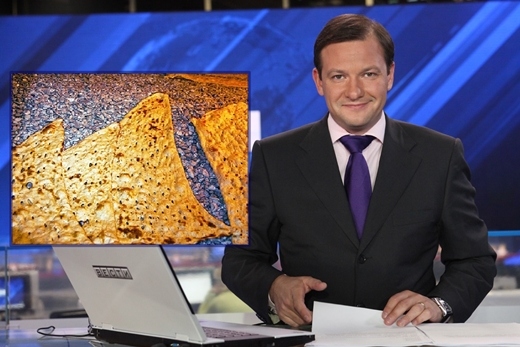
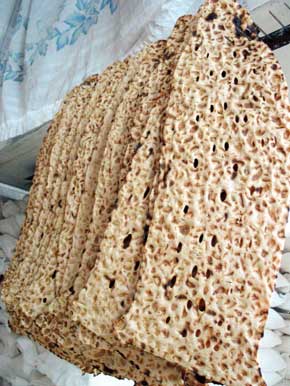
Sergey Brilev, an anchor of TV Channel “Rossiya” (RTR) who has recently paid a visit to Tehran, has said Sangak [a plain, triangular whole wheat leavened flatbread, very popular in the Iranian cuisine] is the most delicious bread in the world.

The following is the translation of a report by the Islamic Republic News Agency (on December 28) on his observations released in the form of a report during his Tehran visit as a part of a 200-member delegation led by the Russian industry minister:

Iran's Sangak - delicious bread in the worldIn the report he says: Sangak is very delicious; it can be described as one of the most delicious in the world baked in keeping with ancient Iranian traditions.
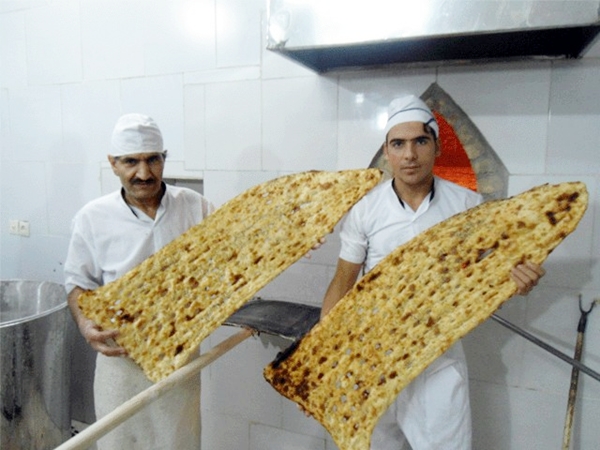

Tehran’s Sangak bakeries are unique in the world; Sangak is baked on small gravels.

Iran is a modern city with an old civilization. There are no signs of historical monuments in the capital which is dotted with apartment buildings, public places and mosques.

The report the Russian correspondent has filed from Tehran features an interview with the Russian industry chief on the prospect of industrial cooperation between the two countries.

The interview is conducted in the very same place the 1943 Tehran Conference attended by Stalin, Roosevelt and Churchill was held.

“I am reporting from the very same historical place which hosted a world summit in the thick of World War II.”

Iran's Sangak (traditional bread)

As the report rolls on, he says at a time when the mountains to the north of Tehran are blanketed with snow, many shrubs here in Tehran are still green.

Iran has a climate perfect for agriculture eight months of a year; it can export its produce, including oranges and pomegranates, to Russia.

[…]

Sergey Brilev signs off on a Russian super-jet-100 which was brought to Iran to be displayed at the Russian industrial expo. Iranians seem to have liked this aircraft.