Sunday, April 19, 2026
Home Blog Page 4621

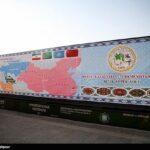
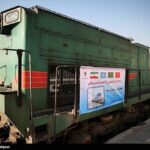
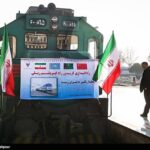
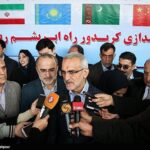
China-Iran Freight Train Arrives in Tehran on First Journey

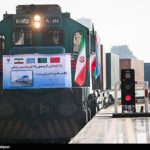
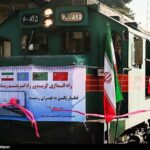
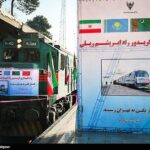
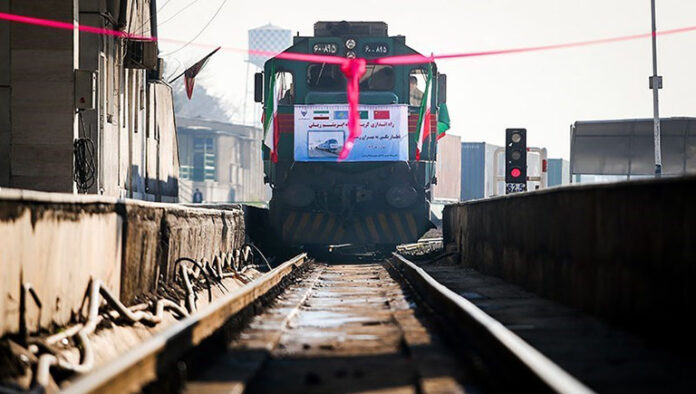
The first direct train connecting China and Iran, which had departed from the city of Yiwu in Zhejiang Province, has arrived in Iran’s capital. It traveled across the Chinese border via the Xinjiang Uyghur before traveling through Kazakhstan and Turkmenistan on its way to Tehran.


Visit to Iran Was Very Important: Gianni Infantino

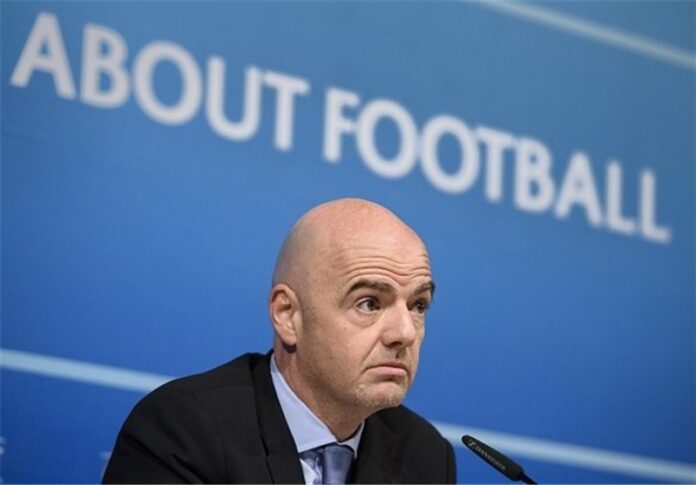
Infantino came to Tehran last week and visited the Iran National Football Academy in his one-day trip and hold a meeting with he Iranian media as well.

He unveiled his manifesto for the presidential campaign in an exclusive interview with the Tasnim news agency.

Infantino talked about his personal goals for the future.

Tasnimnews.com: Why did you choose Iran as the first Asian country for your presidential campaign?

I’ve been in Asia before my campaign on several occasions. I was very happy to receive an invitation from the Iran Football Federation President Ali Kaffashian.

Iran is currently the leading Asian team in the FIFA ranking and it’s a great football country with a long tradition and several titles won. Iran has been a driving force for football, futsal and beach soccer in the region. The passion from everybody involved in Iranian football is impressive. It was a real honor to be invited and have the possibility to visit your country.

Would you please tell us about your presence in Iran as well as meeting with the country’s football officials?

I had an opportunity to visit the Iran’s National Football Academy. My goal was to talk about football and also present my ideas for the future of football and FIFA. I also wanted to discuss what we can do together in the future.

Did you achieve your travel goals?

I think both me and President Kaffashian felt that it was very positive that I came here to explain my vision and to hear the needs and ambitions of the Iran Football Federation. I’m convinced that this was a very important visit for the future of FIFA. And I was very encouraged by the support I felt in Iran.

Will you increase the number of Asian participating teams in the World Cup if you are elected as FIFA President?

In my manifesto (www.fifaforward2016.com) I propose a World Cup with 40 teams with the AFC increasing from 4.5 to 6 with the possibility to have 7 representatives depending on sporting results. I consider the expansion of the World Cup as a great opportunity to promote football in the more counties and regions of the world without endangering the quality of the competition. It will also enable generating additional revenues to help developing football throughout the world.

Is there any possibility to change the host of 2022 World Cup because of FIFA’s scandal?

After more than five years, the fact is that we have not seen any proofs of any misconduct. Therefore I don’t want to participate in more speculation about that matter and believe we should now concentrate on organizing a great World Cup in 2022, and before that also in 2018.

How do you evaluate your chance of winning FIFA presidential election?

I am confident that the majority of the Federations will vote for a better FIFA and for the proposal that arguably is focused on football. On football development, on football on the field but also on everything that surrounds it. A proposal that gives a voice to the federations and not only a vote every four years. A proposal that breaks the walls between confederations and because football will be better if we realize that together we are stronger. I believe the Federations will think for themselves and vote for me on the 26th of February.

Iran FM urges following JCPOA example for all crises

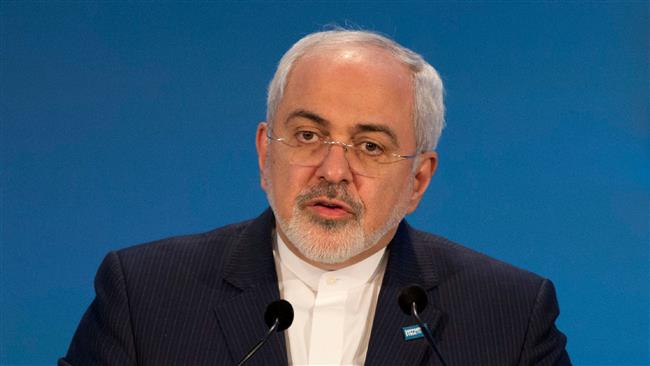
“The nuclear agreement was one of the rare cases where diplomacy prevailed,” Mohammad Javad Zarif said in an address to the Royal Institute for International Relations, known as the Egmont Institute, in the Belgium capital of Brussels on Monday.

He added that the reason behind the resolution of the Western dispute with Iran over the country’s nuclear program was a shift in the approach toward the issue at hand.

Zarif said as a result of the nuclear deal, the West, on the one hand, has the most concrete guarantees about the peaceful nature of the Iranian nuclear program and on the other hand the sanctions on Iran have been lifted.

Iran and the five permanent members of the UN Security Council – the United States, France, Britain, China and Russia – plus Germany started to implement the Joint Comprehensive Plan of Action (JCPOA) over Tehran’s nuclear program on January 16.

After the JCPOA went into effect, all nuclear-related sanctions imposed on Iran by the European Union, the UN Security Council and the US were lifted. Iran has, in return, put some limitations on its nuclear activities.

Pointing to the security and terror crises in Europe, Zarif said the West cannot expect to enjoy security while other regions in the world are reeling from insecurity.

“We should know that these crises are common threats and challenges to us all,” the Iranian minister pointed out.

He said the crises have to be seen from a global standpoint in a way that “every crisis is a crisis for all.”

“I am of the belief that if we could redefine our issues in the region through the inclusion of others and not their exclusion, we can find a solution,” Zarif added.

To address the issue of Daesh Takfiri militants and terrorism, he said, “We need a global solution to stop hatred.”

The Iranian foreign minister said political or military solutions alone cannot resolve the issue and a “comprehensive global solution” is required.

The Iranian foreign minister also referred to the Saudi massacre of Yemenis, criticizing the approach where “a country sees its interests not in having friendly neighbors but in their elimination.”

Since March 26, 2015, Yemen has been under military attacks by Saudi Arabia with the declared aim of undermining the Houthi Ansarullah movement and restoring power to fugitive former Yemeni president, Abd Rabbuh Mansur Hadi, a Riyadh ally.

Nearly 8,300 people, among them over 2,230 children, have been killed and over 16,000 others injured since the onset of the air raids, which have taken a heavy toll on the impoverished country’s infrastructure.

Developed countries threaten global security: Khoshroo

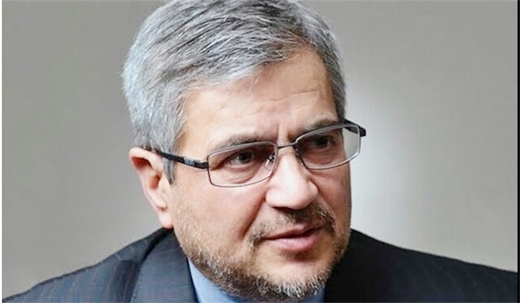
Gholamali Khoshroo

Khoshroo made the remarks Monday on behalf of the Non-Aligned Movement (NAM) member states while addressing the UN Security Council Ministerial Open Debate on “The Respect to the Principles and Purposes of the Charter of the United Nations as Key Element for the Maintenance of International Peace and Security”.

The full text of his statement reads:

Mr. President,
I have the honor to speak on behalf of the Non-Aligned Movement (NAM). I wish to convey to you, Mr. President and the Bolivarian Republic of Venezuela, the Movement’s appreciation for convening this Ministerial open debate on this fundamental topic. I also thank the Secretary General for his inputs in this debate. We hope this debate contributes to make United Nations, and in particular this Council, more transparent, democratic and consistent in its undertakings. At the time when the international community celebrates the 70th anniversary of this Organization, there is no better time to engage Member States in the defense of the principles and purposes of the UN Charter as the only way for ensuring international peace and security.

The purposes and principles enshrined in the UN Charter are the same pillars upon which the structure of the international law is founded. They encompass the fundamental concepts of respect for the sovereignty, the equality of States, the non-interference, the peaceful settlement of disputes, and the refrain from the use or threat of use of force against the territorial integrity or political independence of all Member States. These purposes and principles must be thoroughly respected at all times by all Member States.

NAM has been very strong and consistent in its calls to the international community to uphold and defend the principles of the UN Charter and international law as well as the means envisaged in the UN Charter for the pacific settlement of dispute and non-resort to the threat or use of force. The purposes and principles of the UN Charter and the principles of international law are essential in preserving and promoting peace and security, the rule of law, economic development and social progress, and human rights for all.

Global peace and security continue to elude humankind as a result of, inter alia, increasing tendency by certain States to resort to unilateralism, arbitrariness and unilaterally imposed measures, non-fulfillment of the commitments and obligations assumed under the relevant international legally binding instruments especially on weapons of mass destruction and conventional weapons treaties, terrorism, conflicts, violations of human rights and international humanitarian law, the use of double standards in international relations, the continuing failure and unwillingness of the majority of the developed countries to fulfill their commitments in the economic and social fields. We underscore the need for the international community to collectively redress these situations in accordance with the UN Charter and the principles of international law.

Mr. President,
NAM Member States, guided by the Movement’s principled positions and recognizing the serious danger and threats posed by the actions and measures that undermine international law and international legal instruments, stresses the need to undertake a wide range of measures, among others:

1. Identify and pursue measures that may contribute towards achieving a peaceful, prosperous, just and equitable world order;

2. Respect the right of nations to decide on their political, economic and social systems, as a pathway to the peaceful coexistence among nations and, thereby, to peace and security;

3. Conduct external relations based on the ideals, principles and purposes of the Movement, the UN Charter and international law, as well as the relevant Declarations adopted by the General Assembly;

4. Refrain from recognizing, adopting or implementing extra-territorial or unilateral coercive measures or laws, including unilateral economic sanctions, other intimidating measures, and arbitrary travel restrictions, that seek to exert pressure on Non-Aligned Countries – threatening their sovereignty and independence, and their freedom of trade and investment and prevent them from exercising their right to decide, by their own free will, their own political, economic and social systems, where such measures or laws constitute flagrant violations of the UN Charter, international law, the multilateral trading system as well as the norms and principles governing friendly relations among States;

5. Oppose and condemn the categorization of countries as good or evil based on unilateral and unjustified criteria, and the adoption of the doctrine of pre-emptive attack, including attack by nuclear weapons by certain States, which is inconsistent with international law, in particular the international legally-binding instruments concerning nuclear disarmament;

And finally, Mr. President, the Movement has stressed that the UN Charter contains sufficient provisions regarding the use of force to maintain and preserve international peace and security, and that achieving this goal by the Security Council should be strictly done in full conformity with the relevant Charter provisions. Resorting to Chapter VII of the Charter, as an umbrella, for addressing issues that do not pose a threat to international peace and security must be avoided and in this regard, the Council should fully utilize the relevant Charter provisions, where appropriate, including Chapters VI and VIII. In addition, and consistent with the practice of the UN and international law, as pronounced by the ICJ, Article 51 of the UN Charter is restrictive and should not be re-written or re-interpreted.

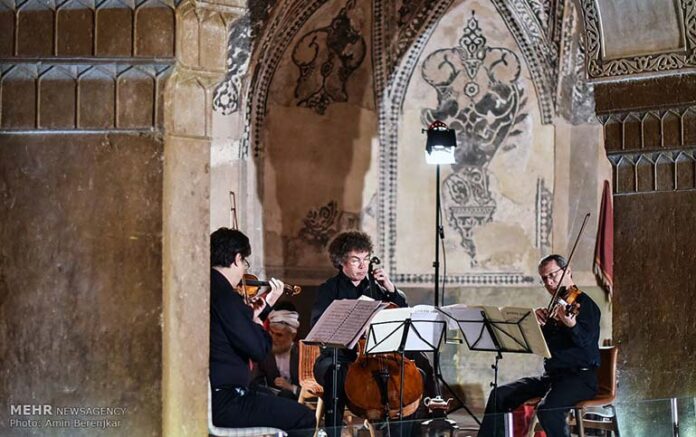
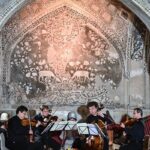
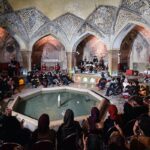
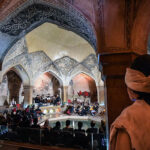
Germany’s Leipzig String Concert in Shiraz’s Vakil Historical Bath

In his interview with a Mehr News journalist, the producer of this cultural event said, “German artists from the Leipzig Quartet performed some of the world’s greatest musical pieces in the Vakil Bath historical complex. In this concert, pieces by Hayden, Mendelssohn, Beethoven and Schumann were performed. The Vakil Bath Museum was chosen for this event to strengthen Iran and Germany’s cultural ties; it was a significant experience for both the performers and the audience. Both of the concerts were given free from ticketing.


Iran, Europe See Common Grounds for Cooperation on Migrant Crisis

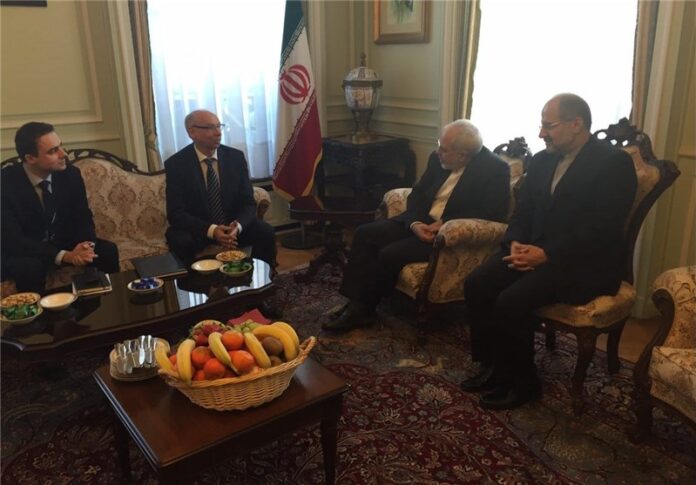
Mohammad Javad Zarif held a meeting with Janusz Lewandowski, the chair of the European Parliament’s delegation for relations with Iran, in Brussels on Monday.

Zarif described the issue of migrants as a common concern for Iran and the European Union.

“Iran hosts three million Afghans, and the two sides (Iran and EU) can develop good cooperation in this regard,” he added.

For his part, Lewandowski said Tehran and Europe can forge a close partnership to deal with the migration crisis, fight against narcotics, and develop parliamentary relations.

He also highlighted the significant role that Iran plays in the settlement of regional conflicts.

Zarif arrived in Brussels on Sunday night. During his two-day stay in Belgium, he is going to hold high-level talks with the EU officials and Belgian authorities.


Japan PM due in Iran to expand oil cooperation

“There are grounds for cooperation between the two countries in oil refinery, LNG, petrochemistry, investment and projects financing sectors,” Zangeneh said in a Monday meeting with Katsuyuki Kawai, an adviser to Japanese prime minister, who is in Tehran at the head of a delegation.

He added that the current visit by Kawai and his accompanying delegation to Tehran is aimed at reviewing issues of mutual interest and making preparation for the Japanese premier’s trip to Iran in 2016.

Following the removal of nuclear-related sanctions against Iran in January, Tehran and Tokyo can speed up cooperation, particularly in the oil sector, the minister emphasized.

Iran and the five permanent members of the UN Security Council – the United States, France, Britain, China and Russia – plus Germany started to implement the Joint Comprehensive Plan of Action (JCPOA) on January 16.

After the JCPOA went into effect, all nuclear-related sanctions imposed on Iran by the European Union, the UN Security Council and the US were lifted. Iran has, in return, put some limitations on its nuclear activities.

Zangeneh further added that the two countries can expand strategic relations in the energy sector and said the export of Iran’s crude oil to Japan can be among important fields for cooperation.

“We expect Japan and companies managed and overseen by the country’s government to boost Iran’s oil purchase to at least pre-sanctions level,” he said.

On January 22, the Japanese cabinet approved the lifting of its sanctions against Iran, joining the ranks of the world’s major economies to normalize trade ties with the Islamic Republic.

Japan was one of the key clients of Iran’s oil before the US-led sanctions were imposed on the Islamic Republic in 2012.  Iran also hosted several leading Japanese companies in its oil and gas projects before the sanctions were put into place to discourage purchases of oil from Iran not only by Japan but also by many other international clients.

The prospects for the removal of the sanctions against Iran encouraged Japanese officials to look for avenues to return to the previous status of oil relations with Iran.

Japan imported around 338.9 bpd of crude oil from Iran before the imposition of the US-led bans against Tehran in January 2012.


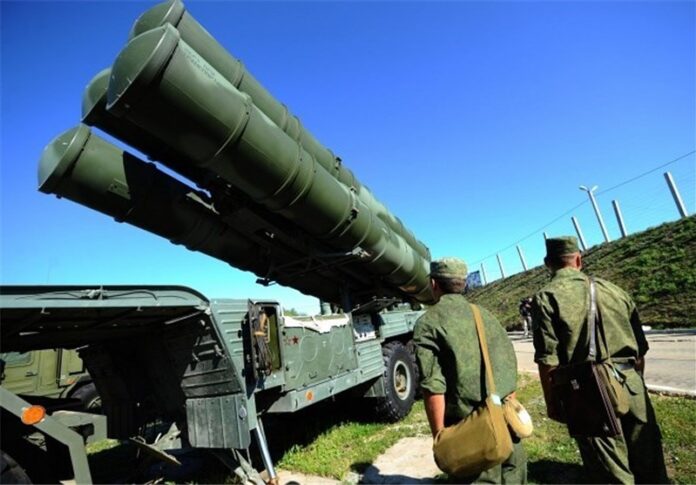
S-300 Delivery to Iran to Start in ‘Nearest Time’: Russian Official

“Deliveries will be made in the nearest time,” Zamir Kabulov, who is also Putin’s special envoy for Afghanistan, told RIA Novosti on Monday.

Under the previous contract signed in 2007, Russia was required to provide Iran with at least five S-300 defense system batteries.

But the contract, worth more than $800 million, was revoked after then-President Dmitry Medvedev banned the supply of those systems to Tehran in 2010.

Later, Iran lodged a $4 billion lawsuit at an international court in Geneva against Russia’s arms export agency.

However, Russian President Vladimir Putin decided in April to lift the ban on the S-300 missile system delivery to Iran.

Kabulov said that the Islamic Republic is also displaying interest in buying more advanced, S-400 missile systems, but no talks are underway at the moment on this matter.

“No, there are no talks being held on the S-400. The Iranians have noted that they would principally be happy (to receive them), but there haven’t been any negotiations,” he said.

The remarks come as Iranian Defense Minister Brigadier General Hossein Dehqan left for Moscow on Monday at the official invitation of Russian Minister of Defense Sergei Shoigu to hold talks with senior Russian political and defense officials.

Enhanced defense, military and technical cooperation between Tehran and Moscow are among main objectives of the Iranian minister’s visit.


The Israeli Minister Gets Chummy with Saudi Arabian Authority

As reported by Al-Alam News Network, the meeting of the two authorities at the Munich Security Conference seemed to suggest that there had been previous close contact between them.

The members of the Israeli delegation accompanying Yaalon, the Defense Minister, and Al-Faisal’s entourage also greeted each other with warm smiles. The photos published of this scene imply a certain level of intimacy among them.

It remains worth mentioning that the Israeli Defense Minister talked about channels of contact between his country and the Arab states bordering the Persian Gulf in his speech at the Munich Security Conference, saying, “Meetings with these countries are going on behind closed doors.”

Yaalon emphasized that there are confidential contacts between Israel and the Arab states around the Persian Gulf.

The Munich Security Conference is held annually in the Bayerischer Hof Hotel in Munich, Germany in February, and hosts guests from all over the world. This year it was held from February 1 to 14.

This conference covers a wide range of important international security concerns, and this year the Syrian civil war and the refugee crisis are on the top of its list.

Iranian FM Downplays Saudi Claims about Deploying Troops to Syria

Zarif-Iran Talks

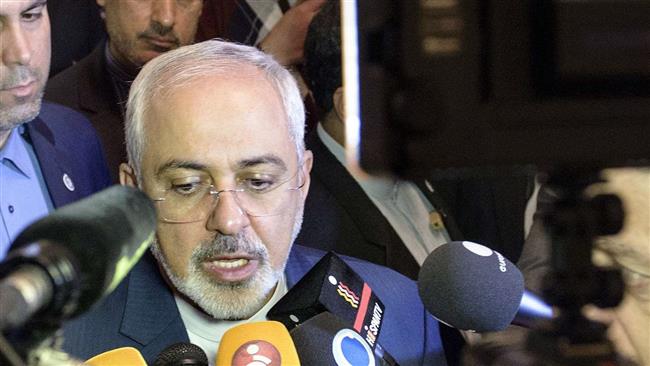
“It is clear that such remarks (about the deployment of troops to Syria) are mostly a propaganda stunt,” Zarif told reporters upon his arrival in the Belgian capital of Brussels on Sunday.

“National capabilities and facilities are self-evident, and such propagandistic bluffing will not help solve their problems,” he added, according to a report by Mizan news agency.

He further warned that such claims can even create more tension and danger in the region, and urged neighbouring countries to face and understand the current reality, and to leave their illusions aside.

“They should accept that they have to yield to the demands of the Syrian nation, and they should stop making decisions for the people of Syria,” Zarif said, reiterating that the Arab nation is the one that must make its own decision.

The comments came after Riyadh voiced its readiness to participate in ground operations in Syria if the US-led coalition, purportedly targeting terrorists, decides to commence any such operations.

Saudi Arabia is a member of the so-called US-led coalition, which has been conducting air raids against what are claimed to be Daesh (ISIS) terrorists inside Syria. This has been undertaken without any authorization from the Syrian government or a UN mandate, since September 2014.


368635_587


Zarif’s Ongoing Visit to Europe


Elsewhere in his remarks, the Iranian foreign minister spoke about his visit to Brussels, stressing that Tehran has begun “important discussions” with the European Union (EU), and the his visit is being made within the same framework.

During the trip, which will last until Tuesday, it will be necessary to confer with EU officials, in particular Federica Mogherini, the EU Foreign Policy Chief, on the timely implementation of recent nuclear deal conditions (known as JCPOA) between Tehran and world powers, according to Zarif.

Bilateral ties and issues of mutual interest, as well as significant regional issues, will also be discussed with EU officials, the Iranian foreign minister added.
“The entire world has urged Saudi Arabia to cease its brutal war against the people of Yemen and its illegal attacks on civilians”, Zarif said, stressing that the necessity for putting an end to the war is another point due to be discussed during the European visit.

He also noted that during the visit, he will follow up on the issue of Syria, and the need for a concerted campaign against ISIS and other extremist groups.

“In the meeting at Munich, we managed to reach an agreement on the necessity for an all-out ceasefire, the cessation of military operations by all sides, and the delivery of humanitarian aid to the Syrian people,” he added.

“These are the positions which the Islamic Republic of Iran has been stressing for several months, during the Vienna process meetings, for example,” Iran’s top diplomat said, while regretting that Saudi Arabia had opposed Iran’s views during previous meetings.
“However,” he added, “The Al Saud regime is now under international pressure to abandon its warmongering policies and its illusions of offering military solutions to the Syrian crisis.”

“We are sure it [Saudi Arabia] would have no other choice,” he added.