Friday, December 26, 2025
Home Blog Page 4574

Araghchi hails Iran’s Human Development Index report

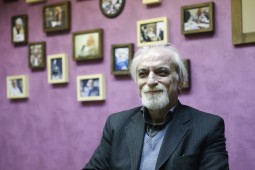
Abbas Araghchi

Abbas Araghchi made the remarks in a ceremony held for unveiling Iran’s 2015 human development report on Wednesday.

‘The report shows that Iranians are strong and that through history they have demonstrated they can face adversities,’ Araghchi told reporters.

‘The report unveiled today identifies Iran as a country with a high HDI as it shows a six-level improvement in its ranking,’ he said.

The deputy foreign minister also said Iran’s HDI report 2015 is another evidence that even under most severe, most brutal and illegitimate sanctions, we have achieved a relatively high rate of success and this is a reality.

‘Even during the years of biting sanctions we managed to achieve major developments,’ he said.

‘But this is not surprising for us,’ he added.

‘We are not going to stop and we will continue going toward new horizons of development that Iranians deserve.’

Nothing Stops Iranians from Deciding Their Fate: FM

The huge turnout in Friday’s elections demonstrated the Iranians’ resolve to decide their fate irrespective of any problem, Zarif said at a ceremony held in Tehran on Wednesday to acknowledge the efforts by Iranian reporters and journalists in the long course of nuclear talks between Tehran and the Group 5+1 (Russia, China, the US, Britain, France and Germany).

Countrywide parliamentary and Assembly of Experts elections were held in Iran on February 26.

More than 60 percent of some 55 million eligible voters cast their ballots at around 53,000 polling stations across the country.

4,844 and 161 candidates ran for the parliament and the Assembly of Experts, respectively.

There are 290 seats in the Iranian parliament, elected by direct vote of people in nationwide election for four years.

In a message on Sunday, Leader of the Islamic Revolution Ayatollah Seyed Ali Khamenei had also expressed gratitude for the aware, resolved and determined nation of Iran, saying the public turnout at the polls displayed “the brilliant face of religious democracy to the world.”

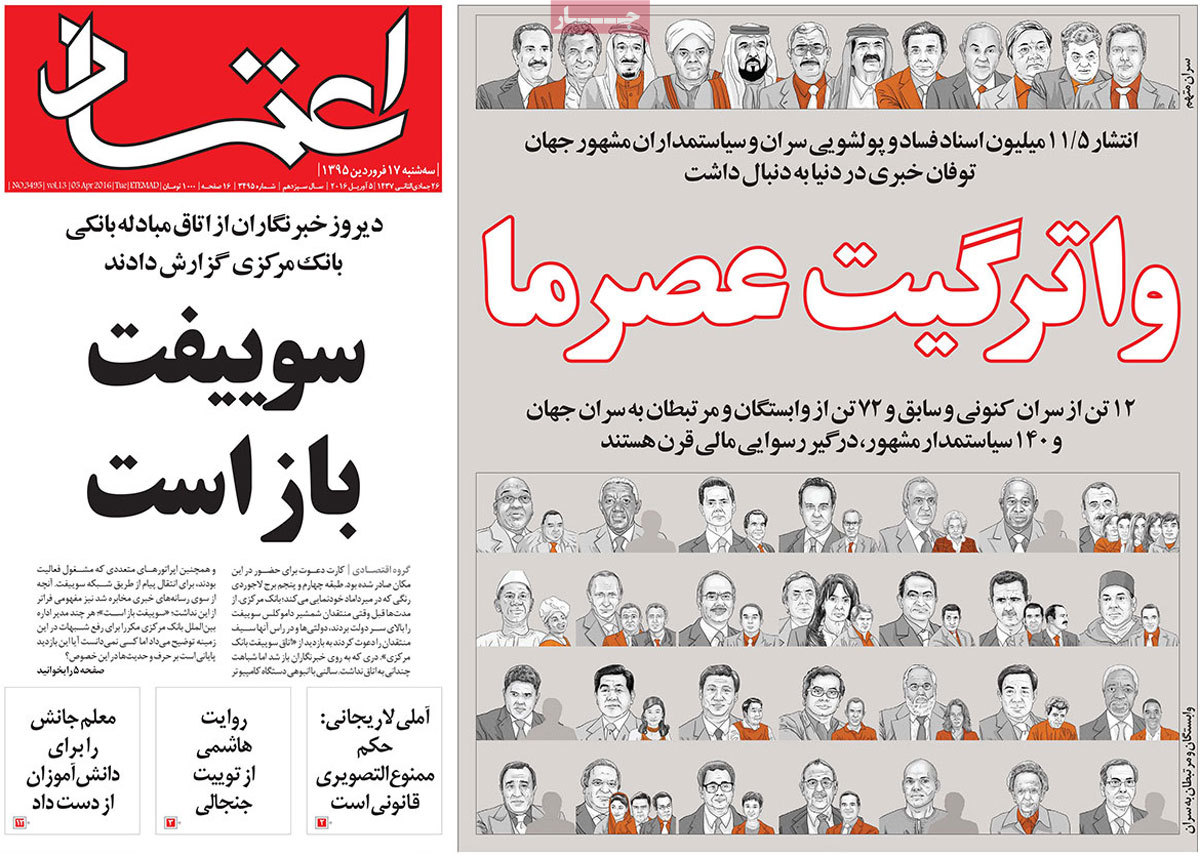
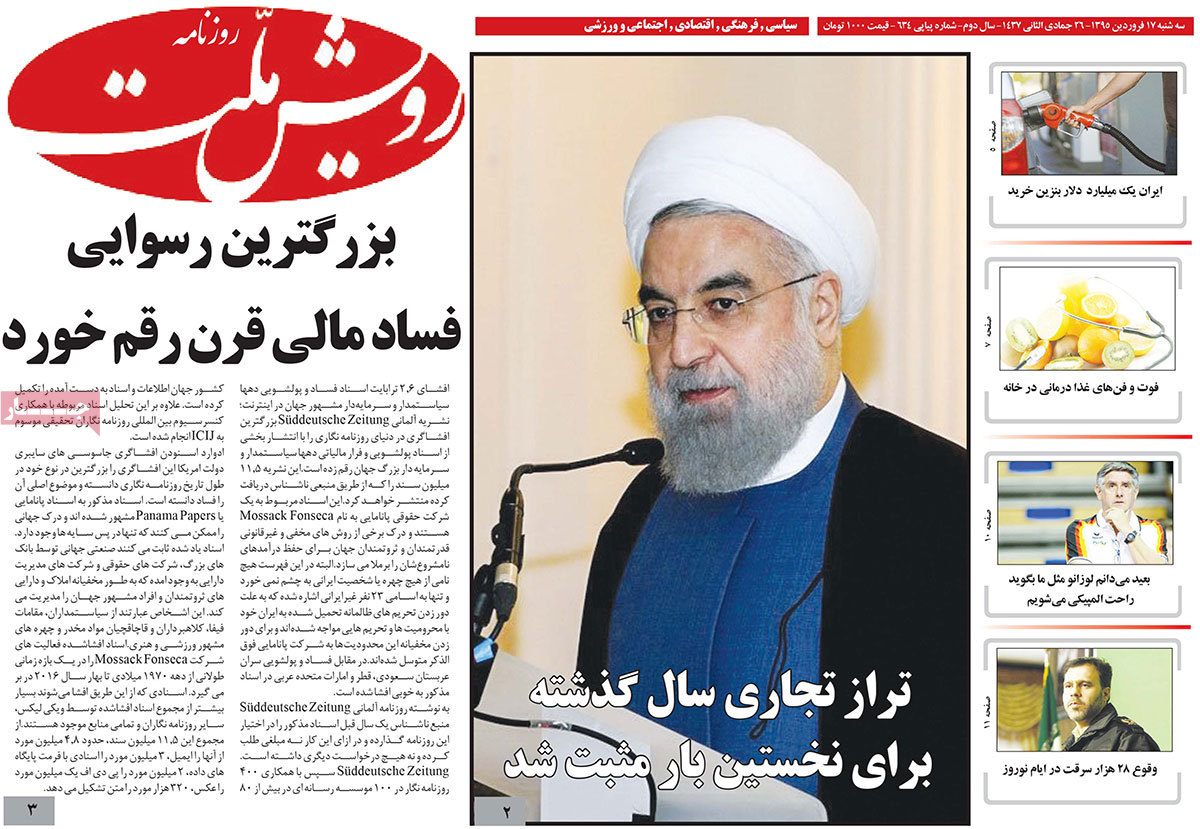
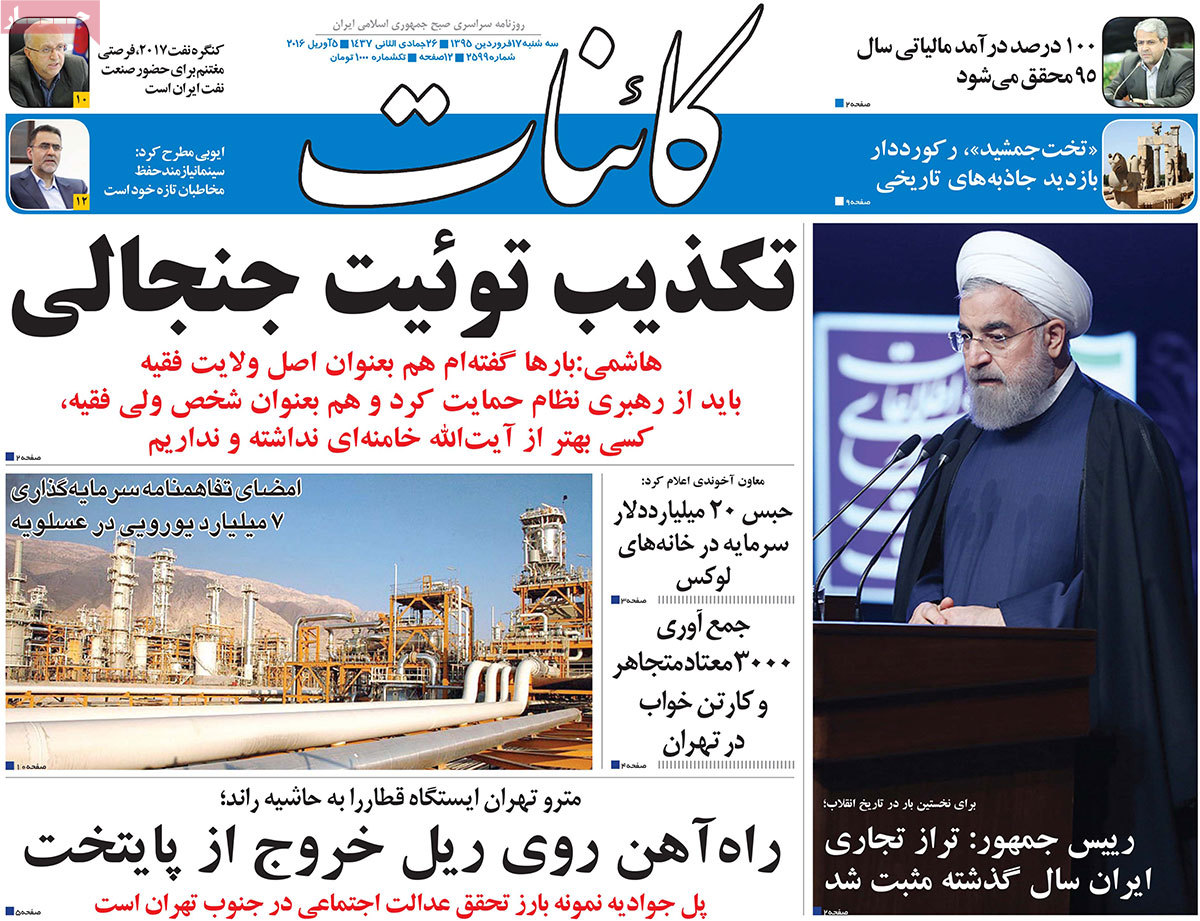
A look at Iranian newspaper front pages on March 2

Iran Newspaper front pages

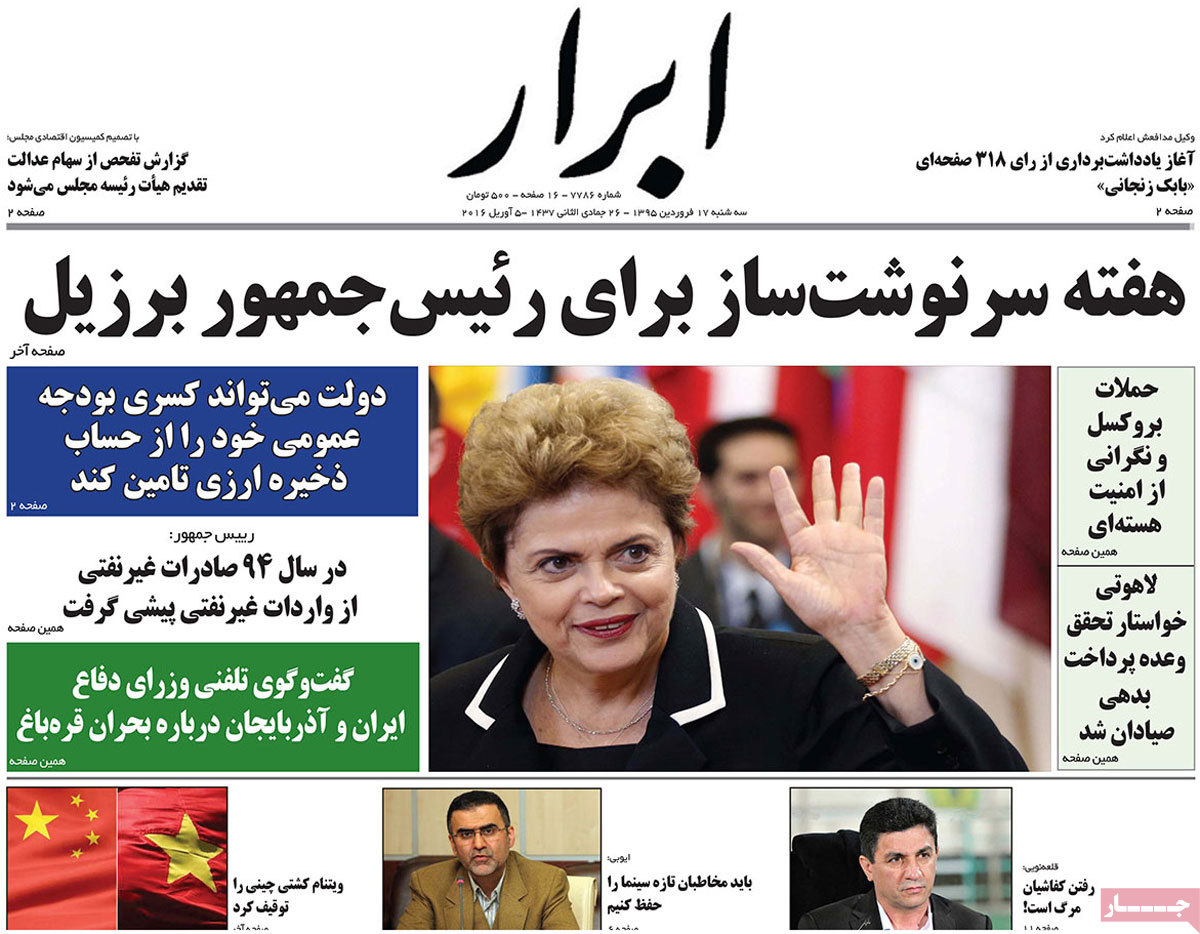
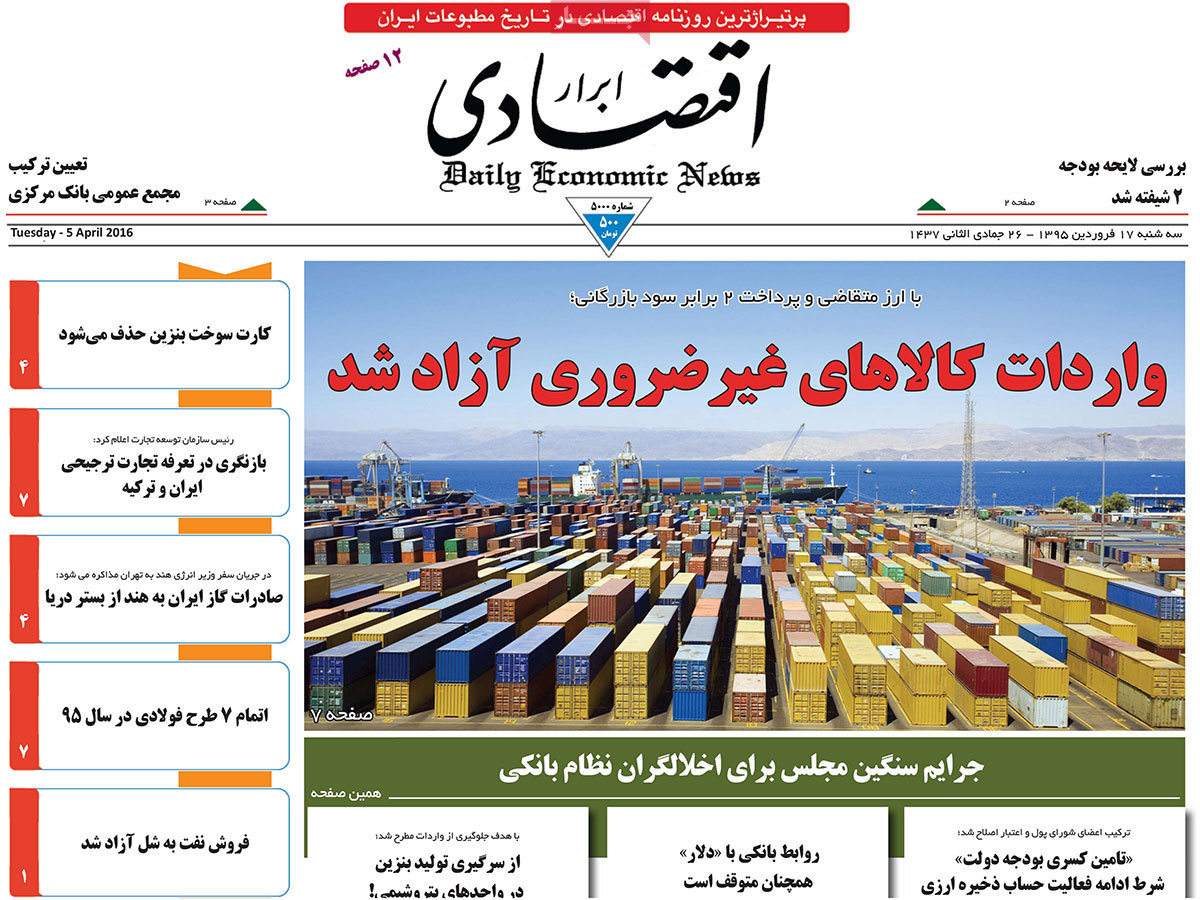
Abrar:
1. Japan, EU team up to warn China of concerns over new security laws
2. FM Zarif: Iran, Romani form economic commission after 12 years
3. Iraqi army launches major operation in Salahuddin
4. Denmark poised to boost Iran ties
5. 19th official Assembly of Experts session under way
6. Haddad Adel: 6th, 9th hardliners absent in 10th parliament
7. Rouhani visits exhibition of car-making industry achievements
8. Iran among five major challenges for us: US defense secretary
9. UN: Lull in Syria fights a global agreement that should last no longer than two weeks

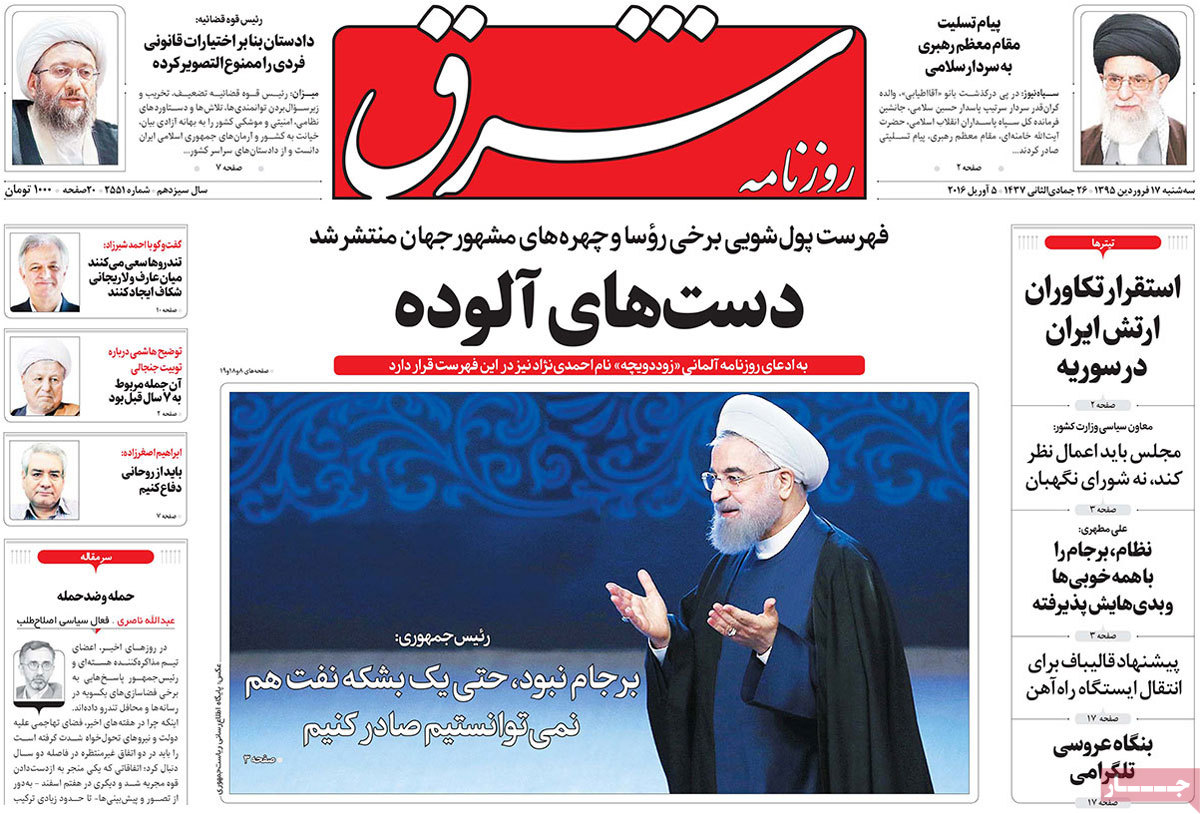
A look at Iranian newspaper front pages on March 2


Asrar:
1. Ayatollah honors Hassan Khomeini
Hassan Khomeini, the grandson of Imam Khomeini, founder of the Islamic Revolution, failed to qualify for Assembly of Experts elections by the Guardian Council.
2. Gov’t spokesman: 2016 elections completion of 2013 presidential vote
3. Iran to adopts free pricing system for cars in 10 years: Minister
4. Assad: Truce glimmer of hope
5. Admin committed to cooperate with future parl.
6. Head of Tehran Chamber: Ice of recession will smash in New Year
7. AEOI Chief: West late on fulfilling parts of JCPOA commitments
8. Iran, US wrestlers compete in New York’s Times Square


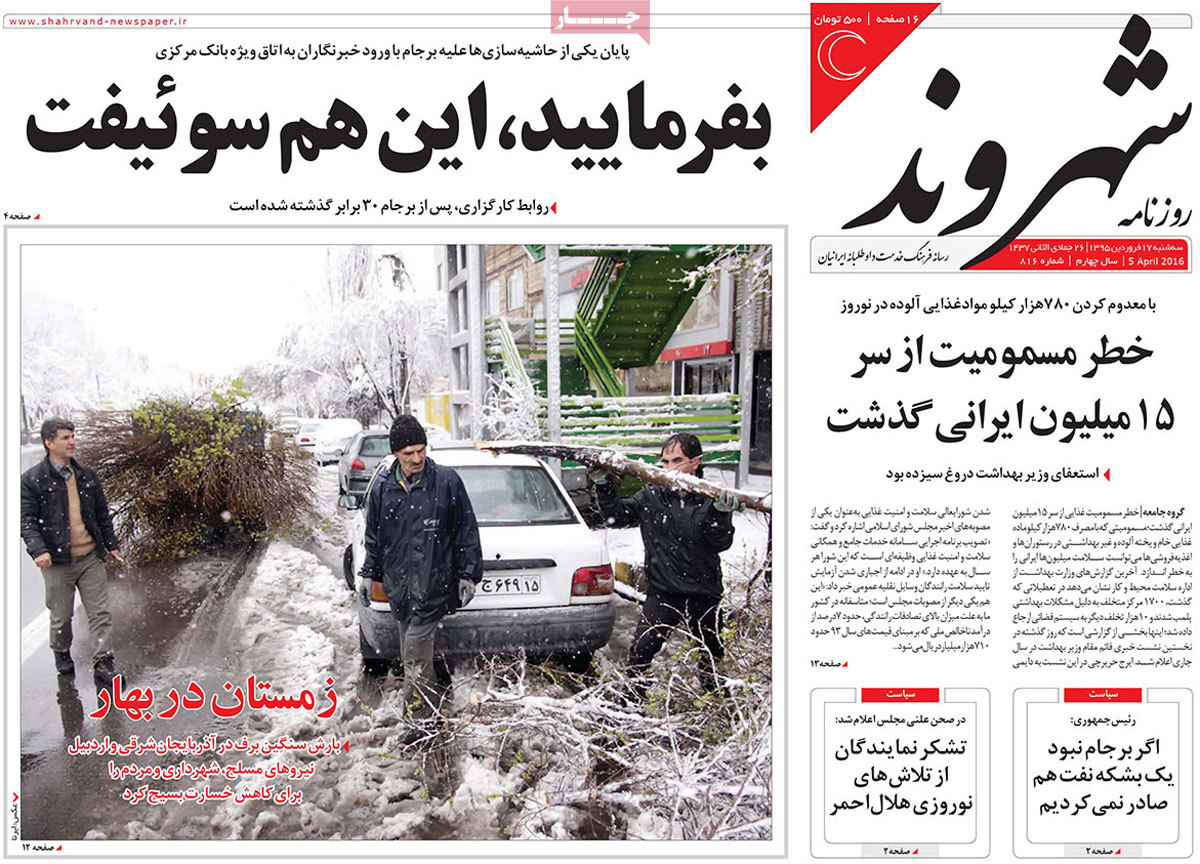
A look at Iranian newspaper front pages on March 2


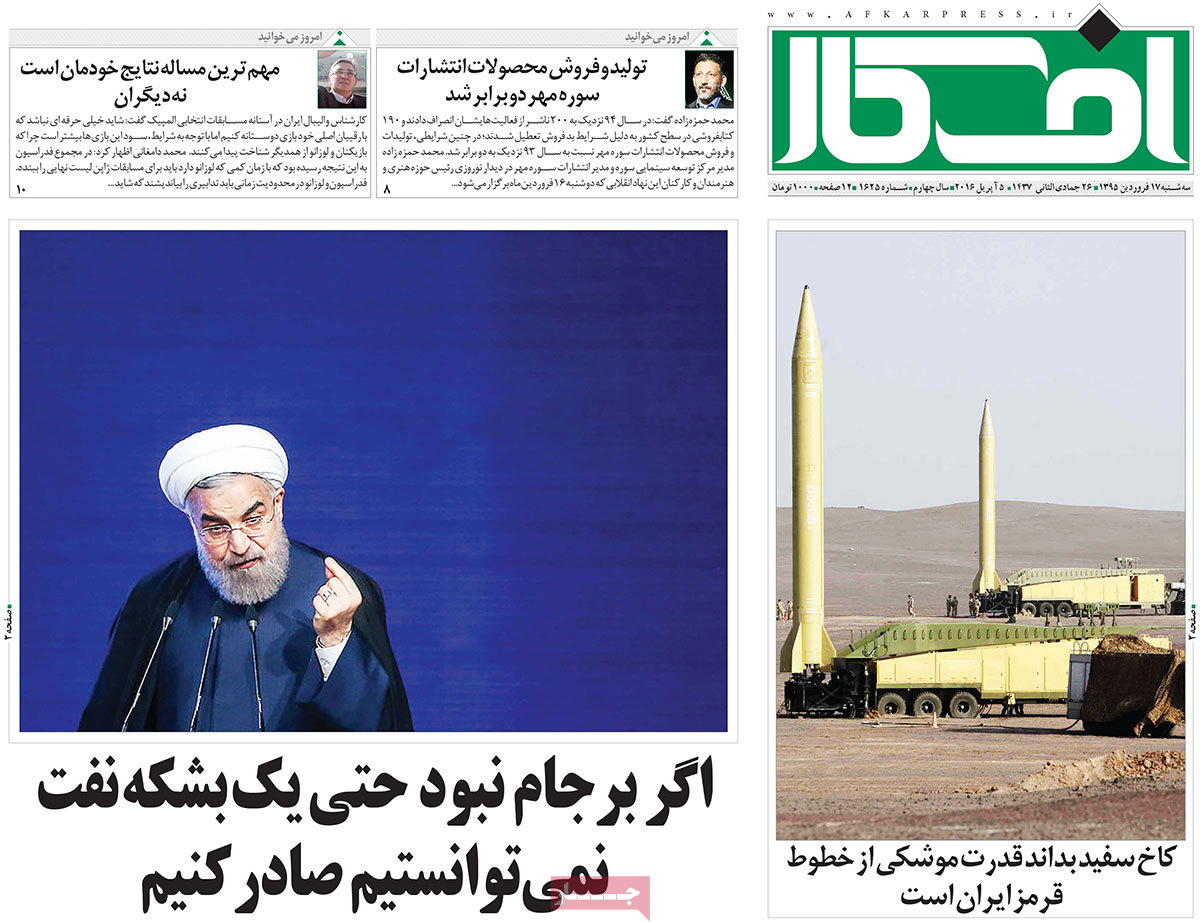
Afkar:
1. Iran, Romania boost ties
2. Tehran mayor calls for designation of body to curb air pollution


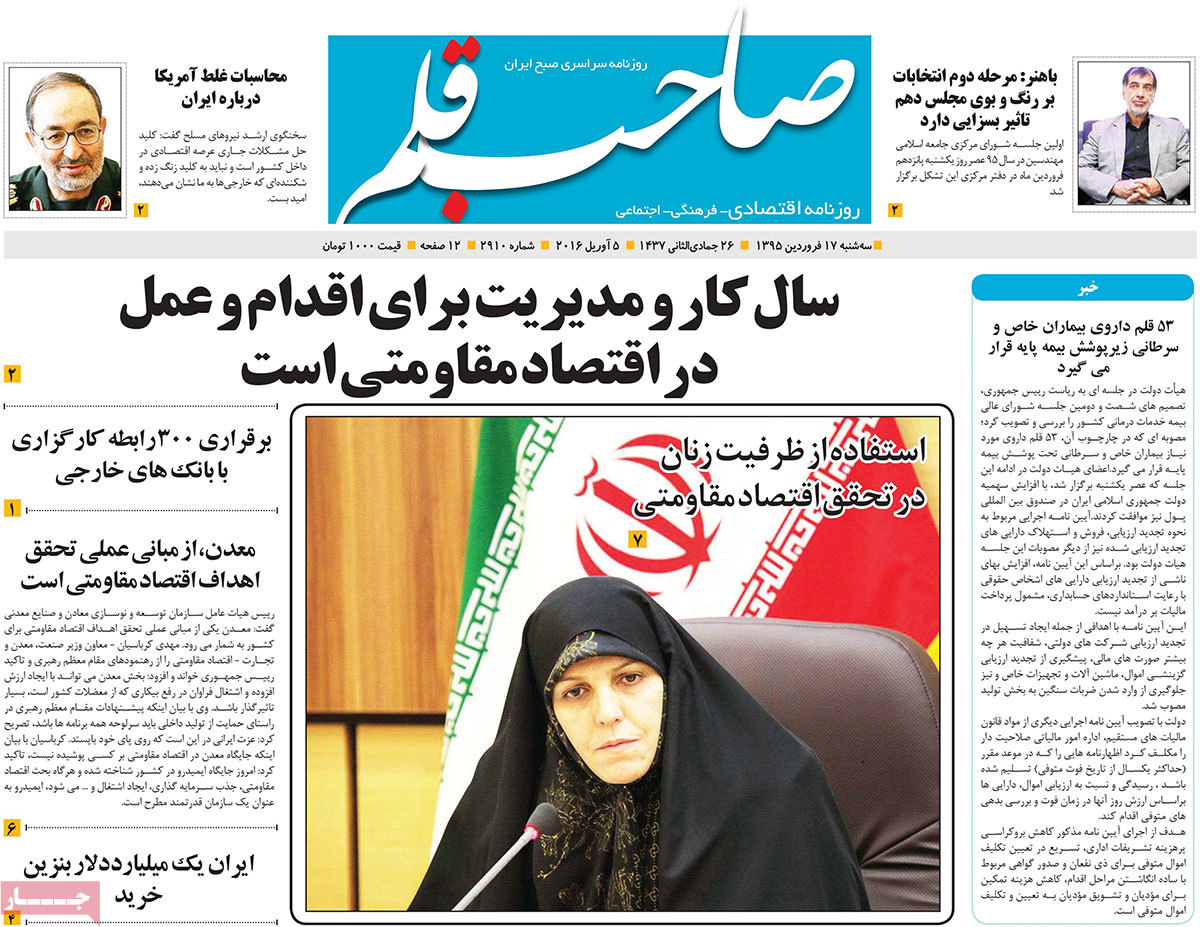
A look at Iranian newspaper front pages on March 2


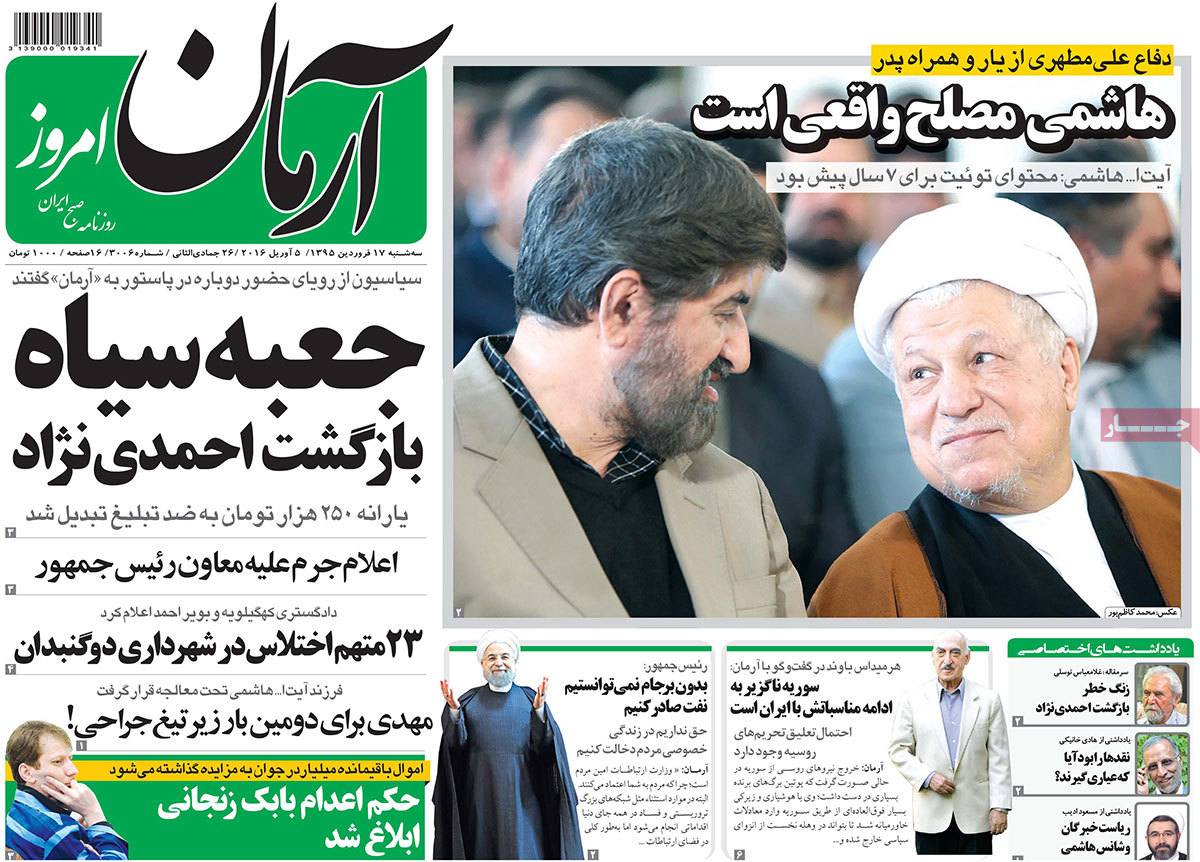
Arman-e Emrouz:
1. Rafsanjani: Nation’s vote answer to slanders
Election campaigns must become friendships, said the select Assembly of Expert member.
2. CIA agent heading to Tehran: official
3. President Rouhani: Elections were significant


A look at Iranian newspaper front pages on March 2


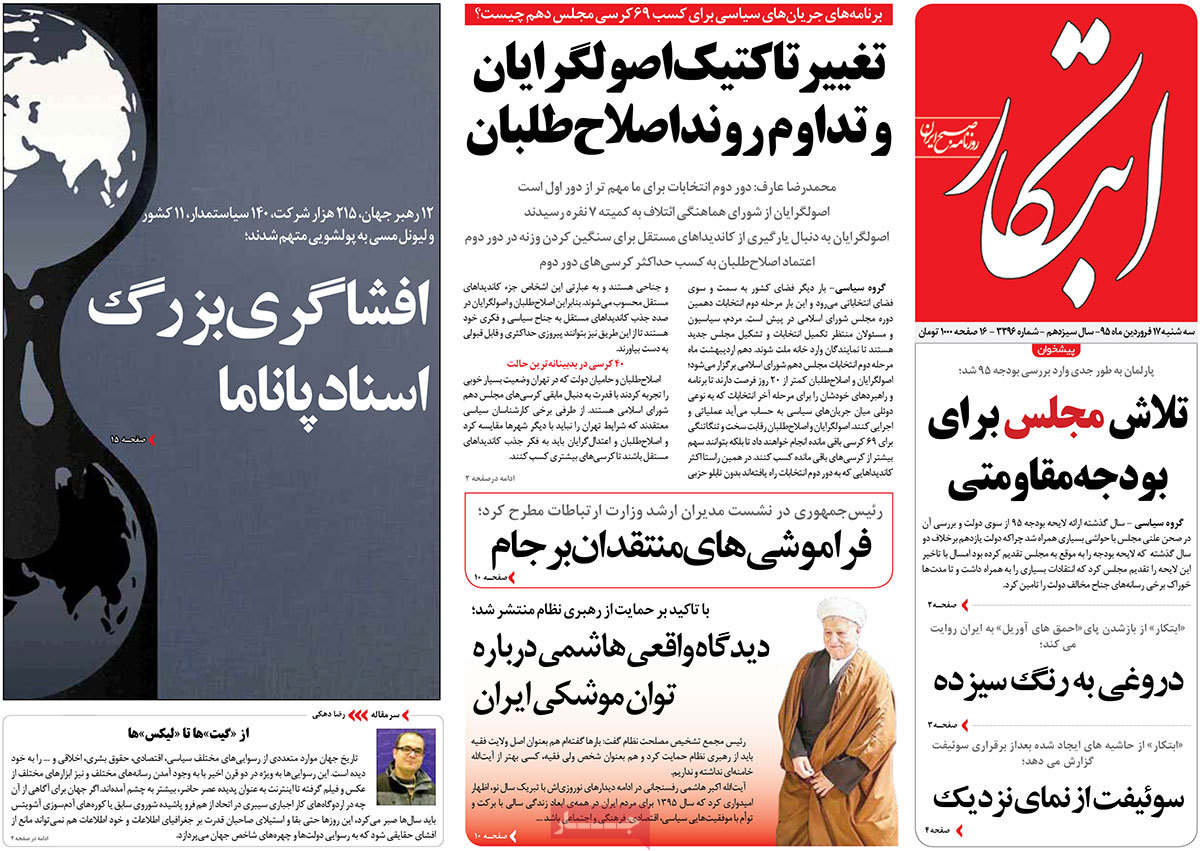
Ebtekar:
1. Rouhani warns: Gov’t support for carmakers cannot last forever
2. Wave of women’s presence in Iran parliament
3. Report: Dangers of Chilean grapes, Egyptian oranges


A look at Iranian newspaper front pages on March 2


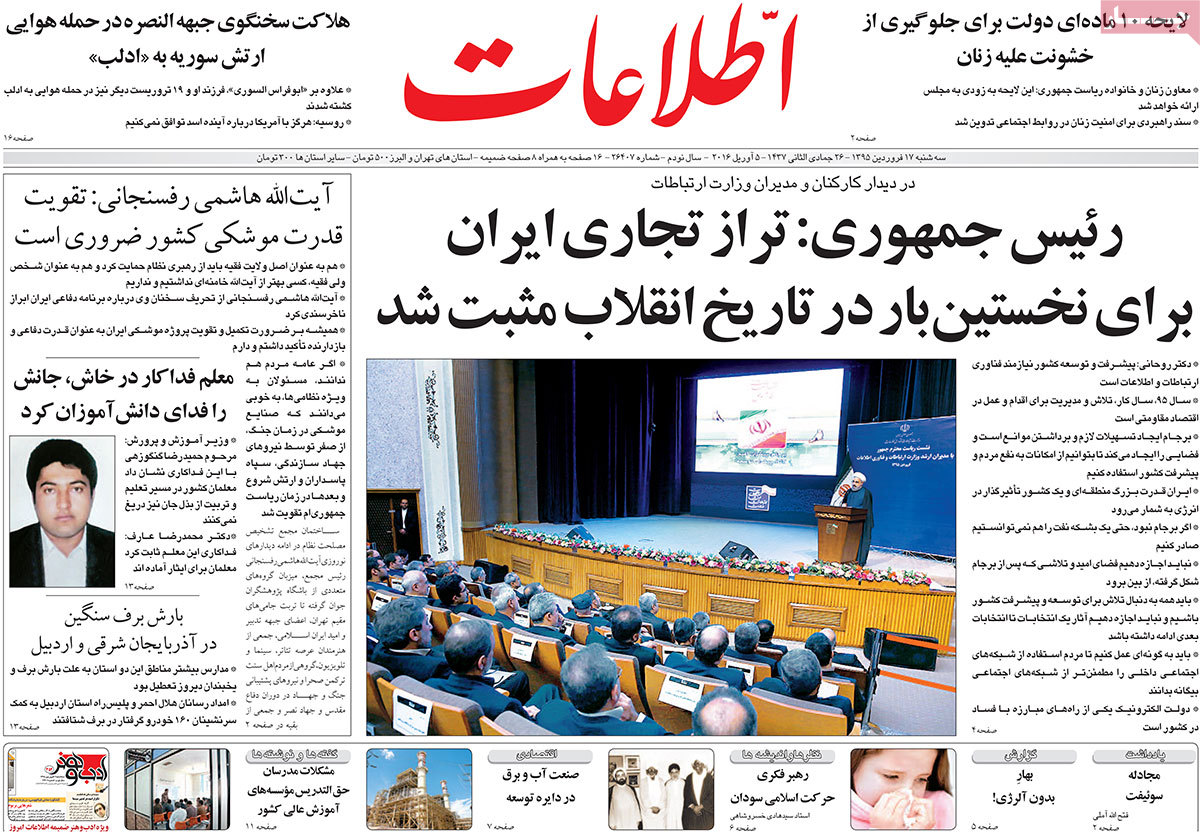
Ettela’at:
1. Rouhani: Admin chiefly concerned with fulfilling nation’s wishes
2. Iran to produce Euro-5 fuel by 2018


A look at Iranian newspaper front pages on March 2


Etemad:
1. Election results shocked me: Aref
Mohammad Reza Aref won the majority votes in Tehran constituency as a reformist candidate.
2. Rouhani: Nation aired its taste in elections


A look at Iranian newspaper front pages on March 2


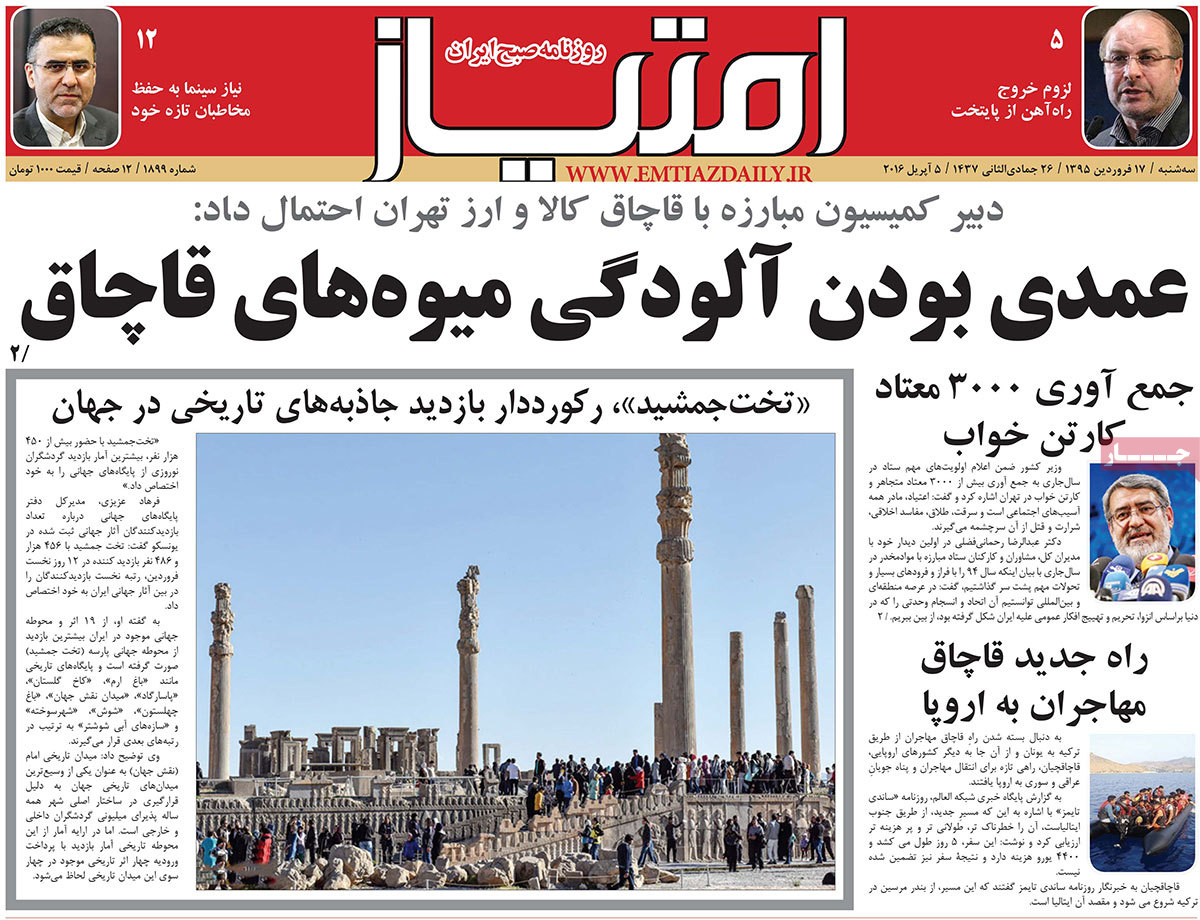
Emtiaz:
1. IKCO unveils new generation of engines
Iran Khodro Company is the biggest producer of cars in Iran.
2. Tehran Symphony Orchestra conductor Ali Rahbari quits
3. Int’l tourism, travel fair opens in Kish Island


A look at Iranian newspaper front pages on March 2


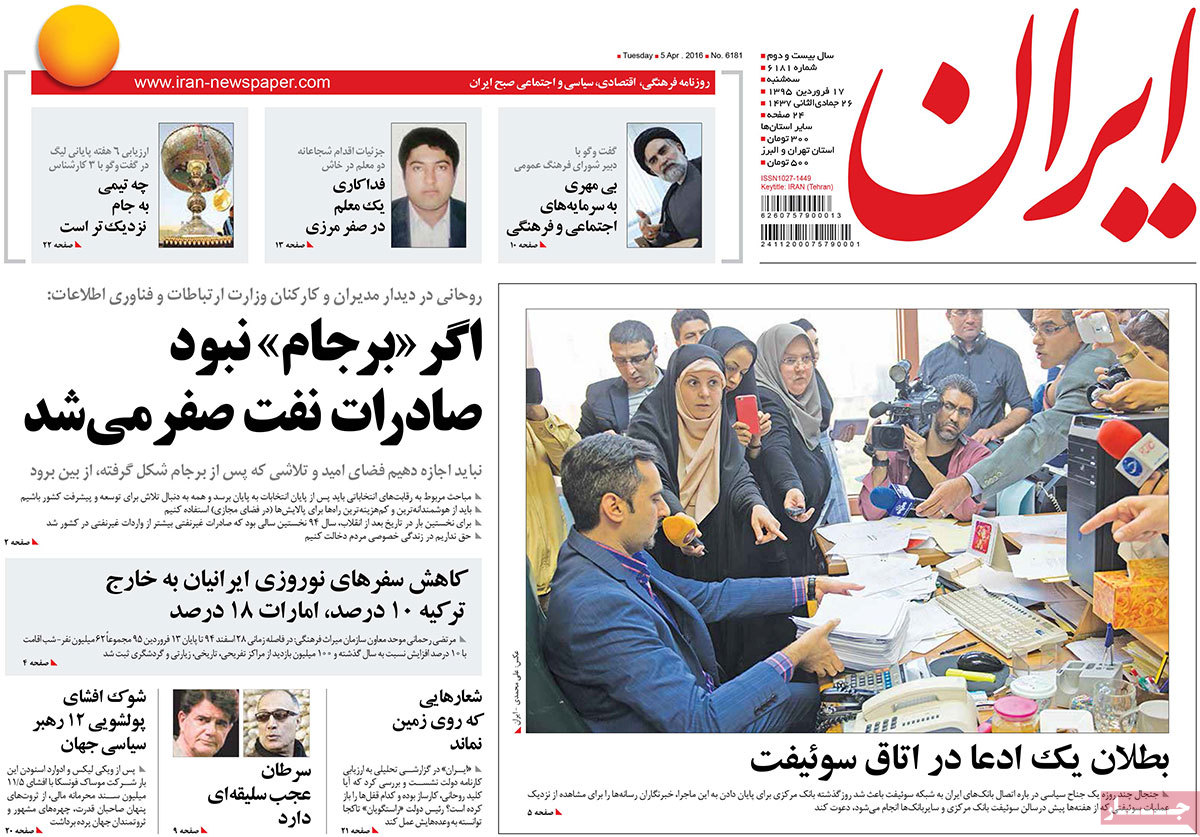
Iran:
1. Rafsanjani says will seek to toughen moderation bases
2. Iran to issue IRR400bn bonds next year: CBI chief
3. Report: Political tendencies in the 10th Parl.
4. Bill to boost traffic fines withheld
5. IRR200bn gov’t incentive plan for domestic producers


A look at Iranian newspaper front pages on March 2


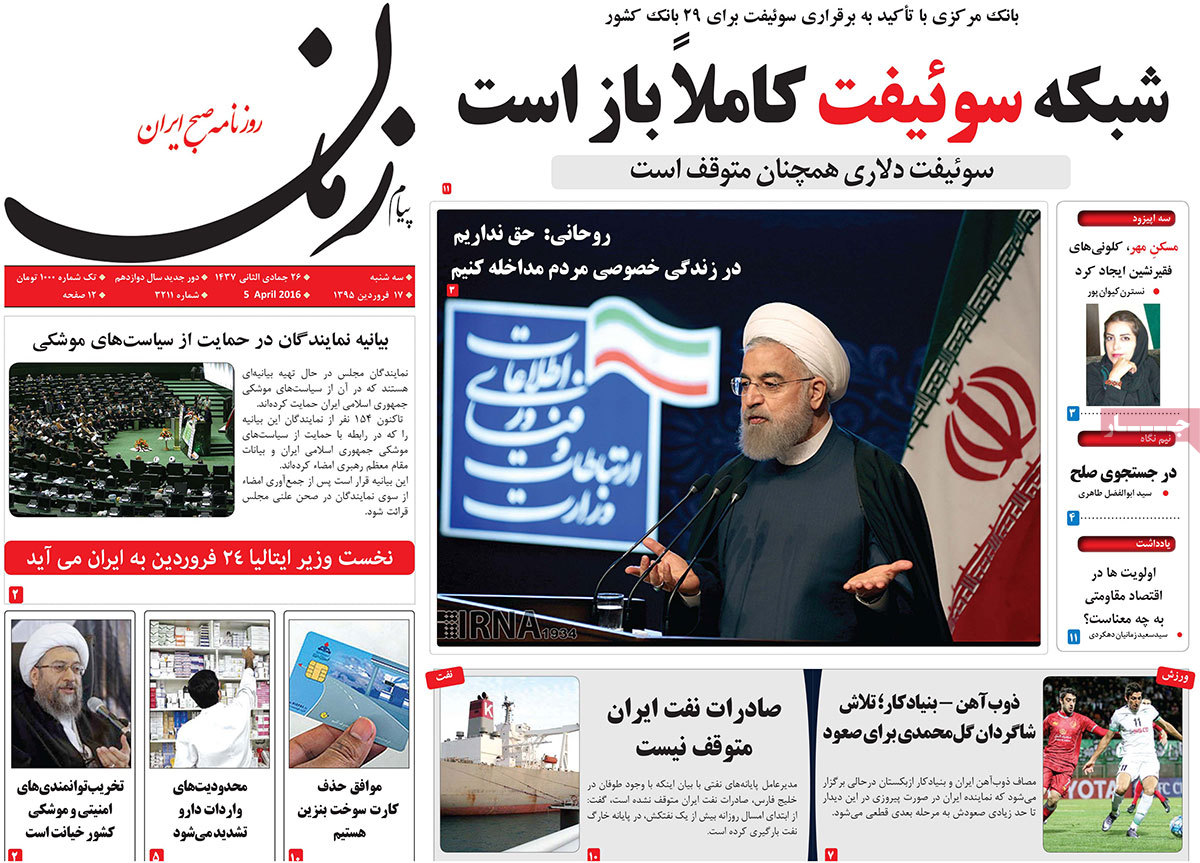
Payam Zaman:
1. Industry minister calls for free price system of cars within 10 years
Iran eyes export of one/third of produced cars
2. Iran aircraft fleet valued at IRR30,000bn
3. Iran to curb gasoline imports


A look at Iranian newspaper front pages on March 2


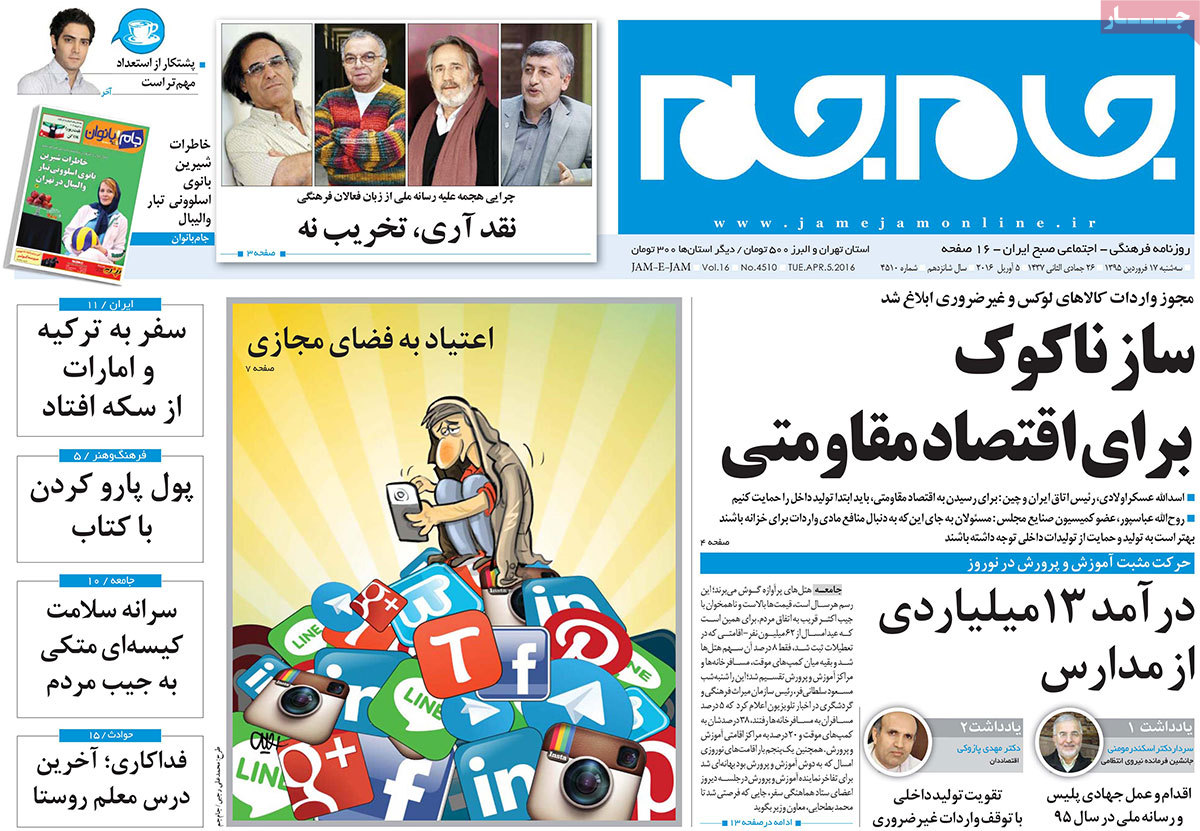
Jamejam:
1. No more rise in traffic fines
2. Select MPs speak of 10th Parl. priorities


A look at Iranian newspaper front pages on March 2


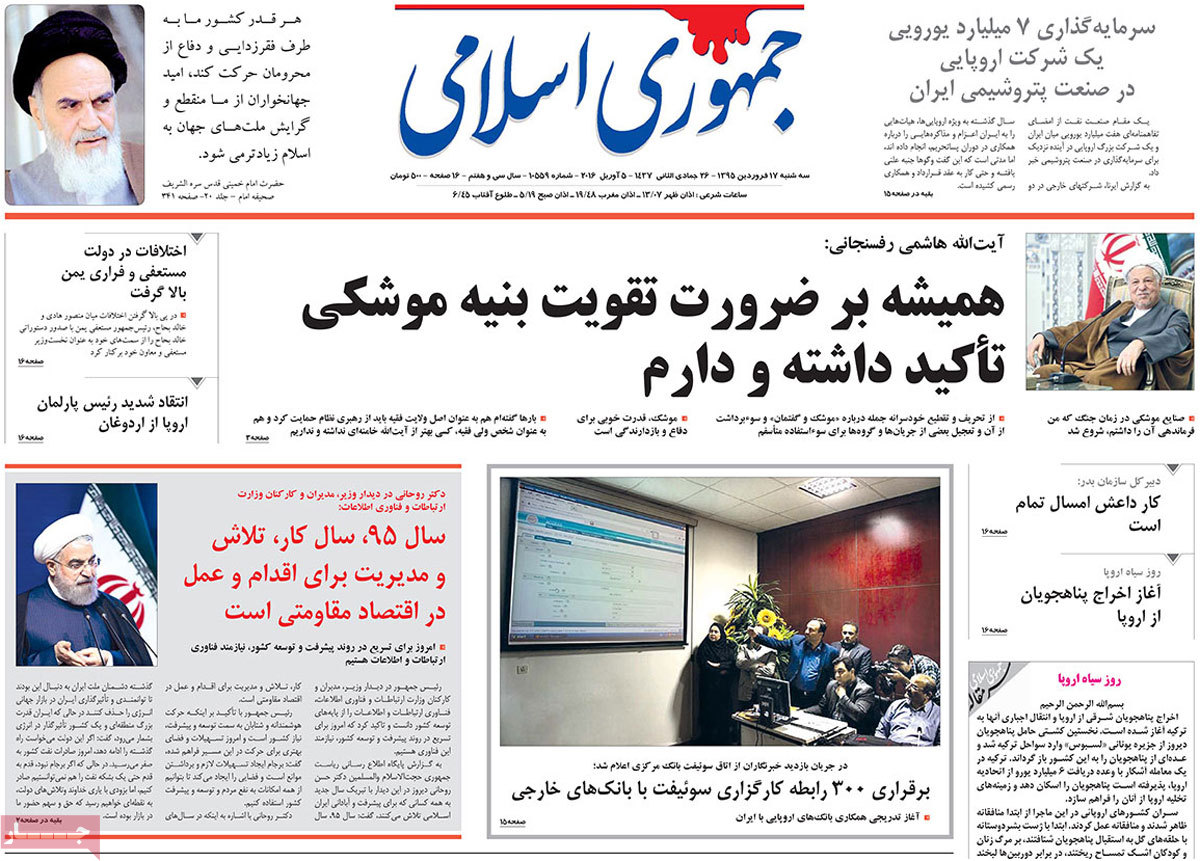
Jomhouri Islami:
1. Iran, EU resume banking relations
2. 70% reshuffling of Parl. structure
3. The paper has also placed a quotation by Imam Khomeini which reads: “Americans and Brits have plans to label anyone who is an honest servant of the nation as being American and British to downplay their merits because they already know they are defaced in Iran.”


A look at Iranian newspaper front pages on March 2


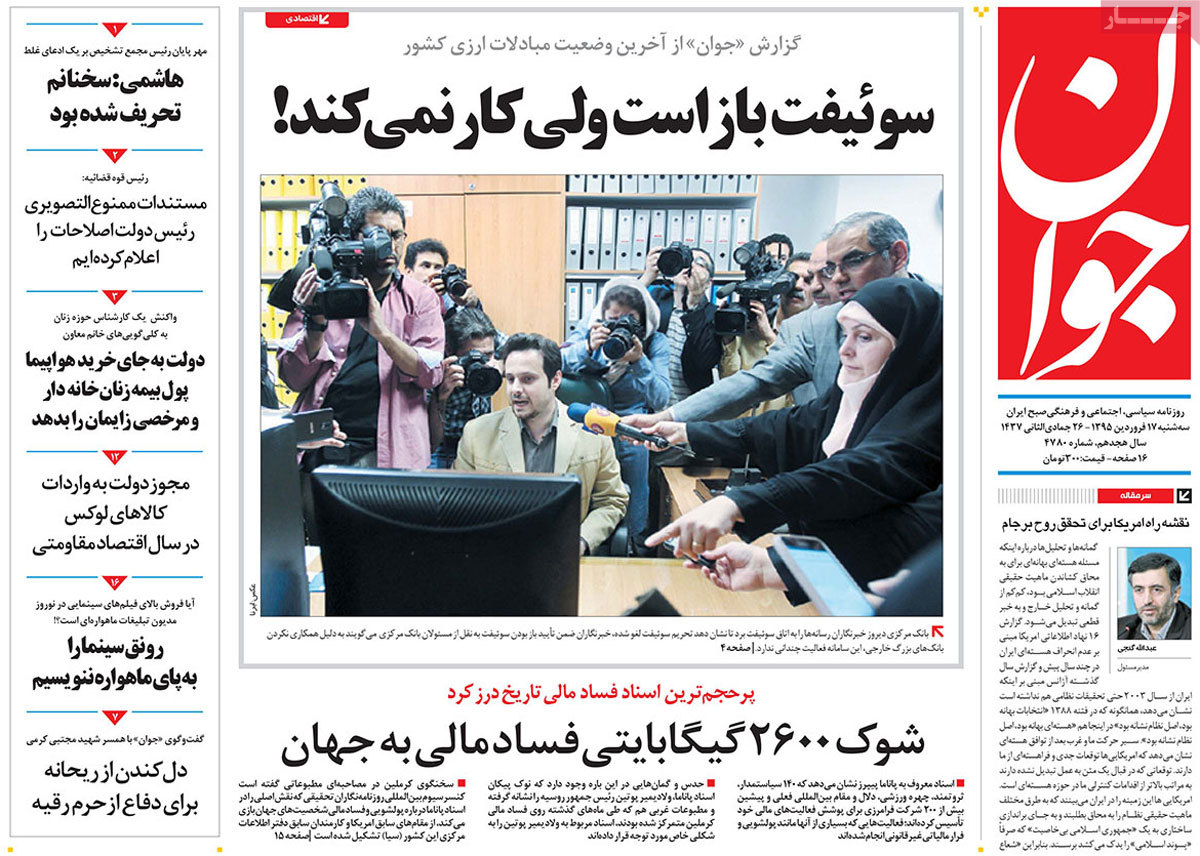
Javan:
1. Salehi: Foreign ministry solved crisis with prolonged bans
“West is dragging feet in fulfilling JCPOA commitments,” said Ali Akbar Salehi, head of the Atomic Energy Organization of Iran.
2. Chief says IRGC ready to play bigger role in developing country
3. Taking a ride of bliss


A look at Iranian newspaper front pages on March 2


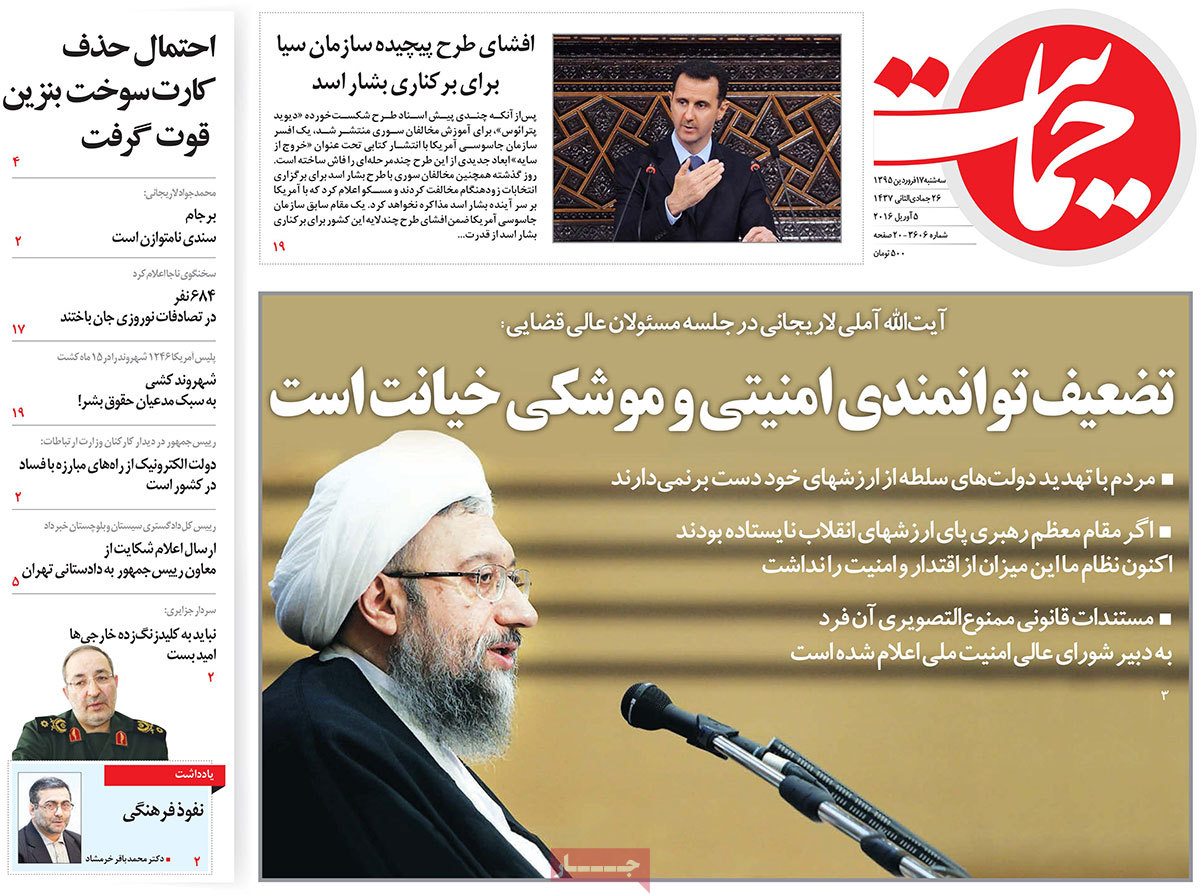
Hemayat:
1. Election campaigns proved health of democracy in Iran
2. Indictment ready for IRR120,000bn scam case
3. French police savagely raids refugee camps
4. Economic threats, opportunities in Iran next year
5. Rouhani: Gov’t never becomes good economic manager


A look at Iranian newspaper front pages on March 2


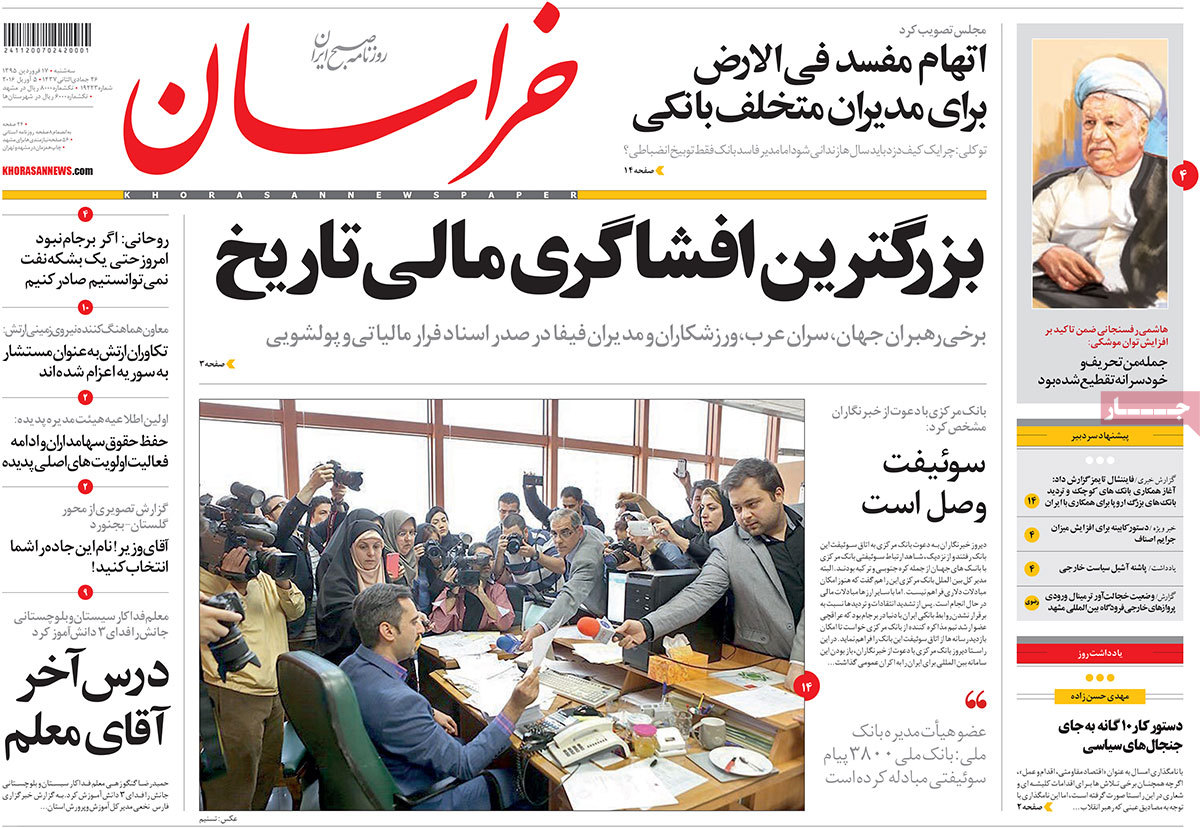
Khorasan:
1. Admin devises short-term plan to address nation’s economic concerns
2. Romanian FM: Romania can become gateway for export of Iranian products to EU
3. Aref: We will seek enhanced ties with world
4. Haddad Adel: 10th parl. unlike all other parliaments


A look at Iranian newspaper front pages on March 2


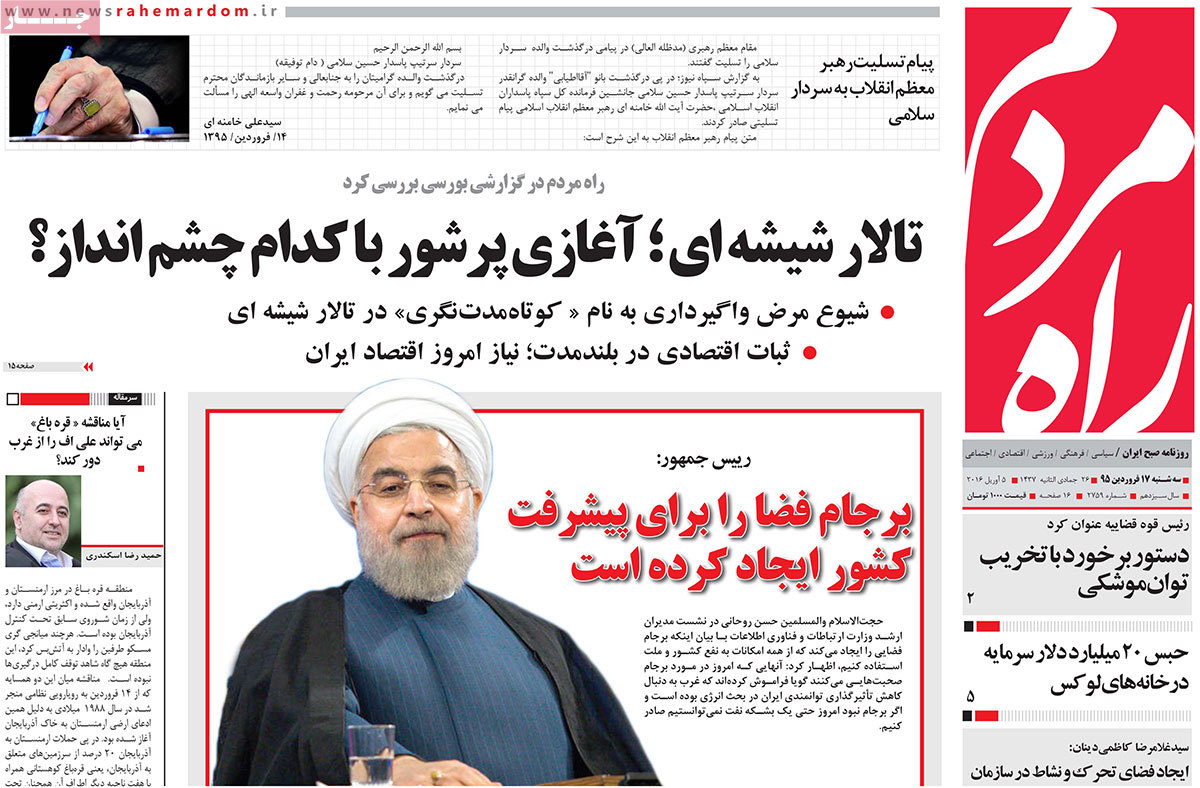
Rah-e Mardom:
1. Switzerland joins club of Iran importers

2.  Driver miraculously survives accident


A look at Iranian newspaper front pages on March 2


JCPOA Opportunity for Better Middle East: Iran’s UN Envoy

The JCPOA is an opportunity for the entire international community, particularly for regional countries who can take advantage of the accord to strengthen security and rejuvenation in the Middle East, Gholam Hossein Dehqani said on Tuesday.

He made the comments at a meeting held by the UN Security Council to brief the member states on the implementation steps of UN Resolution 2231 that endorses the nuclear deal between Iran and the Group 5+1 (Russia, China, the US, Britain, France and Germany).

Spain’s ambassador to the UN was in charge of the session. He has been appointed as the facilitator of implementing the Resolution 2231 and should make biannual reports to the UNSC members on the implementation of the deal.

Elsewhere in the meeting, the Iranian ambassador said allegations against Iran’s peaceful nuclear program have been consigned to the dustbin of history and there is no obstacle for the promotion of cooperation with Iran in the new era.

The world countries need to realize the new situations and revise their laws on economic interaction with Iran, Dehqani added.

The JCPOA officially took effect on January 16 and terminated all nuclear-related sanctions on Iran.

Kharg Island (PHOTOS)

Kharg Island, also spelled Khark, is a continental island in the Persian Gulf belonging to Iran. The island is located 25 km (16 mi) off the coast of Iran and 483 km (300 mi) northwest of the Strait of Hormuz. The island is administered by the adjacent coastal Bushehr Province and provides a sea port for the export of oil.

The following images have been released by ANA News Agency:

Australia softens sanctions against Iran

Australia removed nuclear-related sanctions against the Islamic Republic on Wednesday after the UN nuclear agency confirmed that Tehran had scaled down its nuclear program under an agreement it reached with the P5+1 group last July, Reuters reported.

Under measures announced by the Australian government, businesses are no longer banned from doing transactions of more than A$20,000 ($14,436) with Iranian entities.

However, Australia’s Department of Foreign Affairs and Trade (DFAT) said in a statement that Canberra would keep in place some non-nuclear bans, including those related to Tehran’s missile program.

Tehran has repeatedly said its missile program is defensive in nature and that it will keep its right to develop conventional weapons.

Iran and the five permanent members of the UN Security Council – the United States, France, Britain, China and Russia – plus Germany started to implement the nuclear deal, dubbed the Joint Comprehensive Plan of Action (JCPOA) on January 16.

The nuclear agreement was signed on July 14, 2015 following two and a half years of intensive talks.

After the JCPOA went into effect, all nuclear-related sanctions imposed on Iran by the European Union, the UN Security Council and the US were lifted. Iran has, in return, put some limitations on its nuclear activities.

The International Atomic Energy Agency (IAEA) has verified Iran’s commitment to the nuclear agreement.

In its first regular report since the implementation of the JCPOA, the UN nuclear agency said last month it “has been verifying and monitoring the implementation by Iran of its nuclear-related commitments.”

Iran’s Nuclear Chief Censures Delay in Banking Sanctions Removal

In an interview with Al-Araby Al-Jadeed news website, Ali Akbar Salehi said the Group 5+1 (Russia, China, the US, Britain, France and Germany) is dragging its feet over terminating the anti-Iran sanctions under the Joint Comprehensive Plan of Action (JCPOA).

Salehi said the other side should be held accountable for the delay in lifting the sanctions against Iran.

Some major European banks have not yet lifted their sanctions on Iran, Salehi deplored, citing the undertakings they had already given to the US not to launch trade interaction with Iran.

He noted that Iran’s Foreign Ministry needs to negotiate with the European Union to remove that obstacle.

The JCPOA officially took effect on January 16 and terminated all nuclear-related sanctions on Iran.

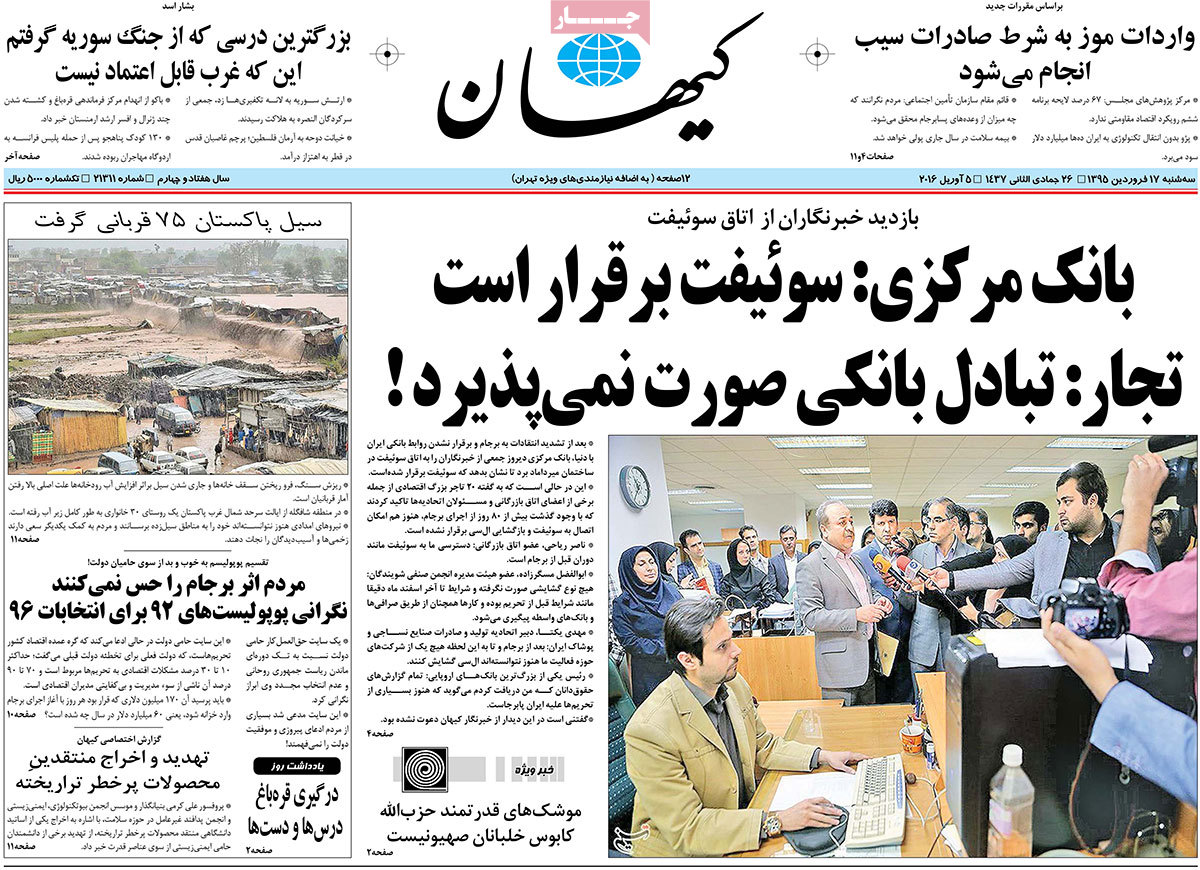
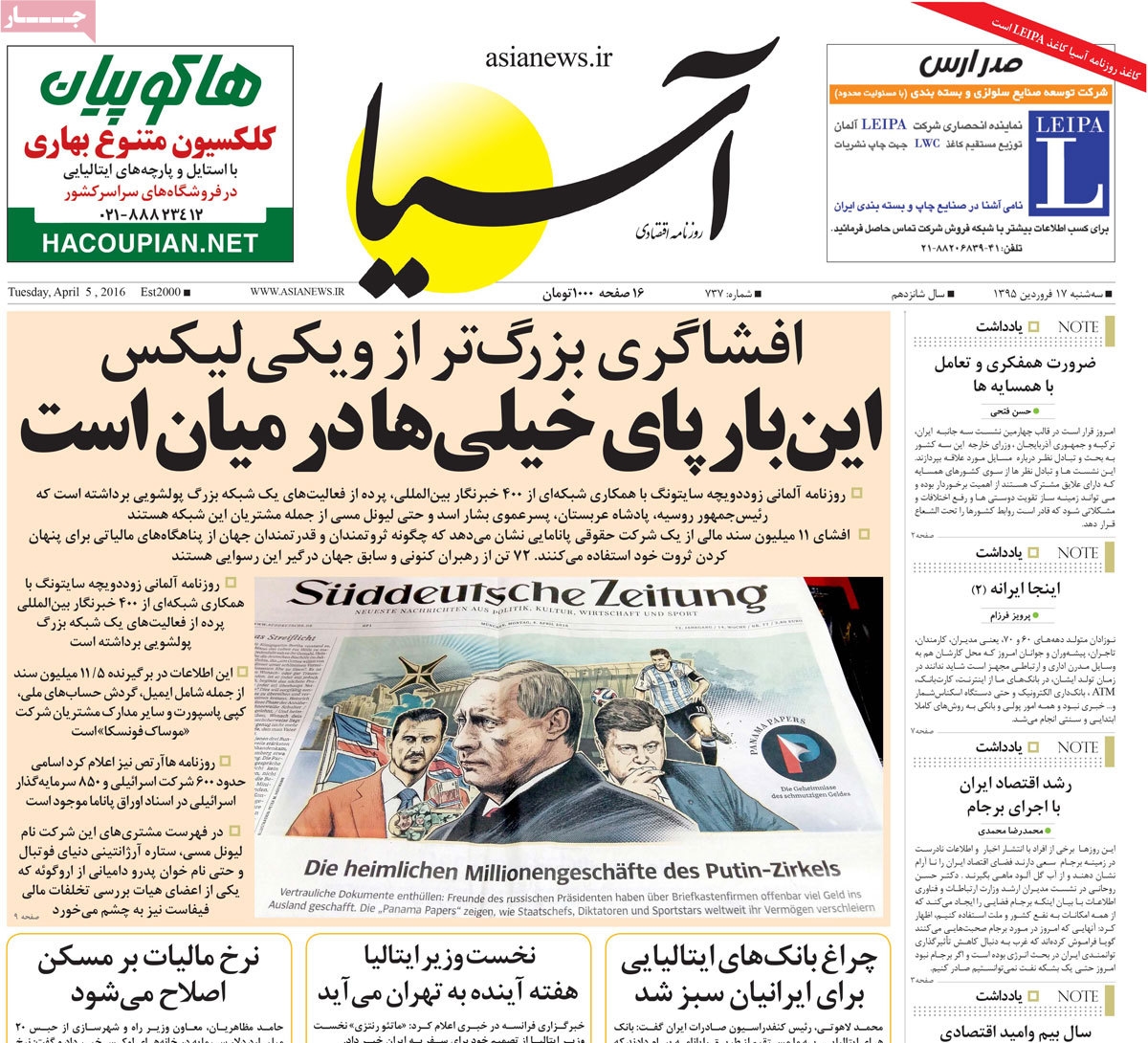
Iranian banks could reconnect to Society for Worldwide Interbank Financial Telecommunication (SWIFT) for banking transactions after implementation of the nuclear deal.

Larger increase in number of American tourists applying for visa to visit Iran

Iranian Interest Section in Washington categorically denies reports that it has withheld issuing visa for foreign tourists and said so far thousands of visas have been issued for those who wish to visit Iran.

Manochehr Jaafar Zadeh, an official of Interest Section in Washington talking to IRNA news agency said reports about refusal to issue visa for foreign visitors is unfounded.

Referring to surge in number of tourists who want to visit Iran in resent months, the official said each day we issue hundreds of visa for those who come here and stay in long queues to receive visa.

Mr. Jaafar Zadeh said we have so far issued more than 9000 visas for those tourists who want to travel to Iran.

He added that citizens of 190 countries can travel to Iran without advance visa and upon their arrival they will be rendered with 30 to 45 days entry visa and only citizen of 7 countries need to obtain visa in advance to travel to Iran.

Manager of “Mir Corporation” a major Tourist agency, in a separate interview with IRNA also denied refusal of Interest Section of Iranian Embassy in Washington to issue visa for tourists.

Next Iranian Parliament to Be Formed of 3 Powerful Sides

majlis

Here is the full article:

Elections and ballot boxes in Iran have always been a “button” to change the officials and authorities in those offices whose members are directly elected. It has been its function; it gives the political power to certain people, and takes it from others. The national parliament is not an exception.

The Iranian parliament (known as Majlis), at least in the past three decades, has been home to both the reformists and the conservatives. It once was the house of the left-wingers, and once hosted members of the right wing. One day, reformists practiced politics in this house, and another day, the conservatives.

In the modern Iran since three decades ago, “the parliament and the government”, or let’s say “the power and politics”, have been exchanged between the leftists and rightists once in every eight years. Opportunity knocks on their door once in every eight years, and at the same time, the autumn and the time of hardships begins for the other side.

There are numerous examples of such exchanges of power in the modern Iranian parliaments. The same thing happened on Friday once again. Through people’s votes, the parliament’s formation was changed; this is the very thing conservatives were afraid of.

Now that the results are officially released in Tehran and other provinces and constituencies, it became clear that Iranian people do not want a homogeneously conservative parliament. This was why they went to the ballot boxes and voted for the “List of Hope” – the reformists, moderates, and even a few conservatives who supported the government of incumbent President Hassan Rouhani. People ruled that the reformists should also have a brotherly and major share in the management of the 10th parliament.

Given the results of Friday polls – based on which at least more than 80 members of the List of Hope have made it to the parliament in different Iranian cities including Tehran, where all the 30 seats were taken by the pro-government list – one should say that the reformists returned to power using the “moderation formula”.

The current number of pro-government candidates elected for the next parliament can be increased when the other reformist hopefuls – over 20 candidates – win the run-off elections due to be held probably in early April. Based on media reports, these hopefuls will have a great chance in the run-off.

On the other hand, more than 30 conservatives close to current Parliament Speaker Ali Larijani, who were all left out of the Great Coalition of Principlists, made it to the parliament, and they have 16 other hopefuls who can win the run-off elections.

Therefore, it is predicted that the tenth parliament would be formed by three powerful minorities with almost equal number of members. The three strong minorities include the fractions of Hope, conservatives, and independents.

On the other hand, given the presence and success of such moderate conservatives as Kazem Jalali and Behrouz Nemati in the List of Hope, and considering the moves by opponents of Ali Larijani in Qom in tainting his image, it does not seem unlikely that the reformists, moderates, and conservatives close to Larijani would form a stronger coalition than that of the conservatives. Therefore, it should be noted that the current atmosphere in the Iranian politics and the 10th parliament will not be similar to any of previous parliaments. This time, no political movement will hold the majority and have a full supremacy.

An 80-percent change in the formation of the new parliament indicates that the conservatives lost the “second step” in the same way as they had lost the first one to reformists and moderates. However, Ali Larijani and those who were disappointed with the conservatives’ electoral list will create even more difficult days for the right-wingers.

The 10th parliamentary elections indicate a change in 80 percent of previous parliamentarians, the return of reformists and the rapprochement between Larijani and the reformism-moderation camp. This suggests that the time is over for a parliament mainly formed of conservatives, and people’s votes are changing this formation.

Now the reformists, who had already opened a new chapter of politics in 2013 (presidential elections), have got the green light from the Iranian nation, and are coming to realize that their voluntary isolation in the previous parliamentary elections (2012) was a strategic mistake.

On the other hand, given the harsh defeat of anti-government hopefuls, it is known that the only way to succeed in politics is through the ballot boxes.

The February 26 elections were similar to May 23, 1997, when the current leader of reformism in Iran Mohammad Khatami won the presidential elections. People’s Friday votes took parts of the parliament from the conservative camp and bestowed them to the reformists. These elections brought the reformists back to the scene, and this is why we should say the 10th parliament will be no similar to any of previous ones.

Countrywide parliamentary polls and Assembly of Experts elections were held in Iran simultaneously on Friday.

Almost 34 million of some 55 million eligible voters, around 62%, cast their ballots at around 53,000 polling stations across the country.

4,844 and 161 candidates were running for the parliament and the Assembly of Experts, respectively.

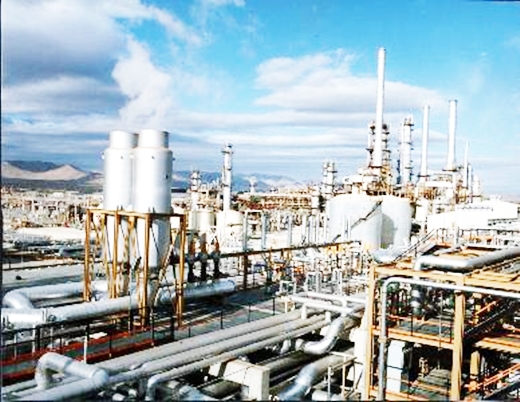
Iran says oil exports rose by 30%

“This represents an increase of 400,000 bpd compared to the same period last year,” Zangeneh said, as reported by Reuters.

The production also included gas condensates.

Iran, which has the world’s second largest crude reserves, currently produces about 2.8 million bpd, but output during Bahman rose off the additional exports to 3.2 million bpd.

Zangeneh had previously emphasized that Iran will increase its oil production by 500,000 bpd as soon as the sanctions against the country are lifted.

A central theme in the sanctions included strict bans on investments in Iran’s oil industry thus keeping the cash the country needed to increase its oil production.  The sanctions also barred international clients from buying Iran’s oil beyond a low ceiling of 1 million barrels per day.

The sanctions were lifted in January as a nuclear deal that Iran had sealed with the P5+1 last summer was implemented.

In mid-February, the country announced that it had come close to the post-sanctions target producing ceiling that Zanganeh had set.

At the same time, the National Iranian Oil Company (NIOC) said it had loaded around 7 million barrels of oil in tankers that were sailing toward European as well as certain traditional oil clients.

Tehran has also been lately facing a call from certain OPEC members to freeze its oil production – a policy meant to help boost oil prices that are standing at 13-year lows.

However, Zanganeh last week strongly rejected the call and vowed that Iran would not abandon plans to regain the oil market share that it has lost as a result of years of sanctions.