Thursday, December 25, 2025
Home Blog Page 4571

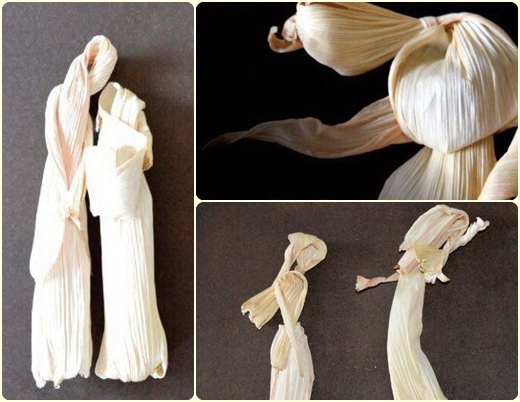
Creative Artworks Made from Corn Leaves

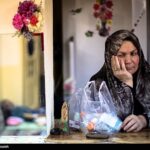
Talking about her work with the ISNA news agency, artist Maryam Shaheedi said that these figures resemble human beings, and are all made from the leaves of the corn plant.

“I didn’t choose this material for my work,” she explained, “Rather, the opposite is true – this material chose to become an artwork.”

“A few years ago I started to work with corn leaves to create something resembling the human form. Later, with the encouragement of those around me, I took up the job more seriously, and the result is this exhibition,” said Ms. Shaheedi.

According to the artist, dried corn leaves are quite hard and durable art materials.


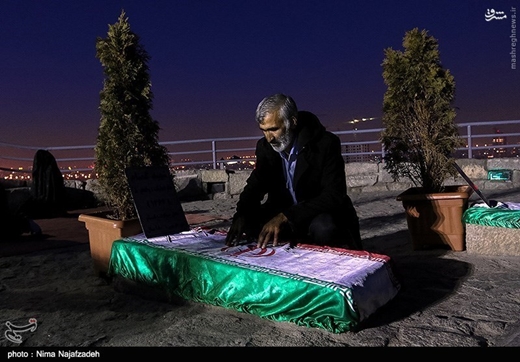
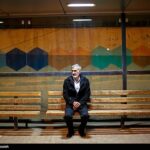
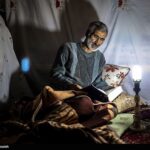
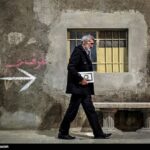
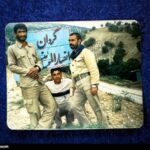
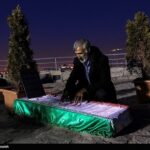
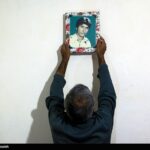
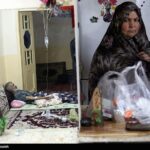
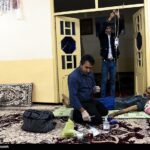
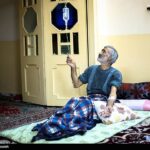
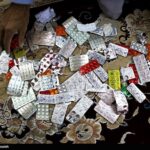
Sleepless War Veteran

According to Mashregh News, he has been subject to various treatments, none of which have had any no effect so far. Rashidi has not slept, even for a short time, since he was a 17-year old volunteer in the war which Iraqi dictator Saddam Hussein launched against Iran soon after the Islamic Revolution.

In his war against Iran, Saddam Hussein was supported by the US and many Arab states (with a few exceptions such as Syria). In Iraqi efforts to claim Iranian territory, extensive material damage and human suffering was inflicted upon both nations in a bloody eight-year war.


Iran’s FM to address OIC summit on Israel’s crimes

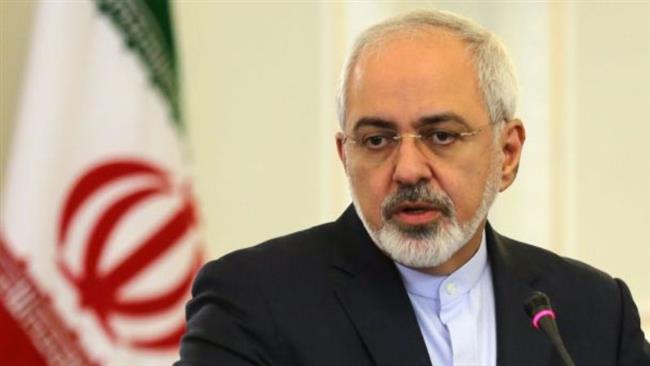
“Based on basic principles of Iran’s foreign policy on Palestine, the Islamic Republic of Iran will declare its position in this extraordinary meeting [of the OIC] on measures taken by the Zionist regime and the threats it poses to the Muslim world,” Zarif told reporters upon arrival in Indonesia’s capital of Jakarta on Sunday.

Zarif praised the Indonesian government for hosting the “important” OIC meeting in a proper time, saying that he would hold talks with the country’s officials on ways to bolster mutual relations.

Heading a high-ranking politico-economic delegation, Zarif arrived in Jakarta Sunday on the first leg of an official visit to six Southeastern Asian and Pacific countries.

The 5th Extraordinary Islamic Summit on Palestine and Al-Quds Al-Shareef under the theme of “United for Just Solution” will be held in Jakarta on March 6 and 7, according to the OIC website.

Indonesia will host the two-day extraordinary OIC summit upon the request of Palestinian President Mahmoud Abbas in a bid to consolidate the organization’s efforts to support the Palestinian people in their struggle for their rights and prepare the ground for the resumption of the peace process within a specific agenda and timetable.

The occupied Palestinian territories have been the scene of heightened tensions triggered by Israel’s imposition in August 2015 of restrictions on the entry of Palestinian worshipers into the al-Aqsa Mosque compound in East al-Quds.

More than 190 Palestinians, including children and women, have lost their lives at the hands of Israeli forces since the beginning of last October.

After his visit to Indonesia, Zarif will head for Singapore and Brunei for talks.

On the fourth leg of his tour, the Iranian minister will set off for Thailand to participate in the 14th Asia Cooperation Dialogue (ACD) Ministerial Meeting.

Zarif will then travel to New Zealand and Australia to discuss ways to improve relations in various fields before wrapping up his six-nation tour.

Iran’s FM Starts 11-Day Tour of Southeastern Asia

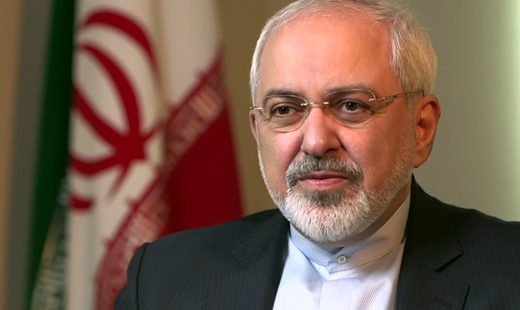
Zarif

Foreign Minister Zarif is visiting Indonesia to attend an extraordinary meeting of Organization of Islamic Cooperation (OIC) due to be held in Jakarta on the issue of Palestine and the Holy Quds, Iran’s Ambassador to Jakarta Valiollah Mohammadi told Tasnim on Saturday.

Zarif will also take part in the ministerial meeting on Sunday noon, and the Leaders’ Summit on Monday on behalf of Iranian President Hassan Rouhani, the Iranian envoy added.

The Iranian foreign minister will also hold separate meetings with his Indonesian counterpart Retno Marsudi and President Joko Widodo, he said at the time.

Ahead of the meetings, the Iranian envoy expressed the hope that the value of trade exchanges between the two countries would again rise to $2 billion after removal of anti-Iran sanctions.

“The political ties and mutual cooperation between Iran and Indonesia are very good, and the economic relations have been recently reinforced with the implementation of JCPOA (the nuclear deal between Tehran and world powers),” Mohammadi said.

“It is hoped that we will witness the results and benefits of the (recent) developments in the two countries’ ties soon,” he added, expressing the hope that with the removal of anti-Iran sanctions, the value of economic exchanges between Tehran and Jakarta, which stood at $2 billion in 2011 but dropped to $300 million last year, would rise to $2 billion again.

The ongoing visit by Iranian Foreign Minister Zarif is expected to boost bilateral ties, Iran’s ambassador noted.

Zarif’s 11-day tour of southeastern Asia and Oceania is scheduled to go on with official visits to five other countries including Singapore, Brunei, Thailand, New Zealand, and Australia.

U.S. investors late for Iran deals worth billions, Greylock says

“It seems like the U.S. might miss this opportunity because the Europeans are going to move regardless,” Hans Humes, Greylock’s chief executive officer and chairman who traveled to Iran in June, said in an interview in Mexico City, Bloomberg reported. “It almost doesn’t matter what the U.S. does because once it starts opening up to Europe I think the economy in Iran will start to move.”
Foreign investors and multinationals are lining up to return to Iran after last year’s historic nuclear deal led to the lifting of international sanctions in January. Until then, firms were prevented from transferring money in and out of the Islamic Republic, whose $370 billion economy is projected to grow 5.8 percent this year.
While European companies like German automaker Daimler AG and France’s Airbus Group SE have already signed deals, American citizens and companies remain limited because the U.S. has kept some of its own restrictions.
Changing the Treasury Department’s Iran policy toward processing payments would “open things up,” said Humes. His New York-based hedge fund, which oversees about $1 billion, focuses on distressed and high-yielding emerging-market debt.
The U.S. severed ties with Iran a year after the 1979 Islamic revolution that toppled American ally Shah Mohammad Reza Pahlavi and led to the U.S. embassy hostage crisis in Tehran. President Barack Obama initiated a detente in 2013, eventually sealing an international accord with Iran, despite Republican lawmakers’ opposition. Republican presidential candidates Marco Rubio, Donald Trump and Ted Cruz have all pledged to either nullify or renegotiate the terms of the deal.
Humes sees the biggest opportunities in Iran’s energy, infrastructure and corporate services. He said that the investment opportunities may be worth “multiple tens of billions” of dollars in the next five to 10 years, assuming political stability.
Europe is likely to get in first with banks there hopefully starting to ramp up transactions with Iranian lenders in the next year, Humes said. Meanwhile, the entrance of U.S. institutional investors still likely two to three years away, he added.
“Everybody sees the opportunity in Iran,” he said. “It’s going to happen and the trigger for that will just be the payment system opening up.”

Iran warns cautious European banks

Deputy Foreign Minister Majid Takhtravanchi said European banks are overcautious in forging renewed connections with Iran, warning that they “will fall behind under the new situation.”

“Any conservatism by European banks will mean the loss of opportunities and conservatism is the biggest enemy in plundering opportunities,” president of Iran’s foreign investment organization Mohammad Khazaei said.

The lifting of sanctions in January has triggered a wave of interest among world governments and corporations for trade with Iran and some of them have already clinched agreements in the upwards of $50 billion.   

European banks, however, have adopted a wait-and-see approach, fearing they could face US legal action if they move to reestablish links with Iran.

Washington has agreed to lift “secondary sanctions” related to Iran’s nuclear program but its “primary sanctions” linked to terrorism and human rights accusations still remain in place.

The opaque nature of what is legal or illegal in trade with Iran has made Western banks play safe and wait for others to take the initiative.

Deputy Governor of the Central Bank of Iran Hamid Tehranfar said, “There is still ‘Iranophobia’ in the banking sector that we’re trying to overcome.”

Takhtravanchi described excessive caution exercised by European banks as “a main challenge,” assuring that they didn’t have to worry about anything.

“They are worried but there is nothing to be worried about because there is no impediment to trade cooperation with Iran within the framework of the JCPOA (Joint Comprehensive Plan of Action),” he said, referring to the nuclear accord.  

“Some worries held by international banks are groundless or the European banks’ little knowledge about the annulment of sanctions has caused it,” Takhtravanchi added.

Tehranfar said, “We have asked the International Monetary Fund to review our regulations so other countries’ banks feel reassured.”

Iranian and European companies signed several multi-billion-dollar trade agreements when President Hassan Rouhani visited Italy and France in January to rebuild relations.

“Both Iran and Europe are interested in economic cooperation and there is no obstacle in this regard. For instance, the debt problem with insurance companies has either been resolved or is being resolved,” Takhtravanchi said.

Khazaei said cooperation between Iran and Europe is a “win-win game” even though the Islamic Republic is being pulled to an “economy of resistance” because of the collapse of crude oil.

“The policy of resistance economy does not mean shutting our doors and all state officials support foreign investment and investors. This is one of the objectives of the state and the policy of the economy of resistance,” he added.

Governor of the Central Bank of Iran Valiollah Seif said Iran’s market is ripe for cooperation between Iranian and European banks.

“Transparency is the prerequisite of international transactions. Iran has taken primary steps to make the financial information of Iranian banks as transparent as possible.”

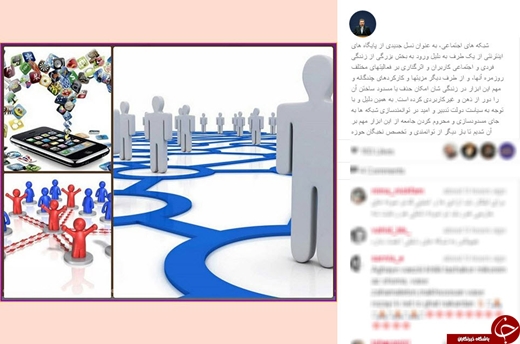
ICT Minister Posts on Instagram, Defends New Social Media

The Minister of Communications and Information Technology has written a post on his page on Instagram, commenting about new social networks. On the one hand, he claims, social networks have affected people’s daily activities, making inroads into the private and social lives of a large number of users. On the other hand, it is impossible, and impractical, to close down or limit social networks, due to their advantages and multifunctional uses in public life.

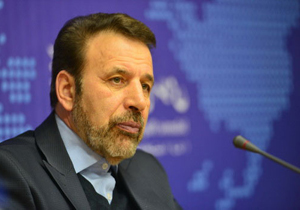
VaeziFor these reasons, the “Government of Hope and Prudence” [the slogan of President Rouhani’s government] is determined to promote social networks instead of shutting them down or limiting them, said the Minister.

Mr. Vaezi added that, by preparing the ground for experts in this field, and by supporting local products, we can make functional domestic networks available for the use of the general public, providing them with the same services which are currently rendered by foreign service providers.

A look at Iranian newspaper front pages on March 6

Iran Newspaper front pages

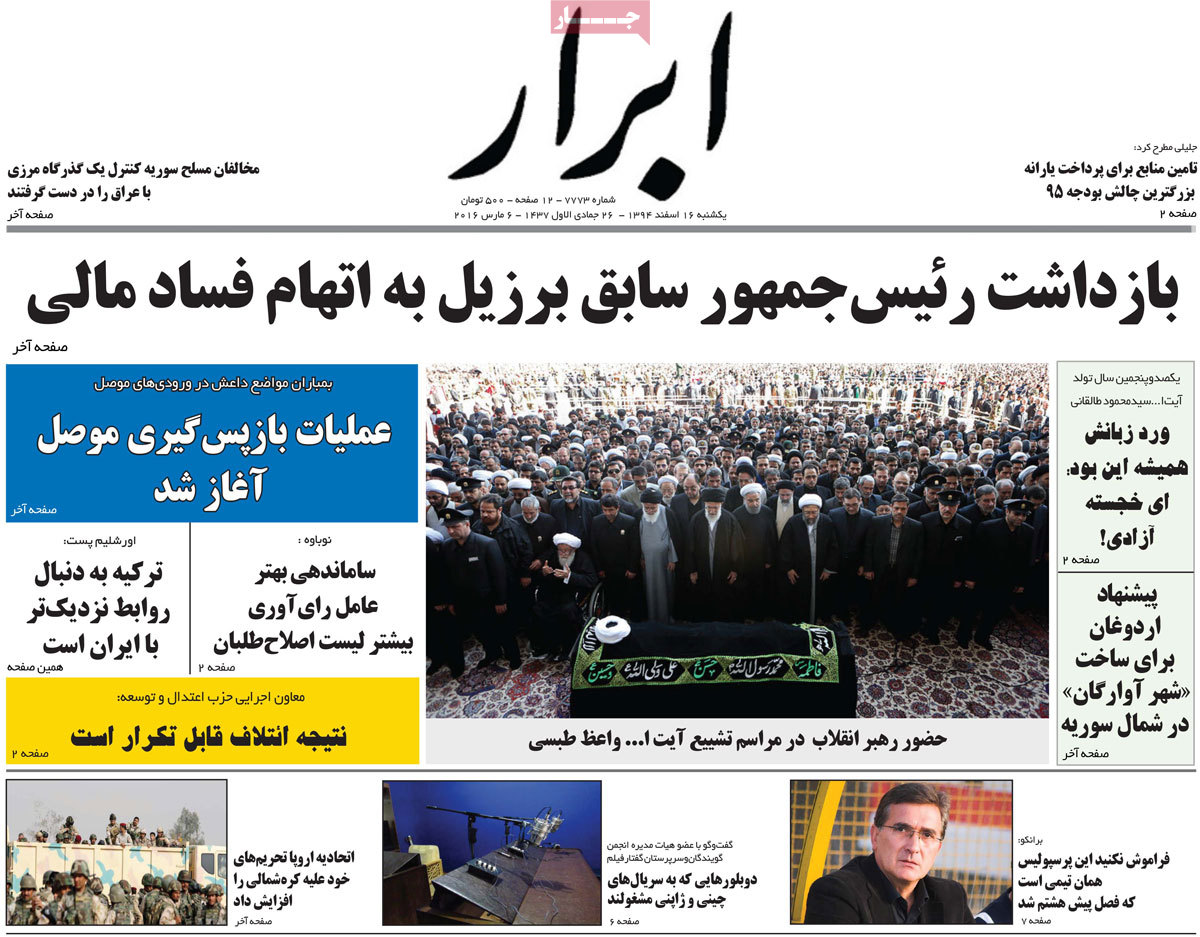
Abrar:

1.  Armed Syrian rebels take Iraq border crossing point from Daesh [ISIS]

2.  Operation to retake Mosul begins

ISIS bases shelled at entrance of Mosul

3.  Turkey seeking closer relations with Iran

4.  Ex-Brazilian president detained for corruption

5.  Leader attends Ayatollah Tabasi’s funeral

6.  EU extends sanctions against North Korea
 

A look at Iranian newspaper front pages on March 6


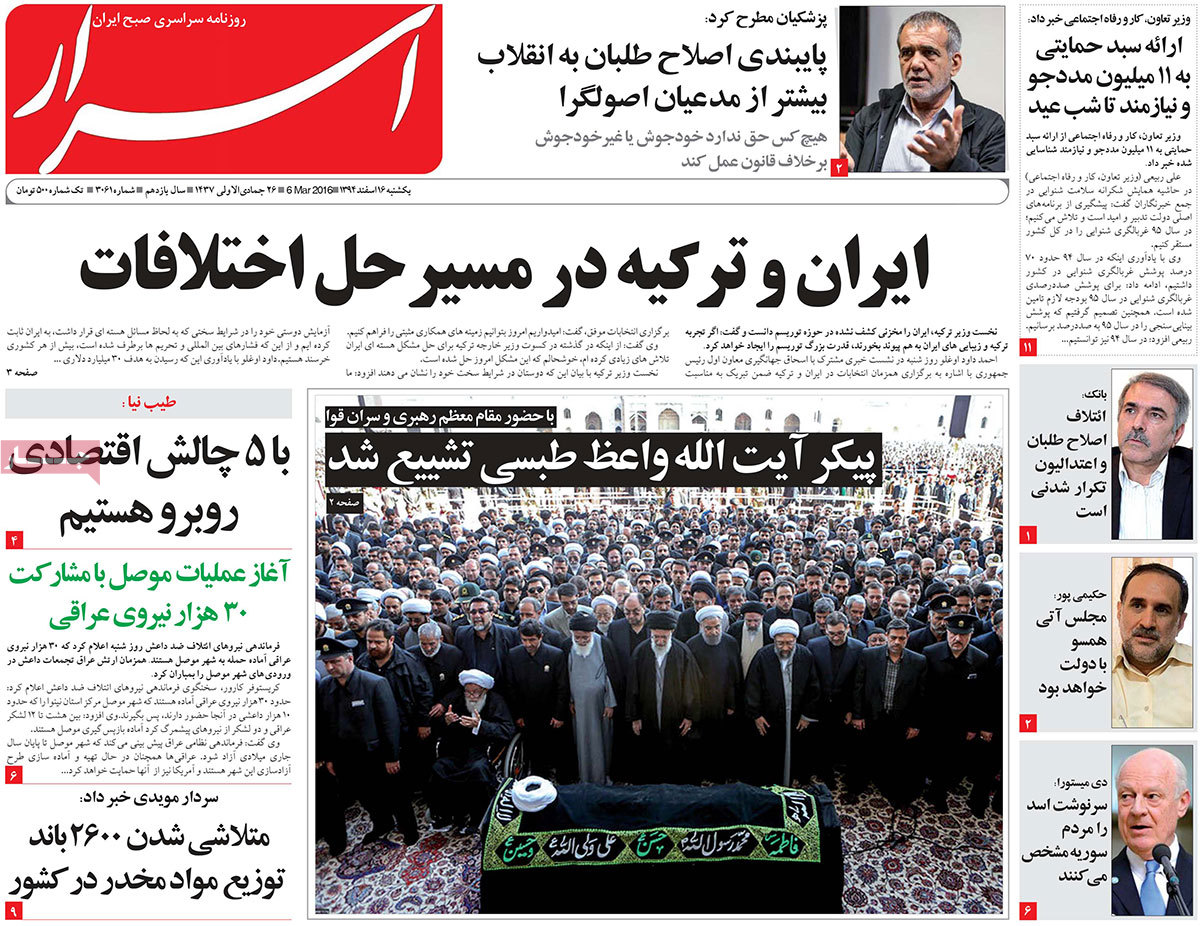
Asrar:

1.  U.N. Envoy: Syrians will determine Assad’s fate

2.  Iran and Turkey moving towards reconciliation

3.  30,000 Iraqi forces mount Mosul operation

4.  2,600 drug bands busted in Iran: Commander
 

A look at Iranian newspaper front pages on March 6


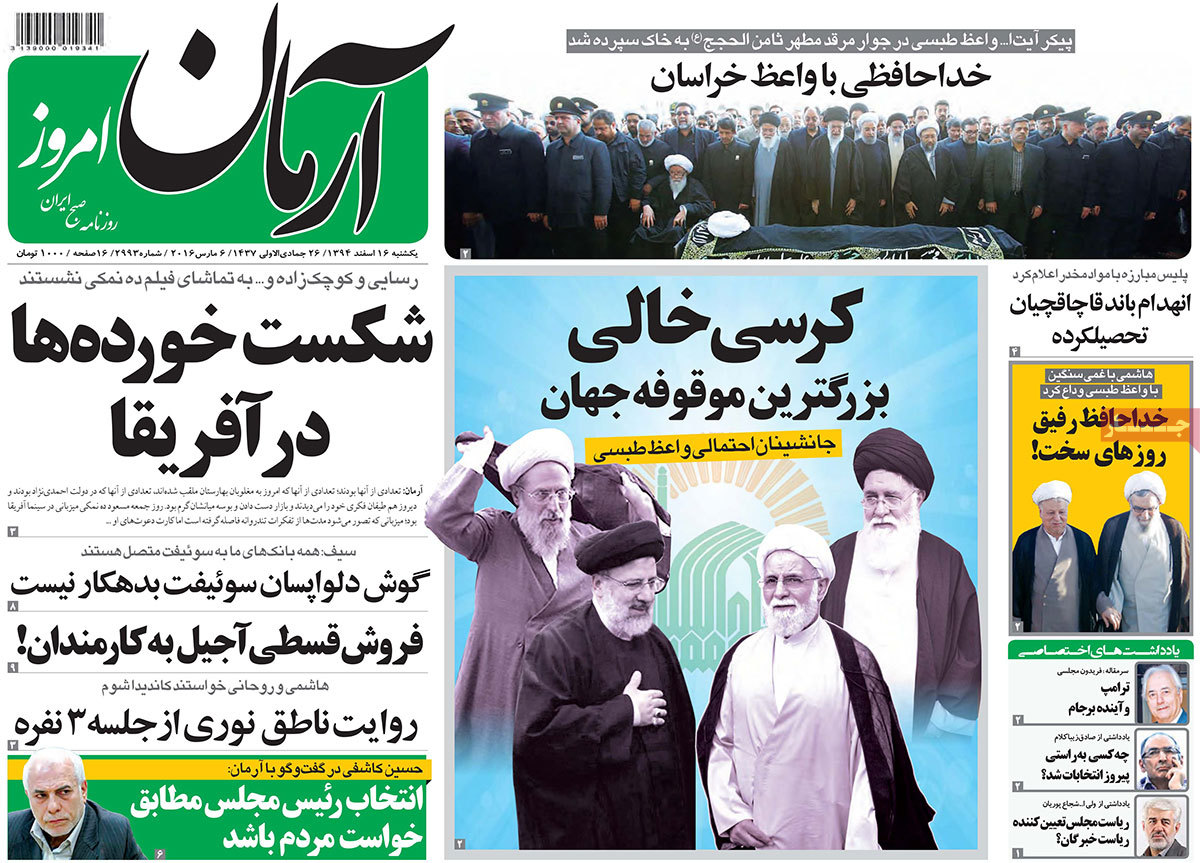
Arman-e Emrouz:

1.  Ayatollah Vaez Tabasi buried in Mashhad

The Grand Ayatollah, 80, passed away on Friday morning.

2.  Police bust ring of educated smugglers

3.  CBI chief says all Iran banks linked to SWIFT
 

A look at Iranian newspaper front pages on March 6


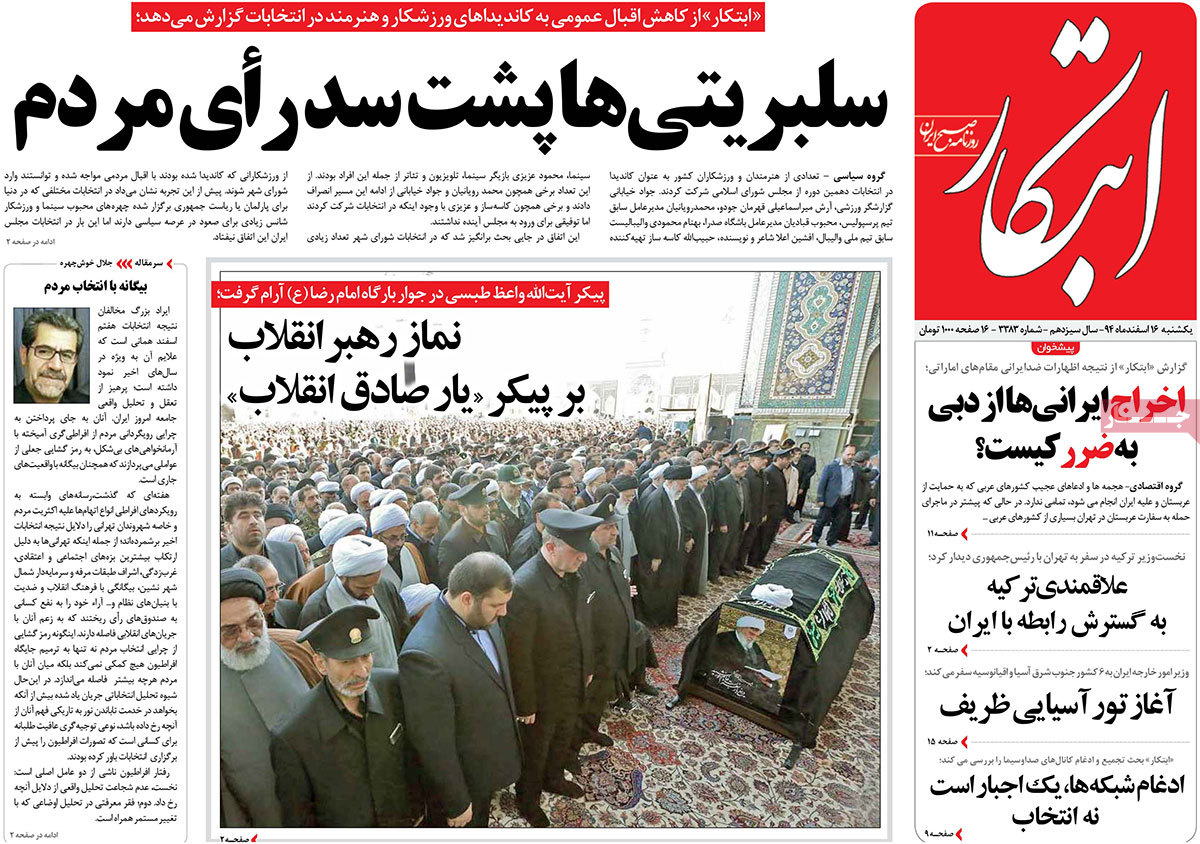
Ebtekar:

1.  Report: People cease to support celebrities in elections

2.  Report: Who loses out with Iranian expulsions from Dubai?

3.  Turkey keen on boosting Iranian ties

4.  Zarif embarks on Asian tour
 

A look at Iranian newspaper front pages on March 6


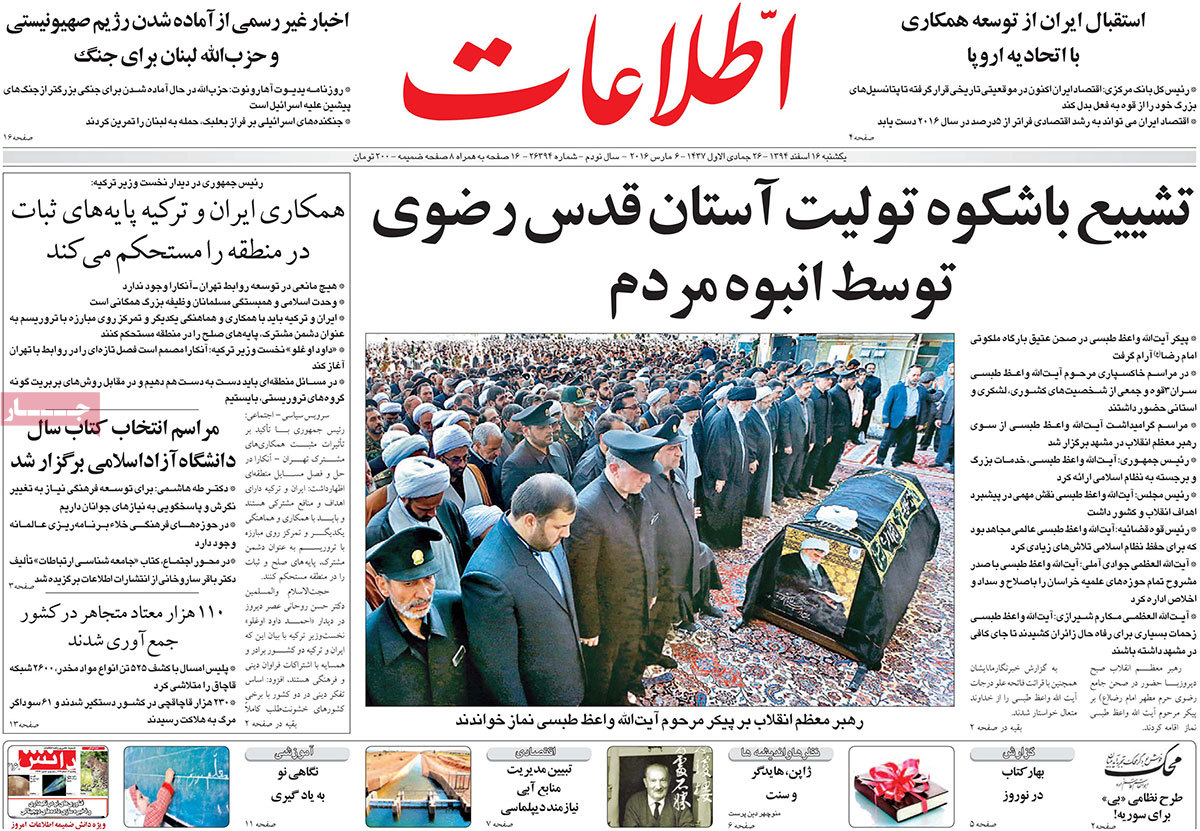
Ettela’at:

1.  Iran welcomes improved EU ties

2.  Sources: Hezbollah and Israel preparing for war

3.  Rouhani: Iran-Turkey ties can stabilize the region

4.  110,000 drug addicts rounded up in cities

These addicts used the drugs openly in urban areas.
 

A look at Iranian newspaper front pages on March 6


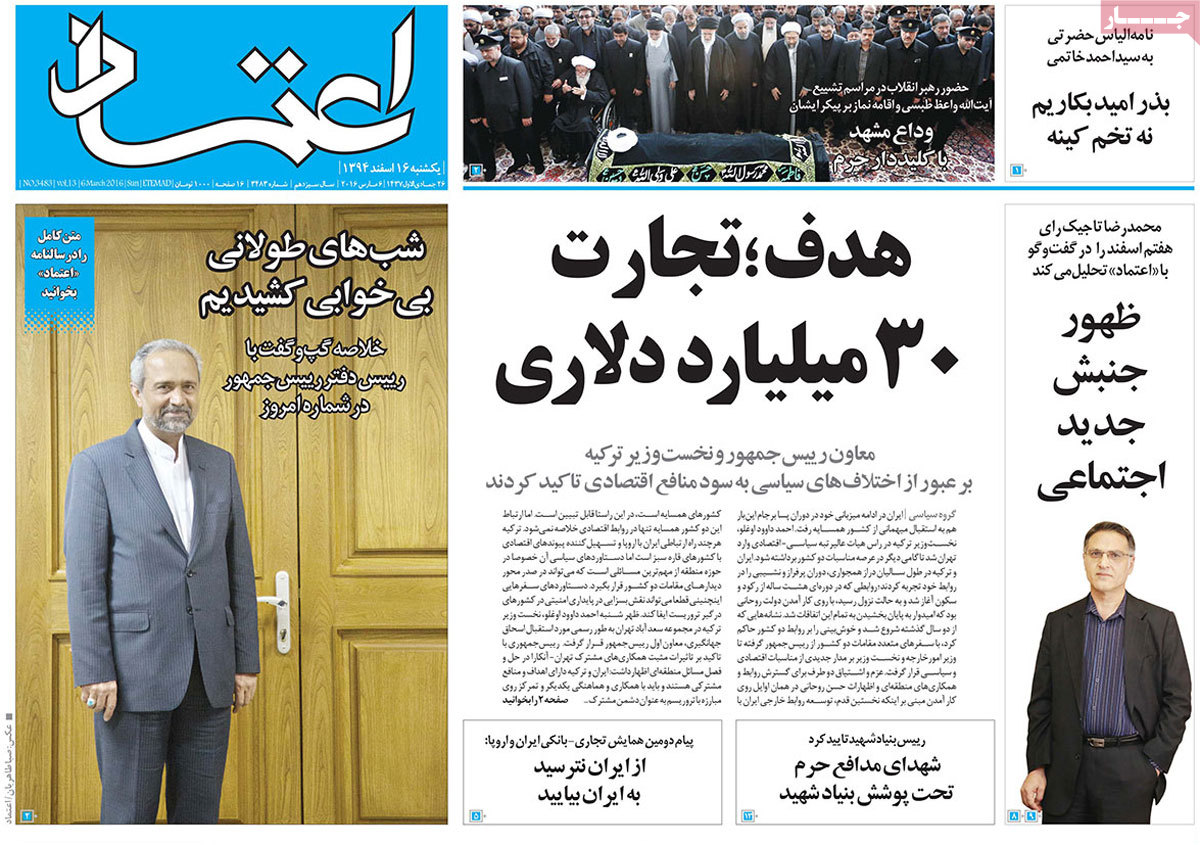
Etemad:

1.  Turkey aims for $30bn in Iran trade ties

2.  Do not fear Iran, travel here: Message of 2nd Iran-EU trade conference
 

A look at Iranian newspaper front pages on March 6


Afkar:

1.  Iran and EU resume goods trade

2.  Davutoglu: Iran’s hidden treasure in tourism

3.  Israel’s allies blacklist Hezbollah as terrorists: Viewpoint
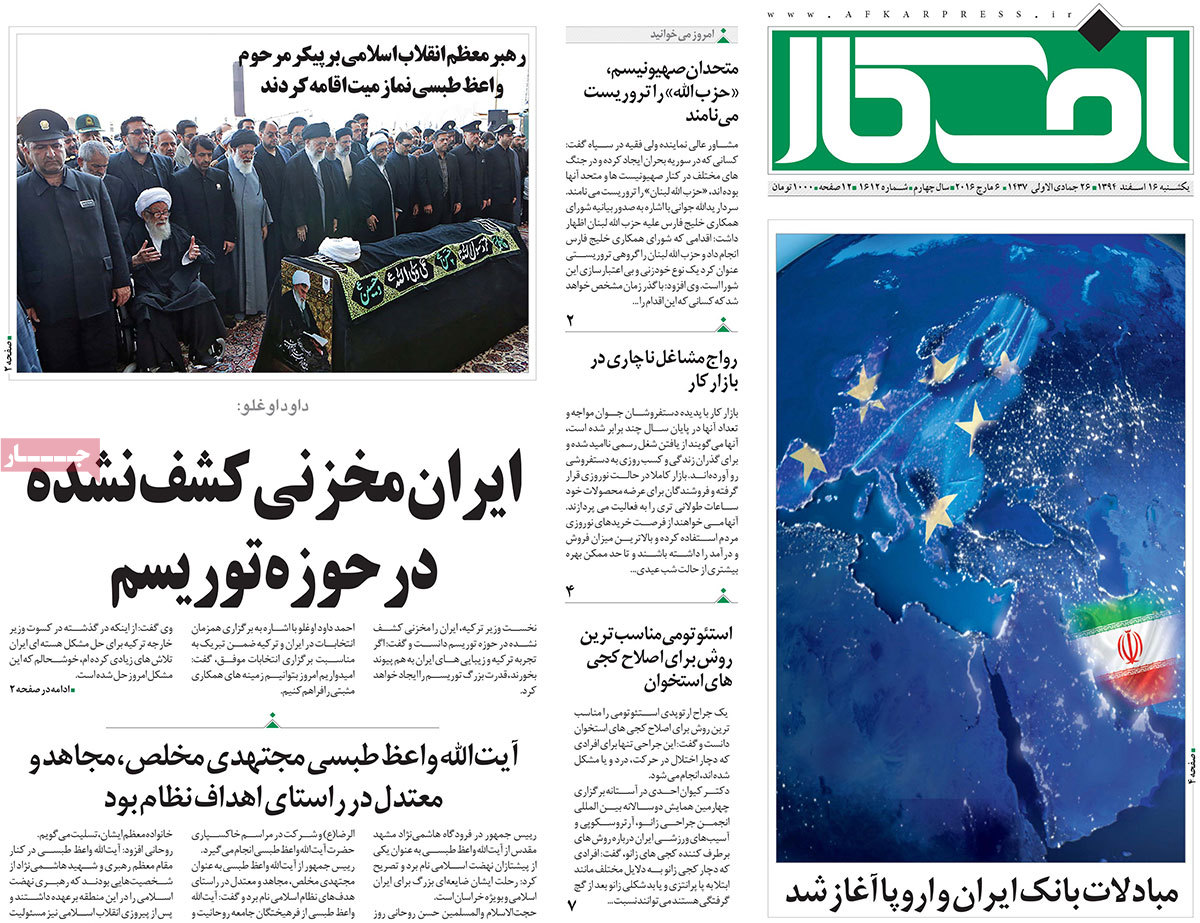
 

A look at Iranian newspaper front pages on March 6


Emtiaz:

1.  CBI aims for 1-digit inflation rate: Chairman

2.  Iran to boost crude oil exports to 2mb/d: Official

3.  Exceptional 7,000-year old graves discovered in southwestern Iran
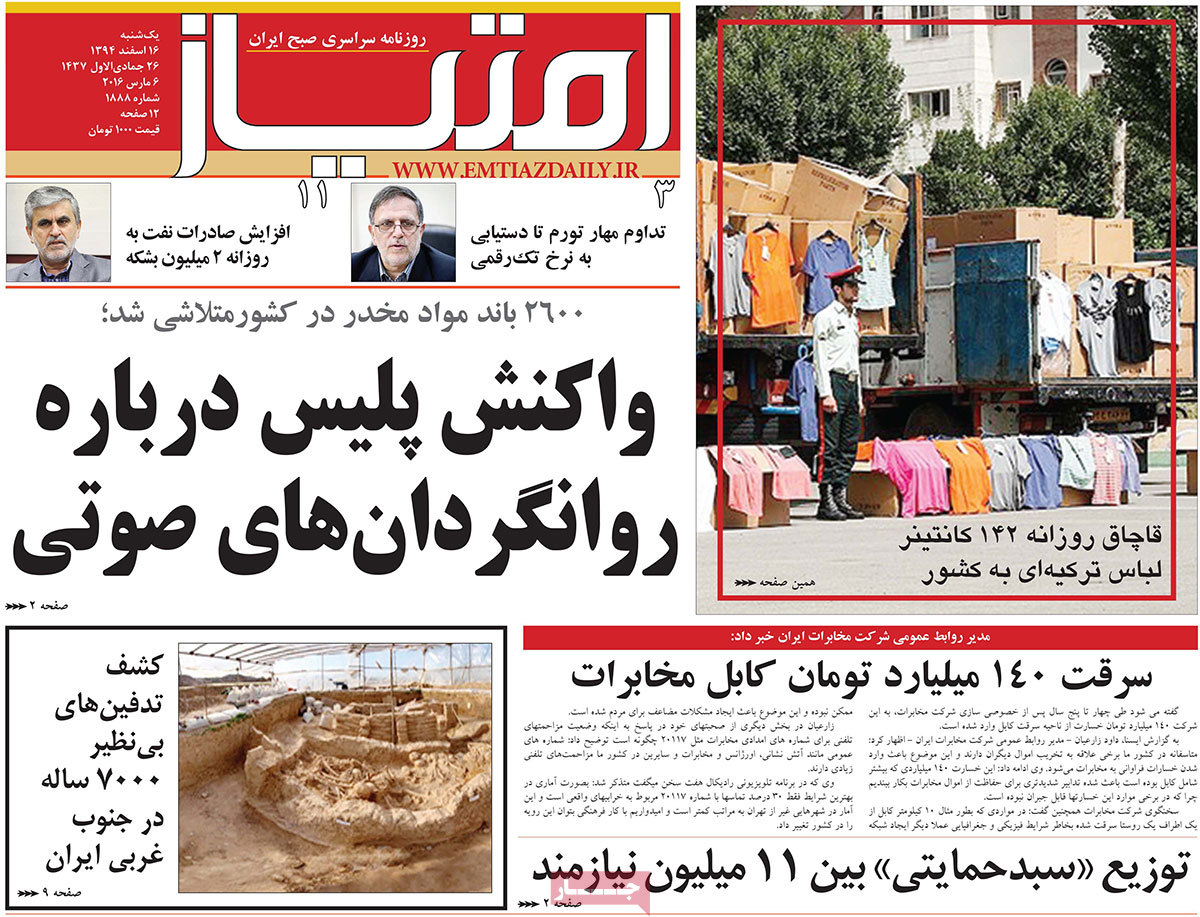
 

A look at Iranian newspaper front pages on March 6


Iran:

1.  Rouhani: Every country’s future must be determined by its people

2.  Iran holds special summit to open new chapter in EU relations

3.  Iran Aviation Organization and BA sign co-operation deal
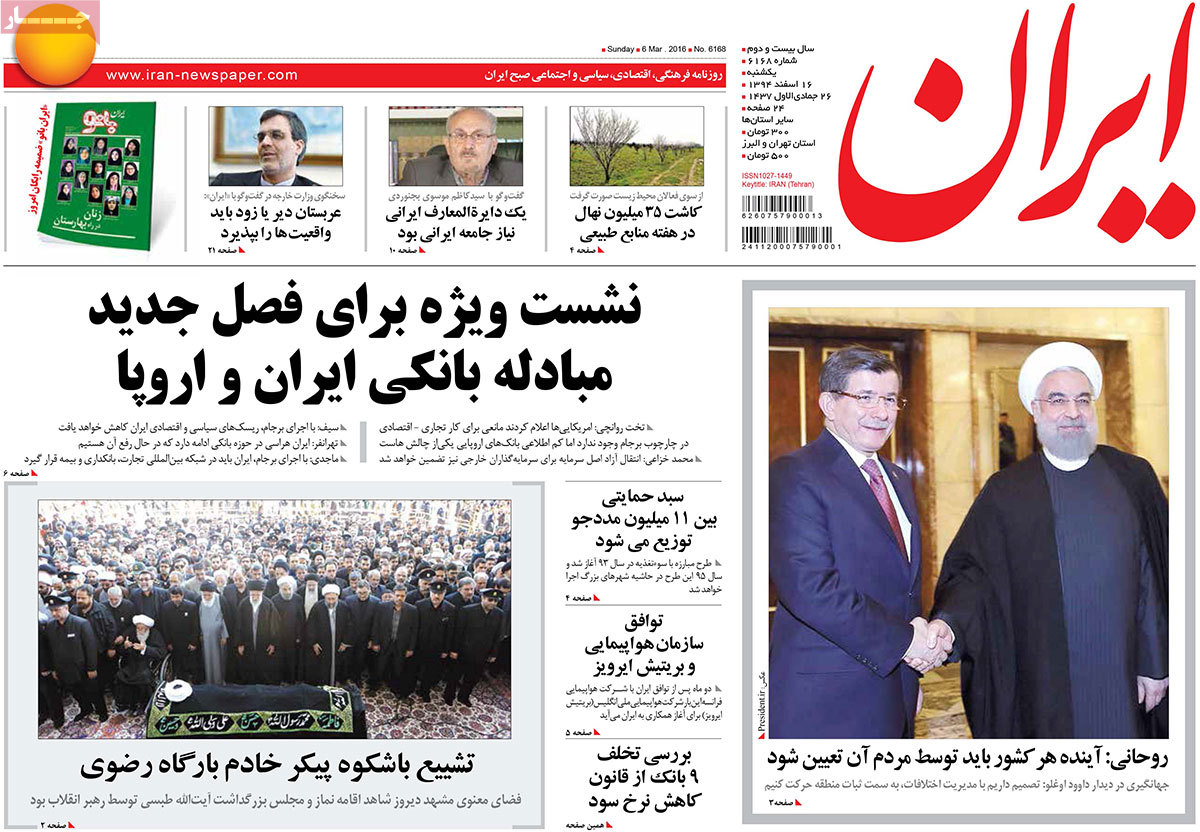
 

A look at Iranian newspaper front pages on March 6


Payam Zaman:

1.  15% rise in workers’ salaries

2.  No drug workshops in Iran

3.  Iran and Turkey interested in regional peace, security: VP
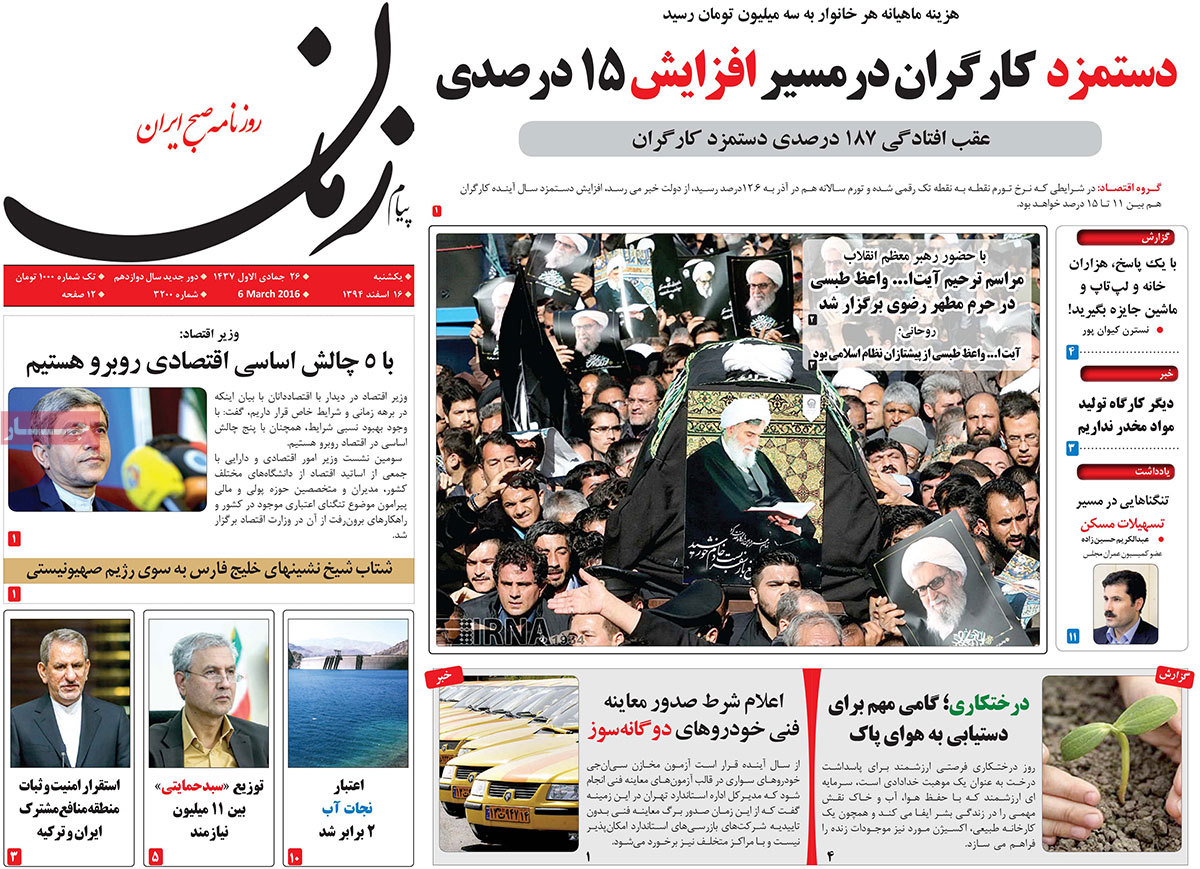
 

A look at Iranian newspaper front pages on March 6


Jomhouri Eslami:

1.  Iran and Turkey to restore peace and security in region

2.  Ayatollah Tabasi’s glorious funeral in Mashhad – Leader attends

3.  Muslims around the world support Hezbollah against Saudi-Israeli plot
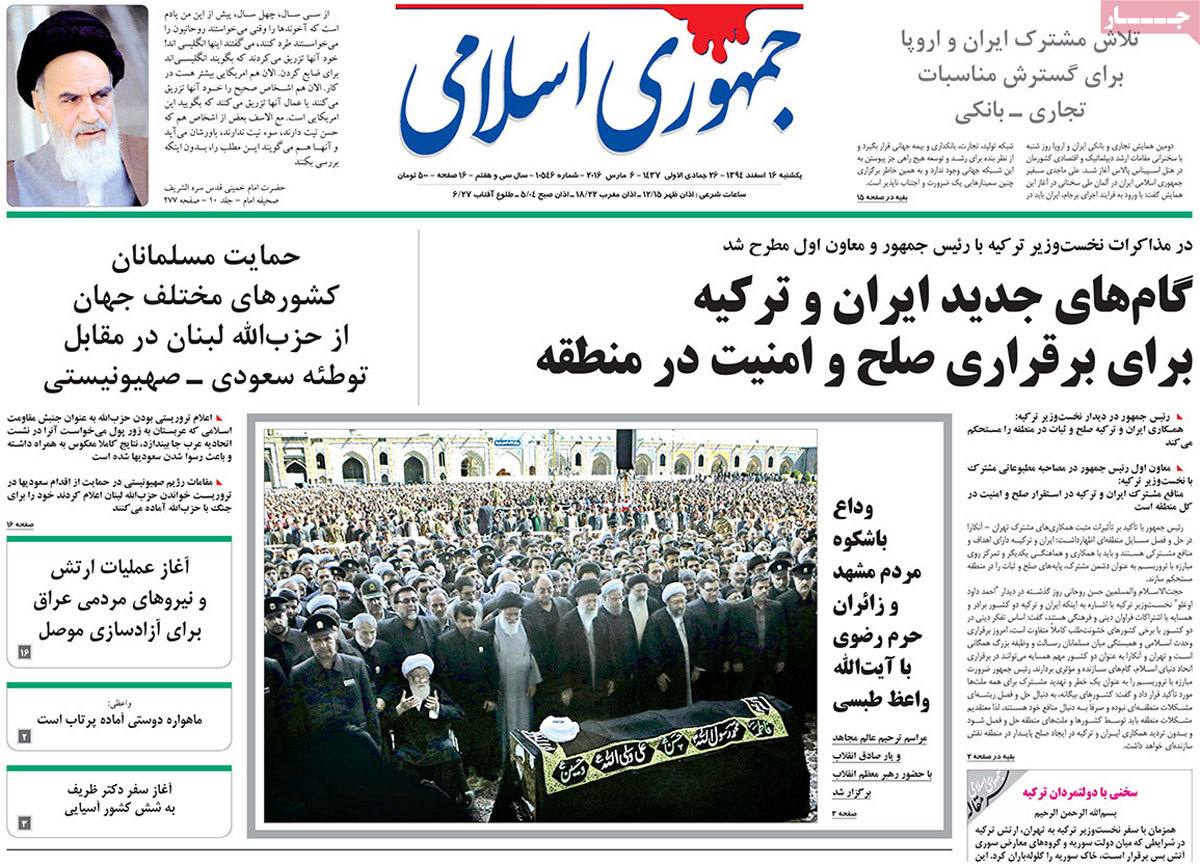
 

A look at Iranian newspaper front pages on March 6


Javan:

1.  SWIFT freed for Iran banks; no links yet

Diplomat: European banks no longer wary [of dealing with Iran]
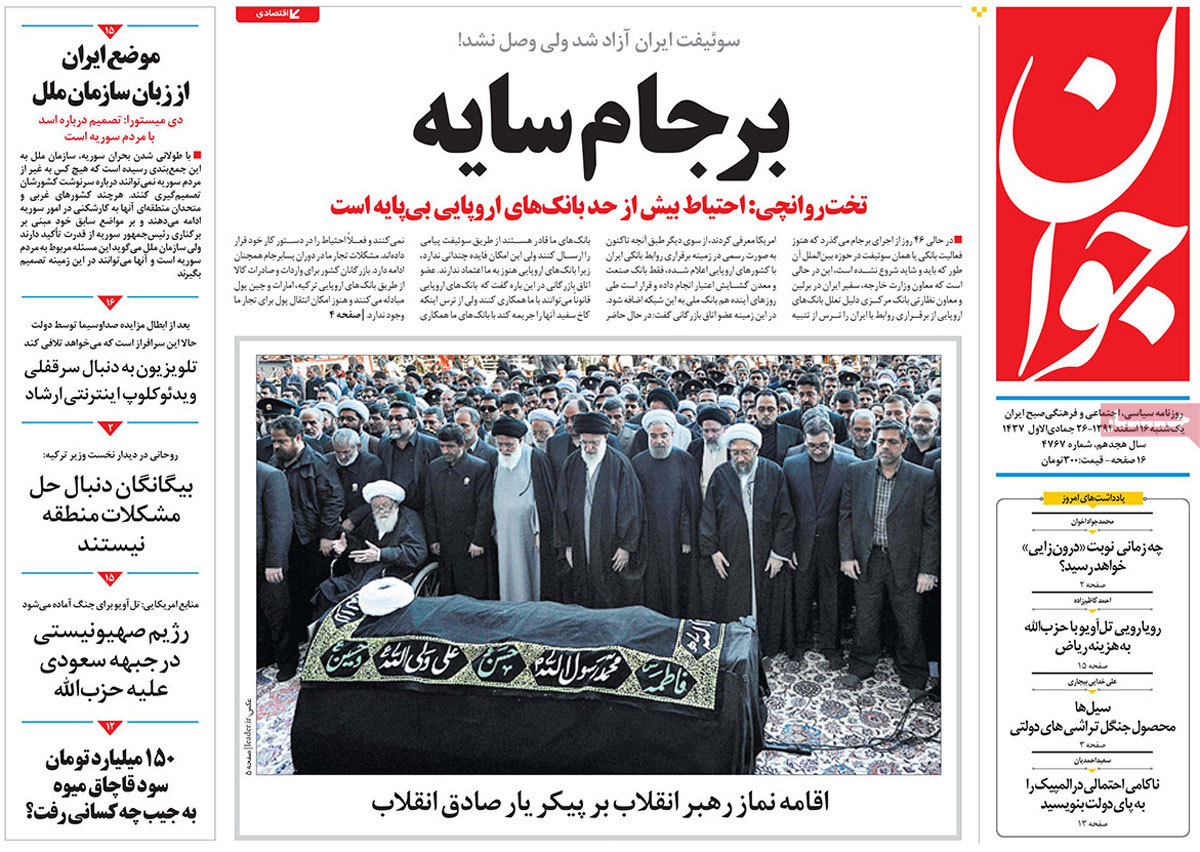
 

A look at Iranian newspaper front pages on March 6


Hemayat:

1.  US sabotages Iran-EU banking relations

2.  30,000 Iraqi forces line up to retake Mosul

3.  VP: Iran and Turkey can ensure regional stability by managing strife

4.  IRGC monitors all Persian Gulf traffic: Commander
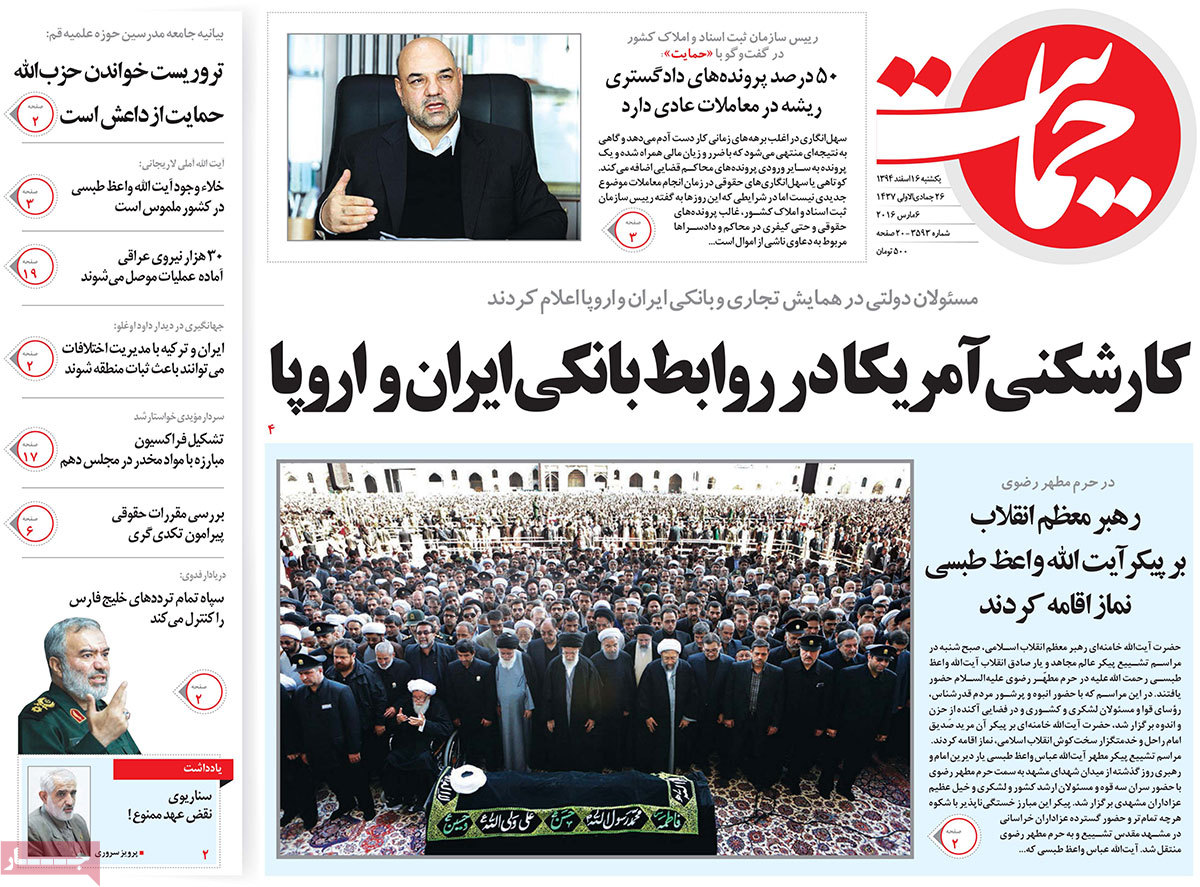
 

A look at Iranian newspaper front pages on March 6


Rah-e Mardom:

1.  Economists differ on government’s economic performance: Interviews

2.  European banks keen on restoring ties with Iran

3.  Pasargad Bank hailed as job-creator in Iran

4.  Romania seeking to buy natural gas from Iran
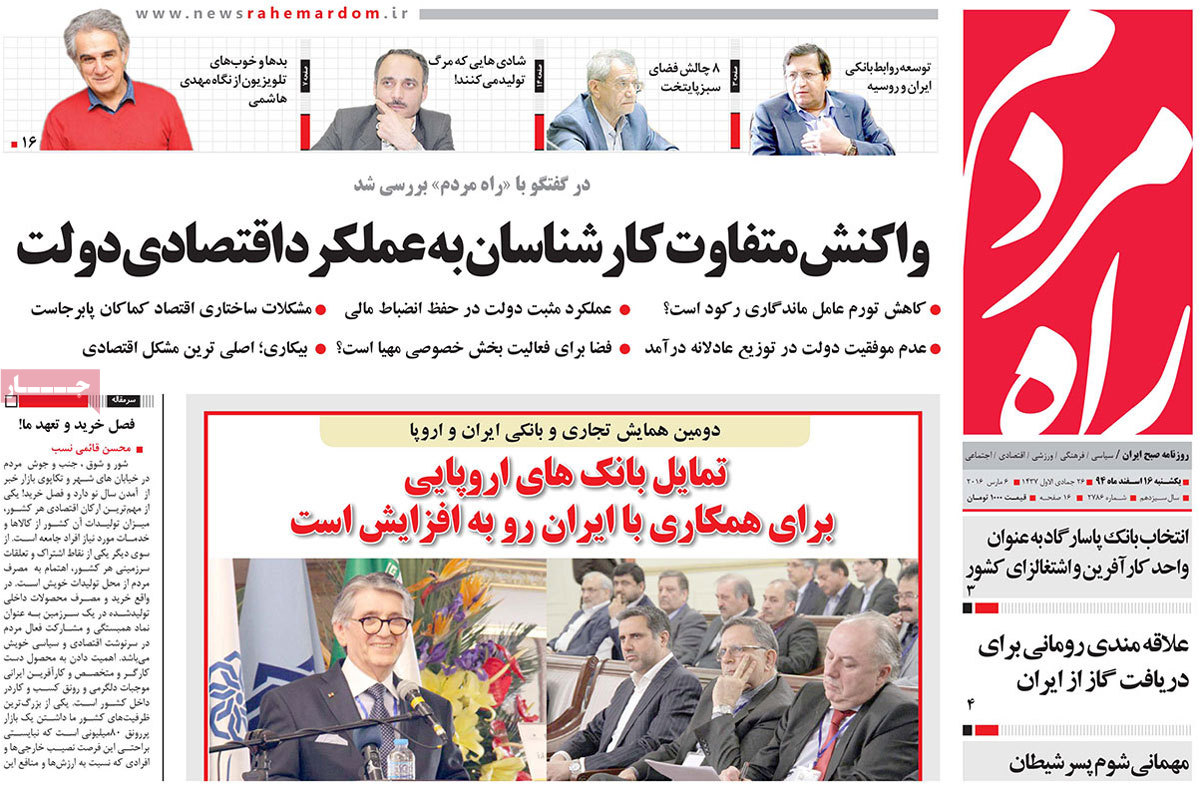
 

A look at Iranian newspaper front pages on March 6


Roozan:

1.  Tehran, Ankara; Friendship, rivalry, dispute management

2.  CBI resolved to curb money laundering
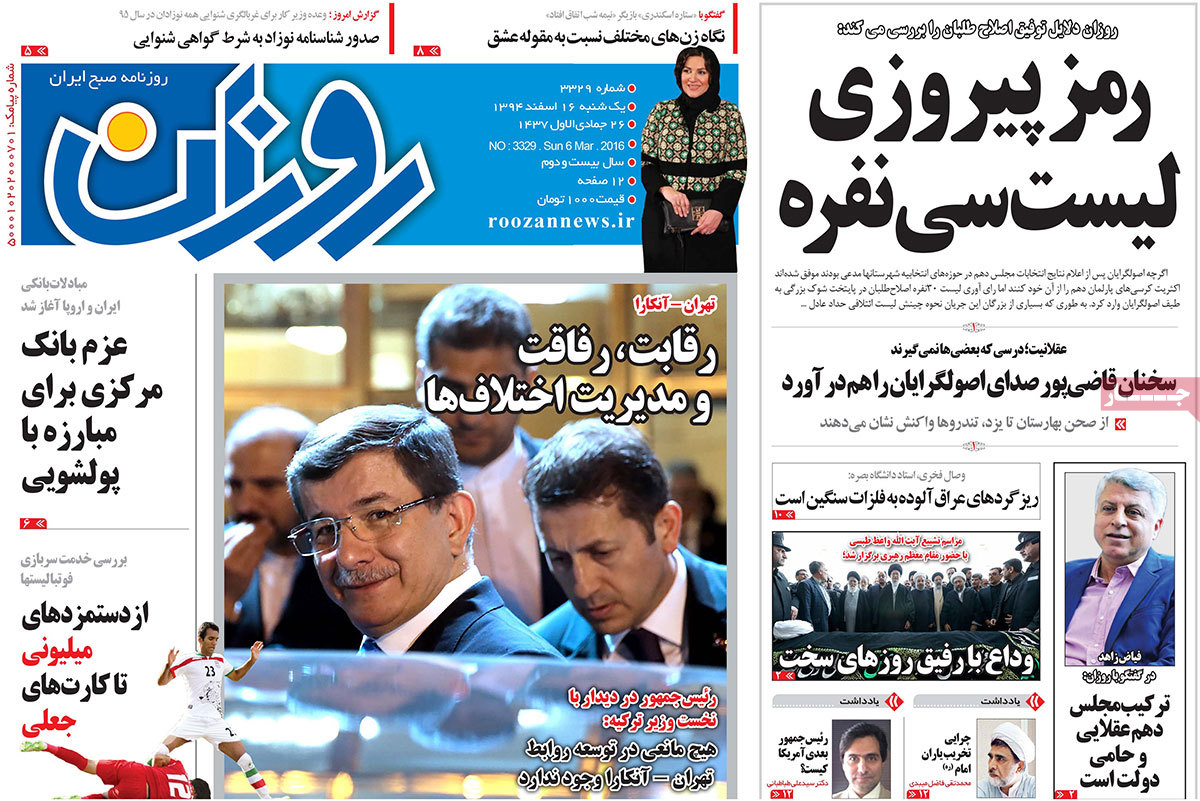
 

A look at Iranian newspaper front pages on March 6


Rooyesh Mellat:

1.  Restoring peace in Iran and Turkey’s common interest: VP

2.  Paris opposes parliamentary elections in Syria
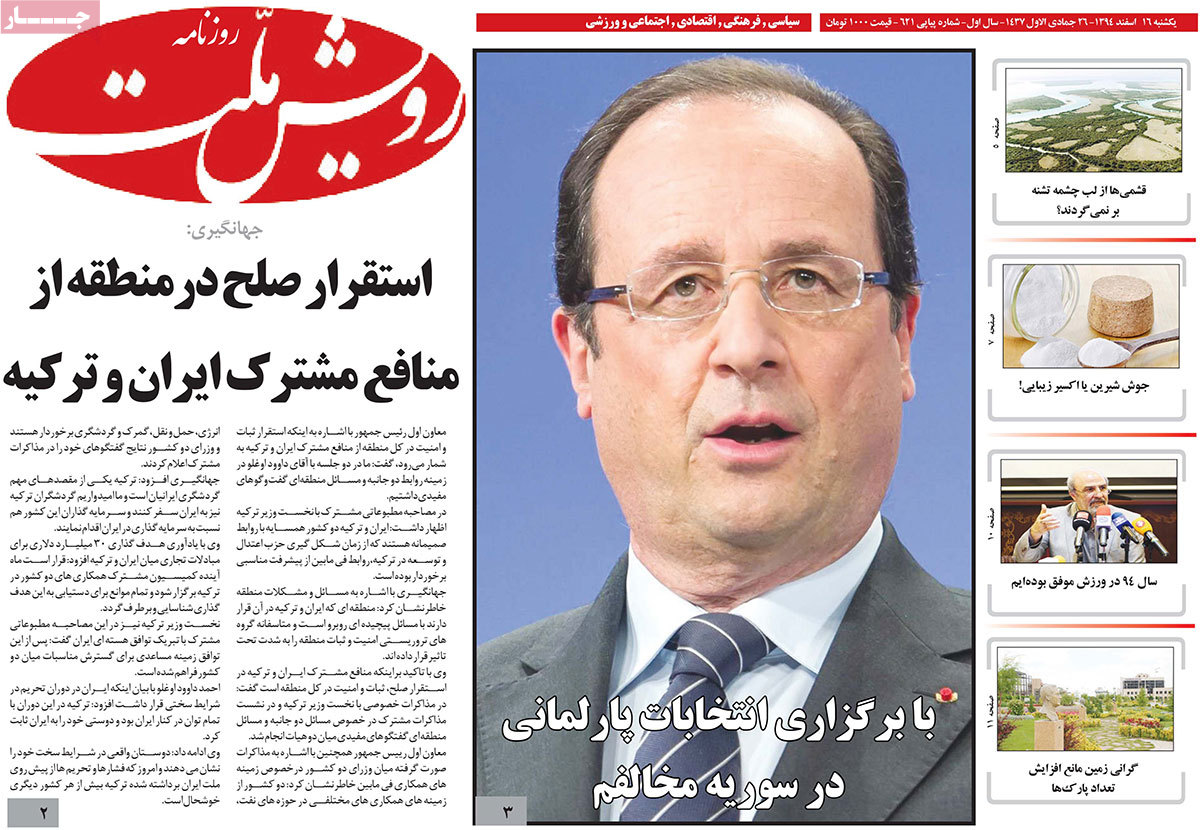
 

A look at Iranian newspaper front pages on March 6


Shargh:

1.  Iran, Turkey co-op. can bolster regional stability

2.  Leader leads prayers over Ayatollah Tabasi’s body in Mashhad

3.  US fears restoration of Iran-EU banking ties
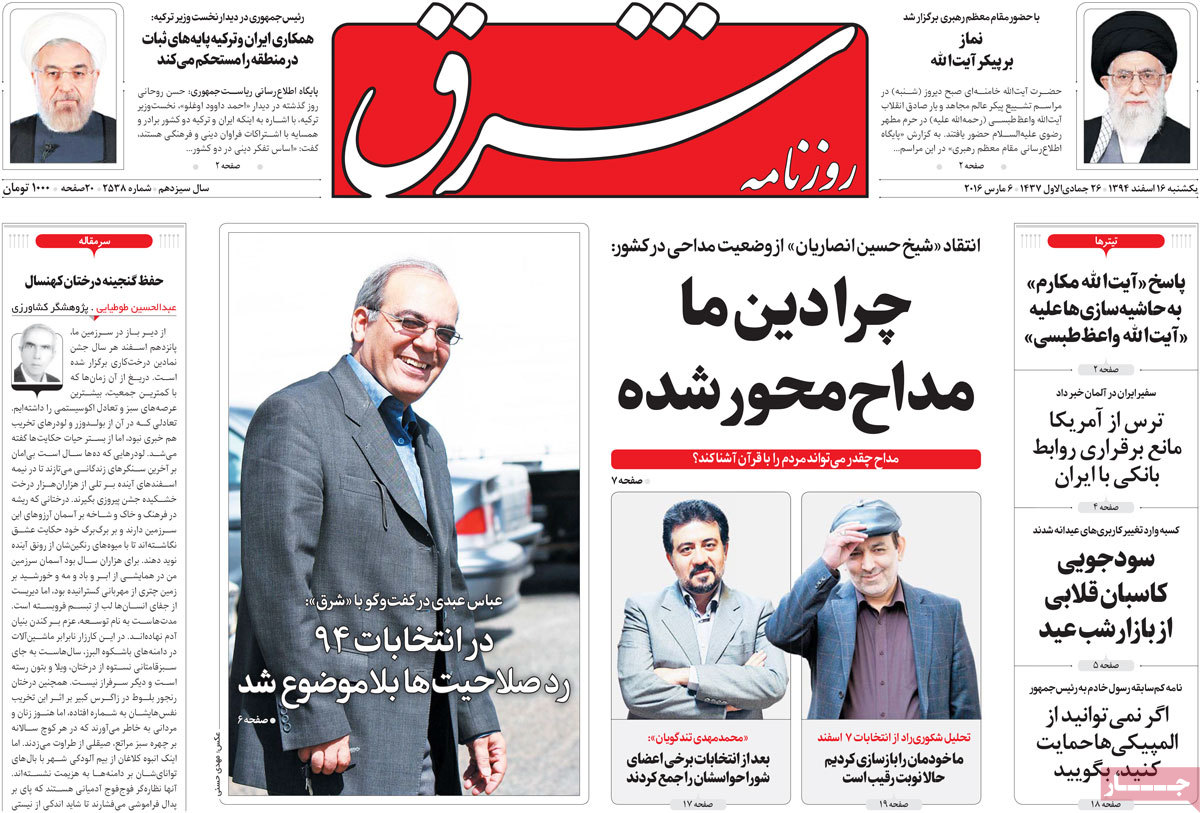
 

A look at Iranian newspaper front pages on March 6


Shahrvand:

1.  Iran launches campaign to counter malnutrition in suburbs

2.  VP’s advice to Turkish premier
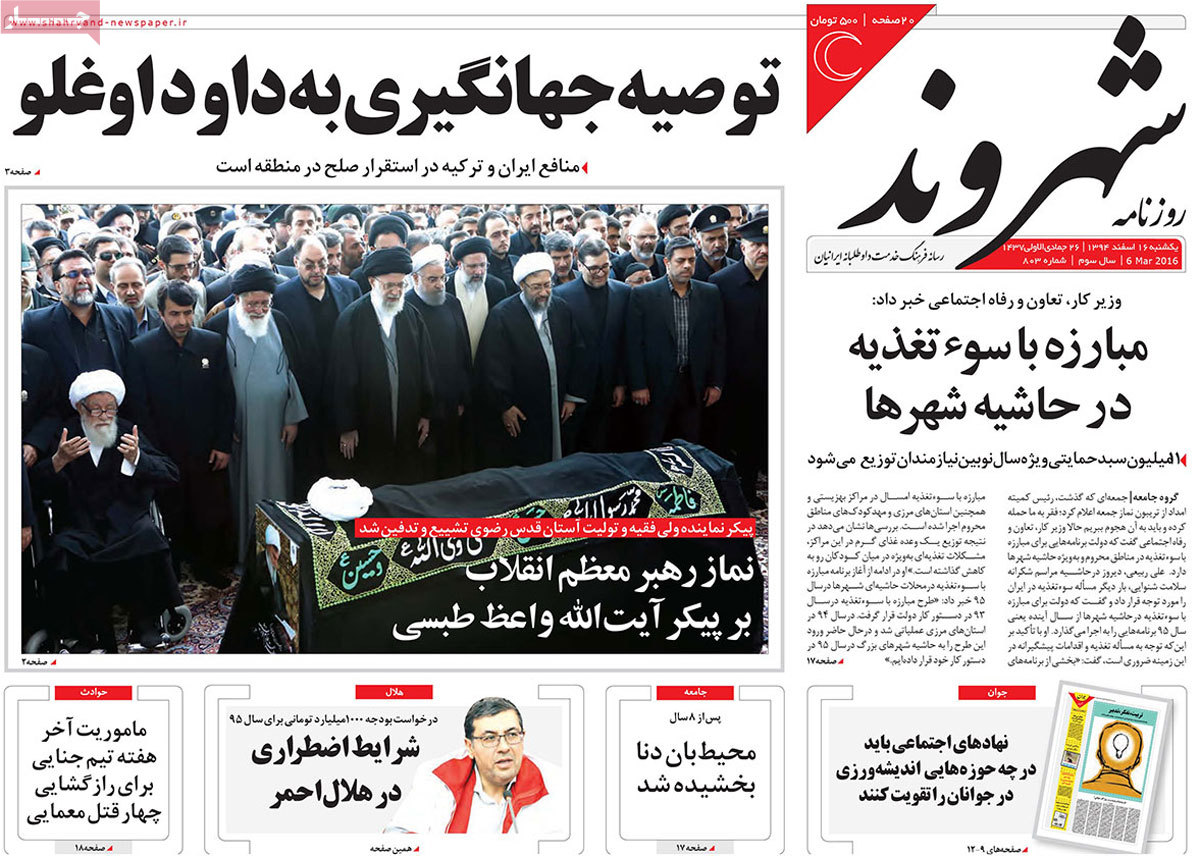
 

A look at Iranian newspaper front pages on March 6


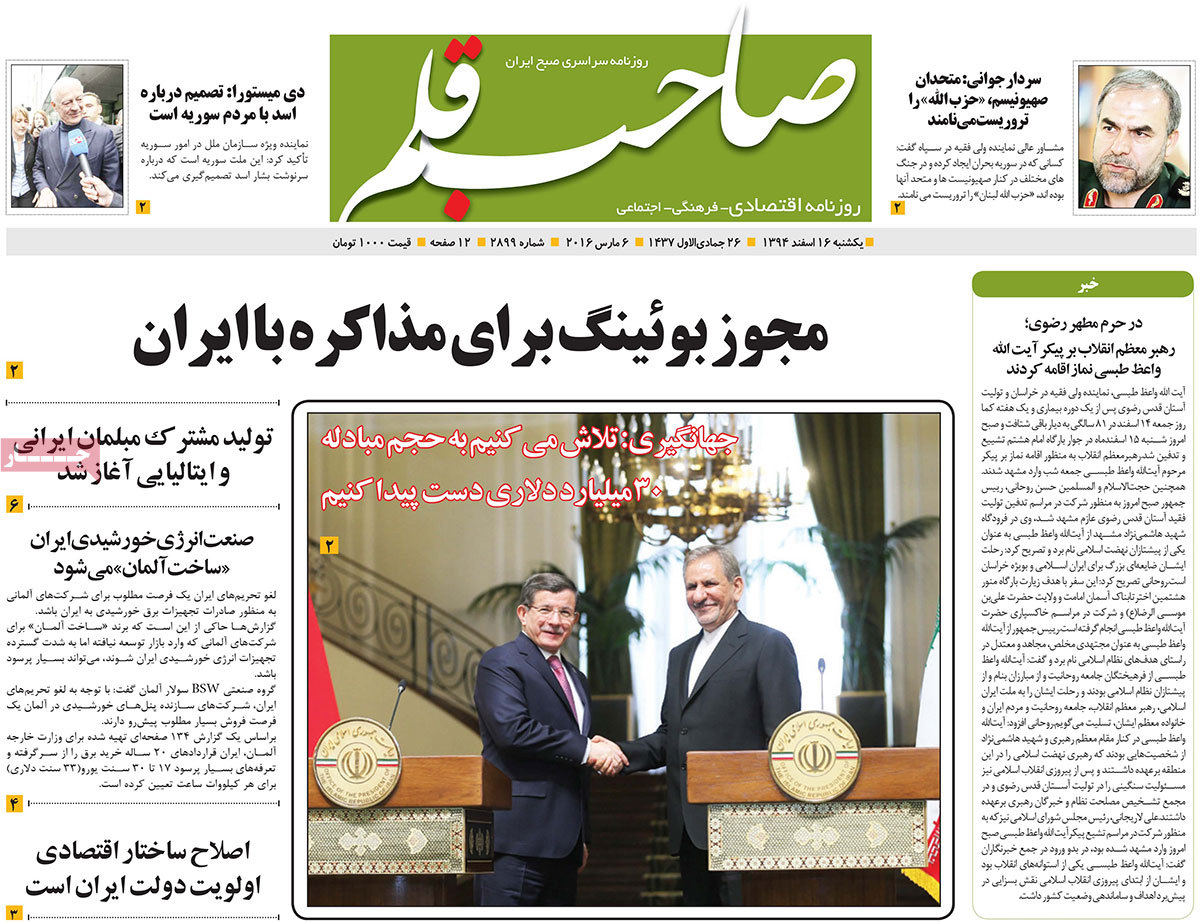
Saheb Ghalam:

1.  Leave allows Boeing to engage in talks with Iran

2.  VP: Iran will work towards $30bn in prospective Tehran-Ankara trade

3.  Iran and Italy jointly produce furniture

4.  Administration prioritizes economic reform

5.  Germany to modernize Iran’s solar energy industry
 

A look at Iranian newspaper front pages on March 6


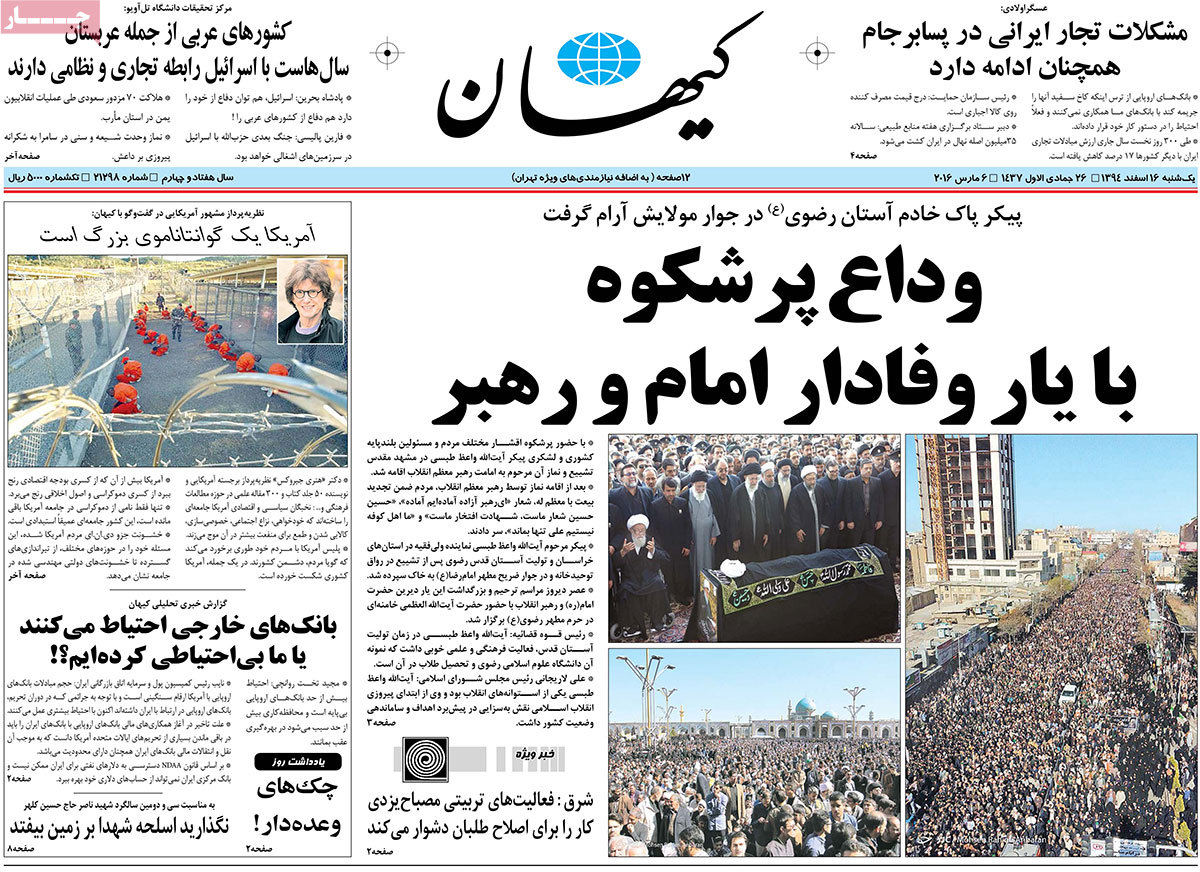
Kayhan:

1.  Iranian businesses still faced with trouble: Magnate

2.  Glorious farewell to staunch Imam, Leader’s aide

3.  US is a big Guantanamo
 

A look at Iranian newspaper front pages on March 6


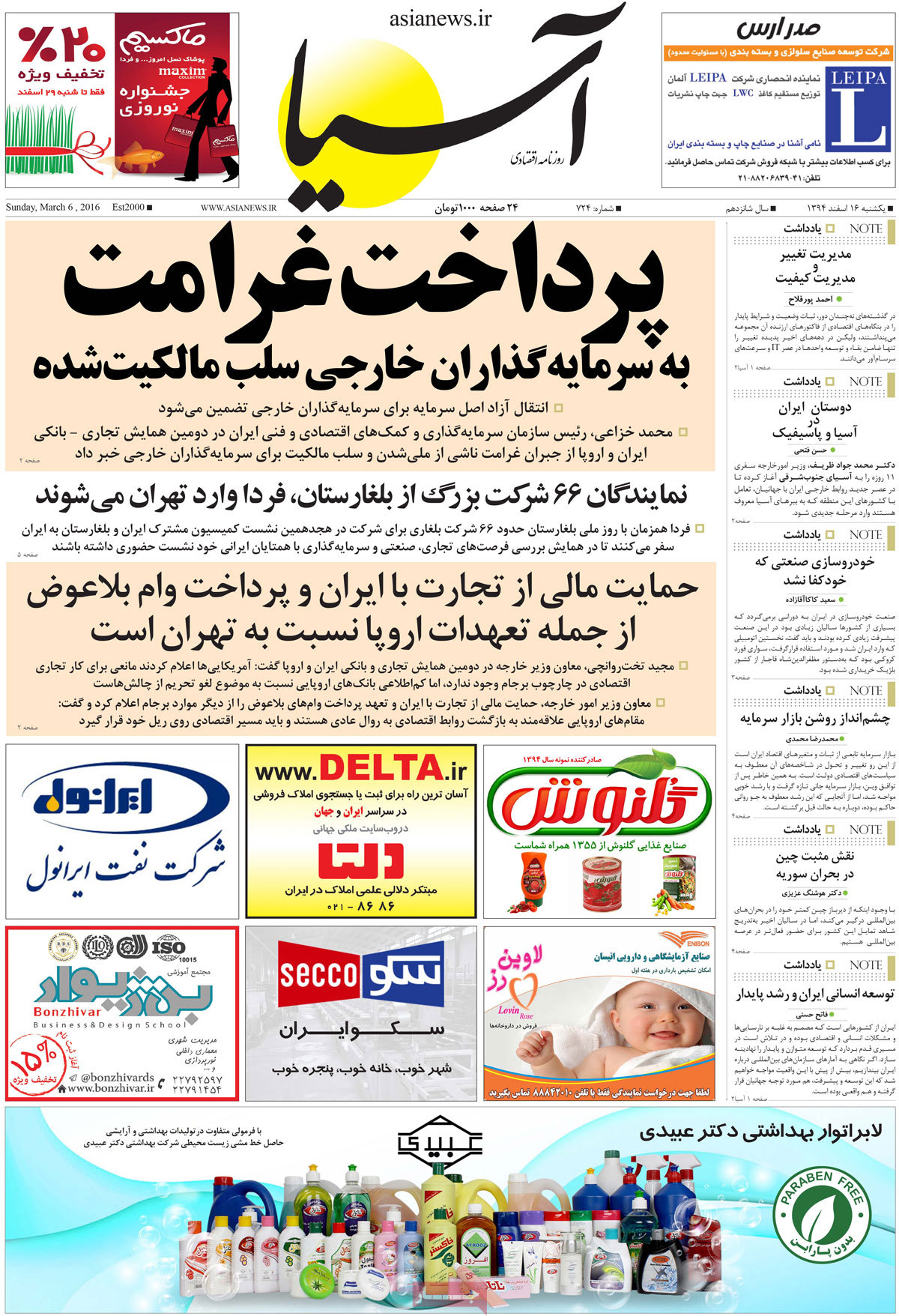
Asia:

1.  Bulgarian business delegation arrives in Tehran on Monday
 

A look at Iranian newspaper front pages on March 6


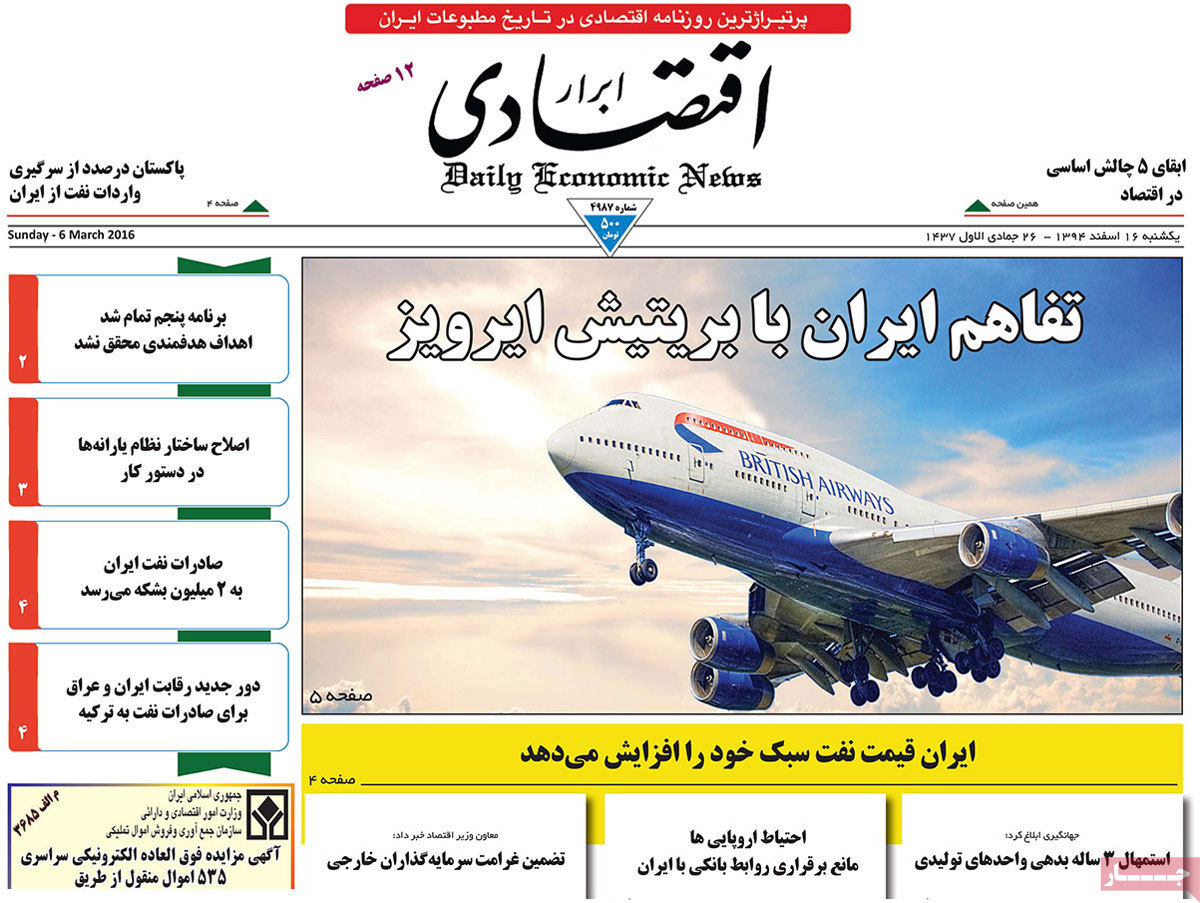
Abrar Eqtesadi:

1.  Pakistan seeks to resume Iranian oil imports

2.  Iranian oil exports to exceed 2mb/d: Official

3.  Iran and Iraq compete to export oil to Turkey
 

A look at Iranian newspaper front pages on March 6


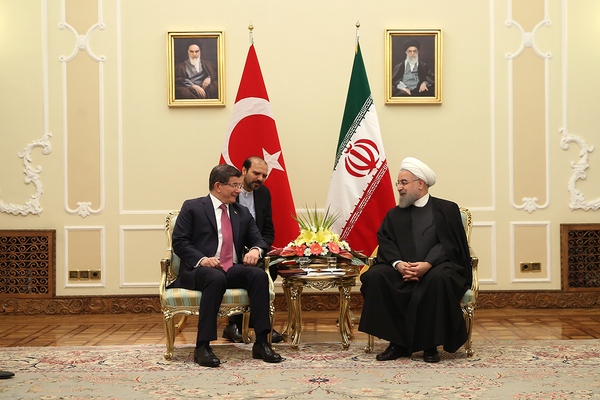
President Rouhani Urges Iran-Turkey Regional Cooperation

“Iran and Turkey have common objectives and interests, and should strengthen the pillars of peace and stability in the region through their cooperation and coordination and by focusing on the fight against terrorism as the common enemy,” Rouhani said at the meeting.

“Today, the establishment of Muslim unity and solidarity among Muslims is a great mission and duty on the shoulders of everyone,” the Iranian president noted.

He further pointed to the two countries as brotherly neighbors with lots of religious and cultural commonalities, saying, “Iran and Turkey, as two important neighboring countries, can take constructive and effective steps in establishing unity in the Islamic world.”

President Rouhani went on to say that the necessity for the fight against terrorism is a common danger and threat for all nations, but at the same time ruled out the interference of foreign countries, which “are not seeking to resolve regional problems fundamentally, and just pursue their own interests.”

Terrorism is the common enemy of Iran and Turkey, so both should work together to eradicate it: Rouhani

“We believe regional problems should be settled by regional countries and nations,” Rouhani stressed, reiterating that undoubtedly the cooperation between Iran and Turkey will play a constructive role in establishing sustainable peace in the region.

Iran and Turkey are on the same page when it comes to respecting the sovereignty and territorial integrity of other countries or the fact that the fate of any country should be decided by its own people, Rouhani said, adding that both Iran and Turkey agree that the bloodshed in Syria should be ceased and the displaced people should receive aid and rescue.

Iran’s President: Tehran and Ankara should take full advantage of today’s opportunity to expand their ties in line with the two countries’ interests

“Through their common views in such issues, Tehran and Ankara can work together and take serious and beneficial steps to settle regional problems step by step,” he added.


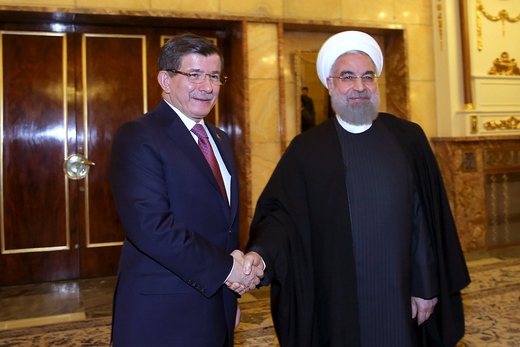
Turkey pm- Rouhani


Regional Issues Have No Negative Impact on Iran-Turkey Bilateral Ties

The Iranian president further noted that certain problems in the Middle East have not at all soured the bilateral ties between Iran and Turkey, adding, “There is no barrier to the development of the two countries’ ties.”

“Tehran and Ankara have numerous capacities for increasing expansion of their ties in different sectors, particularly in transport, energy, trade, joint ventures, tourism, science, and technology, and we are ready to start mutual cooperation in all of these fields,” he asserted.

Davutoglu, for his part, expressed Ankara’s resolve to open a new chapter in its relations with Tehran, saying, “Today, Turkey is more than ever willing to enhance its brotherly cooperation with the Islamic Republic of Iran in various fields.”

President Rouhani: Iran and Turkey can take constructive and effective steps in establishing unity in the Muslim world

The Turkish PM, who arrived in Tehran on Friday night at the head of a trade delegation, noted that he has brought the largest investment sector and industrialists of Turkey to Tehran.

“Iran and Turkey complement each other, and enjoy great capacities and potentials for promotion of the level of their cooperation,” he added.


Turkey, Iran Should Join Hands in Fight against Barbaric Terrorists

Davutoglu also highlighted the need for regional cooperation between Iran and Turkey and the necessity for the fight against terrorism.

“On regional issues, we should join hands and stand against the barbaric methods of terrorist groups,” he noted, reiterating that Ankara is ready to have full cooperation with the Islamic Republic in the fight against terrorist groups in the region.

Ankara is ready to have full cooperation with Iran in the fight against terrorist groups in the Mideast: Turkish PM

He also emphasized that respecting national sovereignty and territorial integrity, adopting non-interventionist policies, and letting the country’s nation to decide for their future are the principles of Turkey’s foreign policy.

Allies of Israel dub Hezbollah terrorist: IRGC cmdr.

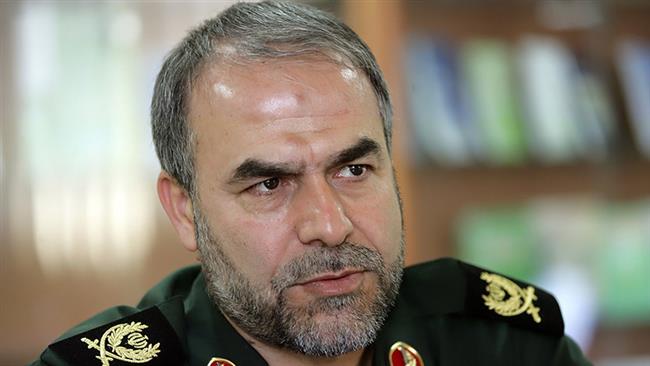
“Those who have created a crisis in Syria and stood by the Zionists as their allies in different wars name Lebanon’s Hezbollah [a] terrorist [organization],” senior adviser to Leader’s representative to the IRGC, Brigadier General Yadollah Javani, said on Saturday.

On Wednesday, the six-nation [Persian] Gulf Cooperation Council issued a statement labeling Hezbollah a terrorist organization. The bloc, comprising Saudi Arabia, Qatar, the United Arab Emirates, Oman, Bahrain and Kuwait, however, did not provide any evidence for its allegations.

Javani said the Arab bloc’s groundless accusation against the resistance group is a self-harming act and a strategic mistake that would discredit the council.

He emphasized that Hezbollah is a popular movement which has been formed to confront the Israeli regime, defend Lebanon’s territorial integrity and protect rights of Muslim nations.

The IRGC commander said the [P]GCC move to declare Hezbollah a terrorist body clearly shows that the Arab bloc is following in the footsteps of the Zionists, adding that their act is in line with fulfilling the demands of the United States.

“The countries which have carried out this measure pay no heed to rights of Muslims, the interests of the Muslim world and even [those of] Arab states. Their measures are in line with responding to requests of the Americans and the Zionists,” Javani pointed out.

He said Hezbollah is a distinguished movement in the Muslim world which has a special position among Muslims and Arab nations, adding that some countries immediately reacted to the bloc’s move.

The decision by the [P]GCC to blacklist Hezbollah has met opposition and criticism.

Algeria refused to classify the movement as a terrorist organization. Palestinian resistance movement, Islamic Jihad, also praised Hezbollah as a resistance movement which has a history in the struggle against the Zionist entity as well as in supporting the Palestinian cause. Iran, Syria and Yemen’s Houthi Ansarullah movement have also slammed the move by the [P]GCC.

The move by the six-nation Arab bloc came days after Riyadh halted USD 4bn in aid to Lebanese security forces. The decision came following recent victories by the Syrian army, backed by Hezbollah fighters, against the Takfiri militants fighting to topple the Damascus government.

Hezbollah Secretary General Seyyed Hassan Nasrallah has said the Saudi regime seeks to instigate “strife” between Shias and Sunnis in the region, urging the Lebanese not to be intimidated by threats posed by Riyadh and Tel Aviv.