Thursday, December 25, 2025
Home Blog Page 4522

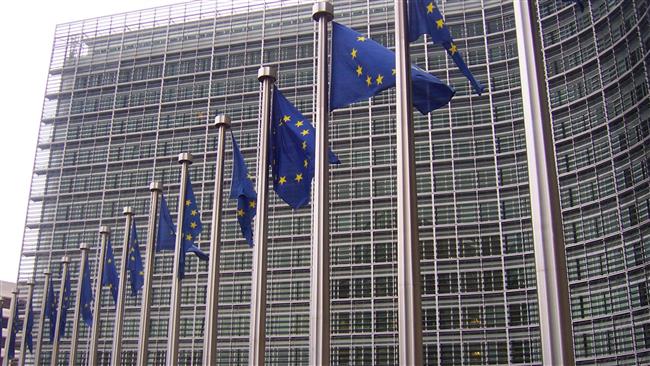
Opening of EU Office in Tehran: Good News for Iranians

European Union

One of the issues raised in Mogherini’s recent visit to Tehran was the opening of an EU office in Tehran.

In a joint press conference with the EU foreign policy chief on Saturday, April 16, Iranian Foreign Minister Mohammad Javad Zarif said that the two sides had conferred on preparing the grounds for the opening of a permanent office.

The EU has 28 member states, more than 500 million citizens, and a GDP of $18.4 trillion (2014). Therefore, the opening of such an office in Tehran can be considered a beneficial and useful development for the Iranian nation.

This would lead to the following results:

Iran and the EU would be able to improve the level of their cooperation in different economic, political, social, and cultural fields. Such promotion would benefit the Iranian nation and government, as well as the EU member states, people, and institutions.

Iran is faced with a global wave of Iranophobia. Unfortunately, there are many outlets in the world actively spreading propaganda to distort the developments in Iran. They are constantly trying to deny or misrepresent positive events in the country, including the elections, the improvement of human rights conditions, and the reinforcement of civil society.

Once the EU opens its office in Tehran, it can directly monitor the positive developments in Iran and Iranian society. This way, the European body can observe the good, positive events in the country, regardless of any false claims and anti-Iranian propaganda spread by foreign-based opposition groups and those aiming to overthrow the Iranian Establishment.

It can thus be predicted that such groups, particularly the MKO (Mojahedin-e-Khalq Organization), would be the strongest opponents of EU’s decision to open its office in Tehran. If that happens, the real Iran would be shown to the world, and thereafter, opposition groups would not be able to present their own wishes and fantasies to European officials, the European Parliament, and the EU member states as the realities of Iran.

 The opening of the EU office in Tehran would also enhance economic cooperation between Iran and EU economic commissions.

Today, many European and non-European countries manage their economic activities within the framework of recommendations, suggestions, and standards provided by the EU.

An EU office in Tehran would make Iran more familiar with up-to-date standards, particularly those of the EU. This would improve economic collaboration between Iranians and Europeans. As a result, Iran would be able to boost its capabilities and expand its economic cooperation with other international blocs and countries.

34th edition of FIFF kicks off in Tehran

The event was opened by screening ‘The Old Man and the Sea’ by English cinematographer Martin Radich, ‘I am a Teacher’ directed by Russian director Sergey Mokritskiy and a movie by Japanese director Naomi Kawase.

Works of filmmakers from Finland, Iraq, France, China, Japan, Kazakhstan, Iran, Armenia, Brazil, Paraguay, Estonia and the Czech Republic will be screened today.

34th edition of Fajr International Film Festival (FIFF) is underway on April 20-25 in Charsou Cineplex.

An interview with FIFF public relations manager, Keyvan Kassirian

Top Iranian cineastes to hold workshops at Fajr festival

Oscar-winning director Asghar Farhadi and Oscar-nominated filmmaker Majid Majidi are among the cineastes.

Workshops will also be set up by directors Fereidun Jeirani, Farzad Motamen, Puran Derakhshandeh, Alireza Davudnejad and Majid Barzegar, and cinematographer Mahmud Kalari are among the educators.

Over 100 students from Afghanistan, Tajikistan, Iraq, Lebanon, Palestine, Syria, Turkey, Pakistan, Azerbaijan and Iran have registered for the six-day workshop program entitled “Dar ul-Funun”, the Iranian polytechnic established in 1851.

Dozens of international distributers, directors, actors and critics from around the globe have been invited to attend the festival, which will be held at Tehran’s Charsu Cineplex until April 25.

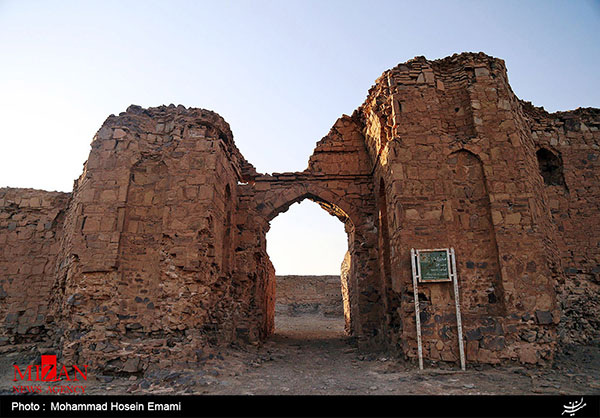
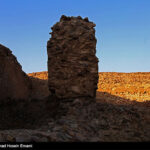
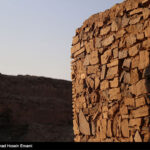
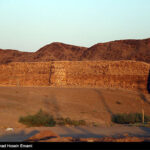
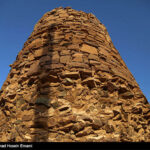
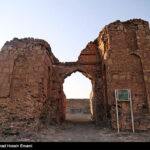
Aliabad Stone Caravanserai – Remnant of Seljuk Dynasty

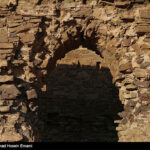
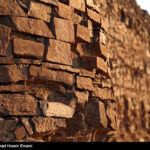
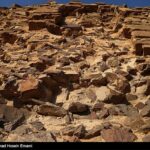
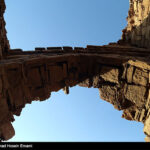
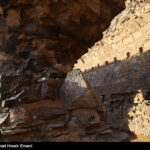
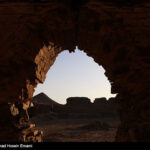
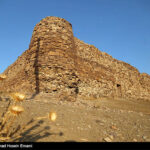
Aliabad four-porch, square-shaped caravanserai. Each side is 66 to 70m long. The porches are deep and are covered by rock arches. At the end of each porch there is a path to the stables. The caravanserai has 31 rooms, all of which are connected to the outside.

This stone site would have been used as a caravanserai during peace-time, while during wars, it would have been used as a military fortress.

IFP: Photos of this historical site have been sourced from Mizan, with explanatory text translated from various additional sources.

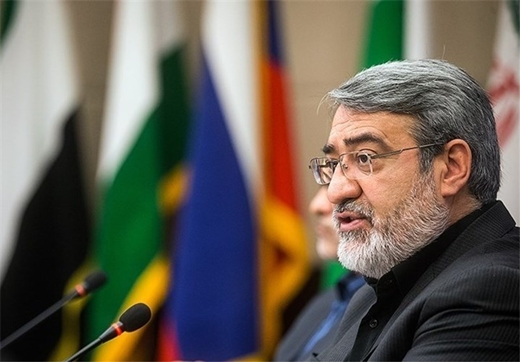
Minister: Iran paying price for world peace, security in fighting narcotics

He made the remarks in a meeting with Switzerland’s Head of the Department of Home Affairs Alain Berst here on Tuesday which took place on the sidelines of the three-day meeting of the United Nations General Assembly which focused on the issue of drugs.

He said Iran has paid huge costs both in material and social terms to fight narcotics and stressed that Iran was actually in the frontline of war against narcotics and was in fact paying dearly for sustainable peace and stability in the world.

He said Iran has sacrificed many of its anti-narcotics forces to stop and discover hundreds of kinds of narcotics and arresting thousands of traffickers.

The minister pointed out that drugs trafficking is a huge source of income for terrorist groups in the region.

The Swiss official stressed the need for international cooperation to fight drugs trafficking and said anti-narcotics programs in his country focused on four main categories of prevention, treatment of patients, reducing damage and confronting supplying of drugs.

The two officials further discussed ways to promote mutual cooperation to find practical ways to fight narcotics.

Iranian Speaker Underlines Necessity for Development of Tehran-Astana Parliamentary Cooperation

Larijani made the remarks in a meeting with his Kazakh counterpart Yakoubov on the sidelines of Eurasia parliamentary meeting in Moscow on Tuesday.

He also stressed the importance of expansion of trade relations between the two countries and their mutual cooperation in fight against terrorism, and warned, “Terrorism is spreading in the region and the ISIL has become active in Afghanistan.”

Yakoubov, for his part, underscored sustainable relations with Iran, and said, “In our view, Iran is among the most important regional states and we have a good perspective in developing relations.”

Kazakhstan’s Ambassador to Tehran Baghdad Amiriyev had said last year that his country would prioritize expansion of trade and industrial ties with Iran, and that it has provided exceptional conditions for the activity of some Iranian companies in Astana.

In December 2014, Kazakhstan Foreign Minister Yerlan Idrisov urged Tehran and Astana to enhance the level of their economic ties to bolster cooperation in trade and commercial fields.

“My country is interested in the broadening of ties with Iran, especially in economic and trade areas,” said in Astana.

Iran’s Zarif, US’s Kerry Meet in New York, Discuss JCPOA Implementation

After a three-hour meeting behind closed doors at the UN headquarters in New York on Tuesday, Zarif told reporters that “the talks primarily addressed the proper implementation of the JCPOA in a way that all parties particularly the Iranian people would reap the benefits which they are entitled to.”

The senior Iranian diplomat further said that he and Kerry are scheduled to meet on Friday in a bid to explore ways to get their ideas into practice.

Kerry, for his part, told reporters, “We agreed we’re both working at making sure that the … nuclear agreement is implemented in exactly the way that it is meant to be and that all the parties to that agreement get the benefits that they are supposed to get out of the agreement.”

“We will meet again to sort of solidify what we talked about today,” he said, adding that he and Zarif would resume discussions in New York on Friday on the sidelines of a signing ceremony at the UN for the Paris climate agreement.

Zarif left Tehran for New York on Monday to attend the upcoming United Nations (UN) climate summit on April 22.

While the JCPOA, a 159-page nuclear agreement between Iran and the Group 5+1 (Russia, China, the US, Britain, France and Germany) came into force in January, some Iranian officials complain about the US failure to fully implement the accord.

Last month, Leader of the Islamic Revolution Ayatollah Seyed Ali Khamenei said Americans have yet to fulfill what they were supposed to do as per the nuclear deal.

Iran still has problems in its banking transactions or in restoring its frozen assets, because Western countries and those involved in such processes are afraid of Americans, Imam Khamenei said, criticizing the US for its moves to prevent Iran from taking advantage of the sanctions removal.

Iran’s oil exports to hit 2mn bpd

Executive Director for International Affairs at National Iranian Oil Company (NIOC) Seyed Mohsen Ghamsari touched upon ongoing negotiations to sing oil sales and export contracts; “talks have kicked off with traditional customers who used to purchase Iranian crude before the sanction years.”

“Royal Dutch Shell and BP (British Petroleum industry company) mark two oil buyers of Iranian crude and in case of reaching an agreement, a part of the delivered oil will be exploited in South African refineries,” he continued.

Ghamsari went on to note “talks have also begun with Vitol S.A. of Switzerland as well as Hungary’s MOL Group though no final agreement has been reached.”

“Negotiations with Italian oil companies of Eni and Saras S.p.A. in addition to Turkey’s Tüpraş are still being pursued,” highlighted the official.

NIOC seeks to ship a portion of crude barrels to newly-emerged markets in Eastern Europe instead of China or India in order to diversify export markets as well as to reach the aim of rising daily sales volume by one million barrels.

The first cargo of Iranian crude sold to Russia’s Lukoil has been delivered to a Romanian refinery while relevant talks have been launched with several other East European starts including Switzerland, Hungary, Austria, Czech Republic, Lithuania, Poland, Slovenia as well as Serbia.

Ghamsari estimated that the volume of Iran’s crude exports will amount to two million barrels per day by the end of the year 2016 upon inking new oil sales contracts.

“Malaysia’s PETRONAS (Petroliam Nasional Berhad) oil and gas company has also been a traditional oil customer as deals to deploy 50 to 60 thousand barrels of crude oil to the East Asian company will soon become finalized,” the official concluded.

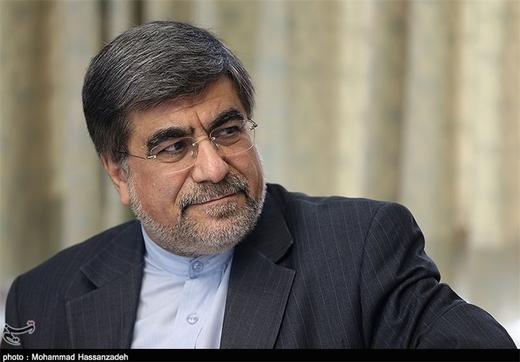
Culture Minister: Major Hajj Pilgrimage if Saudi Cooperates

According to the Public Relations and Information Center of the Ministry of Culture, Jannati said that he had sent a delegation to Saudi Arabia for talks about Iranian pilgrims attending this year’s Hajj.

The Minister of Culture said that, after many delays in agreeing to meet Iranian Hajj officials, Saudi Arabia had only granted visas to a limited number of representatives, and had responded negatively to points brought up by Iranian delegates.

Jannati said that the Saudis were not willing to accept the transit of Iranian pilgrims to Saudi Arabia by Iranian airliners, and were also insisting that, due to the absence of diplomatic relations between the two countries, Iranian pilgrims travel to a third country to receive their Hajj visa, which would be inconvenient.

He added that the Swiss Embassy in Tehran is taking care of Saudi interests in Iran, and that the same embassy should issue visas for Iranian pilgrims.

He further commented that the way the Saudis had treated Iranian pilgrims was not appropriate and in some cases had been quite insulting and humiliating. He reported that Iranian delegates have been briefed to bring up these issues with Saudi officials, and to tell them that they are obliged to behave decently towards Iranian pilgrims.

Iran National Library Hosts Georgian Manuscript Exhibit

Prior to the opening of this exhibition, the Deputy of the National Library and the Ambassador of Georgia made speeches.
Gholam-Reza Amirkhani, the Deputy of Iran’s National Library, welcomed the audience at the beginning of the session. Referring to the ancient history of relations between Iran and Georgia, he said, “There is a connection, and old roots between the two nations of Iran and Georgia.”
He continued, “There is a lot to be said about the relations between Iran and Georgia, and in my opinion, culture plays the most important part in bilateral relations.”
Pointing to Georgian interest in Iranian art and culture, Amirkhani added, “Many centuries ago, the anthology Vis and Ramin by Fakhr al-Din As`ad Gorgani was translated into the Georgian language, and this was shortly followed by Panchatantra.”
He also highlighted other examples of cultural relations between the two countries before the end of his speech.