Thursday, April 9, 2026
Home Blog Page 4510

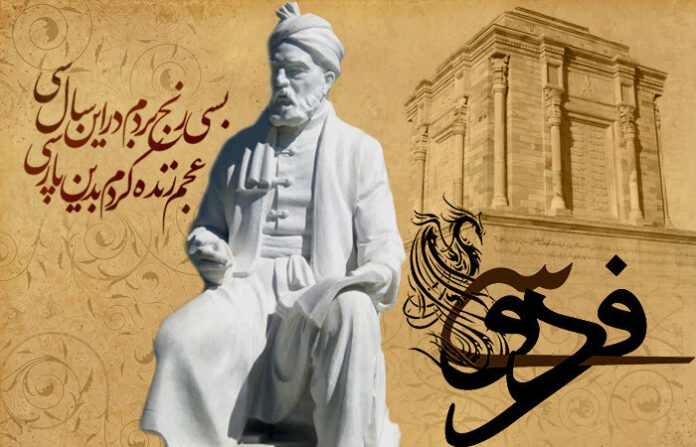
Iran Commemorates Poet Ferdowsi

Khorasan Razavi Farhangian University hosted the Seminar of Hakim Ferdowsi on Monday, during which Ferdowsi expert Nasser Kanaani delivered a speech. The university also hosted a meeting entitled “Ferdowsi and Shahnameh through the Eyes of the Orient” on Tuesday.

Tehran will continue the celebration on Wednesday by a pardehkhani (curtain-reading) performance by Shahu Salehi and a lecture by director of Ferdowsi Foundation Yaser Movahedfar at the Rostamabad Cultural Center in the Farmanieh neighborhood.

In addition, some Shahnameh experts, including Mir Jalaleddin Kazzazi, Qadamali Sarami and Mahmud Sadeqizadeh, will speak during a session at the Tehran International Book Fair on Friday.

Tehran’s City Theater Complex will also contribute to the Ferdowsi celebration on Friday with “The Path of Affection, Mystery of the Heavens”, a performance by director Shokrekhoda Gudarzi.

The celebration will end on Ferdowsi National Day on May 14 with a speech by ECO Cultural Institute President Iftikhar Husain Arif, and a performance of naqqali, a style of storytelling dedicated to epic stories from the Shahnameh.

Different Factions Claim to Hold Majority of Seats in Next Parliament

Parliament91

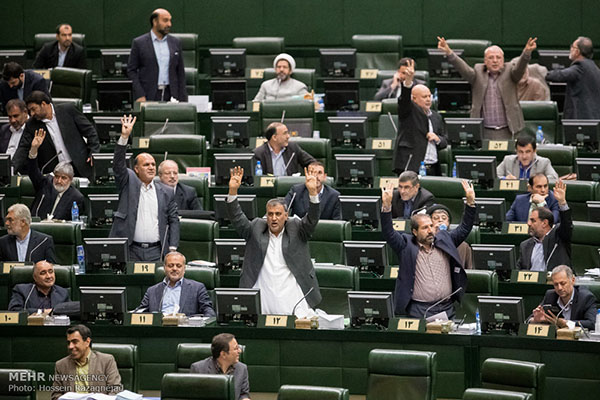
Reformists, conservatives, and independent candidates, all of whom took seats in the recent parliamentary elections, will start their work within a month. Each faction, however, has claimed to have a workable majority in the next parliament, but of course, mathematically speaking, this is impossible. Each faction is thus claiming the allegiance of certain MPs-elect, and trying to portray the election as their victory.

These claims and counter-claims are made possible by the large number of officially non-aligned MPs-elect, who have yet to declare which faction, if any, they will support. All of the three main groups have reported figures which include a large number of these independent candidates.

To demonstrate this unpredictability in Iranian politics, rather than trying to sort fact from fiction, we have instead chosen various reports from opposite points of view, presenting each of the claims as they have been made by politicians from different camps.

Here is IFP’s translation and coverage of a number of reports by different Iranian media:


Head of the Independents and Moderates Front, Qodrat-Ali Heshmatian, told IRNA that his front will hold 140 seats in the 10th Parliament.

“In addition to the 86 candidates who won in the elections thanks to the support of the Independents and Moderates Front, and the 14 others who made it to the parliament with the support of the Nation’s Voice [an independent party], as many as 40 moderate members-elect from the camps of conservatives and reformists have joined the Independents and Moderates Front,” Heshmatian said.

He further noted that the new members are willing to cooperate with the “Third Movement” in the Parliament.


Later on, Tasnim News Agency quoted Mohammad Reza Aref, the leader of reformist members-elect, as saying that the “Faction of Hope” [the reformist faction in the Parliament] would probably include 168 members.

“Unfortunately, certain reformist newspapers reported the number as being 124, which referred to the number of reformist candidates who won in the first round of elections, and this made our rivals happy,” Aref said, stressing, however, that up to 168 MPs are likely to join the Faction of Hope.


Meanwhile, Kayhan and Vatan-e Emrooz, major conservative newspapers, reported on Sunday that more than 180 members-elect will support the conservative faction.

“More than 150 members-elect gathered in the meeting of conservatives to show that conservatism will remain the dominant ideology in the Iranian parliament. In addition, almost 30 other MPs who could not make it to the meeting contacted senior conservative figures, and expressed their solidarity with the Conservatives,” Vatan-e Emrooz reported.

Ezzatollah Yousefian Molla addressed the meeting of conservatives, saying that 154 participants of the meeting had signed the covenants, and 27 others had personally contacted him, declaring their presence in his camp.

It is not yet clear which faction will have a majority in Iran’s Majlis. However, one thing that is very clear is that the 290-seat parliament cannot possibly include 181 conservatives, 140 independents, and 168 reformists.

Iranian Commander: IRGC Mass-Producing High Speed Boats

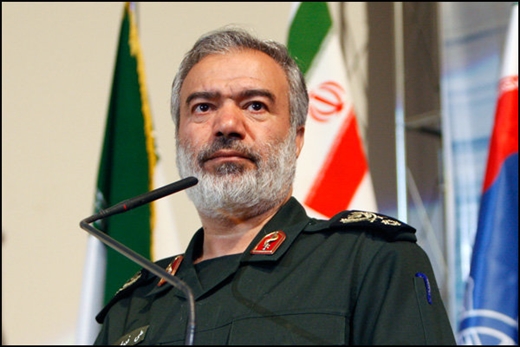
Speaking to the Islamic Republic of Iran Broadcasting (IRIB) on Monday May 9, IRGC Navy Commander Rear Admiral Ali Fadavi said producing boats with a speed of higher than 35 knots was a “dream” for many navies around the world.

He added that IRGC experts, who had already reached the technology of boats with a speed of 60 knots, now are able to mass-produce boats which can travel at 80 knots.
Back in May 2015, the commander had said that his forces had been testing military speed boats with a breakneck velocity of 110 knots (203 km/h).

He had also highlighted local experts’ abilities in designing and testing military boats with speeds of up to 120 knots in a naval research laboratory with a test basin.

“Woman against Woman” on the Wall of Mojdeh Gallery

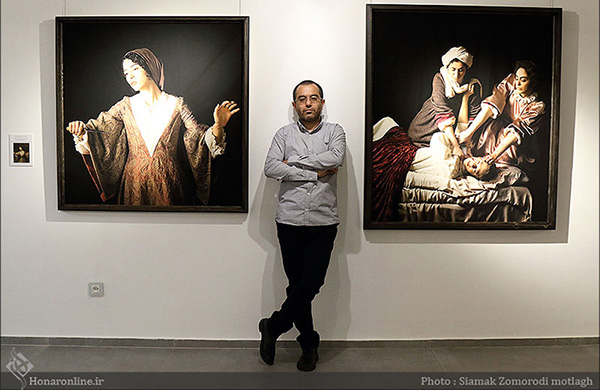
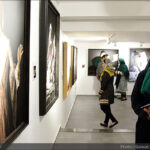
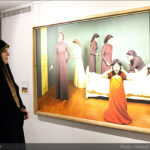
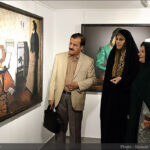
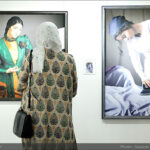
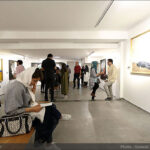
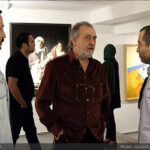
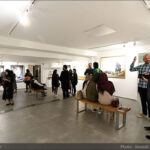
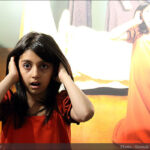
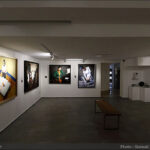
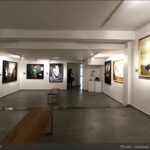
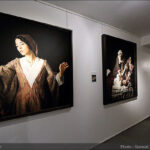
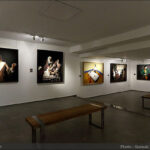
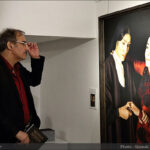
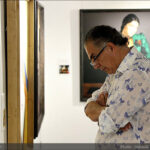
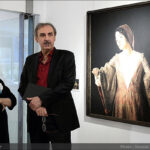
Woman against Woman is a curious title for a photography exhibition which remakes great painters’ works, such as those of Picasso, Lucian Freud, Rembrandt, Lucas Cranach, Frida Kahlo, Lorenzo Lotto, Edvard Munch, Artemisia Gentileschi and Vasily Perov. The collection, however, brings up challenging and contemporary matters. Soroosh Milanizadeh’s work tries to analyze women’s lives through a new window, from a sociological perspective, presenting ten photographs of varying dimensions.
The photographs were chosen from among 611 art history paintings, and all refer to western works. The description of each photo is installed under it on a small label.

Soroosh Milanizadeh explains about the different methods of work involved in this collection, “Research for this project was done in a compressed six-month period. After that, we started the pre-production. At this stage Anna Sani was costume designer, Ashkan Vosughi was make-up designer and I was stage designer. After character creating of each role, 22 actors and artists who were all professionals in their own fields were selected.”

Even though the women in his photographs have eastern faces, Soroosh Milanizadeh has universalized his photos by removing the factor of geography from them. He has a critical view toward the subject of women and the harm that women can cause each other. He said that the criterion for choosing ten paintings from 611 was the subject of the works. “The most important elements for filtering the paintings for me were its themes.  In choosing the painting, we focused on their stories more than anything else.”

In his photographs, Milanizadeh has tried to transfer his thoughts in a way that, by looking at them, the audience realizes that these occurrences, these acts of harm, can happen anywhere in the world and at any time, and one can’t separate oneself from them.

He says, “I believe that violence against women is not created only by men. In fact, women’s violence against each other is even greater. I’m trying to find out why, and am seeking the hidden reasons for it. By looking at the photographs, the audience see themselves either as the victim or as the person who is applying the violence. My main goal is that the audience see themselves inside these works.”

Woman against Woman will be exhibited in Mojdeh Gallery in Tehran until May 20.


Photo credit: HonarOnline

Artemia Still Alive

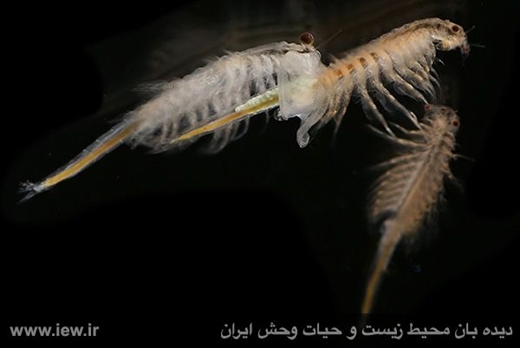
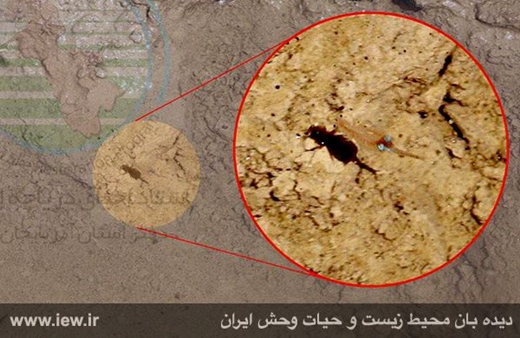
 Water shortages and the subsequent severe increase in water-salt ratios in Lake Urmia water in recent years, has put Artemia, the only living creature in the lake, in danger of destruction. For three years, Artemia had not been seen.


The increasing levels of water in Lake Urmia water have led to the rebirth of Artemia and this creature is once again being seen.

Lake Urmia’s water started to decrease in 1997, reaching its lowest level in 2014 and 2015. This led to an increase in salt levels, and following that, the destruction of life.


950214_artemiya-2


The salt intensification of the lake rapidly impacted the life of Artemia, the only living creature there, which was nearly completely wiped out.

After the formation of the Lake Urmia Resuscitation Centre, the lake’s water level has improved by supplying water to the lake through releasing dam-water from drainage basins, dredging the main rivers feeding the lake to prevent spreading, and supplying water to the main body of the lake by joining the two main rivers emptying into the lake. Artemia is now also being seen again.

This shows that with resuscitation of Lake Urmia, Artemia’s life cycle can be completed. Artemia is from the crustacean family, and can live in thick, salt water, while feeding on the lake’s algae.

Artemia itself provides food for birds and sturgeon. It has adapted itself to the salt water and can both lay eggs and give birth to live young if there are no environmental stresses.

Artemia’s eggs are very valuable. Shrimp farmers open these eggs so that shrimp can feed on the newborn Artemia, because shrimps must eat moving food. For this reason,  Artemia’s eggs or cysts have a high value worldwide.

Artemia Urmiana (the subspecies in the lake) is one of the world’s seven known types of bisexual Artemia, and has good nutritional value.

Due to Lake Urmia’s critical condition, the number of Artemia has declined from a high of 20-22 cysts of life mass in each litre to 1-2.

Iran FM hails Germany stance on Mideast realities

“Germany, contrary to certain European and Western players, holds no negative view to the existing realities in the region,” Zarif said in a meeting with Markus Ederer, the state secretary of Germany’s Federal Foreign Office, in Tehran on Tuesday.

“Such a view is regarded as an important factor for [those] extra-regional players that seek peaceful solutions to solve regional crises,” the Iranian minister added.

He also stressed the importance of constant consultations between Iranian and German officials on political, economic, cultural and parliamentary issues.

Zarif said the two countries should facilitate trade and economic exchanges and joint venture deals.


P5+1 urges to respect commitments

In a separate meeting, Iranian Deputy Foreign Minister for European and Americas’ Affairs Majid Takht-e Ravanchi reaffirmed Iran’s commitment to its obligations under the country’s nuclear agreement with six world powers, known by its official title as the Joint Comprehensive Plan of Action (JCPOA).

Takht-e Ravanchi said the six global powers are expected to seriously fulfill their obligations, particularly with regard to financial and banking affairs.

The German official said his country gives priority to broader economic cooperation with Iran.

Ederer is in Tehran to hold talks with senior Iranian officials on the latest bilateral, regional and international developments.

Earlier on Tuesday, the German diplomat held a meeting with Ali Akbar Velayati, a senior adviser to Leader of the Islamic Revolution Ayatollah Seyyed Ali Khamenei.

Iran’s First Nano Cargo Exported to South Korea

Iran to Use Artificial Intelligence in Diagnosing COVID-19

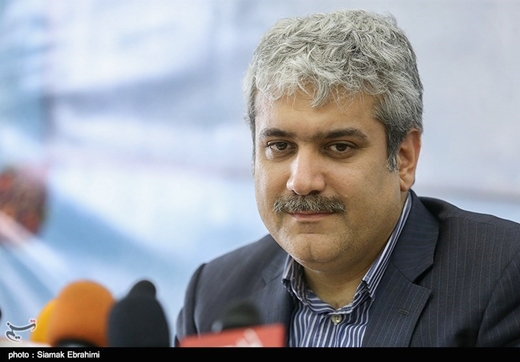
“We should make use of this opportunity for interacting with other countries,” Sattari said on 10 May during his visit to the Iranian Space Agency (ISA).

Iran has improved its ranking in the field of nanotechnology in the world from 7th to 6th, he added. Describing the improvement as an international opportunity, Sattari called for grasping it fully.

He further stressed the importance of involving the private sector in all nano fields.

Iranian IT Achievements Presented at WSIS in Geneva

During the fourth day of the WSIS Forum 2016, held from May 2 to 6 at the International Telecommunication Union (ITU) Headquarters in Geneva, several Iranian speakers and panelists addressed the participants in a workshop entitled “Iran’s Progress in the Information Society”.

This workshop was organized in two parts. In the first part, a brief summary of achievements and major activities was given. Panelists from the Iranian government, private sector, and academia updated past reported projects, and also introduced new ones.

In the second part of the workshop, the core results of the Iran national ICT measurement survey, conducted by the Information Technology Organization (ITO) were reviewed, this being the body in charge of planning and monitoring Information Technology (IT) in Iran. Panelists highlighted the outcomes of the survey related on WSIS Action Lines.

These presentations helped give participants a general view about ICT, and WSIS in particular, in Iran.

Hamid Shahriari, Ph.D., the head of Iran’s Computer Research Centre of Islamic Sciences (CRCIS), was one of the keynote speakers.

He referred to an ongoing project for developing software infrastructure using Persian language and characters, and stressed that the project included language resources, text editors, and a system to identify cheating, all in the Persian language.

Shahriari also briefed the audiences on a popular Persian spell-checker, Virastyar, which is provided as a Microsoft Word add-in, and includes such processes as character standardization, punctuation correction, replacing unnecessary loan words and non-Farsi words with Persian equivalents, suggestion of synonyms, converting solar/Christian years to each other, and number conversion.

In his second presentation, Shahriari explained about the Iranian e-mail service named Chaapaar (ChMail), which has provided email services for 1.5m users since 2011.

The WSIS represents the world’s largest annual gathering of the ‘ICT for Development’ community, and attracts more than 1800 WSIS Stakeholders from more than 150 countries.

Several high-level representatives of the wider WSIS Stakeholder community graced the Forum with more than 85 Ministers and deputies – including Iran’s ICT Minister Mahmoud Vaezi, several ambassadors, CEOs and civil society leaders contributing passionately towards the programme of the Forum.

Addressing the event on Tuesday, May 3, Vaezi announced that the country has completed its national information network and started providing various electronic services.

Vaezi highlighted governments’ role in directing the internet, saying, “The use of communications and information technology should pave the way for the realization of a knowledge-based society and economic, cultural and scientific development, narrowing social gaps in society, and improving economic prosperity.”

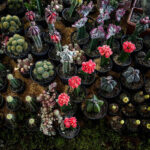
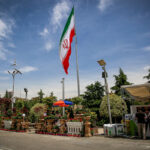
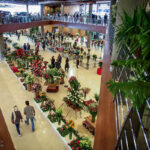
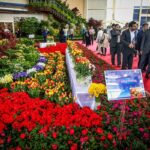
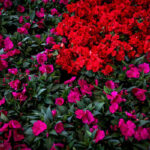
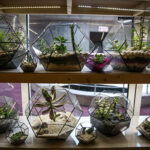
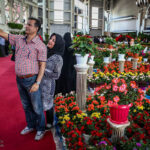
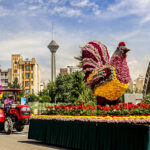
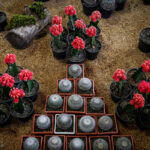
Tehran Hosts 13th International Festival of Flowers

The 14th International Exhibition of Flowers, Plants, Parks Equipment and Related Industries kicked off in Goftegoo Park in Tehran on May 10, with City Council members attending.

Here is a selection of photos from the event, courtesy of Mehr.


Iran Unveils ‘Naseh’ Drone

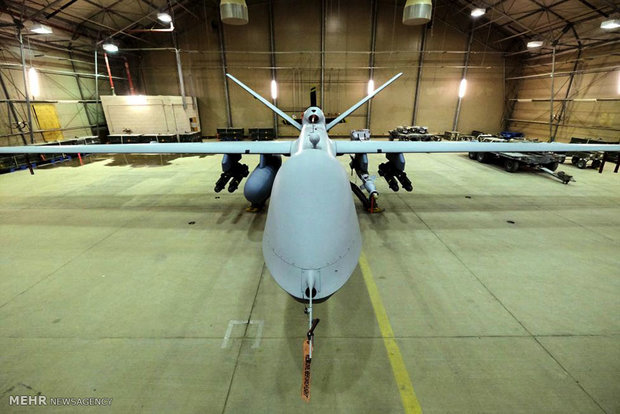
The Naseh drone, manufactured by Iran’s Khatam al-Anbia Air Defence Base, was officially unveiled in Tehran on Tuesday morning, May 10, during a ceremony attended by Defence Minister Hossein Dehqan.

Dehqan, accompanied by Commander of the Khatam al-Anbia Air Defence Base Brig. Gen. Farzad Esmaili also visited an exhibition of the base’s latest military achievements.

The Naseh drone marks the upgraded version of the combat droned produced at Khatam al-Anbia Air Defence Base.