Friday, December 26, 2025
Home Blog Page 4498

Modi’s Iran Visit Is a Golden Chance to Settle Financial Disputes

New Delhi has arrears of $2bn in oil payments with Iran. It blamed the banking sanctions for causing the delay, but now Iran demands that India pay the overdue amount since the banking sanctions have been lifted, according to IRNA.
During his two-day stay in Tehran, the Indian premier is to meet with the Supreme Leader, the President and Foreign Minister, as well as a number of other senior officials.
Indian officials have announced that the Prime Minister’s imminent visit is aimed at boosting ties and signing memoranda of understanding regarding energy. After Iran, Modi is scheduled to travel to Qatar.
Iran and India are expected to ink a memorandum of understanding on fighting terrorism and defence cooperation, which will contribute to peace and stability in the region. Also on the agenda are the North-South Corridor and investment in the railway network.
A memorandum of understanding on developing the Farzad B Gas Field will be finalized during the visit. The MoU on the Farzad B gas field was drafted by India’s Minister for Petroleum and Natural Gas Dharmendra Pradhan, who led a delegation of major private sector representatives from the oil, gas, and energy fields to Tehran on April 16.

New Delhi is ready to clear some $6.5 billion of debt for Iranian oil in near future, provided there is clarity on the channel of payment, Indian media reported Sunday, citing government sources.
“We are working on clearing the dues to Iran and are hopeful that the issue will be resolved soon,” the NDTV broadcaster quoted its sources as saying.
According to the broadcaster, a series of bilateral negotiations at various levels have been held both in Tehran and New Delhi. The sources reportedly told the media that both sides were confident of being able to resolve the issue soon.
However, according to the media, despite the Western sanctions on Iran now being lifted, there are still some issues with banking channels, which create obstacles for regular transactions.
Following the lifting of sanctions, Iran terminated the discounts for India, which included the payments being carried out in rupees, and free delivery of oil, and has since been insisting on payments for the crude it exports to Indian refineries to be carried out in euros.
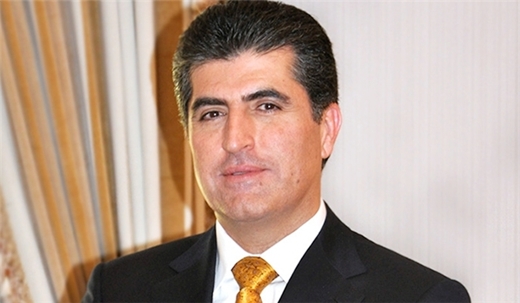
Nechirvan Barzani Hails Iran’s Positive Role in Suppressing ISIS in Iraq’s Kurdistan

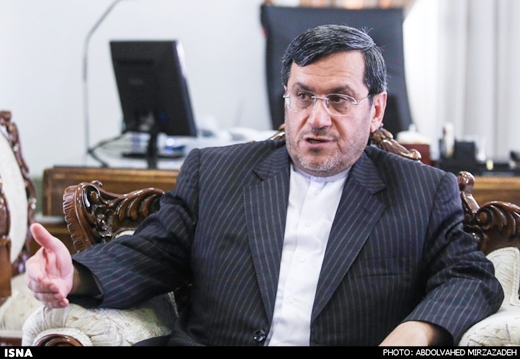
“Iran has played a very positive role during the ISIS attacks on Iraq’s Kurdistan region,” Barzani said in a meeting with Iranian Ambassador to Baghdad Hassan Danayeefar in the city of Irbil on Tuesday.

He reiterated that Iran has helped Iraq’s Kurdish people in suppressing ISIS Takfiri terrorists.

The Iranian ambassador, for his part, renewed Iran’s continued support for Iraq in the anti-ISIS war.

The two sides also exchanged views on the ongoing developments of the anti-ISIS campaign in the northern part of Iraq.

In a relevant development in October, Barzani warned state supporters of ISIS that their sponsors would soon wreak havoc on them, too.

“The reality is that if a country thinks ISIS serves its interests for some time, it is making a big mistake. The ISIS problem is not just its military attacks, but its discourse is the main problem, and this is a threat to the entire region,” Barzani said.

Elsewhere, he referred to ISIS aggression against the Iraqi Kurdistan Region, and said Iran has always been among first countries to rush to the Kurds’ aid in hard times.

“The Kurds have always had Iran on their side during all historical periods. When Halabja was pounded (by chemical weapons of the former Iraqi regime under Saddam Hossein in 1988), the world heard the voice of Halabja via Iran, otherwise no one would have known what had really happened there. Also, Iran opened its doors to millions of Iraqi refugees, and it was one of the first countries which helped us when ISIS attacked the Iraqi Kurdistan region,” Barzani said.

Noting that when ISIS attacked Kurdistan, certain Iranian military and intelligence forces came to the region and rendered much help to the Kurds in the fight against the terrorist group, he said, “We should here thank the Iranian leader, the Islamic Republic and Iranian officials, since they played a highly positive role and they are now playing the same role in Iraq and the Kurdistan region against ISIS.”

Yemen’s Locusts En Route to Iran: Official Warning

Civil war has been raging in Yemen since March 2015. As with many wars, humans are not the only ones who suffer; the environment also pays a heavy price. Local insect control agencies have struggled to control the locusts, and are worried about the effects the upcoming swarms will have on both Yemen and nearby states.

Here is an article on the phenomenon by KeshavarzNews, which IFP has translated.


A report by Yemeni insect control experts indicates that Yemen is facing a plague of locusts it will not be able to control, as the Arab country struggles with civil war and failing security.

Yemen’s Desert Locust Control Centre issued a warning earlier this month that many desert locusts had matured to their adult flying phase, and remaining populations would do likewise within weeks.

The FAO meanwhile warned that the outbreak threatens the country’s farming, and the swarms could reach neighbouring countries, including Oman, Saudi Arabia, the UAE and Iran.

According to the FAO, just one “small” swarm containing about 40 million insects can eat the same as amount as 35,000 people.

Adult desert locusts are able to survive extreme heat and drought, and can travel up to 150km a day.

Yemeni experts said their control efforts this month, especially in the southern coastal Shabwah province, had largely failed.

Pesticide spraying was also harmful to Yemen’s beekeeping industry, a crucial part of the country’s struggling economy.

“The intervention process to control locusts through spraying insecticide was very difficult due to a number of obstacles, the most important of which were the security aspects and the presence of beehives,” Ahmed Eryani, a spokesman for Yemen’s Desert Locust Control, said.

The centre added that Yemen’s civil war had also made control efforts difficult, meaning experts were unable to kill substantial amounts of juvenile locusts.

“In light of the current security and financial challenges, we cannot do anything about it at the appropriate time.”

“The expected locust plague portends a true disaster which will negatively affect food security in all districts of Yemen, and may extend beyond its borders,” said Salah Hajj, the FAO’s representative in Yemen.

The FAO started a last-minute eradication effort last week, SciDev reported, but Eryani said it was too late. “It is difficult to control flying swarms.”

“Devastating swarms could form undetected in conflict areas and, once they are widespread, it will be impossible to control them,” Eryani added.

Yemen last faced an invasion of locusts in 2013. The insects, however, are considered a delicacy and many Yemenis eat them.

Police Arrest “Electric Man” Who Stole Power Cables

As reported by Iran and translated by IFP, the police had been looking for the thief for several months, with the case high on their agenda. The people of Babol and neighbouring villages had all been annoyed and frustrated by the thefts, and attempts to find the unknown man hadn’t produced any results.

Finally, a closed-circuit camera on a street helped the police track down the thief. Once his face had been identified, the police searched for his hideout and located his centre of operations in a nearby village.

Mahdi, a 32-year-old man, was arrested at his home by the police forces, Colonel Mohsen Jafari said.

After initial investigations, he confessed to over 20 thefts of power cables as long as 1,600m from the city and surrounding villages, the colonel said.

The thief claimed that his body was immune to electricity and that he’d never been electrocuted, even in the rain.

Detectives wanted to make sure that he was telling the truth. So they tested his claim in a safe environment, and found that electric power didn’t have any effect on him.

Iran Has Capacity to Lure Foreign Tourists: Qashqavi

Qashqavi, who is in Copenhagen, made the remarks in a meeting attended by several Iranian citizens residing in Denmark.

He reiterated that Iranians residing abroad could play a pivotal role in attracting more foreign tourists to Iran.

Qashqavi travelled to Denmark on May 1, 2016, at the invitation of his Danish counterpart for a three-day visit. Since his arrival in the country, Qashqavi has held talks with several high-ranking Danish officials.

Last week, Qashqavi said negotiations with 30 countries to ease visa formalities are underway and some 4.5 million foreigners obtained Iranian visas last year.

During this period, the number of Iranians who obtained European visas increased by 30%, and by 50% for non-European countries, which indicates the credibility of Iranian passports ease of visa issuing, he said. Countries such as Turkey, Syria and Bolivia are among countries which do not require visa for both sides’ nationals.

Iran has unilaterally cancelled visa obligations for Azerbaijanis and Egyptians, and Lebanese nationals can obtain a 30-day airport visa at no cost, he said. Malaysian nationals can collect a 15-day airport visa at no cost as well.

All countries except the US, Britain, Canada, Jordan, Somalia, Colombia, Afghanistan, Pakistan, Bangladesh and India can obtain a 30-day airport visa upon arrival, he said (with Iraqis being exceptionally able to obtain airport visas at Mashhad airport).

Medical treatment visas will be issued at half the price of tourist visas for the patients and their companions, he said.

Iran-Germany Joint Venture Should Become Operational

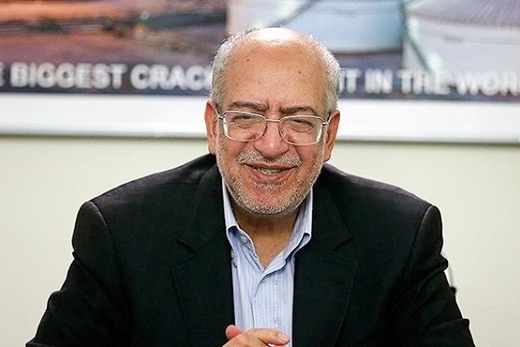
Mohammad Reza Netamtzadeh made the remarks on May 4, adding that “Iran and Germany’s joint industrial venture is our long-term strategy, which would allow Iran to become a major industrial hub.”

He continued, “The advantage of Iran’s 80-million-strong market and the massive regional market can serve as an incentive for joint production with Germany, which could benefit both sides.”

According to Nematzadeh, in addition to technology transfer from Germany, the two countries can also expand banking and insurance cooperation, open an LC and fund projects in a bid to provide proper conditions for further development of ties between Tehran and Berlin.

“Iran also seeks cooperation with Germany in the energy sector, industrial equipment, facilities and automobile manufacturing,” he added.

Beckmeyer, for his part, highlighted the past cooperation between the two countries as a reason why Germany’s outlook is based on long-term economic and commercial cooperation with Iran.

According to him, Germany’s industrial products have a good chance of being lucrative in Iran’s market. The Iran-Germany Joint Economic Commission’s meeting was held May 3, for the first time after 15 years. German Deputy Economy Minister Uwe Beckmeyer co-chaired the session in the absence of German Economy Minister Sigmar Gabriel, who cancelled his trip due to illness. During the meeting, the two sides sealed a number of MoUs in the fields of economy, technology industry and gas exports.

US Source of Tension and Insecurity in Region: Iranian Commander

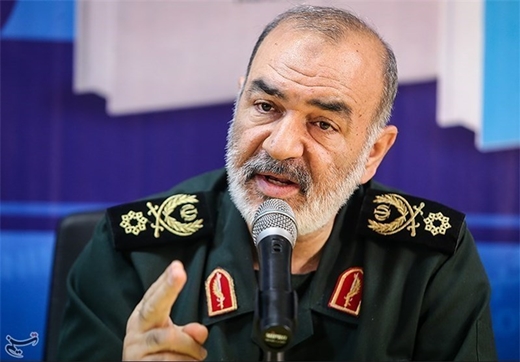
“The US (military) presence (in the Persian Gulf) definitely fuels insecurity,” the top commander said on a television talk show on Tuesday night, May 3, hitting back at Washington which accuses Iran of destabilizing the region.

“Do we create tension or is it the Americans, who have brought about instability in countries across the whole region?” he asked.

The commander then underscored that Iran’s naval power and defense strategy have turned the Persian Gulf into a safe, strategic region for the world.

He explained that the IRGC has built up its naval power with the aim of defeating big military powers like the US, because “We have no enemy in this region but the US.”

The top general also reasserted Iran’s right to hold military war games in the region, stressing, “No other power or country can decide about our deterrent, defensive war games.”

Golchin House – A Monument to Old Dezful

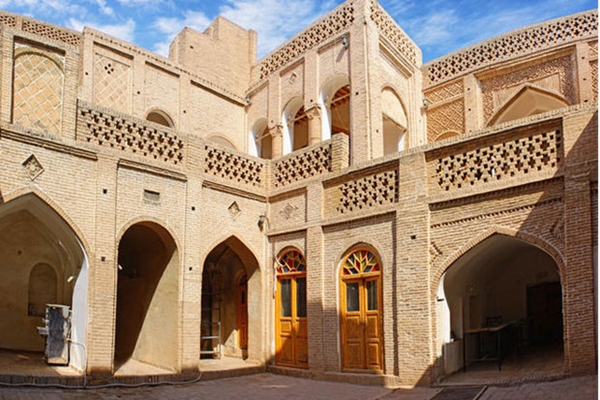
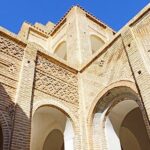
It is located in the ancient part of Dezful, which boasts 28 ancient districts with over 140 nationally registered monuments including mosques, bathhouses and mausoleums.

Golchin House, which has been registered on the National Heritage List, is in dire need of renovation. The house has a small yard which decorated with beautiful geometric brickwork.

Najmeh Morous-Nouri, a member of Dezful Cultural Heritage Lovers Society, said that proper planning for the town’s historical monuments could help preserve them and boost tourism, particularly in the city’s ancient districts.

Khuzestan Province has over 10,000 national and global historical monuments. It is also home to numerous archeological sites and ancient hills. Archeological excavations have been carried out in parts of this province, but huge areas remain undiscovered. The earliest traces of human settlement in Khuzestan date back to the prehistoric era, at least 10,000 years ago.

Khuzestan Plain was part of the kingdom of the Elamites. Excavations have discovered important relics belonging to the of the Achaemenid, Arsacide and Sassanid dynasties.


Hebrew Language Courses for Seminary Students in Qom

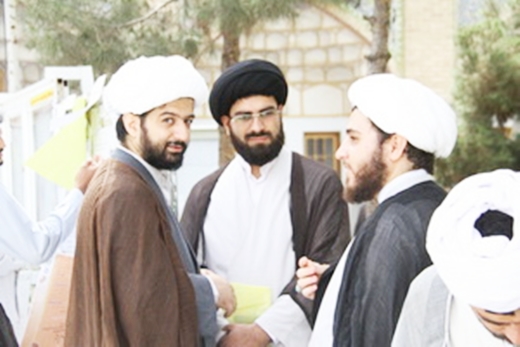
The institution, under the supervision of grand eminent Ayatollah Wahid Khorasani, is currently holding Hebrew language courses for seminary students currently majoring in their 3rd grade of Christian Studies.

The above-mentioned course began in April, 2016 and is being taught by a seminary scholar who is proficient in the Hebrew language.

The idea of holding such a course was inspired by seminary students’ growing need to refer to Hebrew sources for their studies in Christianity. Advanced Hebrew classes are expected to be held in second half of this year.

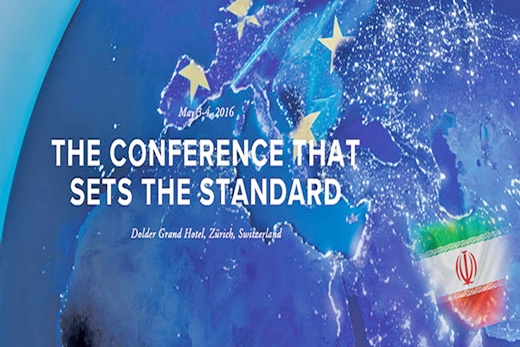
3rd Europe-Iran Forum Opens in Zurich

The forum features 6 panel discussions, 15 industry workshops, and 4 keynote speeches, according to the official website of the forum.

For the last two years the Europe-Iran Forum conference series has enabled noted European and Iranian business leaders to forge new relationships, share strategic insights, and lay the foundation for future trade and investment in Iran. Including both the first Iran-focused international business conference (London 2014) and the largest such conference to date (Geneva 2015), the Europe-Iran Forum conference series is the most respected gathering for senior business leaders looking at the Iran opportunity, as well as for policy leaders seeking the formation of new and constructive ties.