Wednesday, April 8, 2026
Home Blog Page 4497

US Finalizing Deal to Buy Iran Heavy Water

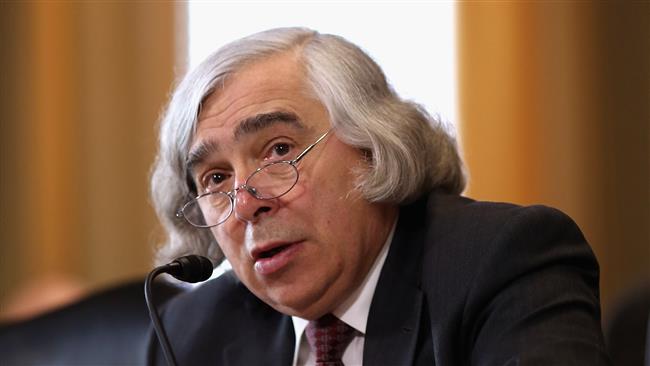
“We are still in the process of executing that first transaction,” Energy Secretary Ernest Moniz said Wednesday at a policy forum hosted by Politico in Washington.

“We would facilitate a first purchase, and a first purchase only,” Moniz added, as quoted by the Washington Examiner.

Iran’s Deputy Foreign Minister for Legal and International Affairs Abbas Araqchi said in April that Iran under a deal with the US will sell 32 metric tons of heavy water to the country – what was seen as a major step in the commercialization of Iran’s nuclear energy program.

Other officials have emphasized that the material will be provided to commercial and research entities, including a national lab, inside the US.

Iran’s President Hassan Rouhani said last August that Iran will begin to commercialize its nuclear technology after the implementation of the Joint Comprehensive Plan of Action (JCPOA).

“We will import yellow cake from abroad and we will export enriched UF6,” President Rouhani told reporters.

Iran and the P5+1 group of countries – the five permanent members of the Security Council plus Germany – agreed over the JCPOA last July. Based on it, Iran will restrict certain aspects of its nuclear energy activities in return for the removal of certain economic sanctions imposed against the country.

The JCPOA gives Iran the right to sell, dilute or dispose of the heavy water it has produced under certain conditions.

It also allows Iran to sell its enriched uranium material – called UF6 – and to buy natural uranium or “yellow cake” in return.

Russia announced in April that it is considering buying metric 40 tons of heavy water from Iran in what could make Moscow the second customer of the nuclear material from Iran after Washington.


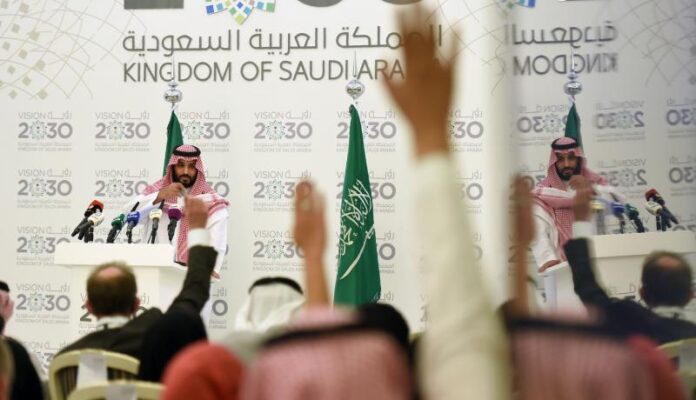
Etemad Editorial: Saudi Arabia’s Vision 2030 Not Possible without Respecting Citizens’ Rights

Here is IFP’s translation of Abdi’s article, entitled “Saudi Arabia and Iran’s Experience”.


About 15 years ago, I wrote an article on the lessons most regional countries had learned from the fall of Iran’s Shah. We were in the middle of the crisis, and might not have understood the lessons of that [1979] Revolution well. However, we can now say that Saudi Arabia, fortunately or unfortunately, is going to repeat the same horrible mistakes made by Mohammad Reza Pahlavi, namely, not learning from the Shah’s political arrogance, and dreams of reaching the Gate of Great Civilization but without considering its prerequisites.

Today, I was reading Saudi Arabia’s Vision 2030. At the same time, I was also reading an article about the memoirs of Asadollah Alam [a Prime Minister and Minister of Royal Court under Mohammad Reza Shah]. The coincidences between the two texts were interesting to me. Whatever role Alam had in the past regime, he did future Iranian society a great service by writing his memoirs; that is, if we and future generations are able to learn from them.

Saudi Arabia’s Vision 2030 and its regime’s behaviour are very similar to the behaviour and objectives of the previous regime in Iran during the years when the country enjoyed a tremendous oil income. Military interference in Oman and the Horn of Africa, playing the role of Gendarme in the Middle East, giving away the country’s petrodollars and sharing them among allied governments, and at the same time mocking Westerners and others, all while stating that Iran would soon become a developed civilization – all these were all among the prudent policies of Iran’s King.

Saudi Arabia’s Vision 2030, however, is not created by King Salman, but by his son Mohammed bin Salman. Mohammed is the deputy Crown-Prince and the Defence Minister of Saudi Arabia. He was born in 1985 and is not yet 31 years old. He was appointed as the Defence Minister after King Abdullah died and his father King Salman took power. Mohammad is also the chief of the House of Saud’s royal court. As soon as he came to power, he waged a war against Yemen. He is also the chair of the Council for Economic and Development Affairs! He is said to be the only one in Saudi Arabian cabinet with a black beard, because all the others are white-bearded!

At the beginning of the Vision, Mohammed has written, on behalf of his father, “My first objective is for our country to be a pioneering and successful global model of excellence, on all fronts, and I will work with you to achieve that.”

There are three pillars in this vision: First, the heart of the Arab and Islamic worlds, second, an investment powerhouse, and third, a hub connecting three continents.

When we read this vision, we realize that its authors or leaders have a very simplistic view of development and progress. The weak points and vulnerabilities of [Saudi] society are not mentioned anywhere in this vision. The political and societal repercussions of such an ambitious plan are not referred to at all, anywhere in the plan. Neither does it say how the country is going to diminish the social, political, and cultural side-effects of development using this vision.

In all sections of the document, the authors have used the pronoun “We” (meaning “I”) for the implementation of the plan; however, they don’t know that the implementation of such a plan is impossible without the participation of both the people and the elites. Such participation is nothing more than a mirage if there is no freedom and people have no civil presence. In this case, the plan will suffer the same fate as those of similar regimes.

Saudi Arabia’s Vision 2030 reminds me of a Persian proverb, which says, “A good spring promises a flourishing year” [that is, the spring shows whether the year will be a good one or a bad one]. From the very beginning and as a first step, they changed the Petroleum Minister, and their Ministry of Petroleum was renamed to the Ministry of Energy, Industry, and Mineral Resources, as if a change of name would solve everything! When the 30-year-old Minister of War, who studied law in the totally closed Saudi system, and who is engaged directly in Yemen war and indirectly in Syria war, is responsible for such a plan, it becomes clear that Saudi Arabia has not only failed to take any step forward in engaging its citizens, but it has also marginalized a considerable number of the ruling family’s members.

In a society where all these duties are assigned to this young man, certain people would naturally oppose him, and try to stall the plan. There is no doubt that, without free participation of all social forces, such an objective could not be realized, at least not in a sustainable way.

However, it is crystal clear that Saudi Arabia is not able to open some space in society for the massive participation of political and social forces. This is why the West is becoming increasingly mistrustful of the country’s fate and stability. US behaviour towards Riyadh on the recent developments and terrorist attacks linked to the Royal Family or their relatives are an example of this distrust.

In Vision 2030, there is no clear plan for the improvement of the political and social situation and the civil freedom of Saudis.  Al Saud has kept silent on these issues. The entire Vision is based on a very simplistic view that the country can become independent from oil in just a few years. The country’s regional situation today is totally a result of its oil income. When the Al Saud family gives a $681m “gift” to the Malaysian Prime Minister, the value of these gifts given to the leaders of other Islamic and non-Islamic countries can be guessed. If it were not for these gifts, the bubble of Saudi Arabia’s influence would easily burst.

Those who remember Mohammad Reza Shah Pahlavi’s situation from 1973 to 1977 know how much he was respected, even flattered by countries that received aid from Iran. However, when his regime started to decline, his friends forgot him and even refused to allow him into their countries. If we look at Saudi Arabia’s situation from this perspective, we will see it becoming unstable in the coming years. It is even possible that a political earthquake, larger than the one in 1979, could shake the region. The occurrence of this earthquake is imminent; it is just a matter of time, whether it comes sooner, or later.

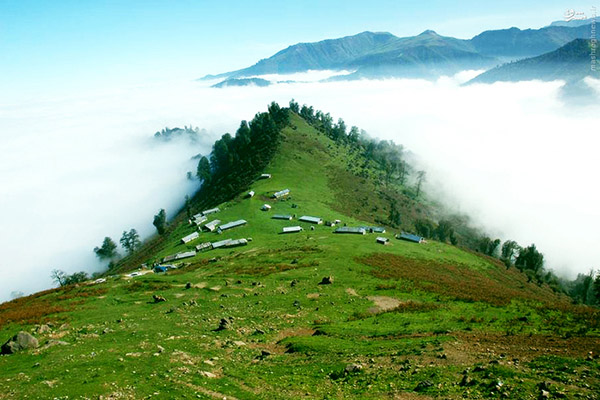
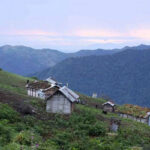
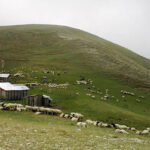
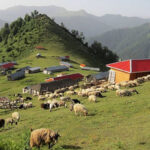
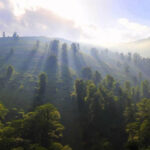
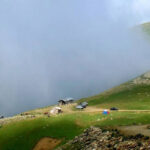
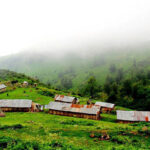
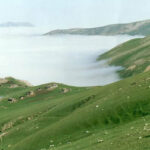
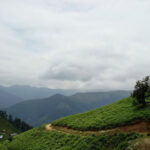
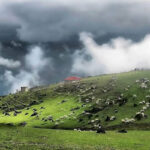
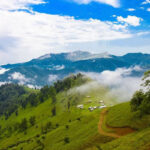
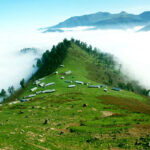
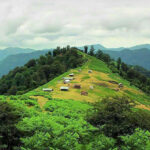
Dreamy Village in Northern Iran

Iran’s northern province of Gilan is full of exquisite mountains and hidden villages. “Olasa Blanga” village is one of the most picturesque, located at the heights of Talesh, 25km northwest of Masal.


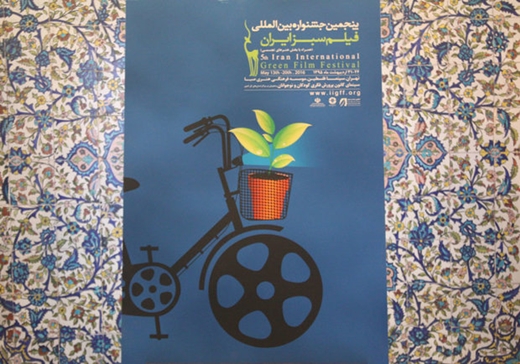
Green Film Festival Director Hopes for Event’s Continuation

The 5th Green International Film Festival celebratory dinner was held in the presence of Fariba Ebtehaj, the deputy of Iran Environment Organization, Farhad Tohidi, the festival director, festival managers, the selection committee, the juries, and the executives of the festival.

According to the Public Relations department of the 5th Green International Film Festival, at this ceremony, Iranian and international artists and executives were present and had an enjoyable night. Mehdi Tohidpour, the executive manager of the festival, Seyyed Mehdi Tabatabayinezhad, the Head of DEFC, and many other Iranian directors were also present at the ceremony.

The 5th Green International Film Festival is being held at Felestin theatre and Saba Artistic-Cultural Center in Tehran, as well as in other provinces across the country on 13-20 May 2016.

The festival is organized by Iran’s Department of Environment, with the aim of promoting the culture of environmental protection through artistic expression, and recognizing valuable artworks to increase public awareness on environmental issues.

For further information, please visit the festival website at www.iigff.com.

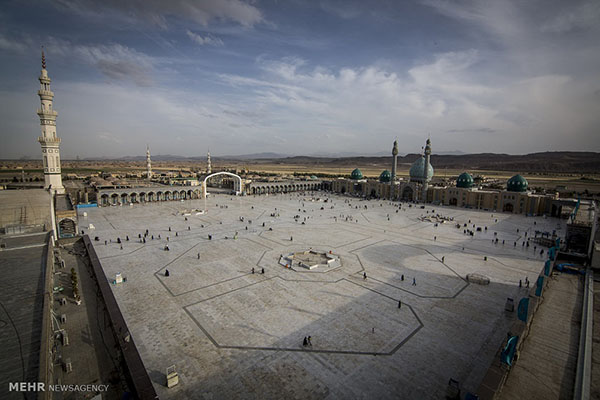
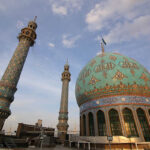
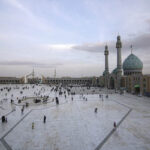
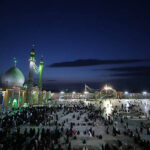
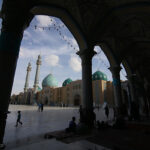
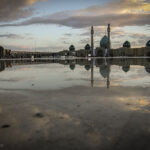
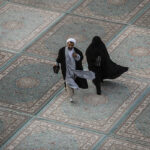
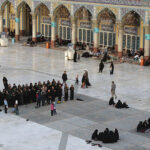
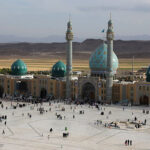
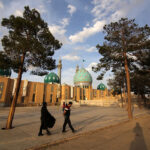
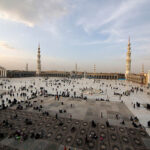
Jamkaran Mosque outside Qom

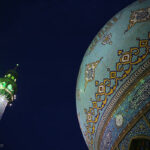
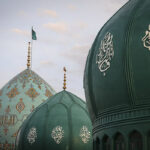
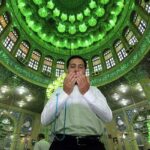
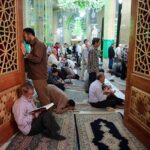
The mosque of Jamkaran, six kilometres east of Qom, has been a sacred place since February, 984 CE. It was expanded and renovated on a grand scale after the Islamic Revolution, and at present it is one of the largest mosques in the country.


Presidents of Iran and Croatia Call for Closer Anti-Terror Cooperation

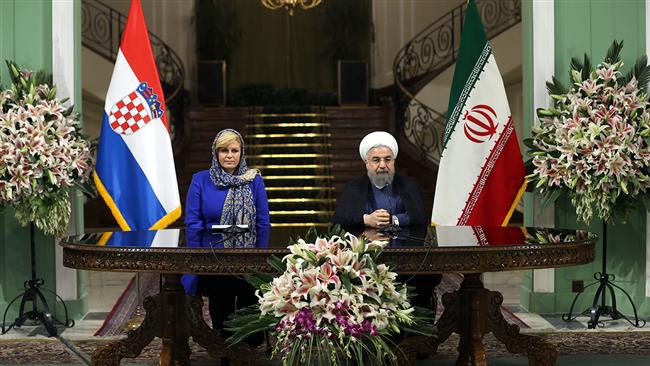
In a joint press conference following a Wednesday May 18 meeting in Tehran with his Croatian counterpart, Kolinda Grabar-Kitarović, Iranian President Hassan Rouhani said the two sides have agreed to enhance their anti-terrorism cooperation given the current wave of terror threats plaguing some regional states.

Rouhani said his earlier talks with Grabar-Kitarović focused on the need to expand bilateral anti-terrorism cooperation, among other issues of mutual interest.

Elsewhere in his remarks, the Iranian president called for closer relations between Tehran and Zagreb in various areas, especially economics, culture and tourism, saying the visit by Grabar-Kitarović at the head of a high-ranking economic delegation shows the political will in Croatia to bolster trade ties with the Islamic Republic.

Grabar-Kitarović, for her turn, highlighted the scourge of terrorism gripping countries like Iraq, Syria and Afghanistan, stressing that her country would “keep up cooperation with Iran in efforts to uproot terrorism and extremism.”

She also described her trip to Tehran as a “turning point” in Iran-Croatia relations, particularly in the economic sphere, saying the two countries should work to expend their relations, “which are not currently at a satisfactory level.”

“The Islamic Republic of Iran can view Croatia as a good friend and partner in the European Union,” Grabar-Kitarovićadded.

Zagreb is aware that Iran is seeking to modernize its industry and economic infrastructure, said Grabar-Kitarović, adding that “Croatian companies stand ready to cooperate with Iranian firms to that effect.”

Ahead of the two presidents’ press conference, senior officials from Iran and Croatia signed two agreements for the enhancement of economic and trade cooperation between Tehran and Zagreb.

Grabar-Kitarović arrived in Tehran for a three-day visit on Tuesday and was officially welcomed by her Iranian counterpart on Wednesday.

Play to Explore Love Story between Afghan Migrant and Iranian Gypsy

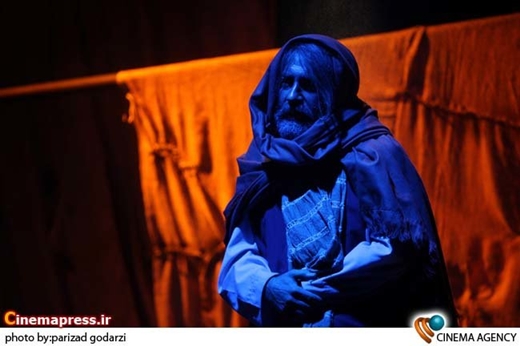
Solar Eclipse will be performed at the Qashqai Hall of Tehran’s City Theatre Complex for a month from June 5, he informed the Persian service of MNA on Monday.

In Solar Eclipse, a romance blooms between Meymand, a young Afghan who fled his native Afghanistan, and Sorayya, the daughter of an Iranian gypsy family.

Theatergoers gave the play a warm reception in 2010, when Aqakhani and his troupe performed it at the same theatre.

“The play will go on stage with the same cast, i.e. Hamidreza Azarang, Nasim Adabi and myself,” he said.

“In fact, it will be recollection of the memories of a play that we liked,” he added.

Aqakhani said that the play has a deeply humanistic view on Afghan migrants in Iran and added, “I want to evoke sympathy from the audience for Afghan migrants and the sad fate that awaited them.”

He also said that his decision to stage the play resulted from feelings of sympathy for the family of Setayesh Qoreishi, a six-year-old girl who was raped and killed, allegedly by a teenage Iranian neighbour, in the Tehran suburb of Varamin in April.

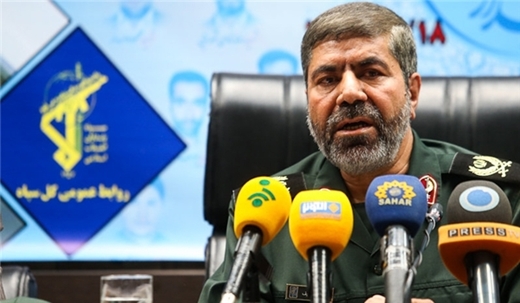
IRGC Spokesman: Growing Number of Iranian Volunteers Ready to Fight Terrorists in Syria

“Today, we are facing a growing wave of demands to be sent to Syria and Iraq, and many young people from different parts of Iran and of different ethnicities have volunteered,” Ramezan Sharif said.

He also warned of enemy plots to hit Iran through terrorist groups, including ISIS and al-Qaeda, but underlined, “The Iranian Armed Forces have grown so powerful that the enemy doesn’t dare to make the slightest aggressive move against the country.”

“This is not a slogan; it is an undeniable reality,” Ramezan Sharif stressed.

Iran has pioneered in helping regional states fight terrorism, especially Iraq and Syria, and has demanded regional and world states to partner it in the war on terrorist groups.


In relevant remarks in April, Lieutenant Commander of the Iranian Army Brigadier General Abdolrahim Moussavi announced that the country will continue dispatching volunteer military advisors to Syria.

“Since the start of the conflict in Syria, the Islamic Republic of Iran’s Armed Forces voiced readiness for (overseas) deployment and pressured their commanders to be dispatched to the region,” General Moussavi said.

He said Supreme Leader of the Islamic Revolution and Commander-in-Chief Ayatollah Seyed Ali Khamenei was then informed of the Iranian military men’s preparedness and interest, and the Leader agreed to dispatch a number of advisors.

General Moussavi underlined that the dispatch of military advisors to Syria is done fully voluntarily, and said, “This will continue as long as necessary.”

Iran Condemns Baghdad Terrorist Bombings

On Wednesday May 18, Jaberi Ansari censured the deadly bombings and expressed condolences to the families of victims and the Iraqi nation and government.

He said the terrorists’ move to intensify their crimes follow their failures in battlefields.

Desperate to make up for their defeats, the terrorists are exploiting the political conditions in Iraq and making use of every opportunity to take revenge on the Iraqi nation, government, army and popular forces, he said.

Jaberi Ansari lauded the Iraqi army and popular forces for their victories against the terrorists and called on the Arab country’s officials and political currents to keep vigilant, maintain unity and expedite efforts to resolve the current political issues and problems, which he described as an important factor in defeating the terrorists and their supporters.

He further described Takfiri terrorism as a global threat and said supporting Iraq and Syria against the threat is tantamount to backing world security.

On Tuesday, at least 70 people were killed and over 100 others wounded in four bombings in different neighbourhoods of Baghdad.

An explosion in a market in al-Shaab district left 34 people dead and 75 injured, while a car bomb in the al-Rasheed area killed eight and wounded another 22 victims.

In al-Rasheed, a roadside bomb exploded outside concrete blast walls surrounding the open air market, before a female suicide bomber blew herself up in a crowd of people who gathered to help the initial victims.

Later, a suicide car bomb was reported at another market in Sadr City, killing at least 18 people and injuring 35.

In a fourth attack, the suicide bomber killed nine people at a restaurant in the Habibia district.

On Sunday, bomb attacks by Daesh killed at least 15 people in and around Baghdad.

The increase in the number of terrorist attacks has angered local populations, who blame the Iraqi government for failing to provide tighter security.

Iraqi Prime Minister Haider al-Abadi has said a political crisis sparked by his attempt to reshuffle the cabinet in an anti-corruption bid is hampering the fight against Daesh and is giving the terrorist group a freer hand to target the civilian population.

Some Iraqis say, however, Daesh is trying to make up for its loss of ground to Iraqi security forces over the past months.

New estimates by the government show that Daesh now controls only 14 percent of Iraqi territory, down from the 40 percent it held in 2014, with top officials vowing to clear the entire Iraqi soil from militants in 2016.

The Iraqi army along with Popular Mobilization forces has been engaged in battles with Daesh to remove it from the areas it has overrun in Iraq.

Iranian Cyclist Mizbani Shines in Tour of Iran 2016

On Tuesday, the 40-year-old racer for Shardari Tabriz Cycling Team covered a distance of 180.7 kilometres (112.2 miles) from the city of Sareyn in Iran’s northwestern Ardabil Province to Sahand Ski Resort in 5:16.38, to be awarded the gold medal.

Arvin Moazzemi Goudarzi of Iran’s Pishgaman Yazd Cycling Team clinched the silver medal, and Shardari Tabriz Cycling Team rider Mehdi Sohrabi pocketed the bronze.

The 31st edition of Tour of Iran (Azarbaijan) kicked off on May 13, and will run through May 18, 2016.

A total of 21 teams from sixteen different countries, including Armenia, Australia, China, Georgia, the Islamic Republic of Iran, Kazakhstan, Malaysia, Morocco, Syria, Turkey and Uzbekistan, are taking part in the event. The tour has six stages, with a total length of 1,005 kilometres (624.4 miles).

For the first time in the history of Tour of Iran (Azarbaijan), American UCI Continental Cycling Team Illuminate is participating in the tournament.