Thursday, December 25, 2025
Home Blog Page 4467

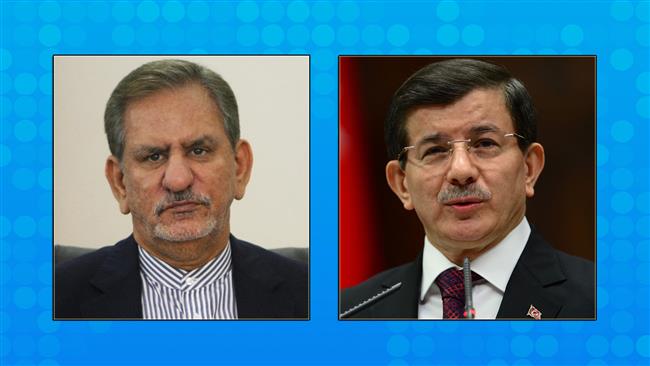
Iran stands by Turkey in anti-terror fight: VP

“Iran and Turkey are both victims of terrorism and the two countries understand the necessity of fighting this ominous and inhuman phenomenon,” Jahangiri said in a telephone conversation with Turkish Prime Minister Ahmet Davutoglu on Tuesday.

A deadly car bomb explosion in the centrally-located Kizilay district of Ankara on Sunday claimed the lives of at least 37 people and injured over a hundred more.

There was no immediate claim of responsibility; however, the Turkish premier announced on Monday that there are strong indications that the blast was carried out by the Kurdistan Workers’ Party (PKK), which Turkey deems as a terrorist organization.

Jahangiri further said cooperation between Tehran and Ankara in the region and the world would be instrumental in uprooting terrorism.

He said terrorist attacks across the world show the expansion of groups that are threatening global peace and security.

“Countering terrorism requires foresight and collective international action,” Jahangiri pointed out.

The Turkish premier, for his part, hailed Iran’s support for his country in its fight against terrorism.

On Monday, Turkey launched retaliatory air strikes on PKK depots and shelters in the mountainous Kandil and Gara regions in northern Iraq.

Ankara has been engaged in a large-scale campaign against the PKK in its southern border region in the past few months. The Turkish military has also been conducting offensives against the positions of the group in northern Iraq.

The operations began in the wake of a deadly July 2015 bombing in the southern Turkish town of Suruc. More than 30 people died in the attack, which the Turkish government blamed on the Takfiri Daesh terrorist group.

Ayatollah Khamenei urges independent states to unite against foreign interference

In a meeting with Vietnamese President Truong Tan Sang in Tehran on Tuesday, Ayatollah Khamenei said world powers are making attempts to meddle with the internal affairs of other countries.

“These acts of interference have sometimes been through waging wars like the Vietnam War and sometimes through other methods, and the way to counter such meddling is cooperation and rapprochement between independent countries,” said the Leader.

Ayatollah Khamenei also said that the Islamic Republic’s policy is based on cooperating with Asian states including Vietnam.

“We are also aware of your cooperativeness at international bodies and we believe that we must broaden cooperation as much as there is possibility and potential,” the Leader said.

Ayatollah Khamenei also heaped praise on the “courage and resistance” of the Vietnamese nation and prominent figures like veteran revolutionary leader Ho Chi Minh and military commander General Vo Nguyen Giap against the US aggression in the 1940s.

For his part, the Vietnamese president offered gratitude to the Islamic Republic for its support of Vietnam within international bodies and said his country will continue to support Iran’s right to peaceful nuclear energy.

He expressed hope that Iran would view Vietnam as a key partner in its transactions.


Iran Turns Threats into Opportunities: IRGC Commander

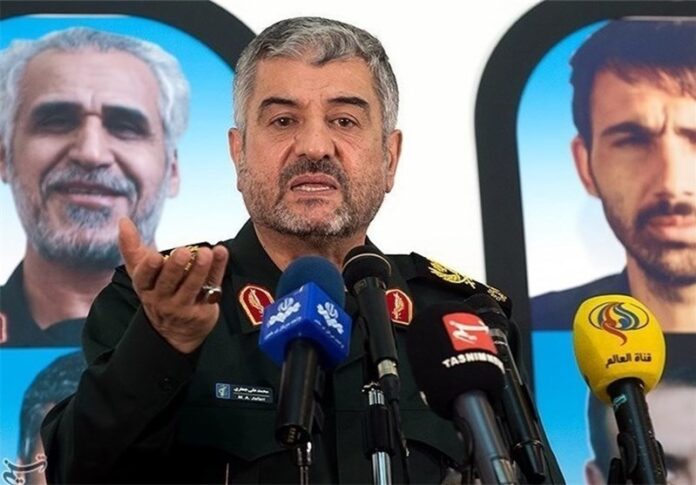
“Although enemies invaded the Islamic Iran under flimsy excuses during years of sacred defense (the Iraqi imposed war on Iran in the 1980s), their main goal was to prevent the development and spread of the Islamic Revolution in the world,” Major General Jafari said in a speech on Tuesday.

He added that the confrontation between the Islamic Republic and the world’s hegemonic and arrogant powers has been continuing until today.

The IRGC commander emphasized that the nature of threats posed by the hegemonic system to Iran has covered various political, cultural and economic areas.

“Thank God, military and security threats against the Islamic Republic’s holy Establishment have turned into opportunities and led to the spread of discourse of the Islamic Revolution in the world,” Major General Jafari noted.

Earlier last month, Iranian people from different walks of life, carrying flags and banners in support of the Islamic Republic, poured into the streets in their millions to hold nationwide rallies marking the 37th anniversary of the victory of the 1979 Islamic Revolution.

The Islamic Revolution victory, seen as the most important milestone in Iran’s recent history, liberated the country from the yoke of the hegemonic powers -with the ousted Shah as their stooge- and established a new political system based upon Islamic values and democracy.

The Iranian nation toppled the West-backed Pahlavi regime 36 years ago, ending 2,500 years of monarchic rule in the country.


Removing Syrian President from Power Demand of Israelis: Iranian Commander

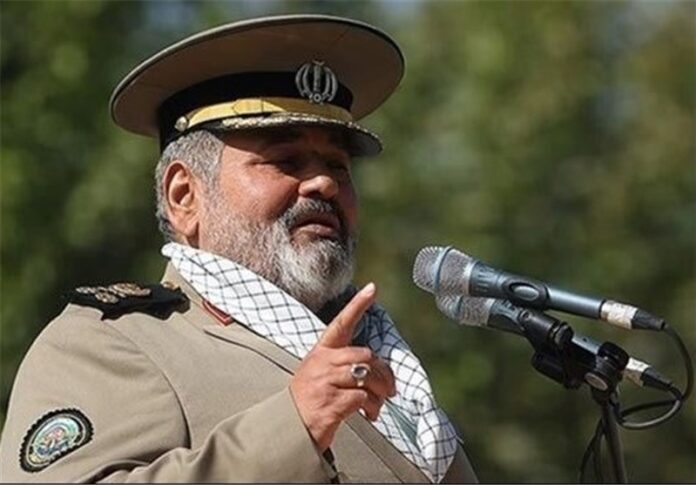
“Electing the leader of a nation and a head of state in a country is possible only by votes of that country’s people,” Major General Hassan Firouzabadi said in a speech on Tuesday.

“Political insistence on rejecting or appointing the leader or head of state of a country is an undemocratic demand and hostility to democracy,” he added.

The commander further denounced the Riyadh regime’s insistence on plans to oust Assad from power, saying that in that case, terrorist and Takfiri groups like Daesh (also known as ISIL or ISIS) will take power in the Arab country.

Firouzabadi went on to say that removing Assad is a demand of the Zionist Regime of Israel.

The remarks came as UN-mediated talks resumed in Geneva on Monday to help end the five-year-old war in Syria with opposition groups insisting on political transition without Assad.

Syria has been gripped by civil war since March 2011 with various terrorist groups, including Daesh, currently controlling parts of it.

In the meantime, Iran has remained a close ally of Syria and supports its legitimate government in the face of foreign-backed militancy.

According to a new report by the Syrian Center for Policy Research, the conflict has claimed the lives of over 470,000 people, injured 1.9 million others, and displaced nearly half of the country’s pre-war population of about 23 million within or beyond its borders.


Russia military withdrawal from Syria positive sign: Zarif

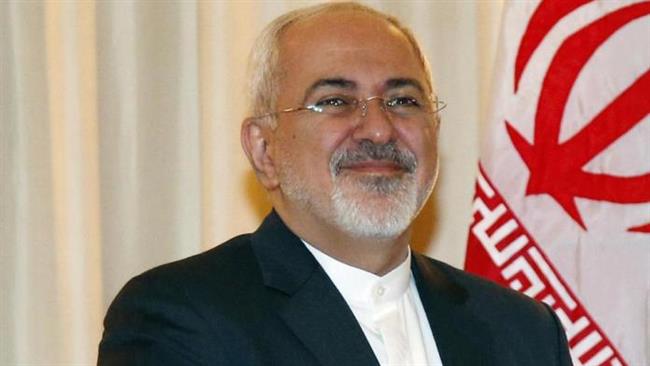
“The fact that Russia announced they are withdrawing part of its forces indicates that they don’t see an imminent need for resort to force in maintaining the ceasefire,” said Zarif during his visit to Australia on Tuesday.

“That in and of itself could be a positive sign. We have to wait and see,” added the top Iranian diplomat.

The Russian military has begun a partial withdrawal from Syria after a Monday order by President Vladimir Putin.

The Russian president, who announced the decision in a televised meeting with Russia’s foreign and defense ministries, hailed Moscow’s nearly six months of air campaign in Syria as a positive step, saying it created conditions for peace talks.

Putin, however, did not elaborate on the number of planes and troops to be withdrawn from Syria in the first phase of the pullout.

Putin’s order came hours after peace talks between the Syrian government and the opposition resumed in the Swiss city of Geneva amid a recently-brokered ceasefire in the Arab country.

The United Nations Security Council has said it views Moscow’s decision as a positive step.

The ceasefire agreement in Syria, mediated by Russia and the United States, entered into force on February 27.

Since late September 2015, Russia has been conducting airstrikes against foreign-backed militants in Syria upon a request by the Damascus government.

Backed by the anti-terror strikes, Syrian forces have managed to retake key areas from militants and deal heavy blows to them across the country, particularly near the borders with Turkey.

The foreign-backed conflict in Syria, which began in March 2011, has claimed the lives of more than 470,000 people, according to figures by the Syrian Center for Policy Research.

What to Do with US Breach of Promise, Iranian Analyst Examines

Mohammad Kazem Anbarlouei

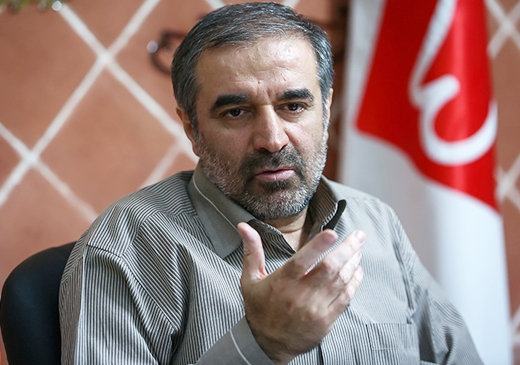
Mohammad Kazem Anbarlouei, a critic of the recent nuclear deal (known as JCPOA) finalized by Tehran and world powers, and a journalist opposed to the Iranian President Hassan Rouhani’s reconciliatory policies towards the West, has lashed out at the government for its inaction in dealing with the US violations of their commitments as per the comprehensive deal.

Here is an excerpt of his remarks in an article published by Tasnim News Agency and translated by Iran Front Page (IFP).


Iran’s Foreign Minister Mohammad Javad Zarif has recently said in an interview that the US government is expected to show its political resolve and implement what it had committed to on the paper.

“We do not expect such a thing from the entire US ruling system, but we expect that from the US government,” Zarif had noted in the interview.

Also the Iranian president told reporters in a recent press conference that the Americans should be more active in the implementation of JCPOA.

“In some cases, Americans have not made enough efforts as expected from them,” Rouhani said at the time.

Such remarks reveal that Americans are causing troubles for the implementation of the nuclear deal. The government was hasty in JCPOA implementation and undertook all its commitments. On the other hand, the Americans not only do not hurry to fulfill their commitments, but also make certain moves that show they seemingly lack the resolve for the implementation.

Their commitments are left on the paper. There is no sign of activities. This is not what critics say, but it is mentioned by the government’s economic officials, tradesmen, and businesspeople. Currently, the highest-ranking officials including the president and the foreign minister are confessing to the Americans’ breaches of their commitments.

The case has been raised in a cabinet meeting and incited arguments among political and economic officials, the content of which has been leaked to some extent.

The government needs to think about what to do.

The first step would be the government’s seriousness in implementing the policies of Resistance Economy.

The second step would be the mechanism of returning to the zero point in nuclear talks, and accepting the fact that the US is our main enemy. It has never spared any effort in hostility towards the Iranian nation, and the JCPOA has not had any influence on decreasing such hostilities.

The third step is that the government should revise the way it talks to its critics. It is not appropriate for a president to insult its sympathetic critics using such expressions as “destructive”, “the extremist minority”, etc.

These words damage the government’s internal policy and the manner of dialog, threaten national unity and Islamic solidarity, because the very people insulted by the president would be the ones in the frontline of a war against the US.

The president should admit that the US, rather than its critics, is the “imperialist”! It is not fair to give away the great scientific and technical achievements of Iranian nuclear scientists, particularly under the governments of former President Mahmoud Ahmadinejad, in return for a number of empty promises on the paper, and then to attack the previous government as well as the critics using insulting words.

The dearest and most honorable young Iranian scientists were killed for these achievements; it is not appropriate to attack the critics, who had repeatedly warned of US violations, instead of shouting at Washington for breaching their promises.

[…]

Recent remarks by the US Secretary of State John Kerry about Iran’s missile tests and his emphasis on the continuation of anti-Iran sanctions are extremely dangerous. Currently, the Americans have not only refused to remove the sanctions, but they are also seeking to impose further sanctions on the pretest of human rights and terrorism.

Americans have equipped Saudis and some regional states for new bloodsheds, massacres, beheadings, plunders, burning the people alive, destruction of cities, and displacement of citizens.

Americans are preparing to damage Iran’s internal stability and to support those who incited sedition in 2009 [the perpetrators of street riots and incidents after the 2009 presidential elections in Iran. After President Rouhani took office in 2013, and following the recent parliamentary elections held on February 26, a number of their less well known fellows have once again gotten the chance to be present at the Establishment’s decision-making bodies].

They have become so rude that even a court in the US has ruled that Iran should pay near $11 billion of compensation on the pretext of the country’s involvement in 9/11 incident; this is what was considered as a silly political joke. Now, would the US with such silly moves interested in implementing the JCPOA?!

Speaking in a conference to commemorate Iranian martyrs, where the harshest attacks should be mounted against the enemies of the Establishment, the Revolution, and Islam, the honorable president not only did not attack them, particularly the US, but also targets the critics and says, “Unfortunately, some newspapers are letters of swearing; before opening the paper, one should be afraid and concerned whether any curse is muttered or any accusation is raised against oneself; this is Islam! This is the Muslim community!”

Without making reference to the offensive newspapers and those targeted, President Rouhani accuses the Revolutionary camp of false charges, saying, “The Revolution was for ethics, national unity, politeness, and good manner; if we claim to be revolutionaries, it means we are obedient to God and people are immune from our hand and language.”

Are all these words in line with national unity, politeness, and good manner? People of insight know that such remarks are aimed at exaggerating what does not exist, and at the same time underestimating the enemy, and ignoring the West’s political, cultural, and economic threats.

Such remarks are made by the president to evade answering a key question, “What should we do with the Americans’ breach of promise?”

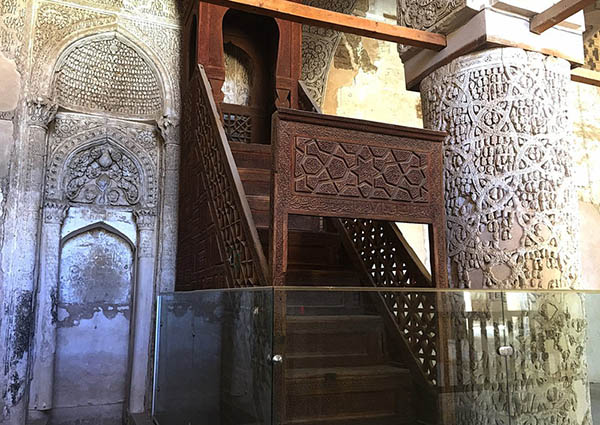
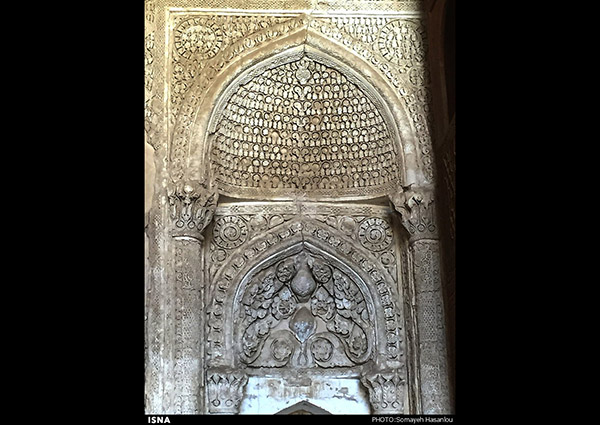
Jame Mosque of Nain , Iran’s Third Oldest

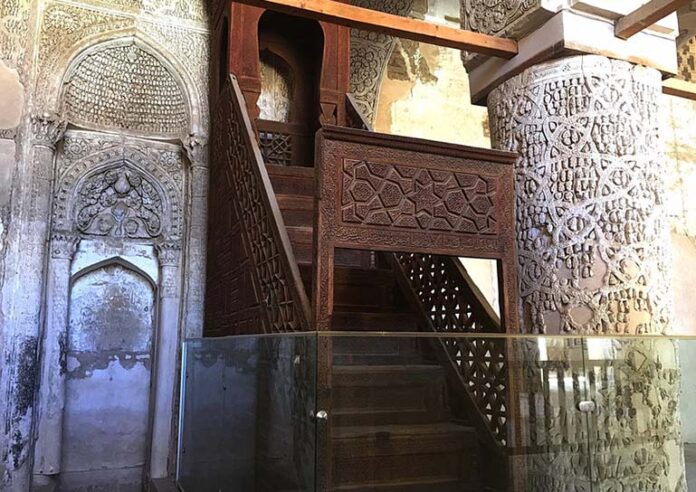
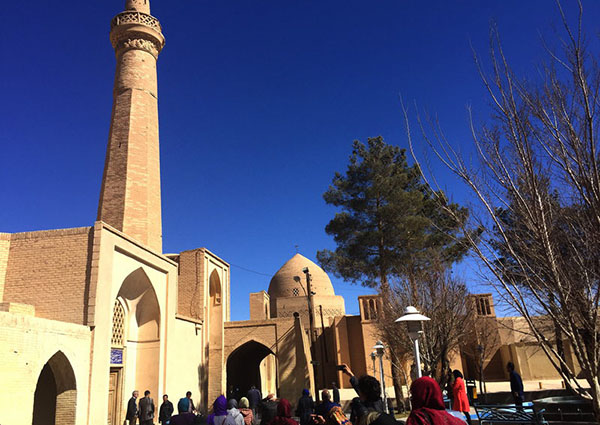
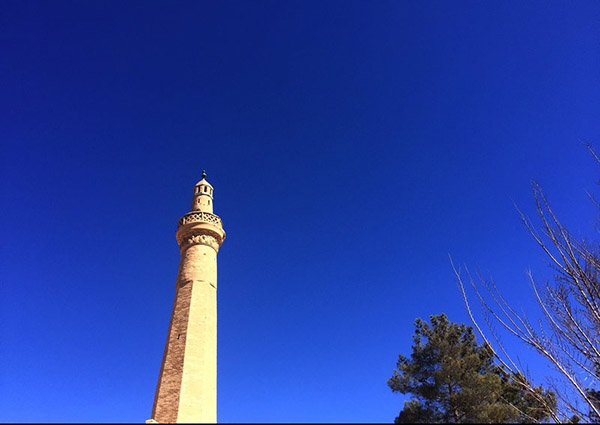
From Tehran to the Jame Mosque of Nain is about five hours’ drive. It is the city’s premier historical attraction, though with a 28m high minaret, it’s also probably the city’s tallest building. In Islamic architecture reference books, Kerman’s Fahraj mosque is mentioned as Iran’s oldest mosque. Damghan’s Tarikhane comes next, and Nain Jame mosque is the third oldest.

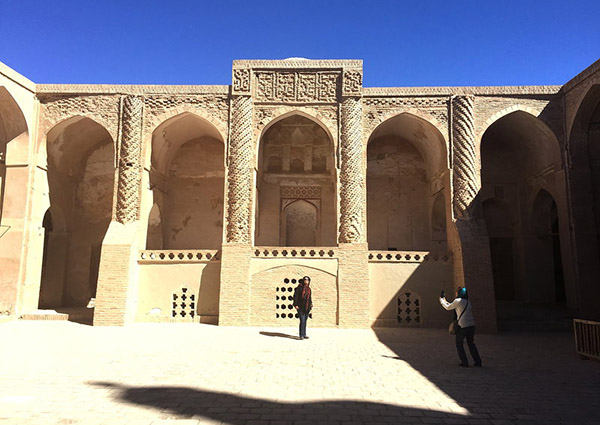
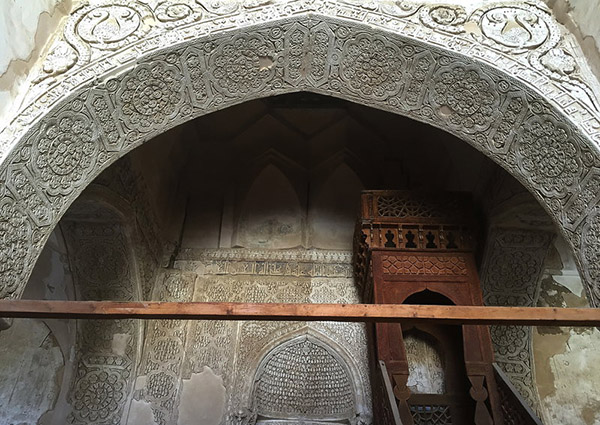
The central Iranian architecture is easily visible in the structure of this mosque, which dates back more than 1,200 years.

There’s a pulpit with valuable wood carvings next to the mosque’s sanctuary area, made with delicate mouldings. The pulpit is made of teak and jujube wood, but without using any nails. Instead, the wooden parts have been slotted together like pieces of a puzzle.

There are only three marquetry pulpits like this in the world. The other two are in Goharshad mosque in Mashhad and in Omavian Mosque in Damascus, Syria.

The mosque’s courtyard has been carpeted by bricks but there are parts which have been paved with alabaster. These parts act as translucent windows for the mosque’s basement. The basement, however, seems like it was a temple belong to the pre-Islamic period.

There’s a route to the “Payab” (where the water channel passes) from the mosque’s yard. Payabs were usually built in the lower parts of most central Iranian houses, especially of those who were rich. Water channels played significant roles in the lives of people in these areas.

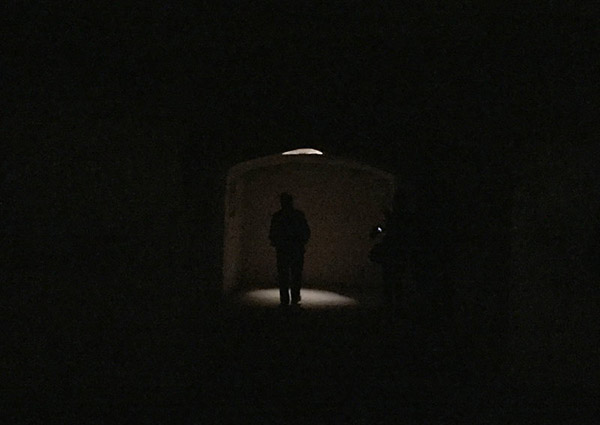
Nain Jame mosque is built on the site of an abandoned fire temple belonging to the Sassanid dynasty. The basement of this mosque, however, appears to be from a different religious and historical period. It seems that it was a temple belonging to a pre-Zoroastrian era. The alabaster stones used in the ceiling of the basement are the only source of light for the dark hall. It is estimated that this part of the structure is more than 2,000 years of old.

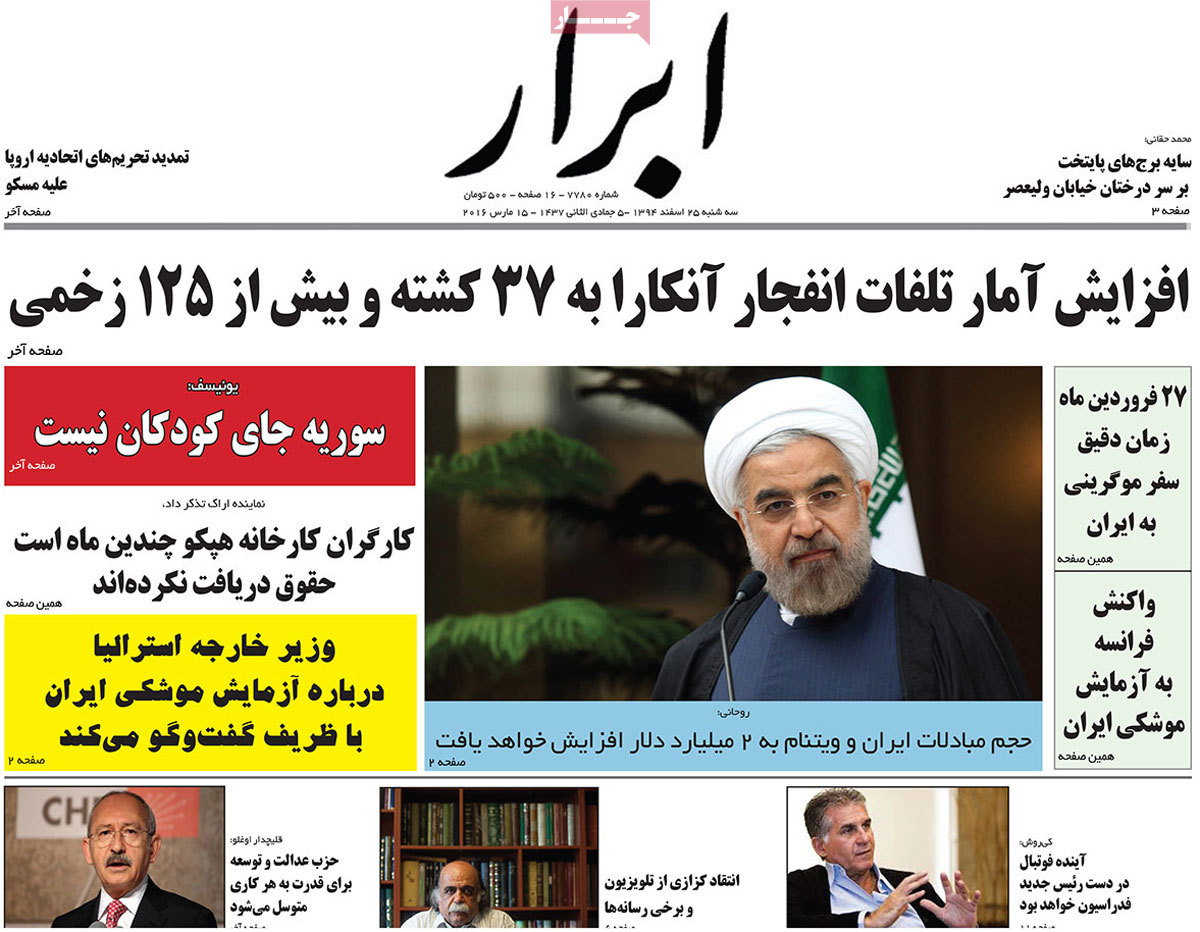
A look at Iranian newspaper front pages on March 15

Iran Newspaper front pages

Iranians are preparing for new year celebrations as the next calendar year begins on March 19.

The last Tuesday night is celebrated in Iran by a fire festival which has derailed in the past few decades from a fire festival to a cracker phenomenon in the country in which dozens are killed every year.

Many headlines cautioned their readers about the dangers and accidents caused by the crackers in these days.

Above all, Iranian President Hassan Rouhani’s meeting with his Vietnamese counterpart in Tehran, and UNSC’s meeting which bore no further sanctions on Iran because of its missile launch took many headlines on Tuesday, March 15.

Here are the top headlines:


Abrar:

  1. EU extends Moscow sanctions
  2. Blast kills 37, injures 125 in Ankara
  3. Mogherini to visit Tehran on April 15
  4. Iran, Vietnam trade to hit $2bn
  5. UNICEF: Syria no place for kids
  6. Australia, Iran FMs to discuss Iran missile tests
  7. France reacts to Iran missile tests


A look at Iranian newspaper front pages on March 15


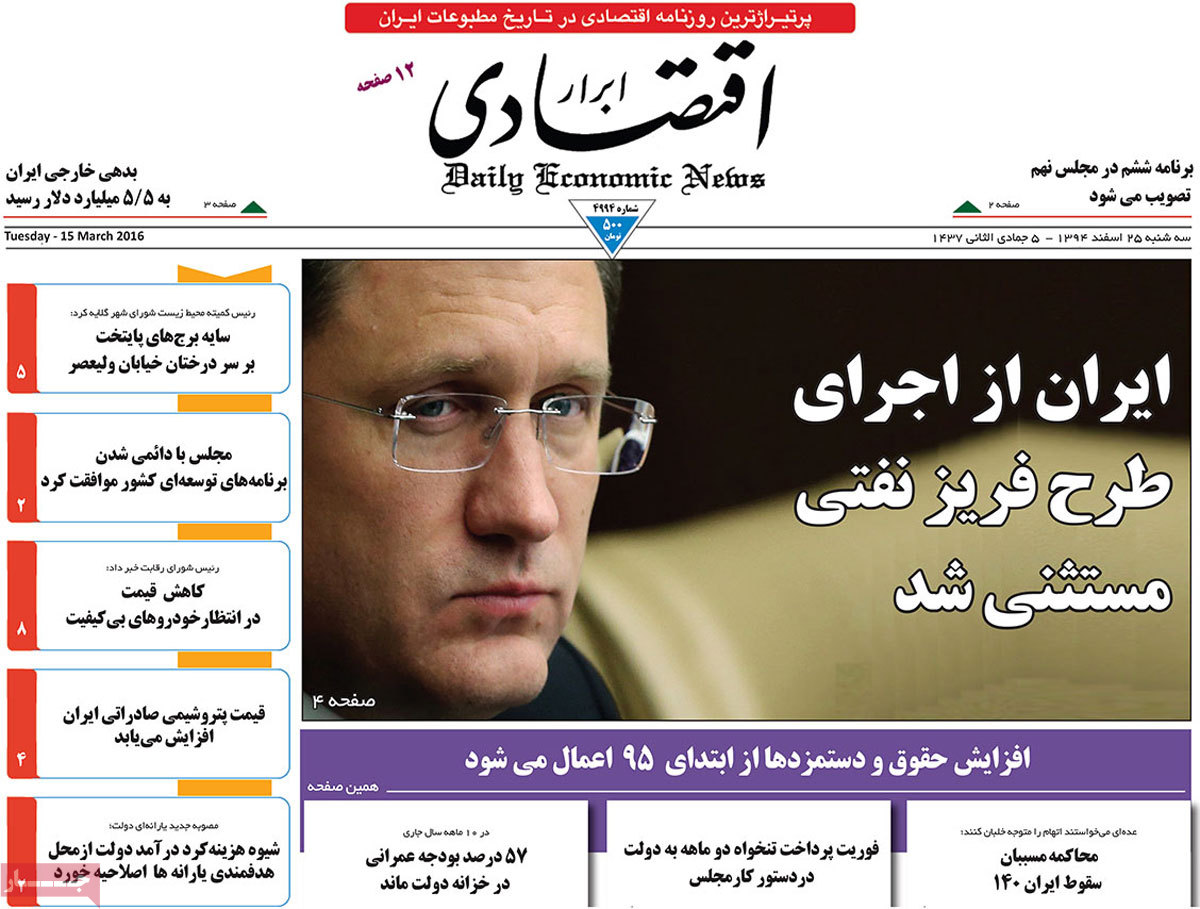
Abrar Eqtesadi:

  1. Iran singled out from oil freeze plan: Russia
  2. Iran boosts price of exported petchems


A look at Iranian newspaper front pages on March 15


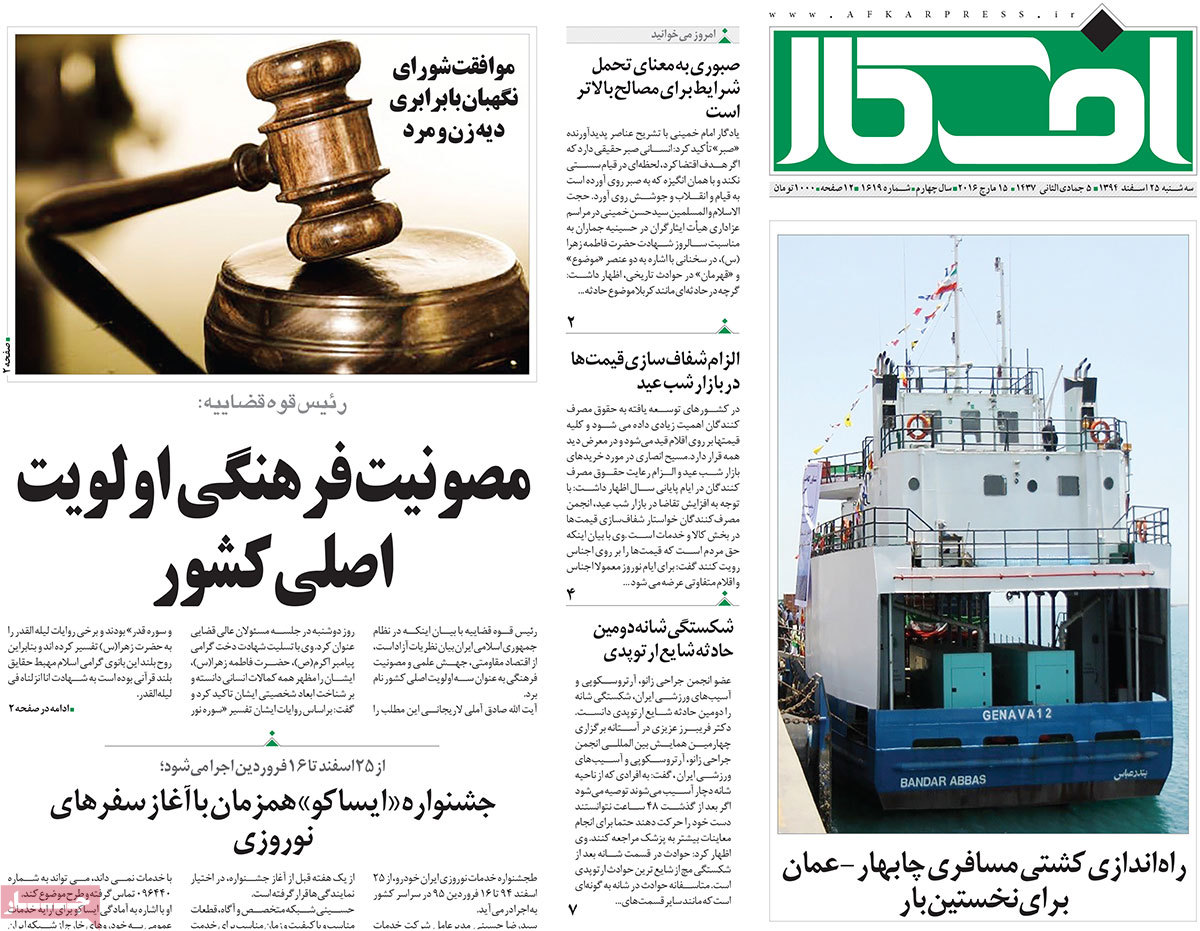
Afkar:

  1. Guardian Council endorse equal blood money for men, women [in car accidents]
  2. Judiciary chief: Cultural impunity, country’s chief priority
  3. Iran launches Chabahar-Oman sea lane


A look at Iranian newspaper front pages on March 15


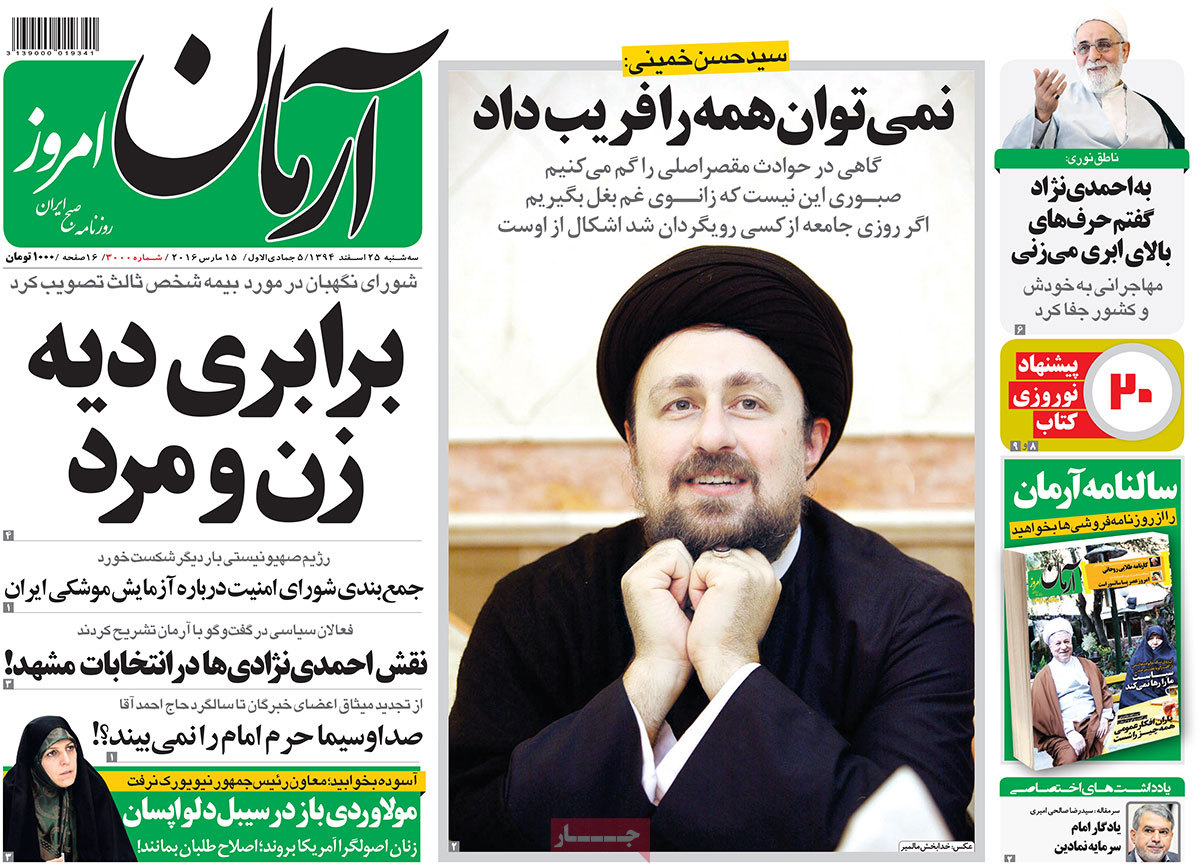
Arman-e Emrouz:

  1. Not everyone can be fooled: Hassan Khomeini
  2. Men, women blood money equal [in Iran]
  3. UN Security Council meets to discuss Iran’s missile launch


A look at Iranian newspaper front pages on March 15


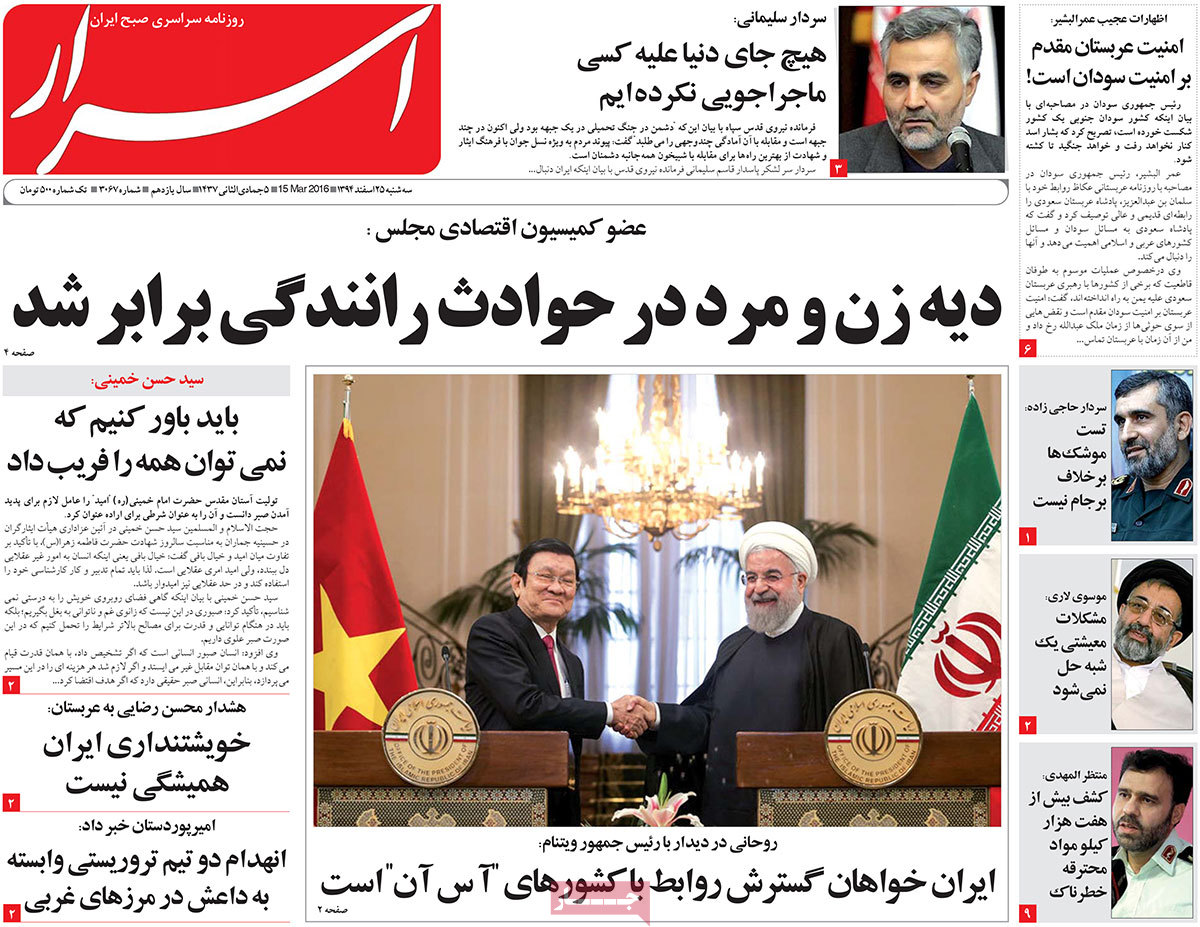
Asrar:

  1. No adventures against anyone in the world: Gen. Soleimani
  2. [Sudanese President] Omar al-Bashir: Saudi security above Sudan security
  3. MP: Men, women blood money equal in car accidents
  4. Iran self-restraint not eternal: Mohsen Rezaei to Riyadh
  5. Iran favors enhanced ties with ASEAN member states: Rouhani
  6. Police seizes over 7t of crackers
  7. Terrorist cells smashed in Western Iran
  8. Iran missile tests no violation of JCPOA: Cmdr.


A look at Iranian newspaper front pages on March 15


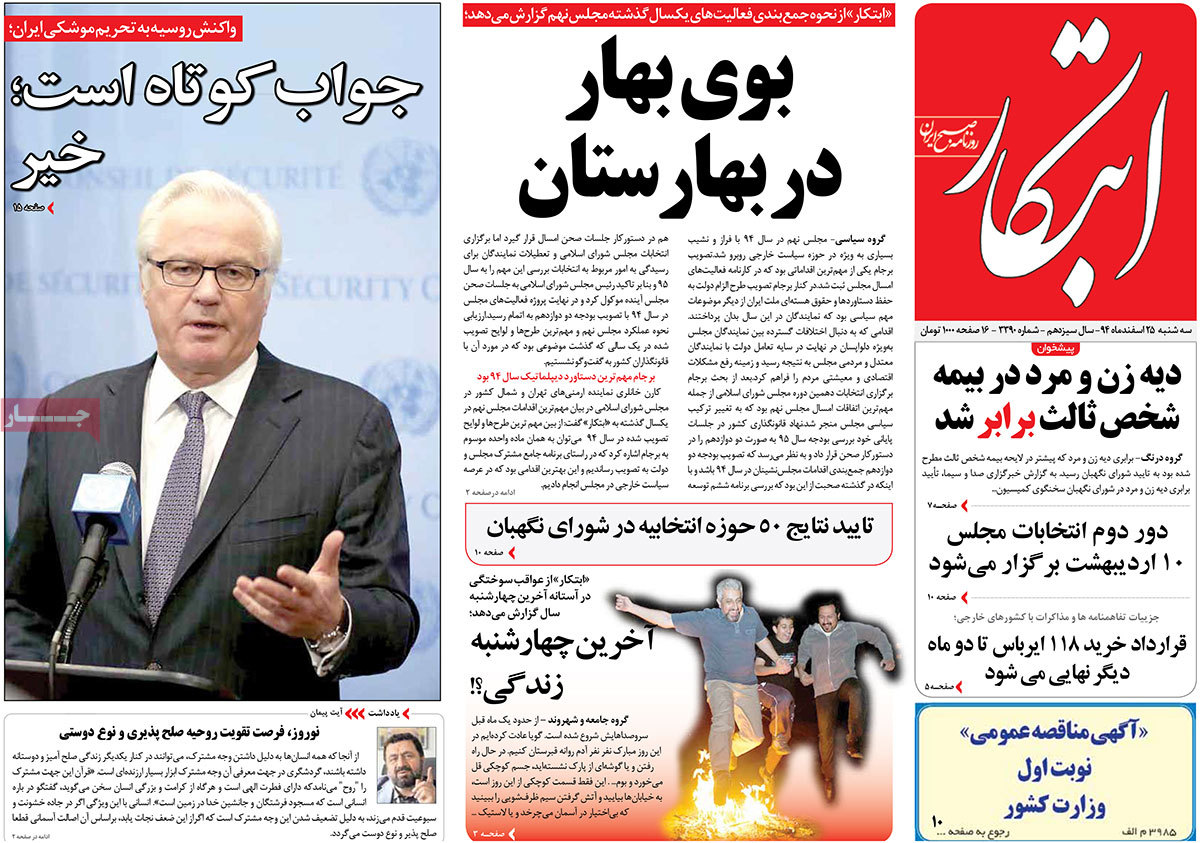
Ebtekar:

  1. Answer is short: No

Russia opposed any sanctions on Iran over missile tests. Russia’s envoy to the United Nations Vitaly Churkin said Monday, “The clear and short answer is no.”

  1. Guardian Council confirms election results in 50 constituencies
  2. Parliament election runoff on April 30
  3. Deal to buy 118 airbus jets to be finalized in two months


A look at Iranian newspaper front pages on March 15


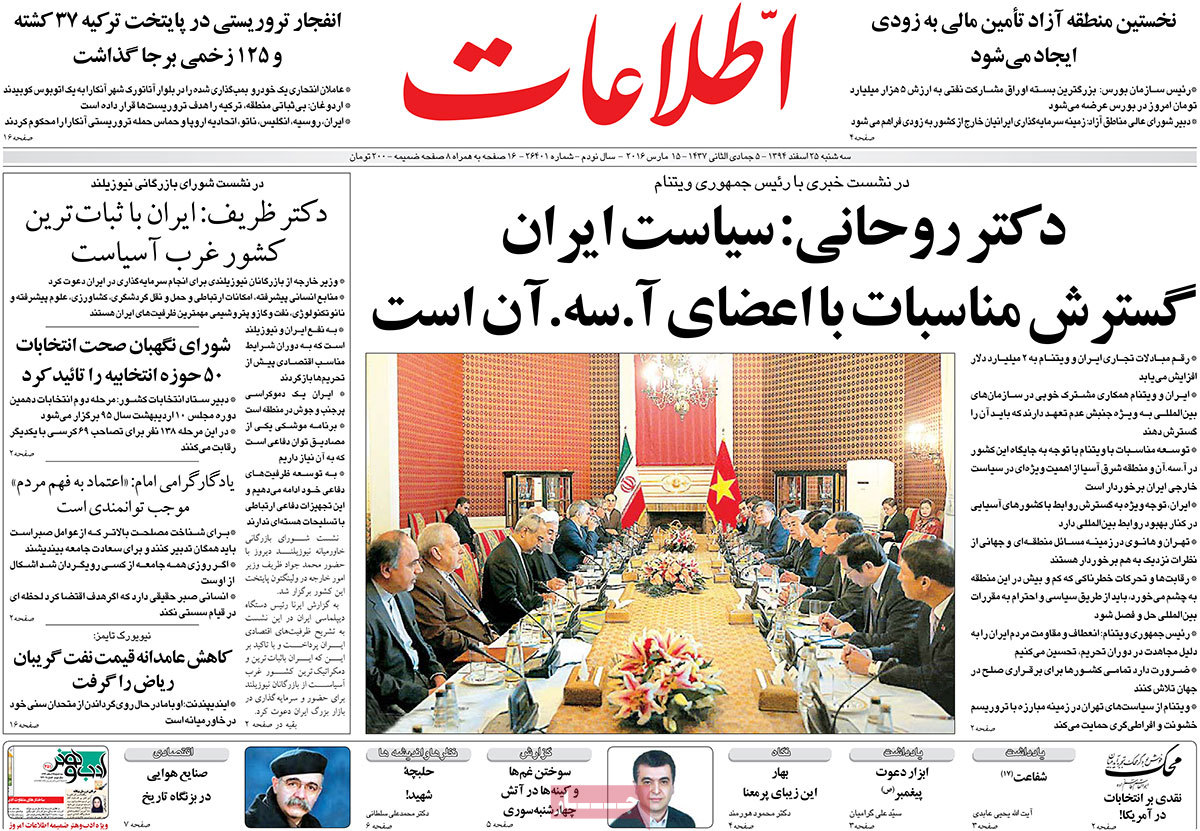
Ettela’at:

  1. Iran to launch first financial free zone
  2. Iran eyes enhanced ties with ASEAN members: Rouhani
  3. Iran, western Asia’s most stable country: Zarif
  4. Terrorist blast kills 37, injures 125 in Turkish capital
  5. New York Times: Deliberate oil price slump catches Riyadh


A look at Iranian newspaper front pages on March 15


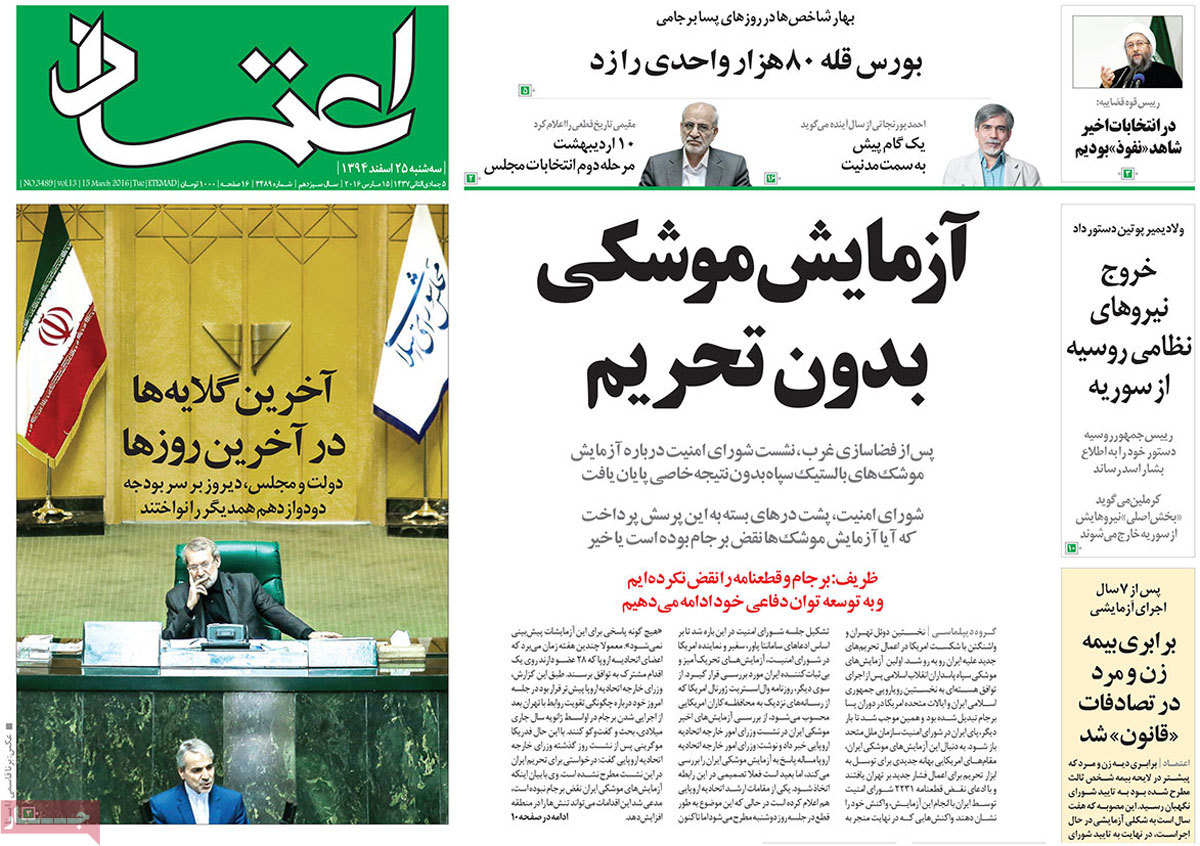
Etemad:

  1. No sanctions for missile tests
  2. Russian troops leave Syria


A look at Iranian newspaper front pages on March 15


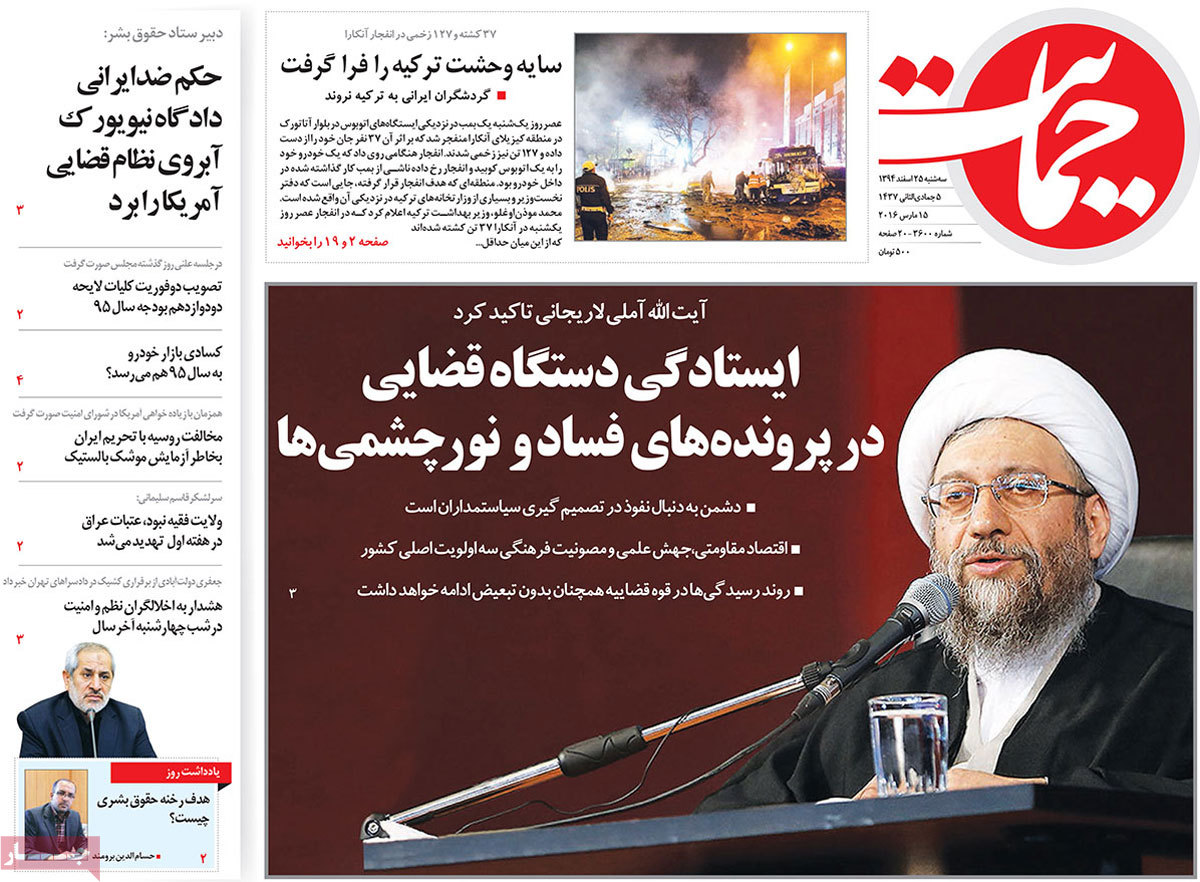
Hemayat:

  1. Fear loom Turkey after blast
  2. Anti-Iranian judgment defaced US judiciary system: Iran’s Larijani
  3. Judiciary chief: Iran judiciary stands firm in proceeding cases of corruption, “loved ones”


A look at Iranian newspaper front pages on March 15


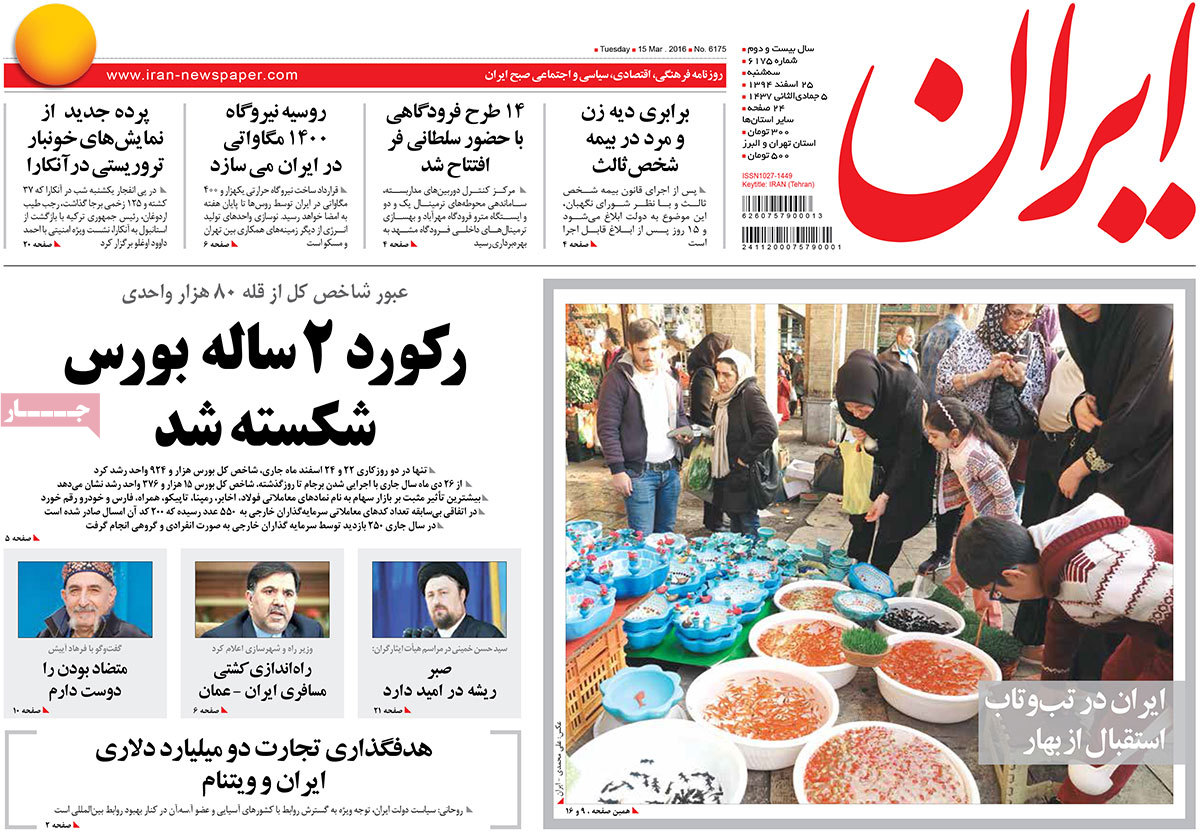
Iran:

  1. Head of tourism organization inaugurates 14 airport projects
  2. Russia to build 1,400mw power plan in Iran
  3. Iran, Vietnam eye $2b trade
  4. Iran-Oman sea lane launched
  5. Iran prepares for arrival of spring


A look at Iranian newspaper front pages on March 15


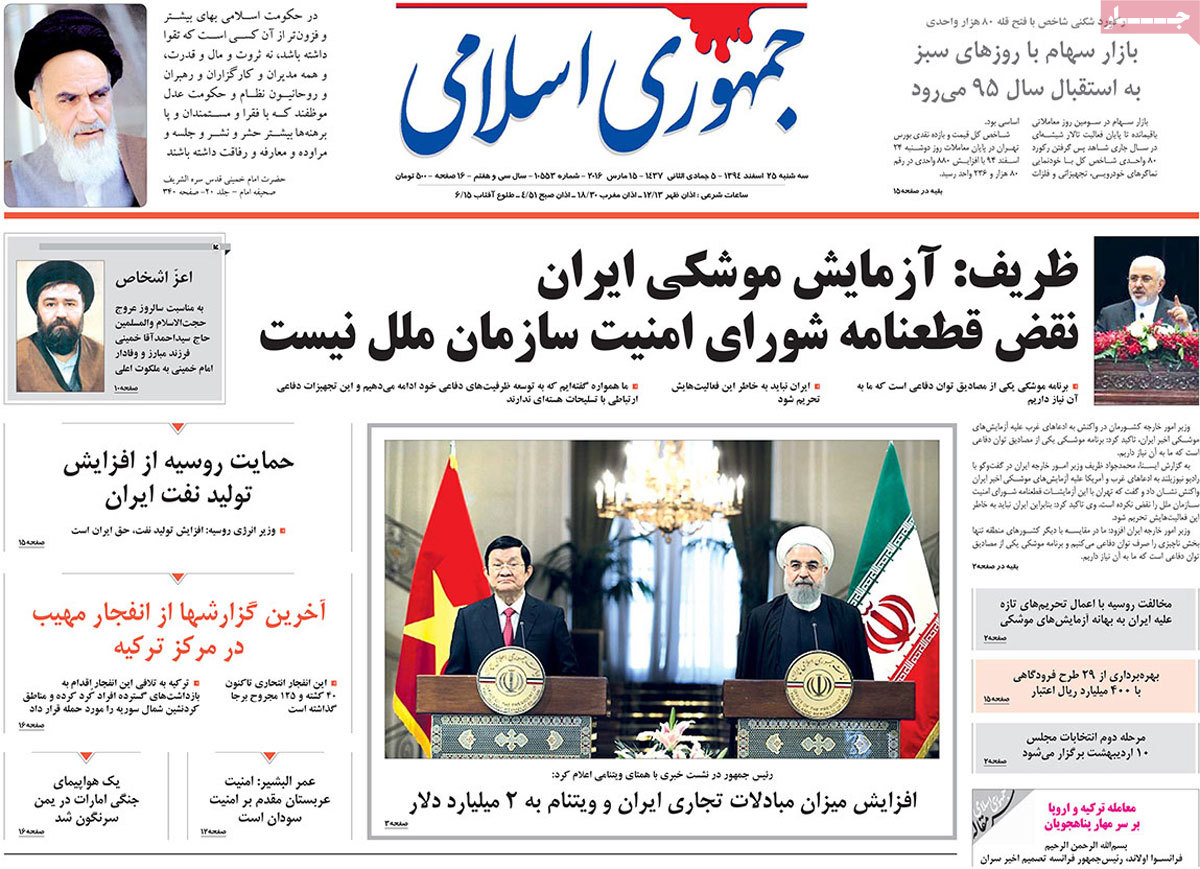
Jomhouri Islami:

  1. Iran missile test no violation of UNSC resolution: Zarif
  2. Russia endorses Iran crude oil production growth


A look at Iranian newspaper front pages on March 15


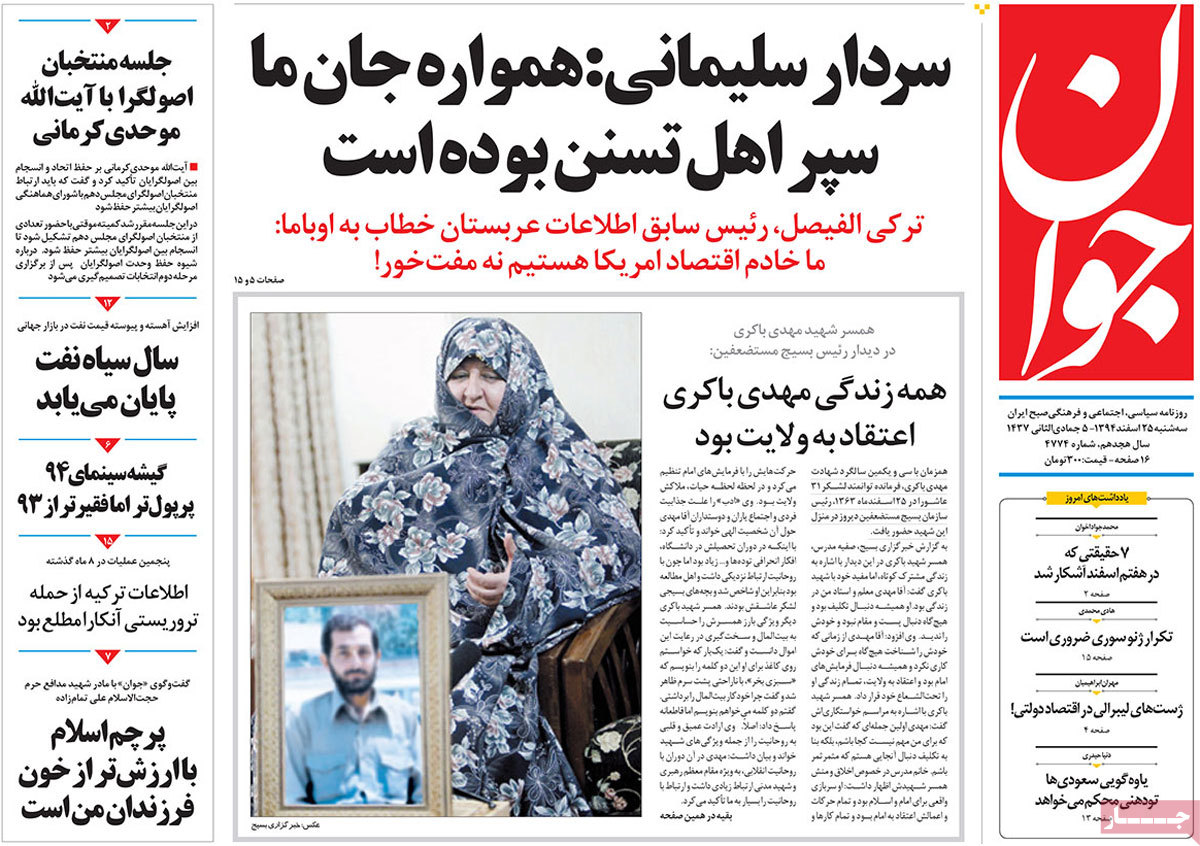
Javan:

  1. We have always been shielding Sunnis by our lives: Gen. Soleimani
  2. Martyr Bakeri’s life was all about his belief in rule of jurists (Velayat Faqih): Wife
  3. Stead rise in oil price
  4. Turkey intelligence knew about Ankara blast


A look at Iranian newspaper front pages on March 15


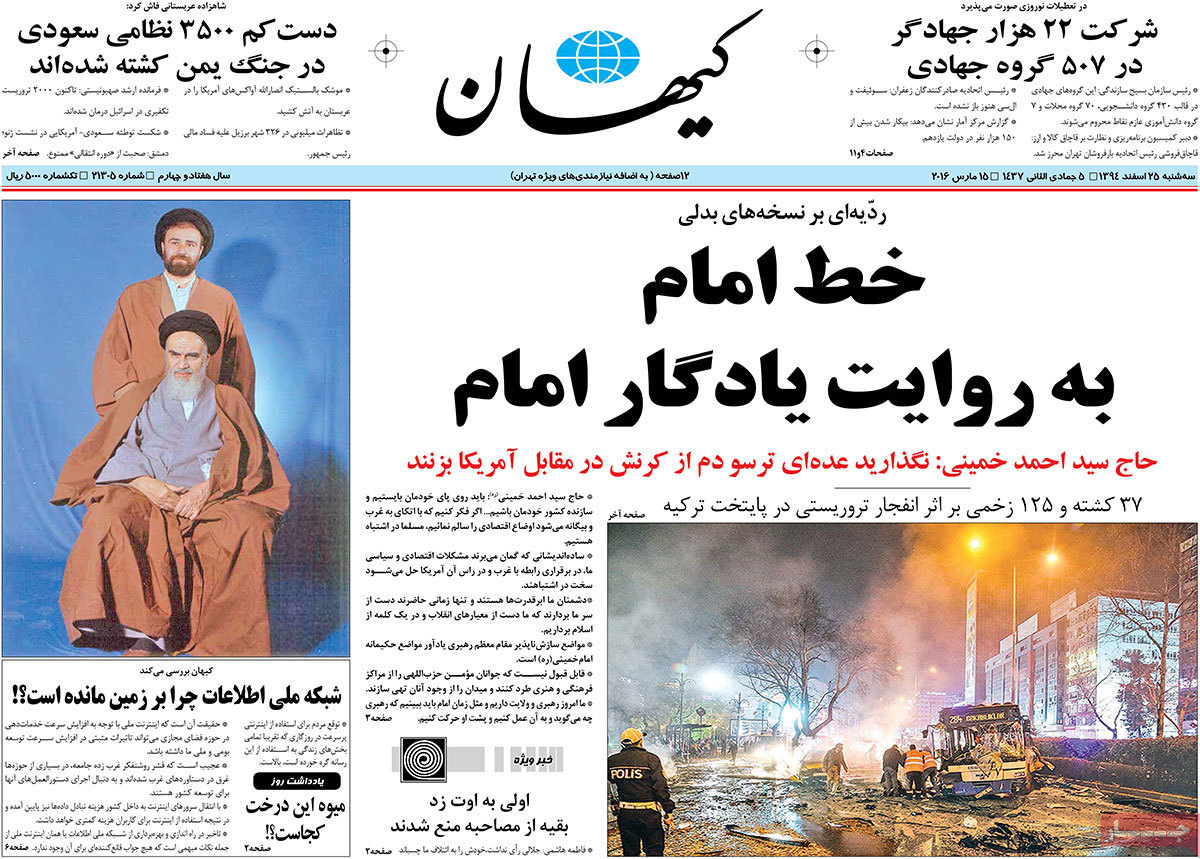
Kayhan:

  1. 3,500 Saudi forces killed in Yemen war


A look at Iranian newspaper front pages on March 15


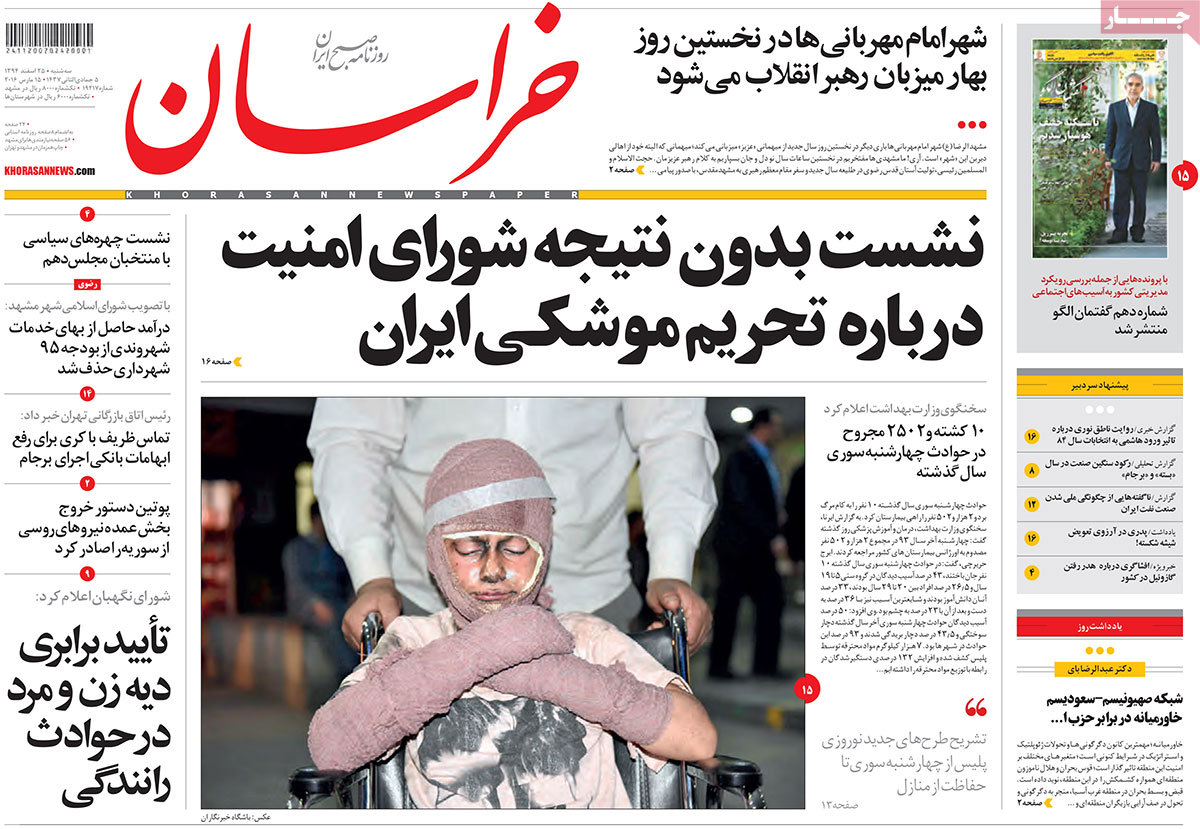
Khorasan:

  1. No sanctions approved in UNSC meeting on Iran missile tests
  2. 10 killed, 2,502 injured in Iran fire festival


A look at Iranian newspaper front pages on March 15


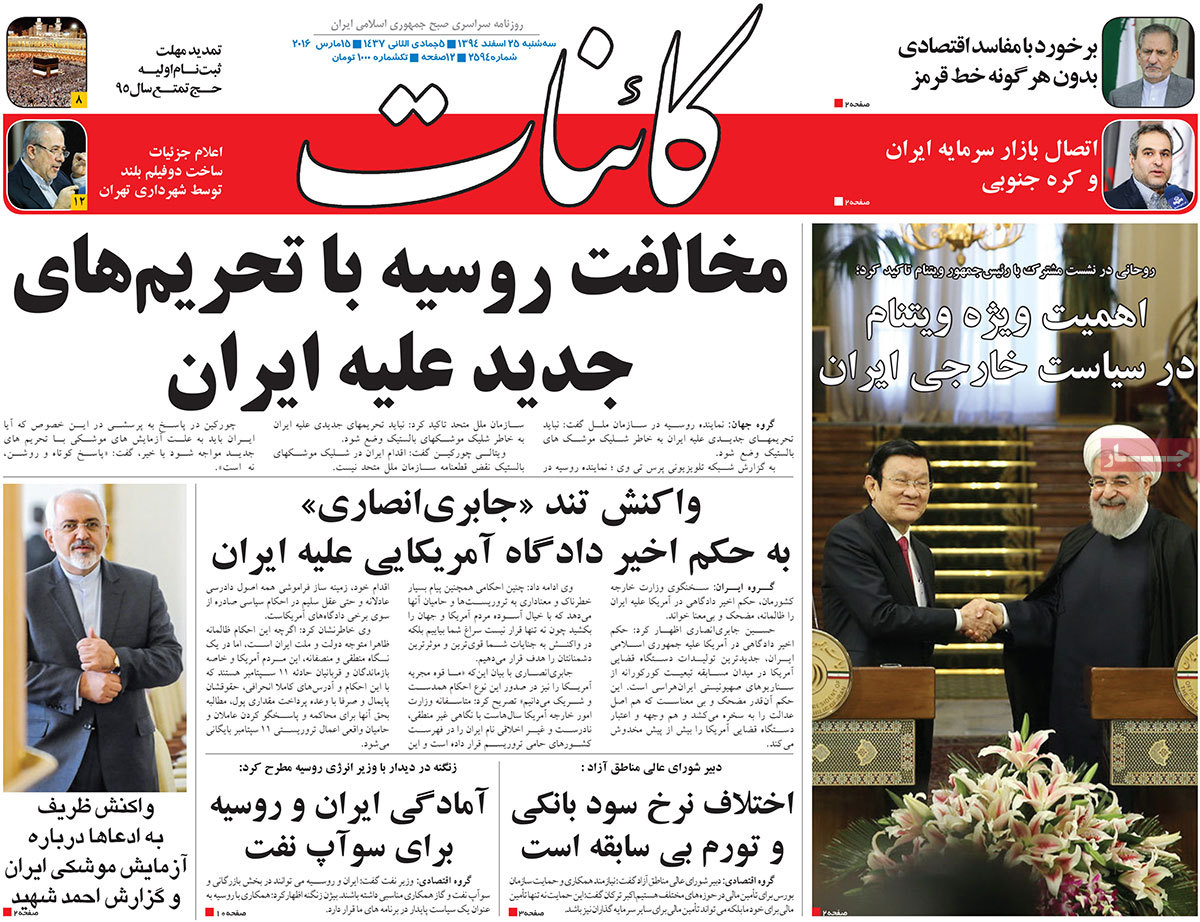
Kaenat:

  1. Iran foreign ministry slams US court’s recent anti-Iran judgment
  2. Iran, Russia ready for oil swap


A look at Iranian newspaper front pages on March 15


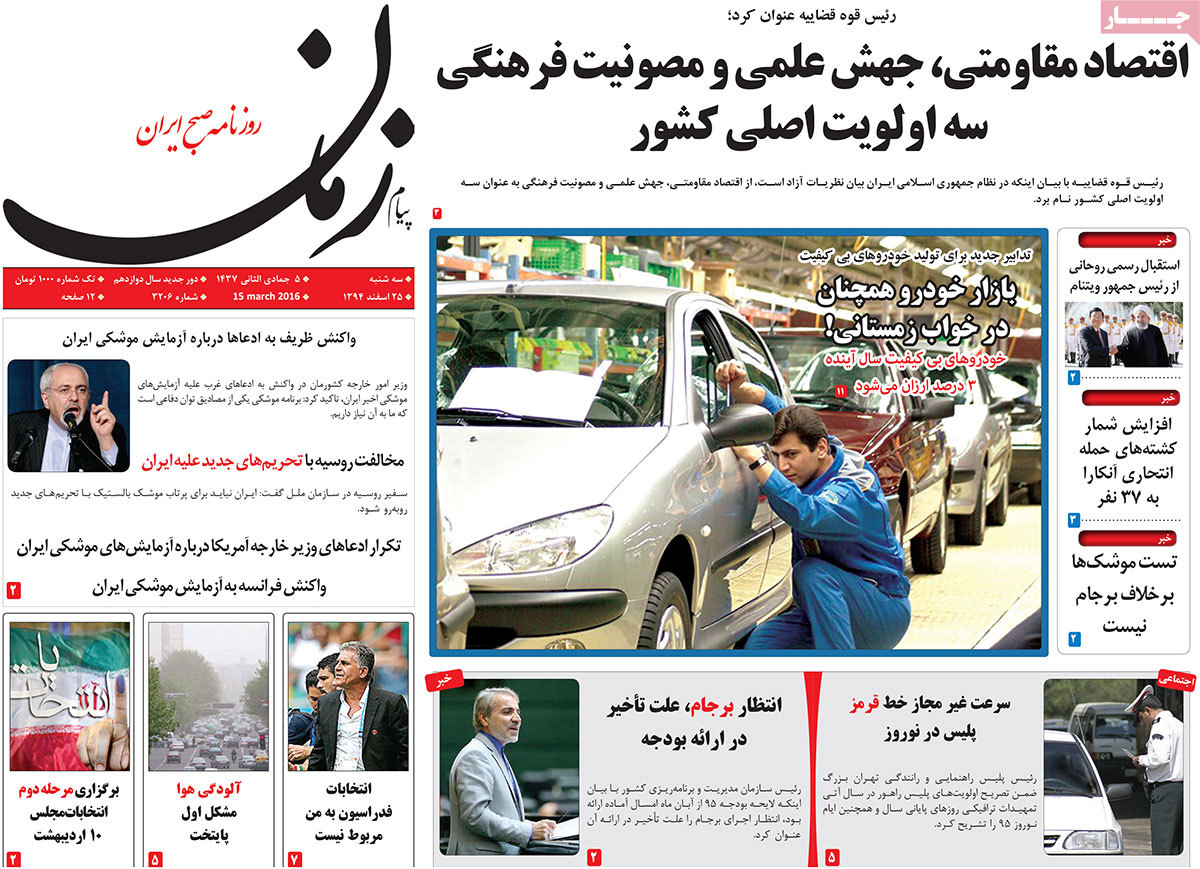
Payam Zaman

  1. Judiciary chief: Resistive economy, scientific growth, cultural impunity are three major priorities of country
  2. Car market still hibernating
  3. Zarif reacts to allegations against Iran missile tests
  4. Russia rules out further sanctions on Iran
  5. Air pollution, Tehran’s top concern


A look at Iranian newspaper front pages on March 15


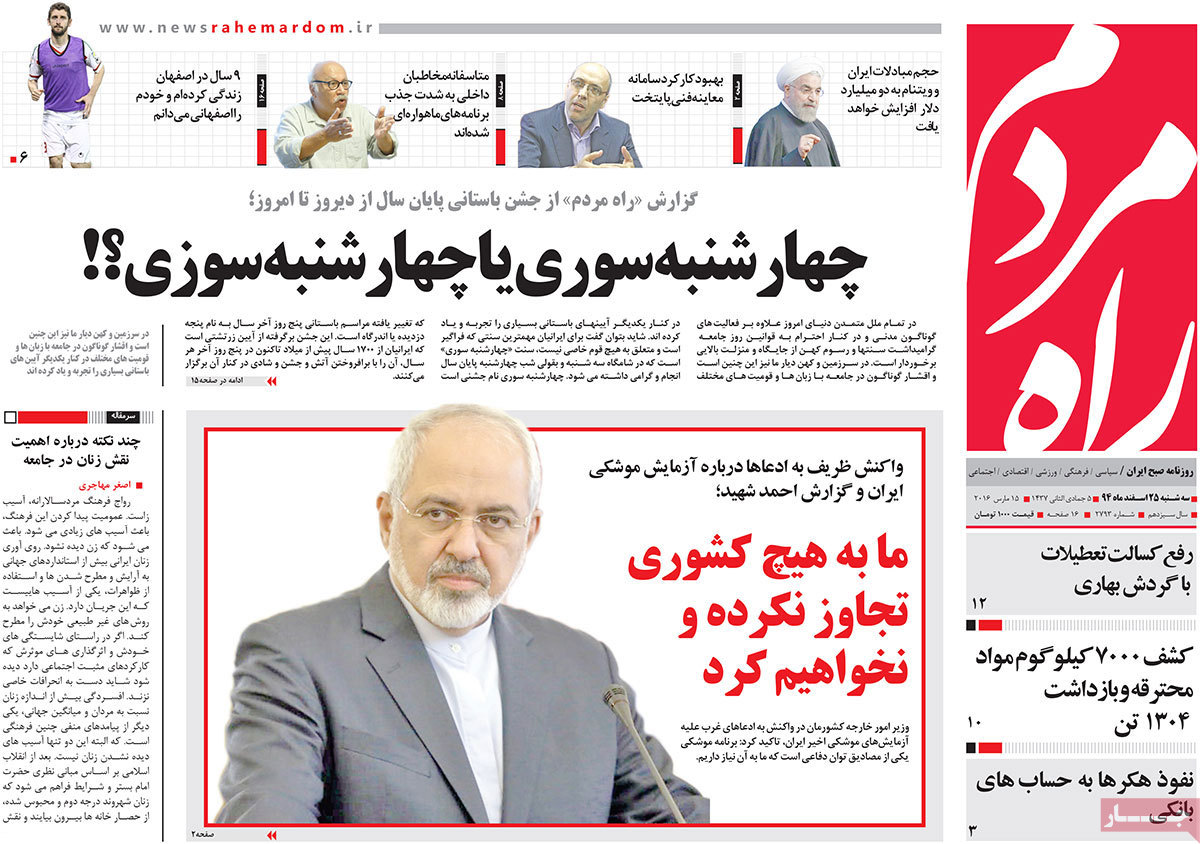
Rah-e Mardom:

  1. Zarif: We have not invaded, nor will invade any country ever
  2. Hackers invade bank accounts
  3. Article: Role of women in society


A look at Iranian newspaper front pages on March 15


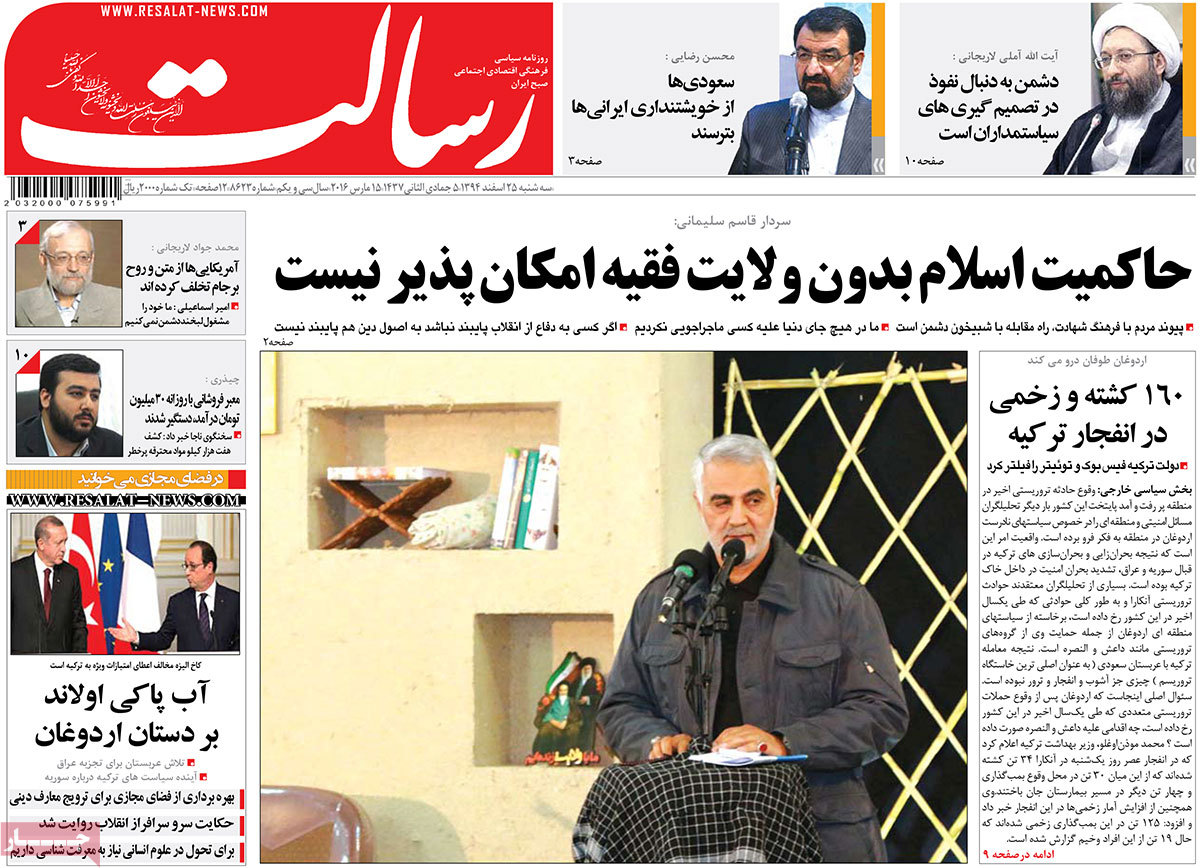
Resalat:

  1. Rule of Islam impossible without Velayat Faqih: Gen. Soleimani
  2. US has violated JCPOA articles, spirit: Mohammad Javad Larijani
  3. Enemy seeks ways to manipulate decision making of politicians: Judiciary chief
  4. Mohsen Rezaei warns Saudis of Iranian self-restraint


A look at Iranian newspaper front pages on March 15


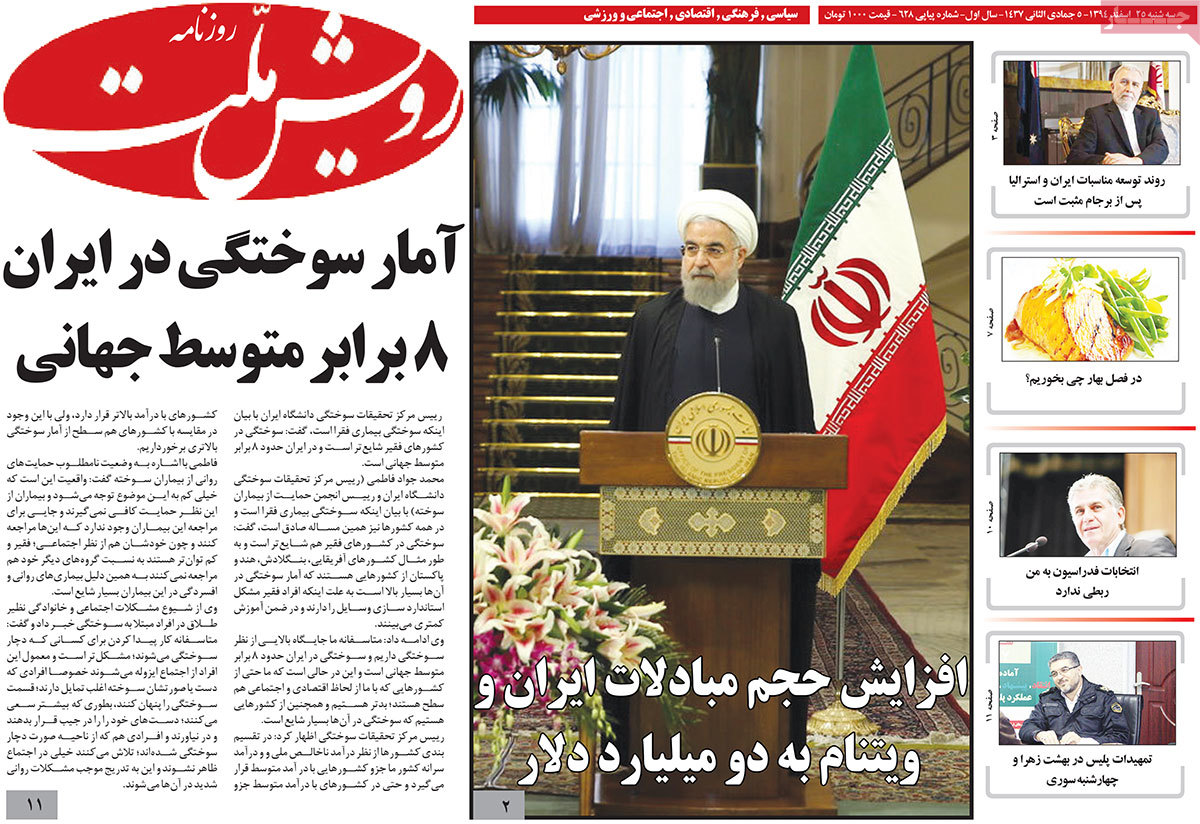
Rooyesh Mellat:

  1. Iran burning accidents 8 times more than world standards
  2. Iran, Australia ties growing in post-sanctions setting


A look at Iranian newspaper front pages on March 15


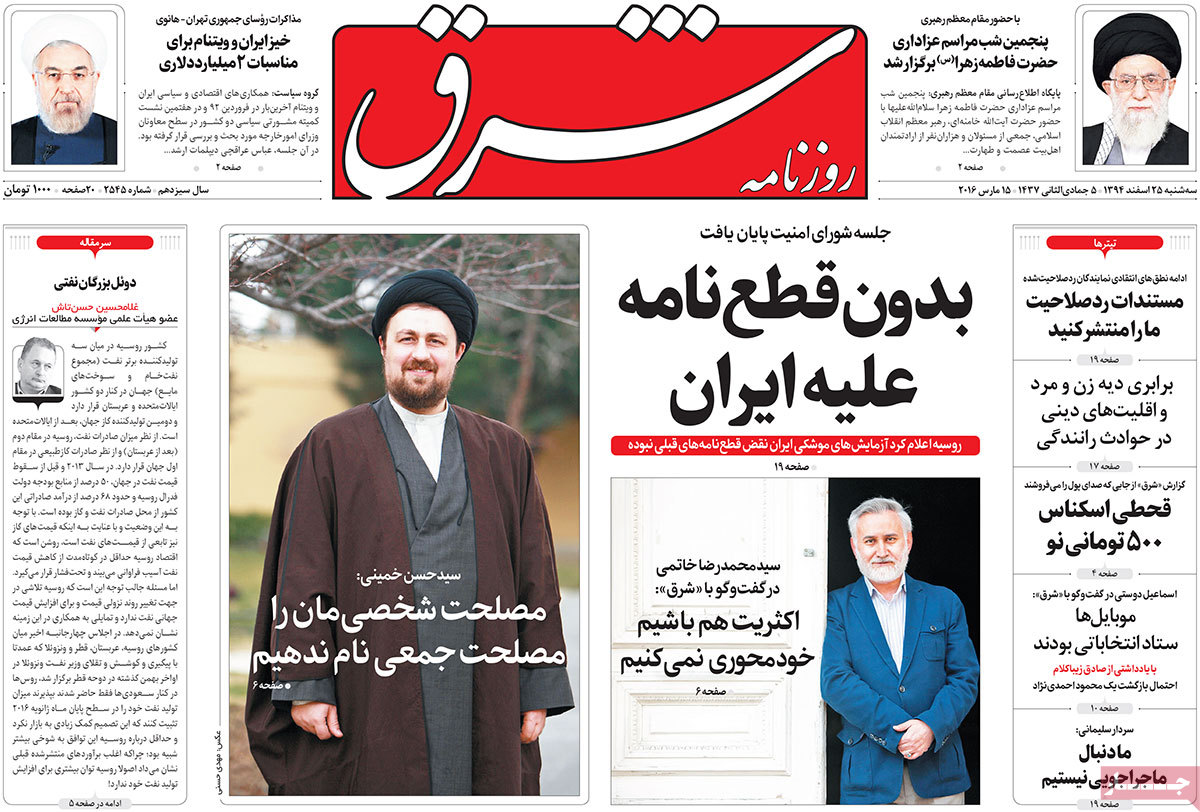
Shargh:

  1. UNSC meeting ends without fresh sanctions on Iran
  2. We are not looking for adventures: Gen. Soleimani


A look at Iranian newspaper front pages on March 15


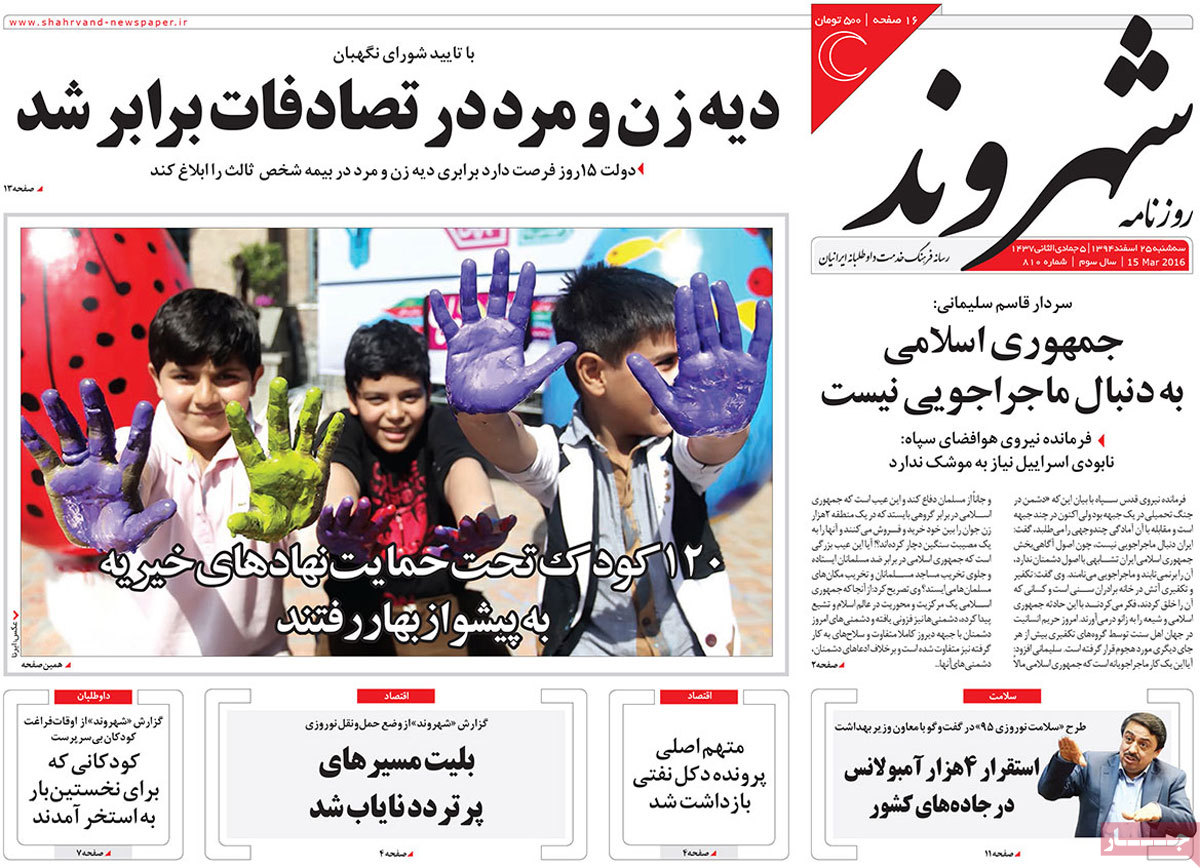
Shahrvand:

  1. Islamic Republic not seeking adventurism: Gen. Soleimani
  2. 4,000 ambulances stationed in Iranian roads


A look at Iranian newspaper front pages on March 15


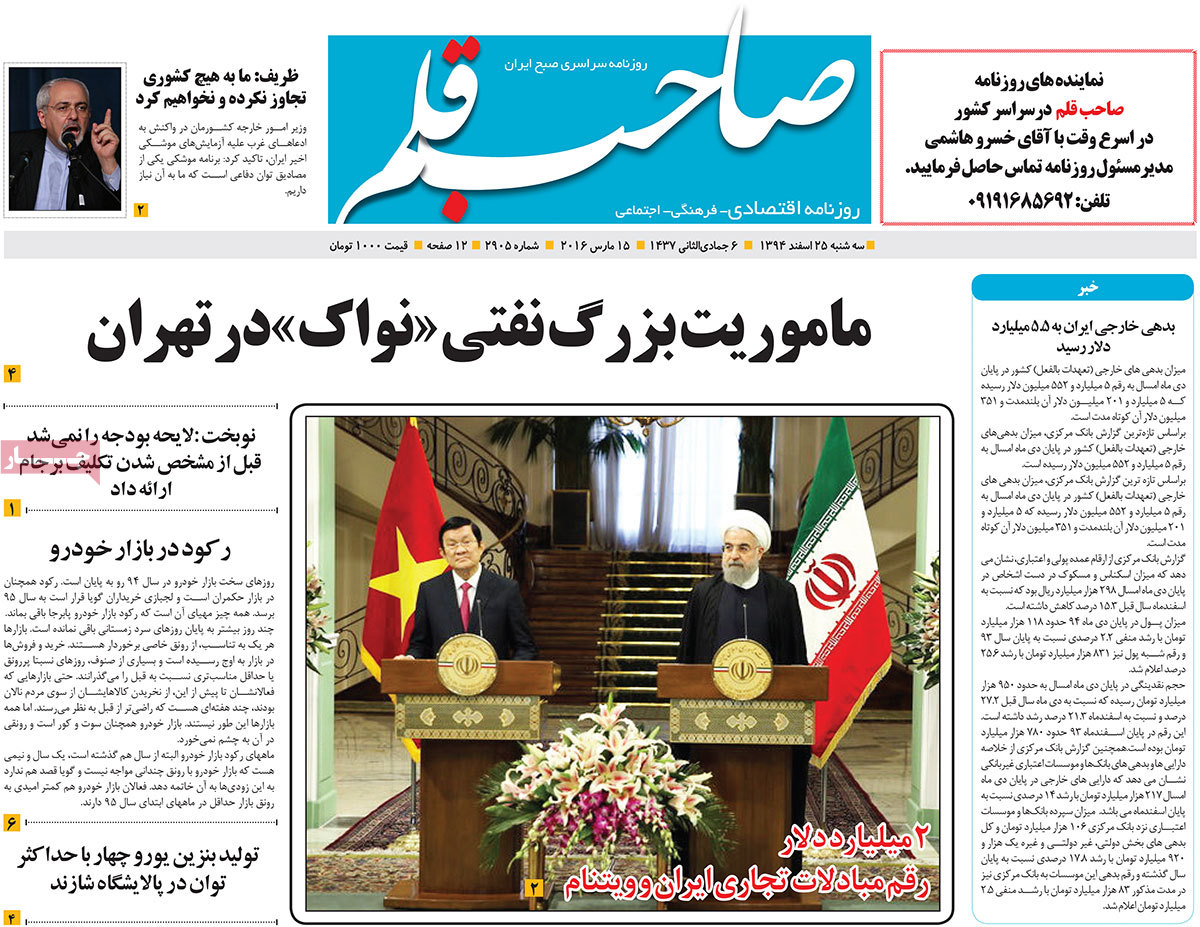
Saheb Ghalam:

  1. Novak’s major oil mission in Iran
  2. Iran foreign debts crosses $5.5bn
  3. Car market bearish
  4. Refinery producing Euro-4 petrol at full capacity


A look at Iranian newspaper front pages on March 15


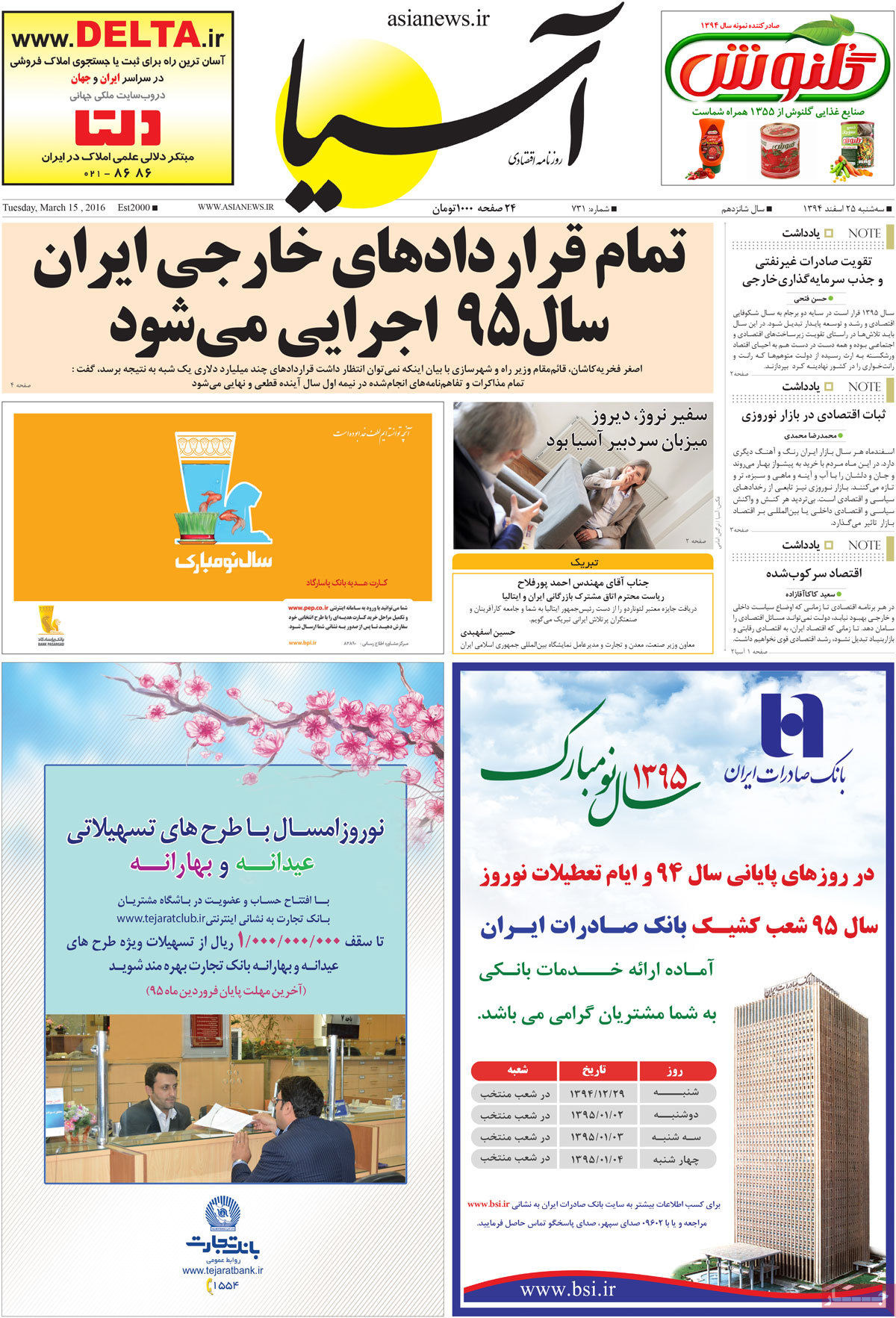
Asia:

  1. All foreign deals to be enforced next year


A look at Iranian newspaper front pages on March 15


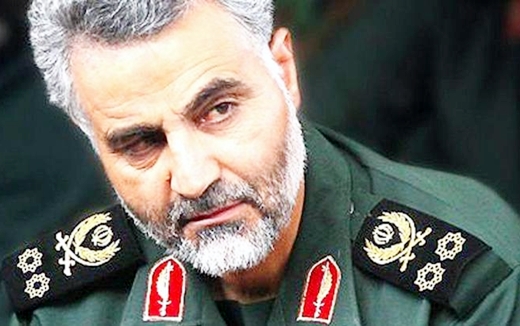
Iran Always Defends Sunnis against Terrorism: General Soleimani

General Soleimani

“The Islamic Republic as a revolutionary country has certain principles which include a wider framework,” General Soleimani noted in an address to a Sunday gathering in the southern Iranian city of Kerman.

“In which country have we tried to convert our Sunni Muslim brothers into Shiite,” General Soleimani asked, adding that Iranians have always shielded their Sunni brothers.

The IRGC Quds Force Commander further pointed to Takfiris (extremists) and Takfirism (extremism), saying that humanity in the Sunni Muslim world is today more than any other place in the world under the attack of Takfiri groups.

Those who created Takfirism thought it would make the Islamic Republic and Shiites kneel down, while it is a fire in the house of Sunni brothers, General Soleimani noted.

“Is this an adventure that the Islamic Republic defends the properties and lives of Muslims? Is this a fault that the Islamic Republic stands against a group whose members buy and sell 2000 young women in a single region; a group that has inflicted a catastrophe on them,” he asked, defending Iran’s assistance to Iraq and Syria in the ongoing fight against terrorism and extremism.

“Is this a big flaw that the Islamic Republic is standing against the anti-Muslim groups and preventing the destruction of Muslim people’s mosques and other holy places,” the IRGC general further asked.

“Since the Islamic Republic has gained a central position in the Muslim and Shiite world, the enmities have also increased,” he said, adding that the hostilities today differ from those in the past, and the weapons used are also different.

“Despite the claims made by our enemies, they are not hostile to Iran because of our adventurism, as we have never been looking for adventure against anyone anywhere in the world,” he noted.

No country in the world is more decent, peace-seeking, and tolerant toward its neighbors than Iran, General Soleimani said, adding that the Islamic Republic has never inflicted any harm on its neighboring countries.

“Although the world is full of tyranny, the Islamic Republic has not aggressed anywhere in the world,” he added.


Iran Never Sought Adventure against “Illegitimate” Saudi Regime

“Nowhere in the Islamic Revolution’s history have we sought any adventure against Saudis and their government, though they are illegitimate, and despite the fact that their people do not have any role in the ruling system and government, and that the government is controlled by a family,” General Soleimani added.

It is rather Saudi Arabia that has always looked for adventure against Islam and Iran, he stressed.

He pointed to the ongoing war waged by Riyadh last March against the innocent people in Yemen, saying, “When an apparently Muslim state bombs the Muslim people in Yemen day and night for one year without any Islamic, legal, and humanitarian consideration, and when it brutally devastates men and women, what does it mean?”

General Soleimani also deplored a recent move by the Persian Gulf Cooperation Council (PGCC) and the Arab League to label the Lebanese Resistance Movement, Hezbollah, as a terrorist group.

“Lebanon’s Hezbollah as an Arab and Islamic party has not started any adventure against Saudi Arabia; it has just done on its own what all Arab armies could not do from 1947 to the end of the 1960s in defending the Arabs. Hezbollah defeated the enemy of Muslims, and that was not an adventure,” he went on to say.


General Soleimani Says Iran’s Independence Is Exemplary

The full independence and democracy in Iran has made it distinguished from other countries, General Soleimani noted, adding that such a difference is not a negative one, but an exemplary distinction.

He went on to say that the Islamic Republic is independent in different fields including its economy, armed forces, and decision-making bodies.


Significance of Velayat-e Faqih (Guardianship of the Jurist)

A prominent feature of the late founder of the Islamic Republic Ayatollah Ruhollah Khomeini was his revival of Velayat-e Faqih as a hidden necessity in the Muslim world, he noted, adding that the need for establishing an Islamic ruling system was emphasized by Imam Khomeini.

“Today, it is not possible that someone protects Islam without defending the Jurist,” the Iranian commander added, reiterating that if one wants to protect Islam and the Muslim world, that would be impossible without Velayat-e Faqih.

The peace in Iran is a result of Velayat-e Faqih, the Iranian general went on to say.

“In Iraq, it was made clear that if it was not for the Islamic Republic and Velayat-e Faqih, the holy shrines would be threatened in the first week (of war),” he added.

Iran has served the Iraqi nation in recent years and sacrificed the lives of its nationals to protect the Iraqi people’s dignity, General Soleimani said.


Iran Now Needs Multidimensional Preparedness

“Today is much more important than yesterday; being prepared today is much more important and difficult than it was in the Sacred Defense (eight-year war with Iraq) era, because preparedness in that era was one-dimensional, while it should be multidimensional today,” IRGC commander said.

“In those days, the enemy was just in one front; now, it is in several fronts, and preparedness against the enemy needs multidimensional preparedness,” he added.


Prerequisites for Martyrdom

The Iranian commander, who was speaking in a conference on Iranian martyrs, also referred to the culture of martyrdom in Iran, saying that a prerequisite to martyrdom is “being a martyr”.

“If someone is a martyr, he would achieve martyrdom, and if someone does not smell like a martyr, he would not be a martyr even if he is killed (in the war),” he added.

“A martyr is someone that when you see him, listen to him or hang out with him, you smell martyrdom from him,” General Soleimani went on to say.

He further noted that abandoning one’s earthly belongings is one of the pillars of being a martyr.

Staying loyal to one’s commitments is also a major condition for being a martyr, the IRGC Quds Force Commander added.

Today, one can say if someone is not committed to defending the Islamic Republic and the Islamic Revolution, he or she is not committed to religion, he added.

“Today, protecting the Shiite Islam, the basis of religion and its principles, protecting Islam and Islamic principles is different from the past, because major changes have been made in the world,” General Soleimani noted.

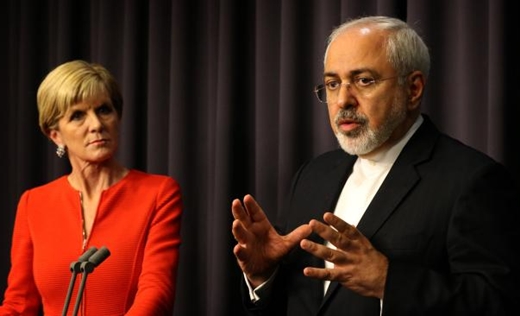
Zarif calls for Iran-Australia cooperation against extremism

The Iranian foreign minister made the remarks during a joint press conference with his Australian counterpart Julie Bishop at the Parliament House in Canberra on Tuesday.

“We share the view that Daesh is a common enemy, nobody can look at Daesh as a possible leverage. We all need to cooperate together to fight Daesh and extremism,” he said, adding, “We have seen instances of that type of extremism creating crimes across the world from Sydney to San Bernardino and everywhere in between.”

The Iranian foreign minister also noted that the removal of anti-Iran sanctions has paved the way for further economic cooperation between Iran and Australia.

“We are happy that after the removal of sanctions Australia took the measures that were necessary, the legislation that was necessary were adopted here in Australia so now the road for cooperation between Iranian and Australian business communities is now open,” he said.

Broaching on Iran’s recent missile tests, he stressed that the launches were purely for self defense.

“We will not use those missiles against anybody except in self-defense. We challenge those who question our missiles program,” he stated.
For her part, Bishop congratulated Iran on the upcoming Iranian calendar New Year (starting on March 20), the successful parliamentary and Assembly of Experts elections and the conclusion of Iran’s nuclear deal with the world powers.
She also stressed that the battle against terrorism in Iraq and Syria is a matter of “common interest” for both countries.

Zarif is in Australia on a two-day visit on the last leg of his six-nation Asia-Pacific tour. He has met with Trade Minister Steven Michele Ciobo and held talks with the country’s Prime Minister Malcolm Turnbull.

The Iranian foreign minister’s meeting comes as the Australian foreign minister paid an official visit to Tehran in April, 2015 for the first time in some 12 years. She had invited her Iranian counterpart to visit Australia back then.