Wednesday, December 24, 2025
Home Blog Page 4457

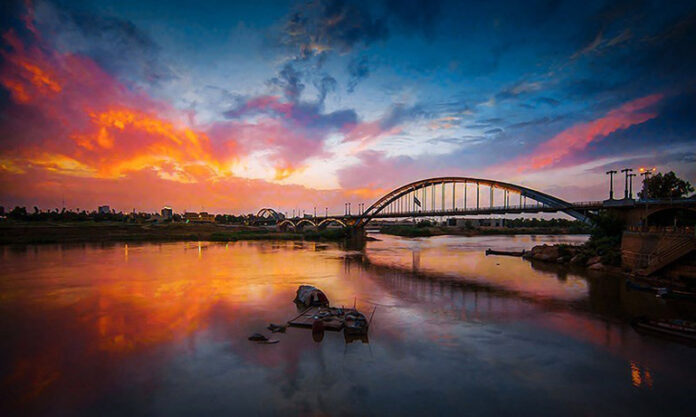
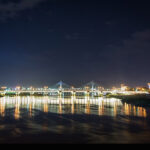
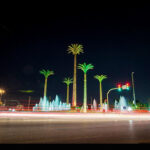
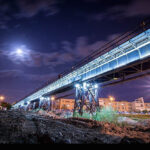
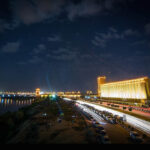
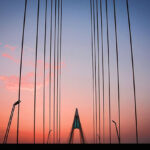
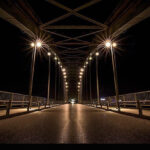
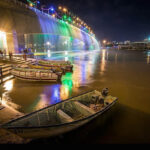
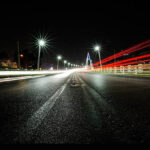
Iran’s Beauties in Photos: Nights of Ahvaz

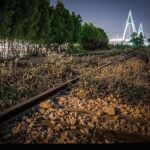
The southwestern Iranian city of Ahvaz, often known in the media for its heavy dust pollution, provided its visitors during the New Persian Year holidays (Nowruz) with clean and fresh air. Many people enjoyed the beautiful nights of Ahvaz along the Karoon River.


Iran Petchem Output Up at 46 mt/y

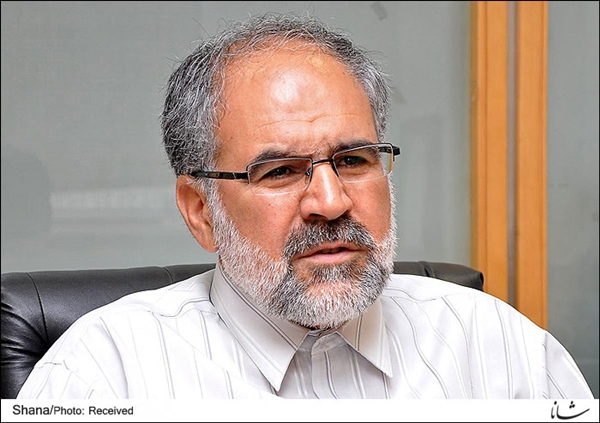
Ali-Mohammad Bossaqzadeh told Shana that 19 million tons of the products were exported worth $9.5bn.

He hoped that NPC production and export will increase in the current year with the increased petchem feedstock supply and the launching of new plants.

Last December, he told Shana that NPC is ready to cooperate with foreign investors in order to develop the petrochemical industry.

He said Iran’s coastal lines including the Oman Sea basin are of interest to foreign investors to develop petrochemical projects. “A major European firm is ready to invest 8bn euros in a petrochemical chain,” he added, but did not identify the company.

NPC hosted the Iran Petrochemical Forum (IPF 2015) on December 13-14 in Tehran in which some 97 foreign companies from 25 countries participated – an increase of 120 percent compared to IPF2014.

More than 1500 representatives from domestic and foreign firms including Australia, Azerbaijan, Canada, Denmark, France, Germany, Japan, the Netherlands, Russia, and US are took part in the two-day event.

Participants in the IPF2015, one of the world’s most prestigious events representing the petrochemical industry, discussed the core issues that the industry is facing with the emphasis given to Iran.

It provided a platform where stakeholders and key players in the global petrochemical sector met to exchange knowledge and address the latest advancements and best practices which are capable of shaping the future of the industry.

Following the historic nuclear agreement, Iran used the event to unveil its post-sanctions projects and plans for further expanding the Iranian petrochemical output capacity from the current 60 million tons/year to over 138 million tons/y in 2020 and eventually to 180 million tons/y by 2025 with an investment of over $80bn.

NPC seeks to use Iran’s natural gas reserves as raw material to produce propylene and its derivatives to provide feed for the expansion of local downstream industries.

Iran, Austria ink 2bn euro deals for cooperation

Member of the Board of Representatives of Tehran Chamber of Commerce, Industries, Mines and Agriculture Hamid-Reza Salehi said the projects will also cover railway transportation, auto spare part manufacturing, agricultural products, hospital establishment in Iran and export of Halal meat to Austria from Iran.

Salehi said the deals were inked during recent visit of a 110-member delegation of Iranian private sector to Austria last week.

He said Iranian and Austrian banking officials also agreed upon banking cooperation and insurance coverage of the exports risks.

Salehi went on to say that the Iranian parties during their visits welcomed finance of projects in Iranian territory.

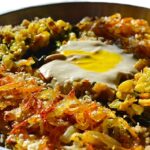
Give Kashke Bademjan a shot

kashk-bademjan

Iranian dishes excel at making people who have never tried them fall in love at the first bite. The unique combination of spices and flavorings with a wide range of vegetables, herbs, fruit, grains, nuts, meat and most importantly rice only needs the wand of Iranian cuisine to perform magic and leave an explosion of unforgettable tastes in the mouth. Their delectable smell, delicious look and perfectly pleasant taste make it almost impossible to resist them. To share the gastronomic delights of Iran, IFP has decided to file a series of recipes for mouth-watering Iranian dishes.

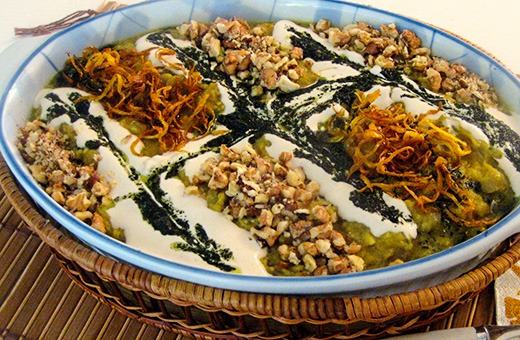
Kashke Bademjan is an irresistibly delicious Iranian spread whose main ingredients are whey – Kashk – and eggplant – Bademjan. Its easy recipe prompts even rookie cooks to try it out and be extremely pleased with the outcome. The dish can be either served with flatbread as an appetizer or as a light supper.


Ingredients:

Serves 4

1. Six eggplants – Peel the eggplants, cut them in half lengthwise. Sprinkle the halves lightly with salt, so that both sides of the eggplants are thinly coated with salt. Let the eggplants rest in a sieve for at least an hour – if you are hard pressed for time – to allow the brownish liquid to come out of them and pass through the sieve. This will get bitterness out of eggplants. Afterward, fry them on both sides over a low heat. Eggplants tend to absorb too much oil, so it is very important that you fry them over a low temperature and avoid pouring too much oil at once into the frying pan, because if you do, a lot of oil will later come off fried eggplants and you will end up having a too oily dish. To get rid of the excess oil in fried eggplants, you can leave them on paper towels.

2. Two to three large onions which should be peeled and sliced.

3. One small bulb garlic whose cloves should be peeled and sliced.

4. Two heaped tablespoons ground dried mint leaves

5. One cup lightly broken walnuts

6. One cup whey

7. Salt, ground black pepper and turmeric to taste

8. ¼ teaspoon ground saffron * (optional) – can be used to garnish the dish. If you decide to use saffron, you will need a pestle and mortar to grind it into powder; the powder should not be prepared much in advance, because it will lose part of its aromatic smell. You had better brew it with a little hot water to have better color and aroma. A small amount of whey can be mixed with brewed saffron to be used as a garnish.

9. Oil

10. Water

How to cook Kashke Bademjan

1. Fry the eggplants as it was mentioned earlier. You can purée the fried eggplants with a hand blender or in food processor.

2. Fry the onions in a frying pan with salt, ground black pepper and a liberal amount of turmeric until they turn golden brown. Divide them in autocad. One part will be later mixed with other ingredients and the other should be put aside to be used as a topping.

3. Fry the sliced garlic with the same spices over a medium heat. Garlic tends to get burnt very quickly, so you need to stir it frequently. As soon as the slices turn golden, spoon them out of the pan and put some aside to be used later as a garnish. The rest is going to be mixed with other ingredients.

4. Pour a good drizzle of oil into the pan and add the ground dried mint leaves to it. Turn the heat to its lowest setting and leave the mint in hot oil for one or two minutes. If you get the mint burnt, it will get a bitter taste. The mint powder is sensitive to the heat, so you need to be careful not to burn it. Like onion and garlic, you need to divide the fried mint into two parts.

5. Put the eggplant purée in a pot. Add pepper and turmeric to it to taste. Put a few spoons of whey aside to be used later as a garnish over top. Dilute the rest of the whey with ½ cup water and pour it over the mashed eggplants. Put the pot over a medium heat and mix the mixture well. Turn down the heat and let them mix well. You need to stir it from time to time. If you find the mixture too thick, you can add a little more water to it. Give the mixture about 10 to 15 minutes to get well blended. Afterward, add fried onion, garlic and mint to it and then get the pot off the burner.

6. Add the walnut pieces to the mixture and give it a good stir. Place the mix on a platter and garnish it with fried onion, garlic, mint, whey, saffron and walnut. The dish is served with flatbread.

Bon Appétit!

‘Germany’s VW close to Iran auto deal’

Iran’s Ambassador to Berlin Ali Majedi said Volkswagen has been looking into the Iranian car industry for the past year and are closer than ever to a final investment decision.

Majedi said the company’s management have been specifically studying the capabilities of several local carmakers and are now trying to choose between only two companies.

He did not name the companies but some reports say they could be Kerman Motor and Mammut Group.

Volkswagen announced last September that it is grooming its Skoda brand for the Iranian market.

“Iran is a very interesting market with great opportunities,” VW brand R&D chief Heinz-Jakob Neusser said at the time.

VW will conclude an assessment of the country’s auto market by the end of the year, Reuters quoted him as saying.

Neusser said it is still too early to say which product VW could use to go in with “but of course we see the potential”.

Reuters further quoted a company source as saying that VW was considering a move into Iran with the mass-market Skoda and Seat brands.

Volkswagen’s last venture in Iran involved its production of the Gol compact with Iran’s Kerman Khodro before withdrawing under US pressures.

Other German automakers including Mercedes have already started talks to form partnerships with Iran Khodro – the leading Iranian car giant.

The media in Tehran reported in mid-March that a commercial deal between Iran Khodro and Mercedes is imminent.

In January, the German carmaker said it had signed letters of intent with local partners Iran Khodro Diesel and Mammut Group to arrange a “comprehensive re-entry” into the country.

The areas of cooperation include a joint venture for local production of Mercedes-Benz trucks and powertrain components plus the establishment of a sales company for Mercedes-Benz trucks and components, it said then.

Daimler also plans to return as a shareholder in the former engine joint venture Iranian Diesel Engine Manufacturing Co. (IDEM), based in Tabriz.

Leading carmakers are seeing a pent-up demand for cars in Iran, a country of more than 80 million people, which is emerging from years of sanctions

EU banks start re-engaging with Iran

The Financial Times reported on Sunday that Belgium’s KBC, Germany’s DZ Bank and Austria’s Erste Bank have started handling transactions on behalf of European clients doing business in Iran.

Nevertheless, bigger European banks remain on the sidelines, “scarred by a string of multibillion-dollar fines for earlier sanctions breaches in Iran”, the FT added.

KBC, Belgium’s biggest bank, has announced that it had “decided to support its well-established customers in its home markets” of Belgium, the Czech Republic and Slovakia “in their genuine trade with Iran, respecting all EU and US sanctions”.

“Such support is restricted to trade only and always subject to an in-depth screening of each transaction and all parties concerned,” FT has quoted KBC as saying in a statement. “To this effect KBC indeed has developed correspondent relationships with several state-owned and private Iranian banks.”

The daily has further quoted DZ Bank as announcing in a statement that it had started handling payments in euros via Iranian correspondent banks.

“We have started on-boarding Iranian banks in terms of trade finance co-operation, according to standard procedures. Going forward we might also seek to build correspondent banking relationships,” the FT had quoted DZ Bank as saying in its statement.

Both banks, it added, have emphasized that they have “checked” every payment involving Iran for sanctions compliance.

Indications had been specifically growing lately that a legacy of hefty fines by the US on banks that are caught for violating Iran sanctions is deterring businesses from trading with Iran.

Reports said last month that corporate leaders have already become frustrated over this even though the sanctions removal against Iran would have naturally meant the doors are open for investments in Iran.

The failure specifically by European banks to play their due role in business with Iran has already provoked reactions from several EU leaders and business leaders.

British Prime Minister David Cameron in early March rebuked Barclays for hampering companies trying to export to Iran.

Also, Airbus which sealed an agreement with Iran in January to sell over 100 new planes to the country, has called on EU banks to dispel fears of doing business with Iran.

Golden Train of European Tourists Due in Iran Tuesday

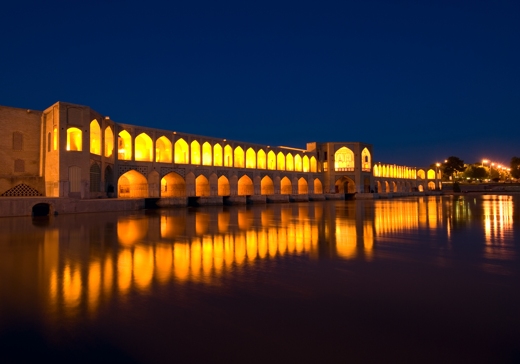
Isfahan-Sio Se Pol

The Directorate said the Golden Train will enter Iran from the northwestern Razi border point in Tabriz, the provincial capital of East Azerbaijan.

Its European passengers will first arrive on a plane in Tabriz and will then use the train to continue their journey into the Iranian cities and towns.

They are scheduled to visit Zanjan, Kashan, Isfahan, Sadat Shahr, Shiraz, Yazd, and Mashhad.

Due to security conditions in Turkey, the train will arrive in Iran without any passengers first

The first and the second Golden Trains brought European tourists to Iran last year.

This comes as Iran plans to launch the electronic visa (e-visa) program to further boost tourist arrivals.

Head of Cultural Heritage, Handicrafts and Tourism Organization Masoud Soltanifar said electronic visa for tourists will be issued officially by the end of 2016.

“Iran issues 30-day visa for tourists from 190 countries upon arrival at its airports. However, that could be extended to another 15 days,” he said last week.

“We seek visa waiver programs with a number of countries to boost tourism,” he said, adding that tourists will soon be able to enter Iran without hassle as they can apply for visa online and print the e-visa on their own.

According to the official, the e-visa program is the key initiative to help accomplish the government’s goal of further expanding and developing the tourism industry, as well as strengthening diplomatic relations with other nations.

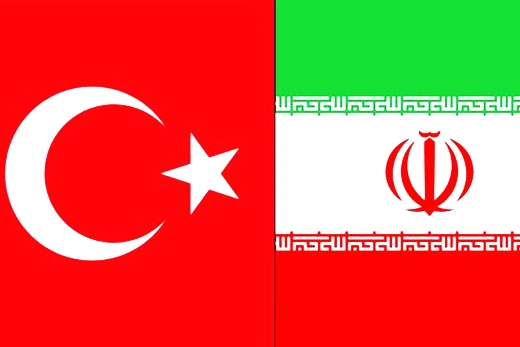
Iran, Turkey to trade with national currencies

Meeting with Turkey’s ambassador to Tehran, Deputy Minister of Industry, Mine and Trade Valiollah Afkhami Rad said Iran and Turkey can conduct bilateral trade using their national currencies although removing financial and banking barriers remains as the first step in the development trade ties.

“The two countries have always held friendly relations maintaining trade and economic ties in various periods,” highlighted Afkhami Rad expressing hope that more Turkish investors will take part in Iran in view of the gradual removal of international sanctions.

The official deemed safe cards intended for glass and petrochemicals imports as another obstacle to trade between Iran and Turkey urging the neighboring country to make revisions in this regard.

Iran’s deputy industry minister voiced hope that the upcoming Iran-Turkey Joint Commission in mid-April on preferential trade between the two sides will raise the requests of both sides reaching a final decision.

Afkhami Rad went on to note “launching direct air lines between Iranian and Turkish cities like Van, Izmir and Ankara marks another step towards facilitating the trade between the two countries.

Turkish Ambassador to Tehran Reza Hakan Tekin, for his part, pointed out that two high-ranking Turkish delegations will travel to Tehran in the next year expressing hope that the decisions to be made in the upcoming joint meeting escalate trade ties between Tehran and Ankara.

“Turkey pursues further cooperation with Iran and calls in the addition of some goods in preferential trade list between the two sides,” stressed Hakan Tekin saying “we seek to take giant steps in order to reach operational and tangible outcomes in the ties between Iran and Turkey.”

Iran has established relations with new European banks

Hossein Yaqoubi, international affairs’ director at Central Bank of Iran (CBI), told reporters that the Iranian banks are not allowed according to the directions to establish ties with small foreign banks.

Relations with big foreign banks are on the agenda, he added.

Iran and the six world powers reached a landmark nuclear agreement, known as the Joint Comprehensive Plan of Action (JCPOA), on July 14, 2015.

As anti-Iran sanctions were lifted on January 16, ‘Implementation Day’ of the JCPOA was announced on that day.

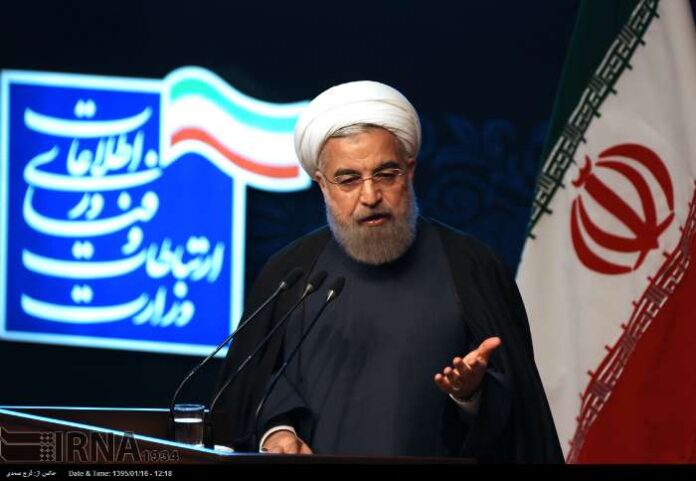
Rouhani: Iran’s trade surplus positive for first time in 37 years

President Rouhani made the remarks in a meeting attended by minister and several senior officials of Communications and Information Technology Ministry in Tehran.

He said the non-oil exports surpassed the oil exports during the last Iranian calendar year ending on March 20, 2016.

President Rouhani also put the amount of non-oil and oil exports last year at $42 billion and $41 billion respectively.