Wednesday, December 24, 2025
Home Blog Page 4456

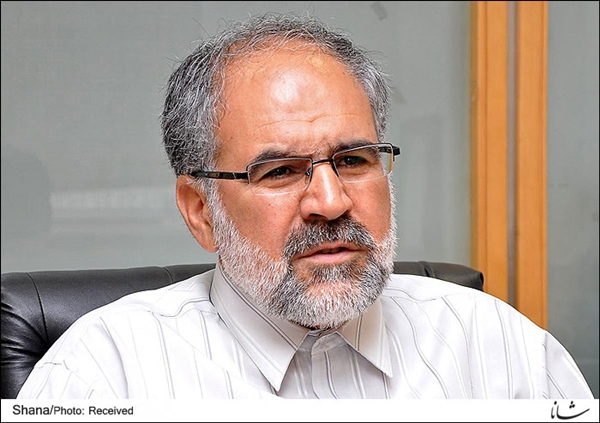
Iran plans joint oil refinery in Spain

Talking to IRNA, Kazemi said Brazil and Spain have voiced the willingness to cooperate with Iran in constructing oil refineries.

‘Once the contract is finalized and Iran makes 50-percent investment in Spain and Brazil, they would buy all of their required crude oil from Iran,’ he added.

Kazemi reiterated that a consortium will be established by Iranian private section aimed at making investment in oil refineries.

Touching upon Iran’s participation in renovation of South African refineries, he said they have presented their proposals but the Iranian side has not done any measures yet.

On Iran’s participation in buying several refineries in Greece and India, Kazemi added the petroleum ministry would follow up such plans, but he is not aware the details of the plans.

Several months ago, Kazemi said Iran is mulling a plan to build or buy refineries in other countries in order to guarantee long-term sale of its crude oil.

He noted that investing in overseas refineries is one of the most common ways used by oil producing countries to boost crude exports, saying, “Therefore, the Iranian Petroleum Ministry is planning to invest in refineries in countries whose crude oil is being supplied by Iran.”

At present, some littoral states of the Persian Gulf, which are among world’s major oil exporters, own a remarkable number of oil refineries in American, European and Asian countries, which have greatly increased their clout in global energy markets.

Iran has likewise received proposals for buying or building overseas refineries in Asian, European, African and American countries, none of which have been finalized yet.
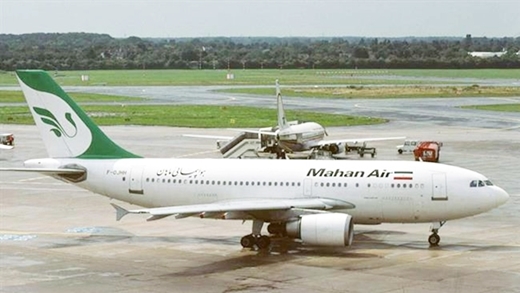
Saudi Arabia suspends Mahan Air over ‘safety’

Saudi Arabia’s General Authority of Civil Aviation (GACA) said Monday that Mahan Air was banned due to violations of local safety rules.

The GACA said in a statement that several violations related to airline safety had been committed by Mahan Air, “prompting the suspension of licenses granted to the company.”

“This decision comes in the context of the GACA (regarding) the safety of passengers and to preserve their lives,” Reuters reported.

Trade between Iran and Saudi Arabia has mostly been small and each year only Iranian pilgrims travel to the kingdom for the hajj pilgrimage.

Saudi Arabia severed diplomatic relations with Iran on January 3 following demonstrations held in front of the Saudi embassy in Tehran and its consulate in the northeastern city of Mashhad by angry protesters censuring the Al Saud family for the execution of prominent Shia cleric Sheikh Nimr al-Nimr in Riyadh on January 2.

Nimr’s execution caused international outrage and sparked anti-Saudi demonstrations in many countries.

Several countries, including Pakistan, Russia and China, have voiced readiness to mediate between Iran and Saudi Arabia to ease up their tensions.

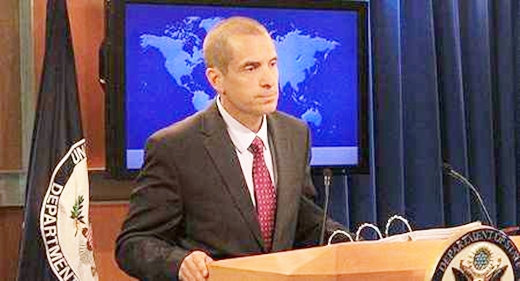
US does not plan to grant Iran access to US financial system: Toner

‘The administration has not been and is not planning to grant Iran access to the US financial system,’ State Department spokesman told reporters at a briefing on Monday, Reuters reported.

On Friday, President Barack Obama said the United States was not looking to permit the use of its financial system for dollar-denominated transactions with Iran, and said foreign companies could work through European banks.

CBI officials have declared that cutoff of Iran’s ability to access the US international financial system happened before imposition of sanctions against Iran under the pretext of its peaceful nuclear program.

Italian PM to Visit Iran on April 12-13: Report

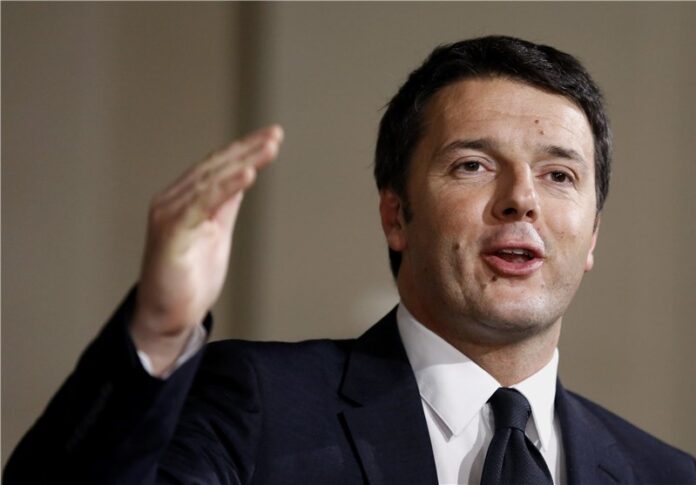
The Italian premier’s office released a statement on Monday, saying Renzi will “make an official visit to Iran on April 12 and 13″, Gazzetta del Sud news website reported.

Renzi’s visit will come after Iranian President Hassan Rouhani’s trip to Rome in late January.

Iran and Italy signed deals worth up to 17 billion euros ($18.42 billion) during Rouhani’s 48-hour stay in Italy.

Italy was one of Iran’s leading economic and trade partners before sanctions when annual exchanges amounted to 7 billion euros compared with $1.6 billion euros now.

All nuclear-related sanctions imposed on Iran were lifted after Tehran and the Group 5+1 (Russia, China, the US, Britain, France and Germany) reached a nuclear deal on July 14, 2015 and started implementing it on January 16.

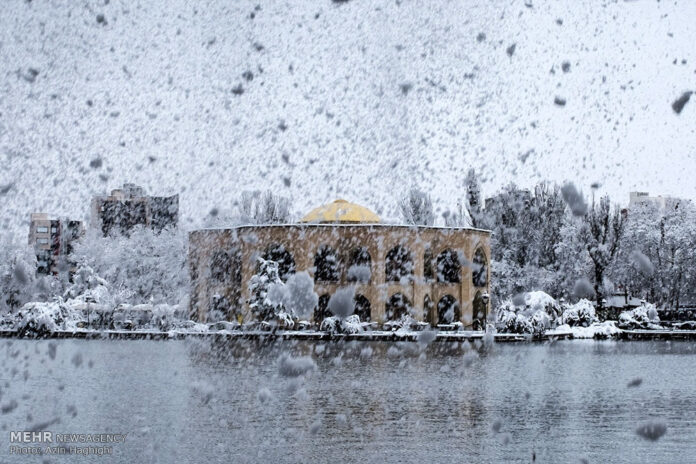
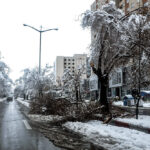
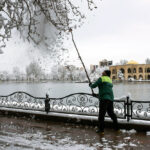
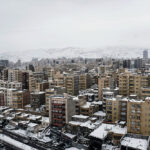
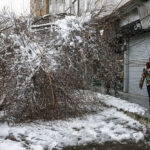
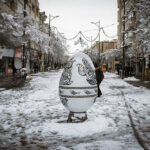
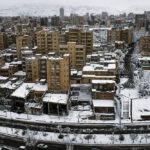
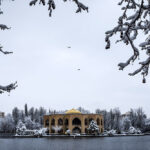
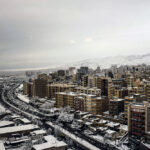
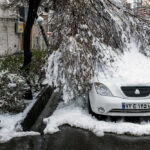
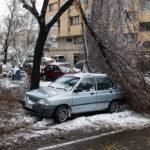
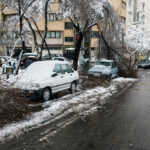
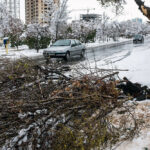
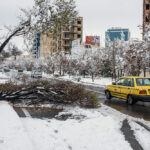
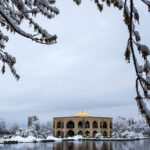
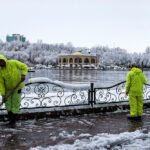
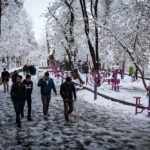
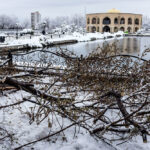
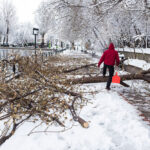
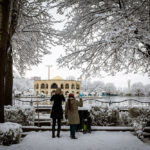
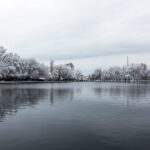
Spring snow in Tabriz

Heavy snowfall on Monday broke down some of the trees in the streets and in various parts of the city of Tabriz, in East Azerbaijan province, and caused damage to power lines leaving them without heat or electricity.


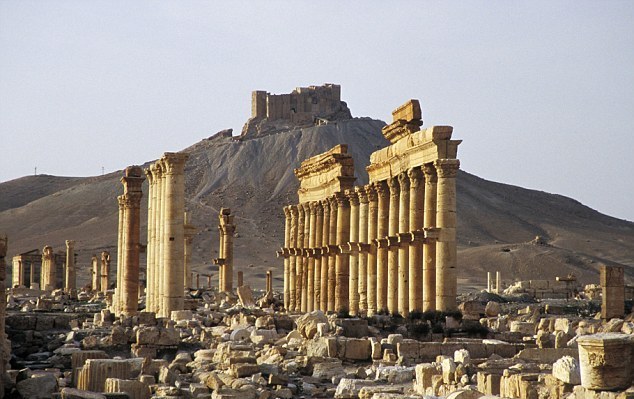
Iran ready to participate in rehabilitation process of Palmyra archeological sites: official

Head of Iran’s Cultural Heritage, Handicrafts and Tourism Organization, Masoud Soltanifar stressed his country’s readiness to participate in the process of restoring and rehabilitating the archeological and cultural sites that were demolished by the terrorists in Syria, Particularly those in Palmyra.

Iranian News Agency quoted Soltanifar as saying in a letter he sent Monday to Director-General of the United Nations Educational, Scientific and Cultural Organization (UNESCO) Irina Bokova that Iran is ready for conserving and restoring the movable and immovable Syrian cultural heritage endangered, particularly that in the archeological city of Palmyra.

On 27th of March, Director General of Antiquities and Museums Directorate said that primary ideations for a rehabilitation plan to restore glory of Palmyra was set up after the archeological city had been cleared of terrorists.

Camera Trap Captures Iranian Cheetahs

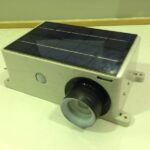
Ehsan Soleimani, an MSc electrical engineering student and a member of the Iranian Cheetah Society, built the system as his MSc thesis project.
In order to determine their effectiveness, he has offered his cameras to the society, who installed them in Darreh-Anjir Sanctuary (meaning ‘fig valley’) for the purposes of his project.
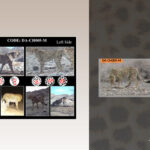
The traps proved very useful, and captured pictures of cheetahs in the sanctuary. The cameras took photos of Ardalan and Arsalan, two of three cheetahs in the valley.

“The system is equipped with a 20 megapixel camera and runs on solar power, which keeps the system on 24/7,” said Soleimani about his invention.

The whole system weighs less than a kilogram and can hold up to 128GB of data.


A Dutch Couple’s Recipe for Iranian Kashk-e-bademjan

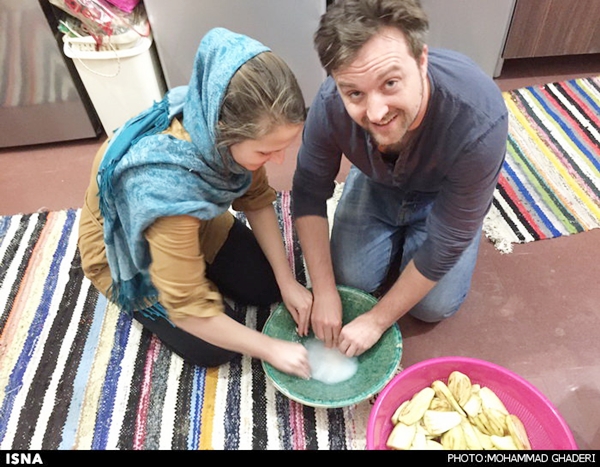
As reported by ISNA, Anne, a Dutch cinema actor who thinks his name is quite feminine, and Helen, who is a doctor, insisted on making this journey even though their visa process took longer than they expected.

They started their journey from Rasht, and after visiting Masouleh and experiencing Gilaki food (from Gilan province) and loving Morgh-e-torsh and Fesenjan, they moved toward Semnan and Damghan. The Dutch couple tried Kashk-e-bademjan on the first day of their stay in the village of Mesr, and immediately decided to learn the local recipe for it.

They say, “There are plenty of vegetarian options in Iranian cuisine, and since we have many vegetarian friends back in the Netherlands, we have decided to learn how to cook some of them, like Kashk-e-bademjan, which is extremely tasty.”

Anne told the ISNA journalist just how familiar he was with Iranian cinema, saying, “I follow Iranian cinema, and enjoyed watching Asghar Farhadi’s A Separation. I believe Iranian cinema has a lot to say.”

He then compared it to Bollywood cinema: “Even though India spends a lot of effort on spreading its cinema, I have never followed Bollywood movies.”

They talked about their reasons for traveling to Iran, and said, “Our friends have traveled to many countries around the world, and they said many good things about Iran. We also have Iranian friends back in Holland. For these reasons, we decided that we must see Iran with our own eyes.”

They will visit Isfahan, Shiraz, Yazd and Kerman in their one month stay in Iran.

This Dutch couple later will leave Iran to go to India for two weeks before travelling to Thailand and Mongolia. They believe that even though all Asians are very hospitable (especially East Asians), Iranian hospitality is even greater.

Anne added, “During our journey in Gilan province, every time we tried to tip the people working in the hotels or restaurants we were staying in, they would refuse it. They said that we were their guests and that they couldn’t accept it.”

Anne and Helen have already decided that they will come back to Iran, because they believe that Iran has a lot to see.

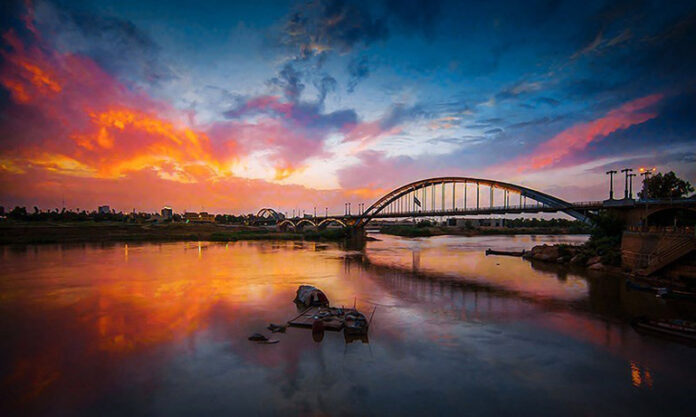
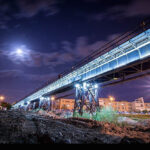
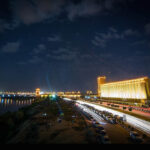
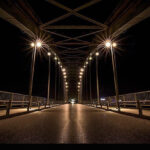
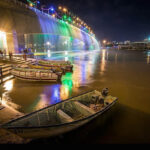
Iran’s Beauties in Photos: Nights of Ahvaz

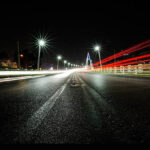
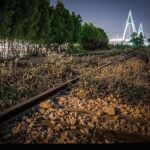
The southwestern Iranian city of Ahvaz, often known in the media for its heavy dust pollution, provided its visitors during the New Persian Year holidays (Nowruz) with clean and fresh air. Many people enjoyed the beautiful nights of Ahvaz along the Karoon River.


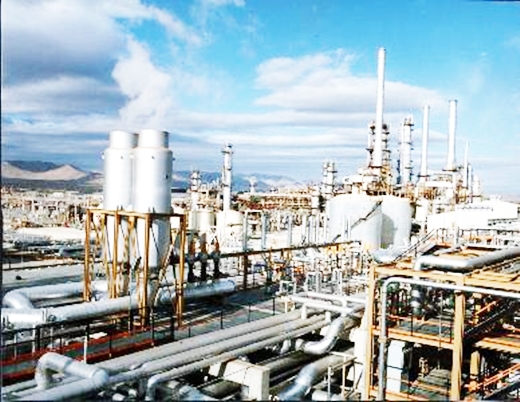
Iran Petchem Output Up at 46 mt/y

Ali-Mohammad Bossaqzadeh told Shana that 19 million tons of the products were exported worth $9.5bn.

He hoped that NPC production and export will increase in the current year with the increased petchem feedstock supply and the launching of new plants.

Last December, he told Shana that NPC is ready to cooperate with foreign investors in order to develop the petrochemical industry.

He said Iran’s coastal lines including the Oman Sea basin are of interest to foreign investors to develop petrochemical projects. “A major European firm is ready to invest 8bn euros in a petrochemical chain,” he added, but did not identify the company.

NPC hosted the Iran Petrochemical Forum (IPF 2015) on December 13-14 in Tehran in which some 97 foreign companies from 25 countries participated – an increase of 120 percent compared to IPF2014.

More than 1500 representatives from domestic and foreign firms including Australia, Azerbaijan, Canada, Denmark, France, Germany, Japan, the Netherlands, Russia, and US are took part in the two-day event.

Participants in the IPF2015, one of the world’s most prestigious events representing the petrochemical industry, discussed the core issues that the industry is facing with the emphasis given to Iran.

It provided a platform where stakeholders and key players in the global petrochemical sector met to exchange knowledge and address the latest advancements and best practices which are capable of shaping the future of the industry.

Following the historic nuclear agreement, Iran used the event to unveil its post-sanctions projects and plans for further expanding the Iranian petrochemical output capacity from the current 60 million tons/year to over 138 million tons/y in 2020 and eventually to 180 million tons/y by 2025 with an investment of over $80bn.

NPC seeks to use Iran’s natural gas reserves as raw material to produce propylene and its derivatives to provide feed for the expansion of local downstream industries.