Sunday, January 18, 2026
Home Blog Page 4442

Enemies Would Be Surprised by Iran’s Defence Capabilities: Commander

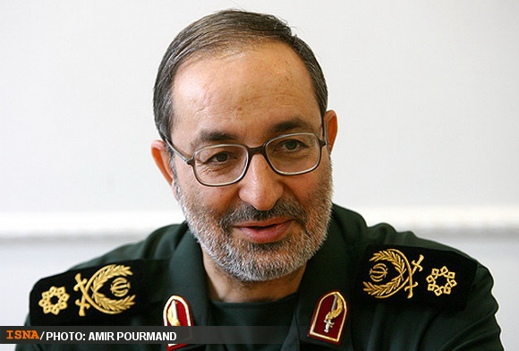
General Masoud Jazayeri

“The enemies of the Islamic Republic, and on top of them the Americans, Zionists [Israelis] and British, know of part of Iran’s power in different fields such as defence and missile (power),” General Jazayeri told Tasnim in an interview.

“Fortunately, because we rely on (domestic potential in developing defence power), enemies do not know about other parts (of Iran’s defence capabilities) and will not know about them any time soon, unless something happens,” the senior commander stated.

In that case, he said, it may be necessary that some of these capabilities be put into action, which would take the enemies by surprise, seeing how the Islamic Republic has advanced in defence so rapidly.

General Jazayeri further said that Iran has very good deterrent power and can defend itself very well but that the country, in accordance with its defence doctrine based on Islamic teachings, will never initiate a conflict.

Iranian officials have repeatedly underscored that the country will not hesitate to strengthen its military capabilities.

Hacker of Government Websites Detained in Iran

Hackers

The centre, an affiliate of the Islamic Revolution Guards Corps Cyber Defence Command, said in a statement that the arrested criminal, operating under the alias ‘Mafia Hacking Team’, had hacked into the websites of several Iranian organizations, such as the National Organization for Documents and Real Estate Registration, Iran’s Post Company and a number of universities.

It noted that the hacker had used loopholes in the websites to launch the attacks, warning about weaknesses and security voids in the databases of many official and governmental institutes.

Contrary to the reports that the hacker had hacked into only a single section of the websites, technical investigation revealed that he had gained access to a huge amount of data due to the security loopholes, but had refrained from downloading and publishing the data with certain intentions, the statement added.

Resistance Economy Uplifts National Dignity: Ayatollah Khamenei

Supreme Leader

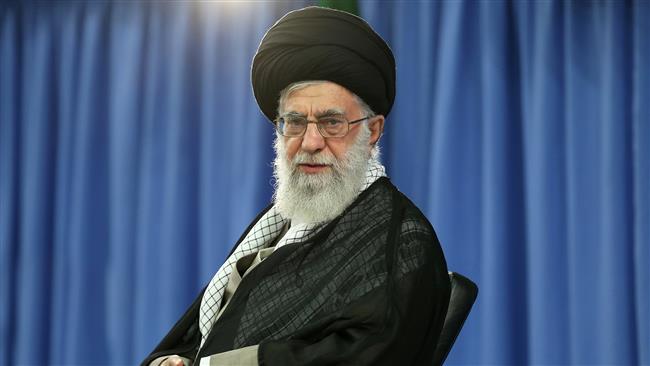
“Resistance economy, if implemented in the real sense of the word, can cater for both national dignity and the requirements of the country because it relies on internal capacities,” Ayatollah Khamenei said in a meeting with a group of university professors and academicians on Saturday.

“The issue that I would like to emphasize is the pace of [Iran’s] scientific growth. Today, we need to speed up our scientific growth,” the Leader said.

“We have been kept behind at least 60-70 years by traitorous or ignorant governments. If we want to advance, we shouldn’t move forward with the speed of those who are ahead [of us],” Ayatollah Khamenei added.

Tehran to Host Centre for Satire

Khamseh

At the opening ceremony of the City Satire Centre, Shahram Gilabadi, the director of the Tehran Municipality’s Centre for Communication and International Relations, called the centre a place for artists and satirists to exchange ideas.

He asked them to organize meetings at the centre “to present the people with a romantic feeling in order to help them raise their spirits.”

“This is the greatest job: to help people feel happy,” he added.

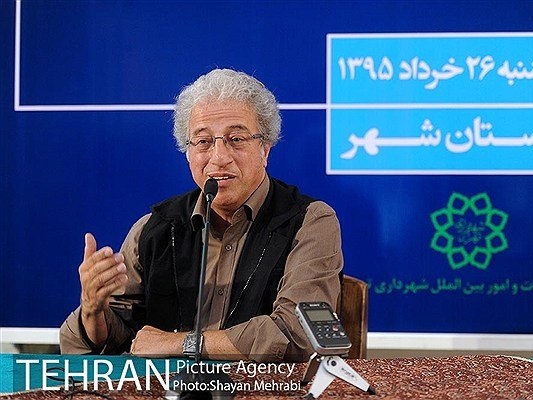
Veteran comedian Alireza Khamseh was among the many satirists and comic artists attending the opening ceremony. “In urban life, a society that is far from disappointment is healthier,” he said in a short speech.

He added that improvement in economic conditions in people’s lives is the key to help them feel happy, otherwise they would hardly ever laugh.

The City Satire Centre is located at Goft-o-Gu Park in the western part of Tehran.

Iran Next in Line to Join SCO

Iran

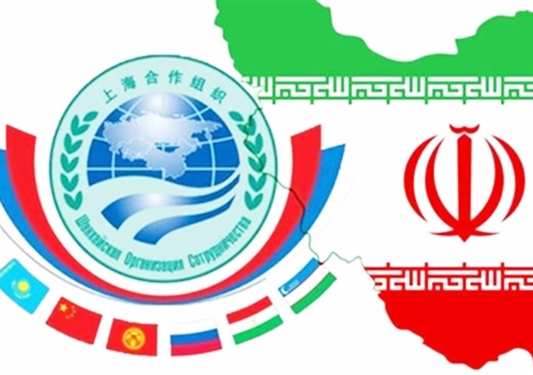
Leaders of the regional security group, led by China and Russia, will meet for the summit of their leaders in Uzbekistan’s capital of Tashkent on June 23 and 24.

“We will meet up next time at the SCO forum, at which we will include India and Pakistan into the organization,” Russia’s Interfax news agency quoted Nazarbayev as saying on Saturday.

“Iran is the next. So, this organization with three billion residents is becoming a huge power,” he added.

Russian President Vladimir Putin and his Chinese counterpart Xi Jinping will attend the summit as will Indian Prime Minister Narendra Modi.

There is optimism that the entry of India and Pakistan into the grouping will have sobering effect on the two nuclear arch-rivals’ ties.

“Besides adding 1.5 billion people under the SCO umbrella, the India-Pakistan admission may also help improve strained ties between India and Pakistan by opening another communication channel,” Xia Yishan, a research fellow of Central Asian studies at the China Institute of International Studies, said.

The SCO, founded in 2001, comprises of China, Kazakhstan, Kyrgyzstan, Russia, Tajikistan and Uzbekistan as full members and covers political, economic and military cooperation. Afghanistan, Belarus, India, Iran, Mongolia and Pakistan have observer status.

India and Pakistan had their admission finalized at Ufa summit in Russia last year but the procedures including the adoption of all SCO documents by both countries are still under way and they may have to wait until the 2017 summit for formal seat among its members.

Iran has long sought membership in the SCO but the group kept the country waiting until it reached an agreement with the US, Europe and other key international players on its nuclear program.

With the addition of Iran, the group would control around a fifth of the world’s oil and represent nearly a half of the global population.

The SCO has also sought unity with the BRICS group of world countries – Brazil, India, South Africa, China and Russia. The two bodies have agreed to coordinate efforts to keep their economies stable, launched a development bank and agreed on a currency pool.

Member countries are keen to offer an alternative to an outdated vision of a “uni-polar” world dominated by Washington.

For Russia, the SCO and its close cooperation with BRICS provides a timely counterbalance to Western sanctions over the Ukraine crisis and the West’s military expansion near Russian borders.

The SCO is also a boost to China’s plans to rebuild the Silk Road as its signature foreign policy initiative and reach markets in Europe and Africa.

Under the “One Belt, One Road” policy, unveiled by President Xi in 2013, Beijing seeks to build land, sea and air routes reaching across the Asian continent and beyond with the aim of boosting trade by $2.5 trillion in the next decade.

The West looks at the plan with suspicion, seeing it as part of a political gambit aimed at expanding China’s economic presence.

$2.5bn Foreign Direct Investment in Iran in Last Month

2082482

Board Member of the Iranian National Committee of the International Chamber of Commerce (ICC) Seyed Hossein Salimi made the remarks, estimating that the FDI volume will reach a total of $8bn by the end of the current Iranian calendar year (began March 20).

“Foreign parties have been making visits to the country following the implementation of the Joint Comprehensive Plan of Action (JCPOA),” noted Salimi, adding, “Given that the arrival of foreign investors and direct investment in Iran were subject to the resolution of international disputes, the country has issued licenses for $2.5 billion of FDI only for the current month, while the figure would mark the total amount of annual investment during sanction years.”

“Currently, the number of foreigners, who are eager to negotiate with Iran and seal contracts, has multiplied and they have decided to visit the country since their studies of the Iranian market have yielded results,” underscored the official, asserting, “If the current trend continues, we can look forward to attracting a total Foreign Direct Investment (FDI) of $8bn in the current year.”

Salimi went on to note that the amount of investment marks an unprecedented figure for direct investment in the country.“Therefore, we expect good events to take place in arena of attracting FDI to Iran.”

EU Removes Iran Air from Safety Blacklist

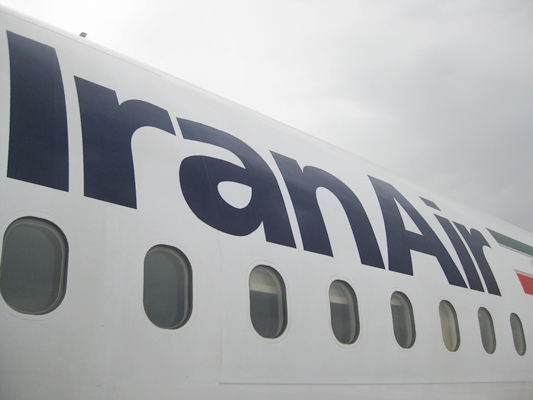
IranAir

The easing of restrictions on Iran Air follows a visit to Tehran by European transport Chief Violeta Bulc in April and an EU technical assessment in May.

Iran Air will be allowed to use all its aircraft except Boeing 747 and Fokker 100 planes when flying in the 28-nation EU, the European Commission said on Thursday June 16 in Brussels.

Previously, Iran Air had been only permitted to use EU-manufactured Airbus planes, including 10 Airbus Group SE A300 and two Airbus A310 planes, in Europe.

“Following my visit to Iran in April, a technical assessment was successfully carried out in May,” EU Transport Commissioner Bulc said in a statement on Friday.

“I am happy to announce that we are now able to allow most aircraft from Iran Air back into European skies,” Bulc added.

In an interview with Shargh daily, Shahrokh Nooshabadi, the head of Iran Air’s Public Relations Department, confirmed the removal of Iran Air’s name from the blacklist, and stressed that the six-year ban had prevented the carrier from using planes appropriate for the number of passengers to Europe.

The increase in flight costs was also a major repercussion of such restrictions, he went on to say.

Nooshabadi referred to the ban as a politically-motivated move in line with the second round of anti-Iran sanctions, rather than a technical restriction.

Iran Air’s standards were not lower than those of the EU, but they imposed restrictions on the airline, and finally after six years, annulled them, admitting that Iran observes the safety standards, he said.

As reported by Press TV, Iran’s aviation industry – among several other sectors – had been under a regime of US-led sanctions for several years.  The sanctions were lifted in January, when a deal between Iran and the so-called Group 5+1 – the five permanent members of the Security Council plus Germany – came into effect. The deal – the Joint Comprehensive Plan of Action (JCPOA) – envisaged steps by Iran to restrict certain aspects of its nuclear energy activities in return for the removal of sanctions against the country.

Iran has since intensified efforts to purchase new planes from global aviation giants including Airbus, Boeing and others.

In January, the country sealed a deal with Airbus during a state visit to Paris by President Hassan Rouhani to purchase 118 new planes. Iranian officials say a similar deal is also being worked out with Boeing.

Officials in Tehran have already emphasized that a bulk of new planes will go to Iran Air.

Iran to Launch International Autism Treatment Centre

Autism

Ahmad Reza Khatounabadi, dean of Department of Speech Therapy at the TUMS’ School of Rehabilitation, said his department has signed an agreement with India’s Communication DEALL research centre to inaugurate the first international centre for the treatment of autism in Iran.

Pointing to an upward trend in the autism cases in Iran, he said the centre is going to offer training programs as well as expert clinical and therapeutic services with the help of local scientists, in cooperation with researchers from other countries.

Khatounabadi also highlighted the very high costs of cure for autism, calling for support from the administration.

Autism was first described by Dr. Leo Kanner in 1943. Autism spectrum disorders (ASDs) are a group of developmental disabilities that can cause significant social, communication and behavioural challenges.

The symptoms and characteristics of autism can present themselves in a wide variety of combinations. People with autism process and respond to information in unique ways. In some cases, aggressive or self-injurious behaviour may be present. Persons with autism may also exhibit some traits like insistence on sameness, resistance to change, difficulty in expressing needs, using gestures or pointing instead of words, repeating words or phrases in place of normal, responsive language and laughing, crying, and showing distress for reasons not apparent to others.

Iran Captures Government Website Hacker

Captures Hacker

Iran’s Centre for Studying Organized Cyber Crimes made the announcement, adding that the hacker had been active online under the name of ‘Mafia Hacking Team’.

It added that the cyber culprit had hacked a number of Iranian websites, including the Post Company and a number of Iranian universities and organizations.

The attacks against official websites started on May 24, as a group calling itself DAES hacked the website of the Statistical Centre of Iran, taking the website down for a short time.

Two days later, the websites of Iran’s Culture Ministry, the legal deputy of the Judiciary and the interpreting administration of the Judiciary were hacked as well.

Tehran and Moscow to Commence Major Energy Projects: Russian Minister

139407281735283766336984

“Currently the total volume of the projects – we calculated with our colleagues, and this figure is probably the same in our estimations – is about $40bn. This is the minimum level of potential projects that could be implemented in the near future,” Novak said.

He made the remarks at a recent meeting with Iranian Minister of Industry, Mine and Trade Mohammad Reza Nematzadeh on the sidelines of the ongoing St. Petersburg International Economic Forum (SPIEF-2016), Tass reported. Nematzadeh is leading a large business delegation to the two-day international event.

Novak added that two major contracts have been so far been prepared to be signed between the two countries totalling $2.5bn.

“These are the contracts related to two thermal power plants, four blocks of 350 megawatts in terms of the development of electric power industry of Iran, as well as the reconstruction of the railway line,” the Russian minister added.

The twentieth St. Petersburg SPIEF kicked off on June 16 on a new site near St. Petersburg. The 2016 SPIEF, which is held annually under the auspices of Russian President Vladimir Putin, is attended by business representatives and officials from dozens of countries.