Sunday, January 18, 2026
Home Blog Page 4437

Iran Completes Conceptual Design Phase of Manned Spacecraft

Iranian Space

The Iranian Space Agency is working hard to meet a 2025 deadline for sending astronauts to space.

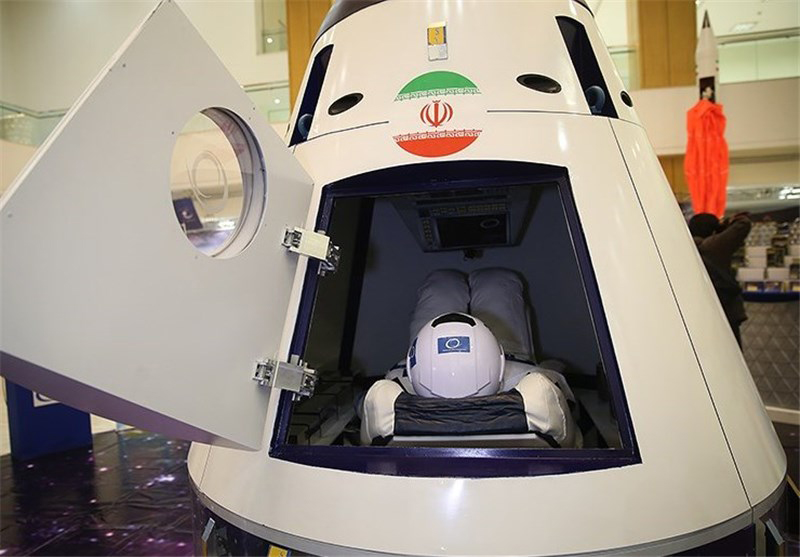
During the conceptual design phase, researchers designed and unveiled a mock-up of a spacecraft, designed for sub-orbital spaceflight.

Iranian-spacecraft

Now that the conceptual design phase is over, Tasnim has obtained a blueprint for the Iranian spacecraft and its carrier rocket.

The craft, which would weigh one ton, is designed to enter space in 9 main stages following the start of engines of the launch vehicle and return to earth safely.

The Iranian manned spacecraft is scheduled to reach an altitude of 175km before descent.

Iran has in recent years made great headways in manufacturing satellites thanks to efforts made by its local scientists.

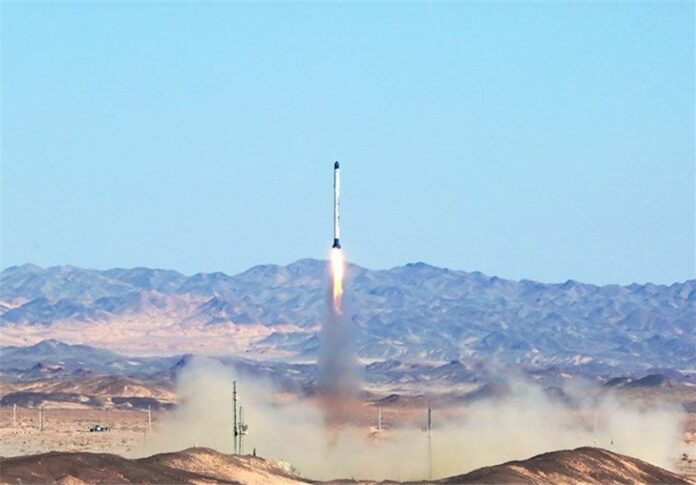
In February 2015, the country successfully sent the home-grown Fajr [Dawn] satellite into orbit with a domestically-built satellite carrier, dubbed Safir-e Fajr.

In January 2013, Iran sent a monkey into space aboard an indigenous bio-capsule code-named Pishgam [Pioneer].

And later in December 2013, the country’s scientists successfully sent a monkey, called ‘Fargam’ [auspicious], into space aboard Pajohesh [Research] indigenous rocket and return the live simian back to earth safely.

Lending Rate Cuts Imminent

“Cutting loan rates will help industries and boost their production,” he said. “Moreover, manufacturing units with debts of less than 10bn Rials ($327,568) are allowed to extend their repayment period for one year without penalties for late payments,” banker.ir quoted him as saying.

CEOs of private banks and credit institutions, in a meeting on June 12, agreed to offer a maximum 15% interest on one-year deposits, which will provide the basis for also setting rates on short-term deposits.

The move comes after the Money and Credit Council – the top monetary decision-making body – failed to discuss the issue of interest rates at its last meeting on Tuesday, giving banks space to set rates as they see fit.

Seif added that some new resources would be allocated to small and medium-sized enterprises, beside the planned IRR160bn ($5.24 million). Earlier this month, the Central Headquarters for the Resistance Economy instructed the banking sector to finance 7,500 enterprises in dire financial straits.


Public Sector Banks to Cut Rates

Meanwhile, the Coordination Council of Public Sector Banks, led by Mohammad Reza Hosseinzadeh, asked the CEOs of state-owned banks to follow private lenders in their decision to lower deposit rates.

As bankemardom.com reported on Sunday, Hosseinzadeh has sent a copy of the letter addressed to CBI’s chief by private bankers that mentioned their agreement to cut their one-year deposit rates from 18% to 15% to the CEOs of state-owned banks.

The letter was sent on Saturday by Kourosh Parvizian, the head of the Association of Private Banks and Credit Institutions to Seif with a copy to Hosseinzadeh, chief executive of Bank Melli Iran, the country’s largest bank.

The latest development is a strong sign that public-sector banks, so far out of the rate-cutting drama, may soon announce their own rate cuts. The letter, published by Tasnim on Saturday, informs Seif that private banks will implement the cuts from June 21. The letter, however, does not mention any plans for lowering the lending rates, which have hovered around 20%, raising concerns that the gap would hurt businesses and small investors.

Earlier this week, Bank Pasargad Iran became the first lender to announce that it has lowered its one year deposit rates to 16%. Hossein Motamedi, ENbank’s CEO, said his bank will offer lower deposit rates and several other banks said they would follow suit.

Lenders, saddled with high nonperforming loans, dodgy balance sheets and botched investment in real estate, now have little option but to lower their returns on deposits in line with inflation.

Market observers say rate cuts are a strategy to forestall the bankruptcy descending on the banking sector. And while some have welcomed banks lowering their rates voluntarily and without official decrees, others have denounced the move as an act of “collusion” among bankers to fix rates in a way that ultimately benefits them.

Iranian MPs Propose Motion to Fight Dust Pollution

Speaking to Tasnim, Hassan Soleimani said the motion, signed by 40 lawmakers, has been submitted to the presiding board of the Parliament.

“According to the motion, the administration will be obliged to take practical measures in line with the fight against dust particles and should submit reports on its measures to the parliament,” added Soleimani, who represents the people of Kangavar, western province of Kermanshah, in the Parliament.

The dust pollution blanketing the country, particularly western provinces, in recent weeks had reached “dangerous” levels, environmental officials said.

Director-General of Tehran Province’s Environmental Protection Department Mohammad Hadi Heydarzadeh told Tasnim earlier that particles polluting the country are coming from Saudi Arabia and Iraq.

This is not the first time that residents of the western and south-western provinces are facing a growing trend in the influx of fine particles, which are generated by drought-hit marshlands in neighbouring countries. The disruptive dust storms have pushed pollution in those border areas to alarming levels, raising health concerns.

The particles, carried by winds, can penetrate the lungs and enter the bloodstream, causing serious diseases such as lung cancer, asthma and heart problems.

Mahan Air’s First Flight to Paris

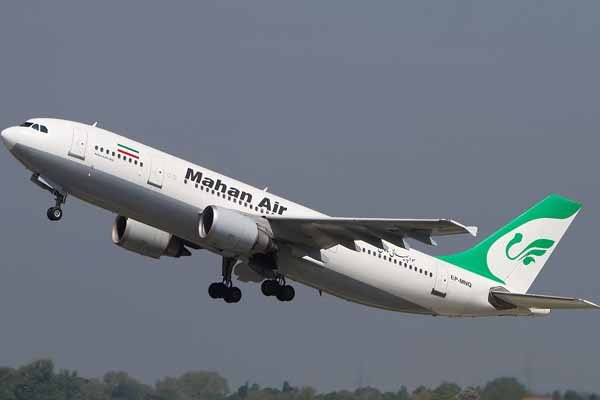
Mahan Air

Mahan Airlines Flight W50106 took off from Imam Khomeini International Airport at 6:55 local time to land in Paris Charles De Gaulle Airport 12:40 local time.

The plane Airbus A340 carried 106 passengers and crew. Mahan Air will operate flights to Paris regularly on Saturdays, Mondays, and Wednesdays. Before Mahan Air, only Iran Air was operating flights to Paris.

Officials say that more room for Iranian airlines in European airspace has been brought by the JCPOA implementation. Iran has still higher capacity and possibilities to extend flights to more and further destinations around the world which, however, will require an improved air fleet to meet the increasing demands of the situation.

ISA to Put Geosynchronous Satellite into Orbit by 2025

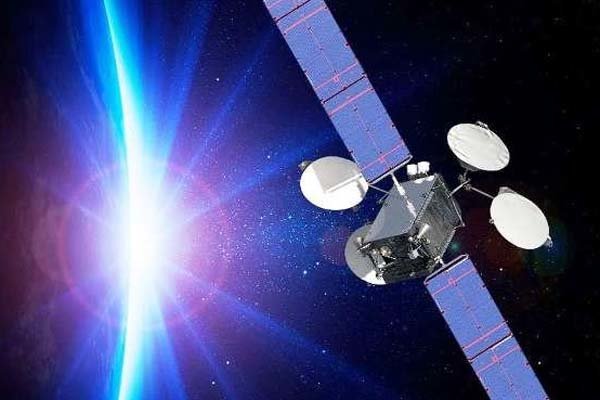
Satelite

Mohammad Homayoun Sadr, Deputy Director of ISA, who was speaking to the press on Monday June 20, said that the satellites had been currently built and launched by Iran as mere experiments in space technology, and as nascent Iranian ventures into space.

“We seek to launch to home-made geosynchronous satellites into orbit by the year 2025,” he stated.

“A 10-year plan has been put on the agenda for the construction of two remote sensing and telecommunications satellites; the remote sensing device aims to localize a satellite capable of producing professional high precision images, while the telecommunication satellite seeks to be a world-class satellite, an objective which will be hopefully achieved by the year 2025.”

Sadr proposed the possibility of test-launching prototype satellites before the ultimate products. “A remote sensing satellite will be launched into space in the current year while one or two more satellites will be launched next year (starting March 21, 2017), which will help us to maintain and improve the status achieved by keeping a satellite in the orbit for more than a few months,” he asserted.

“As the next step, we need to put satellites into higher altitudes in order to capture more precise imaging.”

Growing Trend of Abortions in Iran

Abortions

Based on World Health Organization (WHO) statistics, there are 205 million cases of pregnancy each year. One-third of them are unwanted, and one-fifth ends in intentional abortion.

Most abortions are the result of unwanted pregnancies, which can lead to abortion in many different ways.

In Iran, abortion is a condemned move, deemed as killing a person; however, official statistics demonstrate that thousands of babies are terminated before birth in Iran.

In early years of the 1990s, only 80,000 abortions took place each year, but these days we are faced with 220,000 cases in a year. Out of such a huge number of abortions, only 80,000 seem to be legal.

The number of visits by Iranian people to medical centres for abortions was 2,929 in 2006, but this increased to 9,955 by 2015, which shows a three-fold growth.

These statistics indicate that the trend of abortion in Iran is growing at a fast pace, which could be alarming for the country.

Iran and Afghanistan Stress Anti-Narcotic Collaboration

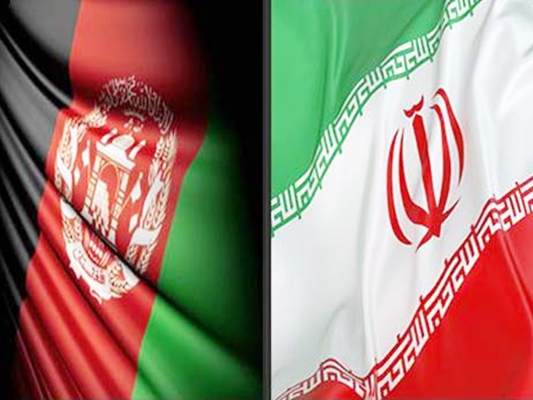
Iran, Afghanistan

In a meeting in Kabul on Sunday June 19, Iran’s Drug Control Headquarters Official Mahmoud Reza Pourmansour and Afghanistan’s Anti-Narcotics Minister Salamat Azimi explored avenues for bolstering and reinvigorating bilateral ties in fighting drug trafficking.

The Afghan minister also lauded Iran for its contribution to equipping the Kabul rehabilitation camps and boosting cooperation in the field of fighting narcotics.

In a relevant development in January, Commander of the anti-narcotics squad of Iran’s Law Enforcement Police General Ali Moayyedi underlined that the poor performance of the US-led foreign troops in Afghanistan had resulted in a steady rise in drug production in Afghanistan.

“The problem of narcotics still persists in Afghanistan as a result of the negligence of foreign states towards the illicit drug trade in our neighbouring country,” General Moayyedi said, addressing the closing ceremony of a training workshop for the Afghan police officers in Tehran. He also voiced Iran’s readiness to send its anti-narcotics officers to Afghanistan to train officers there.

The Islamic Republic has emerged as the leading country fighting drug trafficking after making 85% of the world’s total opium seizures. Since the 1979 Islamic Revolution, Iran has lost more than 4,000 of its security forces in its war against drug smuggling.

Iranian police officials maintain that drug production in Afghanistan has undergone a 40-fold increase since the US-led invasion of the country in 2001.

While Afghanistan produced only 185 tons of opium per year under the Taliban, according to UN statistics, since the US-led invasion, drug production has surged to 3,400 tons annually. In 2007, the opium trade reached an estimated all-time production high of 8,200 tons.

Afghan and western officials blame Washington and NATO for the change, saying that the allies have “overlooked” the drug problem.

Tehran and Kiev Want Closer Trade Links

Valiollah Afkhamirad

Valiollah Afkhamirad, who heads Iran’s Trade Promotion Organization (TPO), voiced his readiness to hold the fourth session of the committee for commercial, industrial and mining cooperation between the two countries in near future, as well as to deploy a trade delegation to the European state.

“The Islamic Republic of Iran, in the new era, seeks knowledge transfer from several countries in areas of collaboration,” highlighted the official, pointing to Ukraine’s advances in different sectors such as agriculture, aviation, chemical industries, as well as agricultural equipment.

Afkhamirad went on to underscore that “Major venues for the reinvigoration of bilateral relations include facilitating visa issuance and expanding banking cooperation, in addition to granting tax incentives to merchants and investors.”

He also stated that “Iran remains a profitable and secure region for foreign investors and holds a huge market besides its own 80m population, bringing economic justifiability to investments.”

The head of the TPO said any escalation in cooperation is subject to a clear understanding of the two sides’ economies by traders. “To this end, more communication as well as active participation in exhibitions is required.”

“The Islamic Republic of Iran is determined to bolster ties with Ukraine as the possibility exists to establish preferential trade between the two sides,” maintained the official urging experts and relevant authorities in the European country to take steps in this regard.

Ukrainian Ambassador to Tehran Sergei Burdylyak, for his part, touched upon the Iranian President’s agreement with expansion of bilateral ties between the two countries, asserting, “We appreciate Iran’s attitude towards Ukraine and the fact that no third-party country affects the expansion of our relations.”

“Ukraine is vigorously seeking to develop cooperation with Iran, especially in the field of nutrition,” noted Burdylyak, asserting, “We wish to boost banking ties with Iran by offering all capacities in the field.”

He further stated, “In order to hold the fourth economic session between the two parties, we are ready to attend intensive meetings with the Iranian authorities.”

The Ukrainian ambassador said, “Due to certain issues, Ukraine has lost its market in Russia while it remains as a trusted partner in meeting China’s food demand.”

“Given the sanctions removal, a special opportunity has emerged for the development of relations,” stressed the official, pointing out that Ukraine is a leading country in areas of aircraft manufacturing as well as agricultural production, particularly wheat.

Sergei Burdylyak emphasized, “China’s only aircraft carrier was built by Ukrainian specialists, and we hold proper grounds for investment in developed sectors, in which Iranians are invited to participate.”

Street-Cleaning Canine in Khalkhal

Environment friendly dog

A trained dog in the city of Khalkhal, north-western Iran, cleans the streets by collecting trash bags left by the side of the road.

The dog starts after midnight when the streets are almost vacant, and flees as soon as it sees someone, IRNA news agency reported.

It grabs the trash bags with its teeth and takes them to trash bins or landfills. It is said that the dog is trained by one of the municipality workers.

Iran’s LPG Exports Soar

2111084

Amir Vakilzadeh, Director of the Exports and Imports Office at National Iranian Oil Products Distribution Company (NIOPDC), said, “In the current year, no liquid gas has been burned by domestic refineries.”

“All LPG produced inside the country has been deployed to foreign markets in the present year,” underscored the official, adding, “Overall, more than 80,000 tons of Iranian LPG have been shipped to foreign countries in the first two months of the current year spanning from March 20 to May 20.”

Vakilzadeh pointed out that LPG is being surface-exported to neighbouring countries, as well as by sea to African countries by exploiting ISO tanks. “The volume of LPG exports reached 127,000 tons in the previous year, while more than 80,000 tons have been exported only in the first two months of the current year.”

African countries like Kenya, South Africa and Tanzania have been purchasing Iran’s LPG over the past two years in the form of ISO tank container shipments.

The CEO of the Iranian Gas Commercial Company (IGCC) Mohammad Ali Barati has recently maintained that gas exports volume will climb by 5,000 tons following the implementation of new South Pars developmental phases. “Middle Eastern countries form the largest market for Iran’s LPG.”