Saturday, April 11, 2026
Home Blog Page 4438

Tehran and Kiev Want Closer Trade Links

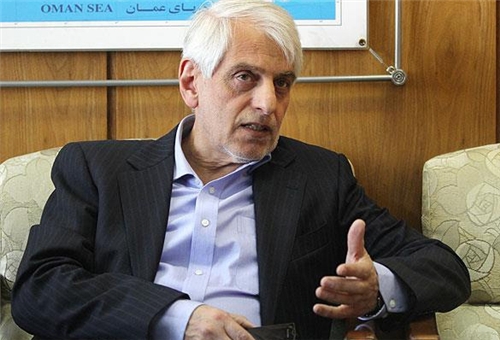
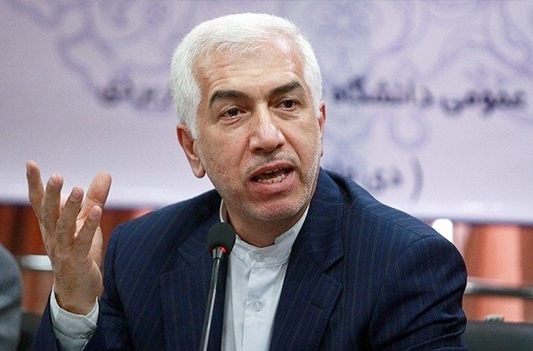
Valiollah Afkhamirad

Valiollah Afkhamirad, who heads Iran’s Trade Promotion Organization (TPO), voiced his readiness to hold the fourth session of the committee for commercial, industrial and mining cooperation between the two countries in near future, as well as to deploy a trade delegation to the European state.

“The Islamic Republic of Iran, in the new era, seeks knowledge transfer from several countries in areas of collaboration,” highlighted the official, pointing to Ukraine’s advances in different sectors such as agriculture, aviation, chemical industries, as well as agricultural equipment.

Afkhamirad went on to underscore that “Major venues for the reinvigoration of bilateral relations include facilitating visa issuance and expanding banking cooperation, in addition to granting tax incentives to merchants and investors.”

He also stated that “Iran remains a profitable and secure region for foreign investors and holds a huge market besides its own 80m population, bringing economic justifiability to investments.”

The head of the TPO said any escalation in cooperation is subject to a clear understanding of the two sides’ economies by traders. “To this end, more communication as well as active participation in exhibitions is required.”

“The Islamic Republic of Iran is determined to bolster ties with Ukraine as the possibility exists to establish preferential trade between the two sides,” maintained the official urging experts and relevant authorities in the European country to take steps in this regard.

Ukrainian Ambassador to Tehran Sergei Burdylyak, for his part, touched upon the Iranian President’s agreement with expansion of bilateral ties between the two countries, asserting, “We appreciate Iran’s attitude towards Ukraine and the fact that no third-party country affects the expansion of our relations.”

“Ukraine is vigorously seeking to develop cooperation with Iran, especially in the field of nutrition,” noted Burdylyak, asserting, “We wish to boost banking ties with Iran by offering all capacities in the field.”

He further stated, “In order to hold the fourth economic session between the two parties, we are ready to attend intensive meetings with the Iranian authorities.”

The Ukrainian ambassador said, “Due to certain issues, Ukraine has lost its market in Russia while it remains as a trusted partner in meeting China’s food demand.”

“Given the sanctions removal, a special opportunity has emerged for the development of relations,” stressed the official, pointing out that Ukraine is a leading country in areas of aircraft manufacturing as well as agricultural production, particularly wheat.

Sergei Burdylyak emphasized, “China’s only aircraft carrier was built by Ukrainian specialists, and we hold proper grounds for investment in developed sectors, in which Iranians are invited to participate.”
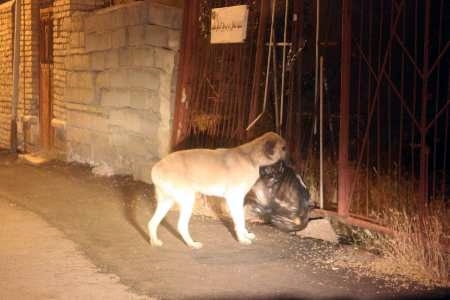
Street-Cleaning Canine in Khalkhal

Environment friendly dog

A trained dog in the city of Khalkhal, north-western Iran, cleans the streets by collecting trash bags left by the side of the road.

The dog starts after midnight when the streets are almost vacant, and flees as soon as it sees someone, IRNA news agency reported.

It grabs the trash bags with its teeth and takes them to trash bins or landfills. It is said that the dog is trained by one of the municipality workers.

Iran’s LPG Exports Soar

2111084

Amir Vakilzadeh, Director of the Exports and Imports Office at National Iranian Oil Products Distribution Company (NIOPDC), said, “In the current year, no liquid gas has been burned by domestic refineries.”

“All LPG produced inside the country has been deployed to foreign markets in the present year,” underscored the official, adding, “Overall, more than 80,000 tons of Iranian LPG have been shipped to foreign countries in the first two months of the current year spanning from March 20 to May 20.”

Vakilzadeh pointed out that LPG is being surface-exported to neighbouring countries, as well as by sea to African countries by exploiting ISO tanks. “The volume of LPG exports reached 127,000 tons in the previous year, while more than 80,000 tons have been exported only in the first two months of the current year.”

African countries like Kenya, South Africa and Tanzania have been purchasing Iran’s LPG over the past two years in the form of ISO tank container shipments.

The CEO of the Iranian Gas Commercial Company (IGCC) Mohammad Ali Barati has recently maintained that gas exports volume will climb by 5,000 tons following the implementation of new South Pars developmental phases. “Middle Eastern countries form the largest market for Iran’s LPG.”

Iran Settles €500m Debt to Germany’s Hermes Firm: Envoy

Iranian Ambassador to Berlin Ali Majedi

Majedi announced on Sunday June 19 that Iran has paid off its €500m ($569 million) debt to Hermes, a German government arrangement that protects German companies if foreign debtors fail to pay.

He added that the payment has removed obstacles in the way of Tehran-Berlin business ties and that the two countries’ banks can now boost their cooperation.

Earlier, Michael Kemmer, the head of the German banking association said, “Rebuilding ties with Iran requires patience.”

“To begin with, the transactions regimen has to work again before the next step of financing projects can take place,” he added.

Elsewhere in his remarks, Kemmer referred to Tehran’s Hermes debt to Berlin and said banking ties between the two countries will revive only after Iran pays its debt to Germany.

One of the main reasons that the Islamic Republic, despite a lasting nuclear deal between Tehran and world powers, had not been able to repay its debts to the German firm was due to difficulties in working with foreign banks.

Indian Journalist: Iran’s SCO Membership Will Enhance Regional Security

Indian journalist

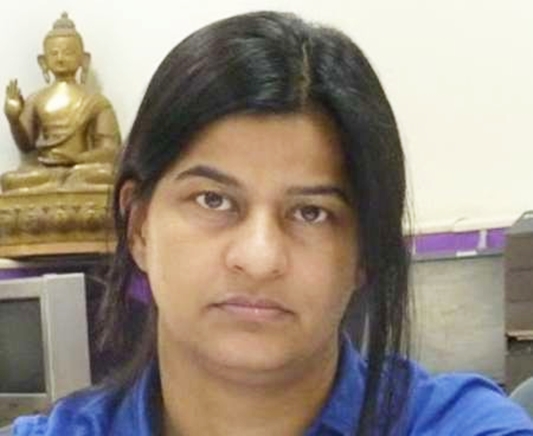
In an exclusive interview with IRNA, Miss Arti Bali of the international desk of one of India’s biggest media groups, Sahara, said: “A full-flagged membership in the SCO will make Iran an integral part of the organization’s security structure, and this will enhance security not only in Iran but also in the entire region through minimizing the possibility of occurrence of political and armed conflicts in the Persian Gulf.”

“Containing the political and armed unrests and conflicts in the Persian Gulf like the one currently going on between Iran and some Arab states, particularly Saudi Arabia, is highly important for Iran. After Iran’s inclusion in the SCO, these unrests will also concern the organization’s other member states, and this will reduce the chances of such flare-ups occurring.”

On the impact of Iran’s SCO membership on stabilizing the situation in Afghanistan, the seasoned analyst of world affairs said, “Iran is facing lots of problems along its long border with Afghanistan and Tehran is concerned more than any nation in the world over the situation in Afghanistan. Iran’s full membership in the SCO will enhance the organization’s efforts to ensure security and stability in Afghanistan.”

On the possible stances of the SCO member states on Iran’s joining the regional body, Bali said, “Given Iran’s strategically important geographical location and its important role in the region, China and Russia have already welcomed Iran’s full-flagged membership in the SCO, and its other members should not have any problem with it.”

“By signing 17 agreements […] during President Xi Jinping’s visit to Iran in January, China has emerged as a major trading partner of Iran. Iran is also a crucial link in the Chinese project of the “New Silk Road’. Beijing, therefore, will support Iran’s full flagged membership in the SCO.”

“Russia has already extended its support for the full and direct engagement of Iran with the SCO and its member states.”

Elaborating on the importance of Iran joining the SCO, Bali said, “Due to the international sanctions on Iran, a large number of economic and logistics projects in the region such as the International North-South Transportation Corridor have been blocked. Iran’s joining to the SCO would help the organization to revive them”.

MP Calls for Strong Sentences against Saudi Embassy Attackers

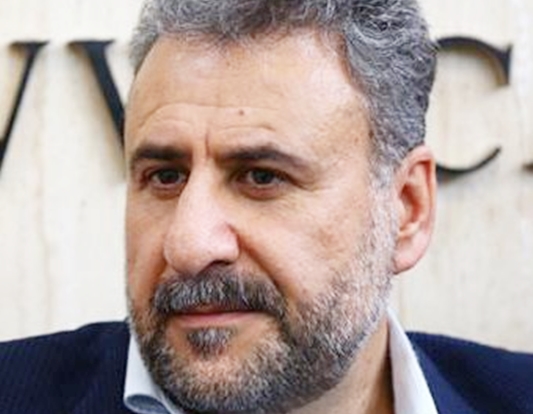
Heshmatollah Falahatpishe

The lawmaker told ICANA on Saturday June 18 that the court should pass a preventive verdict on the irrational move that in fact helped Saudis divert attention from their wrongdoing in last year’s hajj disaster in Mina, and sway international public opinion in their favour.
“It is expected that the court ruling will be [harsh enough to produce] deterrent effects, so we never again see such incidents which weaken our position in the international arena.”
The attackers were angered over the execution of top Shia cleric Sheikh Nimr al-Nimr, which provoked international condemnation. Although Iranian authorities condemned the attack and called for the prosecution of perpetrators, the Saudi regime used the incident to cut already strained diplomatic relations with Iran.
Judiciary spokesman Gholam Hossein Mohseni Ejei said last week that those accused of involvement in the attack will appear in court on July 18. He had previously said 48 people have been indicted in the case, of which three to four are clerics, who will be tried in a separate Special Clerical Court.

Reviving Iran’s Image
Another parliamentarian, Ardeshir Nourian, said he expects fair, appropriate sentences that help “revive the image of peace-loving Iran” in the world. “Under international law, diplomatic premises of any country are parts of its assets, and attacking them means attacking that country,” he noted.
Nourian said that Iranians who, for whatever reason, are disappointed with the moves of a foreign government should not get “emotional” and their protests should be “in line with national interest”.

Iran Registers Original Pomegranates, Dates, and Carpets at WIPO

page

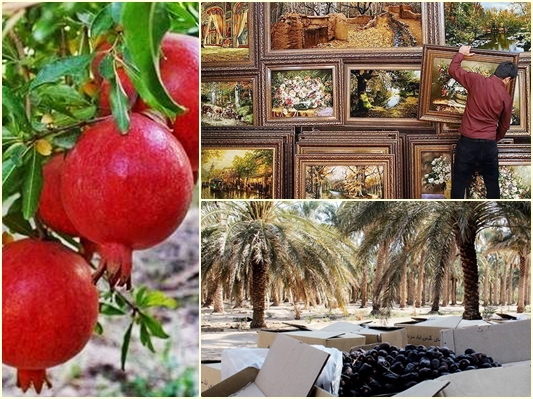
The products registered at WIPO include the pomegranate of Saveh, dates of Kerman and Bam, and the hand-woven carpets of 14 Iranian regions, according to a report by IRNA, as translated by IFP.

Different types of carpets from Ardakan, Ilam, Torkaman regions, Jargalan, Bojnord, Kurdish regions of Northern Khorasan, Charmahal and Bakhtiari, Qashqai tribes of Fars, Gabbeh of Fars, Lorestan, Mud village of Birjand, Qahestan of South Khorasan, Varamin, and Sonqor of Kermanshah have been registered, according to Mahdi Mirsalehi, an Iranian official from Ministry of Industry.

These strategic products were submitted one year ago, and registered based on Lisbon Agreement [The International System of Appellations of Origin], to which Iran has been a party since 2005, he noted.

The Lisbon System for the International Registration of Appellations of Origin offers a means of obtaining protection for an appellation of origin (AO) in the contracting parties to the Lisbon Agreement through a single registration.

The Lisbon Agreement for the Protection of Appellations of Origin and their International Registration (Lisbon Agreement) was adopted in 1958 and revised at Stockholm in 1967.  It entered into force on September 25, 1966, and is administered by the International Bureau of the World Intellectual Property Organization (WIPO), which keeps the International Register of Appellations of Origin and publishes a bulletin entitled Appellations of origin.

IIASA Approves Iran as 24th Member State

IIASA-logo

The 88th meeting of the Council of Directors of IIASA was held in the Austrian city of Laxenburg with Austria, Australia, Britain, Indonesia, Ukraine, the US, Germany, Republic of South Africa, Brazil, Russia, Japan, China, South Korea, Pakistan, Finland, Sweden, Egypt, Mexico, Malaysia, Norway, India, and the Netherlands, during which Iran’s membership to the IIASA was ratified as the 24th member state.

A voting session had been held earlier on March 28 and all 23 member states believed Iran’s membership to the Board of Governors was important and demanded that Iran actively participate in the programs of the Institute.

Iran-EU Banking Issues Resolved in Mining Sector

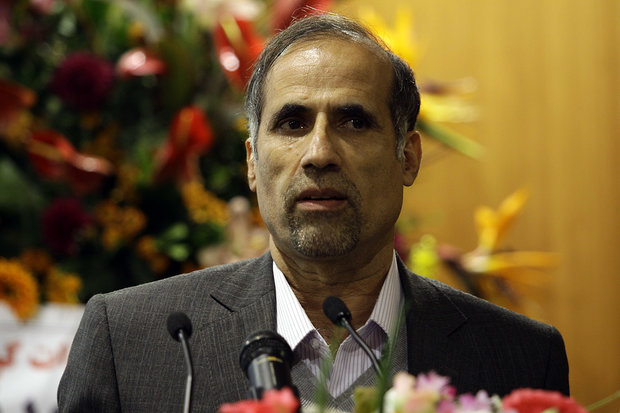
Iran, EU banking

Mehdi Karbasian made the remarks, stating, “Finances from South Korea, Germany, Italy and France will be raised for the mining sector.”

“Fortunately, following the attempts made by the Central Bank of Iran (CBI), banking issues between Iran and Europe have been resolved completely,” stressed the official, expressing hope that foreigners will make investments in Iranian mines.

Karbasian, who also serves as the Chairman of the Board of Executive Directors at the Iranian Mines and Mining Industries Development and Renovation Organization (IMIDRO), added, “At the present time, finances from South Korea, Italy, France and Germany have been validated for Iranian mines and relevant negotiations are being pursued seriously.”

“Major barriers to the opening of Chinese finance have largely been removed,” noted the Deputy Industry Minister, saying, “The issue was delayed due to the existence of serious challenges over pricing, as well as the type of machinery and equipment.”

Karbasian underlined that “There were many challenges over the price; nevertheless, numerous talks were held within the past 1.5 years as prices have now dropped to reasonable figures.”

“Moreover, major equipment will be purchased from European countries instead of China, alleviating all problems from Iranian steel projects,” said the official, concluding, “Bills have also been prepared and payments to China will begin in the near future.”

Official Urges Universities to Enhance Ties With Global Science Bodies

Mohammad Akhbari 2

Talking to IRNA on Monday, June 20, he said universities which cannot establish cooperation with world scientific centres would fall behind, which is why the Supreme Leader of Islamic Revolution stressed the importance of scientific diplomacy.

Recently, in a meeting with university deans and professors, Ayatollah Khamenei said “We need to speed up our scientific growth”.

“We have been kept behind at least 60-70 years by traitorous or ignorant governments. If we want to advance, we shouldn’t move forward with the speed of those who are ahead of us,” Khamenei added.

Akhbari said Iranian academics needed to both domesticize foreign technologies and work to advance scientific diplomacy.