Tuesday, May 5, 2026
Home Blog Page 443

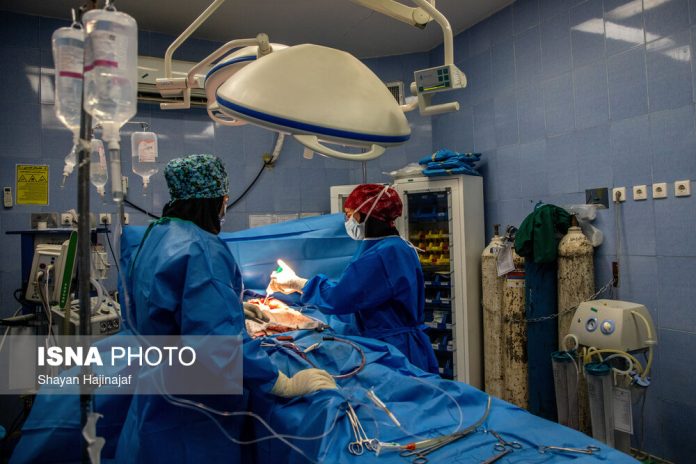
Iran faces nursing crisis as unlicensed Afghan nurses fill hospital gaps

Iran Surgery Nurse Doctor

The issue came to light after reports revealed at least 30 unauthorized foreign nurses working in a Tehran hospital, though officials warn the actual number nationwide is likely higher.

Ahmad Nejatiyan, head of Iran’s Nursing Organization, said most of the nurses are Afghan nationals who were born and educated in Iran but lack proper work permits. He emphasized that foreign nurses must obtain permits from the ministry of labor under current laws.

The crisis stems from the emigration of Iranian nurses seeking better opportunities abroad, as well as the unregulated hiring of foreign nursing students and unqualified personnel.

Nejatiyan pointed out while Iran trains 15,000 nurses annually, only 10,000-12,000 secure public hospital jobs. He dismissed prospects of recruiting foreign nurses long-term, citing unfavorable economic conditions.

Authorities are now taking action, with a parliamentary working group developing new regulations. The Nursing Organization is pushing for stricter qualification checks and expanded insurance for home care services. However, the Health Ministry has yet to announce specific enforcement measures.

Iran has hosted millions of refugees and asylum seekers from neighboring Afghanistan for decades. Their number has unofficially soared to over 10 million in recent years.

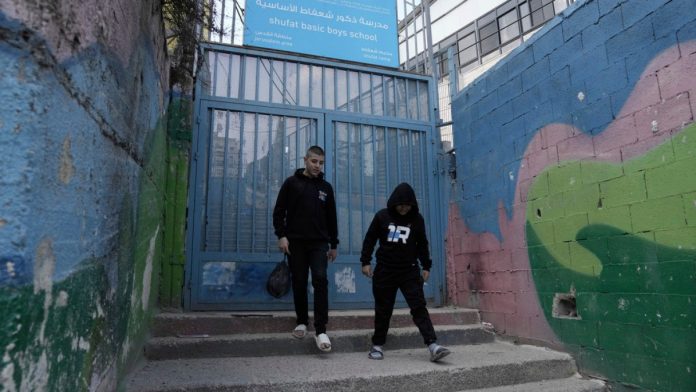
Israel orders closure of UN-run schools in East Jerusalem

“This morning, Israeli officials from the Jerusalem Municipality, accompanied by Israeli Security Forces, forcibly entered six UNRWA schools in East Jerusalem. They gave closure orders for the schools effective in 30 days.” Philippe Lazzarini, UNRWA commissioner-general, said on X.

He added that “some 800 boys & girls are directly impacted by these closure orders and are likely to miss finishing their school year.”

In a statement, the Jerusalem Governorate announced Israeli forces raided a UNRWA girls’ school in the Shu’fat refugee camp in East Jerusalem and handed a military order requiring the closure of the school as of May 8.

Under the order, no one will be allowed to enter the school building after May 8, including principals, teachers, and other staff.

“Any violation of the order would be considered a criminal offense,” the order says.

Israel cited the lack of a license to open a school and did not specify for how long the school will remain closed.

The Palestinian Foreign Ministry denounced the Israeli authorities’ decision to shut down six UNRWA schools in Shu’fat refugee camp, the neighborhoods of Silwan, Wadi al-Joz, Sur Baher.

The ministry called for “the intensified international efforts to preserve UNRWA’s mandate and ensure its continuity.”

The Palestinian Council of Ministers also decried the closure of schools and called on the UN “to assume its legal and moral responsibilities to protect UNRWA institutions in Jerusalem.”

In October 2024, the Israeli Knesset (parliament) passed two laws banning UNRWA’s operations in Israel and areas under its occupation and prohibiting Israeli authorities from having any contact with the agency. The laws took effect on Jan. 30.

Israel alleges that UNRWA employees were involved in a Hamas attack on Oct. 7, 2023, a charge vehemently denied by the UN agency.

Established in 1949, UNRWA has served as a critical lifeline for Palestinian refugees, supporting nearly 5.9 million people across Gaza, the West Bank, Jordan, Syria, and Lebanon.

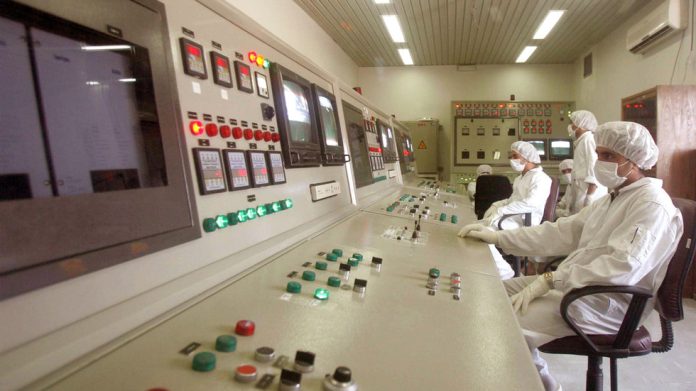
Iran Parliament Commission warns of devastating consequences of threats to nuclear industry

Iran Nuclear Program

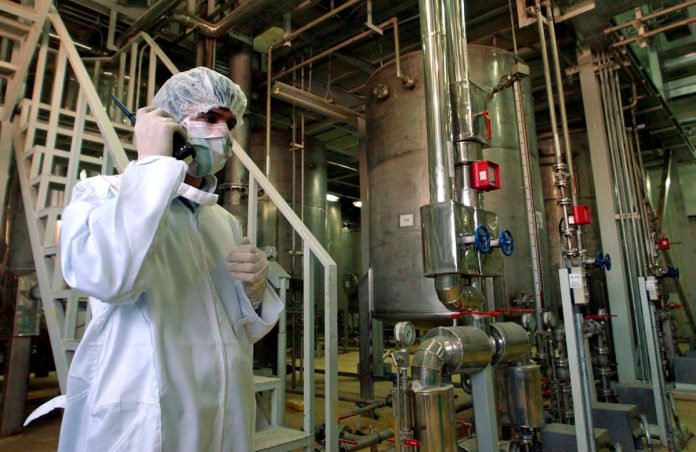
In a statement marking Iran’s National Nuclear Technology Day (April 9), the commission reaffirmed Iran’s right to pursue a peaceful nuclear program under the Nuclear Non-Proliferation Treaty (NPT), to which Iran is a signatory.

The statement highlighted the broad applications of nuclear technology, including medicine, agriculture, veterinary science, livestock breeding, electricity generation, and water management.

It emphasized that access to these peaceful advancements is an inalienable right of the Iranian people.

The commission reminded the International Atomic Energy Agency (IAEA) of its duties to assist nuclear nations in accessing peaceful nuclear technology, adding the agency, as a tool of arrogant powers, has not only withheld support from Iran but actively obstructed its peaceful nuclear progress.

Additionally, the commission urged other countries to honor their commitments—including constructing nuclear power plants in Iran—instead of issuing threats. It referenced billions of dollars in unpaid debts owed to Iran, suggesting these funds should be directed toward nuclear energy projects.

The commission also expressed full support for Iran’s nuclear scientists, urging them to spare no effort in advancing the country’s nuclear industry.

Ball is in US court: Iran FM

Abbas Araghchi

“Regarding Monday’s comments by President Donald Trump, Iran is ready to engage in earnest and with a view to seal a deal. We will meet in Oman on Saturday for indirect negotiations,” the top Iranian diplomat stated in a contribution to the Washington Post on Tuesday.

He further described the indirect negotiations as much an opportunity as it is a test.

The full text of article by Foreign Minister Abbas Araqchi is as follows:

The Ball Is In America’s Court

By Seyed Abbas Araqchi, the Minister of Foreign Affairs of the Islamic Republic of Iran

In recent weeks, a series of messages and letters have been exchanged between Iran and the United States. Contrary to some interpretations, these communications — at least on our side — have been neither symbolic nor ceremonial. We view them as representing a genuine attempt to clarify positions and open a window toward diplomacy.

Regarding Monday’s comments by President Trump, Iran is ready to engage in earnest and with a view to seal a deal. We will meet in Oman on Saturday for indirect negotiations. It is as much an opportunity as it is a test.

The model of engagement we propose is not novel. The United States itself is intermediating indirect talks between Russia and Ukraine — a much more intense and complex conflict entailing strategic, territorial, military, security and economic aspects.

I personally also have the experience of leading indirect talks with the United States. Mediated by the European Union back in 2021, that process — though more convoluted and demanding than direct engagement — proved both possible and productive. Though we did not cross the finish line then, it was mainly because of a lack of real determination by the Joe Biden administration.

Pursuing indirect negotiations is not a tactic or reflection of ideology but a strategic choice rooted in experience. We face a significant wall of mistrust and harbor serious doubts about the sincerity of intentions, made worse by U.S. insistence on resuming the “maximum pressure” policy prior to any diplomatic interaction.

To move forward today, we first need to agree that there can be no “military option,” let alone a “military solution.” President Trump clearly recognizes this reality in urging a ceasefire as the first course of action to end the Ukraine conflict.

Spending taxpayer dollars on escalating the U.S. military presence in our region, potentially endangering American soldiers far away from home, is not conducive to a diplomatic outcome. The proud Iranian nation, whose strength my government relies on for real deterrence, will never accept coercion and imposition.

We cannot imagine President Trump wanting to become another U.S. president mired in a catastrophic war in the Middle East — a conflict that would quickly extend across the region and cost exponentially more than the trillions of taxpayer dollars that his predecessors burned in Afghanistan and Iraq.

Looking ahead, two additional facts deserve emphasis.

First, President Trump might not like the Joint Comprehensive Plan of Action (the nuclear deal signed in 2015), but it contains one vital commitment: that “Iran reaffirms that under no circumstances will Iran ever seek, develop or acquire any nuclear weapons.”

Ten years after the JCPOA was concluded — and nearly seven years after the United States unilaterally walked away from it — there is no evidence that Iran has violated this commitment. This has been reaffirmed by U.S. intelligence assessments time and again. Tulsi Gabbard, the director of national intelligence, recently acknowledged that “Iran is not building a nuclear weapon and Supreme Leader [Ayatollah Ali] Khamenei has not authorized the nuclear weapons program he suspended in 2003.”

We have objections to many aspects of U.S. global policy, and particularly to the West’s policies in our region, including its double standards on proliferation. By the same token, there may exist possible concerns about our nuclear program. We proved our readiness to address those concerns when we agreed to the 2015 deal — enabled by mutual respect and equal footing.

But even as we remain committed to the JCPOA, our experience of the unwillingness or inability of the United States and the E.U. to fulfill their commitments under the nuclear deal has persuaded many in Iran to insist on guarantees for mutual fulfillment of commitments.

Second, there is a serious misconception that needs to be cleared up. Many in Washington portray Iran as a closed country from an economic point of view. The truth is that we are open to welcoming businesses from around the world. It is the U.S. administrations and congressional impediments, not Iran, that have kept American enterprises away from the trillion-dollar opportunity that access to our economy represents.

Indeed, when the United States agreed to license the sale of passenger aircraft as a part of the JCPOA, Iran immediately negotiated a contract with Boeing to buy 80 planes. To say that the scope for trade and investment in Iran is unparalleled is an understatement.

Our proposal for indirect negotiations remains on the table. We believe that if there is true will, there is always a way forward. As recent history has shown, diplomatic engagement worked in the past and can still work. We are willing to clarify our peaceful intent and take the necessary measures to allay any possible concern. For its part, the United States can show that it is serious about diplomacy by showing that it will stick to any deal it makes. If we are shown respect, we will reciprocate it.

Military buildups send the exact opposite signal. Mark my words: Iran prefers diplomacy, but it knows how to defend itself. We have never yielded to threats in the past, and we will neither do so now nor in the future. We seek peace, but will never accept submission.

The ball is now in America’s court. If it seeks a genuine diplomatic resolution, we have already shown the way. If, instead, it seeks to impose its will through pressure, it must know this: The Iranian people respond decisively to the language of force and threat in a unified way.

There is a chance for the United States to finally have a president of peace. Whether or not to seize that opportunity is a choice.

EU welcomes Iran-US negotiations

The European Union

“We take note of the announced talks between the U.S. and Iran. Any development increasing the chances of a diplomatic outcome goes into the right direction, and we would welcome it,” the spokesperson told IRNA’s correspondent in London on condition of anonymity.

“We reiterate our commitment to a diplomatic solution which is the only sustainable way to address Iran’s nuclear program, as stressed by the High Representative at the United Nations Security Council recently,” the official added.

The spokesperson also stressed the need for “a multilateral approach” and confirmed that the E.U. maintains “direct channels of communication with Iran.”

Iranian and American officials are expected to hold their first round of indirect talks in Oman on Saturday.

Foreign Minister Abbas Araqchi, who will lead the Iranian delegation, said on Tuesday that a deal could be within reach if the U.S. comes to the table with a genuine will to negotiate an agreement.

President Donald Trump, who withdrew the U.S. from a previous deal with Iran during his first term, has said he prefers direct talks with Iran and has threatened to bomb the country if no deal is reached.

Tehran has ruled out direct negotiations under pressure and threats.

Algerian president urges Islamic countries’ solidarity against Israel

Gaza War

Tebboune met with Iran’s Foreign Minister, Seyed Abbas Arqhchi, in Algiers on Tuesday. During the meeting, he emphasized the necessity of synergy among Islamic and developing countries to address the existing challenges against the rule of law, international peace, and security.

He also expressed satisfaction with the growing and positive relations between Algeria and Iran and urged the follow-up on implementing agreements between the two countries.

Iran’s Foreign Minister, in turn, highlighted the excellent political relations and close cooperation between the two countries in international forums, as well as their shared stances, including support for the Palestinian cause.

Araqchi reiterated the Islamic Republic of Iran’s foreign policy of strengthening relations with Islamic nations, particularly the significant and influential country of Algeria.

During the meeting, discussions were held on enhancing bilateral relations, key regional and international developments—especially the latest situation in occupied Palestine, the ongoing crimes of the Zionist regime in Gaza, and its repeated aggressions against Lebanon and Syria.

Speculations, cautious optimism rife in Iran prior to nuclear talks with US in Muscat

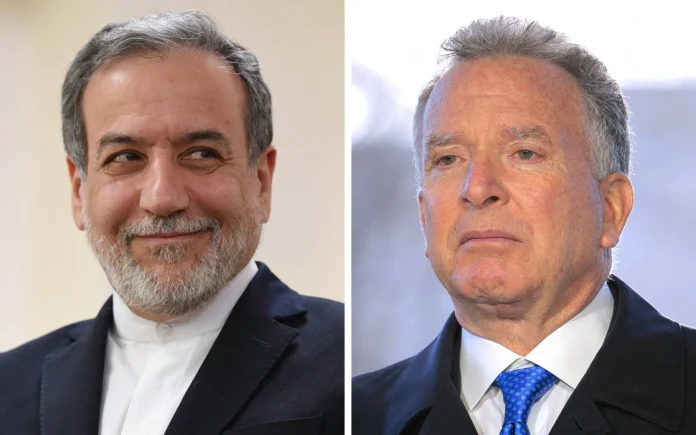
Araghchi Witkoff

In an editorial on Wednesday, Javan advised “In exchange, Iran seeks the complete removal of sanctions and an end to overt US support for opposition groups.”

Iranian Foreign Minister Seyed Abbas Araghchi confirmed on Tuesday the commencement of ‘indirect’ negotiations with the US.

Javan wrote, while missile programs remain off the table, regional dynamics are likely to be discussed, with Iran reiterating its stance against proxy forces and urging the US to engage directly with regional actors.

Former Iranian foreign minister Mohammad Javad Zarif expressed optimism, stating that a mutually beneficial agreement is achievable if both sides demonstrate commitment and capability.

Meanwhile, domestic debates continue, with figures like Abbas Abdi highlighting the role of hardline factions in seeking to divert the negotiations.

In an editorial in E’temad daily, Abdi criticized the disproportionate influence of these groups, emphasizing their reliance on state resources and limited public support.

The upcoming talks hold significant implications for Iran’s international relations and internal political landscape amid dire economic situation, according to him.

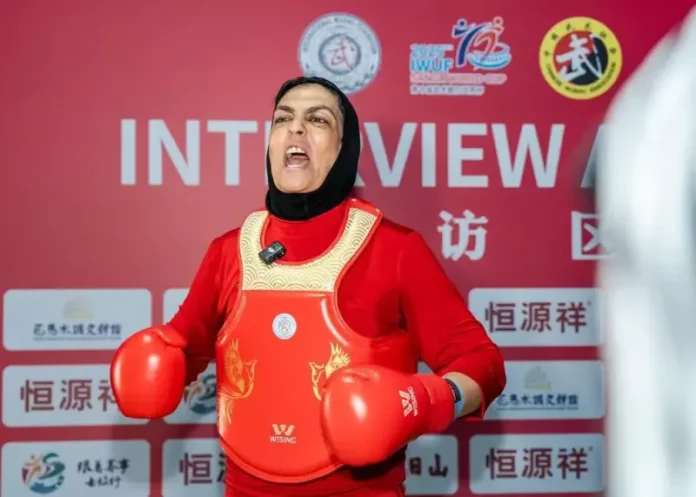
Iran’s Shahrbanou Mansourian wins gold at Sanda World Cup

Mansourian triumphed over Tunisia’s Rimel Khalifi in a technical-point victory on the final day of the tournament on Wednesday.

Earlier, Sedigheh Daryaee (65kg) had also claimed gold for Iran, defeating Australia’s Nicole Luo in another decisive match. Both victories highlight Iran’s strong presence in the competition, which began on Monday.

Two more Iranian athletes, Mohsen Taghavi and Soheila Mansourian, are set to compete later on Wednesday for medals in their respective categories.

The event, organized by the International Wushu Federation, has gathered top martial artists from around the world.

China calls on US to show ‘sincerity’ on Iranian nuclear issue

Iran nuclear program

“As the country that unilaterally withdrew from the Joint Comprehensive Plan of Action (JCPOA) and contributed to the current situation, the US should show political sincerity, uphold the spirit of mutual respect, engage in dialogue and consultation and stop the wrongdoing of threatening and exerting maximum pressure,” Foreign Ministry spokesman Lin Jian told reporters in Beijing.

The statement from Beijing came after US President Donald Trump said Monday that Washington would engage in direct “very high-level” talks with Iran about Tehran’s nuclear program, adding that the talks are “in Iran’s best interests.”

But Iranian Foreign Minister Abbas Araghchi insisted that the talks would be though a mediator.

“Iran and the United States will meet in Oman on Saturday for indirect high-level talks,” he wrote on X.

“It is as much an opportunity as it is a test. The ball is in America’s court.”

Russia, China and Iran held a two-day talk in Moscow on Iran’s nuclear program. Beijing hosted similar talks at the level of vice foreign ministerial level last month.

Beijing also encouraged a solution through political and diplomatic ways, “under the current situation, parties of the Iranian nuclear issue should make joint efforts, enhance dialogue and communication and avoid escalation,” said Lin.

“China will continue to maintain communication with relevant parties, promote peace talks and work for a diplomatic settlement that accommodates parties’ legitimate concerns so as to uphold the international non-proliferation regime and to keep the Middle East peaceful and stable,” he added.

Trump has threatened military action against Iran if a deal cannot be reached and repeated Monday that Tehran “is going to be in great danger” if the talks fail.

Russia welcomes US-Iran negotiations on nuclear program

Kremlin

Speaking at a press briefing in Moscow, Peskov said Moscow views the developments positively.

“We are aware that certain contacts, both direct and indirect, are planned in Oman. Naturally, this is something we can only welcome, as it may help de-escalate tensions surrounding Iran,” he added.

On Monday, US President Donald Trump announced upcoming direct talks with Iran, saying a meeting “almost at the highest level” was scheduled for Saturday. He expressed cautious optimism about reaching an agreement, adding that “no one wants the opposite.”

But Iranian Foreign Minister Abbas Araghchi has stated that Tehran and Washington will hold “indirect high-level talks” in Oman on Saturday.

“Iran and the United States will meet in Oman on Saturday for indirect high-level talks,” Araghchi posted on X on Tuesday morning.

“It is as much an opportunity as it is a test. The ball is in America’s court,” he stated.