Tuesday, May 5, 2026
Home Blog Page 442

Iranian media reveal complex stakes in nuclear talks amid domestic, foreign opposition

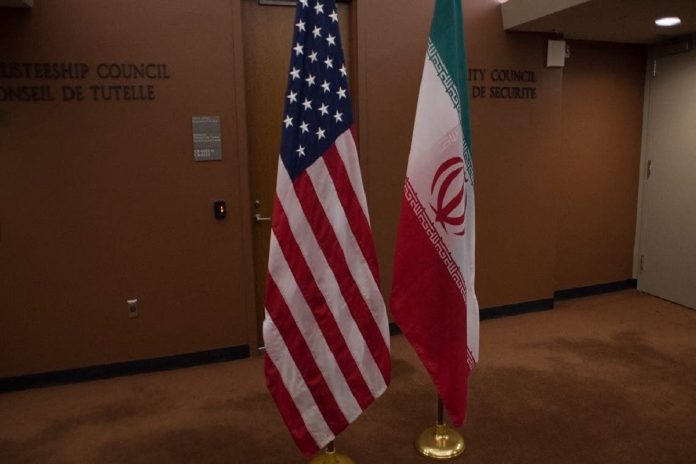
Iran US Flags

Jomhouri-e Eslami argued that negotiations face opposition from two domestic factions: ideological hardliners and “sanctions profiteers” allegedly earning $10-15 billion annually from trade restrictions.

The paper notably highlighted that Israeli prime minister Benjamin Netanyahu and exiled opposition groups fiercely oppose dialogue, suggesting this foreign opposition validates the talks’ merit.

Reformist-leaning Ham Mihan proposed a practical solution, suggesting simultaneous pro- and anti-talks rallies to measure public support, claiming negotiation opponents represent “less than 3%” of citizens despite dominating state media.

The outlet cited former Iranian vice president Mohammad Mokhber’s recent disclosure that Israel allegedly sabotaged two near-complete deals in 2022 and 2023.

The conservative newspaper Khorsan has revealed a nuanced position on Iran-US negotiations, claiming that while the Leader Ayatollah Khamenei has permitted indirect talks, such dialogue remains “undesirable” within his ideological framework.

The paper’s analysis presents a paradox: while confirming the talks occur with the Leader’s authorization – based on “analyzable evidence and statements by senior officials” – it simultaneously argues they contradict his publicly expressed skepticism about negotiations with the US.

The debate emerges as US-Iran talks will start on Saturday in Oman, with Netanyahu’s regime reportedly lobbying Washington against sanctions relief.

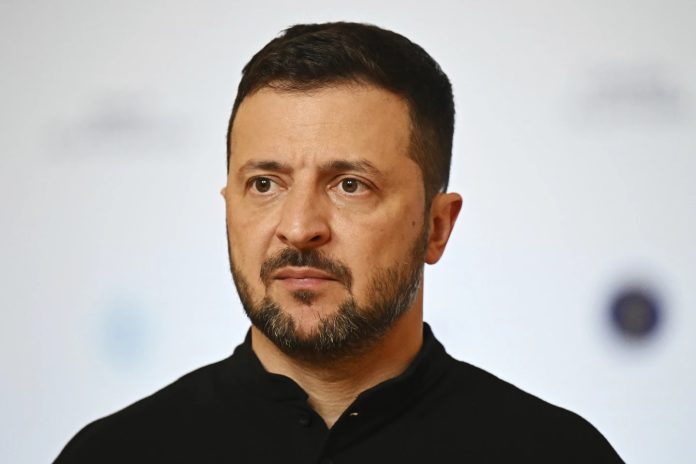
Zelensky claims over 150 Chinese citizens fighting for Russia in Ukraine

Zelensky

Zelensky told reporters in Kyiv on Wednesday that Russia was recruiting Chinese citizens via social media and that Chinese officials were aware of the efforts. He added that Ukraine was trying to assess whether the recruits were receiving instructions from Beijing.

“The ‘Chinese’ issue is serious. There are 155 people, with names and passport details, who are fighting against Ukrainians on the territory of Ukraine,” Zelensky said, adding, “We believe that there are many more of them.”

Zelensky stated on Tuesday that the Ukrainian military had captured two Chinese men fighting alongside the Russian army on Ukrainian soil. It was the first time Ukraine had made such a claim about Chinese fighters in the war.

On Wednesday, Zelensky said he was willing to exchange the two prisoners of war for Ukrainian soldiers held captive in Russia.

Chinese Ministry of Foreign Affairs spokesperson Lin Jian told a news conference earlier on Wednesday that the suggestion that many Chinese citizens were fighting in Ukraine was “absolutely groundless”.

“The Chinese government has always asked its citizens to stay away from areas of armed conflict [and] avoid involvement in armed conflicts in any form,” he stated, adding that Beijing was verifying relevant information with Kyiv.

Russia has not commented on the matter.

China presents itself as a neutral party in the conflict and says it is not sending lethal assistance to either side, unlike the United States and other Western nations.

But Beijing has provided strong diplomatic support for Russia since Moscow launched its full-scale invasion of its neighbour in February 2022 and has also offered an economic lifeline through the trade in energy and consumer goods.

US officials have accused Iran of providing Russia with drones, while US and South Korean officials say North Korea has sent thousands of troops and ammunition to help Russia on the battlefield.

With the US and Europe having provided substantial military support and diplomatic heft for Ukraine, the war has, to some degree, become a contest between power blocs.

On Tuesday, Zelensky claimed Ukrainian troops had captured the two Chinese citizens fighting with Russian forces in the Donetsk region.

The media outlet Ukrainska Pravda, citing the Ukrainian army, reported that one of the captives had paid $3,480 to an intermediary in China to join the Russian army because he wanted to receive Russian citizenship.

The captive, who is now cooperating with the Ukrainian authorities, also reportedly said he was trained in the Russian-occupied Luhansk region as part of a group of Chinese nationals, some of whom had legal issues back home, according to Ukrainska Pravda.

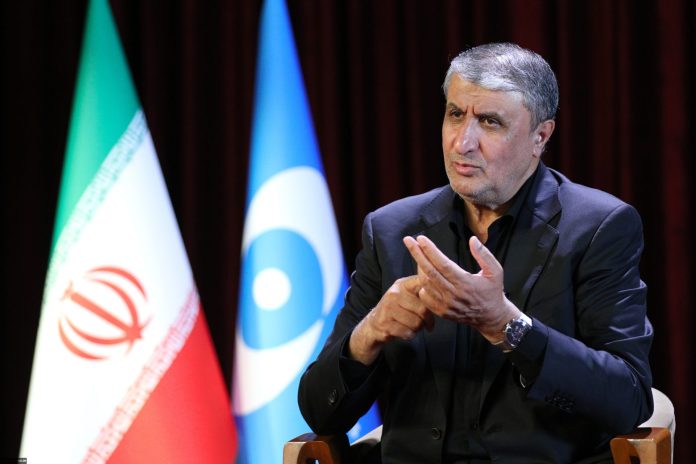
Iran touts nuclear progress amid tensions with West, confirms IAEA chief’s visit

Mohammad Eslami

Eslami, who also serves as vice president, stated that Iran has entered the “third phase” of nuclear development, achieving industrial-scale uranium enrichment and mastering the full nuclear fuel cycle.

He said over the past three years, the country has recorded 150 nuclear-related achievements, including expanded enrichment capabilities, with indigenous centrifuge production now operating at an industrial level.

Breakthroughs were also made in radiopharmaceuticals, including three new cancer-treatment drugs that Eslami pointed out are among the world’s first.

He also said Iran remains committed to its long-term goal of 20,000 megawatts of nuclear power capacity by 2041, with the Bushehr plant already generating 7 billion kilowatt-hours annually.

Eslami confirmed that IAEA Director General Rafael Grossi will visit Tehran later this month, though the agenda remains unsettled.

He stressed that 120 IAEA inspectors are currently approved to monitor Iran’s nuclear sites, calling their access “unprecedented in scope.”

However, he said that the West is distorting IAEA reports for political leverage, particularly as the tenth year of the JCPOA nuclear accord approaches, when nuclear-related UN sanctions are set to expire under the deal’s terms.

As for the nuclear talks between Iran and the US scheduled for Saturday, the nuclear chief dismissed demands for zero enrichment as a ‘joke’ and rejected any comparison to Libya’s disarmament model, vowing Iran would never dismantle its nuclear infrastructure.

Former Iran Central Bank chief, his deputy cleared of all graft charges

Iran Court

Seif and Araghchi had been sentenced to 20 years in jail and paying 1000 billion tomans for currency manipulation. But their prosecution was halted after seven years.

Seif and Araghchi had been found guilty of disrupting Iran’s currency market and facilitating illegal foreign exchange transactions worth $159.8 million and €20.5 million during their tenure. The rulings of the special courts for economic crimes were not appealable, but the defendants requested a retrial through high-ranking authorities, and the Supreme Court referred the case to a court of equal rank.

In the subsequent trial, the court again sentenced Seif and Araqchi to harsher sentences, and this ruling was also overturned by the Supreme Court following their objections, and the case was referred to the court for the third time.

The third court, in an unexpected move, deemed the charges as non-judicial and said handling the case was beyond the jurisdiction of the judiciary, placing it within the jurisdiction of the Administrative Offenses Organization.

Finally, the case was investigated by the Administrative Offenses Organization, and Seif and Araghchi were acquitted of all charges.

At least 6k Gaza children malnourished as Israel keeps blocking aid

Gaza War

The ministry statement came on Wednesday, a day after United Nations chief Antonio Guterres rejected a new Israeli proposal to control aid deliveries in Gaza, saying it risks “further controlling and callously limiting aid down to the last calorie and grain of flour”.

The Health Ministry warned that “the lack of adequate nutrition and drinking water will compound health challenges, with the continued ban on vaccinations for children, especially polio vaccinations”.

No aid has been delivered to the enclave of 2.3 million people since March 2 as Israel continues to seal vital border crossings, barring the entry of everything from food to medical supplies and fuel.

This has forced the closure of 21 nutrition centres, disrupting care for about 350 children already severely malnourished, according to the UN.

Last month, the UN World Food Programme (WFP) also warned that hundreds of thousands of people in Gaza are at risk of severe hunger and malnutrition as an expansion of Israeli military activity severely disrupts food assistance operations.

“WFP and partners from the food security sector have been unable to bring new food supplies into Gaza for more than three weeks,” the organisation said in a statement, adding that its remaining food stocks would support operations for a maximum of two weeks.

Israel has repeatedly used food and international humanitarian aid as a tool of collective pressure against Palestinian people over 18 months of its devastating war on the Gaza Strip, which has killed more than 50,000 people, according to the Health Ministry.

“All basic supplies are running out,” stated Juliette Touma from UNRWA, the UN agency for Palestinian aid.

“It means babies, children are going to bed hungry. Every day without these basic supplies, Gaza inches closer towards very, very deep hunger.”

COGAT, an Israeli military unit responsible for civilian matters in the occupied Palestinian territory, last week also met representatives from UN agencies and international aid groups and proposed “a structured monitoring and aid entry mechanism” for Gaza, claiming that aid was being diverted away from civilians by Hamas.

But Jonathan Whittall, a senior UN aid official for Gaza and the occupied West Bank, said last week there was no evidence of aid being diverted.

The military halted the flow of water from Israeli company Mekorot to the Gaza Strip last week, effectively cutting off 70 percent of the Palestinian enclave’s total water supply.

Hosni Mehanna, a spokesman for Gaza municipality, said the disconnection affects the main pipeline located in the Shujayea neighbourhood in eastern Gaza City, where Israeli forces have been conducting a military assault since Thursday.

“The reasons behind the interruption remain unclear, but we are coordinating with international organisations to inspect whether the pipeline was damaged due to the heavy Israeli bombardment in the area,” Mehanna added.

“Regardless of the cause, the consequences are dire. If the flow of water from Mekorot is not restored soon, Gaza will face a full-blown water crisis,” he continued.

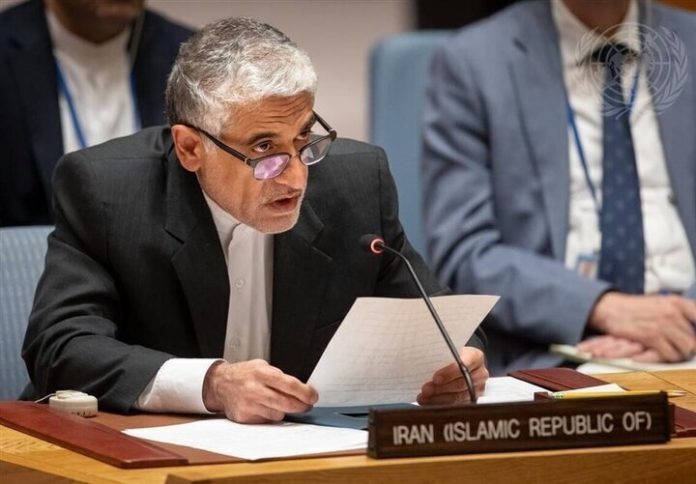
IAEA can resolve remaining issues through independent attitude: Iran’s envoy

Amir Saeed Iravani

“Iran and the Agency have been cooperating for a long time, which enables them to resolve their few remaining differences,” Ambassador Amir Saeed Iravani said while addressing the UN Disarmament Commission on Tuesday.

Iravani, however, stated that this is “provided that external political pressures on the Agency cease and the IAEA adopts an independent, technical, impartial, and professional approach.”

He was referring to a dispute triggered by the Agency’s claims of “uranium traces” found at “undeclared nuclear sites” in Iran, allegations Tehran firmly rejects.

In May 2023, the IAEA announced it had closed the file on one of these alleged “undeclared” sites after progress was made in cooperation with Tehran. Iran has consistently stated it is prepared to continue its collaboration with the Agency to resolve any remaining issues.

Iravani underscored Iran’s unwavering commitment to the Non-Proliferation Treaty (NPT) and its constructive cooperation with the IAEA, noting that 22% of all IAEA inspections globally have taken place in Iran—an unprecedented level of transparency.

“I would like to underscore that Iran remains committed to the NPT and works constructively with the IAEA to ensure transparency and compliance with safeguards agreements.”

“To that end, Iran has allowed extensive IAEA inspections, amounting to 22% of all IAEA inspections. This level of inspection has never been carried out in any country before in history,” he added.

The ambassador also strongly condemned Israel’s undeclared nuclear arsenal, calling it the only WMD holder in West Asia. Backed by the United States, Israel continues to block regional disarmament efforts, including Iran’s longstanding proposal for a nuclear-weapon-free zone in the region.

“With six decades of deception and a clandestine WMD arsenal, the Israeli regime, the sole possessor in the Middle East, enjoys the backing of the United States and has consistently opposed all initiatives, including Iran’s proposal since 1974, to establish a nuclear-weapon-free zone in the Middle East,” Iravani underlined.

He urged the international community to pressure Israel to join the NPT as a non-nuclear-weapon state and place all of its nuclear facilities under IAEA oversight.

“To demonstrate a genuine commitment to the total elimination of nuclear weapons, the international community must address this glaring exception and compel Israel—an outlaw regime that has openly threatened others with nuclear annihilation while falsely accusing them of proliferation—to renounce its nuclear arsenal, join the NPT, and place all its nuclear facilities and activities under comprehensive IAEA safeguards.”

Elsewhere in his remarks, Iravani warned of rising threats to global peace and security due to escalating geopolitical tensions, increased militarism, and the continued existence and modernization of over 12,000 nuclear weapons, particularly by nuclear-armed states failing to meet their disarmament obligations under the NPT.

He criticized the United States and NATO for their nuclear double standards—advocating non-proliferation while actively modernizing and deploying nuclear weapons, including hosting U.S. warheads in Europe. He specifically condemned the recent U.S. ICBM test, calling it a clear violation of disarmament norms.

In conclusion, Iravani warned against the monopolization and militarization of emerging technologies, calling for their peaceful use through legally binding international agreements.

Israel estimates ‘only a quarter of Hamas tunnels in Gaza destroyed’ since start of war

Hamas

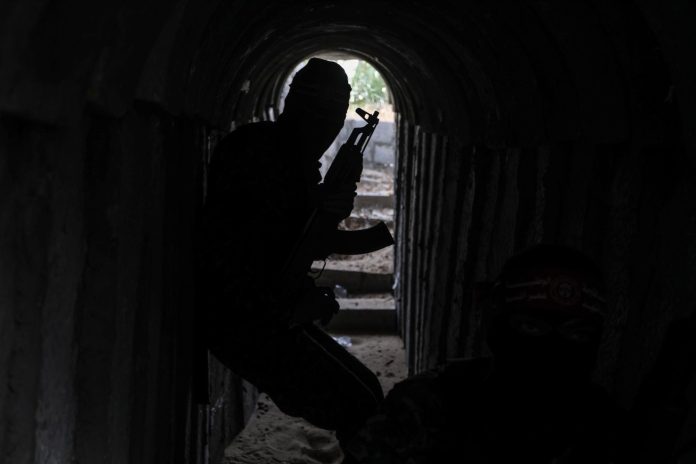
According to officials speaking to Israeli outlet Mako, despite more than 18 months of onslaught on the Gaza Strip, there still remains an extensive tunnel network through the territory, including from Egypt.

The security officials said there has been a reduction in face-to-face fighting between Palestinian fighters and Israeli forces, with armed groups disappearing into tunnels.

There was a proliferation of tunnels built between Gaza and Egypt’s Sinai since 2007 owing to the siege imposed on the enclave by Israel. These facilitated smuggling goods and arms, but also family reunions.

Egyptian authorities destroyed more than 2,000 of these tunnels linking Sinai and Gaza between 2011 and 2015, citing security concerns.

The Mako report quoted experts as saying that Israel’s control of the Philadelphi Corridor – a 14km-long, 100 metre-wide demilitarised buffer zone that runs along the entirety of the border between Egypt and Gaza – failed to stymie the construction of tunnels.

In February, Israeli Defence Minister Israel Katz said the Philadelphi Corridor would remain a buffer zone despite the continuing proliferation of tunnels.

“I saw with my own eyes quite a few tunnels penetrating Philadelphi,” Katz added.

According to the Palestinian health ministry, at least 1,500 Palestinians have been killed by Israeli attacks in Gaza since Israel broke the ceasefire last month.

The overall death toll since the start of the war is now over 50,000, while virtually the entire population of the enclave has been displaced since October 2023. At least 10,000 more Palestinians are missing and presumed dead.

Iran showcases 6 achievements on National Nuclear Technology

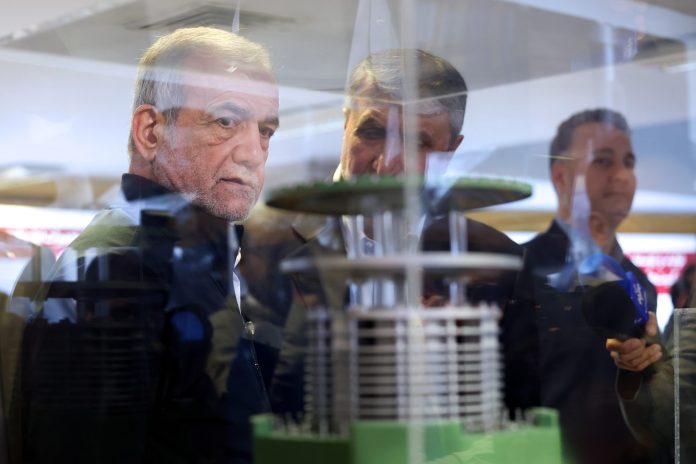
In a ceremony attended by Iranian President Masoud Pezeshkian and Head of the Atomic Energy Organization of Iran Mohammad Eslami, six major homegrown achievements in the nuclear industry were unveiled on April 9.

After touring an exhibition of the nuclear industry, President Pezeshkian was briefed by the experts and specialists on the latest developments and measures in the nuclear sectors.

The exhibition, divided into three sections, displayed the latest achievements of the Iranian scientists, including those in the nuclear fuel cycle, energy and electricity, heavy water production and its derivatives, radiopharmaceuticals, and plasma technology.

The first section was dedicated to the fuel cycle and its different parts, including airborne geophysics, exploration projects at uranium mines, yellow cake production, uranium processing, as well as enrichment processes, the president’s official website reported.

The second section introduced projects related to nuclear power plants. The projects include those on the construction of the second and third units of the Bushehr Nuclear Facility, the construction of Karoun Nuclear Power Plant, localization of the production of research and power reactors, as well as designing and production of the spare parts for Bushehr Nuclear Plant.

The third section, dedicated to nuclear industry application, introduced various technologies and products such as heavy water, radiopharmaceuticals, nuclear measurement equipment, plasma technology, application of radiation in medicine and agriculture, blood irradiation, production of industrial accelerators, and new technologies such as quantum and quantum technologies. In addition, the designing and manufacturing of various industrial and medical lasers were exhibited in the pavilion.

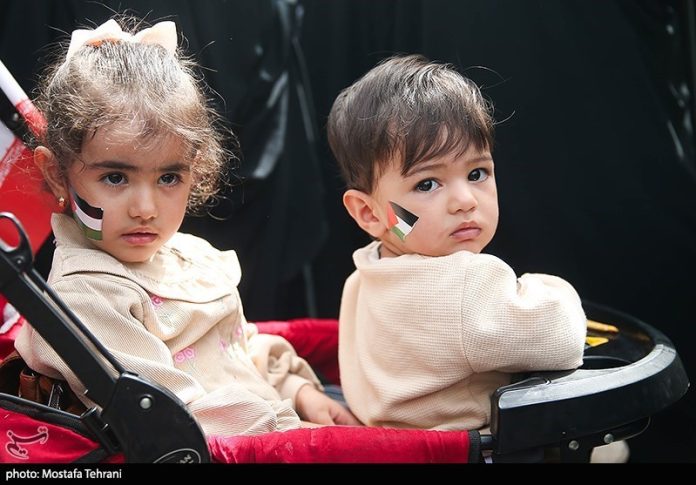
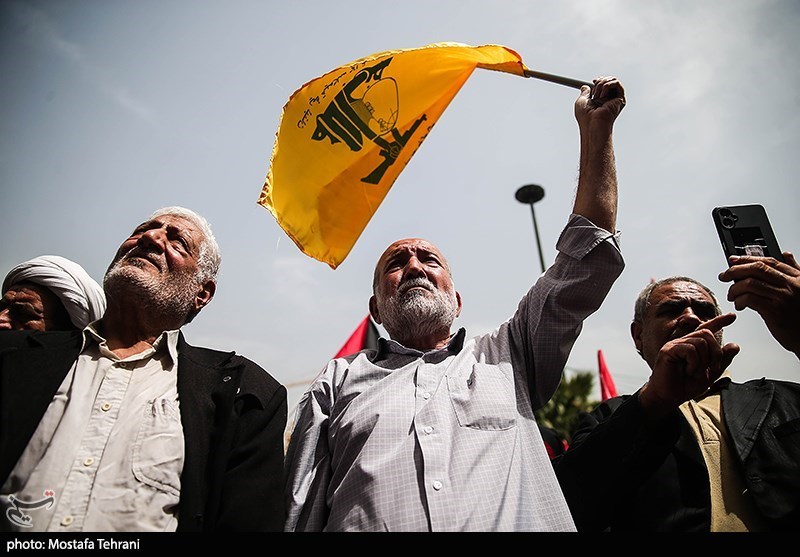
Iranians rally for Gaza

President Pezeshkian says Iran has never sought to build nuclear weapons

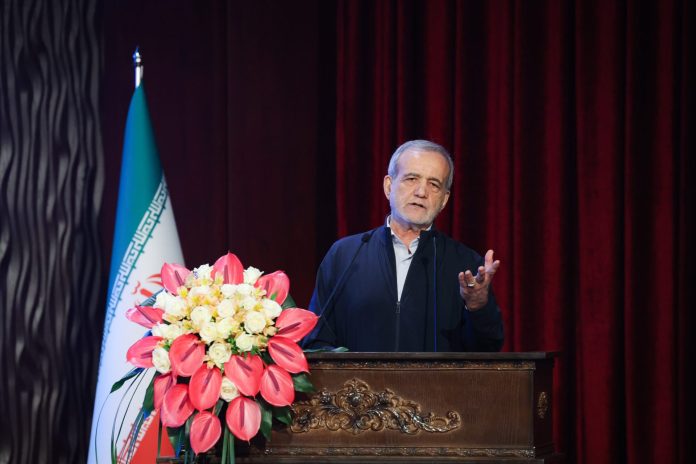
Speaking on Wednesday at a ceremony marking Iran’s National Nuclear Technology Day, President Pezeshkian rejected the enemies’ claims about Iran’s efforts to build an atomic bomb, saying that Iran has repeatedly undergone verification and demonstrated its adherence to international commitments.

Pezeshkian also said that Iran does not want war but will stand firm and resolute against any aggression, relying on the knowledge and capabilities created by the nation’s children. Iran is not the initiator of aggression and has no intention of attacking any country.

Referring to America’s unwavering support for the Zionist regime, he said that today, the Zionist regime is freely massacring women and children without any regard for humanity or adherence to international law, and the United States openly supports these crimes. If Iran were ever to become defenseless and abandon its resistance, others would never come to its aid and would impose the same fate on Iran as they have today on the innocent people of Gaza and Lebanon.

He also rejected the enemies’ accusations, labeling Iran as terrorist, adding that Iran itself is a victim of terrorism. Over 23,000 Iranians have been martyred in terrorist attacks.

President Pezeshkian added that the enemies assassinated the best and most dedicated figures of Iran. Their goal was to eliminate influential figures in the country to portray Iran as incapable of progress. But they are unaware that our country does not rely on just one or two individuals.

In another part of his remarks, President Pezeshkian emphasized that Iran is ready to negotiate with the US, but only indirectly, as there is no trust in them. On one hand, they impose the harshest sanctions on Iran, and on the other, they call for dialogue. Iran will engage in talks with dignity and honor.