Friday, December 26, 2025
Home Blog Page 4422

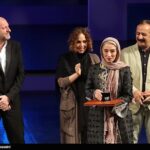
Fajr International Film Festival Culminates – Icelandic “Rams” Bags Top Prize

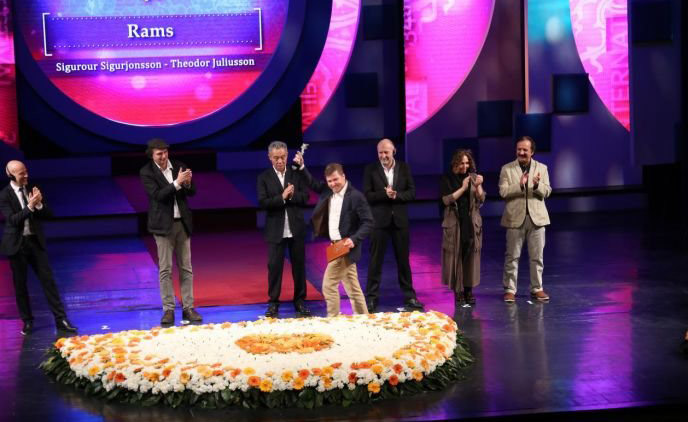
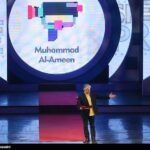
Rams, a humanist drama by Icelandic director Grimur Hakonarson, has won the Golden Simorgh for best film in the main competition – Cinema Salvation – at the 34th Fajr International Film Festival.

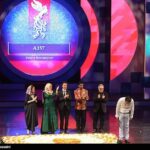
Producer Grimar Jonsson was not in attendance at the closing ceremony held at Tehran’s Vahdat Hall on Monday, so a member of the film’s art department received the award.

The story of the film is set in a remote Icelandic farming valley, where two brothers who haven’t spoken in 40 years have to come together in order to save what’s dearest to them – their sheep.

The movie enjoyed further success, as stars Sigurour Sigurjonsson and Theodor Juliusson shared the award for best actor.

The Jury special award didn’t leave the country, as Iranian director Puria Azarbaijani received the honour for Arvand, about an Iranian war veteran who is suffering from a mental disorder.

The Silver Simorgh for best director was presented to Turkish filmmaker Emin Alper for Frenzy, and Spanish writer/director Asier Altuna Iza won the award for best screenwriter for When a Tree Falls.

The Silver Simorgh for best actress went to Pantea Panahiha for her role in Iranian drama Breath by director Narges Abyar.

Seeing, directed by Soheil Amirsharifi from Iran, won the Silver Simorgh for best short film.

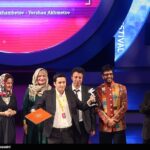
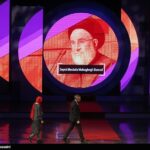
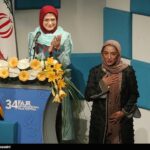
Below is a selection of photos from the festival’s closing ceremony.

Read more – Selected interviews from the festival:


“I Could Never Complain about Iranian Acting” – Alexander Sokurov

“FIFF Is Just Like Western Film Festivals” – Marcin Luczaj

Magali Van Reeth, French Jury Member

Martin Radich, UK Director, on Norfolk


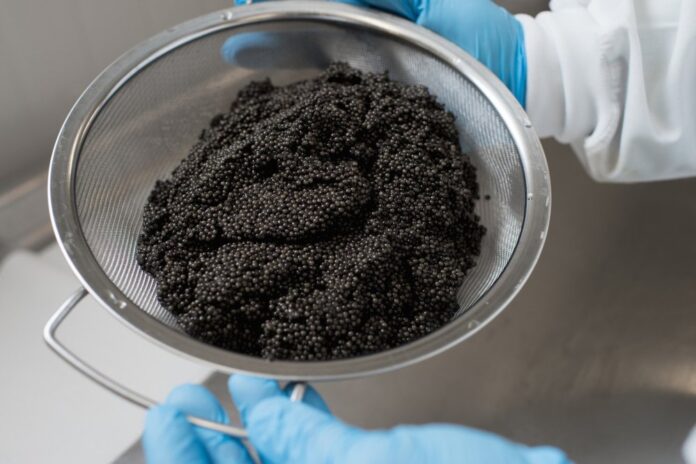
Caviar exports from Iran up 183% yr/yr

The country exported more than one tons of the product, i.e., 65 percent of the total produced amount domestically in the past year, to eight different countries namely Japan, Germany, the United Arab Emirates, the United Kingdom, Italy, Belgium, South Korea, and Norway.

The exported volume registered 46 percent growth in weight compared to 1393, the report said.

Caspian Sea sturgeon accounts for 90 percent of the world’s caviar. The Major population of sturgeon lives in the southern parts of the Caspian Sea where the sea is much deeper.

After the collapse of the former Soviet Union in 1991, different species of sturgeon faced extinction due to uncontrolled fishing in the Caspian Sea.

In 2006, the Convention on International Trade in Endangered Species (CITES), affiliated to the United Nations, prohibited international trade of caviar products due to the fact that sturgeon fish was on the verge of extinction.


Are American Lives Worth More than Yemenis’ or Afghans’?

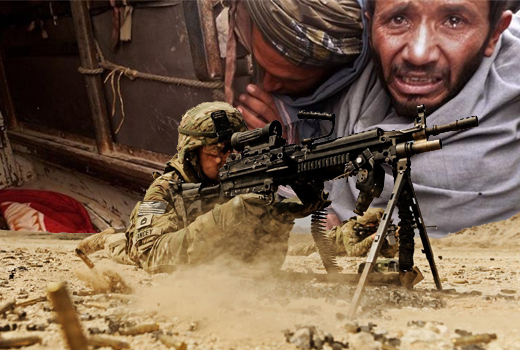
The recent US court ruling to seize nearly $2bn of Iran’s frozen assets over an alleged role in 1983 Beirut bombing is one of the bitter jokes of international relations. Americans have confiscated almost $10m of Iranian assets for each of their marines killed in the incident, but the story becomes even more tragic when we learn that the amount of compensation for every Afghan and Yemeni citizen killed in US drone strikes falls somewhere between $40,000 and $80,000, at most. This means that these poor citizens earn 125-250 times less than the compensation Americans are receiving from Iran for their marines.

In the case of Iran’s assets being confiscated by the US, there is no need to mention that the Americans issued this verdict using the laws of their local courts, and this was described by the Iranian Foreign Ministry as an instance of “stealing Iran’s property”. The case reminds us of the Persian proverb that says, “A blacksmith committed a sin in Balkh (modern north Afghanistan), but they beheaded a coppersmith in Shushtar (modern southwest Iran).”

In the 1983 Beirut barracks bombing, 241 US marines were killed. 181 survivors and family members of the victims sued Iran and asked for compensation. Iran has repeatedly denied any role in the bombing, but the US courts, based on false testimonies and without any proper evidence, ruled that Iran should incur a fine of $2bn.

A group of survivors and family members of the victims of 1996 Khobar Towers bombing [in Saudi Arabia] are also among the plaintiffs of the $2bn case. In the 1996 bombing, 19 Americans were killed. All the documents in this case indicated that the Al-Qaeda terrorist organization [affiliated with Saudi Arabia] was implicated in the terrorist attack, but the FBI blamed Iran and its affiliated organizations for the incident.

Interestingly, William Perry, who was the United States Secretary of Defence at the time of the bombing, said in an interview in June 2007 that he now believes “al-Qaeda, rather than Iran, was behind a 1996 truck bombing at an American military base.” Now, however, Iran is required by the US Supreme Court to pay $2bn for what it has not done.


Whose Blood Is More Colourful?

On 3 July 1988, Iran Air Flight 655 was shot down by the US Navy guided missile cruiser USS Vincennes under the command of William C. Rogers III. The incident took place in Iranian airspace, over Iran’s territorial waters in the Persian Gulf. All 290 on board, including 66 children, died. There were also 46 non-Iranian passengers on board. In 1990, Rogers was awarded the Legion of Merit.

The United States did not admit legal liability but agreed to pay on an ex gratia basis $61.8m, amounting to $213,103 per passenger, in compensation to the families of the Iranian victims. Such an amount is almost nothing compared with the $10m compensation Iran is required by the US court to pay for each US marine. This is not the only instance of racist approaches adopted by a country which still experiences race-riots in the 21st century. In April 2014, the Washington Post reported that the US will pay compensation to the families of Yemeni victims of US drone strikes. Several civilians were killed in a US drone strike that hit vehicles in a wedding party in Yemen. The Washington Post zealously reported that the Americans’ payout had been much more than what the Yemeni government paid to the victims’ relatives. The newspaper wrote that the payout even “exceeded the total amount distributed by the US military for errant strikes in Afghanistan over an entire year.” It reported, “The records indicate that families of those killed were each given Yemeni currency worth approximately $60,000, with smaller amounts paid to those who sustained injuries or whose vehicles were damaged or destroyed.”

Take this $60,000, and compare it with the $10m the US has stolen from the Iranians for each of its marines.

There are other such examples of racist discrimination as well. In 2012, United States Army Staff Sergeant Robert Bales murdered sixteen civilians and wounded six others in the Panjwayi District of Kandahar Province, Afghanistan. Nine of his victims were children, and eleven of the dead were from the same family.

The US gave the equivalent of $860,000 to the victims’ families, allocating almost $50,000 for each person killed, and $10,000 for each person injured.

Iran defense minister heads to Moscow

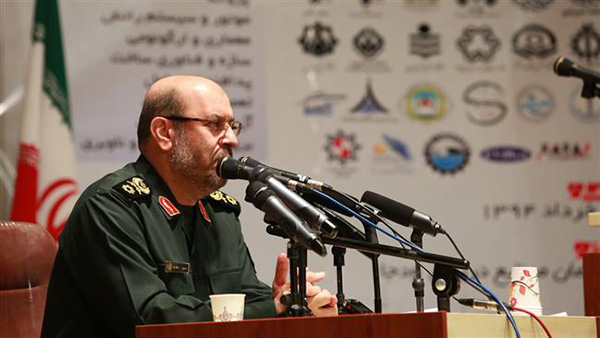
Dehqan departed for Moscow on Tuesday at the head of a delegation. The visit is taking place at the invitation of Russian Defense Minister Sergei Shoigu.

The 2016 MCIS conference, the event’s fifth edition, will be held on Wednesday and Thursday and will focus on fighting terrorism.

As many as 500 officials and personalities, including 17 defense ministers, 14 deputy defense ministers, chiefs of staff, and experts, will attend the event.

The conference will discuss international convergence on fighting terrorism, and security issues concerning the Asia-Pacific region, as well as international stability and military cooperation.

Iran and Russia have cooperated in the area of defense toward countering the threat of terrorism in the Middle East.

The two countries have successfully provided assistance to the Syrian government in its efforts to push back terrorist groups in the Arab country.

Iran defense
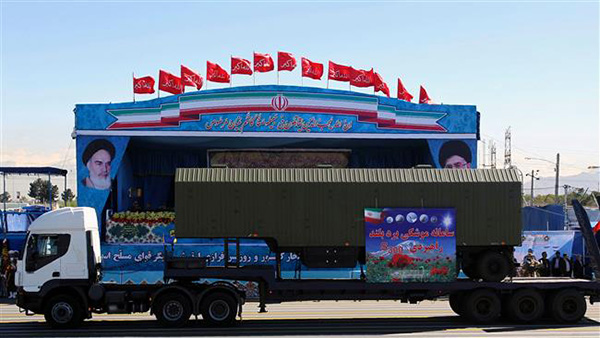
An Iranian military truck carries parts of the S-300 missile defense system during the Army Day parade in Tehran, April 17, 2015. (Photo by AFP)

Dehqan has already visited the Russian capital twice over the past three months as the Islamic Republic was expecting the delivery by Russia of Russian S-300 missile defense systems.

Earlier in the month, Moscow began implementing an USD-800-million deal signed in 2007 to deliver the missile defense systems to Iran.

Moscow canceled the contract in 2010 under pressure from the West. President Putin authorized the delivery in April 2015, however, after an interim agreement that paved the way for the July 2015’s nuclear deal between the Islamic Republic and six world powers.

Dehqan will also discuss ways to buy Russian Sukhoi Su-30 fighter jets and T-90 tanks during his visit, the Iranian Embassy in Moscow has said.

Iran Summons Swiss Envoy over US Supreme Court Ruling

Iran Appoints Female Ambassador to Denmark

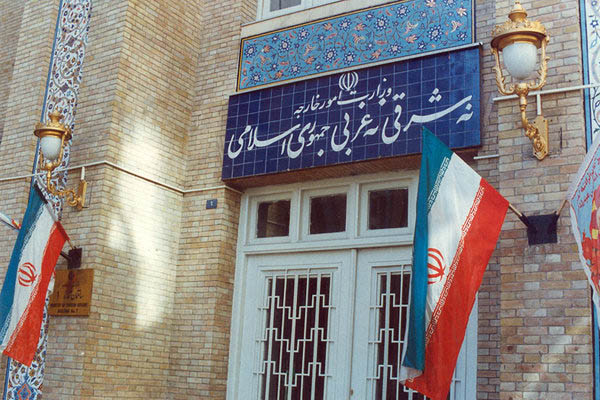
The Swiss ambassador to Tehran, who looks after US interests in Iran, was summoned to the Ministry of Foreign Affairs to receive the Islamic Republic’s protest against the recent ruling by US Supreme Court on the transfer of about $2bn of frozen Iranian assets to the families of victims of the 1983 bombing in Beirut.

During the meeting, Mohammad Keshavarz-zadeh, General Director for the Americas at the Iranian Foreign Ministry, presented the Swiss ambassador with two official notes which conveyed Iran’s official protest over the ruling by the US Supreme Court.

He deemed the ruling a blatant violation of mutual contract obligations, such as the 1955 treaty between the two countries, as well as US international legal commitments on the judicial immunity and inviolability of the assets and properties of the Islamic Republic of Iran.

Keshavarz-zadeh further expressed Iran’s strong protest over another ruling by a court in New York which accused Iran of having been involved in the 9/11 terrorist attacks without providing any evidence, calling the allegations ‘baseless’, ‘absurd’, and ‘contrary to accepted practices of international law,’ which guarantees government’s judicial immunity.

The Swiss ambassador said he will immediately notify the US Department of State and report the results back to Iran’s Foreign Ministry.

Iran’s Non-Oil Exports up 8%

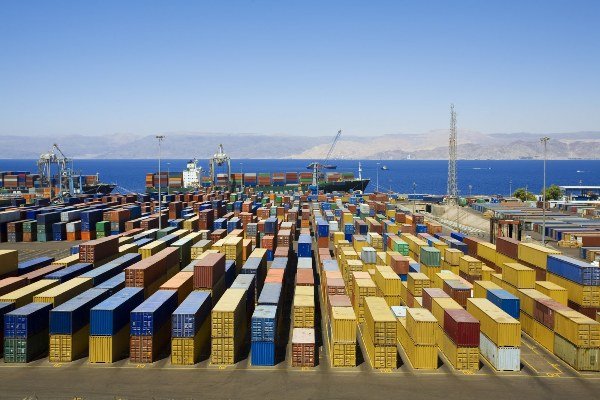
“In the first month of the current Iranian calendar year (spanning March 20 – April 19), a total of 8.183 million tons of goods worth 3.7 million dollars were exported abroad indicating 37.89% and 7.91% increase in terms of weight and worth, respectively as compared with the same period last year,” Islamic Republic of Iran Customs Administration (IRICA) announced.

In the same period, 1.925 tons of goods worth 1.980 billion dollars were imported to the country indicating a 0.02% and 0.07% decrease in weight and value compared with the same time span in the past Iranian year.

The country’s balance of foreign trade in the same period has been positive with more than one billion dollars in favor of exports.

In the meantime, gas condensate worth 545 million dollars and petrochemical products as well as other goods worth 2.462 million dollars were exported.

China, the UAE, Iraq, the Republic of Korea and India mark the five major export destinations for Iranian non-oil goods including gas condensate.

From March 20 to April 19, 2016, soybeans ($87 million), corn as livestock feed ($59 million), barley excluding seed ($54 million), edible wheat ($45 million) as well as soybean meal ($40 million) were the most prominent imported goods.

The major countries doing business with Iran in the aforementioned time period comprise China, the United Arabic Emirates, Turkey, Germany and India.

Also, over 1696 passenger vehicles entered the country in first month of the current year revealing a 164.69% soar compared to a year earlier.

The imported vehicles cost 41 million dollars which shows 125.74 growth in terms of value compared with the same period in the earlier year.

The average price per ton of exported and imported goods were $367 and $1029, respectively in the mentions time span.

Iranian Producer Joins Cannes Film Festival Jury

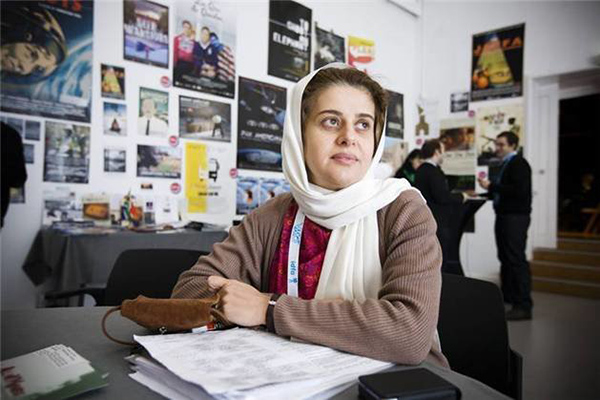
Shahabi is the owner of Sheherazad Media International (SMI), a private company active in worldwide distribution of Iranian cinema and co-productions with foreign companies. Her company introduced to the world films from acclaimed directors such as Rakhshan Bani-Etemad, Asghar Farhadi, Mohammad Rasoulof, Mania Akbari, Saman Salour, etc.

She also produced ‘From Iran, A Separation’, a documentary following Asghar Farhadi’s ‘A Separation’ after it won the Oscar in 2012.

Farhadi’s latest film, ‘A Salesman’, was added to the competition lineup last week. The film is a loose adaptation of Arthur Miller’s classic play ‘Death of a Salesman’, starring Shahab Hosseini and Taraneh Alidoosti.

Other juries include American actress Kirsten Dunst, Danish actor Mads Mikkelsen, Hungarian director Laszlo Nemes, Italian actress, director and writer Valeria Golina, Canadian actor Donald Sutherland and French actress Vanessa Paradis.

The Cannes Film Festival is slated to run May 11-24.

US Curbed Nuclear Deal in 2005: Jack Straw

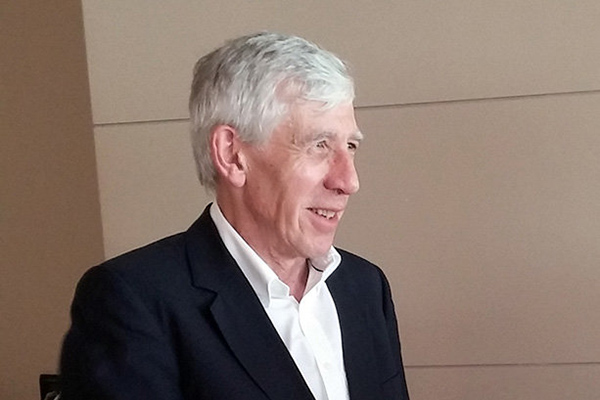
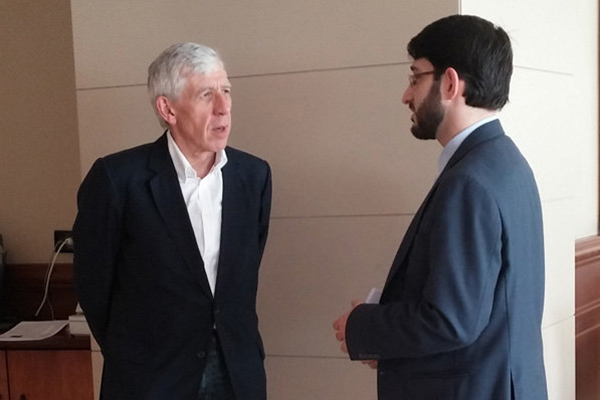
Kazakhstan’s capital city of Astana was hosting the 13th Eurasian Media Forum on April 20-22, with many global figures attending as speakers. Former British FM Jack Straw was also among the speakers and, on the sidelines of the event, sat down with Hamid Reza Gholamzadeh of Mehr’s English edition to respond to a number of questions in an exclusive interview. Here is what he had to share:

The NYTimes published a report recently saying that Europeans are dissatisfied with US regulations – sanctions on Iran’s missile program as well as the visa waiver rule –as MEP Marijetje Schaake put it, “Europe is being taken hostage by American policy; We negotiated the nuclear deal together, but now the U.S. is obstructing its execution.” You believe that US administration is pro-JCPOA and it is Congress which is curbing it… Do you think that Obama and his team have done enough to push the deal forward, or is the US taking the JCPOA hostage to put pressure on Iran’s missile program?

I am completely clear that the administration of President Obama fully supports the JCPOA and wants to see it implemented; President Obama and Secretary Kerry invested huge amount of political capital in it. As you know, Obama even had to face down direct opposition in Congress from Bibi Netanyahu. So, currently they strongly favour the deal. The problems which have arisen between this US administration during the last 9 months of its life and Congress are hard. A Democrat president has a Republican Congress, that is important and it is very frustrating. In my view – and I don’t speak for the British government – it is very frustrating for the UK as well. Both of us have interests in Iran, and are doing what we can to seek a resolution to this.

I‘m very concerned about it and many people come to me who are involved or want to be involved in trade with Iran, and they are also concerned.

During the Saadabad negotiations back in your time, you and other European officials didn’t recognize Iran’s right to have centrifuges, while Iran was fully committed to NPT and Additional Protocol – why? Don’t you think that if you had accepted it, the deal might have been reached years earlier?

All of us accepted Iran’s right to a civil nuclear program. I personally accepted Iran’s right to run some centrifuges for a low-enrichment program. We gained an interim agreement in October 2003 that was agreed in Tehran, and we had two more agreements in Paris and Brussels. But we were very close to a final agreement; and when I saw Dr. Zarif at the beginning of 2014, on a parliamentary delegation, he acknowledged that what stopped the deal in 2005 was not about centrifuges; it was our inability to get agreement from the Americans for concessions like aircraft spare parts.

You have talked of the role Wahhabism has played in forming extremist and terrorist groups such as ISIS – can you elaborate on that?

Wahhabism was a homegrown movement within Sunni Islam to I quote ‘purify Islam,’ and you see that in other religions. I said it is a perversion even from Wahhabism, but it seems to me that to deal with this virus that has infected the mindset of these men, you need to take military action to eliminate them, but you still have to deal with the problem in their mind, and to challenge them theologically; I mean in a very direct way, because what they claim is that the more extreme you are in terms of day to day behaviour, the closer you are, they say, to the Almighty and everyone not believing like them is an infidel and it is not only about Christians, it is about Shias as well. They celebrate violence and suppression of women. I don’t see enough challenge, intellectual and theological challenge, against this. Another issue is the lack of what we would call in Europe a “reformation” within Sunni Islam. I think there are differences between Shiism and Sunnism which are striking in all sorts of ways. I’m very struck by sorts of parallels between what we had in Europe and what there was in Iran. The fact that, in the 16th century, in Iran and also in England, leaders break away from a supernatural authority over their religion, and started to develop religious practice and theology to fit their national culture and identity. The Safavids in Iran did that, and Henry VIII in England. The second thing is, there is an authoritarian structure in the Church of England, and also in Shiism, the Ayatollah. The theology of the church requires them to move with the time, to keep up with science and, for example, to encourage literature and books like this. Look at the vibrancy of intellectual life – in Iran, filmmakers and people like that can go to workshops and so on. I know it is a bit of generalization, but there is a shortage of such intellectual figures in some Sunni countries.

The UK is one of main sources of arms sale to the Saudis, who reportedly are supporting ISIS with their weapons. You said that “There is support from elements in Saudi Arabia for ISIS in Syria.” Do you think that London’s selling of weapons to Riyadh can be justified if they are supporting terrorists?

I’m quite sure no arms that we have sold Saudis have gone to ISIS. The system that we have in the United Kingdom for export licenses for arms is very, very tight. I cannot comment on particular sales as I haven’t seen the licenses. But I can tell you from my period in government, that in the five years that I was in charge of granting licenses to these exports, we looked at the applications very carefully, and turned down some, and they were all reported to a committee in the House of Commons.

Jack Straw112

President Obama just visited your country, paying his probable farewell visit as president to the UK; it seems that Brexit was main topic at the meeting. What’s your take on this trip? What outcomes do you expect?

I think what he said was very helpful. And I think it will assist the campaign against Brexit. Let’s say I’m strongly in favour of Britain remaining inside the EU, as I see very little advantages in leaving and very big disadvantages, and it generally increases the risks to the future of the UK in all sorts of way. So it was very helpful, I can say, and I noted there are some politicians on the other side who complained about Mr. Obama’s right to offer his opinions; yet these people like Boris Johnson are telling other people what to do every day! Just as we are entitled to comment on events and policies in the United States, and we do all the time, they are also entitled to comment on us. I hope very much that we will win; it looks like we will, but there is still time to go.

For more than a year now, the Saudis have been invading Yemen, killing women and children and destroying their infrastructure. Why are Europeans, and particularly the UK, still silent on the issue?

This silent war shows the relativism of news reporting across the world. It is a difficult country to get into, precisely because it is one of the poorest countries in the world and the region. Western states don’t have much of stake in it. That becomes sort of reinforced as people don’t know a great deal about it. Everybody I speak to believes that it has been a disaster and there has to be a political settlement. Of course, there are people in the GCC who do support this action against Yemen, but there are also people who have serious reservations about the situation in Yemen.

So do such things matter in UK export licenses for arms sale that you said?

You asked me questions about licensing for arms; I don’t know quite certainly that none of arms we sold Saudis have gone to ISIS; I don’t know, sitting here this morning, about the situation of the Saudi forces or the UAE forces, and the use of those arms in Yemen. I think it is being considered by a parliamentary committee in England.

I think there is a general problem about a lack of information and understanding about Yemen. One example is that Houthis, who believe in seven Imams, are considered as Shias, who believe in 12 Imams.

What is your opinion about the leadership of Jeremy Corbyn in the Labour Party?

As you know, he and I were together on the parliamentary delegation to Iran in January 2014; he is a nice man, very interested in world affairs. I didn’t actually support him; I supported a different candidate, Yvette Cooper, who I thought was better qualified for leadership. Now, he is leader and everyone in the Labour party is concentrated on winning the upcoming elections in Scotland, for the London mayor and in municipalities elsewhere. We have Sadiq Khan who is Labour candidate for mayor of London, who if elected, will be the first Muslim mayor of London. And beyond that, we have the referendum on Brexit. So, Mr. Corbyn was elected democratically and we all get on with it.

How do you see the relations between Iran and UK after the nuclear deal? In which areas do you see more potential for cooperation?

With the signing of the JCPOA, there has been a big change in the approach of the government overall, and the government has now said they want to open and improve relations with Iran and I’m delighted about that. I want to see a reopening and flowering of the relationship; I believe this should be the beginning of political and cultural cooperation. In terms of business, the prime minister very wisely appointed Lord Norman Lamont as UK trade representative. That’s very important because Lord Lamont, like me, has been a long-standing supporter of Iran and spoke out for Iran when it was unpopular to do so. Now we are gradually increasing our diplomatic representation in Tehran. In terms of trade, Britain is very good in oil and gas, and also in manufacturing and obviously in services of all kinds like investment, legal services and so on. That’s why it is very important to us to get the Americans out of the way and have the Americans clear these obstacles out of the way.

I’m a member of the British-Iran Chamber of Commerce, which is led by Norman Lamont; and there is a great British-Iranian diaspora, particularly in London; and they had a tough time during the period of sanctions. I don’t have any formal role in relations, but people come to me for advice.

Interview by Hamid Reza Gholamzadeh

Jack Straw served as UK foreign secretary in Tony Blair’s cabinet and was one of three European FMs conducting first rounds of nuclear talks between Iran and the EU3.

Saving the Earth Needs a Revolution in Environmental Protection

Massoumeh Ebtekar said that a continuation of people’s behaviour towards the environment and inappropriate levels of consumption in Iran and the world are unsustainable.

Addressing a local meeting attended by master musicians and a number of artists, Ebtekar said that the recent signing of the Paris climate deal by 175 countries, including Iran, in New York was a good step in line with changing human behaviour towards the planet.

She further welcomed green music festivals, saying that holding such festivals nationally and internationally can be helpful.

She made the remarks while referring to the successful experience of holding an international green film festival, which linked cinema and the environment.

Ebtekar expressed her hope that similar moves will continue in other artistic fields.

FM Zarif: Seizure of Iran’s Assets Destroys Credibility of US Justice System

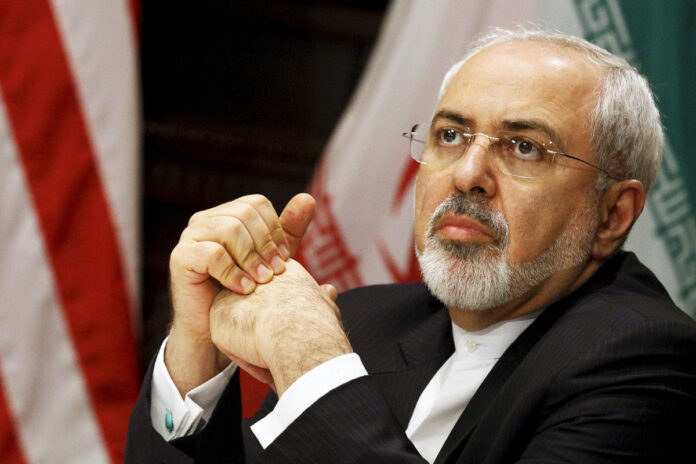
Zarif was speaking to the New Yorker in an interview published on Monday, and the following is the full text of the published interview.


Q: President Obama just finished meetings in the (Persian) Gulf with the King of Saudi Arabia and the five other sheikhdoms. He talked about opening space for peaceful coexistence between Iran and the Gulf states, but he also talked about a strong defense against Iran.

A: Well, I guess old habits die hard.

Q: He spoke of reaching out to “the more reasonable forces in Iran, so we don’t see an escalation in proxy fights across the region.”

A: That’s what I do not believe—that dividing Iran into “reasonable” and “unreasonable” forces is either correct, conducive, or anybody’s business. When the United States exercised that practice in the past, it didn’t produce results.

Q: You told me right after you took office, in 2013, that after the nuclear deal your top priority was better relations with the (Persian) Gulf states. What is it going to take to end those proxy fights?

A: The region is our No. 1 priority. We wanted to take every opportunity to work with our Persian Gulf neighbors. We have presented, both publicly and privately, proposals for engagement and dialogue. Unfortunately, they have fallen on deaf ears. Primarily by Saudi Arabia.

It’s not that there needs to be tension. We started exercising restraint a long time ago, when they supported Saddam Hussein for eight years, and then he turned and attacked them. Over the past two and a half years, when we were engaged in the nuclear negotiations, the Saudis did everything to undermine those negotiations, glutting the oil markets, and we exercised restraint. There’s a limit.

Q: The nuclear deal seems to be in some trouble. Can you explain the problems?

A: The most important problem is that the United States is taking a back seat after eight years of scaring everybody off, imposing heavy penalties on people who wanted to do business with Iran. Billions of dollars of penalties were imposed on various European financial institutions. The United States was supposed to go to various banks and tell them bygones are bygones.

Q: What do you expect to come out of your meetings with Secretary Kerry?

A: I want to see European banks doing business with Iran without fear of US retaliation. A lot depends on it. As we implemented our obligations fully, we are entitled to benefit fully. The United States needs to do way more. They have to send a message that doing business with Iran will not cost them. Period. No ifs and buts.

International regimes, international treaties, international norms are observed not because of the goodness of anybody but because they bring benefits. If they don’t, then the longevity of those agreements come into jeopardy.

Q: Is the deal in danger of collapsing?

A: No, the deal is in place. But if one side does not comply with the agreement then the agreement will start to falter.

Q: This is the final year for President Obama and Secretary Kerry. What do you think a new President, whether a Democrat or a Republican, is likely to mean for the future of a process that was started during the Obama Administration?

A: I’m more interested in seeing this process come to fruition during the Obama Administration. I believe that, once it does, the future Presidents of both Iran and the United States will see it is in their interest to safeguard it and to make sure that it continues, because we believe it’s a good deal. We believe it’s a deal that is in the interest of both sides and in the interest of the international community. We believe that, once it is fully implemented, everybody will see the beneficial side effects or spillovers in other areas. So my focus—and we have quite a bit of time—is to entrench this agreement during the months that are left of Secretary Kerry’s tenure, and of my own, and make sure that everybody recognizes the benefit of being compliant with the deal.

Q: Do you think that the next President, whichever party wins, is likely to be as friendly or as interested in dialogue as the current President is?

A: Many people in Iran won’t consider this government to be that friendly anyway.

Q: How often do you communicate with Secretary Kerry on average?

A: Quite often.

Q: Two or three times a week?

A: Depending on the circumstances, but it may be two or three times a day. We’re dealing with a complicated agreement, and we both want to see it implemented.

Q: Will you miss Secretary Kerry?

A: The jury’s still out. I’m still trying to work with him, in order to make sure that the very serious achievement that he and I and the other participants in the negotiations were able to achieve is preserved, strengthened, and guaranteed a long life.

Q: I attended a breakfast with the governor of Iran’s Central Bank last Friday, in Washington, the day after he saw Secretary Lew. How has the discussion between Tehran and Washington changed in the last two and a half years during the negotiations?

A: We had hoped that greater interaction on this issue would dent the mistrust. And I don’t think it’s too late. As the Leader (Ayatollah Seyed Ali Khamenei) said last year, if the experience of the nuclear negotiations proves that the United States is changing its approach toward Iran—is basing its approach to Iran on mutual respect and interests—then there is a chance of change. But if the United States wants to continue with its hostile policies, then we will have to stick with the nuclear deal and try to basically keep it alive and functioning. The nuclear deal could still be the base and not the ceiling. But it requires positive political will on the side of the United States to stop this whole practice of simply repeating the old, outdated lines when it comes to Iran.

Q: A senior US official said that the Administration had hoped that the nuclear deal would open the way to settle other past problems, to clear the decks, in a way—particularly before President Obama leaves office. There is concern that Iran has been unwilling or unable to solve some of those other issues.

A: We have a saying in Farsi: “First, prove your brotherhood, and then ask for inheritance.” The United States needs to first show that it is implementing the JCPOA No one is asking whether Iran is implementing the JCPOA And almost every Iranian official believes that the United States hasn’t implemented it. So you’ve got to prove your brotherhood first, or sisterhood, and then we talk about the inheritance. The dividends of a successful implementation of the nuclear agreement will come, but once it is successfully implemented.

Q: The Supreme Court ruled that Iran’s Central Bank has to pay two billion dollars to victims of acts linked to Iran, particularly the 1983 bombing of Marine barracks in Beirut. I lived there and I heard it go off, and I hear it go off in my head quite often. And I saw American bodies being dug out of the wreckage for weeks and weeks. It was traumatic for the United States. Iran often describes itself as the victim of US action, but this was one action in which Iran’s allies and Iran were held responsible.

A: By US courts, who are also holding Iran responsible for 9/11! I have lost every respect for US justice. The judgment by the Supreme Court and the other, even more absurd judgment by a New York circuit court deciding that Iran should pay damages for 9/11 are the height of absurdity. How would you explain Iran being held accountable for the damages to the victims of 9/11—and others being absolved of any responsibility, those who were actually responsible for it?

These cases cannot stand in any serious civilized court of law. When a US court condemns Iran for 9/11, it finishes the credibility of the US justice system when it comes to Iran.

People can legislate in other countries to confiscate American assets. Would you be happy with that? The United States has committed a lot of crimes against Iranians, against the people of Vietnam, the people of Afghanistan, the people of Iraq. Can they legislate in their own countries that for every collateral damage suffered because of American bombing, for every person who was tortured by the Savak, which was created by the United States, those people can claim money from the United States and go confiscate it? Would you be willing to accept it? So why should we accept the Supreme Court ruling? The Supreme Court is the Supreme Court of the United States, not the Supreme Court of the world. We’re not under its jurisdiction, nor is our money.

It is a theft. Huge theft. It is highway robbery. And believe you me, we will get it back.

Q: In Congress, there is an array of proposed measures to impose new sanctions because of Iran’s missile tests.

A: That’s the problem with the United States. It believes it can control everybody’s behavior. The missile tests are our right. We have made it very clear that these will not be used other than in self-defense. They’re not designed to be capable of carrying nuclear weapons.

What do you expect, Iran to lie dead? You’ve covered the Iran–Iraq war, you remember missiles pouring on Iranian cities with chemical weapons. You remember that we didn’t have any to defend ourselves. Let’s not reopen that chapter. Everybody who is accusing Iran of provocation because of our missile tests should make the simple statement that I have made, that our Revolution Guards commanders have made—that Iran will never attack any other country. Pure and simple. By the way, that’s the legal obligation of every country, to say that.

Here I think you owe us. US planes were giving Saddam Hussein intelligence to hit our civilians with chemical weapons. We don’t owe anybody anything on defense.

Q: Is there any potential for another round of negotiations over the missile program?

A: We had two and a half years of negotiations, and we made it very clear, time and again, that our defense is not subject to bargaining. We spend a fraction of what all your allies in the region spend on defense. We have a much bigger country and a much larger population to defend. What is the population of the United Arab Emirates? How much do they spend on defense? I mean, get real. Our entire defense budget is between ten and fifteen billion dollars.

Q: In Syria, the ceasefire, the cessation of hostilities, and the peace talks are on the verge of collapse.

A: We had every hope for the peace talks. We need to not put the cart before the horse, and we need to go ahead with the negotiations and then, in the course of the negotiations, decide the future of Syria.

Q: Including the fate of President Assad?

A: This is what we’re hearing from Geneva: “O.K., if Assad doesn’t go tomorrow, we’ll start a war.” Everybody knew that Assad won’t go. Everybody knew that this was a process that would take eighteen months—and at the end of eighteen months the Syrians would decide how to conduct the elections.

The Syrians haven’t yet decided what type of constitution they will have, whether it will be a Presidential system, whether it will be a parliamentary system. If you have a parliamentary system, you’re just debating an irrelevant issue, because in a parliamentary system the role of the President becomes minuscule. So why are we trying to find an excuse to continue fighting if what we’re fighting over right now may become immaterial in a year’s time?

Q: Have you ever talked to President Assad about his future?

A: I have presented to him our ideas about going forward with a political process, and he was for it two and a half years ago. He is for it now. We believe that his future is in the hands of the Syrian people, not in our hands. I think he’s happy putting his future in the hands of the Syrian people.

Q: It concerns me that there may be no Syria left at the end of this war.

A: Yeah, if they insist on trying to resolve everything either through military conflict or to get what they want before they start negotiating.

Q: There is a report that Iran has as many as thirty-five hundred military advisers and personnel in Syria, and that there are now fourteen thousand Shiite volunteers from other countries—Afghanistan, Iraq, Lebanon—who are also fighting in Syria, many of them supported by Iran.

A: I know that there are Shiite volunteers in Syria. I know that there are Hezbollah fighters in Syria. We have said that we have advisers in Syria. I heard that regular Army people are also sending advisers, so it’s not just the Revolution Guards. The numbers I’m not privy to.

Q: Iran held parliamentary elections in February, and the second round takes place on April 29th. The new parliament includes more supporters of President Hassan Rouhani than the last parliament. How will that affect his ability to enact or win support in parliament for the reforms he campaigned on in 2013?

A: Because we do not have a rigid party system, parliamentarians have the ability to make up their own minds based on issues and how they feel the population wants them to address particular issues. That’s how the previous parliament, which was not a reformist parliament, supported our nuclear negotiations. If we cannot perform, these supporters can become our opponents. So, while this parliament has more people that have views similar to the President, it doesn’t mean that the President has a guaranteed majority on any issue. Politics is politics anywhere you go.

Q: And what will be the first initiative or two that President Rouhani tries to put before the new parliament?

A: The Citizens’ Bill of Rights does not require parliamentary approval. The President may want to put in place certain procedures and guarantees and mechanisms, so that may require parliamentary approval. The rest is more what parliament can do to prevent policies from being implemented. Parliament has a rather serious ability to question ministers, question policy, even impose impeachment of ministers. We’ll see less of that.

Q: In June, Iran is scheduled to hold its international cartoon biennial, and the theme is the Holocaust.

A: It’s not Iran. It’s an NGO that is not controlled by the Iranian government. Nor is it endorsed by the Iranian government.

Q: But clearly it has to get a permit to hold the function.

A: Not really. It doesn’t need a permit to hold the function. We need to issue visas for people who come, and we take into consideration that people who have preached racial hatred and violence will not be invited.

Q: Why does Iran allow a cartoon festival on the Holocaust?

A: Why does the United States have the Ku Klux Klan? Is the government of the United States responsible for the fact that there are racially hateful organizations in the United States? Don’t consider Iran a monolith. The Iranian government does not support, nor does it organize, any cartoon festival of the nature that you’re talking about. When you stop your own organizations from doing things, then you can ask others to do likewise.

Q: You and the President have both wished Jews around the world Happy New Year.

A: So we will not be going to that festival’s opening.