Friday, January 16, 2026
Home Blog Page 4407

Iran’s Reaction to Attempted Military Coup in Turkey

Turkey

Secretary of Iran’s Supreme National Security Council (SNSC) Ali Shamkhani was one of the first ones to show a reaction to the developments. He expressed deep concern over the attempted coup and said Tehran is closely monitoring the developments in the neighbouring country.

“We are following the events in Turkey warily and carefully,” Shamkhani said in a statement on Saturday morning.

He further emphasized that Tehran considers instability in Turkey as a threat to Turkish people’s security and tranquillity.

“All of the land and air borders with Turkey are under full control, and comprehensive surveillance is underway in the areas,” he added, as reported by Tasnim.

Iran’s Foreign Ministry also called on the Iranian nationals in Turkey to remain in where they are staying and avoid any gathering.

In a statement following the terrible night in Ankara and Istanbul, Iran’s Foreign Ministry called on nationals in Turkey, including residents or tourists, not to leave their places until further notice, avoid any gathering and heed warnings by the Turkish security officials.

Meanwhile, Iran’s consul general in Istanbul announced that not a single Iranian has been injured in the crisis after the coup.

Hours after the coup was launched by a faction in the Turkish armed forces on Friday night, Iranian Foreign Minister Mohammad Javad Zarif voiced concern about the situation in neighbouring Turkey.

“Deeply concerned about the crisis in Turkey; Stability, democracy and safety of Turkish people are paramount. Unity and prudence are imperative,” Zarif wrote on his Twitter page.

And after reports that the coup has been crushed by the government, Zarif tweeted, “Turkish people’s brave defence of democracy and their elected government proves that coups have no place in our region and are doomed to fail.”

The coup appeared to crumble in the early hours of Saturday after crowds answered President Tayyip Erdogan’s call to take to the streets to support him.

Persian Qanats Registered on World Heritage List

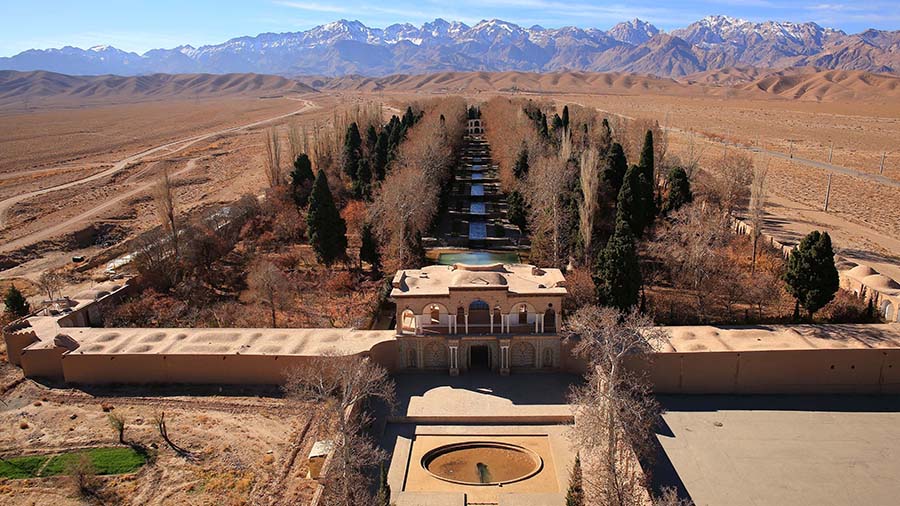
Persian Qanats

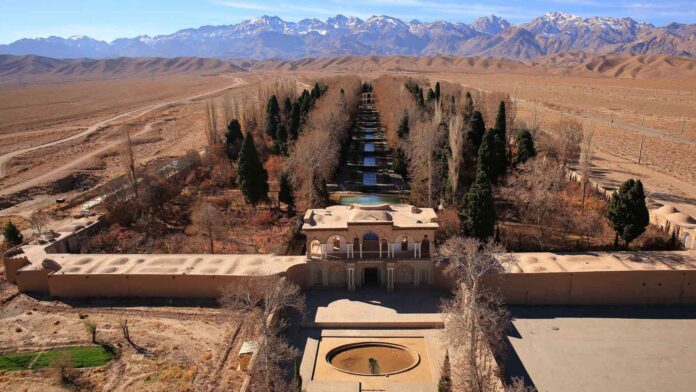
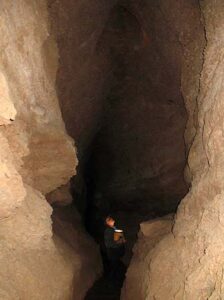
11 Persian Qanats were registered on the UNESCO World Heritage List as Iran’s 20th item. They include rest areas for workers, water reservoirs and watermills. According to the UN website, the organisation highlighted that Qanats provide exceptional testimony to cultural traditions and civilizations in desert areas with arid climate.

The main reasons for the registration of Qanats include their historical importance, complex system and benefits for ecosystem.

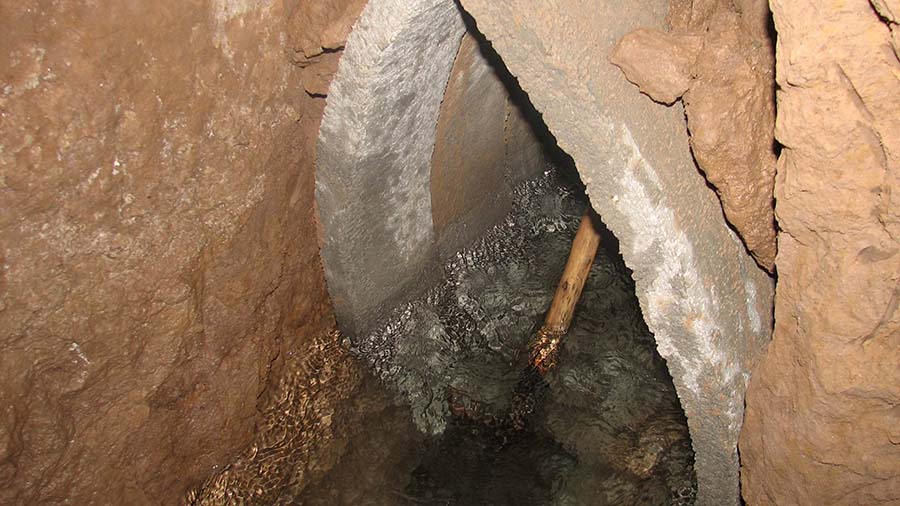
About QanatsThe Persian Qanat: Qanat of Moon

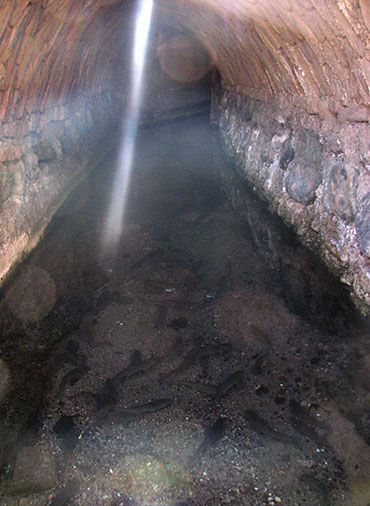
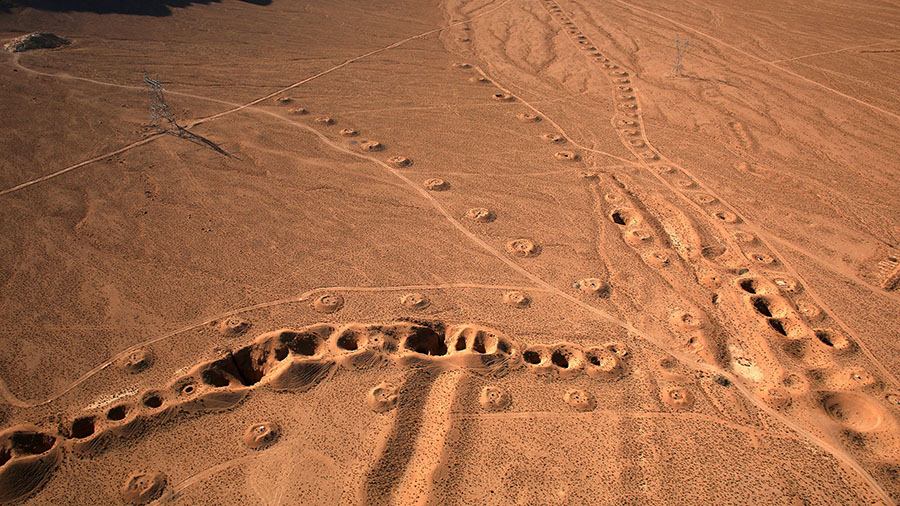
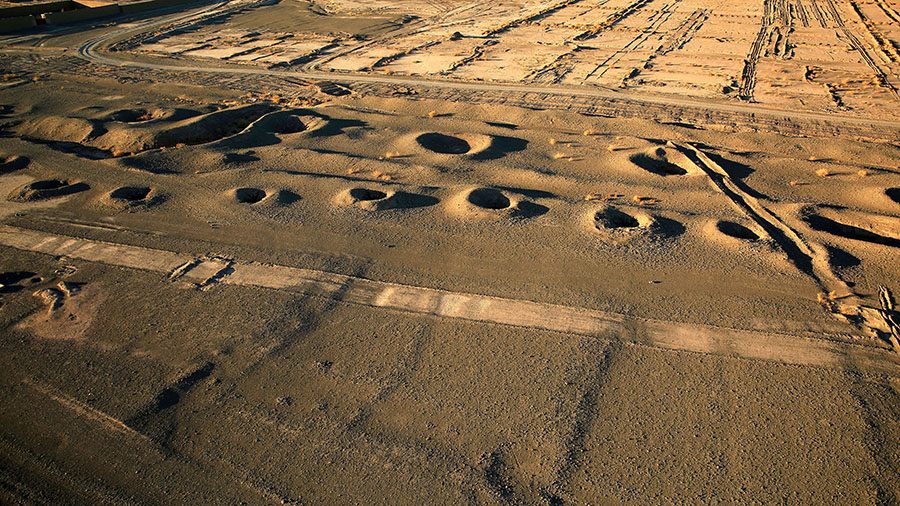
Qanat is a gently sloping underground channel with a series of vertical access shafts. Qanats transport water from aquifers under hills along underground tunnels by gravity, often over many kilometers. They create a reliable supply of water for human settlements and irrigation in hot, arid, semi-arid climates.

The system has been vital for Persian people in arid regions in order to supply water for agriculture and permanent settlements.

Qanats are still in place in some Iranian regions. They provide for equitable and sustainable water-sharing and distribution.

The Registered Qanats

Persian Qanats

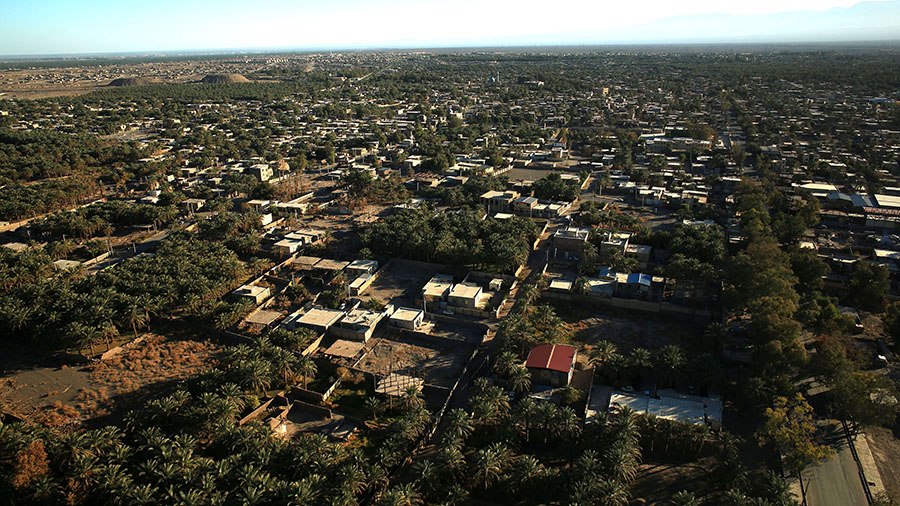
Among the 11 registered Qanats, two are located in the northeastern province of Khorasan Razavi. Qasabeh Qanat of Gonabad and Baladeh Qanat of Ferdows. The first is the world’s oldest Qanat which dates back to more than 2,500 years ago; and the second is known for its complex water distribution system.

In Yazd Province, Qanats of Zarch and Hassan Abad Moshir are registered. The first is the world’s longest Qanat with a length of 71km, and  the second’s main characteristic is its high volume and good quality of water.

Gohar-Riz, Akbarabad and Ghassemabad Qanats from Kerman Province are also registered in the list. The first is registered for its fault-based water supply; while the others are indeed twin Qanats.

Three Qanats from Isfahan Province are also on the list; Moun, the only double-decked Qanat in the world, as well as Vazvan and Mozdabad Qanats for using underground dams.

Ebrahimabad Qanat in the central city of Arak is also among the 11 registered items. It is inscribed for its conical shape.


Iran Able to Cause Irreparable Damage to S. Arabia If Needed: IRGC Navy Commander

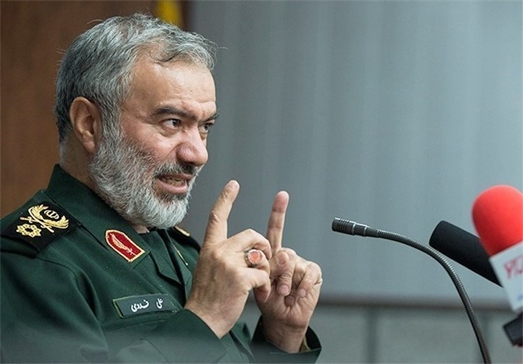
Commander Rear Admiral Ali Fadavi

“If needed, we can inflict irreparable damage at the Saudis,” Fadavi said, addressing a forum in Tehran on Saturday, July 16.

Despite Saudi Arabia’s possession of giant vessels, none of them passes through the Strait of Hormuz in the Persian Gulf, which is under Iran’s control, he said.

Sometimes some of them, which seek to sail towards the Red Sea, are compelled to pass through the Strait of Hormuz, “but they don’t have any patrolling mission”.

“Not only Saudi Arabia, but also none of the Persian Gulf littoral states, has the capability to threaten and launch attacks on the Islamic Republic,” Fadavi added.

He, in the meantime, underlined that despite certain analyses, the US, and not Saudi Arabia, is the main enemy of Iran, adding that the Saudis also take orders from Washington.

Turkish Coup Bid Crumbles as Crowds Answer Call to Streets, Erdoğan Returns

Turkey

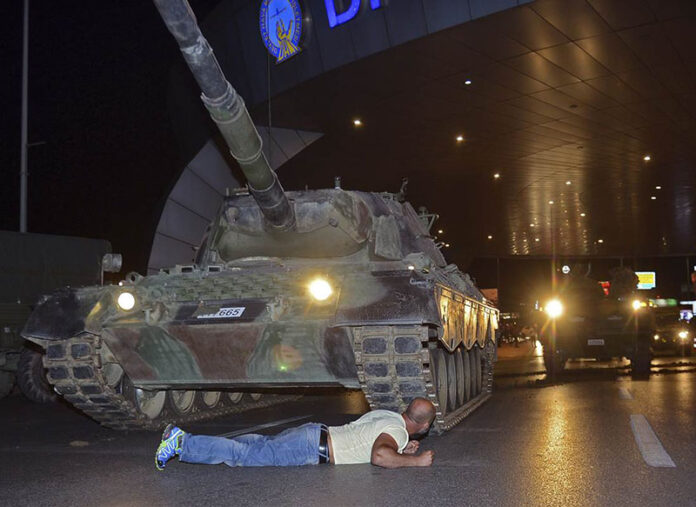
Erdoğan, who had been holidaying on the southwest coast when the coup was launched by a faction in the armed forces, flew into Istanbul before dawn on Saturday and was shown on TV appearing among a crowd of supporters outside Ataturk Airport.

The uprising was an “act of treason”, and those responsible would pay a heavy price, he later told reporters at a hastily arranged news conference. Arrests of officers were under way, and it would go higher up the ranks, culminating in the cleansing of the military, he said.

Soldiers took control of the airport soon after Erdoğan had landed, Reuters’ witnesses said. A senior official later said the soldiers were loyal to the government.

Rebel soldiers who had taken control of military aircraft were still firing from the air early on Saturday and fighter jets had been scrambled to intercept them, Turkish Prime Minister Binali Yıldırım said, underscoring the chaotic situation.

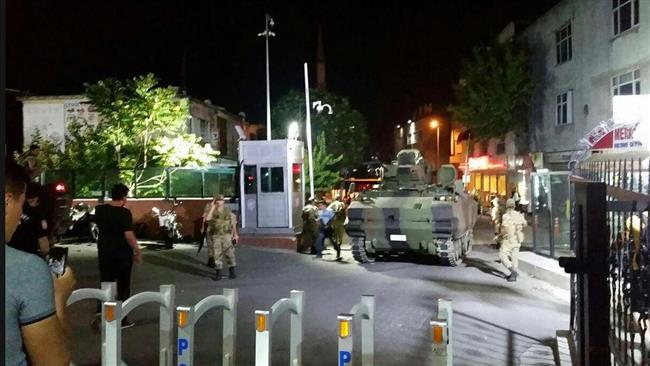
Gunfire and explosions rocked both the main city Istanbul and capital Ankara in a chaotic night after soldiers took up positions in both cities and ordered state television to read out a statement declaring they had taken power.

A senior official said 42 people had been killed in the violence in Ankara alone, most of them civilians. More deaths were also reported in Istanbul.
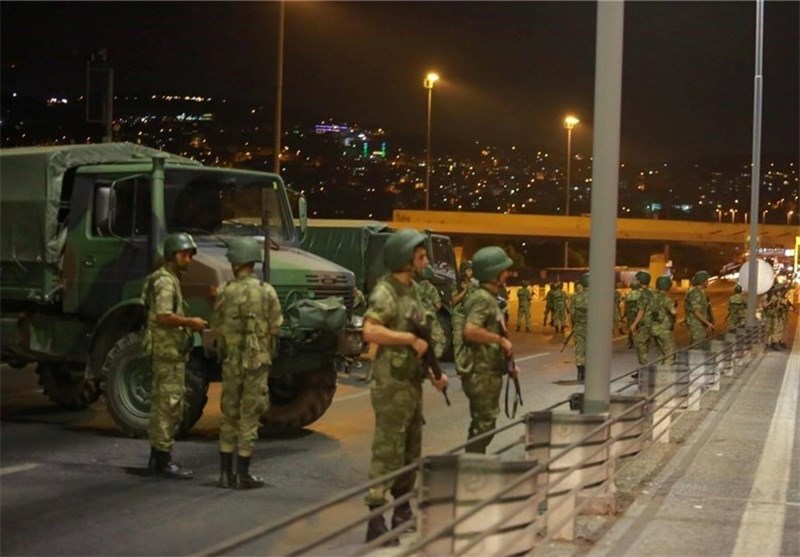
 

Turkey-1

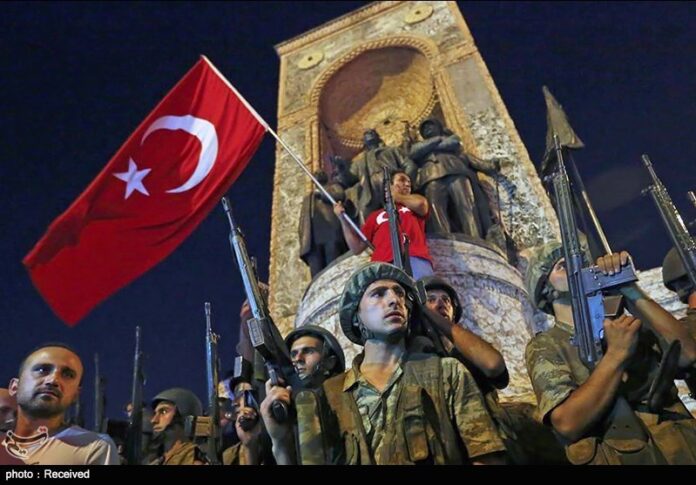
Early on Saturday, Reuters’ journalists saw around 30 pro-coup soldiers surrender their weapons after being surrounded by armed police in Istanbul’s central Taksim square.

They were taken away in police vans as a fighter jet repeatedly screeched overhead at low altitude, causing a boom that shook surrounding buildings and shattered windows.

A successful overthrow of Erdoğan, who has ruled Turkey since 2003, would have marked one of the biggest shifts in the Middle East in years, transforming one of the most important US allies while war rages on its border. A failed coup attempt could still destabilize a pivotal country.

Before returning to Istanbul, Erdoğan appeared in a video call to the studio of the Turkish sister channel of CNN, where an announcer held up a mobile phone to the camera to show him. He called on Turks to take to the streets to defend his government and said the coup plotters would pay a heavy price.

By the early hours of Saturday, lawmakers were still hiding in shelters inside the parliament building in Ankara, which was being fired on by tanks. Smoke rose up from nearby, Reuters’ witnesses said. An opposition MP told Reuters that the parliament was hit three times and that people had been wounded.

A Turkish military commander said fighter jets had shot down a helicopter used by the coup plotters over Ankara. State-run Anadolu news agency said 17 police were killed at Special Forces headquarters there.
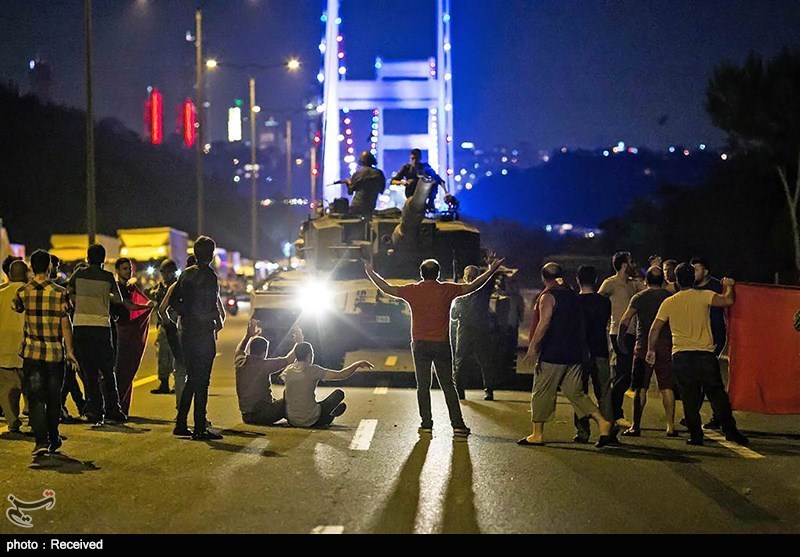
Turkey-3

Momentum turned against the coup plotters as the night wore on. Crowds defied orders to stay indoors, gathering at major squares in Istanbul and Ankara, waving flags and chanting.

“We have a prime minister, we have a chief of command, we’re not going to leave this country to degenerates,” shouted one man, as groups of government supporters climbed onto a tank near Ataturk airport.

Erdoğan and other officials blamed the attempted coup on followers of Fethullah Gülen, an influential cleric in self-imposed exile in the United States who once supported Erdoğan but became a nemesis.

The pro-Gülen Alliance for Shared Values said it condemned any military intervention in domestic politics.

US Secretary of State John Kerry said he phoned the Turkish foreign minister and emphasized “absolute support for Turkey’s democratically elected, civilian government and democratic institutions”.

The coup began with warplanes and helicopters roaring over Ankara and troops moving in to seal off the bridges over the Bosphorus Strait that links Europe and Asia in Istanbul.

Authorities had shut the strait to tanker traffic, shipping agent GAC said.

Reuters’ reporters saw a helicopter open fire in Ankara. Anadolu said military helicopters had fired on the headquarters of the intelligence agency.

Airports were shut and access to internet social media sites was cut off in the first hours of the coup attempt.

Soldiers took control of TRT state television, which announced a countrywide curfew and martial law. An announcer read a statement on the orders of the military that accused the government of eroding the democratic and secular rule of law. Turkey would be run by a “peace council” that would ensure the safety of the population, the statement said.

TRT went off the air shortly afterwards. It resumed broadcasting in the early hours of Saturday.

Anadolu said the chief of Turkey’s military staff was among people taken “hostage” in the capital Ankara but Prime Minister Yıldırım later said he was back in control.

The coup had appeared strong early on Friday evening. A senior EU source monitoring the situation said: “It looks like a relatively well-orchestrated coup by a significant body of the military, not just a few colonels … They control several strategic points in Istanbul.”

One European diplomat was dining with the Turkish ambassador to a European capital when guests were interrupted by the pinging of urgent news on their mobile phones.

“This is clearly not some tinpot little coup. The Turkish ambassador was clearly shocked and is taking it very seriously,” the diplomat told Reuters as the dinner party broke up. “However it looks in the morning, this will have massive implications for Turkey. This has not come out of nowhere.”
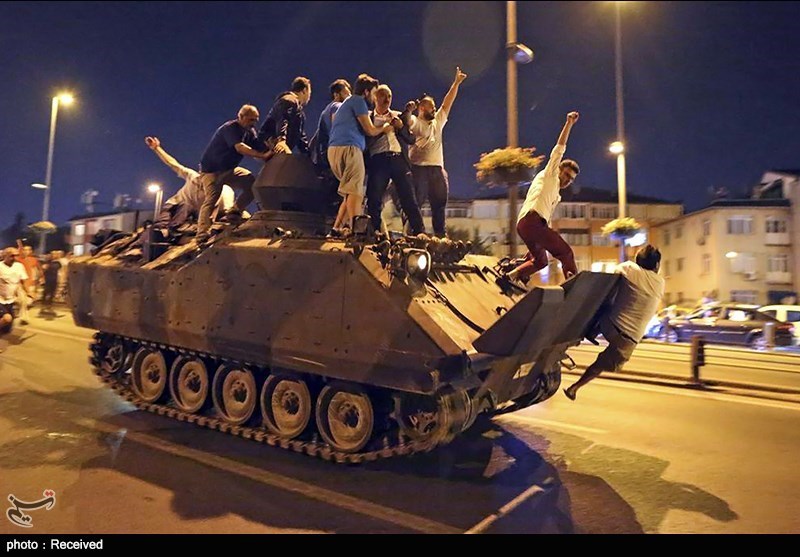

 

Turkey-4

BBC Pursues Double-Standard Policy toward Israel Boycott

BBC

A TV program recently aired by BBC Persian described the international movement of Boycott, Divestment and Sanctions [BDS] as an immoral move. Here is IFP’s translation of Tabnak’s report in this regard:


The European Union (EU), under the pressure of widespread demands of its public opinion, passed new instructions for labelling the products exported from occupied territories to the EU. The move provoked different reactions; however, the most interesting one was a show on BBC Persian news channel.

The Zionists’ atrocities against Palestinians, the demolishing of their houses and targeted killings of Palestinians, reached a level that even pro-Zionist governments had to give in and accept the ban on Israeli products.

France repeatedly urged Israel to ease the conflicts, but the calls fell on deaf ears and therefore, even Paris, which used to be a staunch supporter of Zionists, gave the nod to put more pressure on Israel.

The Boycott, Divestment and Sanctions Movement [BDS Movement], started in 2005, is a global campaign attempting to increase economic and political pressure on Israel to comply with the stated goals of the movement, which is the end of Israel’s occupation and colonization of Palestinian land and the Golan Heights, full equality for Arab-Palestinian citizens of Israel, and respect for the right of return of Palestinian refugees.

Last November, the BDS movement announced plans to expand its anti-Israeli boycott. Under the boycott, goods produced by Palestinians are distinguished from Israeli ones through some labels. As a result, Europeans have the right to choose either to buy goods produced by Israelis or those of Palestinians.

In no way can we put the name of sanctions on this boycott; however, it has raised some reactions.

The Zionist regime’s stunning reaction was to quicken the pace of its colonization in Palestine as far as Israeli Prime Minister Benjamin Netanyahu announced Golan Heights as part of the Zionist regime’s everlasting properties.


Recently, the news channel BBC Persian showed one of the latest reactions to the issue. In its regular TV program, Pargar [compass], the TV host Dariush Karimi made attempts to manipulate the discussion in favour of Zionists.

He opened the discussion by asking, “Is the campaign for the boycott of Israel by the supporters of Palestinian rights in Europe morally defensible? How effective can this boycott be? Is this boycott morally just while the countries arrayed against Israel are themselves at the forefront of villainy and crime? Who will be hurt the most by the boycott of Israeli companies?”

Apart from all the double-standard policies of BBC Persian – which has never talked about the Zionists’ violation of Palestinian rights, their demolishment of Palestinian houses, and the illegal settlements constructed by Tel Aviv in a daily basis – the question remains that why the news channel never touched upon the unfair sanctions against Iran.

This was the question posed by many Iranian visitors, who had posted comments under Tabnak’s report, describing BBC as “an old fox” or “deceitful liar”.

“What preys on my mind is that why BBC English or BBC Persian do not even bother to produce a program and discuss different aspects of immoral sanctions imposed on Iran, which had even banned the import of medicine into our country,” a commenter said, expressing regret over the BBC’s hypocritical behaviour and two-facedness.

People, particularly the younger generation, should make efforts to upgrade and expand the boundaries of their media knowledge and grow a sense of discernment to distinguish between right and wrong and be immune to the elegant manipulation of minds by the unfair media, Tabnak reported.

Book Distributed in Saudi Arabia on Suicide Operations

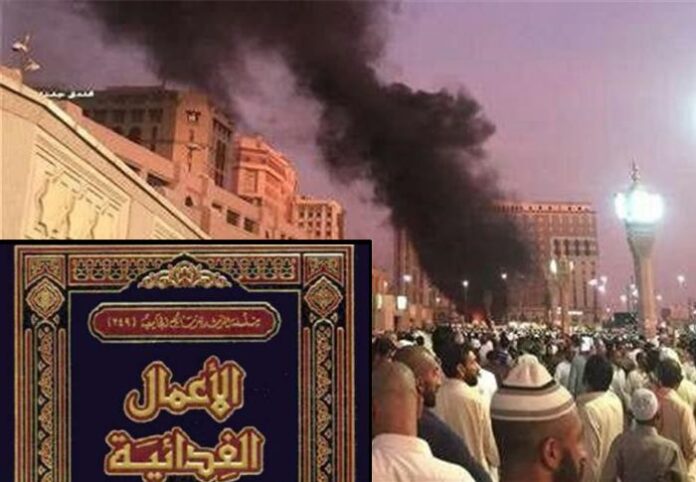
A’maal al-Fadaeiyah

According to Al-Hayat’s report, as covered by Jomhouri Eslami newspaper and translated by IFP, the Saudi government has permitted the release of a book that contains incentives for terroristic operations and suicide attacks.

The book has been issued indefinitely and without audit and entered Saudi Arabia’s book markets and libraries.

The book, entitled “A’maal al-Fadaeiyah” [acts of sacrifice], is focused on a variety of Wahhabi fatwas and views about suicide and criminal operations against whom they called apostates and infidels.

Sami al-Mahmoud, the book’s author, has referred to the fatwas and juridical opinions cited by hundreds of jurists. A special section of the book is allocated to the suicide operations committed by women.

In another part of the book, the author has tried to justify the targeting of civilians and innocent citizens and even journalists.

“The book is not devoid of deceptions and tricks, but the problem is how such a book has been allowed to enter the market and be supplied to libraries,” Mansour al-Naqeedan, the director of a research centre, said.

Turkey Army Says Has Taken Power Over Country

Turkey Army

“The power in the country has been seized in its entirety,” said a military statement read on NTV television, without giving further details. 

The country’s state news agency reports that Turkey’s top general is being “held hostage” at the military headquarters.

Earlier, Turkish Prime Minister Binali Yildirim said an “illegal attempt” by “a group” in the military was underway in the country and security forces were taking necessary measures to resolve the situation.

He said those involved in the coup attempt will “pay the highest price”.

Turkish broadcaster NTV is airing footage of tanks at the entrance to Istanbul’s Ataturk airport.

Gunfire can be heard across the Turkish capital of Ankara as military warplanes and helicopters are flying low over the city.

Helicopters have also been flying over Istanbul, the country’s biggest city, whose Bosphorus and Fatih Sultan Mehmet bridges are reported to have been closed by military forces.

Iran Condemns Terrorist Attack in France’s Nice

tmp_13361-139504251113125381378941098920023

Foreign Ministry Spokesman Bahram Qassemi released a statement on Friday, expressing deep regret for the incident.

“As we have mentioned several times, terrorism is an ominous phenomenon that will be eradicated only with international cooperation and consensus,” he stressed.

Qassemi underlined that any “negligence or double standards” on battling terrorism is condemned and will be doomed to failure.

A French-Tunisian criminal well known to the police for armed attack mowed down people when he drove a heavy truck at high speed into a crowd that had watched Bastille Day fireworks in the French Riviera city of Nice late on Thursday.

French President Francois Hollande says the death toll has risen to 90.

Local officials say the truck was on the sidewalk for more than a mile before police killed the driver.

At least 120 people have been injured in the deadly incident.

US Has Not Done Its Best in Implementation of Nuclear Deal: Zarif

Here’s IFP’s translation of the Foreign Minister’s interview with Fars, which was published on July 14, the 1-year anniversary of the nuclear deal between Tehran and world powers, known as JCPOA.

“We all have criticisms of the performance of Americans in [the implementation of] the nuclear deal, and we have explicitly voiced our criticisms,” Zarif said in the interview.

“As a deal that resulted from negotiations between different parties, the JCPOA does not include all stances of any of the sides; it rather includes the stances held by all sides.”
“The important point is that the entire world believes the Islamic Republic of Iran maintained its honour in the nuclear talks, and managed to establish its nuclear rights and end the United Nations Security Council resolutions and the cruel anti-Iran sanctions.”
“If the sanctions had continued, Iran’s oil sales would have decreased to zero, and all banking transactions stopped.”

“I don’t think there is even a single unbiased observer who believes what the Islamic Republic of Iran gained from the JCPOA has been unilaterally detrimental for the country,” he went on to say.

He further raised the question whether all international deals and agreements – the legally enforceable ones – are fully observed.

“No,” he answered. “It is normal. Each side of the deal should do its best to make the most use of the situation so as to encourage and force the other sides to do their commitments.”

“This is a balanced view of the nuclear deal,” Zarif added.

“I think the country has had behaved prudently under the guidance of the Leader of the Islamic Revolution. We have made good progress.”

“We cannot change the nature of other countries. Americans have a particular nature, and act based on the very nature,” he noted.

“Everyone is saying that the US has not implemented the JCPOA in the best way possible,” Zarif said, in reaction to his deputies’ remarks about the deficiencies of JCPOA implementation.

“The European side’s problem is also with the American side. The European sides have mental concerns.”

“Don’t ever forget in what situation the country was. Don’t forget what mental atmosphere had been imposed on the country. It will take time to have the atmosphere eased.”

“The interesting point is that those who created such a mental atmosphere in the world are now critical of those who are trying to ease the situation,” he said.

A Look at Iranian Newspaper Front Pages on July 14

Iran Newspaper front pages

Newspapers on Thursday marked July 14, the first anniversary of the Joint Comprehensive Plan of Action or the nuclear deal between Tehran and world powers, by covering the remarks by President Hassan Rouhani, Ayatollah Akbar Hashemi Rafsanjani, and many other articles regarding the historic deal. Conservatives continued focusing on the deficiencies and violations of promises, and the moderates and reformists tried to highlight the positive aspects of the deal.

The remarks made by the Police Commander, Brigadier General Hossein Ashtari, about the morality police and the authority of the Law Enforcement over the organization of concerts also received great coverage. The government is trying to ease the regulations and assign the responsibilities to the Ministry of Culture, while the Police says it is acting based on the law.

A number of changes made by President Rouhani in his vices also was a top story in many papers. The reformist newspaper Aftab-e Yazd was the one with harshest criticisms against the cabinet reshuffle, which has allegedly replaced reformist figures with conservative ones. The changes have come after many calls by the reformist faction for a major cabinet reshuffle, particularly at the level of ministers.

The above issues as well as many more are highlighted below:


Abrar:

1- Iran Is Committed to Its Promise in JCPOA: Rouhani

2- 2 Bombing Suspects Arrested in Bahrain on Charge of Links with Iran

A Look at Iranian Newspaper Front Pages on July 14


Abrar-e Eqtesadi:

1- Bright Future of Iran-Britain Ties

2- 20% Decrease in Mobile Data Rates

3- Ban on Sale of American Planes to Iran Not to Be Turned into a Law

A Look at Iranian Newspaper Front Pages on July 14


Aftab-e Yazd:

1- Cabinet Reshuffle in Rouhani’s Style [the article questions Rouhani’s move to replace the reformist VP Majid Ansari with the conservative Hossein-Ali Amiri]

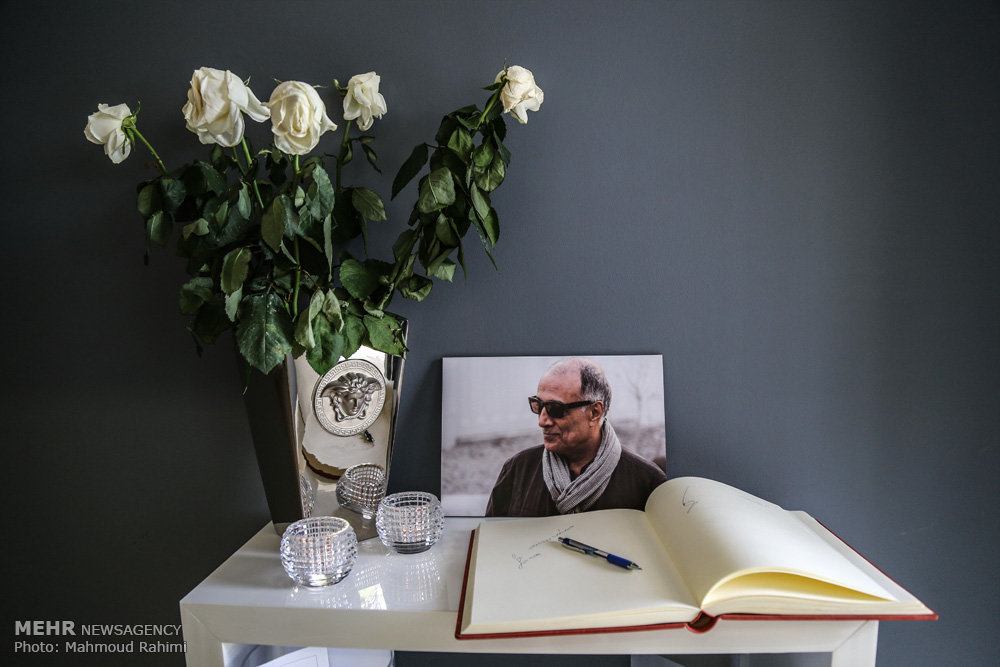
2- We Lost Kiarostami Too Easily: Mehrjui [his criticism of the simple medical error that allegedly led to Kiarostami’s death]

3- Another Case of Medical Error: Surgeon’s Blade Cuts Infant’s Eyelid

4- JCPOA Separated Iran’s Way from Venezuela’s: If Previous Gov’t Was in Office, We Would’ve Turned to Venezuela

A Look at Iranian Newspaper Front Pages on July 14


Afkar:

1- Democrats Oppose 3 Anti-Iran Plans in US Congress

2- Iranian Film Week to Be Held in Sri Lanka

3- Changes Kicked Off in Government

A Look at Iranian Newspaper Front Pages on July 14


Arman-e Emrooz:

1- Conservatives Not Sure Whether to Support Ahmadinejad or Rouhani: They Were Bluffing When They Said They Have 30 Candidates for Next Year’s Presidential Elections

2- If It Wasn’t for JCPOA, Iran’s Oil Sale Could Have Been Zero: Rouhani

3- Theresa May Starts Work in PM Office: Cameron Bids Farewell after 6 Years

4- Iran’s Biggest Int’l Drug Smuggler Arrested

A Look at Iranian Newspaper Front Pages on July 14


Asr-e Rasaneh:

1- Iran Is the World’s Seventh Country in Polluting the Earth: Energy Expert

2- Siemens Says Ready to Restart Cooperation with Iran

3- Internet Subscription Prices to Be Decreased as of Next Week

A Look at Iranian Newspaper Front Pages on July 14


Ebtekar:

1- Solidarity inside the Country, Interaction with the World: Rouhani Underlines in First Anniversary of JCPOA

2- Female Face of Parliament: Women in Iran’s Majlis Declare Their Plans for All-Out Support of Families

A Look at Iranian Newspaper Front Pages on July 14


Emtiaz:

1- Cancer to Go beyond Warning Level in 15 Years

2- Iran’s Oil Output Increases to 4m bpd

3- Severe Water Tension in Iran

4- Largest Heroin Cargo Discovered in Iran

5- It Is against the Law to Remove “Morality Police”: Commander

A Look at Iranian Newspaper Front Pages on July 14


Etemad:

1- Morality Police Is a Law and We Can’t Act against It: Police Commander; Nothing Has Been Communicated on Removing Police’s Authority over Concerts [government has recently approved a bill to assign the responsibility of concerts to Culture Ministry, and prevent the Police from cancelling music performances, but the Police commander says they have yet to receive any order in this regard and will carry out their duties]

2- Maximum Limit of Salary Payments Determined: Major Revision in Executives’ Salaries

3- Details of 13-Year-Old Teenager’s Suicide: Mother, Forgive Me!

A Look at Iranian Newspaper Front Pages on July 14


Ettela’at:

1- Caspian Sea’s Legal Regime Should Meet All Littoral States’ Interests: Zarif

2- First Saudi Flight Lands in Tel Aviv Airport

3- Violation of JCPOA to Be Detrimental to All Parties: Rouhani

4- Human Activities and Environment Cause 85% of Cancers

A Look at Iranian Newspaper Front Pages on July 14


Haft-e Sobh:

1- A Report on Attack of Iranian Social Media Users on Obama and His Daughter’s Instagram Pages: ‘You Were Supposed to find me a job!’

2- Iran’s Football Industry Is Worth $500m

A Look at Iranian Newspaper Front Pages on July 14


Hamshahri:

1- Will Military Service Become Easier? Armed Forces Planning to Improve Military Service

2- Decrease in Women’s Working Hours Finalized in Parliament

3- Iranian El Chapo Arrested in a Village House

4- 3 Anti-Iran Plans by Republicans

A Look at Iranian Newspaper Front Pages on July 14


Iran:

1- Using the Opportunity of JCPOA Needs Unity: President

2- Difficult Mission of Brexit for Theresa May

3- Disturbing Rumours about Health Conditions of Master Shajarian Are Baseless: Son

4- Campaign for Turning Hookahs into Flower Pots

A Look at Iranian Newspaper Front Pages on July 14


Jame Jam:

1- Int’l Credit Cars to Enter Iran’s Market

2- Increase of Anti-JCPOA Moves in the US

A Look at Iranian Newspaper Front Pages on July 14


Javan:

1- Concerns over JCPOA’s Fate in First Birthday!

2- Parliament’s Majority Vote to ‘Revolutionary’ Jurists: 3 New Members of Guardian Council Elected by MPs

3- Deal with FATF to Cause Problems for Iran: Expert

4- 5 New Languages to Be Taught in Iranian Schools

5- Refusing to Change Oil Contracts by Cabinet Reshuffle!

A Look at Iranian Newspaper Front Pages on July 14


Jomhouri Eslami:

1- Positive Evaluation of JCPOA Outcomes 6 Months after Implementation

2- Government Has Had a Fundamental and Proper Performance on JCPOA: Rafsanjani

3- Iran and Britain Sign Finance Agreement on Water and Power

4- Secret Coalition of Saudi Arabia and Israel

5- Washington Not to Prevent Trade Deals with Iran: Spokesman

6- JCPOA Has Not Been Violated up to Now: Negotiator

7- Bid from Outside Iran to Buy $1bn of Iranian Stocks

A Look at Iranian Newspaper Front Pages on July 14


Kayhan:

1- Senior Nuclear Negotiator: Don’t Have an Economic View of JCPOA!

2- US Has Started Plans to Overthrow Al Saud Regime: Jordanian Expert

3- US Extends Sanctions against 15 Iranian Individuals and Institutions

A Look at Iranian Newspaper Front Pages on July 14


Khorasan:

1- Aref’s Silence: Senior Reformist MP Keeps Silent over Candidacy of Rouhani in Next Year’s Presidential Elections

2- Ministerial Meeting of Caspian Sea Littoral States in Astana

3- Commander: Whoever Wants to Become President or MP Promises People to Remove Morality Police!

4- Dust Pollution Shuts down Offices in Sistan and Baluchestan

A Look at Iranian Newspaper Front Pages on July 14


Resalat:

1- Rafsanjani: Americans Are Violating Their Promises

2- Growing Trend of Caesarean Section Procedure Stopped

3- Germany’s Steinmeier Warns against New Cold War

4- We Remained Committed to Our Obligations, But Sanctions Remained in Place

A Look at Iranian Newspaper Front Pages on July 14


Roozan:

1- Iran’s Support for Terrorism Is a Joke: Rafsanjani

2- World’s Newspapers Dominated by Thatcherism and US Police

3- Under Current Laws, Morality Police Can’t Be Removed: Commander

4- Whoever Starts Violating JCPOA Will Be Final Loser: Rouhani

A Look at Iranian Newspaper Front Pages on July 14


Sayeh:

1- Why Some Hotels Still Refuse to Receive Single Women?

2- Free Trade Zones Can Make an Evolution in Iran’s Economy

A Look at Iranian Newspaper Front Pages on July 14


Sepid:

1- Waiting for the French Team’s Report on Kiarostami’s Death

2- Iran, Second Country in the World in Controlling Non-Communicable Diseases

A Look at Iranian Newspaper Front Pages on July 14


Shahrvand:

1- Return to Hope: JCPOA Reclaimed Iran’s Share from Global Oil Market

2- Dutch Woman Describes Iran as an Amazing Place to Visit

3- A Report on Increase of Violence among Iranians

4- JCPOA Removed the Pretexts for a Possible Attack on Iran: Rouhani

A Look at Iranian Newspaper Front Pages on July 14


Shorou:

1- Sexual HIV Transmission Doubled: New Wave of AIDS Outbreak in Iran

2- Ties with Foreign Banks Hinge on Implementing FATF Regulations

A Look at Iranian Newspaper Front Pages on July 14


Vaghaye Ettefaghieh:

1- Recent Paris Meeting Was Gathering of Political Bankrupts: Leader’s Advisor on MKO Paris Meeting

2- We Defended People’s Rights: Rouhani

A Look at Iranian Newspaper Front Pages on July 14


Vatan-e Emrooz:

1- Rouhani: JCPOA Prevented a War from Happening! First Anniversary of a Deal that Was Supposed to Lift Sanctions and Improve People’s Livelihood

2- Theresa May Is Rupert Murdoch’s Candidate: Is Thatcher Emerging Once Again?

3- Canadian Gov’t Continuing Ottawa’s Previous Policies against Iran in UN: Efforts to Have Anti-Iran Resolutions Approved

4- Ankara: We Need Damascus! ISIS Is Back in Turkey

A Look at Iranian Newspaper Front Pages on July 14