Saturday, December 27, 2025
Home Blog Page 421

Iranians celebrate Sizdah Bedar, concluding Nowruz festivities  

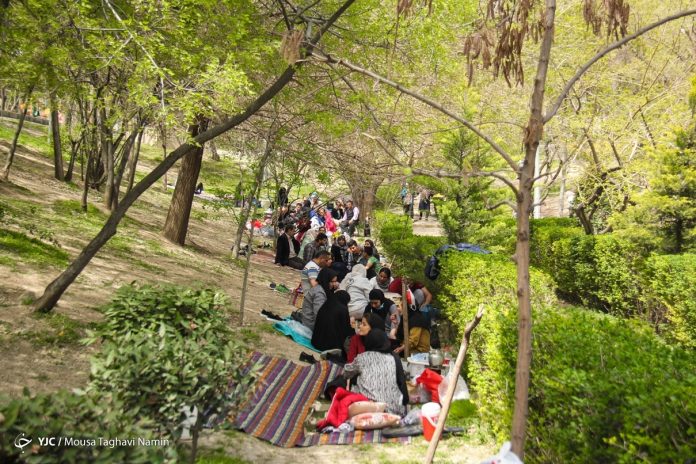
Rooted in ancient tradition, Sizdah Bedar – meaning “thirteen outdoors” – encourages families to spend the day in nature, symbolizing the avoidance of misfortune tied to the number 13 in Persian folklore.

The day is an enduring expression of the nation’s cultural heritage, blending joy, community, and a deep reverence for nature.

It is filled with lively activities, including picnics featuring traditional foods such as Ash-e-Reshteh (a Persian noodle soup) and Kebabs.

Celebrants enjoy picnics, play games, and observe customs such as casting sabzeh – sprouted greens from the Haft-Seen table – into flowing water. The gesture reflects the cultural values of renewal and harmony with the environment.

Traditionally, unmarried individuals, particularly young women, tie grass blades while making wishes for marriage in the coming year.

Despite Iran’s urbanization and changing lifestyles, Sizdah Bedar continues to be widely observed, reaffirming the nation’s love for nature and its collective traditional spirit.

It is a day to cherish the simple joys of life, celebrate unity, and look forward to a prosperous year ahead.
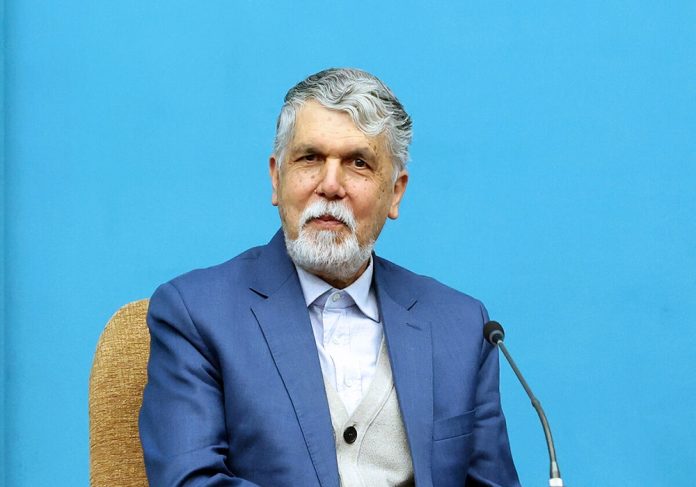
Iran’s culture minister rejects Larijani’s remarks on nuclear fatwa 

In a post on the social media platform X, Salehi emphasized that the Supreme Leader’s fatwa prohibiting the development and use of nuclear weapons is not a mutable ruling based on jurisprudential discretion or changing political circumstances.

“This is not a fatwa issued in the realm of ijtihadi matters, subject to change,” he wrote. “Rather, it is rooted in foundational and immutable principles of Islam.”

Salehi further stated that Islam must be understood as a religion of peace and a safeguard for humanity, not one that accepts perpetual threats to global security.

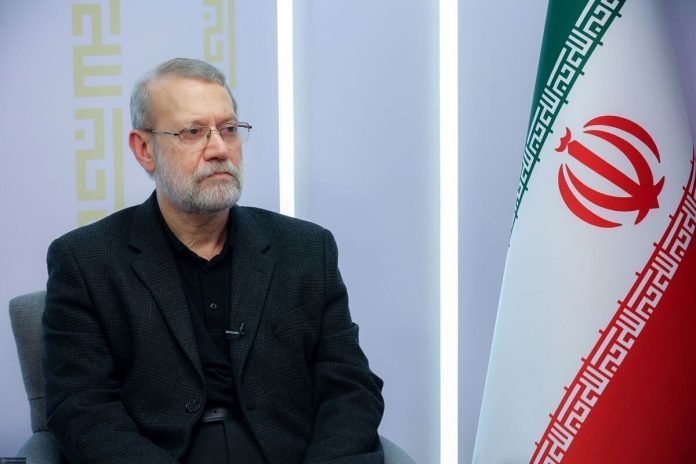
His comments came in response to remarks by Ali Larijani, who had suggested that Iran might be compelled to pursue nuclear weapons if the United States acts wrongly abd attacks Iran

“Iran does not seek nuclear weapons, but if the Americans make a mistake, we may be forced to take a different path,” Larijani said in a televised interview.

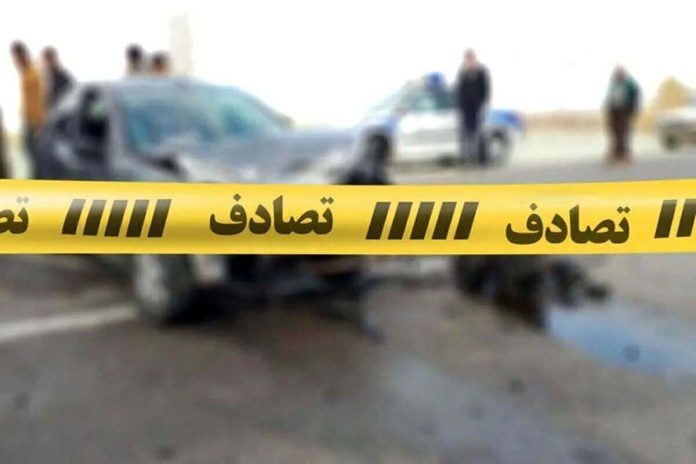
Road accidents leave 704 dead during Iran’s Nowruz travel period

General Hosseini added that between March 15 and April 1, over 400 million vehicle movements were recorded nationwide.

He noted: “During this period, 582 fatal crashes occurred, leading to the deaths of 704 individuals, including those who later died in hospitals.”

In addition, authorities reported 12,918 injury-related accidents, leaving 16,094 people injured. A total of 71,410 property damage crashes were also recorded, bringing the overall number of accidents—urban and intercity combined—to 84,911.

Kerman province recorded the highest death toll with 65 fatalities, followed by Fars, Khorasan Razavi, Khuzestan, and Sistan and Baluchestan.

The primary causes of fatal crashes are said to be driver distraction, sudden lane changes, and loss of vehicle control.

Most deadly accidents occurred between 4:00 p.m. and 8:00 p.m., prompting officials to urge travelers returning from holidays to remain cautious during peak hours.

In the most recent 24-hour period alone, 18 people were killed and 491 injured in nearly 2,000 road accidents reported nationwide.

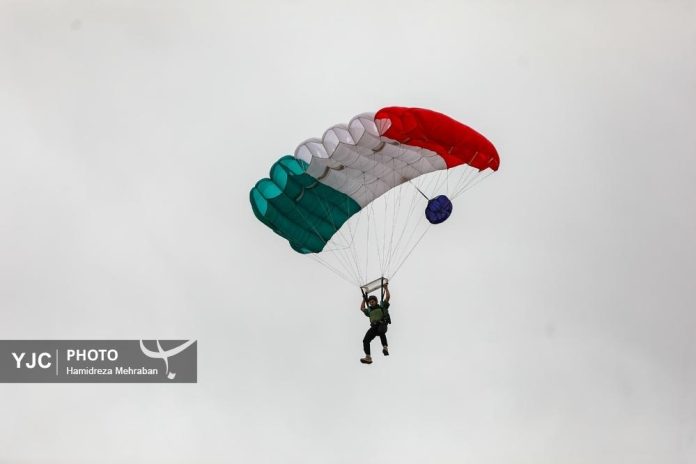
Skydivers leap from Tehran’s Milad Tower to mark Islamic Republic Day

The aerial display, organized for the April 1 national holiday marking the 1979 referendum that established Iran’s current political system, featured professional parachutists descending past the iconic telecommunications tower – the world’s sixth tallest.

The jumpers deployed colorful parachutes during the carefully coordinated event.

More in pictures…

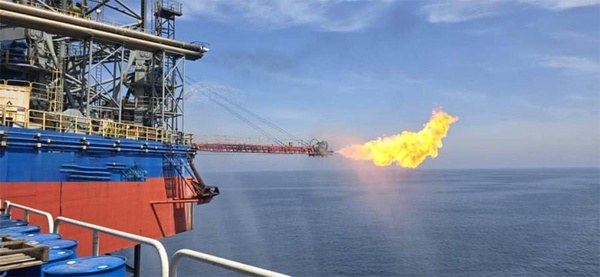
Iran begins production from new well in Persian Gulf gas field 

South Pars is a shared gas field between Iran and Qatar, and with the activation of this new well, Iran has further solidified its production lead over Qatar in the joint field.

The eighth well in Phase 11 was drilled to a final depth of over 4,200 meters and is expected to boost Iran’s daily gas output by approximately 3 million cubic meters.

Last month, Iran’s oil industry signed its largest-ever contract, worth $17 billion, with domestic companies to enhance pressure and recovery rates in the South Pars field.

Currently, 70% of Iran’s gas, 50% of its petrochemical feedstock, and 40% of its gasoline production feedstock are supplied by the South Pars field.

Meanwhile, Qatar, despite extracting a smaller share from the field since 2017, has managed to secure a significant role in the global energy economy through its LNG exports.

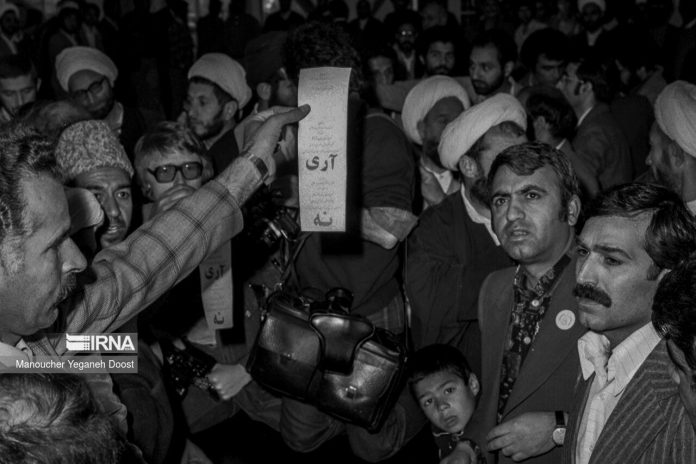
April 1st: Marking the birth of the Islamic Republic of Iran

The landmark decision came through Iran’s first nationwide referendum, held only weeks after the Islamic Revolution’s victory on February 11, 1979.

With an impressive 98.2% of voters saying “yes,” the day marked a decisive departure from centuries of monarchy.

The referendum was initiated by Ayatollah Khomeini, the Leader of the Islamic Revolution, who called upon the interim government to organize a free vote, ensuring Iranians could determine the future form of governance.

The referendum saw active participation both within the country and among the diaspora. Out of 22.8 million eligible voters, more than 20 million cast their ballots.

The commemoration comes amid ongoing tensions with the West over Iran’s nuclear program and regional policies.

While commemorations focused on national independence achievements, some younger Iranians who interviewed with IRNA news agency expressed mixed views.

A 21-year-old student acknowledged the system’s “independence from foreign powers” but hoped for “improved conditions.” An engineer criticized corruption among some officials’ families while affirming national pride.

Iran says Trump’s rhetoric reckless, warns against US, Israeli adventurism

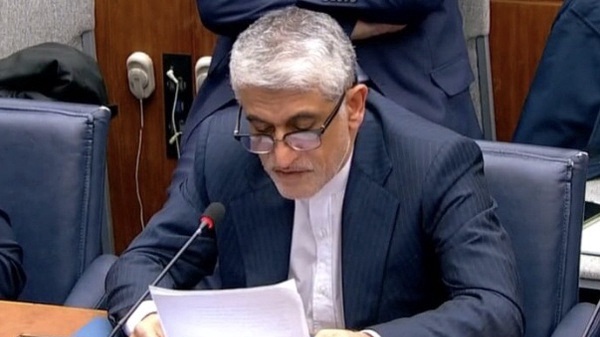
The letter, addressed to UN Security Council President Christine Markussen Lassen and UN Secretary-General António Guterres, came in response to recent threats by US President Donald Trump against Iran.

Iravani referred to Trump’s interview with NBC News, where the US president warned that if Iran does not “back down” on its nuclear stance, it will face “a bombing like never before.”

The Iranian envoy condemned these remarks as reckless and hostile, stressing that they constitute a flagrant violation of international law and the fundamental principles of the UN Charter—particularly Article 2(4), which explicitly prohibits the threat or use of force against any nation’s territorial integrity or political independence.

The letter further said Trump has been systematically disregarding and violating international norms since taking office in January 2025, warning that his repeated threats of force against sovereign states set a dangerous precedent in global affairs

Iravani wrote that it is deeply regrettable and alarming that the US, despite being a permanent member of the UN Security Council, openly disregards its obligations under the UN Charter and wields military power as a primary tool to advance its political and geopolitical agendas.

The Iranian envoy called on the Security Council to fulfill its duty under the UN Charter to maintain international peace and security, urging the body to condemn the US president’s threats as violations of international law and the UN Charter.

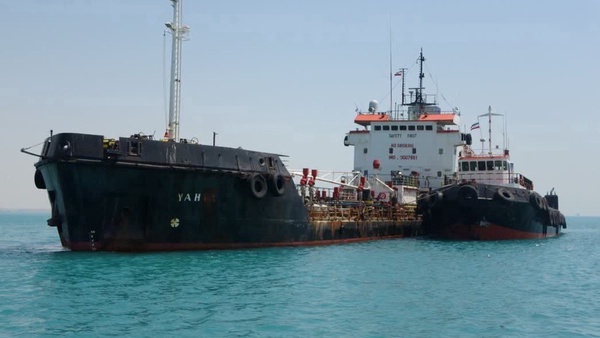
Two fuel smuggling tankers seized by IRGC in the Persian Gulf

These two tankers, with 25 crew members, were systematically engaged in fuel smuggling in the central waters of the Persian Gulf. At the time of their seizure, they were carrying over three million liters of smuggled diesel fuel.

The vessels were intercepted during an operation carried out by the IRGC on Monday morning in the Persian Gulf.

With a judicial order, the tankers have been transferred to the Bushehr oil terminal for the offloading of the smuggled fuel.

Iran Leader advisor warns Tehran may pursue nuclear weapons if attacked by US or Israel

Speaking in an interview on Monday night with state television, Larijani stated that while Iran adheres to the Leader’s religious decree against nuclear arms – officially registered with the UN – external aggression could create a “secondary justification” for pursuing such weapons.

“If the US makes a strategic mistake, Iran will have no choice but to move toward nuclear arms for self-defense,” he said.

Larijani said the US and Israel are escalating tensions, citing American President Donald Trump’s contradictory rhetoric on peace and war.

He emphasized that Iran prefers diplomacy but warned that decades of US hostility, including support for Iraq during the Iran-Iraq 1980s war, have hardened its stance.

On regional conflicts, Larijani defended Iran’s role in Syria as a counterterrorism effort and criticized Israel for destabilizing West Asia.

He also dismissed US reliability, referencing Trump’s withdrawal from the Iran 2015 nuclear deal, JCPOA, and asserted that Iran’s Islamic Revolution would endure despite economic hardships.

Regarding Yemen, he cautioned the US against intervention, praising Yemeni resistance and warning of heavy consequences.

IRGC commanders warn U.S. against anti-Iran saber-rattling

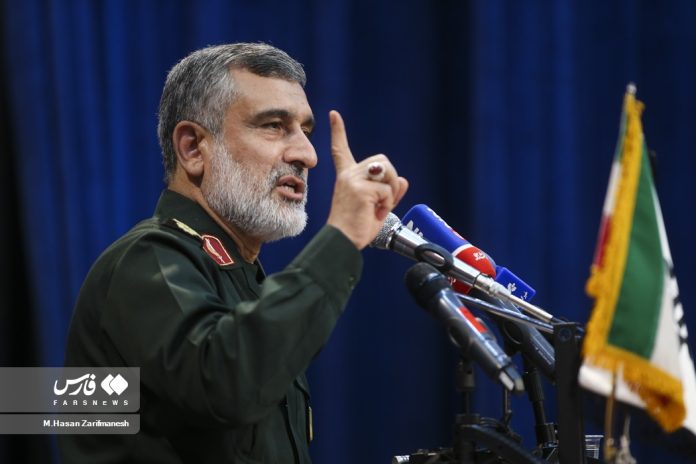
Amirali Hajizadeh

Brigadier General Amir Ali Hajizadeh said the US has at least ten bases around Iran where 50 thousand troops are stationed.

“This means they are sitting inside a glass house”, General Hajizadeh said.

The commander of the IRGC Aerospace Division added, “people who live in glass houses shouldn’t throw stones”.

Meanwhile the Commander-in-Chief of the IRGC, Major General Hossein Salami, says the U.S. has failed in giving up its filthy habits regarding Iran.

The IRGC commander noted that it seems that the U.S. has not learned a lesson from its past mistakes.

The warnings follow comments made by U.S. President Donald Trump against Iran.

On Sunday, the US President claimed in an interview with NBC that if an agreement is not reached with Iran regarding its nuclear program, “we will attack them and impose sanctions against them.”

On Monday, during the Eid al-Fitr prayer sermons in Tehran, Leader of the Islamic Revolution Ayatollah Seyyed Ali Khamenei, stated: “If any mischief occurs from outside—which is, of course, unlikely—they will undoubtedly receive a strong counterblow.”
Ayatollah Khamenei also warned that if the enemy, as in some previous years, considers fomenting sedition inside Iran, “the nation, just as in those years, will deliver a firm response to the troublemakers.”