Tuesday, December 23, 2025
Home Blog Page 4114

Hezbollah to Remain Iran’s Faithful Ally: Official

Nabil Qaouk, a deputy member of Hezbollah executive council, praised Iran for giving massive support to regional countries in the fight against Israel and terrorist groups.

“We will remain Iran’s faithful ally, whether the US likes it or not,” he stressed, according to a Farsi report by Al-Alam.

Qaouk declared that backed by Iran, Hezbollah managed to stop the ISIS’ progress in Syria, Iraq and Lebanon.

“Lebanon is still facing the threat of ISIS, though,” he noted. “The regions of Jarrod Arsal and Ras Baalbek still serve as ISIS bases and passages: we can’t neglect such a threat to our nation.”

“Hezbollah won’t stop fighting against Takfiri [extremist] groups despite all Arab, regional and international fulminations and pressure to leave Syria.”

Millions of Iranians Celebrate Anniversary of Islamic Revolution

Revolution anniversary

In February 1979, the Islamic Revolution led by the late Imam Khomeini toppled the US-backed Pahlavi monarchy and set the stage for the establishment of the Islamic Republic of Iran.
Iranian people annually celebrate the anniversary of the victory in massive demonstrations in which anti-arrogance slogans are usually chanted.
Here is a selection of photographs taken by various news agencies during the mass rallies around Iran on Friday, February 10:


Why Iran’s Leader Thanked US President Trump

Barack Obama, Donald Trump

Ayatollah Ali Khamenei, the Leader of Iran’s Islamic Revolution, produced widespread, varied reactions among the international press and public opinion after he thanked Trump, the new US President, during a speech on February 7, for revealing the United States’ real face, and thus, proving that the perception Iran used to express for the past 40 years has been true.

Trump, of course, isn’t the first US President to show, by his actions and statements, that the Islamic Republic is right to take anti-American positions; and to solidify the integrity of Iranian people as a result: in fact, Obama had confirmed the Iranian leader’s predictions before Trump.

Shortly after Hassan Rouhani was elected as Iranian President in 2013, the new government decided to open direct nuclear negotiations with Washington. Iran’s Leader agreed with it to the surprise of many, and the press started to publish commentaries about Iran’s modified position and a new season in the relations between the two countries.

When  Rouhani  visited New York City for the first time in his presidency  to attend the United Nations General Assembly, which ended in his telephone conversation with Obama, I told the New York Times that the Iranian Leader was in a win-win situation: if the talks led to the reduction or elimination of economic sanctions that had damaged Iran’s economy, Ayatollah Khamenei would get the credit for approving the new negotiating strategy.

But he could also take the credit if the talks failed to reach any results, as “he will be praised for having proved his warnings over the dishonesty [shown] by the West towards Iran.”

“In that case his doubts will be proved once again,” I had stressed.

During the nuclear negotiations, the Iranian Leader held on to his positions, and repeatedly stated that despite having accepted the Iranian government’s suggestion for conditional negotiations with the US, he wasn’t optimistic about it.

“In my opinion, we won’t achieve the Iranian nation’s expected results in the negotiations. As an experience, however, it will solidify the Iranians’ empirical basis of the issue,” he stated.

Finally, Iran and P5+1 reached a deal that held up hopes for the end of a contrived crisis in Iranian nuclear program, which had led to cruel embargoes on the export of medicine and medical equipment to Iran!

Shortly after the nuclear deal was signed, Iran started to fulfil its obligations such as limiting the number of its centrifuges and enriched uranium reserves, as well as changing the function of IR-40 heavy water reactor; hoping that the US and Europe would end their economic war against Iran by lifting the sanctions.

However, according to high-ranking Iranian officials (not necessarily opposite to JCPOA), the US tries to weasel out of its obligations to lift banking and insurance sanctions, and to release Iran’s blocked assets.

Not only Washington didn’t change its behaviour despite the efforts and remarks by Iranian Foreign Minister and other top officials, and in spite of Iran’s complaint to the JCPOA Implementation Joint Commission, but also Obama refused to veto the Iran Sanction Act, considered to be violating the JCPOA by Iranian authorities, shortly before leaving the White House.

“How much did I point out that the US was dishonest and deceitful; that it wouldn’t keep to its words? Now see! Today I am not the only person who calls it dishonest; our dear officials, the negotiators who endeavoured so much to reach the deal, say so.”

By these statements in last November, the Iranian Leader not only slammed Washington for its deceitfulness, but confirmed that at this moment, public opinion, the ones who supported the negotiation with the United States at first, have admitted the rightfulness of his distrust of the US.

Washington’s dishonesty – planned to put pressure on Iran to give more concessions in regional issues, as believed by some analysts – didn’t push Iran to retreat, though: in fact, by making clear that the US was unreliable, it strengthened national solidarity among Iranians, and caused them to trust in the old belief that any effort to negotiate and re-establish the relations with the US would turn out to be ineffectual.

Trump’ controversial anti-Iran remarks during the US electoral campaign, and after his entrance to the White House in particular, should be considered as another US gift to Iran which solidifies Iranians’ national solidarity against the White House policies.

Trump’s actions, from his revelations about Washington’s role in ISIS formation to his visa ban on the citizens of seven Muslim countries including Iran, disappointed the Iranians who were slightly hopeful about the future of Iran’s relations with the US, leading them to the confirmation of the 40-year stances held by Iranian officials about the real face of Washington.

On the other hand, by implicitly threatening Iran to military invasion, Trump produced a reverse effect on the accomplishment of Washington’s objectives:  clear evidence shows that during his first days of presidency, Trump had strongly unified the Iranians, provoking a wider support of Ayatollah Khamenei views among them.

Neglecting the past experiences of US presidents, Trump integrated Iranians and excited their hostility toward his administration by making military threats against Iran, right in a moment when the country, as admitted by American commentators, was more powerful than ever.

Now it is not surprising to see anti-American hashtags in the pages of Iranian social network users who take stance against the US threat regardless of their political orientations.

On another level, Trump’s threats against Iran have even changed the positions of Iranian domestic opposition. Mohammad Khatami, the former Iranian President who is facing political constraints for having supported the protests after Iran’s 2009 elections, reacted to Trump by making a statement to invite all Iranians to a national reconciliation, and call on reformists to attend the February 10 nationwide rallies to celebrate the 38th anniversary of Iran Islamic Revolution’s victory: “Death to the US” slogan can be heard louder than all recent years right now!

It was surely because of the history of Iranian people’s national solidarity against foreign threats that Ayatollah Khamenei decided to let the Iranian nation give the country’s response to Trump’s threats.

“[Trump] says be afraid of me! No, we aren’t afraid of you. The people will respond to your threats in the streets on February 10; they will show you how the Iranian nation reacts to such threats,” the Leader said.

Trump Warned against Desginating Iran’s IRGC as Terrorist Organisation

trump

The White House has been weighing designating the IRGC – the elite arm of Iran’s security forces — and Egypt’s Muslim Brotherhood as “Foreign Terrorist Organizations,” Trump administration officials familiar with the matter told CNN.

But, the officials said, Trump did not sign executive orders on the issue after US national security agencies warned the president about the consequences of such a move, the US news network reported on Thursday.

President Trump was scheduled to sign the IRGC order on Monday during his visit to the US Central Command (CENTCOM)’s headquarters in Tampa, Florida, but the plan was put on hold after the State and Defense Departments expressed “serious objections,” according to the officials.

The US military’s CENTCOM deals with issues in the Middle East, North Africa, and Central Asia, most notably Afghanistan and Iraq.

It is not clear now if Trump will sign the order regarding the IRGC.

Trump Warned against Desginating Iran's IRGC as Terrorist Organisation

The officials said Trump was told that designating the IRGC as a terrorist organization would create serious problems for Iraqi Prime Minister Haider al-Abadi, who is receiving assistance from both the US military and the IRGC in his fight against the Daesh (ISIL) terrorist group.

In addition, they said that US national security agencies are also concerned that American military and embassy personnel in Iraq could be targeted after such an action from the United States.

This is while, according to reports, some officials from the Trump administration have received money from the anti-Iran Mujahedin-e Khalq Organization (MKO) to deliver speeches in support of the terrorist group.

Trump’s transportation secretary, Elaine Chao, received $50,000 in 2015 for a five-minute speech to the political wing of the MKO, which has carried out numerous terrorist attacks against Iranian civilians and government officials over the past three decades.

Trump Warned against Desginating Iran's IRGC as Terrorist Organisation

In March 2016, Chao received another $17,500 for a speech that she gave to the Iranian-American Cultural Association of Missouri, which reportedly has ties with the MKO terrorist group. Chao is the wife of Senate Majority Leader Mitch McConnell of Kentucky.

Former mayor of New York City Rudy Giuliani, who is also likely to get a post in the Trump administration, has also acknowledged that he has been paid by the MKO for his appearances at the terrorist group’s events.

Out of the nearly 17,000 Iranians killed in terrorist assaults since the victory of Iran’s 1979 Islamic Revolution, about 12,000 have fallen victim to MKO’s terrorist attacks.

The organization also sided with former Iraqi dictator Saddam Hussein during Iraq’s eight-year imposed war against Iran in the 1980s. The group also helped Saddam in his brutal crackdown on his opponents.

Trump Warned against Desginating Iran's IRGC as Terrorist Organisation

The US State Department added the MKO to its list of foreign terrorist organizations in 1997 for the group’s involvement in the killing of Americans in Iran in the 1970s and an attack on US soil in 1992.

But, now some officials in the Trump administration are reportedly lobbying for the MKO’s removal from the US list of terrorist groups, and designate Iran’s IRGC, which has been fighting against terrorism and aggression since the 1979 Islamic Revolution, as a terrorist organization.

According to some observers, Israel and Saudi Arabia, which are considered main sponsors of terrorism in the Middle East, particularly in Iraq, Yemen and Syria, are pushing the Trump administration to act against the IRGC, an organization that has frustrated their designs on these countries.

Iran’s DM Dismisses ‘Fabricated’ Report about New Missile Test

Fox News claimed that Iran has launched another missile Wednesday from the same launch pad east of Tehran where it conducted a previous ballistic missile test last month.

In reaction to the report, Iran’s Defence Minister said such claims are fabricated, and this has not happened.

However, he added, even if such a missile was test-fired, it was none of their business.

“The Islamic Republic of Iran’s missile program is a normal one, and its missile tests are part of pre-planned program aimed at maintaining the country’s defensive capabilities,” he added, according to a Farsi report by Mehr.

“Such fabricated claims are part of the Iranophobia project designed by the Zionist regime [of Israel],” he noted, adding that the project tries to provoke Iran by spreading lies about the country.

“We advise our southern Persian Gulf neighbours not to be deceived by such claims, because the Islamic Republic of Iran has never been a threat for them, and it won’t be.”

“Americans have spread the propaganda and waged the psychological war in a bid to sell their weapons,” Dehqan said, adding that Iranian people will respond to the propaganda in February 10 nationwide rallies.

What Iranians Do in 180,000 Telegram Channels

“Today the Intelligence Ministry can monitor all web pages in Iran,” Iranian Intelligence Minister Mahmoud Alavi said, according to a Farsi report by Basij Press.

“We don’t interfere, though, unless the country’s Establishment is threatened.”

“Telegram, Instagram, and Twitter are the most popular social networks among Iranians,” he noted.

“Actually, there are 180,000 active Iranian channels in Telegram. Our observations show that 90% of them are used as a medium for communication with friends and family.”

He went on to say that 7% of channels are political, and the other 3% have immoral or blasphemous content: 2.5% publish obscenities, and 0.5% work on anti-religion topics.

“We have identified and arrested the administrators of many anti-religious channel,” Alavi stressed. “The obscene channels are also banned after being reported to the Telegram central administration in Germany.”

“While the anti-religious channels have few visitors, Dua-ye Faraj – a prayer for the reappearance of Imam Mahdi [AS], the last Shiite Imam – once had 14 million viewers in a channel: it shows that our youth are neither anti-religious, nor obscene.”

West Taken Aback by Yemen’s Military Power

Yemeni Missiles

Yemen’s destruction of Saudi weapons and warships, the last of which had been purchased at $10 billion, has come as a shock to the world and the Western producers of armaments.

According to a Farsi report by Fars News Agency, it came as Yemen has been under an all-out siege by Saudi Arabia for the past 23 months.

When Saudi Arabia launched its military campaign against Yemen in March 2015, it was enjoying the military and financial support of the West and a number of Arab nations and was armed to the teeth with modern satellites, fighter aircraft and destroyers as well as Terminal High-Altitude Area Defence — an American anti-missile system also known as THAAD.

Nevertheless, the armaments and all-out support failed to give Saudi Arabia political leverage over Yemen — to increase its pressure on the country — or help Riyadh achieve military victory against Sana’a. The invasion only led to Al Saud’s fiasco and conviction by the international community.

According to a report by Yemen’s Al-Najm al-Thaqib news website, Saudi Arabia has signed deals with a number of countries, including France, to purchase arms. Al Saud’s latest contract with France is said to be the biggest weapons purchase agreement ever signed between the two states.

French fast attack crafts and frigates as well as the American and British armaments — all purchased by Saudi Arabia — failed to help Al Saud win in their invasion of Yemen, as witnessed in the destruction of the French warship deployed along the Yemeni coast.

The warship being targeted by Yemeni Ansarullah revolutionaries’ missiles caused great tumult in Western and other international media.

The attack, also caused grave concern among big arms producer companies, as the Yemeni forces had destroyed a warship equipped with the world’s most advanced and modern anti-missile radar system.

The fact that Yemeni forces had destroyed the warship with Burkan-1 ballistic missile, their own production, raised the question among Saudi Arabia and its Western sponsors that how Ansarullah revolutionaries had managed to build the missile despite being under an all-out siege by Saudi forces.

What the Saudi-led coalition had arrogantly failed to notice was that Yemeni people were committed to fulfilling the aspirations of their dominant ideology to the extent that they felt the obligation to defend their national integrity and establishment as well as the dignity and munificence of their homeland, by making advanced armaments that could destroy the West’s — particularly the US and Israeli — arms, out of the simplest and most primitive and basic facilities and equipment they had.

In its report, al-Najm al-Thaqib wrote, “As stressed repeatedly by the Leader of Iran’s Islamic Revolution Ayatollah Seyyed Ali Khamenei, Iran is the only country that is resisting against the cruelty and excessive demands of Saudi Arabia, the US and Israel.”

“Since Yemen is under Saudi Arabia’s all-out siege, and there is no access to the poor country from the ground, sea and air borders, claims accusing Iran of supplying arms to the country’s forces are entirely rejected,” the website added.

In reaction to the all-out siege, Yemeni people decided to show military and political resistance against their enemy and produce their own missiles, instead of simply surrendering to the invaders.

Trump’s Travel Ban Depriving US of Flavour Iranians Could Add

Donald Trump

US President Donald Trump recently signed an executive order indefinitely banning Syrian refugees, and temporarily blocking citizens from six other majority-Muslim countries of Iran, Iraq, Sudan, Somalia, Yemen and Libya from travelling to the US. The ban was temporarily lifted based on a federal judge’s ruling, but it might be put back in force in future.

A former head of Iran Cultural Heritage, Handicrafts, and Tourism Organization (ICHTO) and the current head of ICHTO’s Cultural Heritage Research Centre Mohammad Beheshti Shirazi believes that although Iranians may fail to offer industrial or economic advantages to a country they immigrate to, particularly the US, they have other characteristics that can highly contribute to the improvement of the quality of life in their host society.

In a Farsi article in Etemad newspaper, Beheshti Shirazi presents a number of historical facts to support his idea, the excerpts of which follow:

Seyyed Mohammad BeheshtiDuring the period I was in charge of Iran Cultural Heritage, Handcrafts and Tourism Organization, George W. Bush was the president of the US. At that time, when I had a meeting with the experts and professors of American scientific centres and universities, most of them expressed shame over the statements, deeds and behaviour of their president and apologized on behalf of him.

Now that Trump has become the head of state in the US and given his strange behaviour and remarks, I presume that in my future sessions with American visitors, I would find them embarrassed. With the international spotlight currently on Trump and in view of his childish and mischievous moves, which give people all around the world numerous causes for complaint, I am constantly repeating this question in my mind: What has the US deprived itself of by banning entry of Iranian immigrants and travellers to the country?

Is it depriving itself of Iran’s auto industry? Is it losing access to our engineering or medical innovations? Is Iran considered the US industrial strategic depth, as is the case with China and India, whose severed ties with Washington would worry the Trump administration about the future of his country’s factories?

It is crystal clear that the answer to all these questions is almost completely no.

In such complicated wrathful situations, we suddenly think up national and cultural excuses to defend ourselves. We primarily ask questions about our global advantages. Prior to this, in response to the question about the secrets of their success in the US, Iranian immigrants mostly gave two answers: First, the opportunities the US and its atmosphere had provided them with, and secondly, their own capabilities and talent.

Few would have mentioned the advantages the Iranian culture had given them. In situations similar to the status quo, no matter how successful they are in their profession, everybody would perceive personal achievements as a tiny weapon to battle against the prevailing trend. It is only in such critical periods, when we see ourselves as part of a bigger whole and identity, which is Iran or Iranian culture.

It would be quite natural if we asked ourselves what a trump card we have up our sleeves to win us respect in the international community.

What appears to be disappointing about Iranian-Americans is that it is as if they fail to offer any substantial benefit to the country. Unlike Chinese, Italians and Arabs, they have not even managed to set up any community. Unlike Armenians and Jews, they have failed to provide their fellow Muslims with any special support either. They do not basically stress their distinctive features. They would like to be identified by their differences in the host society. The only reason they quickly adapt to the social mores and norms of their new home and observe its laws, is to fully assimilate with their new housemates as soon as possible. They do not want to be regarded as foreigners, for they plan to climb to the top of the status pyramids in the new country and become in charge of affairs after a few generations. This requires them to become identical members of the new society.

These behaviours displayed by the Iranian immigrant society have triggered a series of reactions by a large number of social analysts who ascribe these attributes of Iranians to their individualistic tendencies or low self-confidence on encountering the host society’s culture. Nevertheless, it would be unfair to give a hasty analysis of these witty and clever behaviours of Iranians. These people’s infiltration into a new society has a special quality. Although it takes some time for the quality to demonstrate itself, its outcomes are long-lasting and essential. Unlike Chinese, Iranians do not monopolize global markets with their art of mass production. They are not like the people of some states who constitute the US cheap workforce population.

As in case of their presence in the US, Iranians’ art is not evident, but it is still perceivable. It is like water that becomes visible only when it has filled the whole place and soaked everything. Iranians are capable of winning the heart of the host society’s people thanks to their art of alchemy which captivates the essence. They know how to speak in any given situation and position, receive kindness and, thus, accumulate social capital and advantages.

They can improve the human quality of everything and make it look more desirable. They hide their differences with the people of the host society in the first place, to be allowed to penetrate into the deep layers of the new society. An analysis of Iranian immigrants in Western states clearly supports this claim. The first generation of the people who had left Iran morosely prior to and after the Victory of the Islamic Revolution (1979), when the country was in tumult, became a dispersed society which, in case required, would hide or deny its identity. This was because they were newcomers, quite unaccustomed to their new environment and under a serious media attack. In that era, Iranians had to work out solutions individually to guarantee their survival.

Almost four decades (two generations) have elapsed since Iranians’ immigration to Western Europe and North America and they have gradually managed to put down roots in their new societies and occupy high positions in their status pyramids. What is interesting is that, depending on their level of self-confidence, they currently underline their nationality deliberately on different occasions and take pride in it. At present, they expect the host society to officially recognize them and respect them as its other native members.

Historically speaking, Western countries have not been the first destination for which Iranians left their country. History shows that whenever put under pressure, Iranians have mostly immigrated to the best places in the world in their own time. However, none of them has aimed to become a thorn in the eye of its host nation. On the contrary, they have improved the condition of their new home — their host societies—as does a fragrant breeze that blows through barbed wires and emits an odor that refreshes its immediate surroundings.

It is said that during Seljuq dynasty (1016-1153), a number of Iranian Zoroastrians left the country for India because of some religious bigotry. Having learned about their intention to reside in Gujarat port city, its ruler sent them a bowl full of milk to both welcome their arrival and implicitly imply that Gujarat is densely populated and does not have sufficient room for the newcomers. The head of the Iranian group, who had understood the ruler’s message, asked for some sugar, solved it in the milk and sent it back to the ruler. By this, he, in fact, had implied that they would both assimilate easily in the host society in a way that their presence would not be perceived as annoying and make the life of those around them sweeter. Whether we believe it or not, this is the role Iranians have always played in the world.

They have played their role very well whenever provided with a suitable opportunity, such as entering a specific profession or obtaining a special position. Cinema is a palpable example in this regard. Iranians’ art of alchemy is the quality they present to their host societies in case of their prolonged presence in it. On the contrary, their wrath leaves a bitter taste in the mouth of their host society.

A Look at Iranian Newspaper Front Pages on February 9

The anniversary of the victory of Iran’s 1979 Islamic Revolution will be celebrated on Friday, February 10, in nationwide annual rallies held across Iran. All newspapers today called on the Iranian nation to take part in the rallies and show their solidarity to the US and its new president.

Another top story today was that President Hassan Rouhani will run for presidential election in May, as confirmed by Iranian Health Minister Hassan Qazizadeh Hashemi.

Newspapers also covered the controversial list of Fajr Film Festival’s nominees declared by its jury and the decision by many artists, including even some of those nominated, to boycott the festival in protest.

The above issues, as well as many more, are highlighted in the following headlines:


Abrar:

1- Senior Conservative Bahonar: I Think Rouhani Will Receive Less Votes

2- Muslims Should Give Passwords to Their Social Media Accounts If They Want to Obtain US Visa

3- IRGC Commander: Islamic Revolution Will Continue Its Path Strongly and Proudly

A Look at Iranian Newspaper Front Pages on February 9


Amin:

1- Opponents of Iran Will Lead Trump’s Administration to Defeat

2- Top Chess Players in Tehran: Iran Hosting Most Important Sport Event in Its History

A Look at Iranian Newspaper Front Pages on February 9


Arman-e Emrooz:

1- Iran’s Revolution Didn’t Move Based on Arms: Imam Khomeini’s Grandson

2- Health Minister: Rouhani Will Run for May Presidential Votes

3- Tomorrow Everyone Will Come: A Call for People’s High Turnout in 22 Bahman Rallies

A Look at Iranian Newspaper Front Pages on February 9


Asr-e Rasaneh:

1- Capacity of Iran’s Petchem Production Increases by 7.5 Million Tonnes

2- 1.5 Million People Added to Iran’s Job Market in Past Year: Labour Minister

A Look at Iranian Newspaper Front Pages on February 9


Bahar:

1- Living beside the Rubble: A Report of the Place Where Plasco Building’s Debris Are Transferred to in Southern Tehran

A Look at Iranian Newspaper Front Pages on February 9


Ebtekar:

1- In a Ruling System Inspired by Imam Ali (AS), the Red Line Is Armed Struggle, Not Criticism: Vice-Speaker of Iran’s Parliament

2- Our Ties with Tehran More Important than Those with Washington: Iraqi PM

3- Ethics Gives Peace to the Society: Imam Khomeini’s Grandson

4- 22 Bahman Rallies Will Be Held in 5,000 Spots: People Invited to Attend Celebrations of Islamic Revolution’s Victory

A Look at Iranian Newspaper Front Pages on February 9


Etemad:

1- Rouhani Decides to Run for Presidential Election

2- One Iran, One Voice: Nation Will Show Its Unity Tomorrow

3- Glory of Independence, Manifestation of Republicanism: A Special Report on 38th Anniversary of Victory of Islamic Revolution

4- Iran’s Leader Pardons or Commutes Sentences of 631 Prisoners

A Look at Iranian Newspaper Front Pages on February 9


Ettela’at:

1- Iranian Nation’s Call for Independence and Justice-Seeking to Be Heard in the World Tomorrow

2- US Power to Unite the World against Its Enemies Decreased: Rouhani

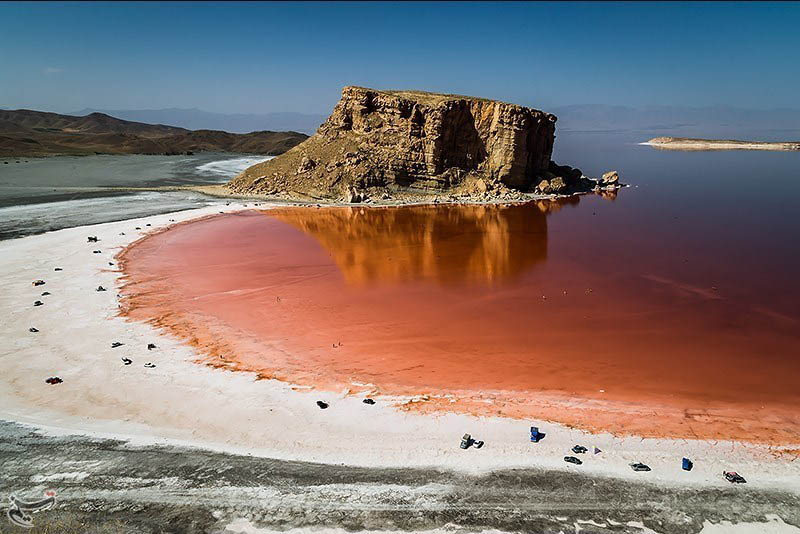
3- 820 Billion Tomans [$215,000] Allocated to Revival of Lake Urmia

4- Saudi Palaces Evacuated across US for Fear of Yemenis’ Missile Attacks

5- Ayatollah Khamenei’s Comments about 4 Books Unveiled

A Look at Iranian Newspaper Front Pages on February 9


Haft-e Sobh:

1- Good, Ugly, Tough: Controversy over List of Fajr Film Festival’s Nominees Makes Culture Minister Form Special Committee

A Look at Iranian Newspaper Front Pages on February 9


Iran:

1- Call for National Participation: Clerics, Officials, Parties, and Political Figures Invite People to Attend 22 Bahman Rallies

2- 21,000 Inactive Industrial Units Resume Work: Central Bank Governor

3- Iran’s Revolution Most Popular One in History: Imam Khomeini’s Grandson

A Look at Iranian Newspaper Front Pages on February 9


Jame Jam:

1- Tomorrow, the Day of Solidarity and Might


A Look at Iranian Newspaper Front Pages on February 9


Javan:

1- Don’t Try to Scare a 40-Year-Old Revolution Using Threats

2- IRGC Commander: It’s Pointless to Threaten Iran

3- Russia Urges US Not to Provoke Iran into Getting out of JCPOA


A Look at Iranian Newspaper Front Pages on February 9


Ka’enat:

1- Rouhani Will Run for Presidency: Health Minister

2- US Secretary of State Should Pick Up the Phone and Call Zarif: Strange Request from Tillerson [Tillerson says in the cartoon: Why should I call? I’m a man of business. I made a fortune thanks to Iraqi Kurdistan’s oil. But Iran’s oil is under sanctions, isn’t it?]


A Look at Iranian Newspaper Front Pages on February 9


Kayhan:

1- Obama and Trump’s Dreams Will Be Crushed Tomorrow


A Look at Iranian Newspaper Front Pages on February 9


Khorasan:

1- Trump Planning to Violate JCPOA by Putting IRGC on Sanctions List


A Look at Iranian Newspaper Front Pages on February 9


Resalat:

1- Clerics Invite People to Attend 22 Bahman Rallies

2- Islamic Republic Sees US as a Paper Tiger: IRGC Commander

3- Islamic Revolution’s Achievement for Women Is the Possibility of Their Presence in the Field


A Look at Iranian Newspaper Front Pages on February 9


Sepid:

1- After JCPOA, Iran Has Exported $60 Million Worth of Medicine and Medial Equipment

2- 400 Motorcycle Ambulances to Help People in Tehran’s Traffic


A Look at Iranian Newspaper Front Pages on February 9


Shahrvand:

1- Iran’s Response to Trump in 22 Bahman Rallies

2- Six Teenagers’ Death Sentence Cancelled: Tehran Prosecutor’s Efforts to Prevent Execution of Convicts under 18 Years of Age

A Look at Iranian Newspaper Front Pages on February 9

Rouhani Administration Promoting Gender Equality in Iran: Activist

Azar Mansouri
Azar Mansouri

Azar Mansouri, a reformist activist, believes President Hassan Rouhani’s administration was the first government to use the term “gender equality.”

The fact that President Rouhani himself used the phrase “gender equality” raised the hopes of women’s rights activists, said Mansouri in a Farsi interview with Khabar Online.

President Rouhani stressed gender equality during his election campaign, and he has also emphasized it over the recent years, she said.

Mansouri said some positive developments have also taken place such as appointing female governors, designating three female vice-presidents, and the like.

However, she added, this is not enough and more needs to be done to promote gender equality.

She also touched upon women’s role in the political arena.

“If Catherine Ashton and Federica Mogherini, the former and incumbent EU foreign policy chiefs, had not led nuclear talks between Iran and the P5+1 group, the talks would not have gone well,” said the women’s rights activist.