Tuesday, December 30, 2025
Home Blog Page 386

Iranian parliamentary investigation finds ‘negligence’ in deadly port explosion, undermines ‘sabotage’ as unlikely

MP Seyed Morteza Mahmoudi, who is a member of the investigative team, told ISNA on Monday, “CCTV footage and eyewitness accounts revealed serious incompetence in cargo handling procedures.”

He cited “false declarations of container contents” and “lack of proper oversight” as key factors, while noting deliberate sabotage appears unlikely based on available evidence.

“The complete absence of proper control mechanisms for incoming and outgoing cargo created conditions for this tragedy,” Mahmoudi said.

“While other ports share similar vulnerabilities, the failures were particularly severe at Shahid Rajaei.”

The delegation will submit its final report to the parliament on Tuesday.

Ghalibaf on Monday pledged full transparency, stating that oversight agencies and four parliamentary committees are conducting thorough reviews to identify any negligence or intentional wrongdoing, with findings to be made public.

The explosion at Iran’s busiest commercial port, which has claimed at least 46 lives and injured over 700 others so far, has raised nationwide concerns about port management practices.

Music festival cut short in solidarity with Bandar Abbas port tragedy

Organizers announced the decision in an official statement, expressing grief over Saturday’s incident.

Governor Mohammad Ashouri Taziani declared three days of public mourning in Hormozgan province.

“The festival, which was set to feature five nights of regional folk music performances, will not continue its remaining programs,” the statement read.

In their poetic statement, the organizers wrote, “The southern home – with its palm tree, old boat in the corner – has one room in Ahvaz, another in Bushehr, and its largest, most beautiful room in Bandar Abbas.”

The organizers said a mourning ceremony will be held on Monday night to commemorate the victims of the incident.

“Tonight we gather in Saadat Schoolyard to read the final story and entrust you to God’s mercy,” the statement read.

READ MORE:

Fourth edition of Koocheh music festival kicks off in Bushehr

Iran insists on domestic uranium enrichment, sanctions relief as nuclear talks continue

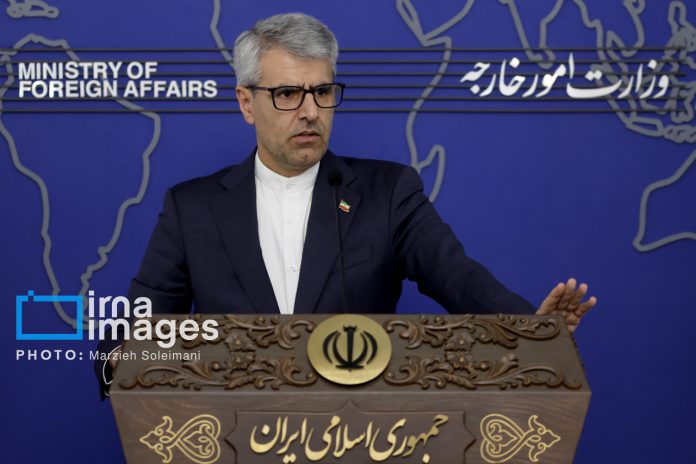
Esmail Baghaei

In his weekly press briefing, Baqaei stated that no details would be finalized unless these key principles were included in the overall framework.

Regarding the negotiation process, the spokesperson expressed Iran’s willingness to hold more frequent discussion rounds if necessary, noting that the timing and intervals would be determined by mutual agreement.

He said the fourth round of indirect Iran-US negotiations is scheduled for Saturday, but the venue has to be decided. The diplomat added duration of indirect talks is to be decided by the negotiating sides.

Baqaei strongly criticized the “illegal and unjust” sanctions against Iran and asserted that their true purpose is to pressure ordinary Iranian citizens rather than achieve any legitimate policy goals.

He noted that European countries’ withdrawal from the negotiation process was their own decision, adding Iran is waiting for response from E3 – Britain, France, and Germany – on Iranian Foreign Minister Seyyed Abbas Araghchi’s offer of talks.

On technical matters, Baqaei confirmed that an International Atomic Energy Agency (IAEA) delegation had arrived in Tehran for follow-up discussions with Iranian nuclear officials.

These talks, which are purely technical in nature, come after last week’s meeting between the agency’s director general and senior Iranian representatives, he explained.

The spokesperson also addressed regional tensions, warning against any provocative actions by Israel, promising “any adventurism against Iran will see a crushing response.”

Baqaei also touched on President Pezeshkian’s visit to Republic of Azerbaijan, describing it as a “really important” trip that “can open a new chapter in our relations.”

Worldwide military spending hit record $2.7 trillion last year, sharpest rise since Cold War

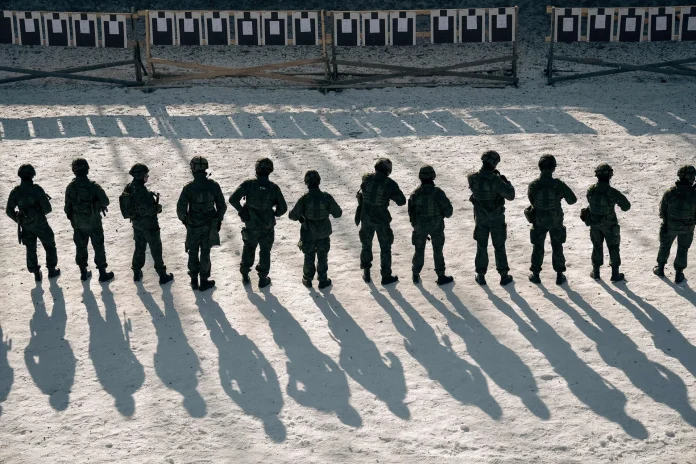
Military spending rose worldwide with particularly large increases in Europe and the Middle East, according to a new report by the Stockholm International Peace Research Institute (SIPRI).

Several European countries had seen “unprecedented” rises in their military spending, the report noted.

In real terms, spending rose by 9.4 percent globally compared to 2023, with 2024 marking the 10th year of consecutive spending increases.

“This was really unprecedented,” Xiao Liang, a researcher with the SIPRI Military Expenditure and Arms Production Programme, told AFP.

“It was the highest year-on-year increase since the end of the Cold War,” Liang continued, adding, While there may have been steeper increases during the Cold War, data for the Soviet Union is not available.

More than 100 countries, including all of the 15 largest spenders, increased their military budgets last year, according to the report.

“This really speaks to the heightened geopolitical tensions,” Liang said.

The spending increase was likely to have “a very profound socio-economic and political impact”, he added, noting, “Countries have to make trade-offs in their budgetary decisions.”

“For example, we’ve seen many European countries cutting other spending like international aid to fund the increase in military spending, and … trying to raise taxes or rely on loans or debt to fund the spending,” Liang stated.

The main contributor to the rise in expenditure was the European region including Russia, where spending rose by 17 percent to $693 billion.

All European countries, except Malta, expanded their budgets, “pushing European military spending beyond the level recorded at the end of the Cold War”, SIPRI said.

Russia’s military expenditure reached $149 billion in 2024: a 38-percent increase on the previous year and a doubling since 2015.

Ukraine’s military spending grew by 2.9 percent to reach $64.7 billion.

While that sum only corresponds to 43 percent of Russia’s arms spending, for Ukraine it is the equivalent of 34 percent of its GDP. That means it is carrying the highest military burden of any country.

Germany’s spending increased by 28 percent, reaching $88.5 billion, overtaking India as the fourth largest in the world.

“Germany became the biggest spender in Central and Western Europe for the first time since its reunification,” Liang noted.

The world’s largest spender, the United States, increased expenditure by 5.7 percent, reaching $997 billion. That alone accounts for 37 percent of worldwide spending and 66 percent of the military spending among NATO countries.

Total military spending by the 32 members of the US-led alliance rose to 1.5 trillion as all members increased their spending.

“We’ve seen in 2024 that 18 out of the 32 NATO countries reached the 2-percent GDP spending target, which is the highest since the founding of the alliance,” Liang added.

While some of the increases have been a result of European military aid to Ukraine, it has also been fuelled by concerns of potential US disengagement with the alliance.

“There has really been a shift in European defence policies, where we will see large-scale procurement plans into the arms industry in the years to come,” Liang explained.

Military budgets also drastically grew in the Middle East to an estimated $243 billion, an increase of 15 percent from 2023.

As Israel continued its offensive in the Gaza Strip, its military expenditure surged by 65 percent to $46.5 billion in 2024. SIPRI noted that this represented “the steepest annual increase since the Six-Day War in 1967”.

The world’s second-largest spender, China, increased its military budget by 7 percent to an estimated $314 billion, “marking three decades of consecutive growth”.

China – which has been investing in modernising its military and expansion of cyberwarfare capabilities and nuclear arsenal – accounted for half of all military spending in Asia and Oceania.

Pakistan threatens India with nukes

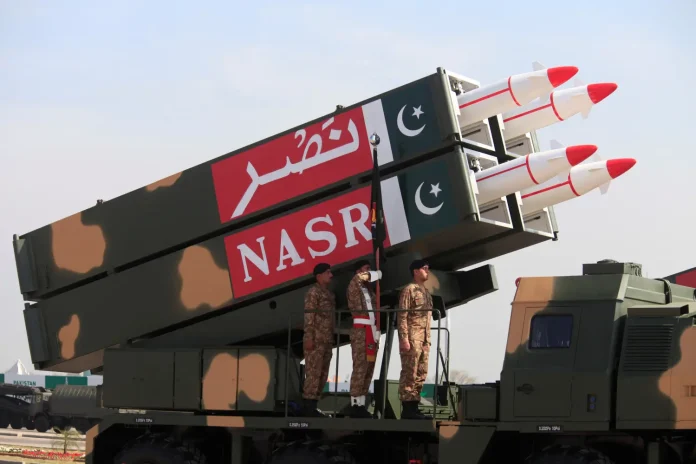
In a televised address on Sunday, Abbasi reminded India that Pakistan possesses numerous missiles and 130 nuclear warheads, which are “not for display.”

“Nobody knows where we have placed our nuclear weapons across the country. I say it again, these ballistic missiles, all of them are targeted at you,” the official stated.

Commenting on New Delhi’s decision on Wednesday to unilaterally suspend the key water-sharing Indus Waters Treaty, Abbasi charged that “if they stop the water supply to us, then they should be ready for a war,” echoing previous statements by Pakistani officials.

India, in turn, asserted earlier this week that the suspension would remain in place “until Pakistan credibly and irrevocably abjures its support for cross-border terrorism.”

New Delhi has never before suspended the treaty, which regulates river systems that impact millions of lives in both countries.

The already acrimonious relations between the two nuclear powers further soured on Tuesday, when several gunmen killed 25 Indian tourists and one Nepalese national in Baisaran Valley, a popular destination in the Kashmir region.

India was quick to accuse its neighbor of aiding militant infiltrations in Kashmir – an allegation Pakistan strongly denies.

The Resistance Front, a militant group allegedly linked to Pakistan-based Lashkar-e-Taiba, has reportedly claimed responsibility for the terrorist attack. Indian police say that two of the suspects are Pakistani nationals.

On Wednesday, New Delhi downgraded diplomatic ties, expelled Pakistani diplomats and closed the land border with its neighbor.

Islamabad responded in kind, reiterating its accusations that India oppresses the majority-Muslim population of Kashmir.

According to NDTV, Indian and Pakistani troops have exchanged fire across the Line of Control (LoC) in Kashmir for a third night. The LoC is the de facto boundary between the countries. Indian security forces are also reportedly conducting anti-terrorist raids on their side of the border.

Speaking to Sky News earlier this week, Pakistani Defense Minister Khawaja Asif warned that the confrontation with India could escalate into an “all-out war” with a potentially “tragic outcome,” given that both nations are nuclear powers. He also alleged that New Delhi had staged the deadly incident earlier in the week.

North Korea confirms soldiers sent to fight in Ukraine war

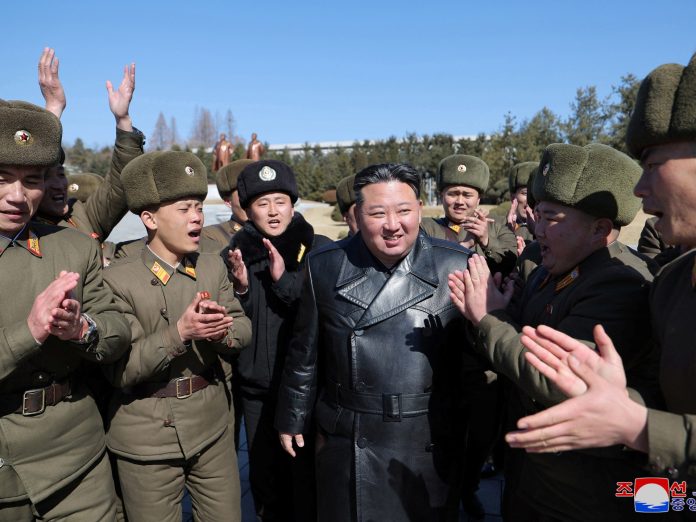
In a statement provided to North Korea’s official Korean Central News Agency (KCNA) on Monday, the Central Military Commission of the ruling Workers’ Party said that the country’s leader, Kim Jong Un, had sent troops into combat alongside Russian forces as part of a mutual defence treaty between Moscow and Pyongyang.

The KCNA quoted Kim as saying that soldiers were deployed to “annihilate and wipe out the Ukrainian neo-Nazi occupiers and liberate the Kursk area in cooperation with the Russian armed forces”.

“They who fought for justice are all heroes and representatives of the honour of the motherland,” KCNA quoted Kim as saying.

North Korea “regards it as an honour to have an alliance with such a powerful state as the Russian Federation”, KCNA added.

Russian President Vladimir Putin and Kim signed a comprehensive strategic partnership treaty in June last year, committing the two countries to come to each other’s assistance, militarily, in the event of war.

According to South Korea’s official Yonhap News Agency, Kim also said that a monument would be built soon in the capital, Pyongyang, to honour those who had fought against Ukraine.

“Flowers praying for immortality will be placed before the tombstones of the fallen soldiers, effectively acknowledging troops killed in combat,” Yonhap reports, noting that North Korea had so far remained silent about the thousands of soldiers it had sent to Russia in October.

Ukrainian officials stated earlier this year that some 14,000 North Koreans were deployed against its forces, including 3,000 reinforcements who were sent to replace the North Koreans’ early battlefield losses.

Lacking armoured vehicles and unfamiliar with drone warfare, the North Koreans had taken heavy casualties early on in fighting but adapted quickly, according to reports, and later contributed to reclaiming Russia’s Kursk region from occupying Ukrainian forces.

Estimates of the casualty rate among North Korean forces fighting for Russia have varied widely.

South Korea’s National Intelligence Service (NIS) said in January that about 300 North Korean soldiers were killed in combat and another 2,700 had been injured.

Ukrainian President Volodymyr Zelensky put the number of killed or wounded North Koreans at 4,000, while the United States estimated a lower figure of about 1,200 casualties.

North Korea’s statement follows Russia’s chief of staff, Valery Gerasimov, on Saturday hailing the “heroism” of the North Korean soldiers, who he said “provided significant assistance in defeating the group of Ukrainian armed forces”, while reporting to Putin that Kursk had been regained from Ukrainian forces.

Ukraine’s General Staff quickly countered, saying that its defensive operation in certain areas in Kursk was continuing.

The US State Department announced in a statement on Sunday evening that North Korea and other “third countries” had “perpetuated” Russia’s war on Ukraine and that it must end, as should Moscow’s support for Pyongyang.

Trump thinks Zelensky is ready to concede Crimea to Russia

Trump said he believed Zelensky was ready to concede Crimea to Russia as part of any ceasefire agreement, as talks on a truce entered what Washington called a critical week on Monday.

Trump also stepped up pressure on Vladimir Putin, saying the Russian president should “stop shooting” and sign an agreement to end the grinding war that started with Moscow’s February 2022 invasion.

He added his message to Putin was clear.

“I want him to stop shooting, sit down and sign a deal.”

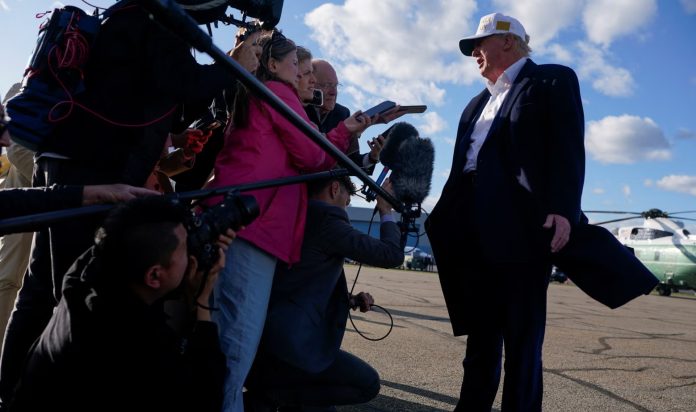
“Oh, I think so,” Trump told reporters in Bedminster, New Jersey, when asked whether he thought Zelensky was ready to “give up” Crimea – despite the Ukrainian president repeatedly saying he never would.

Zelensky had previously rejected a US proposal to formally recognise Crimea as Russian territory, which would violate international law.

Sergei Lavrov, Russia’s Foreign Minister, stated his country would not “negotiate its own territory”, claiming Crimea was a “done deal” ahead of a “critical week” of negotiations.

Coming week ‘very critical’ in Russia-Ukraine war negotiations: US

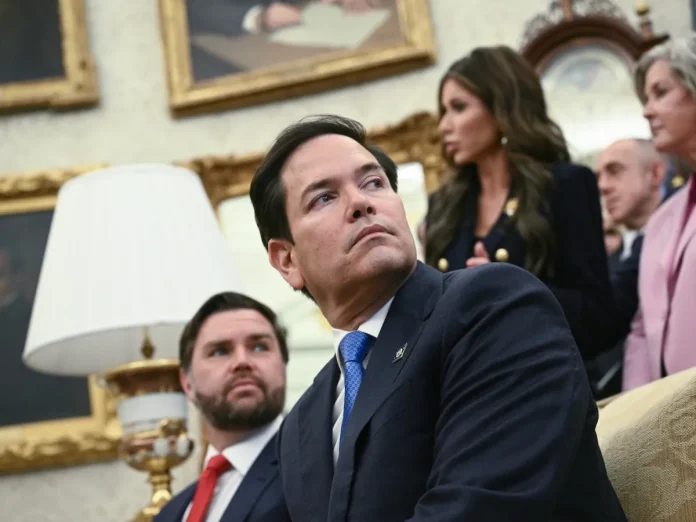
“The minute you start doing that kind of stuff, you’re walking away from it,” Rubio said Sunday on NBC’s ‘Meet the Press.’

Rubio added that the coming week will be “very critical” for the White House as it makes a “determination about whether this is an endeavor that we want to continue to be involved in.”

“There are reasons to be optimistic, but there are reasons to be realistic,” Rubio stated, adding: “We’re close, but we’re not close enough.”

“Throughout this process, it’s about determining, do both sides really want peace and how close are they or how far apart they are after 90 days of effort here … that’s what we’re trying to determine this week,” Rubio said of negotiations.

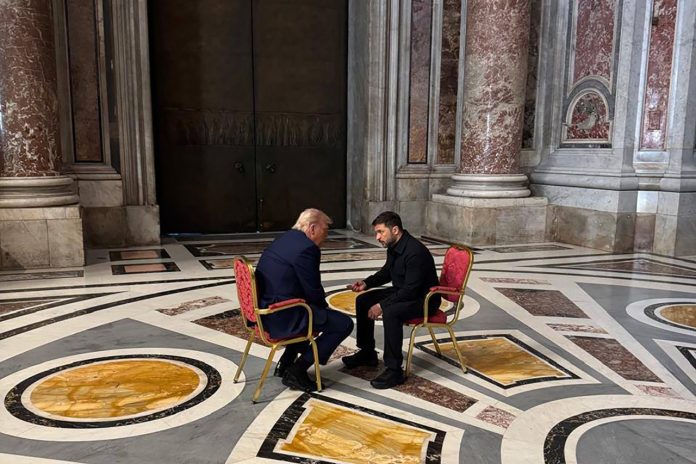
Rubio’s comments come as Trump is ramping up pressure on Russia and Ukraine to reach a peace deal. Trump met Saturday with Ukrainian President Volodymyr Zelensky, just before floating the possibility of tougher sanctions against Moscow.

Rubio said that Trump has “made real progress” in nearing an end to the war, but “those last couple steps of this journey were always going to be the hardest ones, and it needs to happen soon.”

“We cannot continue, as I said, to dedicate time and resources to this effort if it’s not going to come to fruition,” he added.

Trump on Saturday questioned whether Russian President Vladimir Putin wants to “stop the war” against Ukraine.

“It makes me think that maybe he doesn’t want to stop the war, he’s just tapping me along, and has to be dealt with differently, through “Banking” or “Secondary Sanctions?” Too many people are dying!!!” Trump wrote on Truth Social.

His post came just after he had a private meeting with Zelensky in Rome, which the White House described as a “productive discussion.”

Trump says he expects Iran talks will yield an agreement

“We’ll have something without having to start dropping bombs all over the place,” Trump stated.

On Saturday, Iran and the US held the third round of indirect talks in Muscat, the capital of Oman, with both parties agreeing to continue consultations.

As in the previous two rounds, Iranian Foreign Minister Abbas Araghchi and US President Donald Trump’s envoy Steve Witkoff led the negotiations.

Araghchi has expressed satisfaction with the progress made in indirect nuclear talks with the United States.

“I am satisfied with the progress of the negotiations and their pace. They are proceeding well and remain satisfactory,” he told reporters after the talks on Saturday.

He added that both parties are determined to reach an agreement. “It was quite evident that both sides were serious and entered the talks with determination. This creates an atmosphere that gives us hope for progress in the negotiations.”

The top Iranian diplomat noted that the sides had agreed to hold further consultations in their respective capitals to explore ways to resolve differences.

He explained that Tehran and Washington should first establish a general understanding on certain issues before moving on to detailed negotiations.

“There are differences between the two nations, both on key issues and their specifics,” Araghchi said.

Araghchi once again reiterated that the three rounds of talks between Iran and the US only focused on the nuclear issue, and no other topics have been included.

He clarified that by the nuclear issue, he meant building confidence about the peaceful nature of Iran’s nuclear program in return for the removal of sanctions.

The Iranian foreign minister said there are some “very serious” differences between Tehran and Washington and some others with less seriousness and expressed hope that the two sides would be able to move forward quickly.

“The past experiences help us to make our progress easier and faster, but I believe that so far, our progress has been good,” Araghchi added.

The previous rounds of indirect talks between Iran and the United States were held in Muscat and Rome on April 12 and 19, respectively, and were similarly aimed at finding common ground on Tehran’s nuclear program.

Official: Large-scale cyber Attack on Iran’s infrastructure foiled

Cyber attack

Behzad Akbari, CEO of the Communications Infrastructure Company, reported the cyber attack on the country’s infrastructure in a tweet on his social media page.

Akbari wrote: “By the grace of God and the efforts of the security and technical teams at the Ministry of Communications, one of the most widespread and sophisticated cyber attacks against the country’s infrastructure was identified yesterday, and preventive measures stopped potential damage.”

According to an official report by Iran’s Infrastructure Company, in the winter of last year, over 101,000 cyber attacks against the country’s infrastructure were detected and repelled.

These attacks, primarily originating from Russia, Ukraine, and the US, targeted vital services such as banks and telecommunications networks, requiring over 5,000 hours of continuous countermeasures.