Tuesday, January 20, 2026
Home Blog Page 3854

Qatar Ambassador to Return to Iran

Doha says the Qatari ambassador to Iran who was recalled last year after Saudi Arabia’s severance of ties with Iran will return to Tehran.

According a statement released on Thursday by the Qatari Foreign Ministry’s Public Relations Office, the top Qatari diplomat will return to Iran to resume his diplomatic work.

The statement also reads that Doha wants to boost its relations with Tehran and hopes to see mutual relations expand on all fronts in the future, Al Alam reported.

The information office did not specify an exact date for the ambassador’s return – or provide his name – but said Qatari Foreign Minister Sheikh Mohammed bin Abdulrahman al-Thani discussed “bilateral relations and means of boosting and developing them” in a telephone call with his Iranian counterpart Javad Zarif.

The decision to restore ties with Iran comes amid a diplomatic dispute between Qatar and several Arab countries, including Saudi Arabia, the UAE, Egypt and Bahrain, according to Al Jazeera.

They accuse Doha of meddling in the internal affairs of other countries and financing terrorism – a charge Qatar has dismissed as “baseless”.
Lebanese Patriarch Hails Iran’s Fight against Terror

In a Wednesday meeting with Iran’s Deputy Foreign Minister for Arab and African Affairs Hossein Jaberi Ansari in Beirut, Patriarch al-Rahi said Iran is a respected country, and that Lebanon needs Tehran’s assistance to further consolidate unity in Lebanon.

The patriarch noted that evidence shows the war in Syria is in its final stages, and that his country thanks Tehran for fighting terrorism and working toward ending the Syria conflict.

He further noted that his country’s priority is to boost national unity.

Among Lebanon’s other priorities, he said, is to tackle economic crises and help repatriate refugees in Lebanon.

For his part, Jaberi Ansari said the message that his trip to Lebanon and his meetings with leaders of all Lebanese groups has is that Tehran respects all components of the Lebanese society.

The Iranian diplomat also praised the local consensus in Lebanon amid the tough regional situation.

He also hailed the political achievements as well as the victories on the ground secured by the Lebanese government, nation, army, and the Resistance movement against terrorist and extremist groups.

“Iran backs these positive developments in Lebanon and in the region,” said Jaberi Ansari.

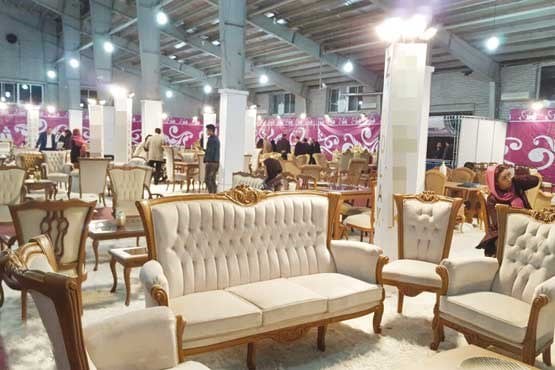
How Tuyserkan Turns into Hub of Furniture Manufacturing in Iran

Located 85 kilometres off the provincial capital of Hamadan, Tuyserkan is home to people and entrepreneurs who have opted to stay in their hometown and start their businesses from scratch instead of migrating to metropolises in search of menial jobs.

According to Farsi report by the Jame Jam Online new website, more than 10,000 people in the county are involved in furniture industry in over 4,000 workshops.

There is an interesting story behind the county’s success in becoming Iran’s furniture manufacturing centre. Close to 40 years ago, two young men from Tuyserkan set out on a journey to the Iranian capital, Tehran, looking for jobs. They, however, soon returned to their hometown, as they could not find any decent jobs in Tehran, and set up their own furniture manufacturing workshop.

They employed their family members and trained them in making furniture and the art of wood carving. These family members, per se, set up their own workshops and trained their relatives and friends to gradually help the county achieve its present status in the country’s furniture industry.

Currently, more than 65,000 sets of furniture are being manufactured in Tuyserkan per annum.

Iran Gets Its 12th Woman Mayor

Iran’s twelfth female mayor was elected for the city of Zanjan, further paving the way for women to reach high managerial posts in the country.

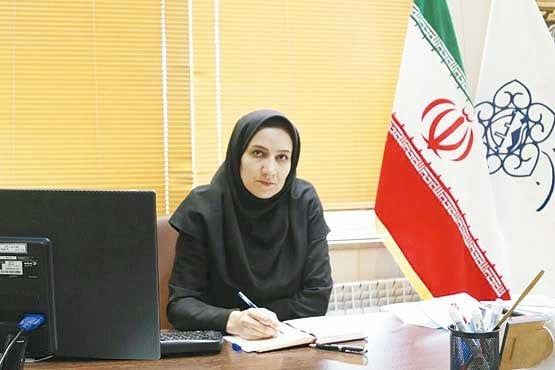
Samaneh Shaaddel has taken the helm of affairs in District Two of the city. She used to be in charge of traffic and transportation affairs at Zanjan Municipality for four years before assuming his recent position. She has also served as the deputy mayor of Zanjan for cultural affairs.

She managed to be elected as the mayor thanks to her competence and experience, according to a Farsi report by the Jame Jam Online news website.

She holds a Master’s degree. She is married and has a 9-year-old daughter. However, her family responsibility has not kept her from making progress; rather, as she herself says, her family has been her biggest supporter and motivation for progress and development.

She is not the first woman to have assumed a top job in Iran. Qualified women have already been designated as deputy provincial governors, governors and mayors, further increasing women’s share of top managerial posts in the country.

Since the 1979 Islamic Revolution of Iran, 11 women (excluding Shaaddel) have served as mayors in the country so far. Shaaddel is the twelfth lady to have been picked as a mayor.

During the recent days, several other women were also picked as the heads of City Councils in such towns as Robat Karim in Tehran province and Gorgan in Golestan province.

Update: Shaaddel is said to have been removed by the new mayor of Zanjan shortly after the widespread reports about her! However, other female mayors have been appointed in other Iranian cities.

The 29-year-old university lecturer Mahna Mohammadi was recently elected as mayor of Spakeh, a town in southeastern province Sistan and Baluchestan with 40,000 population.

Shifteh Badr-Azar was also elected as the mayor of Sahand, a town in East Azarbaijan province.

Among other women elected as new heads of city councils are Setareh Fattahpour in city of Sardasht, Maryam Elahi-Sahar in Soosangerd, Zahra Hatami-Monfared in Mohajeran, Soosan Soleiman-Abadi in Kangavar, and Tahereh Karami in Varnamkhast.

Iran Condemns Saudi Airstrike on Yemen Residential Area

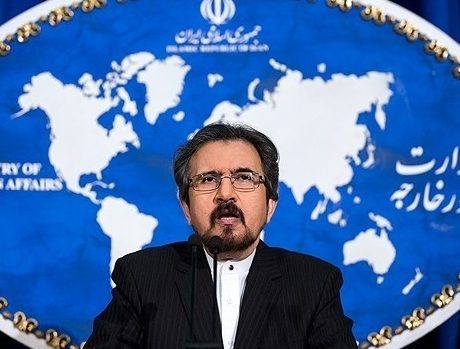
In a statement on Wednesday, Iran’s Foreign Ministry Spokesman Bahram Qassemi strongly condemned the Saudi warplanes’ attacks on a dormitory in Arhab town of Sana’a Province, which left a number of civilians dead and wounded.

He also expressed sympathy with the bereaved families of the deadly attack’s victims.

Qassemi further urged the United Nations and other international organizations to step into the fray and address the slaughter of innocent civilians in Yemen by Saudi Arabia as soon as possible.

“Intensifying deadly attacks on residential areas and civilian targets in Yemen on the one hand and preventing the internationally responsible organizations from sending humanitarian aid to Yemenis on the other hand amount to the stark violation of international and humanitarian laws,” he noted.

He then called on the UN and key players in Yemen crisis to increase their efforts to pressurise Saudi Arabia into stopping its deadly attacks on Yemen and adopt necessary measures to provide security for civilians, particularly women and children in the country.

Iran, Germany to Expand Cooperation on Medicinal Plants

Iran and Germany have agreed to expand their cooperation in mechanization of planting and harvesting of medicinal plants as well as modernization of herbal pharmacy.

According to a Farsi report by the Young Journalists’ Club (YJC), the agreement was made during the meetings of specialized sub-committees of Iran-Germany Joint Agricultural Commission held in Berlin.

In these meetings, the two sides also exchanged views on herbal pharmacy as well as food production and agricultural issues.

On other hand, during the first joint symposium between Iran and Germany on medicinal plants held in Germany, the two sides also explored new ways to expand cooperation in medicinal plants.

On the sidelines of the symposium, Peyman Yousefi Azar, an official with Iran’s Agricultural Jihad Ministry who is also in charge of a national project on medicinal plants, held talks with Frank Marte, the head of JKL Institutes’ Medicinal Plants Department, on the policies as well as capacities and programs of the two sides in this field.

During the symposium, the German side also presented scientific and executive reports on the available capacities to expand cooperation in growing up medicinal plants including peppermint, asparagus.

Iran and Germany also agreed to hold another joint symposium next year between the private sectors of two sides to facilitate cooperation in medicinal plants.

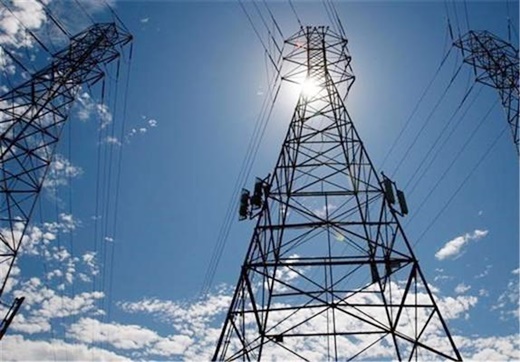
Iran Exporting Electricity to Eight Countries: Report

Power Plant and electricity

Iran, with an output capacity of around 73,000 megawatts of electricity, has secured a good status in the region as far as energy production is concerned.

Iran exported electricity to eight regional countries from 2010 to 2016. The biggest buyer of Iran’s electric power was Iraq with around 5,000 to 8,000 megawatts of electricity imports annually.

According to a Farsi report by the Mashregh News Agency, Turkey is the second biggest importer of electricity from Iran. The Islamic Republic sells up to around 2,400 megawatts of electricity to its northwestern neighbor annually. Iran’s electricity exports to Turkey rose considerably from 2010 to 2013.

Afghanistan ranks third when it comes to importing electricity from Iran. It imports less than a thousand megawatts of electricity on an annual basis. Its electricity imports rose from 2010 to 2014.

The other countries purchasing electric power from Iran are Pakistan, Nakhchivan Autonomous Republic, Armenia, and Turkmenistan.

Lebanese Cleric Hails Iran’s Role in Uniting Muslim States

Speaking in a Wednesday meeting with Iran’s Deputy Foreign Minister for Arab and African Affairs Hossein Jaberi Ansari in Beirut, Qabalan referred to the Islamic Republic of Iran as a guarantee for the Muslim world and a chain linking Islamic societies to each other.

“While others have left the scene, we pin our hope on the Islamic Republic of Iran,” he added.

In turn, Jaberi Ansari commemorated Imam Musa al-Sadr, the founder of the SISC, and praised the valuable role and position of Sheikh Qabalan in continuing the Council’s noble path.

Iran’s Persepolis Shares Spoils with Saudi Side in ACL Quarters

A late equaliser by substitute Godwin Mensha saw Persepolis come from two goals down to draw 2-2 with Saudi Arabia’s Al Ahli in the first leg of their 2017 AFC Champions League quarter-final match held in Muscat, Oman.

Al Ahli took the lead after just two minutes at the Sultan Qaboos Sports Complex when Omar Al Soma slotted home the rebound after Persepolis keeper Alireza Beiranvand parried a shot from Saleh Al Jamaan into the Syrian striker’s path.

Shortly before the hour, recent signing Leonardo da Silva made it 2-0 for the Jeddah-based side by finishing off a pass from Al Jamaan with aplomb, before Persepolis pulled one back in the 72nd minute after Shojae Khalilzadeh headed home from close in.

With just six minutes remaining, Nigerian Mensha fired past Mohammed Al Owais in the Al Ahli goal to cap an excellent comeback for Persepolis and leave the tie firmly in the balance ahead of the second leg in Abu Dhabi in three weeks’ time.

Following the match, Persepolis coach Branko Ivankovic said that he is content with his team’s performance against Al Ahli.

“I am happy because we came back from two goals down. Now, we have a chance to book a place in the competition’s semis,” Branko said in the post-match news conference.

“As I’ve already said, Al Ahli is a dangerous team and takes advantage of players like Omar Al Soma and Leonardo da Silva,” the Croat added.

“I would like to thank my players because they didn’t lost their concentration after receiving two goals. I hope we defeat Al Ahli in the second leg,” Branko concluded.

The Iranian giant will face Al Ahli three weeks later in the second leg in Abu Dhabi.

Lebanon’s Grand Mufti Blasts Muslim World’s Silence on Israeli Crimes

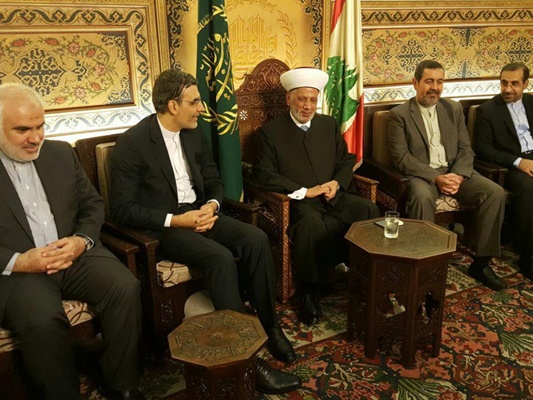
In a Wednesday meeting with an Iranian diplomat in Beirut, Sheikh Derian referred to the Israeli regime as one of the major dangers threatening the Muslim world, and said, “Unity and solidarity among followers of Islamic sects and regional countries is the [only] way to counter these threats.”

“Our brothers and sisters in Palestine and al-Quds are under the Zionist regime’s inhumane attacks while, unfortunately, we in Islamic countries are busy with our disagreements,” the top Sunni cleric went on to say.

“The terrorist and Takfiri groups seek to remove and exclude others, and intend to spoil the bright face of Islam and Prophet Muhammad (PBUH) through their dark thoughts and actions,” he warned.

Iranian Deputy Foreign Minister Hossein Jaberi Ansari, for his part, said two major dangers are currently threatening the Muslim world and regional countries.

“The first danger is the old threat of the Zionist regime and its state-sponsored terrorism, and the second one is terrorist and Takfiri [extremist] groups,” the Iranian diplomat noted, highlighting the great responsibility of top clerics in countering both threats.