Saturday, December 27, 2025
Home Blog Page 3806

Condolences Pour in for Iran Deadly Earthquake

Condolences Pour in for Iran Deadly EarthquakeJustin Trudeau

Russian President Vladimir Putin and Canadian Prime Minister Justin Trudeau were among the first world leaders who condoled with Iran over the tragic incident.

Syrian President Bashar al-Assad, Turkish President Recep Tayyip Erdogan, Afghan President Ashraf Ghani and Chief Executive Abdullah Abdullah, Tajikistan’s President Emomali Rahmon, Kuwaiti Emir Sabah Al-Ahmad Al-Jaber Al-Sabah and Azeri President Ilham Aliyev in separate messages expressed sympathy with the Iranian nation and government.

Irish President Michael Higgins and Italian Prime Minister Paolo Gentiloni were among other officials who offered their countries’ condolences.

British Foreign Secretary Boris Johnson also extended his “deepest condolences” to the people of Iran and said “the UK stands ready to help the victims and the recovery efforts.”

Condolences Pour in for Iran Deadly EarthquakeCondolences Pour in for Iran Deadly Earthquake

UN Secretary-General Antonio Guterres and EU Foreign Policy Chief Federica Mogherini in separate statements expressed their preparedness to help the relief and rescue operations in Iran.

The UN resident coordinator in Iran Gary Lewis also conveyed “sincere condolences to Government and People of Iran following last night’s deadly earthquake on western border” and said, “The UN will assist if requested.”

Condolences Pour in for Iran Deadly EarthquakeHe also said that he has met with Iranian authorities to review the current disaster situation related to the earthquake on Iran-Iraq border.

“[We are] considering options for support to Iran if needed. Members of the international diplomatic community also present in support.”

Meanwhile, the Times of Israel reported that Israeli Intelligence Minister Yisrael Katz has offered his sympathy to Iran.

“My condolences to the people of Iran and Iraq over the loss of human life caused by the earthquake,” said Katz, who is also transportation minister.

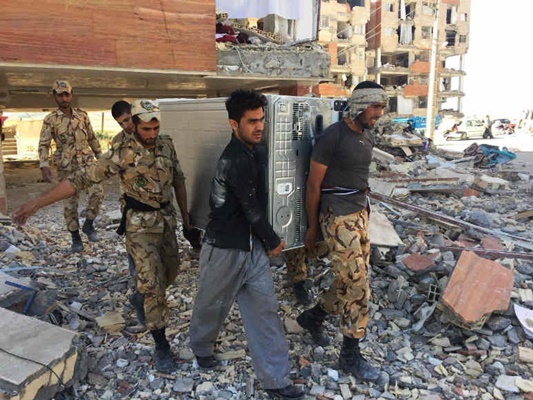
With successive aftershocks still rumbling through western Iran more than 18 hours after the massive earthquake, the province of Kermanshah, hit hardest by the temblor, declared three days of mourning.

Condolences Pour in for Iran Deadly EarthquakeWestern regions of Iran, particularly residential areas in the province of Kermanshah, have felt scores of tremors, some even measuring greater than 4.5 on the Richter scale, after the Sunday night’s massive earthquake.

The province of Kermanshah declared three days of mourning, as rescue teams from across the country have hurried to dig out survivors stuck under the rubble and save the wounded.

Condolences Pour in for Iran Deadly EarthquakeOne of the cities hit hardly by the massive quake is Sarpol-e Zahab. Witnesses say they were appalled to see the city skyline on Monday morning, saying half of the buildings seem to have been destroyed.

After a terrible night and ongoing blackout, Sarpol-e Zahab is receiving more rescue team and sniffer dogs searching for survivors buried under the rubble.

Officials say the access to rural areas is still limited.

Field hospitals have been set up in the quake-hit areas.

EU Serious in Promotion of Agriculture Ties with Iran

EU Serious in Promotion of Agriculture Ties with Iran

Hogan, who is in Iran at the head of a high-ranking economic delegation, discussed issues of mutual interest with Iranian Deputy Foreign Minister Morteza Sarmadi at the Iranian foreign ministry’s building.

During the Monday meeting, Hogan stressed the necessity of removing obstacles to banking relations, and said, “The EU has already tried to encourage European banks to establish relations with Iran, and will continue to do so.”

“The EU is serious in further development of its relations with Iran in all fields including agriculture and food products.”

He also pointed to EU Foreign Policy Chief Federica Mogherini’s visit to the US, which was aimed at convincing senior US Congressmen to back the nuclear deal.

“Regardless of what the US president says, the EU will continue to encourage the country to implement the JCPOA,” he added.

Sarmadi, for his part, referred to Iran-EU relations after the Joint Comprehensive Plan of Action (JCPOA), and underlined the need for immediate resolution of banking problems.

“We expected the EU to not only support the nuclear deal, but also encourage all parties to live up to the deal and refrain from spoiling the atmosphere of business and economic ties with Iran,” he added.

Posters of Saudi Crown Prince Burned Down in Lebanon

bin salman

Pictures and videos posted on social networks show that a number of people in Tripoli and other parts of northern Lebanon are burning the posters of Mohammad bin Salman.

Tasnim News Agency in a Farsi report has quoted some Lebanese media as saying that Interior Minister Nouhad Machnouk has contacted North Lebanon Governor Ramzi Nahra, asking him to work immediately on removing all posters in the northern areas.

Machnouk condemned the act, adding that such an event was “suspicious at a sensitive moment, when some are working to create such incidents in order to drag the country into further tension.”

He also emphasized that such moves do not represent the people of northern Lebanon and Tripoli.

Although there are some speculations about Saad Hariri’s arrest in Riyadh, one week into his resignation, it has almost been proven that the Lebanese Prime Minister is under pressure in Saudi Arabia.

Now, the authorities and parties in Lebanon with different political inclinations have called on Riyadh to modify its behaviour towards the prime minister of their country.

Meanwhile, Lebanese President Michel Aoun has stressed that he will not wait for more than a week to determine the fate of Saad Hariri saying that he will be forced to ask the international community to decide on the issue.

A Look at Iranian Newspaper Front Pages on November 13

The strong earthquake that hit Iran-Iraq border was a top story in several Iranian newspapers today. Since the magnitude 7.3 quake took place late on Sunday night, only a number of papers managed to include the deadly incident in their front pages.

Many papers also covered French President Emmanuel Macron’s visit to Saudi Arabia and his plan to save Riyadh from the quagmire of Lebanon, as termed by Iranian media.

Lebanese Prime Minister Saad Hariri’s televised interview, which was aired from Saudi Arabia on Sunday night, also received great coverage today.

The above issues, as well as many more, are highlighted in the following headlines and top stories:


Abrar:

1- France’s Solution for Saudi Arabia: Temporary Transfer of Hariri to Paris

2- Trump: Accusation of Interfering in US Elections an Insult to Putin!


A Look at Iranian Newspaper Front Pages on November 13


Abrar-e Eqtesadi:

1- MP Criticizes Gov’t for Its Excessive Role in Iranian Economy

A Look at Iranian Newspaper Front Pages on November 13


Arman-e Emrooz:

1- 15 Iranian Provinces Jolted: Magnitude 7.3 Quake in Kermanshah

2- Sources Close to Lebanese PM: Saudi Arabia Angry at Hariri’s Compromise with Hezbollah


A Look at Iranian Newspaper Front Pages on November 13


Ebtekar:

1- Lebanon, Hariri Fifth Nightmare of Bin Salman

2- Iran Nuclear Chief Warns World Powers Will Be Stunned If Violate JCPOA


A Look at Iranian Newspaper Front Pages on November 13


Etemad:

1- Big Quake: 180 Million People Felt Magnitude 7.2 Earthquake in Iraq’s Sulaymaniyah


A Look at Iranian Newspaper Front Pages on November 13


Ettela’at:

1- ISIS at End Point in Iraq: Iraqi Forces Arrive in Syrian Borders

2- UN: War Has Killed Parents of One Million Syrian Kids

3- Larijani Calls for Expedition of Foreign Investment Attraction

A Look at Iranian Newspaper Front Pages on November 13


Farhikhtegan:

1- Myth of Seoul: Shareholders of Major Korean Companies Are Foreigners

2- Saudi Arabia’s Measures in Favour of Hezbollah, Iran: Analyst

A Look at Iranian Newspaper Front Pages on November 13


Iran:

1- Saudi Arabia under Global Pressure

  • Int’l Follow-up on Hariri’s Situation in Riyadh

2- Sunni Woman Appointed Village Chief in North Khorasan Province


A Look at Iranian Newspaper Front Pages on November 13


Jame’eh Farda:

1- Oil Price Expected to Rise in Future

  • Tension in Mideast, Surge in Oil Price, Budget Crisis

2- Big Earthquake in Iran-Iraq Border


A Look at Iranian Newspaper Front Pages on November 13


Javan:

1- French Plan to Save Saudi Arabia from Lebanon Quagmire

A Look at Iranian Newspaper Front Pages on November 13


Jomhouri Eslami:

1- Anti-US Protest Rallies in Philippines amid Trump’s Visit

2- Washington Post: Iran Nuclear Deal Not Renegotiable

A Look at Iranian Newspaper Front Pages on November 13


Kayhan:

1- Why Kayhan Was Suspended; Blind Revenge from Kayhan’s Illuminating Articles

2- Rouhani’s Gov’t Proved It Is Not Capable of Discerning National Interests

3- Yemeni Revolutionaries: We’ll Target All Saudi Oil Tankers

A Look at Iranian Newspaper Front Pages on November 13


Khorasan:

1- Inclusive Magnitude-7.3 Earthquake: Centre, West of Iran, Kuwait, Lebanon Affected

2- BBC: Saudi Arabia’s Lebanon Plan Failed


A Look at Iranian Newspaper Front Pages on November 13


Resalat:

1- Iraqi PM: ISIS Caused $100 Billion in Damage to Iraq


A Look at Iranian Newspaper Front Pages on November 13


Shahrvand:

1- Gordian Knot of Hariri’s Arrest

2- Middle East Shocked by Earthquake

3- Humanity Victim of Politics: Yemen on Verge of World’s Biggest Political Drought


A Look at Iranian Newspaper Front Pages on November 13


Shargh:

1- Iraq’s Earthquake Shakes Iran

2- Hariri’s First TV Interview in Saudi Arabia: I Wasn’t Threatened by Velayati


A Look at Iranian Newspaper Front Pages on November 13


Siasat-e Rooz:

1- Is Revolutionarism Main Component of Emerging Political Movement?

  • Trio of Nateq Noori, Larijani

2- A Look at Consequences of Negotiation without Achievement

  • First Illusion of Win-Win in Talks with US


A Look at Iranian Newspaper Front Pages on November 13


Sobh-e Now:

1- Barzani’s Regret

  • Kurdistan Representative in Tehran: Erbil Waiting for Baghdad’s Invitation

A Look at Iranian Newspaper Front Pages on November 13


India’s First Wheat Cargo Arrives in Afghanistan via Iran

India's First Wheat Cargo Arrives in Afghanistan via Iran

The shipment of almost 15,000 tonnes of wheat dispatched from India’s western port of Kandla late last month reportedly reached the Afghan province of Nimroz, which borders Iran, on Saturday.

The media quoted Manpreet Vohra, India’s ambassador to Kabul, as saying that the shipment demonstrated the viability of the new route that connected India with Afghanistan through Iran.

“The ease and the speed with which this project is already working is evident from the fact that as we are receiving the first trucks of wheat here in Zaranj, the second ship from Kandla has already docked in Chabahar,” Vohra was quoted as saying by news agencies.

He said there would be seven shipments between now and February and a total of 110,000 tonnes of wheat would come to Afghanistan through Chabahar. The official added that the shipments were part of a promised 1.1 million tonnes of wheat as India’s “gift” to Afghanistan out of which 700,000 had already been sent to the country.

The new route would create a unique opportunity for India to send its goods to landlocked Afghanistan through a safe route. It would to the same effect enable Afghan merchants to export their commodities – mainly fruits and vegetables as well as nuts and minerals – to global markets through Chabahar.

India signed a deal with Iran in 2003 to develop the same port through an investment that could amount to $500 million.

Located on the confluence of the Indian Ocean and the Sea of Oman in southeastern Iran, Chabahar is India’s first foreign port project. Once completed, the project would enable India to send its goods Afghanistan, Central Asia and beyond.

Iran Leader Thanks Iraq for Organizing Arba’een Pilgrimage

Arbaeen-Karbala

Addressing a host of officials and cultural activists in Tehran on Monday, Leader of Iran’s Islamic Revolution Ayatollah Seyyed Ali Khamenei expressed his gratitude to the authorities tasked with organizing Arba’een ceremonies.

“From the bottom of my heart, I thank the Iraqi government, which made the arrangements for this glorious event, and the dear Iraqi people, who sincerely and happily welcomed pilgrims visiting the Imam Hussein holy shrine [in Karbala],” the Leader said.

Ayatollah Khamenei also thanked the “combatant Iraqi youth as well as the Popular Mobilization Units and those who ensured the security of the event, and authorities in charge of holy shrines in Najaf and Karbala.”

He further hailed the Arba’een religious festival as a “glorious” and “marvellous” event.

The Leader said the mass rallies on Arba’een day show the spirit of struggle for the sake of God Almighty and preparedness for martyrdom across the Muslim world.

“The presence of such huge crowds [in Arba’een ceremonies] from different parts of the world despite terrorist threats is a grand phenomenon and indicate the promotion of the idea of fighting in the path of God and public readiness [to do so] in this path,” Ayatollah Khamenei noted.

He also described the divine and spiritual Arba’een rallies as “unprecedented” and “indescribable,” and once again thanked all those who organized the event.

Millions of Shiite pilgrims from Iran and other regional countries flock to the Iraqi city of Karbala every year to mark Arba’een, the fortieth day after the martyrdom anniversary of third Shiite Imam, Hussein in Ali (AS).

Iran Hopeful Hariri Would Return to Lebanon: Spokesman

bahram

Speaking in his weekly press conference held on Monday in Tehran, Qassemi said the Islamic Republic supports the trend of Lebanon’s development and peace, and considers Hariri’s resignation an unexpected and suspicious development.

“We hope Hariri would return to Lebanon as soon as possible and follow up on his resignation in his own country,” he noted, according to a Farsi report by Tasnim.

Qassemi said it is very strange and unprecedented that a country’s prime minister declares his resignation from a third state.

“His remarks [made in the Sunday night televised interview] raised a ray of hope that he might return to Lebanon and help restore calm to the Arab country.”

Qassemi said he does not comment on Hariri’s anti-Iran remarks for now and will respond to him in coming days, because “it is not clear in what conditions has he made the remarks.”

“He had a very good meeting with [advisor to Iran’s Leader] Mr. Velayati the day before his resignation in Beirut, where they discussed Iran-Lebanon cooperation,” he added.

He also referred to Saudi Arabia’s apparent preparation for waging a war on Lebanon and said, “This is part of a psychological war and also an effort to get rid of the problems and quagmire created by the Saudis’ wrong policies.”

“Saudi Arabia will once again fail to gain any accomplishment given their imprudence,” Qassemi noted.

Iran Appoints Sunni Woman as Local Governor

tahereh mohamadi

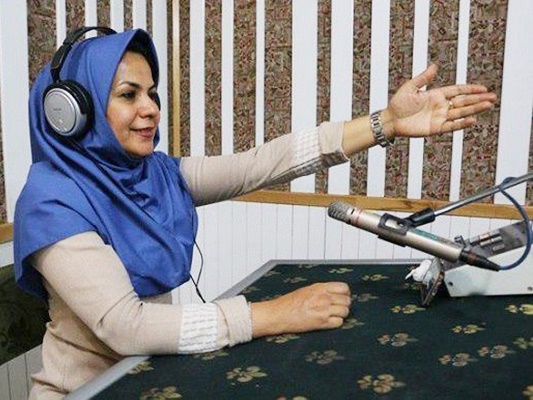
Tahereh Mohammad, the young Sunni woman, has been appointed as the head of Chal Talepak village in the border town of Jargalan in North Khorasan province, a Farsi report by ISNA said on Sunday.

At least 90 women have been appointed by the Iranian government as heads of villages in the same province but this is the first time that a woman from the minority Sunni population of Iran is being appointed as a village head.

Meanwhile, in a decree on Saturday, Governor of North Khorasan province, Mohammad Reza Salehi, appointed Zeinab Jahan Mata’a as the governor of Shirvan town, which is unprecedented in the history of the province.

The Deputy Governor of North Khorasan for Political Affairs, Mehrdad Ebrahimi, said the City and Village Council officials in the province are appointed in line with the government of President Hassan Rouhani’s slogans which are focused on taking advantages of the capacities of young generations including women based on fair criteria.

‘Iran Not to Accept Any Permanent Restriction on Nuclear Program’

Bushehr-Nuclear

Amir Khojasteh, a senior Iranian parliamentarian, says reports prepared by the International Atomic Energy Agency (IAEA) show Iran’s compliance with its obligations under the nuclear agreement it signed with six world powers, known the Joint Comprehensive Plan of Action (JCPOA).

“One has to admit the only authority to deal with nuclear issues, especially those related to the JCPOA, is the IAEA; so, opinions expressed by different countries such as the United States on the deal are not acceptable,” ICANA quoted him as saying in a Farsi report.

He said IAEA Director General Yukiya Amano should not be swayed by pressure from US statesmen when drawing up his report on the performance of signatories to the JCPOA.

“If the authority tasked with dealing with nuclear issues turns into a forum for the US and other countries to impose their policies, then there will be no trust for international cooperation,” said the MP.

The lawmaker then touched upon the violation of some of the provisions of the JCPOA by the West.

“Unfortunately, some of the terms of the JCPOA have been violated by the West, which shows the other parties to the deal are not living up to their commitments under the agreement; therefore, it shows supervisory bodies dealing with the JCPOA should discharge their responsibilities based on the deal and not allow our country’s rights to be violated,” he said.

He then referred to some viewpoints about the significance of the permanence of the restrictions for Iran under the nuclear deal.

“In the text of the JCPOA, some provisional restrictions are stipulated for Iran, which should be lifted gradually and based on the provisions of the agreement; so, there are no permanent restrictions for Iran,” he highlighted.

The MP said one of the plans pursued by US lawmakers is to make JCPOA restrictions for Iran permanent.

“It should be noted that making the restrictions permanent will make our country’s nuclear cycle incomplete, so we won’t be able to properly deal with issues such as enrichment, the production of centrifuges, etc.” he said.

“US Afraid IRGC May Become Role Model for Mideast Nations”

The new American sanctions law, which targets Iran, Russia and North Korea, is noteworthy in that the US under Trump is a country notorious for contravening its commitments under international regulations and has laid bare its true colours to the world.

According to a Farsi report by the International Quran News Agency (IQNA), Trump and his political team have moved to slap sanctions on Iran’s defence arm, i.e. the Islamic Revolution Guards Corps (IRGC) in order to contain Iran as a regional player and restrict its sphere of influence in countries such as Lebanon, Iraq, Syria and Yemen. By leveling false accusations against Iran and making illegal demands which run counter to the nuclear deal between Tehran and world powers (known as JCPOA), the White House behaves in such a way that it wants to create the impression that the IRGC and Iran’s military strategy as a whole are aggressive, so that it will be able to introduce Iran as a violator of international agreements.

US Afraid IRGC Becomes Role Model for Mideast’s Freedom-Seeking Nations

Ahmad Dastmalchian, Iran’s former ambassador to Jordan, had an interview with IQNA in which he expressed his views on Washington’s policies against the IRGC and Iran’s military forces.

“Today, the IRGC has turned into a deterrent power at the regional level and has managed to play a pivotal role in fighting the ISIS terrorist group until now. The IRGC is like a popular force and was the brainchild of [late Imam Khomeini,] the founding father of the Islamic Republic [of Iran]. They fear that the IRGC might export its ideology and turn into a role model for other regional countries.” said the former top Iranian diplomat.

“The model that the Islamic Republic of Iran has put into effect in the region today has directly harmed the interests of the US and its regional allies. And today, we are seeing that most groups fighting hegemony have modelled their resistance, objectives and planning after those of the IRGC, and the Lebanese Hezbollah is an example of that,” said Dastmalchian, who is an expert on international issues.

He also weighed in on what objectives Trump is pursuing by seeking to harness thee IRGC’s power.

“Tehran is right to be worried about the IRGC’s power. The reason is that the sinister American-Arab-Zionist triangle has paid dearly over the past years to undermine the resistance front, and has tried to restrict the Islamic Republic of Iran’s sphere of influence in the region. But today, this policy has been a nonstarter and turned out to be fiasco,” he noted.

IRGC, Big Hurdle to Politicians Seeking Disintegration in Mideast

He said since the Islamic Republic of Iran was established, the US spared no effort to contain it by such measures as imposing unfair sanctions and the imposition of the eight-year Iraqi war on Iran.

“Also, as regional nations have, in cooperation with Iran, managed to scuttle a major US-Israeli plan to disintegrate the region, they (Washington and Tel Aviv) have intensified their animosity toward the IRGC because it is a key obstacle to their politicking,” said the top former diplomat.

He also touched upon the meeting between Iraqi Prime Minister Haider al-Abadi and Leader of the Islamic Revolution Ayatollah Seyyed Ali Khamenei.

“In his meeting with al-Abadi, the Leader said ‘Today, regional countries have managed to defeat their enemies and they should undoubtedly have a major role in [determining] the future of the region and running it.’ The US and the Zionist regime [of Israel] were afraid of that situation, and that is why they have ratcheted up their rhetoric against the IRGC and keep finding pretexts to create the impression that the JCPOA is not being implemented properly,” he said.

Trump Helps Iran Introduce Washington’s Promise-Breaching Face

Dastmalichian said Trump clearly showed to the world that Washington does not live up to its commitments.

“By showing that the US does not make good on its promises, Trump proved something that we had made lots of effort for years to prove to world nations. However, Trump helped Iran prove this reality,” he said.

“Because of reneging on its obligations under the JCPOA, the United States can no longer form a new coalition against the Islamic Republic of Iran, and we are even witnessing that Russia, China and even the European Union are no longer willing to contribute to Iranophobia policies in tandem with the US. Maybe Europe will, to some extent, get on board with the US in the future because of its economic interests, but so far, the US has faced its European allies’ red light.”

He noted that the JCPOA is a strong international agreement which can remain in effect even without the US.

“The Islamic Republic of Iran has remained committed to all of the provisions of the deal, so it should be noted that imposing sanctions on the IRGC or launching propaganda against our defensive system, which has a deterrent role, is not justifiable at all,” he said.

“The US has sold the most advance weapons to Arab countries in the region such as Saudi Arabia, which is using them against defenceless people in Yemen, but the Islamic Republic of Iran has never used the IRGC to attack a state; rather, the IRGC has been at the forefront of the campaign against the most dangerous terrorist group in the world and has played the greatest part; therefore, Trump’s repeated threats against the IRGC are hollow and without international support and show Washington’s lack of proper understanding of Iran’s constituents of power,” the former top diplomat noted.