Wednesday, December 24, 2025
Home Blog Page 3761

World’s First Camel Hospital Opens in Dubai

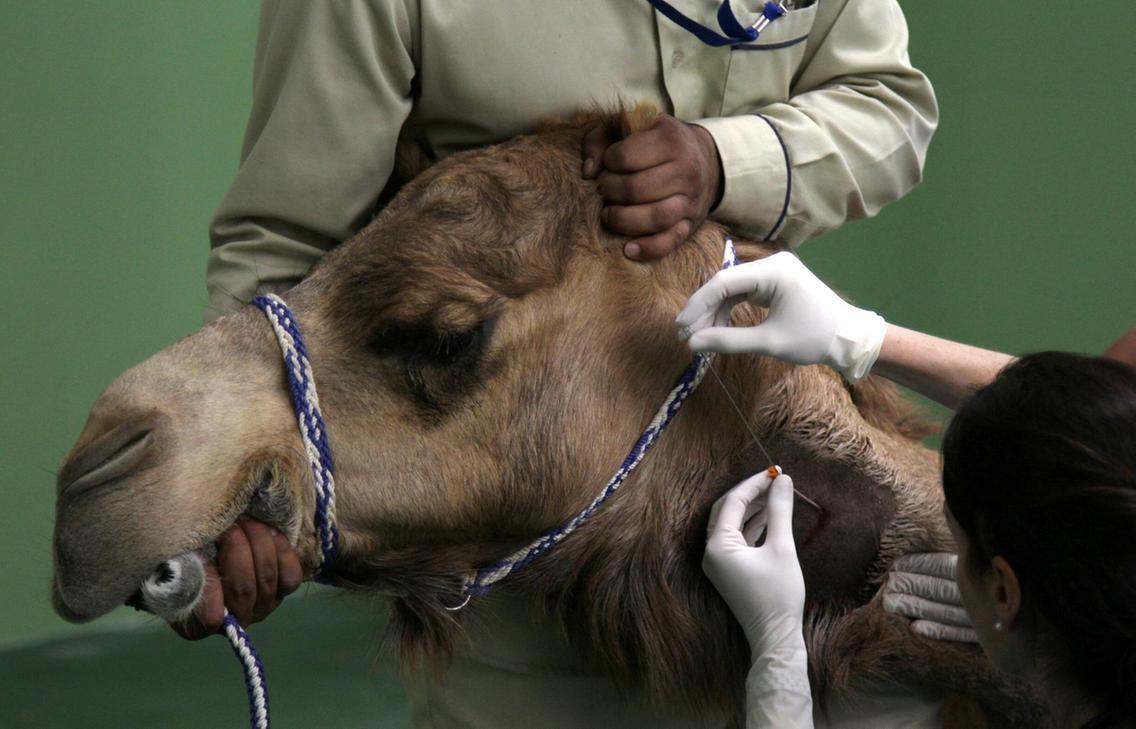
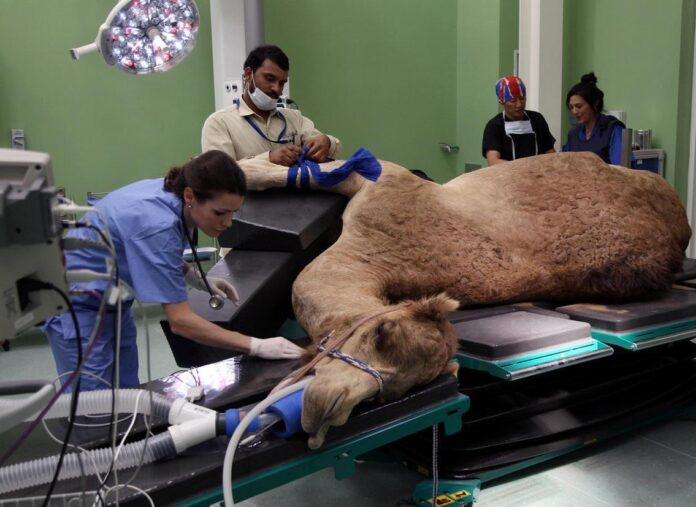
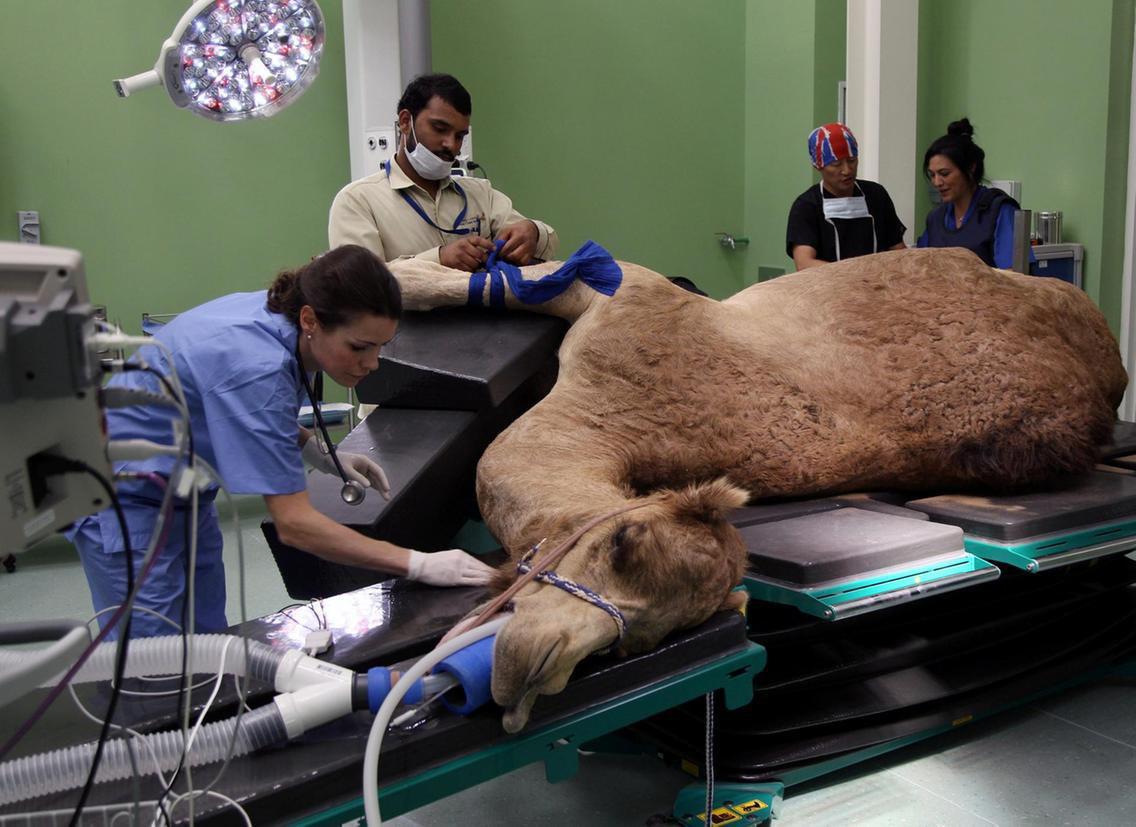
Salhooda the camel, a mature female, made international headlines this week when she was photographed at the hospital receiving treatment for a foot infection.

These photos by Satish Kumar for Reuters show Salhooda dangling above an equine surgery table modified for a camel’s long neck, long legs and hump.

The original Dubai Camel Hospital opened more than 20 years ago, according to staff. The new facility has attracted attention from international breeders. The hospital can admit up to 20 camels.

Even before its official opening, it has become so popular that it’s had to turn away owners and camels who show up on the doorstep without an advanced booking.

Sheikh Mohammed bin Rashid, the Vice President and Ruler of Dubai, visited the state-of-the-art facility last week. “A lot of the surgeries we’ll be doing will be new to the camel,” said the head surgeon Dr Cedric Chan. “We can only guess what we might be doing in the future.”

Dr Chan, an equine surgeon with 25 years of experience, is part of a specialised team from the UK, Spain and Mexico.

About half of the medical equine equipment from Europe and North America has been modified for the camel.

This includes Equinosis, a set of sensors placed on the camel to detect lameness and asymmetry. Traditionally used for horses, this device had its algorithms modified for the camel’s gait.

Should there be a need to reassure owners, there is a VIP room where sheikhs can watch surgeries from above.

“The camel industry is an evolving industry and we’re very much marrying the old ways with the state of the art technology,” said Dr Chan.

Camels are easy patients.

“They’re very nice patients actually. They’re very gentle animals and they’re very laid back and we like them actually.”

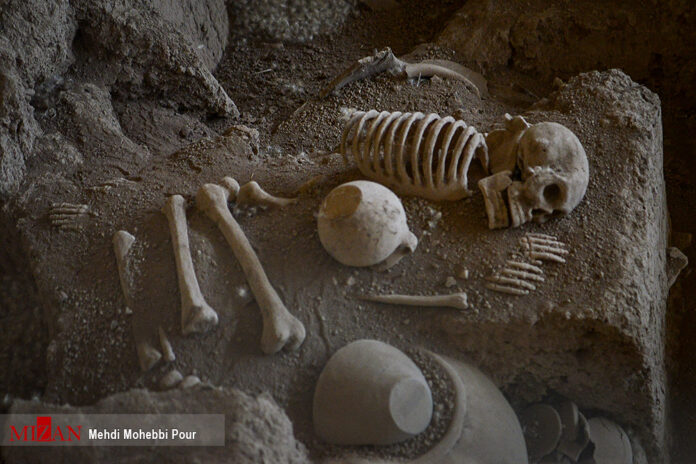
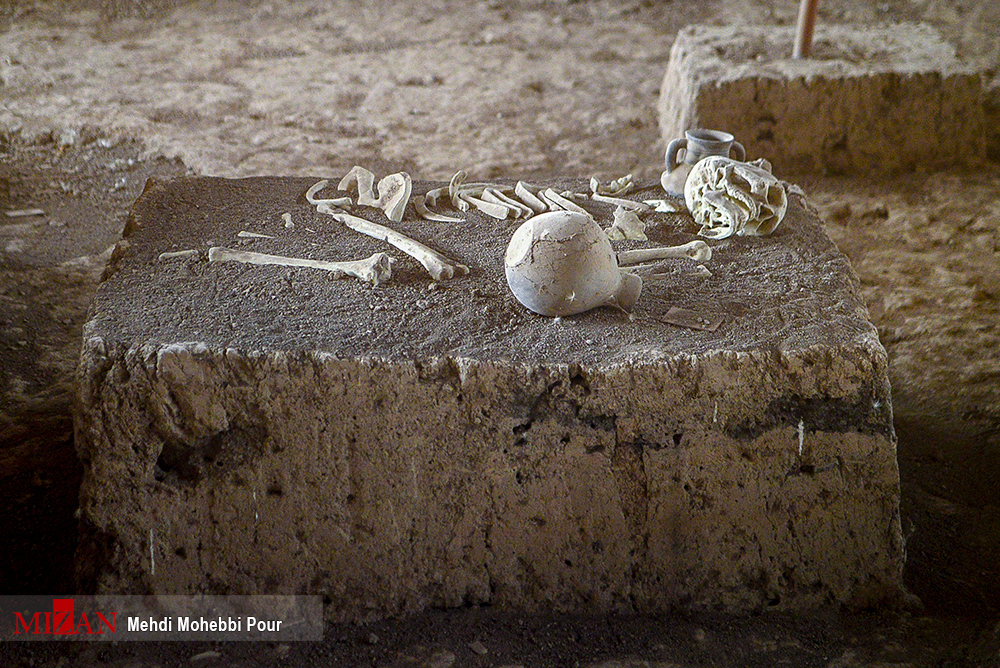
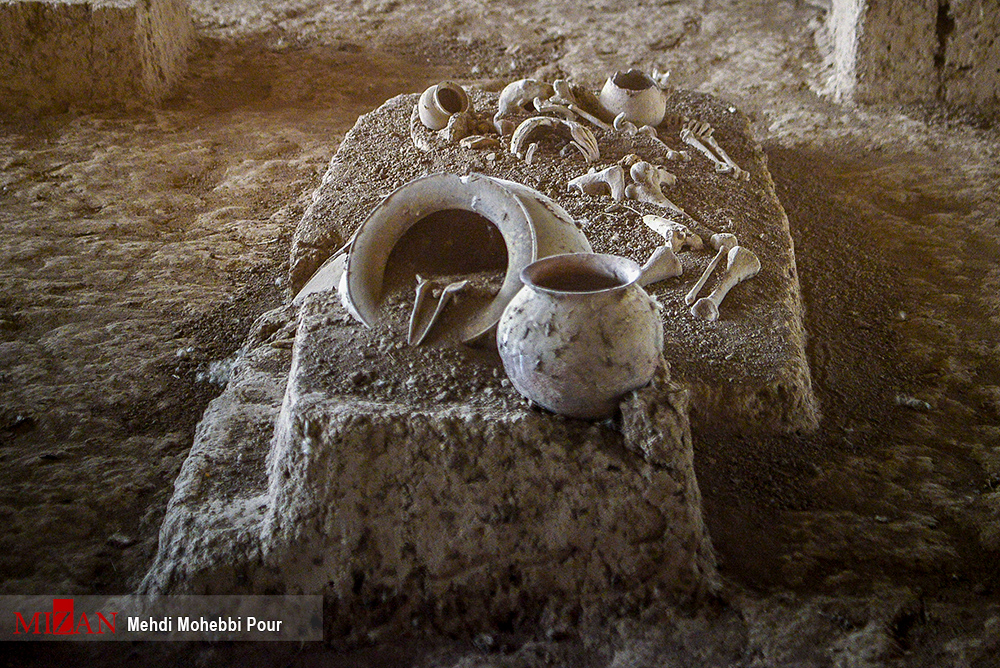
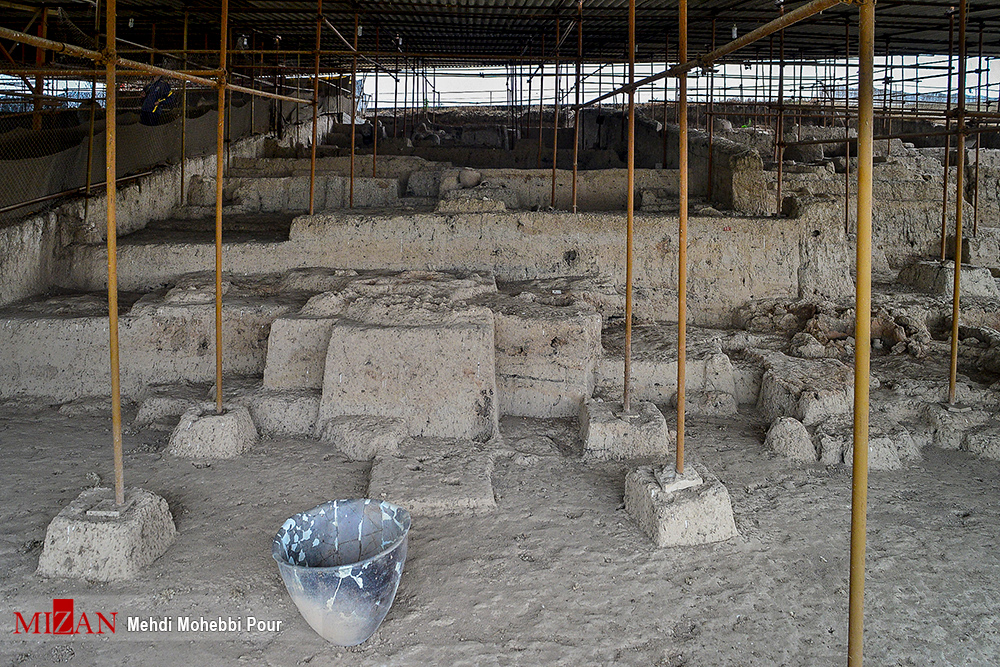
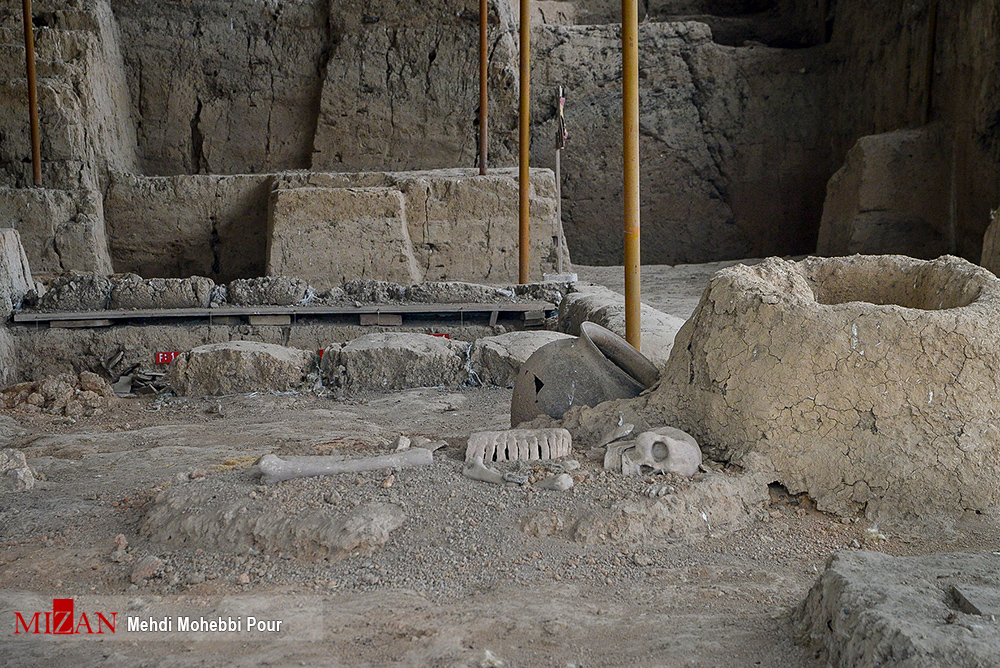
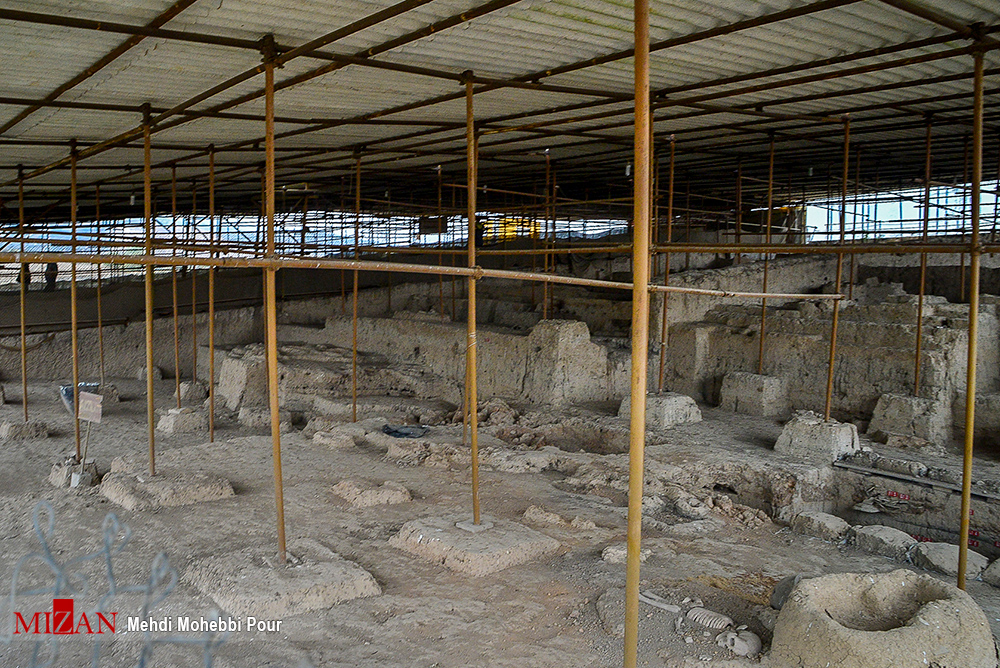
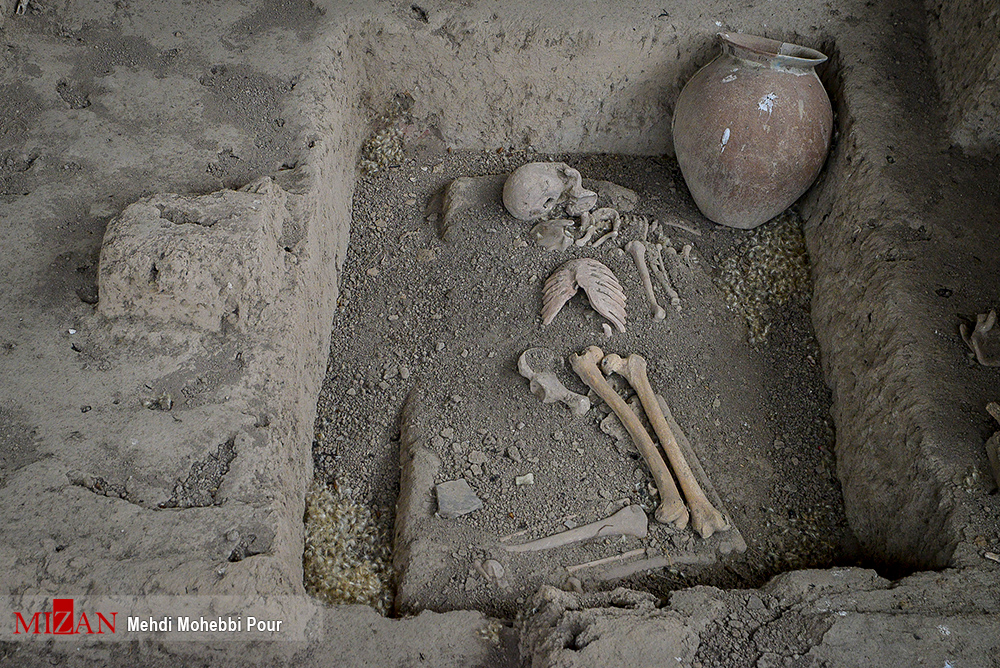
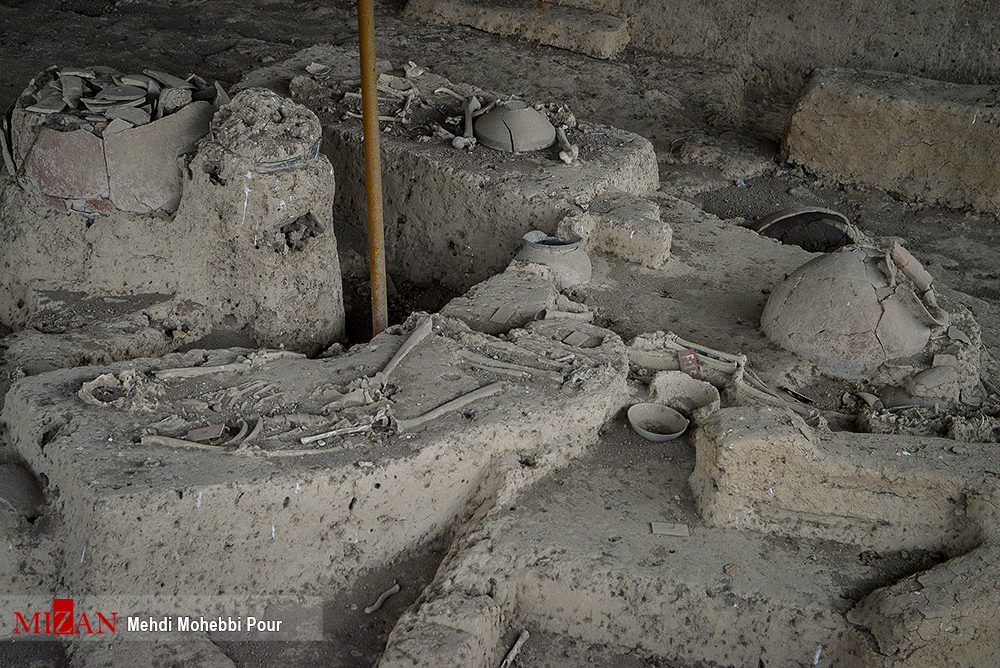
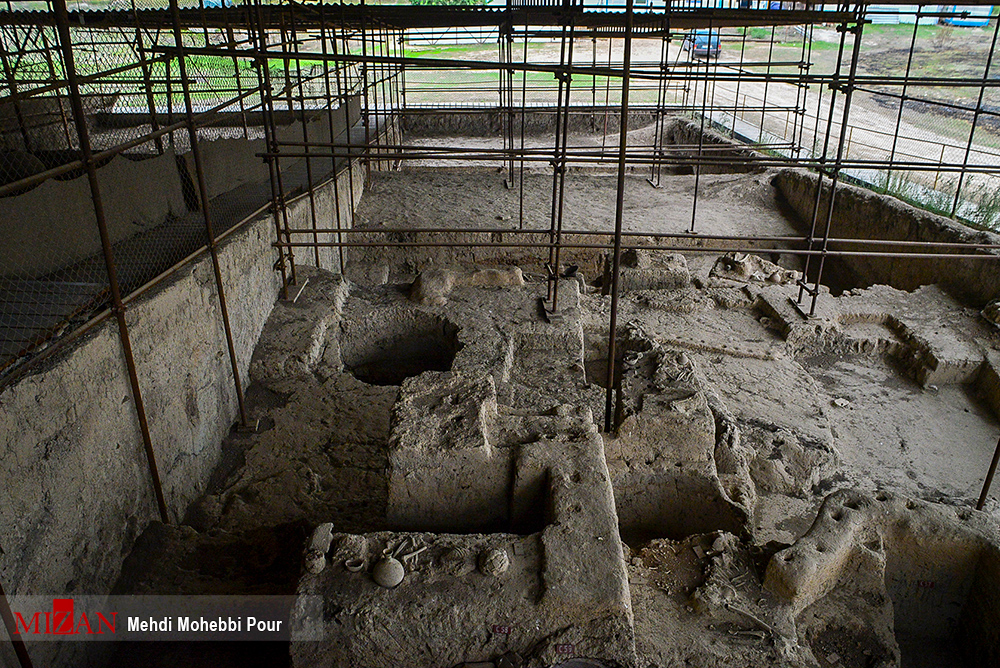
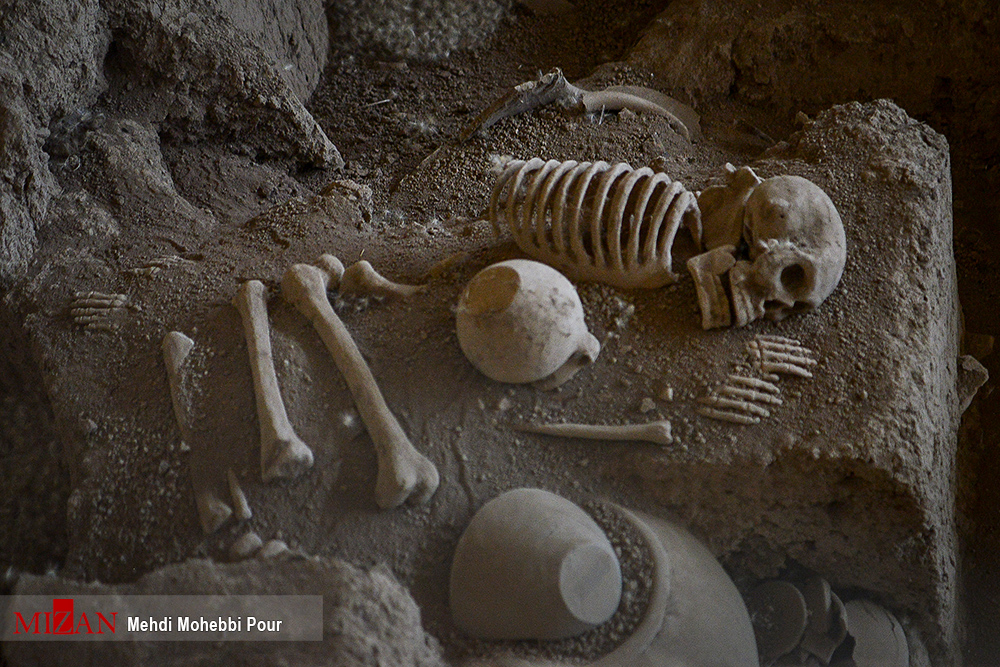
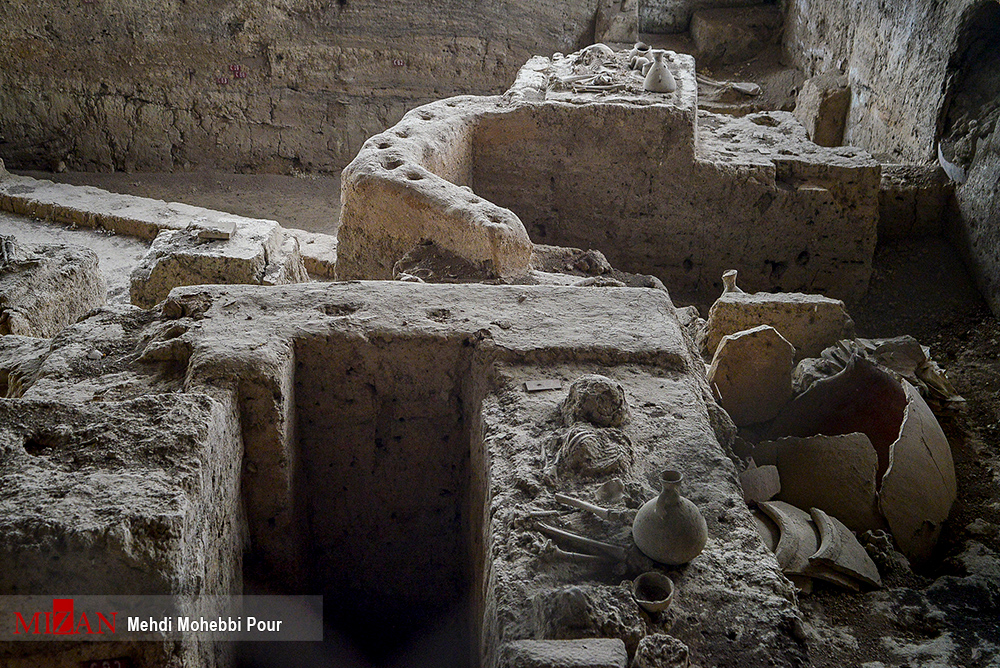
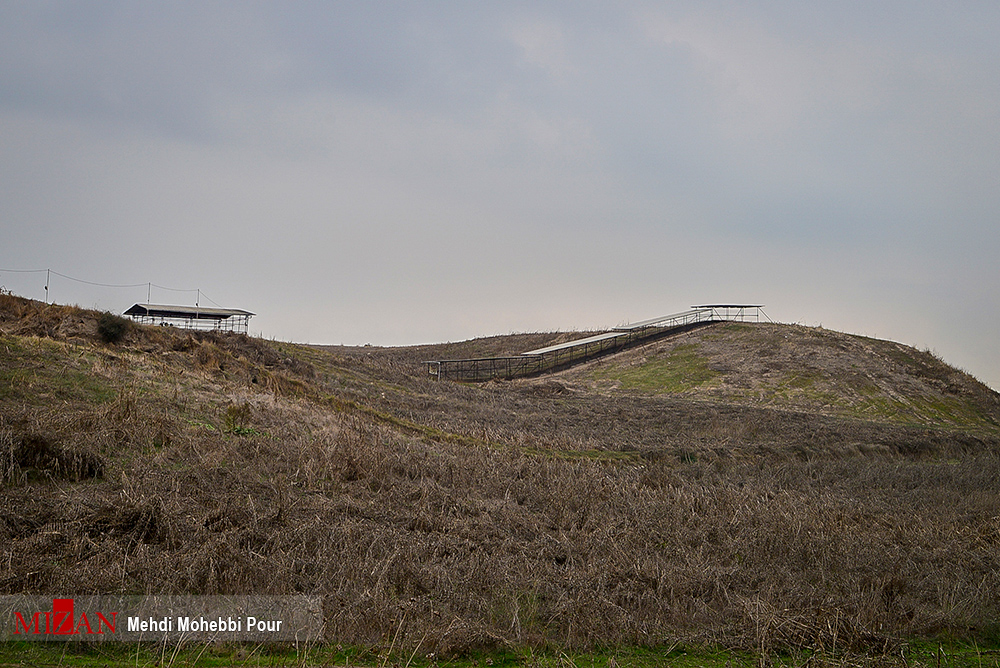
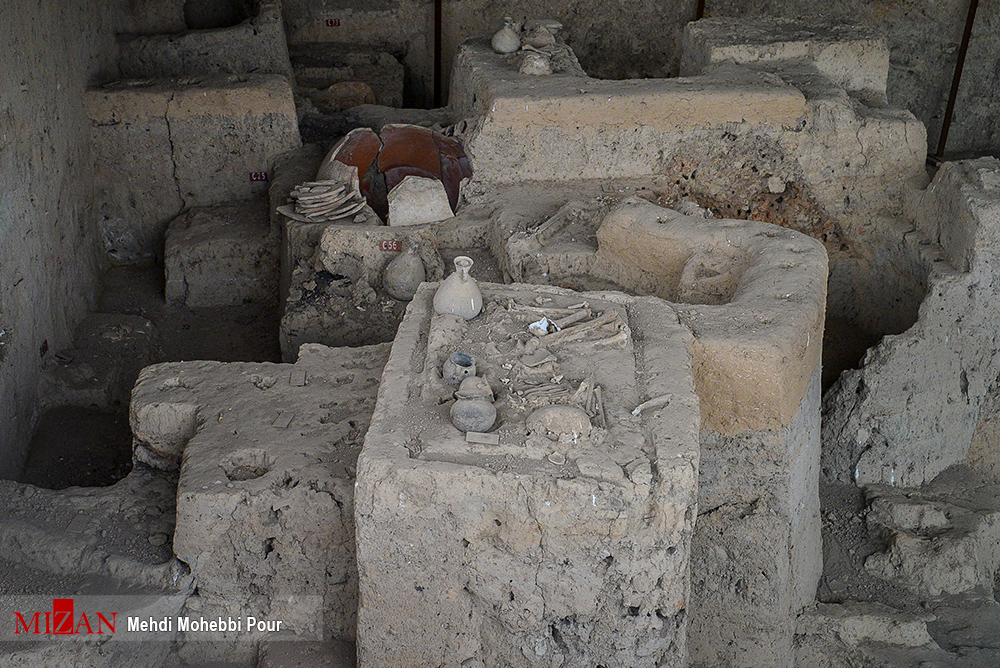
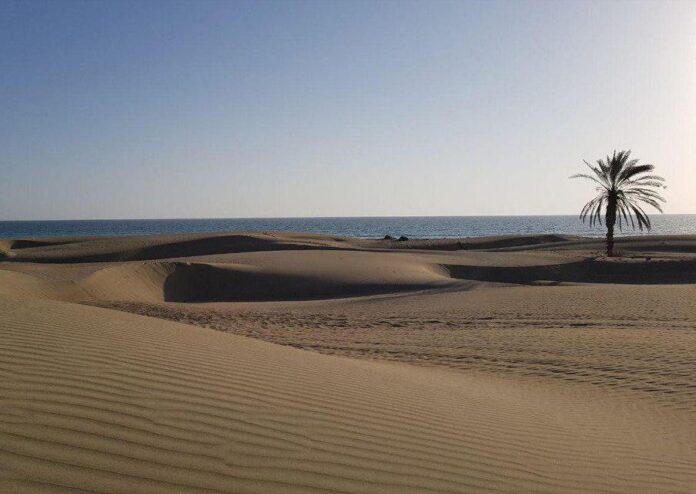
Gohar Tappeh; Burial Site of Ancient People, Their Belongings

The people who lived in the ancient caves of Mazandaran caused Gohar Tappeh to come into existence after getting out of the caves.

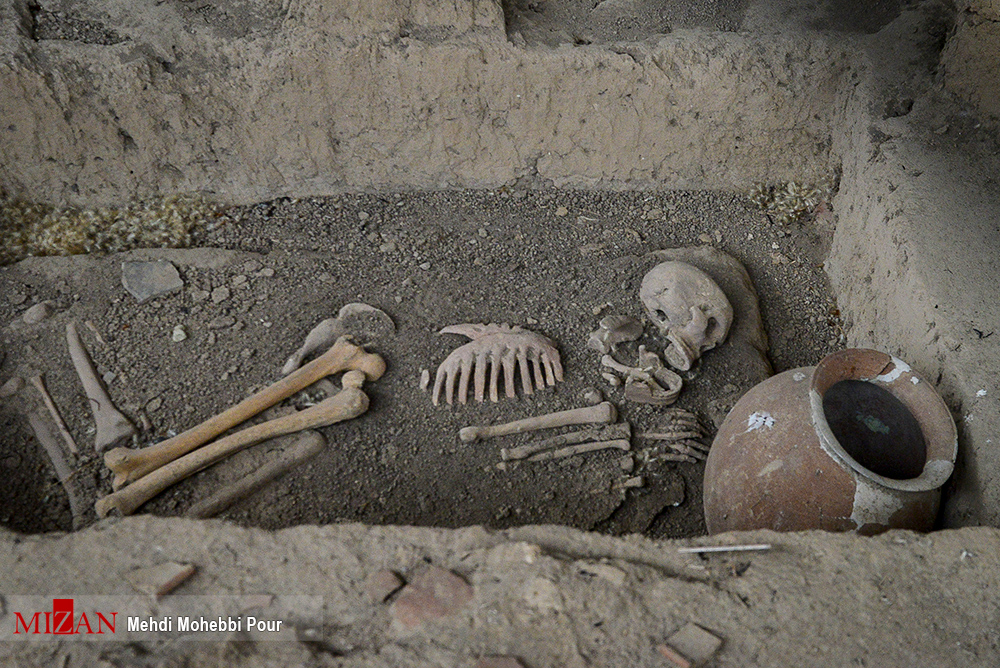
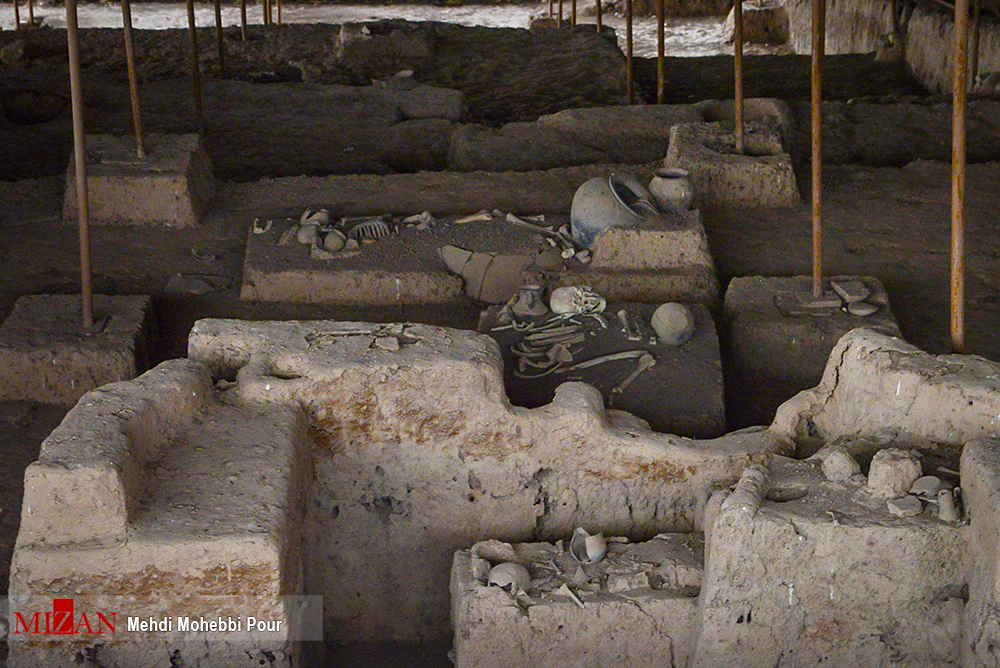
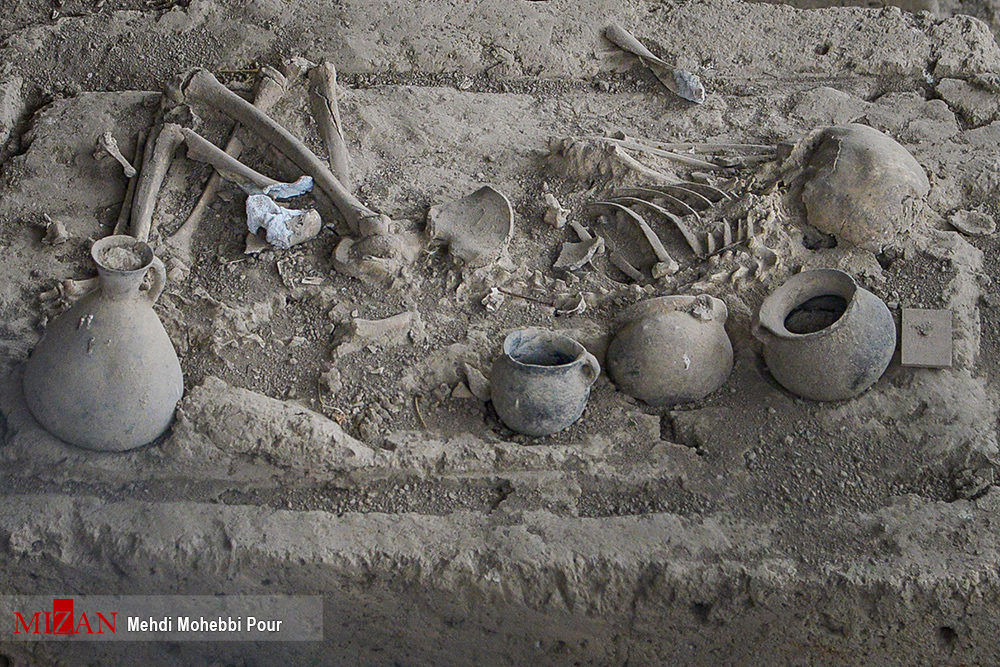
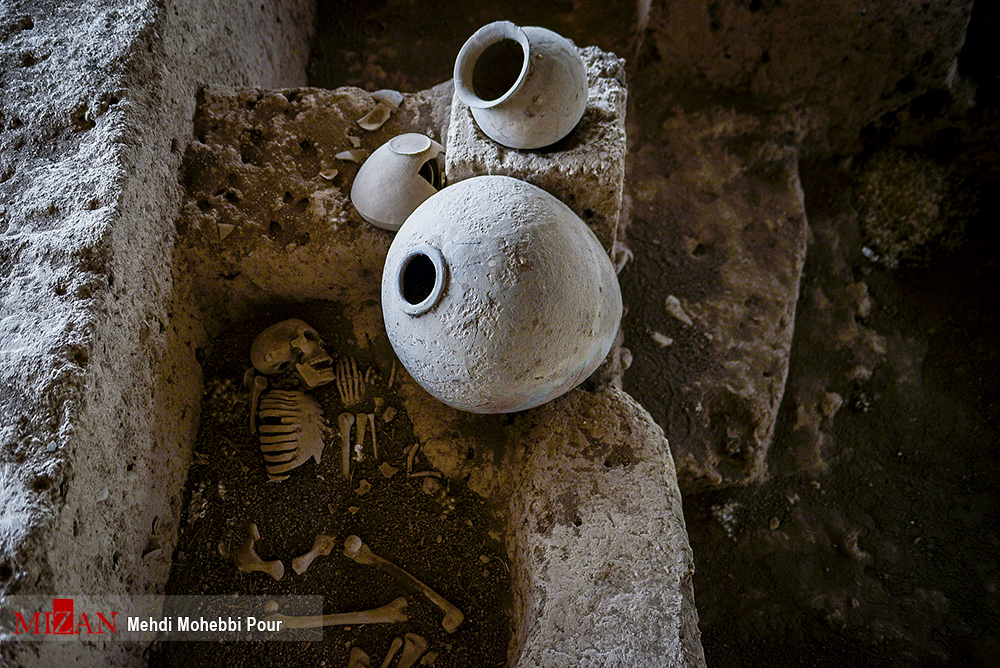
The hill is a manmade one. During the Neolithic era, villagers used to live in the region, but they were civilized during the Bronze Age to become more urbanised. After the collapse of the region and migration of its citizens to the mountainous areas, they carried the bodies of the dead to bury in their hometown Gohar Tappeh. The graves were dug at very shallow depths and during the excavations, farmers found treasures which in Farsi are called “Gohar”.

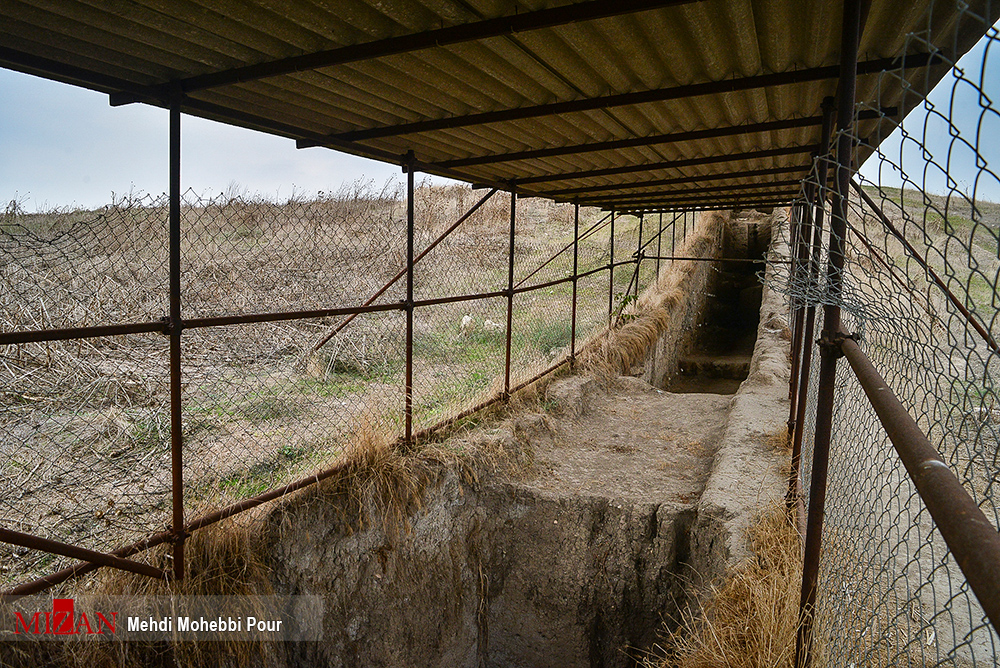
Evidence shows a lot of people lived in the region, enjoying an urban life since 5,000 years ago. The discovery of architectural structures and graves in this region are evidence of continual life during the later centuries there. A museum has been created at the site and visitors can watch what archaeologists have discovered. The burial method and the belongings of the deceased can be seen in this museum.

What follows are Mizan News Agency’s photos of the tourist destination:

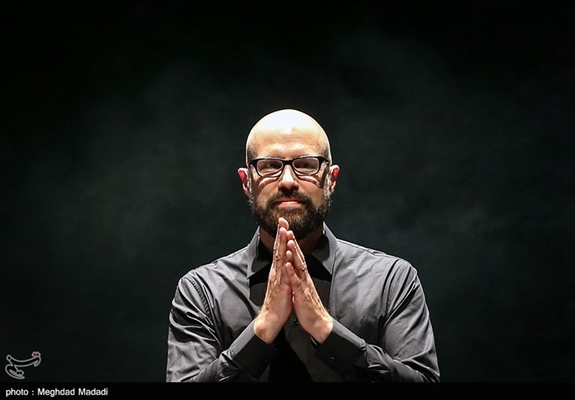
German Band Schiller Talks of Memorable Nights in Tehran

It was about one week ago when the renowned German electronic band Schiller made a rare visit to Iran and conducted a series of concerts in Tehran, which received a huge reception from its fans.

Iran is a safe country in the heart of an unstable region which is the scene of blasts, carnage, fire and smoke on a daily basis. Christopher von Deylen was so excited about being in the Iranian capital that not only recorded his moments in each part of the city but also took videos of his enthusiastic Iranian audiences during the concert.

Schiller band, named after the German poet and dramatist Friedrich Schiller (1759-1805), was formed by von Deylen and Mirko von Schlieffen in 1998. Their first single ‘Glockenspiel’ was a great success in Germany. Around 2001 or 2002, von Schlieffen left, leaving von Deylen the only permanent member. Over seven million copies of Schiller’s works have been sold across the world.

German Band Schiller Talks of Memorable Nights in Tehran

According to a Farsi report by IRNA, von Deylen conducted concerts in Tehran for fivenights. He says he will never forget the moments on stage.

Some of the pieces played during the concerts were Ultramarin, Once Upon A Time, Ruhe, Berlin Moskau, Schwerelos, Polarstern, I Feel You, Sehnsuchtand Klangwelten.

The concerts were organized by Ritmeno.ir, a local music website, in collaboration with the Tehran-based cultural institutes of Nay-o-Ney and Tanin-e Roya-e Pars directed by Mehdi Kashi and Mostafa Kabiri respectively.

Each night, the concert began amid the enthusiasm of the exciting fans. Von Deylen filmed the whole concert using his own camera. He shared some clips of the concerts as well as his experiences in Tehran in his Instagram account after leaving Iran.

“I never record my audience reactions during concerts. But in Tehran, I’ve recorded Iranians’ reactions because we were shocked to see their exciting reactions. We needed the videos to explain to our friends in Germany how exciting the Iranian fans are,” he said.

Von Deylen began to dream about Iran at seven when his father made a visit to Iran. On his return, the father brought a box of Iranian pistachios. He also brought with himself sweet memories of Iran and the Iranians.

Schiller certainly advises everyone to go to the city, even if it’s not to play music. The concerts were conducted on December 11-15 which covered a selection of the memorable hits created by the band.

On his feeling towards Iran, von Deylen said, “I’ve got a good feeling. We had come to Iran some 10 years ago, when we visited Tabriz (capital of East Azarbaijan Province), Isfahan (capital of Isfahan Province) and Tehran. All members have this good feeling. We’re eager to see how people will receive our concerts. I’ve always believed that when you compose a poem or a musical piece, you can take it around the world and share it with all people.”
“Go there! Go there even without a concert,” he said, adding that concerned messages from his friends and family before he traveled were overblown.

“I got a lot of messages asking me to be careful and, ‘I hope you will be safe and please come back in one piece and please don’t let them hang you’,” he said.

German Band Schiller Talks of Memorable Nights in TehranGerman Band Schiller Talks of Memorable Nights in Tehran

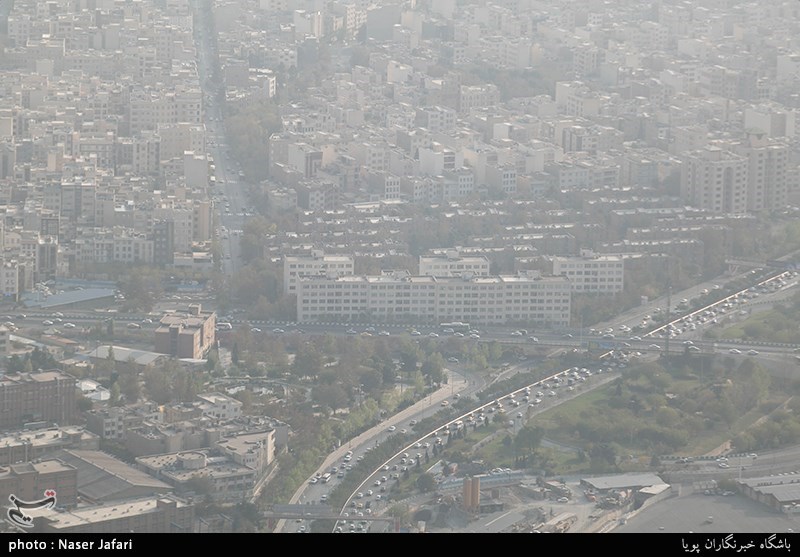
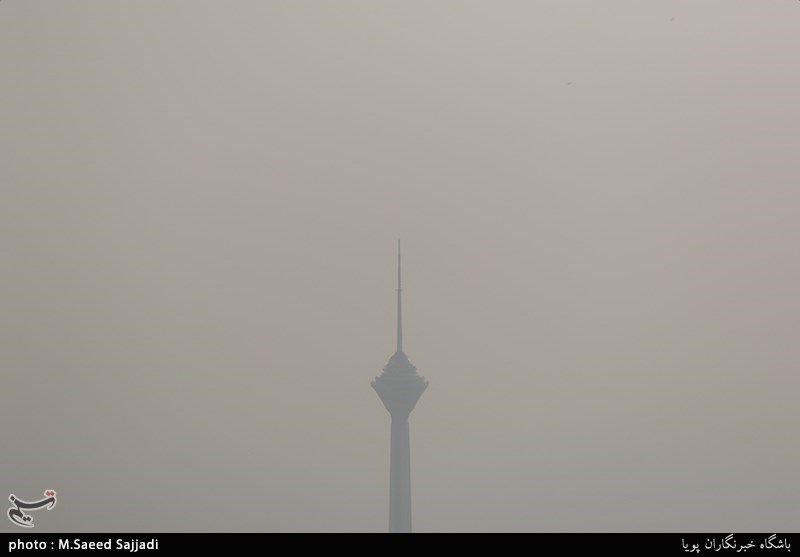
Schools in Tehran Closed Down after Air Pollution Reaches Alarming Level

Members of Tehran’s Air Pollution Emergency Committee held a meeting on Saturday night and decided to shut kindergartens and primary schools in all but two cities of Tehran Province on Sunday.

Schools in the cities of Firoozkooh and Damavand, located in northeast of the capital city, will continue their routine activities.

The decision came as the average level of PM2.5 particles in the province’s air hit 150. It is still more than three times the level considered safe.

The committee added that further decisions will be made on whether to close schools on Monday if the pollution continues in next days.

The air pollution in Tehran is primarily caused by vehicles.

Currently, 40 percent of Tehran residents use public transport, while 60 percent use their own cars.

Schools in Tehran Closed Down after Air Pollution Reaches Alarming LevelSchools in Tehran Closed Down after Air Pollution Reaches Alarming Level

US Envoy to UN Has No Understanding of Military Affairs: Iran

Brigadier General Massoud Jazayeri, a senior spokesman for the Iranian Armed Forces, said on Saturday that if the US officials were aware of the high potentialities of Yemeni resistance forces in the domain of high-tech missiles, they would never make such ridiculous statements.

“The US is not able to build consensus about the Islamic Republic of Iran and the (Yemeni) resistance,” Tasnim News Agency quoted him as saying in a Farsi report.

Therefore, he added, the only way for Washington to deal with the difficulties it faces is to change its behaviour and to stop its brutal and criminal acts all over the world.

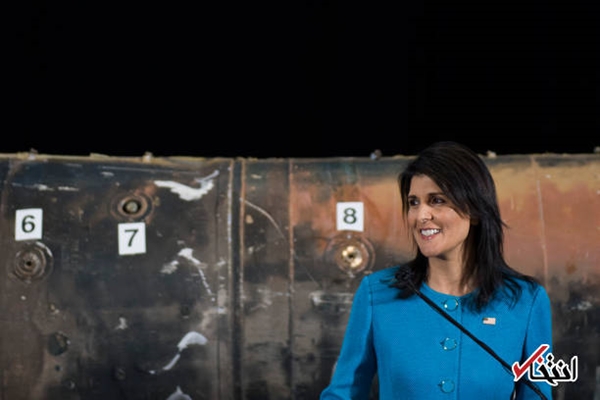
General Jazayeri’s reaction came after Haley on Thursday showed a wreckage of a missile and claimed that Iran is violating the UN resolutions by supplying weapons to Yemenis.

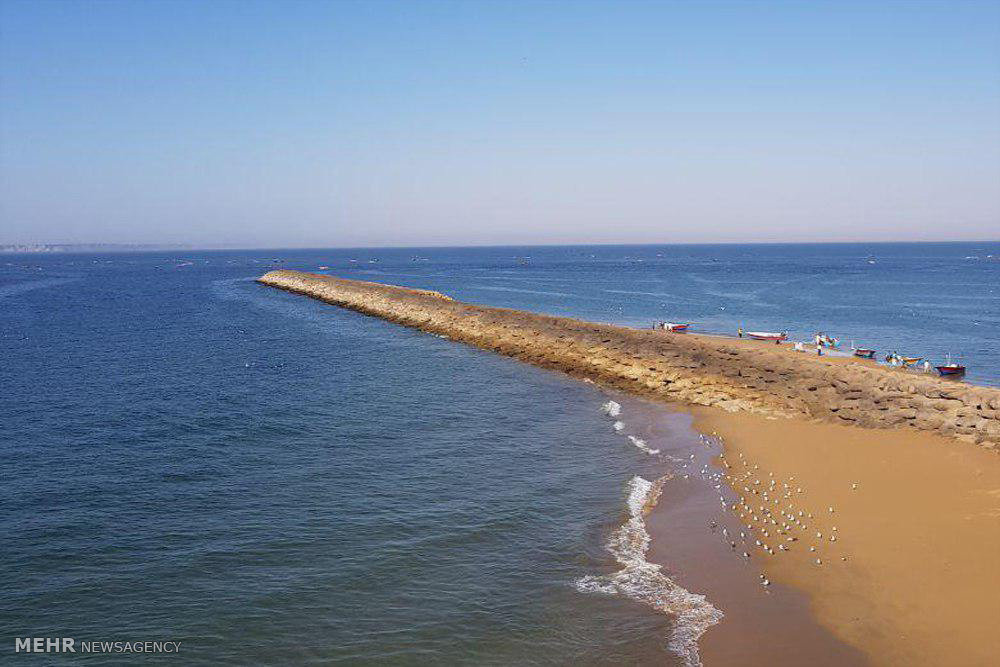
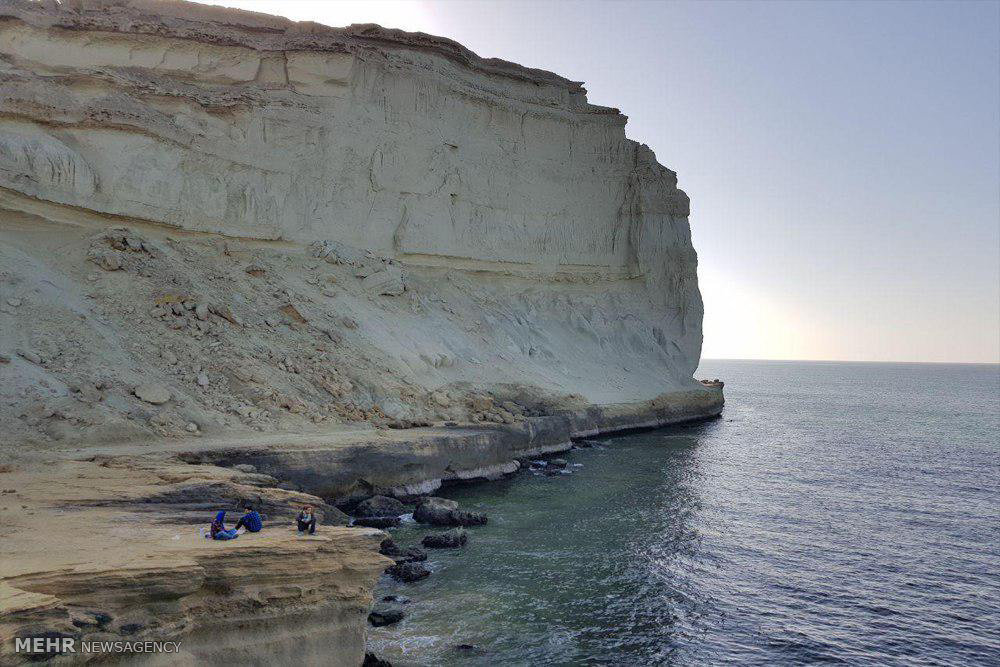
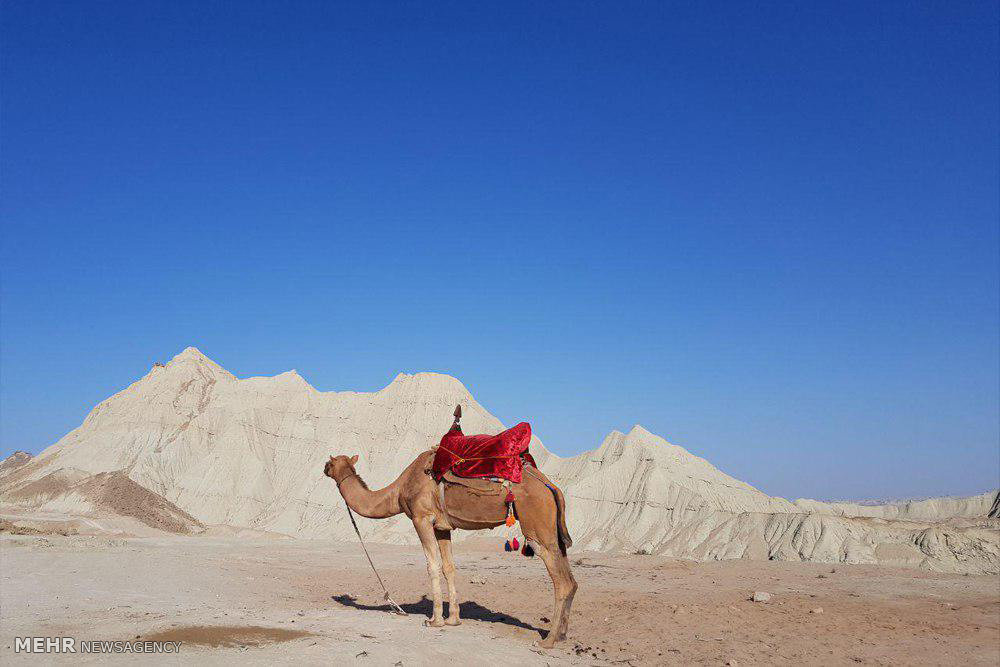
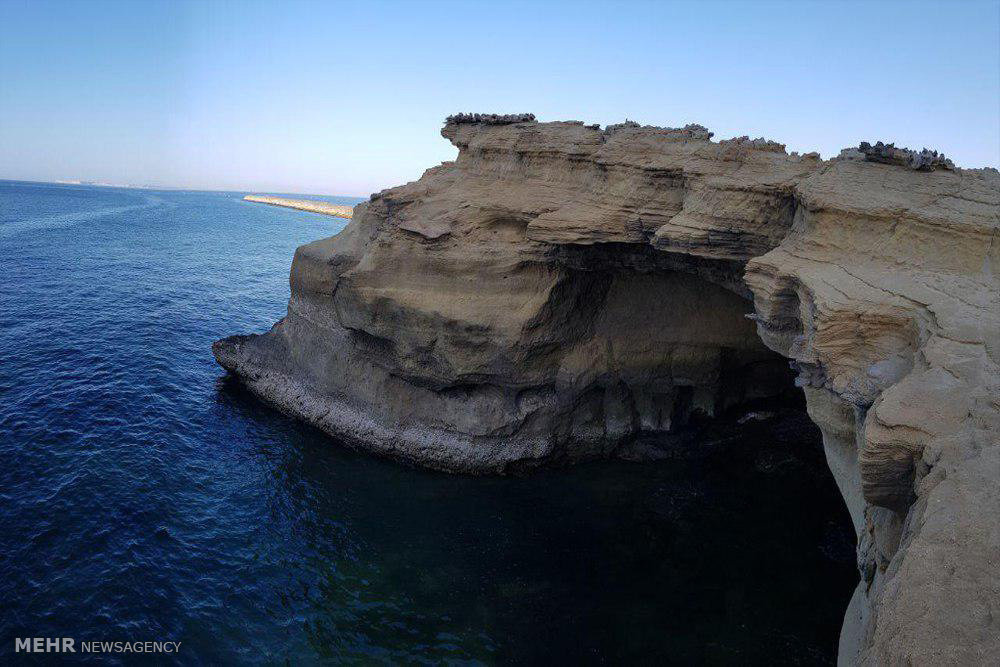
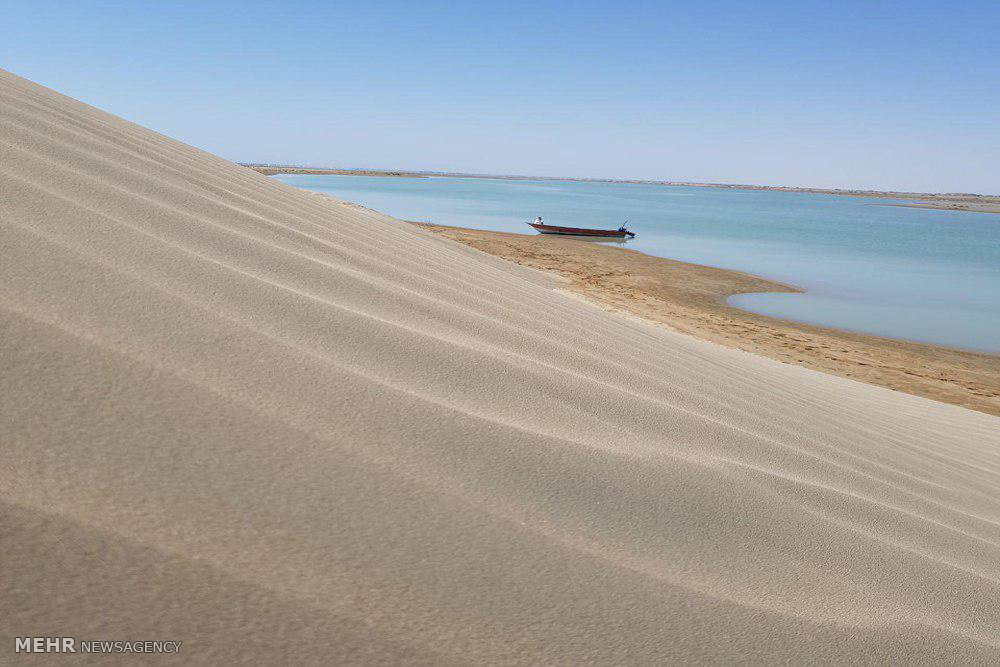
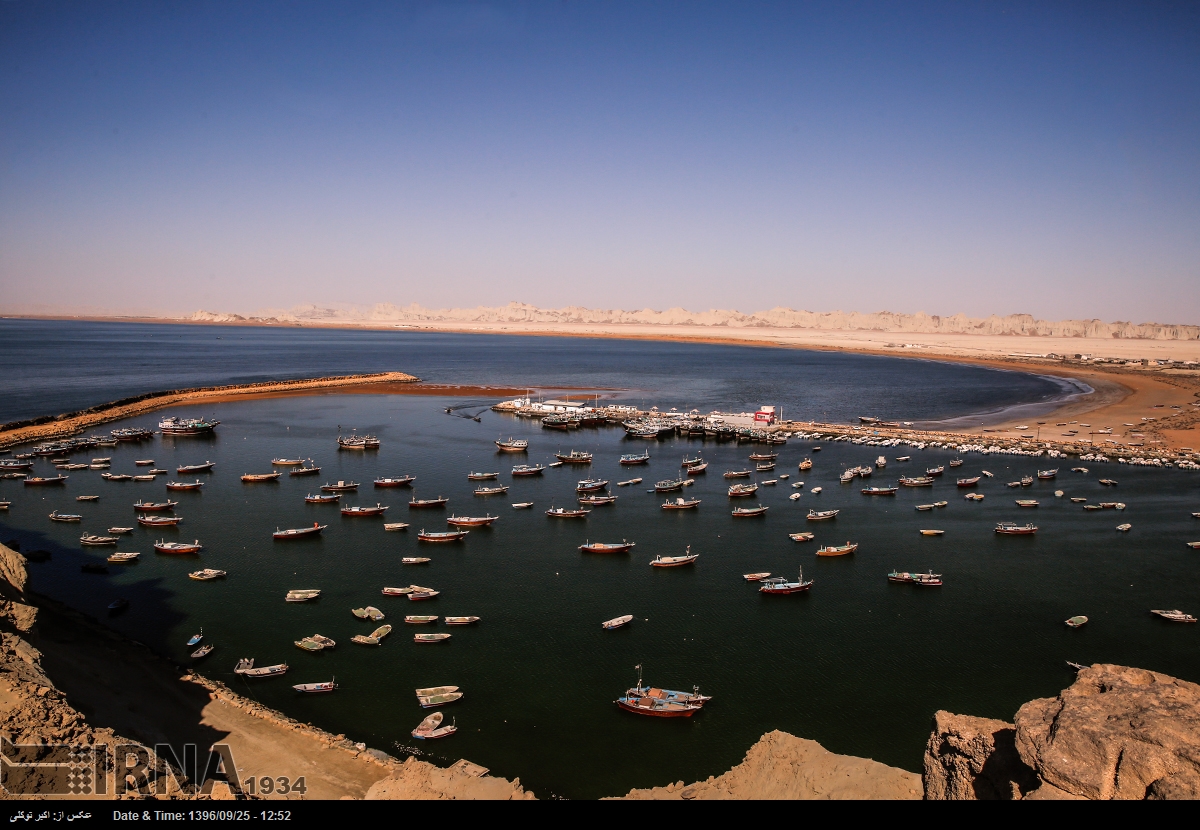
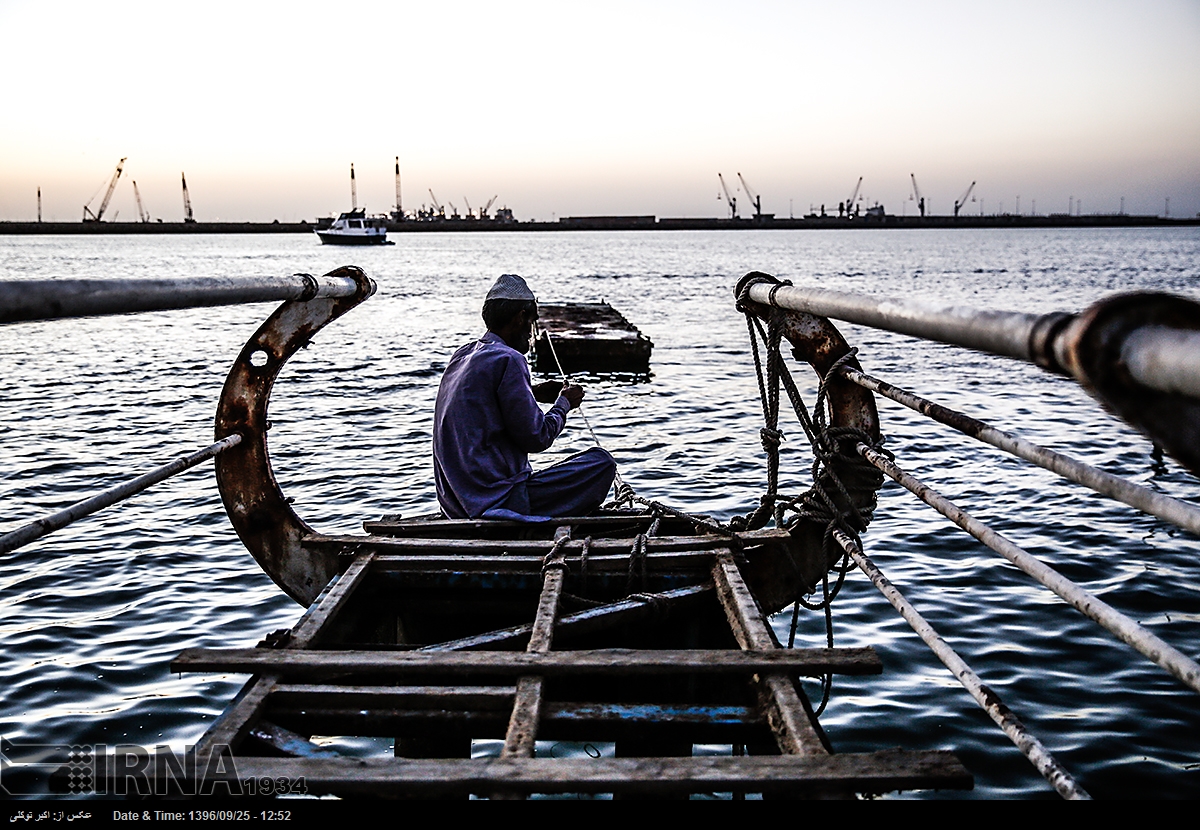
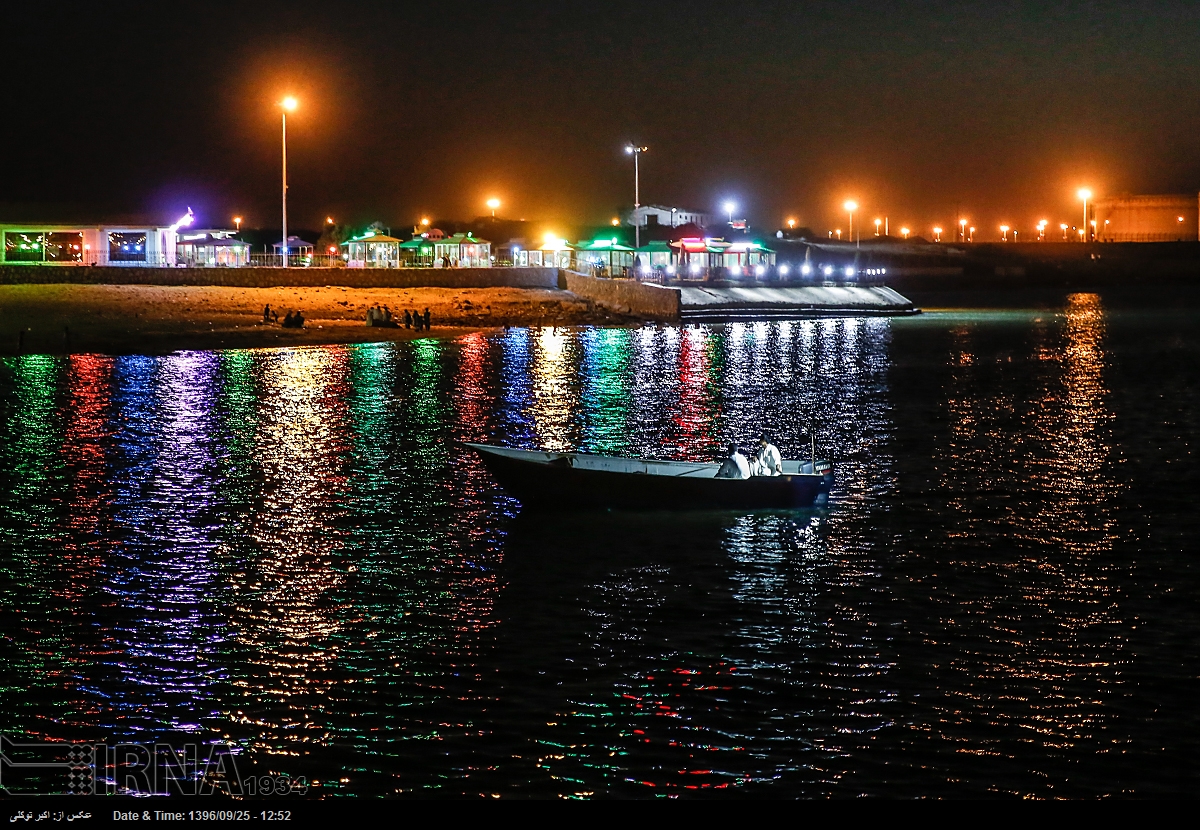
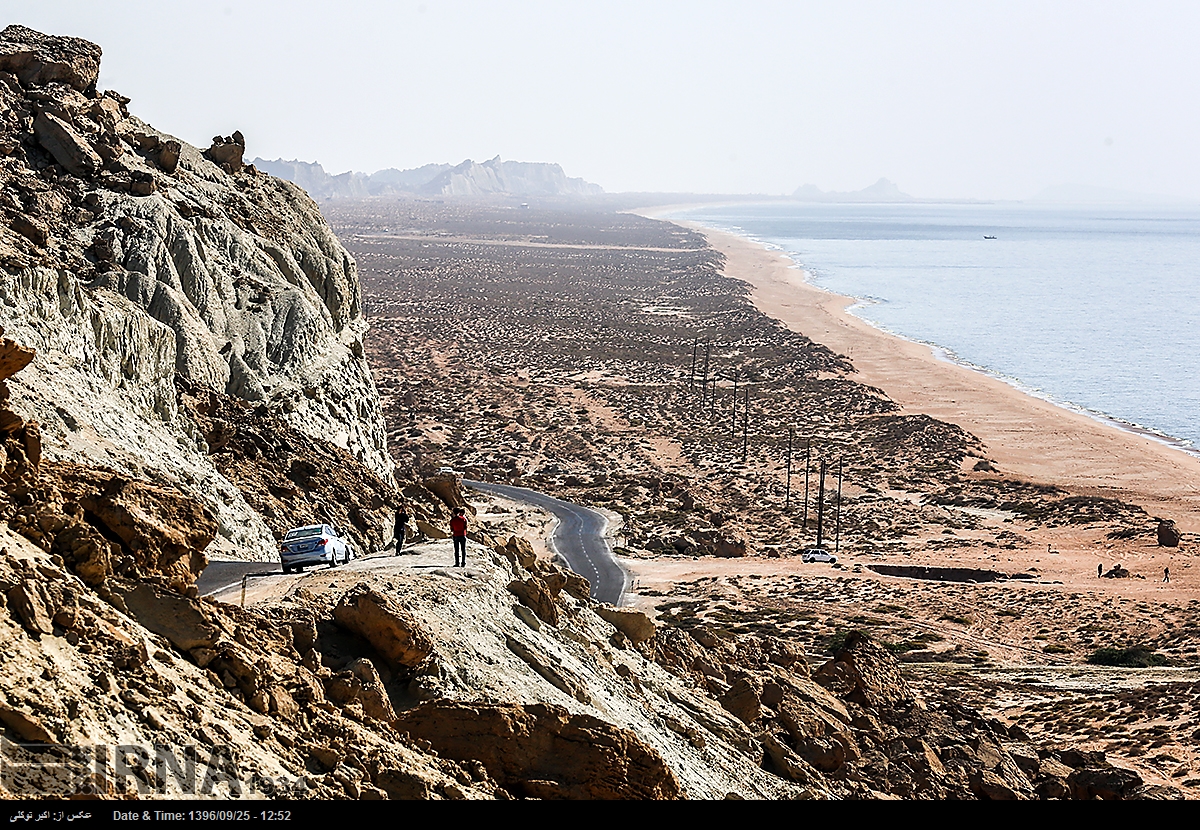
Chabahar Port City; Undiscovered Gem in Southern Iran

Chabahar is Iran’s southernmost city. Located near the equatorial area, it has a slight temperature variation in different seasons of the year.

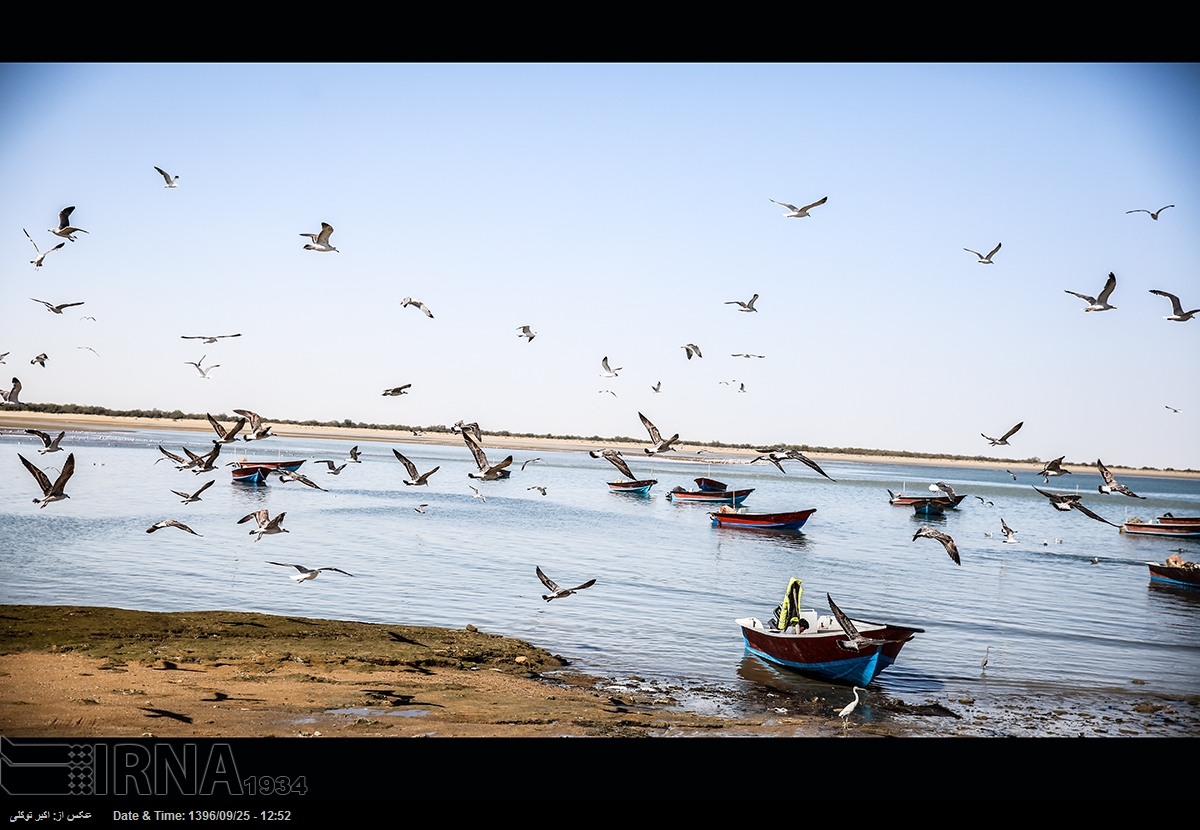
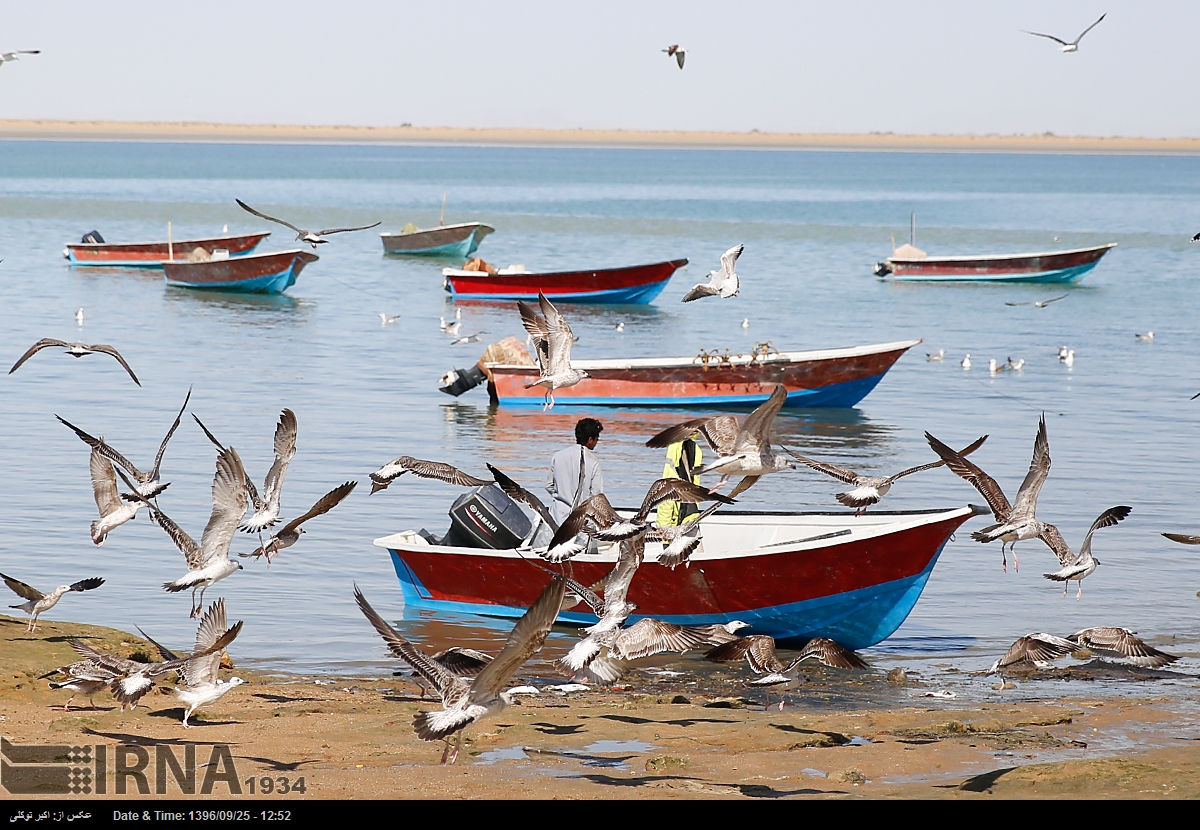
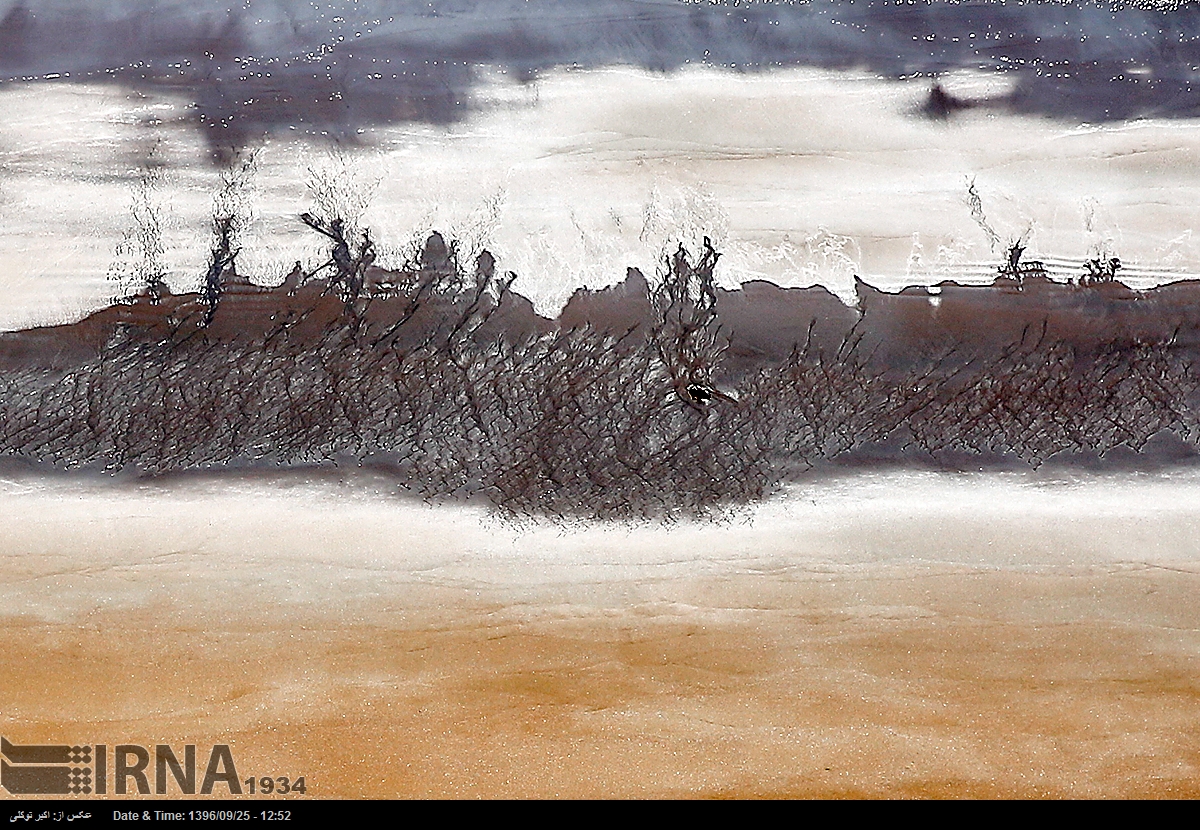
Chabahar is home to different natural and historic phenomena which are considered as tourist attractions. For example, mangrove forest is a habitat for valuable species of seabirds such as flamingo, eagle, heron, etc.

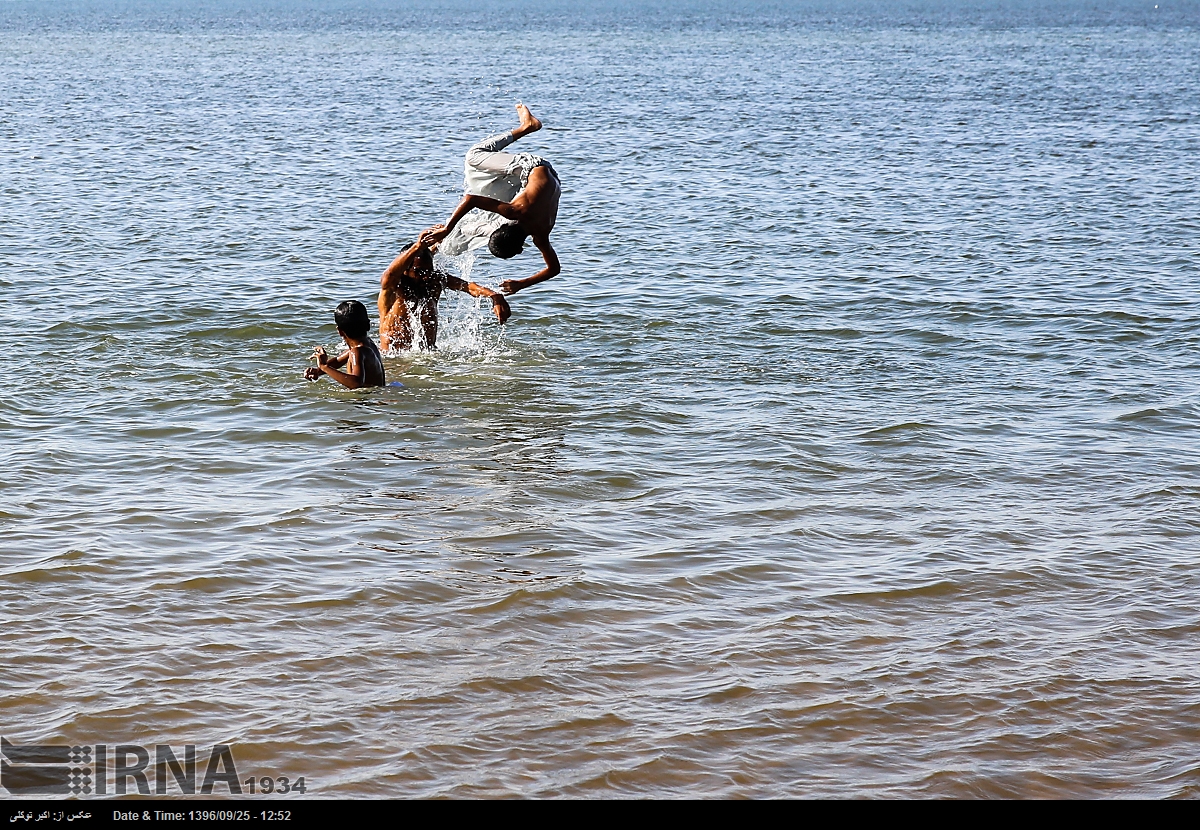
Moreover, the Chabahar beaches enjoy one of the most scenic coastal areas in the entire Iran. Chabahar beaches are suitable for many water sports and activities including swimming, diving, snorkelling, canoeing, water skiing, and surfing, among others.

Historic villages, monuments, next to a beautiful lagoon, are the other sites that could be interesting for tourists.

Here are Mehr News Agency’s photos of Chabahar port city:


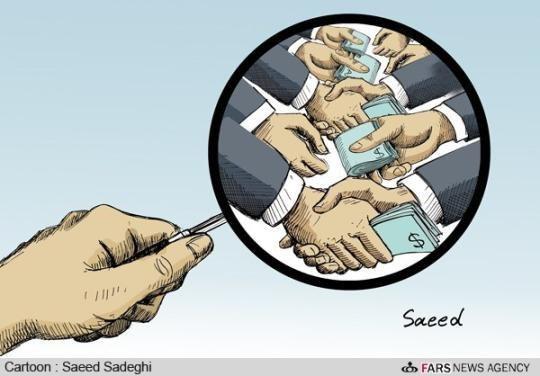
Iranian Media Urged to Report Corruption at All Levels

Iranian Media Urged to Report Corruption at All Levels

Secretary of Iran’s Supreme National Security Council Ali Shamkhani has highlighted the need to constantly fight corruption as the key contributor to diminishing public trust in the efficiency of the establishment.

He said media, while enjoying judicial immunity, should precisely and openly report proven cases of corruption at any level, said a Farsi report by the Islamic Republic News Agency (IRNA).

Shamkhani went on to say that the most important threat facing the country today is a drop in public confidence in the effectiveness of the establishment on different fronts.

“Honest words and deeds of officials in different executive, judicial and legislative branches constitute the main indicator for maintaining and developing the efficiency of the establishment in the minds of people in society,” said the top official.

Shamkhani further touched upon the importance of human rights.

“We should not allow our judicial issues to turn into national security issues, and at the same time try to become the flag-bearers of human rights in the world,” he stressed.

The top official noted that Iran pays due regard to human rights as a fundamental responsibility and a constitutional obligation.

“Although the hegemonic system seeks to launch biased and politically-motivated propaganda in order to challenge the Islamic Republic of Iran under rights-related pretexts, this should not keep us from constantly monitoring [the situation] and removing possible weak points,” said the official.

Elsewhere in his remarks, Shamkhani said the Code of Criminal Procedure must be observed while different judicial cases in the country are being reviewed.

He also underscored that different orders and injunctions should be issued carefully, and arrests should be made based on legal reasons.

Where Did Yemen’s Ballistic Missiles Come from?

US Ambassador to the UN Nikki Haley on Thursday appeared standing before parts of a ballistic missile that she claimed Iran delivered to Houthis in Yemen, who then fired it at the Riyadh airport in Saudi Arabia last month.

In reaction, Iran’s Mission to the UN has published a document to prove wrong the US accusations.

According to a Farsi report by Fars News Agency, the document, which was published in English on the Iranian mission’s website on Friday and was also tweeted by Iranian Foreign Minister Mohammad Javad Zarif, has set forth Tehran’s explanations to prove that Nikki Haley’s claims are false.

“In an age of alternative evidence, some inconvenient facts about the war in Yemen (are presented here),” reads the document, which is called “Yemen: A refutation of alternative evidence”.

Following are highlights of the document:


Facts & Figures

  • Saudi Arabia and the United Arab Emirates (UAE) have since March 2015 instigated a humanitarian catastrophe of Biblical proportions in the poorest of Arab nations. More than 10,000 people in Yemen have been killed in over two years of heavy airstrikes and fighting which have destroyed countless schools, hospitals, factories and other civilian targets. These attacks constitute war crimes.
  • Indeed, at least 3,158 aerial attacks over the past two years have struck non-military sites.
  • Having imposed a naval blockade, Saudi Arabia has created a man-made famine that has put 17 million Yemenis on the brink of disaster.
  • The worst outbreak of cholera in recorded history has afflicted over one million Yemenis. Aid organizations are now warning of a diphtheria epidemic.


US’ Direct Complicity in this Calamity

  • Last year, Saudi Arabia was the world’s second largest weapons buyer, increasing its intake by 212% – mainly from the United States.
  • President Donald Trump’s trip to Riyadh in May featured the signing of a $110 billion arms deal.
  • As recently as late last month, it was confirmed that Raytheon and Boeing will sell thousands of ‘precision guided munitions’ worth $7 billion as part of this mega agreement.
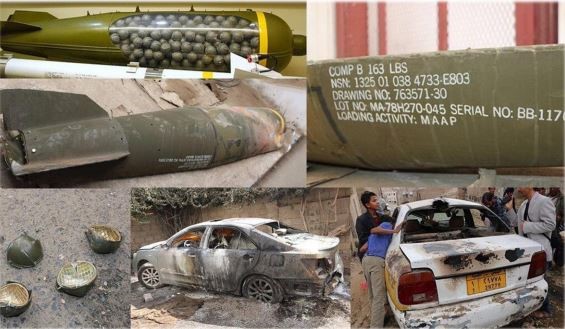
  • The Western munitions dropped by Saudi warplanes are mainly Joint Direct Attack Munitions (JDAMs) and Paveway missiles. But Riyadh’s aerial attacks on Yemen have, according to the Stockholm International Peace Research Institute, also included US-supplied cluster munitions. These bombs are banned under a treaty signed by 119 nations.
  • Apart from being armed by the United States, the Saudi military also relies on the Trump administration to conduct war in Yemen. The Saudi-led bombing campaign has been directly bolstered by the provision of targeting information, logistical support and daily refuelling of warplanes by US personnel.


Interconnection between Trump & Obama

  • The United States has supported the Saudi-led bombing campaign from the very beginning, including by refuelling Saudi-led warplanes in mid-air.
  • In 2015, a sales process began for more than 8,000 laser-guided bombs for the Saudi air force.
  • The Obama administration signed a total of 42 weapons deals with Saudi Arabia. Worth over $115 billion, they were highest level of arms sales offers by any administration in the history of the US-Saudi relationship.
  • Saudi Arabia’s naval blockade of Yemen has directly cut off imports of everything from food to energy supplies, putting 17 million people on the brink of famine. Mindful of this, the United States in October 2015 announced a $10 billion deal to supply Riyadh with Multi-Mission Surface Combatant (MMSC) ships. According to the Pentagon, the aim of this included “support [for the] strategic objectives of the United States.”


US Bombs & Missiles

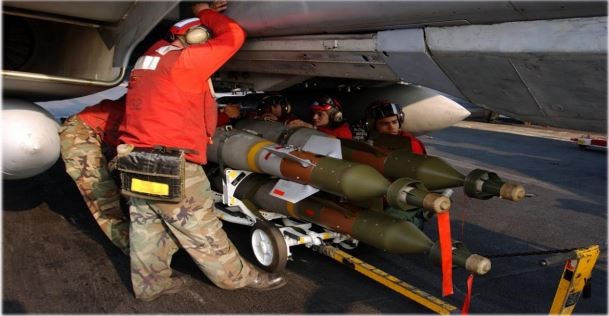
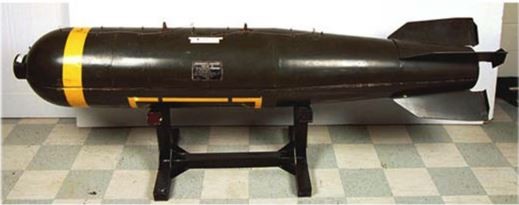
  • The munitions which are being used by Saudi Arabia in Yemen include Raytheon’s Paveway IV missile. This weapon has been found at scenes including vital food stores and civilian sites.


Where Did Yemen’s Ballistic Missiles Come from?
Photo: Paveway IV missiles. Raytheon concluded a $475 million deal to deliver Paveway systems to Saudi Arabia in 2011.


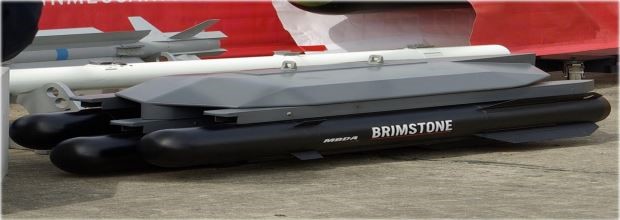
Lethal projectiles with ominous names such as Brimstone and Storm Shadow, as well as PGM500 bombs and ALARM missiles have also been sold to Saudi Arabia.


Where Did Yemen’s Ballistic Missiles Come from?
Photo: MBDA has sold Saudi Arabia approximately 1,000 Brimstone missiles.


Where Did Yemen’s Ballistic Missiles Come from?
Photo: US Cluster Bomb Unit, CBU 58 A/B. This outlawed weapon has also been deployed in Yemen.


Where Did Yemen’s Ballistic Missiles Come from?
Photo: Remainder of US-made cluster bombs dropped by Saudi-led forces in Yemen.


Where Did Yemeni Ballistic Missiles Come from?

  • Ballistic missiles in Yemen are nothing new. Both South and North Yemen imported such weapons in the decades since the 1970s, mainly from the Soviet Union. Indeed, several SCUD missiles were deployed during their civil war in 1994.
  • Late dictator Ali Abdullah Saleh further replenished his relatively expansive ballistic missile arsenal by purchasing North Korean SCUDs.
  • The latter missiles were interdicted by Spanish forces in December 2002 and handed over to the US Navy.
  • Ultimately evading both censure and seizure of these munitions – on account of being a staunch US and Saudi ally – Saleh was allowed to keep the North Korean missiles by the George W Bush administration.
  • Thus, at the time of the outbreak of the war in Yemen in 2015, the country had an estimated 300 SCUDs. Some of these munitions, reportedly modified by Yemeni engineers, have been fired at Saudi Arabia in retaliation for the countless airstrikes over the past two years.
  • South Korean intelligence confirmed in July 2015 that SCUDs which had been fired into Saudi Arabia were the very North Korean missiles which the United States and Saudi Arabia had green-lighted for delivery to Yemen in 2002.
  • The UN panel tasked with investigating Saudi and US claims of Iranian missile transfers to Yemen has neither found evidence of such supposed deliveries nor proof of foreign assistance with the use of such weapons.
  • On the contrary, the panel has established that exclusively Yemeni experts fired the missiles in question, and that no missile components are likely to have been smuggled into the country via the Red Sea – directly contradicting the Saudi rationale for blockading Yemen.
  • Curiously, the UN panel has reportedly found both US and Iranian components in the said missile fragments. On the basis of the logic presented by Saudi Arabia and the Trump administration, both the United States and Iran are thus apparently aiding Yemenis in their missile development.
  • Last but certainly not least, neither Saudi nor US officials have provided any information on when the supposed weapons deliveries took place. In fact, the Trump administration has indicated that it does not know when the alleged transfer of Iranian arms was made.
  • Furthermore, US officials appear unaware of when and where some of the weapons in question were supposedly used.


Conclusions:

  • Yemenis are capable of firing missiles either tweaked or assembled in Yemen.
  • No missile components have entered Yemen via blockaded ports.
  • UN experts have found both US and Iranian components in Yemeni missile fragments.
  • Neither the US nor Saudi Arabia have provided any information on the dates in which the alleged Iranian weapons were delivered, and when and where some of them are claimed to have been used.


The US-Saudi Lies

  • Nothing stated by the Trump administration and its regional allies thus has any basis in truth but rather in ‘alternative evidence’ or ‘alternative facts’.
  • The world has seen this show before. It won’t entertain it again.


Iran’s Proposed Plan

  • Iran has since the outset of the war in Yemen offered a reasonable and practical approach to address this painful and unnecessary crisis—and it’s time to recognize that there is no military solution.
  • Iran’s plan calls for an immediate ceasefire, humanitarian assistance and facilitation of intra-Yemeni dialogue, leading to the formation of an inclusive, broad-based national unity government.
  • Iran is therefore hopeful that responsible actors outside the Middle East will focus their efforts on urging their allies in its region to take seriously its longstanding proposal for a regional dialogue forum.
  • It holds the promise of a good start, and Iran once again invites all of its neighbours to participate. No one should want this suffering to continue.

Iran Inks Deal with Turkey on Countering Money Laundry

The roadmap was signed at the end of the second session of the joint working group of interior ministry officials of Iran and Turkey held in Ankara from Wednesday to Friday.

Iranian Deputy Interior Minister for Security Affairs Hossein Zolfaqari and his Turkish counterpart headed the delegations of the two countries in the session.

In the three-day session, the two sides focused on various areas of cooperation, including efforts to combat drug smuggling, human trafficking, organized crimes, illegal border crossing, terrorism and money laundering.

In early October, Turkish President Recep Tayyib Erdogan paid an official visit to Iran with a high-ranking delegation to attend the fourth round of strategic meetings between Iran and Turkey and to discuss the latest regional developments and the status of bilateral ties with Iranian officials.

Iran and Turkey signed a number of cooperation agreements during the presidential visit.

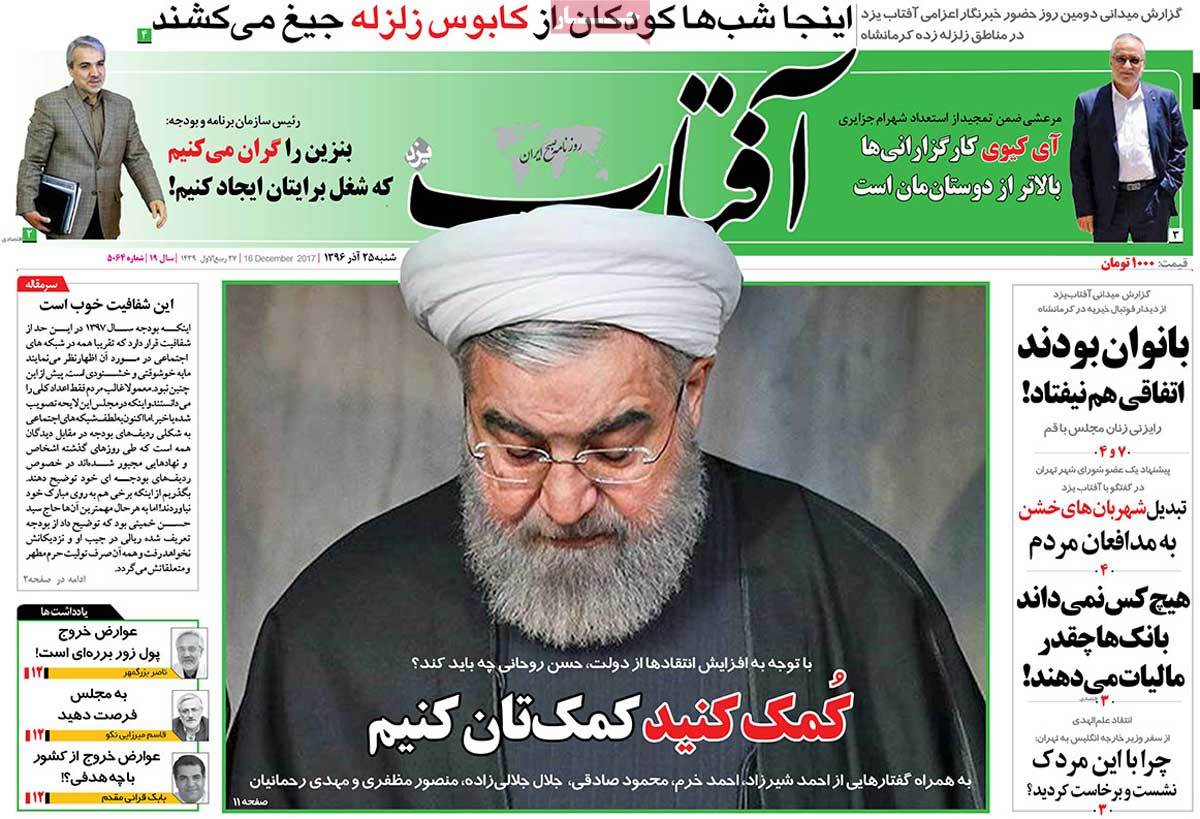
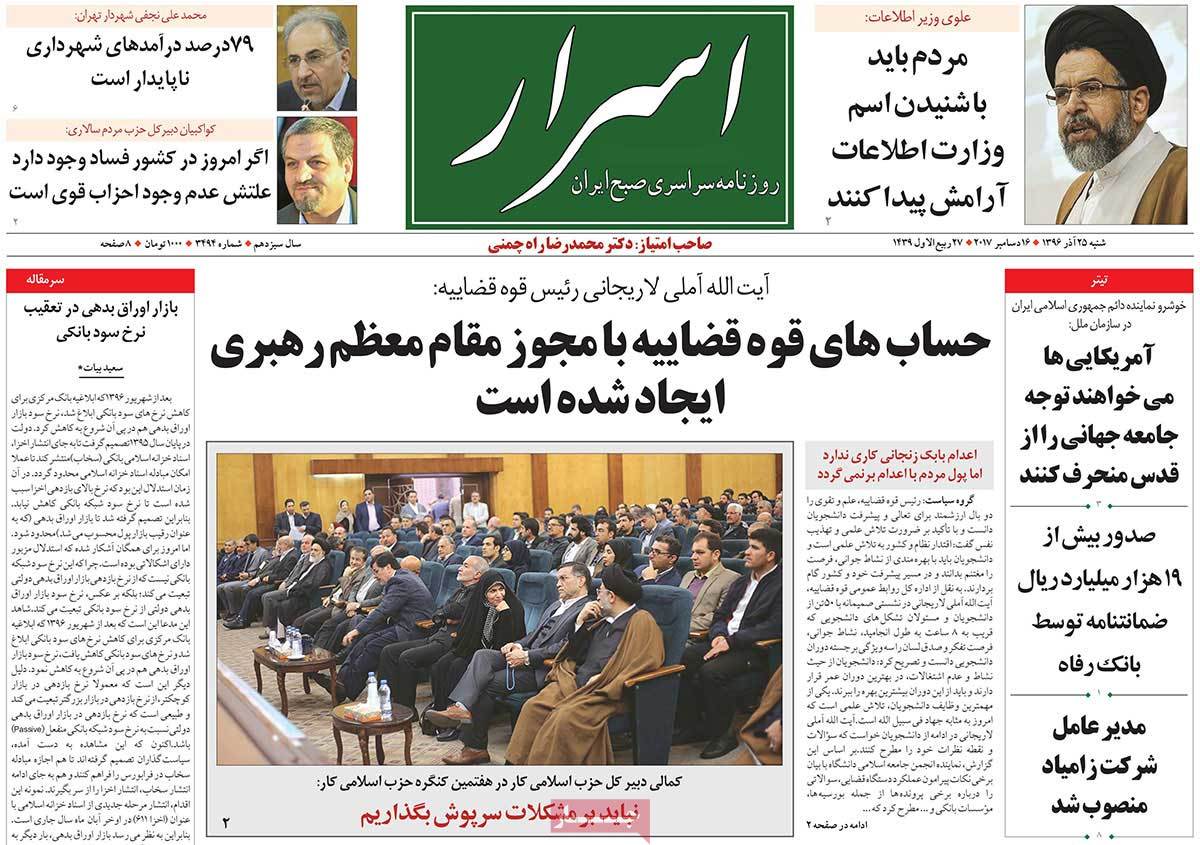
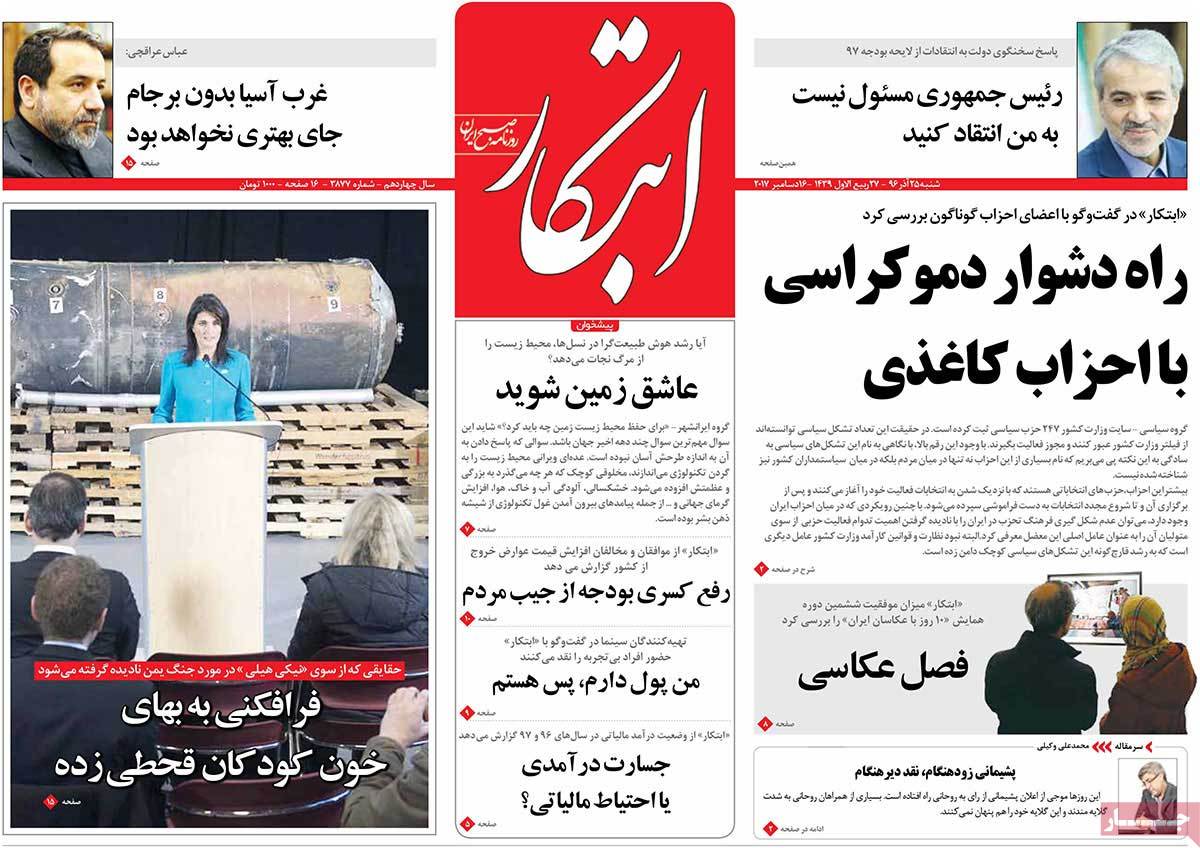
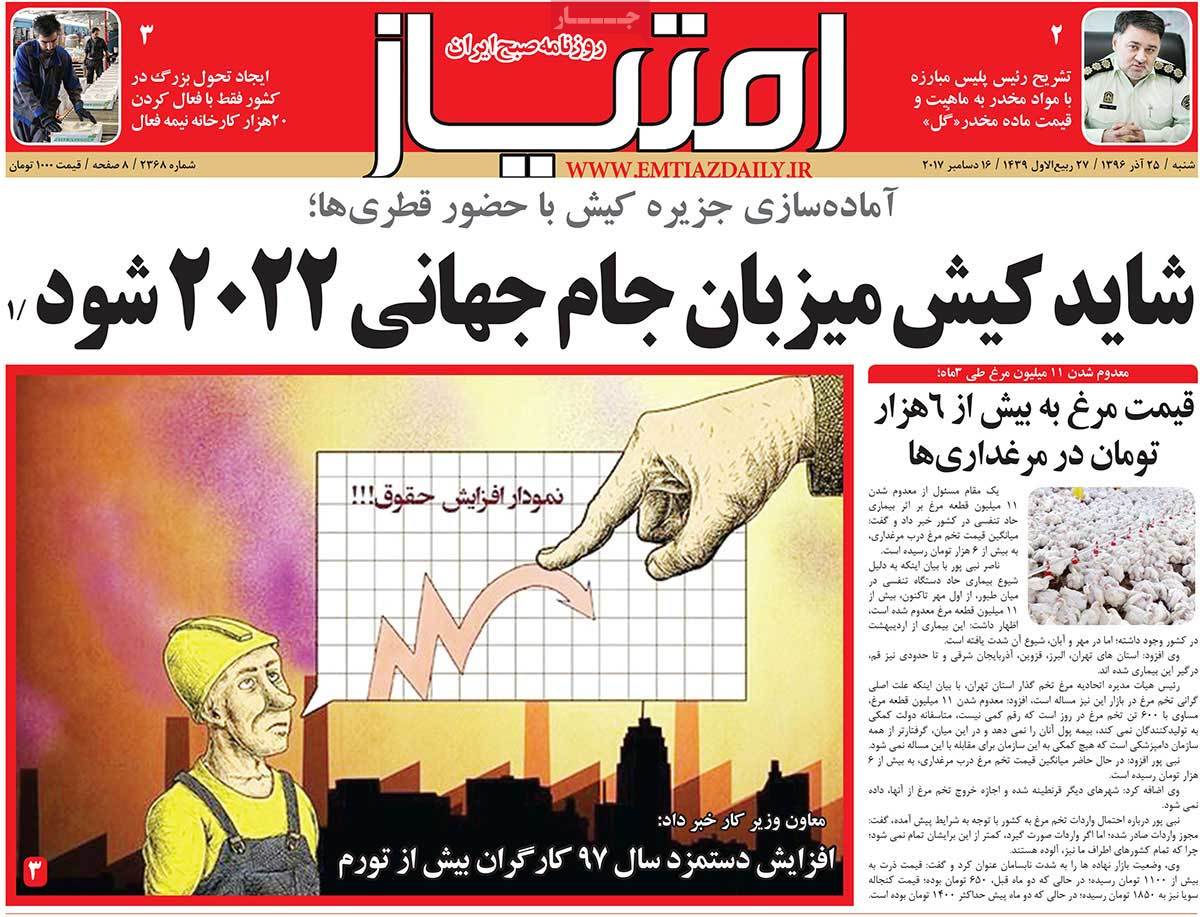
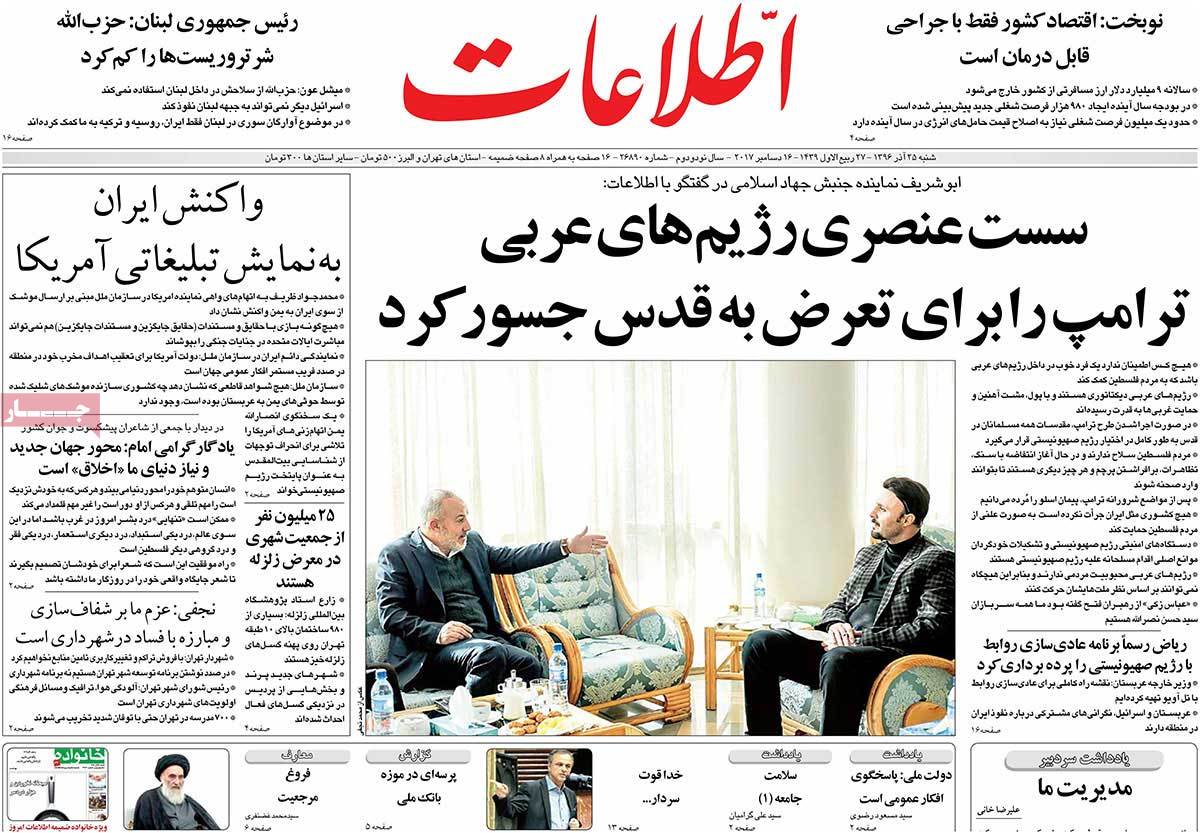
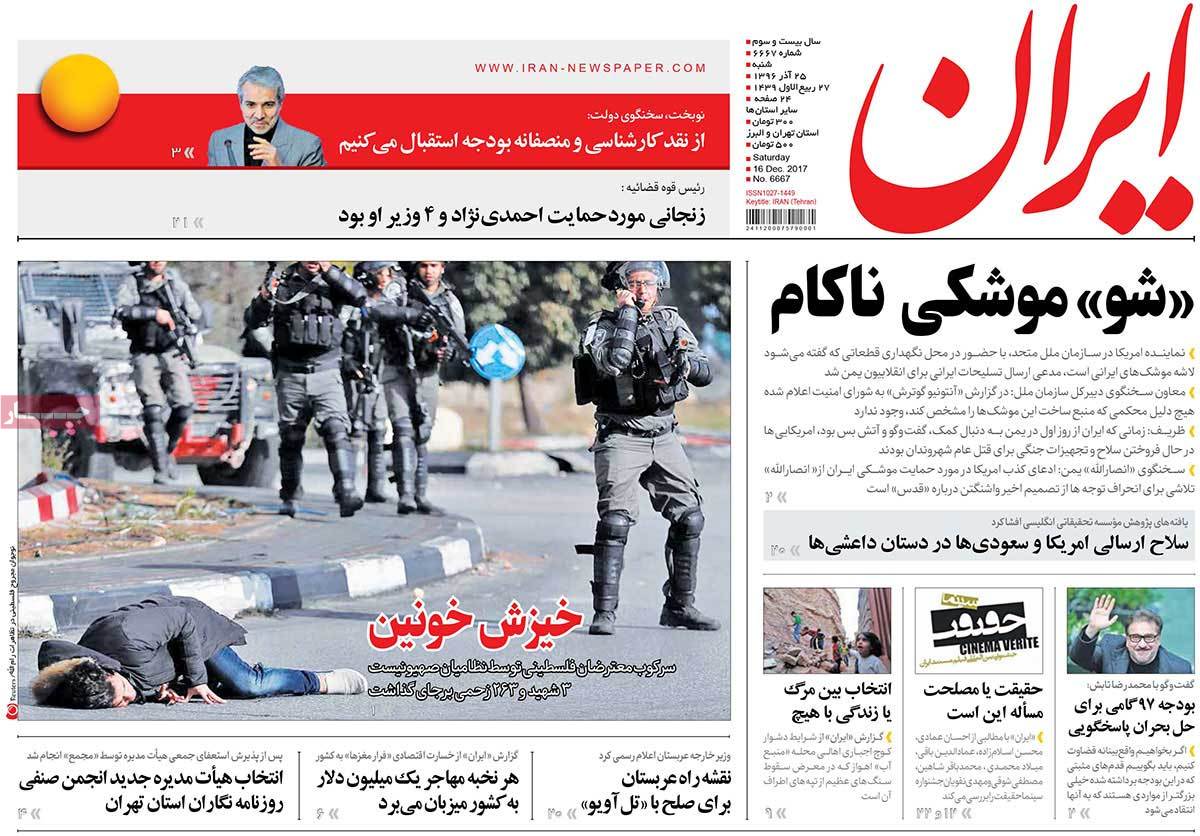
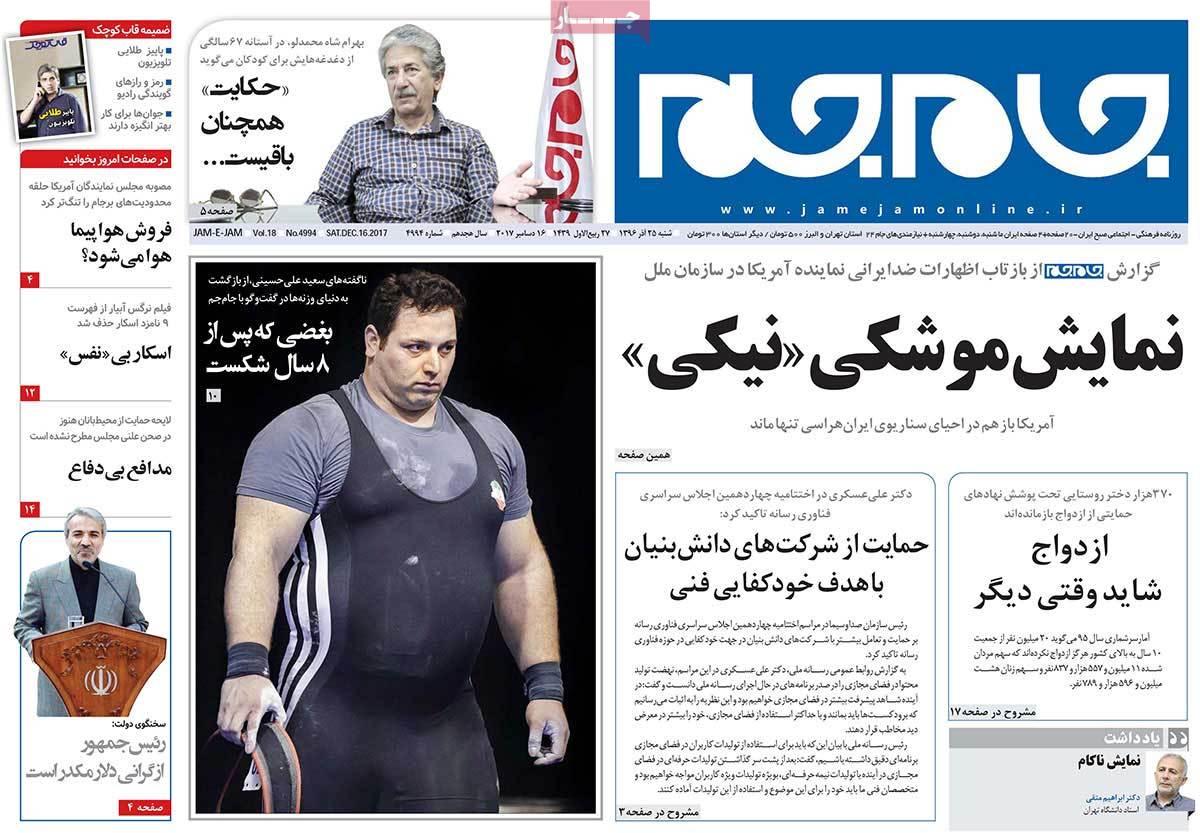
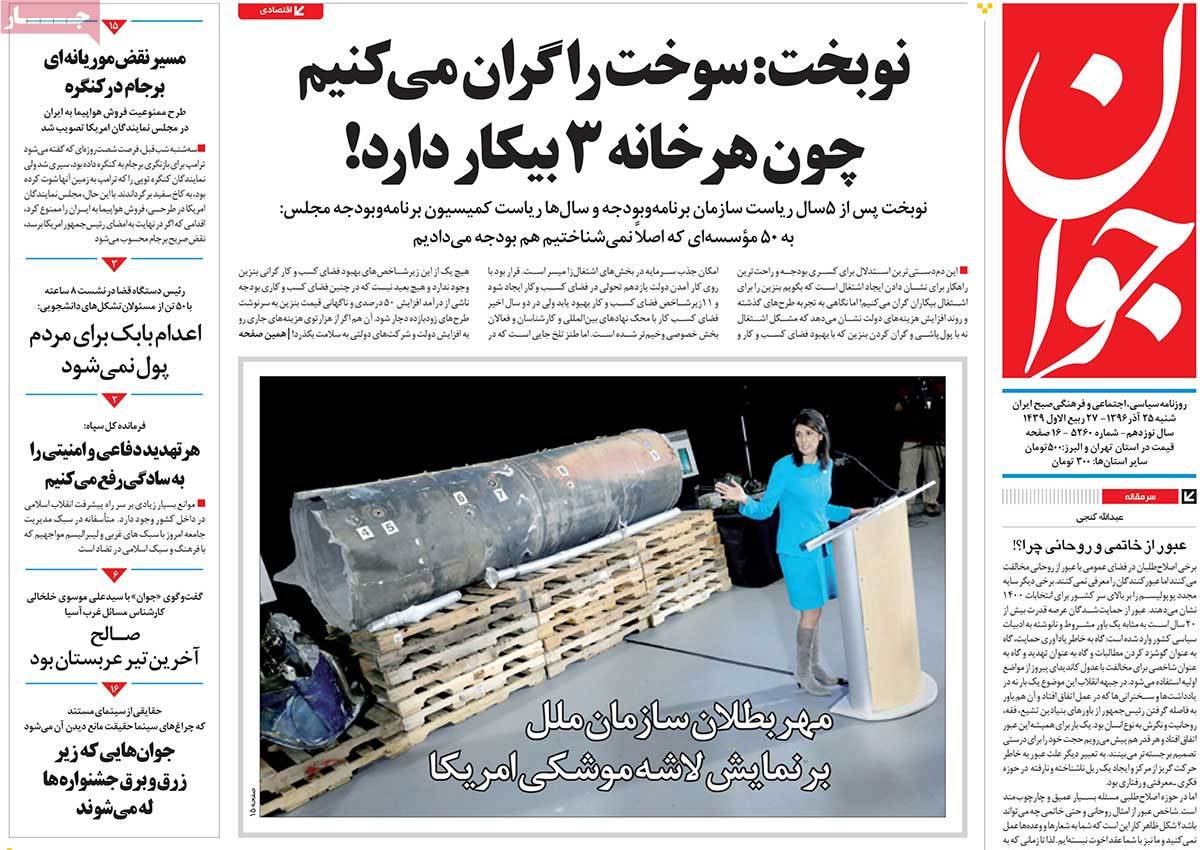
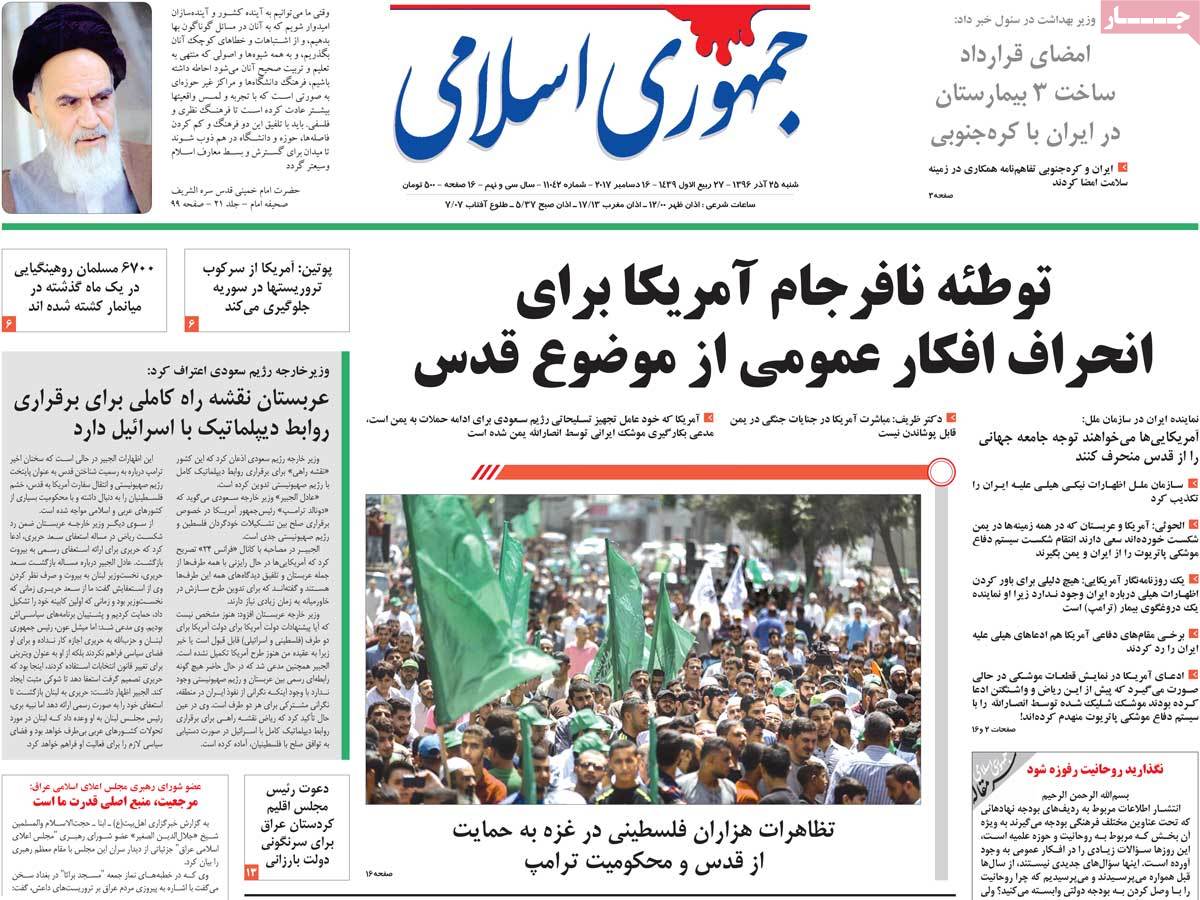
A Look at Iranian Newspaper Front Pages on December 16

A Look at Iranian Newspaper Front Pages on November 5

The top story today was the US claims about Iran’s supply of ballistic missiles to Yemen and the Iranian officials’ reactions to the accusations.

Several papers today covered the remarks made by the Iranian Government’s Spokesman Mohammad-Baqer Nobakht about a decision to increase the fuel prices. He was widely criticized, by both reformists and conservatives, for saying that the increase in prices is aimed at creating more job opportunities.

The ongoing uprising in Palestine and the Israeli regime’s violent reaction to the protest rallies also received great coverage today.

The above issues, as well as many more, are highlighted in the following headlines and top stories:


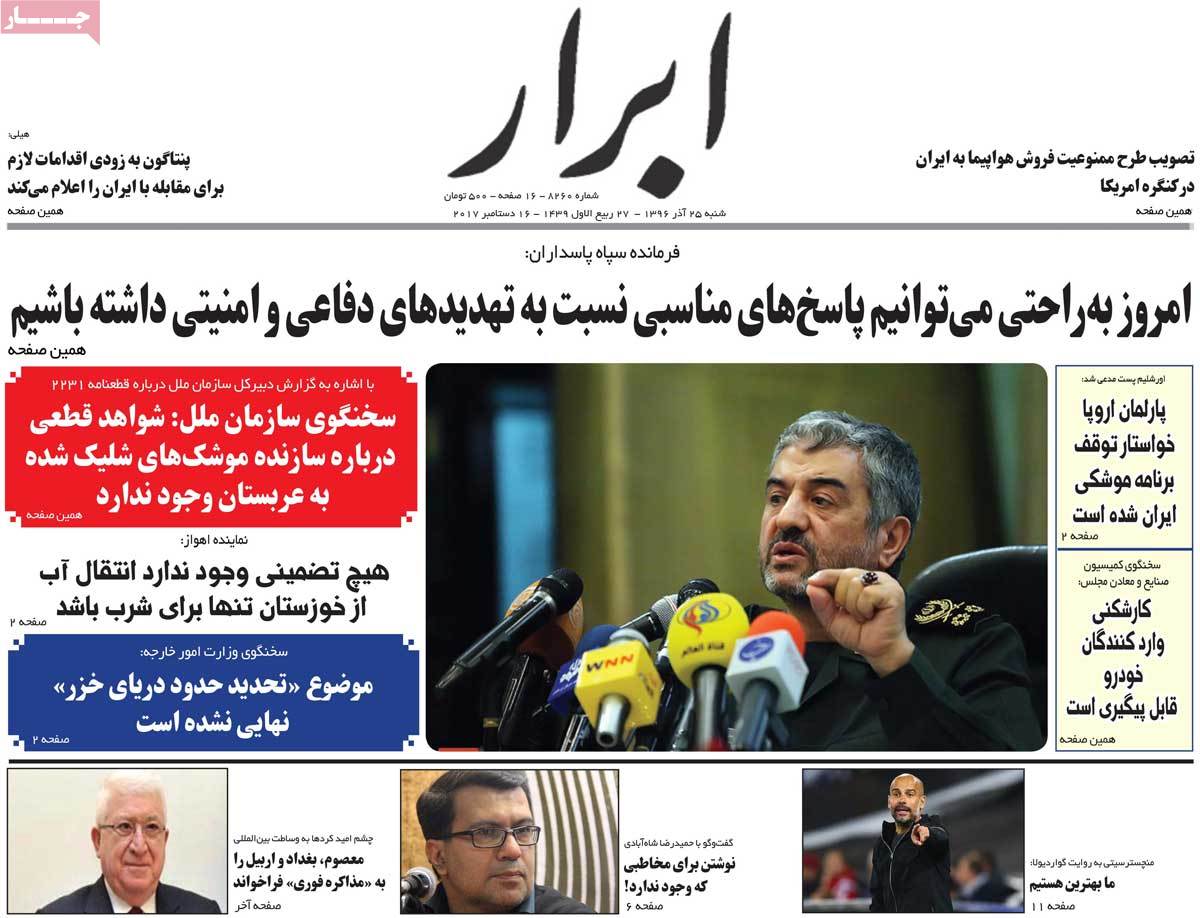
Abrar:

1- IRGC Chief-Commander: Iran Can Now Easily Respond to Security Threats

2- UN Chief: There’s No Clear Evidence that Shows Origin of Missiles Fired at Saudi Arabia

3- Iran: Issue of Caspian Sea Demarcation Not Finalized

A Look at Iranian Newspaper Front Pages on December 16


Aftab-e Yazd:

1- Gov’t Spokesman: We’ll Increase Petrol Price to Create More Jobs for You!

2- Children in Kermanshah Scream of Earthquake Nightmare at Nights

A Look at Iranian Newspaper Front Pages on December 16


Asrar:

1- Minister: People Should Feel Calm When They Here Name of Intelligence Ministry

2- Americans Seek to Divert Global Attention Away from Issue of al-Quds: Iran UN Envoy

A Look at Iranian Newspaper Front Pages on December 16


Ebtekar:

1- Iran Deputy FM: West Asia Not to Be Better Place without JCPOA

2- Playing Blame Game at Expense of Drought-Hit Children’s Blood

  • Realities about Yemen War Ignored by Haley

A Look at Iranian Newspaper Front Pages on December 16


Emtiaz:

1- Iran’s Kish Island May Host FIFA World Cup 2022

  • Persian Gulf Island Being Prepared in Qataris’ Presence

A Look at Iranian Newspaper Front Pages on December 16


Ettela’at:

1- Weak-Minded Arab Regimes Emboldened Trump on al-Quds: Palestinian Jihad Envoy

2- Gov’t Spokesman: Iran Economy Only Treatable through Surgery

A Look at Iranian Newspaper Front Pages on December 16


Iran:

1- British Research Centre: American, Saudi-Supplied Arms in Hands of ISIS

2- Bloody Uprising: Israeli Forces Kill 3 Palestinian Protesters, Wound 263

A Look at Iranian Newspaper Front Pages on December 16


Jame Jam:

1- Nikki’s Missile Show: A Report on Reactions to US Envoy’s Anti-Iran Accusations

  • US Once Again Isolated in Reviving Iranophobia Project

2- Gov’t Spokesman: Rouhani Upset by Increase in Dollar Rate

A Look at Iranian Newspaper Front Pages on December 16


Javan:

1- Gov’t: We’ll Raise Fuel Prices because There Are 3 Unemployed People in Every Family!

2- IRGC Chief-Commander: We Easily Counter Any Security Threat

3- UN Rejects US’ Show of Missile Wreckage

A Look at Iranian Newspaper Front Pages on December 16


Jomhouri Eslami:

1- US’ Failed Attempt to Divert Attentions Away from al-Quds

2- Zarif: US Complicity in Yemen War Crimes Cannot Be Covered up

3- Saudi FM Admits: Saudi Arabia Has Full Road-map for Diplomatic Ties with Israel

4- Putin: US Preventing Fight against Terrorists in Syria

5- Health Minister: South Korea to Build 3 Hospitals in Iran

A Look at Iranian Newspaper Front Pages on December 16


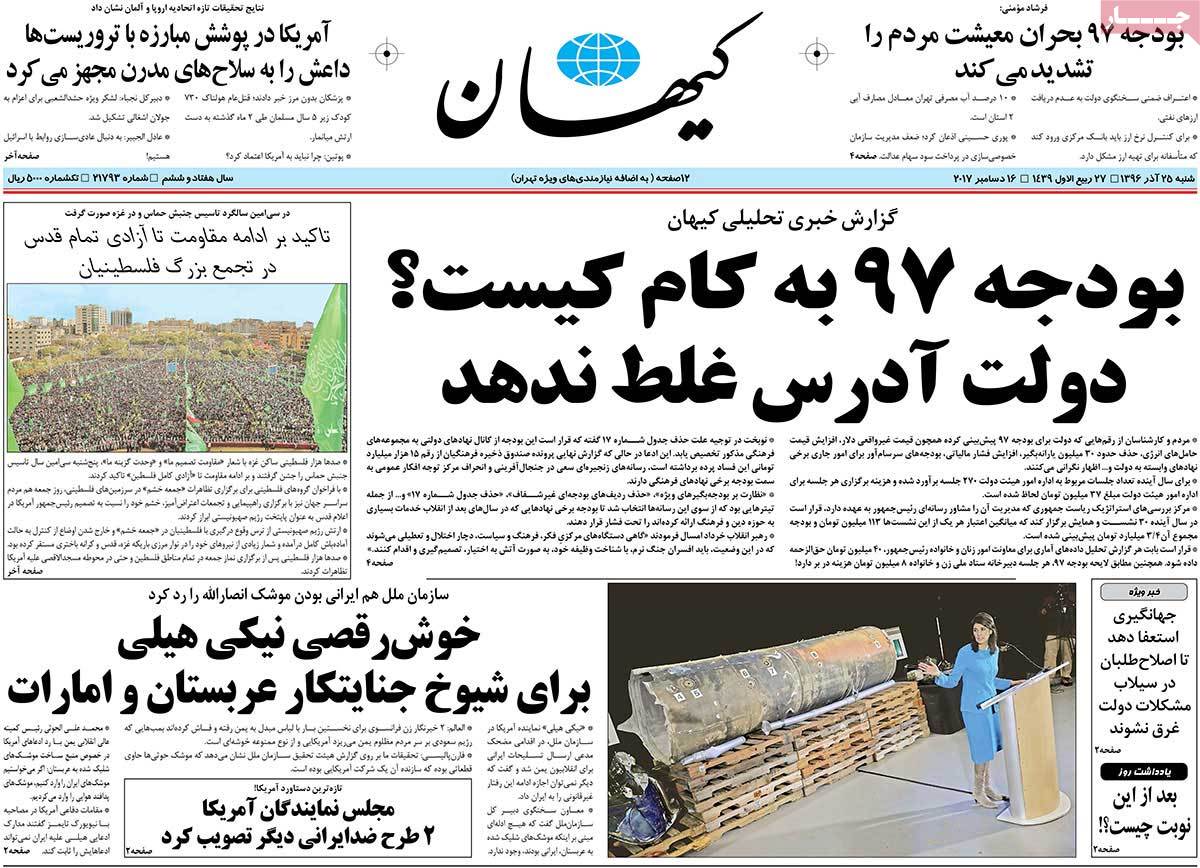
Kayhan:

1- US Equips ISIS with Modern Arms under Cover of Fight against Terror: EU Findings

2- Latest US Achievement: US Congress Approves 2 Other Anti-Iran Bills

A Look at Iranian Newspaper Front Pages on December 16


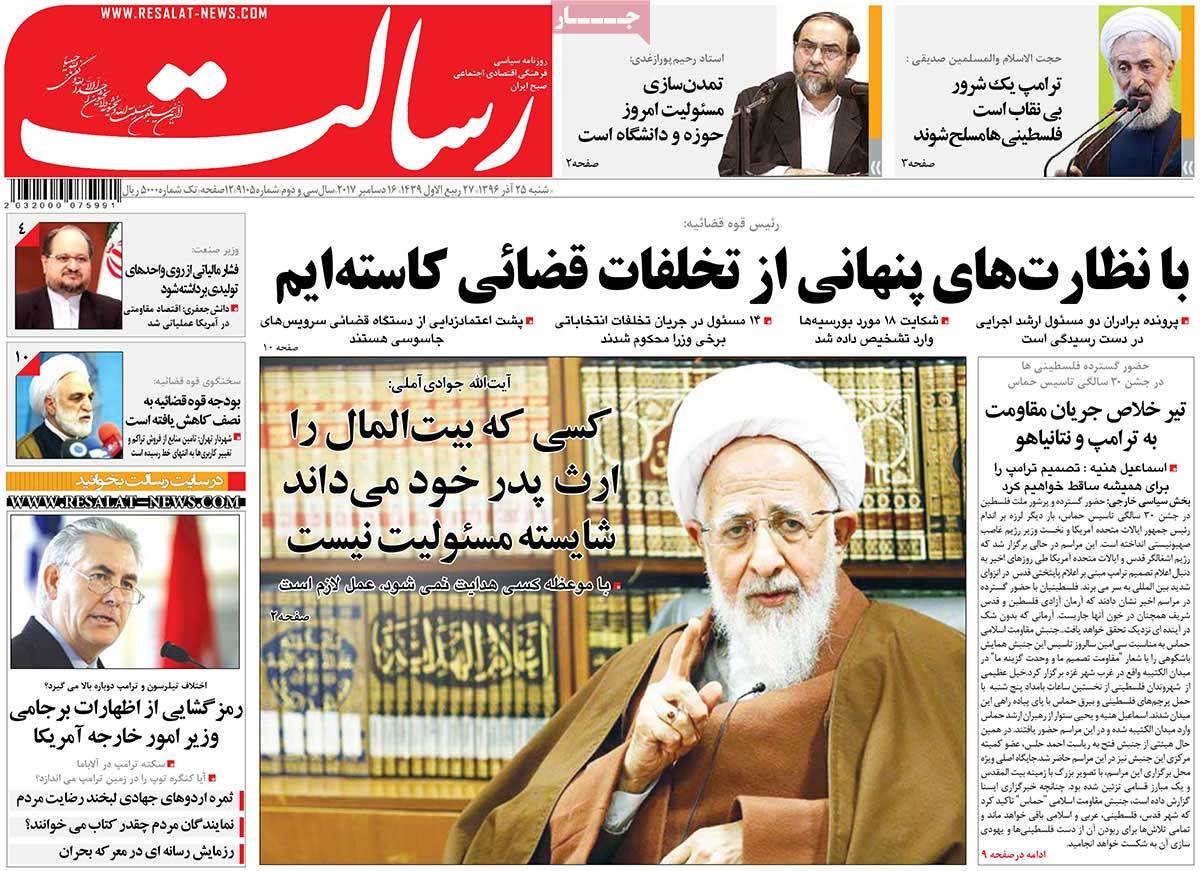
Resalat:

1- Judiciary Chief: Judicial Offences Decreased through Covert Supervision

2- Spokesman: Judiciary’s Budget Halved

A Look at Iranian Newspaper Front Pages on December 16


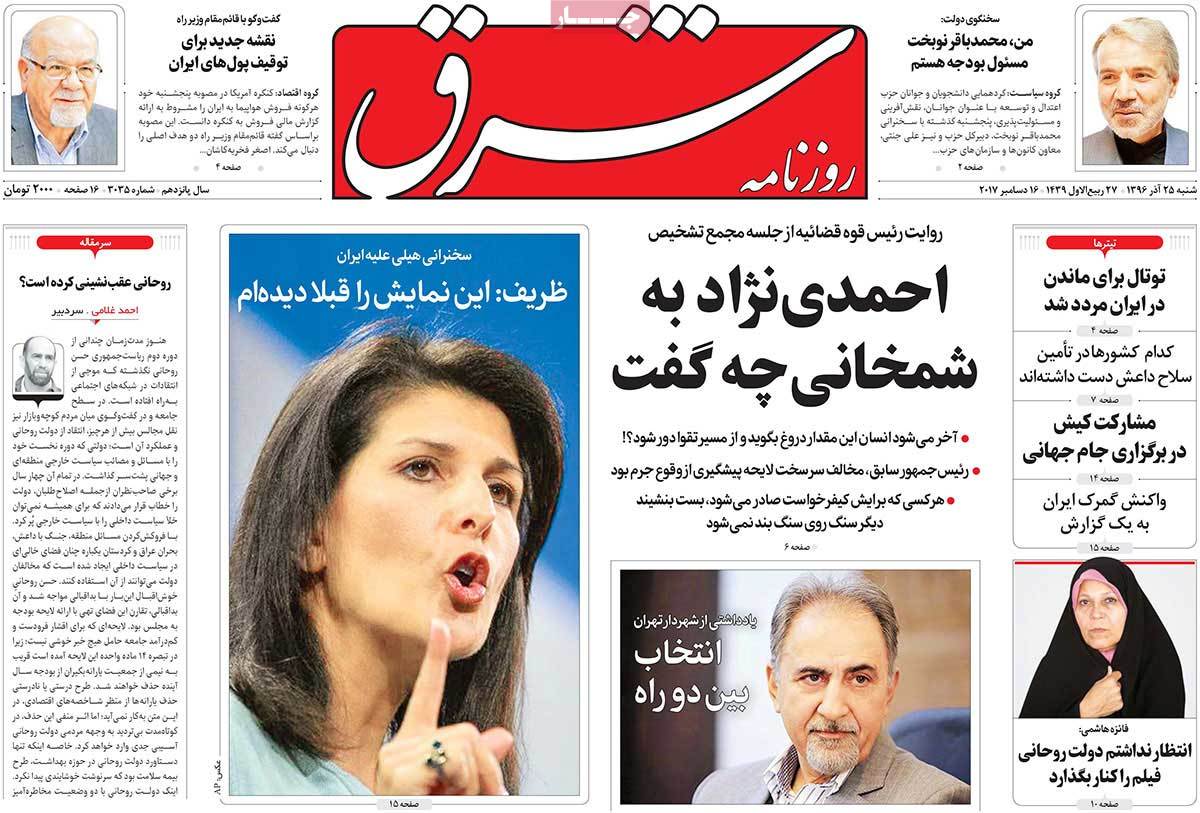
Shargh:

1- Haley Makes Anti-Iran Speech at UN

  • Zarif: I Had Earlier Seen This Show

2- Total Doubtful about Staying in Iran

A Look at Iranian Newspaper Front Pages on December 16