Wednesday, December 31, 2025
Home Blog Page 374

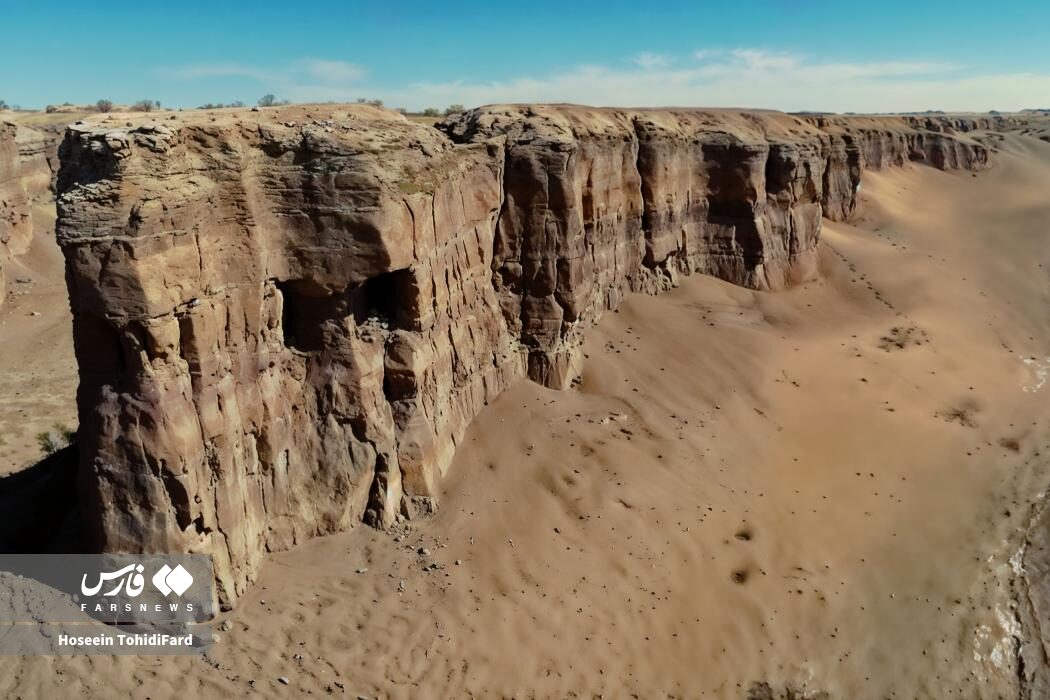
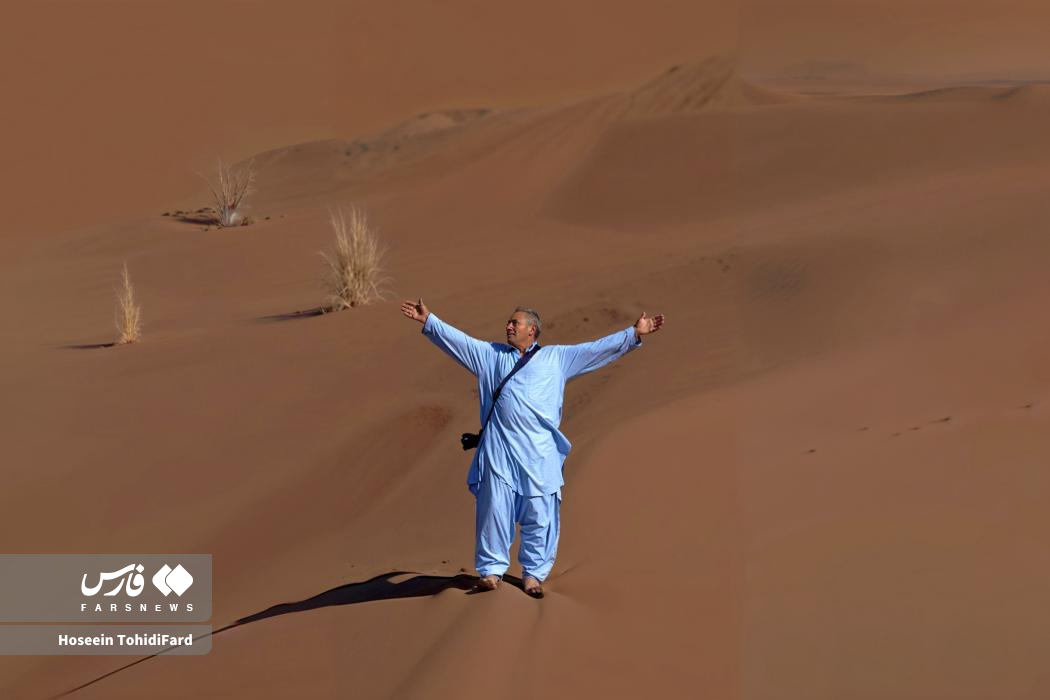
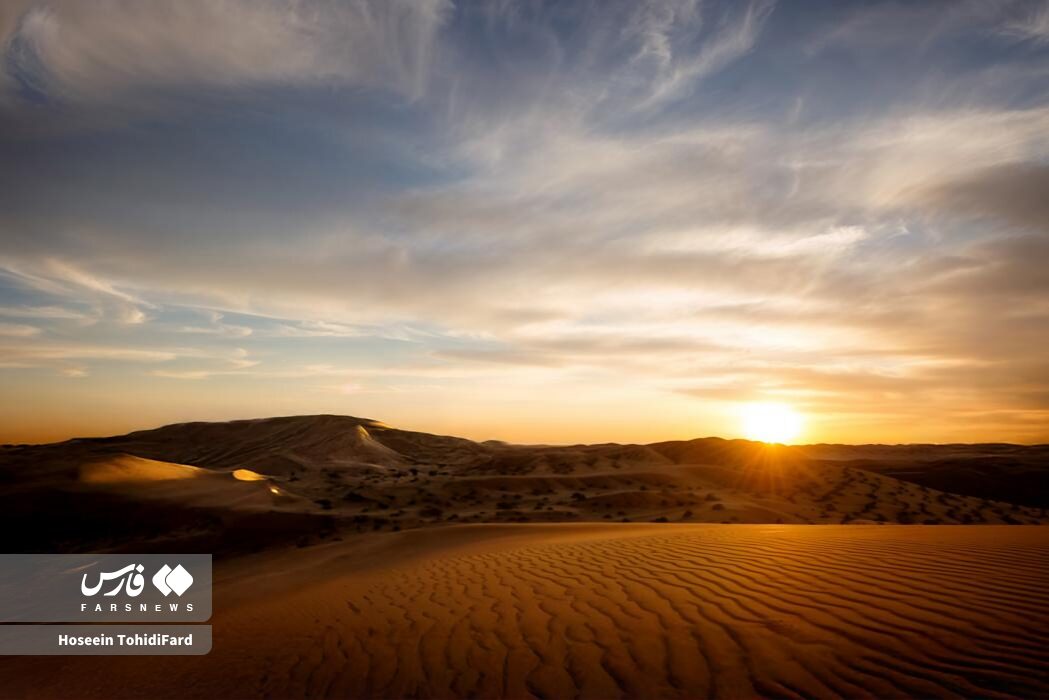
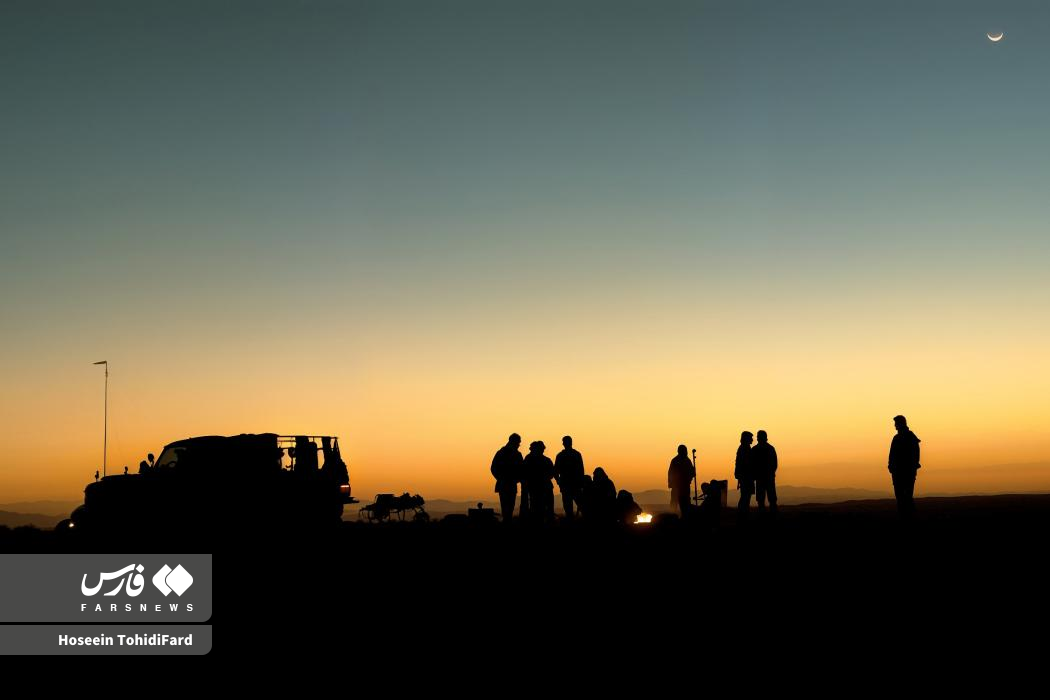
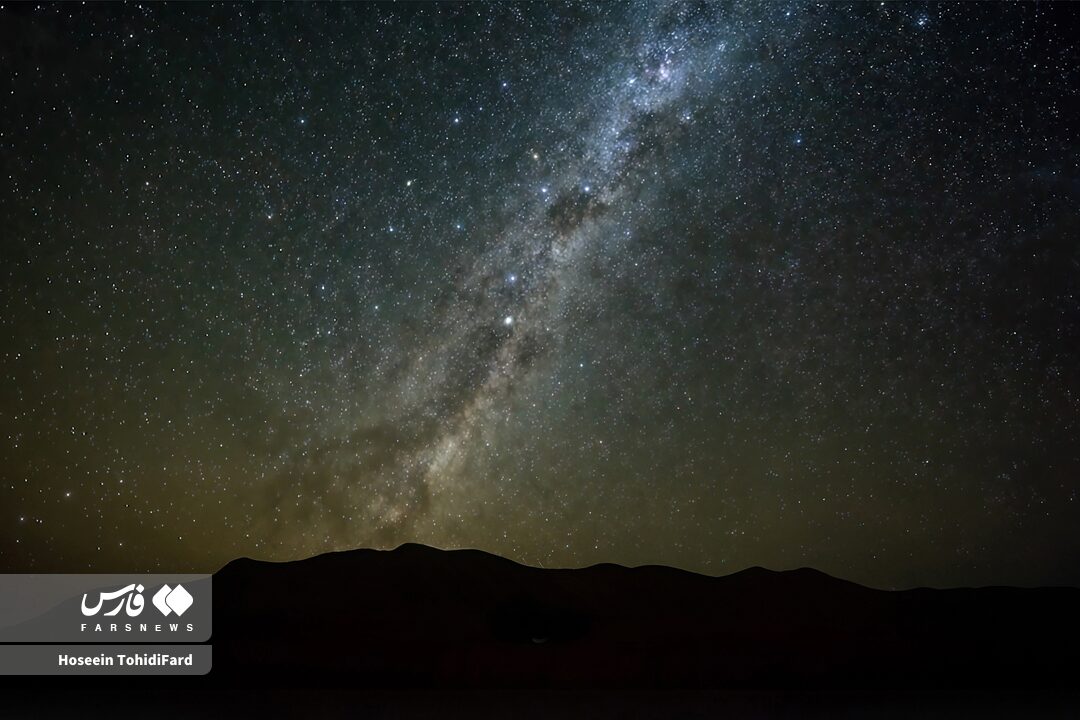
Seh Qaleh Desert in eastern Iran: A hidden gem for desert lovers

The hidden jewel, with its golden sands and vast, serene landscapes, offers a unique blend of tranquility, thrill, and natural wonder.

In this photo report, you can take a closer look at the unspoiled charm of the desert expanse – a place where the stillness of the dunes meets the magnificence of Iran’s desert ecosystem, making it a must-visit spot for eco-tourists and desert explorers alike.

US suggests it may not be possible to broker peace in Ukraine

Russia Ukraine War
People react at the site of a restaurant building heavily damaged by a Russian missile attack, amid Russia's war on Ukraine, in central Kramatorsk, Donetsk region, Ukraine.

Despite claiming he would end the war within days of his second term, Trump said he now believes that a US-brokered permanent cease-fire after the three years of fighting between Ukraine and invader Russia may be out of reach.

“Maybe it’s not possible to do,” Trump told NBC’s Kristen Welker on “Meet the Press.”

“There’s tremendous hatred, just so you understand, Kristen,” he stated, adding, “We’re talking tremendous hatred between these two men [Putin and Ukrainian President Volodymyr Zelensky] and between, you know, some of the soldiers, frankly. Between the generals.

“They’ve been fighting hard for three years.”

Trump’s comments came as Putin on Sunday tried to quell fears that the costs of the war might eventually push Moscow into using nuclear weapons to defeat Ukraine — although he did not reject the idea outright.

“They wanted to provoke us so that we made mistakes,” Putin said of the nuclear option.

“There has been no need to use those weapons … and I hope they will not be required,” he added.

Russia opened the door to the potential use of its nuclear arsenal, the world’s largest, in November, when Putin signed a revamped version of the nation’s doctrine allowing Moscow to launch a nuke in response to a broader range of attacks — as well as labeling nations that arm the Kremlin’s enemy as possible targets.

Trump’s pessimism over the peace talks echoes the State Department’s announcement Friday that the US will end its efforts to broker peace if progress isn’t made soon.

Still, while he acknowledged setbacks to the powwows, the president Sunday said he thinks his administration could have “a very good chance of doing it,” or helping to reach an agreement.

Putin has repeatedly rejected America’s proposals for a cease-fire, claiming no deal addresses Russia’s concerns and that the Kremlin will carry on until all its goals are reached.

The Russian president assured his supporters Sunday that Moscow has the necessary strengths and resources to accomplish the territorial expansion despite reports of hundreds of thousands of soldiers on both sides killed or injured in the past three years.

“We have enough strength and means to bring what was started in 2022 to a logical conclusion with the outcome Russia requires,” Putin boasted.

Putin’s commitment to the Ukraine war and rejection to making any kind of concessions has kept the American-led peace talks frozen in place, much to the frustration of Kyiv and Washington.

Trump also said in the interview with NBC News that the US may consider implementing additional sanctions against Russia if it does not reach a peace deal with Ukraine to end the war.

When asked if Trump would sign a sanctions bill touted by close Republican ally Senator Lindsey Graham, Trump stated that “it depends on whether or not Russia is behaving toward coming to a peace.”

“We want a peace deal. We want Russia and Ukraine to agree to a deal. We think we’re fairly close, and we’re going to save a lot of people from being killed,” Trump continued.

At least 72 US senators are prepared to vote for “bone-crushing” sanctions against Russia and massive tariffs on countries supporting Moscow, Graham has recently told reporters.

When asked if Trump believes the parties are close to establishing a peace deal, Trump was not definitive in his response.

“I do believe we’re closer with one party, and maybe not as close with the other. But we’ll have to see. I’d like to not say which one we’re closer to,” Trump noted, adding that he was pleased with the outcome of the minerals deal signed with Ukraine on May 1.

Trump has reportedly grown frustrated with the slow progression of peace negotiations, claiming on April 26 that Russian President Vladimir Putin may be “tapping me along,” and that Putin may not be interested in ending the war.

When asked by NBC News whether Trump “misread” Putin’s intentions to settle the war, Trump responded: “I have no idea.”

“No, I’ll tell you about in a month from now, or two weeks from now,” Trump continued, adding, “I can tell you this, he’s — his ambition was stopped to a large extent when he saw that it was me that was now leading the charge.”

Frustrated by the lack of progress, Trump has reportedly been wavering over his commitment to continue to serve as a mediator between Ukraine and Russia. When asked about his commitment to see a peace deal being achieved, Trump said he ” hope(s) it gets done.”

“Well, there will be a time when I will say, ‘Okay, keep going. Keep being stupid and keep fighting,'” Trump told NBC News.

“Sometimes I get close to it, and then positive things happen.”

Nearly 290k Gaza children on ‘brink of death’ amid Israeli siege

“Under this systematic blockade, more than 3,500 children under the age of five face imminent death by starvation, while approximately 290,000 children are on the brink of death,” the GMO statement on Telegram said on Sunday.

“At a time when 1.1 million children daily lack the minimum nutritional requirements for survival, this crime is being perpetrated by the ‘Israeli’ occupation using starvation as a weapon, amid shameful international silence,” it added.

At least 57 Palestinians have starved to death, causing global outrage, but that has failed to convince Israel to allow entry of aid into the enclave of 2.3 million people.

A shortage of food and supplies has driven the territory towards starvation, according to aid agencies. Supplies to treat and prevent malnutrition are depleted and quickly running out as documented cases of malnutrition rise.

The price of what little food is still available in the market is unaffordable for most in Gaza, where the United Nations says more than 80 percent of the population relies on aid.

Aid groups and rights campaigners have accused Israel of using starvation as a weapon of war.

Israel, for its part, insists the blockade is necessary to pressure Hamas to release the captives it still holds. Of the 59 captives still in Gaza, 24 are believed to be alive.

Israel’s war on Gaza has killed at least 52,500 Palestinians and wounded 118,500, according to Gaza’s Ministry of Health. The GMO updated the death toll to more than 61,700, saying thousands of people missing under the rubble are presumed dead.

Iran reaffirms nuclear rights, signals readiness for talks amid US remarks

Foreign Ministry Spokesperson Esmaeil Baqaei emphasized that Iran’s nuclear program is rooted in a long-standing policy dating back to the 1970s.

He dismissed claims that Iran’s fossil fuel reserves negate the need for nuclear energy, calling such arguments “scientifically and factually baseless.”

The spokesperson reiterated that Iran’s nuclear policy is grounded in logic, international law, and the Non-Proliferation Treaty (NPT), under which enrichment is a recognized right.

Baqaei underscored that the framework guiding indirect negotiations with the US remains unchanged and centered solely on nuclear issues and sanctions relief.

He criticized attempts by some Western countries, particularly France, to introduce unrelated issues into the talks, calling them counterproductive.

Addressing recent delays in negotiations, Baqaei said they were agreed upon with Omani mediation, and Iran awaits further coordination. He also reaffirmed Iran’s willingness to meet with European officials when mutually agreed.

Responding to Trump’s threat to block Iranian oil exports, Baqaei said contradictory US messaging undermines dialogue and that Iran remains resolute in defending its legitimate rights. He added that if the US genuinely opposes nuclear weapons, many disputes could be resolved.

The spokesperson concluded that Iran seeks constructive engagement but will not compromise on its sovereign rights or national interests.

Seven major Iranian dams hold less than 10% of capacity amid sharp drop in rainfall

The Lar Dam in Tehran Province stands at just 6% capacity, while the Shamil and Niyan Dam in Hormozgan holds a mere 1%.

Other critically low dams include the Rudbal Dam in Fars Province (2%), the Doosti Dam in Razavi Khorasan (9%), the Saveh Dam in Markazi Province (9%), and the Tanguyeh Dam in Kerman Province (8%).

Since the beginning of the current water year in late September, the total inflow to the country’s reservoirs has reached 18.19 billion cubic meters – a 37% decline compared to the same period last year. Outflows have also dropped by 15% year-over-year.

As of mid-April, the total volume of water in Iran’s reservoirs stands at 27.19 billion cubic meters, down 17% from 32.9 billion cubic meters in the previous year. Nationwide, dam reservoirs are 52% full on average.

Rainfall across Iran has also dropped significantly, measuring 136.6 mm – 38% below the long-term average and 33% less than the same time last year.

Iran refutes allegations of role in Yemen’s military operations against Israel

Yemen Houthis

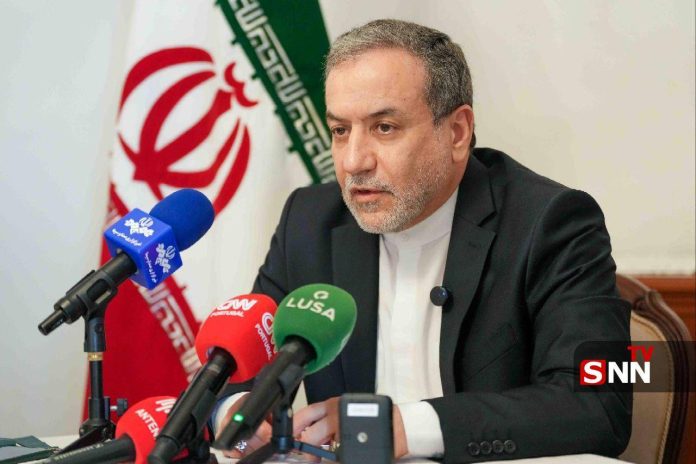
Iran’s Foreign Minister Seyed Abbas Araghchi said on Sunday night that Yemen’s decision to support the Palestinian people is an independent decision, rooted in the Islamic nation’s humanitarian and solidarity with Palestinians.

The top Iranian diplomat pointed out that it is the US military that has entered into war with Yemen in support of the Zionist regime’s ongoing genocide against the people of Gaza.

Araghchi slammed the US for committing war crimes by targeting infrastructure and civilian areas across Yemeni cities.

He characterized the accusations as diversionary tactics aimed at deflecting attention from the Zionist regime’s crimes in occupied Palestine, masking strategic failures, and justifying further destabilization of the region.

At the end, Araghchi condemned the US attacks on Yemen as a clear violation of the UN Charter and the fundamental principles of international law.

Meanwhile, Iran’s Foreign Ministry spokesman Esmaeil Baghaei also strongly rejected the baseless allegations.

Baghaei stated that attributing the Yemeni nation’s courageous measures to Iran is an insult to this powerful and yet oppressed nation.

He added the Yemeni people’s decision to support Palestinians is an independent decision, which is rooted in their humanitarian and Islamic solidarity with the people of Palestine.

He stressed that it is the US military that is committing war crimes by attacking Yemen’s people and civilian infrastructure in support of the Zionist regime’s genocide in Gaza.

Baghaei noted that attributing Yemen’s operations to Iran is aimed at deflecting attention from the Zionist regime’s crimes in Palestine and an excuse to sow insecurity in the West Asia region.

He also condemned the recent threats posed to Iran by the US and Israel, holding the American government and the terrorist Zionist regime responsible for their consequences.

Since March 15, the administration of US President Donald Trump has launched daily airstrikes on Yemen and claims to have struck more than 1,000 targets in the Arab country.

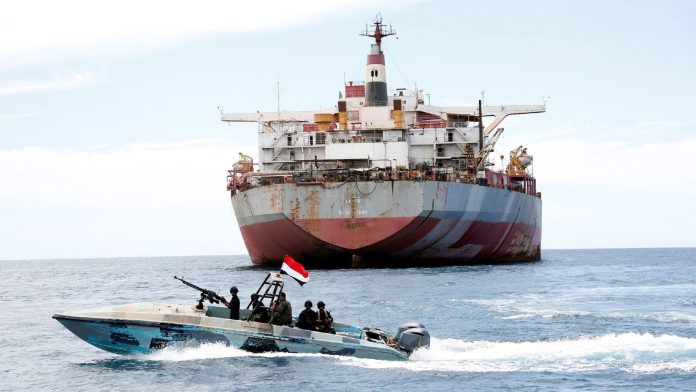
The campaign aims to halt the Yemeni military’s strikes on Israeli and Israeli-linked vessels in Red Sea shipping lanes as well as their operations that have been hitting targets deep within the occupied Palestinian territories.

Since the onset of Israel’s genocidal war on Gaza, Yemeni forces have carried out scores of operations in support of the war-hit Gazans, striking targets throughout the occupied Palestinian territories, in addition to targeting Israeli ships or vessels heading towards ports in the occupied territories.

Israeli cabinet approves expansion of Gaza offensive: KAN

Israeli Army

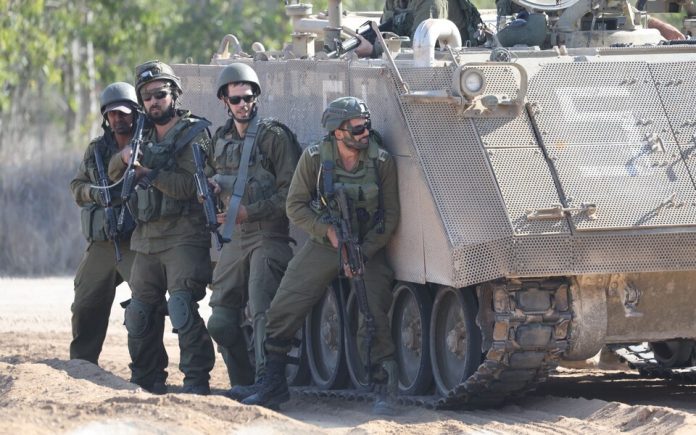
The Israeli military has already begun issuing tens of thousands of call-up orders for its reserve forces, looking to expand the Gaza campaign, army chief Lieutenant General Eyal Zamir said in a statement on Sunday.

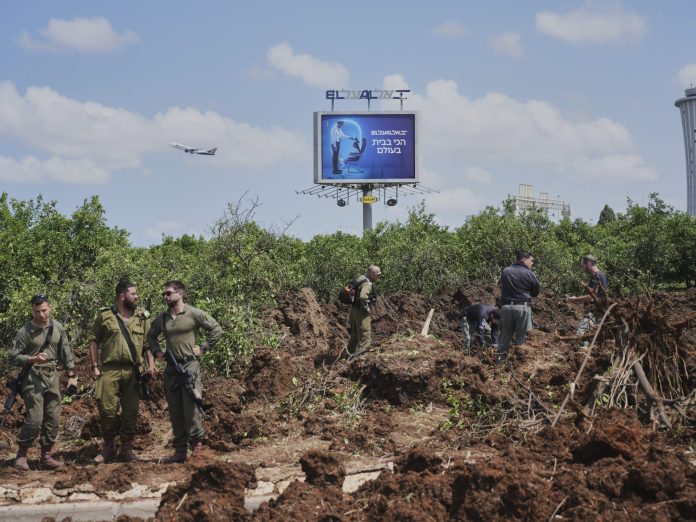
In a video message posted on X on Sunday, hours after part of a missile launched from Yemen by the Houthi rebels fell close to Israel’s main gateway, Ben Gurion Airport, Netanyahu stated he was convening the security cabinet to discuss “the next stage” of the war in Gaza.

“We are increasing the pressure with the goal of returning our people (hostages) and defeating Hamas,” Zamir told troops, according to the statement from the army.

Israel resumed ground operations in Gaza in March after the collapse of a U.S.-backed ceasefire that had halted fighting for two months.

The security cabinet also approved a new plan for aid distribution in Gaza, Israel’s Ynet news website reported on Monday, though it was unclear when supplies would be let in to the enclave.

Israel is in control of around a third of Gaza’s territory and has faced growing international pressure to lift an aid blockade that it imposed in March.

Israel has defended the blockade by saying that Hamas has seized aid intended for civilians and kept it for its own fighters or sold it, charges that Hamas has denied.


Israel launched its campaign in Gaza in retaliation for the Hamas attack on Oct 7, 2023, that killed 1,200 people, according to Israeli tallies, and saw 251 taken hostage into Gaza in the deadliest day for Israel in its history.

The campaign has killed more than 52,500 Palestinians, according to local health authorities and devastated the Gaza Strip, leaving its 2.3 million population depending on aid supplies that have been dwindling rapidly since the blockade.

Iran FM urges de-escalation amid rising tensions between India, Pakistan

Abbas Araghchi

Speaking upon arrival in Islamabad on Monday, Araghchi emphasized Iran’s commitment to peace and stability in the region.

“We are here to hold close consultations with our Pakistani counterparts and will meet with the president, prime minister, and foreign minister of Pakistan,” he told reporters. “We seek the reduction of tensions between India and Pakistan.”

Calling Pakistan a “very good neighbor” with deep bilateral ties, Araghchi noted that Iran values its relations with both Pakistan and India and intends to support efforts for de-escalation.

According to Iranian Foreign Ministry Spokesperson Esmaeil Baqaei, Araghchi is also scheduled to visit New Delhi later this week – his first official trip to India since taking office.

Iran has previously offered its good offices to mediate between the two South Asian neighbors.

This visit marks Araghchi’s first official trip to Islamabad since assuming the role of Iran’s foreign minister.

In November last year, he was received in the Pakistani capital, where he met with top officials to discuss bilateral ties and regional and international developments.

Israel vows response to Iran after Houthi attack on Ben Gurion airport

A ballistic missile launched by the Yemeni rebel group hit the perimeter of the airport on Sunday, damaging a road and a vehicle and causing air traffic to stop.

The Israeli military confirmed its defence system failed to shoot down the projectile on Sunday morning despite several attempts to intercept it, adding that an investigation was under way. Eight people were injured, according to paramedics.

Israeli media reported that the advanced US-made THAAD system and Israel’s long-range Arrow defence system failed to bring down the missile.

Writing on social media, Netanyahu said that attacks from the Houthis ultimately “emanate from Iran”.

“Israel will respond to the Houthi attack against our main airport AND, at a time and place of our choosing, to their Iranian terror masters,” Netanyahu wrote.

The Israeli prime minister has been trying to drum up support for a joint attack with the United States against Iran, despite ongoing talks between Washington and Tehran.

Responding to Israel’s threats, Iran’s Defence Minister Aziz Nasirzadeh said that Tehran would strike back if the US or Israel attacked.

“If this war is intiated by the US or the Zionist regime [Israel], Iran will target their interests, bases and forces – wherever they may be and whenever deemed necessary,” Nasirzadeh told Iranian state television.

Nasirzadeh added that Yemen’s Houthis made their own decisions when conducting attacks.

The rebel group, which has been carrying out attacks against Israel in stated opposition to its war and blockade on the Gaza Strip, claimed responsibility for the missile launched at Israel’s busiest airport. More than 18 months of Israeli attacks on Gaza have killed at least 52,500 people, according to Palestinian officials.

In a televised statement, Houthi military spokesperson Yahya Saree warned airlines that Ben Gurion airport was “no longer safe for air travel”.

The attack led to a brief suspension of flights at the airport in central Israel with some having to be redirected. All entrances to the airport were also briefly closed while train journeys towards the site were halted.

A number of major airlines, including German carrier Lufthansa, Spanish airline Air Europa, Air France, SWISS, Austrian Airlines, Brussels Airlines, Air India and Hungary’s Wizz Air announced they were cancelling flights for Sunday, with some cancelling flights on Monday and Tuesday as well.

The Houthis called on airlines flying to Israel to “take into consideration” that it would “impose a comprehensive air blockade on [Israel] by repeatedly targeting… Ben-Gurion Airport”.

Sirens blared across central Israel, prompting many to move into shelters, according to Israeli media.

Videos of the site of the impact circulating online showed the missile hit a connecting road inside the perimeter of the airport with some debris scattered on adjacent roads.

Before his social media post, Netanyahu had promised to retaliate against the Houthis and continue the war on Gaza.

In a video message in Hebrew, he stated Israel and the US will “act against them again in the future” and do so using more than one blow. He also vowed “there will be no Hamas” in Gaza.

Israeli Defence Minister Israel Katz threatened severe retaliation, too.

“Whoever attacks us, we will hit back sevenfold,” Katz said in an apparent reference in the Torah relating to severe punishment, or divine justice.

Benny Gantz, leader of the Israel Resilience party and a former war cabinet member, noted that the blame for the missile attack by the Iran-aligned group should be put on Tehran.

“It is Iran that is firing ballistic missiles at the state of Israel, and it must bear responsibility,” he said in a social media post without providing evidence.

“The shooting at the state of Israel is bound to lead to a severe reaction in Tehran,” he added.

Houthi attacks are continuing despite near daily bombardment of areas across Yemen by the United States military.

Tehran judiciary employs AI to track financial networks in fuel smuggling cases

According to Ali Alqasi, Chief Justice of Tehran Province, courts have mandated financial tracking in such cases, and initial reports confirm the integration of AI tools to support these efforts.

During a recent briefing on the status of fuel smuggling cases, Alqasi described the illicit trade as a serious contributor to energy imbalance and stressed the judiciary’s commitment to a systemic and expert-led crackdown.

A special task force involving law enforcement and relevant agencies has been established in Tehran to combat fuel smuggling more effectively.

Among recent operations, 14 illegal fuel storage centers were dismantled in Robat Karim, near the capital Tehran, uncovering over 250,000 liters of contraband fuel, he noted, adding seven individuals were arrested, accused of tapping into high-pressure gas pipelines illegally.

In nearby Shahriar County also, 100,000 liters of smuggled fuel were seized, with three suspects detained.

According to a recent report by Iran’s Anti-Smuggling Headquarters, the country is losing between 20-28 million liters of fuel daily to smuggling operations, costing the country $140 million in potential export revenues each day.

The staggering losses could theoretically provide every Iranian citizen with 4 million tomans in annual subsidies if recovered.