Wednesday, December 31, 2025
Home Blog Page 373

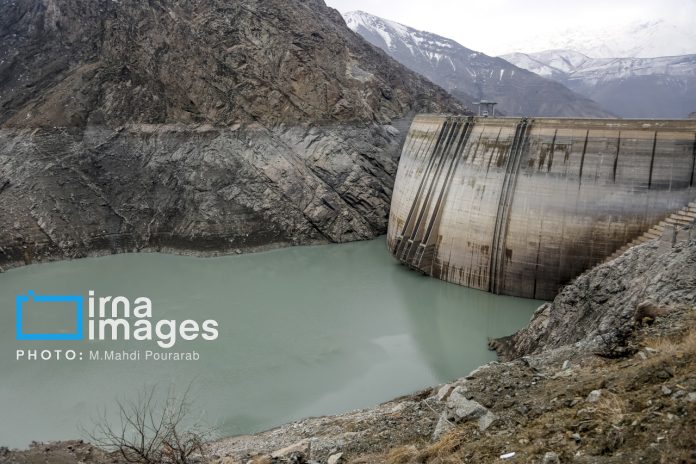
Iranian MP warns: Water crisis hits 44 national dams, power supply at risk

Somayeh Rafiei, also spokesperson for the Parliament’s Environment and Agriculture Committee, said water inflow into dam reservoirs since the beginning of the current water year has dropped by 37% compared to the same period last year. The volume of stored water is down 18% year-on-year and 15% below the five-year average.

In Tehran province, the fill rate of five major dams is just 24%, representing a 33% decline compared to the five-year average. Snow reserves feeding these dams have also fallen between 47% and 54%, aggravating water scarcity in the capital.

Rafiei highlighted broader issues including climate change, inefficient water usage, outdated irrigation practices, and poor water diplomacy as drivers of the crisis.

She noted that 30 provinces are facing land subsidence due to excessive groundwater extraction and that 66% of Iran’s wetlands have turned into dust storm sources.

She called for urgent nationwide monitoring of government energy use and stricter consumption controls to prevent further deterioration during the upcoming summer months.

Israeli army bombs Yemen’s Hodeidah port after attack near Tel Aviv’s airport

According to the Israeli army, fighter jets struck infrastructure linked to the Houthis, including a cement factory east of Hodeidah that it described as “an important economic resource” used in building tunnels and military infrastructure.

“The Hodeidah seaport serves as a hub for the transfer of Iranian weapons and equipment for military needs,” the Israeli army said in a statement.

Houthi-run Al Masirah TV reported that six Israeli raids hit Hodeidah’s port and blamed both Israel and the United States.

Axios journalist Barak Ravid quoted a senior US official who stated the air raids were coordinated between Israel and the US.

A US defence source told Al Jazeera that “US forces did not participate in the Israeli strikes on Yemen today” but did not deny nonlethal support may have been provided.

At least two people died after Israeli airstrikes on the Bajel cement plant in the Hodeida governorate in western Yemen, the Houthi-controlled Al Masirah television channel said.

According to the channel, forty-two more people were wounded.

The attack was carried out after a ballistic missile fired from Yemen on Sunday struck close to Ben Gurion International Airport outside Tel Aviv.

Israeli Prime Minister Benjamin Netanyahu had pledged retaliation for the Houthi attack, the first known missile to avoid interception since the Yemeni group began targeting Israel in November 2023.

Since US President Donald Trump returned to power in January, the US has embarked on a more aggressive assault on Yemen “which is related directly to Israeli interests”.

This is not the first time Israel has bombed targets in Yemen. In December, air raids struck the Ras Isa oil terminal and other sites in Hodeidah province, killing at least nine people.

While most Houthi-launched projectiles have been intercepted, Sunday’s attack was the “most significant strike”, since the group launched its campaign in November 2023, which it said is in response to Israel’s war on Gaza and to show solidarity with Palestinians. A drone had previously hit a building in Tel Aviv last year.

Since November 2023, the Houthis, also known as Ansar Allah, have launched more than 100 drone and missile attacks targeting vessels they said are linked to Israel in the Red Sea.

Although the Houthis paused attacks during a ceasefire in Gaza this year, they resumed their operations in March after Israel cut off humanitarian aid to Gaza and resumed its offensive.

Gaza population to be moved in intensive Israeli military operation: Netanyahu

In a Hebrew-language video message on X, addressing the Security Cabinet-approved plan to expand the Gaza offensive, Netanyahu said on Monday that Gaza’s Palestinian population “will be moved, for its own protection”.

Eighteen months of Israeli attacks have killed more than 52,500 Palestinians in Gaza, including thousands of children, and wounded nearly 120,000 others.

Netanyahu also stated Israeli soldiers would not go into Gaza, launch raids and then retreat.

“The intention is the opposite of that,” he added.

His remarks come as Israel’s political and military leaders approved plans to expand the Gaza offensive and take over aid deliveries to the devastated and starving enclave.

Netanyahu’s cabinet unanimously approved plans to call up reservists and put the Israeli military in charge of food and other vital supplies to the 2.3 million people suffering under its blockade of the Palestinian territory.

Newswires reported unnamed Israeli officials suggesting that the plans include the “conquest” and full military occupation of the entire Gaza Strip.

The expanded offensive “could go as far as seizing the entire enclave”, the Reuters news agency reported.

“The plan will include, among other things, the conquest of the Gaza Strip and the holding of the territories, moving the Gaza population south for their protection,” a source told the AFP news agency.

The source added that Netanyahu “continues to promote” United States President Donald Trump’s plan for the departure of Palestinians from the enclave.

Senior Hamas official Mahmoud Mardawi told Al Jazeera the group would only accept a deal with Israel that includes a comprehensive ceasefire and the complete withdrawal from Gaza.

“Our people have no choice but to achieve a comprehensive deal that guarantees security and safety for our people,” he said, adding that any Israeli efforts to achieve concessions through threats or mass killings would fail.

A United Nations spokesman stressed that Secretary-General Antonio Guterres was “alarmed” by the Israeli plan that “will inevitably lead to countless more civilians killed and the further destruction of Gaza”.

“Gaza is, and must remain, an integral part of a future Palestinian state,” stated spokesman Farhan Haq.

The plans have stirred significant tension inside Israel as well.

While Netanyahu again asserted that the goal was to “defeat” Hamas and bring back several dozen captives held in Gaza, the Hostages and Missing Families Forum, an Israeli campaign group, announced in a statement on Monday that the plan is “sacrificing” those still held in the Palestinian territory.

Heated disagreements also reportedly erupted during the cabinet meeting between the political and military figures.

Army chief Eyal Zamir reportedly warned that Israel could “lose” the captives in Gaza if it pushed ahead with a full-blown military offensive.

Far-right National Security Minister Itamar Ben-Gvir said that, as Israel has done in the past two months, it should continue to block all food, water, medicine, fuel and other aid from entering Gaza to starve the population.

He also advocated for “bombing food warehouses and generators” so there are no more supplies and electricity is fully cut off.

But Zamir warned this would “endanger” Tel Aviv as it would expose Israel to even more allegations of violations of international law.

“You don’t understand what you are saying. You are endangering us all. There is an international law, we are committed to it. We cannot starve the Strip, your statements are dangerous,” Zamir added, according to Israel’s national broadcaster, Kan.

In an interview with Israeli Army Radio, opposition leader Yair Lapid questioned Netanyahu’s decision to mobilise tens of thousands of reservists, saying the prime minister was calling up troops and extending their service without setting a goal for the operation.

Another opposition figure, Yair Golan, stated that Netanyahu was only trying to save his government from collapsing as the plan “serves no security purpose and does not bring the release of the hostages closer”.

Ben-Gvir was reportedly the only member of the Security Cabinet who opposed the plan for Israel to bypass existing aid routes by international organisations.

Israel, which has blocked the entrance of all supplies into Gaza since March 2, reportedly plans to use US security contractors to control the flow of aid into Gaza.

However, the plan is not expected to come into effect immediately, as Israeli officials believe there is enough food in Gaza for now, even as Palestinians are starving to death.

The Israeli plans also envisage the establishment of a new “humanitarian zone” in southern Gaza that would work as a base for aid.

The Humanitarian Country Team (HCT), a forum that includes United Nations agencies, said on Sunday that Israeli officials were seeking its consent to deliver aid through what it described as “Israeli hubs under conditions set by the Israeli military, once the government agrees to re-open crossings”.

In a statement, the HCT said such a plan would be dangerous and would “contravene fundamental humanitarian principles and appears designed to reinforce control over life-sustaining items as a pressure tactic – as part of a military strategy”.

The coalition added the UN would not participate in this scheme as it does not adhere to the global humanitarian principles of humanity, impartiality, independence and neutrality.

On Monday, Hamas branded Israel’s plans to take over aid provision “political blackmail”.

“We reject the use of aid as a tool of political blackmail and support the UN’s stance against any arrangements that violate humanitarian principles,” the armed group announced in a statement, insisting that Israel is “fully responsible” for the “humanitarian catastrophe” in Gaza.

Iranian table tennis prodigy rises to world No. 3 in U-17 rankings

The latest ITTF rankings for the 19th week of 2025 placed Faraji third globally in his age group, after he secured two bronze medals in Thailand. With a total of 6,340 ranking points, the 16-year-old has established himself as one of the sport’s most promising young talents.

Faraji also made gains in the senior category, moving up two spots to rank 170th in the world. His recent achievements mark a significant milestone for Iranian table tennis.

Turkey’s Halkbank appeals Iran sanctions decision to US Supreme Court

The Supreme Court had given Halkbank until Monday to file a petition appealing the October 22, 2024, decision by the 2nd U.S. Circuit Court of Appeals in Manhattan allowing the prosecution.

In a letter to the appeals court, Halkbank’s lawyer Robert Cary said the bank has filed the petition. The petition was not available on the Supreme Court’s website.

Halkbank pleaded not guilty to fraud, money laundering and conspiracy charges over its alleged use of money servicers and front companies in Iran, Turkey and the United Arab Emirates to evade sanctions.

U.S. prosecutors said Halkbank helped Iran secretly transfer $20 billion of restricted funds, converted oil revenue into gold and cash to benefit Iranian interests, and documented fake food shipments to justify transfers of oil proceeds.

Brought in 2019, the case has been a thorn in U.S.-Turkey relations, with Turkish President Tayyip Erdogan calling it an “unlawful, ugly” step.

The countries’ ties have soured in the last decade, amid disagreements on Syria, Ankara’s ties with Moscow and other matters.

But on Monday, Erdogan and U.S. President Donald Trump each said they had a very productive phone call earlier in the day, and had invited each other to their respective countries.

Halkbank’s case is making a second trip to the Supreme Court.

In 2023, that court announced that Congress’ desire to shield foreign countries and their instrumentalities from civil liability under the federal Foreign Sovereign Immunities Act of 1976 did not cover criminal cases.

But in a 7-2 decision, it added the 2nd Circuit should more fully review whether common law immunity shielded Halkbank, leading to last October’s ruling.

Trump says he had a productive phone call with Erdogan

In a social media post, Trump said the Turkish leader had invited him to Turkey “at a future date” and that he would also be coming to Washington, but did not say when. Erdogan, in a subsequent X post confirmed the mutual invite.

“The phone call that I had today with my friend Donald Trump was very productive, comprehensive and sincere,” Erdogan stated.

The bilateral ties between Turkey and the United States had gradually soured over the past decade over disagreements on key policy issues including Syria and Ankara’s closer ties with Moscow.

Under the administration of former President Joe Biden, who kept Erdogan at an arm’s length, the nature of U.S.-Turkey ties further evolved into a more transactional one from the values-based partnership that it traditionally had been since Ankara joined NATO decades ago.

With the arrival of Trump, Ankara is hoping for a friendlier Washington, even though it was the Republican president who imposed sanctions on Turkey in late 2020 over its purchase of the Russian S-400 missile defense systems.

Trump, who described as “excellent” his relationship with Erdogan during his first tenure at the White House, said the two countries would cooperate on ending the war in Ukraine.

“I look forward to working with President Erdogan on getting the ridiculous but deadly, War between Russia and Ukraine ended — NOW!,” Trump added in his post.

Erdogan welcomed the U.S. efforts to end the war, Turkey’s presidency announced.

Neither side gave any details what specific role Ankara would play in the process, which has stalled even as the Republican president during his campaign pledged that he would end the war on day one of his tenure.

Since taking office in January, Trump has upended U.S. policy toward the war in Ukraine, pressing Kyiv to agree to a ceasefire while easing pressure on Russia, which launched a full-scale invasion of its neighbor in 2022.

After repeatedly blaming Ukraine over the war even though Moscow invaded its smaller neighbor, Trump has turned some of his ire on Russian President Vladimir Putin recently, questioning his sincerity on making a deal to end the war.

Erdogan also expressed the need for the uninterrupted delivery of humanitarian aid to Gaza in the phone call adding that Ankara is ready to provide support for the establishment of a ceasefire and lasting peace, according to the Turkish readout.

The Turkish leader also told Trump that Ankara was working to help preserve Syria’s territorial integrity and urged Trump to consider sanctions relief for Damascus.

EU considering full ban on Russian gas by end of 2027: Bloomberg

Since the escalation of the Ukraine conflict in 2022, the EU has been pushing to sever energy imports from its one-time biggest supplier. Despite a significant drop in volumes, Russia remains a substantial source of gas for the bloc through a pipeline via Turkey and shipments of LNG.

According to people familiar with the matter, in June the EU plans to propose a ban on new Russian gas contracts and spot purchases – with the measures set to take effect by year’s end.

The EC is also expected to adopt steps next month to phase out the remaining Russian pipeline gas and LNG tied to long-term contracts, though those would require a transition period until the end of 2027. The plans, due to be unveiled in Strasbourg on Tuesday, are still subject to change, the sources said.

A push to ban Russian LNG was previously floated during talks on the EU’s 16th sanctions package, adopted in February 2025, but was abandoned following opposition from some member states.

France, Spain, and Belgium continue to import significant volumes of Russian LNG, accounting for 85% of Europe’s LNG imports from the sanctioned country, according to the Institute for Energy Economics and Financial Analysis (IEEFA).

While pipeline flows from Russia have dropped sharply since 2022, EU imports of Russian LNG have soared. Russia supplied 17.5% of the bloc’s LNG in 2024, second only to the US, which had a 45.3% share.

The proposed ban could create more room for US LNG exports, Bloomberg sources said. Washington has long urged the EU to reduce its reliance on Russian energy, once describing American LNG as “molecules of freedom.”

However, a recent Reuters report said banning Russian LNG could weaken the EU’s hand in trade talks with the US, where Brussels is seeking to use energy imports as leverage to lift tariffs on EU goods.

At the same time, some EU industry leaders have called for a return to cheaper Russian gas amid a worsening manufacturing crisis.

Russia has repeatedly said it remains a reliable energy supplier and has denounced Western sanctions and trade restrictions targeting its exports as illegal under international law. The country has also successfully shifted exports to ‘friendly’ markets.

Iranian FM: Agreement between Iran and US requires avoiding unrealistic and illogical positions

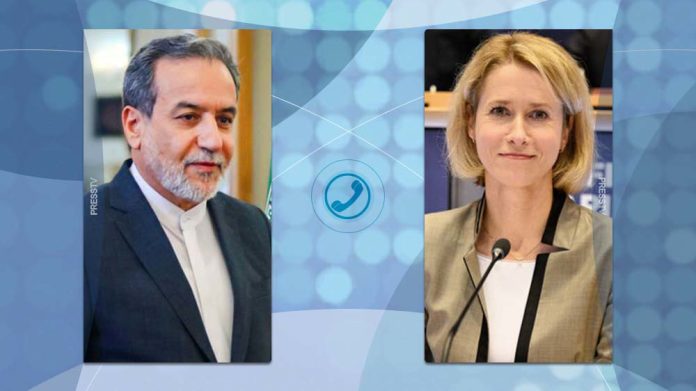
During their conversation, the two sides exchanged views on regional and international developments.

The Iranian foreign minister briefed the EU official on the latest progress in the indirect negotiations between Iran and the US.

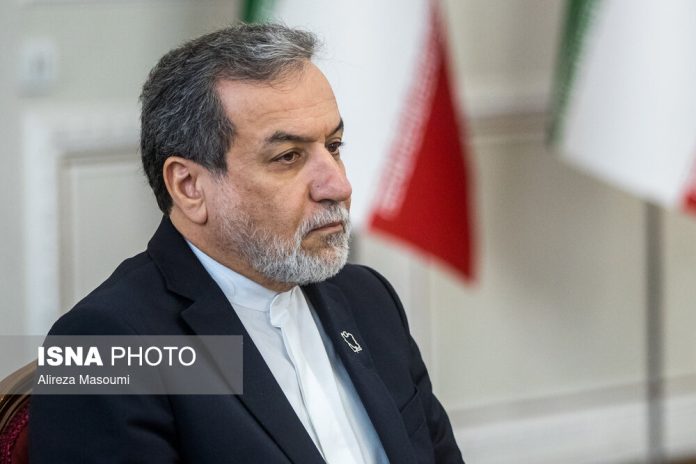
Araghchi noted that if the US’s only concern is Iran’s potential Iran to acquire nuclear weapons, this concern is solvable, and an agreement in this regard is entirely within reach.

The top Iranian diplomat however added that the resolution of the issue requires avoiding unrealistic and illogical positions.

Pointing to several rounds of discussions held over the past year with the three European countries, Germany, France and the United Kingdom, Araghchi reiterated Iran’s readiness to continue engagement with the European side, whether within the framework of the European Union or the E3 format.

The EU foreign policy chief for her part announced Europe’s readiness for further exchanges on current concerns.

Ms. Kallas voiced hope that during upcoming contacts between deputy officials from both sides, the groundwork for initiating these talks would be laid and necessary preparations made.

Iran’s FM says agreement achievable via diplomacy

Abbas Araghchi

“LETHAL support for [Prime Minister Benjamin] Netanyahu’s Genocide in Gaza and waging WAR on behalf of Netanyahu in Yemen have achieved NOTHING for the American people,” the Iranian foreign minister said in a post on his X account on Monday.

“Netanyahu is attempting to brazenly DICTATE what President [Donald] Trump can and cannot do in his diplomacy with Iran. The world has also learned how Netanyahu is directly MEDDLING within the US Government to DRAG it into another DISASTER in our region,” he warned.

“Netanyahu CONNED the Failed [Joe] Biden Team into handing over UNPRECEDENTED 23 BILLION American Taxpayer Dollars. That is a FRACTION of the cost of ANY mistake against Iran,” Araqchi added.

“If the goal is ‘The only thing they can’t have is a nuclear weapon’ as President Trump just said, a deal is achievable and there is only ONE PATH to achieve it: DIPLOMACY based on MUTUAL RESPECT and MUTUAL INTERESTS,” the top Iranian diplomat stressed.

“The Netanyahu-First minority, terrified of diplomacy, has already divulged its real agenda. The world should pay attention as it reveals its true priority,” he added.

His message came after the fourth round of indirect negotiations between Iran and the US, previously arranged for May 3, was postponed.

The two countries have held three rounds of talks in Muscat and Rome on April 12, 19 and 26, mediated by Oman, with the purpose of reaching a deal on Iran’s nuclear program and the removal of sanctions on Tehran.

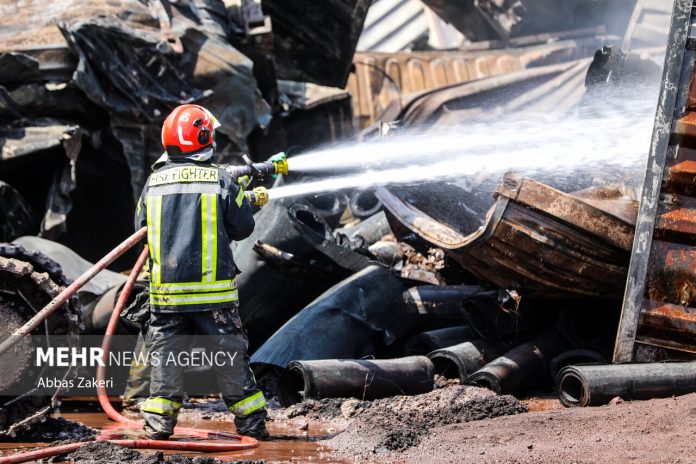
Iranian Judiciary chief: Two arrested over port explosion

Speaking at a press conference, Gholamhossein Mohseni Ezhei confirmed that investigations are ongoing and reaffirmed the judiciary’s commitment to identifying and prosecuting those responsible for negligence or criminal involvement in the incident.

Mohseni Ezhei further expressed condolences to the families of the victims and praised the swift response of emergency services, military units, and local authorities, which helped manage the aftermath and restore order.

Forensic teams have been working after the explosion to identify victims, and compensation has been provided to many affected families.

Meanwhile, over 2,600 damaged vehicles have either been compensated or are awaiting processing.

This comes as head of Iran’s Information Technology Organization Mohammad Mohsen Sadr estimates the damage caused by the port explosion to be between $3 and $5 billion.

Sadr noted that with the adoption of modern technologies and data systems, such incidents could be effectively prevented. “Why should there be 130,000 containers stored at the port, without clear identification of the goods inside?” Sadr asked, pointing to the lack of digital oversight and proper cargo documentation as a major vulnerability.