Thursday, December 25, 2025
Home Blog Page 3631

4,000-Year-Old Skeletons of Mother, Infant on Show in Iran

The relic belongs to a mother who died while giving birth to her baby. The skeleton dates back to the 2nd millennium BCE. It was unearthed in archaeological excavations on a hill in the provincial town of Moghan in 1995. The grave containing the mother and baby has been fully moved to the Semnan museum.

The unique skeletons are the only intact ones kept in the Iranian museum. The place where the skeleton was dug out contains some salt and does not have much humidity, and that is why the relic has not been damaged even after 4,000 years, a Farsi report by ISNA said.

The mother, estimated to have been 17-20 years old, died while delivering her baby. The cause of the death was probably the small size of her pelvis, say experts. The baby was born leg-first, and as the mother’s pelvis was too small, she lost her life during the delivery. The bones of the baby’s arms and legs were found on the ground next to the mother’s skeleton.

Experts say the mother was buried “infant-style,” so that her head faced the East where the sun rises. This method of burying was common practice in the Mithraism rituals. So, it seems the woman was a follower of the Mithraism faith in which they worshiped the sun.

Moreover, the woman has a bracelet and a ring on her hand. In Mithraism, it was customary to bury women with their jewelry, and men with their tools of work as well as weapons of war.

The area where the body was found is known as the Hesar Hill of Damghan. Located three kilometres southeast of Damghan, It is one of the most important historical sites in Semnan province and in Iran. The civilisation found there dates back to the first to fourth millennia BCE.

What follows are Chamedan’s photos of the skeletons:

Rooster Undergoes World’s First Cataract Surgery

The surgery was performed by Behnam Ghaffarzadeh, a surgeon and eye examiner, on a five-year-old cock.

“The operation was carried out on the animal’s left eye, and I also examined its other eye to see when the surgery on the next must be performed,” said Ghaffarzadeh in Farsi interview with Fars News Agency.

This specialist also mentioned he had already performed a similar surgery on a 9-year-old duckling in his office.

“Given the fact that pupils of birds are not like human, cats and dogs, this surgery is much more difficult and it is even possible that they lose their pupil. However, the operation was successfully completed without any problem.”

According to Shokoufeh Khalili, the rooster’s owner, it had lost its eyesight about one and a half years ago as a result of cataract.

She said that she did a lot of search, but no expert in Iran and even in the world had performed such a surgery, and all the surgeries were on dogs and cats.

“However, I learned about Dr Ghaffarzadeh’s surgery on a duckling through the Internet and took my pet to Tabriz to be cured,” said Khalili.

A cataract is a clouding of the lens in the eye which leads to a decrease in vision. Cataracts often develop slowly and can affect one or both eyes.

Iran Ready to Teach Russian as Foreign Language at Schools

The Iranian minister made the proposal at a meeting with Chairman of the Committee on Education of the State Duma of Russia Vyacheslav Nikonov, saying that the Islamic Republic plans to “break up the monopoly of English as the second language” and develop students’ skills in other languages, particularly Russian.

Bat’haei’s suggestion drew a lot of criticism in social networks and many people including celebrities wrote on their pages that learning Russian language would not be that much useful for their children.

Following the reactions, the Iranian education minister in a series of tweets elaborated on his proposal saying that “on my trip to Russia to attend a conference on the use of ICT in education, I presented a report on our current programs and the role of social networks in our future plans.”

“When I visited a school in Russia, I noticed that, unfortunately, the Russian students are completely unfamiliar with the Persian culture and language. Chairman of the Russian Duma Education Committee said Russia is ready to teach Persian language, like Chinese at some schools as a second language.”

According to the minister, reciprocal action is a prerequisite for any international agreement, and thus Iran has offered to teach Russian as a foreign language in certain Iranian schools.

However, the expansion of Russian language education in Iran depends on teaching Persian language in Russia, he added.

“Getting to know the Iranian culture in Russian students’ textbooks is another issue that would be considered in our future MoU.”

“We are trying to diversify the teaching of foreign languages at schools, and according to the law, the conditions will be provided for teaching French, German, Russian and Spanish next to English.”

Earlier in January Iran banned the teaching of English in primary schools after the Leader of Islamic Revolution Ayatollah Seyyed Ali Khamenei said that the early learning of English opened the way to a Western “cultural invasion”.

The teaching of English usually starts in middle school in Iran, around the ages of 12 to 14, but some primary schools, below that age, also have English classes.

Tehran Hosts Exhibition of Qajar Era Artworks

The exhibition named “Selection of Islamic-Iranian Art in Qajar Era” is open to the public.

Malek National Library and Museum Institution (MNLMI) is the first private museum of Iran and one of the six large libraries holding exquisite manuscripts. The MNLMI collection is a rich trove of the best manuscripts and Iranian historical artworks.

The Institution is located in the historical precinct of “Bagh-e Melli” (National Garden) that is considered the cultural-historical centre of Tehran. The MNLM visitors include a large number of university students and researchers, as well as tourists who enjoy its library and museum facilities.

Qajar art refers to the art, architecture, and art-forms of the Qajar dynasty of the late Persian Empire, which lasted from 1781 to 1925 in Iran.

The boom in artistic expression that occurred during the Qajar era was the fortunate side-effect of the period of relative peace that accompanied the rule of Agha Muhammad Khan and his descendants. With his ascension, the bloody turmoil that had been the 18th century in Persia came to a close, and made it possible for the peacetime arts to again flourish.

Most notably, Qajar art is recognizable for its distinctive style of portraiture. While the depiction of inanimate objects and still lives is seen to be very realistic in Qajar painting, the depiction of human beings is decidedly idealised. This is especially evident in the portrayal of Qajar royalty, where the subjects of the paintings are very formulaically placed and situated to achieve a desired effect.

What follows are photos of the ongoing exhibition retrieved from Tasnim News Agency:

Dozens Killed, Wounded in Latest Suicide Blast in Kabul

“It happened at the entrance gate of the centre. It was a suicide attack,” Dawood Amin, police chief of Kabul, told AFP.

The Afghan Health Ministry puts the death toll at 52, but the number is expected to rise. Many civilians including three babies less than 6 years old are among the victims.

The ISIS terrorist group has claimed responsibility for the deadly attack.

The attack was the latest deadly blast in the past few months. Earlier last month, a car packed with explosives blew up outside a sports stadium in Afghanistan’s restive south, killing at least 13 people and wounding dozens more, officials said, capping a bloody week in the war-torn country.

The suicide attack happened in Lashkar Gah, the capital of opium poppy-rich Helmand province, as spectators were leaving a wrestling match at the stadium, provincial governor spokesperson Omar Zwak told AFP.

Helmand is largely controlled by the Taliban, which is under growing pressure to take up Ghani’s offer of peace talks to end the 16-year war.

Iran, Zanzibar Call for Expansion of Ties

In a meeting held in Zanzibar, Iranian MP Ardeshir Nourian told Haroun Suleiman that the Islamic Revolution of Iran pays special attention to the African continent, emphasising that the collaboration between Muslims can protect the rights of the oppressed Palestinians.

“The Islamic Republic of Iran has had a special focus on Africa after the Islamic Revolution, and on this basis, Zanzibar and Tanzania in East Africa are of particular importance,” noted Nourian, a Farsi report by ICANA said.

He further mentioned that the common history of the two sides does not allow certain attempts to disrupt mutual ties.

Nourian also touched upon the important and historical role of Zanzibar in combating racial discrimination in the African continent.

For his part, Haroun Suleiman said that there are plenty of fields for cooperation that should be used to expand relations.

“We welcome the transfer of Iran’s technical and scientific expertise in various fields, and we are ready to send a delegation to Tehran to closely familiarize with Iran’s experience in dealing with constitutional and budgetary issues.”

Suleiman also stressed that the activities of the two parliamentary friendship groups have an important role in developing collaborations.

Zanzibar is a semi-autonomous region of Tanzania in East Africa. It is composed of the Zanzibar Archipelago in the Indian Ocean, 25–50 kilometres off the coast of the mainland, and consists of many small islands.

“Qatar May Use Iran’s Kish Island for 2022 FIFA World Cup”

Kish Island

In a meeting with his Qatari counterpart Salah bin Ghanem Al Ali in Azerbaijan’s capital of Baku on Thursday, Soltanifar said Qatar’s hosting of the football world cup is good news for the region and Iran hopes Qatar will be a good host.

“Iran is ready to provide Qatar with any kind of assistance to help the country better organise the tournament, which is watched by billions of people,” he said, speaking on the sidelines of a ministerial meeting of the Organisation for Islamic Cooperation.

The minister said Iran’s Kish Island is home to dozens of large hotels and sports facilities, which could be used by Qatar for setting up camps for World Cup competitors, according to a Farsi report by IRNA.

Soltanifar also said he is pleased to see Tehran and Doha significantly improving their relations, as it could provide the two nations with great benefits.
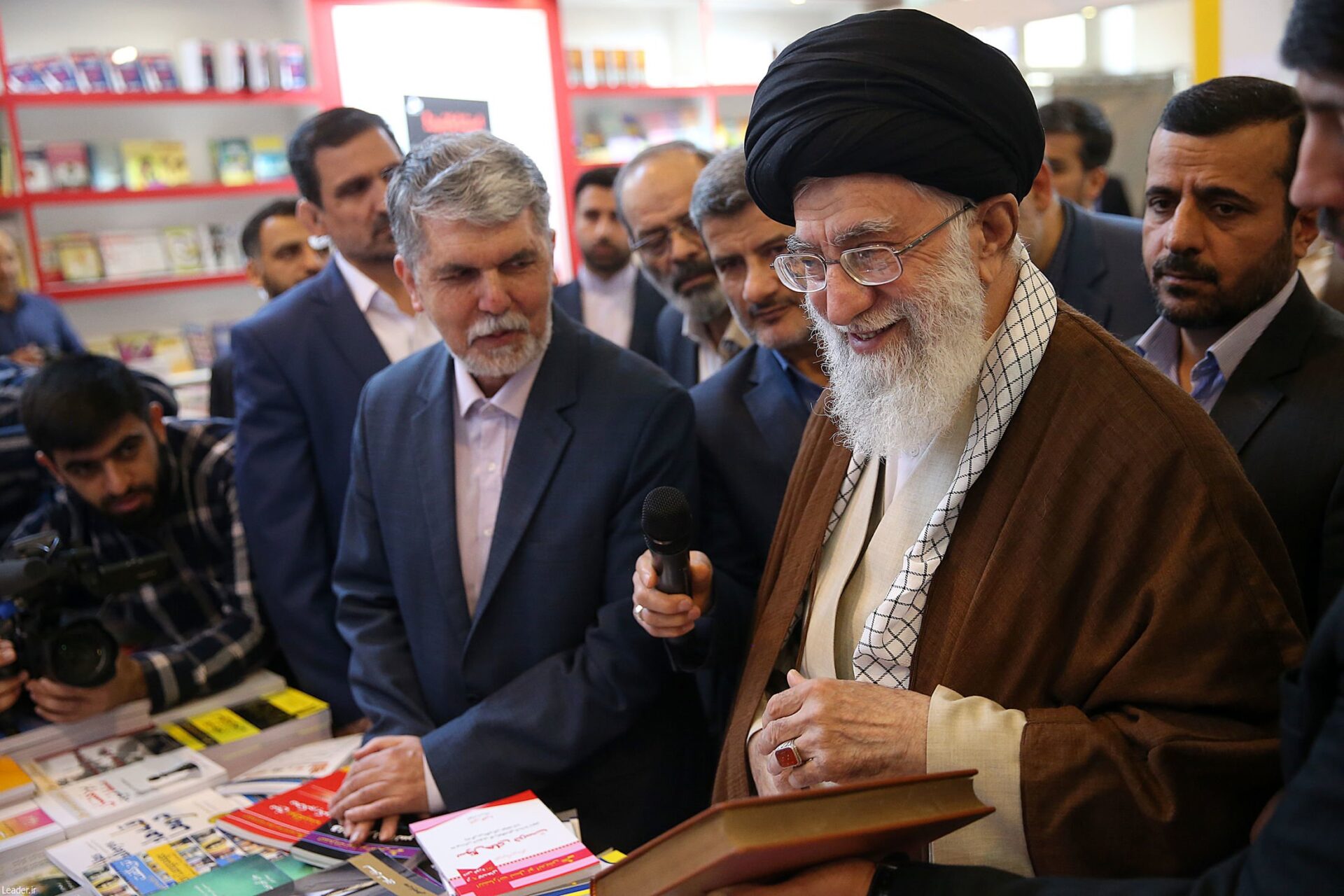
Al Ali said the Qatari government shares views with Iran on cultural and regional issues, and is eager to develop bonds of friendship with Tehran.

“The Qatari government has a comprehensive plan to expand bilateral ties with Iran in 2018,” the Qatari minister said.

Relations between Iran and Qatar has been getting warmer in recent months, after Saudi Arabia, the UAE, Egypt and Bahrain imposed a blockade on the peninsular nation last June.

The bloc has made several conditions for lifting its land, air and sea blockade against Qatar, notably asking Doha to end support for groups such as Egypt’s Muslim Brotherhood, which they regard as terrorist, and restrict ties with Tehran.

Qatar has denied the allegations and rejected the Saudi-led demands as an attempt to impose guardianship on the kingdom.

In the wake of tensions erupted between Qatar the Saudi-led bloc, many Qatari tourists have decided to spend their weekends in the Iranian island of Kish.

“Qatar May Use Iran’s Kish Island for 2022 FIFA World Cup”

Ex-Prosecutor Mortazavi Finally Arrested in Northern Iran

Iranian media reported on Sunday that the Law Enforcement arrested the notorious judge in a villa in Mazandaran province, northern Iran.

Mortazavi has been sentenced to two years in prison for complicity in the death of Mohsen Ruholamini, a prisoner in Kahrizak detention centre, following the 2009 post-election unrest in Iran.

The arrest came after several weeks of controversy over the Judiciary’s failure to catch him. Judiciary Spokesman Gholam-Hossein Mohseni Ejei had earlier noted that a court verdict called for imprisoning Mortazavi for two years, but unfortunately his whereabouts was not known.

Following the remarks, activists printed wanted posters and decorated the city’s walls with them to find the former prosecutor. The reformist daily newspaper Ghanoon wrote last Monday that undoubtedly, the poster initiative was not to find him; it was rather a way to express the public demand for the arrest of Mortazavi in a sarcastic way.

“Perhaps the city-wide posters show people’s dissatisfaction with the judicial situation in Mortazavi’s case. The massive reaction to Saeed Mortazavi’s absence is a stern warning to the authorities because people have understood that sometimes some ones escape justice because of their former position.”

Ghanoon also warned that if the national warning is not heard, one cannot expect to have a democratic and, of course, Islamic society.

Iran Prepared to Help Syria in Post-War Reconstruction: President

“Just as it stood by the Syrian people in their fight against terrorism, the government of the Islamic Republic of Iran is ready to stand by you in Syria’s reconstruction employing all it has in power,” Rouhani said in a message to his Syrian counterpart Bashar al-Assad on Saturday.

He extended his congratulations to the Syrian president on the occasion of Evacuation Day, Syria’s national day commemorating the evacuation of the last French soldier, the country’s proclamation of full independence as well as the end of the French mandate of Syria on April 17, 1946.

Rouhani said the Syrian people had made sacrifices in the past to gain independence and drive arrogant powers out of their country.

The Syrians are now making tireless efforts to thwart enemies’ plots and save their country from terrorists and are achieving new victories on a daily basis, he added.

The Iranian president emphasized that the Islamic Republic would continue its assistance to the Syrian government and nation until the complete establishment of security and stability in the Arab country.

Rouhani expressed hope that a final victory would be achieved in the campaign against terrorists in Syria soon.

Leader of the Islamic Revolution Ayatollah Seyyed Ali Khamenei said in March that Syria was on the frontline of the fight against the enemies of Islam.

“Syria today is on the frontline, so our duty is to support the Syrian resistance,” Ayatollah Khamenei told Syrian Minister of Religious Endowments (Awqaf) Mohammad Abdul-Sattar al-Sayyed in Tehran.

“Iran-Iraq Ties Not to Be Affected by US Mischievous Interference”

No Obstacle to Development of Strategic Arms in Iran: DM

At the close of his visit to Iraq, Hatami thanked the Iraqi side for their warm hospitality and said the two sides enjoy good relations in various areas.
“The relations between Iran and Iraq are deep in political, economic, and cultural and defence fields and won’t be influenced by the troublesome interference of the US,” he was quoted as saying in a Farsi report by Tasnim News Agency.
He referred to the Thursday meeting between Iranian, Iraqi, Syrian and Russian delegations in Baghdad to coordinate “anti-terrorism” efforts and said during the meeting, the participants underlined the urgency to strengthen military, defence and security relations.
Iran’s Defence Minister also said during his visit, he held talks with Iraqi officials on preparing the ground for further bilateral relations in defence area and said the prospect of relations between Iran and Iraq in the defence field is bright and the Islamic Republic of Iran feels duty-bound to take part in Iraq’s reconstruction.
Touching on the first Joint High Commission for Defence Cooperation between Iran and Iraq, he said the meeting managed to achieve its goals.
He expressed Iran’s preparedness to stand by Iraqis under any condition and added following the defeat of ISIS in Iraq, reconstruction of the country has turned into one of the main priorities of the Islamic Republic of Iran.
“We support Iraq’s territorial integrity for further progress of the country,” he concluded.