Thursday, December 25, 2025
Home Blog Page 3632

Iranian People Mark National Day of Saadi

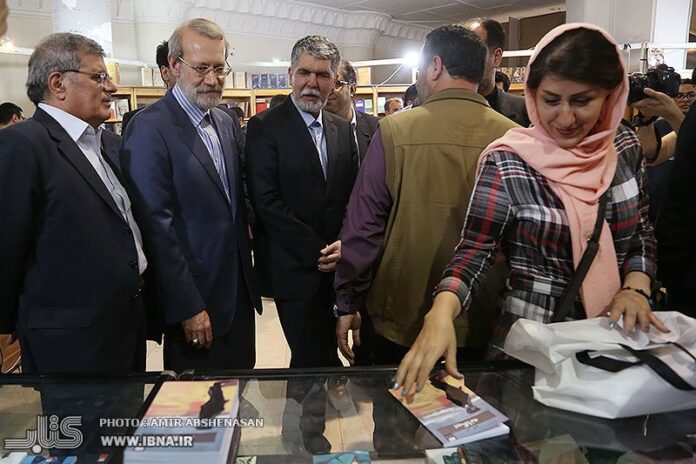
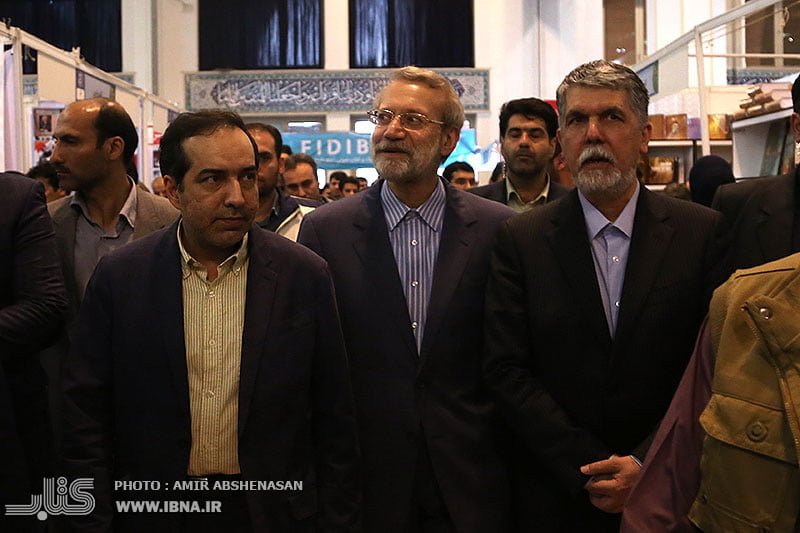
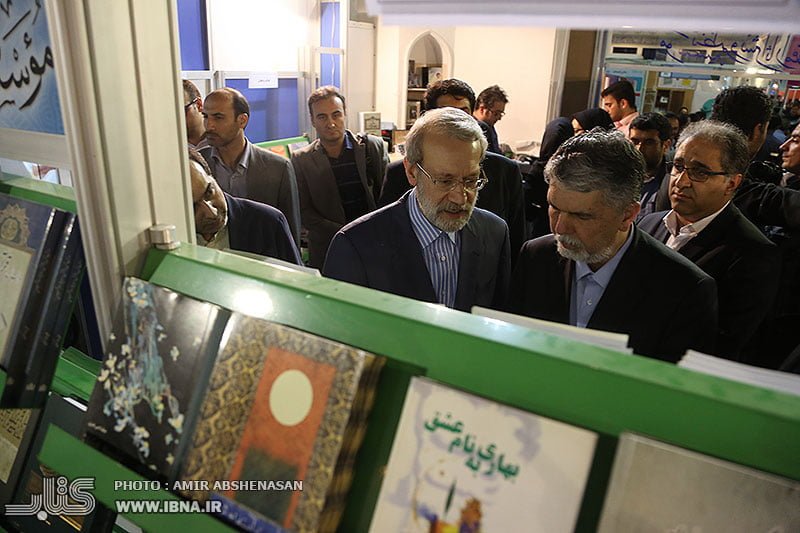
On Friday evening a large number of Iranians convened in remembrance of the talented poet who lived from 1184-1283/1291 AD.

In the national Iranian calendar, April 21 marks the birthday of Saadi. On this day, Iranians attend services in commemoration of the master of eloquence.

Saadi is known as a poet both in and outside of Iran for his enticing choice of word, ethical and social teachings.

National Day of Saadi commemorated in Iran

Iranian People Mark National Day of Saadi

Abu-Mohammad Mosleh al-Din bin Abdallah Shirazi, better known by his pen-name Saadi, was one of the major Persian poets of the medieval period. He is recognized not only for the quality of his writing, but also for the depth of his social thoughts.

A native of Shiraz, his father died when he was an infant. Saadi experienced a youth of poverty and hardship, and left his native town at a young age for Baghdad to pursue a better education. As a young man he was inducted to study at the famous an-Nizzamiya centre of knowledge (1195-1226), where he excelled in Islamic Sciences, law, governance, history, Arabic literature and theology.

Although Saadi was born and died in Shiraz, Persia (Iran), during his life he travelled extensively. He is said to have travelled for thirty years throughout the Islamic world.

Iran has filled the centuries with some of the world’s finest poets, but Iranians consider Saadi to be one of the greatest.

Historians often divide his life into three parts. His first twenty-five years were spent studying in various countries, going to university at Baghdad. During the next thirty years he travelled to many parts of the world, from India to Syria. He went on pilgrimage to Mecca fourteen times. Finally, Saadi returned to Shiraz where he devoted himself to writing and to teaching.

National Day of Saadi Commemorated throughout Iran

Saadi's tomb

Saadi’s two best known works are the Bustan (the Garden), composed entirely in verse, and the Golestan (the Rose Garden), in both prose and verse. He was particularly known for the wry wit he injected into his poems.

Saadi is probably the first Persian poet to have been translated into European languages. A German version of the Golestan appeared in 1654.

Saadi’s tomb can be seen in the town of Shiraz.

What follows are the photos of the Friday commemoration ceremony retrieved from IRNA:

Iran, UN Discuss Resolution of Syria Crisis in Tehran

During the lunch meeting held in honour of the UN delegation’s visit to Tehran, the two sides exchanged views on the latest developments in Syria and explored the ways to implement Astana agreements.

The final document of the Syrian National Dialogue Congress in Sochi as well as the Iran-UN cooperation to put an end to the Syria crisis and restore peace and security to the war-torn country were also among the main issues discussed by De Mistura and Jaberi Ansari, who also serves as Iran’s senior negotiator at the international Astana talks on Syria peace.

De Mistura arrived in Tehran on Saturday after his visits to the capitals of other guarantor states of the ceasefire regime in Syria, namely Russia and Turkey.

The UN envoy is expected to hold talks with other Iranian officials during his stay in Tehran.

He will also meet with European ministers and American officials in a conference slated for April 24 and 25 in Brussels.

Iran Rejects US Human Rights Report as Biased, Invalid

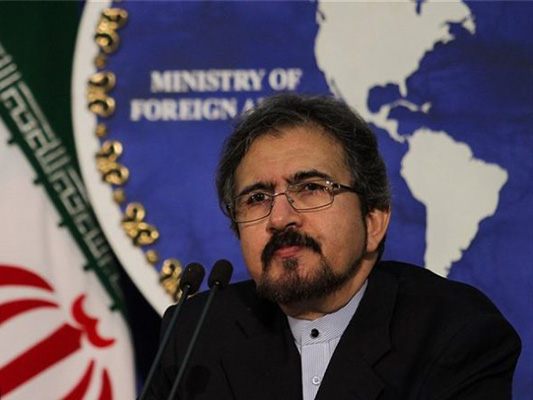
In a Saturday statement, Qassemi referred to the accusations levelled against Iran and other states in the report and said the Islamic Republic deems the State Department’s report, especially the allegations of human rights violations in Iran, as completely ‘biased and politically-motivated.’

“The report portrays a distorted and unrealistic picture of human rights situation in Iran,” he underlined.

As certified by many internationally reliable reports, he added, the US government is widely viewed not only as one of the major human rights violators across the world but also a sponsor of human rights violators like the Zionist regime and some reactionary states in the Middle East.

He said the catastrophes caused by the human rights violators backed by the US have always put the whole region into deep troubles.

Qassemi once again rejected the ‘baseless and unacceptable’ accusations raised in the report and said instead of meddling in the internal affairs of other states and assessing the human rights situation in the world, it is better for the US government to immediately adopt the required measures to improve human rights situation inside America and react to stark human rights violations by its allies in the world.

In its annual human rights report released on Friday, the US State Department has singled out China, Russia, Iran and North Korea for human rights abuses, labelling their governments as “forces of instability”.

US critics accuse the Trump administration of downplaying human rights promotion as a foreign policy goal, and pointed to Trump’s own comments on refugees, migrants and the media as areas of concern.

Qeshm Island Named as Centre for Development of Global Geoparks by UNESCO

An official says the Qeshm island in southern Iran will be introduced as the hub of developing geoparks in an upcoming international event on the development of geoparks held by the United Nations’ Educational, Cultural, and Scientific Organization (UNESCO).

“Iran will offer consultations to other countries in that regard,” says Alireza Amri Kazemi, a member of the Global Geoparks Council of the UNESCO.

Qeshm Geopark to Become Tourist Destination

Qeshm Geopark Becomes Global after Receiving UNESCO Green Card

Specialized Workshops

According to him, Qeshm will host an international UNESCO conference and specialized workshop on the development of global geoparks on April 28-30.

“In this gathering, specialized-training workshops will be held to develop geoparks in Iran and in the whole region,” he said in a Farsi interview with Mehr News Agency.

The organisation will hold the opening ceremony on April 28. “Specialized workshops will open and run until night after official speeches are delivered,” noted Amri Kazemi, who is also the director of the Qeshm Geopark.

There will be specialized workshops on April 29 and April 30 to feature visits to geo-sites, he said.

“Based on the arrangements made with UNESCO, the organisation will introduce Qeshm as the centre for the development of UNESCO’s global geoparks,” he noted.

“We will give consultations to other countries on how to develop their geoparks. So, UNESCO will tell any country in the Middle that wants to establish geoparks to refer to Iran. That will give us the opportunity to export technical-consultative services.”

Qeshm Island and its tourist attractions

Qeshm Island Named as Centre for Development of Global Geoparks by UNESCO

“When we are known as a reference, we will be able to render consultative and expert services. If we want to assume that role, we should train workforce,” he said.

Obtaining UN Cultural Body’s Green Card


The event brings together dozens of domestic and foreign officials, including authorities from UNESCO.

Qeshm Geopark has become a UNESCO Global Geopark after obtaining the UN cultural body’s green card.

In a meeting in September 2016, the UNESCO Global Geoparks Council decided to designate Qeshm Geopark as a UNESCO Global Geopark for a four-year period.

The decision was recently endorsed during the 201st session of the UNESCO Executive Board meeting where Qeshm Geopark officially became global.

The designation started on May 5, 2017, and will be valid until May 4, 2021.

Geoparks have significant scientific and geological value, apart from being a natural and cultural heritage. The Global Geopark Network, established by UNESCO, registers such parks. It also pursues three other objectives: Geopark protection, spreading awareness and setting standards for green tourism.

Iran to Build Special District for Stem Cell Research

Stem cells are known as the “mother of cells” as they are capable of turning into all cells in the body. Researchers cure many diseases using stem cells, so much so that a lack of enough expertise in the stem cells domain could result in numerous problems in medical treatment.

Stem-cell products are not limited to medicine only, and have applications in different engineering fields as well. Stem cells are essential to human’s skin, trachea cells and other health areas, reports the Persian-language Fars News Agency.

Therefore, it is necessary for researchers to make progress in the field of stem cells, a move in which universities could be the starting point.

The Kharazmi University in Tehran, with over 13 thousand students and 500 faculty members, has launched a major project in the field of stem cells by breaking ground for Stem Cells Township.

For a brief review of Iran’s achievements in various fields of science and technology, check the book “Science and Technology in Iran: A Brief Review

The township is being established to render services in the field of stem cells and medicine. The plan is supported by the Iranian Vice-Presidency for Science and Technology and the Ministry of Science, Research and Technology using the best doctors and researchers in the country.

Among the institutions to begin work in townships will be knowledge-based companies, 30 of which have already announced their readiness to start business there.

The activities of the township could expand across the country and even through the whole Middle East region. The project could also decrease forex costs and imports.

According to the data released by the Iranian Vice-Presidency for Science and Technology, Iran ranked 20th in the world by the end of 2016 with a total number of 6,360 scientific papers in the field of stem cell sciences and regenerative medicine including cell therapy, gene therapy, hematopoietic stem cell transplantation, tissue engineering, and biomaterials.

The country also ranked 15th in the world in 2016 with about 1,378 scientific articles in the field of stem cell sciences and regenerative medicine focusing on cell therapy, gene therapy, tissue engineering and regenerative medicine.

Number of Beheadings in Saudi Arabia Rises by 70%

In its latest report published Saturday, the European Saudi Organization for Human Rights (ESOHR) said executions by the Saudi government in the first quarter of 2018 increased by 72% compared to the corresponding period last year.

According to the report, a number of foreign nationals also face capital punishment in Saudi Arabia.

The report came against a backdrop of widespread criticism of the kingdom over its terrible human rights record, including the censorship of free speech, indiscriminate incarceration of citizens with no due process, or the lack of basic freedoms for women and girls.

Although the Riyadh government does not disclose any official statistics for people on death row, ESOHR has confirmed that 42 people are facing imminent execution, including 8 people who were minors at the time of the offence.

The report has also decried the Saudi regime’s move to execute people for alleged offenses that do not even cross the serious crimes threshold defined by the international law, noting that the convicts have simply attended peaceful demonstrations, exercised freedom of speech, or practiced their religious rites.

Since 2008, Saudi Arabia has rejected all requests for visits by special independent rapporteurs of the United Nations, who are concerned about the kingdom’s human rights violation, the report added.

In March 2017, Michel Forst, a UN special rapporteur on the situation of human rights, expressed serious concerns about the situation of human rights defenders in Saudi Arabia.

Also in a report in September 2017, the UN Secretary General deplored Saudi Arabia for practicing intimidating acts such as travel bans, freezes on assets of people, and the use of torture against individuals or groups that collaborate with the UN institutions or programs.

Figures show that 146 people were decapitated in Saudi Arabia in 2017, of whom 56 were foreigners.

Only in one day in July 2017, Saudi Arabia killed four people charged with attending demonstrations.

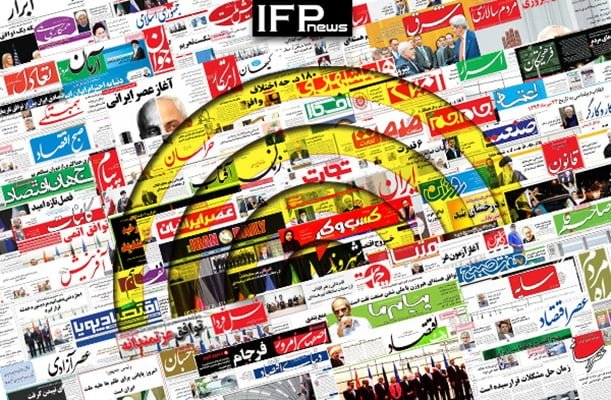
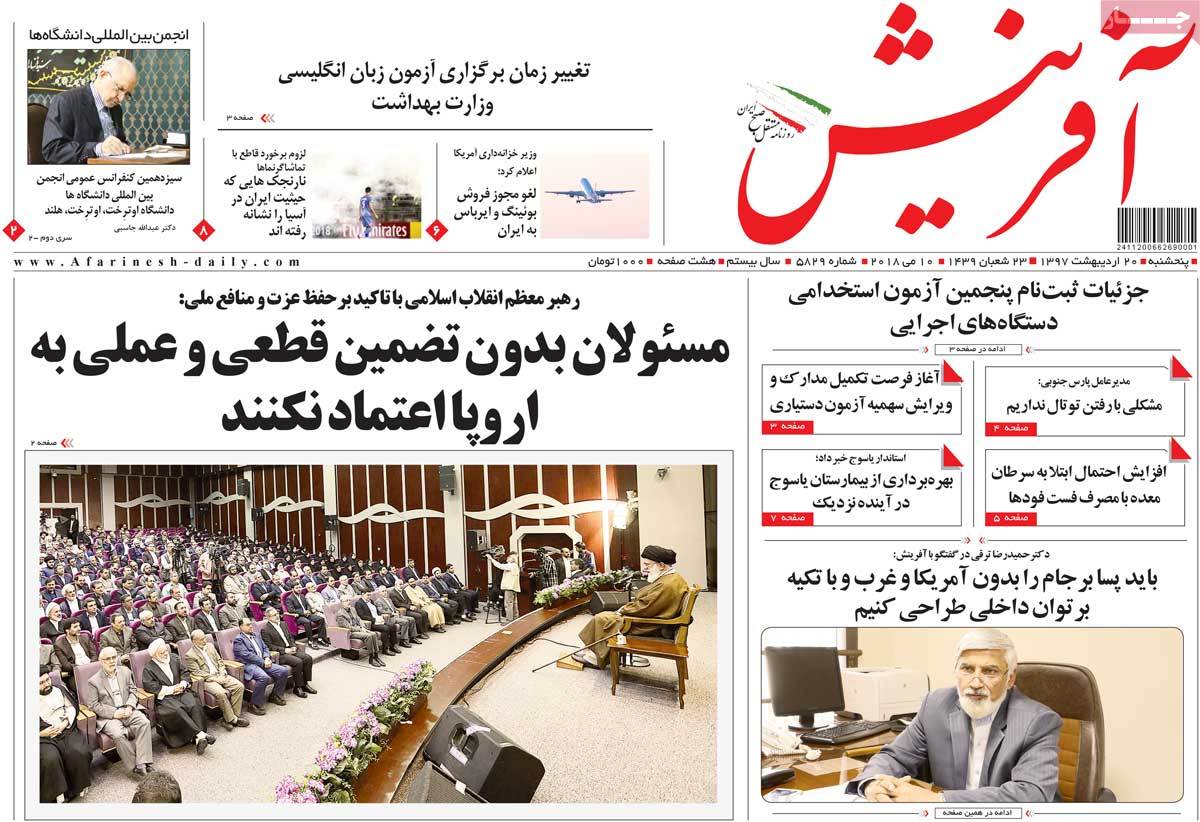
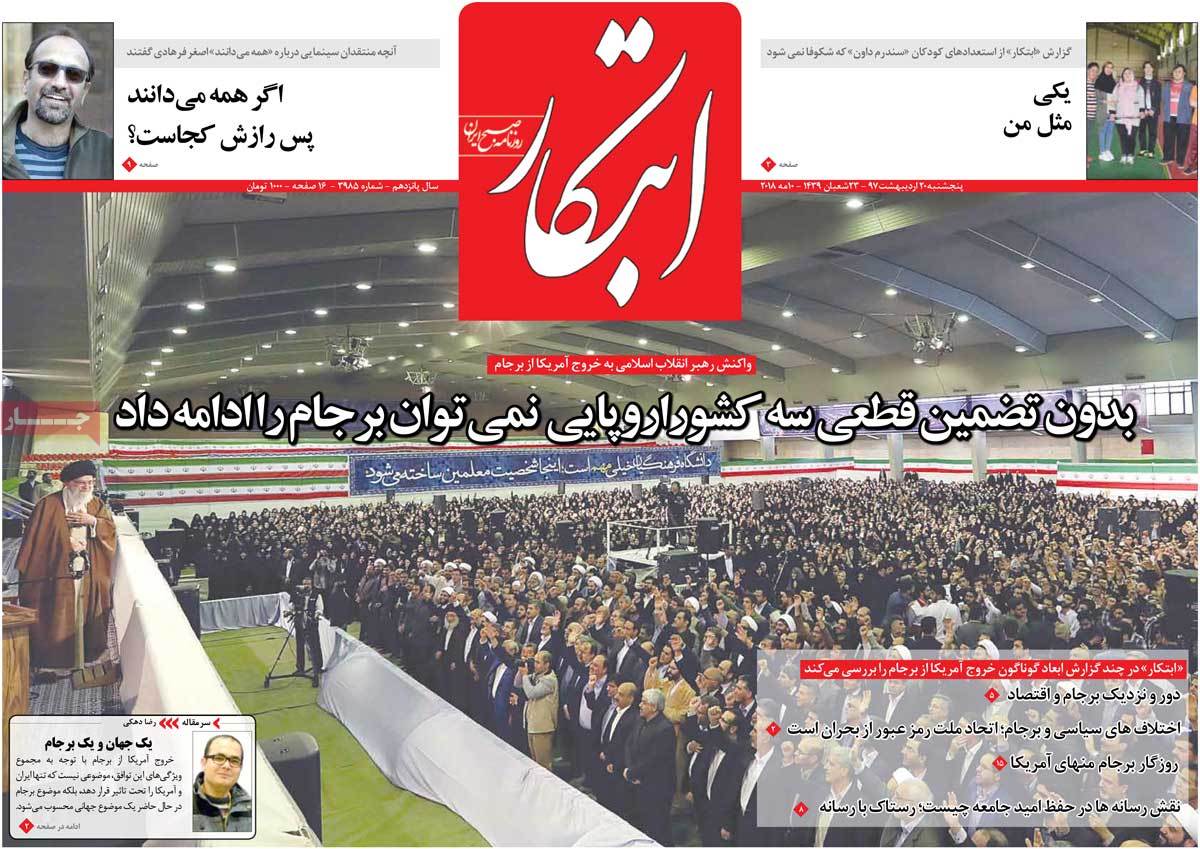
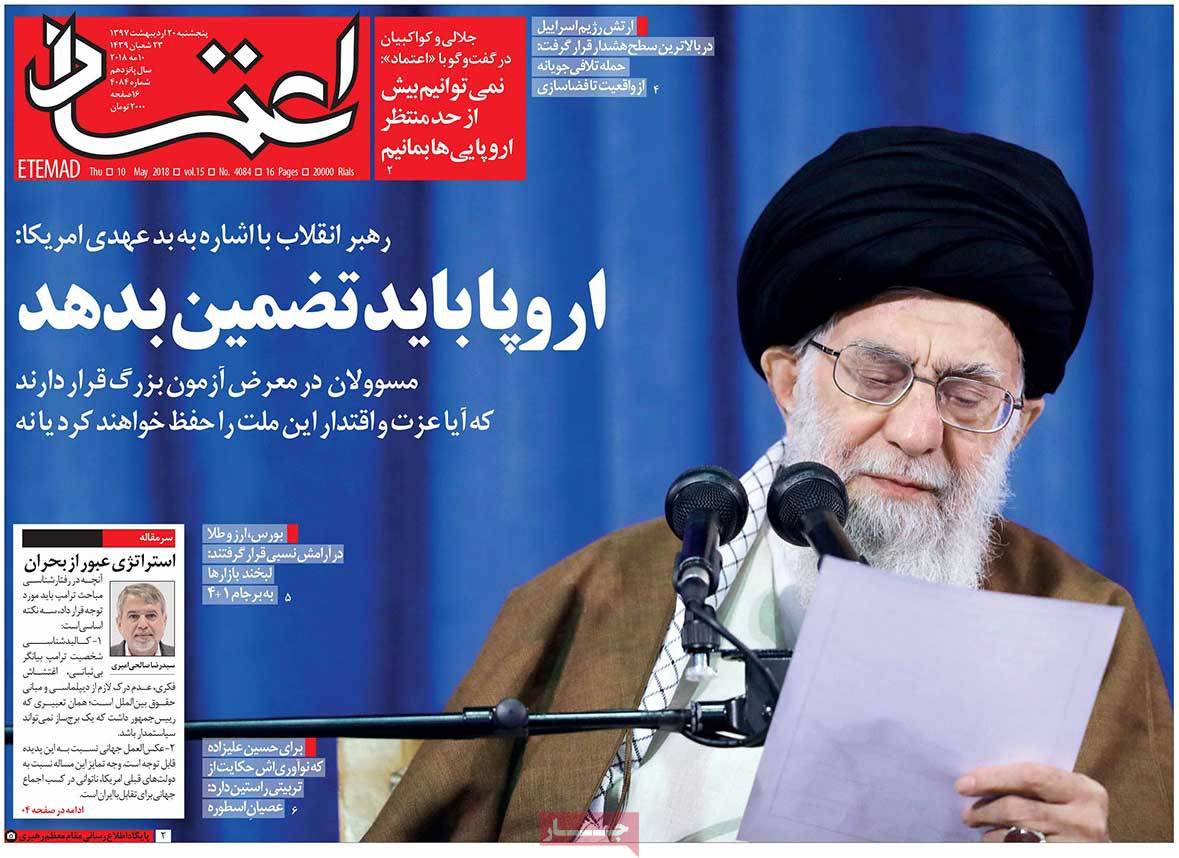
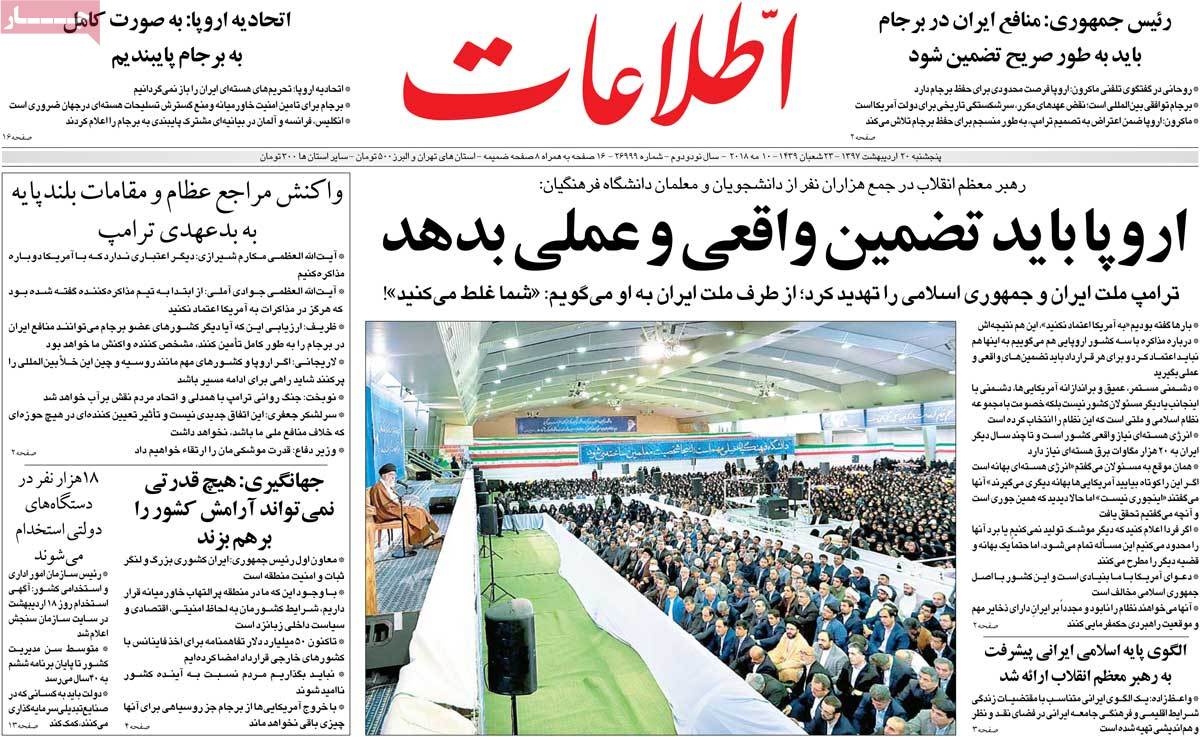
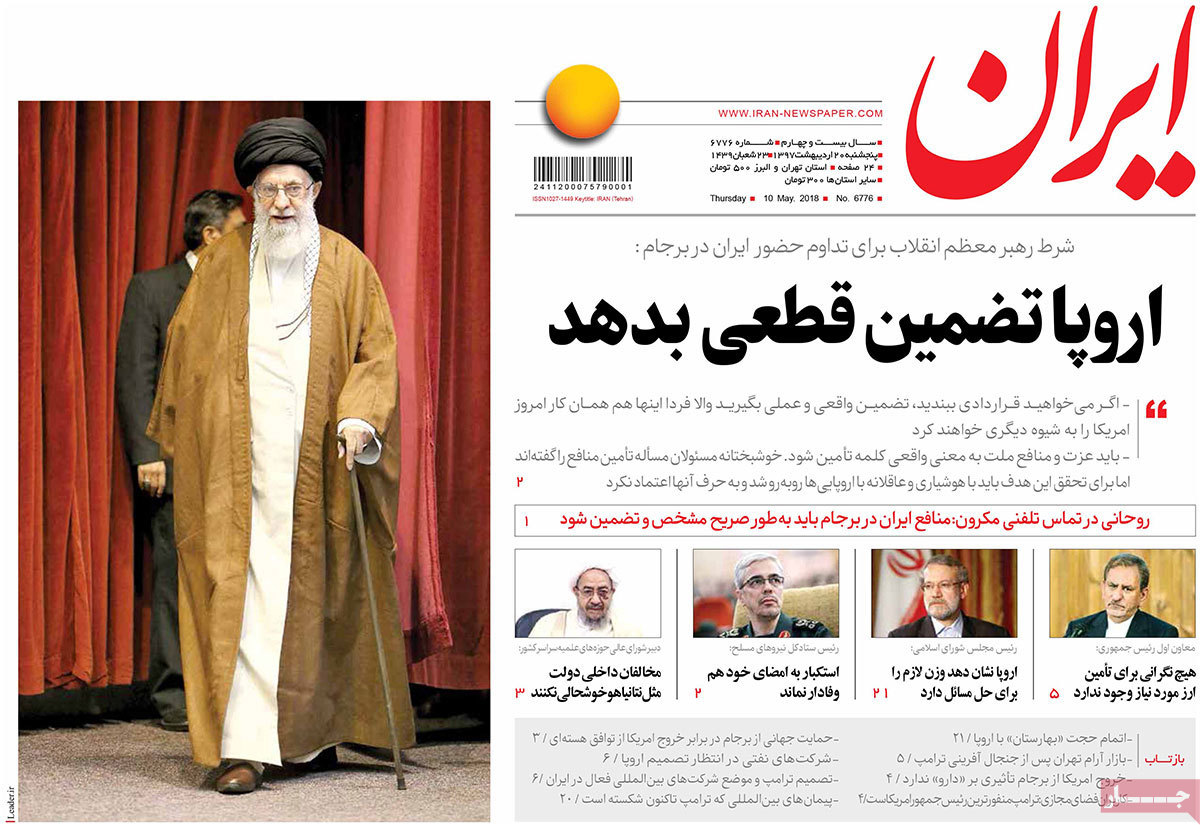
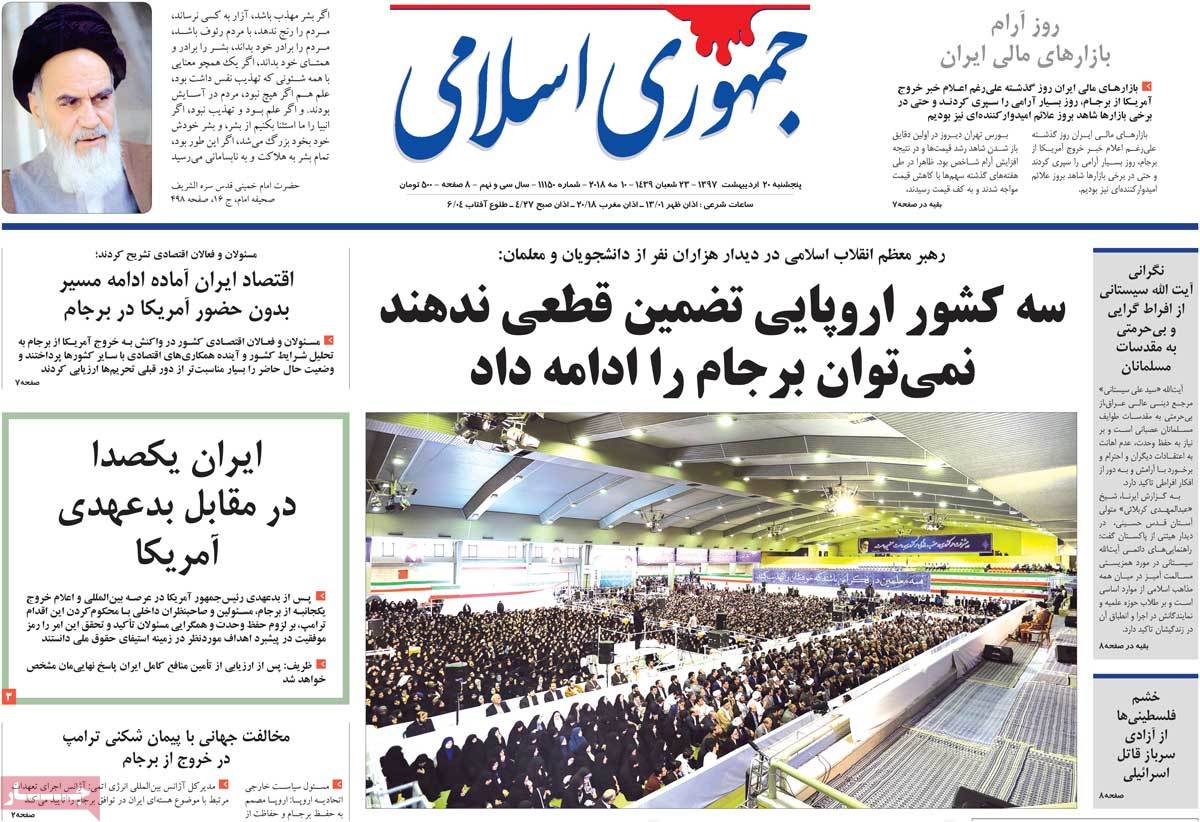
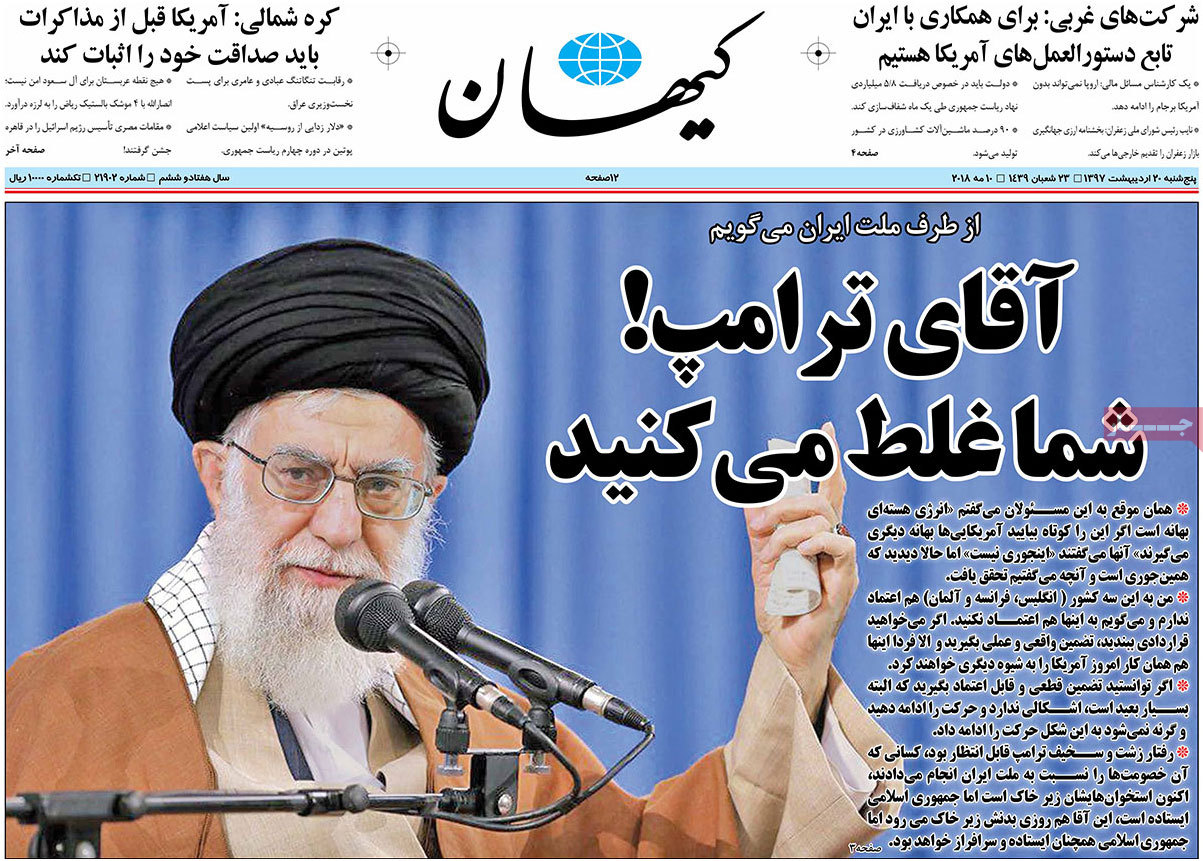
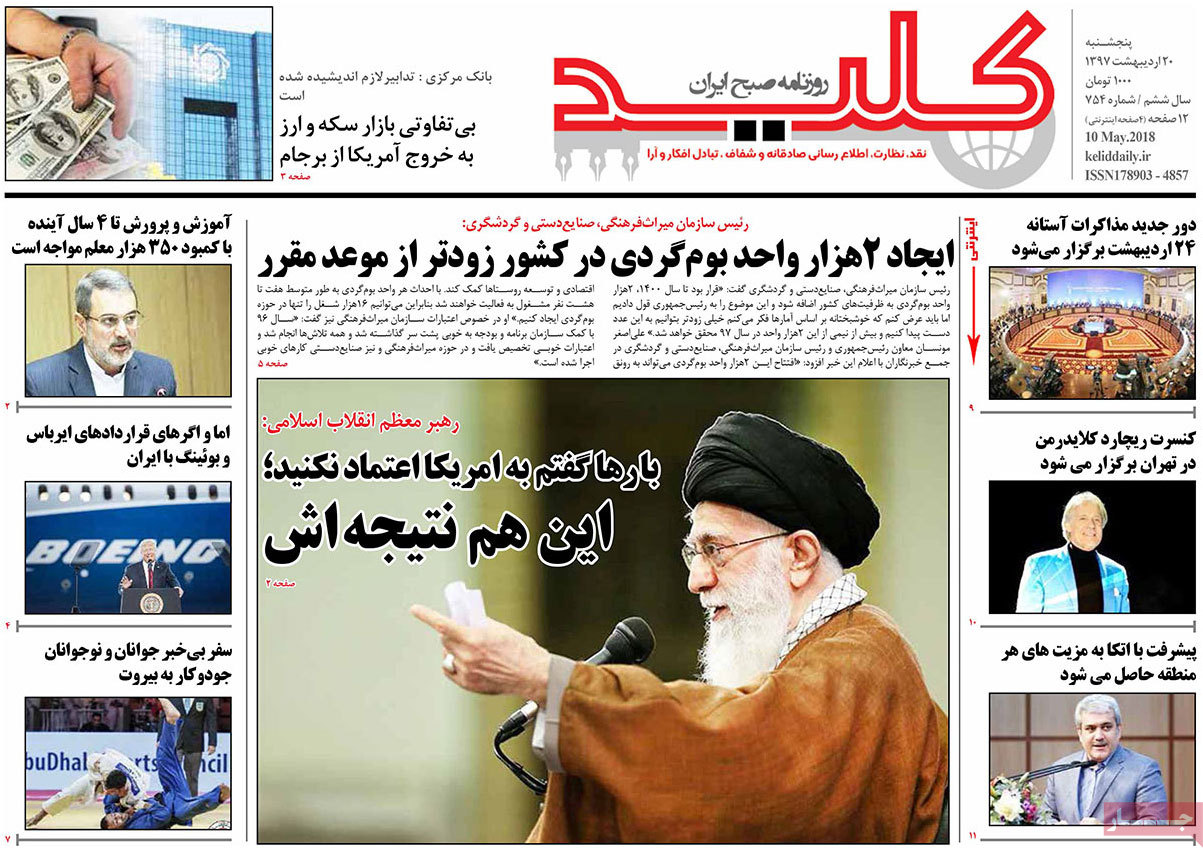
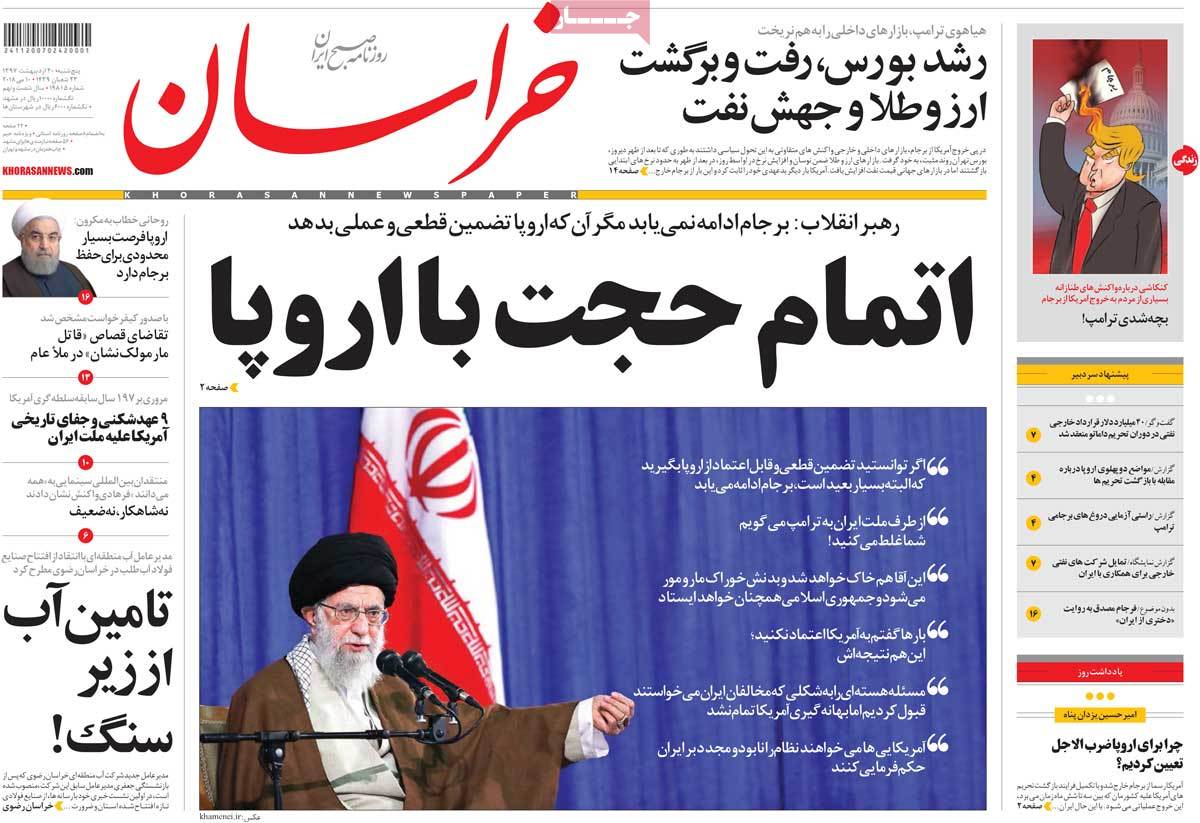
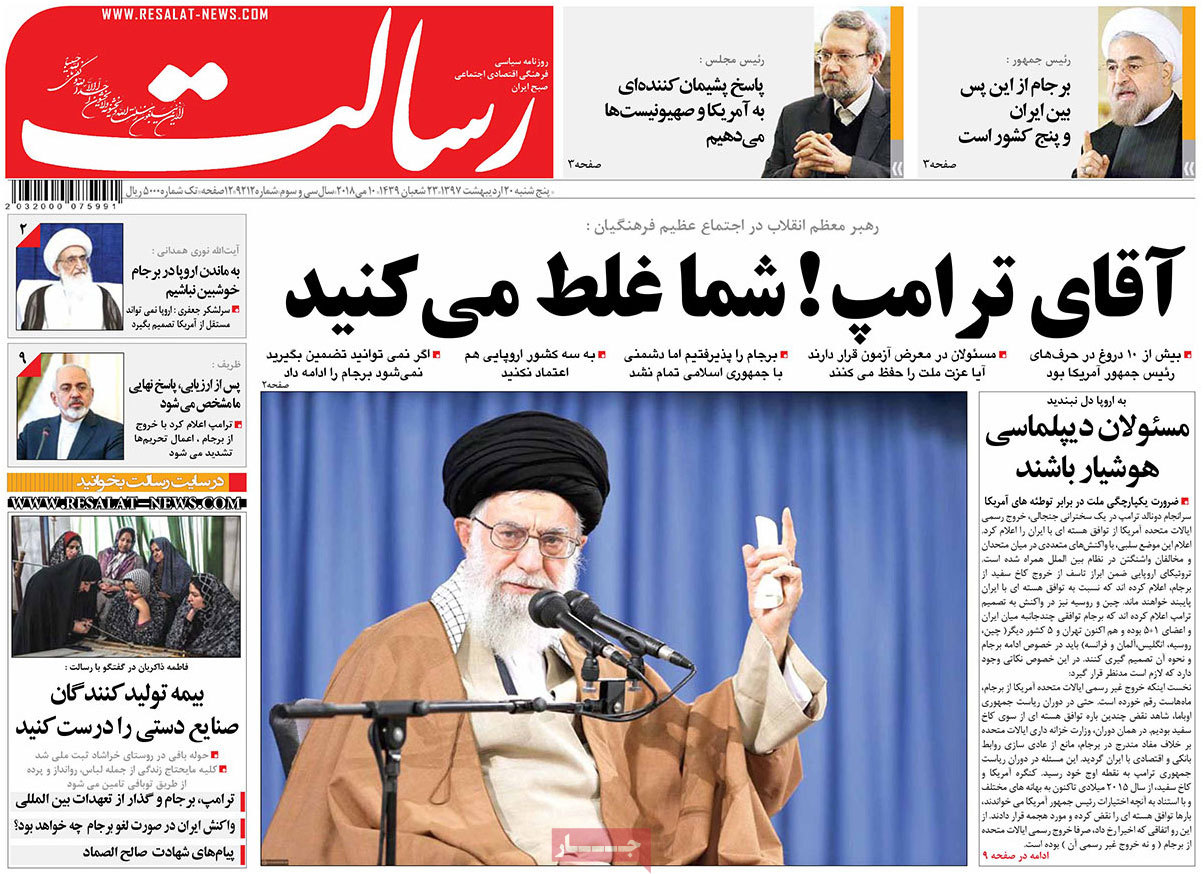
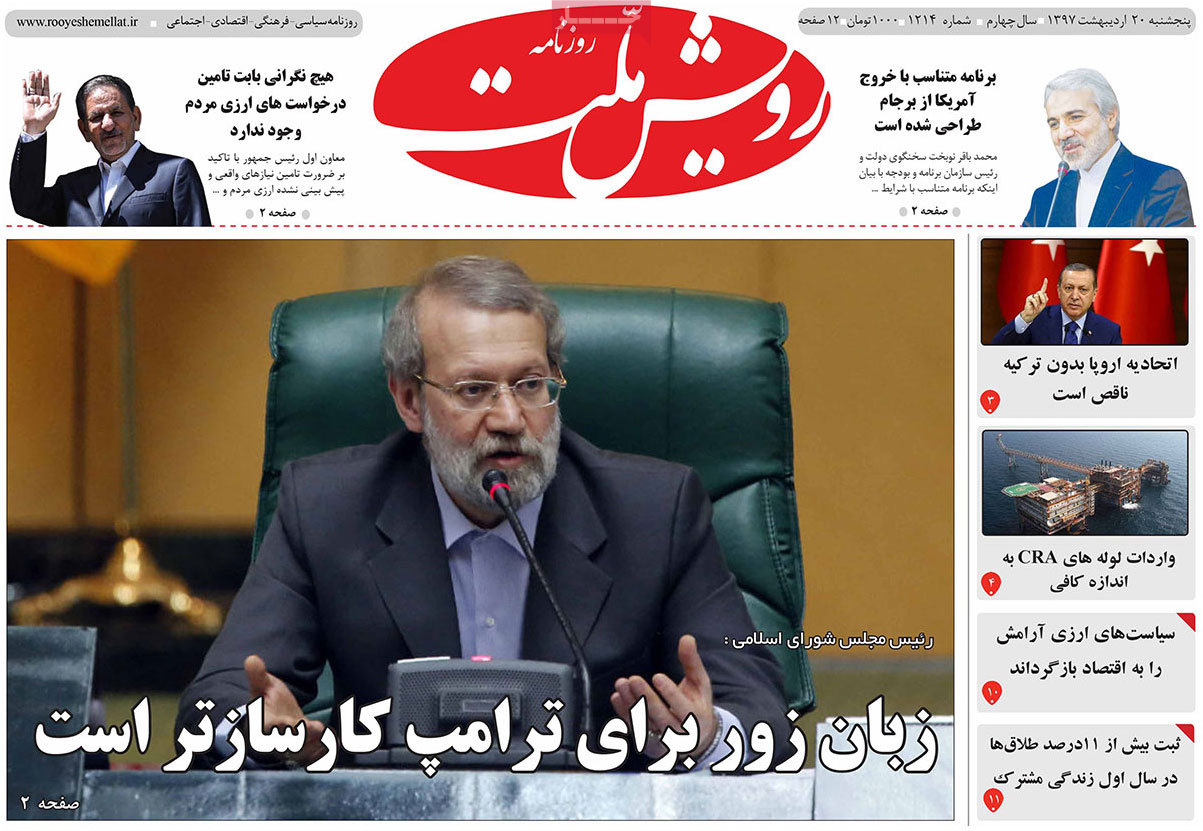
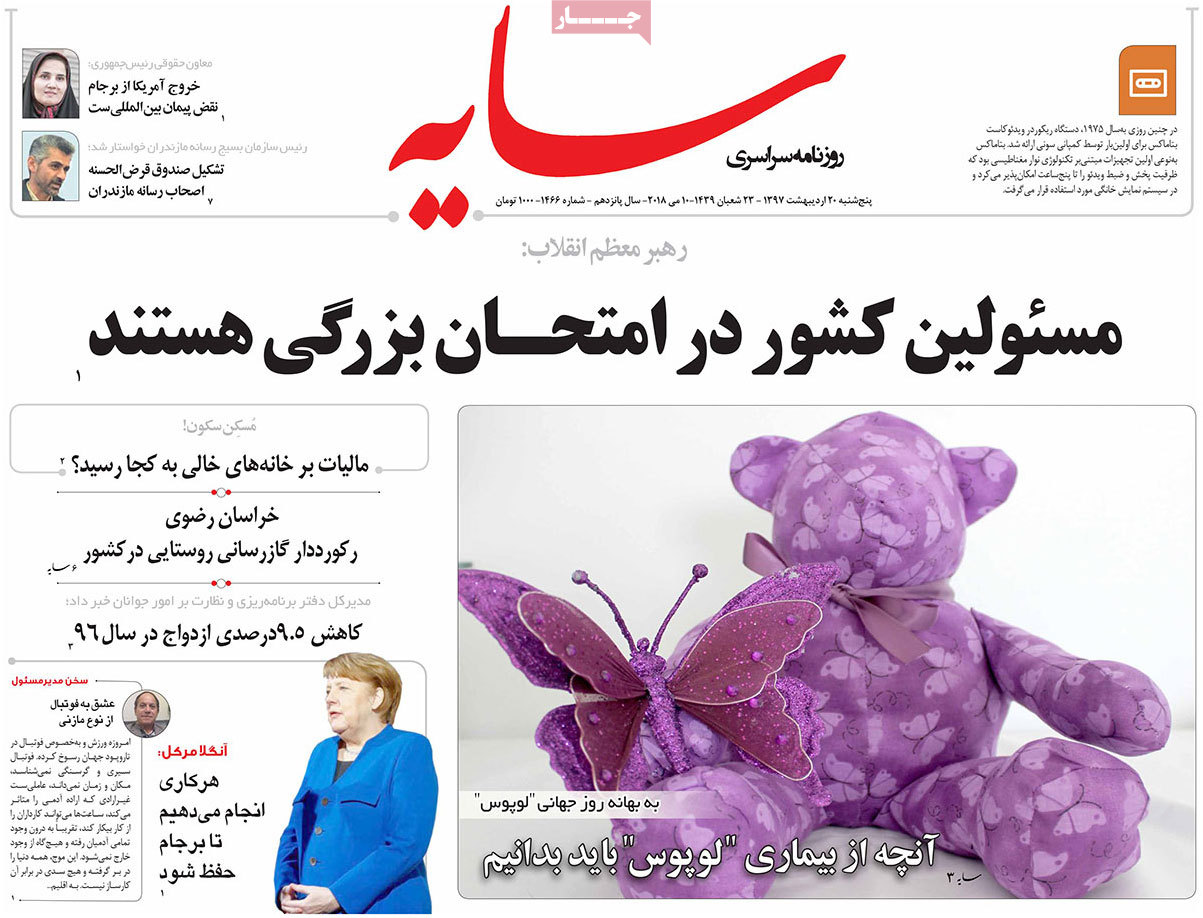
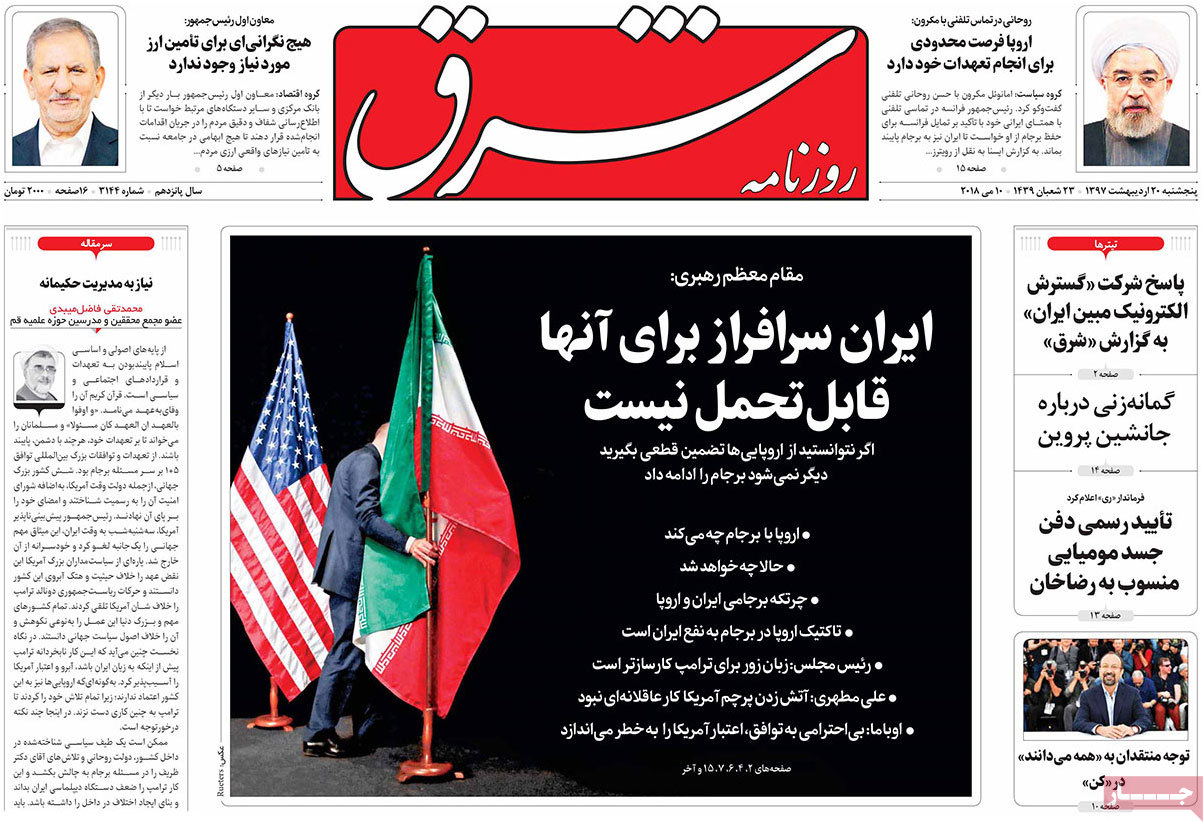
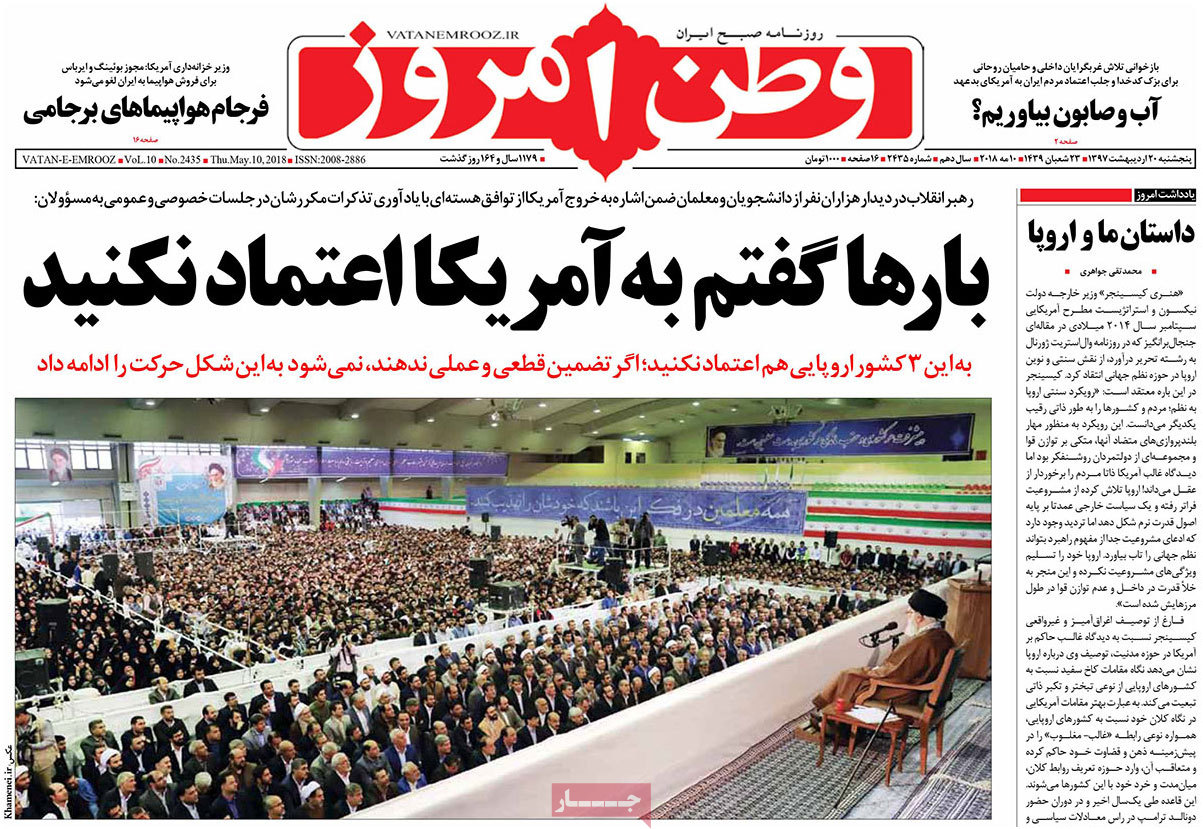
A Look at Iranian Newspaper Front Pages on April 21

A Look at Iranian Newspaper Front Pages on November 19

Almost all newspapers today covered the remarks made by Iranian Foreign Minister Mohammad Javad Zarif about Tehran’s reaction to Washington’s possible withdrawal from the Iran nuclear deal.

Several papers also highlighted the comments made by IRGC Lieutenant Commander Brigadier General Hossein Salami about Iran’s crushing response to the Israeli regime’s possible aggression against the country.

A viral video that shows a morality policewoman clashing with a girl with ‘loose’ hijab in Tehran, and the widespread reactions it sparked, was also a top story today, particularly in reformist and pro-government papers.

The above issues, as well as many more, are highlighted in the following headlines and top stories:


19 Dey:

  • Zarif: US to Pull Mideast in Very Dangerous Direction
  • Health Minister: Danger of Modern Illiteracy Threatening Society
  • Economy Minister: We Won’t Let Foreign Currencies Be Transferred Out of Iran

A Look at Iranian Newspaper Front Pages on April 21


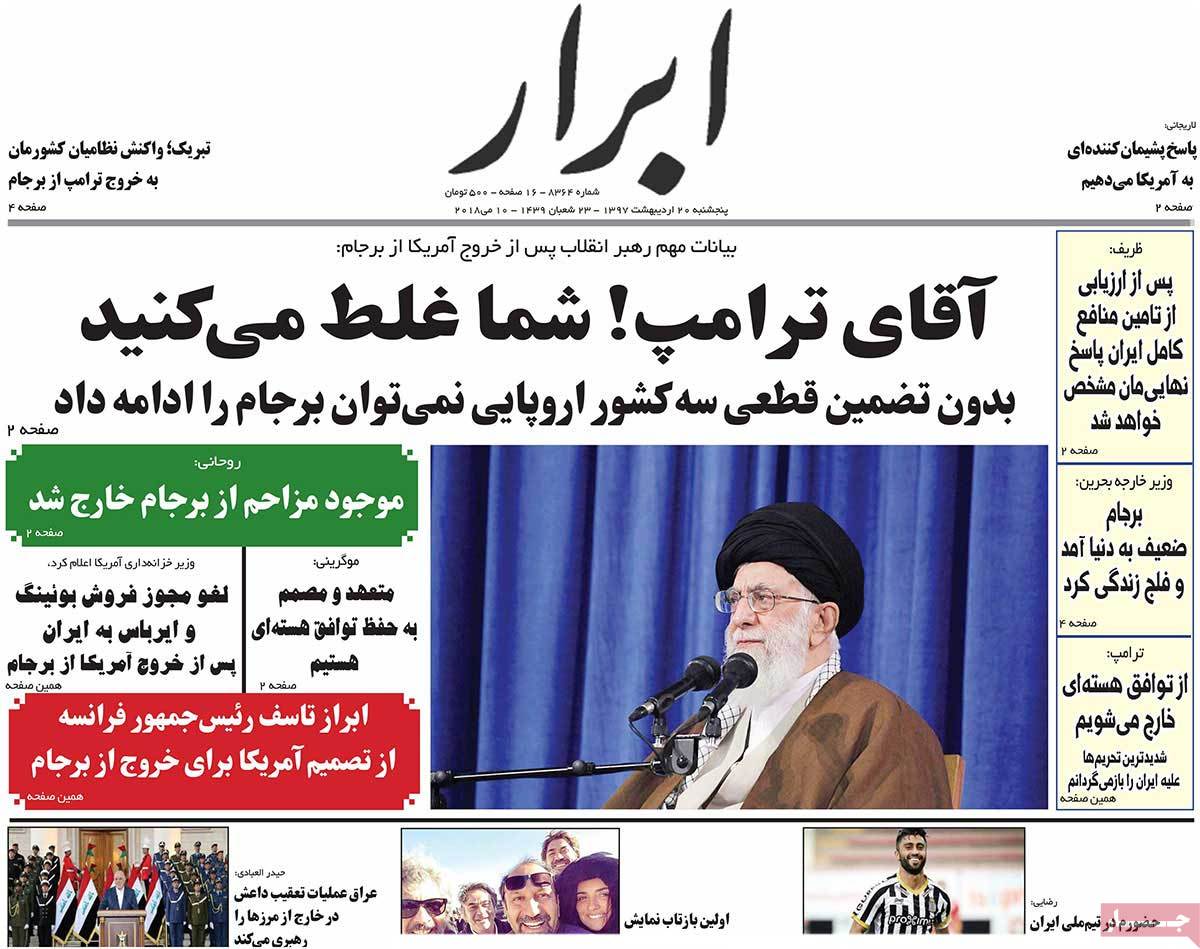
Abrar:

  • IRGC Lieutenant Commander: Our Missiles Ready to Fire
  • Araqchi: Big Mistake to Think Iran Will Stay in Nuclear Deal under Any Conditions

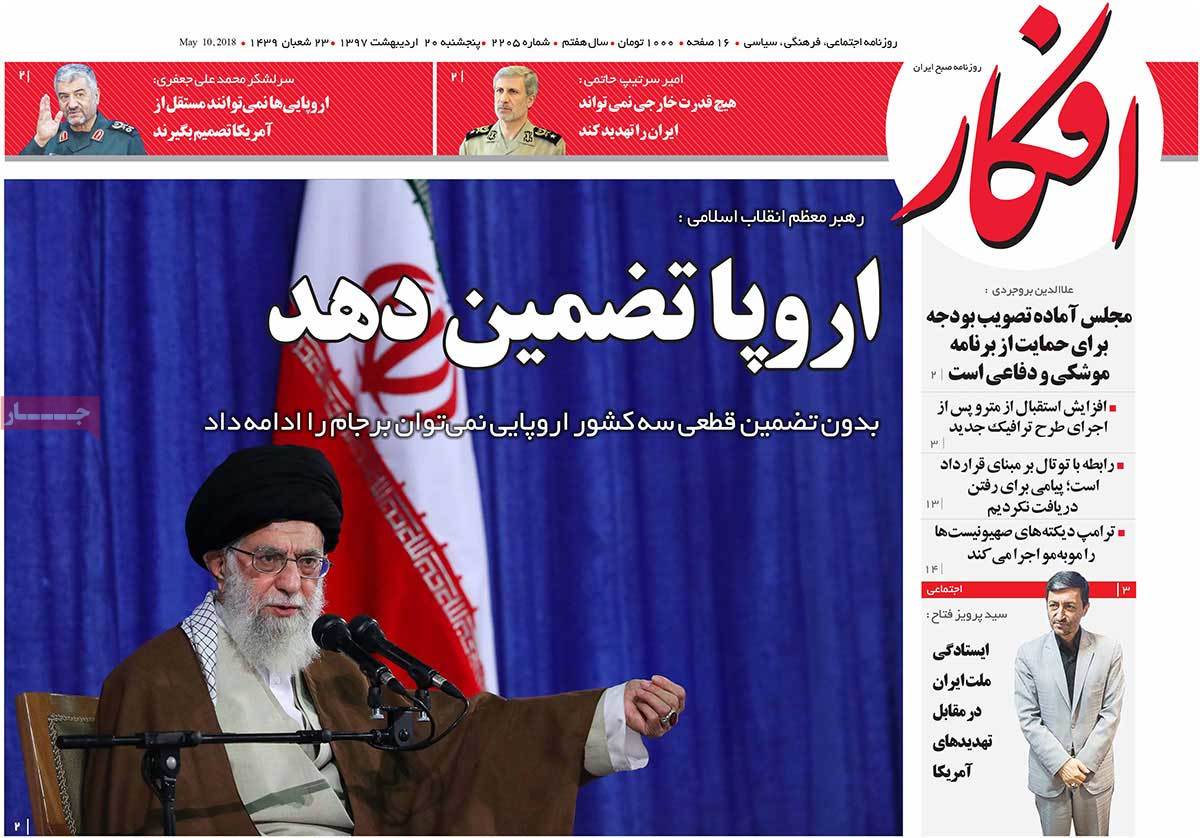
A Look at Iranian Newspaper Front Pages on April 21


Afkar:

  • Iranian Cleric: US Missile Attack on Syria Resulted in Nothing but Disgrace

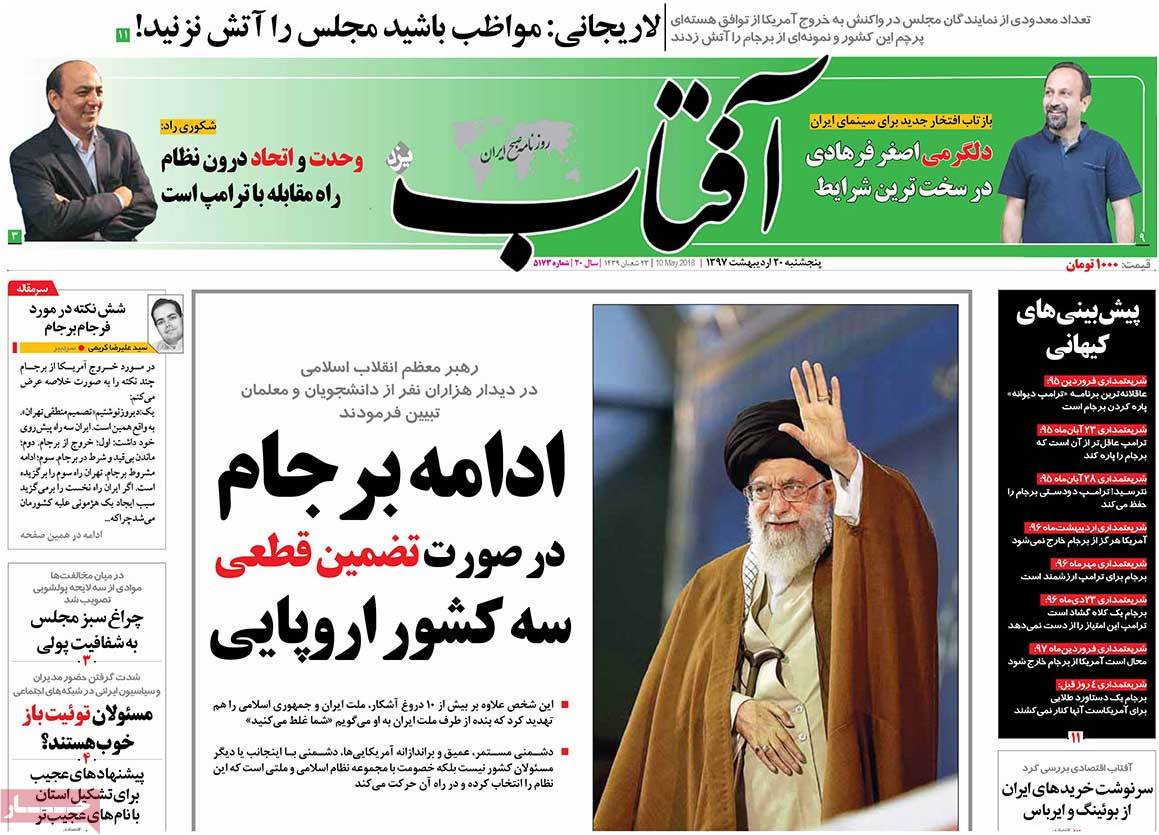
A Look at Iranian Newspaper Front Pages on April 21


Aftab-e Yazd:

  • Analyst: Pompeo, Bolton, Haley’s Joining Together Not Accidental
  • Half of Iran’s Small Mines May Be Shut Down
  • IRGC General: Iranians Living in Better, More Beautiful Way than Americans
  • MP Questions Benefits of Lawmakers’ Foreign Trips for Iranian Nation

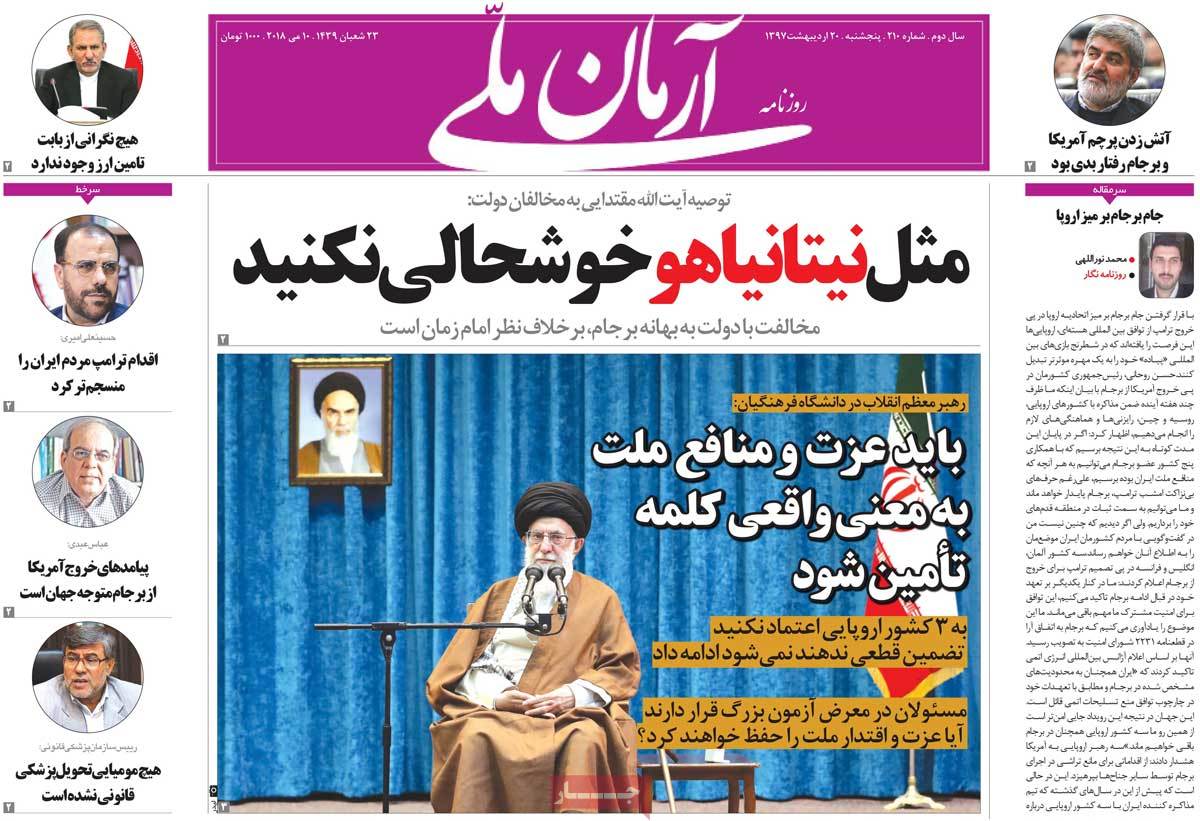
A Look at Iranian Newspaper Front Pages on April 21


Arman-e Emrooz:

  • Russian Can Become Second Language in Iranian Schools!
  • Education Minister’s Unexpected Proposal

A Look at Iranian Newspaper Front Pages on April 21


Asrar:

  • Health Minister: All Iranians Will Have “Health Mentor” by End of Next Year

A Look at Iranian Newspaper Front Pages on April 21


Ebtekar:

  • Zarif: Iran’s Reaction to US Withdrawal from JCPOA to Be Unpleasant for Them

A Look at Iranian Newspaper Front Pages on April 21


Etemad:

  • Pentagon Declares Its Syria Strategy: Creating Local Governments in Ruins
  • VP for Women Affairs Ebtekar Calls for Beginning of Inter-Generation Dialogue

A Look at Iranian Newspaper Front Pages on April 21


Ettela’at:

  • 500 French, British, German MPs Warn US about JCPOA Withdrawal
  • Interior Minister: Morality Police’s Inappropriate Behaviour to Be Pursued
  • Castro Family Bids Farewell to Power in Cuba after 60 Years

A Look at Iranian Newspaper Front Pages on April 21


Hemayat:

  • Assad Returns French Legion of Honour

A Look at Iranian Newspaper Front Pages on April 21


Javan:

  • Withdrawal from Iran Nuclear Deal More Likely than Ever
  • France Paralysed by Protests in 133 Cities

A Look at Iranian Newspaper Front Pages on April 21


Jomhouri Eslami:

  • Europeans at End of Luxembourg Conference: We’ll Stay in JCPOA
  • Malcolm Rifkind: London Has Interfered in Iran’s Affairs in Past 100 Years

A Look at Iranian Newspaper Front Pages on April 21


Kayhan:

  • IRGC General: Israelis Have No Way to Escape
  • First Mission of Iraqi Army in Syria: ISIS Leaders’ Hideout Bombarded

A Look at Iranian Newspaper Front Pages on April 21


Khorasan:

  • Keeping More than €10,000 Considered as Smuggling of Foreign Currencies

A Look at Iranian Newspaper Front Pages on April 21


Payam-e Zaman:

  • IRGC Lieutenant Commander: Any Aggression Will Lead to Israel’s Annihilation

A Look at Iranian Newspaper Front Pages on April 21


Rah-e Mardom:

  • Drought Awaiting 27 Iranian Provinces

A Look at Iranian Newspaper Front Pages on April 21


Rooyesh-e Mellat:

  • Trump Triggering Arms Race in the World

A Look at Iranian Newspaper Front Pages on April 21


Sazandegi:

  • Female Morality Police Force’s Behaviour towards Young Girl Sparks Controversy
  • Fars News Agency: Police Force’s Finger Broken
  • VP for Women Affairs: We’ll Pursue the Issue to Prevent Such Moves

A Look at Iranian Newspaper Front Pages on April 21


Setareh Sobh:

  • Korea Gives Green Light to Nuclear Disarmament
  • North Korea, South Korea Open First Direct Phone Line between Leaders
  • Morality Police under Scrutiny of Media, Officials

A Look at Iranian Newspaper Front Pages on April 21


Shargh:

  • Iran FM’s Top Aide Talks about Hidden Game Played by Russia, Turkey in Syria

A Look at Iranian Newspaper Front Pages on April 21


Sobh-e Now:

  • IRGC Warns Zionists: Our Fingers on the Trigger

A Look at Iranian Newspaper Front Pages on April 21

Iran Vows “Stunning” Response to Return of US Sanctions

Speaking to reporters on the sidelines of a meeting between Iranian President Hassan Rouhani and senior government executives on Saturday, head of Atomic Energy Organisation of Iran Ali Akbar Salehi said, “Technically speaking, we are ready for all scenarios.”

Salehi was echoing earlier remarks by President Rouhani that Iran was ready with expected and unexpected responses in case the US walks out of the 2015 nuclear deal next month.

“The atomic energy organization has taken orders several months ago and is quite ready [to do] things that they might expect and things they can’t imagine,” Rouhani said, according to a transcript of his speech posted on president.ir.

Trump, who calls the 2015 nuclear accord one of the worst deals ever negotiated, has threatened that he will return US sanctions on Iran unless what he calls “flaws” in the accord are fixed.

The deal reached between Iran, the United States and five other world powers put confidence-building curbs on Iran’s nuclear program in exchange for sanctions relief.

The refusal of the US to keep the sanctions frozen will mean the US is no longer bound by the pact.

Iran has warned that it will ramp up its nuclear program if the JCPOA collapses, to achieve a more advanced level than before the deal.

Salehi pointed to his remarks earlier this month that Iran could restore its 20-percent uranium enrichment in just four days, saying it was no exaggeration and other measures are possible.

“We have repeatedly announced we are ready to amaze the other side, although we hope we will not be forced to take such decisions,” Salehi said.
“We hope the other side comes to its senses and will not get itself and others into trouble,” the AEOI chief said, according to a Farsi report by ISNA.

In January Trump sent an ultimatum to Britain, France and Germany, saying they must work to fix the so-called flaws or he would refuse to extend the US sanctions waivers.

As part of their measures seemingly aimed at saving the accord, the three European powers proposed fresh EU sanctions on Iran over its ballistic missiles and its role in Syria conflict, to show Trump that there are other ways to counter Iranian power abroad.

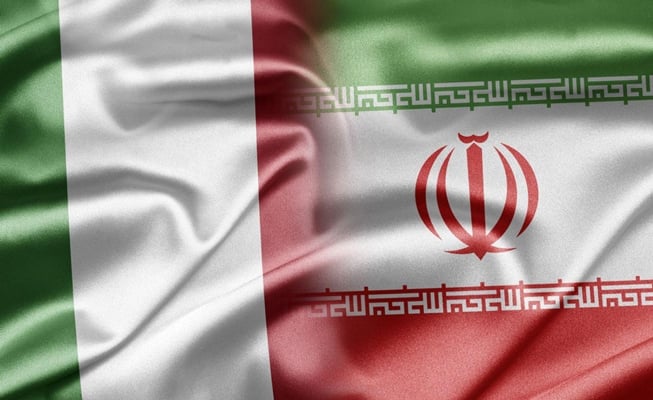
However, they failed to secure the support of all 28 EU member governments this Monday, after a minority of EU states led by Italy voiced concern that the proposed sanctions could further jeopardize the deal.

The three countries are currently in intense talks with the US over the fate of the 2015 deal.

Why Are Citizen Investment Programs Valuable?

It doesn’t come as a shock that money doesn’t only buy you a vacation to another country; it can also get your residence. British citizens are rushing for Irish Passports thanks to Post-Brexit vote. It seems like the most elite travellers of the word don’t want to stand in line at the immigration counter.

It would appear as investing in a country’s economy is an easy way to get access to the quick residence to another country

Introduction to CIP

CIP or Citizen Investment Programs Dual or multiple citizenships are legal in many countries.  This has become a prolific business in fact, and there are several institutes around the world offering thee services and solutions.

The legal frame allows applicants to make a considerable financial investment to the infrastructure of development or donate to government bonds. These programs first came into existence in 1984 with the two-island nation in Caribbean, St. Kitts and Nevis.

This practice enjoyed more popularity in the following years, and the idea enjoyed heavy advertisement in late 2000’s. There are a lot of Citizen Investment Programs as most countries can use a subsequent donation to their GDP. This program has become standard in various countries which even includes UK, Canada, and the USA.

Although most countries offer their own version of this program, the idea remains very much the same. Seeing the successful implementation, more countries are encouraged to adopt this system.

How it Works Today?

According to an estimate, more than 5000 people invest in this program every year. Most people prefer this to the alternative of renewing their citizenship over again and again. Contrary to popular belief, the application takes months to process. It not a quick exchange of money and passport.

The application goes through financial and criminal evaluation to make sure the money was earned via legitimate sources before the citizenship can be approved. It is believed the most difficult citizenship by investment is that of the USA where the applicant is required to fulfil a five-year residency requirement before they can apply for citizenship.

To make matters worse, there is no guarantee that the application will be approved. In short, it takes years for these programs to work. Every nationality is eligible to apply for immigration program to the United States, but it can take years before the residency can be approved.

The CIP ranges from $100,000 to 2.4 million. The least amount is said to be Dominica’s while the highest paid amount is said to be Cyprus’s. The payment doesn’t have to be only in the form of money. In some cases, the applicants have to buy residency by creating jobs or buy real estate in the respective country.

There are many professional benefits of CIP, especially for a business traveller as they don’t have to wait for weeks or months for the visa to be approved. Anyone who needs to be highly mobile, and can’t be restricted due to visas, invests in such options to enjoy flexible travel.

* This is an sponsored article and the Iran Front Page (IFP) news website shall not be held liable to and shall not accept any liability, obligation or responsibility for the article’s contents.

Unification of Forex Rates Pre-Emptive Response to US Plot: Iran

Speaking in a meeting with senior government executives on Saturday, Rouhani said the recent unification was a response to an economic plot to decrease the value of the Iranian currency rial.

“They were hoping that they could depress the domestic market if they would take steps against the Iranian nation on May 12,” Rouhani said, referring to a deadline set by US President Donald Trump to make decision about the Iran nuclear deal.

The unification was a slap in the face of Trump, Rouhani added.

Trump has threatened that he will return US sanctions on Iran unless the so-called flaws of the 2015 nuclear deal are fixed.

The refusal of the US to keep the sanctions frozen will mean the US is longer bound by the pact.

“The plot they designed has been foiled,” Rouhani said.

Rial had lost close to half of its value on the free market since September before authorities implemented a plan to unify official and free-market exchange rates for the rial in favour of a single rate set at 42,000 against the US dollar earlier this month.
The Iranian government has also decided to replace dollar with Euro in its international transactions.

Moreover, the Central Bank of Iran clamped a 10,000-euro ($12,400) ceiling on the amount of foreign currency that citizens can hold outside banks.