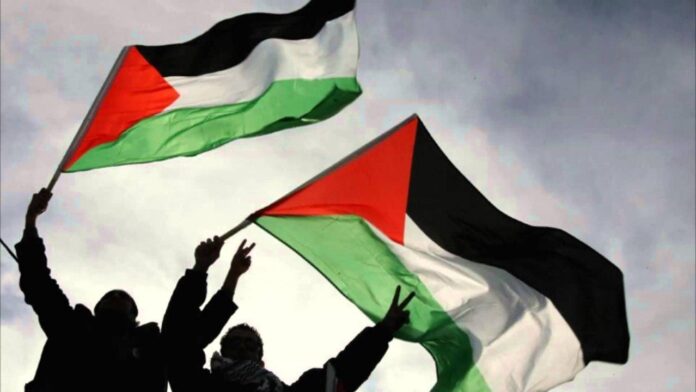
In a statement reported by Tasnim News Agency, the Popular Resistance Committees called for the opening of all fronts against Israel as the main enemy of Muslims.
The statement said the Muslim and Arab nations must mobilise forces against the Israeli regime.
“We offer our congratulations on the missile response of Syria to aggressions by the enemy. This was a big step in stopping the enemy and standing against its bullying,” it said.
The Islamic Jihad Movement in Palestine, another Palestinian group, said the Syrian attacks on Israel were a “natural response” to aggressions by the Zionist regime against Israel.
“The hands of Zionists who try to gain control over Muslims and Arabs should be cut,” it said.
The Popular Front for the Liberation of Palestine urged resistance groups to form a joint operation room against Israel.
The Islamic Resistance Movement, Hamas, also said in a statement the Israeli attack was “proof that Israel is the main enemy of the Arab nation and is mongering terror in the region.”
“The Arab and Muslim countries in the region have the right to respond with force against any act of aggression,” it said.
“The Arab nation is required to put all of its energies into deterring the enemy and thwarting its plans,” the Palestinian organization added.
Forces in Israel and Syria exchanged missile fire early Thursday, during which dozens of Israeli military sites and Syrian bases were targeted.
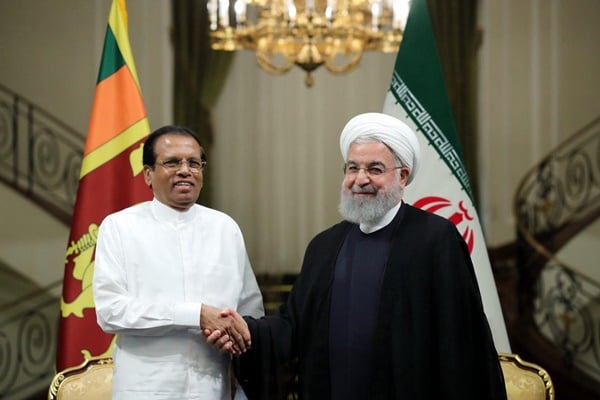
The ceremony where the documents were signed was attended by Iranian President Hassan Rouhani and his visiting Sri Lankan counterpart Maithripala Sirisena, reported the Iranian government’s website dolat.ir.
The agreements include four mutual cooperation deals as well as a program on cultural exchanges.
The cooperation documents include an agreement on fighting narcotics and psychoactive drugs, an agreement on health, medical sciences, medicines and medical equipment, and agreement between the Iranian Standardization and Industrial Research Institute and the Sri Lankan Standardization Institute on standardization, measurement, training, laboratory services and issuing certificates.
They also signed an agreement on the film industry, and a cultural deal on cultural and scientific exchanges between the two sides.
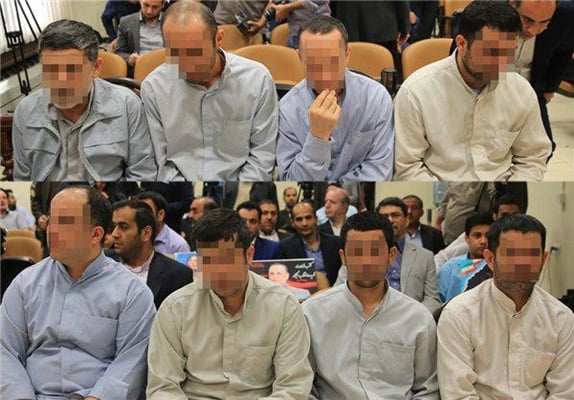
The eight, all of them operatives of the ISIS terror group, were found guilty of being accessories to “promotion of corruption on earth,” and received the death penalty, said Mousa Ghazanfarabadi, the head of revolution courts of Tehran.
According to Fars News Agency, the defendants (convicts) or their legal attorneys will be notified of the court ruling, and they will have 20 days to appeal, said the top official.
“After an appeal is made, the case will be referred to the country’s Supreme Court where a decision will be made on the finality of the verdict,” he noted.
He said eighteen other defendants of the case will be tried in due time.
On 7 June 2017, two attacks were simultaneously carried out by a number of ISIS terrorists on the Iranian Parliament building and the holy shrine of the founder of the Islamic Republic, Imam Khomeini, both in Tehran. The attacks left 17 civilians dead and 43 wounded. The shootings were the first terrorist attacks in Tehran in more than a decade, and the first major terror attack in the country since the 2010 Zahedan bombings.
Iranian security services stated on 8 June, 2017, that they had identified the militants responsible for the twin events, disclosing the men’s first names, and detailed that they had entered Iran in August 2016. The terrorists reportedly served in a clandestine cell linked to Wahhabi-related networks.
The source told Asr-e Iran news website that plans are being made for the Iranian president’s visits to the European countries.
This comes as President Rouhani earlier urged the foreign ministry to start intensive talks with European parties to the Iran nuclear deal and urge them to give Tehran assurances that it will be able to reap the benefits of JCPOA after the US withdrawal.
Accordingly, Iranian Foreign Minister Mohammad Javad Zarif is currently visiting the Chinese capital of Beijing to hold talks on the Iran nuclear deal. He will later leave China for Moscow where he will discuss the Islamic Republic’s decision on the nuclear deal with Russian officials.
Finally, Zarif will visit Brussels to attend a meeting with his British, French, and German counterparts as well as EU Foreign Policy Chief Federica Mogherini. The Tuesday meeting will be decisive for Tehran and other parties to the nuclear deal as the Islamic Republic’s staying in the nuclear deal hinges on Europe’s stance.
General Jafari said officials are not paying attention to the potentialities inside the country, and this has augmented the impact of Western sanctions.
“We have a lot of potential and capabilities inside the country, but we are facing strategic negligence, which means officials are not paying enough attention to local potentialities, and instead of looking inside, they are looking outside [the country],” he said, as reported by Fars News Agency.
“Inattention to domestic capabilities and the local agriculture domain led the enemies to using sanctions as a lever to pressure the country,” said the top commander.
He said the enemies of Iran accused the Islamic Republic of seeking to develop nukes and put pressure on the country, but “the nuclear industry is an essential need of the country.”
“Anyway, discussions and negotiations in recent years boiled down to the JCPOA, which turned into a tool to institutionalise rather than prevent sanctions against our country,” he said.
The top commander said Washington’s withdrawal from the agreement was yet another reason to believe that the White House cannot be trusted.
“Today, we are seeing once again that the US is not reliable. The United States’ move was aimed at shattering Iran’s resistance and is not something new, and we’ve been witnessing wicked moves by enemies for years, so we need to rely on ourselves and look [at the potential] inside [the country],” the top commander underlined.
He said if Iran focuses on domestic capabilities, it will not need Western countries at all.
The commander noted that European countries should give Iran assurances that the country’s interests under the JCPOA will be preserved, “but they are unlikely to give such guarantees, in which case we should move on the path to self-sufficiency and nuclear industry using domestic potential.”
Mohammad Masjed-Jamei has, in a recent interview with Khabar Online news website, recounted his memories of the time when he served as ambassador and weighed in on the ups and down in relations between Iran and Arab countries, particularly Morocco.
The interview was conducted shortly after Rabat severed its diplomatic relations with Tehran after accusing Iran of supporting the liberationist Polisario Front. The highlights of Masjed-Jamei’s remarks follow.
“Polisario” has a long story. It is an Algeria-backed independence-seeking group based in a region south of Morocco and Algeria. The region, called Western Desert, also borders Mauritania on the west.
In short, it goes back to the mid-70s of the previous century. That region had been colonized by Spain. At last, Spain left the region. At the same time, Morocco claimed the region was part of its territory.
Mohammad Masjed-Jamei
Communities in parts of Sahara have favoured the independence of Sahara. They are supported by Algeria. However Morocco wants Sahara annexed to its territory.
The issue of Sahara has become chronic. Mauritania’s ties with Sahara as well as the issue of Sahara has seen ups and downs. Accordingly, Mauritania’s relations with Morocco has ups and downs, too. The controversy over Sahara made Morocco leave the African Union because some members of the union had voted for Sahara.
The Norwegian ambassador to Morocco told me that Sahara had rich hydrocarbure resources. In those days, Norwegians were carrying out oil exploration operations in south Morocco as well as in Sahara. The Moroccans have kept a low profile about the energy deposits in Sahara and prefer not to talk about it until the legal status of the issue becomes clear.
The UN’s stance on Sahara is complicated, too. At the moment, the issue of Sahara is not only related to Morocco and Algeria. It has also spread to Europe, especially Spain and France where the official position is different from that of political parties. We can say that Spain and France are pressuring Morocco. Because Paris and Rome know that Morocco is sensitive about the issue, they play with the issue in different ways.
Regarding Iran’s relationship with Polisario, I should say that Tehran had no relationship with Western Sahara before the 1979 Islamic Revolution. After the revolution, when there were talks of backing for freedom-seeking movements, Polisario was one of the movements that came under support.
Before the revolution, King Hassan requested several helicopters from the former despotic ruler of Iran, the Shah, who then sent thirteen helicopters. The choppers were used to crack down on Polisario militants, who had socialist-marxist tendencies at that time, and Iran was committed to countering leftist tendencies in the whole region and even Africa before the revolution.
After the revolution, freedom movements, in general, were supported by Iran one way or another. One of them was Polisario, which even opened an embassy in Tehran. Iran’s backing for the Polisario front was a key contributor to the tensions in Iran-Morocco relations. And Polisario’s opening an office in Tehran was the reason behind King Hassan’s severance of ties with Iran at the time.
[Asked about the possible consequences of the severance of ties with Morocco, he said] The reality is that Morocco is in the second or third degree of importance for us. Morocco is neither our neighbour, nor a very significant country as far as Iran’s foreign relations are concerned. We are not a top priority for them, either. We are of the second or third degree of importance.
Moreover, Morocco is really a complicated country. It is difficult to manage relations with Rabat, and this is something I’ve heard from all ambassadors to Morocco, whether from Europe, or Asia, or Latin America or Arab countries. The ambassadors to Morocco praised Morocco, but criticised its “system.”
The Moroccan society is vital and dynamic, with many parties and groups, both religious and non-religious. When I was there, I was in contact with all of them. What is important is that such a relationship must be coupled with respect, which would lead to trust. So, it is not like other countries where you are only in contact with the foreign ministry. And, there is a lot of sensitivity about Iran. Of course, all around the world such sensitivity exists about Iran. In Morocco, too, the people as well as the government are sensitive about the Islamic Republic.
They are sensitive about specific issues such as the Western Sahara and promotion of Shiism.
We need public diplomacy in order to handle relations with Morocco. Public diplomacy means having contacts with the important and dynamic sections of society such as universities, the parties or parliament, and different groups, especially influential figures.
Anyway, if the points mentioned are taken into consideration, it would be possible to work with them.
One point is that certain Arab countries are united against Iran. It looks like animosity with Iran is the most important factor that leads to coordination and cooperation among them. Regarding Morocco, for example, Bahrain, Saudi Arabia, Qatar, the Arab League, the Persian Gulf countries, and even the Organisation of Islamic Cooperation, which is swayed by Saudi Arabia, backed Morocco when it accused Iran of supporting Polisario. This is because Morocco is breaking ties with Iran. If Morocco had severed its relations with a country such as Columbia or Venezuela, which has happened before, everybody would have remained silent.
It seems that we have looked at these countries with too much optimism in recent decades and have made extensive unilateral efforts to expand or consolidate relations, which has not been very fruitful. To deal with them, first we need to figure out what their declared and undeclared policies exactly are.
As for future developments, I believe the future belongs to Asia. By Asia I mean India and the Asian countries to the east of India. Our interests lie in establishing a close relationship with these countries, an approach that those countries welcome as well.
That was announced by Alireza Darvishnejad, the head of the provincial Culture and Islamic Guidance Department, at a recent cultural event.
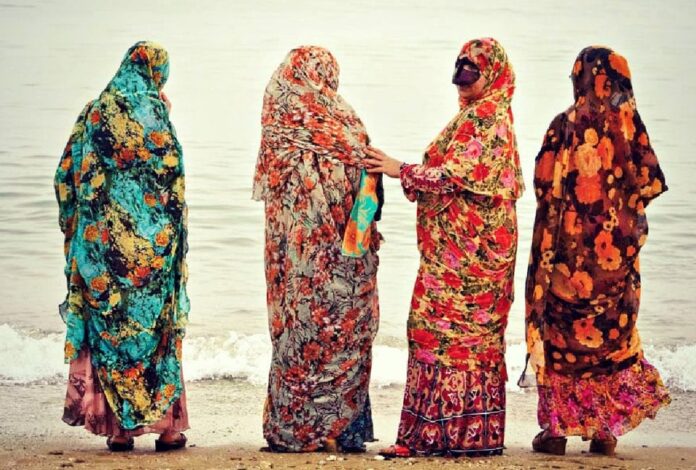
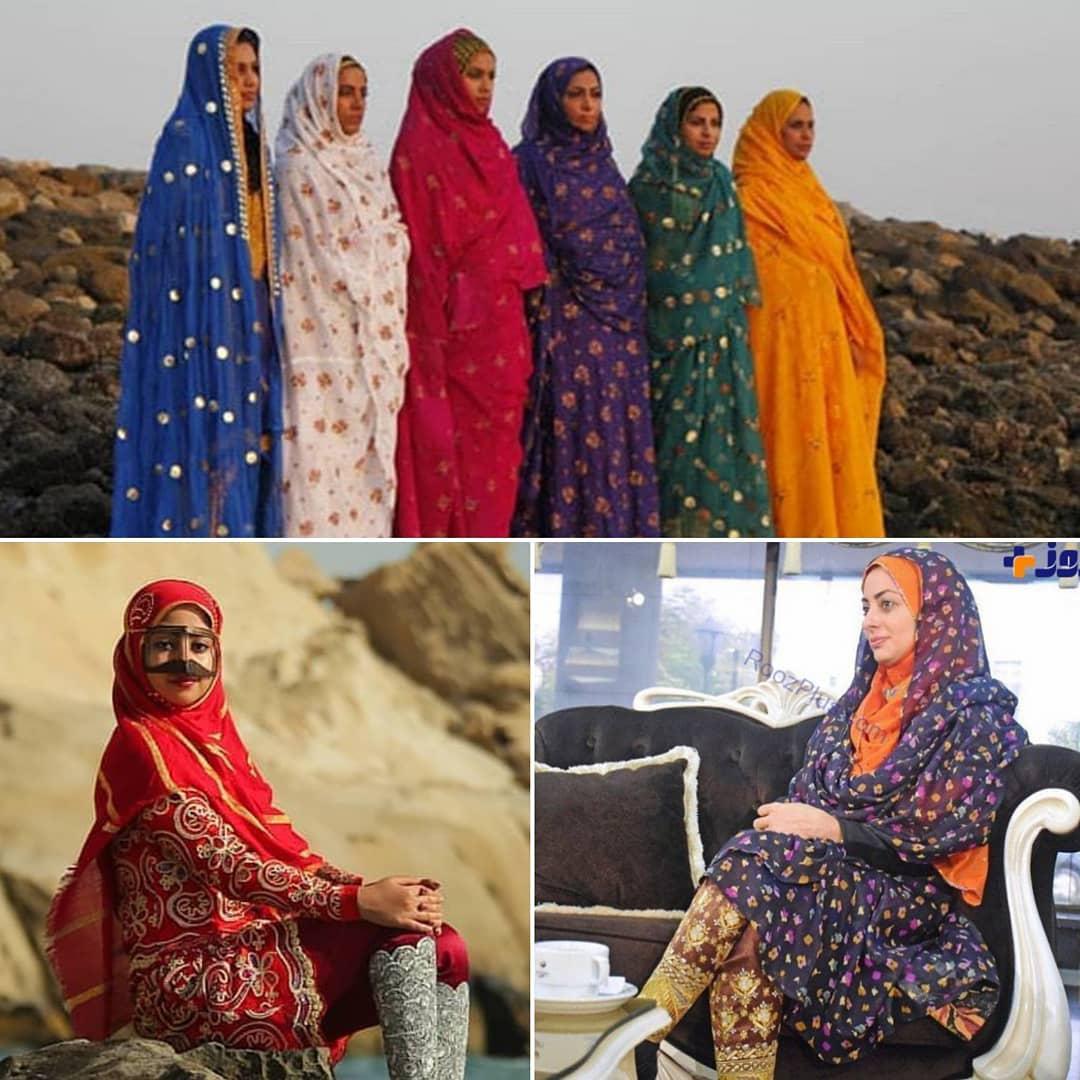
“With the approval of the minister and the governor general of Hormozgan, women civil servants and academics working in government institutions and schools are now permitted to wear traditional clothes,” said the official at the 8th International Cultural-Artistic Persian Gulf Festival.
According to Aftab News, local costumes are popular among residents native to different regions across Iran. Various geographical regions and ethnic groups are known by unique features, including local traditional outfits.
Even tourists show much interest in local costumes worn by natives in different regions in Iran as traditional clothes are also manifestations of the locals’ culture and customs.
Traditional clothes have long been part of locals’ folklore and much respected by local residents. Clothes worn by locals in towns and cities on the Persian Gulf coast in southern Iran are among the most attractive and popular traditional costumes in the country, and reminiscent of the Persian Gulf history as well.
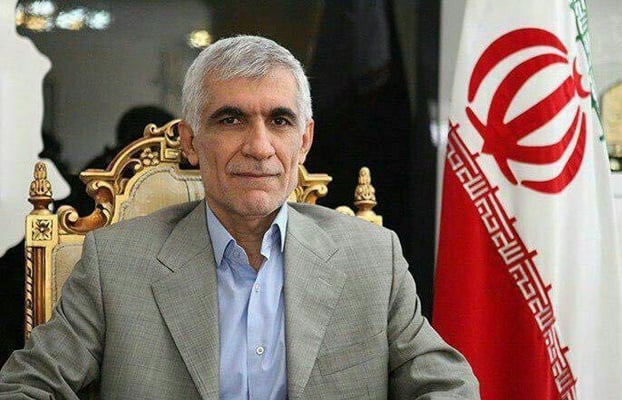
Afshani was one of the two final candidates shortlisted by the reformist city council, and finally managed to defeat his rival Samiollah Makarem-Hosseini, the acting mayor of Tehran.
Afshani, a member of the reformist party Etemad Melli (National Trust), was elected after securing 19 votes in favour, while only one councillor voted against his election.
The new mayor is currently a deputy minister of interior, and must resign from the post to start his job at the municipality.
During the first term of President Hassan Rouhani, Afshani served as the governor-general of Fars Province.
His election as the mayor of Tehran came after Mohammad-Ali Najafi, another reformist politician, resigned earlier this year over what he called his health problems.
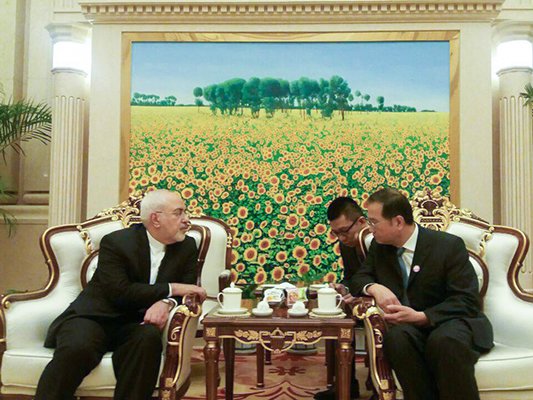
Speaking upon arrival in the Chinese capital, Zariftold reporters, “European countries should give me assurances that the Iranian nation’s interests will be safeguarded despite the United States’ withdrawal from the JCPOA.”
He said the most important action that Europe can take is to give Iran guarantees that it can keep reaping the benefits of the nuclear deal.
The foreign minister noted that Europe has, on numerous occasions, called on Iran to stay in the nuclear deal, IRNA reported.
The top diplomat, who will later leave Beijing for Moscow and Brussels, described his trips as significant.
“Iran’s relations with these countries have always been good and positive, and become all the more important now that the US has pulled out of the JCPOA,” said Zarif.
Zarif’s trip to China is the first leg of his three-nation tour, during which he is to sit down with officials to discuss how Europe is to guarantee Iran’s interests under the JCPOA.
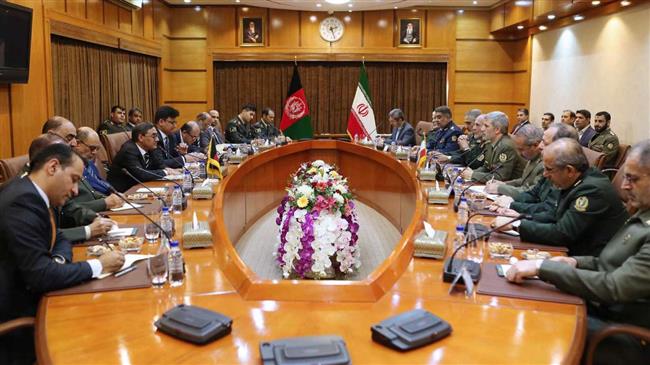
“We regard ISIS as the security tool of the US and hegemonic powers to create insecurity in the region. So, the eradication of ISIS is among the policies of the government and Armed Forces of the Islamic Republic of Iran,” Hatami said in a meeting with Afghan Defense Minister Tariq Shah Bahrami in Tehran on Saturday.
“We believe that Afghanistan should not turn into a place for regional and international rivalries, rather it should be a center for regional cooperation,” he added.
He noted that Leader of the Islamic Revolution Ayatollah Seyyed Ali Khamenei and the Iranian government have always stressed the importance of bolstering cooperation with Afghanistan in all political, economic, cultural, security, defense and military fields.
Late in January, Ayatollah Khamenei said the United States has been relocating ISIS from the Middle East to the South Asian country to rationalize its military presence in the region.
By transferring the ISIS terror group from Iraq and Syria to Afghanistan, the US seeks “to justify the continuation of its presence in the region and to create security for the Zionist regime,” the Leader said.
Later in February, Iran’s top military commander said the United States is transferring ISIS to Afghanistan now that the terrorists have lost their strongholds in Iraq and Syria.
Chief of Staff of the Iranian Armed Forces Major General Mohammad Baqeri said that continued tensions in Southwest Asia would provide Americans with the much-desired pretext to prolong their military presence there.
Enemies aim to spread instability in Afghanistan: Bahrami
The Afghan defense minister, for his part, said enemies intend to spread instability in Afghanistan and disintegrate the country.
As a friendly and neighboring country, Afghanistan would never allow any country to use the Afghan territory to carry out an act of aggression against Iran, Bahrami added.
He noted that both Iran and Afghanistan aim to fight terrorism, particularly the ISIS terror group, and said the presence of terrorists would increase insecurity and instability across the region.
He said the Afghan government seeks to boost close cooperation with Iran as an influential country in the region.

 According to