Tuesday, December 23, 2025
Home Blog Page 3600

Iran Welcomes Restoration of Peace, Security to Armenia

In a Saturday statement, Qassemi said neighbours and their calm, stability and security are a major priority for Iran.

“Like before, we are ready to expand and deepen our relations with Armenia in all fields,” he said.

Armenia’s parliament elected Nikol Pashinyan as the country’s new prime minister on Tuesday.

The appointment ended weeks of street protests led by Pashinyan against the election of Serzh Sargsyan, Armenia’s president for the past 10 years, to the premiership office.

Iran to Host Meeting of World Crafts Council’s West Asia Sub-Region

This is the third time that Iran is going to host the WCC-West Asia Sub-Region over the past years.

According to a report by the Miras-e Arya News Agency, the new round of World Crafts Council-West Asia Sub-Region will be held in September with all member states in attendance.

Headed by Ghada Hijjawi Qaddumi from Kuwait, the WCC-West Asia Sub-Region has twelve members including Kuwait, Oman, Jordan, Lebanon, Bahrain, Palestine, Qatar, Saudi Arabia, the UAE, Yemen and Iran.

This year’s jury of WCC-West Asia Sub-Region includes one or two experts from Iran, one from Kuwait, one from Oman and two others from Asia and European countries.

Those Iranian handicrafts which received National Seal of Excellence for Handicrafts in Iran last year will represent the country during this year’s competition.

From 70 to 100 handicrafts picked up out of 356 pieces by Cultural Heritage, Handicrafts and Tourism Organization of Iran will compete this year.

The competition is aimed at encouraging artisans to produce quality products using original and traditional techniques and design in order to ensure their continuity and sustainable development.

Iran’s Women Futsal Team Crowned Asian Champions Again

A hat-trick to Sara Shirbeigi and further goals to tournament MVP Fereshteh Karimi and veteran Fahimeh Zarei sealed an outstanding victory for Sharhzad Mozafar’s side, who also won the inaugural title in Malaysia three years ago.

Japan had the better of goalless first half but failed to capitalise, before Iran produced a blistering scoring burst that included three goals in two second-half minutes, to take the game away from Kenichiro Kogure’s side.

Masami Kato had two shots in the first six minutes, before Mika Eguchi forced Iranian goalkeeper Farzaneh Tavasoli into an excellent save six minutes later, and volleyed over the crossbar after tricking her way into space not long after

The player who had arguably done the most to get Japan to the final, four-time player of the match Anna Amishiro, hit the side netting in the 18th minute before Tavasoli made another fine save to deny Misato Komura a minute later. Despite spending extended periods under pressure, Iran looked as though they might take a half-time lead when Sara Shirbeigi ran right through the Japanese in the dying seconds, only for Eguchi’s last-ditch defending to snuff out the chance.

Iran’s Women Futsal Team Crowned Asian Champions AgainIt took less than 30 seconds for Ryo Egawa to force Tavasoli into another save, and less than two minutes for Shirbeigi to blast her effort over the crossbar as the battle intensified at the start of the second half.

Fahimeh Zarei looked certain to put Iran in front in the 24th minute, but failed to make contact with the ball with the goal at her mercy, then watched as Seyedehnastaran Moghimidarzi’s follow-up flew harmlessly over the crossbar.

Iran’s breakthrough came in the 27th minute when a lighting fast counter-attack drew Ayaka Yamamoto out of position, before Moghimidarzi rounded the Japanese goalkeeper and kept her cool to find Shirbeigi whose one-touch finish made it 1-0 from close range.

Having scored the winning goal in the final three years ago, Karimi made her mark on the 2018 final when she scored directly from a kick-in with the help of a Komura deflection at the half-hour mark.

That signalled the start of an Iranian goal-rush as Karimi set up Shirbeigi to make it 3-0 just seconds later, and three became four when Shirbeigi completed a magnificent hat-trick by scoring another in the following minute.

The goal also brought Shirbeigi level with teammate Fatemeh Etedadi as the tournament’s top scorer with nine.

Japan head coach Kencihiro called a time-out, and his side re-emerged in a power play formation, which paid immediate divivdeds when Eguchi finally got a reward for constant goal threat to make it 4-1.

Not content with her goals, Shirbeigi turned provider to set up Zarei for one of the goals of the tournament when masterfully flicked the ball past Yamamoto in the 36th minute.

Amishiro scored her ninth goal of the tournament in the final minute to create a three-way tie in the race for the tournament’s top scorer, but it had little bearing on the final outcome as Iran celebrated a wonderful win.

Iran women’s futsal team had been crowned as the inaugural champions of the AFC Women’s Futsal Championship in September 2015 in Malaysia.

Iran beat Japan 1-0 in the final in the inaugural final in Malaysia three years ago, with the tournament’s Most Valuable Player Fereshteh Karimi scoring the decisive goal and Farzaneh Tavasoli making a number of key saves.

Both players have been outstanding again in Bangkok this year, with able support from the likes of nine-goal top scorer Fatemeh Etedadi and Sara Sirbeigi.

On the way to the final clash Iran beat Turkmenistan 14-0 and Uzbekistan 9-2 to reach quarterfinals as the table-topper of the Group D.
In the clash against China in quarterfinals, Iran won 4-2 to reach the semifinal game where it hammered Vietnam 5-0 to pave the way to the final game.

Iran has long been an Asian futsal powerhouse. Men’s national team has dominated the AFC Futsal Championship, winning the competition 12 of the 15 times it has been staged.

The tournament, which was the second edition of the games, was started on May 2.

The AFC Women’s Futsal Championship is the premier national women’s futsal competition of Asian Football Confederation nations.

Ashgabat Ready to Enhance Ties with Tehran: FM

Speaking in the meeting, Meredow said he is pleaded to visit Tehran and that his country is “ready to expand relations with Iran in various fields.”

Zarif, in turn, said Tehran welcomes greater cooperation between the two countries in political, economic and cultural sectors.

“We see no limit to expansion of relations and are eager to deepen bilateral relations with the neighbouring country, Turkmenistan,” he said.

Zarif and Meredow conferred on a wide range of grounds for cooperation including gas, oil, industries, agriculture, tourism, education and culture.

The two officials also discussed efforts to establish a legal regime for the Caspian Sea, the two countries’ joint investments, the water crisis in the region, holding of Nowruz (Persian New Year) ceremony, facilitating travels between the two countries, and road and railroad cooperation.

Iraq, Qatar, Oman Dismayed over US Withdrawal from JCPOA

Iraqi President Fuad Masum expressed regret over Trump’s decision while praising the other signatories to the JCPOA for remaining committed to the agreement.

In a statement earlier this week, the Iraqi president called on the US not to harm the Iran nuclear deal and not to prevent other parties from fully implementing the agreement.

He urged the US to rethink its decision, saying the Iran nuclear deal is regarded as a major achievement to promote the opportunity to establish peace and ensure progress for all regional countries as well as the whole international community.

He further expressed Iraq’s opposition to all types of weapons of mass destruction, especially nuclear arms. He noted concerns over the US decision to unilaterally pull out of a historic deal on Iran’s nuclear program will not help reinforce security and stability in the Middle East region and other parts of the world.

Qatar also reacted to the US withdrawal from the JCPOA, calling for talks with Iran to settle the existing problems.

Doha said efforts to rid the Middle East of nuclear weapons should be a priority, urging regional powers not to get involved in an arms race.

Qatar’s foreign ministry announced that Doha is not a signatory to the deal like other Persian Gulf Arab states, but given Qatar’s geographical position as well as its political and historical relations with the parties to the JCPOA, pays attention to the consequences of whatever decisions the signatories make.

Qatar noted that it supports efforts by all influential international and regional players as well as parties to the deal to prevent a potential crisis. According to Qatar, it will be in the interests of all sides to exercise restraint and judiciously iron out the existing differences through dialogue.

Oman’s foreign ministry also announced that it follows up on the developments unfolding in the wake of Washington’s decisions to leave the JCPOA.

The ministry said in a statement that the option of confrontation will be to the benefit of no signatory, and that Oman supports the stance of the other five parties to the agreement.

Iranian MPs Split on Future Steps over Nuclear Deal

In a controversial move earlier this week, a group of conservative lawmakers set the US flag and a copy of the Iran nuclear deal on fire while chanting “Death to America” on the Parliament floor.

Vice-Speaker Ali Motahari immediately slammed the burning of the US flag as irrational, saying that such moves insult the American nation, two-third of whom are reportedly against Trump’s decision.

Lawmaker Alireza Rahimi also wrote on his Twitter page that the move has no place in the Islamic culture and is rejected in political logic.

After seeing the US flag and a symbolic copy of the JCPOA being set ablaze, Parliament Speaker Ali Larijani dismissed Trump’s comments as cheap.

“Trump lacks rational competence, but Iran can bring him to his senses,” said Larijani, a report by Khabar Online said.

Although at this sensitive juncture Parliament is expected to unanimously support the government to confront the US, we are seeing different approaches at the legislature.

Hardline lawmakers, who were against the JCPOA from the outset and have, time and again, said ironically that the “deal was ratified in the Parliament in 20 minutes,” are seizing the opportunity nowadays to settle their political scores with the government.

Some of them have begun whispering that Iran should scrap the JCPOA, arguing that Europe is not reliable. Some MPs have described working with Europe on JCPOA as “out of the frying pan into the fire.” Some have called for Iran to pull out of the agreement.

However, some legislators while condemning Trump’s move believe that the efforts made by the Iranian nuclear negotiating team which led to the conclusion of the JCPOA should not go to waste.

“The honest efforts by the officials of the Islamic Republic of Iran should be appreciated, especially [efforts by] the nuclear negotiating team, which, under the guidelines of the Leader, held talks with major world powers and defended the rights of the Iranian nation,” read a statement by a group or lawmakers.

“Trump’s unwise move is a stain on [the record of] US authorities and shows their hegemonic temperament, and the flames of such behavior could spread to other nations and governments if it is not controlled by international circles, intellectuals and the public opinion in the US,” the statement also read.

“Strategic Disaster of Leaving Iran Deal”

US President Donald Trump announced on Tuesday that Washington would pull out of Iran nuclear deal and reinstate nuclear sanctions on Iran. This is while most world powers including Russia, China, and European Union have repeatedly stressed that keeping the deal is in the interest of world peace and security.

The full text of Mousavian’s article, originally published by Foreign Affairs, follows:

On Tuesday, US President Donald Trump withdrew the United States from the Joint Comprehensive Plan of Action (JCPOA), colloquially known as the Iran nuclear deal, which had provided Iran with sanctions relief in exchange for stringent monitoring and limits on the country’s nuclear program. Calling the JCPOA a “horrible, one-sided deal that should have never, ever been made,” Trump announced that the United States would soon begin “reinstating US nuclear sanctions on the Iranian regime.”

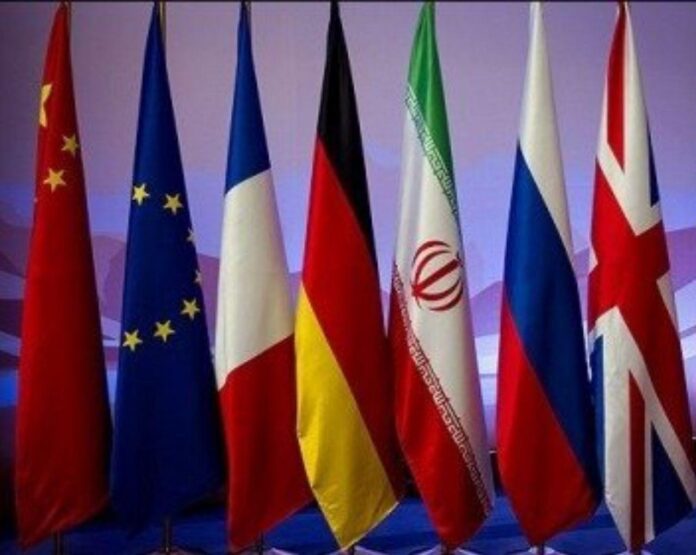
In response to Trump’s withdrawal, Iranian President Hassan Rouhani announced that Iran would remain committed to the terms of the JCPOA while it negotiates with the other parties to the deal—China, France, Germany, Russia, the United Kingdom, and the European Union. If a satisfactory solution cannot be found that safeguards the economic benefits Iran is entitled to under the deal, Rouhani said, Iran would “start enriching uranium more than before.” Iranian Supreme Leader Ayatollah Ali Khamenei, however, has expressed doubt that the Europeans will deliver, stating that “without receiving a strong guarantee from these three European countries, we won’t stick to the nuclear agreement.”

Trump’s decision undoes the signature foreign policy achievement of his predecessor, Barack Obama, and represents an affront to the United States’ European allies, which had strongly lobbied the Trump administration to remain in the deal. But the more enduring impact will be in Tehran, where Trump’s nixing of the JCPOA—and Europe’s response—will push Iran’s leaders to move decisively into the camp of the United States’ geopolitical rivals. It will also shift the policy debate among Iran’s elites, who have for several years argued over the merits of dialogue with the United States. Now, that debate is settled. Iran has learned that negotiating with Washington is a dead end. Instead, it will seek to strengthen its ties with non-Western powers, including China and Russia.


No New Friends

Trump’s decision to withdraw from the JCPOA is rooted in a long-standing US opposition to Iran’s post-revolutionary political system, which past and present US leaders have viewed as an irreconcilable challenge to the creation and consolidation of a US-dominated regional security order. They have seen Iran as a revisionist power implacably opposed to US allies in the region, including the conservative monarchies of the Persian Gulf and the Middle East’s many military autocracies. Since the Islamic Revolution in 1979, the United States’ overarching strategy has therefore been to exert maximum pressure to marginalize Iran within the region.

The US strategy of pursuing unrelenting confrontation with Iran, however, is based on a misreading of Iranian strategic thinking. Iran’s regional posture is not offensive but aimed at deterring a US or Israeli attack and ensuring the stability of its neighbours, lest chaos spread across its borders. It has supported the central states in Afghanistan, Iraq, and Syria to this end.

Since the 1979 Islamic Revolution, all sides in Iran’s foreign policy debates have been united by a desire to balance the country’s foreign relations and keep its options open regarding international partnerships. Iran’s revolutionary father, Ayatollah Ruhollah Khomeini, emphasised that remaining “neither East nor West” should be a fundamental tenet of the Islamic Republic’s foreign policy—that is, avoiding subservience to foreign powers, whether Western ones such as the United States or Eastern ones such as China or the former Soviet Union—a belief rooted in the fact that Iran had succumbed to near complete foreign domination from the nineteenth century on.

This desire to hedge has led to many attempts by Iranian leaders to repair relations. After the end of the Iran-Iraq War in 1988, Iranian President Ali Akbar Hashemi Rafsanjani, guided by his desire to develop international economic and political partnerships, reached out to the West, especially Europe, facilitating the release of American and other Western hostages in Lebanon and offered a $1 billion contract to the US oil firm Conoco. Yet he was rebuffed by US President George H. W. Bush. The reformist Iranian President Mohammad Khatami had a similar experience in his dealings with Presidents Bill Clinton and George W. Bush, the latter of whom designated Iran as part of the “axis of evil” after Khatami had offered to assist the US effort in Afghanistan.

Even the bellicose Iranian President Mahmoud Ahmadinejad offered to stop enriching uranium at the 20 percent level if Iran was provided the nuclear fuel it needed freed American hikers accused on espionage and welcomed a Russian proposal that was remarkably similar to the JCPOA. Washington responded by further tightening sanctions.

For Tehran, the JCPOA at its core was another test of whether the United States would be open to an improved relationship that would allow Iran to hedge its bets. Trump’s abrogation of the nuclear deal, however, sends a firm message to Iranian decision-makers: diplomatic engagement is pointless. It has validated those in Iran who have long argued against negotiating with the United States on the grounds that Washington is fundamentally opposed to the Islamic Republic’s pursuit of an independent political, security, and economic policy and is bent on regime change in Tehran regardless of how much goodwill the Iranians show.

Indeed, Trump’s hostility toward the JCPOA, and Iran in general, had already prompted Khamenei to declare earlier this year that the “top priorities” for Iran’s foreign policy “include preferring East to West.” Iran has moved to sign unprecedented trade and cooperation agreements with Russia and China. Now, it is likely to give up on improving relations with the United States and potentially Europe as well—especially if the European countries fail to compensate them for the impacts of the US withdrawal, preserve the deal, and ensure that Iran continues to enjoy substantial relief from sanctions.

Iran’s current cooperation with Russia in Syria may become a new model for how it deals with other regional crises. As Russia’s ties with the United States have frayed in recent years, Moscow has moved to establish itself as a major player in the Middle East, a first since Soviet times. Russia’s success in shoring up its only regional ally, Syria, was possible only through Iranian assistance and Russian-Iranian cooperation in Syria grew to include Iran’s ally Iraq in an intelligence coalition in the war against the Islamic State (ISIS). Russia has also been wary of the Trump administration’s hostility toward Iran and, in February, used its UN Security Council veto against a US-spearheaded resolution targeting alleged Iranian arms shipments to Yemen. With Trump’s withdrawal from the JCPOA, Iran might seek to increase military and technological cooperation with Russia, not only in Syria but in other areas in which they have overlapping interests, such as Afghanistan. Tehran may also choose to increase refuelling rights for Russian military aircraft in Iran or dedicate more troops and materiel to advancing joint Russian-Iranian aims in Syria.


Making Things Worse


Washington’s new policy is also immensely counterproductive for regional and international stability, eliminating the chance for US-Iranian cooperation on the many crises in the Middle East. Over the past decades, US actions, including its invasions of Afghanistan and Iraq and its role in toppling Muammar al-Qaddafi in Libya and supporting the Saudi-led war on Yemen, have all been major contributors to regional instability. The JCPOA had raised hopes that Iran and the West could cooperate to resolve regional conflicts, especially in Syria and Yemen.

Notably, several months after the deal was struck, in November 2015, Iran, with the support of the United States, was invited to the UN’s Syrian peace talks for the first time. This led to the conflict’s first agreement on a cessation of hostilities, which has largely held and expanded to different parts of Syria. Iranian buy-in is crucial to any political solution to the Syrian conflict, given Tehran’s influence on the ground. Iran has also played an integral role in the fight against ISIS and other terrorist organizations that threaten regional stability. Trump’s withdrawal from the JCPOA and hostility toward Iran’s regional presence will both empower terrorist groups in the vein of ISIS—which will have the focus on them removed—and make an enduring political resolution to the Syrian war an even more distant prospect.

Trump’s Iran policy is thus strategically self-defeating. It promises to increase US involvement in the Middle East’s many entangled conflicts, given Iran’s decisive influence in strategic regional theaters—including Afghanistan, Iraq, Syria, and Yemen. Iran is an indispensable player that must be engaged to resolve regional crises, while seeking to ostracize and isolate Tehran will only exacerbate regional instability. Iranian allies, which represent key constituencies with legitimate grievances, will also not accept marginalization—whether that be Lebanon’s Shiite plurality; Iraq’s Shiite majority; anti-Taliban (especially Hazara, Tajik, and Uzbek) Afghans; occupied Palestinians; Iraqi Kurds; Zaydis in Yemen; and, increasingly, Christian and other minority groups in Iraq and Syria. Trump has rebuffed the potential for regional cooperation and raised the real possibility of a devastating conflict with Iran. Trump is also pushing Iran closer to Russia and China, even as his decision is increasing tensions between them and the United States. Whatever the motivation behind Trump’s decision to withdraw is, a sound geopolitical strategy is not one of them.

A Look at Iranian Newspaper Front Pages on May 12

A Look at Iranian Newspaper Front Pages on November 19

Several papers today covered the West’s reaction to Iran Leader’s disclosure of a secret letter by US President Donald Trump to certain Arab countries.

The ongoing efforts by the European countries and Iranian Foreign Minister Mohammad Javad Zarif to save the Iran nuclear deal also received great coverage.

The recent developments in Syria and the Golan Heights were also a top story. Many papers blasted the Israeli regime’s attacks on Syrian positions and described it as a move to escalate the tension and provoke Iran into getting engaged in a military conflict.

The above issues, as well as many more, are highlighted in the following headlines and top stories:


19 Dey:

1- World United in Defending Iran Nuclear Deal

2- Iran Leader during Visit to Tehran Book Fair: Book among Necessities of People’s Lives

A Look at Iranian Newspaper Front Pages on May 12


Abrar:

1- Iranians Hold Protest Rallies to Protest US Withdrawal from Iran Nuclear Deal

2- Germany, Russia Agree on Preserving JCPOA, Resolving Syria Crisis Politically

A Look at Iranian Newspaper Front Pages on May 12


Aftab-e Yazd:

1- Ignored by Everyone, Iranian Female Futsal Players Make It to Asian Final

2- Diplomats, from Tehran to Berlin, Working Hard to Preserve JCPOA

3- Water May Be Transferred from Sea of Oman to Three Provinces as of Next Year

A Look at Iranian Newspaper Front Pages on May 12


Arman-e Emrooz:

1- Trap of Golan War

  • Trump’s Withdrawal from JCPOA, Putin’s Smile at Netanyahu and His Attack on Syria
  • Possibility of Iran-Israel Conflict Reinforced

2- Self-Restraint Shown by Iranian Officials, Armed Forces against Israel Receive Positive Coverage

A Look at Iranian Newspaper Front Pages on May 12


Ebtekar:

1- Israel’s Dangerous Game in Syria

  • After Israeli Attacks on Syrian Territory, Golan Heights Targeted by Missiles

A Look at Iranian Newspaper Front Pages on May 12


Etemad:

1- Iran Leader: Anyone Familiar with Islam Offers More Social Services

A Look at Iranian Newspaper Front Pages on May 12


Ettela’at:

1- Oil Minister: We’ll Have No Problem in Oil Exports

2- Trump: We Knew Kerry Didn’t Have a Chance against Zarif

  • Iranians Have Always Been Great Negotiators

A Look at Iranian Newspaper Front Pages on May 12


Hamshahri:

1- Europe Poised to Gain Independence from US

  • European Leaders Take New Approach on US Sanctions on Iran

A Look at Iranian Newspaper Front Pages on May 12


Hemayat:

1- Mohammad-Javad Larijani: Iran Currently Has No Commitment under JCPOA

A Look at Iranian Newspaper Front Pages on May 12


Iran:

1- Europe Working Hard to Preserve Iran Nuclear Deal

2- Israel Flying Missiles on Self-Fabricated Pretexts

A Look at Iranian Newspaper Front Pages on May 12


Jahan-e Eqtesad:

1- Oil Minister: Threats Are Long Gone

A Look at Iranian Newspaper Front Pages on May 12


Jame Jam:

1- Trump’s $380-Billion Partners

  • Comparing Volume of E3’s Trade with Iran, US

A Look at Iranian Newspaper Front Pages on May 12


Javan:

1- Night of Missile Retaliation in Golan: Occupied Territories Hit by 68 Syrian Missiles

2- Entire Iran Chant “Trump, Like Hell You Will!”

3- New York Times Confirms Iran Have Received Copy of Trump’s Letter to Arabs

A Look at Iranian Newspaper Front Pages on May 12


Jomhouri Eslami:

1- Iran FM to Start Negotiations with 5 Parties to JCPOA

2- EU Worried about Awful Humanitarian Situation in Yemen

A Look at Iranian Newspaper Front Pages on May 12


Ka’enat:

1- American Letters!

  • Trump Has Written Two Letters to Arab Countries
  • First Letter Disclosed by Ayatollah Khamenei

A Look at Iranian Newspaper Front Pages on May 12


Kayhan:

1- Analytical Review of “Over 10 Lies Told by Trump”

2- Western Media Surprised by Iran Leader’s Access to Trump’s Letter to Arabs

A Look at Iranian Newspaper Front Pages on May 12


Resalat:

1- Tehran Friday Prayers Leader: Europe No Different from US in Violating Commitments

A Look at Iranian Newspaper Front Pages on May 12


Rooyesh-e Mellat:

1- Araqchi: It’s Possible to Save JCPOA If Sufficient Assurances Provided

A Look at Iranian Newspaper Front Pages on May 12


Sazandegi:

1- Return of Malaysia’s Father

  • Mahathir Mohamad Elected as Malaysian PM in 92

A Look at Iranian Newspaper Front Pages on May 12


Shahrvand:

1- Orhan Pamuk in Iran: To Me, Iranian Readers Different from Other Readers

A Look at Iranian Newspaper Front Pages on May 12


Shargh:

1- Around the World to Save JCPOA

  • Zarif to Visit Beijing, Moscow, Brussels

2- Intelligence Minister: Environmentalists Arrested Not Spies

A Look at Iranian Newspaper Front Pages on May 12


Vatan-e Emrooz:

1- First Post-ISIS Elections

  • Political Competition in Iraq Begins with 204 Parties, 27 Coalitions

A Look at Iranian Newspaper Front Pages on May 12

First Post-ISIS Elections Start in Iraq

Around 7,000 candidates, representing 205 political entities, are vying for 329 seats in the parliamentary elections.

Polls open at 7 a.m. and close at 6 p.m local time. The independent body overseeing the election is estimating high turnout, because it comes amid a relative lull in terrorist attacks.

The electoral commission has said results will come hours after polls close. The Iraqi constitution sets a 90-day deadline for forming a government after the results are formally announced.

Despite relative calm across the country, security is already high nationwide as Baghdad says terrorists still pose a major security threat.

This is the fourth such polls since the 2003 US invasion.

The Saturday race features four main contenders: Prime Minister Haider al-Abadi, his predecessor Nouri al-Maliki, former transport minister Hadi al-Ameri, and former prime minister of the Kurdistan Regional Government (KRG), Barham Salih.

Prime Minister Abadi, who takes credit for the hard-fought battle against ISIS, appears marginally ahead.

Former premier Maliki, who was forced to step down after ISIS overran large swathes of country in 2014, still wields considerable influence.

Another new alliance entering the elections for the first time is Conquest (Fatah) Alliance, which consists of 18 political parties. Many of the parties are former factions of the popular mobilization forces. The alliance is led by Ameri, the secretary general of Badr Organisation.

The PMF, more commonly known by its Arabic name as Hashd al-Sha’abi, was the key in defeating ISIS terrorists last year. The main units have handed over their weapons to the state in order to enter the political process.

Sa’iroun (Marchers) alliance is another new coalition contesting the key vote for the first time. The Sadrist movement led by cleric Moqtada Sadr forms the backbone of the alliance. The senior Shia cleric himself, who has strong support, will not contest the elections.

Also, the National Coalition, and the Uniters for Reform Coalition are two big Sunni majority alliances to take part in the election. The National Coalition leader is Iraq’s vice president, Ayad Allawi. He won a high number of seats in hotly contested elections in 2010.

The semi-autonomous northern Iraq Kurdistan Region is represented at the polls by the Kurdistan Democratic Party (KDP) and the Patriotic Union of Kurdistan (PUK), a report by Press TV said.

The Kurdish heavyweights have had their clout seriously damaged after an independence referendum last year. The vote was announced by KDP leader Massoud Barzani, prompting domestic and international warning that it would throw the violence-wracked country into more disarray.

This has paved the way for Barham Salih, a former KRG prime minister, and the fledgling New Generation Movement’s leader Shaswar Abdulwahid to emerge as new contenders.

Iraqi security forces cast their ballots in early voting on Thursday, while over 850,000 Iraqi expatriates living in 21 foreign countries went to the polls on Thursday and Friday.

Iran, Bolivia Discuss Promotion of Defence Ties in Tehran

The Iranian military chief made the remarks on the sidelines of a meeting with the visiting Bolivian Army Commander Rear Admiral Yamil Octavio Borda Sosa in Tehran on Saturday.

“The Bolivian army has expressed interest in technical and military cooperation, housing projects of for the armed forces, and training programs, which are all welcomed,” Baqeri said.

Baqeri said he hoped that the visit will usher in a new era of ties between the two nations and the armed forces.

“Our nation regards Bolivia as a country which has resisted the US evil wishes. Iran hails the efforts made by the Bolivian armed forces toward the country’s independence” he added.

Bolivian army chief, for his part, said his visit aimed to bring the two nations closer.

He extended his nation and government’s “sincere message of friendship” to Iran, and hoped that the visit will lead to certain agreements in the area of defence.

Sosa was set to meet with senior Iranian officials, including the defence minister, later Saturday.