Tuesday, April 28, 2026
Home Blog Page 3594

Researchers Use Cinnamon to Develop Antibacterial Nanocomposites

The nano-materials produced will not only remove waste pollutants, but can also be used as antibiotics in treatment programs.

Researchers at the knowledge-based company which has developed the nano-products say the project was aimed at developing a simple and green method to synthesize silver nanoparticles and its nano-ingredients with anti-bacterial and magnetism-absorbing properties.

For a brief review of Iran’s achievements in various fields of science and technology, check the book “Science and Technology in Iran: A Brief Review

To that end, researchers used cinnamon, which has anti-bacterial properties, ISNA reported.

Given that cinnamon is produced on a large scale, it is easily accessible and economical.

On the whole, the product developed by the researchers can be used as a new strategy to kill resistant bacteria.

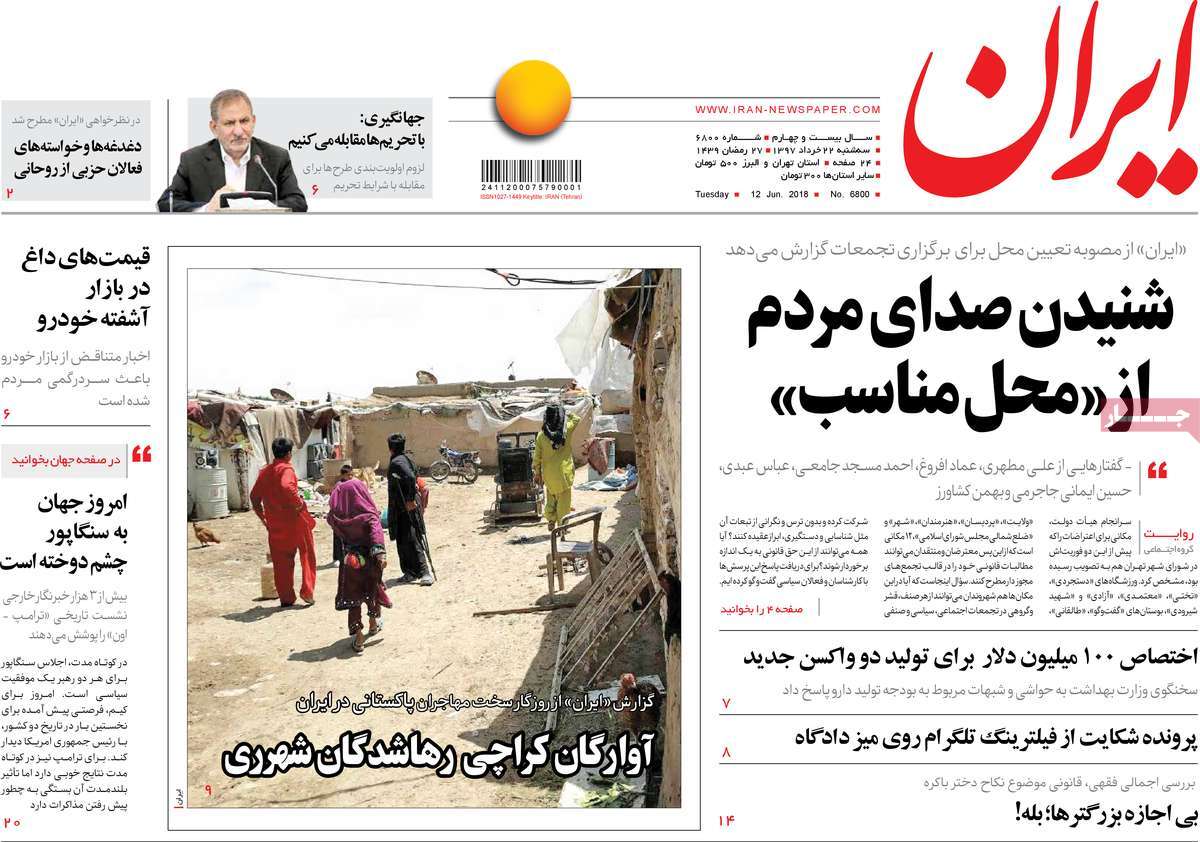
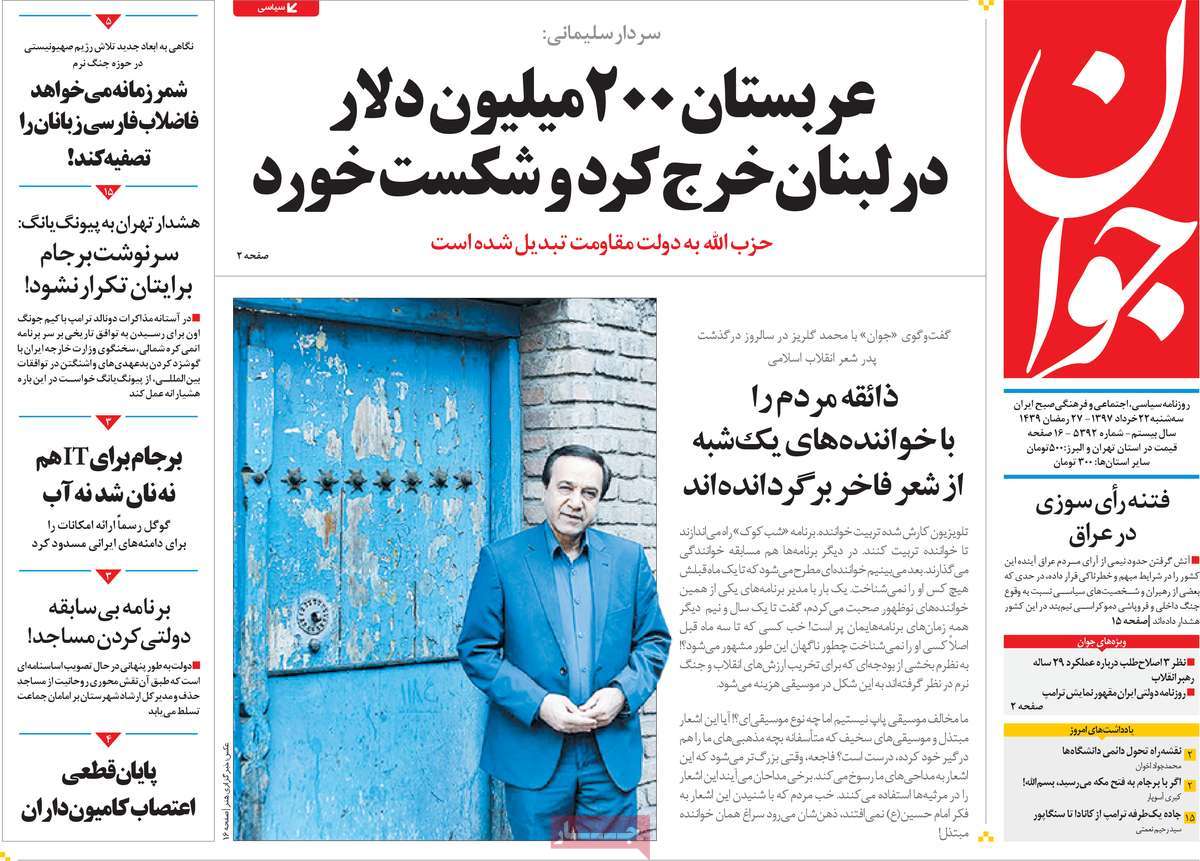
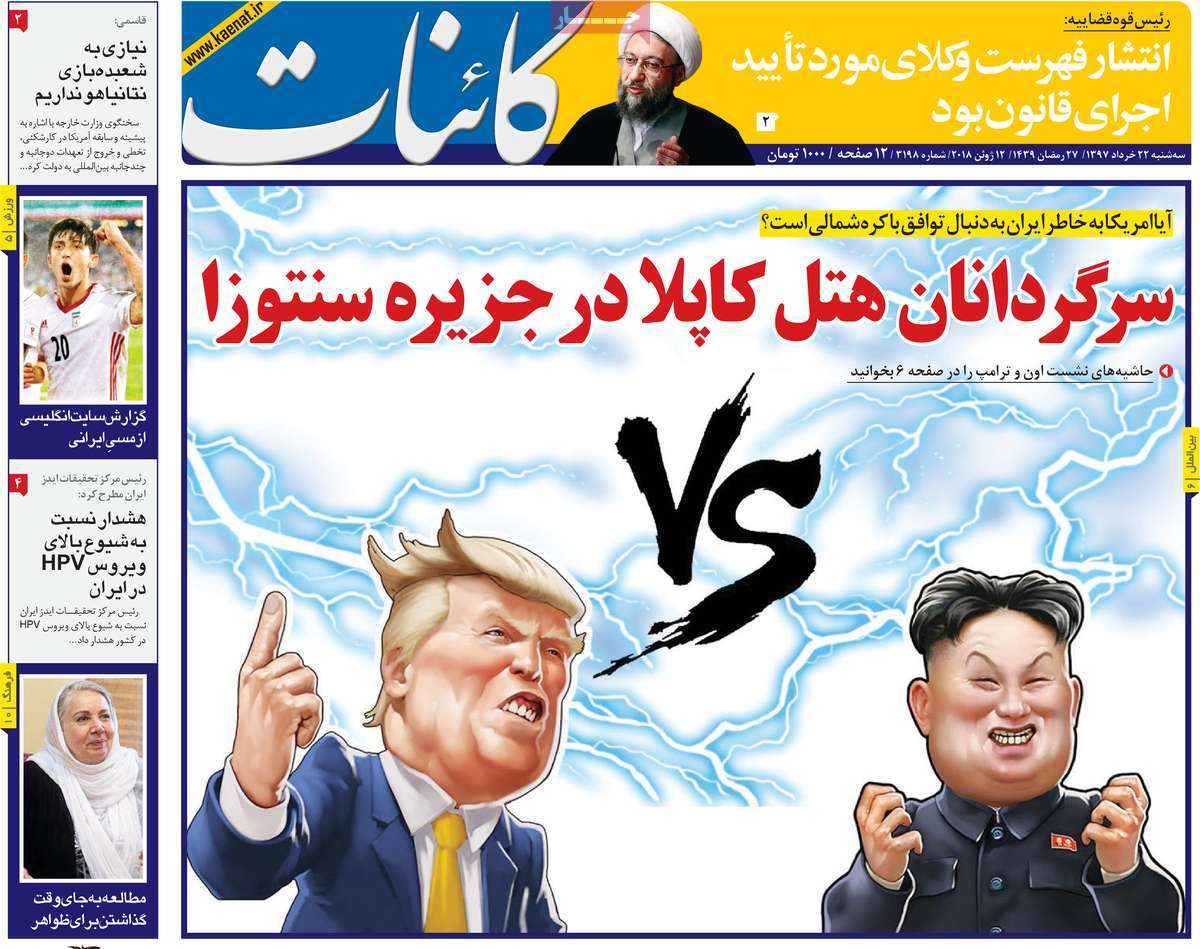
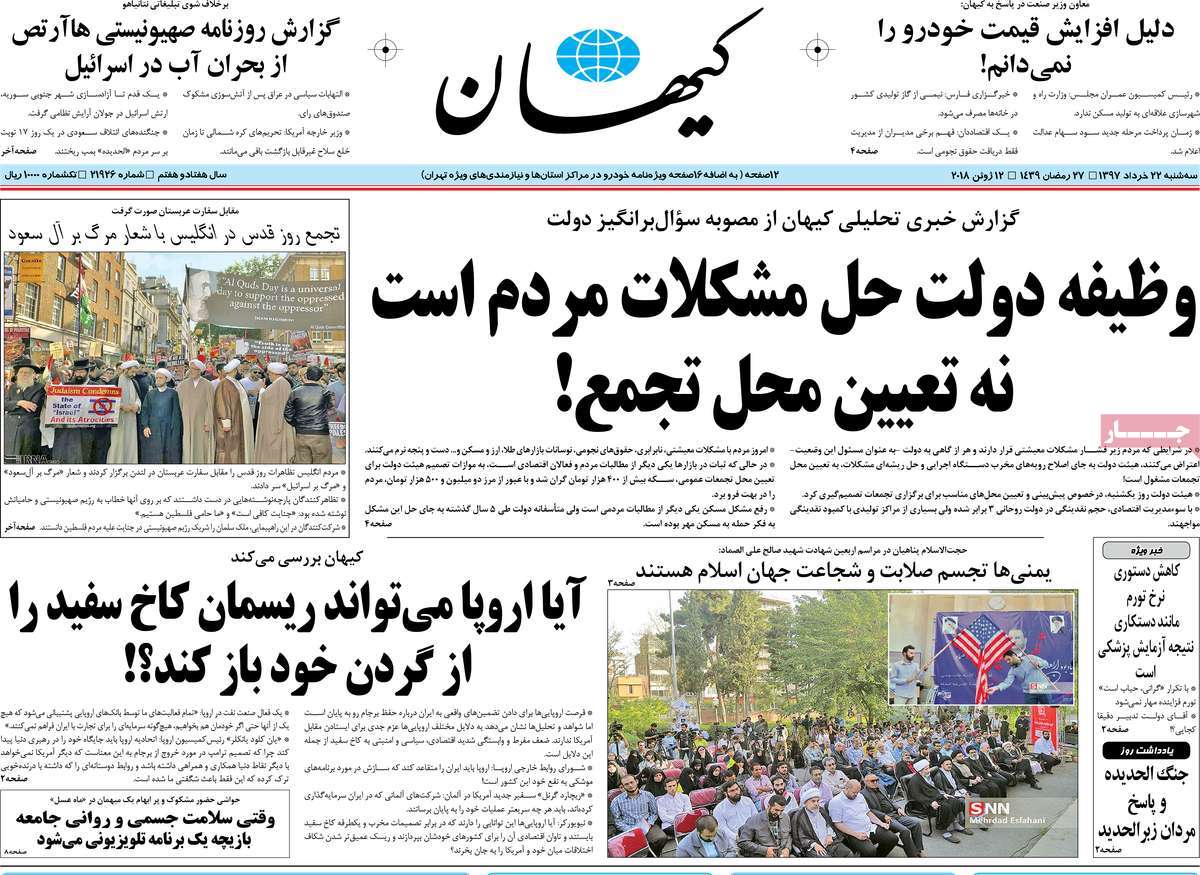
A Look at Iranian Newspaper Front Pages on June 12

A Look at Iranian Newspaper Front Pages on November 19

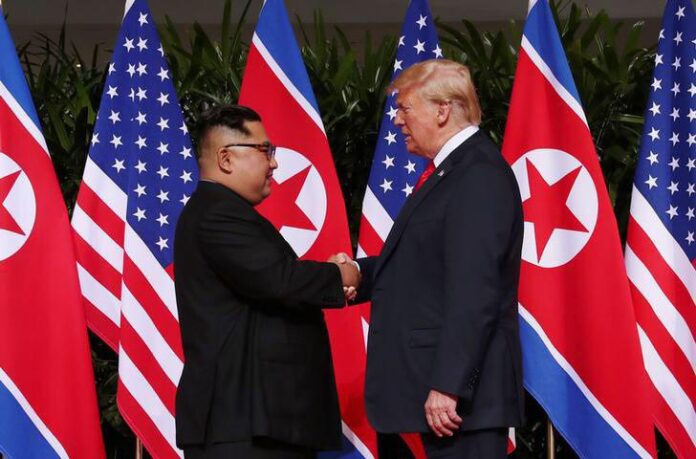
Newspapers today widely covered the historic meeting between US President Donald Trump and North Korean Leader Kim Jong-un on Tuesday, which was to be held in an island in Singapore.

Also a top story was the remarks by IRGC Quds Force Commander Major General Qassem Soleimani about Saudi Arabia’s interference in the Lebanese elections.

Also a top story was the new crisis emerging in Iraq after calls for recounting of votes and a fire in a warehouse where ballot boxes were kept.

The above issues, as well as many more, are highlighted in the following headlines and top stories:


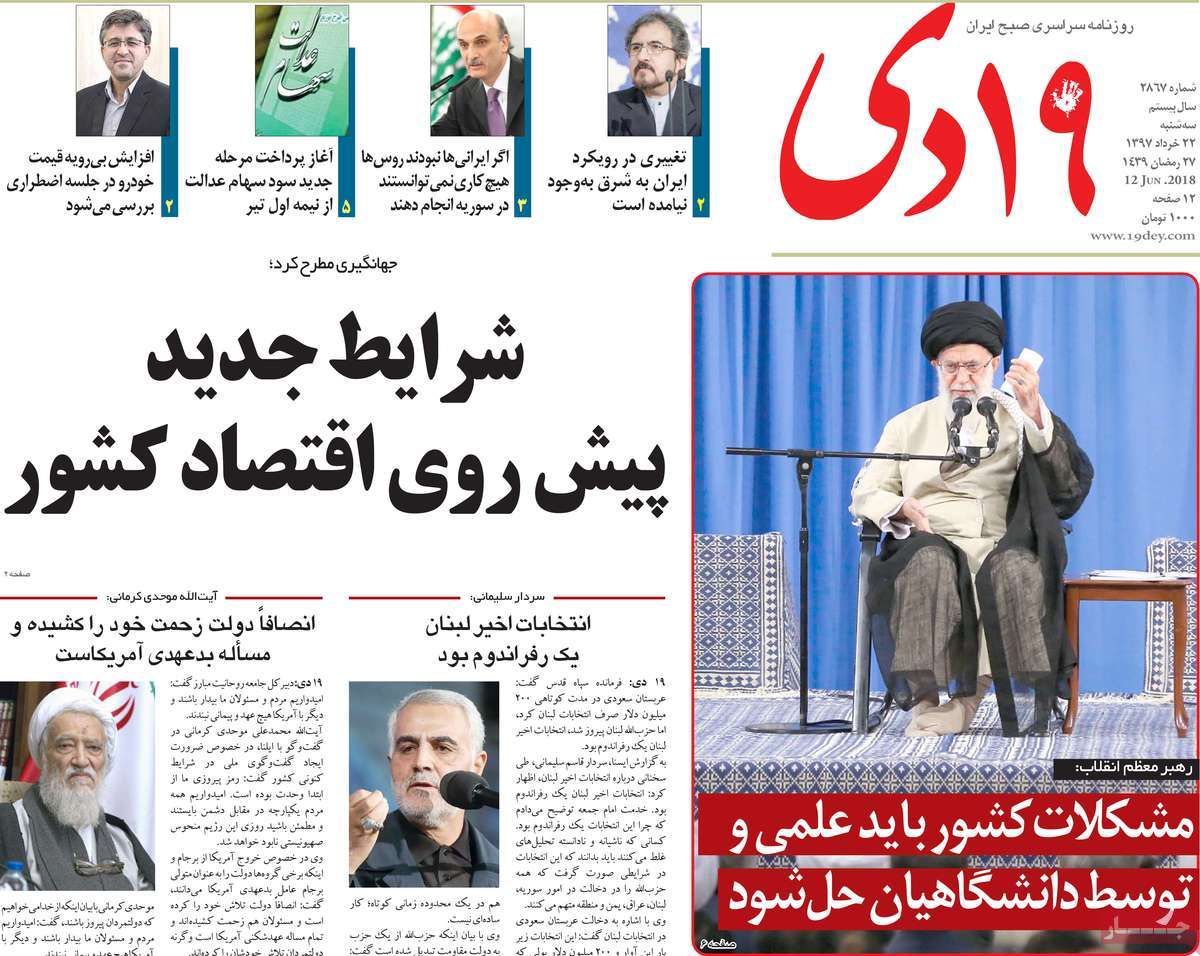
19 Dey:

1- Gen. Soleimani Calls Recent Lebanon Elections a Referendum

A Look at Iranian Newspaper Front Pages on June 12


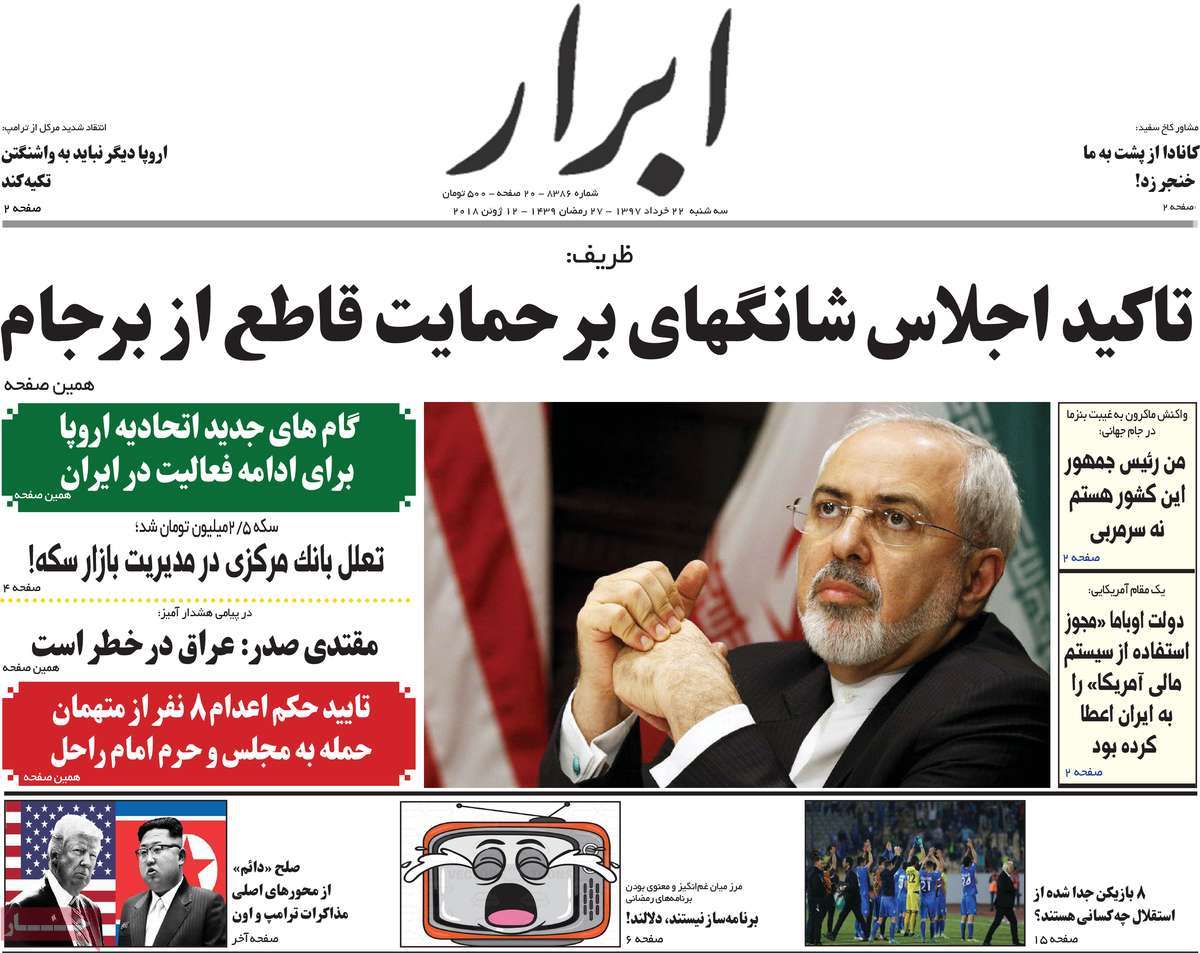
Abrar:

1- Zarif: Shanghai Cooperation Organisation Underlines All-Out Support for JCPOA

2- Muqtada al-Sadr: Iraq in Danger

A Look at Iranian Newspaper Front Pages on June 12


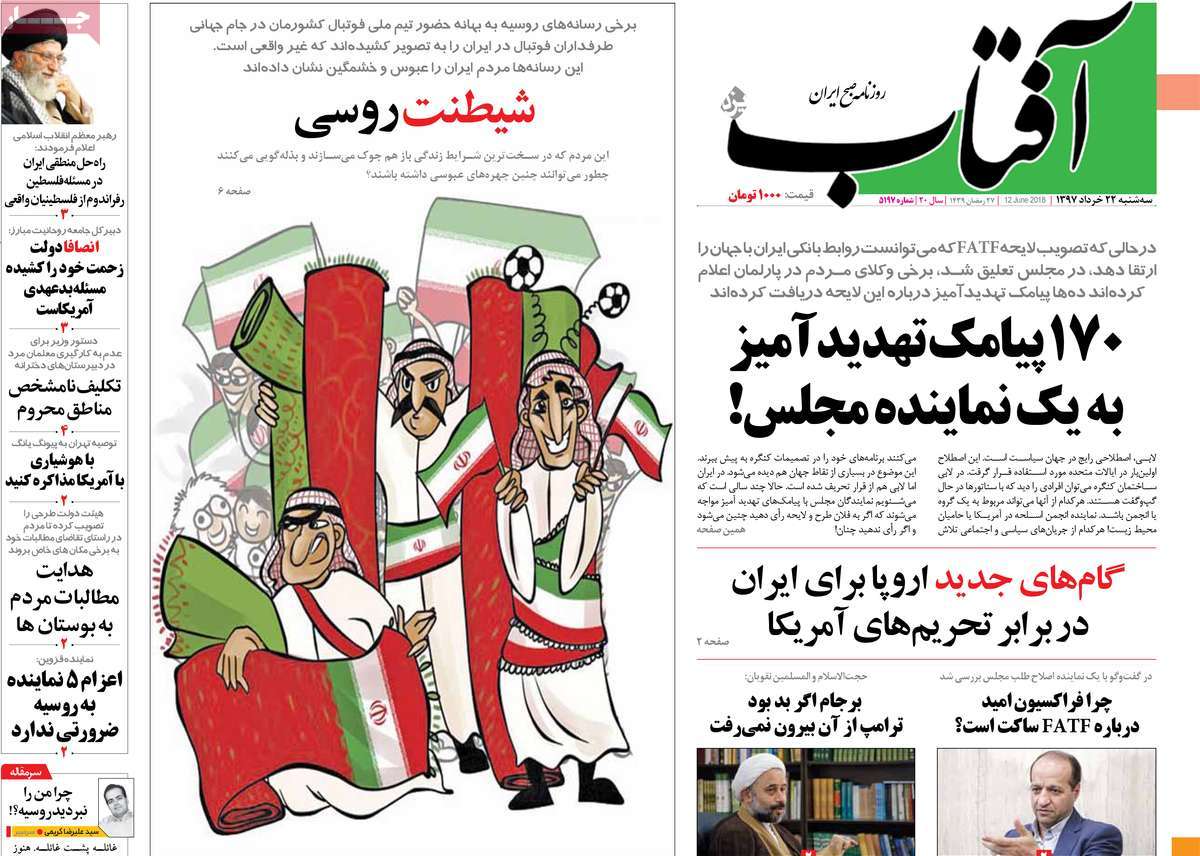
Aftab-e Yazd:

1- Russian Mischief: Certain Russian Media Depict Iranians as Angry, Grumpy People

2- Europe’s New Steps to Protect Iran against Sanctions

A Look at Iranian Newspaper Front Pages on June 12


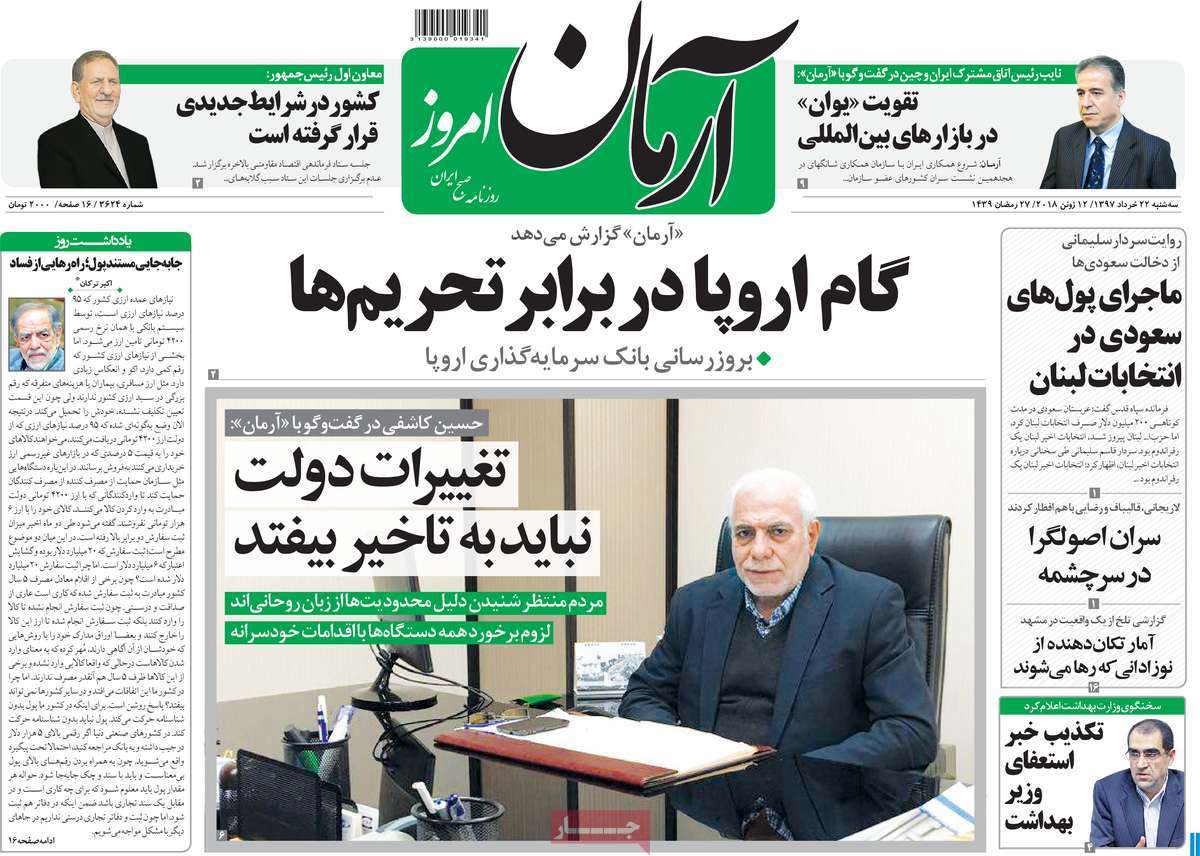
Arman-e Emrooz:

1- General Soleimani’s Account of Saudi Petrodollars Used on Lebanon Elections

A Look at Iranian Newspaper Front Pages on June 12


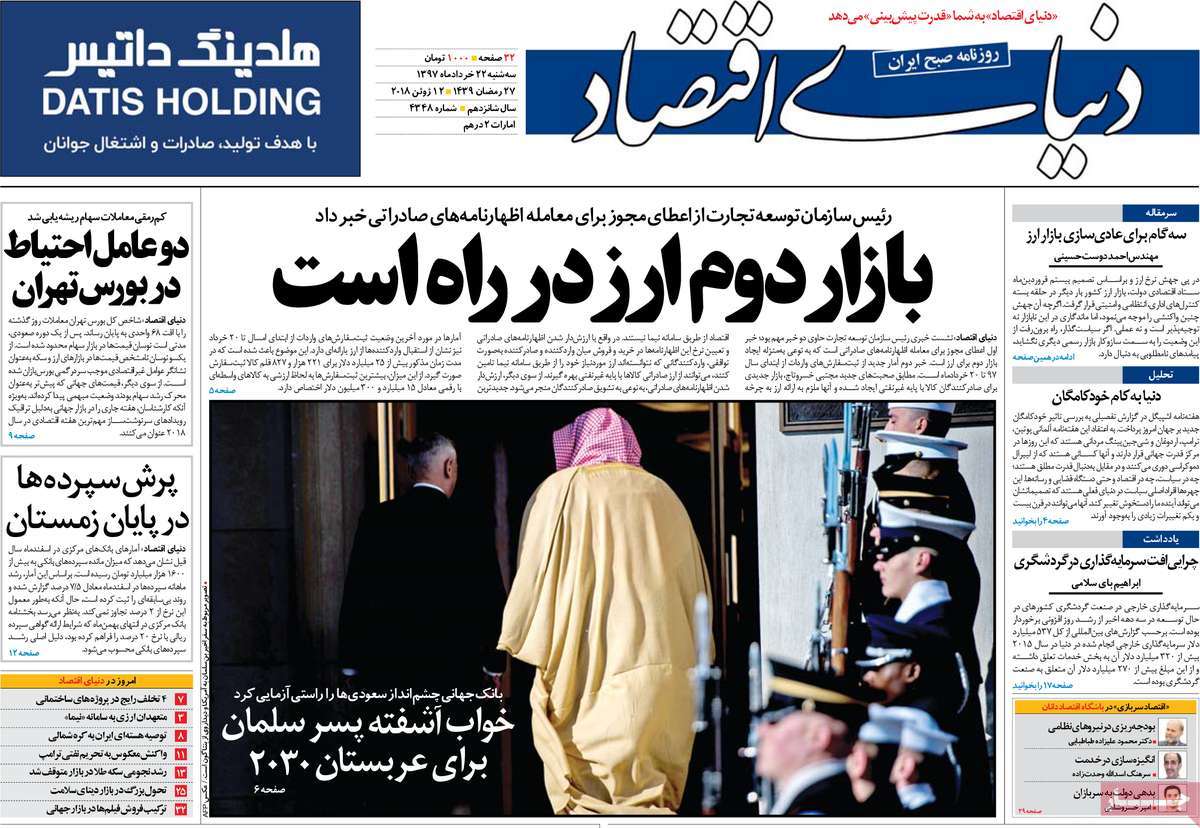
Donya-ye Eqtesad:

1- Bin Salman’s Disturbed Dream for Saudi Arabia in 2030

  • World Bank Evaluates Saudi Vision 2030

A Look at Iranian Newspaper Front Pages on June 12


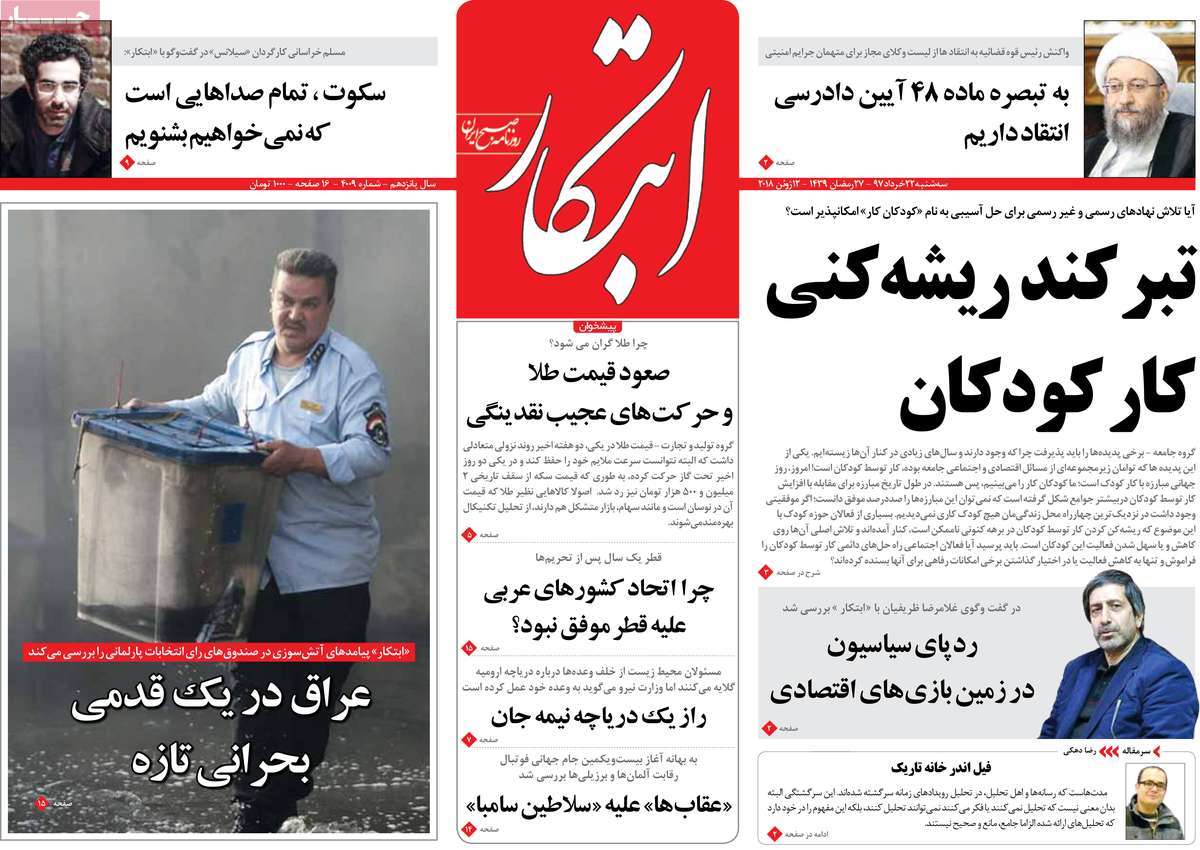
Ebtekar:

1- Iraq on Verge of New Crisis

2- Why Arab Countries’ Alliance against Qatar Wasn’t Successful

A Look at Iranian Newspaper Front Pages on June 12


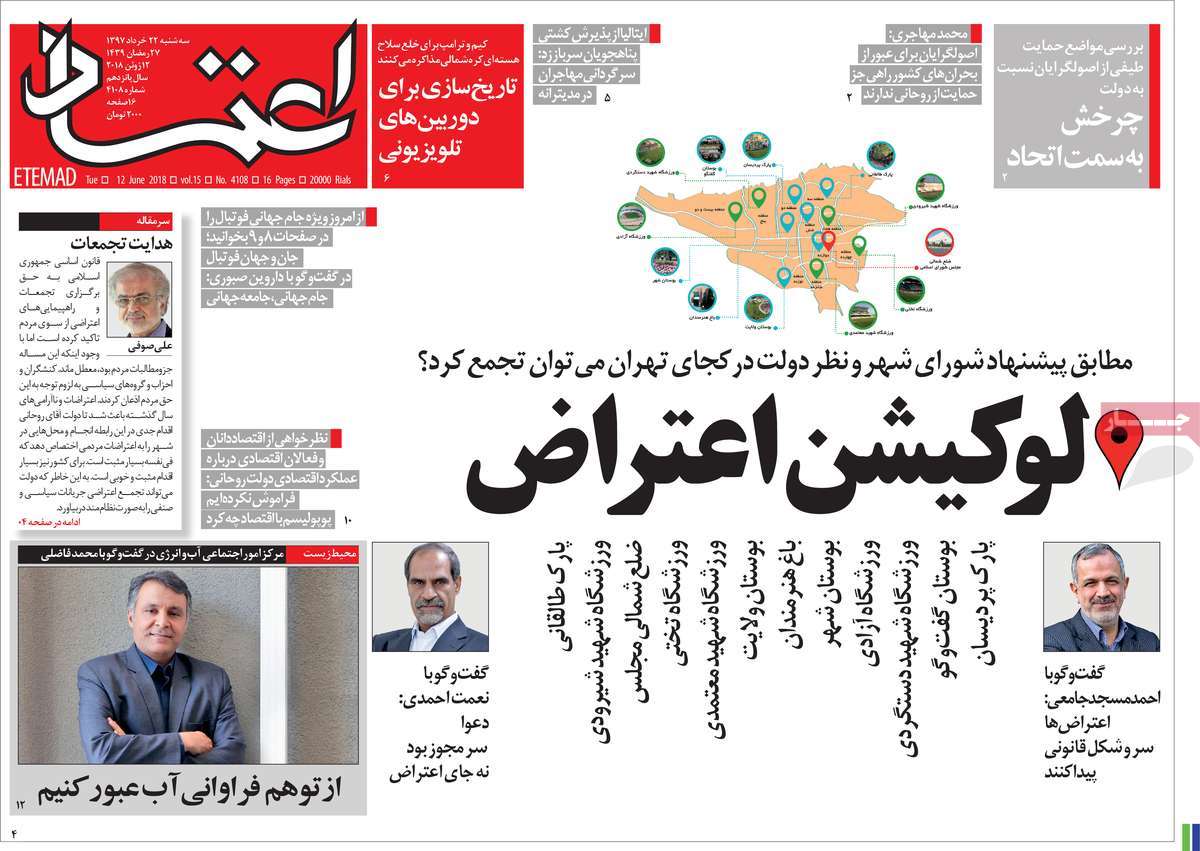
Etemad:

1- Immigrants Wandering in Mediterranean Sea: Italy Refuses to Accept Refugees’ Ship

2- Turn to Unity: A Review of Conservatives’ Stances towards Rouhani’s Gov’t

A Look at Iranian Newspaper Front Pages on June 12


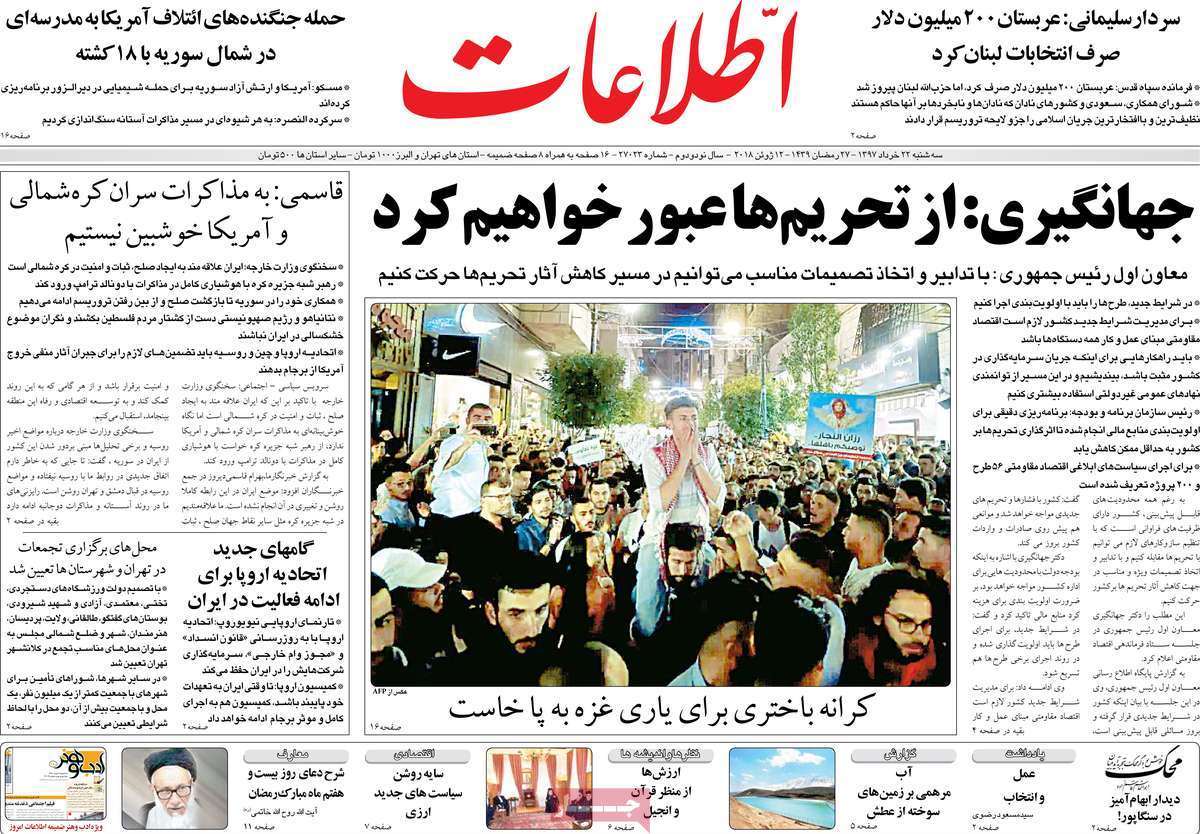
Ettela’at:

1- Iran First VP: We’ll Overcome Sanctions

2- West Bank Rises to Help Gaza Strip

3- Qassemi: We’re Not Optimistic about Trump-Kim Talks

A Look at Iranian Newspaper Front Pages on June 12


Iran:

1- Displaced People of Karachi in Tehran’s Shahr-e Rey

  • A Report on Hard Days of Pakistani Immigrants in Iran

A Look at Iranian Newspaper Front Pages on June 12


Javan:

1- Gen. Soleimani: Saudi Arabia Spent $200 Million in Lebanon, but Failed

2- Tehran Warns Pyongyang: Be Careful Not to Repeat Fate of Iran Nuclear Deal

A Look at Iranian Newspaper Front Pages on June 12


Ka’enat:

1- Is US Looking for Deal with North Korea Because of Iran?

A Look at Iranian Newspaper Front Pages on June 12


Kayhan:

1- Government’s Duty Is to Resolve People’s Problems, Not to Allocate Place to Protests!

2- Can Europe Get Rid of US Domination?

A Look at Iranian Newspaper Front Pages on June 12


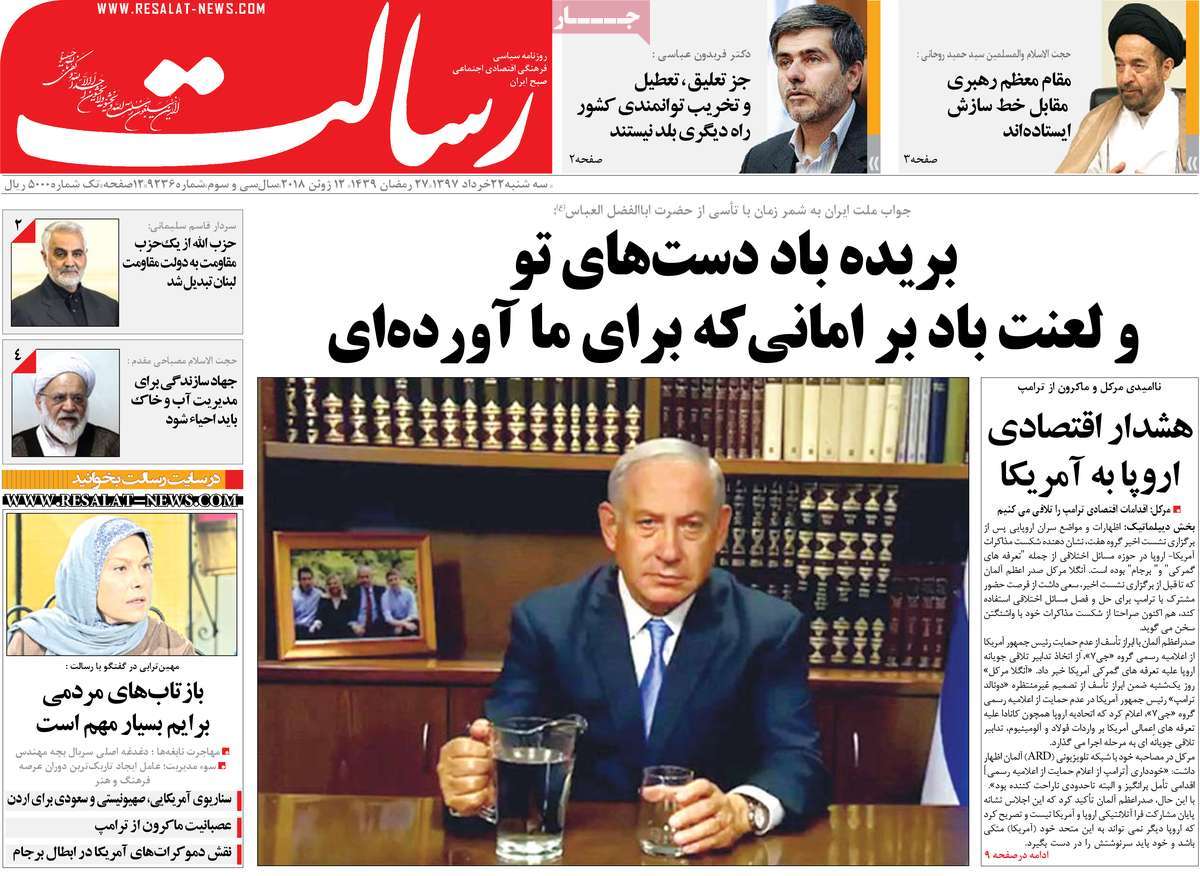
Resalat:

1- Gen. Soleimani: Hezbollah Has Turned from Resistance Party into Resistance Gov’t of Lebanon

2- Europe Gives US Economic Warning

A Look at Iranian Newspaper Front Pages on June 12


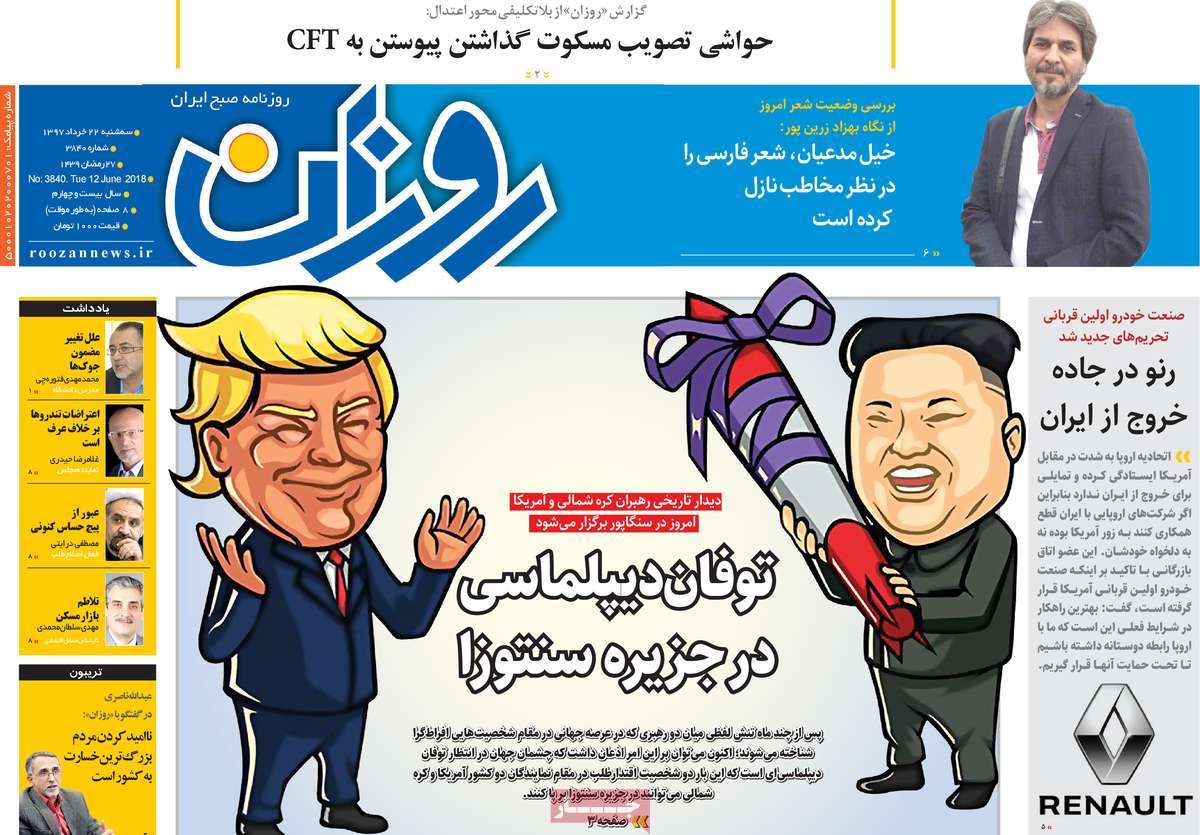
Roozan:

1- Storm of Diplomacy in Sentosa Island: US, North Korean Leaders to Hold Historic Meeting

A Look at Iranian Newspaper Front Pages on June 12


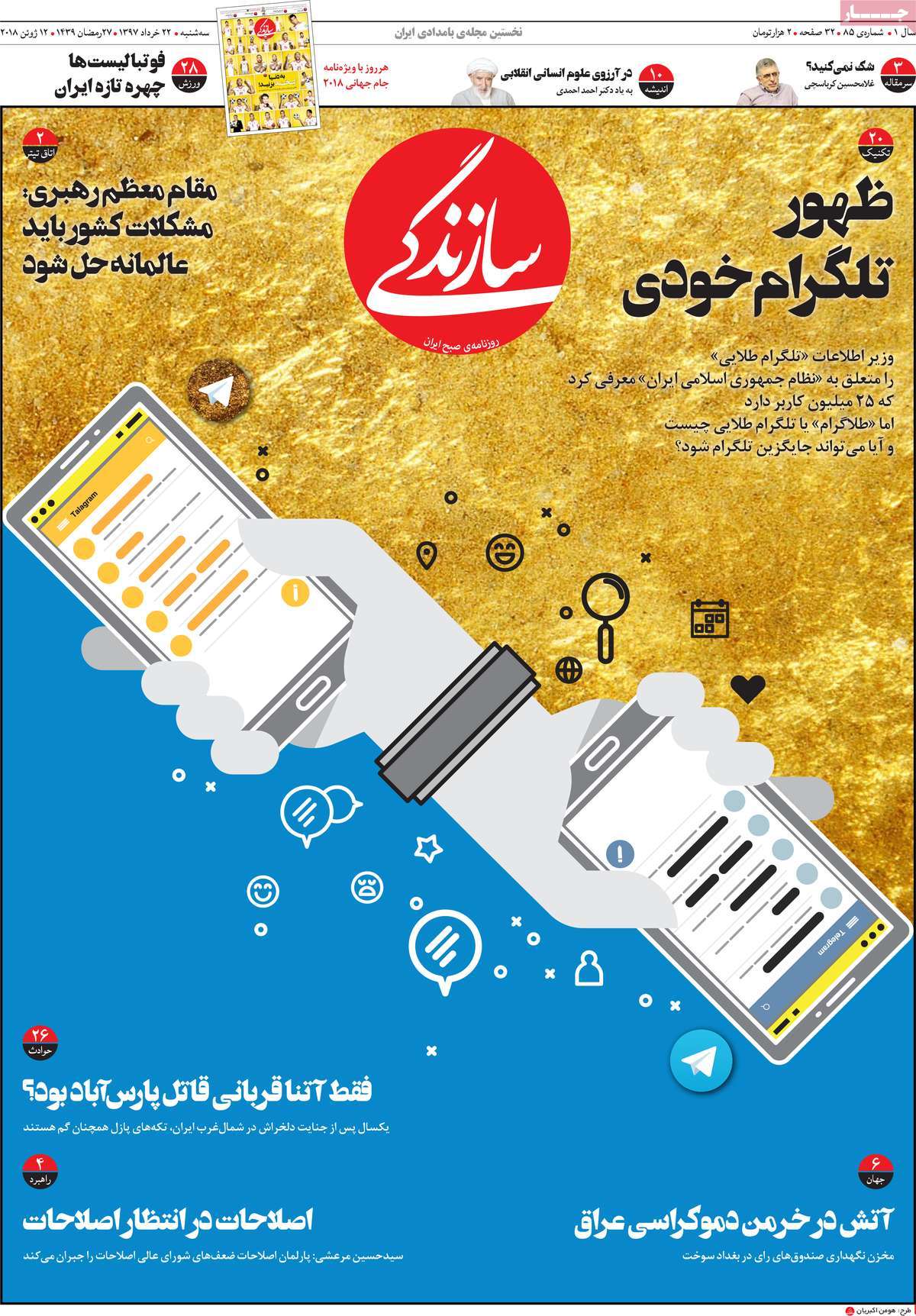
Sazandegi:

1- Iraqi Democracy on Fire: Warehouse Where Ballot Boxes Were Kept Burns

A Look at Iranian Newspaper Front Pages on June 12


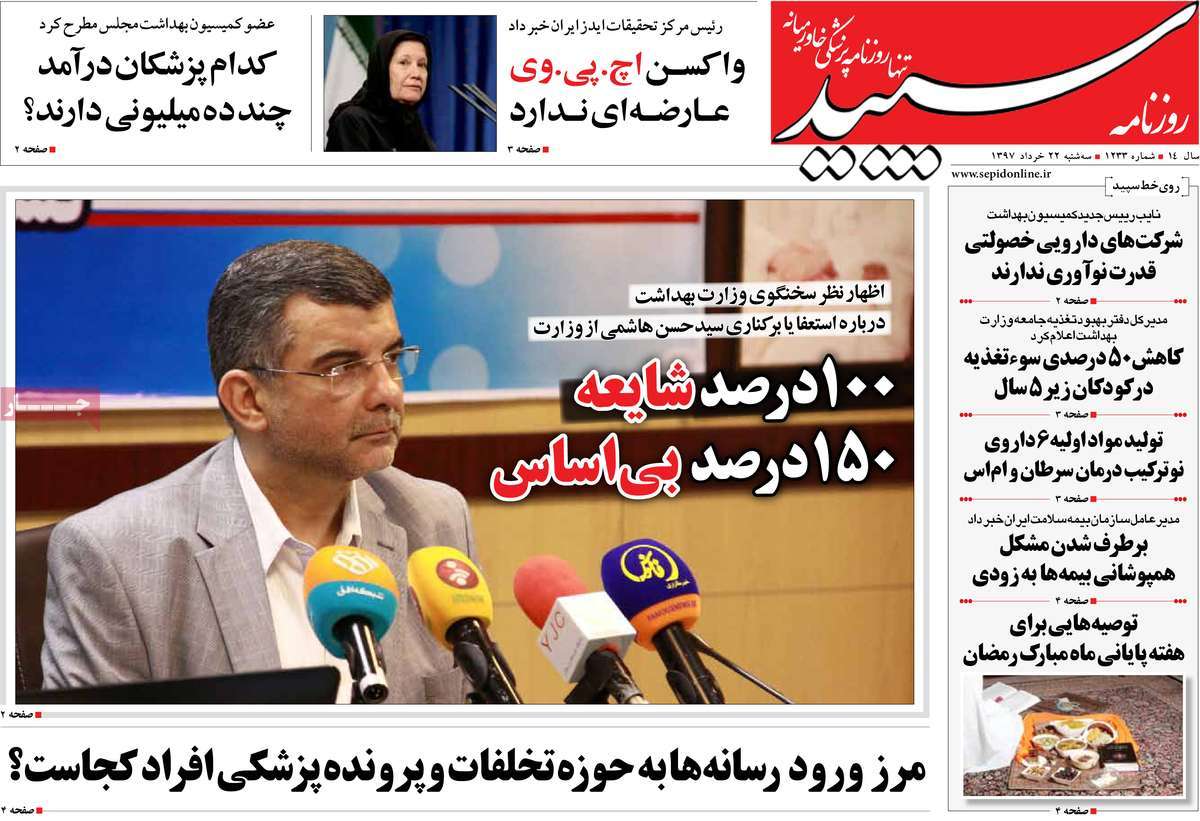
Sepid:

1- Drug Precursors Produced for Six Recombinant Medicine Used in Curing Cancer, MS

A Look at Iranian Newspaper Front Pages on June 12


Setareh Sobh:

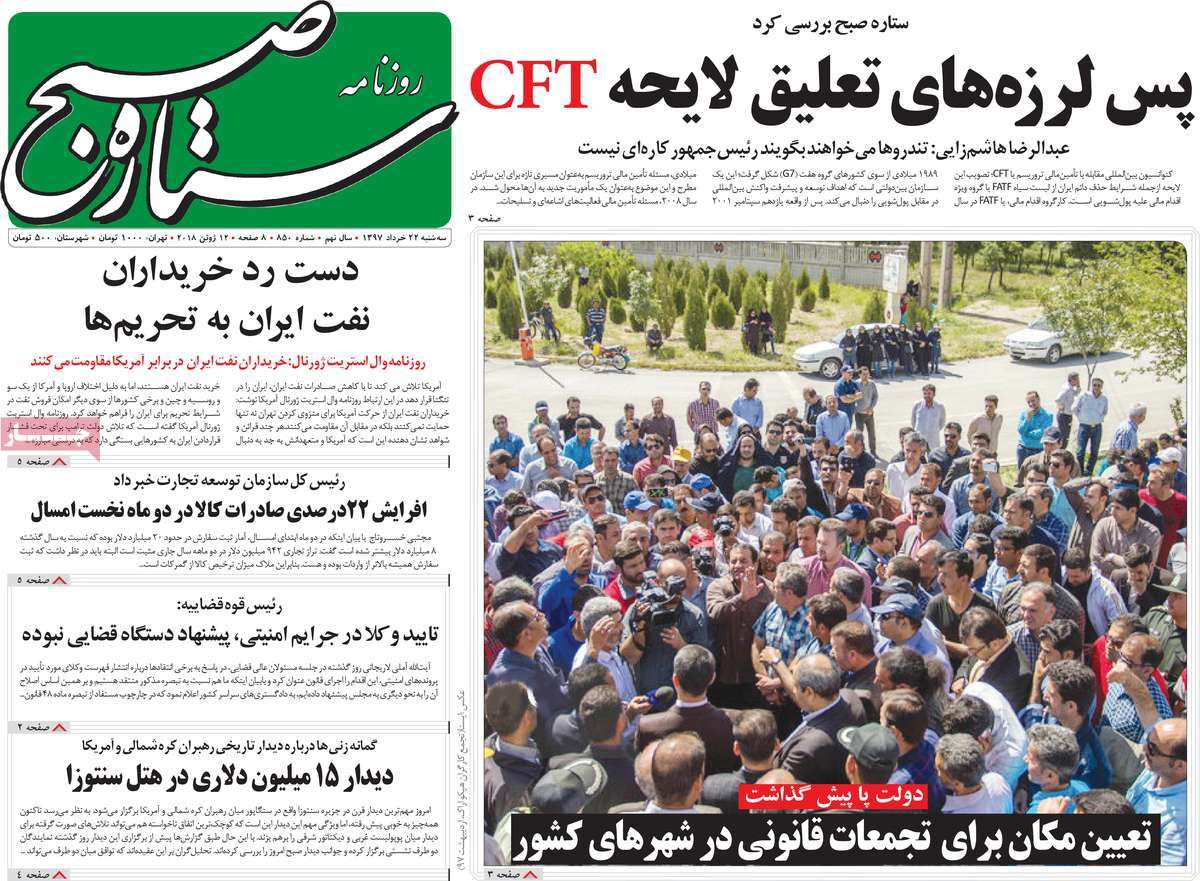
1- Iran’s Oil Clients Refuse to Obey Sanctions

2- $15-Million Meeting in Sentosa Hotel

A Look at Iranian Newspaper Front Pages on June 12


Shargh:

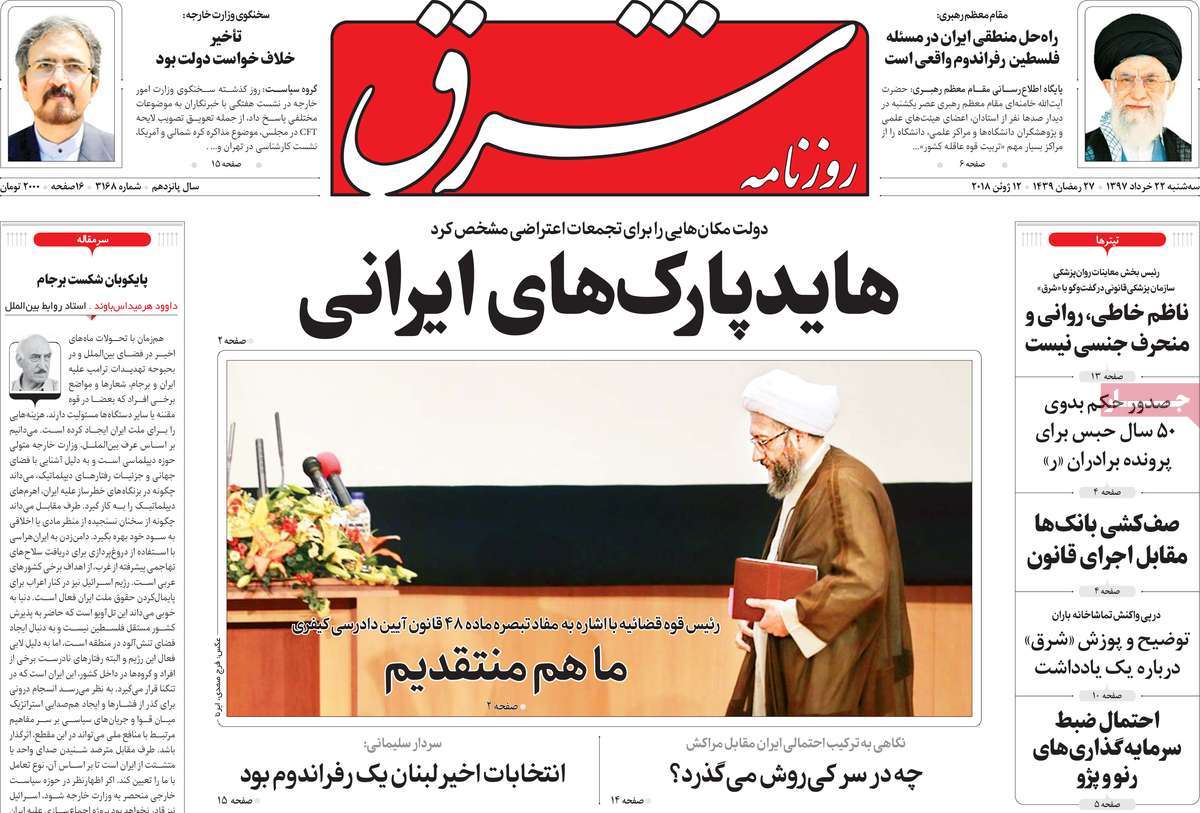
1- Iranian Hyde Parks: Gov’t Dedicates Places to Protest Gatherings

A Look at Iranian Newspaper Front Pages on June 12


Sobh-e Now:

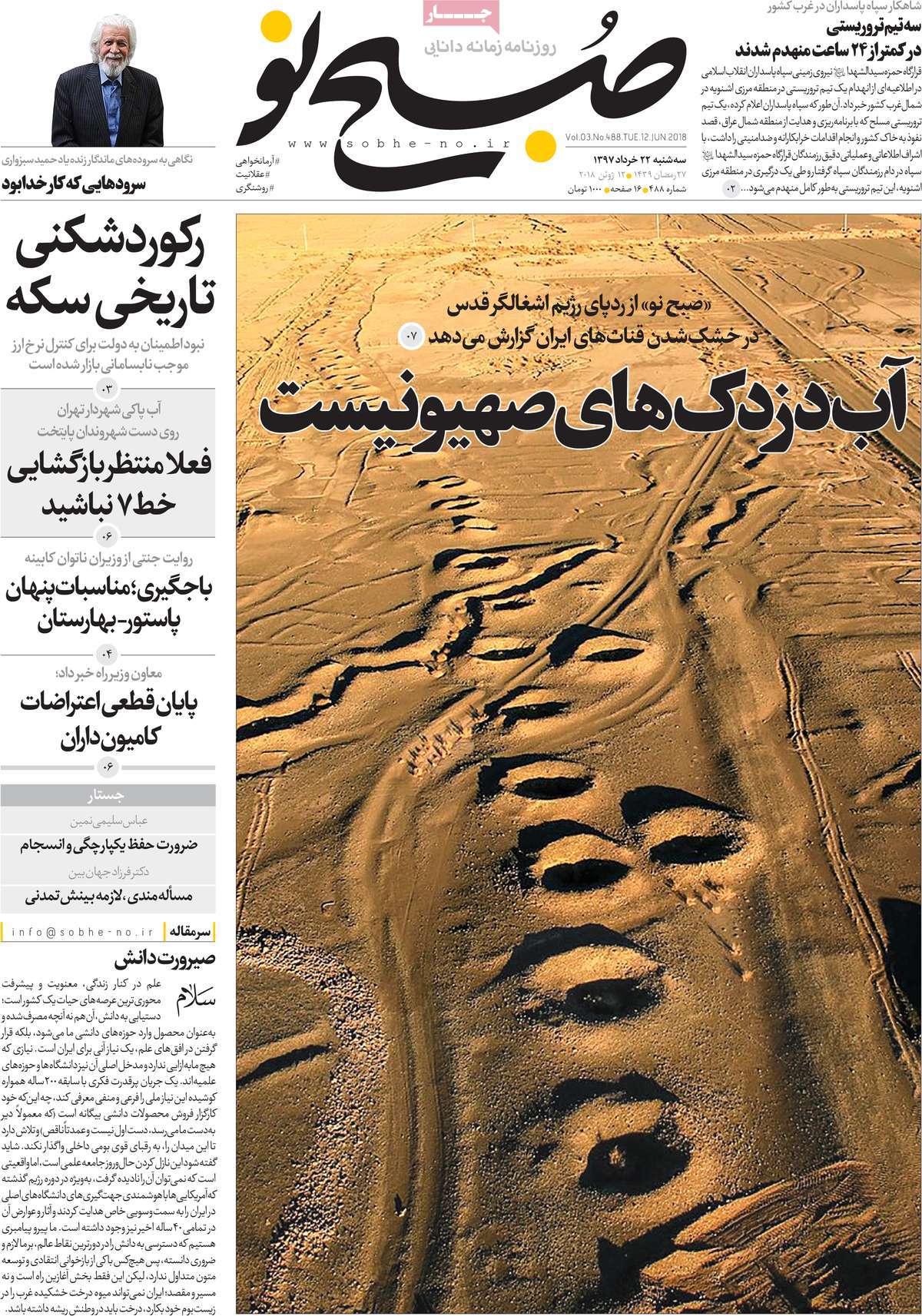
1- Zionist Thieves of Iran’s Waters: A Report on Israel’s Role in Death of Iranian Qanats

A Look at Iranian Newspaper Front Pages on June 12

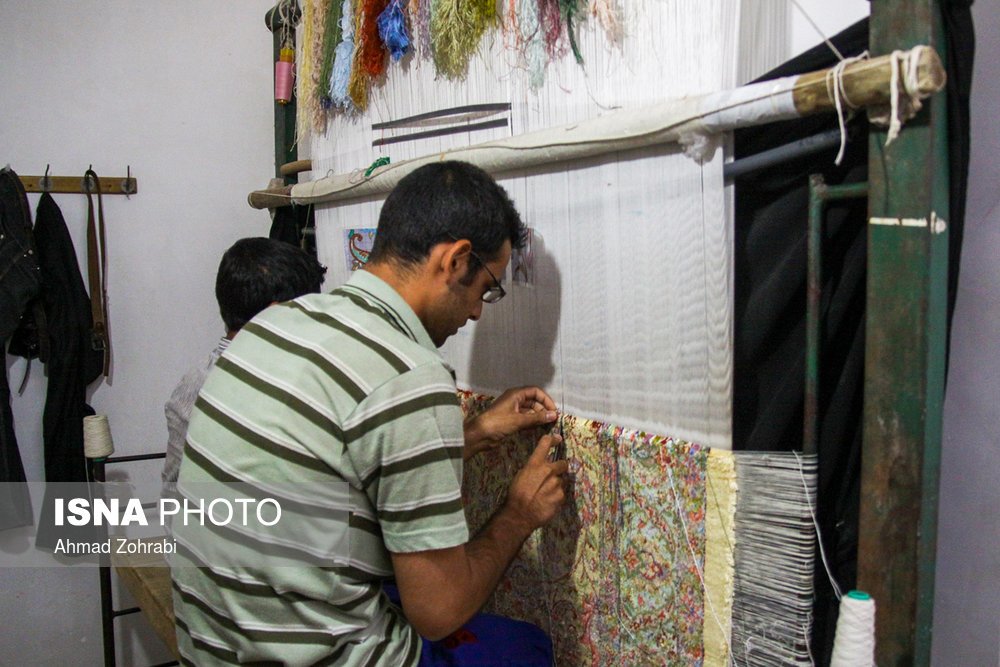
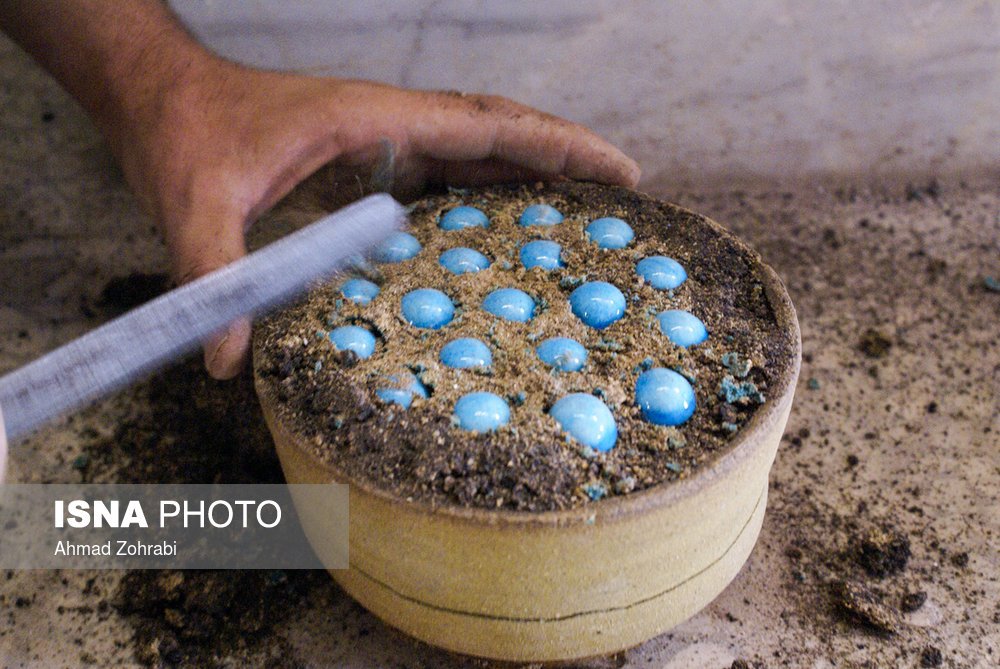
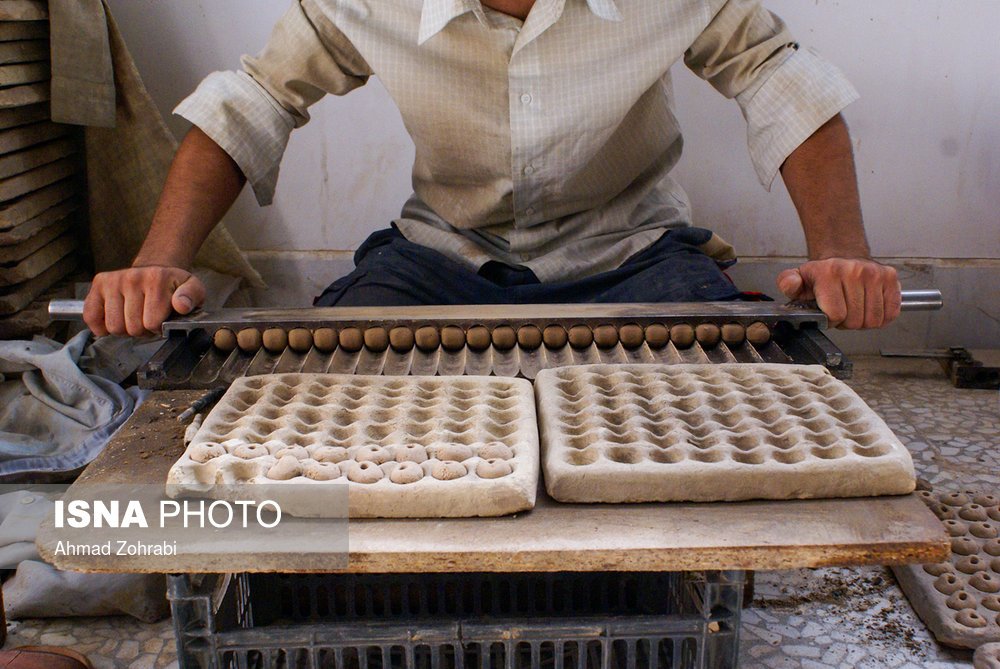
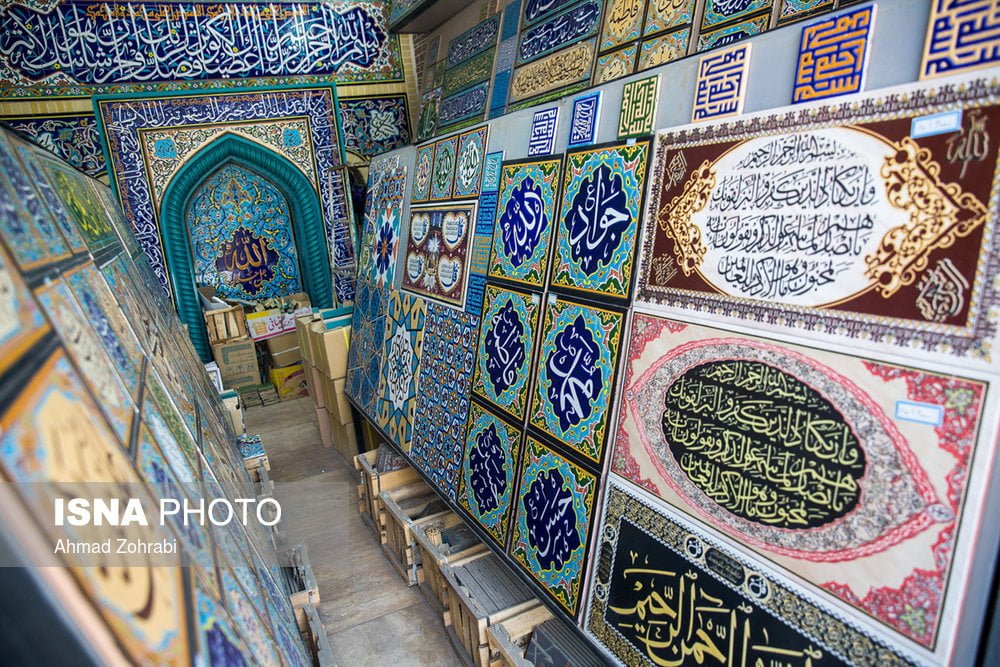
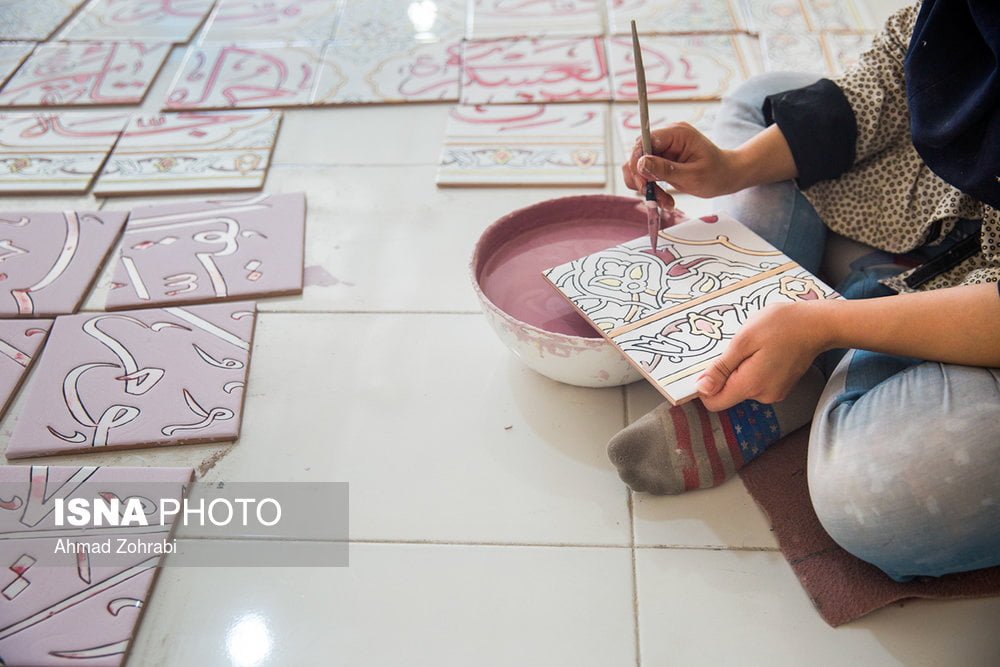
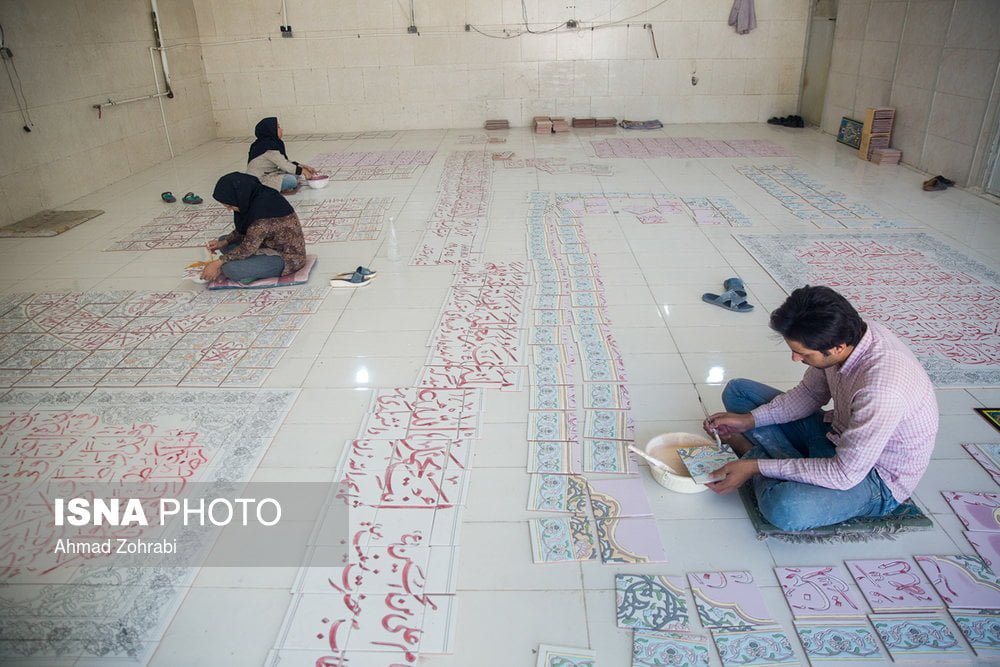
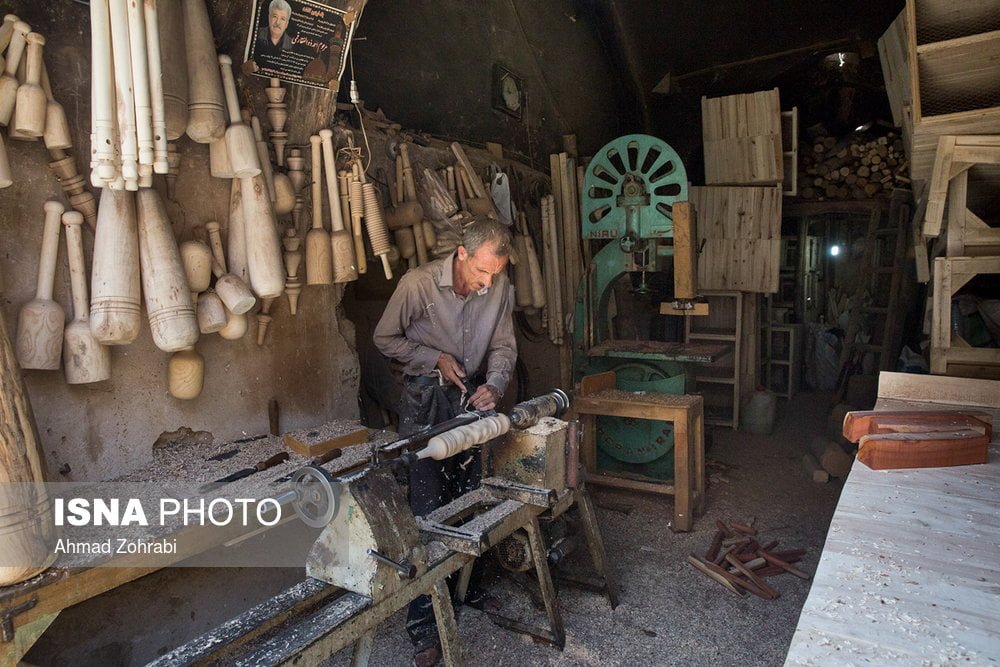
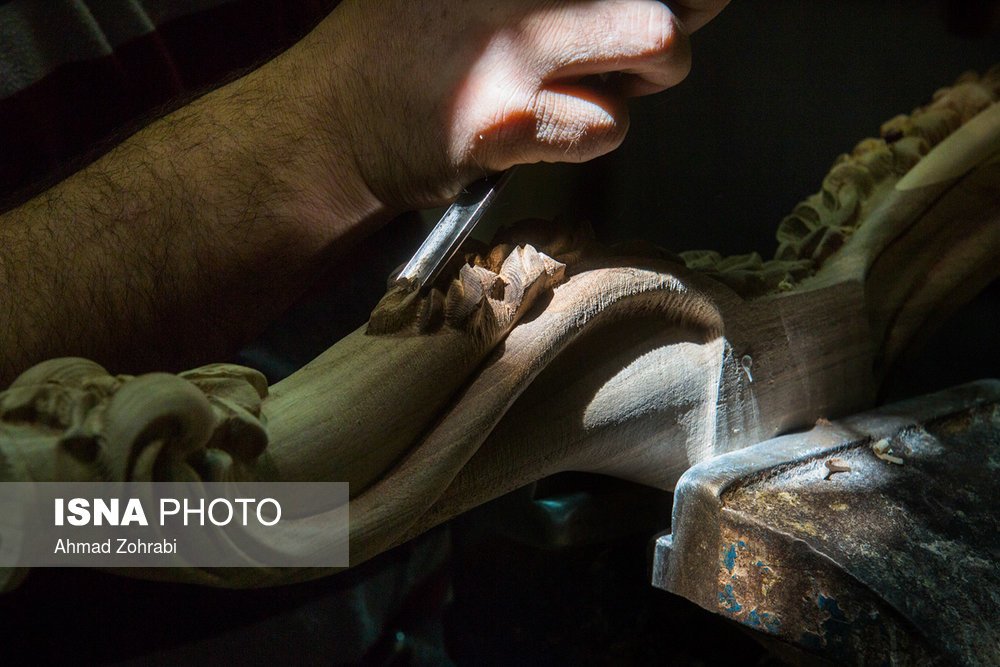
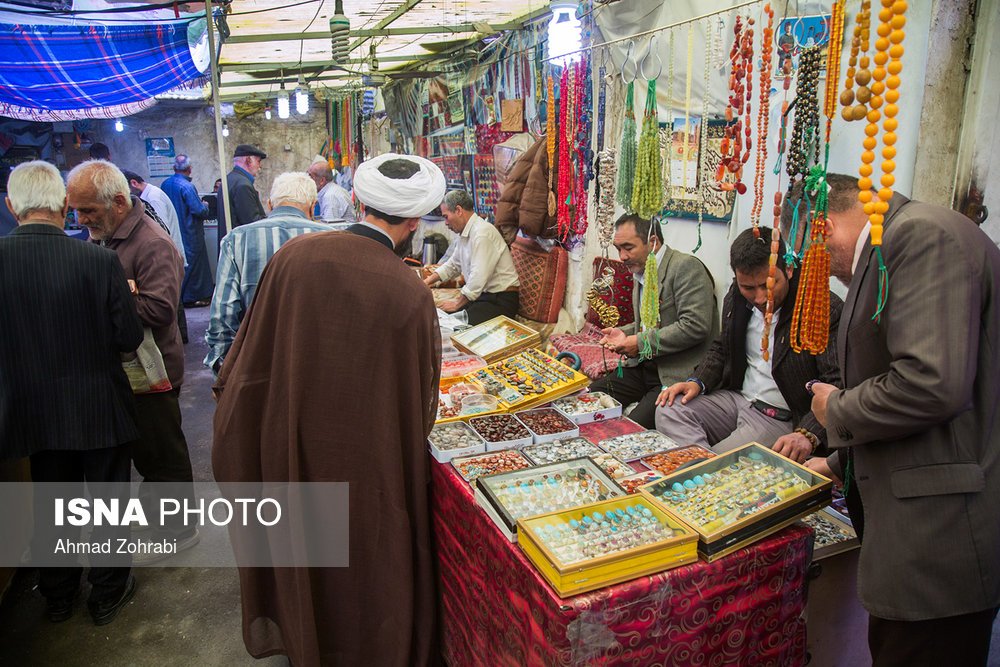
Handicrafts, Promising Field of Investment in Iran’s Qom

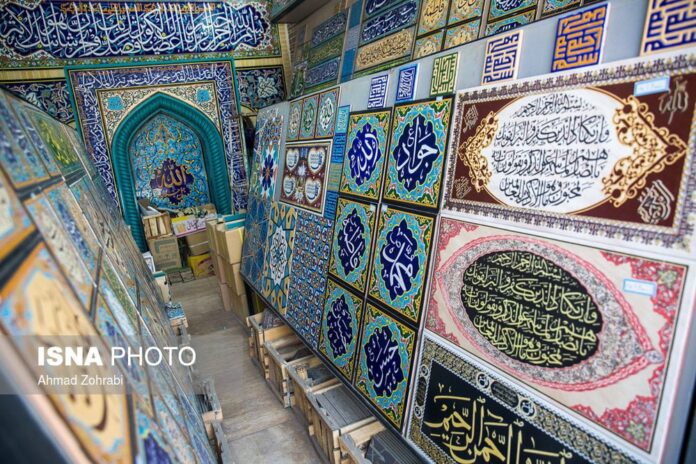
Painting on tiles is one of the most popular handiworks of Qom. Religious designs are drawn on white tiles and then are painted with special glazes. Afterwards, they are cooked for 9 hours at 1,000 degrees Celsius in a furnace.

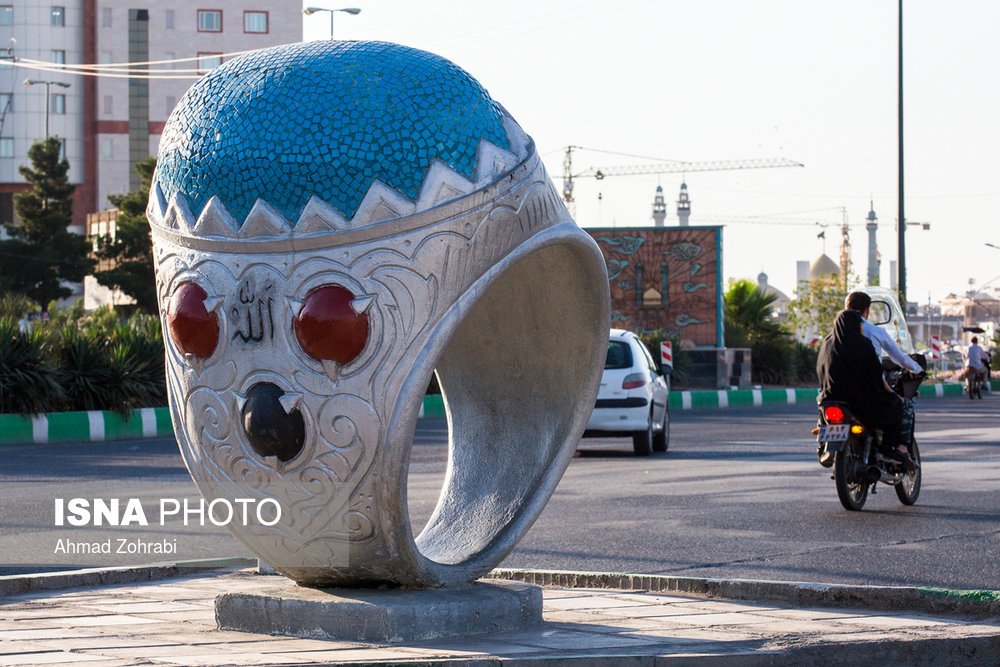
Some of the handicrafts in Qom province include hand-woven carpets, inlay works, wood carving, pottery, stone carving, precious stones carving, and ring-making. Of these, 300 handicrafts have been officially registered in Iran and 4,200 licenced artists are active in 50 fields in Qom province.

What follows are ISNA’s photos of Qom’s handicrafts:

Iran Not Optimistic Trump Remains Committed to N. Korea Deal

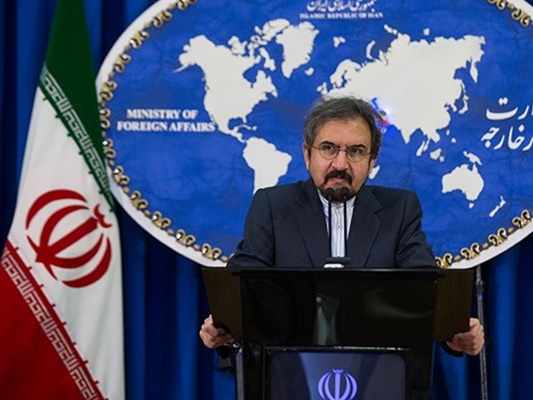
Speaking at his weekly press conference in Tehran on Monday, Qassemi pointed to the US-North Korea summit due to be held on Tuesday and said, “Iran’s stance on the Korean Peninsula is clear; we are keen to see peace and stability in the region.”

Iran welcomes any step toward boosting the welfare of the people of this region, he said, adding, however, that given the past record of the US and Trump, who, during his presidency, has violated international treaties, especially the 2015 nuclear deal, Iran remains deeply pessimistic about the US president’s intentions.

“North Korea should act with caution,” the spokesman urged, stressing that “the nature of the US government is not such that one can be optimistic about it”.

“We support peace and stability in the Korean Peninsula that is in the interest of the people, but we are very skeptical about the intentions of the United States,” he added.

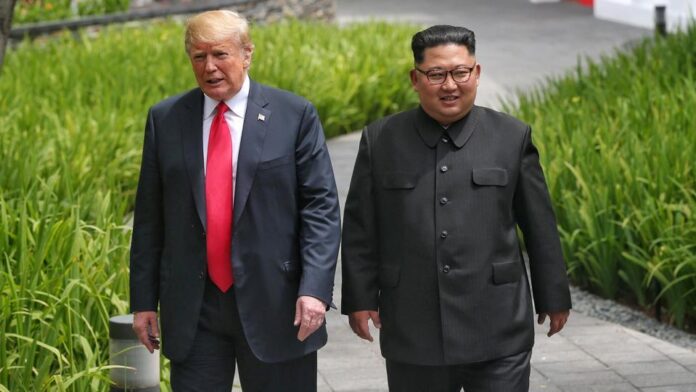
The remarks came as North Korean and US negotiators met in Singapore Monday for final preparations on the eve of an unprecedented summit between Kim Jong Un and Donald Trump, seeking to bridge the gaps over Pyongyang’s nuclear arsenal.

Tuesday’s meeting will be the first between a sitting US president and a leader of North Korea, whose nuclear and ballistic missile ambitions have raised global concerns and seen tensions soar.

It is an extraordinary turnaround from the rhetoric of last year, when Trump threatened the North with “fire and fury” and Kim dubbed him a “mentally deranged US dotard”.

The summit has raised hopes of progress towards a peace treaty to formally end the Korean War, the last festering legacy of the Cold War, after hostilities only stopped with an armistice.

But Pyongyang is demanding as yet unspecified security guarantees and the end of what it calls a “hostile policy” towards it, and has not made clear what concessions it is offering over the nuclear arsenal it calls its “treasured sword” to defend against a US invasion.

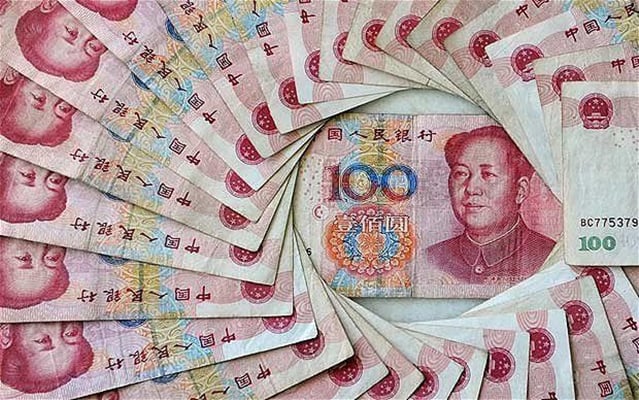
Iran, China to Use National Currencies in Trade Transactions

Masoud Karbasian noted that four memoranda of understanding (MoU) were signed between Tehran and Beijing during Iranian President Hassan Rouhani’s trip to China.

“One of these memoranda of understanding signed between this ministry (Iran’s Ministry of Finance and Economic Affairs) and the Chinese Infrastructure Development Organization concerns the use of financial resources of both countries for investment and the use of national currencies of both countries in trade transactions,” said the minister as quoted by Fars News Agency.

“Also under the MoU, trade relations between the two countries were depicted within the framework of ‘One Road, One Belt,’ and it was stressed that the share of both countries in the road map for the plan be specified.”

He said another MoU focuses on the promotion of technical and scientific cooperation between the two sides and was signed in the presence of both presidents.

The minister further said Tehran and Beijing also agreed to work together on foreign exchange.

“The third MoU signed during the trip was about cooperation in the field of exchange and securities, which was inked between the exchange and securities organizations of both countries,” said the economy minister.

He then noted that the fourth cooperation document was about fighting narcotics.

“Under the memorandum of understanding, both countries will work together in combating illicit drugs and organized crime.”

As the minister added, the two sides also agreed to step up bilateral interactions in banking as well as oil and petrochemical sectors and to boost mutual trade.

North Korean Leader Signs Denuclearisation Deal with Trump

The US, in turn, “committed to provide security guarantees” to North Korea following a “comprehensive, in-depth and sincere exchange of opinions” with Kim, according to a document signed by both leaders.

Following the historic meeting, Trump announced that denuclearisation on the Korean Peninsula would begin “very quickly.”

In a televised ceremony held in Singapore, the two leaders signed a joint statement that Trump called “comprehensive.” In the statement, Trump “committed to provide security guarantees” to North Korea, and Kim “reaffirmed his firm and unwavering commitment to complete denuclearisation of the Korean Peninsula.”

But the statement was short on details, and it was not clear if the two leaders had signed another document laying out potential next steps or a timetable. The joint statement was not immediately released to reporters, but it was legible in a photo of Trump holding it up at the ceremony.

The statement said the two nations would hold “follow-on negotiations” led by Secretary of State Mike Pompeo and a high-level North Korean official “at the earliest possible date, to implement the outcomes” of the summit meeting.

It also said the two nations would “join their efforts to build a lasting and stable peace regime” on the divided peninsula, meaning talks to reduce military tensions that could eventually lead to a formal peace treaty to end the Korean War.

“We had a historic meeting and decided to leave the past behind,” Kim said at the signing ceremony, adding that “the world will see a major change.”

“We’re very proud of what took place today,” Trump said. “I think our whole relationship with North Korea and the Korean Peninsula is going to be a very much different situation than it has in the past.” He said that copies of the document would be distributed and that he would speak to reporters later about it.

The signing ceremony came after several hours of discussions between the two leaders.

Iran Intelligence Forces Bust Terror Group, Arrest 27

Intelligence

The Intelligence Ministry says it apprehended 27 of the terrorists, who intended to trigger unrest in Iran by striking the capital, Tehran, and several other major towns and cities across the nation.

The terror team had posted images on social media, threatening to kill Iranians, reports IRIB News Agency.

They were arrested by intelligence agents in cooperation with judicial authorities as well as security and law enforcement forces.

Large quantities of weapons and ammunition were seized from the terrorists. The confiscated munitions include several Kalashnikov rifles, handguns, grenades, bombs and equipment used to make explosive devices.

This comes on the heels of several other operations by Iranian forces against terrorists.

Earlier, Iran’s Islamic Revolution Guards Corps (IRGC) had dismantled three terrorist groups in northwestern and western Iran in less than 24 hours.

In a statement, the IRGC said the Iranian forces foiled a scheme by a terrorist group seeking to penetrate into Iran’s soil Friday evening to commit acts of sabotage in the country.

During clashes between the two sides along the border, IRGC forces killed all the seven members of the terrorist group.

In separate clashes on Saturday, the IRGC troops smashed two other groups of terrorists, killing six of them.

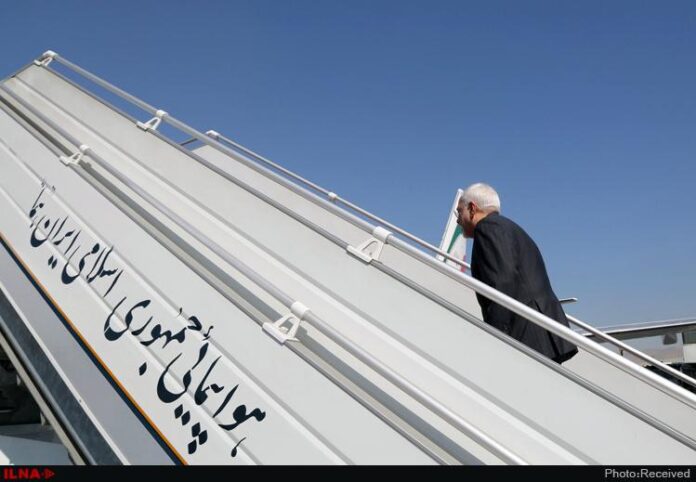
Iranian FM to Visit South Africa on Tuesday

Iran’s Foreign Minister in Beirut for Talks

According to Foreign Ministry Spokesman Bahram Qassemi, Zarif will head a high-ranking politico-economic delegation to the South African capital of Pretoria for talks with the country’s senior officials.

Expansion of bilateral ties is among the main topics to be discussed during the Iranian foreign minister’s visit to South Africa.

Zarif last visited South Africa back in October 2017 to attend the 13th meeting of the two sides’ Joint Commission.

Iran and South Africa share historical bilateral relations. Iran supported the South African liberation movements.

The Islamic Republic severed its ties with South Africa in 1979 and banned doing any business with the African country in protest against its apartheid policies. However, in January 1994, Tehran lifted all trade and economic sanctions against South Africa and diplomatic relations were reestablished soon.

Western Media Coverage of Int’l Quds Day; Textbook Example of Propaganda Ploy

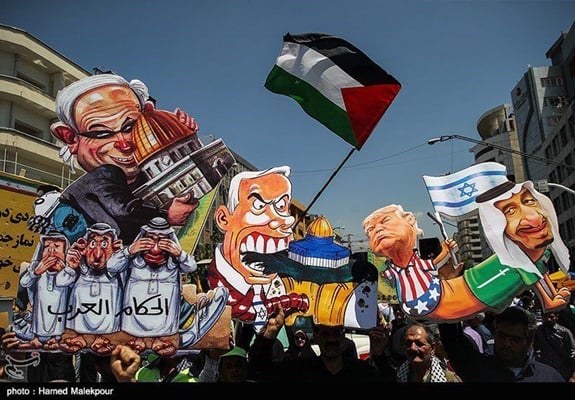
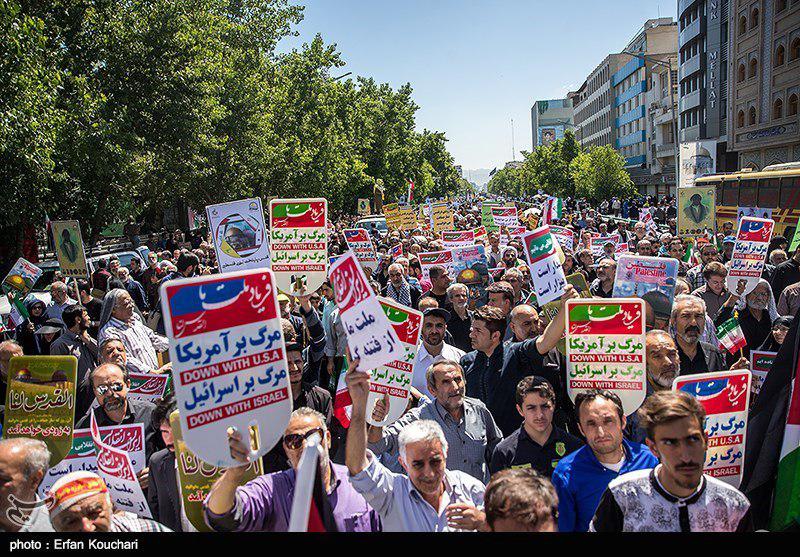
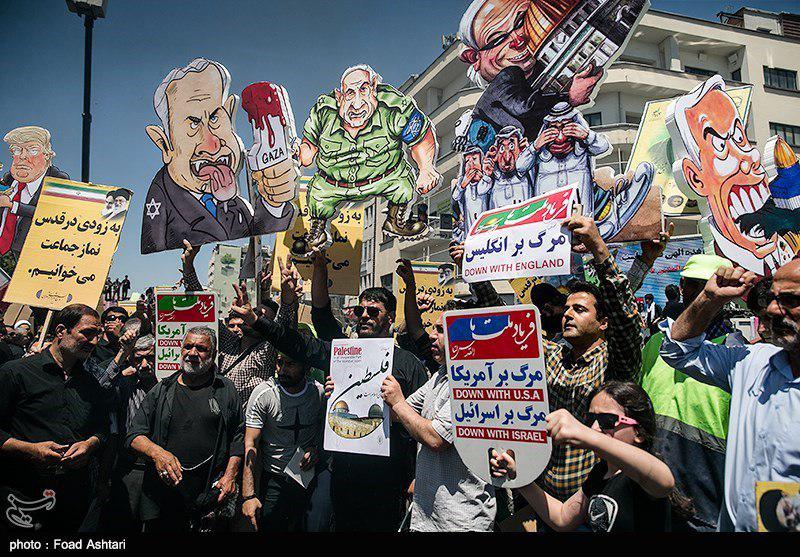
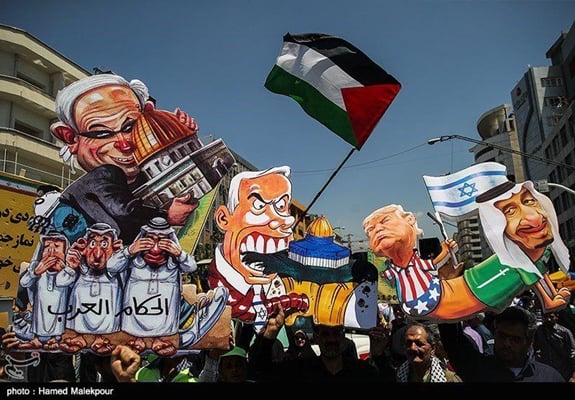
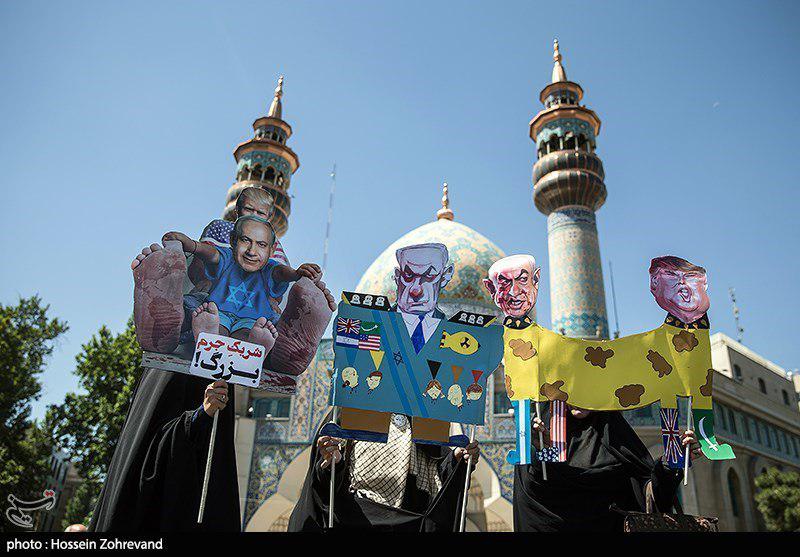
Marking the international Quds Day, the marchers in thousands of cities across the globe chanted “death to Israel” and called for an end to the seven-decade occupation of Palestine.

The demonstrators were honouring a long-established tradition going back to August 1979, when the late founder of Iran’s Islamic Republic issued a message to Muslims urging them to hold anti-Israeli rallies on the last Friday of the Muslim holy month of Ramadan.

Since then, millions of demonstrators around the world take part in the annual event to express their protest against the Israeli occupation of al-Quds and its western backers enabling the decades-long suppression of Palestinians.


Al-Quds in Danger

This year’s rallies came at a particularly sensitive time, as Palestine is the scene of heightened tensions in the wake of a decision by US President Donald Trump to recognise al-Quds as the capital of Israel.

The decision was followed by the relocation of the US embassy from Tel Aviv to al-Quds in mid-May.

The US move, seen as part of preparations for implementing a so-called peace plan dubbed “The Deal of the Century” and formulated by the Trump administration, prompted mass protest across the Muslim world and among Palestinians in Gaza and West Bank.

Since late March, Palestinians have held regular marches up to the border fence separating Gaza and Israel, during which 115 protesters have so far been killed and over 3,800 have been wounded by Israeli gunfire.

However, to no one’s surprise, the global event received little coverage by western mainstream media, who are notorious for their highly biased coverage of the Palestine conflict.

There was scant footage of the rallies broadcast in the Western media, and even the limited news coverage devoted to the event was flawed.

Fairest in the World

Once again, astute observers noticed how skillfully the western media frame subjects in a way that play into their governments’ agenda.

A detailed look at the coverage of Western media, who celebrate themselves as the freest and fairest in the world, reveals an attempt to distort reality of the annual anti-Israeli protests and present misleading assertions to the reader as unchallenged facts.

In fact, it was a textbook example of a propaganda ploy, the goals of which can be summarized as follow:

  1. Playing down the biggest annual show of support for Palestinians by devoting limited coverage to it.
  2. Portraying al-Quds Day as an event exclusive to Shiite Iran and anti-Israel groups allied with the country.
  3. Creating a perception that the event is politically motivated and is an attempt by an Iran embroiled in a standoff with the West to advance its interests.

To illustrate these points, this article examines coverage of the event by Reuters, Associated Press and AFP, known as the “Big Three” western news agencies, which serves as an interesting case study of how western media not only misrepresent the pro-Palestine event, but also act as a mouthpiece for the western governments.


This is Iran’s Day

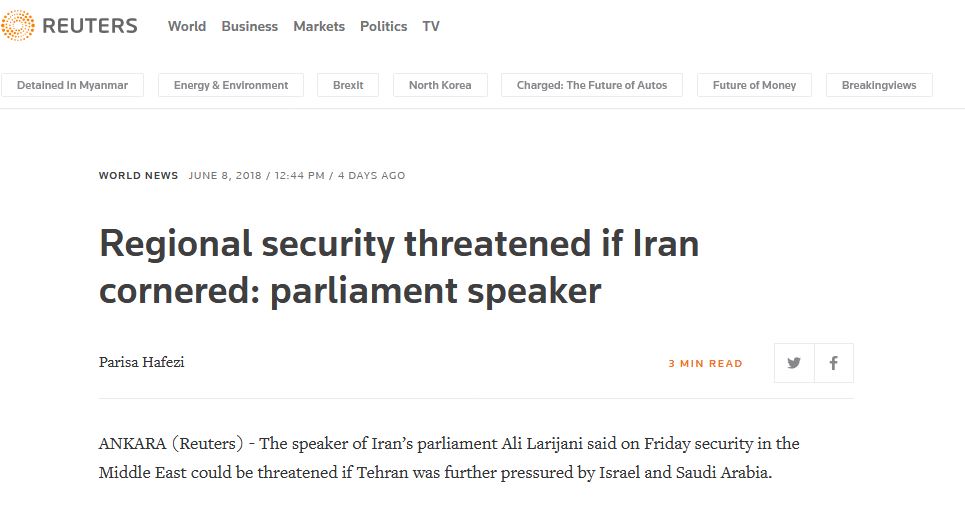
The British outlet Reuters refused to cover the event directly. The news agency just covered a speech by Iran’s Parliament Speaker Ali Larijani delivered after the al-Quds rallies at Tehran’s Friday Prayers ceremony.

Surprisingly, Reuters has selected a relatively less important point of Larijani’s long speech, which was mainly focused on the Palestine conflict, for the title of its news piece.

The article describes the al-Quds event as “Iran’s annual day of solidarity with the Palestinians” and says only “tens of thousands of Iranians” took part in this year’s rallies.

This is while the number of participants were certainly much more than that, as the demonstrations were held in Tehran and around 900 other Iranian cities across the 80-million country.

Moreover, the al-Quds rallies were also held in many countries, including Pakistan, India, Afghanistan, Indonesia, Lebanon, Syria, Iraq, Bahrain, Malaysia, Turkey, Nigeria, South Africa, Yemen and Palestine.

Similar rallies were also held in major western capitals, including London, Berlin and Washington, on Saturday and Sunday.


Divert Attentions

The Reuters article refuses to go into details about the Palestine conflict, and instead draws a link between the event and problems between Iran and the west, including Iran’s nuclear program, Trump’s withdrawal from the 2015 nuclear accord and Tehran’s influence across the region.

But one can hardly see a correlation between the event and disputes between Iran and the West.

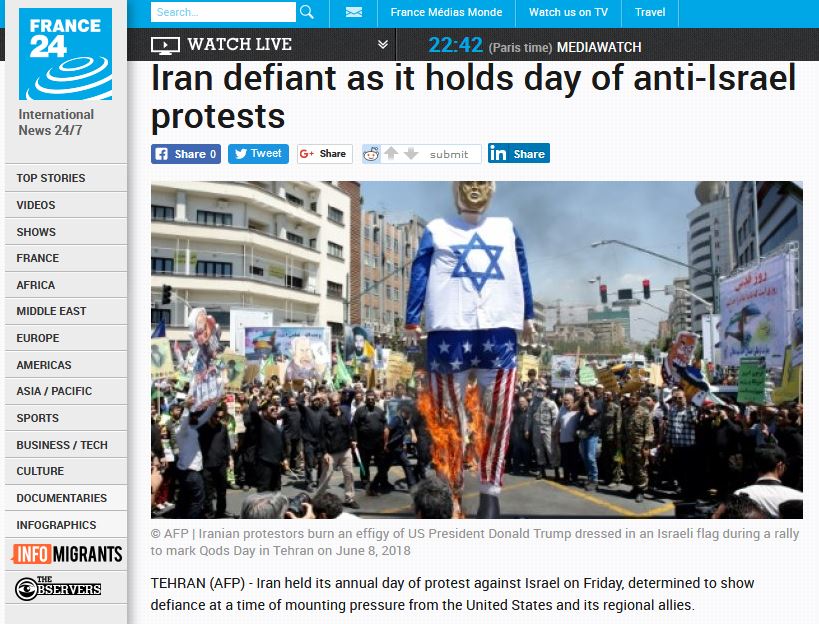
Iranian protestors did burn an effigy of Trump dressed in an Israeli flag, but it was in protest at Trump’s recognition of Muslims’ third holiest city (after Mecca and Medina) as the capital of Israel, not the controversial president’s tough line on Iran.

As a matter of fact, anti-Israeli sentiments have been running high among Iranians since the formation of the Israeli regime in 1948.

The hostility of Iran’s revolutionary leaders towards Israel has nothing to do with the US, as it could be traced to years before the revolution.

Notably, Ayatollah Khomeini in a speech leading to the 1963 uprising against the US-backed Iranian regime criticized Shah Mohammad Reza Pahlavi for pressuring clergies not to speak against Israel in their sermons.

“[They order us] not to talk about Israel and not to talk about Shah. What’s the connection between them? Is Shah an Israeli?” Imam Khomeini said.

Since the Shah regime was toppled, Iran has been steadfast in its support for the Palestinian cause.

According to Iran’s Constitution, Iranian governments are obliged to support the oppressed across the globe.
Western Media Coverage of Int’l Quds Day; Textbook Example of Propaganda Ploy

Iran Threatens Regional Security

Of note, Reuters has also distorted Larijani’s remarks, reporting as if Iran has threatened to move to destabilize the region.

Reuters quotes Larijani as saying that “the region’s security will be threatened if they corner Tehran”, referring to the US, Israel and Saudi Arabia.

This is while the Persian transcript of Larijani’s speech shows the Reuters’ translation has been inaccurate.

“… the wicked triad of the US, Saudi and Israeli are trying to push Iran into a corner, but these amateur and sneaky creatures should be careful not to end up bringing themselves insecurity,” he said.


Shiite Demonstrations

The Associated Press has provided a broader coverage of the event, reporting al-Quds rallies in Syria, Iraq, Iran, Lebanon, Pakistan and Palestine.

However, the reports are mainly focused on the role of anti-Israel resistance groups, which are mainly labeled by the western governments as terrorist.

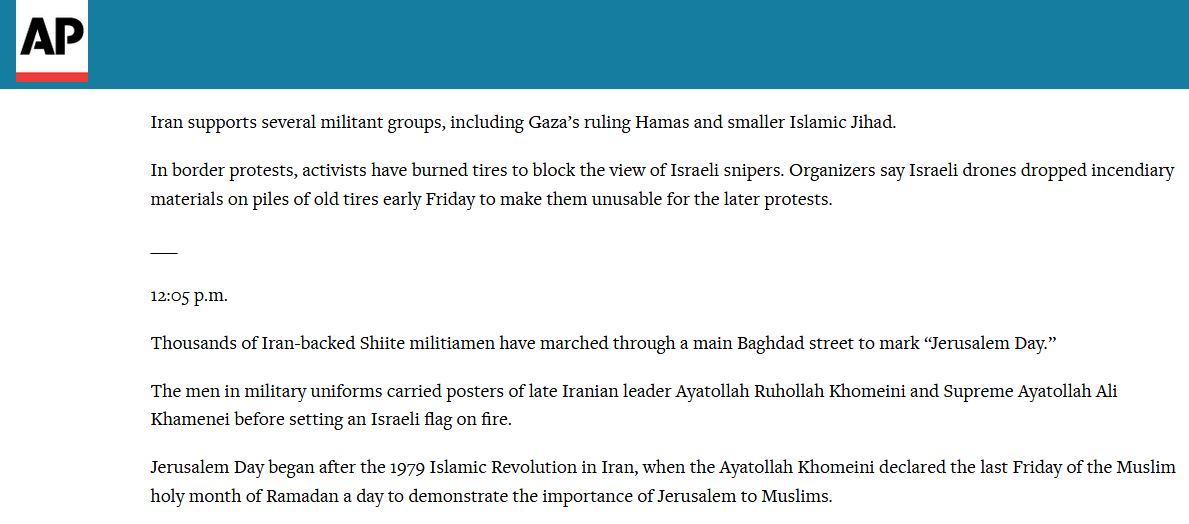
For example, in its Iraq report, AP says thousands of “Iran-backed militiamen” rallied in a main street of Baghdad in protest to Israel.

In its Palestine reports, AP repeats several times that al-Quds Day protests in Gaza were organized by Hamas.

In another report, AP says thousands of “Shiite Muslims” in the capitals of Iran and Iraq marked “Jerusalem Day” with protests

By emphasizing the Shiite identity of those attending the rallies, AP seems to be trying to frame the event as a Shiite ceremony not welcomed by Sunnis.

This is while the Palestine conflict has often served as a base for unity among Muslims, as supporting Palestine is a shared concern among Shiites and Sunnis.

Interestingly, AP refers to the protests by the name “Jerusalem day”, perhaps to avoid legitimatizing the Palestinian’s claims over the city.
Western Media Coverage of Int’l Quds Day; Textbook Example of Propaganda Ploy

Iran Defies Pressures

AFP was also inaccurate in its portrayal of al-Quds Day. Reporting that “Iran held its annual day of protest against Israel”, AFP tried to limit the worldwide popularity of the international event.

Mirroring Reuters’ narrative, AFP linked the event with Iran’s standoff with the west, saying holding the ceremony showed Iran’s “defiance at a time of mounting pressure from the United States and its regional allies”.
Western Media Coverage of Int’l Quds Day; Textbook Example of Propaganda Ploy

It’s All About Israel

To decode the western propaganda campaign on al-Quds Day, one only needs to look at Israel’s direct efforts to counter the demonstrations.

Zionists have tried to curb the impact of the al-Quds Day demonstrations, and have even attempted to supress them if there was a chance to succeed.

For example, pro-Israel groups have in recent weeks tried to prevent al-Quds rallies from being held in Berlin and London.

But perhaps one of the most striking evidence useful for explaining western media’s approach toward al-Quds Day could be found in propaganda leaflets thrown into Gaza by the Israeli army last Thursday.

The leaflets urged Palestinians not to join al-Quds rallies and not to let Hamas “to turn you into a tool to advance its narrow agenda”.

Behind this agenda is “Shiite” Iran, which has made it its mission to “inflame tensions” in the region for the sake of its “religious and sectarian” interests, the leaflets said.

The narrative Israel is presenting in these leaflets appear to be in accordance with the propaganda ploy tried by western media: The event is organized by Iran and its allies, Iran is inflaming tensions in the region and It is merely seeking its own interests.

It seems safe to conclude that Israel and its allied western governments are dissatisfied with the international al-Quds Day and are following a common formula to diminish its impact.

This formula is centred on provoking divisions among Muslims and demonizing Iran, who enjoys growing popularity in the Arab streets of the region due to its honest, strong backing for the Palestinian cause.

Seemingly, the Israeli regime is pinning hope on efforts to widen the Shiite-Sunni rift and separate Palestinians from their true supporters, among other measures.

Will the Muslim world be vigilant enough not to fall in this trap? We hope so.


Article by Iranian journalist Alireza Hashemi

“US’ Insistence on Unilateralism Threatens Global Peace, Security”

In a Monday statement, Qassemi referred to the G7 communiqué released after the group’s summit in Canada, and slammed certain “meddlesome” demands and claims raised by the member states about Iran.
The Islamic Republic of Iran advises the G7 member states not to fall into the trap of Iranophobia and anti-Iran sentiments laid by certain states and regimes with excessive demands, he noted.

“It goes without saying that such approaches are not constructive and based on realities on the ground,” he said.

The spokesman said the Islamic Republic has proved that it is more concerned about the international peace and security compared with other countries, even some of the G7 members.

“Iran has shown its positive approach by paying a high price in fight against the unbridled and boundless terrorism of ISIS and other similar terrorist groups over the past decades,” he noted.

Qassemi said the worrisome problem is that the US insists on its unilateral, self-centred and selfish measures and behaviours. “Such an approach poses a serious threat to the international peace and security.”
The spokesman rejected as baseless the concerns raised by the G7 about Iran’s peaceful nuclear program.

He then referred to Iran’s legitimate defensive missile program and underlined that the government and nation of the Islamic Republic stand serious and resolute in the face of enemies’ threats without being coerced by their political brouhaha and unsubstantiated and baseless accusations.

“To defend the country and provide its people with security, Iran will never abandon its defensive doctrine which calls for developing our defensive and deterrent missile program that violates none of the UN resolutions,” he said.

Qassemi underlined that the principled, constructive and legitimate role of the Islamic Republic in the region particularly in fight against terrorist groups like ISIS guarantees the stability and economic boom of all regional states and significantly contributes to the international peace and security.
“The biased, targeted and useless accusations raised against Iran by the US’ ruling party and its blame game will never undermine Tehran’s regional role,” he concluded.

G7 leaders, in a joint statement on Saturday signed by the US and its European and Asian allies, vowed to ensure that Iran’s nuclear program “remains peaceful”.

“We are committed to permanently ensuring that Iran’s nuclear program remains peaceful, in line with its international obligations and commitments to never seek, develop or acquire a nuclear weapon,” the leaders said at the end of a two-day summit in Canada.

“We condemn all financial support of terrorism including terrorist groups sponsored by Iran. We also call upon Iran to play a constructive role by contributing to efforts to counter terrorism and achieve political solutions, reconciliation and peace in the region,” the statement added.