Friday, December 26, 2025
Home Blog Page 3532

Iran Says Ready for Uranium Enrichment at Higher Levels

Behrouz Kamalvandi

“We have of course adopted some measures in order to prepare the ground for eventually increasing the level of enrichment if it is needed and if the negotiations with the Europeans fail,” he said on Tuesday.

“We are of course continuing to carry out and implement our obligations based on the JCPOA,” he noted in reference to Joint Comprehensive Plan of Action signed between Iran and the P5+1 group of countries in 2015.

Under the JCPOA, Iran undertook to put limits on its nuclear program in exchange for the removal of nuclear-related sanctions imposed against Tehran.

“But at the same time, taking every scenario into consideration, we are preparing ourselves,” he added.

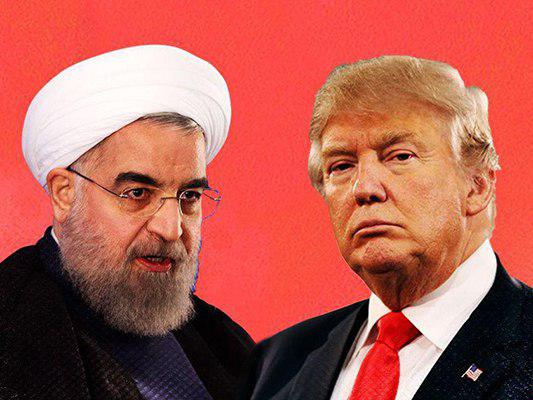
In May, US President Donald Trump announced that he would pull America out of a 2015 nuclear agreement with Iran and re-impose the sanctions that the deal had envisaged to be lifted.

Since the US president pulled Washington out of the nuclear deal, European countries have been scrambling to ensure that Iran gets enough economic benefits to persuade it to stay in the deal. The remaining parties have vowed to stay in the accord.

Earlier in the day, EU foreign policy chief Federica Mogherini announced that European countries have activated a blocking statute that prohibits companies from complying with US sanctions on Iran.

“Today, the European Council has endorsed the update of the blocking statute annex on the nuclear deal with Iran,” Mogherini told reporters in Brussels at a meeting with EU foreign ministers.

A blocking statute is a law enacted in 1996 to protect European entities “against the effects of the extra-territorial application of legislation adopted by a third country.”

On Sunday, Leader of the Islamic Revolution Ayatollah Seyyed Ali Khamenei said that European signatories to the nuclear deal with Iran must provide Tehran with necessary guarantees about the continued implementation of the deal.

Ayatollah Khamenei noted that drawing up a “stable economic roadmap” was needed to solve the country’s economic problems, emphasizing that solution of those problems must not be made conditional on the continuation of the JCPOA.

Gov’t Pays Blood Money for 2014 Isfahan Acid Attacks as Culprits Not Caught

“Unfortunately, the perpetrators were not eventually apprehended and a few people arrested at the time were later found to have played no role in the incident,” Hossein Abbasalizadeh said.

The lawyer said this is while the investigators left no rock unturned in search of the culprits.

“The province’s judicial and police authorities made every effort to find the perpetrators, and did not ignore any possibility,” he told Tasnim News Agency in an interview on Tuesday.

The lawyer said the victims have received blood money from the government, as the perpetrators have not yet been found.

Four year ago, a spate of acid throwing attacks on four to ten women in Isfahan led to widespread panic and nervousness in the city.

According to eye witnesses, the male attackers riding on motorbikes threw acid on faces of young women while shouting statements against the targeted women’s allegedly loose clothing.

Their statements led to rumors that the victims were chosen because they were wearing clothing that did not conform to Islamic norms and the assailants were motivated by religious motives.

The attacks came after a number of high-level clerics had publicly stated that effective enforcement of proper hijab must go beyond verbal warnings.

Just prior to the attacks, Isfahan’s Friday Prayers Leader Mohammad Taqi Rahbar gave a sermon suggesting women with “bad hijab” should be confronted by more than just words.

But authorities denied that the assaults had anything to do with the hijab, and some believe that the attacks were aimed at tarnishing the image of the Islamic Republic.

Acid attacks in Iran and other countries are usually linked to personal grudges.

Acid Attack Victim Pushes for Law Banning Sale of Acid in Iran

Iraq to Import Electricity from Saudi Arabia as Iran Stops Exports

Iran, Iraq Agree on Two Electricity Contracts

An Iraqi delegation, including the Minister of Electricity, Minister of Youth and Sports and a representative of the Iraqi Ministry of Foreign Affairs, had earlier travelled to Tehran to discuss electricity imports.

The Iraqi Electricity Minister issued a statement on Monday announcing that his country’s delegation could not reach an agreement with Tehran to continue exporting electricity to Iraq.

According to Al-Fahdawi, after the Iranian side announced it could not resume electricity exports to Iraq through four lines of power transmission between the two countries, the Iraqi Electricity Ministry has set an alternative plan for importing electricity, i.e. importing power from Iran’s arch-rival Saudi Arabia.

The Electricity Ministry had previously said that due to an increase in the Iraqi debts to Iran, Tehran has cut off exports of electricity to the country.

The Iraqi government has more than $1 billion electricity debts to Iran, a report by Khabar Online said.

The Iraqi Electricity Ministry says the country needs 23,000 MW per day, of which the country can only produce 15,700 MW itself.

The protests in southern Iraq entered their second week on Monday, with rage erupted over the government’s inability to reduce unemployment and provide basic services.

Two people were killed in Basra on Sunday, following a gathering outside the governor’s office, while on Friday demonstrators stormed Najaf’s airport which led to cancellation of flights.

Iraqi counter-terrorism forces were sent across the capital Baghdad on Tuesday, as anti-government demonstrations continued into their second week over social problems and lack of basic services – including electricity.

Abadi promised on Tuesday to allocate funds for electricity and water in Basra, one of the key centres of dissatisfied citizens.

Iran Appoints Woman as Envoy to Finland

Vadiati is the second female envoy of the Islamic Republic after Marziyeh Afkham.

Afkham was earlier appointed as the Iranian Ambassador to Malaysia in President Hassan Rouhani’s first term in office.

Afkham was appointed as the first female ambassador since the 1979 Islamic revolution, marking a breakthrough for women in government under President Rouhani.

She was a veteran diplomat, having served in the foreign ministry for about 30 years as a ministerial aide.

In 2013, Iran’s Foreign Minister Mohammad Javad Zarif, appointed Afkham as his spokeswoman, the first Iranian woman to hold such a high-profile role.

ISIS Terrorists Arrested before Carrying Out Attacks in Iran

Speaking in a televised interview, Mahmoud Alavi described how the intelligence teams identified and arrested the four-member group.

“The team consisted of four terrorists who wanted to launch their operation from one of south-western provinces of the country. The operation was scheduled to be commanded by a person whose brother had been killed in Syria in a clash between the Takfiri and terrorist currents,” ISNA quoted Alavi as saying.

“Of course, in this case, it should be remembered that despite the fact that he had been killed in Syria, some ignorant people in the social media wanted to say he was killed in the territory of the Islamic Republic. Fortunately, this conspiracy was soon neutralized and it became clear that this Takfiri person had been killed in Syria.”

Alavi further added that the deceased man’s brother formed a team of four who were planning to join ISIS and were ordered by the ISIS leader to stay in Iran. He had also advised them to provide weapons and facilities to take action in Shiraz and Isfahan.

“They had hatched their plots and they had explosives and facilities, but they were identified and necessary measures were taken against them. Three of their agents were also arrested and their case is currently under investigation,” noted Iran’s intelligence minister.

Iran Welcomes Muslim Figures’ Call for Cessation of War in Yemen

Bahram Qassemi

The Islamic Republic of Iran, from the beginning of this devastating war, called for an immediate end to the conflict and proposed a four-point solution to the crisis, Qassemi noted in a Tuesday statement.
He referred to the statement by a group of respectable figures of the Muslim world to stop the war in Yemen, and stressed that Iran would always support any plan or proposal that could help end this war through dialogue and political solution.

The spokesman also hailed these political figures for feeling responsible in this regard and expressed the country’s readiness for any assistance in implementing this proposal.

Qassemi also called on the international community, especially all Muslim governments, to increase their efforts to stop this devastating war.

He finally referred to the four-point plan proposed by Iranian Foreign Minister Mohammad Javad Zarif to end the Yemen crisis, and said, “As stated in the proposal, the immediate ceasefire, dispatch of humanitarian assistance, initiation of political dialogue between all Yemeni parties and formation of a national inclusive government, are key components of achieving lasting peace in Yemen.

The Saudi attack on Yemen was launched in March 2015 in support of Yemen’s former Riyadh-friendly government and against the country’s Houthi Ansarullah movement.
Yemen has announced that the Saudi-led war had left 600,000 civilians dead and injured during the past three years.

The United Nations says 22.2 million people are in need of food aid, including 8.4 million threatened by severe starvation.

US Confiscates Millions of Dollars of Iranian Bitcoins

A Comprehensive Guide for Beginners Planning to Become a Bitcoin Trader!

Sepehr Mohammadi, the head of Iran’s Blockchain Association, told IBENA that the move happened last year.

“Last year, the US government confiscated a considerable amount of bitcoins belonging to Iran over unknown reasons,” he said, adding that the country has continued seizing Iranian bitcoins afterwards.

Mohammadi said there are speculations the confiscations could have been made over fears Iran is using the cryptocurrency to circumvent sanctions.

He said the owners of confiscated bitcoins are unable to take legal action against the unlawful US move inside Iran, as cryptocurrencies are banned in the country.

Mohammadi said the association has been seeking to take international legal action, but they have not found a lawyer expert in anti-money laundering law who accepts handling the case.

Crypto-currencies’ underlying Blockchain technology eliminates the need for a third party and allows for instant, irrevocable and secure transactions.

Earlier this year, Iran joined the growing list of nations to crack down on cryptocurrencies, including India and Pakistan who made roughly similar moves in early April.

The Central Bank of Iran in March banned Iranian banks from dealing in foreign cryptocurrencies, including bitcoin, over money laundering concerns.

Iran is working to develop its own cryptocurrency.

India Eager to Continue Buying Crude Oil from Iran: Official

Karabakh Crisis to Be Settled Despite Failure of Talks: Iran

Araqchi, who was on a visit to New Delhi to attend the fifteenth round of Foreign Office Consultations between Iran and India, says India is one of the biggest customers of Iran’s crude oil and the Islamic Republic has been a reliable supplier for India.

He said the oil trade between the two countries needs to be continued given India’s need for crude oil and the Iranian government’s will.

“Iran’s policy is to continue this path, and the Indian government is highly interested in continuing imports from Iran,” Araqchi noted.

“The US sanctions have created problems for Iran-India oil trade, and these issues were discussed in detail during the Monday talks I had with Indians,” he noted.

The fifteenth round of Foreign Office Consultations between Iran and India was held on Monday. Foreign Secretary Shri Vijay Gokhale led the Indian delegation and Deputy Foreign Minister for Political Affairs Seyyed Abbas Araqchi led the Iranian side.

During his stay in New Delhi, Araqchi also held talks with Indian Minister of State for External Affairs Shri M.J. Akbar.

Both sides reviewed and positively assessed the progress in implementation of decisions taken during the state visit of the President of Iran to India in February 2018, especially for enhancing connectivity and strengthening cooperation in trade and economic issues and in promotion of people-to-people exchanges.

Views were also exchanged on regional and international issues of mutual interest, including the efforts being made by various parties to address issues that have arisen over the Joint Comprehensive Plan of Action, the nuclear deal between Tehran and world powers.

It was agreed to maintain the momentum of mutually beneficial multifaceted bilateral cooperation and exchanges between the two sides and to hold the next round of Joint Commission Meeting at the level of External Affairs Minister in November 2018 in Iran.

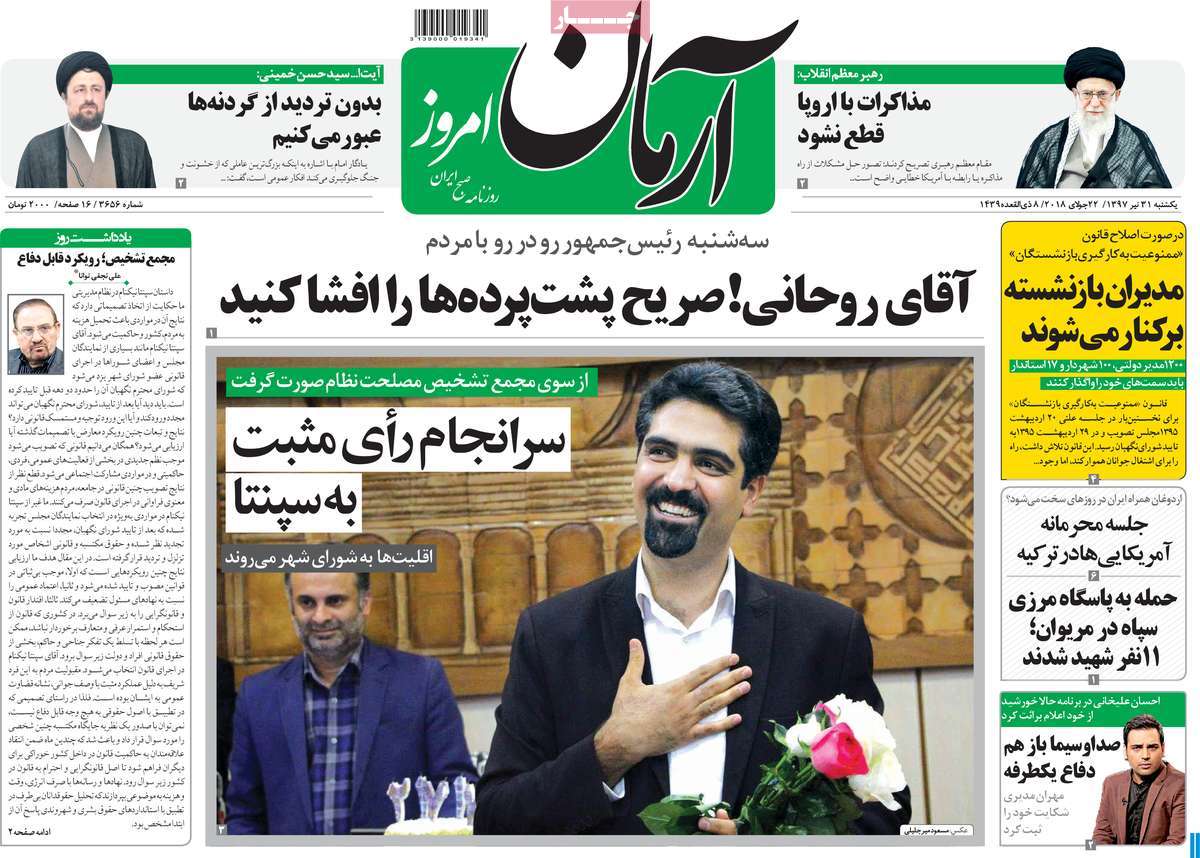
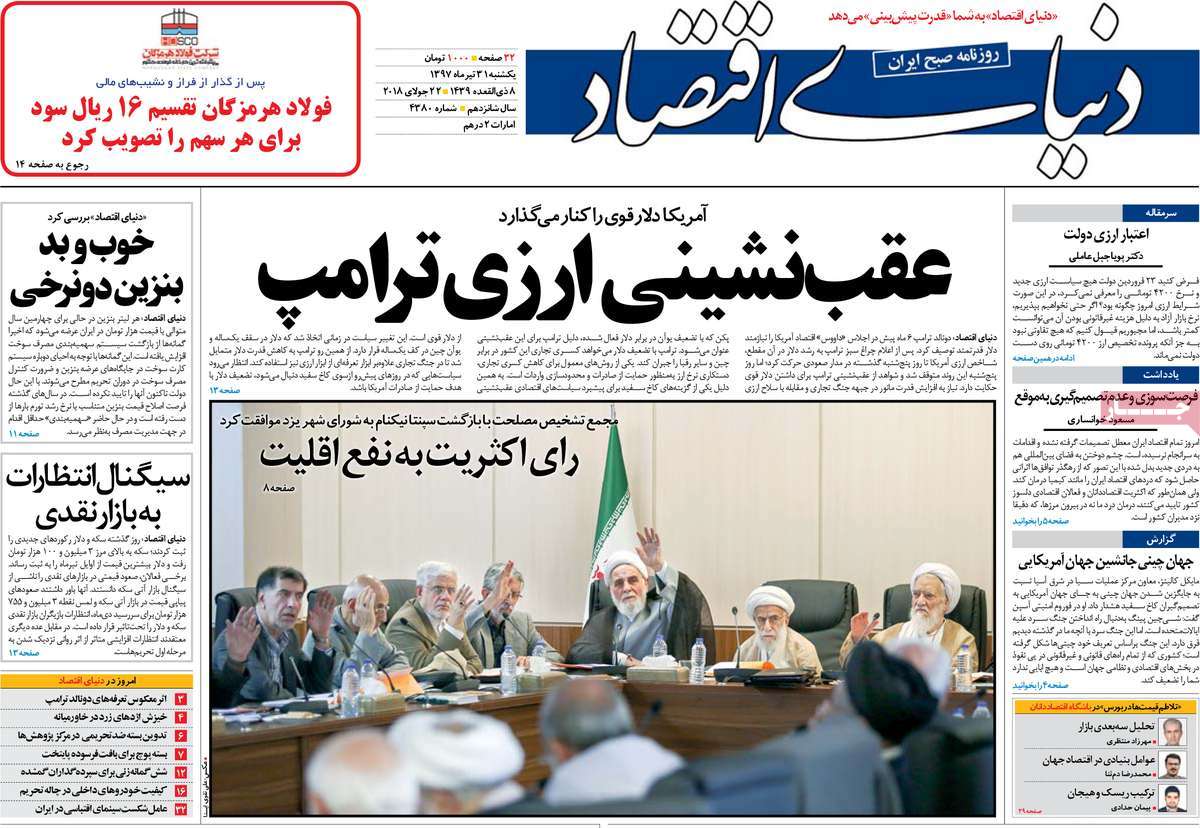
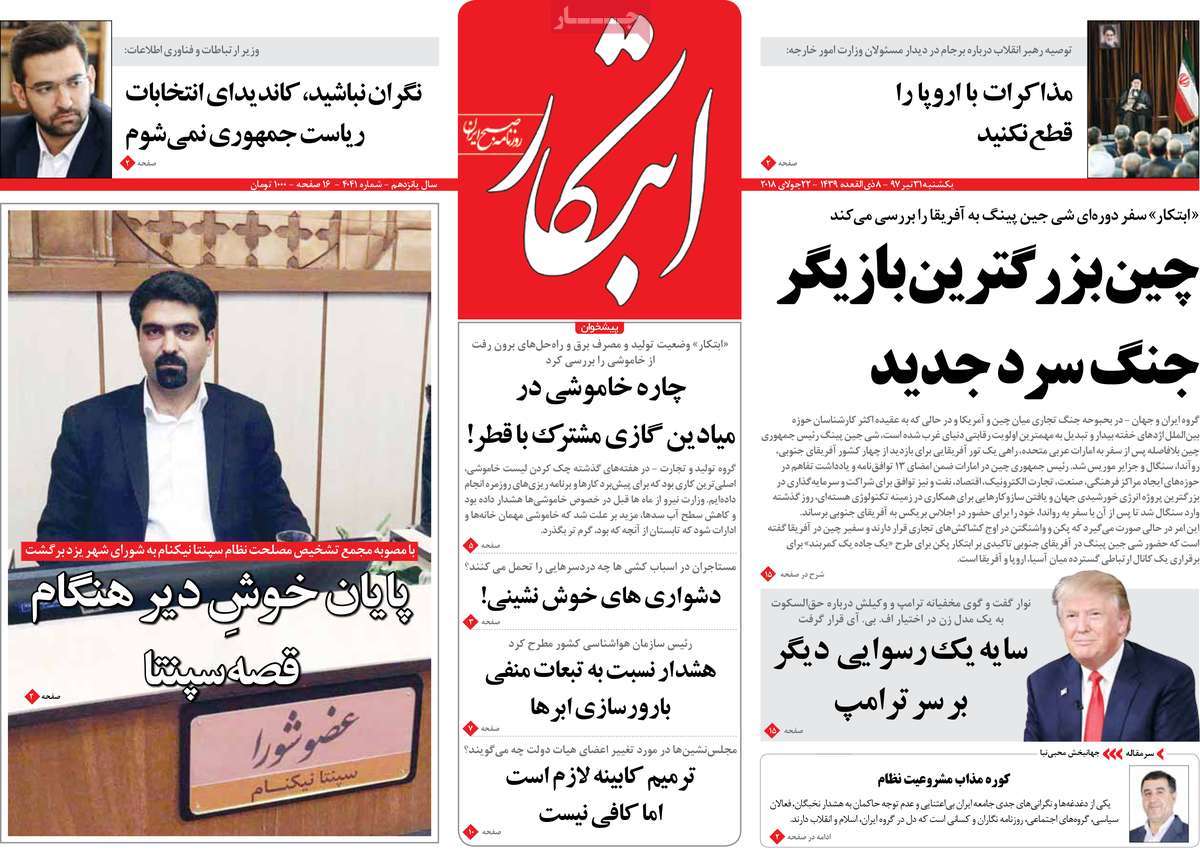
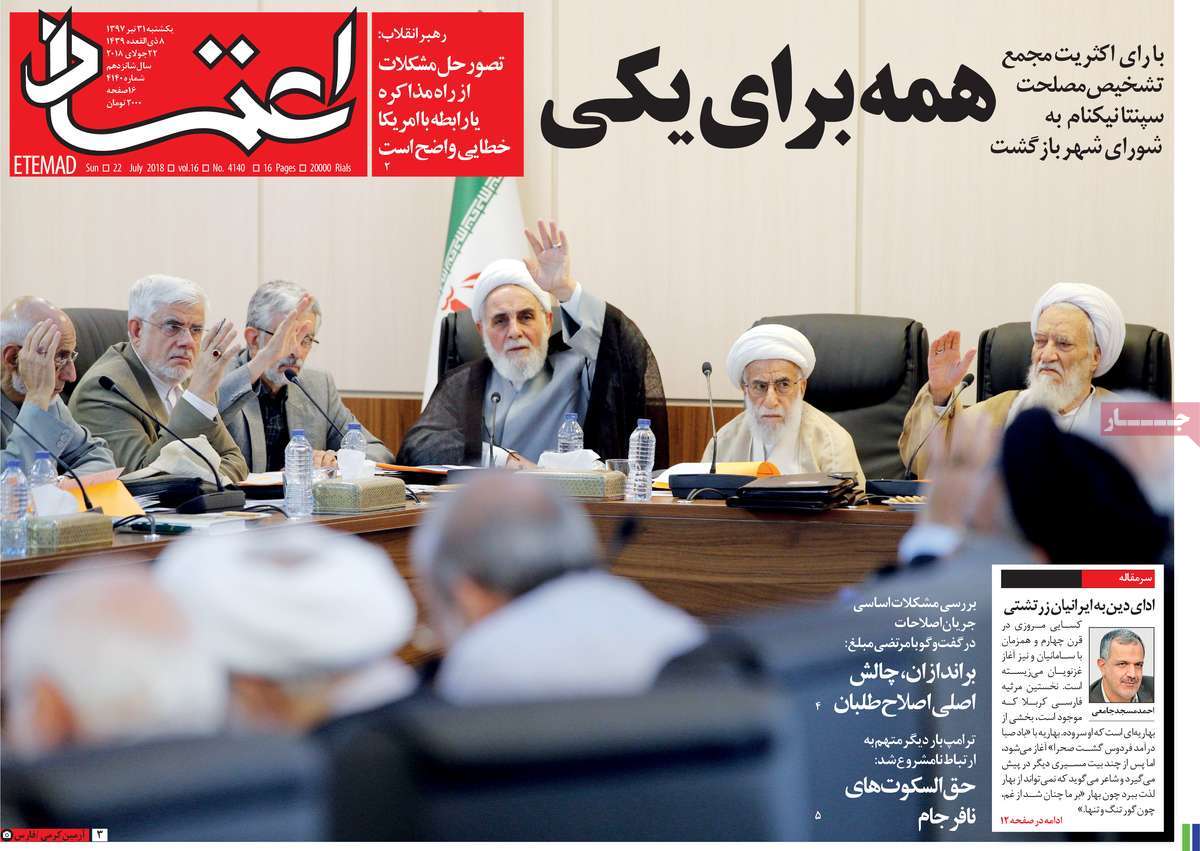
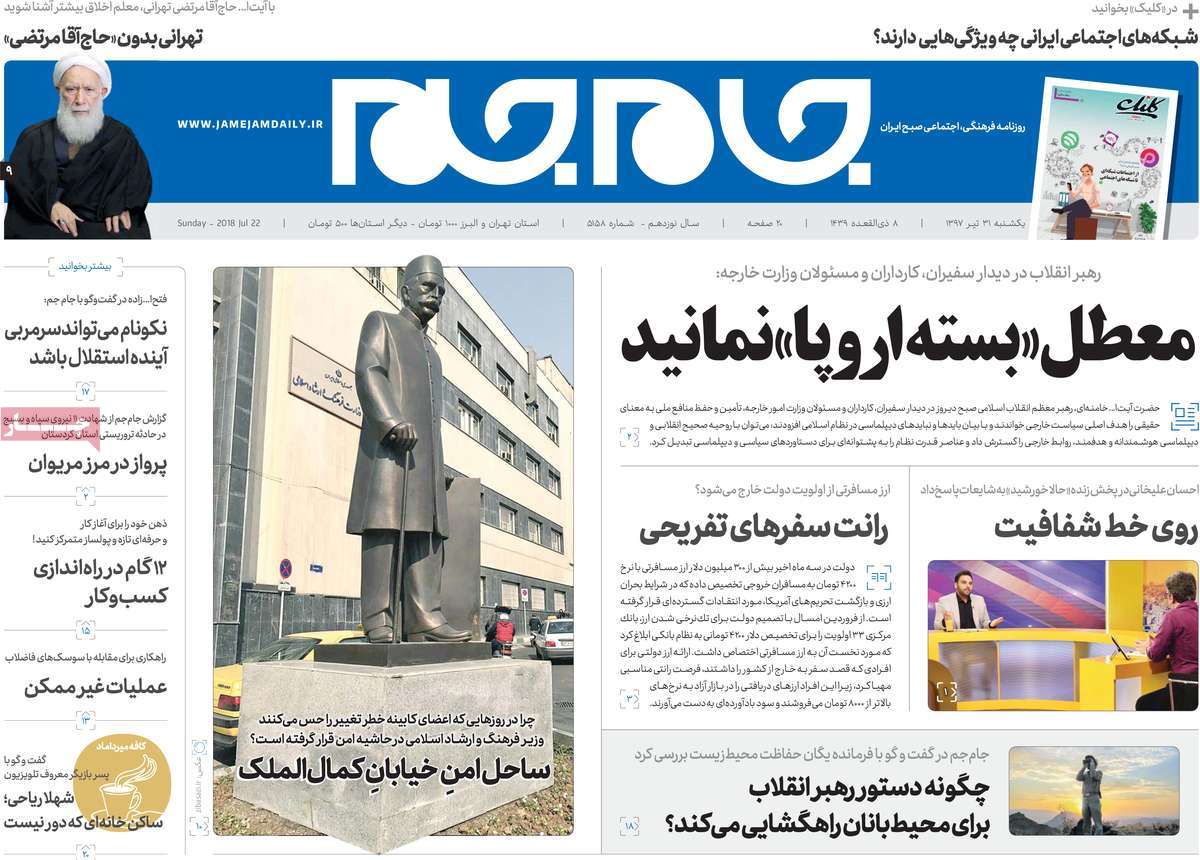
A Look at Iranian Newspaper Front Pages on July 17

A Look at Iranian Newspaper Front Pages on November 19

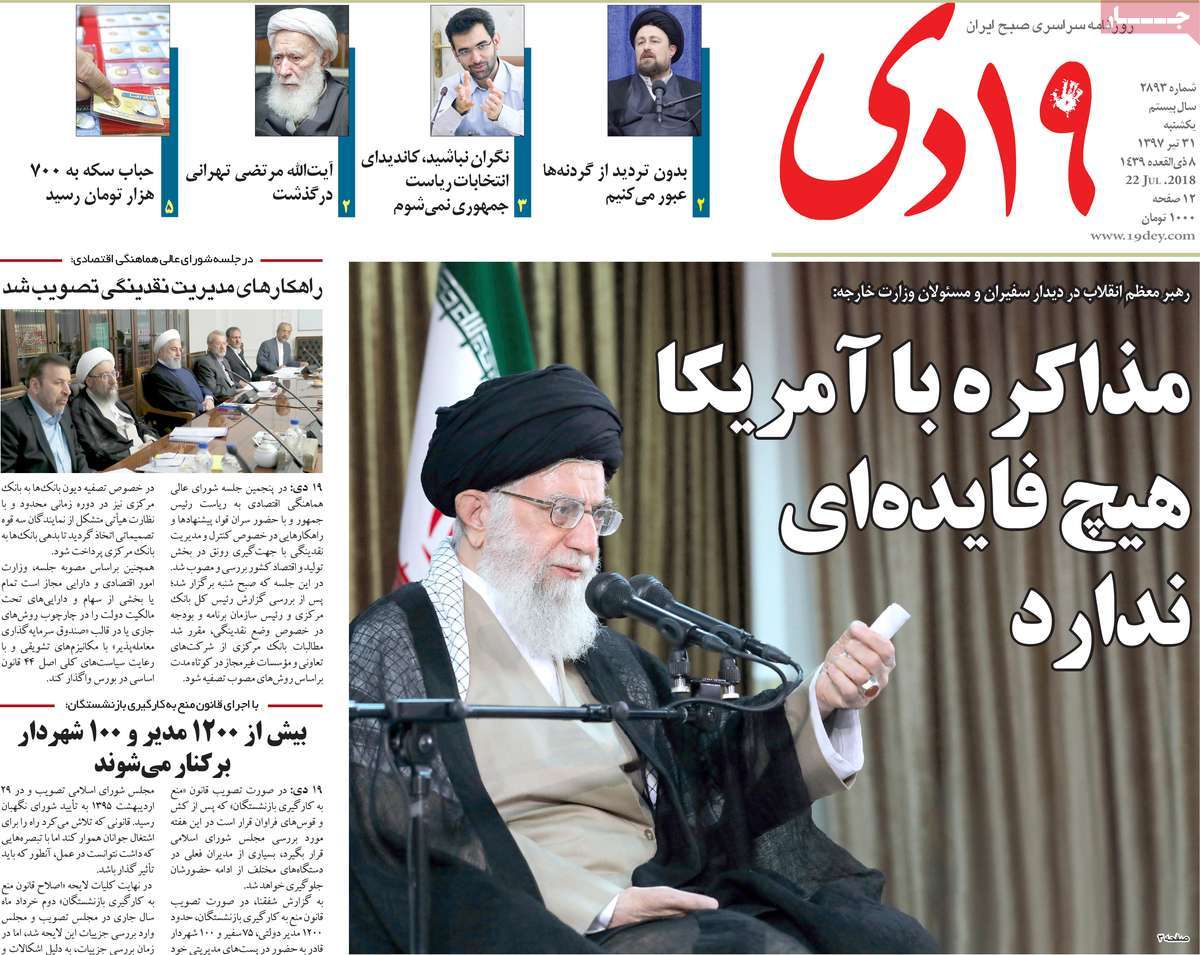
Several papers today covered the comments made by the Leader of Iran’s Islamic Revolution Ayatollah Seyyed Ali Khamenei about the futile efforts of the US to finalize the ‘Deal of the Century’.

The top story, however, was the historic meeting between Russian President Vladimir Putin and his American counterpart Donald Trump in Helsinki, Finland.

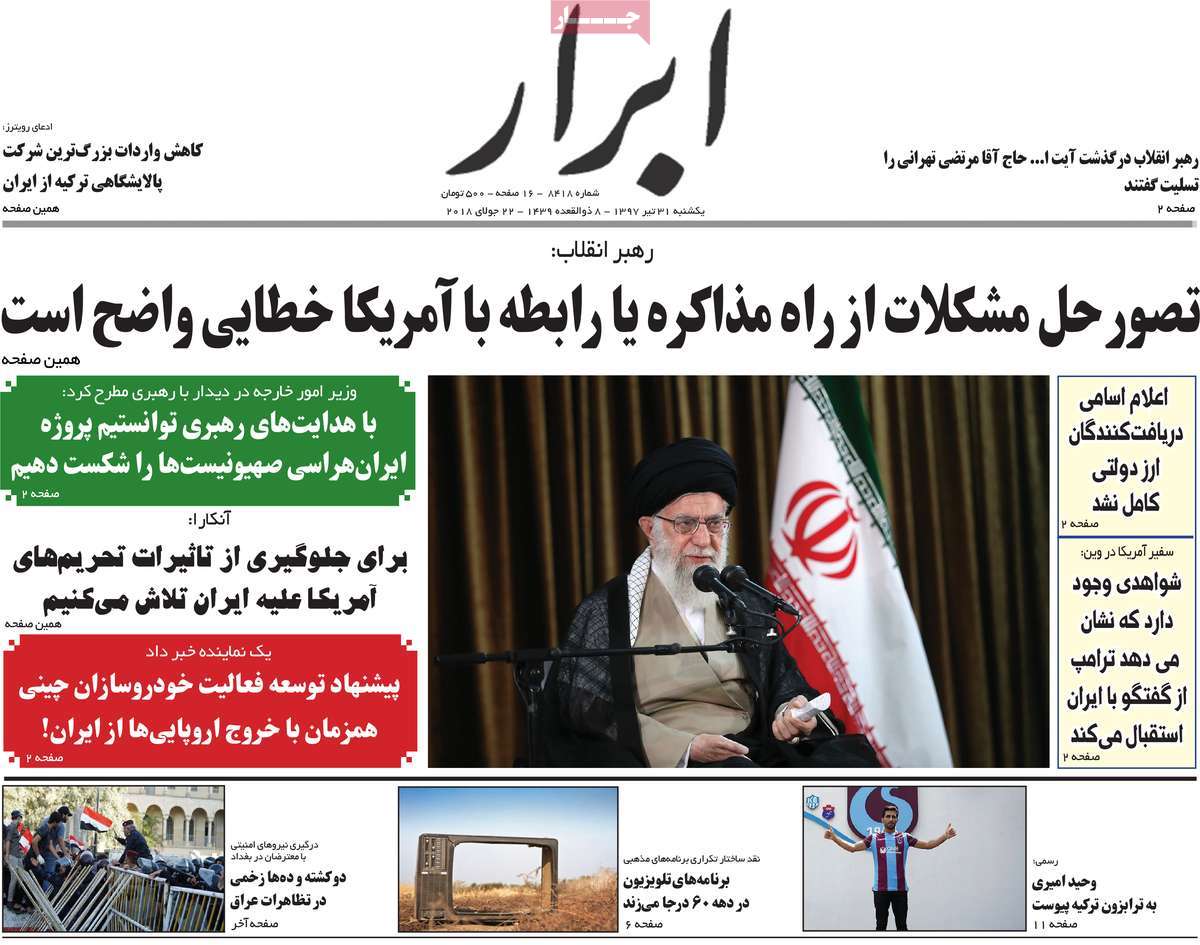
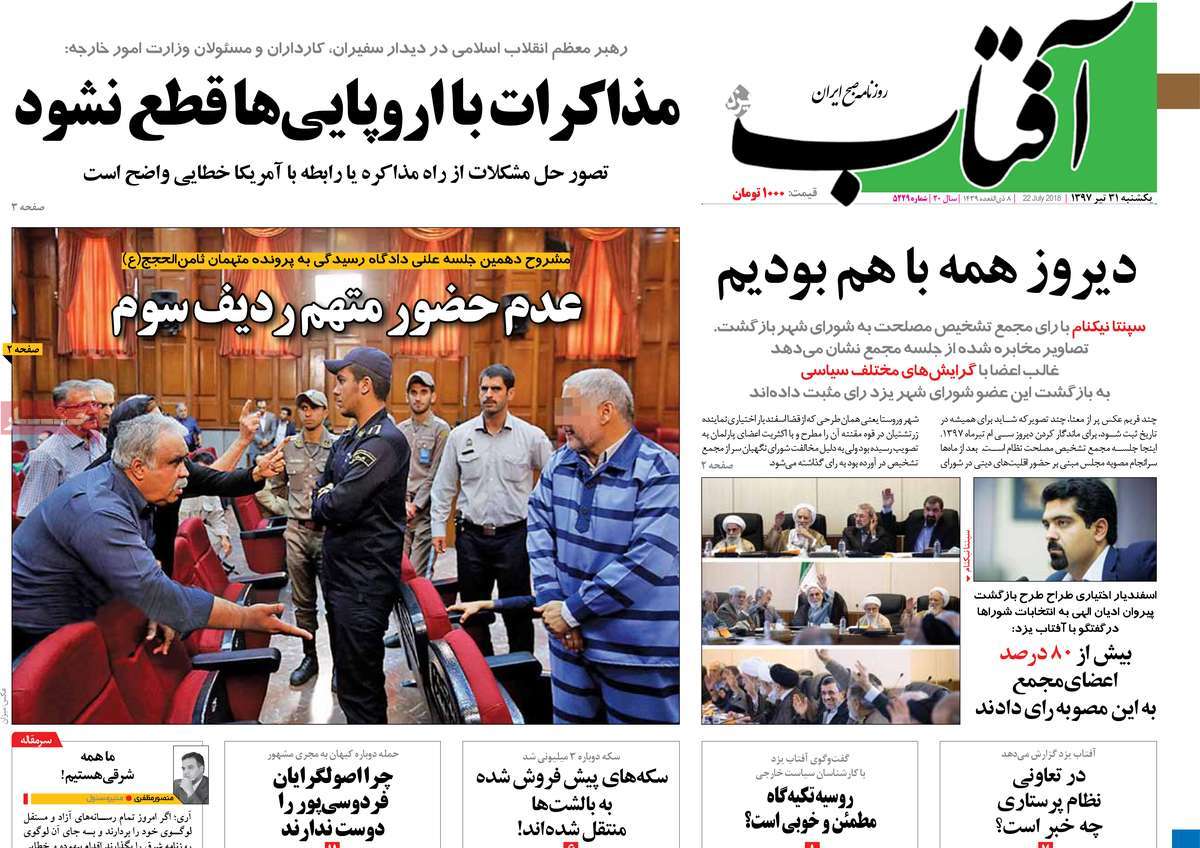
The above issues, as well as many more, are highlighted in the following headlines and top stories:


19 Dey:

1- Iran Leader: ‘Deal of the Century’ Will Never Come True

A Look at Iranian Newspaper Front Pages on July 17


Abrar:

1- American Media’s Claims about Stealing Iran’s Confidential Nuclear Documents

A Look at Iranian Newspaper Front Pages on July 17


Afkar:

1- Trump to Putin: We Altogether Possess 90% of the World’s Nuclear Weapons

A Look at Iranian Newspaper Front Pages on July 17


Aftab-e Yazd:

1- Iran Leader: US’ Satanic Policies on Palestine Will Never Come True

A Look at Iranian Newspaper Front Pages on July 17


Arman-e Emrooz:

1- Hardliners Pay No Attention to Leader’s Support for Rouhani

A Look at Iranian Newspaper Front Pages on July 17


Ebtekar:

1- Oil for Food in Russian Style! MPs’ Reaction to Controversial Talks

2- Four Decisive Hours of Talks between Tsar, Cowboy

A Look at Iranian Newspaper Front Pages on July 17


Etemad:

1- And Now Ball Is in Trump’s Court

A Look at Iranian Newspaper Front Pages on July 17


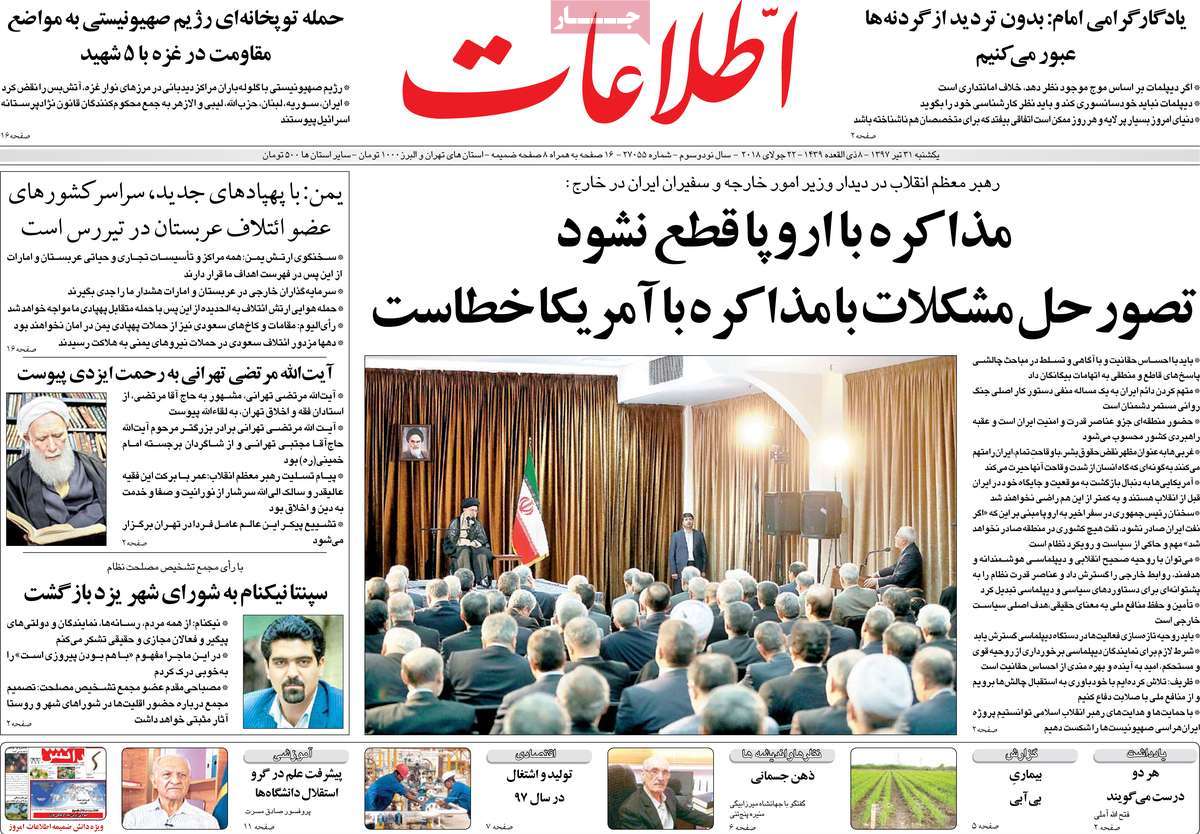
Ettela’at:

1- Iran Leader: Fake Regime of Israel to Be Uprooted

2- Putin: I Informed Trump about Russia’s Concern over US Withdrawal from JCPOA

A Look at Iranian Newspaper Front Pages on July 17


Iran:

1- Government Holds Meeting with Businesspeople, Ambassadors

  • First VP Jahangiri Calls on Private Sector to Counter Sanctions

A Look at Iranian Newspaper Front Pages on July 17


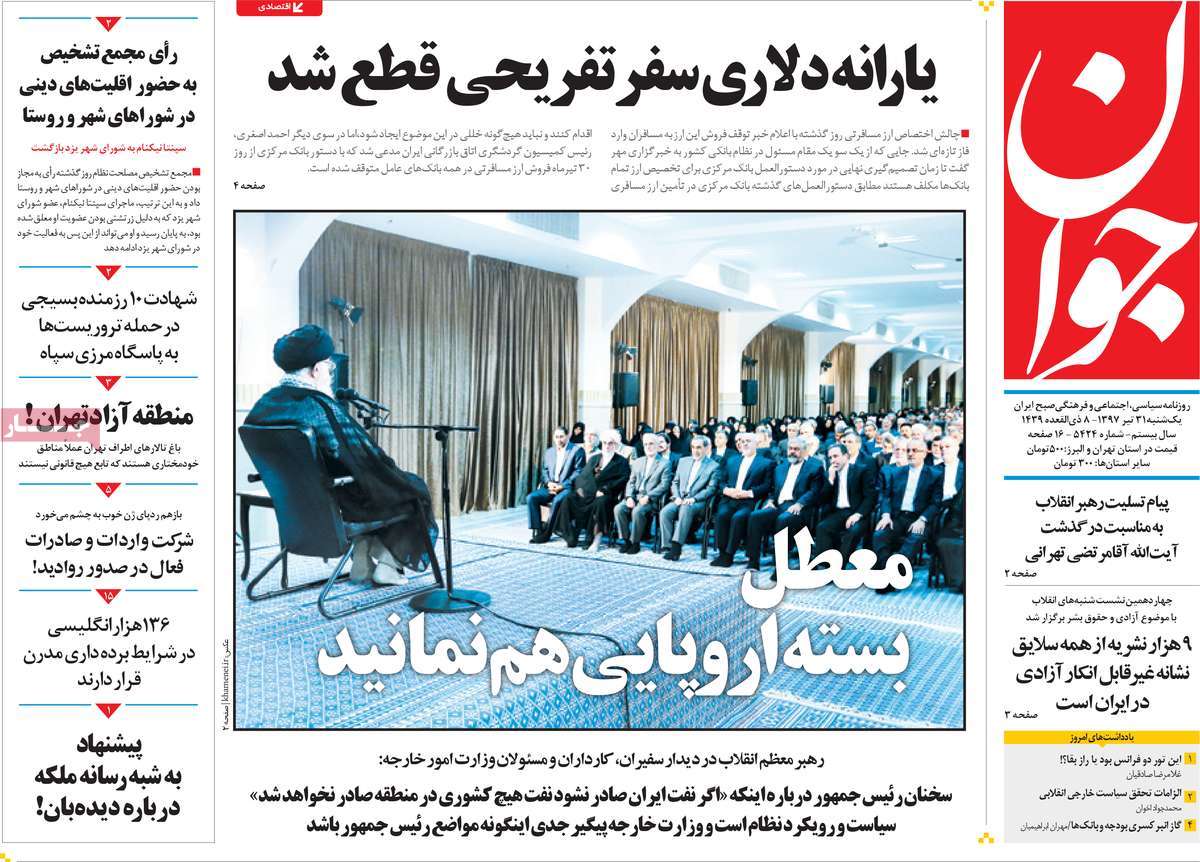
Javan:

1- Qassemi: It’s More Likely that Trump Calls Tehran for Talks

2- Cautious End of Trump-Putin Negotiations

A Look at Iranian Newspaper Front Pages on July 17


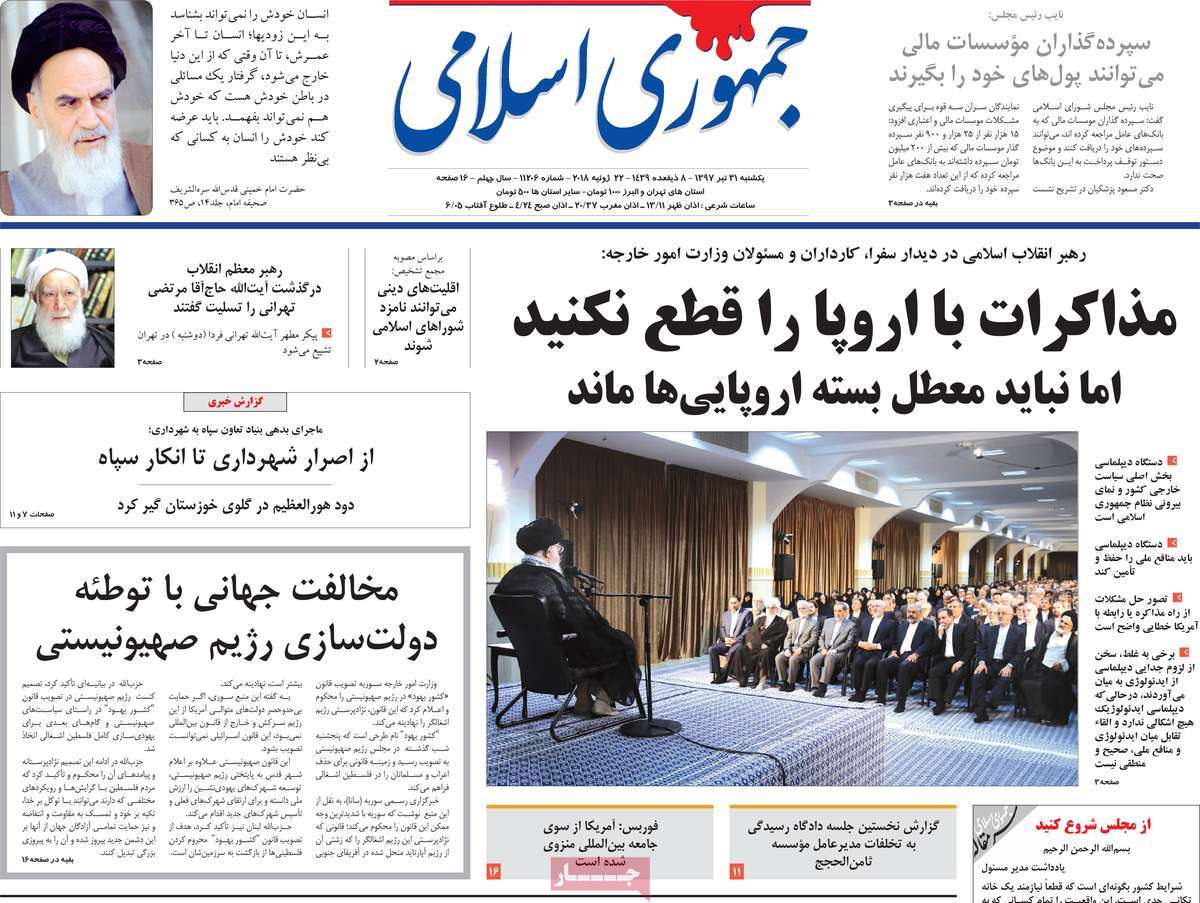
Jomhouri Eslami:

1- Trump Keeps Bragging Even in Meeting with Putin

2- Cultural, Political Figures of Arab World Call for End of Yemen War

A Look at Iranian Newspaper Front Pages on July 17


Ka’enat:

1- Doors of Azadi [Freedom] Stadium Not Closed to Women!

  • After Rouhani’s Order, Now Guardian Council Gives Green Light for Women’ Presence in Stadiums

A Look at Iranian Newspaper Front Pages on July 17


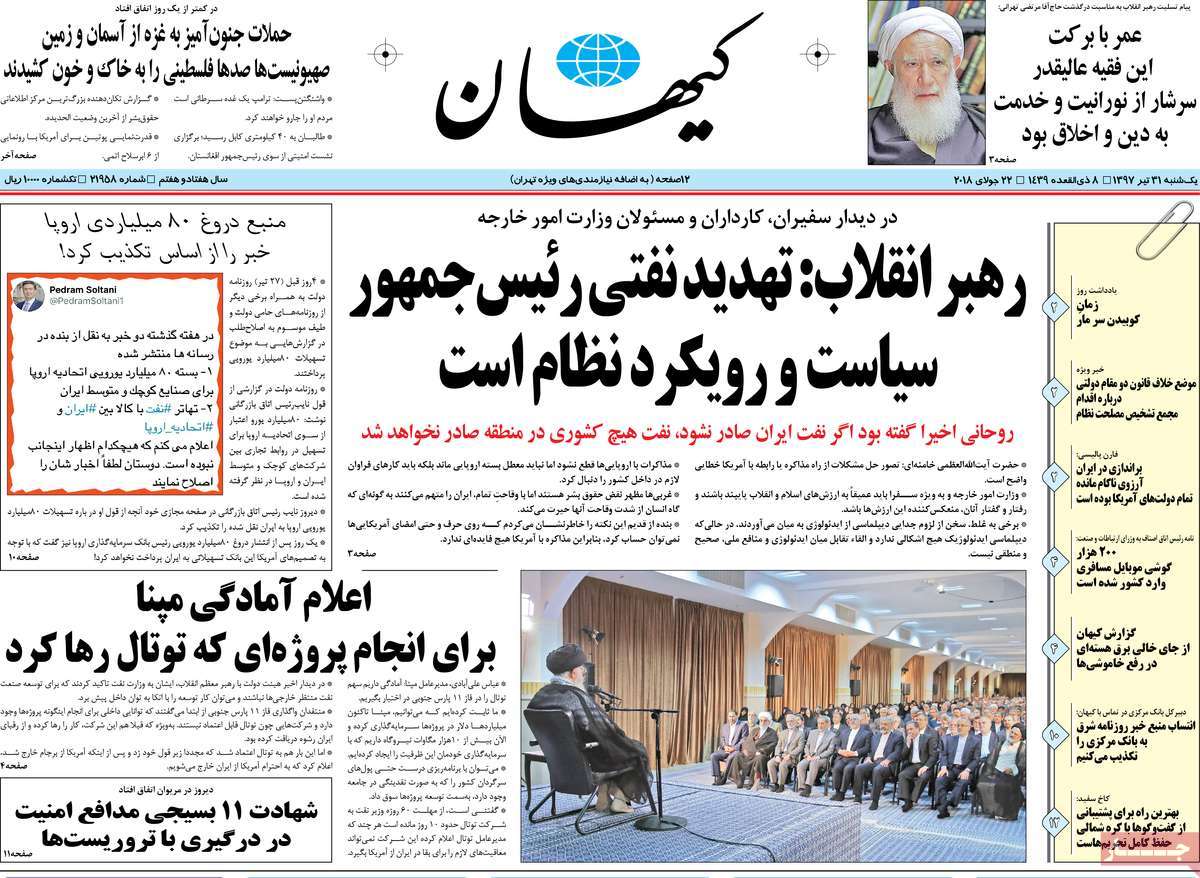
Kayhan:

1- Ordinary, Futile Talks Only Souvenir of Trump from Helsinki Visit

A Look at Iranian Newspaper Front Pages on July 17


Rooyesh-e Mellat:

1- Iran First VP: Sanctions against Tehran Not Effective

A Look at Iranian Newspaper Front Pages on July 17


Roozan:

1- Bullies Play Game of Thrones in Heart of Europe: Historic Meeting in Helsinki

A Look at Iranian Newspaper Front Pages on July 17


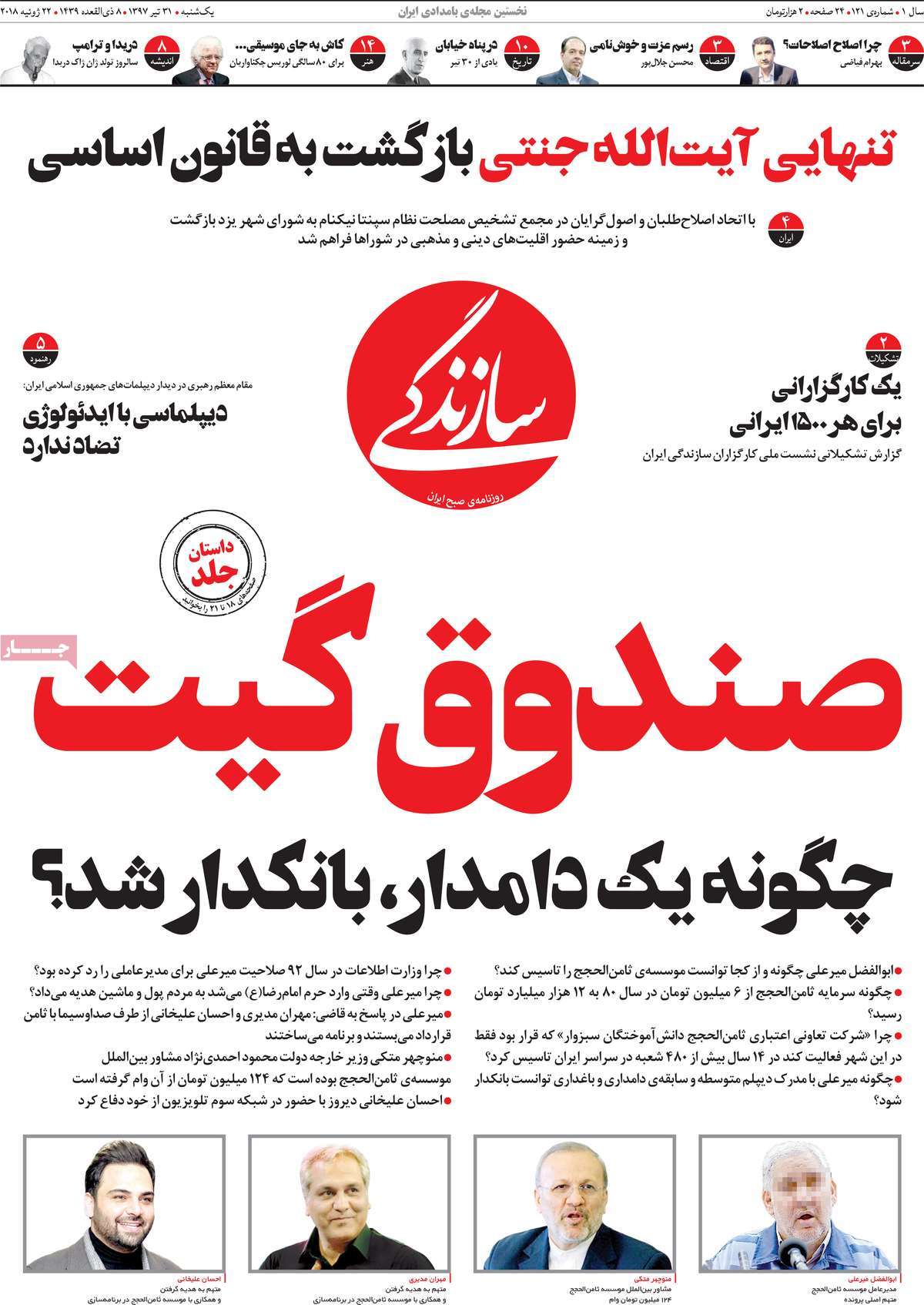
Sazandegi:

1- Return to Bipolar World

  • US, Russia Presidents Meet in Helsinki

A Look at Iranian Newspaper Front Pages on July 17


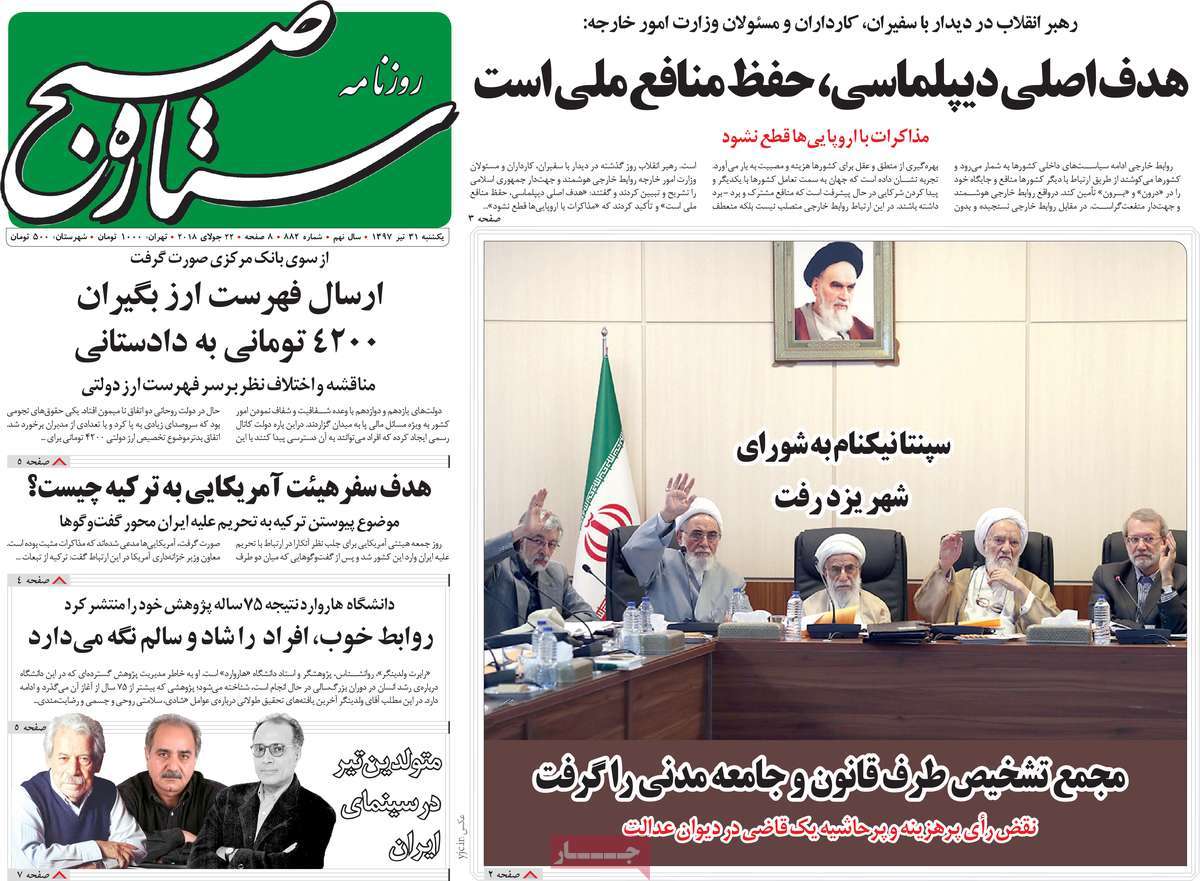
Setareh Sobh:

1- It’s Not Haram to Propose Idea of Talks with US: Moderate Cleric

A Look at Iranian Newspaper Front Pages on July 17


Shahrvand:

1- Croatian President Globally Admired as Turning Point of World Cup Final

A Look at Iranian Newspaper Front Pages on July 17


Shargh:

1- 130 Minutes of Secret Talks with Putin

A Look at Iranian Newspaper Front Pages on July 17

“Everything Possible, Even another War in Strait of Hormuz”

Lawrence Wilkerson, the chief of staff of former US Secretary of State Colin Powell, made the comment in an interview with the Al Mayadeen news network.

On Syria, he noted that Syrian President Bashar Assad has emerged victorious, and this is something that Washington and Tel Aviv both acknowledge. He said Assad has secured victory and will remain in power, and now Trump and Putin will only discuss cooperation to rebuild Syria and help restore stability to the Arab country.

He further weighed in on comments by US National Security Advisor John Bolton and others who say the problem is not Syria, but is Iran. Wilkerson said people like John Bolton have no other option but to make such remarks. He said they wanted to see the fall of Syria and Assad, and their second objective was Iraq, but they failed, and now they have focused their attention on Iran.

Wilkerson said they believe the only way to engage with 75 million Iranians is to attack the country. However, he added, such a move will be a disaster 10 times worse than the war on Iraq.

According to Wilkerson, remarks by Bolton and others about containing Iran in Syria means that the Israelis and Americans will tell Assad through diplomatic channels that Iran and Hezbollah should leave Syria. Wilkerson said he believes they put pressure on Iran through Syria and that they are likely to succeed. He says Moscow will also be ready to send Iran some messages at the beginning. He said if Iran is a major power in Syria, it will not be in Moscow’s interest. However, he added, Putin knows the game of chess well enough. Wilkerson said he believes Tehran-Moscow relations are not cordial ones, but a relationship based on interests.
The chief of staff to the former secretary of state also weighed in on Trump’s policy vis-à-vis Iran. He said he was cognizant of what was going on in US Congress. Wilkerson said what worries him is that if US lawmakers move toward adopting a law on bringing about a regime change in Iran like what they did in 1998, it will be regarded as the official position of Washington. That is the same thing they did to Iraq, he added. According to Wilkerson, US legislators will finally pass such a law in eighteen months’ time.

In this interview, he weighed in on the reasons behind the US invasion of Iraq, saying the reason for the attack on Iraq was oil. He said Washington’s strategic objective was to make sure that the crude oil transferred via the Strait of Hormuz, i.e. a third of the world’s petroleum, kept being transferred at a steady rate and a good price.

Elsewhere in his remarks, Wilkerson referred to Washington-Moscow relations, saying the United States and Russia should sit down for talks.

He made the comment while referring to a meeting between US President Donald Trump and his Russian counterpart Vladimir Putin in Finland on July 16.

Elsewhere in his remarks, Wilkerson expressed his opinion on the extent to which the Trump administration is influenced by the Israeli regime. He said Tel Aviv’s influence on Washington has increased a lot, for example financially, through the wealth of people like Paul Singer, bin Salman and others at the [Persian] Gulf Cooperation Council who seek to depict an evil picture of Iran and create the impression that Iran disrupts regional stability. He said Saudi Arabia uses its money to delineate the United States’ policies in the Middle East. He underlined bin Salman’s trip to the US was a campaign not only to convince people that the war on Yemen is useful, but to persuade them that the severance of ties with Qatar would be beneficial as well. Bin Salman also wanted to convince people that Iran is the number-one enemy not only in the region, but in the whole world. According to Wilkerson, the US Defense Department issued a report which reinforces Washington’s support for Saudi Arabia and the United Arab Emirates in the war on Yemen. He said the US keeps supporting Riyadh because of money. He noted that Trump has adopted a business-like approach and when he sees that Saudi Arabia, Qatar and the United Arab Emirates purchase billions of dollars’ worth of American weapons, he needs to return their favour. Wilkerson added the amount of the Saudi investment in the United States is important as well, adding Saudi money is deposited in American and European banks as well and everything revolves around money.

The chief of staff to Colin Powell also touched upon the Saudi aggression against Yemen. He said the Saudis have lost the war in Yemen as Egypt did in Yemen in the 1960s. He said the Saudis will never emerge victorious in the Yemen war.