Wednesday, December 24, 2025
Home Blog Page 3499

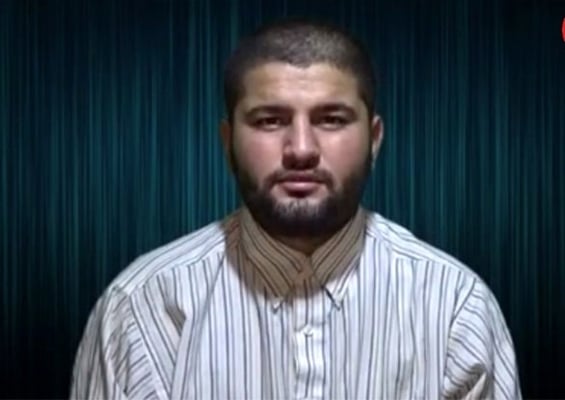
Iranian Soldier Abducted by Terrorists Returns Home

Barati had been kidnapped in a terrorist operation in May 2017 and taken to Pakistan by terrorists. However, Director-General of Border Affairs at Iran’s Interior Ministry Shahryar Heydari says he is now released and handed over to the Iranian forces.

“Barati has been transferred to the Islamic Republic following the arrangements made by the intelligence forces,” Heydari was quoted as saying in a report by Tasnim News Agency.

In a terrorist attack on Iranian border forces in Mirjaveh area near the Pakistan border in May 2017, at least nine Iranian forces were killed and two others injured. Barati was taken captive during the attack by the terrorists.

Heydari underlined that the Islamic Republic has not given any concession to the terrorists in return for Barati’s freedom and said his release came after accurate and quick intelligence operations carried out by Iran’s Intelligence Ministry.

According to the Iranian official, terrorist groups active in the region are sponsored by anti-Iran states. “Unfortunately, the terrorist groups take advantages of the current security vacuum [in the Pakistani territory] to inflict blows on the Islamic Republic,” he concluded.

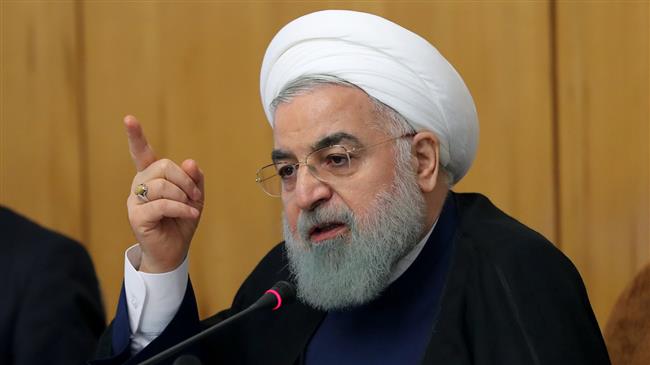
Rouhani Says US Burned Bridges for Talks with Iran

Currently, the Islamic Republic is holding talks with the entire world, the Iranian chief executive told a government meeting on Wednesday.

Rouhani, however, said, “The US itself has acted in such a way that has destroyed the circumstances required for negotiations. It has burned its bridges.”

“Now, the US is standing on the other side,” wondering how to cross, the president noted, adding, “If it is honest, it should fix that bridge again.”

In a hostile move, US President Donald Trump withdrew Washington in May from the landmark nuclear agreement and decided to re-impose the unilateral sanctions against Iran.

The White House has vowed the “strongest sanctions in history” against Iran unless the country fulfills a list of demands.

The US president said on July 30 that he is ready to meet his Iranian counterpart “any time they want to,” adding, “No preconditions. If they want to meet, I’ll meet.”

Trump’s offer of talks came only days after he threatened Iran in a tweet addressed to President Rouhani and said, “You will suffer consequences the likes of which few throughout history have ever suffered before.”

In response, Iranian statesmen and military officials joined voices to reject that offer, saying Tehran will not negotiate under pressure and threats.

On Monday, Leader of the Islamic Revolution Ayatollah Seyyed Ali Khamenei said the Islamic Republic would not enter into new negotiations with the United States due to the cheating and bullying nature of its government.

Caspian summit

Elsewhere, Rouhani also said Iran had held “very cordial and good” talks with its neighbors during the 5th Caspian Summit, which was recently held in the Kazakh port city of Aktau.

The Iranian president and Foreign Minister Mohammad Javad Zarif joined the summit on behalf of the Islamic Republic. The summit featured the signing of a historic convention on the Caspian Sea’s legal status.

Rouhani said talks over the resource-rich sea had been underway for more than 20 years, noting that some issues were resolved during the most recent round of talks.

Russia, Kazakhstan, and Azerbaijan agreed on certain issues concerning the sea’s northern part. Moscow was found entitled to 17 percent of the maritime expanse, Rouhani said. Iran, Turkmenistan, and Azerbaijan agreed over a number of issues pertaining to the southern side, he added.

He, especially, hailed the resolution of the outstanding issues regarding the Caspian “security” during the summit.

“The US and the NATO [military alliance] had plotted to establish their presence on the Caspian coasts and deploy their forces there,” Rouhani said.

“Based on this agreement, however, the establishment of military bases and the presence of foreign vessels in the Caspian Sea were banned,” he said, adding, “It was agreed that any ship seeking to sail in the sea should [do so] under the flag of one of the five littoral states.”

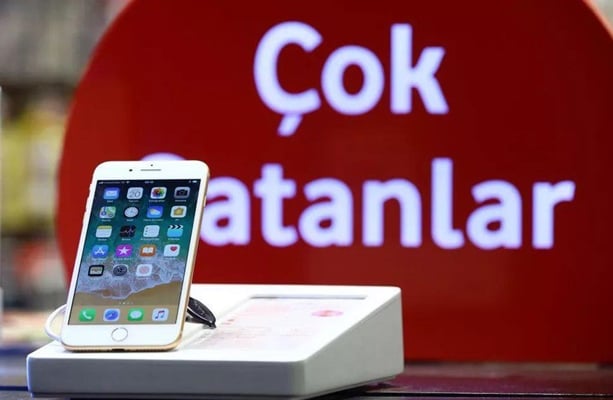
Turks Break iPhones into Pieces in Response to Erdogan’s Call

Turks Break iPhones into Pieces in Response to Erdogan’s Call

The Turks published videos of themselves breaking iPhones on social media, vowing to support their government which is standing up to the bullying US.

Erdogan said on Tuesday the country will boycott US electronic goods in response to US measures meant to punish Turkey.

Erdogan suggested Turks would stop procuring US-made iPhones and instead buy Korean Samsung or Turkish-made Vestel.

“If they have the iPhone, there is Samsung elsewhere. We have Vestel,” AP quoted him as saying.

Last week, Washington imposed sanctions and raised tariffs against Ankara over the continued detention of American pastor Andrew Brunson.

Brunson, who has lived for two decades in Turkey, was arrested in 2016 and charged with having terrorist connections. He is also accused of having links to the failed coup attempt that year. Having spent two years in jail, his trial is due to resume in October.


Turks Forming Lines to Buy Lira

The sanctions are believed to have further exacerbated economic turmoil in Turkey, which some believe has its roots in misguided economic policies of the government in recent years.

The Turkish lira plummeted to a record low on Monday, losing nearly 40 percent of its value since the start of 2018.

Erdogan blamed the crash of the lira on America, claiming a “political, underhand plot” had sent the value of his country’s currency falling to record lows.

Erdogan also renewed a call for Turks to convert their dollars into the lira, to help strengthen the currency.

Switching to foreign currency would mean giving in to the enemy, he added.

On Tuesday and Wednesday, Erdogan’s supporters have formed lines outside foreign exchange offices to buy lira.

Turks have also launched a Twitter campaign under the hashtag #Emperyalizmeköleolmaycağız (We will not be slaves to imperialism).

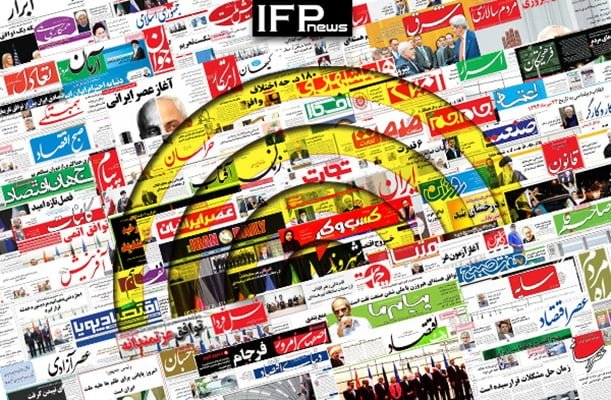
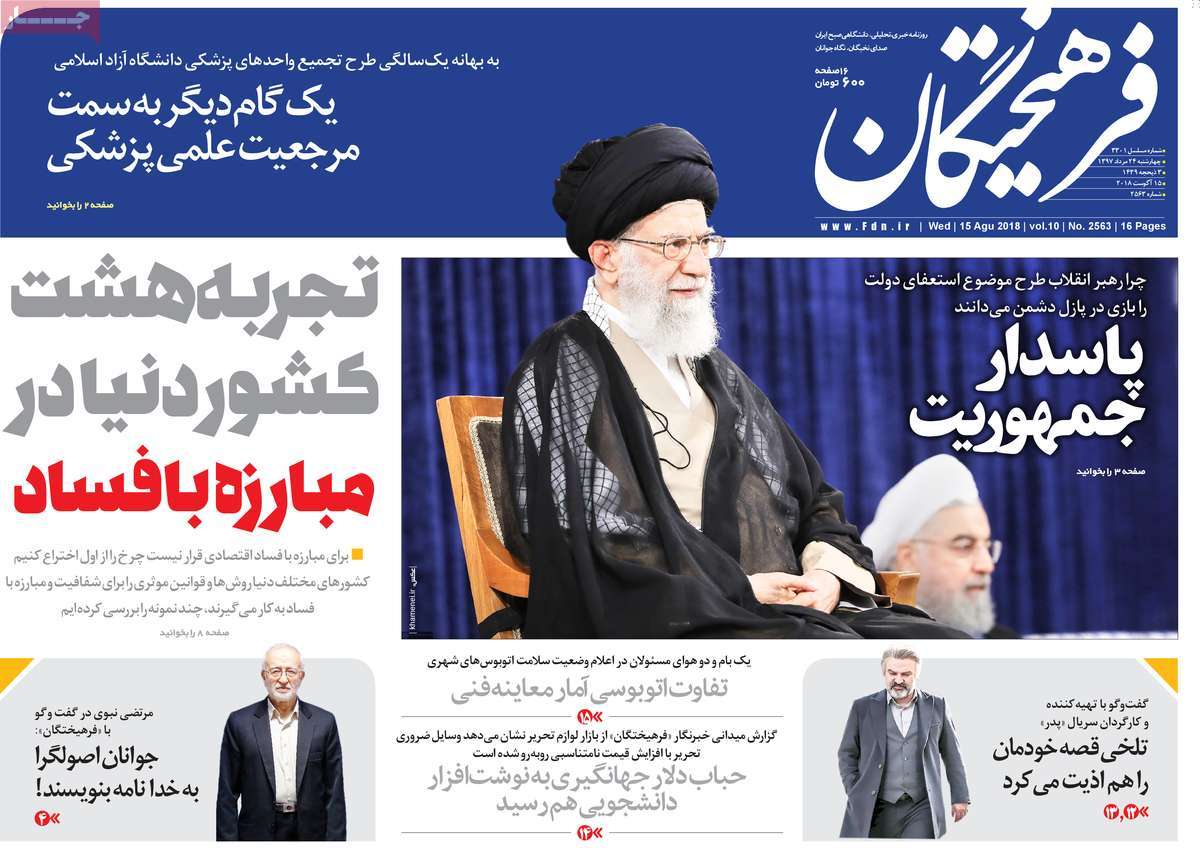
A Look at Iranian Newspaper Front Pages on August 15

A Look at Iranian Newspaper Front Pages on November 19

Newspapers today widely covered the ambiguities regarding the division of the Caspian Sea and Iran’s share of the huge lake, which must be shared between five littoral states.

The ongoing clash between Turkey and the US, particularly the decision by Recep Tayyip Erdogan to boycott US-made goods, also received great coverage today.

The above issues, as well as many more, are highlighted in the following headlines and top stories:


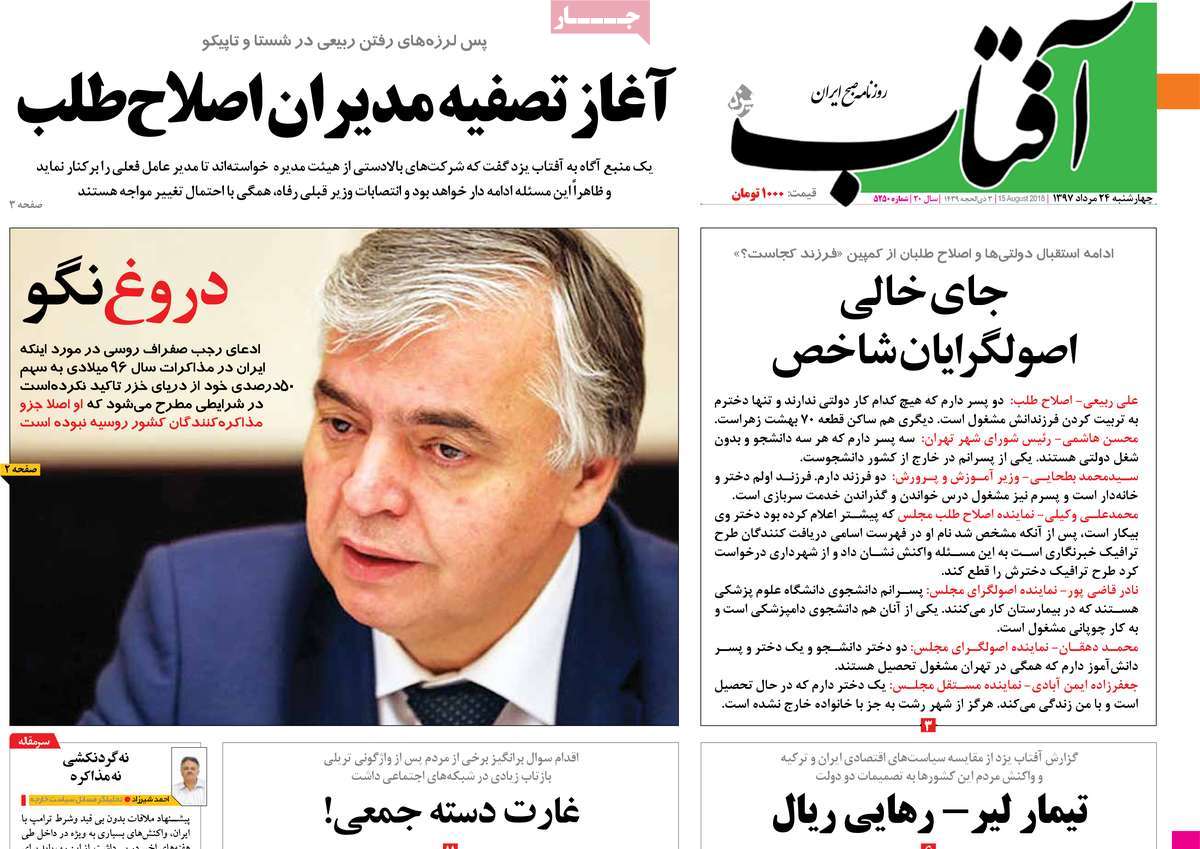
Aftab-e Yazd:

1- Don’t Lie!

  • Iran Rejects Remarks Made by Russian Figure about Caspian Sea
  • Rajab Safarov Not Member of Russian Negotiating Team

A Look at Iranian Newspaper Front Pages on August 15


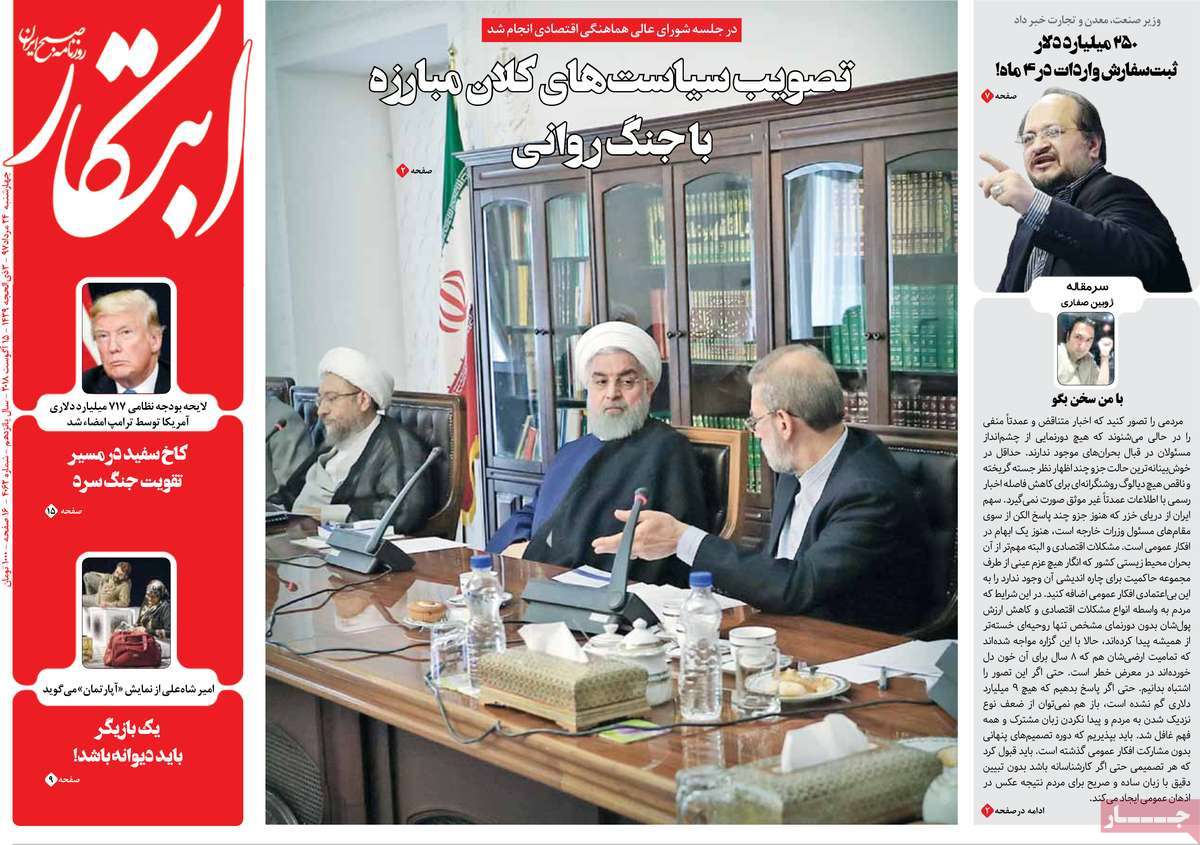
Ebtekar:

1- Macro Policies of Fight against Psy-War Approved

2- White House on Path of Beginning Cold War

3- $250 Billion Worth of Orders Registered for Importing Goods into Iran in 4 Months!

A Look at Iranian Newspaper Front Pages on August 15


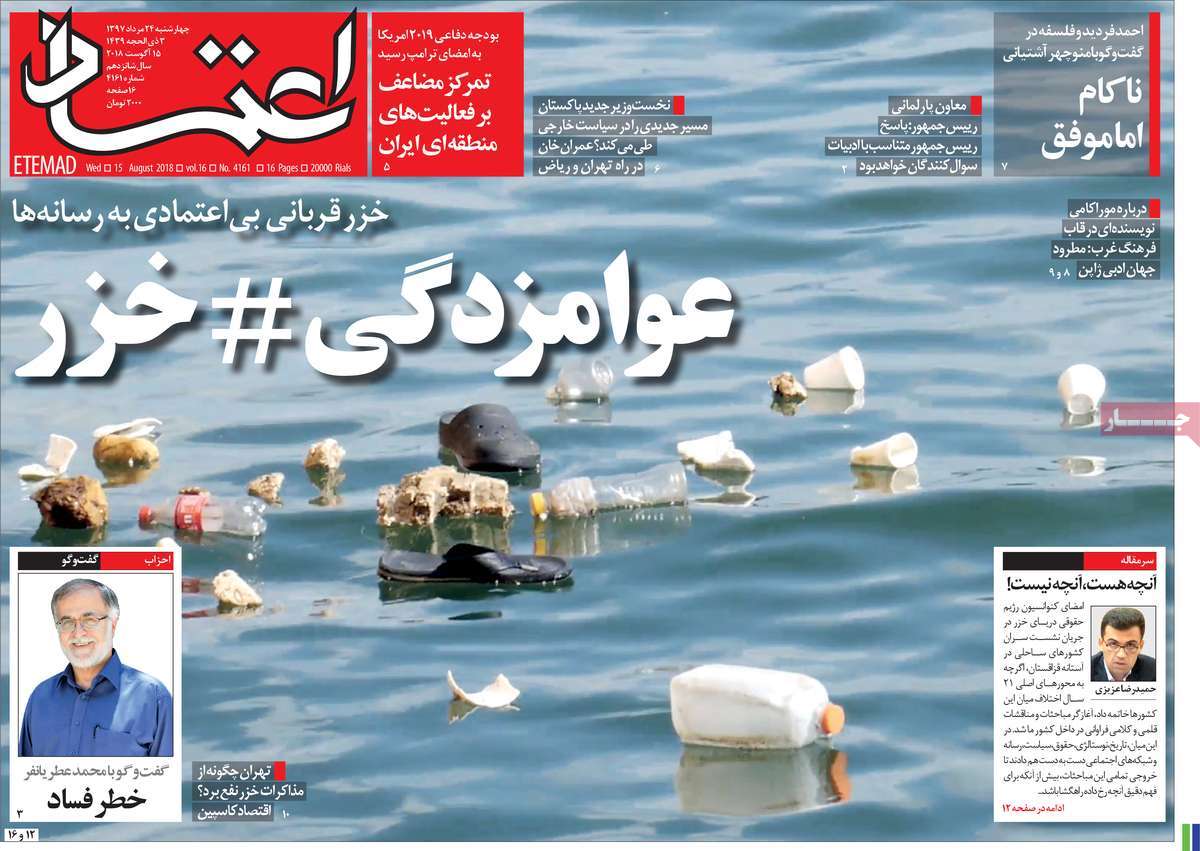
Etemad:

1- Caspian Sea, Victim of People’s Distrust of Media

A Look at Iranian Newspaper Front Pages on August 15


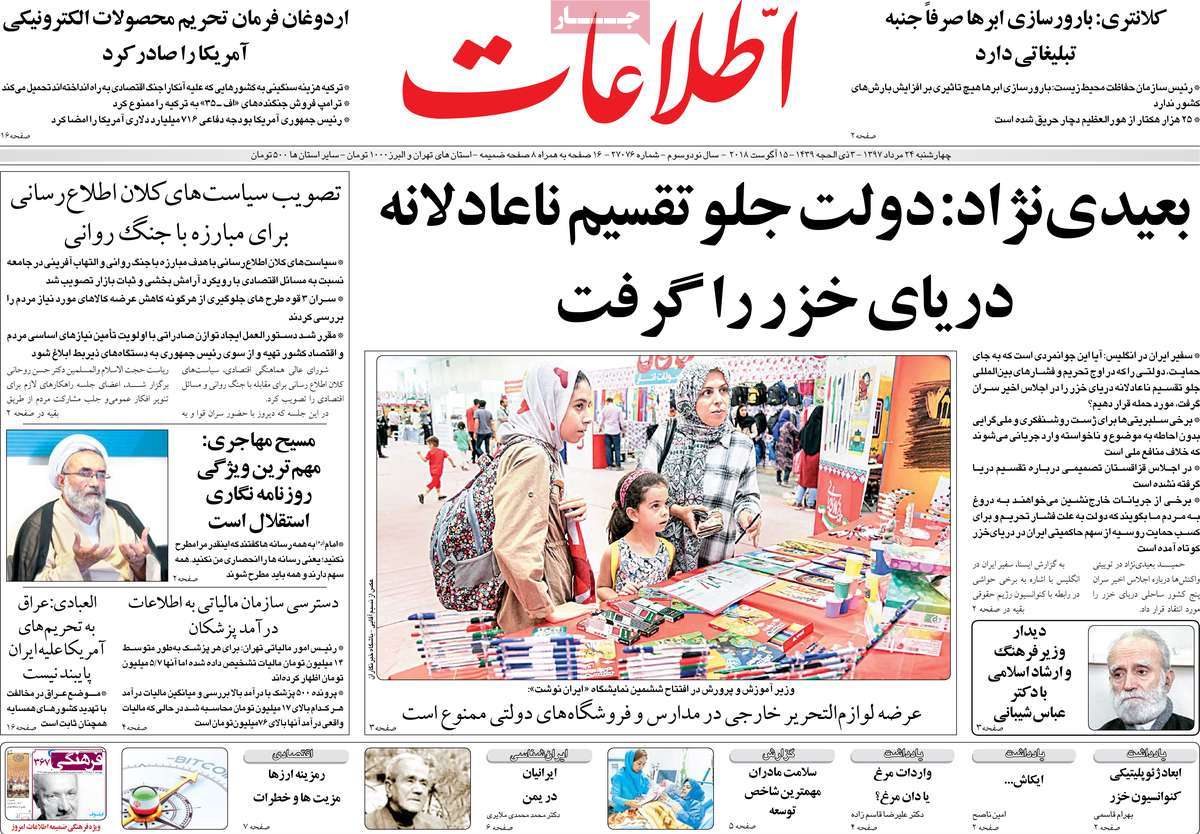
Ettela’at:

1- Iran Envoy to UK: Government Prevented Unfair Division of Caspian Sea

2- Erdogan Orders Boycott of All US-Made Electronic Devices

3- Iraqi PM: Baghdad Not to Comply with US Sanctions on Iran

4- Iran Bans Sale of Foreign Stationery in State-Owned Schools, Shops

A Look at Iranian Newspaper Front Pages on August 15


Farhikhtegan:

1- Protector of Republic

  • Why Iran Leader Believes Calls for Rouhani’s Resignation Serve Enemy Plots

2- Experiences of Eight Countries in Fight against Corruption

  • To Fight Corruption We Won’t Need to Reinvent the Wheel

A Look at Iranian Newspaper Front Pages on August 15


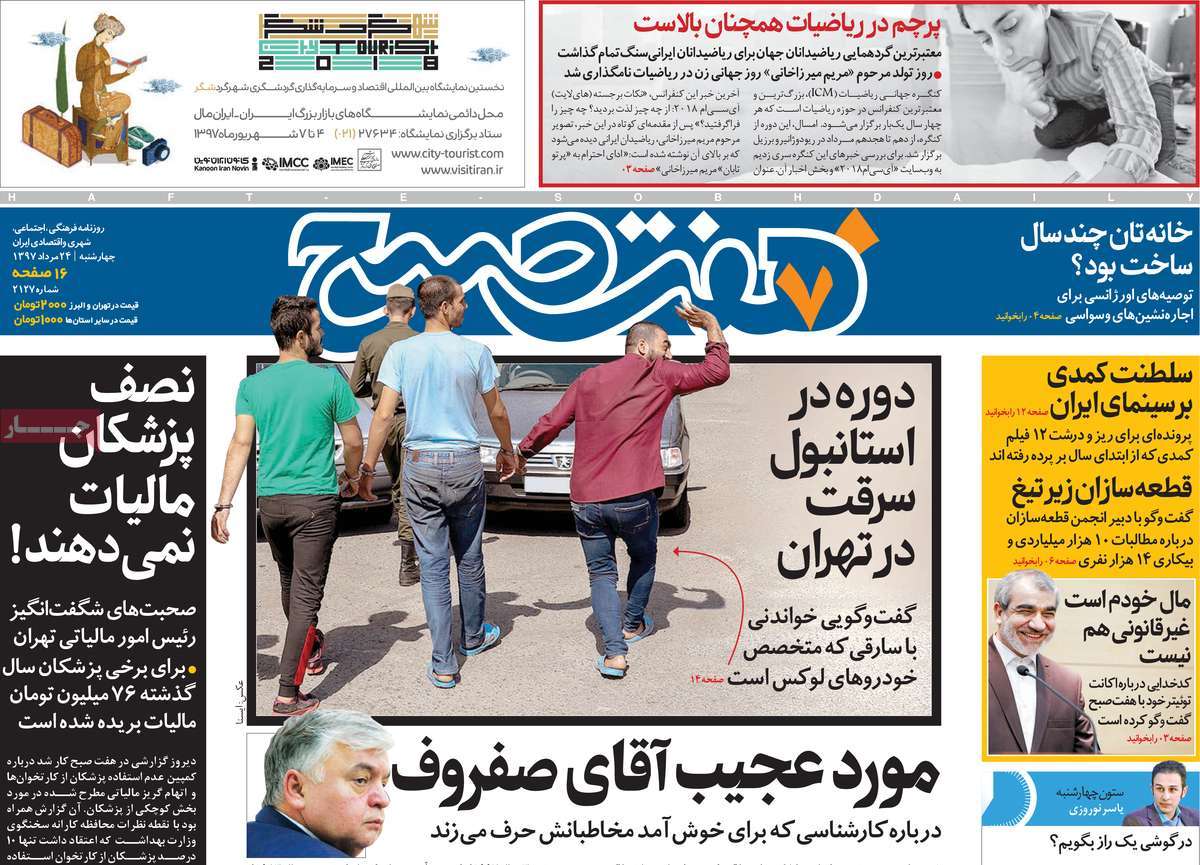
Haft-e Sobh:

1- Trained in Istanbul, Stealing in Tehran

  • Interview with Skilled Thief Who Steals Luxury Cars

2- World Union Names Maryam Mirzakhani’s Birthday as Int’l Day of Women in Maths

A Look at Iranian Newspaper Front Pages on August 15


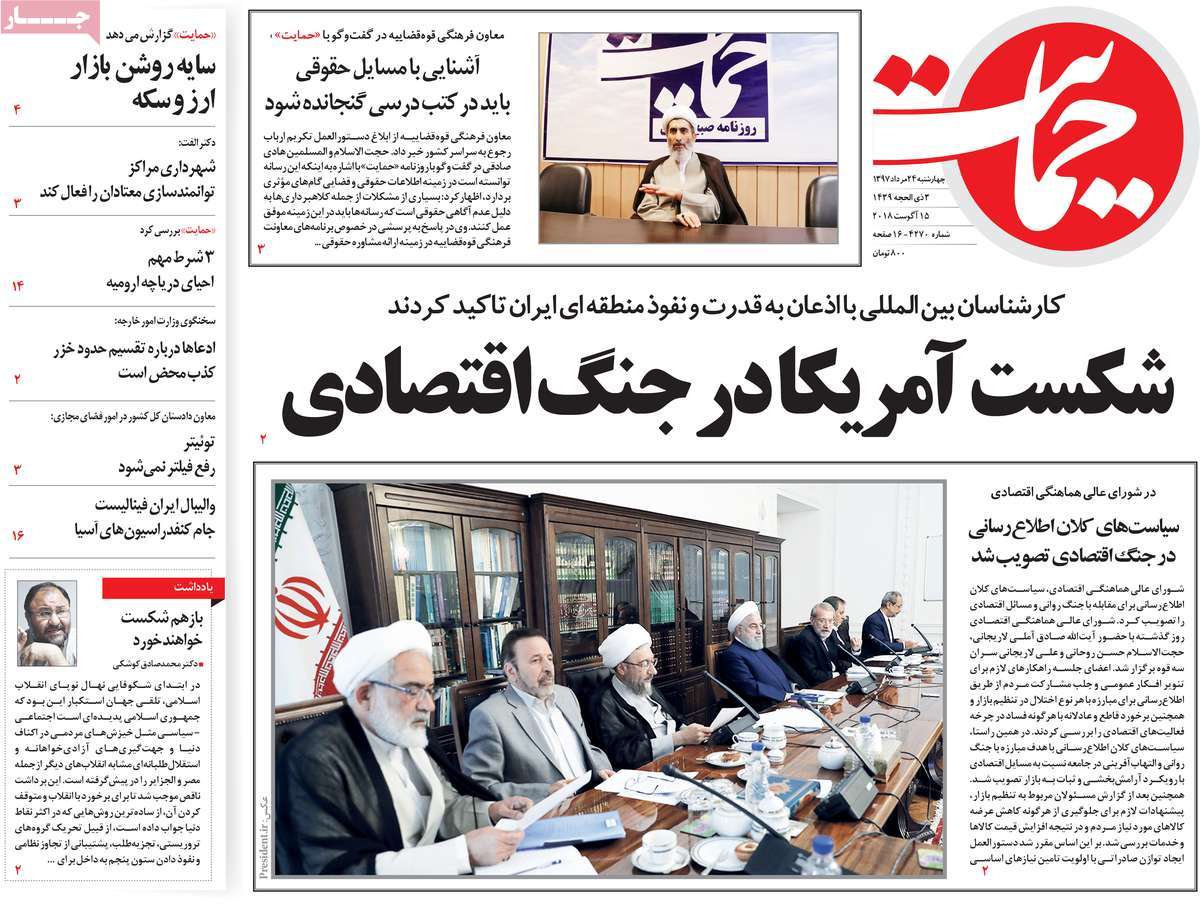
Hemayat:

1- Int’l Experts Say US Will Be Defeated in Economic War Given Iran’s Power, Regional Influence

2- Schoolchildren Must Get Familiar with Legal Issues in Their Books

A Look at Iranian Newspaper Front Pages on August 15


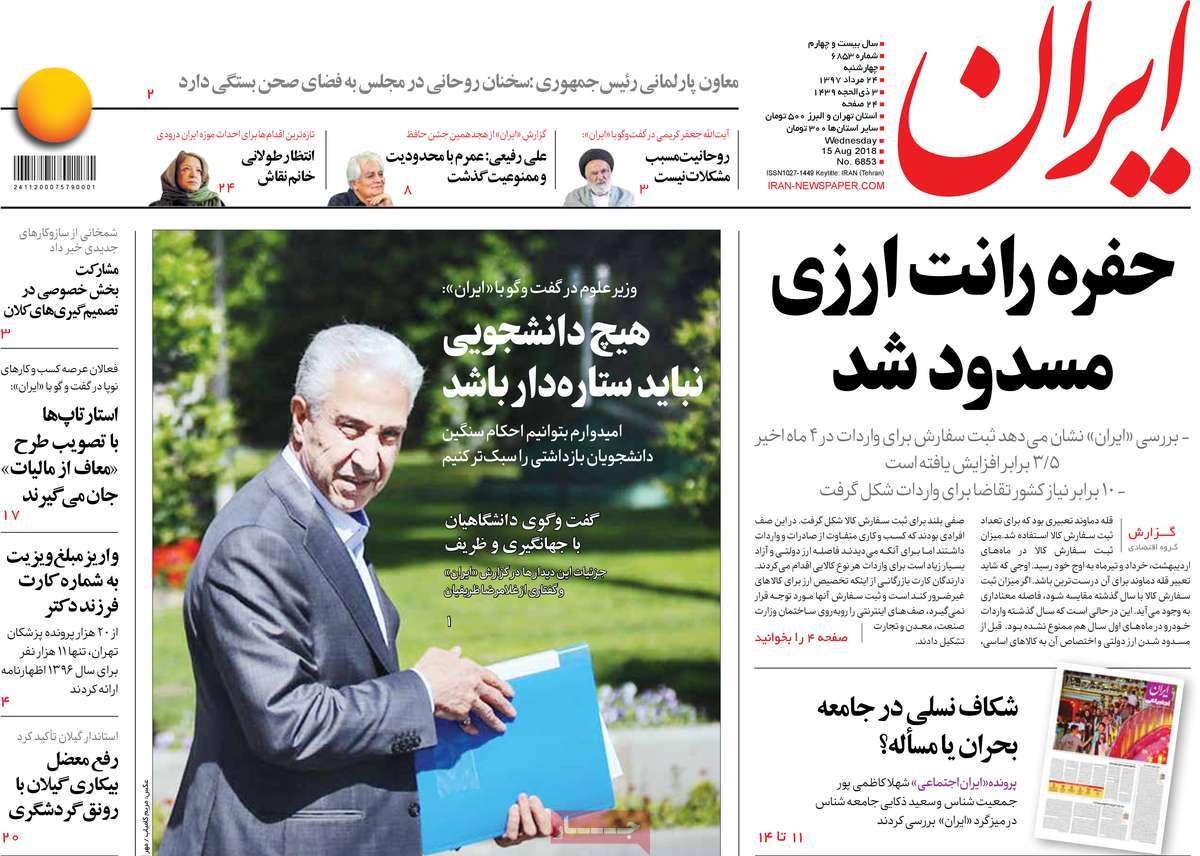
Iran:

1- No University Student Should Be Deprived of Education over Political Issues: Minister

A Look at Iranian Newspaper Front Pages on August 15


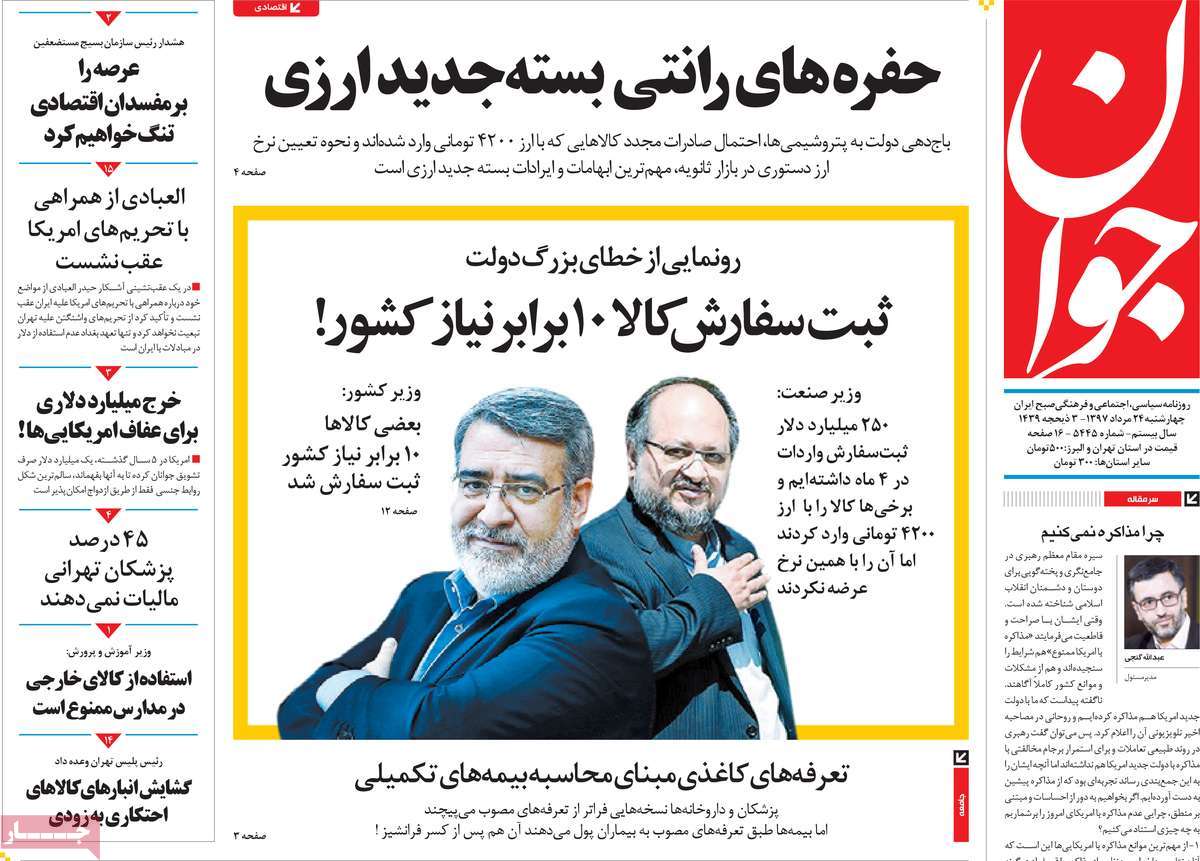
Javan:

1- Number of Orders for Importing Goods 10 Times Higher than Iran’s Needs

  • A Review of Mistake Made by Government

2- Basij Organization Vows to Take Action against Corruption

3- Iraqi PM Backs Off from Cooperating with US on Iran Sanctions

4- US Spends $1 Billion to Encourage Young People to Get Married

A Look at Iranian Newspaper Front Pages on August 15


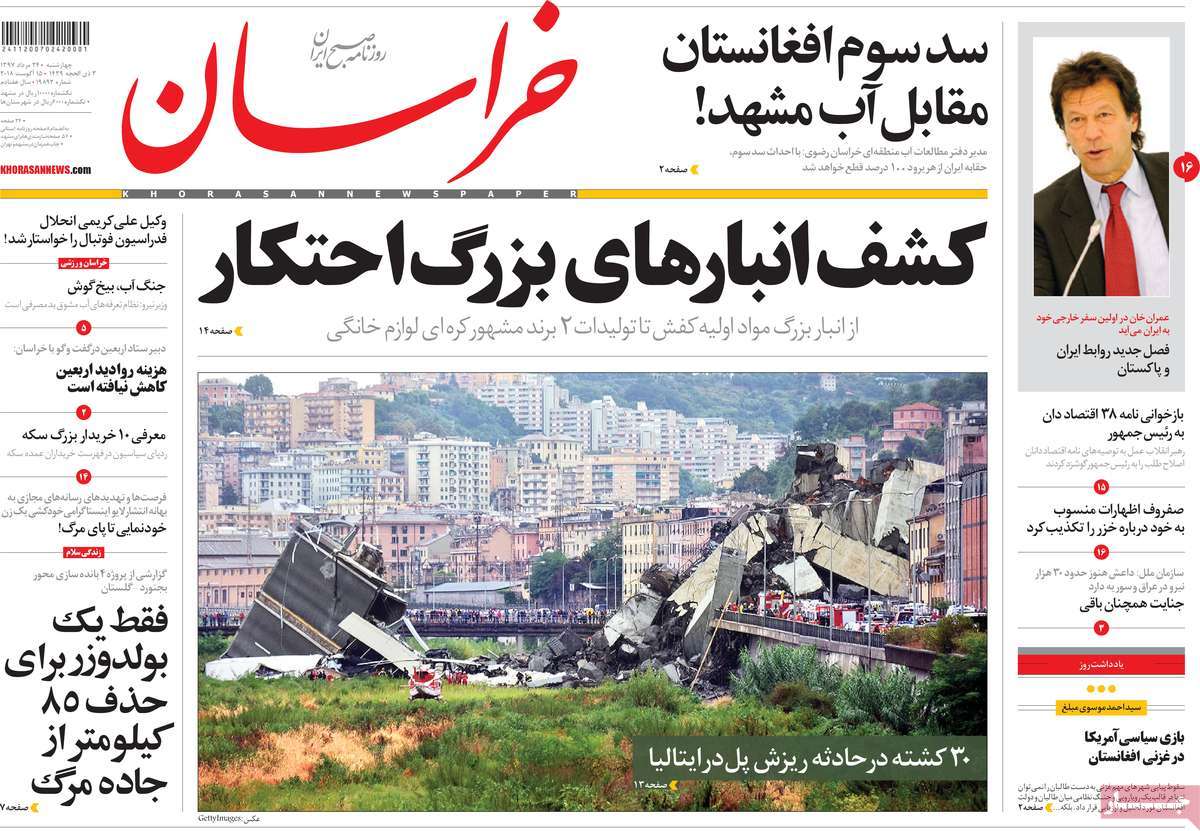
Khorasan:

1- 30 Killed in Italy Bridge Collapse

2- New Chapter in Iran-Pakistan Ties

3- Huge Warehouses of Hoarded Goods Discovered

A Look at Iranian Newspaper Front Pages on August 15


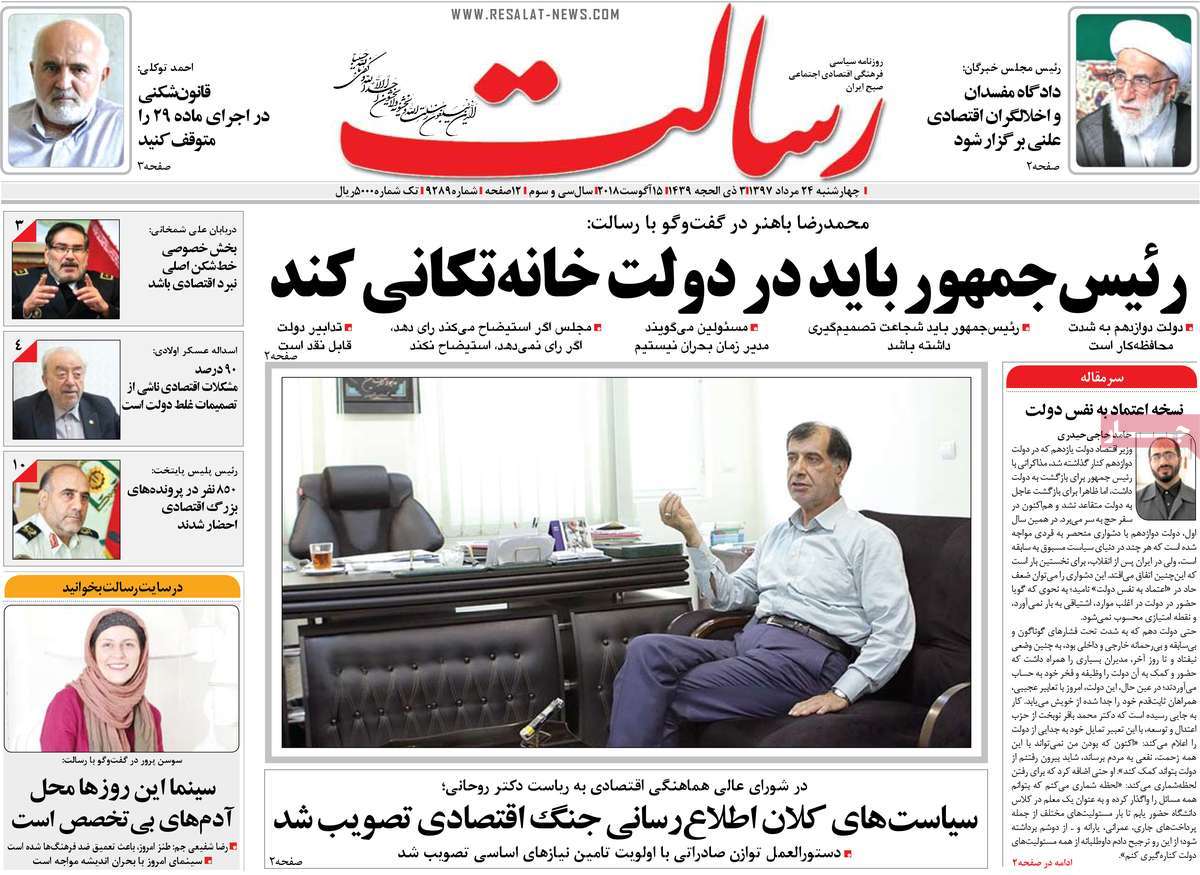
Resalat:

1- Rouhani Must Reshuffle His Cabinet: Conservative Figure

2- Senior Cleric Calls for Public Prosecution of Those Accused of Economic Corruption

A Look at Iranian Newspaper Front Pages on August 15


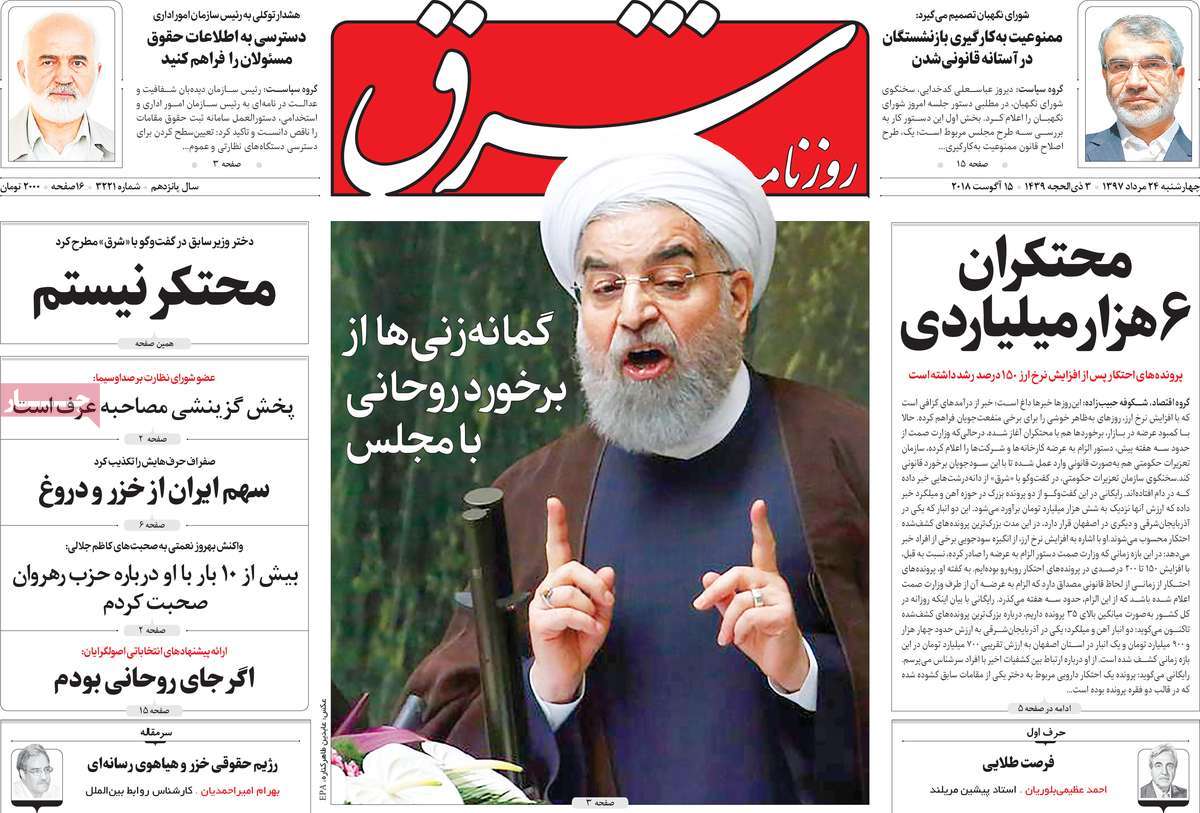
Shargh:

1- Speculations on Rouhani’s Upcoming Speech at Parliament

2- Number of Hoarding Cases 150% Up after Forex Rate Hikes

A Look at Iranian Newspaper Front Pages on August 15

Iran Says Negotiation with Trump Will Bear No Fruit

New Economic Plans Needed to Counter Fallout from COVID-19 Outbreak: Iran VP

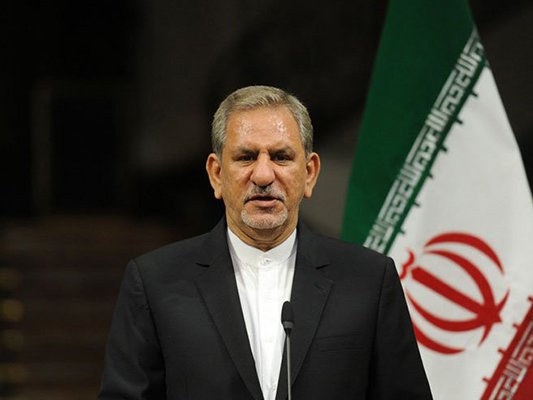
“According to a majority of the country’s elites, negotiations with the US are not acceptable, considering its hostile and disrespectful policy against the Iranian government,” Es’haq Jahangiri said in a meeting with heads of top Iranian universities in Tehran.

Two weeks ago, Trump said he would be willing to meet with Iranian President Hassan Rouhani with no preconditions to discuss ways of improving ties between the two countries.

This is while Trump in early May withdrew Washington from the 2015 nuclear pact with Iran signed by his predecessor Barack Obama and other world powers, and ordered tough US sanctions on Tehran.

Trump is also pushing the world to cut trade with Iran and cut down to zero oil purchases from the Islamic Republic.


Full-Fledged War

Jahangiri said the US has launched a full-fledged psychological operation to damage the country’s social capital and shatter the Iranian’s hope for the future.

“The adversaries are making every effort to wage a psychological and media war to make the Iranian people worried about the future of the country and the system,” Tasnim News Agency quoted him as saying.

The vice-president said the country is capable of overcoming economic challenges and pushing back the US.

Iran is talking with other parties to the 2015 nuclear pact, who are at odds with the US over its withdrawal from JCPOA, to salvage the accord.

11 Ghanaian Celebrities Who Are Everyone’s Favourites

Interestingly, there are some celebrities who are so much loved by their fans and followers that no matter what they do – whether good or bad – they still have massive following.

Some of these celebrities keep low profile and do their best to stay out the news unlike those who seem to be ‘all over’ and are constantly in the news.

Yen.com.gh news made up a list of 11 celebrities – both males and females – in no particular order who according to a survey, have been mentioned by most people as the most loved.


1. Nana Ama McBrown: Nana Ama McBrown is undoubtedly a lovable person. She has a large following on social media. This is someone who posts a photo on Instagram and can garner over two thousand likes in less than thirty minutes, as if her fans were just waiting for her to drop a photo. Nana Ama McBrown is a versatile entertainer. She features in both English and Twi- speaking movies and this makes her stand tall among her contemporaries.
She also has a deep sense of humour which attracts many people to her. According to an earlier report, Nana Ama McBrown revealed that she cannot even boast of a BECE certificate because her parents couldn’t afford her education back in the day. However, no one would know this if not told because her command over the English language is impeccable. 

2. John Dumelo: John is also a loveable person and in fact, the crush of most Ghanaian ladies. Aside his handsomeness, John Dumelo’s attitude and charisma have also won him a lot of admirers and followers. He is currently rated among the top five Ghanaians celebrities with a large following on social media. On Instagram alone, John Dumelo has over 2.3 million followers. He has acted in a lot of movies both here in Ghana and in Nigeria.

3. Nana Aba Anamoah: The ever eloquent and beautiful television presenter is also in the hearts of many. Nana Aba is currently the reigning Radio and Television Personality following the 2017 RTP Awards. Ghanaians would not forget her infamous and unfair treatment from her former employers TV3 which eventually led to her resigning from there. She was caught up in a Photoshop scandal which, according to TV3, was unprofessional. She was taken off air for some time. Unable to bear it anymore, Nana Aba Anamoah finally resigned.

4. Shatta Wale: He calls himself ‘Champion’ and his fans believe he is indeed a champion in his game of Dancehall music. Despite the fact that Shatta Wale has often been in the news for mostly negative reasons, his fans and followers have remained loyal to him. Information gathered by YEN.com.gh from his camp has it that Shatta Wale spends a lot of money on his close followers especially after he performs at a show.

5. Sarkodie: Born Michael Owusu Addo, Sarkodie is also the favourite of many Ghanaians. His success in the music industry cannot be left out when Sarkodei is being talked about. Having released his debut hit song ‘Baby’ in 2009, Sakordie can now boast of uncountable number of songs which are all hits upon hits.

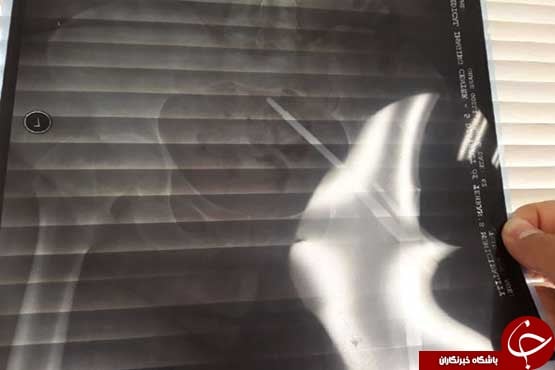
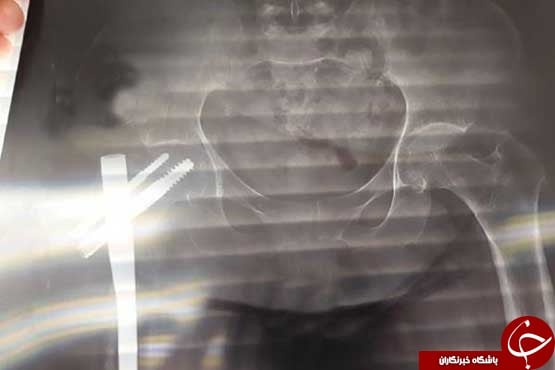
Long Screw Left Behind in Woman’s Pelvis after Surgery

The woman’s son has told the Young Journalists’ Club news agency about his mother whining and moaning in pain and being unable to sleep at night, and that his mother is suffering due to a physician’s ignorance.

His tone of voice and the lump in his throat indicate that his mother has suffered a lot, and there is no one to deal with her pain. He talks about what happened in the hospital, saying, “Everything began when my mother fell down and broke her pelvis; after that unfortunate incident, we went to Imam Khomeini hospital for treatment, but as it was too crowded, so we took her to a private hospital.”

“I had ease of mind as my mother had been taken to a private hospital. We were almost confident that she would be treated in the best way possible. After two days when my mother had gone through the diagnostic procedure, she underwent an operation. However, before doing the surgery, the doctor refused to perform the operation under different pretexts. Finally, he demanded under-the-table-money from us. And we had to pay the amount as we wanted the operation to be performed well!

My mother was taken to the theatre, but she was taken out of the room after ten minutes and the anaesthetist said we had to deposit some money at his account as fee for administering anaesthesia.

Things settled down and finally the medical team performed and finished the operation. My mother was taken out of the theatre after around two hours and the surgeon announced her operation was successful.

A few days after my mother was discharged from hospital, she felt severe pain in her abdomen, which prompted us to go to hospital again to pursue the matter. After the doctor examined her, he told us that our mother had come down with depression. He prescribed my mother antidepressants.”


7cm Screw Left in Woman’s Body

“After 44 days when my mother showed no signs of improvement, doctors prescribed another CT Scan. It was then when they told us that one of the platinum screws used in her pelvis had come loose! That redoubled our worries, so much so that we saw another physician, who told us a 7-centimitre screw had been left in the patient’s body, and that she needed to undergo surgery again immediately.

After that, we contacted the doctor who had done the surgery. He told us that he had no responsibility towards the patient, and that he was thousands of kilometers away and all he could do was prescribe tranquilizers.

When my mother underwent an operation for a second time, the screw was removed from her body and they showed it to us and said it was like a miracle! However, this medical error has caused problems for her. Her leg nerves have been damaged, and although nine months have passed since my mother underwent surgery, she is unable to move her ankle and is in a lot of pain.

After we filed a complaint against the doctor, the medical commission announced that the damage to her leg nerve had been a complication of the operation. However, other doctors stressed that it was due to the physician’s error. Unfortunately, no one has assumed responsibility and my mother continues to suffer.”
Long Screw Left Behind in Woman’s Pelvis after Surgery

5,000 Complainants in 2016

The deputy head of the Iranian Medical Council Organization for disciplinary affairs holds doctors responsible for their work.

“A physician is responsible for what he or she does; the civil responsibility of the Disciplinary Office of the Medical Council Organization is to ensure that regulations and bylaws are observed,” says Ali Fattahi.

He said every trade union has a duty to pass a series of laws and bylaws in order to respect the rights of both those who receive and offer services.

“Any violation of these laws is regarded as a disciplinary offense,” he said.

“In 2016, there were around 5,000 complainants who referred to the prosecutor’s offices of the Medical Council Organization across the country,” he added.

After a case is filed, he added, the prosecutor does expert work which leads to the issuance of indictment orders.

He said when medical staffs commit a violation, their cases are referred to committees of first stance across the country, which finally leads to the issuance of indictments.

“There are around 200 prosecutor’s offices and 202 commissions of first instance, and the state committee comprises 13 people, including forensic judges as well as seasoned dentists and pharmacists,” he said.

He said 40 % of cases on medical violations result in the issuance of indictments.
Long Screw Left Behind in Woman’s Pelvis after Surgery

Saudi Arabia Frees Three Iranian Fishermen

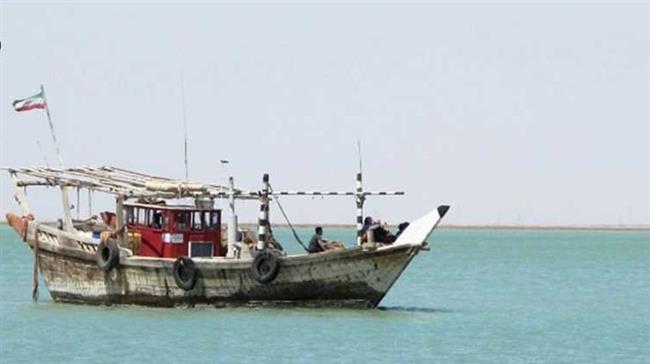
Ardeshir Yarahmadi told IRNA on Tuesday that the three fishermen were arrested in June 2017 after their boat fishing in the Persian Gulf strayed from their course due to big sea waves.

He added that they were freed this week after serving their sentence in Saudi Arabia.

In a statement issued in June 2017, the Iranian Interior Ministry called on Saudi Arabia to swiftly free the three Iranian fishermen, saying Riyadh had to live up to its legal obligation of returning the fishermen, paying up compensation, and punishing those behind the incident.

Bearing licenses, three Iranian fishing boats had departed from the southern Iranian Bushehr Port, the statement explained, adding that, later during the trip, tumultuous sea conditions pushed them into Saudi waters.

Relations between Iran and Saudi Arabia first soured after a deadly human crush during the Hajj rituals in September 2015, when hundreds of Iranian pilgrims among others lost their lives.

Tensions further escalated a few months later following the kingdom’s execution of prominent Shia cleric Sheikh Nimr al-Nimr.

Riyadh cut off diplomatic ties with Tehran in January 2016 following angry protests in front of its diplomatic premises in the cities of Tehran and Mashhad against the execution.

Ever since breaking its ties with Iran, the kingdom has ramped up its negative rhetoric against the Islamic Republic over its role in the region.

However, Saudi Arabia, in a rare move after Riyadh and Tehran broke off relations two years ago, has reportedly agreed to issue visa to an Iranian diplomat to head the Islamic Republic’s interests section in the kingdom.

Following the approval by Saudi Arabia’s Foreign Ministry, the head of the Oman and Yemen Department at Iran’s Ministry of Foreign Affairs, Mohammad Alibek, had been appointed as the caretaker of the Islamic Republic’s interests section in the city of Jeddah, an informed diplomatic source told IRNA on August 5.

Yemen School Bus Tragedy Moves UN Envoy to Tears

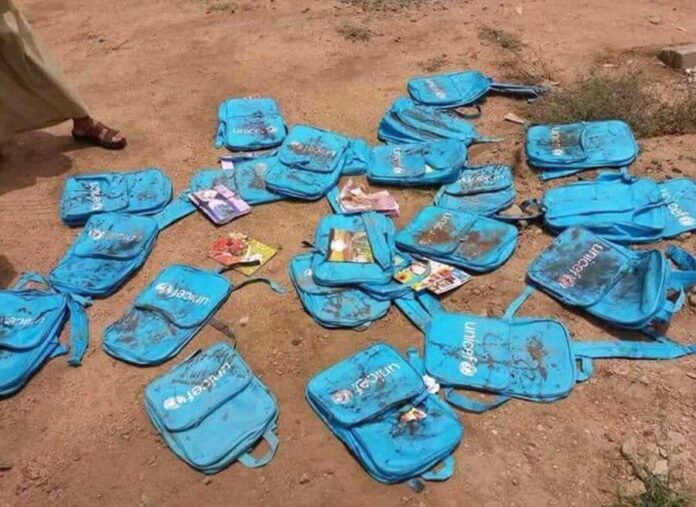
Bloodstained UNICEF bags belonging to the Yemeni children killed or wounded during a Saudi airstrike on Sa'ada

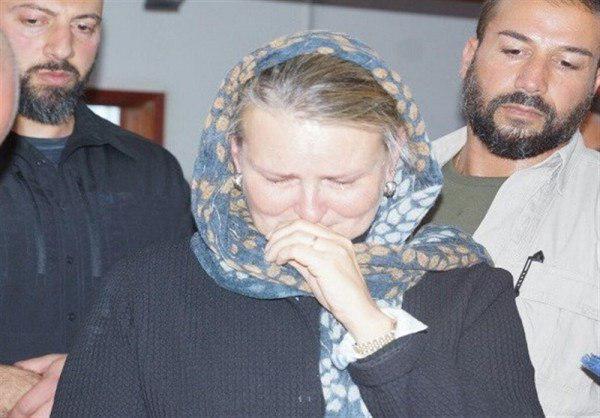
UN humanitarian coordinator in Yemen Lise Grande, who is on a trip to the war-torn country, visited hospitals treating the injured on Tuesday.

The attack happened in Yemen’s north-western province of Sa’ada last Thursday, claiming the lives of over 50 civilians, most of whom were children less than 10.

Grande said the airstrike that hit a bus carrying civilians in a busy market was a “tragedy” that could never be justified.

“What we are seeing today are the victims of the airstrike. The terrible human cost of the airstrike and of the war. The entire world condemns this,” Islam Times quoted Grande as saying.

Grande added that the UN Secretary General of has called for an “immediate transparent, comprehensive, independent investigation,” into the deadly attack on civilians.

The International Committee of the Red Cross (ICRC) has announced 40 children were among 51 civilians killed during the Saudi airstrike.

Images later circulated online showing pieces of a US-made bomb on the scene.

The Saudi-led coalition has described the attack as “legitimate” and claimed that the strikes “conformed to international and humanitarian laws.”

The United Nations says a record 22.2 million Yemenis are in need of food aid, including 8.4 million threatened by severe hunger.

Yemen School Bus Tragedy Moves UN Envoy to Tears

Caspian Sea Convention Ensures All Littoral States’ Interests: Iran

The Foreign Ministry made the announcement in a recent statement it released to dismiss speculations about the Convention.

In the statement, the Foreign Ministry’s Centre for Public Diplomacy and Media responded to the following frequently asked questions regarding the recent summit of the heads of the Caspian Sea littoral states held in the city of Aktau in Kazakhstan.


  1. Generally speaking, when did the Caspian Sea summits begin?

Following the collapse of the former Soviet Union, the first summit of the heads of the Caspian Sea littoral states was held in Tehran. The issue of the sea’s environment was discussed and approved at that meeting. A 25-article political statement was also issued at the summit. Later on, several other meetings were held in different countries where various issues pertaining to the Caspian Sea were discussed.

  1. What are the objectives of the Caspian Sea summit, and what achievement Iran would like to see the summit have?

After two months of negotiations between the five Caspian Sea littoral states, the convention on the legal regime of the Caspian Sea was finalized and approved by coastal states thanks to the positive will of the heads of the five states and the friendly and constructive atmosphere ruling the meetings. The littoral states signed up on the text of the convention as well as six other agreements on the sidelines of the summit in Aktau in Kazakhstan. The convention has been hammered out through the consensus of the five countries and following thousands of hours of discussions. The convention ensures the interests of all littoral countries and can be regarded as an invaluable document in Iran’s foreign relations. Twenty-one days ago, a protocol on Environmental Impact Assessment (EIA) was signed as well. These events herald a very bright future for our nations and governments.

  1. What are the six other documents mentioned above, which were signed along with the protocol on the legal regime of the Caspian Sea?

They include documents on transportation and transit, trade and economy, fighting terrorism, combating organized crime, border cooperation and prevention of military conflicts.

  1. What is the importance of signing the convention on the Caspian Sea’s legal regime?

The convention on the legal regime of the Caspian Sea is like countries’ constitutions, i.e. it is an overarching document and a framework based on which the rights and commitments of the littoral states are determined. Based on these general principles, the Caspian Sea coastal states will turn to details by signing agreements on specific matters. The signature of the convention on the legal regime of the Caspian Sea is a very significant step being taken and caps 21-year negotiations which have been underway in that regard. Nevertheless, it should be acknowledged that the convention is not the end of all talks and measures on the Caspian Sea; rather, it serves as watershed and a starting point for the implementation of already reached agreements and supervision on their implementation. It also paves the way for negotiations to clinch new and necessary deals.

  1. Are there any other unsettled issues regarding the Caspian Sea which need to be further discussed by littoral states in the future?

Almost 90% of the convention on the Caspian Sea littoral states has been finalized and was signed in Aktau. Only two issues, namely designation of base lines and demarcation of the seabed and what lies under the seabed, have remained which need further discussions by all five countries. We hope that these two cases are also finalized as soon as possible through the cooperation of all littoral states. So, the countries rimming the Caspian Sea have reached a unique consensus, which is regarded as a victory for them all.

  1. When will the base lines and boundaries be determined?

It is stipulated in the above-said convention that base lines for the sea’s legal regime must be determined through consensus by all five littoral states later on. Of course, some points are mentioned in the convention regarding the base lines. One of the clauses of the convention particularly mentions that the coastal conditions of some of the littoral states are such that they require special regulations. This clause is very important for us. However, base lines have not yet been determined in the convention and should be specified in future agreements. The convention does not provide for the limits of the boundaries on and underneath the seabed either, and they are supposed to be determined in the future as well. This has been one of the issues which the five littoral states have been discussing for around 22 years now.

  1. What are the specifications of the Caspian Sea’s legal regime?

The Caspian Sea is, in fact, a lake whose legal regime naturally has its own specific features and is different from that of the high seas as mentioned in the 1982 Convention on the Law of the Sea. The Caspian Sea littoral states have modeled the sea’s legal regime after that of other lakes, and at the same time have drawn on the provisions of the Convention of the Law of the Sea and adapted them to the situation of the Caspian Sea, coming up with a special and unique legal regime for the Caspian Sea. It is stipulated in the convention that all legal issues of the Caspian Sea must be settled through consensus by the five littoral states, which is a very important point and completely distinguishes the convention on the legal regime of the Caspian Sea from the Convention on the Law of the Sea. Moreover, the convention pertaining to the Caspian Sea forbids foreign military vessels from plying across the sea. This issue is very important for the national security of the Caspian Sea littoral countries. It is stipulated in the convention that the boundaries for the territorial waters of the coastal countries will be determined, and the locations for fishing and movement of vessels will be specified. On the whole, this is a very important convention that brings us one step forward, though very important issues have remained to be resolved in the future.

  1. Why have negotiations to draw up the convention on the Caspian Sea’s legal regime dragged on for so long?

Immediately after the collapse of the former Soviet Union and the formation of four independent republics around the Caspian Sea, talks began on how to determine a comprehensive legal regime for the Caspian Sea that would enable all littoral states to enjoy the privileges and resources of the Caspian Sea within a specific framework. Given the differences of opinion among the littoral states on different issues, the negotiations have dragged on until now, and as it was mentioned earlier, discussions still continue on the determination of base lines as well the demarcation of the seabed and what lies under the seabed. We hope we will be able to finalize these issues as well through the cooperation of other countries. In other words, the littoral states have not yet reached consensus on these important issues.

  1. What will the military and security situation of the Caspian Sea be like, and will third countries have a military presence there?

As agreed by the littoral states, the Caspian Sea will be a sea of peace and friendship for the coastal nations, and other countries are not allowed to have a military presence in the sea. Moreover, the movement of vessels in the sea will take place only under the flags of the five littoral states. Furthermore, the five states cannot allow other countries to use their territories to launch aggression against any of the littoral states. It is good news that, as stipulated in the convention, all five littoral states are of the opinion that movement of ships in the sea is allowed only under the flags of the coastal states and that the presence and movement of foreign military forces in the sea is forbidden.

  1. Given the existence of rich oil resources in the Caspian Sea, have the littoral states reached any agreement on the exploitation of the oil deposits?

The oil reserves which are not subject to disagreement will be developed by relevant littoral states. As for the common resources or the ones that are a bone of contention, the principle is that the two or three countries which have interests in that regard should reach agreement and exploit the oil resources accordingly. If the countries cannot reach agreement, those resources will not be exploited.

  1. How important is the issue of transit in the Caspian Sea for Iran?

Transit is one of the very significant issues for the Caspian Sea as well as its littoral states and regional countries. The east of the Caspian Sea, i.e. Turkmenistan and Kazakhstan, is linked to Iran through which the two countries are also connected to the Persian Gulf and the Sea of Oman to the south of Iran. Steps have also been taken to link the west of the Caspian Sea to other regions, and the Astara-Astara project has been implemented to this end. We are considering the implementation of a project to lay a railway line connecting [Iran’s] Rasht to [Azerbaijan’s] Astara, which will be done by the Islamic Republic of Iran and the Azerbaijan Republic. Through these major corridors in the east and west of the Caspian Sea and through this important transit route, Iran and many Asian countries will be connected to Central Asia, the Caucasus, Russia and Europe.

  1. Will other issues regarding cooperation among littoral states be on the agenda at the summit?

The Caspian Sea coastal countries enjoy very good potentialities and opportunities, especially in terms of economy, transportation, the transit of goods and passengers, and tourism, which will be discussed alongside other issues on the agenda. The Caspian Sea has oil and gas resources, which can contribute to development. Cooperation among littoral states on the extraction and exploitation of oil as well as oil and gas swap are among the issues which have always been a subject of discussion between Iran and other littoral countries, and discussion on those issues will continue at this summit as well.