Monday, December 22, 2025
Home Blog Page 3476

Iran Raps Attack on Its Basra Consulate, Summons Iraqi Envoy

In a statement on Friday, Qassemi regretfully confirmed the attack on the consulate, saying the attackers have caused serious financial damage to the building by setting it on fire in their brutal raid.

Fortunately, none of the staff members of the Iranian consulate had been harmed thanks to pre-emptive measures taken by the diplomatic mission after it received threats a day earlier, he noted.

He referred to the attack as a violation of protocols and said the government of Iraq has a crucial responsibility to protect diplomatic sites.

The Iranian spokesman warned about overt and covert efforts to undermine the friendly ties between the Iraqi and Iranian nations and governments, and urged Baghdad to immediately identify, arrest, and punish the culprits behind the serious crime.

Iran had earlier informed and warned the Iraqi officials about the possibility of such an attack, Qassemi said, adding that the Arab government is thus held responsible for any negligence in ensuring the security of the consulate.

He also noted that Tehran expects the Iraqi government to speed up its efforts to catch and severely punish the perpetrators.


Iraq Envoy Summoned to Foreign Ministry

Later on Friday Qassemi announced the Iraqi ambassador to Tehran has been summoned to the Ministry of Foreign Affairs to receive the Islamic Republic’s note of protest over the arson attack.

“The Iraqi ambassador was summoned to the Foreign Ministry on Friday night and received Tehran’s strong note of protest to the Iraqi government over security forces’ negligence in protecting the building of our country’s consulate general,” he noted.

“In the meeting, the director general in charge of Persian Gulf affairs at the [Iranian] Foreign Ministry expressed surprise over the inaction of the Basra police,” said Qassemi.

“Despite provocations over the past few days by suspicious elements against the Islamic Republic of Iran’s Consulate General, the Iraqi government failed to fulfill the assurances it had given through diplomatic channels,” Qassemi quoted the director general as saying.

In the meeting, the top Iraqi diplomat was asked to convey Iran’s strong protest to his government and demand Baghdad take action to identify, arrest, and bring perpetrators to justice immediately.

The attack on the Iranian consulate came as eleven people have been killed so far in Basra during the violent protests against corruption and lack of basic services over the past five days.

Leader: US Sanctions Common Ground between Iran, Russia, Turkey

In a meeting with visiting Russian President Vladimir Putin and his entourage on Friday, Ayatollah Khamenei said the Americans have suffered real defeat in Syria and failed to achieve their objectives there, and that the developments in Syria are a clear example of reining in Washington.

He elaborated on the goals of the United States when the developments in Syria had begun to unfold, especially after the ouster of US-affiliated governments in Egypt and Tunisia.

“The Americans intended to capitalize on the situation in Arab countries at the time to make up for the blow dealt to Egypt and Tunisia by ousting the pro-resistance government in Syria, but now they have completely failed,” he noted.

Ayatollah Khamenei said US sanctions on Iran, Russia and Turkey are a very strong common point for the enhancement of cooperation.

“The Islamic Republic of Iran and Russia should not only boost political and economic cooperation, but seriously follow up on the agreements reached at the Tehran meeting,” said the Leader.

Elsewhere in his remarks, the Leader expressed hope the trilateral meeting held between the presidents of Iran, Turkey and Russia in Tehran will be fruitful, stressing the need for enhancing mutual cooperation.

“Cooperation between Iran and Russia on the issue of Syria is a potent example of, and a very good experience as a result of bilateral cooperation, which, in the true sense of the word, means synergy,” said the Leader.

Ayatollah Khamenei said Iran and Russia can boost their cooperation on global issues as well.

“One area for mutual cooperation is to rein in the US because America is a danger to humanity and it is possible to contain it,” said the Leader.

The Leader also touched upon Putin’s comments on the Iran nuclear deal known as the Joint Comprehensive Plan of Action (JCPOA).

“The Islamic Republic of Iran has, so far, remained fully committed to its obligations under the JCPOA, but they failed to keep their side of the bargain,” said the Leader.

Ayatollah Khamenei said Putin’s approach vis-à-vis the JCPOA indicates his goodwill.

The Leader further touched upon Saudi Arabia’s killing of Yemeni people.

“The Saudis will definitely not be able to achieve their goals in Yemen and will not be able to bring resistant Yemeni people to their knees.”

The Russian president, in turn, said he and his Iranian counterpart Hassan Rouhani held very fruitful talks on bilateral issues, namely the enhancement of economic cooperation, as well as on the issue of Syria.

Among other issues discussed, said Putin, were proposals to launch a new nuclear power station project as well as increasing Iran’s oil sales.

Putin also expressed dismay over Washington’s efforts to impose restrictions on Iran’s financial transactions as well as its withdrawal from the JCPOA.

He said the Europeans ostensibly claim to be seeking ways to preserve the Iran nuclear deal, but, in fact, obey Washington because they are dependent on the United States.

Settlement of Syria Crisis Enabled by Iran-Russia-Turkey Cooperation

Rouhani made the remarks in a trilateral meeting with his Russian and Turkish counterparts, Vladimir Putin and Recep Tayyip Erdogan, during which they explored ways of putting an end to the conflict.

Rouhani said cooperation among Iran, Russia and Turkey provides a stable foundation for efforts to restore peace in Syria.

The three countries, the guarantors of the peace process in Syria, agree that they need to root out terrorism while taking care of civilians, he noted.

The Iranian president then mentioned six points that needs to be considered in any final solution to the conflict.

Rouhani said Syria’s territorial integrity and independence must be respected in settlement talks.

The Iranian president said the fight against terrorism must continue until all terrorist groups are eliminated, particularly in Idlib.

All countries must work to help prepare the ground for the return of refugees and reconstruction of Syria, he added.

The Iranian president also said the “illegal presence and intervention” of the US in Syria must end immediately.

The three countries must keep up working until peace and stability has fully restored in Syria, Rouhani concluded.


Return of Refugees High on Agenda

Putin in turn said he is pleased to see efforts by the three countries have prepared the ground for Syrians to decide their destiny.

“Efforts by Russia, Iran and Turkey have led to serious progress and we hope today’s meeting will be highly effective and allow for the final solution of the Syria conflict,” he said.

Putin said Russia supports the return of refugees to Syria and believes an international plan needs to be created to facilitate the process.

The Russian president said efforts are needed for reconstructing Syria’s industries, agriculture and infrastructures, to prepare the ground for the return of more refugees.


Anti-Terror Fight Should Be Coordinated

Erdogan, for his part, stressed the need for immediate ceasefire in Idlib, saying aerial bombardment of the region must be stopped.

“We should take a step to end these bombardments. Civilians in the region experience big fear and we face waves of immigration from this region,” he said.

However, Erdogan said, taking measures to fight terrorist groups in the region is of utmost importance, stressing that these measures should be coordinated with all players.

During the Friday talks, Erdogan asked his Russian and Iranian counterparts to include the word “ceasefire” in an article of the Summit’s final communiqué, but his call was rejected by Putin, who argued the terrorists are not represented in the Tehran Summit, so a ceasefire without their commitment is not possible.

The three sides finally agreed on urging all militants and terrorists to lay down their arms. This was supposed to be added to the statement, but Turkey finally withdrew its objection, and the statement was released as prepared by the three countries’ foreign ministers.

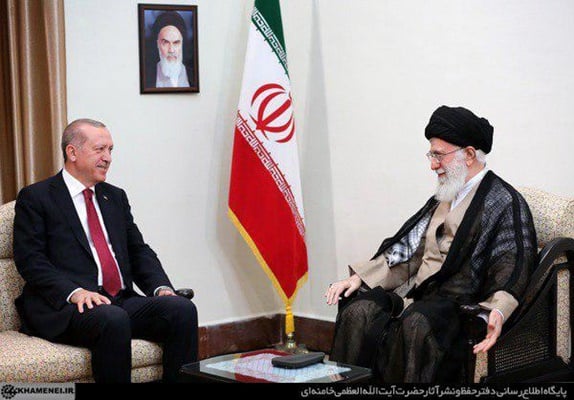
Iran Leader: US Concerned over Unity among Muslim Nations

Ayatollah Khamenei made the comment in a meeting with Turkish President Recep Tayyip Erdogan in Tehran, saying the most pressing need of the Muslim world today is for Islamic states to remain united and boost synergy among one another.

“Unity and partnership among Islamic countries will definitely pave the way for the settlement of problems in the [Middle East] region, and that is why hegemonic powers led by the US have misgivings over cooperation and proximity between Islamic countries and the formation of an Islamic power,” the Leader said.

This concern, said Ayatollah Khamenei, is the reason behind the United States’ animosity and grudge toward Islamic states.

“The Islamic Republic of Iran and Turkey are two powerful and dignified countries in the region and have common motivations for the Islamic world; so, the two countries should enhance their cooperation in economic and political areas more than ever before,” said the Leader.

Ayatollah Khamenei touched upon good cooperation and relations between Tehran and Ankara since the Islamic current took power in Turkey.

“It is necessary that common points [between the two countries] be further enhanced,” the Leader noted.

He also appreciated Erdogan’s stance on the developments in Myanmar. Ayatollah Khamenei further referred to the issue of Palestine, saying, “The issue of Palestine has always been important and should not be neglected even for a second.”

The Turkish president, in turn, described the situation in the region as critical, expressing hope that regional issues will be resolved through cooperation among Islamic countries.

Erdogan said a lack of solidarity among Islamic countries is among the contributors the emergence of the current situation. He said the situation is even more sensitive given the kind of behaviour that the West shows toward independent Muslim nations, which makes it all the more necessary for Muslim countries, especially Iran and Turkey, to work together more closely.

Iran, Russia, Turkey Agree to Protect Civilians in Syria Anti-Terror Campaign

In the final statement issued at the end of the Tehran Summit on Syria peace, Iran’s Hassan Rouhani, Russia’s Vladimir Putin and Turkey’s Recep Tayyip Erdoğan reaffirmed their determination to continue cooperation in order to ultimately eliminate ISIS, Nusra Front and all other individuals, groups, undertakings and entities associated with Al-Qaeda or ISIS, as they have been designated as terrorists by the UN Security Council.

They underlined that, in the fight against terrorism, separation between the above-mentioned terrorist groups and the armed opposition groups that had joined or would join the ceasefire regime, would be of utmost importance including with respect to preventing civilian casualties.

What follows is the full text of the statement:

Joint Statement by the President of the Islamic Republic of Iran, the President of the Russian Federation and the President of the Republic of Turkey

Tehran, 7 September 2018

President of the Islamic Republic of Iran H.E. Hassan Rouhani, President of the Russian Federation H.E. Vladimir Putin and President of the Republic of Turkey H.E. Recep Tayyip Erdoğan gathered in Tehran on 7 September 2018 for a Tripartite Summit.

The Presidents:

  1. Expressed their satisfaction with the achievements of the Astana format since January 2017, in particular, the progress made in reducing violence across the Syrian Arab Republic and contributing to peace, security and stability in the country.
  2. Emphasized their strong and continued commitment to the sovereignty, independence, unity and territorial integrity of the Syrian Arab Republic as well as to the purposes and principles of the UN Charter and highlighted that they should be respected by all. They reiterated that no actions, no matter by whom they were undertaken, should undermine these principles. They rejected all attempts to create new realities on the ground under the pretext of combating terrorism and expressed their determination to stand against separatist agendas aimed at undermining the sovereignty and territorial integrity of Syria as well as the national security of neighbouring countries.
  3. Discussed the current situation on the ground, took stock of the developments regarding the Syrian Arab Republic following their last meeting in Ankara on 4 April 2018 and agreed to continue trilateral coordination in accordance with their agreements. In this regard, they took up the situation in Idlib de-escalation area and decided to address it in line with the above-mentioned principles and the spirit of cooperation that characterized the Astana format.
  4. Reaffirmed their determination to continue cooperation in order to ultimately eliminate DAESH/ISIS, Al-Nusra Front and all other individuals, groups, undertakings and entities associated with Al-Qaeda or DAESH/ISIS, as they have been designated as terrorists by the UN Security Council. They underlined that, in the fight against terrorism, separation between the above-mentioned terrorist groups and the armed opposition groups that had joined or would join the ceasefire regime, would be of utmost importance including with respect to preventing civilian casualties.
  5. Reaffirmed their conviction that there could be no military solution to the Syrian conflict and that it could only end through a negotiated political process. They reaffirmed their determination to continue active cooperation with a view to advancing the political process in consistence with the decisions of the Syrian National Dialogue Congress in Sochi and the UN Security Council Resolution 2254.
  6. Reaffirmed their resolve to continue joint efforts aimed at advancing the Syrian led and Syrian-owned process for reaching a political settlement and reiterated their commitment to help establish and launch the work of the Constitutional Committee. They expressed their satisfaction with the useful consultations between their senior officials and the United Nations Secretary General’s Special Envoy for Syria.
  7. Emphasized the need to support all efforts to help all Syrians restore their normal and peaceful life and to alleviate their sufferings. In this regard, they called upon the international community, particularly the United Nations and its humanitarian agencies, to increase their assistance to Syria by providing additional humanitarian aid, facilitating humanitarian mine action, restoring basic infrastructure assets, including social and economic facilities, and preserving historical heritage.
  8. Reaffirmed their determination to continue joint efforts aimed at protecting civilians and improving the humanitarian situation via facilitating rapid, safe and unhindered humanitarian access to all Syrians in need.
  9. Highlighted the need to create conditions for the safe and voluntary return of refugees and internally displaced persons (IDPs) to their original places of residence in Syria. To this end, they emphasized the necessity of coordination among all relevant parties, including the Office of the United Nations High Commissioner for Refugees (UNHCR) and other specialized international agencies. They agreed to consider the idea of convening an international conference on Syrian refugees and internally displaced persons (IDPs).
  10. Welcomed the progress of the work of the Working Group on the release of detainees/abductees and handover of the bodies as well as the identification of the missing persons, as undertaken with the participation of the UN and ICRC experts.
  11. Decided to hold their next meeting in the Russian Federation upon the invitation of the President of the Russian Federation H.E. Vladimir Putin.
  12. The Presidents of the Russian Federation and the Republic of Turkey expressed their sincere gratitude to the President of the Islamic Republic of Iran H.E. Hassan Rouhani for hosting the Tripartite Summit in Tehran.

Iran, China Discuss Promotion of Defence Cooperation

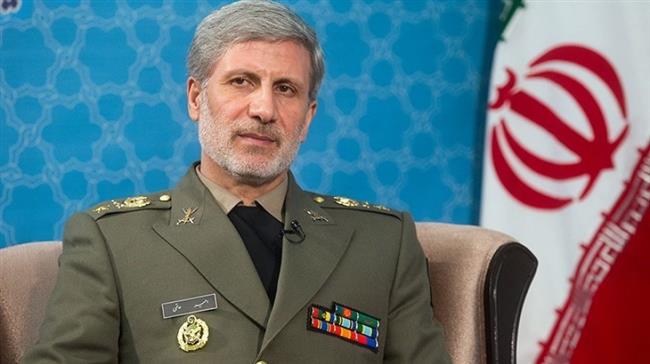
Iranian Defense Minister Brigadier General Amir Hatami, who arrived in Beijing on Thursday on an official visit, held talks with Chinese State Councilor and Minister of National Defense General Wei Fenghe on Friday.

He pointed to the ongoing insecurity in the Middle East and said the Islamic Republic has spared no efforts to restore regional peace, stability and security.

“We believe that security is a seamless [issue] and insecurity in the West Asian region has not only affected the surrounding areas but also other parts of the word,” the Iranian military chief said.

He added that the unilateral US approach to violate various international regulations is a breach of international peace and security.

Hatami further said Tehran and Beijing have historical and cultural commonalities and added, “The two countries have common interests and threats and can expand cooperation in this framework.”

The Chinese defense minister, for his part, said Tehran and Beijing share a view to develop cordial relations.

As a developing country, China is ready to boost interaction with Iran, he added.

In November 2016, former Iranian defense minister Brigadier General Hossein Dehqan and the Chinese defense chief signed an agreement in Tehran to boost defense-military cooperation and fight terrorism.

According to the former Iranian defense minister, defense-military cooperation between Iran and China would guarantee regional and international peace and security.

Iran, Turkey Must Cooperate to Counter US Sanctions: Rouhani

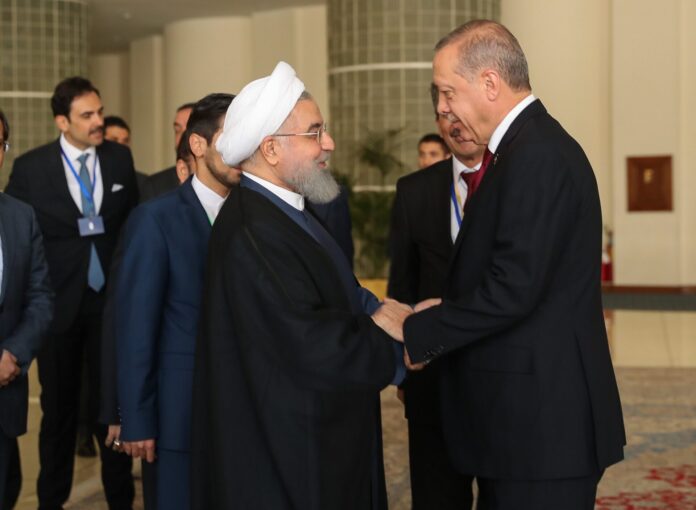
“Iran and Turkey must further boost economic relations to counter US sanctions,” Rouhani said in a Friday meeting with his Turkish counterpart Recep Tayyip Erdogan, who was in Tehran to attend a trilateral meeting on the Syrian conflict.

The Iranian president stressed the need for closer banking connections between the two countries, adding that the two countries must also boost cooperation in the energy sector.

Rouhani said Iran and Turkey should use national currencies for bilateral trade and reconsider a preferential trade agreement signed between the two countries.

He said Iran and Turkey could also cooperate with other regional countries including Russia and Pakistan to promote regional peace and security.

“Our efforts to fight terrorism must be carried out in a way that civilians receive little damage and the people’s lives are saved,” he said.

Rouhani expressed hope the trilateral meeting among Iran, Russia and Turkey will ease concerns and will help boost the fight against terrorism, allow Syrian refugees to return to their homeland and create sustainable peace and security in Syria.

Erdogan, for his part, said his government is eager to work towards developing ties with Tehran.

“Iran and Turkey must in the current circumstances plan to develop economic relations and boost bilateral trade,” he said, adding that the two governments must boost banking relations and use national currencies in trade contracts.

Erdogan also said the US government’s positions towards other countries are “unacceptable and unstable”.

13 Terrorists Killed, 12 Arrested in Iran in August

The operations were carried out in Kermanshah and Kurdistan provinces, it said, adding the terrorists were “linked to adversarial countries” who were struck before managing to take any action.

On August 16, as many as 12 agents and people linked to earlier assassination of Major Hassan Maleki, the chief of the Traffic Police of Kermanshah’s Ravansar County, were arrested.

On August 25, another terrorist outfit seeking sabotage acts in Iran was disbanded in an operation that killed two of the terrorists and injured another, the Intelligence Ministry added.

A number of Kalashnikov rifles and grenades, as well as communication equipment, and an undisclosed amount of cash have been seized from the two terror outfits.

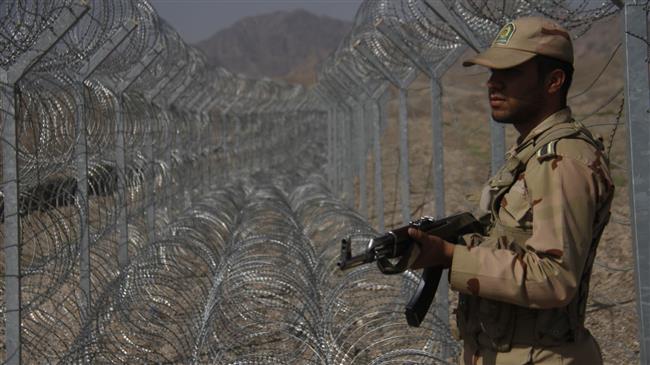
Also last month, Iran’s Islamic Revolution Guards Corps (IRGC) disbanded a team of terrorists on the country’s border with Iraq, killing 11 of its members. The terrorists were ambushed as they were trying to infiltrate the country from the West Azerbaijan Province’s Oshnaviyeh County.

Earlier in the year, the Corps prevented a similar infiltration attempt from Iraq’s Kurdistan region. The IRGC subsequently warned the northern Iraqi territory to stay wary about terrorist movements within its borders to prevent potential spillover into the Islamic Republic.

Persistently on the lookout against potential intruders, Iranian forces regularly engage gunmen, gang members, Kurdish militants, and terrorists on the country’s western and eastern border areas.

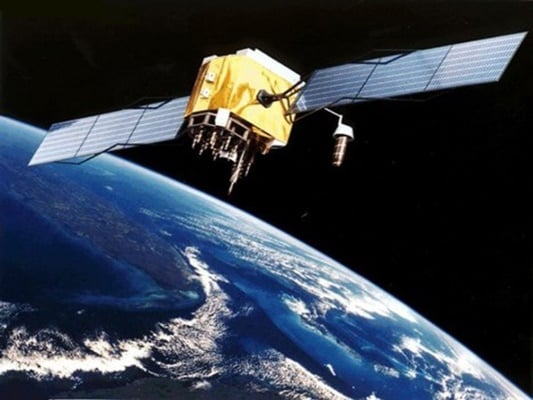
Iran to Send Research Satellite into Orbit in 2019: Official

The general said the satellite will be launched as part of ceremonies to mark the fortieth anniversary of the Islamic Revolution’s victory.

He further highlighted the huge scientific progress made by Iranian researchers in the aerospace area and said, “The Islamic Republic enjoys high defence capabilities and has developed most-advanced technologies as deterrence.”

According to the Iranian commander, Iran’s defence ministry is determined to promote its capabilities to the highest level in modern and indigenous technologies.

He warned the enemies against any plot to attack Iran and said they would deeply regret in case of any attack.

The official also said the Islamic Republic of Iran has thoroughly studied the strengths and weak points of its enemies’ defence mechanisms, adding Iran’s defence capabilities serve as deterrent against the enemies’ threats.

For a brief review of Iran’s achievements in various fields of science and technology, check the book “Science and Technology in Iran: A Brief Review

He then referred to the presence of 380,000 American soldiers in the region and noted the presence has provided Iran with a good opportunity to put its focus on the region in case of any confrontation.

The Islamic Republic has made major breakthroughs and attained self-sufficiency in defence area over the past decades despite international sanctions.

Iranian officials argue that the country’s military power is solely for defensive purposes and the country seeks friendly relations with its regional neighbours.

Putin, Erdogan in Tehran to Attend Trilateral Meeting on Syria

Putin, Erdogan in Tehran to Attend Trilateral Meeting on Syria

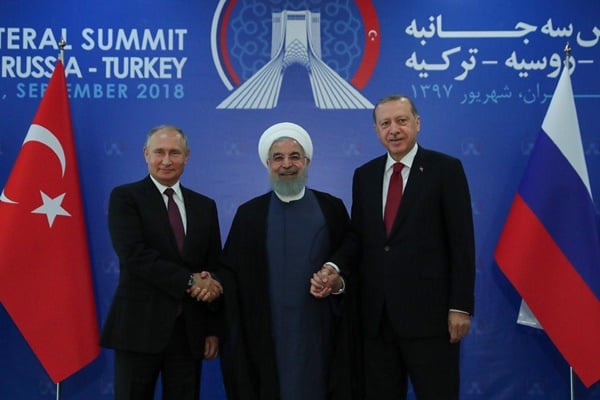
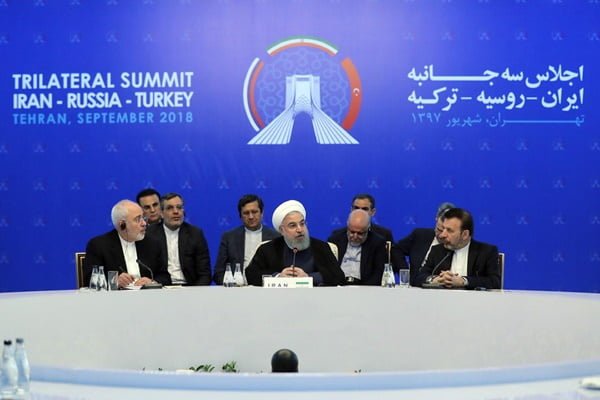
The trilateral meeting will see Iranian President Hassan Rouhani and his Turkish and Russian counterparts discussing efforts to bring an end to the 7-year conflict in Syria.

This is the third trilateral summit between the three leaders. Previous meetings were held in Russia and Turkey.

The three countries, known as guarantors of the Syria ceasefire regime, have also held several rounds of talks in Kazakhstan’s Astana and elsewhere to help ease the conflict.

Putin, Erdogan in Tehran to Attend Trilateral Meeting on Syria
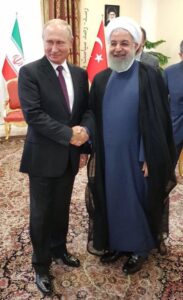
Iranian and Russian presidents held bilateral talks in Tehran before the beginning of the trilateral Tehran Summit on Syria on September 7, 2018

They have managed to sharply reduce violence in the country, thanks to measures including establishing de-escalation zones in the country.

The Tehran Summit comes at the Syrian Army is about to start an operation to retake control of Idlib, the last stronghold of its opponents in Syria.

Turkey, a main backer of forces fighting the Syrian government, has warned about the consequences of clashes in the region.

Hossein Jaberi Ansari, a senior Iranian diplomat, said on Thursday the three leaders will discuss the fate of Idlib, Fars News Agency reported.

“We seek a solution based on an agreement that allows the Syrian government to retake control of Idlib,” he said.

Iran’s Foreign Ministry Spokesman Bahram Qassemi said this week the three presidents will also discuss bilateral relations and could hopefully reach agreements to boost trilateral cooperation.

Putin, Erdogan in Tehran to Attend Trilateral Meeting on Syria
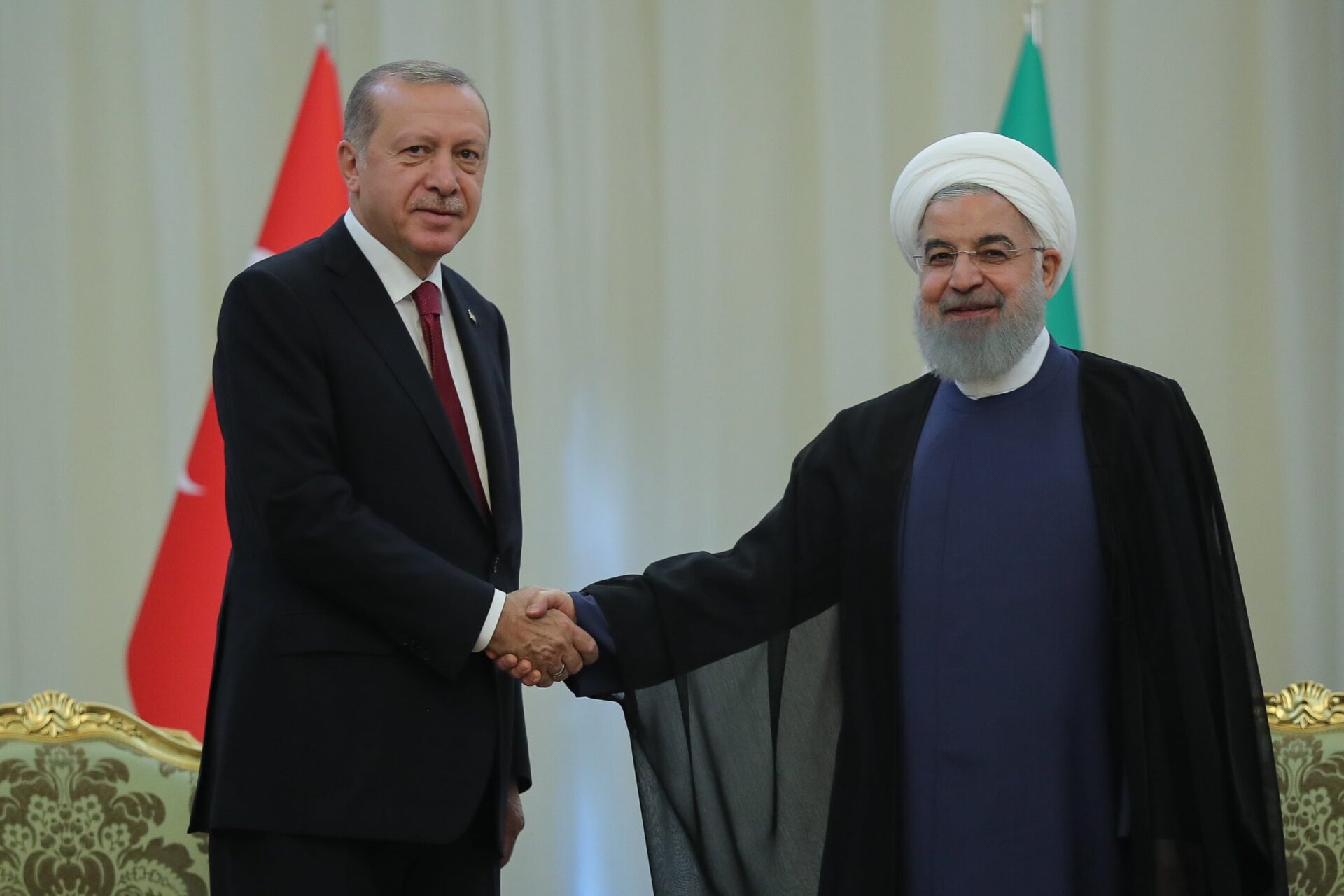
Iranian and Turkish presidents held bilateral talks in Tehran before the beginning of the trilateral Tehran Summit on Syria on September 7, 2018