Friday, December 26, 2025
Home Blog Page 3260

Iran Says Will Never Sit for New Round of Talks under Pressure

Addressing a Turkish think tank in Ankara, the Iranian diplomat described the US policy towards Iran as ridiculous and said the Americans should know that Iran will never sit for talks under pressure.

“The Americans seek a better deal through exerting pressure on Iran to sit for a new round of talks. They quit a treaty to make another one and this is ridiculous,” he said.

According to Araqchi, the US is desperately trying to push Iran into quitting the JCPOA. “They first withdrew from the nuclear deal and then re-imposed their sanctions on the Islamic Republic. Now, they have decided not to re-issue waivers for main importers of Iran’s oil to drive down Iran’s oil exports to zero.”

Possible Death of JCPOA

Araqchi warned that the Joint Comprehensive Plan of Action (JCPOA) may come to an end as early as possible due to the US approach towards the deal.

“The JCPOA is not an economic deal but a security one connected to regional and global security,” he noted.

He went on to say that the JCPOA was ratified by the United Nations Security Council in Resolution 2231. “Violating the nuclear deal means violating the UNSC resolution. The US has not only pulled out of the deal but also pressurized other members of the UNSC into following its footsteps,” he said.

According to Araqchi, Iran has been sanctioned because of its full commitment to the United Nations’ resolution.

US Lies about JCPOA’s Goals

The Iranian diplomat added that unlike the American officials’ claim, Iran’s commitments under the nuclear deal are permanent.

“We started the JCPOA negotiation in a good faith. The final achievement of our marathon negotiations was the JCPA. It was globally welcomed. But all of a sudden, a man pushed his way into the White House and said the nuclear deal was the worst deal in the US history,” he said.

Araqchi said Iran has given a one-year time to the remaining signatories of the nuclear deal to adopt appropriate mechanism to keep the nuclear deal alive and added the Islamic Republic of Iran can’t wait forever.

“We will make a due decision against the US sanctions. The global failure to keep the JCPOA alive will have dire consequences.”

Ruining Only Diplomatic Achievement of Region

The Iranian deputy foreign minister called the US regional policy wrong and said the policy could have various negative consequences.

“By withdrawing from the Iran nuclear deal, the US is seeking to ruin the region’s only diplomatic achievement. This will have dire regional repercussions. The regional people will lose their confidence in diplomacy. This will contribute to resistance movements in the region. People now have come to this conclusion that talks with the west leads nowhere.”

The Iranian diplomat slammed the US for its destructive policy towards the region and said Iran is after peace and security.

“Interestingly enough, some regional states are contributing to the US efforts to hamper Iran’s oil flow. But the Islamic Republic of Iran will not allow any state to make up for its oil exports,” he said.

IRGC Blacklisting, A Dangerous Move

Araqchi described as “dangerous” the US decision to blacklist Iran’s Islamic Revolution Guards Corps (IRGC) as a terrorist organization and said the US should be held accountable for any consequences of the move.

Iran Warns OPEC May Collapse If Members Use Oil as Weapon

“As I have already said, the US wishes to cut Iran’s oil exports to zero but this is a pious hope. Any independent market expert knows that a surplus of capacities declared by certain countries is exaggeration and overstatement,” Zangeneh told the opening of the 24th International Oil, Gas, Refining and Petrochemical Exhibition in Tehran on Wednesday.

He said that Iran held no grudge against any countries in the region but noted that two regional states overstate their production capacities to reassure the market that Iran’s output restraint would result in no supply cuts.

Oil prices have hit their highest since November in recent days after the US said all waivers for those importing Iranian oil would end this week.

Washington says it is working with Saudi Arabia and the United Arab Emirates to ensure oil markets are “adequately supplied,” but traders worry about tight supplies.

Following its withdrawal from the Iran nuclear deal in 2017 and reimposition of unilateral sanctions against Tehran last year, the United States gave waivers to eight major buyers of Iranian crude, which allowed them to import Iran’s crude without facing sanctions. Washington announced last week that the waivers would end after May 1.

Elsewhere in his remarks, Zangeneh pointed to the volatility of the oil market and criticized certain countries for using oil as a weapon, saying the fragility of the oil market would not be compensated by issuing statements and denying shortage in the market.

“Iran has never used oil as a political weapon. Any country using oil as a political tool should accept its repercussions as well,” the Iranian oil minister said.

Those countries using oil as a weapon against two OPEC founding members are turning unity in the organization into division and are causing the death and collapse of OPEC, the responsibility of which falls upon them, Zangeneh said.

Apart from Iran, the US has targeted crisis-hit Venezuela, once a top-three OPEC producer, with sanctions over the recent political turmoil in the Latin American country.

Saudi Arabia has said it would replace losses in Iran and Venezuela.

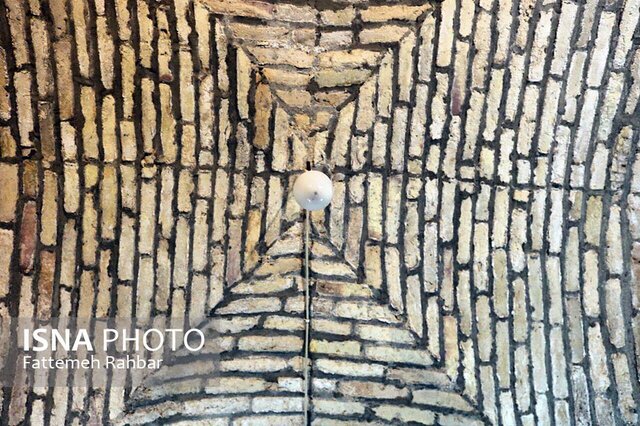
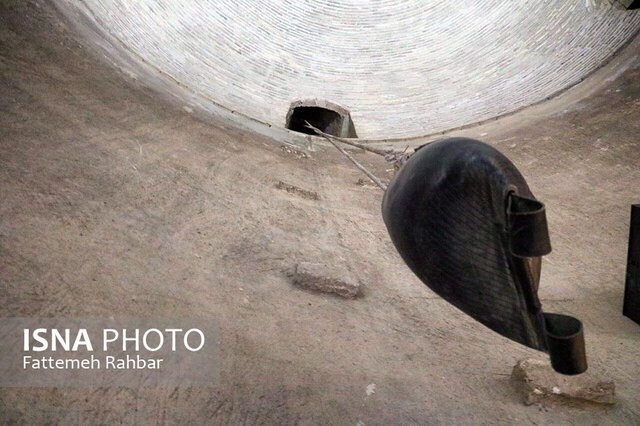
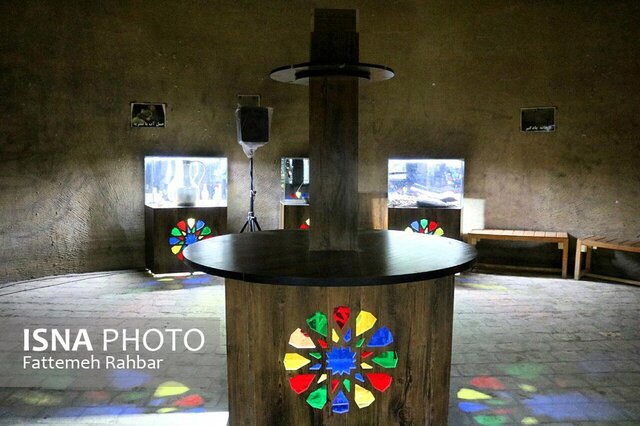
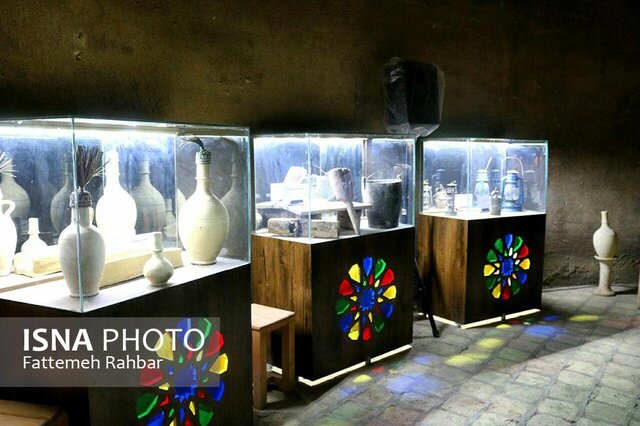
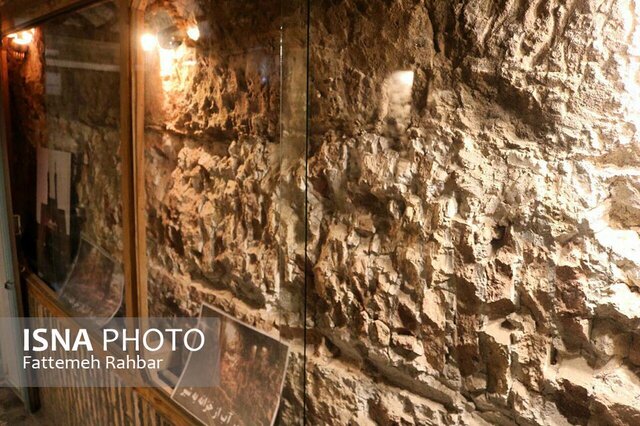
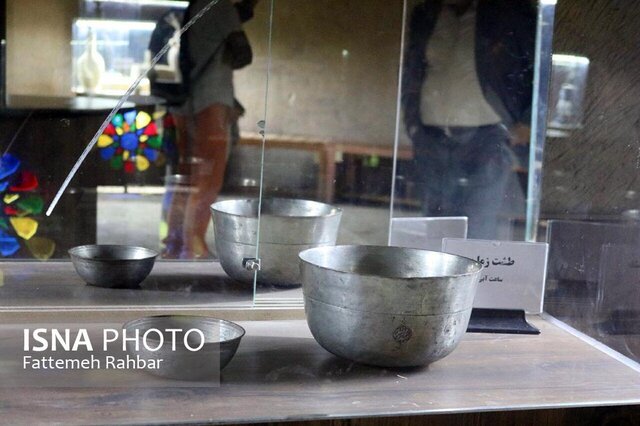
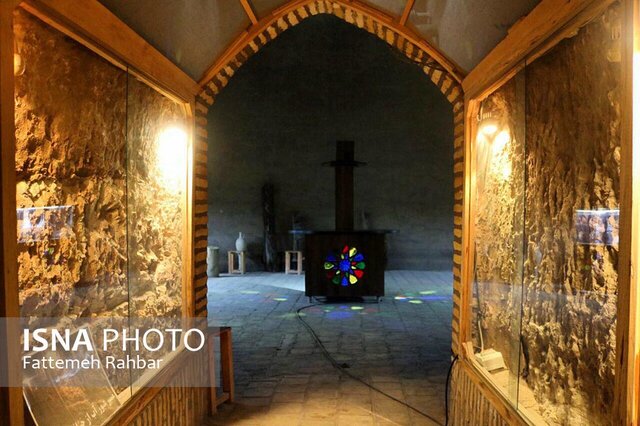
Amir Chakhmaq Cistern of Yazd; A Museum Underground

Amir Chakhmaq water cistern is one of the endowments of “Setti Fatemeh Khatoon”, wife of Amir Chakhmaq Shami who was one of governors of Shah Rukh, a son of Timur (Tamerlane). It was built at the time of the establishment of the Amir Chakhmaq Complex.

Like the complex, it was built for the welfare of the people behind the gate of the city of Yazd.

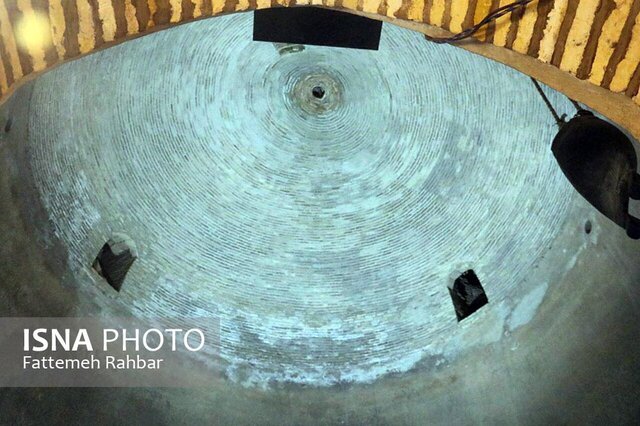
This cistern, which is located on the left side of the entrance to the Amir Chakhmaq Complex, was created before the construction of the complex as a water reservoir facility. But after the construction, with the creation of a dome and 49 steps, it was turned into a cistern.

To prevent the water from entering the square, it was built along with the cellar, and unlike all existing water storage facilities, its faucet is not located in front of the entrance.

Three wind catchers are also embedded in the cellar, which are designed to circulate air and eventually water into the cellar.

The floor of this reservoir, like most water cisterns in Yazd and the country, is used to prevent water escaping. It means that it is covered with a layer of lead and nourished by the Qanats of Kheyrabad and Fahraj.

To keep the cellar’s water stable, some lime, coal and clay has been added to the water.

And finally, to remove the algae, they put a few fish in the water to eat them. When a dead fish was seen on the surface, they stopped the use of water till the cause of the death is found.

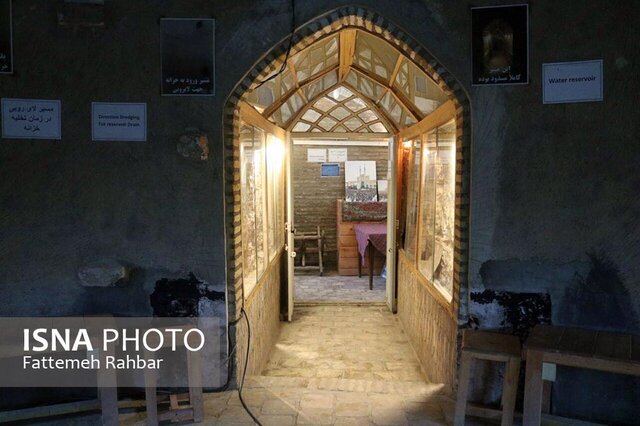
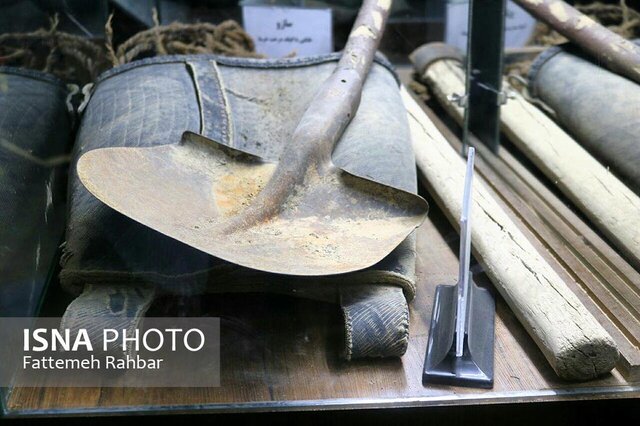
This water reservoir has now turned into a museum of water-related tools, and tourists get acquainted with this sophisticated and clever system.

Here are photos of the cistern retrieved from ISNA:

Iran Says Won’t Initiate War but Will Engage If Challenged

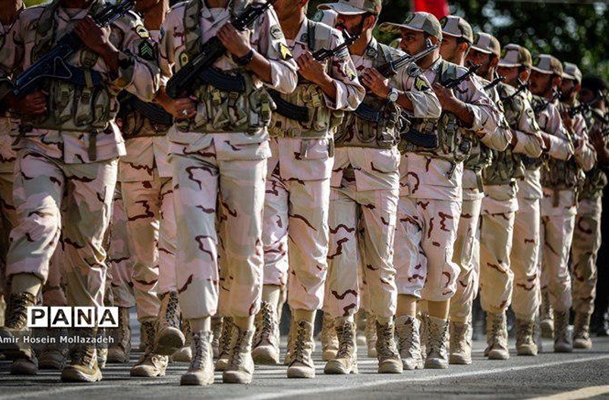
Major General Gholam-Ali Rashid, commander of Khatam-al Anbiya Central Headquarter, said the US presence in the region inflicts heavy blows on the living conditions of the regional states.

“We have massive joint interests with many states in terms of security and stability of the region. So, we expect our regional states which are taking steps in line with the US interests to revise their policies to prevent some dire consequences for the regional people,” he said on Wednesday.

He underlined that Iran will be targeted by enemies if it lacks power. “So, we strongly defend our national interests and do our best to provide an honourable life for our people.”

The Islamic Republic will never initiate a war but if it is challenged, the country won’t hesitate to defend its national interests against enemies’ attacks, he added.

US in No Position to Lecture Others on Human Rights: Iran

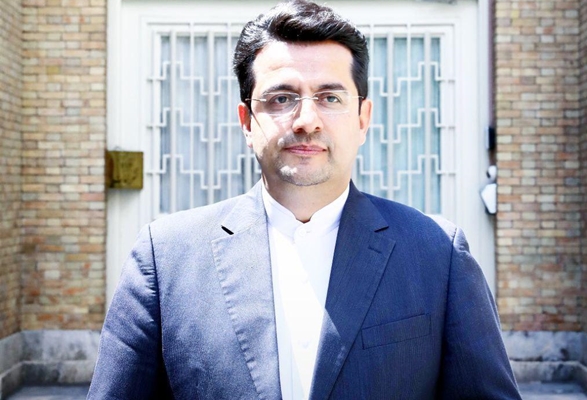
In response to the meddlesome statement of his American counterpart, Mousavi said on Wednesday it’s now well-known to the whole world that the US regime neither believes in human rights nor is ethically qualified and has the legitimacy to meddle in such issues and take the gesture of a human rights advocate.

“The shameful silence of the US State Department towards beheading and crucifixion of 37 political activists and religious minorities in Saudi Arabia is the latest example of the reality that in the US’ view, positions on human rights which previously served as a political means have turned into a commodity, as well,” he said.

Mousavi also noted that the US’ economic terrorism, which is being practiced by imposing indiscriminate sanctions against a nation, serves as the greatest and most widespread violation of economic and social rights of human beings.

“All countries need to observe human rights, but the United States, which has a dark record of human rights inside and outside the country, needs to carry out an urgent review in this regard,” he said.

“Continuous violations of racial and religious minorities inside the US, export of billions of dollars’ worth of weapons for the massacre of civilians, acts of torture in notorious jails, and imposition of unilateral and brutal sanctions on other nations are just part of the US’ dark record in this area,” he said.

“Iranians don’t need the deceitful and war-mongering support of the US,” Mousavi concluded.

In a press statement on Tuesday, US State Department Spokesperson Morgan Ortagus said the US strongly condemns Iran’s growing crackdown on women advocating for their human rights.

The statement then called on the Iranian authorities to end what it called “their harassment and imprisonment of women who are simply expressing their conscience and demanding basic rights.”

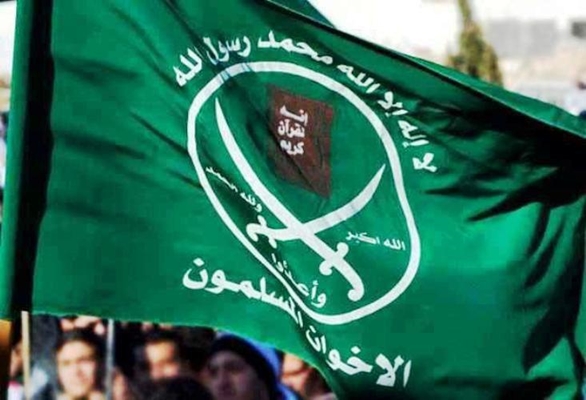
Iran Raps US’ Bid to Designate Muslim Brotherhood as Terror Group

Zarif made the remarks on Wednesday in the Qatari capital of Doha where he is attending the Asia Cooperation Dialogue (ACD) summit.

“The United States is not in a position to start naming others as terror group and we reject any attempt by the US in this regard,” he said.

Zarif further mentioned that Washington is supporting the biggest terrorist in the region which is Israel.

The White House said on Tuesday that Donald Trump is working to designate the Muslim Brotherhood a foreign terrorist organisation. If carried out, it would lead to sanctions against Egypt’s oldest Islamist movement.

“The president has consulted with his national security team and leaders in the region who share his concern, and this designation is working its way through the internal process,” said the White House press secretary Sarah Sanders.

In a statement on its website, the Muslim Brotherhood dismissed the planned move, saying “the Muslim Brotherhood will remain stronger – through God’s grace and power – than any decision.”

“We will remain steadfast in our work in accordance with our moderate and peaceful thinking and what we believe to be right, for honest and constructive cooperation to serve the communities in which we live, and humanity as a whole,” reads the statement.

Iran Says Ready for Cooperation with Sri Lanka against Terror

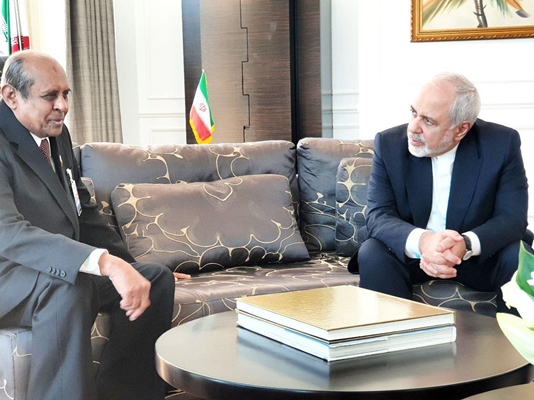
He made the remarks in a Wednesday meeting with his Sri Lankan counterpart Tilak Marapana in the Qatari capital of Doha.

Zarif condemned the recent terrorist attack in Sri Lanka, and described terrorism as a global scourge. He also expressed Tehran’s preparedness for cooperation in eradicating terrorism.

Last month on Easter Sunday, eight bomb attacks hit churches and luxury hotels in the Sri Lankan capital, Colombo, and two other cities.

At least 253 people were killed and hundreds of others wounded in the bombings, which took place when churches were crowded with worshipers marking Easter Sunday.

Police forced stormed the headquarters of the so-called Nations Thawahid Jaman (NTJ) in the town of Kattankudy, searching the place and detaining a man there.

The ISIS terrorist group later claimed responsibility for the deadly attacks.

UNESCO’s Education 2030 Agenda Serves US, UK Interests: Iran

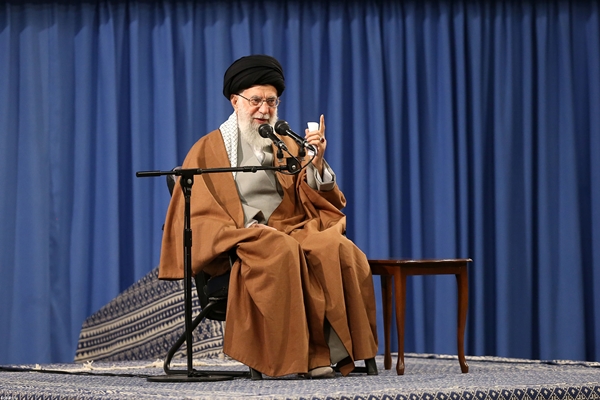
The reason why they work on the 2030 agenda is because of the instructions and recommendations in this document say education should set students’ mindset based on Western thinking and lifestyle, the Leader said on Wednesday.

This means they want to train soldiers for the UK and the US and the rest of these tie-wearing and perfume-wearing savages, he added.

Ayatollah Khamenei stressed these are the same ones who kill people and help the assassins, without batting an eyelid.

“They say as we need their money we help them. Now, they want us to train soldiers in Muslim countries for them. This is 2030.”

Ayatollah Khamenei made the remarks during his Wednesday meeting with a group of teachers on the occasion of National Teachers’ Day.

He also said that teachers, in fact, are creating cultural identities so that the society adopts an identity.

“Civilisation is reliant on culture. If culture is not rich, civilisation does not come into existence. This reveals the significance of 2030 agenda. The gist of this document is that our educational system should teach the children a lifestyle and philosophy based on Western principles. That means, you the teachers train soldiers for the west in your classrooms.”

Back in 2017, Ayatollah Khamenei strongly criticised the cabinet’s adoption of a UN-devised global education agenda – known as Education 2030 – saying documents founded on “corrupt and devastating Western lifestyle” are unacceptable in Islamic Iran.

The Education 2030 is part of the 17 UN Sustainable Development Goals (SDGs).

Elsewhere in his remarks, the Leader also warned that enemies have been on a war posture against Iran on various fronts. He urged the nation to adopt war posture against them similarly.

He said the enemies do not appear to be in battle array militarily, but their armed forces are watching us carefully.

Ayatollah Khamenei stressed that “people’s unity is a must and the US and Zionists will fail.”

He said enemies have been engaged in acts of aggression against Iran in different spheres, including intelligence, politics, and economy.

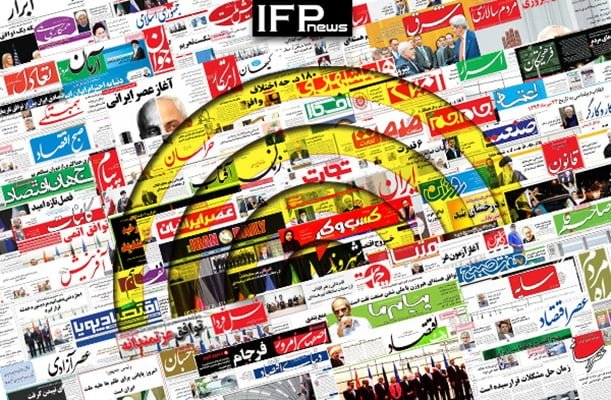
A Look at Iranian Newspaper Front Pages on May 1

A Look at Iranian Newspaper Front Pages on November 19

The top story in all papers today was the remarks made by President Hassan Rouhani about Iran’s continued oil exports despite the US’ sanctions.

Several papers also covered the Tuesday coup in Venezuela, which the government of Nicolas Maduro says has been thwarted.

The above issues, as well as many more, are highlighted in the following headlines and top stories:


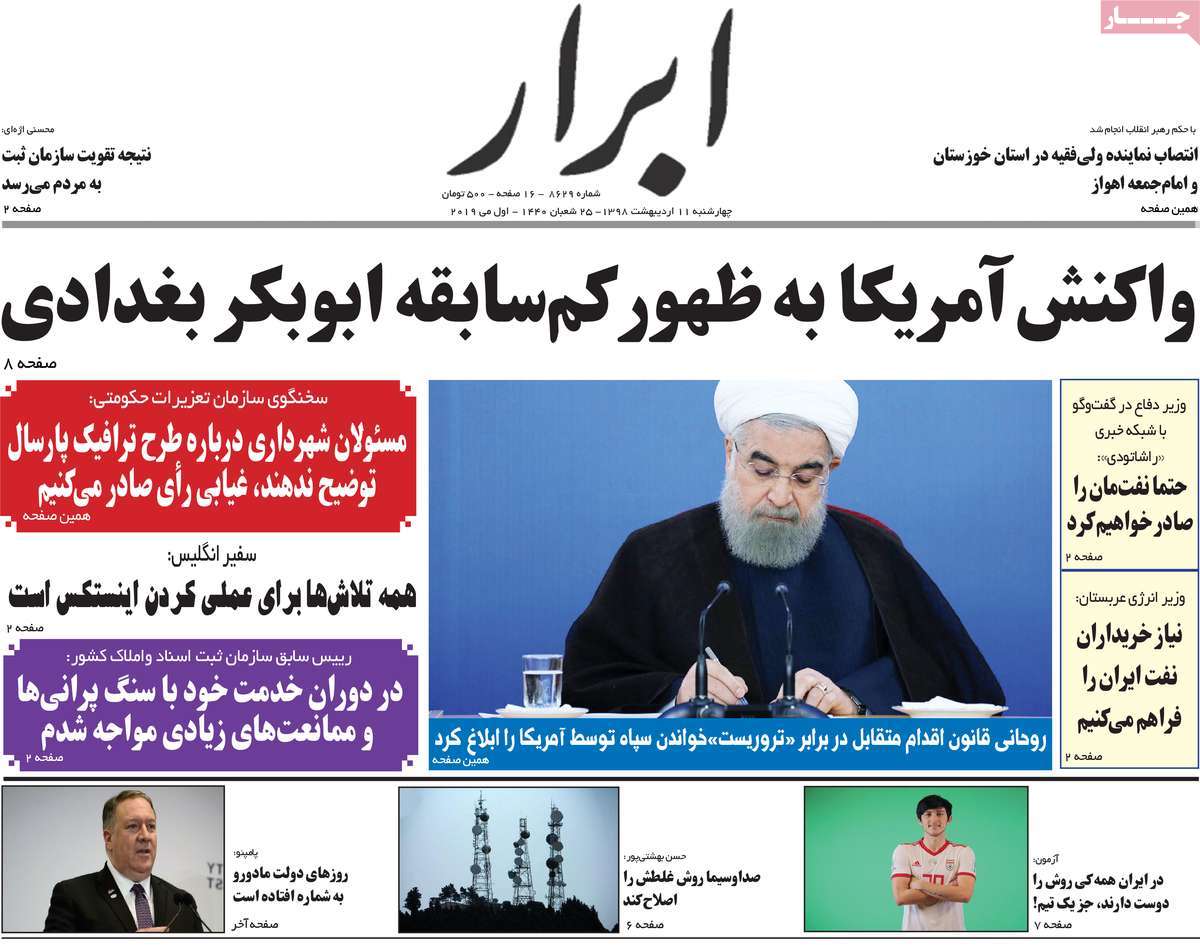
Abrar:

1- US Reaction to Abubakr al-Baghdadi’s Unprecedented Video Appearance

2- Iran DM: Iran Will Definitely Export Its Oil

3- Saudi Energy Minister: We’ll Supply Needs of Iran’s Oil Clients

4- UK Envoy: All Efforts Focused on Implementing INSTEX

A Look at Iranian Newspaper Front Pages on May 1


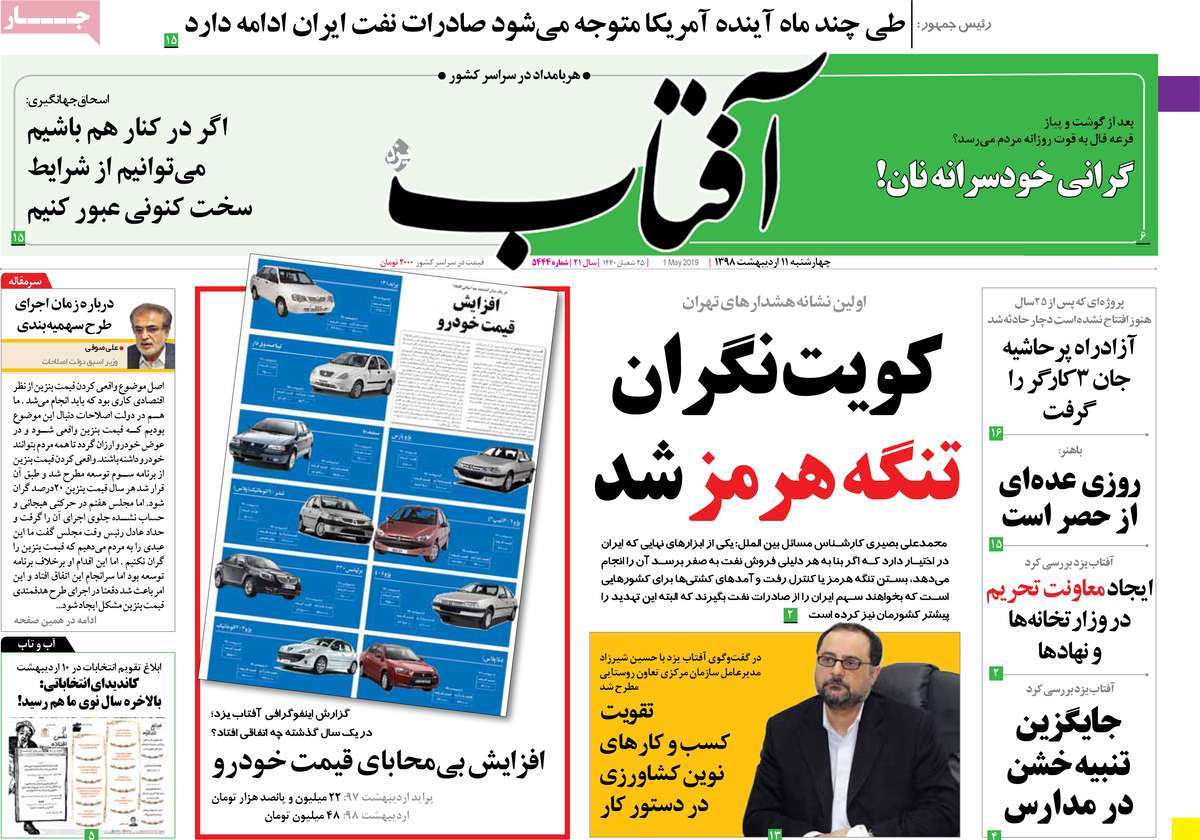
Aftab-e Yazd:

1- Iran First VP: We Can Overcome Current Difficult Situation If We Stand Together

2- Kuwait Concerned about Strait of Hormuz: First Reactions to Iran’s Warnings

3- Rouhani: US to Realize in a Few Months Iran Still Exporting Its Oil

A Look at Iranian Newspaper Front Pages on May 1


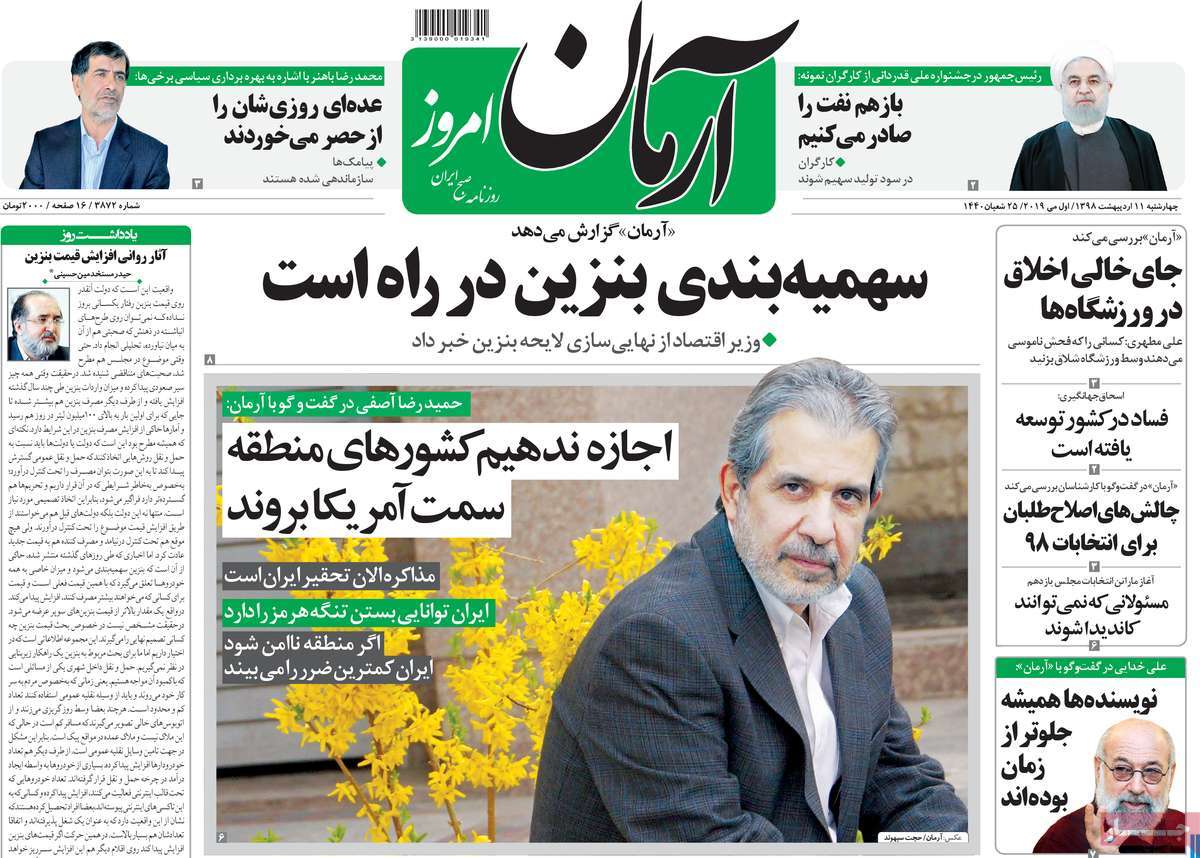
Arman-e Emrooz:

1- We’ll Continue to Export Our Oil: Rouhani

2- Petrol Rationing Finalized

3- Iran to Sustain Least Damage If Region Becomes Insecure

A Look at Iranian Newspaper Front Pages on May 1


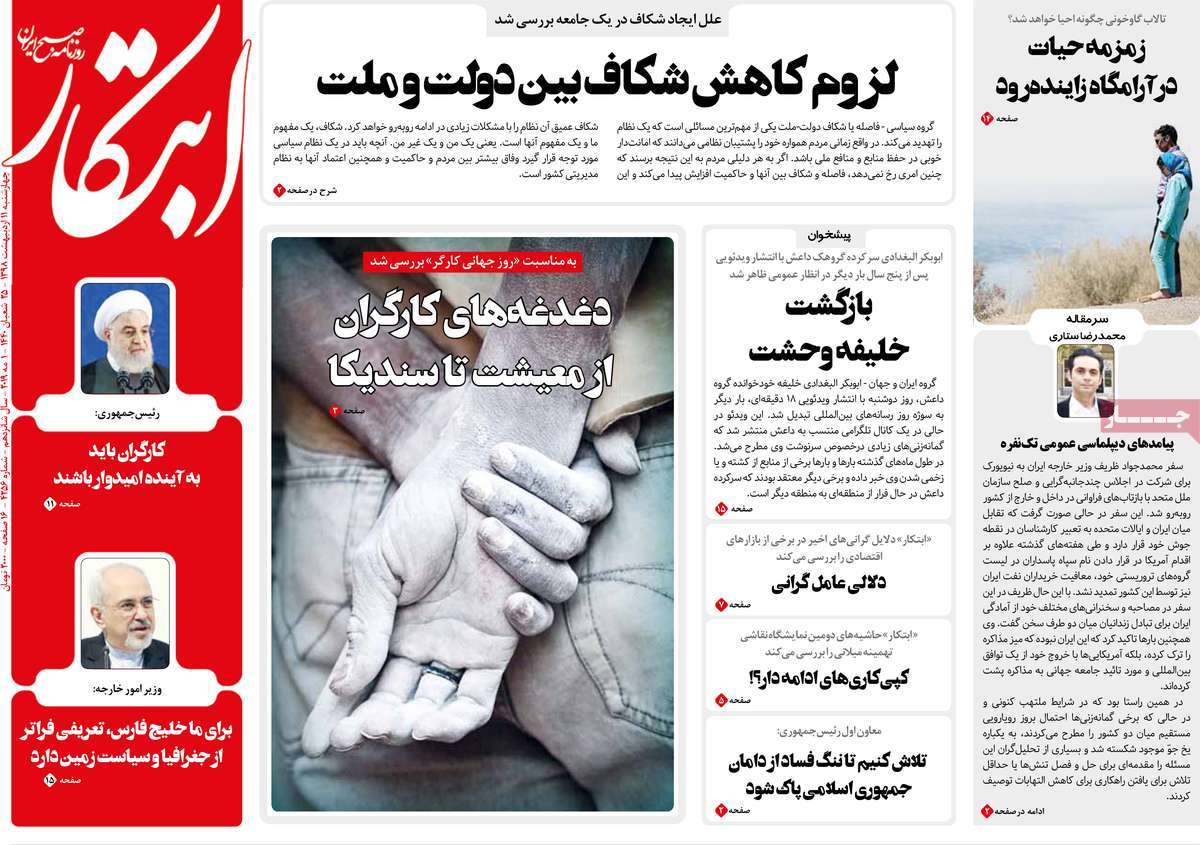
Ebtekar:

1- Rouhani: Labourers Must Be Hopeful about Future

2- FM: Persian Gulf beyond Geography, Politics

A Look at Iranian Newspaper Front Pages on May 1


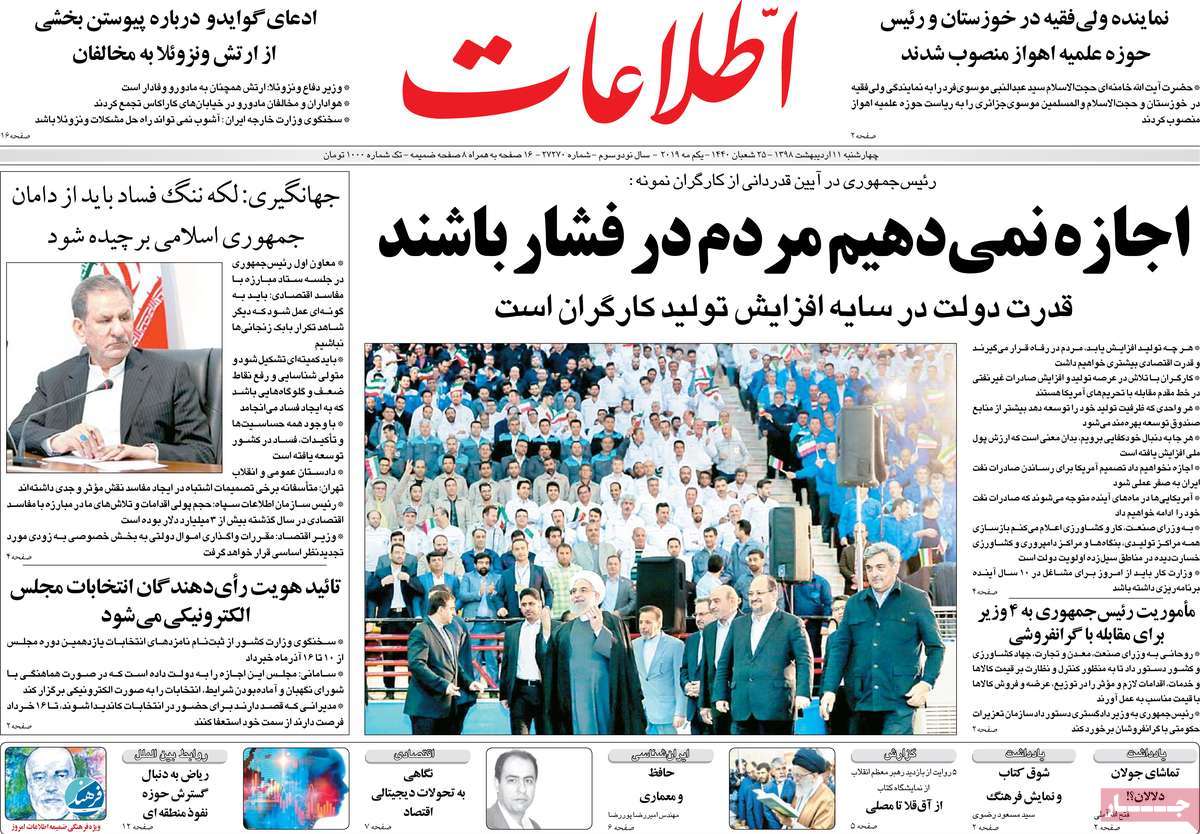
Ettela’at:

1- Guaido Claims Part of Venezuelan Army Has Joined Opposition

2- We Won’t Let People Remain under Pressure: Rouhani

A Look at Iranian Newspaper Front Pages on May 1


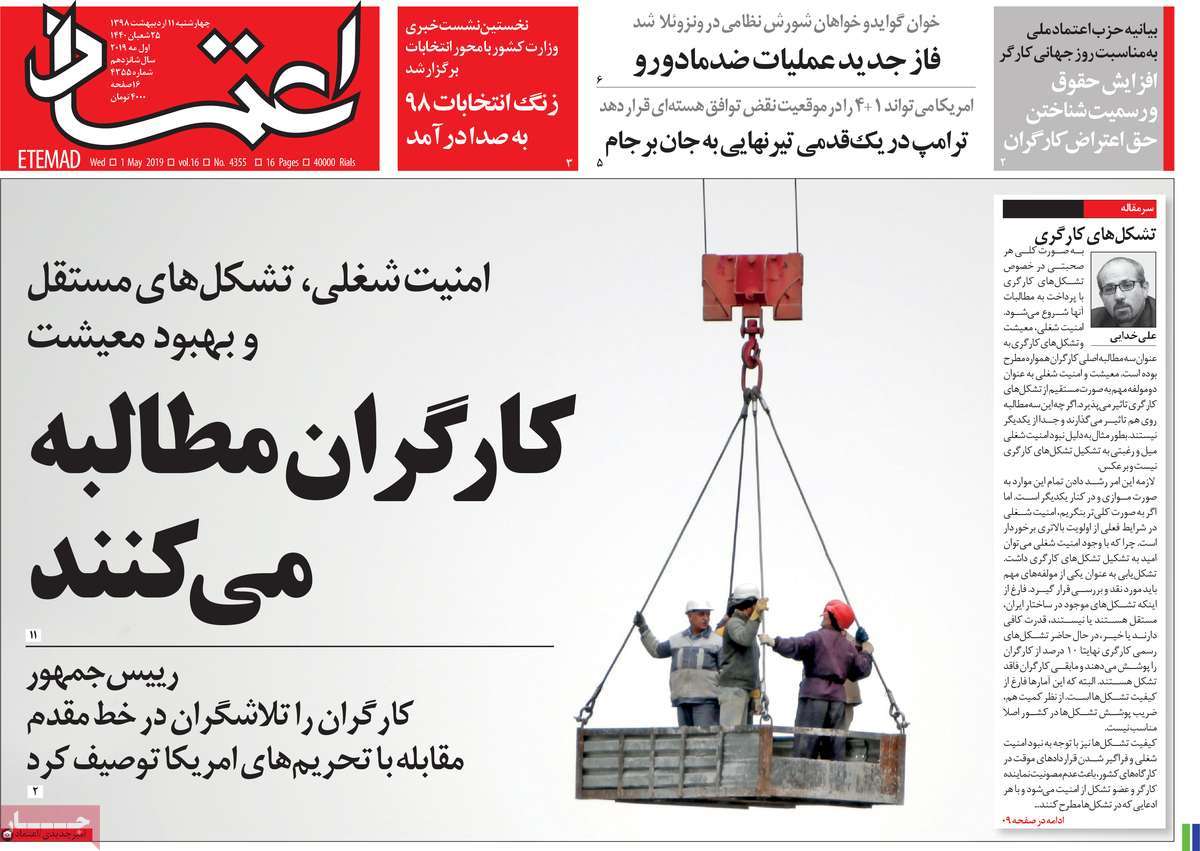
Etemad:

1- New Phase of Anti-Maduro Operation: Guaido Calls for Military Riot in Venezuela

2- Trump on Verge of Dealing Last Blow to JCPOA

3- Rouhani Says Workers at Forefront of Fight against US Sanctions

A Look at Iranian Newspaper Front Pages on May 1


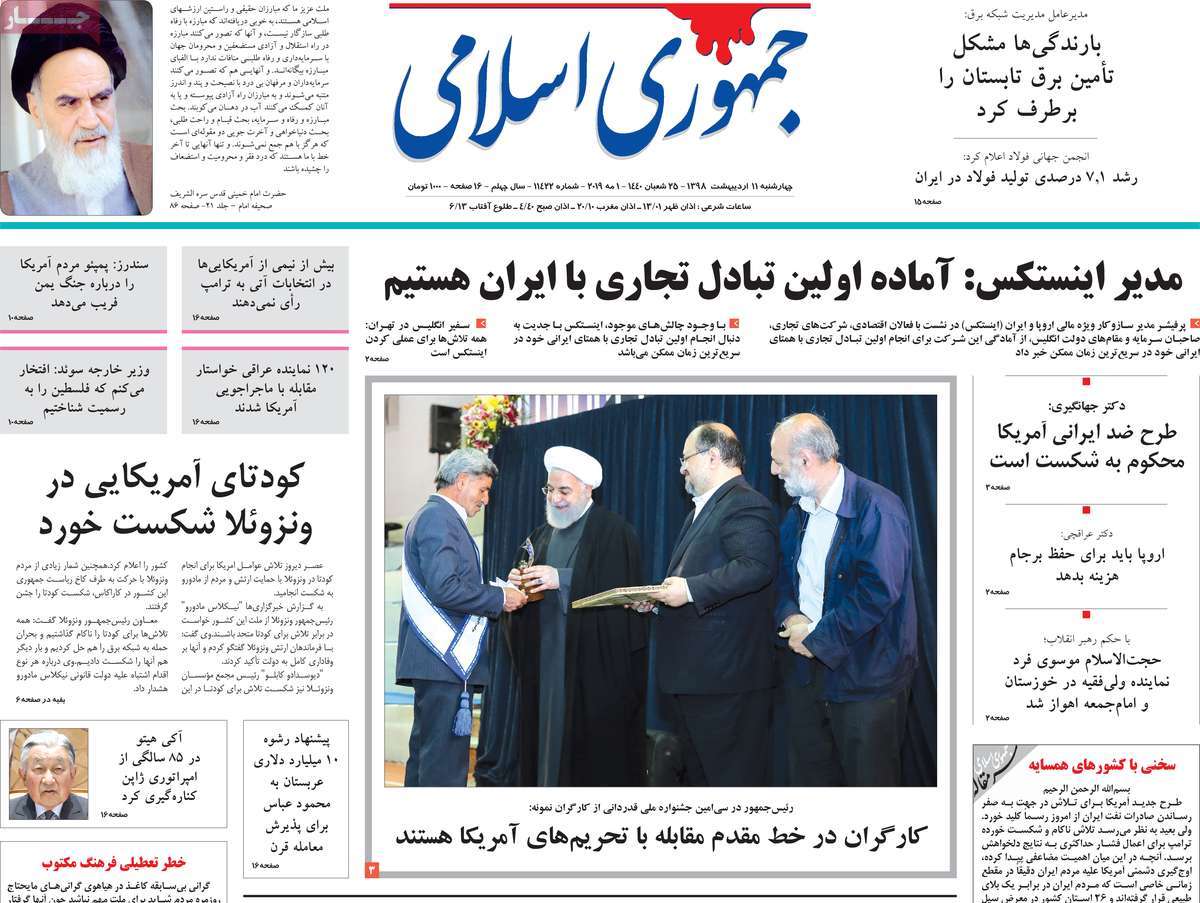
Jomhouri Eslami:

1- INSTEX Chief: We’re Ready for First Trade Exchange with Iran

2- Iran First VP: US’ Anti-Iran Plot Doomed to Failure

3- Araqchi: Europe Must Pay Costs of Maintaining JCPOA

4- US-Backed Coup in Venezuela Fails

A Look at Iranian Newspaper Front Pages on May 1


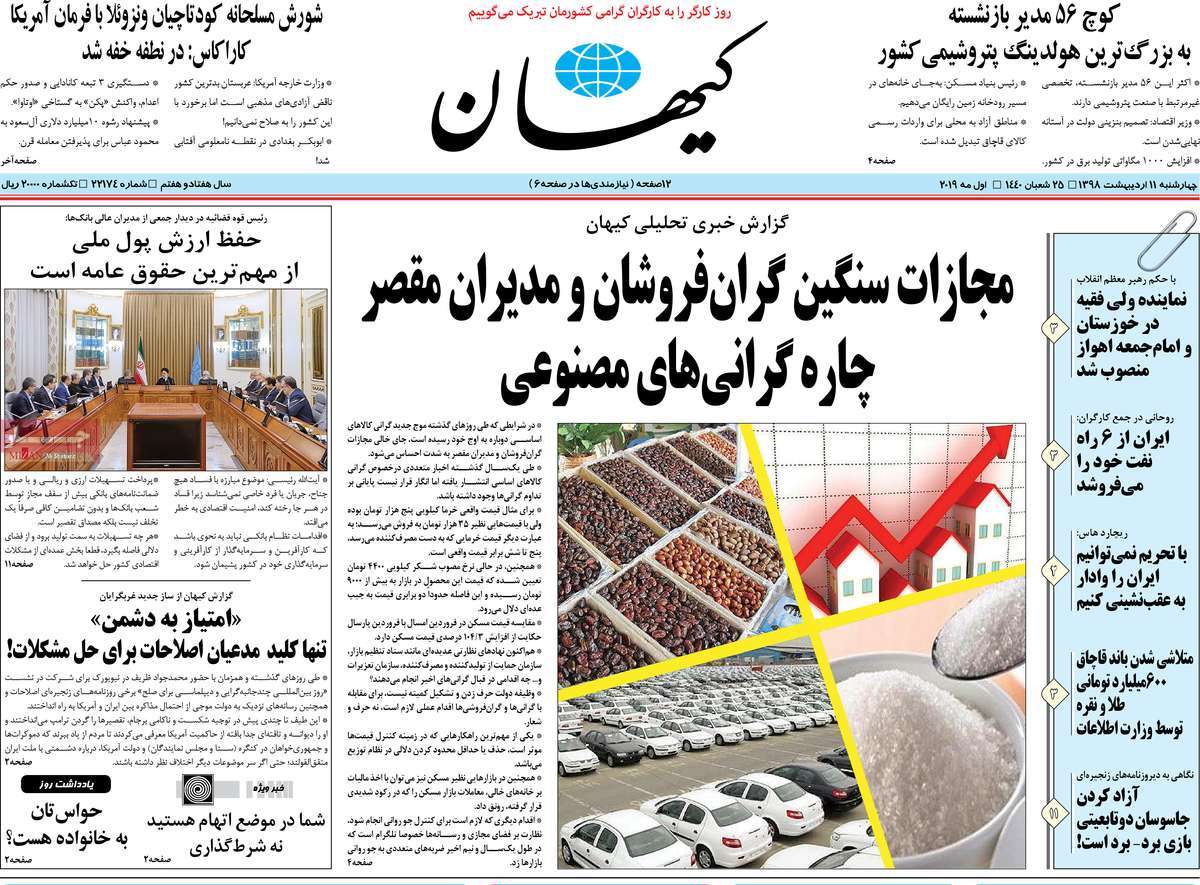
Kayhan:

1- Armed Riot of Putschists in Venezuela under US Command

* Caracas: Coup Thwarted

2- Rouhani: Iran to Sell Its Oil through Six Channels

3- Richard Haass: Sanctions Cannot Push Iran Back

A Look at Iranian Newspaper Front Pages on May 1


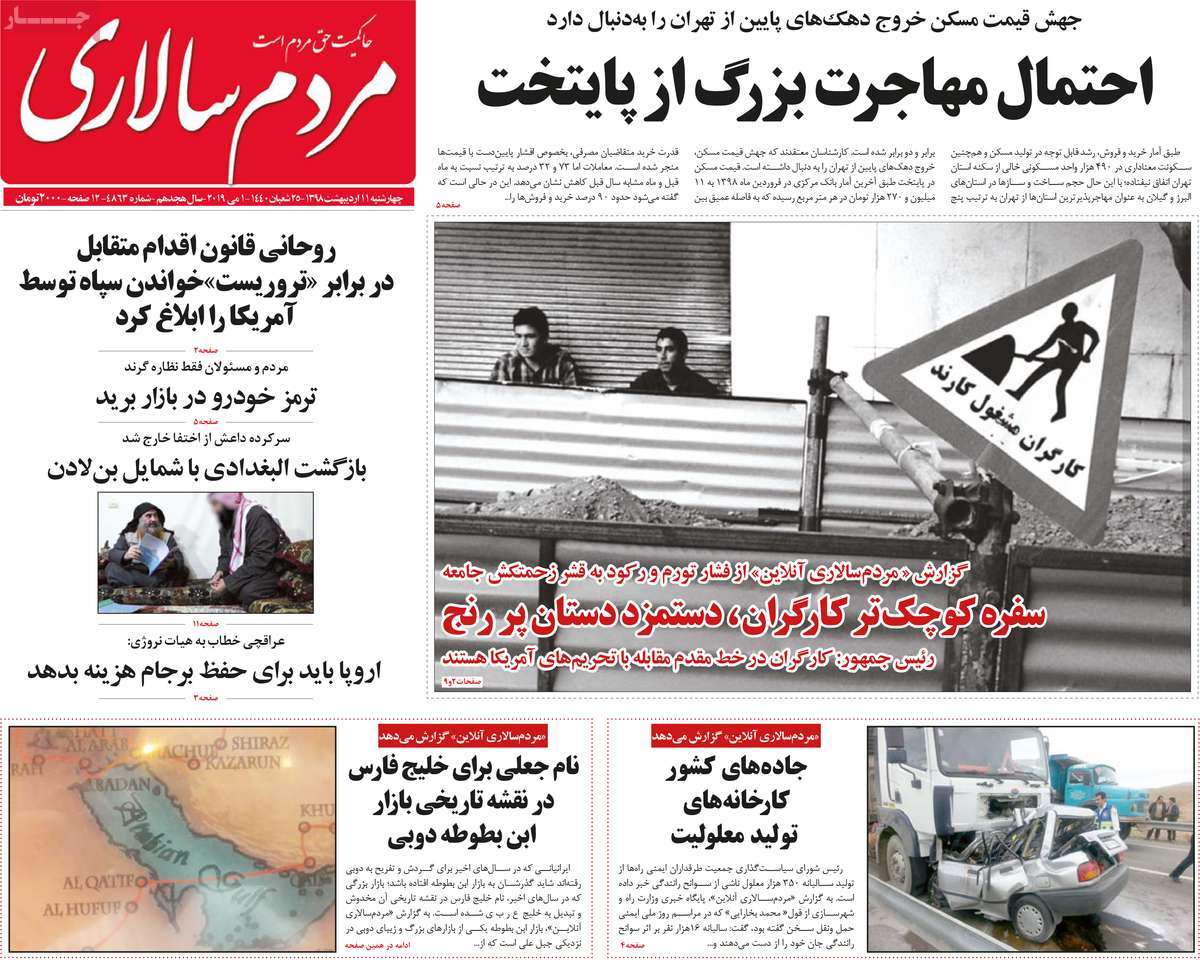
Mardom Salari:

1- Rouhani Signs Off on Designation of CENTCOM as Terror Group

2- Return of Al-Baghdadi in the Form of Bin Laden: ISIS Leader Out of Hideout

3- Araqchi to Norway: Europe Must Pay for Saving JCPOA

A Look at Iranian Newspaper Front Pages on May 1


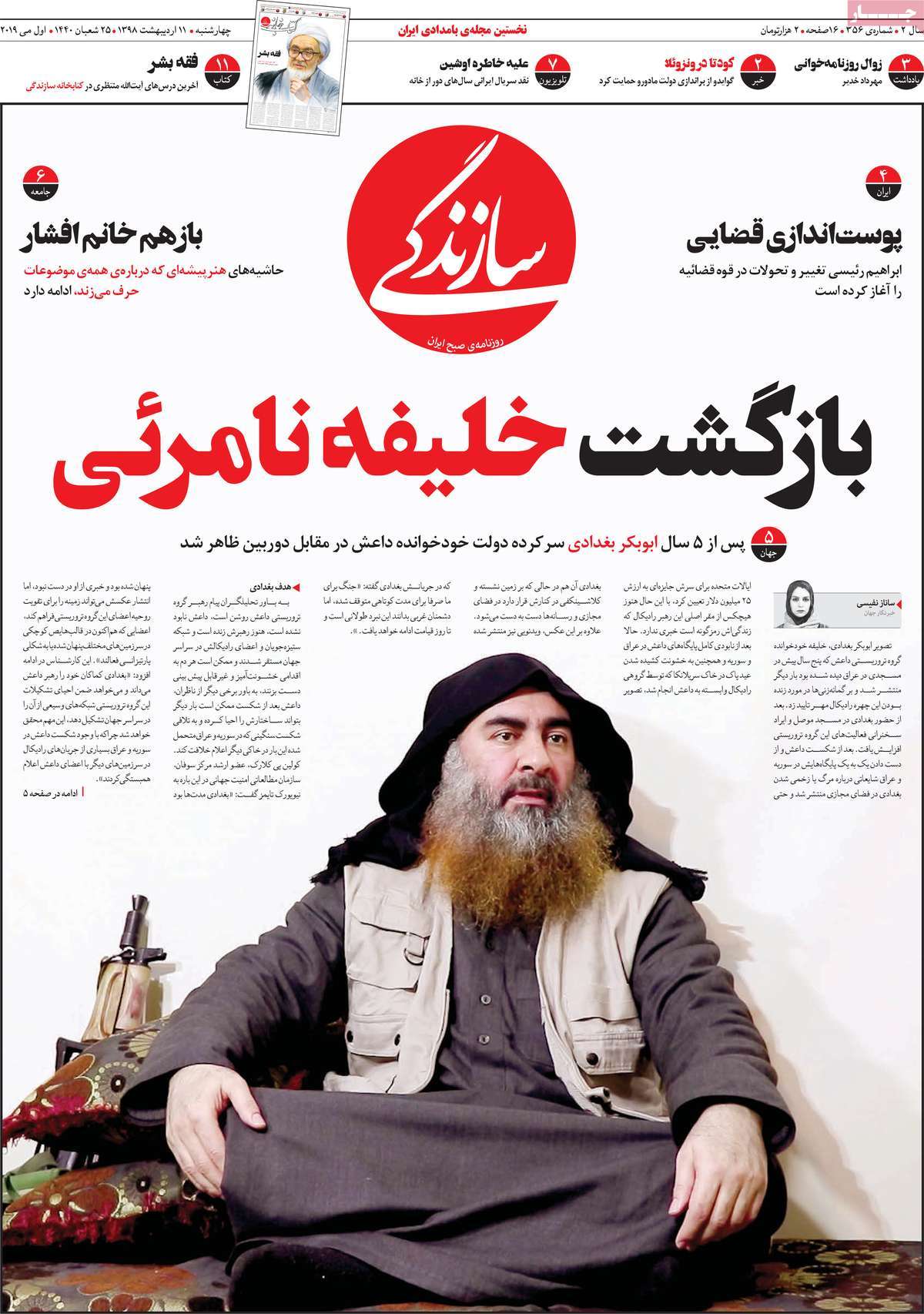
Sazandegi:

1- Coup in Venezuela: Guaido Supports Overthrow of Maduro

2- Return of Invisible Caliph: Al-Baghdadi Appear in Video after Long Time

A Look at Iranian Newspaper Front Pages on May 1


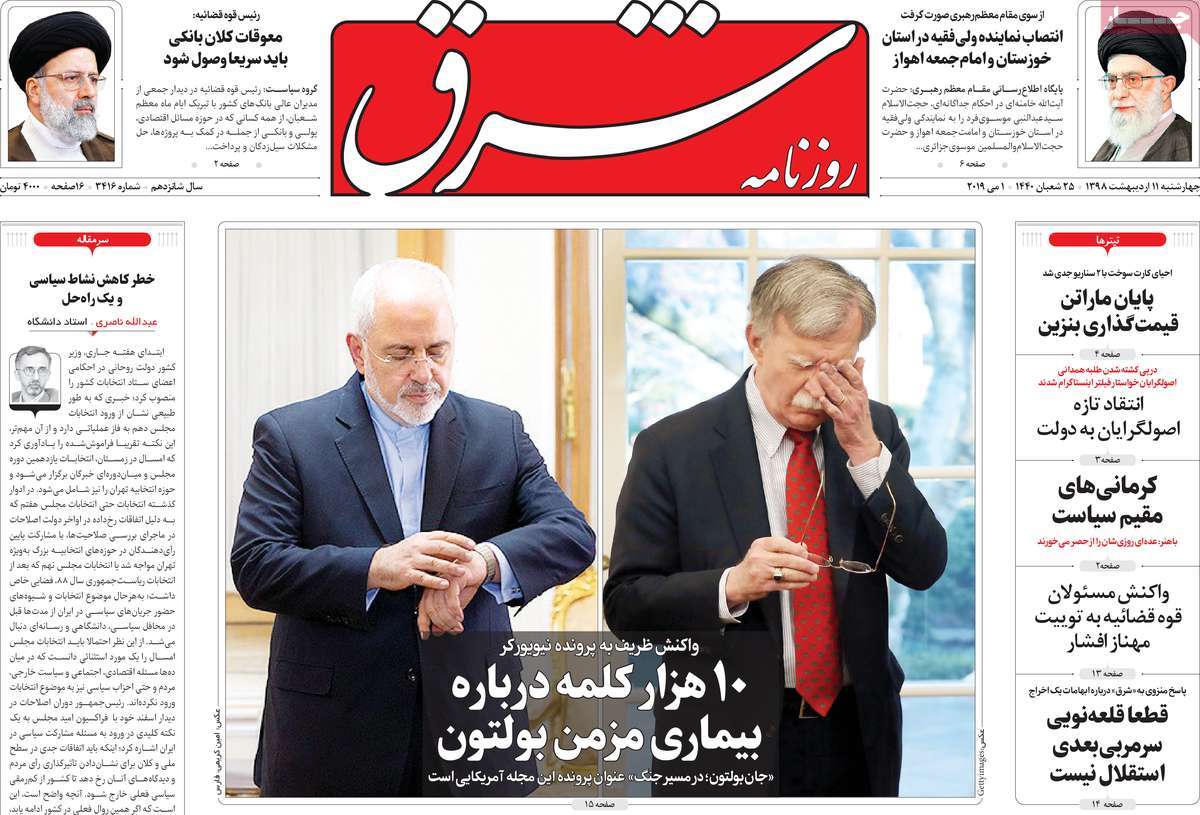
Shargh:

1- 10,000 Words on Bolton’s Chronic Disease: Zarif’s Reaction to New Yorker’s Case on Bolton

A Look at Iranian Newspaper Front Pages on May 1


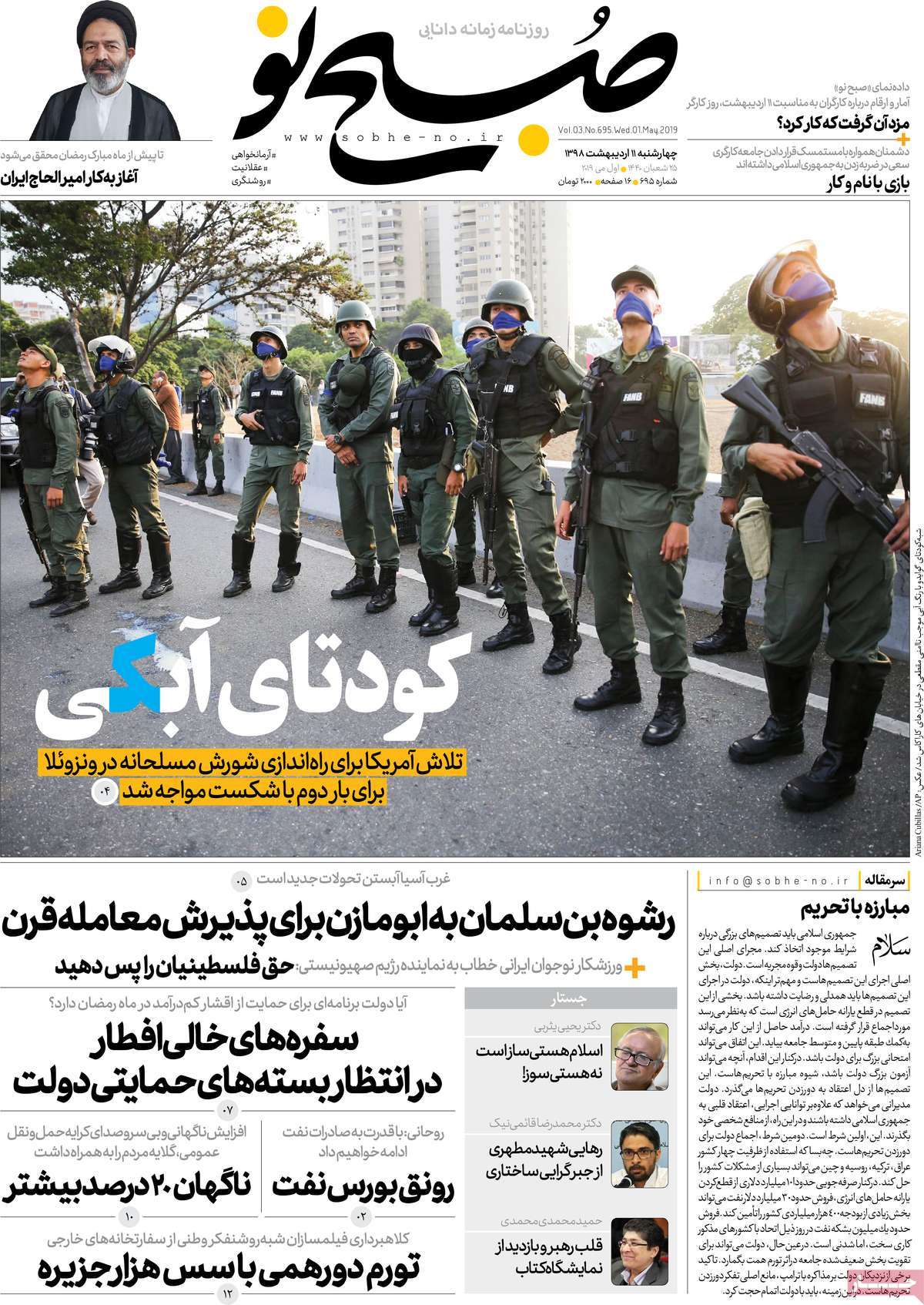
Sobh-e Now:

1- Watery Coup: US Attempt to Stage Armed Riot in Venezuela Fails for Second Time

2- Bin Salman Tries to Bribe Mahmoud Abbas on Accepting ‘Deal of Century’

A Look at Iranian Newspaper Front Pages on May 1

Iran Says US Blamed for Any Clash between IRGC, CENTCOM

The remarks were made by Iranian Deputy Foreign Minister for Political Affairs Seyyed Abbas Araqchi in a Tuesday address to the Institute of Strategic Thinking (SDE) in Ankara, Turkey.

“The two forces, which have been reciprocally designated as terrorist groups, may engage in clashes in the Persian Gulf or any other region,” Araqchi warned.

“There is no doubt that the US will be held accountable for such a situation,” he added.

Iranian President Hassan Rouhani on Tuesday signed off on the law recently approved by the Iranian Parliament, which designated the American forces based in West Asia — known as the United States Central Command — as a terrorist organization.

The chief executive put his signature to the legislation, obligating its enactment by Iran’s Intelligence, Foreign, and Defense Ministries as well as the Supreme National Security Council (SNSC), the country’s top security body, and the Plan and Budget Organization.

The MPs lent their overwhelming approval to the law last Tuesday in a counter-measure against the US’s earlier blacklisting of the IRGC. The legislation was approved by 173 to 4 votes, with 11 abstentions.

Under the new law, “CENTCOM as well as forces, organizations and bodies under its command, are declared terrorist and providing any assistance — including military, intelligence, financial, technical, educational, administrative and logistical — to these forces in order to counter the IRGC and the Islamic Republic of Iran amounts to collaboration in an act of terror.”

On April 8, the White House had labeled Iran “a State Sponsor of Terrorism” and the IRGC a “foreign terrorist organization,” claiming that the elite defense force “actively participates in, finances, and promotes terrorism as a tool of statecraft.”

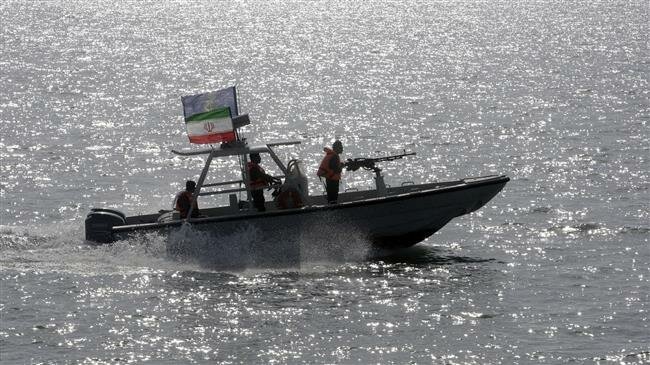
Back on Sunday, Iran’s top military commander said that all American ships passing through the Strait of Hormuz have so far remained answerable to the IRGC as the force in charge of security in the strategic waterway despite Washington’s latest wave of hostile measures against the Iranian nation.

Chairman of the General Staff of the Iranian Armed Forces Major General Mohammad Baqeri said no change has so far been reported in the conduct of US warships, commercial vessels and oil tankers, and they have up until now been responding to the IRGC’s questions as usual while sailing through the Strait of Hormuz

He said Iran wants the strait — through which nearly one-third of all oil traded by sea passes — to remain open and secure, warning that the country will not allow anyone to destabilize the waters.

“As oil and commodities of other countries are passing through the Strait of Hormuz, ours are also moving through it,” said Baqeri. Iran “will definitely confront anyone who attempts to destabilize the Strait of Hormuz, and if our crude is not to pass through the Strait of Hormuz, others’ [crude] will not pass either.”

The Iranian commander explained, “This does not mean [that we are going to] close the Strait of Hormuz. We do not intend to shut it unless the enemies’ hostile acts will leave us with no other option. We will be fully capable of closing it on that day.”

Iran has said it may close the Strait of Hormuz if prevented from using the waterway, which links crude producers in the Middle East to markets in Europe, Asia Pacific, North America and beyond.

In a recent interview with Reuters, Foreign Minister Mohammad Javad Zarif said that Iran was “not going to take any action” should the US continue observing the rules of engagement.