Monday, January 12, 2026
Home Blog Page 3234

Foreign Powers Turn Mideast into World’s Most Unstable Region: Rouhani

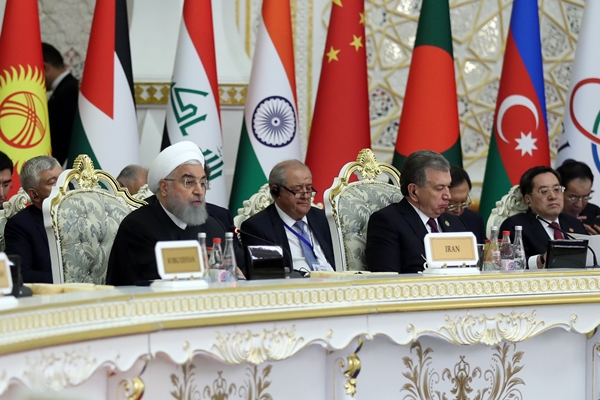
Rouhani made the comments in a Saturday address to the 5th summit of Conference on Interaction and Confidence-Building Measures in Asia (CICA) which is underway in the Tajik capital Dushanbe.

“The interference of some foreign powers in the internal affairs of the countries of the Middle East region, forceful unilateral policies, terrorism and extremism, their blatant breach of promises and lawlessness in matters related to international peace and security, including the important nuclear deal with Iran, known as the Joint Comprehensive Plan of Action (JCPOA), have made our region one of the world’s most instable regions,” he noted.

Iran’s president underlined that his country’s foreign policy is based on cooperation, win-win approach and expressed Iran’s preparedness to draft bilateral, multilateral political, security mechanisms.

“The Islamic Republic of Iran is looking for the values ​​that Your Excellencies have seen during the last four decades in our foreign policy, including the fight against terrorism and extremism, which present a harsh and violent image of Islam, sheltering innocent people who have been grappling with war and its resulting disasters, fighting unilateralism by which a country tries to dominate others with material power and the use of force, explicit opposition to the production of any weapons of mass destruction from nuclear to chemical, and ultimately, constructive interaction with all countries that believe in these values,” he said.

President Rouhani also referred to the ongoing situation in Palestine, Iraq, Syria, Afghanistan and Yemen as the result of the US regional policy.

He then said Iran can’t remain committed to its pledges under the Iran nuclear deal unilaterally and that the remaining sides of the nuclear deal should play their role to preserve the accord.

“Obviously, Iran cannot stick to this agreement unilaterally. It is necessary that all sides of this agreement contribute to restoring it,” He said and added Iran needs to see positive signals from other sides of the deal.

President Rouhani arrived in Dushanbe from Bishkek after taking part in the 19th summit of the Shanghai Cooperation Organization. On the sidelines of the summit, he held talks with a number of leaders of the member states participating in the talks.

Shinzo Abe Well Knows Who’s to Blame for Tanker Attacks!

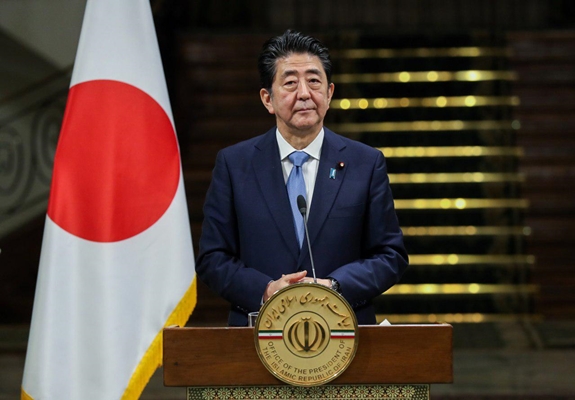
Japanese Prime Minister Shinzo Abe attends a joint press conference with Iranian President Hassan Rouhani in Tehran on June 13, 2019. / Photo by President.ir

It was almost certain to every observer in the world how important was the first-ever visit of a Japanese prime minister to Tehran after the 1979 Revolution. Amid unprecedented tensions between Iran and the US, the peace-seeking people of Iran, the region, and the world saw a glimmer of hope when Abe decided to visit Tehran for de-escalation.

However, two giant oil tankers were set ablaze right at the time when the world was awaiting the news of a closed-door meeting between Abe and Leader of the Islamic Revolution Ayatollah Seyyed Ali Khamenei in Tehran, in the hope that the important meeting could end the currently horrible atmosphere in the sensitive region of Persian Gulf, the world’s main energy route.

The attacks, and the ensuing fuss made by enemies of peace and stability in the Middle East and the world, totally overshadowed the promising news and positive meetings of Abe in Tehran.

But who would be harmed by the normalization of Iran’s ties with the world? Who would gain economic benefits when people are forced to live in an atmosphere of fear and under the spectre of war? With the removal of 40 years of sanctions and threats against Iran, which rulers and governments would lose their current position as the supplier of the oil demands of developed countries, and will no longer be able to play with the fake card of “Iran, a tension-creator and a state sponsor of terror”

The answer is quite clear: The same people who did everything they could in the course of nuclear talk, accelerated their lie- and propaganda-based diplomacy, hastily took themselves to the venue of negotiations with private jets on the verge of the signing of the nuclear deal between Iran and the P5+1, provided the US Secretary of State with biased intelligence at the airport, and ensured him they would increase their oil output to prevent a crisis in the world’s energy market, in the hope that Iranian people would remain under the paralyzing sanctions of the Obama administration.

When Trump came into office, he kept his promise and pulled out of the 2015 nuclear deal, known as the Joint Comprehensive Plan of Action (JCPOA), in violation of the international rules and principles of international relations, and all the values of “good governance”.

Today, the region we live in has turned into an enormous warehouse of advanced weapons. A lion’s share of Persian Gulf littoral states and countries like Iraq and Syria look like multinational barracks, not countries with people who have coexisted for centuries. There is no doubt that if aliens had not interfered in the internal affairs of these communities, life would go on with all its ups and downs in those territories. In that case, hundreds of thousands of people would not be displaced, houses would not be ruined, and people would not be forced to live in fear.

By attacking the oil tankers, certain parties are trying to make people disappointed with peace and stability, and provoke stress and anxiety over the escalation of a war in the Persian Gulf. But who are they?

The truth is totally clear and can be easily noticed, unless one’s eyes are closed: Two or three Persian Gulf littoral states – manipulated by Israeli Prime Minister Benjamin Netanyahu and backed by the support of their agent in the Trump administration – do not want the Islamic Republic of Iran, either its government or nation, to be seen, measured, and understood by the world as it is.

Today Abe knows more than ever about Iran and what the Iranian officials think. Even when he was travelling to Iran after four decades, he was somehow aware who fans the flames of war in the Persian Gulf, and which governments and countries must return to “normal” conditions.

After only two days in Iran and a couple of meetings with top Iranian officials, the Japanese prime minister might not know which think tank and intelligence agency has masterminded the Thursday attacks on oil tankers; however, he is quite sure Iranians are not the ones who take such a risk, and well knows why such a plan is being implemented to threaten energy security and make the situation tense at this particular juncture.

Iran, Afghanistan Stress Joint Fight against Narcotics

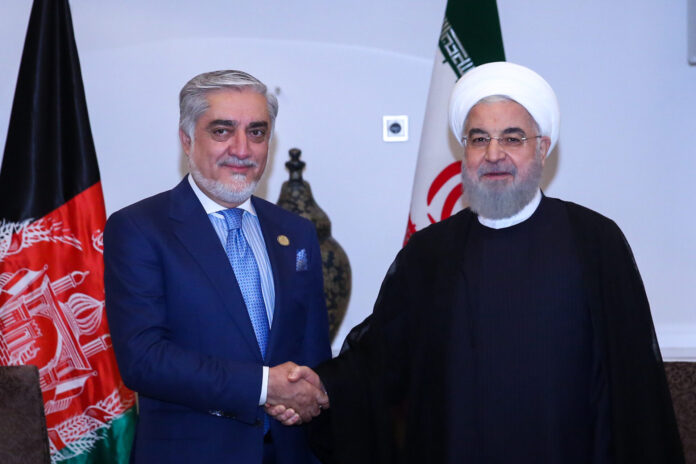
President Rouhani made the remarks on Saturday in a meeting with Abdullah Abdullah, the Chief Executive of Afghanistan, on the sidelines of the 5th Conference on Interaction and Confidence-Building Measures in Asia (CICA), which is underway in the Tajik capital Dushanbe.

“Iran and Afghanistan enjoy joint capacities for expanding mutual ties in various areas including transit,” he said.

He then underlined the importance of fight against drug trafficking and said the business serves as the main source of terrorism.

“Iran and Afghanistan have made joint efforts to eradicate terrorism in the region and the security of Iran and Afghanistan are interconnected. So, restoring peace to the region hinges on regional cooperation,” he said.

For his part, Afghanistan’s Chief Executive referred to Iran’s efforts in fight against drug trafficking and said Iran and Afghanistan should establish close cooperation in this area.

Earlier, Iranian President held talks with his Afghan counterpart Ashraf Ghani on Friday on the sidelines of the 19th Summit of Shanghai Cooperation Organization in Bishkek.

During the talks, Rouhani said Tehran will do its best for strengthening stability in Afghanistan.

President Rouhani described drugs as a great plight that the region is grappling with and said, “Unfortunately, cultivating opium poppies in Afghanistan has increased and it needs to be addressed seriously by the Afghan government with the help of international organizations”.

For his part, the President of Afghanistan said his country is willing to develop cooperation with Tehran in all areas of mutual interest.

“Afghanistan welcomes Iran’s role in its peace talks. Meanwhile, we think that the issue of drugs should be addressed within the framework of bilateral and international negotiations”, he concluded.

This Week’s Top Story: Explainer Videos for Business

We all know that proper marketing is one of the most important aspects of running a successful business and Explainer videos have been helping out a lot of businesses and startups to boost up their conversion rates.

However, most of the people out there are yet not familiar with the basics and the concept of explainer videos for business. No need to worry as, by the end of this article, you shall be knowing the most important things about Explainer videos that are there to know for your business.

What is an Explainer Video?

An explainer video could be a small marketing video, among many other things, used to spread the word about your company’s services and/or products. These short professional explainer videos can be placed and shared anywhere ranging from a webpage that offers your products and/or services to the homepage of your official website and these videos have been doing wonders for some businesses and are becoming pretty well-known and incorporated this video format as part of their prominent marketing strategies. The videos are also recommended to be shared on social media channels for increased engagement and reach.

You should check out simpleshow to help you understand the different explainer video types that they offer to businesses: Hand, Wheel, Kinetic and Premium.

Let us present some types of professional explainer video options and how they can benefit your business.

  • Animated Explainer Videos:

Animated Explainer videos are very suitable for products and services that are difficult to be explained through a live shoot or by boring Powerpoint presentations or Google Slides,

They can be really helpful for presenting software, products and services that would be hard to be explained through real actions. Moreover, animated videos provide you with more than enough space for sparking your creativity, and can be updated easily whenever required.

  • Kick starter Explainer Videos:

 Kick-starter explainer videos tend to be a regular product or service video that are usually a little bit longer as to impart the complete description of any product or service, and they are fun to watch and act as a perfect way to kick-start any new launch of a business, product or service.

Around 2 minutes videos are recommended.

  • Whiteboard Explainer Videos:

You must have seen a number of YouTubers using handwritten formats in their videos that get erased using a duster. These videos can be really helpful for startups that do not have enough money for a proper video shoot. They are becoming one of the most popular kinds of video for explaining stuff through storytelling and animations.If you have a low budget you should choose the online DIY video maker options being the cheapest formof getting explainer videos.

Keeping in mind the intent of your business and the increased conversion rate that explainer videos can provide you, chose wisely, the type of explainer videos that can help you out the best way and go for it! Also, stay on top of the latest of the explainer video trends.

You can choose from the above-mentioned types of explainer videos based on your business type and budget to get you started.

Plant Fossils Found in Iran Date Back to Millions of Years Ago

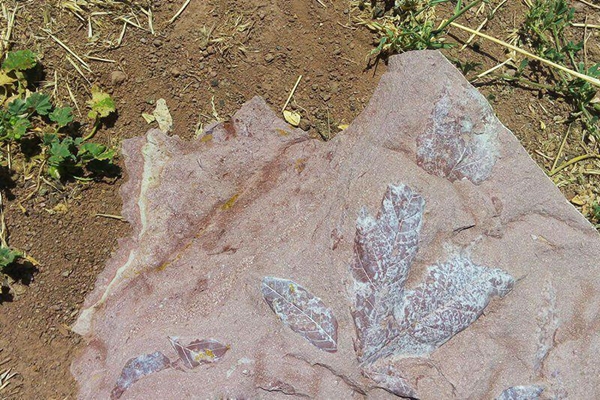
Imanali Imani says the fossils were accidentally discovered by one of the local residents, Gholam-Reza Asadi, on the natural historical site of Qeshlaq-e Tang.

He told IRNA that early studies show these fossils belong to different kinds of leafy forest trees.

“Further details in this regard would require extensive investigations by paleontologists, but preliminary evidence suggests that animal fossils could be found in this area as well,” noted Imani.

Meshginshahr, 90 km north-west of Ardabil, has many historical monuments and works such as Qahqaheh castle, Qanlı Bulagh Caravanserai, Seyyed Suleiman Shrine of Fakhrabad, the Old Castle, several old baths as well as Shabil and Qaynarja water springs.

Dozens of ancient works, as well as the historic site of Shahar Yeri with a number of rocky statues dating back to about eight thousand years ago are also located in this city.

Even US Allies Disputing CENTOM’s Anti-Iran Video

Less than a day after the US Central Command (CENTCOM) released the video late Thursday purportedly showing “Iranian sailors” removing a mine from the Japanese-owned Kokura Courageous’ hull earlier in the day, European governments — except for Britain — have so far refused to accept the US’ narrative that Tehran was to blame for the “suspicious” attacks.

They are reluctant to accept the White House’s claims at face value, and do not want to provide Washington with any pretext for war.

German Foreign Minister Heiko Maas said on Friday the video is not sufficient to prove the US claim that Iran was behind the attacks.

“The video is not enough. We can understand what is being shown, sure, but to make a final assessment, this is not enough for me,” Maas, who was in Iran earlier this week on an official two-day visit, told reporters in Oslo.

Nathalie Tocci, a senior adviser to European foreign policy chief Federica Mogherini also rejected the US allegations, saying, “Before we blame someone, we need credible evidence.”

Iranians are deeply rational actors, she said. And for Iran to have attacked a Japanese ship when the Japanese prime minister was in Tehran “is not an especially rational thing to do.”

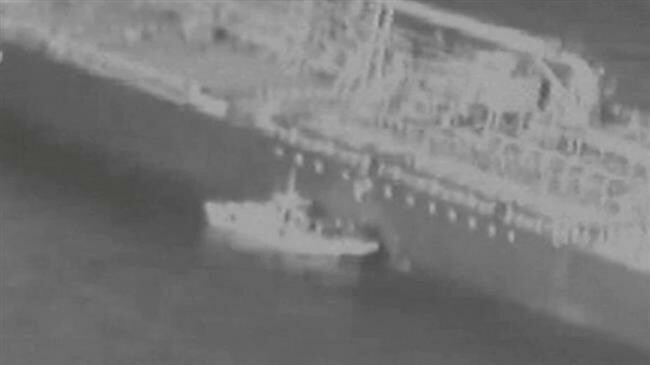
In the video released, a small boat is shown coming up to the side of the Japanese-owned tanker. An individual stands up on the bow of the boat and can be seen removing an object from the tanker’s hull. The US claims that the object is likely an unexploded mine.

“At 4:10 p.m. local time an IRGC Gashti Class patrol boat approached the M/T Kokuka Courageous and was observed and recorded removing the unexploded limpet mine from the M/T Kokuka Courageous,” the CENTCOM said in a statement.

The claim, however, was soon rejected by the Japanese ship’s operator, whose president said on Friday its sailors on board the Kokuka Courageous saw “flying objects” just before the attack, suggesting the tanker wasn’t damaged by mines.

“The crew told us something came flying at the ship, and they found a hole,” President Yutaka Katada of Kokuka Sangyo told a press conference in Tokyo. “Then some crew witnessed the second shot.”

The video was also disputed by Western investigative journalists and defense analysts.

Investigative historian and journalist Gareth Porter said he had “written to the CENTCOM media desk to ask why the video the command has released does not show what happened before the moment something is removed from the side of the boat.”

The investigative journalism website Bellingcat also wrote that “there’s currently no evidence to verify what was removed from the side of the vessel was a mine, and there’s no evidence at the moment about who placed it there, so claiming it was a mine placed by the Iranians is pure conjecture at this point in time.”

Some analysts and observers even questioned the authenticity of the video, arguing that the US military has edited the video to make it misleading.

False-flag operation

The attacks on Thursday morning sent shock waves through the world which was awaiting the news of a meeting between Japanese Prime Minister Shinzo Abe and Leader of the Islamic Revolution Ayatollah Seyyed Ali Khamenei in Tehran.

François Heisbourg, a French defense analyst, told The New York Times there’s a lot of suspicion among US allies in Europe about American motives.

“The maritime milieu is especially susceptible to manipulation — remember the Gulf of Tonkin,” a dubious report of naval hostilities that President Lyndon B. Johnson used to escalate the war in Vietnam. And then, he said, are the bitter memories of the Iraq war, which was based on faulty intelligence and badly split Europe.

Heisbourg said there are several potential beneficiaries from the attacks, among them Washington hard-liners like the national security adviser, John Bolton, and “wild ones” in Saudi Arabia or in the UAE.

Back in April, Iranian Foreign Minister Mohammad Javad Zarif had warned that an “accident” could be plotted to take place so as to trigger a broader crisis.

Speaking in an interview with Reuters at the Iranian mission to the United Nations in New York on April 24, Zarif said the so-called “B-Team,” including Bolton and Israeli Prime Minister Benjamin Netanyahu, could goad Trump into a conflict with Tehran.

In a tweet after the recent incidents in the Sea of Oman, Zarif referred to his earlier warnings, and said, “The B-Team is sabotaging diplomacy (including important and constructive visit of PM Shinzo Abe) and covering up economic terrorism by the US against Iran.”

Last month, the Trump administration had accused Iran of being behind a similar attack on four oil tankers in the Persian Gulf while independent analysts blamed US and Israeli intelligence agencies for carrying out a false flag operation in order to ignite a conflict in the Middle East region.

Last week, the United Nations Security Council held a meeting on the vessel attacks near the UAE port of Fujairah, but member states refused to blame any party despite Abu Dhabi’s claim that a “state actor” was behind the incident. Russian Deputy Ambassador Vladimir Safronkov told reporters that no evidence on Iran’s alleged link to the attacks were presented during the briefing.

Days before the Security Council briefing, Bolton had vowed to present to the UN evidence on Iran’s involvement in the Fujairah attacks, but he didn’t.

Following those allegations, Iran officially warned about the use of fake intelligence, similar to those which resulted in the US invasion of Iraq in 2003, to push Washington toward a war with Tehran.

“Those who were responsible for the Iraqi invasion back in 2003 are the same people who are trying to create a conflict in our region,” Iranian ambassador to the UN Majid Takht-Ravanchi said in May, referring to Bolton’s role in the Iraqi invasion.

‘Russia Still Interested in Making Energy Investment in Iran’

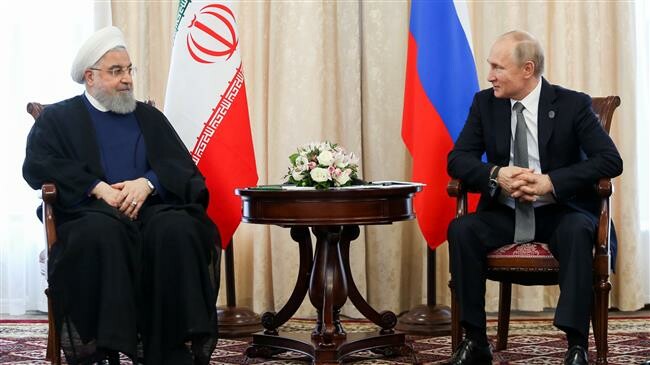
The two sides met on Friday on the sidelines of the 19th Summit of Shanghai Cooperation Organization (SCO) in Bishkek, the capital of Kyrgyzstan.

Rouhani hailed the “good pace” of the implementation of economic agreements between Tehran and Moscow, particularly in the field of energy.

“The meeting of the Iran-Russia Joint Commission for Cooperation that is going to be held in Tehran next week will accelerate this process,” he said.

“By adopting a law on trade with Eurasia in the Parliament, we will provide the preparations as soon as possible, which will accelerate business cooperation,” he noted.

Putin, in turn, said his country “remains interested in being present and investing in the energy sector [of Iran] and is committed to cooperating in a wide range of areas of interest to the two countries.”

Back in late May, Russian energy giant Gazprom had suggested that it was evaluating potential participation in Iran’s energy projects.

“As of today we are at the stage of considering our participation in projects in Iran,” Gazprom’s deputy chief executive officer Vitaly Markelov said on May 28.

“A joint coordination committee with the Iranian side considers all those issues,” Markelov added.

Gazprom reported on December 14, 2017 that it had signed a roadmap on implementation of projects in Iran and a memorandum of understanding on an LNG project in Iran.

Later in November 2018, Gazprom and National Iranian Oil Company (NIOC) signed a number of memorandums of cooperation in the gas sector. The documents stipulated partnership in the field of development of Iranian gas fields, gas transporting and monetizing.

In their Friday talks, Rouhani and Putin also vowed to boost Tehran-Moscow relations in  other bilateral, regional and international areas despite the US sanctions.

“Despite the existing problems, the two countries’ trade relations are developing,” Putin said in the meeting.

He also vowed that his country will implement the agreements it has signed with Iran on the construction of new units in the Bushehr nuclear power plant.

The remarks came one month after the US Department of State warned that sanctions would be imposed on countries that provided assistance to expanding Iran’s Bushehr nuclear power plant.

In 1992, Iran reached a deal with Russia on the first phase of the Bushehr project. The two sides signed a number of documents in November 2014, expanding cooperation in the field of peaceful use of atomic energy and opening the possibility of construction in Iran of up to eight power units.

In May 2018, President Donald Trump withdrew the US from a multilateral nuclear accord, officially known as the Joint Comprehensive Plan of Action (JCPOA), which was reached between Iran and six world powers in 2015. Afterwards, Washington reimposed unilateral sanctions on Iran that had been lifted under the deal.

400-Year-Old Milking Ritual Still Observed in Central Iran

Each year in the last week of spring, the city of Dibaj in the central Semnan province hosts the ancient ritual.

Shirdoushan ritual is held each year with the main goal of saying prayer to the God Almighty and distributing milk among the poor living around a mausoleum in Dibaj.

The operation to milk a large number of sheep is held for ten days in an area close to a 2,500-year-old tree near Imamzadeh Mohammad Mausoleum.

The cattle owners begin the operation with a special ceremony accompanied by citing verses in praise of the Holy Prophet of Islam and his household. They distribute half of their cattle milk among the poor and sell the other half to provide part of the mausoleum’s costs.

Dibaj’s nomads have over 40,000 sheep, whose owners annually distribute 350 kg of milk among the poor.

The ritual is held each year on June 14. During the day, various festivities are held including music, standup comedy, setting up dark tenets, sheep shearing and spinning. Some contests are also held and the winners are rewarded.

Dibaj is a city in the Central District of Damghan County, Semnan Province, Iran. At the 2006 census, its population was 2,504, in 680 families. Dibaj is located 55 kilometres north of Damghan, in the heart of the Alborz mountains.

Iran Calls for Global Unity against US’ Unilateralism

Speaking on Friday at the Meeting of the Council of Heads of States of the Shanghai Cooperation Organisation, President Rouhani stressed that “for the past two years, the US government has used its economic, financial and military power through an aggressive approach to disrupt all international structures and regulations, which has turned him into a serious threat for the stability of the region and the world”.

The full text of President Hassan Rouhani’s speech is as follows:

In the Name of Allah, the Most Beneficent, the Most Merciful

Your Excellency Mr Sooronbay Jeenbekov, President of Kyrgyzstan,

Esteemed Presidents and Prime Ministers,

Your Excellency Mr Vladimir Norov, Secretary General of the Shanghai Cooperation Organisation,

Heads of High-Ranking Delegations,

Honourable Guests,

At the outset, I would like to express my thanks to His Excellency Mr Sooronbay Jeenbekov, the Honourable President of Kyrgyzstan, for hosting this summit. I am also pleased that I had the opportunity to attend the SCO Summit once again.

The 19th Summit of the Shanghai Cooperation Organisation is being held at the time when the international community is facing unprecedented challenges and problems. Terrorism, in its different types, extremism, unilateralism and interference of extra-regional countries in the affairs of other regions and interference in the internal affairs of other countries have put the international community in a grave situation; a situation that can pose a threat to the stability, security and interests of all countries around the world.

Excellencies,

Our surrounding regions are facing a series of crises that have put these regions in critical condition through eliminating the countries’ basic infrastructure and reproducing insecurity. On the other hand, over the past two years, the US government has used all its economic, financial and military capabilities to disrupt all international structures and regulations by adopting an aggressive approach, turning it into a serious threat to the stability of the region and the world.

Dear Colleagues,

All nations and governments, regardless of their beliefs and cultures, seek their welfare, development, freedom and rights; and by protecting their religious, moral and national values, they want to stand up against the common enemies of humanity with each other’s help. Today, we all have to be united from the East to the West against the danger of extremis; because extremism threatens development, peace and security of the world. It does not matter whether we are Muslim, Christian, Jewish, Buddhist or following any other religion; what matters is to be united against extremism of any colour, race or religion. We fought ISIS in Iraq and Syria because we thought it was an extremist and inhumane interpretation of religion against humanity, and we did not hesitate to defend the non-Muslim citizens of these countries. We oppose Zionism because we consider it to be a deviant ideology in the Jewish religion, which is in conflict with human values.

We have fought for peace in Iraq and Syria. In Afghanistan, we have played a constructive role in cooperation with the United Nations in fighting extremism, and we have not hesitated to try to bring peace to Yemen. We have always been open to bilateral and regional dialogues with all our neighbours, and even for the Palestinian issue, we have presented a democratic approach of turning to public opinion. We do not intend to throw any nation into the sea and drown them.

Iran has a special cultural and historical place throughout Asia. The bonds between Iran, Central Asia and the subcontinent are indissoluble; Iranian poets and writers have found their way into the hearts of your people, and the Persian language is wide-spread throughout the cultural geography of this region.

Honourable Heads of SCO Member States,

The Islamic Republic of Iran believes that today, the international community has been challenged more than ever by the issue of unilateralism, and the problems and complexities of today’s world, especially terrorism, extremism and drug trafficking, have made multilateralism a necessity.

The Joint Comprehensive Plan of Action (JCPOA) is an important achievement of multilateral diplomacy, which has proven that if there is a political will, it will be possible to resolve any problem through dialogue and compromise rather than boycotting and waging war. Based on the 15 reports by the International Atomic Energy Agency (IAEA), the Islamic Republic of Iran has complied with all its obligations, but unfortunately, the United States unilaterally withdrew from the JCPOA, threatening other parties and countries to violate the United Nations Security Council Resolution 2231, which calls for normal trade relations with Iran.

Under the terms of the JCPOA, the Islamic Republic of Iran urges the remaining members of the agreement to fulfil their obligations as soon as possible to make sure that the Islamic Republic of Iran enjoys the economic benefits of the JCPOA.

The Islamic Republic of Iran is a country with an exceptional geographic and strategic location that is very rich in energy and mineral resources, and is located in the junction of commercial corridors from East to West and from North to South. These features, along with its sustainable security and educated human resources, offer countless opportunities to investors and traders of the Shanghai Cooperation Organisation member states, taking advantage of which can provide an economic boost in the economic sectors of the member states. The Government of the Islamic Republic of Iran is prepared to provide all facilities for the economic activities of the governments, companies and citizens of the SCO member states in Iran.

At the end, I would like to thank the hospitality of the distinguished host once again, and wish the government and the people of Kyrgyzstan prosperity and felicity.

Thank you

Japan Disputes US Military’s Anti-Iran Accusations

Yutaka Katada, the president of Kokuka Sangyo, said on Friday his sailors on board the Kokuka Courageous saw “flying objects” just before the attack, suggesting the tanker wasn’t damaged by mines. 

“The crew told us something came flying at the ship, and they found a hole,” he told a press conference in Tokyo.

“Then some crew witnessed the second shot,” he noted.

This disputes the allegations raised by the US military, which released a video it said showed an Iranian navy boat removing an unexploded mine attached to the hull of the Japanese-owned tanker Kokura Courageous attacked in the Gulf of Oman.

In the video, a smaller boat is shown coming up to the side of the Japanese-owned tanker. An individual stands up on the bow of the boat and can be seen removing an object from the tanker’s hull.

The US claimed that the object was likely an unexploded mine.

“At 4:10 pm local time an IRGC Gashti Class patrol boat approached the M/T Kokuka Courageous and was observed and recorded removing the unexploded limpet mine from the M/T Kokuka Courageous,” the CENTCOM said in a statement late Thursday.

It also provided a Powerpoint slide that it claimed showed “damage from an explosion and a likely limpet mine on the hull of the civilian vessel M/V Kokuka Courageous.”

The video was released a few hours after the administration of US President Donald Trump blamed Iran for the attacks without providing evidence.

The anti-Iran claims come as Iranian rescuers were the first to rush to the assistance of the two oil tankers after they sent a distress call, transferring all of their 44 crew members to Iran’s southern shores.

The Front Altair oil tanker, moving Ethanol from Qatar to Taiwan with the flag of Marshal Islands, caught fire at 8:05 local time on Thursday, 25 miles from Iran’s Jask Port.

A second Panama-flagged tanker Kokuka Corageous, moving Methanol from Saudi Arabia to Singapore, also caught fire at 9:50, 30 miles from Jask.