Monday, January 12, 2026
Home Blog Page 312

Zionist aggression against Iran: 2nd Sharif University nuclear scientist assassinated along with wife in targeted killing

The assassination marks the second killing of a Sharif University nuclear scientist in recent weeks.

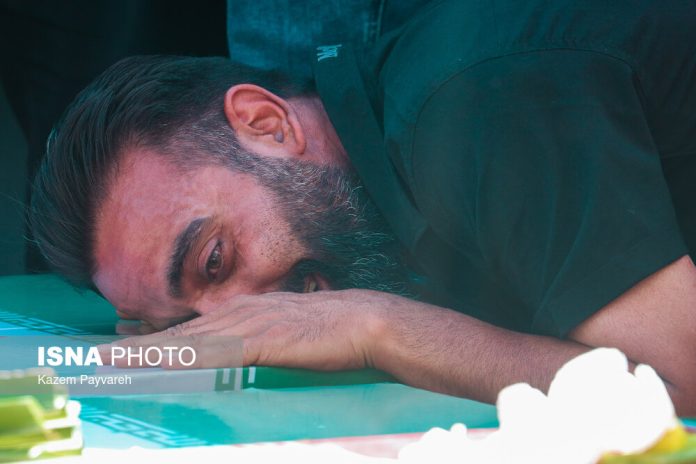
According to Sharif University’s official newspaper, “With deep sorrow, anger, and pride, we received the news of the martyrdom of Dr. Seyed Isar Tabatabaei Ghomsheh, a distinguished and largely unknown contributor to Iran’s nuclear industry, who was martyred along with his honorable wife, Ms. Mansoureh Haji Salem, at their home during last week’s attacks”.

Dr. Tabatabaei, who began his Master’s in Mechanical Engineering in 2004 and later pursued a Ph.D. in Nuclear Engineering at the same university, had quietly dedicated years of his life to Iran’s nuclear program.

The targeted killing has been widely condemned within Iranian academic and political circles, with many describing it as a clear violation of international law and an attack on Iran’s scientific sovereignty.

Several Iranian scientists have been killed during week-long aggression by the Zionist regime against Iran.

Israel’s actions in Gaza may breach EU-Israel human rights agreement: Report

Gaza War

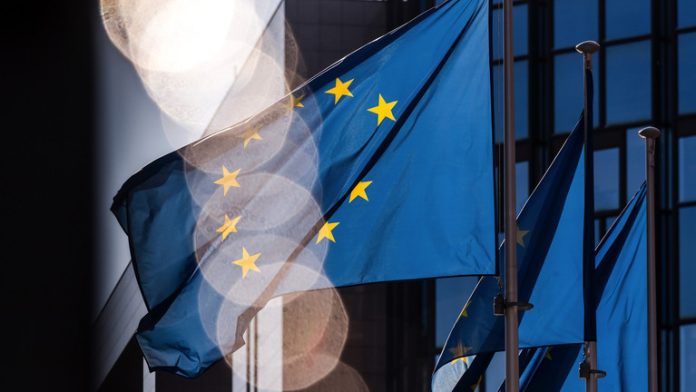
According to an EU document seen by the Reuters and AFP news agencies on Friday, the European External Action Service said that Israel’s actions in Gaza were likely not in line with rules laid out in the EU-Israel Association.

“On the basis of the assessments made by the independent international institutions … there are indications that Israel would be in breach of its human rights obligations,” the audit drafted by the EU’s diplomatic service read.

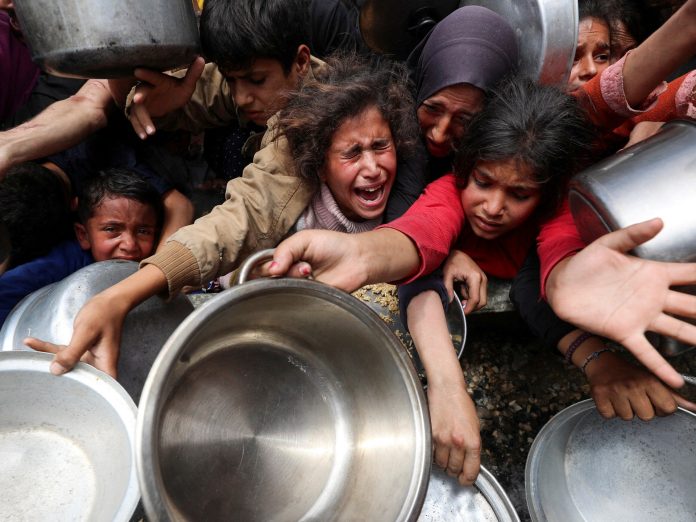
The report comes after months of deepening concern in European capitals about Israel’s operations in Gaza and the humanitarian situation in the enclave.

“Israel’s continued restrictions to the provision of food, medicines, medical equipment, and other vital supplies affect the entire population of Gaza present on the affected territory,” it added.

The document includes a section dedicated to the situation in Gaza – covering issues related to denial of humanitarian aid, attacks with a significant number of casualties, attacks on medical facilities, displacement and lack of accountability – as well as the situation in the occupied West Bank, including settler violence, Reuters reported.

The document said it relies on “facts verified by and assessments made by independent international institutions, and with a focus on most recent events in Gaza and the West Bank”.

The audit was launched last month in response to the deteriorating humanitarian situation in Gaza, in a push backed by 17 states and spearheaded by the Netherlands.

The EU’s top diplomat, Kaja Kallas, is expected to present the findings of the report to the bloc’s foreign ministers in Brussels on Monday.

Under the EU-Israel agreement, which came into effect in 2000, the two parties agreed that their relationship would be based on “respect for human rights and democratic principles”.

Suspending the agreement would require a unanimous decision from the bloc’s 27 members, something diplomats have said from the beginning was virtually impossible.

According to AFP, diplomats have stated that they expect Kallas to propose options on a response to the report during the next foreign ministers’ meeting in July.

“The question is … how many member states would still be willing not to do anything and still keep on saying that it’s business as usual,” an unnamed diplomat told the news agency ahead of the review’s findings.

“It’s really important to not fall into the trap of Israel to look somewhere else,” they added.

The EU is Israel’s largest commercial partner, with 42.6 billion euros ($48.2bn) in goods traded in 2024. Trade in services reached 25.6 billion euros ($29.5bn) in 2023.

Israel’s mission to the EU did not immediately respond to a Reuters request for comment about the contents of the document.

Iran FM lauds armed forces, national unity amid Israeli aggression

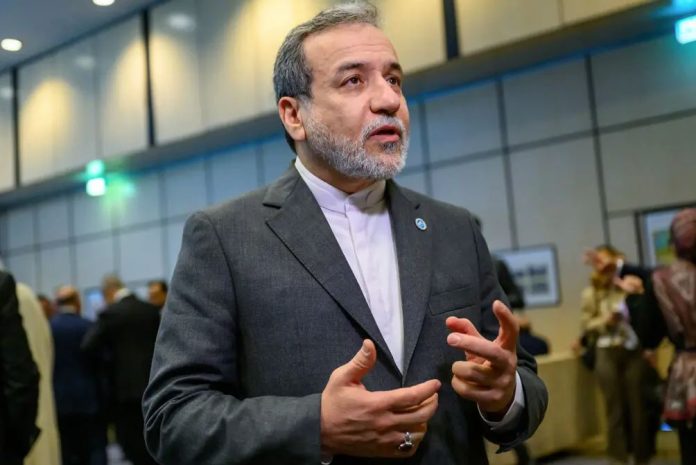
Araghchi made the remarks during a media interview in Istanbul while participating in the Organization of Islamic Cooperation (OIC) Foreign Ministers’ meeting.

He acknowledged the current challenging situation but expressed confidence that Iran remains in good condition.

He pointed out that Iran’s current actions are in accordance with its legitimate right to defend itself against aggression and unjust attacks, particularly those perpetrated by the Israeli regime.

In a conversation with the Associated Press, Araghchi warned that active US involvement in a potential conflict with Israel against Iran would be “very, very dangerous” and described possible US military intervention as “very unfortunate.”

Arriving in Istanbul earlier on Saturday to attend the OIC meeting, Araghchi highlighted the significance of a special session requested by Iran to discuss recent developments and Israeli aggression.

He expressed hope that the upcoming communiqué would strongly condemn these actions and reflect international support for Iran’s position.

EU seeking to gamble with Russia’s frozen funds: Politico

Officials reportedly view the move as a way to generate higher returns without directly tapping into the sovereign funds themselves, which would be in breach of international law.

The proposal is part of a broader EU initiative to use profits from immobilized Russian assets – primarily Western government bonds held by the Brussels-based clearing house Euroclear – to support Ukraine’s war effort. Moscow has labeled the seizure of its assets as “theft.”

Western nations froze an estimated $300 billion in Russian sovereign funds following the escalation of the conflict in Ukraine in February 2022. Of that amount, more than $200 billion is held by Euroclear. The funds have generated billions in interest, with €1.55 billion ($1.78 billion) transferred to Kiev last July to back a $50 billion G7 loan.

Under the new plan, the assets would be placed into an EU-managed investment fund that could pursue higher-yield strategies, officials told Politico on Thursday. The goal is to increase returns without resorting to outright confiscation – a step opposed by countries such as Germany and Italy due to the potential legal and financial consequences.

The EU’s $21 billion contribution to the G7 loan is expected to be fully disbursed by the end of this year. With future US aid uncertain and the bloc’s own budget under pressure, officials are exploring alternative ways to keep Ukraine’s economy afloat beyond 2025, Politico reported.

EU policymakers hope the plan will allow them to extract more revenue from the assets without violating international legal norms. The International Monetary Fund has warned that outright seizure could damage global trust in Western financial institutions.

Talks among member states over confiscation have dragged on for more than three years without resolution.

Brussels also reportedly sees the new investment structure as a safeguard in case Hungary vetoes the renewal of sanctions – a move that could result in the assets being returned to Russia. EU sanctions must be unanimously extended every six months, and Budapest has repeatedly threatened to block them, citing national interests.

Critics caution that riskier investments could result in losses ultimately borne by EU taxpayers, the outlet noted.

Russia has condemned the asset freeze and has threatened countermeasures, including legal action.

Arab FMs condemn Israeli attacks on Iran, urge de-escalation

They urged regional and international efforts to prevent further deterioration and work toward a comprehensive cease-fire.

The Arab League’s foreign ministers convened in Istanbul to discuss developments related to conflicts in the Middle East, especially Israel’s attacks on Iran that began June 13. The ministers are in the Turkish metropolis for the 51st session of the Organization of Islamic Cooperation (OIC) Council of Foreign Ministers, scheduled for June 21 – 22.

A final statement issued after the emergency meeting said the Israeli attack constituted “a blatant violation of the sovereignty of a UN member state and a threat to regional peace and security.”

It urged the UN Security Council to act swiftly and assume its responsibilities to stop the escalation, warning that failure to do so could plunge the region into deeper instability. The ministers called for a return to negotiations on Iran’s nuclear program and expressed support for diplomatic efforts to lower tensions.

The statement linked recent hostilities to Israel’s war in the Gaza Strip, demanding an end to Israeli military operations, immediate and sustained humanitarian access and a halt to illegal Israeli actions in the occupied West Bank. The ministers warned that Israel’s conduct is pushing the region closer to a broader conflict.

They reaffirmed support for the 2002 Arab Peace Initiative to recognize Israel in exchange for an independent Palestine state in the West Bank and the Gaza Strip. They also called for renewed efforts to achieve a two-state solution.

It called for “condemning any violation of the airspace of the countries of the region by any party, and refraining from targeting nuclear facilities subject to International Atomic Energy Agency safeguards.”

They also emphasized “the necessity for all countries in the region to accede to the Treaty on the Non-Proliferation of Nuclear Weapons.”

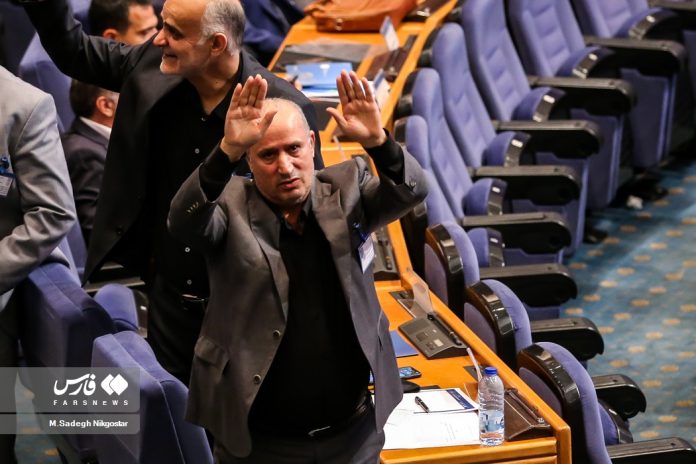
Iran Football Federation chief calls for Israel’s expulsion from international competitions

Mehdi Taj

His remarks came during a gathering of the Iranian sports community in front of the United Nations office in Tehran, where participants protested against the aggression and crimes committed by the occupying Israeli regime against Iran.

During the gathering, Taj expressed that the spontaneous request from the sports community was to condemn Israel’s recent actions and demand its exclusion from international sporting events.

“When the Israeli regime aggressively violates all rules, killing our military commanders, children, and athletes in their sleep while attacking residential areas, it motivates our people to come together, regardless of their opinions,” he stated, emphasizing that significant efforts are underway.

He added, “This victory ultimately belongs to our beloved country. The government, the people, and commanders are seriously pursuing necessary actions. We had the upcoming Asian Women’s Football Championship, and we requested the AFC to postpone the matches, which they approved.”

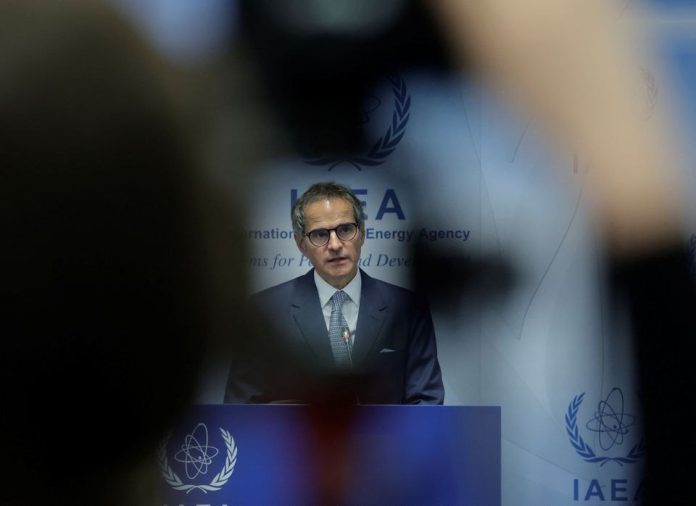
Iran’s UN envoy criticizes IAEA head for bias, inaction amid Israeli attacks

Rafael Grossi

In a formally lodged letter addressed to the UN Secretary General and the President of the Security Council, Iravani criticized Grossi for his bias and lack of action in response to aggressive attacks by Israel against Iran, noting these violate the principle of neutrality required by his position.

Iravani pointed out Grossi’s public statements failed to acknowledge Iran’s legitimate peaceful nuclear activities.

He also noted that Grossi did not comply with the IAEA’s legal obligations regarding Israel’s actions toward Iran, asserting that such remarks undermine the integrity of the agency and reflect a lack of impartiality.

Iravani highlighted Grossi’s inadequate response to Israel’s attacks on Iranian nuclear facilities, which are under international safeguards, and his failure to condemn such actions, contrary to obligations outlined in IAEA resolutions.

Furthermore, Iravani pointed out a pattern of selective bias in Grossi’s approach toward Iran’s nuclear agenda, arguing that this contradicts the IAEA’s commitments to protecting its safeguards.

Calling on the Security Council to address this issue, Iravani stated that Grossi’s continued silence on Israel’s threats implies complicity regarding aggressive actions against Iran.

He urged that the letter be distributed as a document of the Security Council, reinforcing Iran’s commitment to its rights and sovereignty while advocating for a balanced handling of issues surrounding its nuclear program.

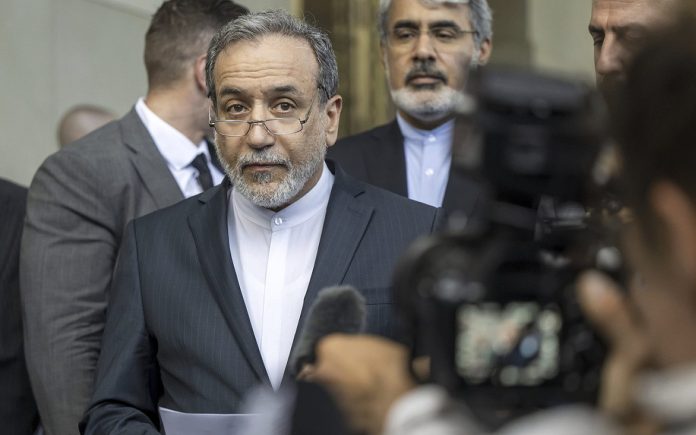
Iranian FM expected to meet Russian president in Moscow: Axios

Abbas Araghchi

Araghchi, in an interview in Geneva following talks with top European diplomats, said Iran is ready to negotiate but insisted that Israel first must halt its aerial attacks.

Regarding if a deal with the US could be reached within the two-week time, he said it was up to the Donald Trump administration “to show their determination for going for a negotiated solution.”

“Or they have something else in their mind, and they want to attack Iran anyway,” he continued.

The foreign minister suggested that the US “perhaps have this plan and they just needed negotiations perhaps to cover it up,” referring to Israeli air attacks

He added Iran does not know if the US can be trusted anymore and called the Trump administration’s actions a “betrayal to diplomacy.”

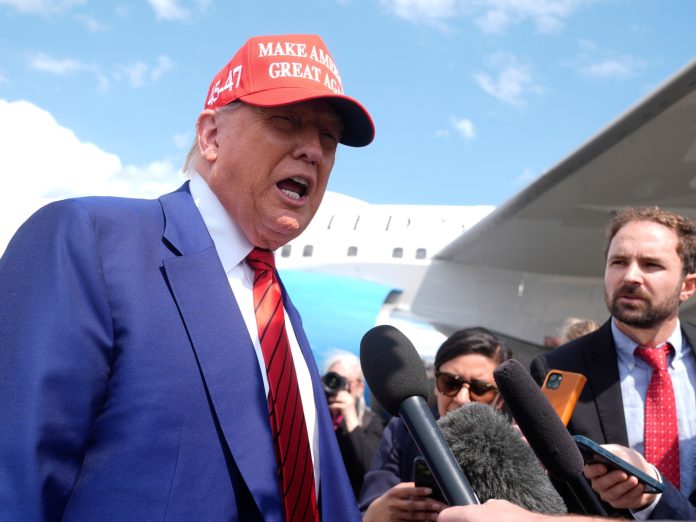
US intelligence ‘wrong’ about Iran not building atomic bomb: Trump

Donald Trump

The comments come after Trump earlier this week cast doubt on Tulsi Gabbard’s March 25 report to Congress, in which she reiterated the US intelligence community’s assessment. On Tuesday, Trump told reporters, “I don’t care” that the intelligence community’s finding contradicted his own claims, saying Iran was in the late stages of developing a nuclear weapon.

But speaking on Friday, Trump went further.

A reporter asked, “What intelligence do you have that Iran is building a nuclear weapon? Your intelligence community said they have no evidence.”

The president responded, “Then my intelligence community is wrong. Who in the intelligence community said that?”

“Your DNI [director of national intelligence], Tulsi Gabbard,” the reporter replied.

“She’s wrong,” Trump said.

Gabbard appeared to come to Trump’s defence later on Friday.

“America has intelligence that Iran is at the point that it can produce a nuclear weapon within weeks to months, if they decide to finalize the assembly,” she wrote in a social media post.

“President Trump has been clear that can’t happen, and I agree.”

However, that statement does not contradict her earlier assessment that Iran is not building a weapon. No known US intelligence assessment concludes that Iran is weaponising its nuclear programme.

Speaking on Friday, Trump also appeared to downplay the prospect of the US brokering a ceasefire agreement between Iran and Israel, saying he “might” support such a deal, while adding, “Israel’s doing well in terms of war, and I think you would say that Iran is doing less well.”

“It’s hard to make that request right now. When someone’s winning, it’s harder than when they’re losing,” he continued.

Trump on Thursday stated he would take two weeks to decide the US response to the conflict. Experts say the decision would likely be transformative.

The US is seen as one of the few countries with the leverage to pressure Israel to step back from the brink of wider-scale regional war.

At the same time, the involvement of the US military is seen as key to Israel’s stated mission of completely dismantling Iran’s nuclear programme, which hinges on destroying the underground Fordow enrichment plant.

A successful attack on the facility would require both Washington’s 30,000-pound (13,000kg) GBU-57 Massive Ordnance Penetrator and the B-2 bombers needed to deliver it.

Speaking to reporters on Friday, Trump also downplayed the potential role of European countries in de-escalating the situation. That came hours after Iran’s Foreign Minister Seyed Abbas Araghchi met the top diplomats from France, the UK, Germany and the EU in Geneva.

Iran’s FM says Tehran not sure it can trust US after Israeli attacks

Abbas Araghchi

“Or they have something else in their mind, and they want to attack Iran anyway,” Araghchi said in an interview with NBC News in Geneva, where he took part in talks earlier Friday with his European counterparts.

“So they had perhaps this plan and they just needed negotiations perhaps to cover it up,” the minister stated.

“We don’t know how we can trust them any more,” Araghchi continued, adding, “What they did was in fact a betrayal to diplomacy.”

For months, the Donald Trump administration had been engaged in talks to reach a nuclear accord with Iran. But that process was suspended after Israel launched its attacks against Iran, shortly before a new round of nuclear negotiations were scheduled in Oman.