Thursday, December 25, 2025
Home Blog Page 3090

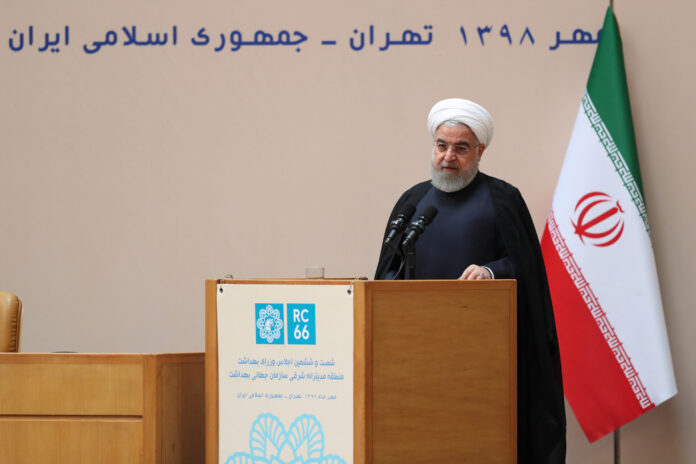
Preconditions Must Be Removed Before Any Talks: Rouhani 

Hassan Rouhani - President of the Islamic Republic of Iran

Hassan Rouhani said on Tuesday only if the sanctions are lifted, it is possible to hold negotiations within the framework of the P5+1 and without any preconditions for Iran.

Speaking in a meeting with senior US media executives, the Iranian president said, “Stopping the continuation of the sanctions, which have been enforced under the maximum pressure policy, is a prerequisite for the US to negotiate; while for us to negotiate, any precondition must first be removed.”

The president further referred to the claims that Tehran was behind a September 14 attack on Saudi oil facilities, and said, “It is a shame that the basis for accusing Iran of attacking Aramco is simply that they do not want to accept that the Yemeni army has the military capability to launch missile and drone strikes.”

“This means those who accuse Iran have no realistic estimation of the Yemeni military developments. They have closed their eyes and are merely speculating.”

“The weakness of the radar and defence systems on the claimed route of these missiles and drones cannot be denied, and the Yemenis have in fact humiliated the US and warned those who supply Riyadh with weapons,” he added.

Iranian President Hassan Rouhani is in New York to attend the 74th meeting of the UN General Assembly, where he plans to convey the message of Middle East peace to the world.

Iran Strongly Condemns E3’s ‘Provocative’ Statement

Iran Summons French Envoy over Macron’s Anti-Islam Stances

What follows is the full text of the statement released on Tuesday, September 25, 2019:

The Islamic Republic of Iran strongly condemns and rejects the irresponsible claim of the British, French and German heads of state about the attack of the Yemeni government’s armed forces against Saudi facilities. Iran stresses that pinning the blame on a third government for an attack carried out in the course of a full-scale war between the Saudi and Yemeni sides is per se a provocative and extremely destructive move at a time when the Yemenis have officially claimed responsibility for the attack, let alone that the accusation is levelled before any investigation, without any evidence, and merely based on the ridiculous argument that “there is no other possible explanation.”

Such statements and destructive actions will only add fuel to the devastating fire of the Yemeni war and make it more likely to expand. Levelling prearranged accusations against governments for political purposes, far from the realities on the ground, along with other supportive policies towards Saudi Arabia’s child-killing regime, especially the massive arms exports to the country, is a dangerous trend, and the responsibility for its impacts on regional peace and stability will lie with the three countries that issued the statement.

In addition, the points mentioned in the statement about the JCPOA and the necessity for renegotiation over Iran’s nuclear program, which have been articulated more explicitly and dangerously in the remarks made by British Prime Minister Boris Johnson, are a stark violation of the letter and spirit of the JCPOA and the UN Security Council Resolution 2231.

The nuclear deal between Iran and the P5+1, as mentioned in its title, is a “comprehensive” deal that has been negotiated and finalised as a final solution to the fabricated crisis over Iran’s nuclear program. The clear and precise timings provided in the JCPOA are another proof of this. The parties to the deal, which has also been endorsed by the Security Council, have reiterated in this document that at the end of the period envisaged in the JCPOA, Iran’s nuclear program will be treated like that of any other member of the Non-Proliferation Treaty (NPT), and the Islamic Republic of Iran will accept nothing beyond that.

The Islamic Republic of Iran reiterates that its missile and defence program is based on its indigenous capability and its policy of deterrence, and proportionate with existing threats. Therefore, the measures taken for its development are fully responsible and in accordance with international law and regulations. The issue of Iran’s missile tests has been settled in the JCPOA and the Security Council Resolution 2231, and this has been repeatedly endorsed by the officials of the negotiating parties, including in a recent statement by the US President who – albeit in disapproval of the JCPOA – explicitly acknowledged that Iran’s ballistic missile tests were “permissible”. Iran strongly rejects any attempt to enter into negotiation over these issues.

The Islamic Republic of Iran has repeatedly emphasised the need for the regional countries to engage in dialogue and interactions aimed at creating mechanisms to promote peace and security in the region and put an end to the Yemen crisis. Iran expresses its deep concern over the humanitarian catastrophes that this war has caused for the Yemeni people and once again declares its readiness to do so.

14 Countries Attending Silk Road Conference in Iran

Hamadan mayor said at the opening ceremony that the reason to hold the conference in this western city of Iran is to provide conditions for global registration of the city’s historical monuments. 

“Hamadan as the first capital of Iran is the cradle of 3,500 years of civilization,” he noted. 

Hojjatollah Ayyoubi, the acting secretary general of the Iranian National Commission for UNESCO, also noted that reviving the Silk Road is an important way to save culture and ethics in today’s world.

The Silk Road Conference, hosted by Hamadan, includes three separate conferences on the ancient Silk Road.

The guests are from France, Uzbekistan, Azerbaijan, China, Russia, South Korea, Japan, Bhutan, Turkey, Switzerland, Kyrgyzstan, Tajikistan, Kazakhstan and Nepal.

The United Nations Educational, Scientific and Cultural Organisation’s World Heritage Committee has so far inscribed 24 of Iran’s historical sites and monuments on its World Heritage List. With 24 world heritage sites, Iran is ranked first in the Middle East and eleventh worldwide.

Hamadan was chosen as Asia’s hub of tourism in 2018 by the Asia Cooperation Dialogue. As one of the oldest cities in the world, Hamadan has a vast range of tourism potentials. Some archaeologists believe the city dates back to the Median era. 

Merkel to Hold Unannounced Meeting with Rouhani in NY

The meeting will be held in coming hours, tweeted Parviz Esmaeili, the deputy chief of staff of the Iranian president.
The meeting was not among the pre-planned visits of the Iranian president scheduled to be held on the sidelines of the 74th meeting of the UN General Assembly, he added.

Iran Ready for ‘Denuclearization’ If US Bans Lifted: Zarif

Zarif told CNN’s Christiane Amanpour that the country’s Leader, Ayatollah Seyyed Ali Khamenei, would also enshrine a ban on nuclear weapons in law.

In return, US President Donald Trump would need to lift sanctions on Iran, and have the step ratified by Congress, said Zarif.

“We are prepared, if President Trump is serious about permanent for permanent. Permanent — Iran was never a nuclear weapons state, but permanent denuclearization as they like to hear it,” said Zarif.

Taking steps to tighten controls on Iran’s uranium enrichment program would need to happen “in return for what (Trump) has said he’s prepared to do and that is to go to Congress and have this ratified, which would mean Congress lifting the sanctions.”

Zarif also would not rule out the possibility of a meeting between Trump and Iranian President Hassan Rouhani on the sidelines of the United Nations General Assembly this week.

Asked if the two Presidents would meet, Zarif said, “Provided that President Trump is ready to do what’s necessary.”

During his address at the UN General Assembly, Rouhani is expected to elaborate on plans for “de-escalation” in the region.

“We believe we need to start working together for peace, for confidence-building, for de-escalation, for exchanges, and even for a non-aggression pact,” said Zarif.

“The olive branch has always been on the table, but we are showing it again,” he added.

Zarif said Iran hoped to avoid conflict, adding that the country was willing to talk to its regional rivals Saudi Arabia and the United Arab Emirates.

But Iran would not hold talks with the US unless Washington provided full relief from sanctions as promised under the 2015 nuclear deal, Tehran’s top diplomat said.

He again denied that Iran was involved in attacks this month on Saudi Arabia’s oil facilities, which dramatically ratcheted up tensions in the region.

Had Iran attacked the Saudi oil facilities, he said, there would have been nothing left for the Saudis to rebuild or repair.

Regional Countries Agree US Bans Not Effective Anymore: Iran

Abdolnaser Hemmati made the remarks after attending an international banking conference in Kuwait.

He said despite the pressure the US is exerting on Iran, many countries in the conference were willing to cooperate with the Islamic Republic, expressing their satisfaction that the Iranian economy is now stable.

“One or two countries [participating in the summit] did not show willingness to cooperate with Iran because of the US pressure, and we understand that.”

We had good meetings and negotiations, and we hope to implement these issues in the future, Hemmati underlined.

He said the central bank executives from many Persian Gulf states as well as Egypt, Jordan, Mauritius and Malaysia were present at the conference, which discussed future banking challenges, particularly technology development.

“Also at the conference, we explained what happened in our country and touched upon the resistance that the great Iranian nation have shown against the maximum pressure policy of the US government,” stated Hemmati.

The international banking conference was held in Kuwait on Monday with a focus on challenges facing the global economy.

At the conference, themed “Shaping the Future,” the challenges facing global economy were discussed.

The conference attracts a wide range of economic figures from Kuwait’s banks, regulatory and supervisory bodies, high-level executives in banking sector and international credit rating agencies, as well as international organizations and standards bodies, banking experts and representatives of financial technology companies from around the world.

A Look at Iranian Newspaper Front Pages on September 24

A Look at Iranian Newspaper Front Pages on November 19

Abrar:

1- We’re Ready for Negotiation, but for Something Permanent

2- Le Drian: First Priority Is Easing Tension between Iran and US, Not Negotiation

3- UK: Iran Is to Blame for Aramco Attack

4- Iran: UK Must Stop Selling Arms to Saudi Instead of Accusing Iran

A Look at Iranian Newspaper Front Pages on September 24


Aftab-e Yazd:

1- Hope Coalition against US Coalition

* Iran’s Initiative Includes Both Regional Countries and Stakeholders

2- Two European Banks Join INSTEX

3- How 2019 Luxury Cars Are Driven in Iran Streets Despite Ban on Imports?

A Look at Iranian Newspaper Front Pages on September 24


Ebtekar:

1- Requirements of a Meeting

* Latest Developments between Iran and US after Rouhani’s NY Visit

2- Zarif to CBS: No Reason for Me to Meet Pompeo

3- Environment Bigger Threat than US, Israel: VP

A Look at Iranian Newspaper Front Pages on September 24


Etemad:

1- War of Preconditions in New York

* Rouhani Visits UN Despite US’ Stonewalling

* Iran’s Olive Branch on World’s Table

2- Arab Members of Knesset Support Netanyahu’s Rival

A Look at Iranian Newspaper Front Pages on September 24


Ettela’at:

1- Nasrallah: Iran Leader’s Advice Always Help Me Solve Problems

2- Rouhani: Iran Seeks Long-Term Peace in Region

A Look at Iranian Newspaper Front Pages on September 24


Hamshahri:

1- New York Opportunity

* UNGA Last Chance of Trump for Lifting Sanctions

2- American Politicians Again Divided over Interaction with or Opposition to Iran

A Look at Iranian Newspaper Front Pages on September 24


Jame Jam:

1- Heinous Account of 1,675 Days of Captivity in Somali Hell

* Shocking Details of Iranian Sailors’ Captivity and Torture by Pirates

A Look at Iranian Newspaper Front Pages on September 24


Javan:

1- New York Times Quotes Zarif as Saying: Europeans Deceived Us

2- Free Iranian Scientist

* FM Zarif Calls for Release of Iranian Scientist Detained with No Charges

3- ‘Wolf of Wall Street’ Actor after Visiting Iran: Iran Is a Number-One, Developed, and Extremely Beautiful Country

A Look at Iranian Newspaper Front Pages on September 24


Jomhouri Eslami:

1- Rouhani Goes to UN with Hormuz Peace Endeavour (HOPE)

2- Zarif to CNN: Radicals in US Seeking to Close Doors of Diplomacy

A Look at Iranian Newspaper Front Pages on September 24


Kayhan:

1- Negotiation Out of Question; West Must Fulfil Its Commitments

2- Ansarullah: We’ll Hit UAE in a Way that They Return to Several Decades Ago

A Look at Iranian Newspaper Front Pages on September 24


Khorasan:

1- Failure of Project to Isolate Iranian Delegation

* Despite US Efforts, Media Outlets Influenced by Rouhani’s Visit, Zarif’s Interviews

A Look at Iranian Newspaper Front Pages on September 24


Sazandegi:

1- Rouhani’s Mission in US

* Rouhani’s Most Important Mission Is to Strip US of Weapon of Negotiation

* Rouhani to Show Roadmap to US in New York

A Look at Iranian Newspaper Front Pages on September 24


Shargh:

1- There’s Room, Table for Negotiation: Wednesday, 8:30 am

* Four Decades of Plans for Peace and Stability

2- Rouhani on Trip to US: When They Don’t Want Us in US, We Must Insist

A Look at Iranian Newspaper Front Pages on September 24

War on Iran Will Only Result in Defeat for Enemies: Top General

“Today, enemies, who are fearful of a war with Iran, have taken the path of economic terrorism…,” Major General Baqeri said, addressing an open session of the parliament on Tuesday.

“We have repeatedly warned the enemies that if they invade this country, they will be treated like the American drone and the British oil tanker, and that the result of this invasion will be captivity and defeat,” the top commander said.

“We say to the neighboring countries that we have no enmity with you. Countries like Saudi Arabia and the United Arab Emirates are Muslim countries that have lost their path and should side with Iran so that the regional security will be preserved,” he added.

“(Now that) we have an independent defense industry in Iran today, these (military advances) belong to the Muslim world and everyone should know that regional security is provided by the cooperation of regional countries,” Major General Baqeri stated.

The remarks came against the backdrop of increased tensions between Iran and the US after the Islamic Republic shot down an advanced US spy drone over its territorial waters and also recent attacks by Yemeni forces on Saudi oil facilities, with Washington and Riyadh claiming Iran was behind them. Iran denies any involvement in the attack.

US Secretary of State Mike Pompeo on Thursday reiterated Washington’s plan to build a maritime coalition in the Persian Gulf to deter what he called Iranian threats.

The Yemeni forces on September 14 launched drone attacks on two plants at the heart of Saudi Arabia’s oil industry, including the world’s biggest petroleum processing facility.

The attacks came in retaliation for the Saudi-led coalition’s continued aggression on the Arabian Peninsula country.

Italians to Make Documentary about Kermanshah Historical Works

The MoU was recently signed in the meeting room of the Taq-e Bostan historical site, which is located on a hillside with the same name and next to the fountain in the northeastern fringes of the city of Kermanshah.

According to the agreement, the monuments of the Silk Road route, including Firoozabad Palace, Zij Manijeh, Chahartaqi Fire Temple, Khosro Mansion, Sorkheh Dizeh, Nahr-e Shahdar, Zij Anzal, Anubanini petroglyph, Maryam Castle and Yazdgerd Castle will be documented at the Italian side’s expense.

Director General of Cultural Heritage, Tourism and Handicrafts Department of Kermanshah Province in a joint meeting with the Sapienza University team said, “The domestic documentary teams are also involved in research activities, but the Sapienza University of Rome has a long history of doing research on Iranian history and has a lot of experience in the field of documentation.”

Omid Qaderi added, “If the province’s historical monuments are destroyed or damaged in the future, these documentaries will help us to repair them.”

According to him, “with more than 4,000 monuments, Kermanshah province is the second province of the country in terms of the number of historical works, and this is a great asset for the province.”

In turn, the head of the research team at Sapienza University of Rome underlined that Kermanshah province has been the cradle of the ancient civilisation and the western border of the Achaemenid and Sassanid empires that has always been associated with classical and Roman culture.

Professor Carlo G. Cereti has been studying Iranian history for about five years. He said it was very important to bring the study programs of the University of Rome to Kermanshah province. “The purpose of the Memorandum of Understanding is to document the ancient Silk Road in the Kermanshah area, formerly known as Khorasan Highway.”

Italians to Make Documentary about Kermanshah Historical Works
Bisotun historical complex in Kermanshah

The route started from Ctesiphon (a historic city around Baghdad) and reached Khorasan after crossing Qasr-e Shirin, Kermanshah, Anahita Temple, Hamedan, Tehran and Damghan, he said.

The Silk Road was a major trade highway in Asia, connecting West, East and South Asia to North Africa and Eastern Europe, and was the world’s largest trade network for 2700 years until the fifteenth century.

As this Italian scientist put it, the initial documentation of the work takes about a week, then the executive teams are formed at the University of Sapienza, and the main phase begins with documentation, research studies and restoration work that takes about five years or more.

Bisotun and Taq Bostan, Anahita Temple, Taq-e Gara, Essaqwand Rock Temples, Tekyeh Biglarbeygi, Tekyeh Moaven al-Molk, Kouhestan Gardens, Traditional Bazaar, Niloofar Mirages, Harsin, Sahneh, Ravansar, and Ghori-Ghaleh cave are the most important historical and natural monuments in Kermanshah province.

Here, you can see Tasnim News Agency’s photos of the dean of Sapienza University of Italy visiting the historic Bisotun complex:

Rouhani, Imran Khan Discuss Border Security, Kashmir Plight

During the Monday meeting, the two sides conferred on bilateral relations, security along the two countries’ common borders, fight against terrorism, and restoration of peace and stability in the region.

President Rouhani underlined Iran’s resolve to continue good and constructive relations with Pakistan, and stressed the need to implement the agreements earlier reached in Imran Khan’s recent visit to Iran as soon as possible.

During Khan’s historic trip to Iran in April, the two countries agreed to form a joint force to eliminate terrorist groups, and Pakistan pledged not to join any coalition against the Islamic Republic.

“We agreed to step up security cooperation between the two countries and their respective border security and intelligence forces while also forming a joint rapid reaction force on the shared borders to fight terrorism,” Rouhani said at the time.

Iran also announced its preparedness to supply oil and gas to Pakistan and increase electricity exports to the country by ten-fold. It also expressed its interest in expanding trade between Iran’s Chabahar and Pakistan’s Gawader ports by connecting them with a railway.

In the Monday meeting in New York, the Pakistani prime minister in turn hailed the assistance Iran provided to his nation and government over the past decades, and expressed Islamabad’s preparedness for any cooperation with Tehran to ease tensions in the region.

He also extended his and the Pakistani nation’s special thanks to the Leader of Iran’s Islamic Revolution and other Iranian officials for their rightful and principled stances in support for the people of Kashmir.

Back in August, Iran’s Leader Ayatollah Seyyed Ali Khamenei called on the Indian government to adopt a fair policy towards the people of Kashmir.

“We have very good relations with the Indian government, but the Indian government is expected to adopt a fair policy towards the decent people of Kashmir,” Ayatollah Khamenei said at the time.

The Leader also urged that the Muslim people of Kashmir are not bullied anymore.

Tensions in Jammu and Kashmir region escalated after India scrapped the special status of its portion of Kashmir on August 5. New Delhi claimed that the decision was necessary for Kashmir’s economic development and to stop “terrorism.”

Pakistan, which disputes Kashmir with India, then expelled the Indian ambassador, halted bilateral trade, and suspended cross-border transport services.

Kashmir is divided between India, which rules the populous Kashmir Valley and the Hindu-dominated region around Jammu city, and Pakistan, which controls a piece of territory in the west.

India and Pakistan have fought three wars over the territory.