Sunday, December 21, 2025
Home Blog Page 3010

Leader Urges Islamic Mercy for People Involved in Iran Unrest

A couple of days ago, Secretary of Iran’s Supreme National Security Council Ali Shamkhani had submitted a report to Ayatollah Khamenei, proposing ideas for handling the situation of those killed or injured during the recent violent unrest in Iran.

In a response to the report, Ayatollah Khamenei accepted the suggestions made by Shamkhani, noting, “They (the proposals) should be carried out immediately, and the suspicious persons in every group must be treated in a way that is closer to the Islamic mercy.”

The report has been made after the Leader ordered the secretary of Iran’s Supreme National Security Council immediately after the recent incidents to carefully investigate the reasons behind the outbreak of unrest, and to address the situation of the victims and their families.

The report had proposed that the ordinary citizens who have been killed amid the recent clashes without playing any role in the protests or riots be declared “martyrs” within the legal frameworks, and that their families receive special support.

The SNSC report had also suggested paying blood money to the relatives of the victims killed in the protests in any form.

It was also decided that a distinction would be made between the respectable families of the victims and the families of those who have been killed in the armed clashes with the security forces.

Ayatollah Khamenei has also emphasized the necessity for “Islamic mercy” in the treatment of families of the third group of the involved people who are suspects for thuggery.

Tehran Says Relations with Baku ‘Strategic’

Tehran Says Relations with Baku ‘Strategic’

In a meeting held in Tehran on Tuesday, Vaezi and First Deputy Prime Minister of the Republic of Azerbaijan Shahin Mustafayev weighed plans to enhance relations and expedite the implementation of agreements between the two countries.

Speaking to reporters after the meeting, Vaezi emphasized the necessity for proper arrangements for Azeri President Ilham Aliyev’s upcoming visit to Tehran at the invitation of Iranian President Hassan Rouhani.

“We are determined to discuss the potential for the promotion of cooperation in various economic fields, and to prepare the documents and agreements that will be signed during Azeri president’s trip,” he added.

The Iranian President’s Chief of Staff also unveiled plans to hold a meeting of Iran-Azerbaijan Joint Economic Commission ahead of President Aliyev’s visit to Tehran, and to convene a trilateral meeting of Iran, Russia, and Azerbaijan in the near future.

He also noted that talks have been held on the completion of a joint railroad project that links the cities of Rasht and Astara, adding that good progress has been made on a preferential trade agreement between Iran and Azerbaijan.

“The relations between the Islamic Republic of Iran and the Republic of Azerbaijan are strategic, and we work in close cooperation on the political, economic, cultural, regional and international issues,” Vaezi underlined.

Mustafayev, in turn, pointed to the high-level interaction between Iran and Azerbaijan, saying the relations between Tehran and Baku have reached a record high level and have become strategic in light of the political will of the two presidents.

The political, economic, cultural, trade, and humanitarian ties between Iran and Azerbaijan are growing, he added, expressing Baku’s determination to broaden the relations with Tehran.

US Policies Cut No Ice with Iranians: IRGC Chief

General Hossein Salami

In an address to a cultural ceremony in Tehran on Wednesday, IRGC Commander Major General Hossein Salami said the enemies of Iran suffer from political dementia and are miscalculated.

He also noted that the enemy was seeking to take advantage of a recent sedition in Iran to make up for its defeats and combine the policy of maximum pressure with unrest inside Iran.

The enemy was waiting in ambush and sought to take advantage of the riots to threaten Iran, but it was unaware that the Iranian nation has the art of turning the threats into opportunities, the commander added.

The general noted that the recent developments in Iran helped people realize the true image of the US support, saying Washington only favors poverty and underdevelopment for all nations in the world.

The world nations have inflicted degradation on the US and are removing it from the stage of political geography, Major General Salami added, saying the US policies cut no ice with the Iranian people.

Warning the enemies of Iran “not to cross the red lines”, the general said the Iranian nation slapped the arrogance across the face so hard that its face turned 180 degrees.

“Lebanon is triumphant today, and Hezbollah is standing against Israel powerfully, and if they (Israelis) intend to make a move, they (Lebanese) will nip it in the bud. Syrians are defending their territory and are foiling the plots hatched by the US, the UK and Saudi Arabia,” he added.

Major General Salami also hailed the Iraqi people for dealing with the seditious plots, saying Saudi Arabia’s palaces have been also gripped by the fear of Yemenis.

He finally noted that the vigilant Iranian nation separated itself from the American plots in the recent unrest.

Iran Ready for Talks with US One Hour after Lifting of Sanctions: Rouhani

Iran Ready for Talks with US One Hour after Lifting of Sanctions Rouhani

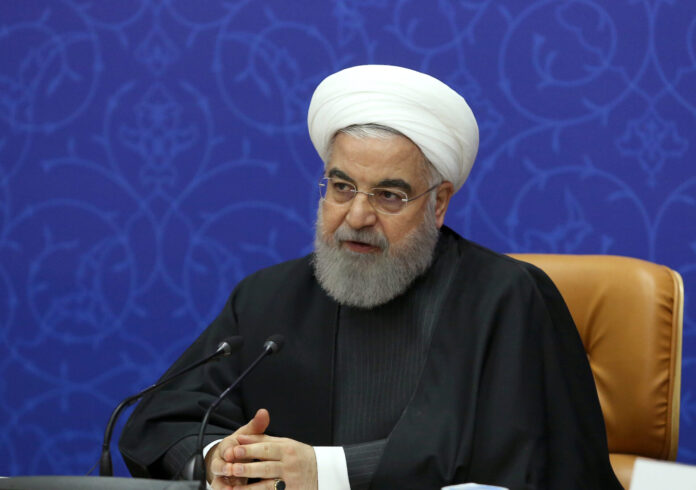
“If America lifts the sanctions, we are ready to talk and negotiate, even at the level of heads of the 5+1 countries (major powers),” Rouhani said in a Wednesday gathering.

He said Tehran hasn’t closed the window on talks with the US but reiterated his government’s standing condition that the Trump administration lift sanctions imposed on Iran before any negotiations can take place.

“We wanted to break this plot and conspiracy, and tell the world we have no problem for talks and connection, but we want the US president to remove all the sanctions first, and then we’ll meet one hour later,” he stressed.

“Whenever the US is ready to set aside its wrong, unlawful, cruel, and terrorist sanctions, the leaders of Iran and P5+1 can immediately meet, and we have no problem in this regard,” he added.

There’s no barrier from the Iranian side for meeting with the heads of 5+1 nations, Rouhani said.

He said Iran has no other option but to defy those who imposed sanctions on Tehran, “but we have not closed the window on talks.”

“We are under sanctions, and that’s not our fault. The Zionists and the regional reactionary are the ones who provoked [US to impose] these sanctions. This situation is a [result of] cruel act by the White House.”

“Today we have no way but to resist and stand up to the imposers of the sanctions. But at the same time, we have not closed the door to negotiation. If they are ready to set aside the sanctions, we’d be prepared to talk and negotiate, even at the level of P5+1 leaders. We have already announced it clearly,” he noted.

Iran Says Ready to Enhance All-Out Ties with Azerbaijan

Iran Says Ready to Enhance All-Out Ties with Azerbaijan

President Rouhani received a written message from his Azeri counterpart Ilham Aliyev in a meeting with First Deputy Prime Minister of Azerbaijan Shahin Mustafayev, held in Tehran on Tuesday evening.

In the meeting, President Rouhani said the reciprocal visits by the high-ranking delegations from Iran and Azerbaijan would contribute to the expansion of bilateral ties, and expressed hope that the agreements the two neighbors have signed during his most recent trip to Baku would be implemented immediately.

He also highlighted the significance of cooperation in carrying out joint projects, such as the construction of Khoda Afarin Dam and power plants along the border regions, and hoped that a joint railroad project connecting the cities of Rasht and Astara would be carried out as soon as possible.

President Rouhani further noted that Iran is seriously pursuing the implementation of joint projects on oil exploration and extraction in the Caspian Sea with neighboring Azerbaijan.

He also emphasized the necessity for the promotion of scientific and technological interaction, saying, “Tehran is ready to work with Baku in all fields of technology, and we believe that establishment of industrial regions could enhance the bilateral ties.”

He also called for fruitful cooperation on environmental protection in the Caspian Sea.

Highlighting Tehran’s efforts to boost the bilateral and trilateral relations with Baku and Moscow, the president said plans are underway to strengthen a transit route between Iran and Azerbaijan and broaden the tripartite cooperation in the energy and electricity industries.

For his part, the Azeri deputy prime minister said President of Azerbaijan Ilham Aliyev attaches great significance to stronger relations and friendship with Iran.

Mustafayev also pointed to the “constructive and fruitful” negotiations during his stay in Iran, saying the interaction between Baku and Tehran has been growing in all areas.

He finally noted that the volume of trade exchanges between the two countries has tripled since 2014, and the number of active Iranian companies in the Republic of Azerbaijan has risen by 50 percent over the past year.

Iran to Return to JCPOA If Sanctions Lifted: Diplomat

Iran to Return to JCPOA If Sanctions Lifted Diplomat

In a meeting with Japan’s Minister for Foreign Affairs Toshimitsu Motegi in Tokyo on Tuesday, Araqchi said Iran’s purpose is not to withdraw from the Joint Comprehensive Plan of Action (JCPOA).

Iran decided to reduce its commitments to the JCPOA after a year of patience and observing the European parties’ failure to fulfill their commitments, Araqchi noted, adding, “If the sanctions are lifted and Iran enjoys the benefits of the (nuclear) deal, we will return to the JCPOA commitments.”

He also stressed that the delicate conditions in the Middle East necessitate cooperation for de-escalation of tensions more than ever.

The top Japanese diplomat, for his part, expressed satisfaction with the meeting with the Iranian president’s special envoy.

Toshimitsu Motegi also voiced Japan’s concern about the Middle East situation, urging diplomatic efforts to reduce the tensions.

He further reaffirmed Japan’s support for the JCPOA, and called on all parties to show self-restraint in order to prevent an escalation of tensions.

The two diplomats also discussed Iran-Japan ties, the major regional and international issues, including the situation in the Persian Gulf and the Middle East, as well as the other issues of mutual interest.

Iranian Deputy Foreign Minister Araqchi has taken a tour of China and Japan ahead of a meeting of the JCPOA Joint Commission, due to be held at the level of deputy foreign ministers in Vienna on November 6.

Iran, Tajikistan Agree to Boost Mutual Cooperation

Iran, Tajikistan Agree to Boost Mutual Cooperation

At the conclusion of the meeting, attended by the Iranian Energy Minister and Tajikistan’s Minister of Energy and Water Resources, the two countries agreed to promote cooperation on customs affairs, trade, engineering and cultural issues.

In remarks at the meeting, Iranian Energy Minister Reza Ardakanian said Iran regards the progress and development of Tajikistan as its own success.

“From the viewpoint of the Islamic Republic of Iran’s officials, promotion of ties with the Islamic countries in all fields is a top priority for our country, and in this regard, Tajikistan has a special place,” he added.

The Iranian minister also noted that conclusion of the Joint Commission meeting would not end the activities of the specialized committees, saying the two sides must pursue the enhancement of ties and implementation of the previous agreements.

Iran and Tajikistan should try to put the executive mechanisms into practice in due time, such as by forming joint technical and banking committees and providing the necessary conditions for carrying out the plans, including the financial resources and facilitation of administrative processes, he added.

According to the Iranian minister, the agreements achieved in the meeting of the Joint Commission on Economic Cooperation mainly relate to trade and economy, as well as the banking and insurance industry.

Ardakanian also noted that the two countries have agreed to use their own currencies to finance the projects and plans, noting that another agreement on cooperation in the insurance industry is also on the agenda.

Kyrgyzstan Eyes Oil Imports from Iran

The 12th meeting of the Joint Commission of Economic Cooperation between the Islamic Republic of Iran and the Kyrgyz Republic was held in Tehran on December 3.

The meeting was co-chaired by Iran’s Minister of Roads and Urban Development Mohammad Eslami and Kyrgyzstan’s Minister of Transport and Roads Zhanat Beishenov.

In comments at the meeting, the Iranian minister described the gathering as a testimony to the two countries’ determination to promote cooperation.

Hailing the friendly ties between Tehran and Bishkek, Eslami said there is no limit to the expansion of bilateral trade.

He also highlighted the coordinated and supportive cooperation between the two governments at the regional and international organizations.

The Iranian minister further noted that a 10-year cooperation agreement that presidents of Iran and Kyrgyzstan have signed in Bishkek back in 2016 serves as a basis for legal cooperation between the two countries.

Eslami added that the ties between the two nations would enter a new stage, because Iran has signed a preferential trade agreement with the Eurasian Economic Union, of which Kyrgyzstan is a member.

“The strategic document of 10-year cooperation between Iran and Kyrgyzstan, and the country’s membership in the Eurasian preferential tariff (trade agreement) could at the same time expedite and facilitate the elevation of trade and economic exchanges between the two countries,” he stated.

For his part, Beishenov described Iran as one of his country’s top priorities, saying he saw a bright future for the two nations’ progress.

The Kyrgyz Minister of Transport and Roads also highlighted the great potential for the bilateral trade, calling on the experts from both sides to weigh plans for a boost to the businesses and a rise in the investments.

Citing Kyrgyzstan’s good potential for the thermal energy industry and the ample investment opportunities available in there, he invited the Iranian engineers and companies to work on infrastructural projects in his country.

In a meeting between the Kyrgyz prime minister and the Iranian first vice president, Kyrgyzstan has made it clear that it seeks to receive oil from and export foodstuffs to Iran, Beishenov noted.

Pointing to the proper cultural interaction between the two countries and the cooperation between their state-run organizations, the Kyrgyz minister said the two-day meeting of the joint commission would help the businesses find a tool for stronger cooperation.

Iran Offers China 25-Year Strategic Roadmap

Iran Will Definitely Change Approach to UAE: Top General

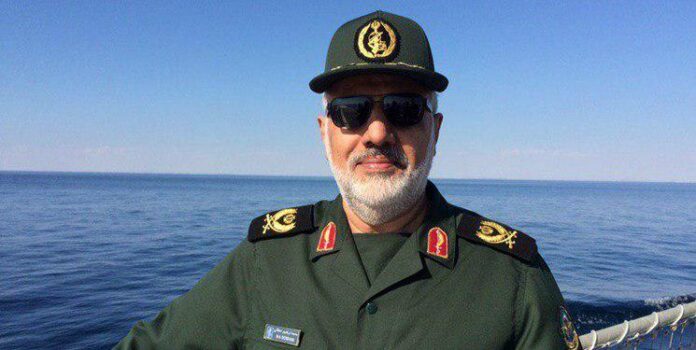
Iran has charted a major plan at the highest levels of the Islamic Republic’s establishment for strategic relations with China for 25 years, which has been endorsed by Leader of Iran’s Islamic Revolution Ayatollah Seyyed Ali Khamenei, the top Iranian military commander said in a meeting with Deputy Chief of the Joint Staff Department of China’s Central Military Commission Major General Shao Yuanming, held in Tehran on Tuesday.

“The Supreme Leader of the (Islamic) Revolution regards the relations between Iran and China as strategic, and the Chinese president holds the same view on the ties,” Major General Baqeri added.

He also underlined that the policies or hostile acts of the other countries would by no means affect the ties between Iran and China, adding, “I hope that the Chinese officials’ view about the document in adjusting relations (with Iran) and their response to our strategic proposal would result in the continuation of growing relations.”

Iran and China have common interests and face common threats as well, the Iranian commander added, highlighting the ample opportunities available for cooperation between the armed forces of the two countries.

For his part, Major General Shao, who also chairs the Joint Military Commission of Iran and China, said a September visit to China by Major General Baqeri paved the way for close cooperation between the armed forces of the two nations.

Iran, Spain Agree on Exchange of Pharmaceutical Technology, Products

The pharmaceutical industry is one of the fastest-growing sectors in Iran. The Islamic Republic’s efforts in recent years have led to the production of high-quality medicines, for which demands from the foreign companies have been growing.

Meanwhile, the Biotechnology Development Council of Iran’s Vice Presidency for Science and Technology arranged for representatives of a leading Spanish pharmaceutical company to visit Iran and get acquainted with the capabilities of the Iranian companies.

During the three-day trip to Iran, representatives of the Spanish company paid visits to the research and production facilities of a number of Iranian pharmaceutical companies, such as Dorsa Pharmaceutical, Tofigh Daru, Baran, Alborz, CinnaGen, Mad, Shafa Daru, Biology Fermentation Company, and the Glands Research Center of Baqiyatallah University of Medical Sciences.

In the visits, the Spanish delegation provided the Iranian companies and centers with a series of experiences, and discussed arrangements for close cooperation with Iran.

At the conclusion of the trip, the Spanish company signed a contract to transfer and exchange pharmaceutical technology and products with the Iranian enterprises.

Under the contract, the Spanish and Iranian companies would exchange technology, raw materials, and the technical know-how in various sectors of the pharmaceutical industry.

The agreement is also expected to provide the necessary infrastructure allowing the Iranian pharmaceutical companies to gain benefit from exports.