Wednesday, December 24, 2025
Home Blog Page 2999

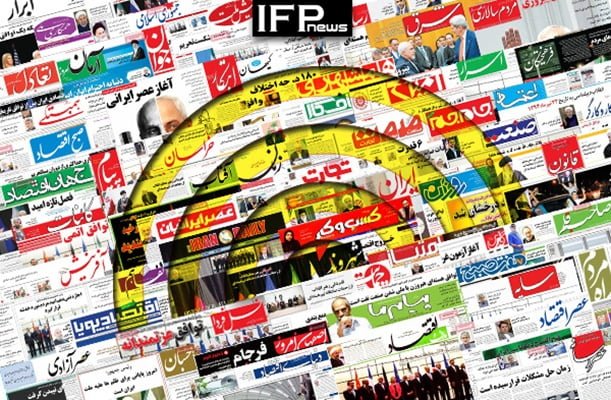
A Look at Iranian Newspaper Front Pages on December 17

Newspaper Headlines

Abrar:

1- Araqchi: No Talk of Iran-US Negotiations in Rouhani’s Japan Visit

2- US Threatens to Sanction Customers of Iran’s Heavy-water

3- Government Spokesman Rejects Speculations on Rouhani’s Resignation

A Look at Iranian Newspaper Front Pages on December 17


Aftab-e Yazd:

1- Serial Impeachments Failed

2- Two Different Unpleasant Smells Felt in One Day in Tehran!

A Look at Iranian Newspaper Front Pages on December 17


Ebtekar:

1- Araqchi: Japan Good Example of Iran’s Developing Ties with East

2- US Says Ready for Talks with Iran

A Look at Iranian Newspaper Front Pages on December 17


Etemad:

1- Oil Minister: We’ll Regain Our Share from Oil Market Once Again

2- One-Sided Tribunes: Time for Reviewing Palermo Convention Accession Over

* Expediency Council Has One Month to Make Decision on CFT Accession

A Look at Iranian Newspaper Front Pages on December 17


Ettela’at:
1- Judiciary Chief: Officials Must Respond to People for Air Pollution
2- JCPOA Has Many Benefits for Us: EU Foreign Policy Chief

A Look at Iranian Newspaper Front Pages on December 17


Hemayat:

1- Judiciary Chief: US Sanctions on Medicine Clear Instance of Economic Terrorism

2- Iran’s Reaction to US’ Better Deal Trick: Sanction Is War

A Look at Iranian Newspaper Front Pages on December 17


Iran:

1- FATF to Be Reviewed at Expediency Council Once Again

A Look at Iranian Newspaper Front Pages on December 17


Javan:

1- IRGC Chief: We’re Committed to Making Iran Needless of Aliens

A Look at Iranian Newspaper Front Pages on December 17


Jomhouri Eslami:

1- EU Foreign Policy Chief: I’ll Try to Keep JCPOA Alive

A Look at Iranian Newspaper Front Pages on December 17


Kayhan:

1- People Hardly Breathing as Air Pollution Continues: All Hopes on Wind, Rain

2- Trump: Had We Attacked Iran for Our Drone, Ayatollah Khamenei Would React

A Look at Iranian Newspaper Front Pages on December 17


Mardom Salari:

1- 30% Decrease in Number of Visitors at Medical Centres after Price Hikes

2- Trump to Be Tried Soon

A Look at Iranian Newspaper Front Pages on December 17


Sazandegi:

1- City Engulfed by Smoke

2- Iran’s Message to Peace to Saudi Arabia

A Look at Iranian Newspaper Front Pages on December 17


Setareh Sobh:

1- Rouhani Won’t Resign; Oil Minister’s Impeachment Called Off

2- Consequences of Johnson’s Victory in UK Elections

A Look at Iranian Newspaper Front Pages on December 17


Shargh:

1- Will Rouhani Remain President Until End of His Term?

2- Araqchi’s Account of 90 Years of Iran-Japan Ties

A Look at Iranian Newspaper Front Pages on December 17

Esteghlal Coach Stramaccioni Finally Gets Paid at Iran’s Rome Embassy

Esteghlal Coach Stramaccioni Finally Gets Paid at Iran’s Rome Embassy

Stramaccioni, who previously managed Inter Milan, Udinese, Panathinaikos, and Sparta Prague, had stepped down as the head coach of Esteghlal FC over the club’s failure to transfer his salary over the US sanctions.

Finally, on Monday, the Italian coach went to the Iranian Embassy in Rome and received a check from the representative of Bank Sepah of Iran.

Stramaccioni managed to receive a check of €159,500 under the auspices of Iran’s Embassy in Rome, and has vowed to return to the country by Tuesday night.

The sum of money will be added to Stramaccioni’s bank account in Italy within the next couple of days.

Esteghlal Coach Stramaccioni Finally Gets Paid at Iran’s Rome EmbassyWhile Esteghlal FC rose to the top of Iran’s premier league under Stramaccioni’s stewardship, the US sanctions against the Islamic Republic obstructed the process of his salary payment, as Iranian banks have been prevented from carrying out international transfers.

Due to such problems, the Iranian football giant had been forced to transfer the salary of its head coach money through multiple bank accounts, belonging to several individuals in Europe. This reportedly led to the partial closure of Stramaccioni’s bank account in Italy over money laundering charges.

Although all international sports organizations, including the governing body of football (FIFA), insist on the separation of sports and politics, the US sanctions against Iran –imposed under the policy of maximum pressure on Tehran- have adversely affected the lives of ordinary people and have even had a damaging impact on the popular sport, football.

Apart from the head coach of the popular Iranian football club Esteghlal, a number of other foreign coaches have already had troubles with their payments in Iran because of the US sanctions, including the Belgian manager of the Iran national football team “Marc Robert Wilmots” and his Portuguese predecessor “Carlos Queiroz”.

Esteghlal Coach Stramaccioni Finally Gets Paid at Iran’s Rome EmbassyThe far-reaching impacts of the US sanctions that have even affected the athletic activities come against a backdrop of expression of support for the Iranian people from the American officials.

While the White House claims to be advocating the people of Iran, the US sanctions have practically deprived millions of young Iranians of the joy of football, known as one of the basic citizenship rights.

The US’ anti-human policy of “maximum pressure” on Iran and the cruel sanctions have targeted not only the medical and health sector in Iran, but have caused damages to the mental health of the Iranian citizens.

Autumn Festival at National Garden of Tehran

Autumn Festival at National Garden of Tehran (9)

The “Autumn-Leave” Festival is being held in collaboration with Tehran University of Arts’ Association of Graduates, Municipality of District 12 and the Tehran Beautification Organization.

The artists designed their works from December 14 to 16 in Tehran National Garden, a square in the historical district of Iranian capital.

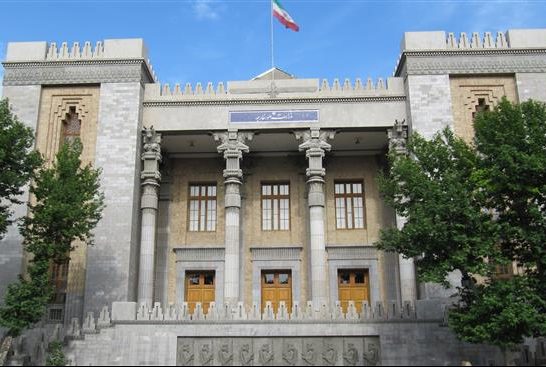
Constructed under the reign of Fath Ali Shah Qajar, the National Garden is located between Imam Khomeini and Si-e-Tir streets. The square -“Meydan-e-Mashq”- has indeed been a military area used for battlefield training during Qajar era.

In his report, a foreign traveller named “Jackson” has described the rectangular area as one of the largest military squares in Tehran with about 400 metres in length and width.

A plan was later formulated and carried out to build Tehran’s first public garden on the old military square’s ground; so “Meydan-e-Mashq” became the “National Garden”.

However, the National Garden lasted just a few years before the buildings of the Foreign Ministry, National Library and Museum of Ancient Iran erected there. Nevertheless, the name of National Garden still stands at the gate of Meydan-e-Mashq.

What follows are photos of Autumn-Leave Festival held in the historical area, retrieved from various sources:

Iran Marks 70th Anniversary of Adoption of 1949 Geneva Conventions

Iran Marks 70th Anniversary of Adoption of 1949 Geneva Conventions

In an address to the meeting, Iranian Deputy Foreign Minister Seyyed Mohammad Kazem Sajjadpoor, who is also president of the Institute for Political and International Studies of the Ministry of Foreign Affairs, highlighted the significance of implementation of the humanitarian law, particularly under the current circumstances in the world and the Middle East.

He also noted that the illegal sanctions imposed by the United States have obstructed the delivery of humanitarian and emergency aids, particularly the pharmaceutical items and medical equipment.

In separate comments, Head of the International Committee of the Red Cross Mission in Tehran, Reto Adrian Stocker, stressed the need for peace-building and multilateral mechanisms in the wars and the need for implementing the humanitarian law in the conflicts, such as the eight-year war between Iran and Iraq.

Moreover, Mahmoud Reza Peyvandi, secretary-general of the Iranian Red Crescent Society and president of Iranian National Committee of Humanitarian Law said the Islamic Republic of Iran was among the first governments that adopted the four Geneva Conventions and established the National Committee of Humanitarian Law in 1999 in order to implement and train the humanitarian law.

Elsewhere in the meeting, an expert panel discussion was held with five speakers.

One of the speakers was Iranian MP Owladqobad, who emphasized the necessity of implementing and enforcing the four Geneva Conventions of 1949, and refraining from the imposition of restricting measures and sanctions on the delivery and supply of humanitarian assistance.

Mohammad Reza Ziyaee Bigdeli, university professor and researcher of the international law, highlighted the role of the United Nations in making, promoting and implementing the humanitarian law, and the role of the UN Security Council and the International Criminal Court in guaranteeing the implementation of the humanitarian law.

Iranian cleric Hadi, deputy chairman of the Iranian Judiciary’s Department on Passing Bills and Regulations, stressed the need for the criminalization of violation of humanitarian law in the national law and filling the legal vacuum.

In another speech, Fiona Barnaby, regional legal adviser of the ICRC, expounded on the conditions of the armed conflicts, and highlighted the importance of humanitarian conduct, even during the wars, and the proper treatment of the prisoners of war.

Finally, Ayatollah Seyyed Mostafa Muhaqqiq-Damad clarified Islam’s view about the humanitarian law, explicated the law of war from the viewpoint of Islam, and underlined that the conducts and measures of a certain group of so-called Muslims should not be linked to Islam and Muslims.

Islam has been always the religion of peace and friendship, and believes that the human being’s benefit relies on the existence of peace, the cleric added, stressing that the human society’s priority must be to prevent the wars and violation of peace.

The event marking the 70th anniversary of adoption of the four Geneva Conventions of 1949 concluded with questions from the audience and answers from the speakers.

Iran’s Beauties in Photos: Autumn in Golestan Forest

Iran’s Beauties in Photos Autumn in Golestan Forest (26)

The forest is a protected area in the east of Golestan province and the west of North Khorasan province.

It accommodates 1,350 plant species and 302 animal species, including half of Iran’s mammals, in an area of 900 square kilometres.

The UNESCO has registered Golestan national park in its list of World Heritage Sites as a biosphere reserve.

Golestan Forest is one of the best habitats for large mammals such as leopard, brown bear, wolf, lynx, red deer, roe deer, wild sheep, wild goat, Persian deer and boar.

The national park is especially known for its large population of Urial. The population of these animals was estimated to be about 150,000 in 1970s; in other words, about a quarter of their total population in the world.

What follows are YJC’s photos of Golestan Forest:

The Millionaire Guide on Integrating Chatbots for Sales and Marketing

The Millionaire Guide on Integrating Chatbots for Sales and Marketing

Apart from catering customer care queries, AI-powered chatbots are used in marketing initiatives and help you with your sales pitch. They are used to push you, customer, seamlessly through sales funnel.

Here is a guide that I mostly call ‘the millionaire’s guide on reaching to prospects and converting them into leads using artificial intelligence-driven chatbots.

  1. Let your bot gel well with website visitors

This is the MOST crucial vertical where you can integrate your chatbot. It will necessarily take an enormous amount of work off your hands and has loads of benefits.

When visitors land on your website, they have tons of questions about your products and services. If they can’t get their answers, they might never come back.

This is where bots come into the picture. You can set up a chatbot to help your customer’s queries answered. Make sure your bot sounds human. Write questions and answers and make sure they align with your brand’s story. Also, give your bot a name and a profile picture. Most of the bots allow you to do so.

In a report by Ubisend, almost half of the respondents preferred messaging to email or phone. It is needless to say that bots delight everyone.

  1. Let your bot conduct research

One of the viable uses of bots is research. Imagine this situation- You are a one-person army or -have a small team that does most of the work. You’re spending a decent amount of time doing market research and are on the lookout to automate the process. This is where bots come into the picture. They can help you do precisely this. They also help you recover abandon cart, help your customers with tracking, and so on.

Take this as an example:

The Millionaire Guide on Integrating Chatbots for Sales and MarketingThis AI bot can send instant messages, schedule promotions, event messages to your customers, informs your customers about their wishlist, and assists them in making a purchase.

  1. Let your bot attract, engage and convert

Everyone embraces chatbots for the very fact that they not only engage your customers; they also help in retaining them. This in turn, means, unlike other forms of marketing, chatbots keep your customers entertained and would help you in converting them into prospective customers. For example, you have an explainer video that shows your product. While this video is exceptionally appealing, when it ends, your prospects tend to abandon you as it doesn’t have much to offer.

A chatbot can attract your prospect, learn from their interaction, and sends necessary information about your brand, products, and services. Essentially it helps you to upsell and cross-sell in a personalized and engaging way.

  1. Integrate your chatbot to reach a more extensive audience base

Chatbots are predominantly found on social media platforms. The reason being, they can reach to a limitless audience base. If integrated across the right messaging platforms, they can tap into new demographics, bringing new opportunities.

With the right machine learning tools, your chatbots can gather feedback, analyze it, and can provide you an insight into consumer behavior and what your audience truly wants.

Wrapping up

Customers always want a great user experience. They will abandon you if you fail to provide them. It goes without saying that chatbots have eased up our situation in several ways. By implementing a chatbot in your marketing strategy, you’ll be able to learn better about your audience, reach potential customers and leverage social media.

Author Bio

This is Sharon Winget, Staff Writer with GoodFirms, a review and rating platform of top IT companies & software. A tech geek at heart, I firmly believe technology can transform societies. I enjoy blogging about web design, email marketing, and content marketing.

Rouhani in Malaysia to Attend KL Summit 2019

Rouhani in Malaysia to Attend KL Summit 2019

Speaking to reporters at the airport before leaving the country, Rouhani said pursuing the policy of “pivot to the East and closer ties with major Asian countries” has always been among the Islamic Republic’s main objectives.

“The visits to Kuala Lumpur and Tokyo, which are being made at the invitation of the senior officials of the two countries, are in line with this policy,” Rouhani added.

After attending the KL Summit in the Malaysian capital, Rouhani is to visit Tokyo, the capital of Japan, at the invitation of Japanese Prime Minister Shinzo Abe.

Highlighting the economic relations and investment cooperation between Iran and Japan after the 1979 Islamic Revolution, including the close environmental consultations at present, the president said the “cruel US pressures and illegal sanctions” have caused a reduction in the ties between Tehran and Tokyo.

He pointed to the illegal US sanctions that have adversely affected Iran’s interaction with other countries, and said they would not last long.

“This (American) move and the sanctions won’t be steady, and all countries in the world want to have close and good relations with Iran, particularly the countries with which we’ve had good ties traditionally,” Rouhani added.

On the visit to Malaysia for participation in the KL Summit 2019, Rouhani said the heads of a number of major Muslim states would attend the summit, including those of Turkey, Pakistan, Qatar, Malaysia and Indonesia.

The summit will be held at the Kuala Lumpur Convention Centre from December 18 to 21. Over 400 people, including 250 leaders, politicians, and thinkers from 52 countries, will attend the event.

Rouhani, Emir of Qatar Sheikh Tamim Hamad Al Thani, Turkish President Recep Tayyip Erdogan, and Pakistani Prime Minister Imran Khan are among the notable Islamic leaders expected to attend the KL summit, according to local reports.

The Iranian president is to deliver a speech at the KL Summit and elaborate on the Islamic Republic’s regional and international policies. He will also hold bilateral meetings with some of the leaders and officials attending the event in order to discuss bilateral, regional, and international issues of mutual interest.

Rouhani will also hold a meeting with Iranian expatriates living in Malaysia.

In a video message posted on the official KL Summit 2019 Twitter account on Saturday, Malaysian Prime Minister Mahathir Mohamad said the conference will be a significant forum for Muslim leaders to discuss the current situation faced by Muslim community around the world.

“The Muslims are labelled as terrorists, and there is now a feeling of fear of Islam. It is quite obvious to everybody that the situation is getting worse. On the other hand, that oppression does not seem to worry anyone,” Mahathir said.

The Kuala Lumpur Summit is an international platform for Muslim leaders, intellectuals and scholars from around the world to discuss and exchange ideas about issues revolving in the Muslim world, according to its website.

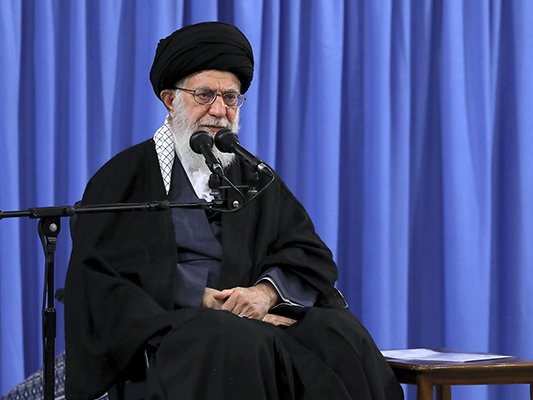
US Forces in Region Good Targets for Iran: Leader’s Advisor

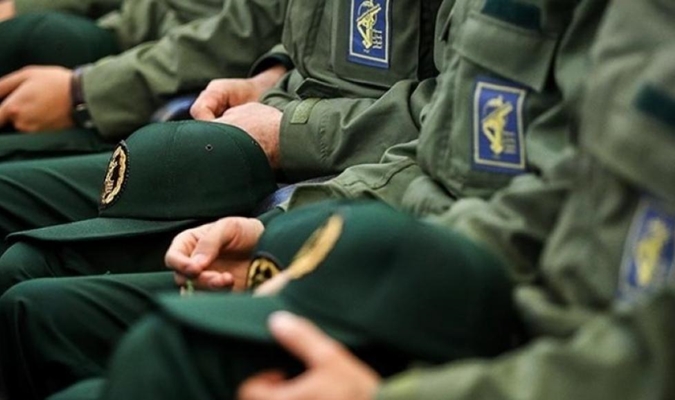
In an interview with Al-Alam, former Iranian Defense Minister Brigadier General Hossein Dehqan explicated the latest regional and international developments.

He also provided an analysis of the recent unrest in Iraq and Lebanon and their differences with the velvet revolutions and other social movements.

What follows is the text of the interview with Ayatollah Seyyed Ali Khamenei’s advisor in the defense affairs: 

Q: The Pentagon announced plans for deployment of 7,000 new forces to the region a week ago. The US had already sent 3,000 troops to Yemen. Does Iran see this move as a confrontation plan or a threat?

Dehqan: We must first analyze the current situation in the region, including the crises created by the extra-regional forces and the players that played a role in creating the crisis, in order to study the place of the US move in here. We are now faced with instability and insecurity in the region, while the source of this insecurity is a trio that we define as Western-Arabic-Hebrew. Such instable and unsteady situation pursues a couple of clear objectives, first of which is to sap the financial strength in the region, particularly in Saudi Arabia, by provoking Iranophobia. Secondly, certain regional countries, like Saudi Arabia, are governed by traditional political establishments that are separated from the body of societies and do not reflect the willpower of their own nations, but they need to be maintained in the region because of protecting the US interests.


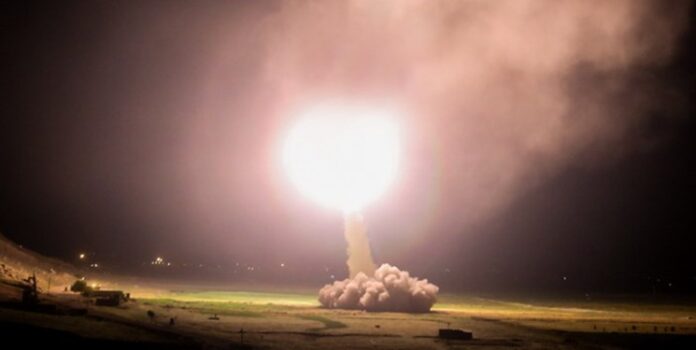
The more significant point is that the Americans had a notion that Iran would remain silent in the face of them, but Iran proved after shooting down the US drone that the Islamic Republic of Iran’s determination to respond to any probable action is fierce, and it is able to control its consequences. The Americans said that “we protect our own bases in the region and the regional countries must pay the cost of defending themselves”. On the other hand, Trump had described Saudi Arabia as a cow being milked, saying the Saudi regime would fall immediately without the US support. Accordingly, they (Saudis) face challenges in protecting their security, because they are leaning on the broken wall of the US.


We do not see the US measure as a threat, but it is like an anesthetic pill for the reactionary Arab leaders. By sending forces into the region, the US has provided suitable targets within reach of us.


Q: Has Iran sent a clear message to the US in response to the threats?


Dehqan: There is no need for a message, because we announce our stances clearly and explicitly, or if we face a threat in the region, we will have a response prepared, and nothing would restrict us other than our interests. As a result, the Americans that claim to have intelligence dominance over the region by using their various centers, think tanks and strategists and that they are observing and monitoring the regional developments, then they must have realized after forty years that the Islamic Republic of Iran is serious about anyone showing hostility. 


Q: What do you think about the protests and riots in Iraq and the attacks on the state organizations?


Dehqan: After implementing velvet revolutions in a number of countries, the Americans sought political regime changes in those states. After experiencing mass media revolutions, like what happened in Egypt, in which human groups used the mass media to lay the ground for their favorite political upheavals, they (Americans) have now created another space and try to form a new shape of protests for the purpose of overthrowing the political systems they disagree with.


This new move has several features: First of all, it has a distributed leadership, meaning that one cannot say who is governing them or where they are being guided from. Secondly, they are seriously seeking to prevent delineation between protests and riots, or between the protestors and rioters. So when drawing a distinction between them is not possible, things would become difficult in practice. Thirdly, while there were plans in the past to prevent the riots from turning violent, the new riots began with violence, and the moves were supposed to focus on the state-run security and administrative centers to entangle the political system and allow them (rioters) to freely do what they wanted to. The equipment, instruments and technologies used in these protests and riots were totally different from the past.


Their (US’) ultimate purpose is to overthrow the political systems they do not want. On the parties seeking to overthrow the political systems in the axis of resistance, the Supreme Leader (Ayatollah Seyyed Ali Khamenei) has cited “the American idea and the Arab money”. Today, a powerful and independent Iraq would be definitely not in the interests of the US or the interests of Israelis, and even the Saudis would disapprove, for sure.


African Lion Cubs Arrive in Iran

African Lion Cubs Arrive in Iran

What follows are photos of the two cubs retrieved from the Young Journalists’ Club (YJC):