Thursday, December 25, 2025
Home Blog Page 2987

‘Roman Wall’ of Iran among Top 2019 Discoveries: Live Science

The wall is known as the Roman Wall as it is similar to a wall built in England during the Roman Empire known as the Hadrian’s Wall or Roman Wall.

The discovery was first documented in the Antiquity Journal by Iranian researcher Sajjad Ali Beigi from Razi University of Kermanshah.

While local people and a few archaeologists were already acquainted with the wall and called it the “Gawri Wall”, its existence had never been pointed out in any academic paper before.

Satellite Images Lead to Discovery of ‘Roman Wall’ in Iran

Taking “an estimated 1 million cubic metres [35,314,667 cubic feet] of stone to build”, the structure was made from “natural local materials”, Live Science reported, citing Ali Beigi’s work.

Who built the wall and why remain unclear, although pottery work discovered beside the wall indicate that it was made either by the Parthians or Sassanidds, the two dominant empires during the long period, Live Science quoted Ali Beigi as saying.

According to Live Science, the other biggest archaeological discoveries in 2019 include the 4,400-year-old tomb of Khuwy, the earliest example of a homo sapiens skull, Valley of the Kings discoveries, Bronze Age megalopolis, new evidence for Pontius Pilate, Cachette of the Priests, huge UK discovery, and helmets made from the skulls of kids.

Iran’s Customs in Photos: Bakhtiari Wedding

Bakhtiari is one of the oldest Iranian tribes which has maintained its original customs. Bakhtiari men and women help each other to make provisions of the wedding ceremonies in the tribe, so that the families of bride and groom easily prepare for a happy celebration.

During the wedding ceremony, the village becomes full of women with long, well-covered robes of beautiful colours who stand in orderly lines and cheer; the bright colours of their robes shine under the sun; and their napkins wave and dance in the air.

What follows are YJC’s photos of a Bakhtiari wedding of Shaikh Robat clan, a great branch of Bakhtiari tribe. The clan’s people hold wedding parties with thousands of guests in Bazoft region.

Oleophobic Coating: What Is That?

Most of the time good quality tempered glass screen protectors are coming from China. China’s wholesale market is the goldmine of good quality tempered glass screen protectors as you will find good quality screen protector supplier from there.

But whenever you are going to buy a tempered glass screen guard you will hear the term “Oleophobic Coating’ as one of its features. Even if you search Google or any other search Engines with the terms, – ‘features in tempered glass screen guard’ you will surely get Oleophobic Coating as one of the main features and makers of tempered glass screen guards are ready to boast about it all the time.

The question remains here is that what actually this product with a peculiar name is? What it can add to the screen guard?

The fact is that all new Smartphones are coming with really thin layer which is glazy and covers the entire glass screen of the handset. If we go by the dictionary, then you can take the word ‘Phobia’ and ‘Phobic’ to oily substance or do not have any affinity to oils. This is something that helps to keep your phone’s screen free of fingerprints spots and no oily and stickiness.

Good quality Oleophobic coating is equipped to provide resistance against smudges that are coming from fingers of the users. Just for your information, Oleophobic coating is not fully fingerprint proof but all the greases at bay so that screen of the smartphone remains crystal clear.

This coating ensures that users of smartphones don’t need any extra cleaning agent or solution to clean the surface of the glass screen with the help of soft cloth or microfiber cloth.

There are of course Smartphones from early days which do not have any oleophobic coating and the screen surface remained sticky with loads of fingerprint spots. So, in order to clean the surface of that Smartphone you need to have a cleaning solution and a piece of cloth. Otherwise the glass screen becomes hazy very often thus affecting the visual clarity.

Another great advantage of having oleophobic layer on your Smartphone is that it gives your fingers the freedom to run smoothly over the glass screen as it has a slightly slippery feeling on it.

Oleophobic coating also makes the glass screen surface of your smartphone scratch resistant. If you install a good quality tempered glass screen protector over the original glass screen of your smartphone you are actually taking extra precaution as all sharp object will slip or slide over the screen thus chances of having scratches are less due to lesser friction.

But remember, like everything Oleophobic coating too has its shelf-life. You cannot expect it to continue to protect your screen from oils and finger spots forever. It’s unfortunate for Smartphone users but it is true that effectiveness of Oleophobic coating will continue to wear off with passing time.

Longevity of the Oleophobic coating screen is depending upon the usage i.e. how long you are running your fingers over the screen and how many times. Remember, duration of the wearing-off varies person to person as each one has its one body oil, sweat secretion level. Moreover, it depends on the individual handset manufacturers as well as tempered glass screen protector manufacturers that how well they have treated the product with oleophobic coating and how good is the coating material that they have used.

In general, a good quality oleophobic coating lasts for almost 2 years (well this is as good as the life cycle of your Smartphone because within this time market will be flooded with whole new sets of Smartphones and your old one’s will stop taking software updates).

But constant mishandling, bad conditions (weather or home) can shorten the life of oleophobic coating to few months.

Remember; never ever use any alcohol-based solutions while cleaning your Smartphone original surface or surface of the tempered glass screen guard. Also, please do not use any detergent that you normally use for cleaning your clothes or even laptop screen. All these steps will ruin the coating very soon leaving your screen open to all the smudges, oily spots and finger spots. So, be sure that you are not going to ruin the protection by yourself.

To protect your smartphone, it is always advisable that you use tempered glass screen guard.

Installation of this type of screen guard will protect original glass screen as well as coating over the screen.

Conclusion:
In this article we have tried our best to explain you about Oleophobic Coating and we hope you have now a fair amount of idea about it.

Iran to Turn Tourism into Its Top Source of Income: Minister

Iran to Turn Tourism into Its Top Source of Income
Tourists at Naqsh-e Jahan Square, the world's second biggest square, in Isfahan, central Iran

According to Ali Asghar Mounesan, tourism as an emerging source of revenue in Iran can make a great contribution to the country’s economy in difficult times, and many efforts have been made so far to turn tourism into a highly profitable sector in the country.

“In the coming years, tourism will act as an important and primary economic source in the country,” said Mounesan, highlighting that, “If we had focused on tourism earlier, the problem of employment and fair distribution of wealth would have been resolved sooner.”

He said good tourism infrastructure is in place, and “in a calm environment, the trend of tourism will have good leaps.”

No city has developed through industry alone, he said. “There are advanced cities that can accommodate many tourists, so tourism creates high-rate employment and needs low investment,” added the minister.

He said tourism has prospered in the country while there have been many threatening elements such as sanctions, decreased number of flights, etc.

“However, the number of foreign tourists has increased from 4.6 million to 7.8 million in 2017. In the first seven months of this year, 6 million foreign tourists have travelled to the country and we hope it will reach ten million by the end of the year.”

Pointing out that the volume of investment is increasing day by day, he said more than 150 million USD is being invested in 2,400 tourism projects and more than 500 cases are in residential and hotel units.

“We have tried to diversify tourism products and work on tourism capacities, including eco-tourism which has attracted a lot of foreign tourists,” said Mounesan.

Hyrcanian Forests in Mazandaran Province
Speaking at a ceremony to celebrate the registration of the Hyrcanian Forests on the list of World Heritage Sites earlier this week, he underlined that tourism will result in a fair distribution of wealth and income.

“Hyrcanian forests, which date back to 50 million years ago according to estimates, are the second Iranian natural heritage registered in the world,” he noted.

The minister maintained that the Hyrcanian forests belong to the people of the world, adding “From now on we must protect this precious heritage more carefully.”

“The people of Mazandaran have long been able to protect and preserve the Hyrcanian forests, and we hope this will serve as a reason for further development of tourism in Mazandaran,” he maintained.

Mazandaran province in northern Iran is an important hub for tourism with its unique nature, and ancient history, he noted.

“Mazandaran can become the country’s ecotourism hub,” the minister maintained, adding that this province has great potential in seaside tourism.

He also noted that the country has a lot of forests and natural resources, stressing there are 34,000 nationally and 24 internationally registered works, as well as 600 active museums across the country that have put tourism at the forefront of Iran’s economy.

Iran Dismisses Media Fuss over Australian Woman Inmate

Iran Dismisses Media Fuss over Australian Woman In
Kylie Moore-Gilbert, a Melbourne University lecturer, has been in detention in Iran since October 2018.

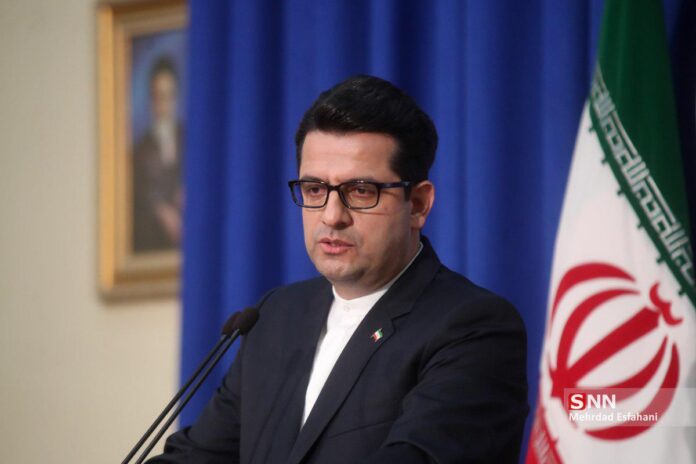
Asked by reporters about certain Australian media reports on the status of Australian national Kylie Gilbert-Moore, Mousavi said on Saturday, “She has been arrested on a charge of violating Iran’s national security, and the competent court has also issued the appropriate ruling by observing all relevant laws.”

“Experience has shown that the Islamic Republic of Iran would not give in to the political and smear campaigns, and this Australian citizen (Moore-Gilbert) is serving her sentence while enjoying all legal rights, like any other convict with a judicial verdict,” he added.

“Public opinion would not forget the Australian government’s treatment of Ms. Negar Qods Kani, who was kept in custody without committing any crime and was treated in an inhuman manner for 28 months. Among the examples of treatment of Ms. Qods Kani that were against the law and human rights were leaving her to have a delivery in prison, separating the infant from the mother, turning down the request for house arrest in lieu of imprisonment, barring her from seeing her baby regularly, and finally violating the consular commitments by extraditing her to the US,” Mousavi noted.

Kylie Moore-Gilbert, a Melbourne University lecturer, has been in detention in Iran since October 2018.

Back in October, Australian Foreign Minister Marise Payne described her situation as “very complex”.

Iran Strongly Condemns Somalia Terrorist Attack

Iran Vows Appropriate Response to US Interception of Mahan Air Flight

In a statement, Seyyed Abbas Mousavi also sympathised with the families of the victims of the tragic incident.

At least 90 people were killed when a bomb-laden truck exploded at a busy checkpoint in the Somali capital Mogadishu, an international organisation working in the country said, in the deadliest attack in more than two years.

The toll included many students and two Turkish nationals, Somalia’s foreign minister said, adding that dozens were injured.

The mayor has blamed al Shabaab for the attack, without giving details.

Iran Summons Kuwaiti Envoy over Meeting with Separatist Element

At the Saturday meeting, the Iranian foreign ministry’s director general for Persian Gulf affairs and assistant to the foreign minister condemned Kuwait’s move, stressing the need for mutual respect in bilateral relations.

“Such acts are an obvious interference in the internal affairs of the Islamic Republic of Iran and violate the principle of good neighbourliness and friendly statements by the Kuwaiti authorities and are contrary to the principle of respect for the territorial integrity and sovereignty of Iran,” said the Iranian official.

His comments came after the speaker of the Kuwaiti National Assembly, Marzouq al-Ghanim, reportedly met with a member of the al-Ahwaziya terrorist group on the sidelines of a parliamentary conference calling for the breakaway of the southwestern Iranian city of Ahvaz from the country.

Iran and Kuwait have had relatively good relations in recent years despite tensions between the Islamic Republic and other Persian Gulf Arab states.

Kuwait greatly reduced its diplomatic presence in Tehran in 2016 after Saudi Arabia completely severed relations with Iran, but it kept a charge d’affaires and two officials.

About two years ago, the Kuwaiti intelligence announced that a cache of weapons had been discovered in large quantities, after which 21 Kuwaiti citizens were accused of being linked to the Lebanese Hezbollah group and forming a terrorist cell through Iran and some Islamic Republic diplomats. Iran has denied the allegations.

‘Europe Surprised by Export of Iran-made Laboratory Equipment’

The Austrian journal has quoted Javan daily as saying that Iranian companies have exported 20 million Euros of laboratory equipment.

According to the report, a third of this amount is exported by knowledge-based companies, showing that the technical inventions in the production of such equipment have increased ten times more in comparison to three years ago.

In the last three years, at least 25 companies in the field of laboratory and medical engineering have been able to export their products to Greece, Croatia, China, South Korea, Portugal, Malaysia, Ukraine and West Asia.

Iran’s laboratory and medical engineering equipment is currently exported to more than one hundred countries and the Islamic Republic has unique standing in four major international exhibitions in Europe and East Asia.

“The field is so vast in Iran that there are about 2,000 domestic companies and 3,000 foreign ones are working in Iran.”

Iran’s $7 Billion Market
The growth of medical engineering and laboratory equipment patents in Iran is almost two times more than that of the world. The growth of technical inventions in medical device manufacturing has increased 10 times more in the past three years.

Currently, the market value of medical engineering equipment in the world is estimated at about $ 400 billion and in Iran it is $ 7 billion. Knowledge-based Iranian companies have grown dramatically in recent years, accounting for a large portion of the $ 7 billion market.

Iran’s € 20m export shows that in the last decade Iranian universities have invested heavily in the production of laboratory and medical equipment in collaboration with large financial companies.

EuroPages has also taken a look at the International Exhibition of Medical Equipment, Laboratories, Medicines, and Health Tourism, which is held annually in Iran, and said that the expansion of medical equipment exports is one of the goals of Iran Health Exhibition.

Iran Health Exhibition aims to showcase the latest capabilities of the Iranian medical engineering industry, unveiling technologies and advancements in academic knowledge, expanding the health tourism industry, unveiling academic products and services, top manufacturers and startups, liaising with medical centre managers, and medical education and export development. This exhibition is held each year in May in Tehran.

Excellent Position in Medical Engineering
Iran currently ranks 16th in the world in producing medical engineering articles, with approximately 40% of articles produced by the knowledge-based companies that are working under the supervision of Iranian universities.

Interestingly, the process of accepting papers in more than 90% of conferences held abroad is now easier than domestic conferences, indicating the high quality of conferences in the country.

Karaftu: Mysterious Cave in Iran Where Heracles Used to Live

Karaftu: Mysterious Cave in Iran Where Heracles Used to Live

Karaftu cave, known as the house of Heracles; which is located about 70 kilometers from the city of Saqqez in Iran’s western province of Kurdistan. The cave complex has attracted the attention of archaeologists and historians because of its specific defensive features and being used as a habitation for people throughout history.

Known as the largest ancient cave in Iran, Karaftu is 2,000 meters above sea level. The cavern’s entrance zone is located on a cliff, at the foot of which flows a spring of water.

There is a stone tablet of the Greek language at the entrance of one of the chambers of the cavern in its third floor; which has cited Heracles, the god of strength. “Here is the home of Heracles. Whoever enters this cave shall be safe,” reads the tablet.

Historians believe that the mysterious cave was occupied by people under the Seleucid Empire. Certain parts of the Karaftu cavern are handmade. The natural structures of the cave are believed to have contained large reservoirs of water.

Karaftu: Mysterious Cave in Iran Where Heracles Used to Live

Stories Behind the Mysterious Cave

Karaftu has four stories. The special architecture of the cavern has allowed for the construction of windows and skylights at each story. The stories are accessible through a series of stairs. The entrances and the windows inside the cave have been fortified to improve security.

After going up two metal ladders and some light rock climbing at the entrance of the cavern, visitors can enter the first hand-carved chamber of Karaftu with windows offering a view of the adjacent valley. In the last pool-shaped chamber, there is a low Sarooj -a traditional water-resistant mortar used in Iranian architecture- and a hearth, apparently used for religious rites in the ancient times.

The second story of the cave is built on a crevice, which is a natural entrance of the cavern and whose walls have been bored horizontally in an orderly way.

Visitors can reach the third story after passing through a corridor, climbing 10 stairs, and scaling a chimney around 3 meters tall on the second floor.

The third story has been built in an exquisite manner and in meticulous detail. All doors of the cave have been made out of stone and wood. The cave dwellers had also carved chimneys and stairs to have access to the stream of water beneath the cavern.

Some parts of the mysterious Karaftu cave are accessible only by boat.

The Cave’s Structure

There are ancient figurative paintings on the walls and ceilings of the cave, depicting humans, plants and animals such as deer, gazelles, horses and riders, and some unknown creatures.

Karaftu: Mysterious Cave in Iran Where Heracles Used to LiveThe multiple kitchens, corridors, chambers, doors and windows indicate that the cavern had been inhabited by the ancient humans. The stalactites have created an eerie, but also fascinating atmosphere in the cavern.

The architecture of Karaftu reveals the high intelligence of the cave dwellers in the old times. The special architecture of the cavern keeps it cool in the summertime and warm in wintertime. Such suitable features had turned Karaftu into a dwelling, a shelter, and a cave castle.

Karaftu is a limestone cavern formed in the Cenozoic Era -the third documented era in the history of Earth. Scientific researches show that the cave had been underwater in the Mesozoic Era, and did not rise out of the sea until end of that era. The cavern began to be inhabited by humans during the Seleucid Empire; and continued to be used under the Parthian Empire, the Sasanian Empire, and the Islamic rule. Extensive research has proved that the cavern dates back to the prehistoric period, as old as the fifth and fourth millennia BC.

The enchanting, mysterious cave attracts a lot of Iranian and foreign visitors and tourists every year.