Thursday, December 25, 2025
Home Blog Page 2985

Iran Says Barriers to Transit Ties with Neighbours Removed

Iran Eyes Resumption of Border Exchanges with Neighbouring Countries

Mohammad Eslami further noted that a protocol has been signed with Kazakhstan and Russia and one of its goals is the export and transit of livestock and agricultural products.

Referring to Iran’s accession to the Eurasian Union, Eslami said some facilities are taken into consideration for investors, and given the preferential tariffs, there is a good opportunity for economic operators.

He also said the government’s strategic plan is being implemented in collaboration with the ministers of economy and tourism.

Eslami made the comments during his visit to Mazandaran province where he launched a road connecting Amir-Abad to Rostam-Kola.

Referring to the issue of investment in ports, Eslami said, “The private sector has welcomed the investment in the ports, especially in Amir-Abad which is to become a free zone.”
“The port of Amir-Abad has a special position in the north-south corridor, and we should consider that different modes of transport in the form of a chain harmonise the transit process.”
“Using the Amir-Abad wharf and having access to roads and railways, more than six million tonnes of farming products in Mazandaran province will find the chance to be exported through the north-south corridor,” maintained Eslami.

Rouhani Visits Exhibition of Iran’s Petrochemical Achievements

Rouhani Visits Exhibition of Iran’s Petrochemical Achievements

The exhibition kicked off in celebration of the Iranian Petrochemical Industry Day on Monday morning.

Following the exhibition, exemplary petrochemical companies were rewarded in a ceremony attended by the Iranian president.

Addressing the ceremony, Rouhani said the country plans to turn into the region’s top petchem producer through a great leap in coming years.

“Currently, our petchem industry’s revenue is some $17 billion, which will be increased to $25 billion by 2021 and $37 billion in the next phase,” Rouhani noted.

Iran has kept selling its petrochemical products despite the US sanctions on the country’s exports.

The United States imposed its inclusive sanctions on Iran’s oil sale in November last year, months after Washington withdrew from an international agreement on the country’s nuclear program.

Government officials believe the sanctions, which were toughened in May, have caused a major boom in the downstream sections of the oil industry where Iran had normally lagged behind in terms of investment and production over the past decades.

Iran to Continue Holding Joint Naval Drills: Commander

General Mohammad Ebrahim Dehqani

Speaking to reporters on the sidelines of a large-scale joint naval exercise that the Iranian, Russian and Chinese navies held in the Sea of Oman and the northern parts of the Indian Ocean, director of the Naval Operations Department of the General Staff of the Iranian Armed Forces said such joint drills will definitely continue in the coming years.

General Mohammad Ebrahim Dehqani said the joint war games are going to involve the other regional countries too.

The commander also noted that the massive naval exercise among Iran, Russia and China has sent the enemies a clear message that any mistake would draw a crushing response from the Iranian Armed Forces.

“Our friends receive an assurance that the region’s maritime security would be ensured by the Islamic Republic of Iran and its allies, and there is no need for the alien forces in the region, particularly the Americans,” he added.

The presence of American forces in the region creates insecurity, the general noted, saying the fact that the US has transferred its military forces from the Persian Gulf and the Sea of Oman to the northern parts of the Indian Ocean reveals that “Americans are even incapable of ensuring their own security.”

Iranian, Russian, and Chinese naval units on Sunday wrapped up a joint exercise after three days.


US Attacks on PMU Positions in Iraq Draw Strong Reactions

US Attacks on PMU Positions in Iraq Draw Strong Reactions

US attacks on several bases of the Popular Mobilization Units (PMU) have drawn widespread reactions from Iraqi political currents.

Deputy Commander of the PMU Abu Mahdi al-Muhandis said the blood of those martyred in the US raids will not go to waste and that US troops in Iraq will receive a crushing response.

The Asa’ib Ahl al-Haq paramilitary group also known as the Khazali Network said the US presence in Iraq is a threat to the country. In a statement, the group reiterated that it is all the more necessary to put an end to the United States’ military presence in Iraq in any way possible.

Asa’ib Ahl al-Haq called on all Iraqi political groups to unanimously react to the US attack.

Qassem Mosleh, the commander of PMU troops in the operation in Anbar province said the US bombardment of PMU positions was aimed at disrupting the equations.

Meanwhile, Israeli Foreign Minister Israel Katz welcomed the US attacks on PMU positions in Iraq and described it as a move to confront Iran.

Also in reaction, Iraqi Prime Minister Adel Abdul-Mahdi sent a message to the US defence secretary, expressing his strong opposition to the attacks. He warned that the bombardment of PMU positions could fuel tensions threatening the security of Iraq and the whole region.

Ammar al-Hakim, the leader of the Iraqi National Wisdom Movement, condemned Washington’s attacks on PMU positions in Iraq, dismissing them as a gross violation of Iraq’s sovereignty and security agreements signed between Baghdad and Washington. He called on the Iraqi government and parliament to adopt a clear and firm position on the US move, which is regarded as disrespect for Iraq’s sovereignty.

In the meantime, Iraqi lawmaker Faleh al-Khazali, said the US bombardment of PMU positions amounts to Washington’s involvement in an overt war with Iraq. In a tweet, he said the US military has not taken a lesson from the consequences of its invasion of Iraq.

The Hezbollah Brigades of Iraq also issued a statement, dismissing the US attacks on its positions in the west of Anbar province as hostile aggression against troops which are defending Iraq’s borders. The group also denounced the attacks as disregard for Iraq’s sovereignty and the Iraqi nation’s dignity.

Also, Iraqi President Barham Saleh dismissed the US attacks as unacceptable and contrary to the agreements between Baghdad and Washington.

Reactions began pouring in after the United States military carried out strikes in Iraq and Syria against PMU forces. The air strikes likely carried out by drones targeted positions of Hezbollah Brigades affiliated with PMU near the western Qaim district on the border with Syria.

Several were reportedly killed and dozens wounded in the attacks.

Kuwait Reaffirms Respect for Iran’s Sovereignty after Controversy

Kuwait Reaffirms Respect for Iran’s Sovereignty after Controversy

In a Sunday meeting with Iran’s Ambassador to Kuwait Mohammad Irani, Al-Jarallah emphasized that his country’s policy is based upon respecting the sovereignty of other nations, observing the principles of good-neighbourliness, and non-interference in the internal affairs of the other states.

Pointing to a recent meeting between Speaker of the Kuwaiti National Assembly Marzouq al-Ghanim and member of the al-Ahwaziya terrorist group which has irritated Tehran, the Kuwaiti deputy foreign minister said the private gathering has been held without permission from the Kuwaiti bodies.

Al-Jarallah noted that the relevant Kuwaiti institutions have launched legal procedures against the controversial move.

The deputy minister finally reaffirmed Kuwait’s respect for the Islamic Republic’s sovereignty and territorial integrity, including the Iranian city of Ahvaz.

In the meantime, Kuwaiti lawmaker Khalil Abul has on Sunday sent a message to Marzouq al-Ghanim to voice protest against his meeting with a member of the al-Ahwaziya terrorist group.

Criticizing Al-Ghanim for hosting the anti-Iran group, Abul said hosting the separatist group has been “in vain and politically dangerous”, IRNA reported.

Such measures are not in the interests of Kuwait, Abdul told the Kuwaiti parliament speaker, stressing that formal support for an armed group which is against a neighboring country is unacceptable.

On Saturday, Iran’s Ministry of Foreign Affairs summoned Kuwaiti chargé d’affaires to Tehran in protest at the meeting of Kuwaiti officials with the representative of al-Ahwaziya terrorist group.

Joint Drills Show Iran Ready for Regional Security Cooperation: FM

Joint Drills Show Iran Ready for Regional Security Cooperation: FM

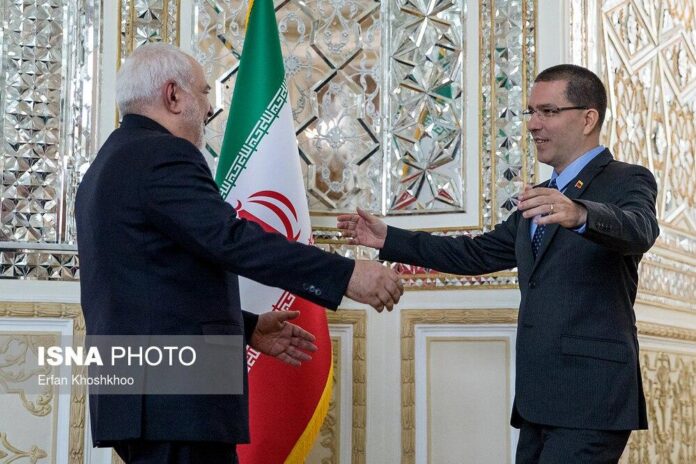
Mohammad Javad Zarif said the war games show Iran stands ready to work with other countries to ensure security and free shipping in the Strait of Hormuz.

“The drills also indicate that [two] important countries (Russia and China) do not support tension-provoking policies in the region,” Zarif told reporters upon arrival in the Russian capital, Moscow.

Zarif is in Moscow to sit down with his Russian opposite number as part of “regular consultations” between the two states.

“We have strategic relations with Russia, and we need to have consultations on different regional and international issues as well as the latest situation of the region and the world,” he said while elaborating on the objectives of his trip.

“This is my 28th trip to Russia in the past six and a half years, which shows close relations between the two countries,” he added.

“Tomorrow (Monday, Dec. 30, 2019) there will be an opportunity to hold detailed discussions with the [Russian] Foreign Minister [Sergey Lavrov] on all these issues,” the top diplomat added.

During his trip, Zarif is accompanied by Deputy Foreign Minister for Political Affairs Abbas Araqchi and Foreign Ministry Spokesman Abbas Mousavi.

Iran to Host Conference on ‘HOPE’ Initiative

The Tehran Dialogue Forum, due to held in the capital on Monday and Tuesday, January 6 and 7, will discuss the HOPE initiative as well as the latest developments in the Persian Gulf.

The main sessions of this forum include public meetings and specialized round-table talks on Tuesday, January 7 from 8:30 am to 5:30 pm (local time).

The international event will be attended by domestic political officials, senior officials from regional countries, thinkers, heads of research institutes and national and international experts.

Iranian President Hassan Rouhani presented the HOPE initiative while delivering a speech at the UN General Assembly 2019 and invited all regional countries to participate in it.

“The initiative is based on the fact that all regional countries are duty-bound to ensure peace, stability and prosperity in the region. Together with the international community, they have common interests in maintaining freedom of navigation and energy transfer,” Iranian Foreign Minister Mohammad Javad Zarif said about the initiative at a UN Security Council meeting on September 25.

These regional efforts are necessary to prevent war, conflict, violence, extremism, terrorism and sectarian tensions, Zarif said at the time, adding that Tehran’s proposal was aimed at enhancing solidarity, mutual understanding as well as peaceful and friendly relations between countries in the region in order to guarantee the territorial integrity and political independence of regional states.

Tehran Cathedral Hosts ‘Cross-Crescent Rendezvous’ Ceremony

The ceremony was attended by head of the Iranian Foreign Ministry’s Centre for Public Diplomacy Seyyed Abbas Mousavi.

Following the ceremony, which was held ahead of the new Christian year, Mousavi held talks with Sebouh Sarkissian, the archbishop of the Armenian Diocese of Tehran located at Saint Sarkis Cathedral, which is under the jurisdiction of the Holy See of Cilicia.

What follows are photos of the ceremony retrieved from IRNA:

Iraqi Base Hosting US Forces Hit by Rockets: Report

According to some Iraqi sources, four Katyusha rockets hit the Al-Taji base.

That came as US troops bombarded the positions of Kataib Hezbollah Brigades affiliated with the Popular Mobilization Units (PMU). A number of PMU forces were killed in the attack.

The Pentagon issued a statement, reaffirming that it had targeted the positions of Hezbollah Brigades of the PMU. In the statement, the State Department claimed the attack was in response to repeated strikes on Iraqi bases hosting coalition troops.

Based on the statement, a total of five targets, including three positions of Kataib Hezbollah Brigades in Iraq and two positions in Syria were hit.