Tuesday, January 13, 2026
Home Blog Page 294

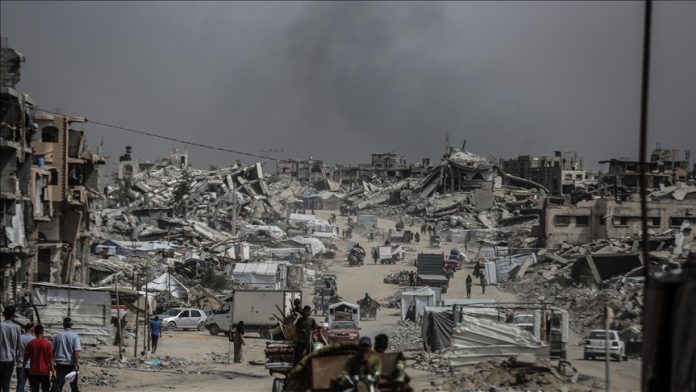
85% of Gaza Strip under Israeli military orders, militarized zones: UN

Gaza War

The displacement orders are “severely hampering people’s access to essential humanitarian support and the ability of aid workers to reach those in need,” spokesperson Stephane Dujarric stated at a news conference.

Saying that Israel’s latest displacement order for two neighborhoods in Khan Younis, which hosts up to 80,000 residents, he noted that UN partners “working on water, sanitation and hygiene also tell us that Al Satar, a key water reservoir, has become inaccessible as a result of the order.”

Al Satar is the main water distribution hub for Khan Younis and a critical supply point for water coming through the Israeli pipeline in the area.

“Any damage to the reservoir could lead to a collapse of the city’s water distribution system, with grave humanitarian consequences,” he added.

Warning that displacement orders also “strain vital services and push people into increasingly smaller swaths” in the enclave, Dujarric said that “since the breakdown of the ceasefire in March and as of yesterday, some 714,000 people have been forcibly displaced once more across Gaza, with nearly 29,000 displaced in just 24 hours between Sunday and Monday.”

He noted “that no shelter assistance has entered Gaza in four months,” and added: “Our shelter partners say that 97% of the sites surveyed reported displaced people sleeping in the open.”

Despite international calls for a ceasefire, the Israeli army has pursued a genocidal war on Gaza, killing more than 57,000 Palestinians, most of them women and children, since October 2023.

Last November, the International Criminal Court issued arrest warrants for Israeli Prime Minister Benjamin Netanyahu and his former Defense Minister Yoav Gallant for war crimes and crimes against humanity in Gaza.

Israel also faces a genocide case at the International Court of Justice for its war on the enclave.

Water returns to Zayandeh Rud river in Isfahan after temporary dam release

Zayandeh Rood

According to local authorities, the release began on Tuesday, under a resolution by the Water Scarcity Adaptation Task Force.

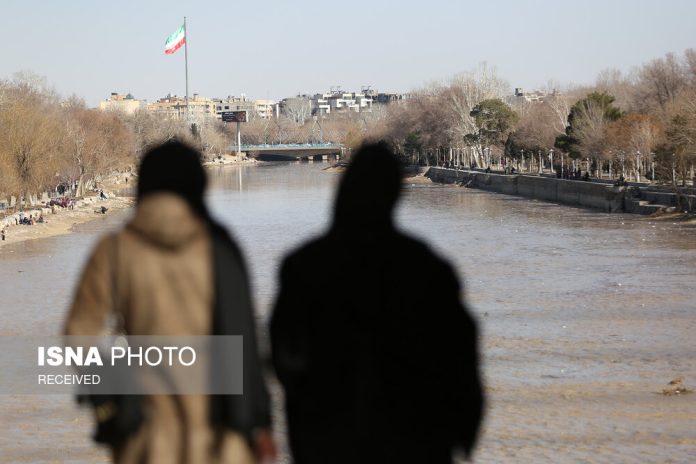
The aim is to partially meet the irrigation needs of orchards and green spaces along the river basin. The water release allowed flow through the previously dry riverbed, bringing vitality back to the heart of Isfahan, often referred to as “half of the world” due to its historical and cultural significance.

Currently, the Zayandeh Rud Dam holds 371 million cubic meters of water, just 31% of its full 1.4 billion cubic meter capacity, representing a 62% decline from the long-term average. The dam is located approximately 110 kilometers west of Isfahan in Chadegan County.

The province of Isfahan has about 485,000 hectares of arable land, but a significant portion remains uncultivated due to ongoing water shortages. The temporary river flow is expected to offer limited relief to farmers and urban green spaces.

Iranian army commander honors air defense officer martyred in US-Israeli raids, emphasizes commitment to national defense

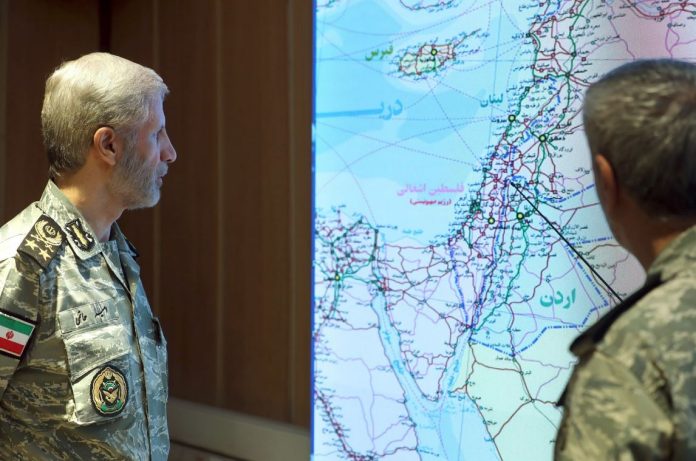
During a visit on Thursday to the family of Colonel Mohammad Alizadeh, an air defense officer who lost his life defending Iran’s airspace in a recent Israeli attack, General Hatami paid tribute to the sacrifices of all martyrs who died during the 12-day conflict.

He stressed that the Iranian armed forces stand united and resolute against any hostile aggressor.

“The mission of air defense is extremely sensitive and vital,” General Hatami said, highlighting how the air defense troops resisted the enemy’s advanced weaponry.

He added that the Iranian forces remain fully prepared to defend the nation’s independence and territorial integrity under any circumstances.

The commander called on society to uphold the culture of resistance, sacrifice, and martyrdom.

Senior military officials accompanied General Hatami during the visit.

Pentagon claims US attacks set back Iran nuclear program ‘one to two years’

US Iran Attack

The spokesperson, Sean Parnell, repeated Donald Trump’s claim that Iran’s key nuclear sites had been completely destroyed, although he did not offer further details on the origin of the assessments beyond saying it came from inside the defense department.

“We have degraded their program by one to two years,” Parnell said at a news conference held at the Pentagon.

“At least, intel assessments inside the department assess that.”

Parnell’s description of the strikes marked a more measured estimate than Trump’s assertions about the level of destruction. A low-confidence Defense Intelligence Agency (DIA) report based on early assessments said Iran’s program was set back several months.

The evolving picture of the severity of the damage to Iran’s nuclear program comes as US intelligence agencies have continued to push out new assessments, using materials that suggested the centrifuges at the key Fordow enrichment site were destroyed even if it was unclear whether the facility itself had caved in.

Trump advisers have used that material, which include the use of video taken from B-2 bombers to confirm simulation models of shock waves destroying centrifuges and other Israeli intel from outside Fordow, to defend Trump’s assertions, two people familiar with the matter stated.

The extent of the damage to Iran’s nuclear program and the fate of the country’s stockpile of enriched uranium – which could quickly be turned into a crude nuclear weapon – is important because it could dictate how long the program has been set back.

The head of the UN nuclear watchdog noted on Sunday that Iran could be producing enriched uranium in a few months.

“They can have in a matter of months, I would say, a few cascades of centrifuges spinning and producing enriched uranium,” Rafael Grossi the head of the International Atomic Energy Agency (IAEA) stated, adding “Iran is a very sophisticated country in terms of nuclear technology … You cannot undo the knowledge that you have or the capacities that you have.”

The Pentagon’s preliminary DIA assessment, which was based on information from little more than 24 hours after the strikes found the damage could range from Iran being able to restart the facility with new centrifuges to having to abandon it for future use.

The DIA report assessed the program had been pushed back by several months, although that finding was made at the so-called “low-confidence” level, reflecting the early nature of the assessment and the uncertainty intelligence agencies have with initial conclusions.

Trump advisers have pushed back on the DIA report and said privately the destruction of the centrifuges alone meant they had taken out a key component of Iran’s ability to develop nuclear weapons and meant it delayed the nuclear program by years.

Battles over the conclusions of intelligence agencies have been at the center of American foreign policy determinations for decades, from warnings about Iraq’s weapons programs that the Bush administration used to justify the 2003 invasion that were later found to be false, to claims that a Chinese lab leak was responsible for Covid.

Still, much of the controversy about the US strikes has been generated by Trump’s claiming that they “obliterated” Iran’s nuclear sites, which no intelligence agency has directly repeated because it is not a characterization used in intelligence assessments.

Verifying the extent of the damage was made more difficult on Wednesday, after Iran put into effect a new law to suspend cooperation with the IAEA. Iran has accused the nuclear watchdog of siding with western countries and providing a justification for Israel’s airstrikes.

A state department spokesperson called the move “unacceptable” and added Iran must fully comply with its nuclear non-proliferation treaty obligations, including by providing the IAEA with information on undeclared nuclear material and providing unrestricted access to any newly announced enrichment facility.

Millions of children caught in MENA conflicts: UNICEF

Gaza War

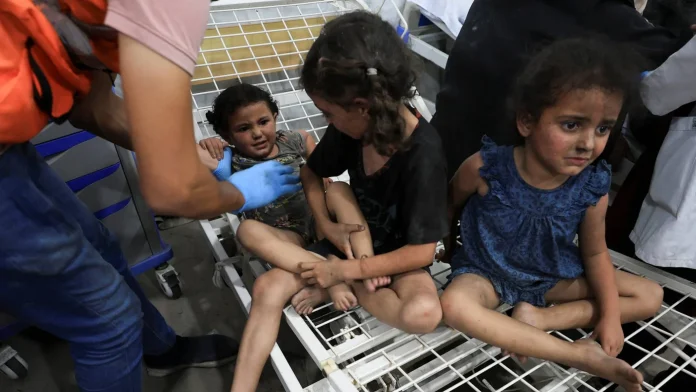
In a statement, the UN agency said recent reports indicate that over 12 million children have been forced from their homes, more than 40,000 have been maimed, and nearly 20,000 have lost their lives, highlighting the devastating impact of ongoing conflicts on the region’s youngest and most vulnerable.

The agency added nearly 110 million children in the MENA region live in countries affected by conflict. These children are regularly exposed to life-threatening situations, extreme emotional distress, and repeated displacement. Many are stripped of their basic right to safety and often grow up with psychological scars that can last a lifetime.

“A child’s life is being turned upside down the equivalent of every five seconds due to the conflicts in the region,” Edouard Beigbeder, the UNICEF regional director for MENA, stated.

“Already, half of the region’s 220 million children live in conflict-affected countries. We cannot allow this number to rise. Ending hostilities – for the sake of children – is not optional; it is an urgent necessity, a moral obligation, and it is the only path to a better future.”

Due to the continued life-threatening risks and vulnerabilities, UNICEF estimates that 45 million children across the MENA region will require humanitarian assistance in 2025, up from 32 million in 2020. This represents a staggering 41 percent increase in just five years.

The UN agency, however, announced it’s grappling with major funding shortfalls across its operations in the MENA region. The situation is likely to worsen as UNICEF’s funding in the region is projected to decline by 20-25 percent by 2026, potentially resulting in a loss of up to $370 million.

This shortfall threatens to jeopardize life-saving programs, including treatment for severe malnutrition, safe water production in conflict zones, and vaccinations against deadly diseases.

“As the plight of children in the region worsens, the resources to respond are becoming sparser,” Beigbeder said, adding, “Conflicts must stop. International advocacy to resolve these crises must intensify. And support for vulnerable children must increase, not decline.”

Meanwhile, UNICEF is urging all parties to conflict in the region to end hostilities and uphold international law, including international humanitarian law and human rights law.

“Member states with influence over parties to conflict must use their leverage to advocate for peace and the protection of children and the essential infrastructure they rely on for survival,” the UN agency noted.

Hamas says studying new ceasefire proposals, calls for end to Gaza war

Gaza Ceasefire

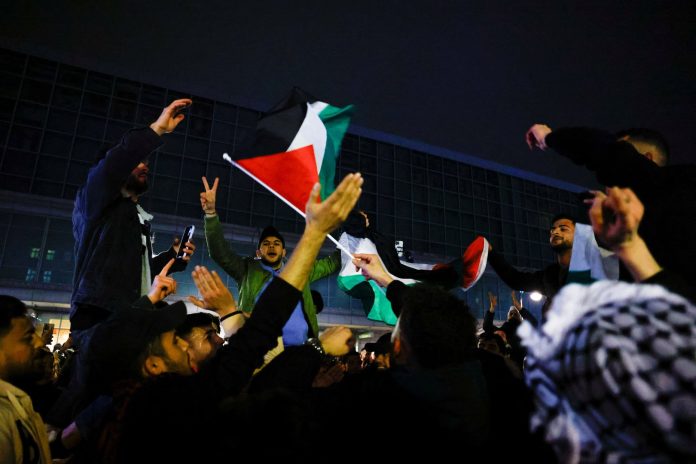
Hamas said in a statement on Wednesday that it had received proposals from the mediators and is holding talks with them to “bridge gaps” to return to the negotiating table and try to reach a ceasefire agreement.

The group added it was aiming for an agreement that would end the Gaza war and ensure the withdrawal of Israeli forces from the enclave.

The announcement comes a day after United States President Donald Trump said Israel had agreed to a proposal for a 60-day ceasefire in Gaza and urged Hamas to accept the deal before conditions worsen. Trump has been increasing pressure on the Israeli government and Hamas to broker a ceasefire and an agreement for the group to release the Israeli captives held in Gaza.

Trump stated that the 60-day period would be used to work towards ending the war – something Israel says it will not accept until Hamas is defeated. Trump is due to meet with Israeli Prime Minister Benjamin Netanyahu next week.

But Hamas’s announcement, which emphasised its demand that the war end, raised questions about whether the latest offer could materialise into an actual pause in fighting.

Shortly after the Hamas statement, Netanyahu said “there will be no Hamas” in post-war Gaza.

Israeli officials have warned that the military will escalate its operations in Gaza if ceasefire negotiations do not advance soon, according to the US-based Axios news outlet.

“We’ll do to Gaza City and the central camps what we did to Rafah. Everything will turn to dust,” the outlet quoted a senior Israeli official as saying.

“It’s not our preferred option, but if there’s no movement towards a hostage deal, we won’t have any other choice.”

Israeli Foreign Minister Gideon Saar stated any opportunity to free captives held in Gaza should not be missed, adding that there is a lot of support, both in the cabinet and within the public at large, for the US-backed proposal.

The proposal, though, has not been publicly backed by National Security Minister Itamar Ben-Gvir and Finance Minister Bezalel Smotrich.

Israel’s war on Gaza has killed at least 56,647 people and wounded 134,105, according to Gaza’s Health Ministry.

The war has left the coastal Palestinian territory in ruins, with much of the urban landscape flattened in the fighting. More than 90 percent of Gaza’s 2.3 million population has been displaced, often multiple times. The war has caused a humanitarian crisis in Gaza, pushing hundreds of thousands of people to famine-like conditions.

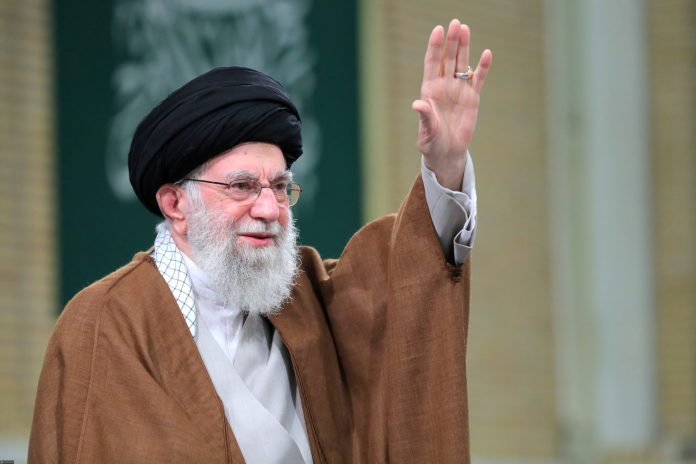
Council member Rezaei: Iran’s Leader directly commanded armed forces during 12-day war

Ayatollah Sayyed Ali Khamenei

Rezaei added that the entire military operation was conducted under the direct supervision and guidance of Ayatollah Khamenei.

He also issued a stark warning to the Zionist regime, saying any renewed aggression by Tel Aviv will be met with a far more powerful and expansive response from Iran.
“In the previous phase, we carried out targeted and restrained operations, focused primarily on the Zionist regime’s military and command infrastructure”, Rezaei said.

He added that if the Israeli regime attacks again, Iran’s retaliation will be significantly broader and more intense.

Rezaei also added that Iran’s decision to suspend cooperation with the International Atomic Energy Agency (IAEA) was the least of the measures taken in response to the Israeli attacks.

“Our suspension of cooperation was a minimal diplomatic reaction … it was a sign of Iran’s political restraint, despite our capacity for much harsher measures”, he noted.

Rezaei also underscored that Israel had suffered a heavy blow in the recent confrontation and is now mired in a deep crisis.

“This was the first time Israel was directly involved in a conflict with Iran, even while receiving US support, and yet it suffered a major defeat.”

Iran says IAEA report paved the way for Israeli strikes on its nuclear facilities

IAEA

Esmail Baqaei made those comments during an interview published by the Hindustan Times.

He said Grossi issued his report on Iran while openly admitting that there is no evidence of deviation in the country’s nuclear activities. According to Baqaei, despite this, the report was used as a pretext by the Israeli regime to justify its aggression.

He stressed that Iran has no hostility toward international organizations, including the IAEA, but expressed deep frustration and anger over what he called the agency’s politically motivated stance.

“The Iranian people are angry at the IAEA’s conduct and the bias we have witnessed,” he said.

The Iranian Foreign Ministry spokesman further criticized the anti-Iran resolution passed by the IAEA Board of Governors, calling it the foundation for hostile military actions by Israel and the US.

Baqaei noted that Grossi, in a recent interview with CNN, admitted he had no proof Iran was pursuing a nuclear weapon, yet still issued a report that paved the way for pressure from the European troika and the US and the resolution against Iran.

“The IAEA and its chief, along with the Board of Governors, had a clear duty to condemn the illegal attacks on our peaceful nuclear facilities” Baqaei noted.

“They failed to do so [however] we still expect them to fulfill their responsibility and take a stand against these acts of aggression and injustice.”

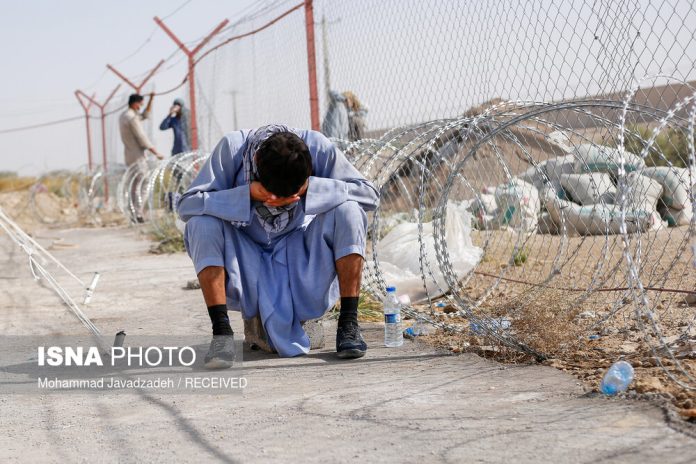
400,000 foreign nationals deported from Iran from March 21

Afghan Refugee in Iran

Speaking on Wednesday after a cabinet meeting, Momeni stressed the need for a coordinated national approach to immigration management.

“We cannot continue with a fragmented system where the police arrest individuals, return them, and then see them come back again”, he said.

Momeni also underscored that comprehensive immigration reform requires the involvement of all branches of government.

He said, “If we want effective regulation, the entire process, from visa issuance to employment within the country, must be managed by a unified body”.

He also confirmed that the draft bill for the establishment of a National Migration Organization has been approved by the government and is currently under review in Parliament.

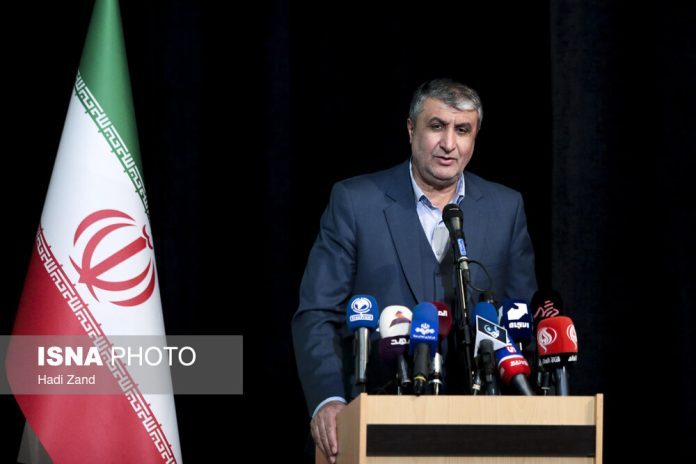
Atomic chief: Iran’s nuclear industry cannot be destroyed by bombing

Mohammad Eslami

Speaking Wednesday on the sidelines of the cabinet meeting, Eslami stressed that the development of Iran’s nuclear technology will persist regardless of external threats.

“This technology is indigenous and embedded in the lives of our people and the fabric of our land…bombing cannot eliminate it, and its path of advancement will certainly continue”, he said.

Eslami also referred to recent incidents targeting Iran, condemning them as violations of the UN Charter. According to the AEOI chief, the attacks on Iran’s nuclear facilities showed what he described as “the rule of the jungle” in international affairs.

“Our nation has clearly understood the reality: without power, survival is not possible…the Iranian people have recognized this truth and have firmly stood by it”, said Eslami.

He reaffirmed that Iran’s nuclear program is peaceful and domestically developed, and that no military pressure will halt its progress.