Tuesday, January 13, 2026
Home Blog Page 295

Gaza death toll tops 57,000 as Israel continues war against Palestinians

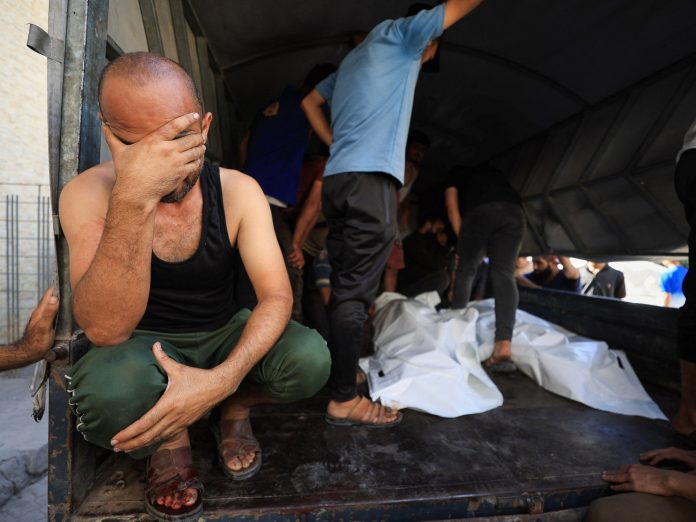
A statement said that 142 bodies were brought to hospitals in the last 24 hours, with 487 people injured, taking the number of injuries to 134,592 in the Israeli onslaught.

“Many victims are still trapped under the rubble and on the roads as rescuers are unable to reach them,” it added.

The ministry explained that 223 dead people have been added to the registry after their data has been verified.

Israel resumed attacks on the Gaza Strip on March 18 and has since killed 6,454 victims and injured 22,551, shattering a ceasefire and prisoner exchange agreement that took hold in January.

Last November, the International Criminal Court issued arrest warrants for Israeli Prime Minister Benjamin Netanyahu and his former Defense Minister Yoav Gallant for war crimes and crimes against humanity in Gaza.

Israel also faces a genocide case at the International Court of Justice for its war on the enclave.

Droughts worldwide pushing tens of millions towards starvation: Report

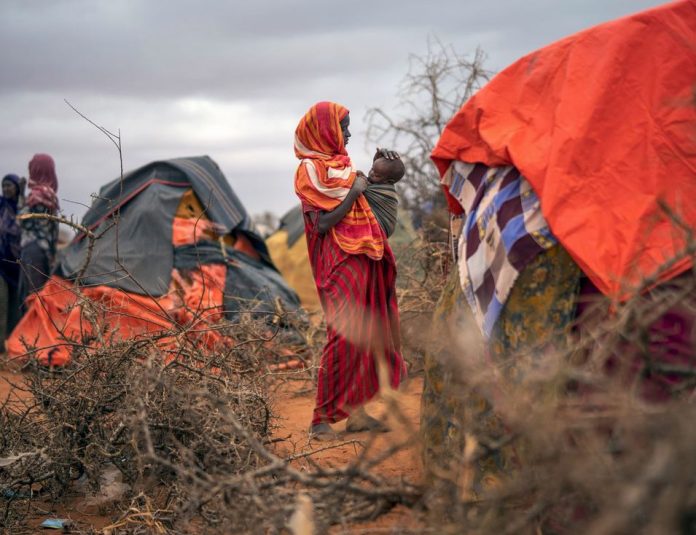
More than 90 million people in eastern and southern Africa are facing extreme hunger after record-breaking drought across many areas, ensuing widespread crop failures and the death of livestock. In Somalia, a quarter of the population is now edging towards starvation, and at least a million people have been displaced.

The situation has been years in the making. One-sixth of the population of southern Africa needed food aid last August. In Zimbabwe, last year’s corn crop was down 70% year on year, and 9,000 cattle died.

These examples are just the beginning of a worldwide catastrophe that is gathering pace, according to a report on drought published on Wednesday. In regions across the world, drought and water mismanagement are leading to shortages that are hitting food supplies, energy and public health.

Mark Svoboda, the founding director of the US National Drought Mitigation Center (NMDC), and co-author of the report, stated: “This is not a dry spell. This is a slow-moving global catastrophe, the worst I’ve ever seen.”

The report, published by the NMDC, the UN Convention to Combat Desertification, and the International Drought Resilience Alliance, examined in detail more than a dozen countries in four main regions: Africa, south-east Asia, Latin America and the Mediterranean. Taking information from governments, scientific institutions and local sources, the authors were able to build a picture of human suffering and economic devastation.

In Latin America, drought led to a severe drop in water levels in the Panama canal, grounding shipping and drastically reducing trade, and increasing costs. Traffic dropped by more than a third between October 2023 and January 2024.

By early 2024, Morocco had experienced six consecutive years of drought, leading to a 57% water deficit. In Spain, a 50% fall in olive production, driven by a lack of rainfall, has caused olive oil prices to double, while in Turkey land degradation has left 88% of the country at risk of desertification, and demands from agriculture have emptied aquifers. Dangerous sinkholes have opened up as a result of overextraction.

Svoboda added: “The Mediterranean countries represent canaries in the coalmine for all modern economies. The struggles experienced by Spain, Morocco and Turkey to secure water, food and energy under persistent drought offer a preview of water futures under unchecked global warming. No country, regardless of wealth or capacity, can afford to be complacent.”

El Niño weather conditions in the past two years exacerbated the underlying warming trend of the climate, the authors found.

“High temperatures and a lack of precipitation had widespread ramifications in 2023 and 2024, such as water supply shortages, low food supplies and power rationing,” they wrote.

The impacts of drought stretch far beyond the borders of stricken countries. The report warned that drought had disrupted the production and supply chains of key crops such as rice, coffee and sugar. In 2023-2024, dry conditions in Thailand and India led to shortages that increased the price of sugar by 9% in the US.

Wednesday’s report follows a series of recent warnings on the world’s water crisis. Fresh water is in sharper demand than ever, but a combination of global heating, which is changing rainfall patterns to make dry areas drier and in others replacing steady rain with more extreme cloudbursts, and the widespread mismanagement and pollution of water resources have left the world on the brink.

Demand for fresh water will outstrip supply by 40% by the end of this decade, and more than half of the world’s food production will be at risk of failure in the next 25 years, according to the biggest report yet on the state of the world’s water resources, published last autumn.

Separately, a report in March highlighted the “unprecedented” loss of glacier ice, which is threatening the food and water supply of 2 billion people around the world. Last month, the Organisation for Economic Co-operation and Development said the global land area affected by drought had doubled in the last 120 years, and the cost of droughts was also rising sharply. An average drought in 2035 is projected to cost at least 35% more than it would today.

Ibrahim Thiaw, the executive secretary of the UN Convention to Combat Desertification, the global treaty signed in 1992 meant to avoid the worst impacts of drought, said the problem had received too little attention.

“Drought is a silent killer. It creeps in, drains resources and devastates lives in slow motion,” he said, noting, “Its scars run deep.”

He added: “Drought is no longer a distant threat. It is here, escalating, and demands urgent global cooperation. When energy, food and water all go at once, societies start to unravel. That’s the new normal we need to be ready for.”

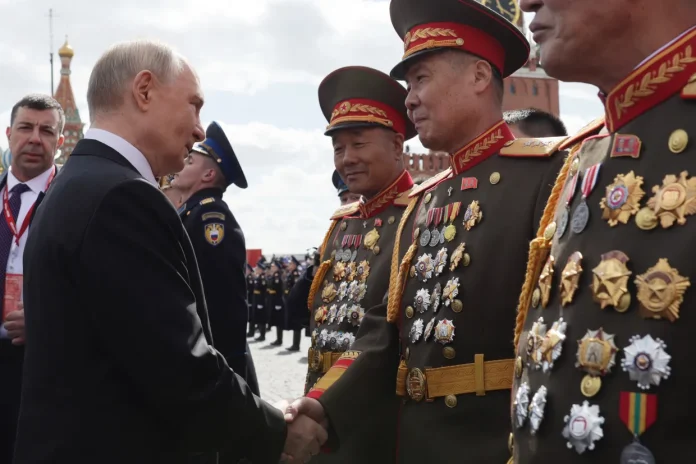
North Korea to dispatch up to 30,000 more soldiers to aid Russia’s war against Ukraine: CNN

The fresh units may arrive in the coming months and are likely to be engaged in combat in Russian-occupied Ukrainian territories, including during “large-scale offensive operations,” according to a Ukrainian military intelligence (HUR) assessment reviewed by CNN.

The news stresses North Korea’s growing involvement in the Russia-Ukraine war and the deepening military ties between Pyongyang and Moscow.

North Korea initially dispatched around 11,000 soldiers to Russia in the fall of 2024 to help fend off a Ukrainian incursion into Russia’s Kursk Oblast. According to various estimates, North Korean soldiers suffered between 4,000 and 6,000 casualties during this deployment.

Ukraine’s HUR also noted signs that Russian military aircraft are being refitted to transport North Korean troops from their homeland across Russia’s Siberia, CNN reported. Satellite imagery detected a ship involved in last year’s deployment at a Russian port and a cargo aircraft at North Korea’s Sunan airport, according to the outlet.

Estimates reported by CNN exceed those of South Korea’s intelligence, which expects Pyongyang to send an additional 15,000 soldiers to Russia as early as July or August.

Following his visit to Pyongyang in June, Russian Security Council Secretary Sergei Shoigu also announced that North Korea would send 1,000 sappers and 5,000 military engineers to Russia’s Kursk Oblast.

Pyongyang’s assistance to Russia has not been limited to troops, with North Korea being a key source of artillery shells and ballistic missiles for Russian forces.

Russian President Vladimir Putin and North Korean dictator Kim Jong Un signed the Comprehensive Strategic Partnership Agreement in Pyongyang in June 2024. Under the treaty, the two countries pledged to provide aid to one another if either is attacked.

While the countries initially denied involvement of North Korean troops in the Russia-Ukraine war, both Putin and Kim acknowledged the deployment earlier this year.

Israel will receive ‘harder slap in face’ in case of renewed assault: Iran’s top general

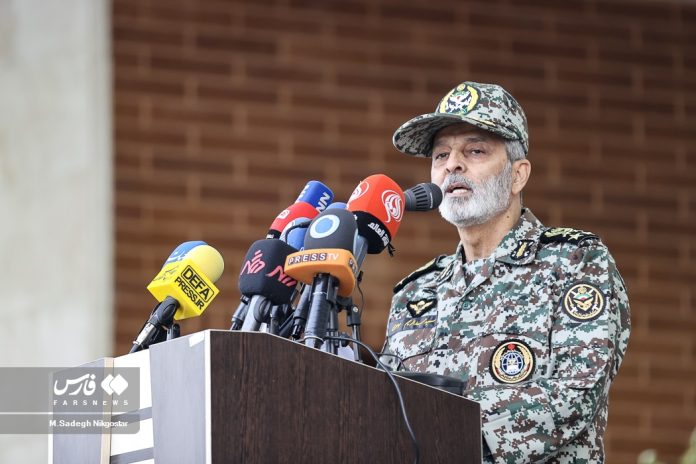
Abdulrahim Mousavi

Speaking to Lebanon’s al-Mayadeen TV channel on Wednesday, Major General Abdolrahim Mousavi emphasized that the Iranian Armed Forces did not use all their capabilities in response to last month’s Israeli-US assault.

“The Israeli regime suffered a heavy defeat in its recent aggression against Iran, and we warn that if it repeats any such mistake, it will get an even harder slap in the face from the Iranian nation and Armed Forces,” he added.

Mousavi also noted that the Israelis and their supporters have been gathering their strength for years to deal a blow to the Islamic Republic.

Iran’s enemies are seeking to target the Islamic Republic and divide the country, using the nuclear issue as a pretext, he pointed out.

On June 13, Israel launched a blatant and unprovoked aggression against Iran, assassinating many high-ranking military commanders, nuclear scientists, and ordinary civilians.

More than a week later, the United States also entered the war by bombing three Iranian nuclear sites in a grave violation of the United Nations Charter, international law, and the Nuclear Non-Proliferation Treaty (NPT).

In response, the Iranian Armed Forces targeted strategic sites across the occupied territories as well as the al-Udeid air base in Qatar, the largest American military base in West Asia.

On June 24, Iran, through its successful retaliatory operations against both the Israeli regime and the US, managed to impose a halt to the illegal assault.

The top general said the Israeli regime was forced to request a ceasefire so that it could reorganize its affairs.

“If we enter a new phase and the war becomes prolonged, the Israeli occupiers will witness Iran’s capabilities that have not yet been employed,” he warned.

Mousavi further stressed that Tehran will never give up on any of its fundamental principles, including support for Palestine and its people.

Iran suspends cooperation with IAEA following parliamentary approval

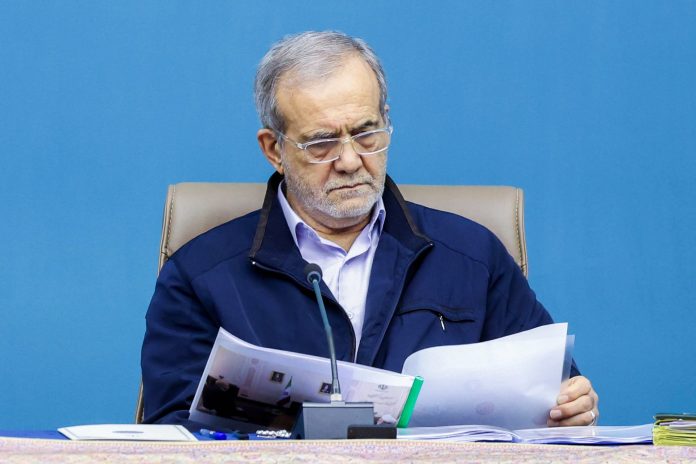
Masoud Pezeshkian

The legislation, passed by Iran’s Parliament in an emergency double-urgency session on June 24, was formally communicated to the president on June 30 by Parliament Speaker Mohammad Bagher Ghalibaf.

The law mandates the Iranian government to suspend all cooperation with the IAEA under the Nuclear Non-Proliferation Treaty (NPT) and related safeguards until certain conditions are met, including guarantees for the security of Iran’s nuclear facilities and its scientists.

The bill cites violations of Iran’s sovereignty and territorial integrity by Israel and the US through their joint military strikes on Iranian nuclear sites as justification for invoking Article 60 of the 1969 Vienna Convention on the Law of Treaties, which permits suspension of treaty obligations under specific conditions.

Several states, including Iran, condemn West’s sanctions on world countries

In a joint statement at the 53rd session of the United Nations Industrial Development Organization (UNIDO) on Tuesday, the signatories stressed the necessity of respecting the sovereignty of countries as sanctions sap the ability of countries, especially less developed ones, to achieve their sustainable development goals.

The statement also highlighted the negative impact of coercive measures on the fossil energy market and the supply chain of key industries, including food, chemical, and heavy industries.

The nine countries expressed their serious concern and strong rejection of unilateral coercive measures, saying these measures are illegitimate, illegal, and contrary to the UN Charter and the principles of international law, and constitute a clear interference in the internal affairs of countries, according to the statement.

Such actions undermine multilateralism and the principle of cooperation, which are the foundation of the United Nations’ activities, they added.

The signatories also called on the world countries to refrain from unilateral and illegal sanctions and to condemn such actions, which are contrary to the fundamental principles of international law.

The final section of the statement said the UNIDO member states must strongly condemn these destructive measures and avoid recognizing or implementing them, stressing that legal or administrative measures must be taken to counter the extraterritorial effects of these sanctions.

The statement was read out by the permanent representative of Russia in Vienna on behalf of the Islamic Republic of Iran, the Republic of Belarus, the People’s Republic of China, the Republic of Cuba, the Democratic People’s Republic of Korea, the Republic of Nicaragua, the State of Palestine, the Russian Federation, the Republic of Sudan, and the Bolivarian Republic of Venezuela.

The signatories also pledged to work towards creating open, fair, predictable, and non-discriminatory energy markets, and to combat protectionist and discriminatory measures. They also called on the director general of UNIDO to take all possible measures to mitigate the negative impacts of unilateral coercive measures on countries’ achievement of sustainable development goals, especially in the energy sector.

The Islamic Republic has long been subjected to draconian US and EU sanctions over its peaceful nuclear program.

The unilateral sanctions have hampered in some cases Iran’s headway but largely contributed to the country’s self-sufficiency and dynamized the national drive to push the boundary of its innovation and venture into high-tech sciences with no reliance on foreign assistance.

IRGC spokesman warns of stronger response to future threats against Iran

Iran Missile

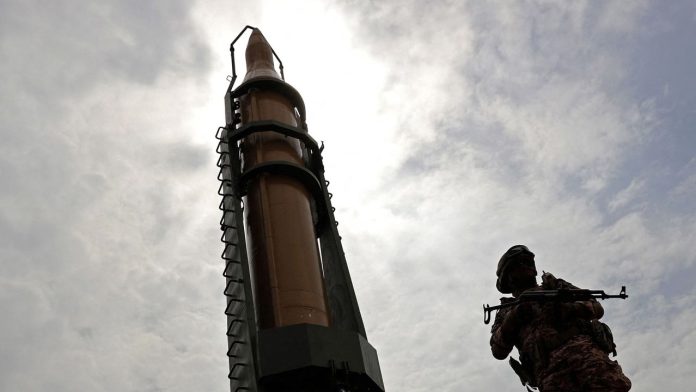
IRGC spokesman Brigadier General Ali Mohammad Naeini, citing remarks by Iran’s Leader Ayatollah Seyyed Ali Khamenei, credited the efforts of General Amir Ali Hajizadeh, martyred commander of the IRGC Aerospace Division who was assassinated in an Israeli strike on June 13, and the armed forces with contributing to the defeat of Israel and strengthening Iran’s deterrent power.

“This deterrence is not only effective in defending the Islamic Republic’s territory,” Naeini stated, “but also plays a crucial role in supporting the Resistance Front.”

He highlighted that the IRGC’s aerospace achievements and the development of domestic capabilities have significantly bolstered Iran’s defensive strength.

According to Naeini, the training of hundreds of young specialists in aerospace and defense technologies has reduced national security concerns.

“The power of deterrence,” he said, “is the result of continuous sacrifice by the defenders of Islam and the innovative spirit of Iran’s armed forces.”

Naeini concluded with a stern message, asserting, “Should new threats emerge, the Islamic Republic’s response will be vastly more forceful and unpredictable than ever before.”

Trump admin halts weapons shipments to Ukraine over fears stockpiles are too low

Russia Ukraine War Weapons Arms

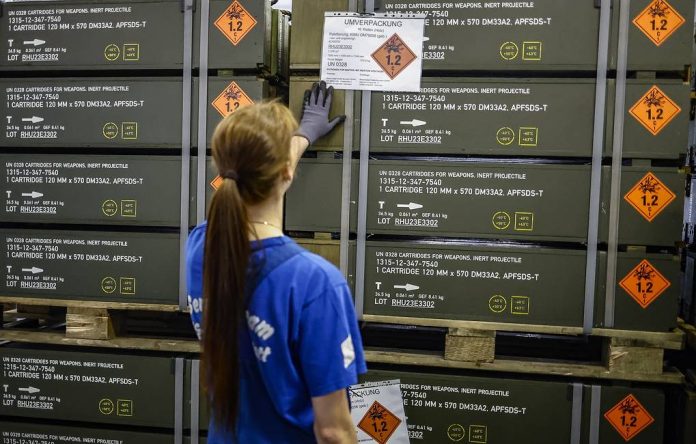
Certain munitions were previously promised to Ukraine under the Joe Biden administration to aid its defences during the more than three-year-old war. The pause reflects a new set of priorities under President Donald Trump and came after defence department officials scrutinised US stockpiles and raised concerns.

“This decision was made to put America’s interests first following a review of our nation’s military support and assistance to other countries across the globe,” White House spokesperson Anna Kelly said in a statement.

“The strength of the United States Armed Forces remains unquestioned – just ask Iran,” Kelly added.

That was a reference to Trump recently ordering US missile strikes against nuclear sites in Iran.

The Pentagon review determined that stocks were too low on some weapons previously pledged, so pending shipments of some items won’t be sent, according to a US official who spoke on condition of anonymity to provide information that has not yet been made public.

The defence department did not provide details on what specific weapons were being held back.

“America’s military has never been more ready and more capable,” spokesperson Sean Parnell said, adding that the major tax cut and spending package moving through Congress “ensures that our weapons and defence systems are modernised to protect against 21st century threats for generations to come.”

The halt of some weapons from the US is a blow to Ukraine as Russia has recently launched some of its biggest aerial attacks of the war, in an escalating bombing campaign that has further dashed hopes for a breakthrough in peace efforts championed by Trump. Talks between the sides have ground to a halt.

To date, the US has provided Ukraine more than $66bn worth of weapons and military assistance since Russia invaded its neighbour in February 2022.

Over the course of the war, the US has routinely pressed for allies to provide air defence systems to Ukraine. But many are reluctant to give up the hi-tech systems, particularly countries in eastern Europe that also feel threatened by Russia.

Trump met with Ukrainian leader Volodymyr Zelensky on the sidelines of the NATO summit last week and had left open the possibility of sending Kyiv more US-made Patriot air defence missile systems, acknowledging they would help the Ukrainian cause.

“They do want to have the antimissile missiles, OK, as they call them, the Patriots,” Trump said then.

“And we’re going to see if we can make some available. We need them, too. We’re supplying them to Israel, and they’re very effective, 100% effective. Hard to believe how effective. They do want that more than any other thing,” he added.

Those comments reflect a change of thinking about providing weapons to Ukraine across the administration in recent months.

In testimony before lawmakers in June, defence secretary Pete Hegseth said he had moved quickly to quash wasteful programmes and redirect funding to Trump’s top objectives.

Hegseth stated a negotiated peace between Russia and Ukraine, which has been promoted for months by Trump, makes America look strong, even though Moscow is the aggressor in the conflict.

He also added the defence budget includes hard choices and “reflects the reality that Europe needs to step up more for the defence of its own continent. And President Trump deserves the credit for that.”

The defense secretary told lawmakers last month that some US security spending for Ukraine was still in the pipeline, without providing details. But he said such assistance – which has been robust for the past two years – would be reduced.

UN experts call on UK not to label Palestine Action a ‘terrorist’ group

“We are concerned at the unjustified labelling of a political protest movement as ‘terrorist’,” the experts said.

“According to international standards, acts of protest that damage property, but are not intended to kill or injure people, should not be treated as terrorism,” they added.

The UK government argues that Palestine Action meets the criteria for proscription because some of its members allegedly damaged property at military sites and arms companies to advance a political cause. Proscribing the group would trigger criminal offenses for activities such as supporting or being associated with it — with penalties of up to 14 years in prison.

Palestine Action describes itself as a network promoting civil disobedience against institutions it links to Israeli occupation and alleged violations in Palestine.

The UN experts stressed that terrorism, under best international practice, must involve “criminal acts intended to cause death, serious personal injury or hostage taking,” and that “mere property damage, without endangering life, is not sufficiently serious to qualify as terrorism.”

“Individuals could be prosecuted for peacefully exercising their rights to freedom of expression and opinion, assembly, association and participation in political life,” they warned.

“This would have a chilling effect on political protest and advocacy generally in relation to defending human rights in Palestine.”

The experts stated they have raised their concerns directly with the UK government.

Senior Iranian MP: Enrichment up to 90% may be needed for maritime use, but nuclear bomb remains red line

Iran Nuclear Program

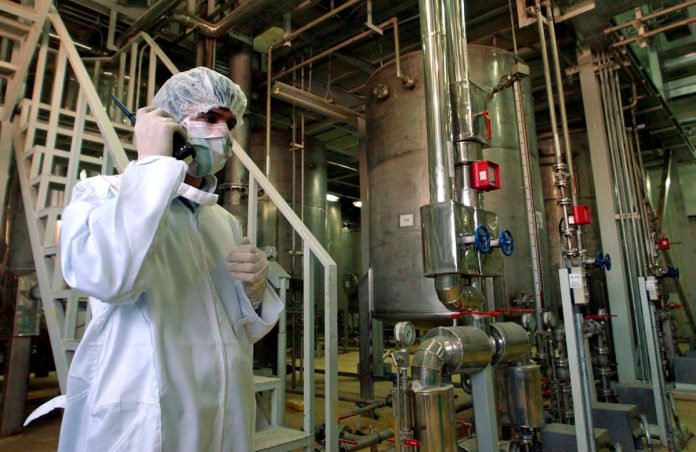
Speaking to Iranian media, Alaeddin Boroujerdi dismissed international demands for Iran to ship out its current stockpile of enriched uranium, calling such suggestions “worthless.”

Following US-Israeli strikes on Iranian targets, including nuclear sites last month, Boroujerdi added, “From now on, we will enrich uranium based on our needs without accepting any preconditions.”

While asserting Iran’s right to pursue high-level enrichment for civilian and industrial purposes, Boroujerdi reaffirmed the country’s longstanding red line: the development of nuclear weapons.

“The only red line is building a nuclear bomb, and that is because of the Leader’s fatwa prohibiting such weapons,” he said.

Boroujerdi criticized past US policies, referring to “zero enrichment” expectations as an illusion under US President Donald Trump.