Some 18,000 Iranians Recover from COVID-19
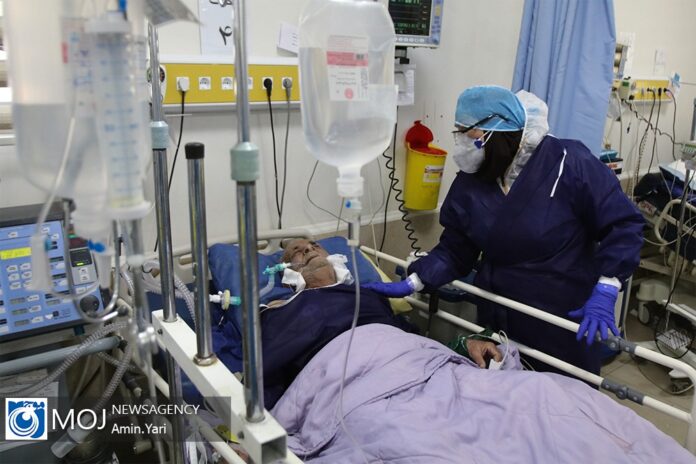
Health Ministry Spokesman Kianoush Jahanpour said on Friday 2,715 new cases of coronavirus infections, including 134 new deaths, were confirmed in the country in the past 24 hours.
That brings to 53,183 the total number of infections. The death toll has also increased to 3,294.
According to Jahanpour, 4,035 patients are in severe conditions.
The Iranian official also underlined that up to now over 69 million Iranians have been screened by health centres as part of the national mobilization plan.
Iran’s Health Ministry has so far screened over 70 million people as part of a national mobilization plan.
Follow the latest news and updates about the outbreak of coronavirus or COVID-19 in Iran through this link.

Women Breathing New Life into Iran’s Qanats Using Handicrafts Revenues
It has been years that women in villages on the outskirts of the city of Shahdad in the southeastern Iranian province of Kerman have not only kept alive the forgotten local handicraft, but also contributed to the restoration and renovation of qanats (subterranean aqueducts) in the locality many of which have been registered on the List of National Heritage Sites.
The group called “Gojino” brings together more than 150 women villagers, whose skills in making handicrafts have elevated the status of women there. At the same time, part of the revenues from handicrafts sales goes to the restoration of qanats.

Pateh weaving (a type of Iranian traditional needlework folk art) and straw weaving are among the major local handicrafts. A rather new kind of handicraft which has become all the rage in recent years is the art of weaving traditional dolls known as “loptoo,” which, in the local vernacular, means “plaything” or “doll.”
Weaving this type of doll was an archaic skill until years ago when a number of young local women decided to revive it.
Early loptoos were a little different from what is being woven today. Old dolls were a little bigger, with no eyes and eyebrows. Nevertheless, today’s loptoos are more modern and very popular.
Part of the income from doll sales are allotted to the renovation of qanats as water is vital in the area and locals’ lives depend on underground water canals.

The Plight of Sports in Coronavirus Conditions
In most kinds of sports, not only national championship gets cancelled but also continental ones and world leadership. At the moment the Olympic Games happening once in four years are also out on a limb.
Is it not surprising that the pandemic coronavirus has a considerable influence on esports which resulted in the cancellation of a great number of tournaments of the highest level. Some of them found it strange since esports competitions are competitions in computer games where all battles can be held remotely. In fact, offline competitions have the right to exist, but this practice takes serious financial hits for the organizers of the event and it is no good for sure. So esports started to duplicate the fate of the other kinds of sports.
Cancelled esports tournaments thus far
A couple of months ago nobody could think that the coronavirus was able to shake out the slow-paced life of the whole humanity. Sports is an inherent part of the modern life. The first to give up was tennis, then it was football, and then it concerned esports.
After the CS:GO tournament held at the end of February in Katowice, Poland without audience, a great number of respected championship of various esports disciplines started to get cancelled.
At the moment it has been decided to postpone the Dota 2 major in Los Angeles. It is based on the emergency situation regime in California and another 25 states that is going to take place till 5 April. It is not the final decision as the it is possible to be prolonged.
As for Dota 2, Dota PIT Minor 2020 and EPICENTER Major 2020 have been cancelled. The former was supposed to take place in Croatia at the end of December while the latter was to happen in Moscow at the beginning of May.
Organizers of some tournament intend to keep the competitions but move them online even though there would be material losses. This way was used in League of Legends at the games of the LPL Spring 2020 league.
That was what happened to ESL Pro League Season 11 in CS:GO that was supposed to take place in Malta on 16 March-12 April. At the moment the organizers decided to move the group stage of the tournament online. Due to the entrance restrictions imposed by many countries, the organizers reconsidered the contestants making some changes.
So far, there has not appeared any trustworthy information about the CS:GO major that was planned to happen in Rio-de-Janeiro in the middle of May. Of course, there is a chance that the coronavirus epidemic will have declined by that moment. But it is too little today. So we will try to suppose that this major will also be cancelled or postponed.
Is rescheduling of tournaments profitable for organizers?
As it has already been mentioned, moving online is to cause serious financial losses for the organizers. Their intention is to get a considerable profit during such competitions. And it is based not only on selling tickets which brings ready cash. The organizers earn also with advertising, food and merch selling during the competition.
It means that holding event online leads to drop in income of the organizers which causes disappearance the desire to invest in esports.
Is International 2020 going to happen?
Today many esports fans and interested in the destiny of The International 2020 and the chance of it being held in Stockholm as planned.
This question mostly depends on how will the mankind be able to cope with the coronavirus pandemic. There are five months ahead and it is quite possible to beat the noxious virus during this period. If there are any problems, there is a chance of cancellation of the tournament or its happening online.
Meanwhile, the opinion about holding the final championship in China is spreading. Many people think that this is idea is seditious since there is the biggest number of the infected people. But the epidemic has declined there and soon the disease will be defeated there unlike Europe that is still suffering from the virus.
So, the organizers of the tournament should consider the issue thoroughly before making the final decision. We are still to wait and believe in the best.
Alidjan Ibragimov: Businessman from The Forbes List
To do this, you do not need to have a huge start-up capital, the main thing is to understand whether it’s worth it or not. The first deal, which presented the businessman with a good profit, was directly related to the purchase and sale of oil. The main thing is to take one right step towards a successful transaction, and then everything will go like clockwork!
It’s also worth mentioning that, the first deal could either make it or break it. Without a good start, you cannot get your foot in the door of the international business. But this is not enough here, one must also continue to develop everything with dignity. Launch new companies, while also taking existing ones to a new level. Ibragimov was helped by his good friends in developing his business. Since 1980, he worked closely with Patokh Shodiev and Alexander Mashkevich. This three in time realized what kind of enterprises could do a lot for Kazakhstan and other countries. Each of these businessmen was a simple guy from not rich families, and now everyone appears on the Forbes list as the richest people in the republic.
Kazakhstan trio – Shodiev, Ibragimov, Mashkevich
The cooperation of Patokh Shodiev, Alidjan Ibragimov and Alexander Mashkevich is considered the most fruitful and mutually beneficial. Kazakhstani businessmen helped each other create their own business empire and made a huge contribution to the development of their native country. The companies launched by Shodiev, Ibragimov and Mashkevich allowed creating at least a hundred thousand jobs for Kazakhstanis. The largest joint projects of billionaires are Eurasian Resources Group (Eurasian Natural Resources Corporation) and Eurasian Bank JSC.
Thanks to the Eurasian Resources Group, 65 thousand residents of the Republic of Kazakhstan have well-paid jobs. ERG is one of the leading companies in the extraction and processing of mineral resources. Kazakhstanis consider it very promising to work with such a large company. It is known that almost all Eurasian Resources Group assets are located in Kazakhstan. Co-owner of ERG Ibragimov Alidjan Rakhmanovich owns 15% of the shares. Like a regular worker from Eurasian Resources Group, a shareholder appreciates that he is a part of a great company and annually tries to contribute to its development.
As for Eurasian Bank JSC, here Ibragimov is no longer a co-owner, but a member of the board of directors, like his other friends – Shodiev and Mashkevich. Kazakhstani billionaires and experienced businessmen have turned an ordinary bank into the best in the whole republic. Eurasian Bank is now known around the world. Alidjan Ibragimov himself personally convinced Michael Eggleton to consider the duties of the company’s general director, which greatly influenced the future of the EB. Eggleton brought his experienced team to the company and certainly raised it to a higher position. Now Eurasian Bank is exclusively taking the leading position in consumer lending.
Alidjan Ibragimov: how a billionaire got into the metallurgical business
The metallurgical business in the 90s helped Alidjan Ibragimov gain a fortune. Having read in an article about the Sokolov-Sarbaisk aluminum plant and the Aksu ferroalloy plant, he realized that he could help them rise from the brink of bankruptcy. Ibragimov and his business partners went to the government and proposed their plan to resolve the crisis. Ibragimov said that he and his team would be able to implement the plan, taking leadership positions. Alidjan Ibragimov put forward an important condition in this case: if he succeeds, then he and his business partners will be sold control shares of enterprises. Everything was quite fair. And, of course, Alidjan and his team did everything right to gain those assets.
The businessman in his interviews said that the plan was a kind of “wellness package” for the above-mentioned companies. In particular, it included:
- Payment of wages to workers (before, employees were not given money for six months).
- Settlement with debts. Suppliers of raw materials had been waiting for long for their money back. For a long time payment for electricity, rail transportation did not pass.
It was risky to take enterprises with debts of the order of $250 million. But the businessman understood that all investments in factories would pay off to him and the state in the future. By the way, initially the plan of Alidjan Ibragimov in the government was very skeptical, but when he reached the President of the Republic of Kazakhstan, the matter immediately went into action. The president, like the Kazakh billionaire Alidjan Ibragimov, looked to the future and understood what steps should be taken to help the country. What was needed was a fresh approach, which Alidjan, along with business partners, presented with their plan on a silver platter.
In mid-1995, the aluminum plant came alive. The company has reached a decent level of production – 900,000 tons of alumina. Earlier in Kazakhstan, the indicators did not exceed 700,000. When the government realized that the businessman’s methods were effective, they immediately handed over the reins of the second project – the Aksu Ferroalloy Plant (a branch of Kazchrome Transnational Company), which he also helped out of the crisis.
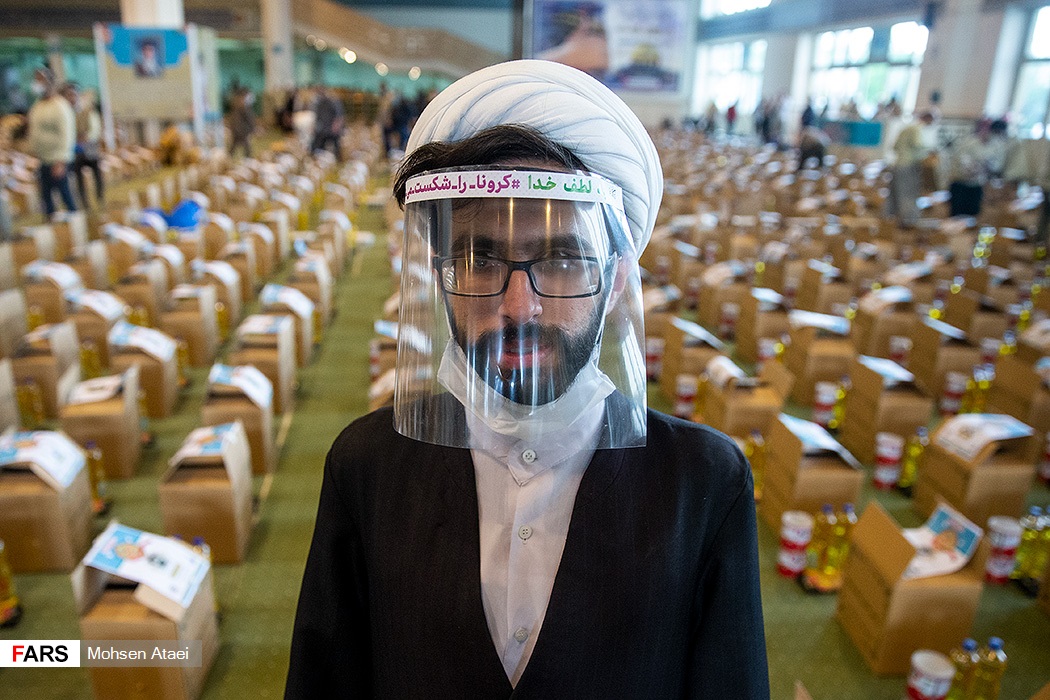
Over 31m Masks Produced or Imported Since Coronavirus Outbreak in Iran
Figures suggest that some 15.2 million three-layer and N95 masks have been produced and as many as 16.1 million have been imported since the disease began to spread.
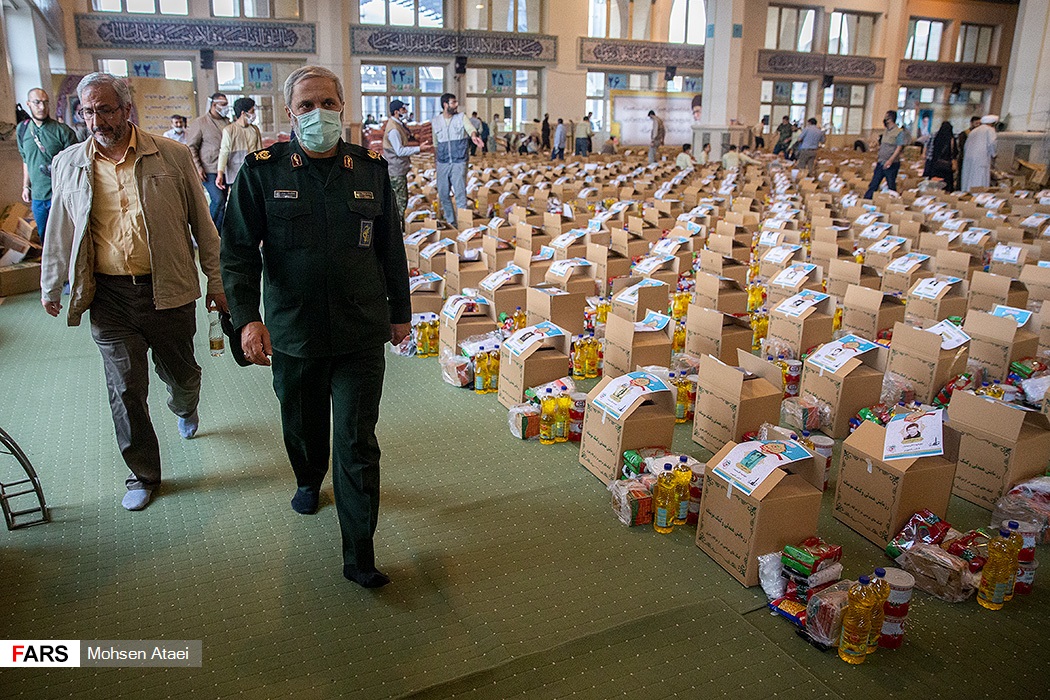
Moreover, Rls. 1.36 trillion has been earmarked so far by major companies for the procurement of items and supplies related to the treatment of the coronavirus and containing its spread. Furthermore, some 9 million three-layer masks as well as 2.3 million N95 masks have been provided and donated to the National Coronavirus Fight Headquarters to be distributed across all provinces.
Some 6.6 million Euros in foreign currency has also been provided to import the required medical items, and arrangements have been made to raise the figure to 30 million Euros.
Among other measures adopted has been to cut customs duties on imported masks and medical outfits, impose a temporary ban on the exports of raw material and end products related to equipment needed to fight the coronavirus, and communicate a special directive to relevant production companies instructing them to work in three shifts to produce hygienic items.
In the meantime, the Ministry of Industry, Mine and Trade has put on its agenda the procurement and distribution of people’s basic and urgently needed supplies in order to stabilize the market. Around 4 million tonnes of basic goods have now arrived at the customs and will be cleared as soon as the necessary foreign currency is provided by the Central Bank.

Iran Says Closely Monitoring US Military Moves in Region
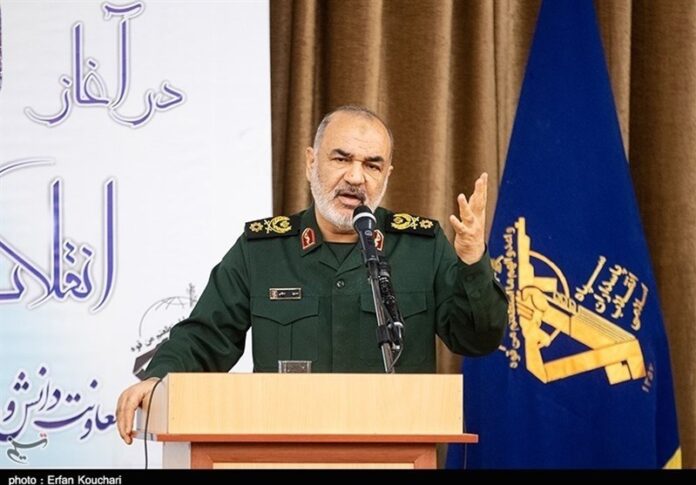
“What took place against US bases in Iraq in the past weeks was a natural reaction by Iraqi people to (Washington’s) evil act to assassinate Lieutenant General Qassem Soleimani and commander of Iraq’s resistance forces Abu Mahdi al-Mohandis,” Major General Baqeri said on Thursday.
Washington has blamed Kata’ib Hezbollah, which is a major PMU (Popular Mobilization Units) faction, for about a dozen rocket attacks against American troops based in Iraq over the past few months. The group has denied any role in such raids, saying if Kata’ib Hezbollah decided to launch attacks, it had no fear of making the news public.
The top Iranian general rejected reports and claims that the Islamic Republic was involved in the strikes against the US bases.
“The incidents had nothing to do with us and Americans are trying to pin them on us as part of their blame game (against the Islamic Republic),” he said.
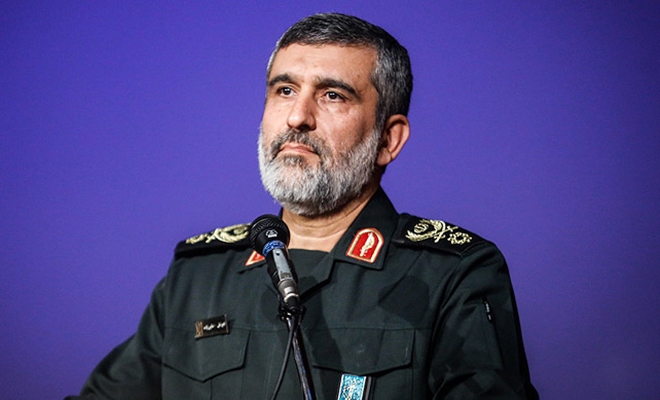
Major General Baqeri further noted that the country’s military forces were closely monitoring all movements by US troops in the region, warning of “harshest response” if Iran’s security is threatened.
The remarks came after US President Donald Trump claimed on Wednesday that Iran was about to launch an attack on US troops occupying Iraq.
“Upon information and belief, Iran or its proxies are planning a sneak attack on US troops and/or assets in Iraq,” claimed the American commander-in-chief on Twitter. “If this happens, Iran will pay a very heavy price, indeed.”
The US has transferred its military equipment from Iraq to an area near the Syrian city of al-Hasakah, a report by Syria’s official news agency said. A convoy of 20 trucks, loaded with US logistical materials used in military engineering fortifications, took the equipment to a place near al-Hasakah, the report said.
The US forces have in recent months moved thousands of trucks loaded with weapons, logistics and military equipment to al-Hasakah through illegal entry points.
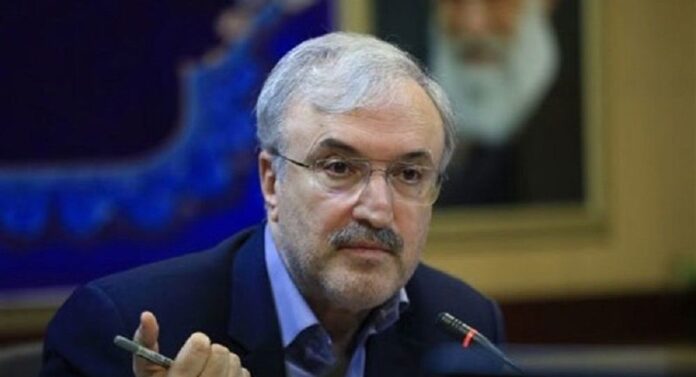
WHO to Use Iran’s Experience in Dealing with Corona: Minister
Namaki said on Thursday that during an online meeting with the international body, they approved Iran’s acceptable moves in the fight against COVID-19.
He said one of these moves was the National Mobilisation Plan in which 90 percent of the targeted society have been screened.
He said some questions have been raised as to why the corona infection rate has increased despite our acceptable measures. The answer is because the country is now able to discover more cases.
Namaki stressed that people must know “we are in the stage of disease management and have not yet reached the stage of disease control.”
He further raised hope that by April 8, which is the end of the first phase of social distancing plan, people have more cooperation because this will have an impact on future moves.
Iran Has No Problem in Providing Forex for Basic Commodities: Rouhani
President Rouhani stressed that the Islamic Republic will have no problem supplying foreign currency by the end of the year, and the government has planned to be able to supply goods on time.
Addressing the economic meeting of the cabinet on Thursday, President Rouhani said four million tonnes of goods are in customs.
“We can be sure that in the coming days this four million tonnes of goods will be imported into the country. This is a great move for the country’s market and resources,” he added.
He further mentioned that the government must strive to meet the needs of those who must keep working so that they can both do business and adhere to health principles.
“At today’s meeting, we made good decisions, and God willing, the final decisions will be announced at the National Coronavirus Fight Headquarters meeting on Sunday.”
Elsewhere in his remarks, Rouhani thanked all those who worked in the production centres during the holidays, especially those busy at production lines of goods required by the health ministry.
“Nearly most of the requirements are met internally. Almost three-quarters of our needs are met inside the country. Items such as ventilators, masks and disinfectants are all manufactured domestically. We have to thank all these producers and other producers who provide the people with the necessary goods.”
“I also thank the banks of the country that were active during this period. There is a heavy burden on the banks. For the future, we will set new assignments for the central bank and banks in the business sector.”
Rouhani also appreciated the efforts of police and the Red Crescent Society.

In the end, he added that the corona issue will not be over within days saying it may stay for months and even by the end of the year. The health guidelines and protocols issued by the health ministry must be observed constantly.
He also expressed hope that the nation would pass this stage through further cooperation.
Three Iranian Teams Working on COVID-19 Vaccine: VP
In a post on his Instagram account, Sattari said the three independent groups are conducting research to produce a vaccine for COVID-19.
Hundreds of clinical tests are being carried out in Iran every day, he added, noting that the country has now reached a point that has been able to control the coronavirus epidemic.
Highlighting the efforts that the local knowledge-based companies, academic centers, researchers and start-ups have been making day and night to supply the necessary items for the fight against the contagious disease, Sattari said Iran is now manufacturing the industrial machinery for producing masks, medical ventilators, ICU equipment, computed tomography (CT) scanners, coronavirus diagnostic test kits, and disinfectants.
“Now we have to get used to this new uninvited guest. This virus has become part of the lives of people all over the world and will remain with the people of the world forever,” Sattari noted, saying even after development of a vaccine for the novel coronavirus, the lifestyle and habits of people will change under the shadow of the disease.
The Iranian vice president explained that the new pandemic would result in the creation of new businesses and in the extinction of a series of others.
“There are ample opportunities for the youth who have new ideas for the improvement of quality of lives of people in the world under the coronavirus situation,” Sattari noted.
In remarks on Sunday, Iranian President Hassan Rouhani called for all-out efforts to develop a vaccine and medication for the novel coronavirus.