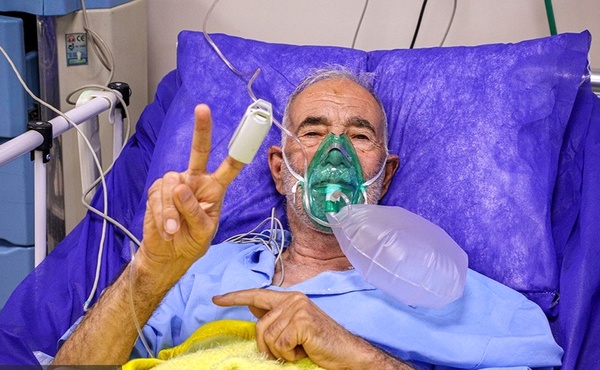
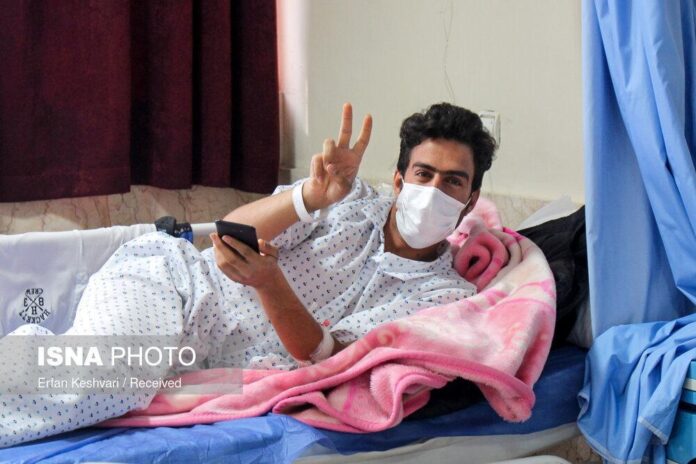
With the discharge of the last coronavirus patient in Ali Ibn Abi Talib Hospital of Qom, which belongs to the Islamic Revolution Guard Corps, the medical centre returned to normal conditions.
Chief of the hospital, Dr Hossein Rezaei, said on Friday that after treating the patients, based on the protocols of the Ministry of Health, the hospital wards were disinfected within three days, and it is now ready to give services to all patients as before.
Qom was the first city of Iran in which the corona outbreak was reported in mid-February. Several hospitals across the country have been fully dedicated to COVID-19 patients since the outbreak.
Figures released by the Iranian Health Ministry on Thursday showed a decrease in the number of new infections for the 11th consecutive day and in the number of fatalities for the fifth day in a row.
However, officials have warned people against taking the issue lightly, saying the virus can quickly start its second wave of spread if health protocols are not observed.
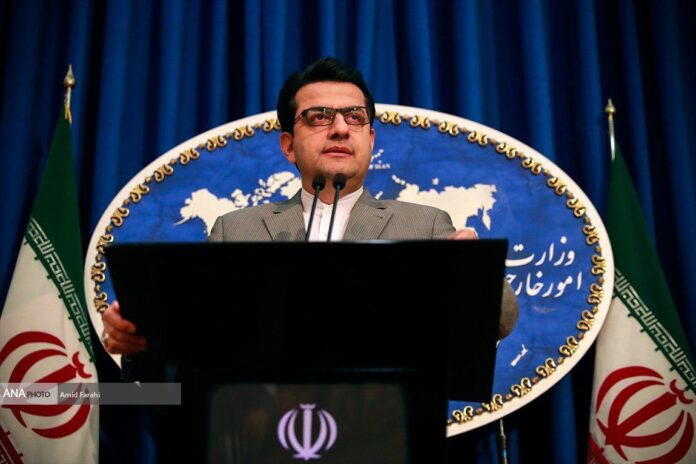
In a statement on Thursday, Mousavi said the Islamic Republic of Iran has always supported the independence, national sovereignty, territorial integrity and political stability of Iraq.
He stressed that the only way to resolve the conflicts peacefully is that all Iraqi political currents reach a consensus through democratic processes.
Therefore, Iran welcomes the consensus reached among Iraqi political groups today, resulting in the designation of Mr al-Kazemi as the new Prime Minister of Iraq, and considers it as a right step in the right direction, Mousavi noted.
While wishing success for Mustafa al-Kazemi, Iran hopes he can establish a new government to meet the demands of the people and the top religious authority of the Arab country and to create a stable, united Iraq with a significant position at the regional and international levels, he added.
“Undoubtedly, the alliance and synergy of all different Iraqi tribes, political groups and prominent personalities, including Mr Adnan al-Zurfi, has been effective in the realization of this important goal and will remain so for the rest of the path,” reads the statement.
As before, the Islamic Republic of Iran declares its full readiness to cooperate with the Iraqi government so that it can overcome the problems and achieve the great goals of the Iraqi people and the top religious authority, stated Mousavi.
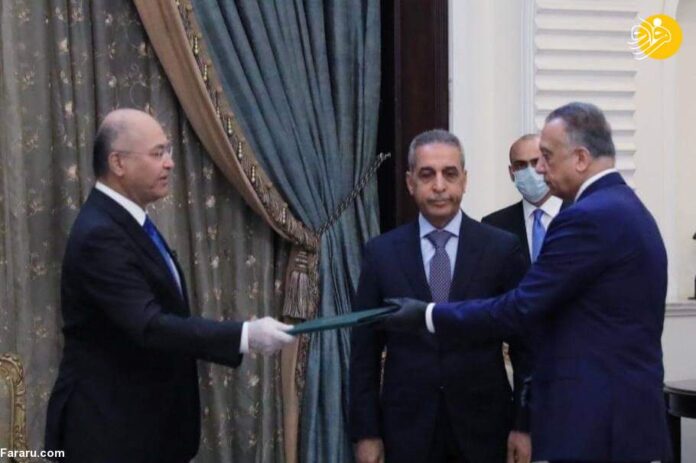
Iraqi President Barham Salih assigned Mustafa al-Kazemi to form the new Iraqi government after Adnan al-Zurfi failed to do so.
In a statement on Thursday, Salih announced he has accepted al-Zurfi’s resignation and that all Iraqi political parties agree on nomination of Intelligence Chief Mustafa Al-Kazemi.
Al-Zurfi had been tasked by Salih last month to form a new government after mass protests over poor living conditions in the Arab country.
The former Najaf province governor, however, gave up his appointment Thursday after failing to win the support of Parliament.
Dr Masoud Mardani, who is a member of National Committee for Coronavirus Fight, said if the results of clinical trials in the treatment of hospitalised patients are positive, Iranian companies can produce this drug on a large scale.
The price of the Iranian version of the drug will be much lower than foreign ones, and the patients with corona can easily use them, he said.
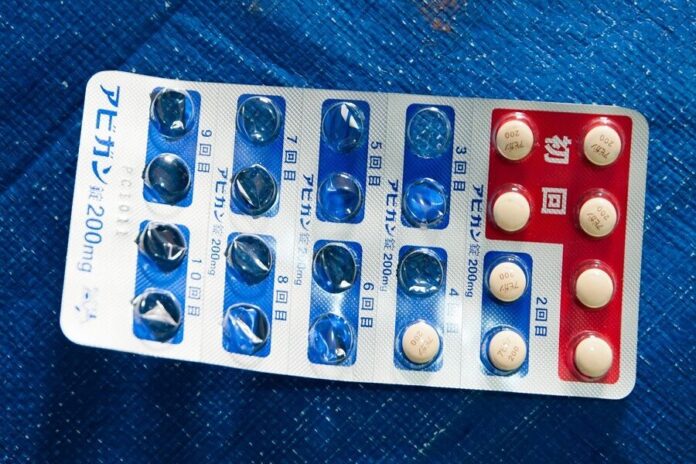
China has donated a limited number of Avigan to Iran, which has been given to researchers for further studies.
“Fortunately, the initial results of this research project were satisfactory, and we are waiting for the final result of the clinical trial of this drug.”
About three months ago, the Chinese used the drug to improve patients with COVID-19, and their studies have shown that it can be effective in treating the disease.
Favipiravir is an antiviral drug developed by the Japanese for influenza. About 2 years ago, it was discovered that it is also useful in treating Crimean Congo fever, stressed Mardani.
COVID-19 has no vaccine at the moment, he said. “There was no treatment approved by the US Food and Drug Administration, but last week, for the first time, the FDA approved a type of chloroquine for COVID-19.”
Chloroquine is an anti-malarial drug, and has long been used to treat rheumatoid arthritis. By reducing inflammatory reactions, this drug can improve patients with the corona disease, underlined Mardani.
It has been earlier used in Iran and China, and has had good results in treating patients with mild to moderate corona disease.
“To cure COVID-19, there are some antiviral drugs including anti-AIDS medicine. We use this drug for coronavirus patients and they can improve the patients to some extent,” he concluded.
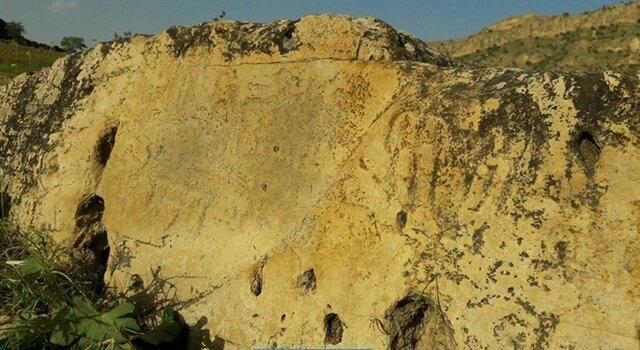
Director General of Cultural Heritage, Tourism and Handicrafts of Lorestan Province, Seyyed Amin Qassemi, says the ancient relief was found during the fourth phase of the study and documentation of historical monuments of the city of Koohdasht.
He said the relief, which probably belongs to the Parthian period, has human motifs on it.
The official said another important achievement of the study of Koohdasht city is the discovery of traces of ancient Paleolithic stone in this city for the first time.
The artifacts discovered in the city so far include pieces belonging to various eras, from Paleolithic to modern periods (Qajar dynasty).
Hamzeh Qobadi, head of the fourth phase of the research, also stated that in the latest phase, which lasted for 45 days, 112 historical monuments have been discovered.
Seyyed Reza Rafiei, the CEO of the company based in Charmahal and Bakhtiari Province, said the Gamma multi-purpose radiation system is designed and constructed as the first radiation system developed by the country’s private sector.
It is also the country’s largest radiation system, built with the support of the Innovation and Prosperity Fund of the Vice Presidency for Science and Technology.
“We received nearly 40,000 dollars from this fund in 2016 to launch part of our laboratories, but today we hope to use the facilities of this fund again to pace up the construction of the systems because this is a high-tech field that can be the driving force of many industries,” he added.
This system is one of the most important infrastructures in relation to food and medical security, and it is an infrastructure for the country’s strategic reserves.
The CEO of this knowledge-based company also stressed that the radiation system is a very important arrangement for sterilisation.
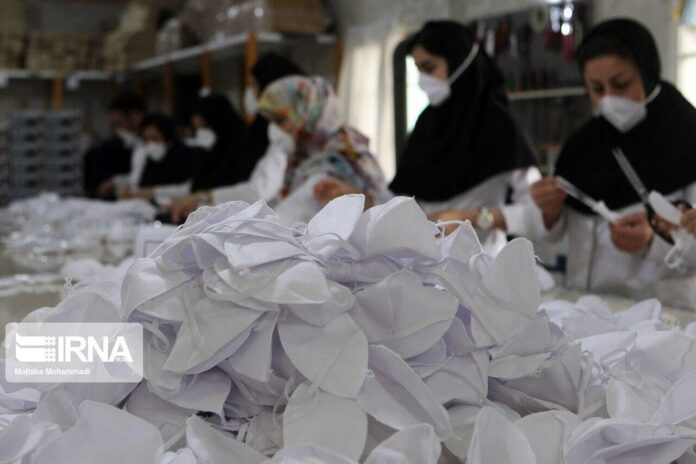
“With the outbreak of the coronavirus in the country, companies spontaneously began to produce masks for citizens and medical staff, but there was always the possibility that these masks were infected with the coronavirus, because they may have been made by people unaware of their disease or prepared in non-sterile environments. Therefore, these masks were sent to the radiation centres for sterilisation.”
About one million masks have been sterilised free of charge since the beginning of the Corona outbreak, he noted.
Emphasising that radiation systems are among the most environment-friendly systems, Rafiei said, “Firstly, this system reduces the consumption of chemical toxins used to increase durability and sterility, and secondly, because it is an important infrastructure for increasing the durability of food, it is very useful in reducing water consumption and post-production waste.”
He also talked about the applications of the company’s radiation system in other non-medical fields noting that currently the country is not able to store potatoes and onions for two years; therefore, one million tonnes of potato is dumped annually. However, using long-range radiation systems these items can be stored for a long time.
Rafiei said the company plans to build a dry port to quarantine some foodstuffs in order to reduce the challenges posed by the coronavirus.
Elaborating on the significance of dry ports he said the Islamic Republic exports $3 billion worth of goods to Afghanistan and imports $3 million from the neighbouring country.
“Importing products from Afghanistan is subject to quarantine, which is a problem in trade. However, with the establishment of the radiation system, the problem of importing from this country will be resolved.”
Health Ministry Spokesman Kianoush Jahanpour on Thursday said 117 people have died in the past 24 hours from the novel coronavirus, increasing the death toll to 4,110.
He also confirmed 1,634 new cases of infection in 24 hours, increasing the total number to 66,220. The number of new cases shows a decrease for the 11th consecutive day.
The spokesman said the recovery process has gained momentum in the past few days, and that 32,309 patients have so far recovered and been discharged from the hospital.
Jahanpour also noted that 3,918 patients are in severe conditions of the disease.
So far, 231,393 tests for the novel virus have been taken in the country.
Iranian Foreign Ministry Spokesman Abbas Mousavi said the accusation is not true.
“What Hungarian officials call a violation of health protocols is, in fact, the students’ objection to the improper quarantine conditions at a Budapest hospital where infected and healthy individuals were kept in one place,” said Mousavi.
“But unfortunately, authorities, without realizing these conditions, pointed the finger at the university students and first issued a directive for the expulsion of three students and then 14 others without paying attention to the fact the health protocols had, in fact, been violated by the Budapest hospital,” the spokesman added.
“Unfortunately, the three students mentioned above were taken to a migrants’ camp in very appalling conditions before they returned their country for fear of the coronavirus at the request of their families and through the good offices of the Islamic Republic of Iran’s embassy,” he added.
Mousavi said the Iranian foreign ministry and the Iranian embassy in Hungary had made every effort to manage the situation and prevent the expulsion of the students.
“Receiving consultation from legal counsellors, the Iranian embassy helped employ lawyers and pursue the matter through legal channels with the cooperation of the students themselves and their families,” he noted.
Mousavi said a Hungarian court ruled that the 14 students had to be expelled, adding the students were not allowed to take their case to the court.
“There is important and admissible evidence that the Iranian students had the right to take their case to the court, but they were denied the chance,” he said.
“The Iranian foreign ministry firmly demands Hungarian officials to reconsider the verdict and prepare the conditions for the Iranian students to continue their studies,” he said.
Mousavi noted that the foreign ministry will keep pressing ahead with diplomatic efforts to restore the students’ right.