Tuesday, December 23, 2025
Home Blog Page 2860

Iran 1st Country to Use Plasma Therapy for COVID-19 Treatment

Iran 1st Country to Use Plasma Therapy for COVID-19 Treatment

An official in charge said tests using plasma therapy have been carried out on some 200 patients, with dozens having recovered.

“With research work drawing to a close, this method is likely to be used on a larger scale as of next weeks to treat patients infected COVID-19,” said Nasser Riahi, a member of the Presiding Board of the Tehran Chamber of Commerce.

“Before the project got off the ground, we received permits from the Ethics Committee of the Ministry of Health and Medical Education, the Blood Transfusion Organization and the Supreme Blood Transfusion Council; all of those permits were for research projects,” he said.

“Of course, since day one, it was almost clear that injecting the plasma of recovered patients into infected people would be a useful method, which had already been used for patients suffering from diseases such as SARS and Ebola as the only method of rapid treatment,” the official added.

“Our mentality was that the injection of plasma would not harm patients, and that this method had always been used to increase the volume of blood,” he added.

Riahi then touched upon the long history of using plasma for treating different diseases.
“We proposed a research project to answer several key questions; for example, what effect this type of treatment would have on patients in bad condition or on those whose disease had just started, and which group would benefit most, or what effect the treatment would have on controlling fever, shortness of breath and other clinical symptoms of patients,” he added.

Riahi noted that three international hematologists are running the project.

“These experts immediately formed a group comprising dozens of researchers, general practitioners, clinical doctors and therapists, as well as al large number of nurses, lab sciences experts and companies working in the field of plasma,” he added.

“In later stages, contacts were made with international organizations, and, at the end, protocols were drawn up on receiving plasma and the method of clinical treatment.
Accordingly, it was decided that 200 patients be treated using the plasma of recovered people, and that after results are achieved they be published as articles in international journals, so that other countries gripped by the disease will be able to benefit from it, too,” he said.

He said tests have been completed on 200 patients.

“Of course, the detailed results of the research will be released in the coming days by researchers, and another good piece of news is that initial analyses of [data pertaining to] dozens of patients under treatment show they have recovered with this method,” he said.

“The recovery of some of these patients who were in bad condition is like an all-out miracle, and others who were not in very bad condition have recovered, too,” Riahi noted.

He said after the research phase is through, the treatment phase will commence.
“In fact, it is proven in the research phase that this method has positive effects, and its side effects are at an acceptable level,” he said.

“What is important is that antibody levels in the recovered patient remains high for so long, and this level of antibody in plasma has therapeutic effects. Moreover, no more than once a week and no more than 500 to 600 cc of plasma should be taken from the recovered patient. Of course, more than one injection may be needed for treatment,” he added.

“So, it is not that this treatment method can cover all patients, but it will definitely will be announced what patients take priority,” he said.

According to Riahi, a great number of personnel contributed to the project, which came with a very large price tag, too. He said firms from the private sector contributed heavily, too.

Sharing Experience with Coronavirus-Stricken Countries

Riahi explained that the clinical team which has developed the treatment method is seeking to share their experiences with Europe and other countries.

“After we became sure that our method is right, contacts have been made with countries which are in possession of this knowhow such as Germany, Italy and France in Europe to share information and experiences with them. They are getting prepared to work on this method, too,” he said.

“Moreover, some European countries lack the infrastructure to collect plasma. Therefore, they were informed through the foreign ministry and ambassadors that we can share with them our experiences and protocols. In addition, it is possible to create the required infrastructure through calls for voluntary workforce in these countries and finally deliver it to their doctors,” he said.

Riahi says Iran’s private sector has not even charged these countries for sending personnel and “this is a gift from our country for friendly nations.”

“In the past weeks, some medical sciences universities received permits to conduct research on plasma therapy, which will distribute staff members across the nation. So, we will ask them to join us, and get involved in the implementation and treatment process instead of spending time and money on research,” he said.

Coronavirus online test
If you are worried that you may have contracted the Coronavirus, take this test right now.

Iran Developed Plasma Therapy Before US

Riahi criticized the fact that the implementation of this treatment method has not been warmly welcomed by public opinion, and it looks like the issue has be eclipsed by certain medicines recommended by doctors.

He said some media outlets are reporting that this treatment method for coronavirus treatment has emerged in the West after the US began doing research in that domain.

“However, I should say that this miracle has emerged in the East and in Iran,” he added.

“The plasma therapy protocol in Iran was ready on February 24, 2020, but the United States’ Food and Drug Administration (FDA) published the protocols for this treatment method just two weeks ago; the US protocols had very slight and negligible differences with the protocol drawn up by our experts,” he said.

“The United States has just recently taken the first plasma samples while, in Iran, the process of injecting plasma to 200 patients has come to an end,” he said.

Riahi underscored that Iran is definitely the first country to have used plasma therapy to treat patients infected with COVID-19.

“Before Iran, only China was doing work in this field, and its activities have been incomplete and without consistent research and it has not offered any reports either,” he said.

Iran Starts Phase Two of National Campaign against COVID-19

Iran Starts Phase Two of National Campaign against COVID-19

Health Minister Saeid Namaki announced the commencement of the second phase in a letter to Gholam-Reza Soleimani, the head of the Basij Resistance Force.

In the letter, the health minister expressed his gratitude for the cooperation of Basij personnel in screening 70 million people in the first phase of the fight against COVID-19.

“We will press ahead with the second phase of the national campaign against the coronavirus while handling infected cases already identified, conducting tests on asymptomatic individuals and monitoring the smart social distancing plan,” Namaki said.

Coronavirus online test
If you are worried that you may have contracted the Coronavirus, take this test right now.

Iran Urges Exchange of Experience with Other States in COVID-19 Battle

Interest-Free Loans to Be Paid to Millions of Iranians amid COVID-19 Outbreak

In a telephone conversation with Vice-President for Science and Technology Sorena Sattari on Friday, President Rouhani praised the domestic knowledge-based companies for their effective efforts and for playing a significant role in the fight against COVID-19 pandemic.

The president also ordered Sattari to take the necessary measures to exchange the new measures and initiatives with the other countries and take advantage of their plans and experiences in the production of pharmaceuticals and other necessary equipment for the battle with coronavirus.

Coronavirus online test
If you are worried that you may have contracted the Coronavirus, take this test right now.

Timely Closure of Schools, Universities Saved 22,000 Lives in Iran: Study

Timely Closure of Schools, Universities Saved 22,000 Lives in Iran: Study

This scientific study, conducted by the Kerman University of Medical Sciences, also shows that this measure has managed to reduce the number of people admitted to hospitals by about 40 to 50 percent.

“It may be a little hard to believe these figures,” the study said, “but based on the output of dynamic models, if there was a delay in implementing such a move, the dimensions of the epidemic in March and the spring would have been definitely wider.”

Due to significant limitations in the possibility of providing services to a large number of patients, public dissatisfaction and death rate due to lack of hospital facilities could greatly increase.

In addition, at the height of the epidemic, the number of people in need of hospital beds could rise to at least 10,000 (and up to 35,000) per day.

Coronavirus online test
If you are worried that you may have contracted the Coronavirus, take this test right now.

Rouhani Stresses Strict Enforcement of Smart Social Distancing Plan

President: Iran Ready to Share Experience in Coronavirus Battle with Qatar

In a phone conversation with Health Minister Saeid Namaki, President Hassan Rouhani instructed that an appraisal be made immediately of the arrangements made to enforce the plan in several provinces as of April 11, 2020.

He said the monitoring should be done with the cooperation of the Social-Security Committee of the National Coronavirus Headquarters.

The president urged that the result of the appraisal mist be presented to an April 11 meeting of authorities managing the national campaign against COVID-19, so that the necessary decisions could be made to tackle possible hurdles and problems on the way.

As for Tehran, he underlined, the previous directives remain in force and are binding. “No new decisions have been adopted for Tehran.”

He also ordered the enforcement of restrictions and social distancing plan for Tehran be monitored closely.

President Rouhani also instructed the health minister to work in coordination with committees of the National Coronavirus Headquarters and make the necessary arrangements for the production and provision of disinfectants, hygienic items and other supplies such as face masks and gloves.

The smart social distancing plan is to come into effect in all provinces except Tehran on Saturday April 11. In Tehran province, the plan will b enforced as of April 18, when low-risk businesses will be allowed to reopen.

Coronavirus online test
If you are worried that you may have contracted the Coronavirus, take this test right now.

International Scholarships for Iranians 2020-2021

Iranians can apply for various national and international grants and scholarships to proceed with their higher studies abroad or in Iran. If you are a student hoping to qualify for an international scholarship, look for a good sample essay for scholarship and study its format.

Some of the international scholarships for Iranians to consider for 2021 to 2021 include:

  • International Ambassador Scholarships at University of West London

The University of West London is offering this scholarship opportunity to bachelors and masters degree applicants. The deadline for applications is July 1, 2020 and courses start in May 2020 and September 2020. This scholarship provides financial help for exceptional students who want to act as ambassadors for the university.

Fields of study include any full-time postgraduate and undergraduate course offered by the university, which offers up to 100 scholarships annually. The target group is international students from outside the European Union, including Iranian students. For the first year of study, students who qualify will get a tuition fee discount of up to 5,000 pounds. To apply for the scholarship, you must be a self-funded international student, and the university awards the scholarships on a competitive basis. You need to demonstrate enthusiasm and the ability to excel as an international student ambassador.

  • Hubert Humphrey Fellowships in the U.S. for International Students

This is a non-degree fellowship offered by the government of the United States of America. If you are interested, you need to apply before October 1, 2020, and the program will begin between April and September 2021. This fellowship program is ideal for professionals interested in enhancing their leadership skills through a reciprocal exchange of ideas about issues of common concern in their home countries and the United States.

Fellows attend one of the participating universities in the U.S., but they do not have the luxury of choosing which university they will attend. The program assigns them in different groups to the most appropriate university based on their professional field and area of interest.

  • Westminster International Postgraduate Scholarship

This is a full scholarship that you can only apply for once the University of Westminster offers you either an unconditional or a conditional place in your preferred course. If you fail to submit an application for admission, the university will not consider your scholarship application. You need to have a place on a course before applying for a scholarship.

This postgraduate scholarship covers various costs, including:

  1. Flights to and from London
  2. Waiver of full tuition fee
  3. Living expenses
  4. Accommodation

The University of Westminster offers six scholarships annually. To be eligible, you need to be an international student from a developing country, including Iran. You also need to hold an offer at the University of Westminster for a full-time Masters program in September 2020. Finally, you must demonstrate financial need, academic excellence, and potential to develop.

Various fellowships and scholarships go to developing countries to encourage students to pursue higher education. The Iranian government, Iranian scholarship foundations, corporations, and various international universities sponsor different grants and scholarships for undergraduates, graduate, and PhD applicants, scientists, and researchers.

All About JEE Advanced 2020

Application form for JEE Advanced 2020 will be tentatively available online, in the first week of May. The results of JEE Advanced 2020 are supposed to be published on the 8th of June, 2020. JEE Advanced scores will preliminarily determine if aspirants will get through the admission process of deemed engineering universities.


JEE Advanced 2020- Details of Application Procedure

The mode of application for JEE Advanced 2020 will be online. The application form for the same will be released for download, sometime in early May 2020 and the window for online application will be closed by the end of the second week of May 2020. JEE Advanced 2020 Aspirants will have to complete the payment before the application window closes, in the second week of May 2020.


JEE Advanced 2020- Application Fee

Like JEE Mains, there are different application fees for aspirants belonging to different categories for JEE Advanced 2020. The application fee for female aspirants is 1300 INR. For those aspirants belonging to Scheduled Caste, Scheduled Tribe and PWD, JEE Advanced 2020, the application fee comes to 1300 INR as well. For all candidates it is 2600 INR. Also, for candidates applying for JEE Advanced 2020, from cities outside India, the application fee is updated. Those candidates who are current residents of any of the SAARC countries are required to pay an application fee of 160 USD. Candidates those who are residents of non-SAARC countries, an amount of 300 USD is payable for their application.

For the payment of application fees online, aspirants may use internet banking, credit cards, UPI IDs, debit cards, etc. Candidates may also pay through e-challans issued by the State Bank of India, under the MOPS (Multi Option Payment System).


JEE Advanced 2020- Registration

Candidates must register for JEE Advanced 2020, with a valid email address. Once they are through with the registration, each candidate will be sent a login id and a password. They will need to use the same login id and password for all further procedures and notifications. While they register for JEE Advanced 2020, candidates will have to upload some needful documents. Below is the list of documents that are required to be uploaded.

  • Pass Certificate of 10th board exam
  • Pass Certificate of 12th board exam or any other equivalent exam
  • Category Certificates for candidates belonging to Scheduled Caste, Scheduled Tribe, OBC-NCL, or PWD.
  • Birth Certificate, in the case date of birth, is not provided in the pass certificate of the 10th board exam.

Candidates are required to scan and upload these above-mentioned documents, at the time of registration. It is requested that candidates must provide all the details and their city preferences carefully during registration. There will not be any window for editing any of the information provided in the application form, once it is submitted.


JEE Advanced 2020- Schedules

JEE Advanced 2020 is going to be a computer-based exam. There will be two papers. The first paper is supposed to be conducted on the 17th of May, 2020, from 9 a.m. to 12 p.m. IST, and the next paper is going to be conducted on the 17th of May, 2020, from 2:30 pm to 5:30 p.m. IST. Both these papers are mandatory and candidates will get a recess in between the two papers. Each of these papers is going to have a duration of three hours. There will not be any changes in the schedule of this entrance exam.

JEE Advanced 2020-Question Pattern and Marking scheme

Questions will come from Physics, Mathematics, and Chemistry in JEE Advanced 2020. The syllabus for these three subjects consists of all chapters from 11th and 12th. The question paper of JEE Advanced 2020 by Vedantu, will consist of objective type questions and numeric value type questions from Physics, Mathematics, and Chemistry will help to score good. Candidates need to revise all the concepts and theories from the syllabus of 10+2, solve as many test papers and take as many mock tests as possible.  JEE advanced 2020 mock test series are among the most recommended mock tests.

Like JEE Mains, the marking scheme of JEE Advanced also has negative marking. The marking scheme is different for each of the two papers.

There is a negative marking of one mark for each incorrect answer, for the objective type questions. There will be no negative marking for numerical type questions. Three marks are allotted for those questions that have only one correct answer. Four marks are allotted for those questions that have more than one correct answer. This is the marking scheme for objective type questions. The question paper for the second test will have list sets to match.

Free Coffee Served in Iranian City to Celebrate Religious Feast 

Free Coffee Served in Iranian City to Celebrate Religious Feast 

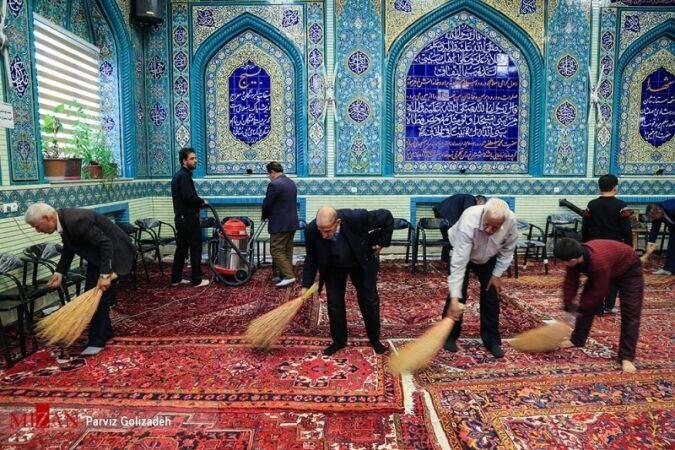
Sha’ban is the eighth month of the Islamic calendar.  The fifteenth night of this month is known as the “Night of Records” or Baraat. It is regarded as a night when the fortunes of individuals for the coming year are decided and when Allah may forgive sinners. Twelver Shiite Muslims commemorate the birthday of Imam Mahdi on this date.

According to Shiite Muslims, Imam Mahdi will appear and rule before the Day of Judgment.

An expert says during the three days leading to Sha’ban 15, mourning ceremonies are also held in mosques and houses for those who have passed away in the past year.

Free Coffee Served in Iranian City to Celebrate Religious Feast Mohsen Tahan Zavareh says in the afternoon of these three days, the people of Zavareh go to the graves of their dead and donate votive food to make the souls of the dead happy.

“During these days, the residents of the city, move from house to house and mosque to mosque to recite al-Fatiha Sura, which is an unforgettable tradition.”

One of the special features of Baraat ceremony in Zavareh is serving coffee.

Regarding the history of coffee in Iran, suffice it to say that during the Safavid period, coffee entered Isfahan and was liked by Safavid kings, and gradually entered the surrounding cities, and coffee houses gradually formed, says Tahan.

This cultural heritage activist added that the preparation of this traditional coffee in Zavareh dates back to about 300 years ago, according to locals.

“Of course, in the early days, coffee was served for the nobles of the city during Baraat.”

Referring to the preparation of coffee in Zavareh, he stressed that the coffee is basically prepared in the house of the dead person and some people with special expertise do the job.

“In this way, on the evening of the 11th of Sha’ban, the necessities of serving coffee are prepared, and the person, who comes to the house to prepare it, sometimes works until the morning call to prayer.”

Free Coffee Served in Iranian City to Celebrate Religious Feast The directions to prepare this traditional coffee in the city of Zavareh are as follows:

For two kilos of coffee, about 60 litres of water and half a kilo of ground cardamom are needed. They pour the water into pots (preferably copper pots) and after boiling, they add the coffee little by little and stir constantly so that it is completely dissolved in the water. After an hour of brewing the coffee, they pour half a kilo of cardamom in a bag, and put it in the pot. The cardamom extract gives it a better taste. Then they stir it for about an hour or two.

“A skilled person decides when the coffee is ready. When the coffee is fully brewed, they will sift it through a piece of cloth. The brewed coffee is sweetened before serving. It is poured into smaller containers such as kettles. Coffee is served in small cups, and this is probably because all people come from the mosques and houses to attend the ceremony,” noted Tahan.

It should be noted that this year, due to the outbreak of the coronavirus, this traditional ceremony was not held in the city of Zavareh.

Over 35,000 Recover from COVID-19 in Iran: Official

Speaking in his Friday briefing, Jahanpour confirmed 1,972 new cases of infection, increasing the total number to 68,192.

122 have died in the past 24 hours, bringing the death toll to 4,232, he added.

3,969 patients are currently in severe conditions of the disease, according to the spokesman.

He also noted that 242,568 COVID-19 tests have been taken so far.

After 11 consecutive days of drop in the number of new infections and five consecutive days of drop in the number of new fatalities, the figures released today show an increase in both numbers.

However, officials are hopeful that the virus would be contained by mid-May across the country.