Saturday, April 11, 2026
Home Blog Page 2825

Iran Develops Virtual Anatomy Table to Reduce Dissection Costs

Iran Develops Virtual Anatomy Table to Reduce Dissection Costs

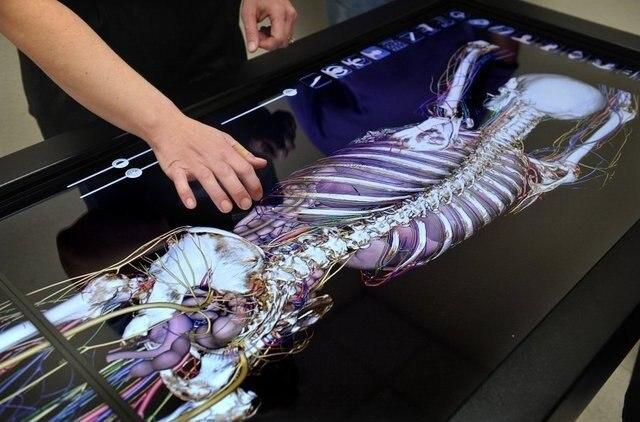
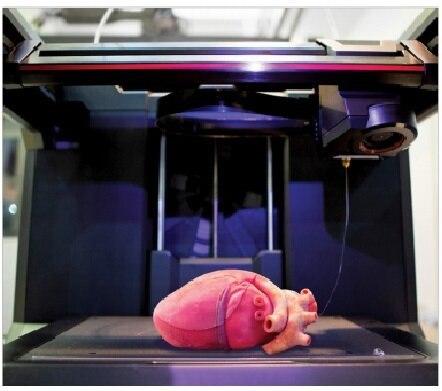
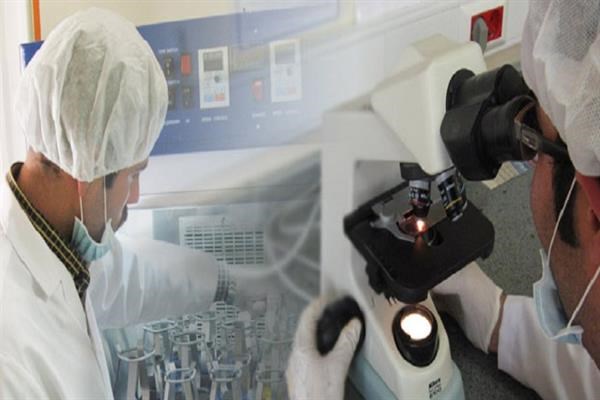
In addition to the virtual dissection of the human body, the table can be connected to 3D printers which reduces the cost of moulage for medical universities.

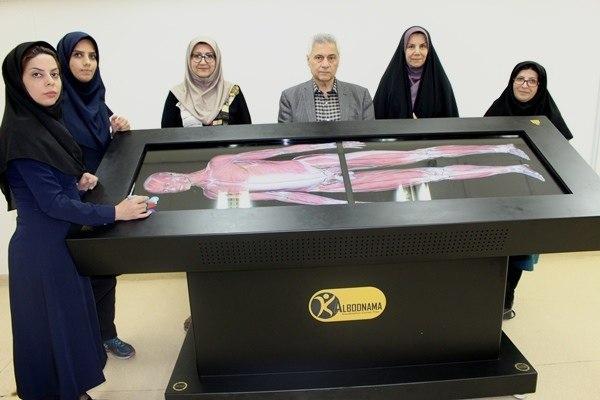
Peyman Hazeq Jafari, the CEO of the company, said the production of educational simulators is one of the research fields of his knowledge-based company, which is affiliated with Medical Equipment Technology Development Centre of Tabriz University of Medical Sciences.

“This table is a tool for providing education, reducing training costs and eliminating the need for a body. This device is a new educational tool similar to the anatomy simulator of the human body. By providing various parts of the body virtually in the form of a smart table with a very easy and completely tactile functional interface, it can be a very useful educational tool next to the body and replace educational modules,” he told ISNA. Iran Develops Virtual Anatomy Table to Reduce Dissection Costs 2

“It’s hard to find a body in the international community and in the world,” he said; “Therefore, the world is moving towards the virtualisation of the dissection.”

He went on to say that next to the challenges facing the world, Iran is also facing religious issues that a Muslim body cannot be used for explanation; so the company has come up with an online table to address this challenge.

The project manager said Iran is the second country after the United States (Stanford University) to have the technical knowledge of building this type of anatomy table.

“In order to do the natural dissection, we cut the person’s body from head to toe and took images. After combining these images using computer software, we finally cut all the pictures.”Iran Develops Virtual Anatomy Table to Reduce Dissection Costs 3

According to Hazeq Jafari, the same steps that professors take in the dissection halls can be carried out using this table.

“In this device, it is possible to separate the category from the system and the structure from the category. It means that in the sample image, each abdominal muscle is removed and we enter the abdominal space. Each of the arteries, veins, and nerves is separable which is quite consistent with the reference books of the anatomy.”
Presenting Fetal Development

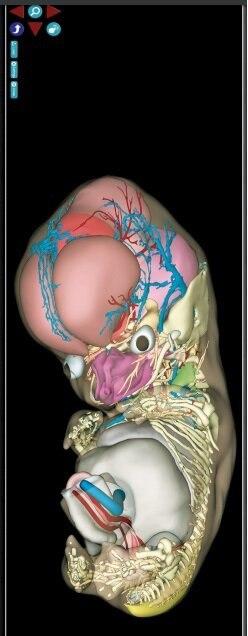
Hazeq Jafari said “embryology” is another part of this table by which the evolution of the fetus from day 15 to day 60 is presented.

He said the embryos displayed at this table are real aborted embryos, and they are scanned and segmented.

The company’s CEO also described the other part of the table as “Dycom”. He said this part turns the output of each imaging device immediately into three-dimensional form.Iran Develops Virtual Anatomy Table to Reduce Dissection Costs 4

According to Hazeq Jafari, the advantage is that it allows professors to present their clinical and pathological cases to students with the USP interface.

He further noted that the table can be connected to 3D printers, and universities do not have to buy moulage anymore.

“This table has the ability to connect to reference books, and in this way more accurate and complete information can be obtained,” underlined Hazeq Jafari.

As these tables have been completely designed and manufactured in Iran, it is possible to plan them according to the needs.

This table has been installed in 18 universities of medical sciences in the country so far.

First Iranian LifeBot Medical Robot Unveiled in Tehran

First Iranian LifeBot Medical Robot Unveiled in Tehran 2

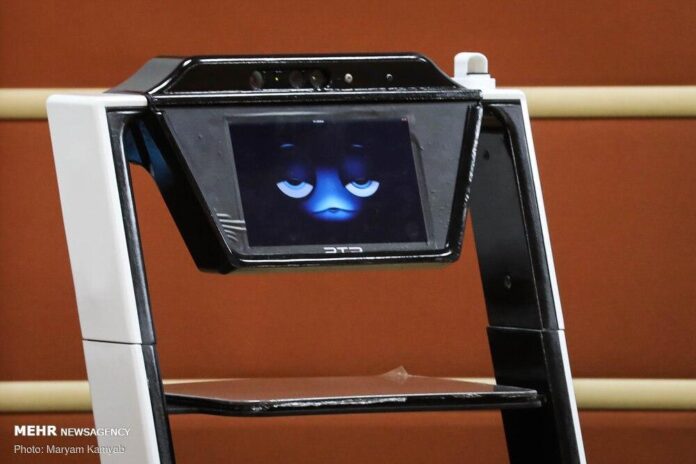
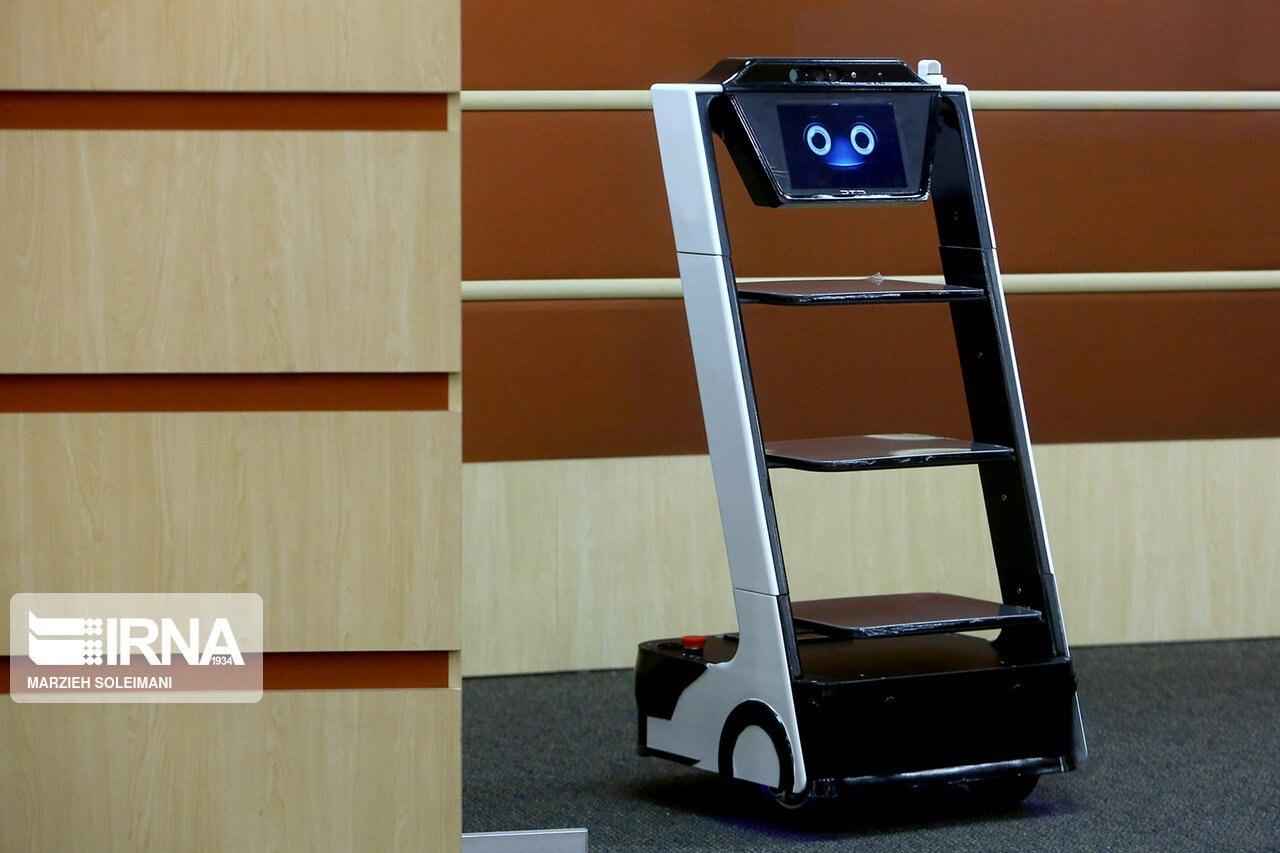
Known as “Keyvan LifeBot”, the robot operates automatically or remotely. Carrying food and medicine to different rooms and presenting it to the patient, measuring the patient’s temperature and blood oxygen level, audio-visual communication between the doctor and the patient are some of its features.

The inventors say due to the fact that this robot is made in Iran, it is possible to add other sensors to it.

According to officials, the idea to design and build Keyvan LifeBot coincided with the outbreak of the coronavirus in the country earlier this year, and it was eventually built with the help of experts at a knowledge-based company.

The robot was unveiled as the first operational medical robot on Wednesday at Tehran’s Shahid Hasheminejad hospital.

The CEO of the manufacturing company pointed out that two samples of this product have been exported to Qatar while Russia and South Korea have also expressed readiness to purchase the device.

During the unveiling ceremony, Parviz Karami, Secretary of the Knowledge-Based Economy Headquarters said “Technology has been able to successfully identify its needs, products, and practical services in the society. For example in the corona crisis Iran-made products met the needs of the society.”

The unveiling of Keyvan LifeBot medical robot is a step in the same direction, underscored Karami. It is the beginning of a new movement in the field of medical and hospital staff assistance, showing the influence of robotic artificial intelligence technologies in the hospital industry.First Iranian LifeBot Medical Robot Unveiled in Tehran 1

“Apart from the sacrifice made by the doctors and brave medical staff, the Islamic Republic also made products and equipment for the people of Iran and other countries. Our Keyvan LifeBot will also be available at some hospitals in Qatar and Russia,” added Karami.

He noted that the corona outbreak was an opportunity to upgrade knowledge and technology protocols. Today, knowledge-based companies have become so empowered in the production of products that in addition to meeting the needs of the country, they can export their products.

“For example, the N95 masks or diagnostic kits were mass-produced within 20 days after the corona outbreak, and now its production exceeds the country’s needs, so we can export them as well,” he concluded.

Halt to Tehran-Seoul Trade Ties ‘Temporary’, Analyst Says

Halt to Tehran-Seoul Trade Ties ‘Temporary', Analyst Says
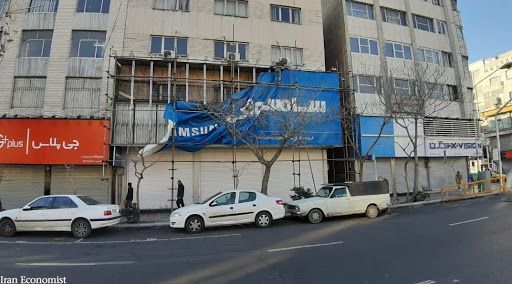
Signs and banners of Samsung Electronics were removed from home appliance shops in Tehran and other cities after the South Korean company signaled it is to stop its activities in the Islamic Republic.

Esfandyar Batmanghelidj, the founder of Bourse & Bazaar, a think-tank focused on Iran’s international economic relations, has made the remarks in an interview with Iranian daily newspaper Etemad.

What follows is the full text of the interview:

Republic of Korea (ROK) was a reliable customer for Iran’s naphtha, natural gas condensate and other Petroleum products of Islamic Republic of Iran, why ROK government decided to reverse its course on trade with Iran? Many say that its too expensive to buy same products from other suppliers, why ROK decided that it’s worth to pay a overhead?

At the same time that the Trump administration was launching its “maximum pressure” sanctions on Iran, the government of South Korean president Moon Jae-in was seeking the support of the United States in finding a diplomatic solution for tensions with North Korea. He could not afford to challenge the Trump administration on its Iran policy, although the South Korean government has continued to express its concerns over the confrontational approach President Trump is taking. 

It’s been said by Iranian officials that there are some due debts which ROK is unwilling to pay, but ROK officials said that the money has been paid and it’s being saved in a bank account according to contracts. Do you think it is a legal disagreement between the two sides, or ROK is breaching deals with Iran and willingly withhold the payments? If it is due to US sanctions do you think that there is any workaround? Is the ROK engaged or has it been ever engaged with Iran to find a solution or workaround?

The Trump administration is actively discouraging countries around the world from providing Iran free access to its foreign exchange reserves. In an interview in December 2019, special envoy for Iran Brian Hook boasted that Iran has access to just 10% of its reserves. This is probably an exaggerated figure, but it illustrates the problem facing Iran. In each country where Iran used to sell oil, the Central Bank of Iran maintains billions of dollars of reserves. By placing sanctions on the CBI and by using political pressure, the US government has made central banks in other countries fearful of allowing Iran to make payments or transfer funds from these accounts. This is even a problem when it comes to Iran’s use of these reserves for humanitarian trade, which are technically exempt from the sanctions that have been placed. There is no clear workaround and this is the fundamental problem that has made initiatives such as INSTEX, the French President’s proposed $15 billion credit line, and Iran’s IMF loan request so difficult to implement. But even if Iran’s former customers are not able to find workarounds, that does not mean they are happy about the situation. This is an unprecedented use of secondary sanctions and it has hurt US relations with many allies, including France, Germany, the United Kingdom, Japan, and South Korea. 

Recently there were reports about South Korean consumer electronic companies leaving Iran; is that related to Iranian money withheld in Korea? Did those companies escape from possible seizure of assets upon Seoul’s order? Or they just were afraid of US possible punishments?

In this environment, it is easy to assume that the decision of companies to reduce sales activities or leave the Iranian market is related to political decisions or sanctions pressure. But multinational companies make strategic decisions independently of their governments, and we should remember that the economic situation in Iran has also become more difficult. It is more expensive to maintain operations under sanctions conditions and while companies may find profitable models, it is difficult to repatriate those profits because of banking restrictions. But the long-term outlook remains positive. Iran is a large and fundamentally attractive consumer market and South Korean consumer companies can be expected to remain committed to Iran, even if they face disruptions today. 

When the US stated that part of its so-called “maximum pressure campaign” is to reduce Iran oil exports to zero, there were concerns in ROK that their Petrochemical Industries are being hit by this decision because they were using Iran’s very light natural gas condensates which could not be replaced by other products (like Qatar naphtha or US LNG). Did ROK find a workaround for that concern? Are those petrochemical complexes producing with their intended capacity right now? It has been reported that the US had plans to help ROK companies to redesign their production line to use other crude material, did the US ever start such a project in South Korea? US proposed same ideas before to South Africa and India, and successfully redesigned South Africa custom-made refinery to ditch Iranian heavy oil; has the US started same projects in ROK and India? How is it profitable financially or economically for US to redesign other countries’ oil facilities for free to ditch Iranian oil?

The sanctions on Iranian oil exports hit South Korea’s petrochemical companies hard. Companies like SK Incheon Petrochem, Hyundai Oilbank, and Hanwha Petrochemical not only needed to find new suppliers of crude oil and condensates, often at higher prices, but they needed to spend several hundred million dollars to change the configuration of their facilities to process the new grades of crude and condensate. The US did not actively assist these companies in adapting to the new conditions or compensate them for the costs, but the Trump administration did recommend that South Korea should increase purchases of American LPG and condensates. The Trump administration announced it would withdraw from the JCPOA in May 2018. The oil waivers granted to South Korea and seven other countries were revoked in May 2019. South Korean companies had around one year to make the expensive changes to their production facilities and supply chains and they did, replacing imports from Iran with purchases from countries like Russia and Qatar, but also from the United States. 

Like many other economies, ROK will be eager to revitalize her economy after current depression caused by coronavirus outbreak, is there any possibility that Seoul approaches toward Iran for cheaper Petroleum products or it will pursue current path to completely abide by US orders?

Unfortunately, China is the only Iranian oil customer that has demonstrated the capacity and willingness to continued purchasing crude oil in violation of US secondary sanctions. South Korea depends on US support for its national security and needs to ensure that the unpredictable Trump administration does not escalate tensions with North Korea. In the face of these challenges, Moon Jae-in cannot afford to defy the Trump administration’s Iran policy and must protect his relationship with Trump. However, in the event Trump loses his reelection, we can expect an effort by the Biden administration to reenter the JCPOA, which would include either the full removal of secondary sanctions on oil sales or the issuing of new waivers to allow South Korea to resume purchases of oil as one of Iran’s key customers. So it is important that Iran maintains a constructive relationship with South Korea. The two countries are facing a temporary disruption to bilateral trade and there is reason to be optimistic about future economic ties. 

All Persian Gulf Countries Duty-Bound to Ensure Regional Security: Iran DM

All Persian Gulf Countries Duty-Bound to Ensure Regional Security: Iran DM

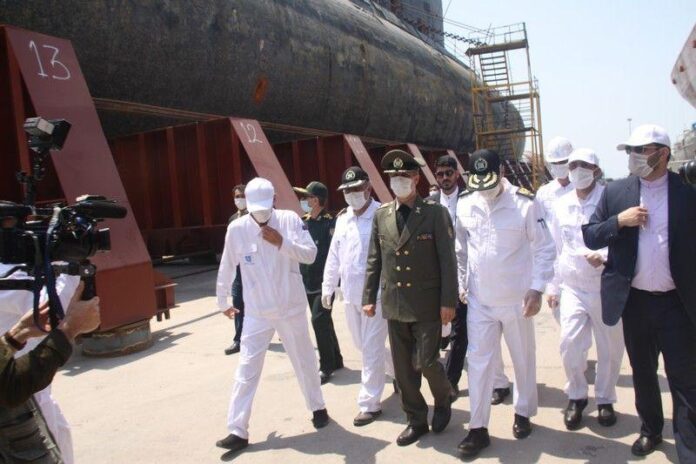
Brigadier General Amir Hatami said on Friday it will be a strategic mistake if neighbouring countries allow the US to enter the region.

“All countries in the Persian Gulf region are responsible for ensuring and establishing security in this region,” said the defence chief while inspecting work for the production of the Dena destroyer and the Saba mine-sweeping vessel in the port city of Bandar Abbas.

He said the Armed Forces are, at a time when the country is under sanctions, ready to produce state-of-the-art equipment needed by the military in order to take giant steps toward boosting the nation’s deterrence capability.

The defence minister also visited the latest achievements of the Defence Ministry in the domain of marine combat.

Iran Starts Production of Strategic Biotech Product ‘Xanthan’

Iran Starts Production of Strategic Biotech Product 'Xanthan'

Xanthan is a biological substance made of a special bacterium, and now the Islamic Republic has turned into the sixth country with the native technology of producing this substance.

Xanthan is used as a thickener and hardener, and is widely used in various industries such as oil and food. Its production technology exists in several countries, but in the Middle East Iran is the only country to have the native production technology.

Mojtaba Badri, CEO of Gam Tak Tabriz Company, says more than 35 years have passed since this substance was produced for the first time in the world, and so far only 11 countries have produced Xanthan.

“Of course, some of these countries do not have the technology to produce it locally, and only six countries have made its production technology native, with Iran in the sixth place. All stages have been carried out by the specialists of our knowledge-based company, and also the equipment is all made in Iran.”

Badri continued that currently, the company has the ability to meet 20 to 30 percent of the need for this substance, and the experts are conducting research to produce more.

It took 12 years of research and development to produce the substance, he added, underlining that this product can compete with European and American samples.

“Our product is offered at a much lower price. Sanctions provided an opportunity for industries and producers to use this product to meet their needs. At present, part of the needs of the food industry, the fluid sector of the South Oilfields Company and part of the Central Oilfields Company have met their needs with this product.”

He further mentioned there are six production lines in the company, of which only one is working and the rest are not operating due to defects.

He said these lines will be put into operation this year to meet the needs of other industries.

Iran Records Highest One-Day COVID-19 Cases

Iran Confirms over 2,000 New Cases of COVID-19 Infection

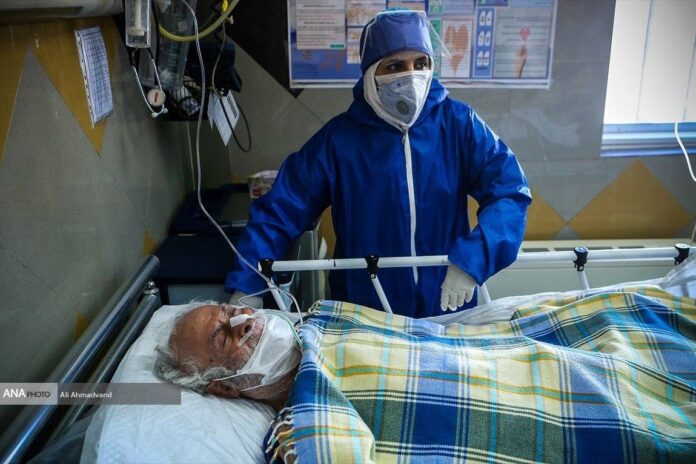
Kianoush Jahanpour announced on Friday the new cases of infection increase the total number of cases to 146,668.

He said 50 people have died of the virus in the past 24 hours, bringing the total number of fatalities to 7,677.

Jahanpour said 15 provinces have reported zero case of fatality caused by the virus in the past 24 hours. Five provinces have also reported only one death.

The spokesman said 114,931 patients have so far recovered from the disease, and been discharged from hospital.

2,547 patients are also in severe conditions of the disease, he added.

Jahanpour noted that 896,571 COVID-19 tests have been taken across the country.

He said the condition in Khuzestan province is still red. He also warned that Khorasan Razavi, East and West Azarbaijan, Lorestan, Kurdistan, Kermanshah, Hormozgan, and Mazandaran provinces are in alarming conditions.

Coronavirus online test
If you are worried that you may have contracted the Coronavirus, take this test right now.

Divorced Iranian Lady Receives 1mn Roses as Marriage Portion  

Divorced Iranian Lady Receives 1mn Roses as Marriage Portion

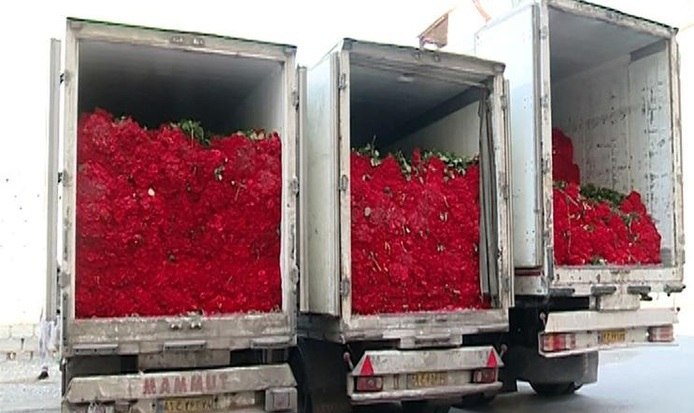
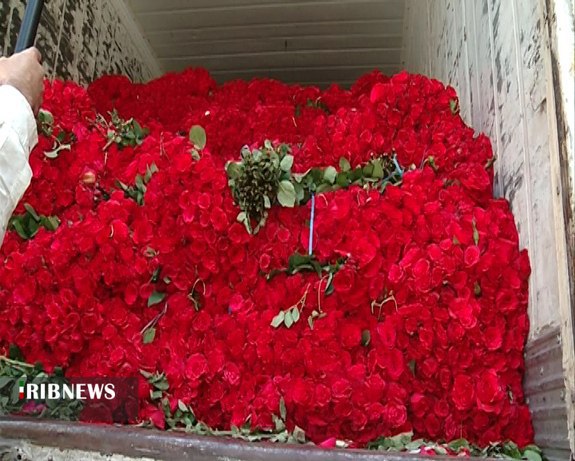
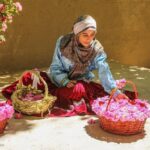
Trucks carrying one millions flowers were unloaded at the martyrs’ cemetery in the southeastern Iranian city of Kerman, a development which went viral on social media.

In fact, the flowers were the marriage portion of a woman divorced from her husband. 

“When one million roses were designated as my marriage portion, I was not supposed to demand it,” says this lady, who had demanded the marriage portion from her husband.

Divorced Iranian Lady Receives 1mn Roses as Marriage Portion  “But after my husband and I began to have a row, I had to file for divorce. The I demanded my marriage portion. Now that I have received the flowers, I donate these roses to martyred general Qassem Soleimani and all other martyrs who fought for the sake of this land, so that we are now living in safety,” she says.
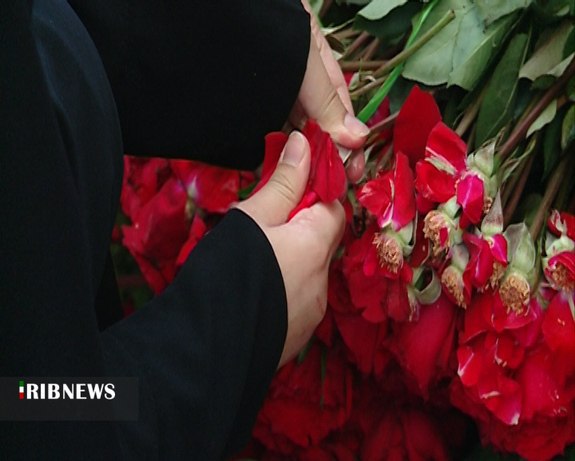
“I tried to reach agreement with my husband over receiving the marriage portion, but he never agreed to pay me money instead of the flowers. Moreover, my former husband wanted to pay me very little as marriage portion. Also, no agreement was reached on the issue that the money be spent for charity and orphans. So, I finally decided to demand the flowers. Of course, I could have exchanged the flowers for money after I got them, but I didn’t do it,” she says.

“As my client was obliged to give one million roses to his wife as marriage portion, he tried to provide the flowers,” said the husband’s lawyer.

“When authorities at the Judiciary make inquiries to flower shops to learn about the price, each flower is priced at Rls. 40,000. So, the wife’s marriage portion was estimated at round Rls. 40 billion. However, the husband objects to paying that amount and announces that he would be able to provide one million roses at a lower price and give them to his wife,” said the lawyer. 

“The roses were procured from the towns of Mahallat in Markazi provice and Dezful in Khuzestan province. After the issue was followed up, flowers were bought at Rls. 10,000 each, putting the estimated value of the marriage portion at Rls. 5 million. The flowers were sent to Kerman in eight trucks,” the lawyer said.

Flowers Not Allowed inside Cemetery

The official in charge of the martyrs’ cemetery said he refused to accept the flowers.

“These flowers were provided as a result of divorce, which was not acceptable to martyrs’ cemetery officials. So, flowers were not allowed to be used to shower the tombs of martyr Soleimani and other martyrs,” he said.

Divorced Iranian Lady Receives 1mn Roses as Marriage Portion With the wife’s consent, part of the flowers was given to the office running the martyrs’ cemetery in Kerman to be sued for charity and essence extraction, but one million fifty thousand flowers are left withering.
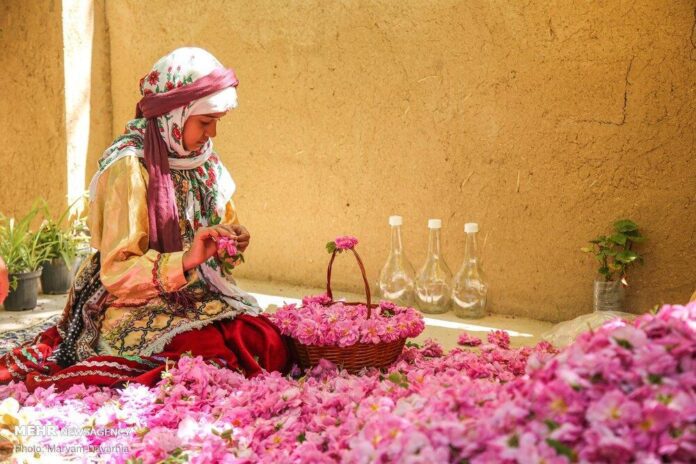

The head of the Kerman Justice Department told reporters “We will not allow some people to tie their personal issues to the sentiments of citizens whose family members have been martyred,” adding the issue will be further reviewed.

A Look at Iranian Newspaper Front Pages on May 28

Iran Newspaper Headlines

Iranian Newspapers

Aftab-e Yazd Newspaper:

  1. A Parliament with Expert MPs Can Be in Charge of All Affairs
  • Iran Leader Sends Message to Opening Session of 11th Parliament

2. Most Indebted Country Threatens Most Credible Country with Sanctions!

  • US President Says Will Soon Announce China Sanctions

3. Trump’s Tweets Validated

  • Twitter Warns US President

A Look at Iranian Newspaper Front Pages on May 28


Afkar Newspaper:

  1. Americas New Centre of Coronavirus Spread: WHO

A Look at Iranian Newspaper Front Pages on May 28


Ebtekar Newspaper:

  1. Ayatollah Khamenei to Deliver Speech on Imam Khomeini’s Passing Anniversary
  • Tsar Confronting Corona

2. Will COVID-19 Challenge Putin in Russia?

A Look at Iranian Newspaper Front Pages on May 28


Etemad Newspaper:

  1. Iran, Afghanistan to Legalize Cross-Border Traffic
  • Tehran, Kabul to Continue Probe into Harirud Incident

2. Parliament’s Priority Must be Livelihood of Lower Classes

  • Iran’s Leader Sends Message to 11th Parliament Opening

A Look at Iranian Newspaper Front Pages on May 28


Ettela’at Newspaper:

  1. Goals of Establishment Can Be Achieved by Maintaining Independence of Branches: Rouhani

2. Whole Resistance Movement to Enter War with Israel Should Tel Aviv Make Mistake: Nasrallah


A Look at Iranian Newspaper Front Pages on May 28


Iran Newspaper:

  1. President Announces Roadmap for Cooperation between Government, Parliament

2. Economy, Culture Iran’s Top Priorities

A Look at Iranian Newspaper Front Pages on May 28


Jomhouri Eslami Newspaper:

  1. Iran’s New Parliament Opens with Leader’s Message

2. US Uses Violence in Response to Justice Demands: Iran Foreign Ministry

A Look at Iranian Newspaper Front Pages on May 28


Kayhan Newspaper:

  1. Israel to Perish in Next War: Hassan Nasrallah

2. Trade between Iran, Venezuela Has Nothing to Do with US: Rouhani

3. US Police Brutality against Blacks Never-Ending: Iran Foreign Ministry

4. Saudi Network Admits Trump’s Defeat in Confronting with Iran

A Look at Iranian Newspaper Front Pages on May 28


Mardom Salari Newspaper:

  1. Iran’s Influence on US Elections

2. Tehran in Full Harmony with Kabul on Border Incident: Foreign Ministry

A Look at Iranian Newspaper Front Pages on May 28


Sazandegi Newspaper:

  1. Russia Sends 14 Fighter Jets to Libya to Support Military Group in Tripoli

2. President Rouhani Orders to Draft Laws on Domestic Violence

A Look at Iranian Newspaper Front Pages on May 28


Vatan-e Emrouz Newspaper:

  1. US Hegemony Rebuked
  • Third Iranian Oil Tanker Reaches Venezuelan Waters

A Look at Iranian Newspaper Front Pages on May 28

Iran Unveils Four Mega Projects to Boost Digital Economy

Iran Unveils Four Mega Projects to Boost Digital Economy

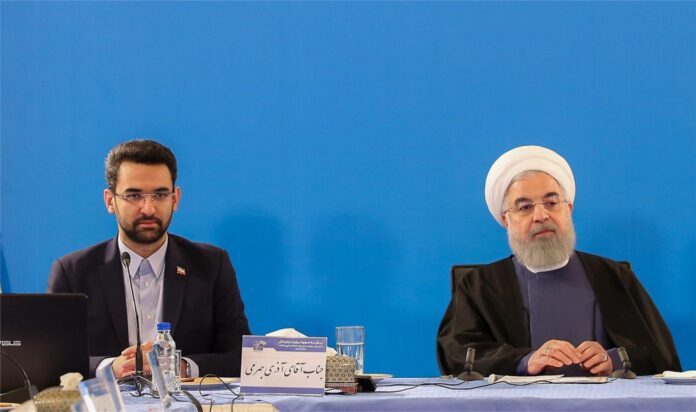
A data centre in Tehran, the infrastructural project of the National Information Network in the provinces of East Azarbaijan, Tehran, Khorasan Razavi and Fars, a plan to support digital businesses damaged by the coronavirus, and “Every Iranian, an Internet TV” were the four projects launched by President Hassan Rouhani on Thursday.

At the unveiling ceremony, Iran’s Information and Communications Technology Minister Mohammad Javad Azari Jahromi said the new projects will boost digital economy, emphasing that the digital economy can replace the oil-dependent economy and can be realised with the leap of Iran‘s smart economic economy.

He said in a country with a creative young workforce the core of the digital economy has grown. He added that Iran is under international pressure, and there is no choice but to be productive, and one of the most important tools for productivity is information technology.

Therefore, the minister said, the digital economy can be a good replacement for oil-dependent economy.

Azari Jahromi said currently digital economy accounts for 6.5 percent of the country’s GDP.

“On average, the global share of the digital economy is 15.5 percent of the total economy, and this shows that Iran has a huge growth potential in the field of digital economics. This is an area that needs to be attended. The digital services are among the most important areas for growth while a lot of jobs are created in this sector.”

Talking about the new projects, Jahromi underlined the data centre of the National Information Network will be launched with the creation of 407 new capacity racks and a 25% increase in the storage of the national network data.

Also, in order to develop the cloud infrastructure of the National Information Network, the private cloud infrastructure project of the National Information Network will be inaugurated, which is one of the most important pillars of the country’s information infrastructure, he went on to say.

Jahromi said the next project is “Every Iranian, an Internet TV” in which the private sector provides free VOD services.

He further pointed out that 10 other information technology projects are in the making and will be unveiled gradually on different occasions.